




Abstract
Knitted fabrics are widely used in smart textiles due to their great elasticity and reversibility, which make them good platforms for multifunctional fabrics, such as wearable strain sensors. In this study, a new method to make high strain-sensing knitted fabrics was proposed by coating the carbon nanotube solution first and then spraying the poly(3,4-ethylenedioxythiophene):poly(styrenesulfonate) (PEDOT:PSS) solution on 1 × 1 rib knitted fabric. The results showed that 0.1 wt% PEDOT:PSS/3 wt% carbon nanotube-coated knitted fabrics exhibited the best comprehensive performance. Their gauge factor reached 18.3 in the linear rising strain stage and showed excellent stability in cyclic stretching with a strain of 5%. Furthermore, the knitted fabric strain sensor exhibited a quick and precise response to the knee joint motion detection, demonstrating its potential in wearable applications.
Introduction
Among all the fabric structures, knitted fabrics have excellent extensibility, elasticity, strength, comfort, softness, and large deformation capacity, which make them good platforms for multifunctional fabrics, such as flexible strain sensors.1,2 Flexible knitted fabric strain sensors are mainly fabricated by two methods: embedding conductive yarns/fibers or coating conductive materials. 3 In the conductive fiber-embedded knitted fabric strain sensors, the carbon fiber, metal, or metal-coated fiber are usually adopted to knit into connected looped structures.4–6 When the conductive loops disconnect during stretching, the resistance of the knitted fabric increases, exhibiting good strain sensitivity. 7 Ehrmann et al. 8 prepared knitted fabric using a blended yarn made with 20% stainless steel fiber and 80% polyester fiber. The knitted fabrics showed elongation of 20–60% can cause a decrease of the electric resistance of more than 90%. Catrysse et al. 9 developed a flexible knitting strain sensor by weaving stainless steel filaments into elastic knitting tapes. However, the rigid and heavy structure of conductive fiber-embedded knitted fabric strain sensors limited its applications in wearable electronics. 10
In conductive materials’ coating, knitted fabric sensors, metal particles, carbon black, or conductive polymers are usually adopted to form a stretchable and uniform conductive layer on the fabric.11–13 When the fabric and conductive layer are stretched, the resistance of the conductive layer will increase; therefore, the fabric obtains strain sensitivity. 14 Tang et al. 15 prepared polyaniline (PANI) on the surface of polyester knitted fabric, and then coated the fabric with titanium dioxide (titanium dioxide) to prepare a PANI/titanium dioxide flexible knitted polyester sensor. Cai et al. 16 used graphene oxide to coat a nylon/polyurethane knitted fabric and prepare a flexible strain-sensing knitted fabric by further redox reaction. The coated fabric sensors showed high sensitivity, and retained the elasticity and ductility to the greatest extent.
Carbon nanotubes (CNT) are radial one-dimensional, axial micron-scale tubular one-dimensionals quantum materials, exhibiting an excellent electrical conductivity (160 S/m), Young’s modulus (5 TPa), and tensile strength (100 GPa).17,18 In recent years, the applications of CNT in sensor devices have achieved great progress. 19 Composed with conductive polymer, CNT composites showed good strain-sensing properties but with limited flexibility. 20 PEDOT is an insoluble and infusible conductive polymer with limited electrical conductivity. However, after doping with PSS, the conductivity of the PEDOT:PSS reached 3000 S/cm after treatment with H2SO4. 21 In addition, PEDOT:PSS is easily dispersed in aqueous solution and polar organic solvents, which is an ideal conductive material used for coating. 22
To achieve a flexible and stretchable fabric sensor, a 1 × 1 rib knitted fabric was adopted to be coated by CNT solution first via the impregnation process, and then sprayed by the PEDOT:PSS. The conductivity and strain sensitivity of the PEDOT:PSS/CNT-coated fabric were systemically investigated. Furthermore, the potential applications on wearable electronics of this strain-sensing knitted fabric were demonstrated to monitor the knee bending motion.
Experimental
Preparation of CNT-Coated Knitted Fabric
A well dispersed CNT aqueous solution with 11 wt% CNT concentration and 1.3 wt% dispersant was purchased from Chengdu Organic Chemistry Co., Ltd. A 1 × 1 rib-structured knitted fabric made from 95 cotton/5 spandex blending yarn was used for its good elasticity. The fabric has a structure with 31 wales per inch and 24 courses per inch. To clean the fabric and remove the impurities, the knitted fabric was pretreated by immersing in an alkaline solution (8 wt% sodium hydroxide and 40 wt% sodium sulfite) for 2 h at 90°C and washed by aqueous solution. Meanwhile, CNT-coating solutions with 1, 3, 5, and 7 wt% CNT concentrations were prepared by diluting the bought solution. After that, the knitted fabric was dipped into the CNT solutions and squeezed by the squeeze dying machine (Rapid P-A1) three times.
Preparation of PEDOT:PSS/CNT-Coated Knitted Fabric
PEDOT:PSS solution with 1.7 wt% concentration was purchased from Shanghai Runcheng Biotechnology Co., Ltd. The PEDOT:PSS aqueous solution with concentrations of 0.05, 0.1, 0.2 wt% was uniformly sprayed on the CNT-coated knitted fabric independently using a commercial airbrush (Mertastar NEWSTA F-470 airbrush with a nozzle diameter of 0.3 mm). The coated fabric was dried at 100°C for a uniform PEDOT:PSS/CNT composite coating layer. A schematic diagram of the preparation of the PEDOT:PSS/CNT-coated knitted fabric is shown in Figure 1.
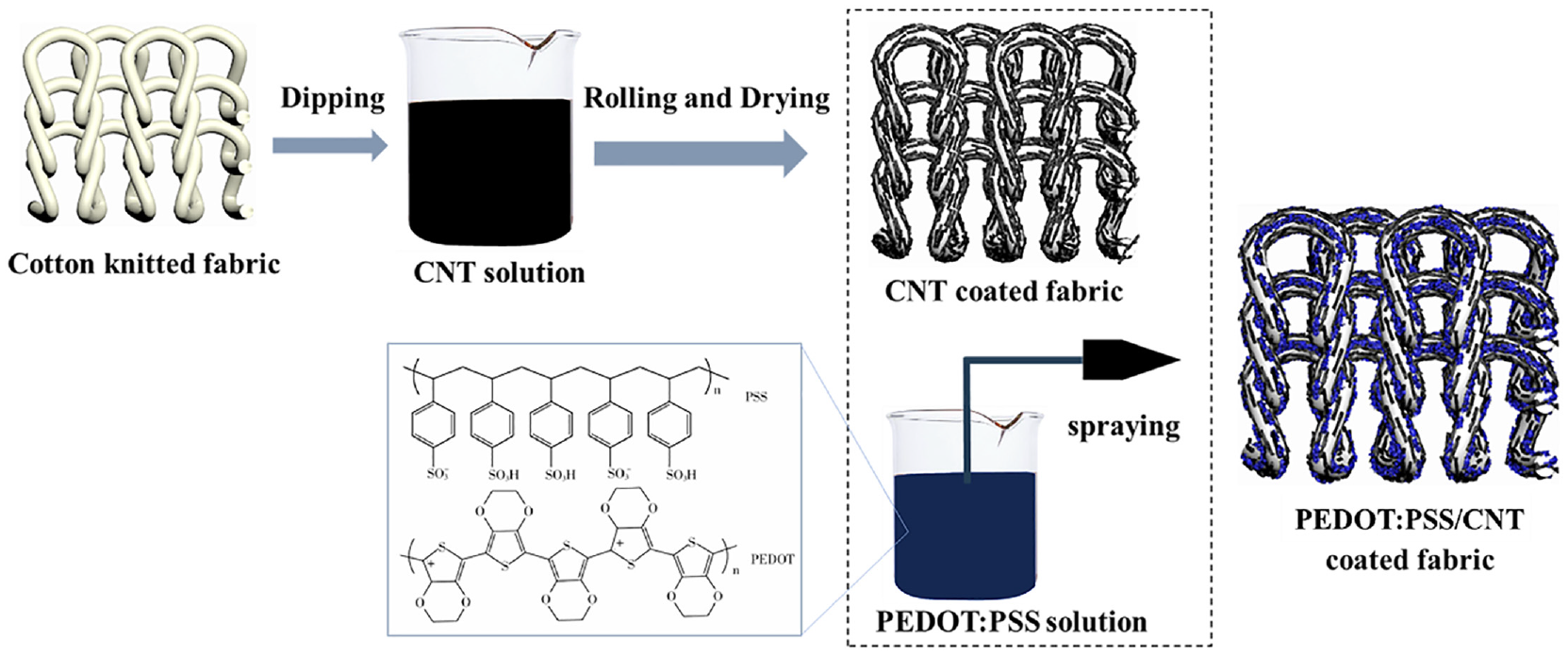
Schematic diagram of the preparation of the PEDOT:PSS/CNT-coated knitted fabric.
Measurements and Characterizations
An XS (08) F series electronic fabric strength machine (Shanghai Xusai) was used to test the tensile properties of coated knitted fabrics, and a KEYSIG 344611A multimeter was used to synchronously record the resistance changes of coated knitted fabrics under tension. The samples of coated knitted fabrics were first cut to 10 cm in course direction and 3 cm in wale direction. Then, the conductive copper wire was embedded into the wales at both ends. The sample was gripped with a gauge length of 6 cm, drawing speed of 100 mm/min and pretension of 0.2 N. The sampling frequency of the multimeter was set to 10/s. For testing the cyclic loading of the sample at constant elongation, the tensile speed was 15 mm/min for 5% elongation, 30 mm/min for 10% elongation, and 45 mm/min for 15% elongation. The surface morphology of coated knitted fabrics was tested using an HVS 430W digital microscope at different stretching degrees. The structure changes of PEDOT:PSS/CNT-coated knitted fabrics during transverse stretching were observed.
Results and Discussion
Electrical and Strain-Sensing Properties of CNT-Coated Knitted Fabric
As shown in Figure 2(a)–(d), with the increase of the CNT solution concentration from 1 to 7 wt%, the amount of CNT coating increased and thus the resistivity of the CNT-coated fabric remarkably decreased from 6.503 to 0.025 KΩ. As shown in Figure 2(e), when 1 wt% CNT-coated knitted fabric (CCF) was stretched, the resistance change rate showed obvious irregular fluctuations. This is because the covering and distribution of CNT coating on the surface of 1 wt% CCF are insufficient and uneven (as shown in Figure 2(a)), resulting in unstable conductive connection during stretching. When the knitted fabric was coated by 3 wt% CNT solution, the surface of the CCF was sufficiently and evenly coated (as shown in Figure 2(b)), showing considerable decrement of the resistivity. Furthermore, the resistance change rate of 3 wt% CCF dramatically increased with strain increasing from 0% to 200%, and then reached a plateau after a strain increase of 200%. As shown in Figure 2(f), the gauge factor values of 3 wt% CCF were around 7.7 (0–25%) and 11.3 (25–200%), which were higher than those of 5 and 7 wt% CCFs, especially within the strain range of 25–200%. This is because when the CNT concentration is higher than 3 wt%, the CNT coating layer on the knitted fabric surface is thicker, resulting in sufficient conductive connections and relatively good conductivity. When the 5 and 7 wt% CCFs were stretched, the knitted loops deformed first and then disconnected. Due to the sufficient CNT coating layer and good conductive connection between their adjacent knitted loops, the resistive increase is limited as the 5 and 7 wt% CCFs understretched, resulting in the lower gauge factor values than those of 3 wt% CCF.
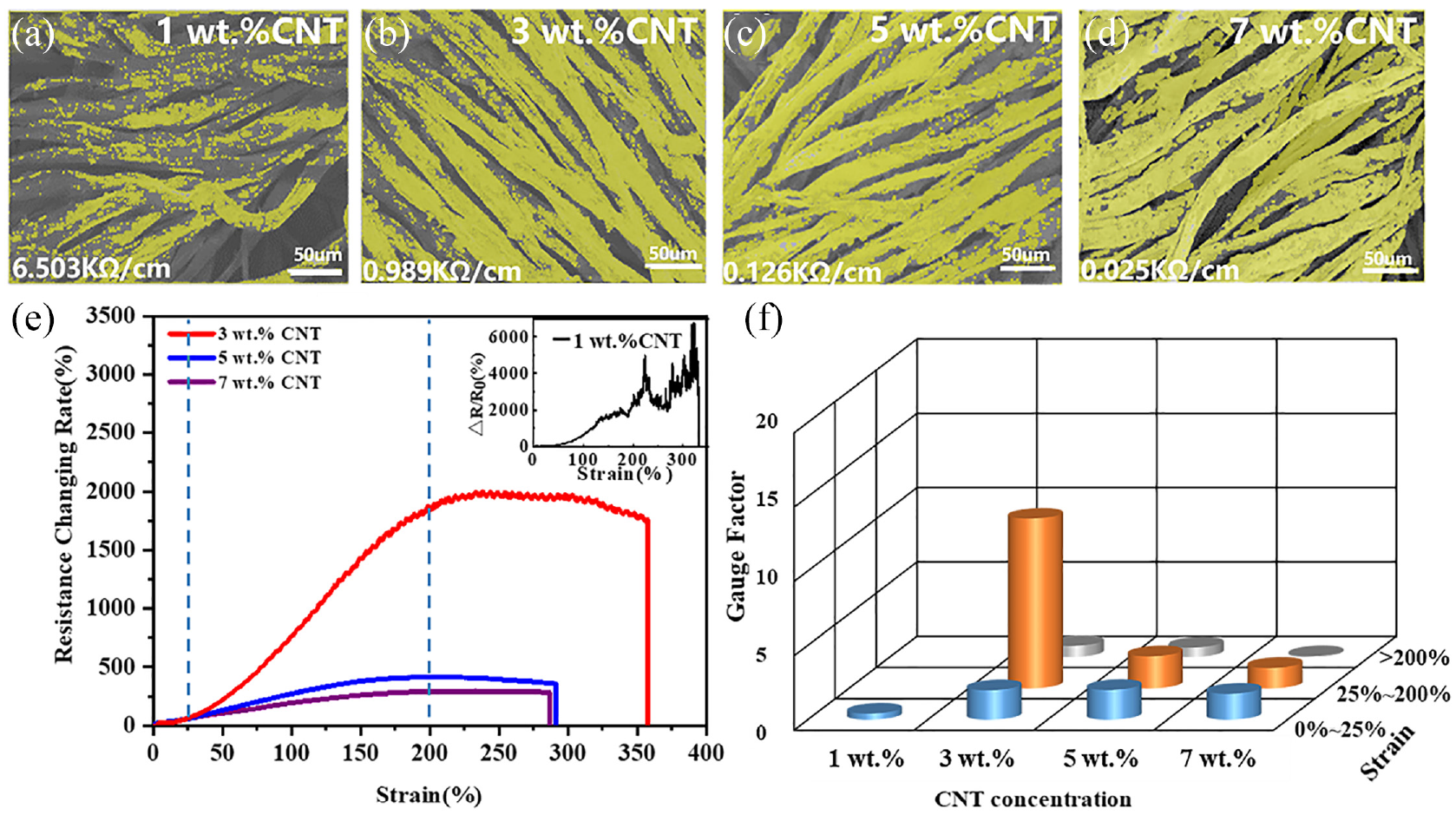
SEM images of yarn surface of the CCF with (a) 1 wt%, (b) 3 wt%, (c) 5 wt%, and (d) 7 wt% CNT coating, (e) resistance change rate (ΔR/R0 × 100%) versus tensile strain, and (f) gauge factors of the CCFs within various strain ranges.
As shown in Figure 3(a), when the tensile strain is lower than 25%, the loop structure still connects with itself, which is similar to the embedded figure. When the strain range is from 25% to 200%, the distance between adjacent loops increases continuously as shown in Figure 3(b), resulting in the dramatic decrement of the knitted loop connection, which leads to the increase of the resistance change rate. When the strain range is more than 200%, the knitted loops are completely disconnected and straightened as shown in the embedded figure in Figure 3(c), thus the resistance change rate is slightly changed.
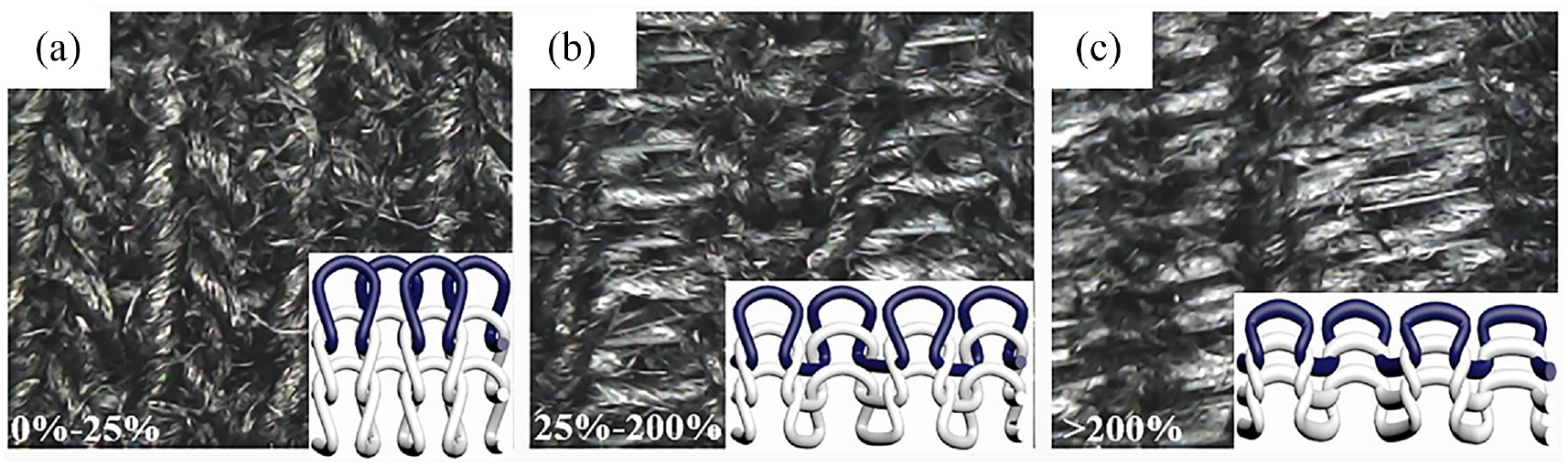
Structure deformation of the CCF with tensile strain of (a) 0–25%, (b) 25–200%, and (c) >200%.
Electrical and Strain-Sensing Properties of PCCF
After spraying PEDOT:PSS polymer on 3 wt% CCF, its conductivity and strain-sensing properties were measured and are shown in Figure 4(a)–(c). With the concentration of the PEDOT:PPS solution increased from 0.05 to 0.2 wt%, the resistivity of the PCCF decreases from 0.587 to 0.162 KΩ. Furthermore, the resistance change rates of the PCCF are improved compared with the CCF, especially at strain range from 25% to 200%. In addition, the gauge factors at two strain ranges (0–25%, 25–200%) as shown in Figure 4(c) were calculated according to the function of relative resistance change rate versus the strain: GF=(ΔR/R0)/ε. Among the PCCF with three PEDOT:PPS solution concentrations, 0.1 wt% PEDOT:PSS/3 wt% CNT-coating fabric showed the highest resistance change rate (ΔR/R0 × 100%) and a gauge factor of 18.3 at the strain range from 25% to 200%. Compared with the fabric sensors reported in references,23–25 the 0.1 wt% PEDOT:PSS/3 wt% PCCF showed a much higher gauge factor in a much wider strain range with a linearity of ∼95%.
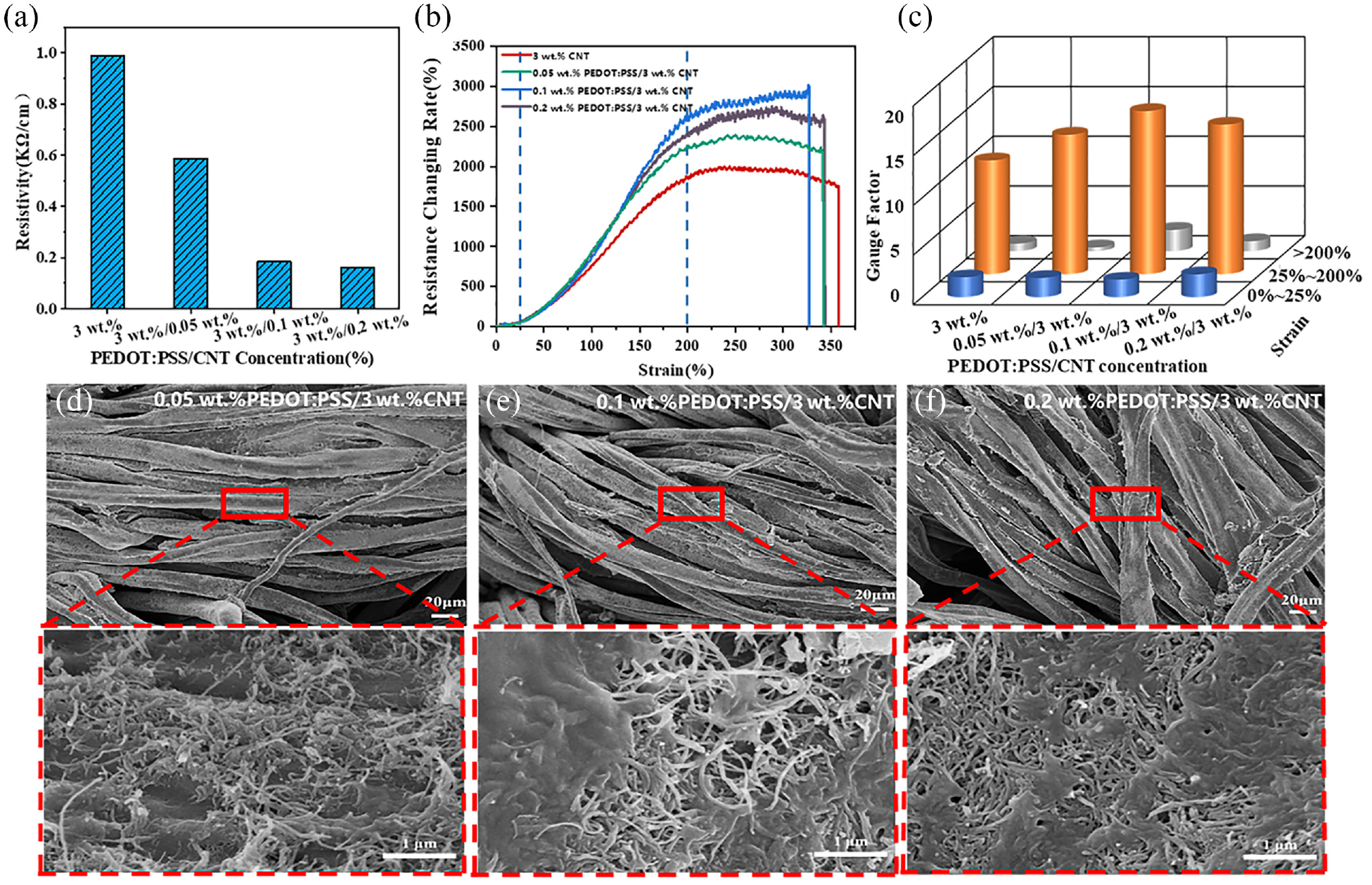
(a) Resistivities of the PCCFs with various PEDOT:PSS/CNT concentrations, (b) resistance change rate (ΔR/R0 × 100%) versus tensile strain, (c) gauge factors of the CCFs within various strain ranges, SEM images of yarn structure of the PCCF with (d) 0.05 wt%, (e) 0.1 wt%, and (f) 0.2 wt% PEDOT:PSS/3 wt% CNT coating.
Scanning electron microscope (SEM) images of yarn structure of the PCCF with 0.05, 0.1, and 0.2 wt% PEDOT:PSS/3 wt% CNT coating are shown in Figure 4(d)–(f). As shown in Figure 4(d), due to the limited concentration of 0.05 wt% PEDOT:PSS solution, the conductive polymer disperses insufficiently in the CNTs and results in less resistance change rate than that of 0.1 wt%. For the 0.1 wt% PEDOT:PSS/3 wt% PCCF, the conductive polymer solution penetrated its CNT-coated layer and formed a continuous conductive layer. When it was stretched, apart from the disconnection of the CNTs, the interface debonding between the CNTs and conductive polymer also resulted in the resistance increment. However, for the 0.2 wt% PEDOT:PSS/3 wt% PCCF, the thick and continuous PEDOT:PSS conductive layer as shown in Figure 4(d) hindered the interface debonding and thus exhibited less resistive change rate.
Resistance Change Rate of the CCFs Under Cyclic Stretching
Since the deformation of the human body is usually less than 20%, the sensing performance of the CCFs during under five stretching–releasing cycles with strain of 5% and 15% was conducted, and measured as shown in Figure 5. The results showed that the CCFs with all CNT concentrations exhibited higher resistance change rates under 15% strain than them under 5% strain, due to the coil structure of the knitted fabric changing more significantly under high strain. In addition, the curve showed a concave portion in every stretching–releasing cycle. This is because when the CCF was stretched during the cyclic stability test, the loop structure gradually deformed and rearranged and thus showed a hysteresis in the resistance change rate curves. Furthermore, the CCF exhibited good repeatability in 5 cycles of stretching under 5% strain (Figure 5(a)). As strain increase to 15%, the CCF showed an irregular curve in the first stretching–releasing cycle due to the readjust of the loop structure, indicating that CCF showed better strain stability under small strain.
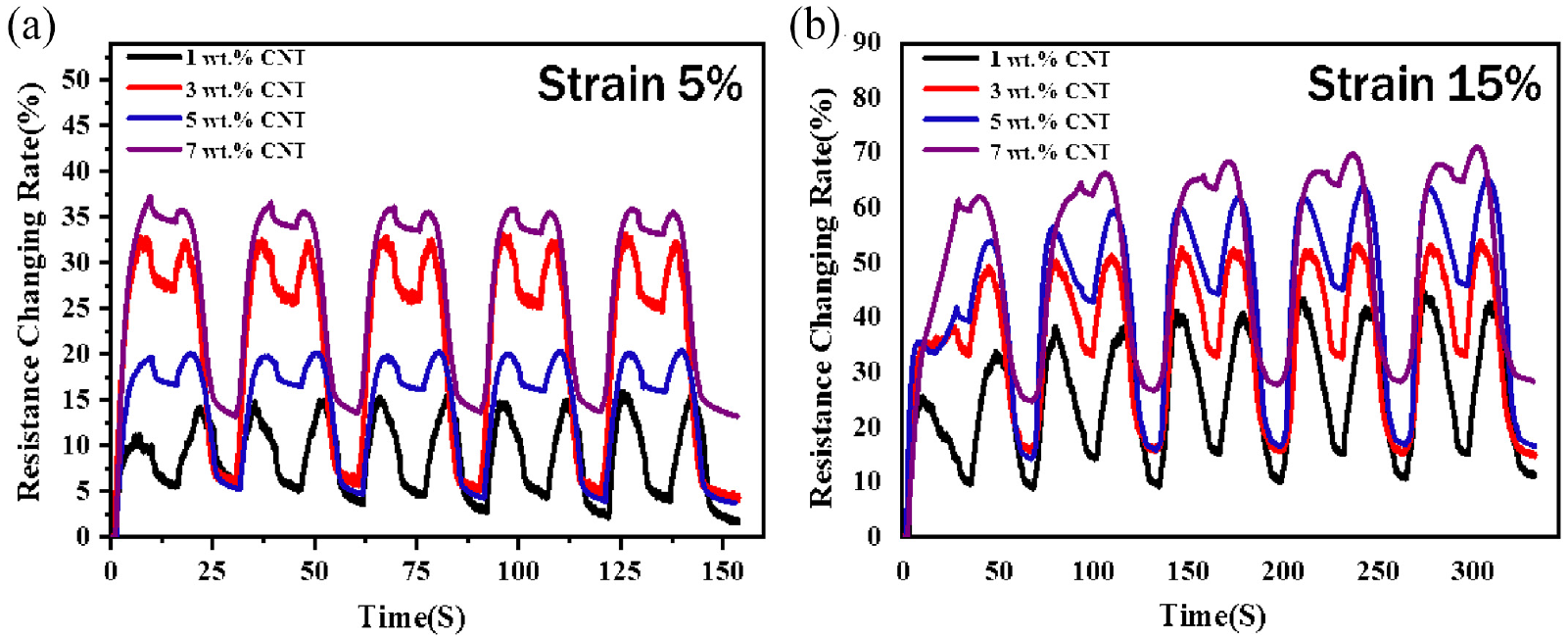
Resistance change rates of CCFs under five stretching–releasing cycles with strain of (a) 5% and (b) 15%.
Resistance Changing Rates of the PCCFs Under Cyclic Stretching
As shown in Figure 6(a), the results showed that 0.1 wt% PEDOT:PSS/3 wt% PCCF exhibited good repeatability and highest resistance change rate (~50%) during every stretching–releasing cycle among all the PCCFs with different PEDOT:PSS/CNT concentrations. To measure the washable property of the PCCF, the cyclic stretching performance of the washed 0.1 wt% PEDOT:PSS/3 wt% PCCF was conducted and measured as shown in Figure 6(b) and (c). The results showed that the resistance change rate of the washed PCCF was significantly decreased compared with that before washed under five stretching–releasing cycles due to the decrease of the conductive network formed by CNT and PEDOT:PSS. However, the washed PCCF still exhibited similar curves under every stretching–releasing cycle with 5% strain, indicating excellent repeatability, while under 15% strain, the irreversible deformation of the fabric internal structure during the stretching process led to a reduced repeatability, indicating that 0.1 wt% PEDOT:PSS /3 wt% PCCF exhibited better cycling stability under small strain.
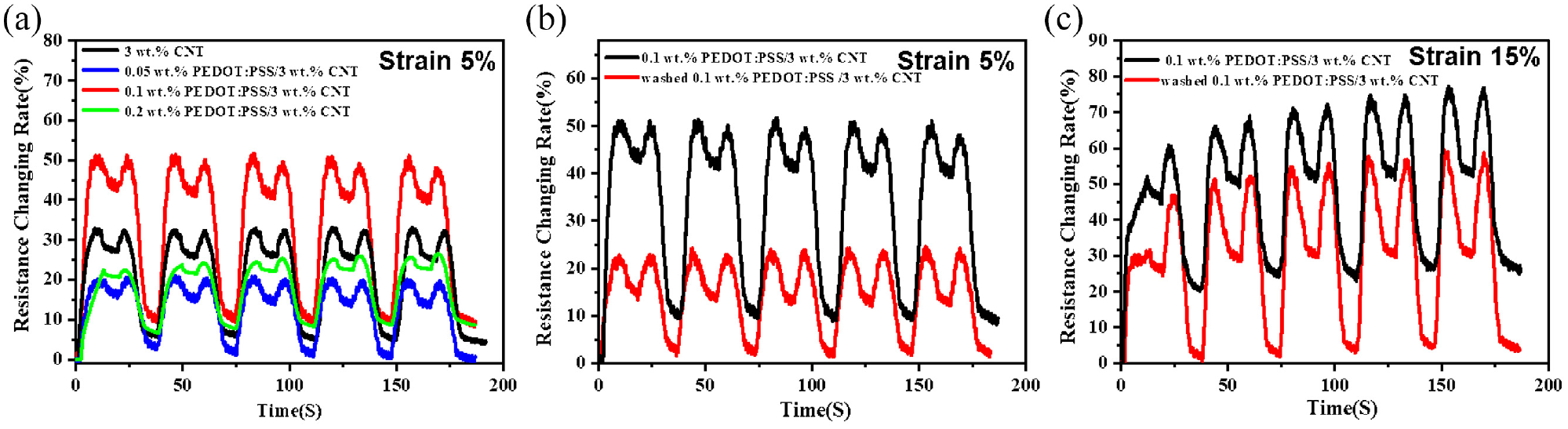
(a) Resistance change rates of the PCCFs with various PEDOT:PSS/CNT concentrations under 5% strain cyclic stretching–releasing; resistance change rates of the washed PCCFs under (b) 5% and (c) 15% strain cyclic stretching–releasing.
Body Motion Monitoring Application
The 0.1 wt% PEDOT:PSS/3 wt% PCCF showed good strain sensing performance and stability so that the flexible knitted strain sensor was prepared for real-time monitoring of the electrical signals generated by the human knee joint during flexion and extension activities. As shown in Figure 7(a), as the knee bending degree increases, the resistance change rate of the strain-sensing knitted fabric raised first and then decreased, indicating a good response during bending of the knee joint. As shown in Figure 7(b), during the cyclic bending–releasing motions, the resistance change rates of the PCCF exhibited similar curves and resistance change rate peaks (40–50%), indicating good repeatability. The demonstration in Figure 7 shows that the 0.1 wt% PEDOT:PSS/3 wt% PCCF is capable of being a motion monitoring sensor with good sensibility and repeatability in practical applications.
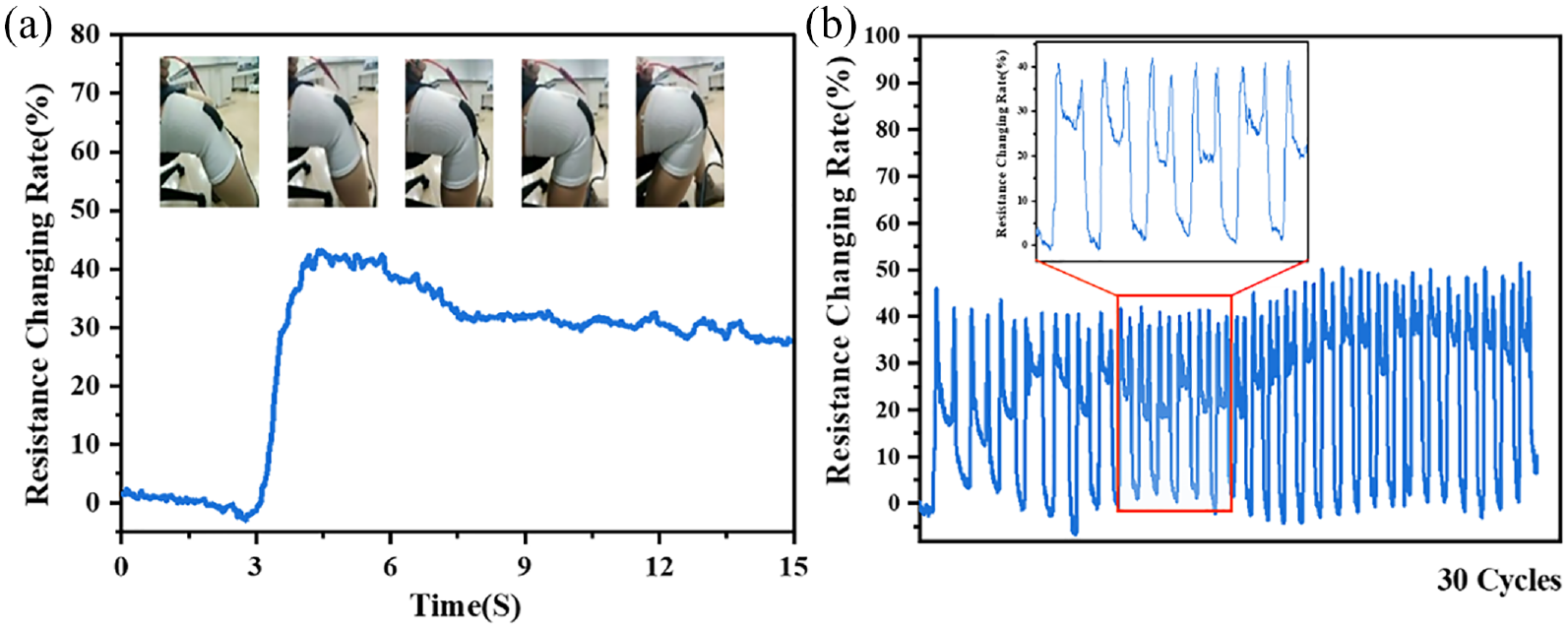
Real-time monitoring of (a) knee bending motion and (b) resistance change rate curves in 30 bending–releasing cycles.
Conclusion
In summary, the 0.1 wt% PEDOT:PSS/3 wt% PCCF has a high-resistance change rate and good sensing performance. It can keep cyclically loaded at 5% and 15% strain with preferable sensing stability. In addition, the 0.1 wt% PEDOT:PSS/3 wt% CNT composite-coated knitted sensor can detect knee movements and shows good sensitivity, indicating that it will facilitate the development of new wearable electronic devices.
Footnotes
Declaration of conflicting interests
The author(s) declared no potential conflicts of interest with respect to the research, authorship, and/or publication of this article.
Funding
The author(s) received no financial support for the research, authorship, and/or publication of this article.
