




Abstract
Emotional design can produce resonance with consumers, guide user behavior through positive emotions, and improve product awareness. This article aims to explore a method of bra emotional design that can give users a pleasant experience. First, emotional words are collected and then ordered in the coordinate system using the semantic correlation between emotions and the method of statistics for circular series. As a result, the affect model is established with two pairs of opposite emotions, relaxed–excited and disappointed–enjoying, in the vertical and horizontal directions and other four emotions, namely joyful, accepted, boredom, and disgust, in the diagonal direction. Then, 89 bra design features are analyzed through subjective evaluations. Compared with emotions stimulated by the functionality and aesthetics of bras, emotions only visually induced by bra design features range on a smaller scale and are mostly located in the upper right of the emotion model without extremely negative emotions. Finally, we design a loving bra using bra design features which are highly related to the emotional experience of love. The prospect of this study is to explore the feasibility of bra emotional design and pave the way for emotion recognition in fashion consumption.
Introduction
With the rapid development of artificial intelligence and the emergence of multimedia technology, the research of emotion recognition in images or texts has become the dividing line between human and artificial intelligence. If the product can not well simulate human emotion, it will never have intelligence. 1 Therefore, the prospect of artificial emotion would be very broad because of more harmonious human–computer interaction. Professor Picard of MIT put forward the concept of “Affective Computing” 2 in 1995, which is used to summarize the study and development of systems and devices that can recognize, interpret, process, and simulate human affect. Emotion recognition is the first step to realizing emotional interaction.
Emotion is a mechanical response to meet some adaptive functions, 3 when time is beneficial or harmful to a person’s attention, the human body will make a direct, non-reflective, and non-intelligent judgment on the situation. 4 We will experience positive or negative emotions and then try to approach or avoid them. Emotion can effect decision-making, perception, attention, performance, cognition, and so on. 5 The definition of emotion commonly includes two categories, discrete emotion and dimensional emotion. The former refers to six basic emotions, namely anger, fear, surprise, disgust, happy, and sad. It is a relatively simple classification based on people’s facial expressions but can not accurately express the continuity and complexity of emotion. Therefore, the two-dimensional emotion model is commonly used to label emotion. It is a continuous emotion model proposed by Russell, and includes two emotional indicators, “Arousal” and “Valence.” The “Arousal” dimension reflects the speaker’s physiological motivation or preparation for taking some action. The “Valence” dimension reflects the speaker’s positive or negative attitude.
The emotional attribute of a bra is the highlight to enhance the value of bra products. Just as in the theory of Maslow’s hierarchy of needs, both needs of physiological and safety are the lowest and most basic requirements for human being, while needs for love, belonging, esteem, and self-actualization are at a higher level, especially needs for self-actualization. In comparison with basic functions, such as maintaining physiological homeostasis and protecting safety, achieving esteem and self-actualization in bra design is a growing demand at present, because products that can excite consumers are more successful than those without emotional expression. 6 Therefore, to improve the performance and satisfaction in bra design, it is important to determine the relationship between bra producers and wearers,7,8 and then to make an emotional bra design.
Emotional design is a user-centered design system. It advocates that design should make the product more attractive by conforming to users’ psychological habits. The emotional design of the bra should add rich elements of culture, emotion, and fun so that people can obtain both experiences of effective functionality and spiritual enjoyment at the same time.
Especially in the current situation of online shopping, concern for consumers’ emotional reactions during web browsing can help to analyze their style of perception and judgment, and then can help provide suitable product recommendations. 9 This concept of emotional design was first proposed by cognitive psychologist Norman. 5 In his works, he pointed out that emotion is a physiological response of people to the role of external things and themselves and is determined by their needs and expectations. It includes three design levels, instinct level, behavior level, and reflection level. They are the sense of liking generated by the observation and understanding of the appearance, the sense of satisfaction brought by the interesting and effective operation experience of the product, and the spiritual sustenance brought by products, separately. Therefore, the pleasant experience of the product will be as important as its usability or functionality in achieving a successful product.
Bras can evoke different emotions. Users may get a celebrated emotion by the red color, feel proud when see soft fabrics, and feel comfortable when wearing traceless bras. Also, different hue-matching may bring different visual feelings. 10 Emotions are influenced by the evaluation process, but at the same time, the evaluation process can also predict emotions. An emotional bra can give consumers consistent senses of experience through visual appearance, interactive experience and functional design. Moreover, consumers that share concerns and appraisals will experience similar emotions about a given product. Second, visual features, such as shape or color, are the main reason for inducing emotion. They can stimulate certain emotions individually or in combination. 11 For example, circles can induce positive emotions, which can promote understanding when combined with warm colors (not obvious emotional features).
The purpose of this study is to establish an affect model of a bra by collecting and analyzing the emotional experience. Then, we analyze the contribution ability of design features to the bra’s emotional experience and realize bra emotional design by using the three-dimensional design technology.
Experiment 1—Emotional Model of a Bra
Method
In this experiment, we explore the bra emotional model by evaluating fashion bra styles in the market. This experiment refers to the method of “circular scale of terms” in Russell’s circumplex model 12 and analyzes eight representative affects and the location of other 40 emotional words in two-dimensional space. 13 Through this method, a two-dimensional emotion model including 48 emotional words is obtained for bra design.
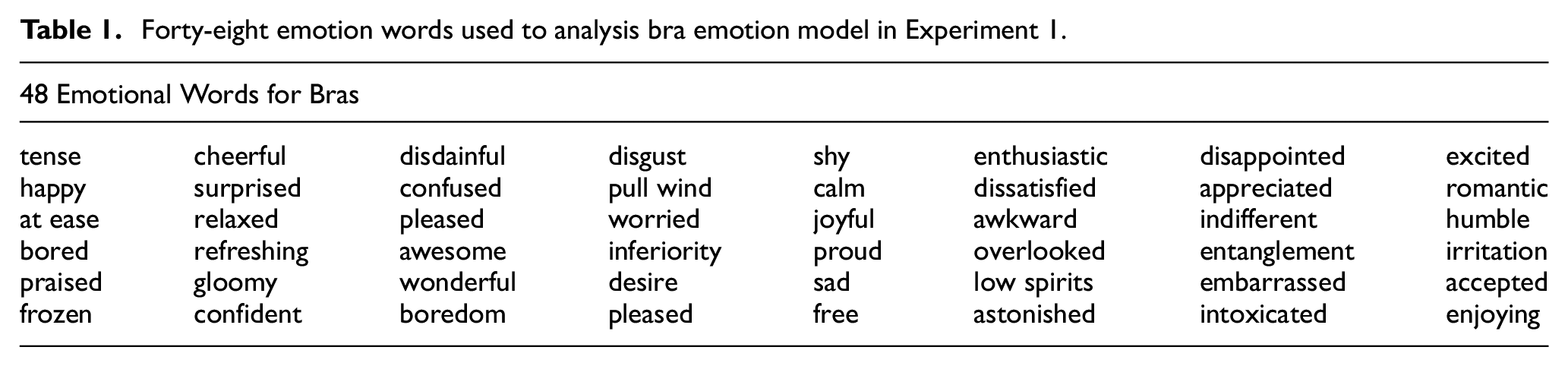
Subjects are senior students majoring in bra design and have 4 years of experience in fashion design. We first collect 20 bra products with high sales from an Internet shopping platform (Taobao.com) 12 and then ask 54 professional bra design students to report their emotional experiences by watching and associating with these images. Each of them writes no less than five emotional words relating to the bra. Finally, 213 words have been obtained. By merging synonyms and deleting non-emotional words, there are 48 emotional words left as related emotions of the bra (Table 1). There is a certain correlation between these words and no obvious emotional limit by which they can be vaguely listed in the circle space. 14 Next, we build a bra affect model by calculating the locations of 48 words based on the method of Russell: 14 (1) divide these emotional words into eight groups, and assign each group a representative; (2) ask subjects to place each word into eight categories; and (3) calculate the degree of each word in a circle space to decide the location of them by the method in Ross’s scaling technique. 15
Forty-eight emotion words used to analysis bra emotion model in Experiment 1.
Analysis and Results
Eight Emotions in Circle Order
Ordering eight representative emotions
The order of eight categories is determined first based on Ross. 15 Table 2 gives the frequency, which is scored by subjects, of eight representative words in the place of eight slots around the circle. In this table, fixing the number “1” in the top as emotion “excited,” other slots are assigned numbers 2–8 clockwise like Figure 1 (As can be seen, the locations of eight emotions can be right corresponding in eight slots.)
Frequency of eight representative emotions in eight slots around the circle.
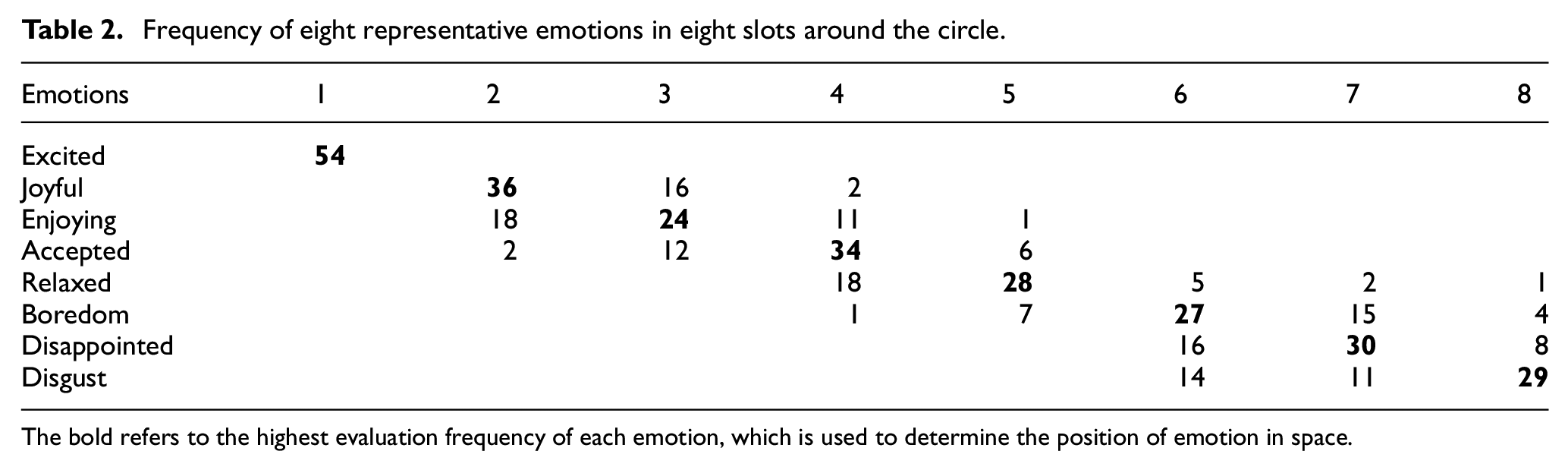
The bold refers to the highest evaluation frequency of each emotion, which is used to determine the position of emotion in space.
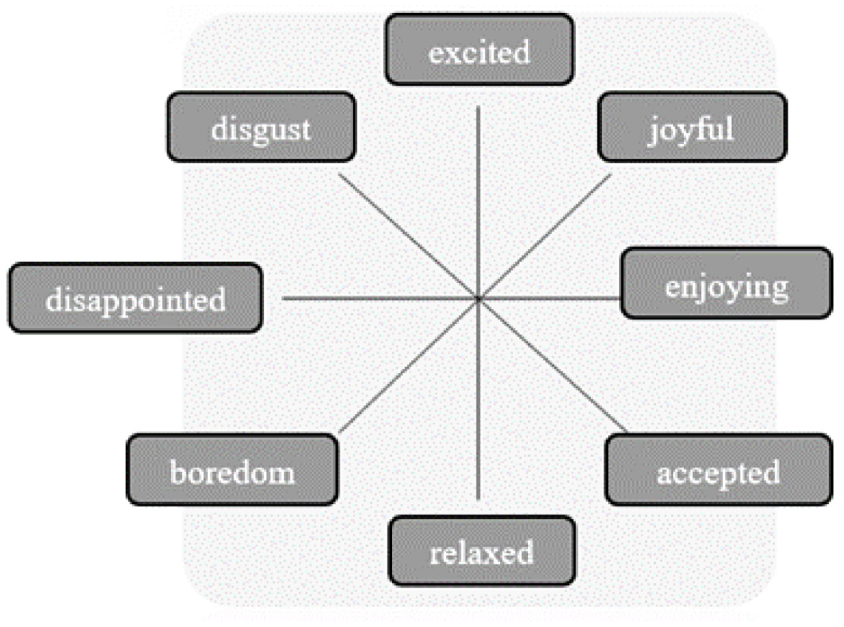
Eight emotions of the bra emotion model.
Therefore, the horizontal dimension in space is from disappointed to enjoying, together with the vertical dimension from relaxed to excited, and the other four slots are boredom, joyful, disgust, and accepted, which can be used to define the bra emotional model.
The Location of All Emotions
Other emotional words are placed in eight emotion categories by subjects and then computed in their polar coordinates14,15 to explore their spatial location. The result is shown in Figure 2. In this process, we use the same method of Russell’s “Circular Scaling of Term,” whereas, all emotional words are related to bra and suit the environment of bra wearing or visual impression because these emotions are evaluated in considering wearable and aesthetics by professional students and are stimulated by bra images.
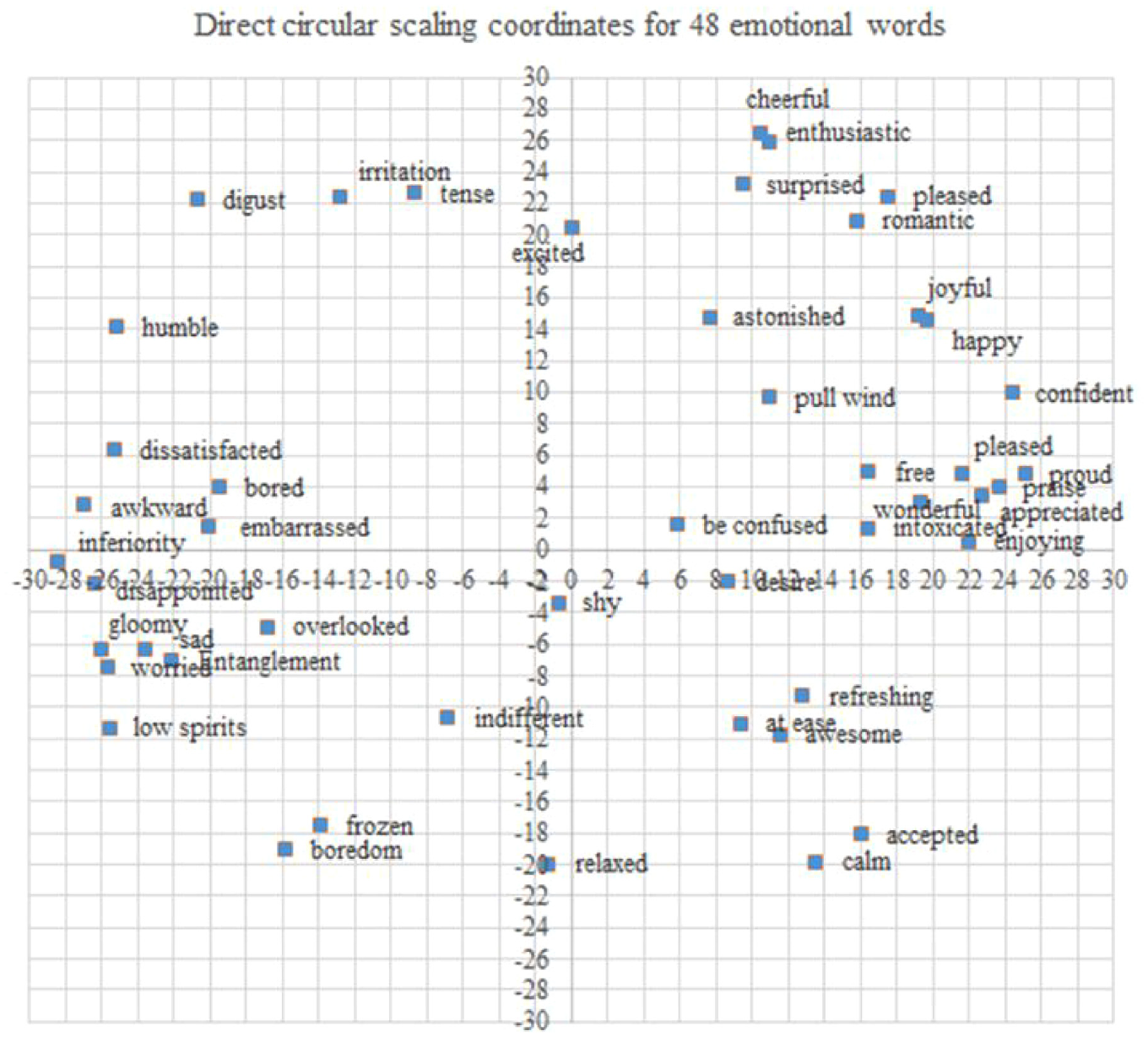
Direct circular scaling coordinates for 48 emotional words.
Discussion
The results of Experiment 1 show that these 48 emotional words can better represent the experienced emotions of bra users. All emotions are well surrounded in the two-dimensional coordinate space, which shows that these emotions can represent the emotions evoked by the bra more comprehensively. The bra’s emotional model is two-dimensional. The vertical axis is mainly about relaxed–excited, which means the arousal degree of emotion and emotions evoked when people see and think about the bra image. Although these emotions may be different based on their different visual and wearing experience, they represent affect that gradually changes in strength and intensity. With the same analysis, the horizontal level is disappointed–enjoying, which conveys the degree of pleasure for the bra and is more likely to be decided by the behavior of consuming or maybe results of the conscious evaluation. Therefore, it is feasible to use the two different degrees and the circle ordering model to describe the bra emotion model.
Emotions of excited, cheerful, disappointment, and confidence belong to post-consumption emotions, 16 which can promote purchase and repurchase behavior and can determine word-of-mouth. However, the first two emotions are more hedonic than utilitarian design, but the latter two are more utilitarian than hedonic. 17 Therefore, from the results of this bra emotional model, emotions in a high level of horizontal axis can be triggered by the utilitarian design of the bra, such as design factors of comfort, somatotype-improving, and protection, which can meet the functional needs of wearing; the high level of the vertical axis requires the attribute of hedonic design, such as dazzling style, luxurious fabric, and so on, with good attraction and aesthetics.
Similarly, emotions located in the position of enjoying-to-excited, such as romantic, happy, confident, pleased, proud, enjoying, and appreciated, belong to the category of “satisfaction,”“happy,” and “pride.” 16 They can promote consumers’ purchase decisions and are also the goal of consumers’ emotional experience. Through the distribution of this model, we can better understand consumers’ feelings about bra products.
Therefore, the hedonic and utilitarian designs of bras are important factors to determine and trigger user’s emotions. 18 When bra is highly attractive and functional, it would make consumers feel romantic and happy, and actively induce their repurchase intention. However, the bra with poor functionality, no matter how attractive it is, will bring negative emotional experiences to consumers, which would be caused by either the first impression or a poor wearing experience. On the contrary, although the bra has poor aesthetics and good functionality, it can also stimulate consumers’ accepted mood. Therefore, the functionality of bra is very important for bra sales, and also the attractiveness of a bra will improve and enhance the consumer’s decision-making.
In the bra emotional model, the location of the word “shy” is calculated and labeled in the center of this dimensional coordinate system, with the meaning of the neutral emotion, which is a special insight for bra items. Although the word “shy” means “nervous or embarrassed” and usually be considered a negative mood, it is a neutral concept in bra culture, so that shyness represents a special temperament of women, as the process of transforming from a natural state to a clear cultural state. Bra first is an integral part of shaping women’s appearance together with a coat and consolidates women’s feminine and social status. 19 And then it brings self-confidence to the wearer maybe because of the comfortable wearing experience. Therefore, a bra can stimulate different emotions on different occasions and make women constantly express themselves. Modern women wear bra as a tool to render their bodies invisible in the supposedly rational, cerebral, and unemotional context of the organization. 20
Experiment 2: The Relationship of Emotion and Bra Design Features
Subjects
Subjective evaluation is used to collect the relationship between emotions and bra visual features. To ensure that subjects have a certain understanding of bra design features, 50 underwear professionals are selected to complete this experiment, mainly including students engaged in underwear design and also including some bra designers. There were 41 valid questionnaires.
Materials
Material preparation contains three parts: the collection of bra design features and the design of evaluating sheet. First, considering the visual characteristics of the bra, features are collected from the four visual aspects, 21 including color, visual texture, design shape, and spatial expression, and are eventually composed of 89 design features: 12 color features, 4 visual texture features, 23 shape design features, and 50 spatial expression features listed in Figure 3. They are made into a video as the material for subjective evaluation.
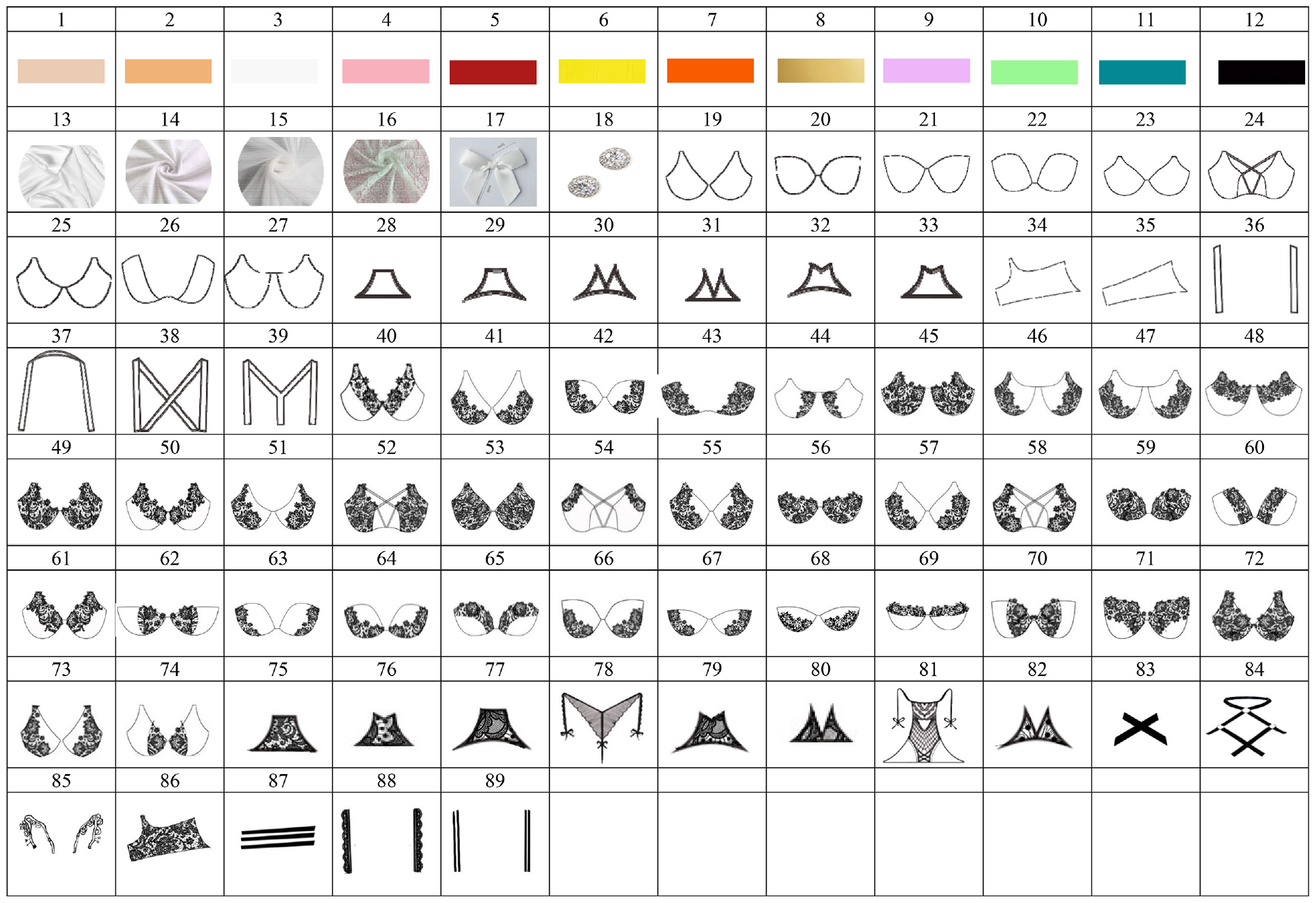
Eighty-nine bra design features.
In this video, each design feature is given 3 s of showing time and 10 s of evaluation time, in a total of about 19 min. In order to avoid the fatigue caused by lengthy watching, all features are divided into two parts to make videos: Video 1 and Video 2, in which the first 39 features and the last 50 spatial expression features are contained, separately. Second, the subjective evaluation sheet is required to be completed during watching both videos. There are eight emotional word sets for each design feature based on the conclusion of experiment 1, including excited, joyful, enjoying, accepted, relaxed, boredom, disappointed, and disgust. All these eight emotions represent different levels in two dimensions. Subjects need to get familiar with the emotional vocabulary first and label it with the corresponding emotion in the sheet during the evaluation.
Process
Select the volunteers as subjects based on their subjective wishes. Before starting the experiment, the purpose of the experiment has been explained as the following: The purpose of this experiment is to find out the relationship between emotions and bra design features in order to improve the emotional expression of bra products and emotional service.
Then the emotional concept and how to complete the evaluation sheet were explained, so that participants could grasp the emotional experience correctly to ensure the accuracy of the evaluation. At the same time, subjects had a fore-watching of a video about three features to be familiar with the evaluation process. Finally, the experiment begins with playing Video 1 after giving them 5 min alone. Between Video 1 and Video 2, There are also 5 min of relaxation time between Video 1 and Video 2, when subjects can close their eyes or move in the room (Figure 4).

Process of Experiment 2.
Analysis and Results
Emotional Design of the Bra
Different bra design features have specific emotional attributes. In order to further analyze and determine the original emotion of each design feature, counting the frequency sum of each selected emotion for each design feature can get relationships between design features and emotions. Therefore, the frequency sum for each design feature was calculated and recorded as Ni-excited, Ni-joyful, Ni-enjoying, Ni-accepted, Ni-relaxed, Ni-boredom, Ni-disappointed, Ni-disgust (the variable i is the serial number of the bra design features), together with the maximal counting frequency for the ith feature as Ni-max. Theoretically, the bra emotion can be determined by the value of Ni-max from the results of the questionnaire data, because the bigger the value of Ni, the higher the correlation between them. However, the counts of Ni changes greatly from 8 to 24, which can be seen as there may be no significant difference among some counts of Ni. The count of a certain emotion is usually significantly different from others when the standard deviation of counts of eight emotions is bigger, in which case the emotion recognition of this feature is reliable. On the contrary, design features with a small difference in the value of Ni may have no significant emotional attribute. That is to say that it is unreliable to determine design features’ emotional attributes only by the maximum value Ni-max. In this article, the features that have significant emotional attributes would be determined based on calculating the reliability interval of Ni-max values.
Confidence Interval
A confidence interval, in statistics, refers to the probability that a population parameter will fall between a set of values for a certain proportion of times. Generally, an interval, in which most samples can reliably fall, is determined by samples, so as to determine the true value that can represent the overall samples. The “reliability” is measured by probability, namely, confidence level.
In other words, when the samples X are X1, X2,…, Xi, the interval can be calculated by using
The confidence interval is calculated at a predetermined significance level, which is usually called α (in most cases the significance level α = 0.05, the confidence level (1 – α = 0.95). The common calculation methods of confidence interval are as follows

where α is the significance level (e.g. 0.05); Pr is the probability, 1–α is the confidence level (e.g.95% or 0.95), and (c1, c2) are the confidence interval.
Therefore, μ is called a confidence interval with a confidence of 0.95. The calculation of μ is as follows
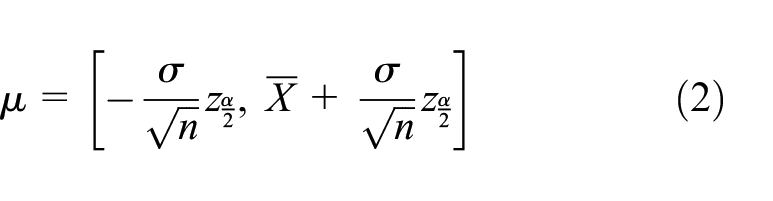
where
Determination of Emotions of Bra Design Features
According to the definition of confidence interval, extract Ni-max from the counts (Figure 5) to obtain the emotion that may correspond to each design feature and the maximal count of the emotion. Sample X is obtained with the observation samples as X1(N1-max), X2(N2-max),…, X89(N89-max). It is assumed that sample X conforms to normal distribution. The confidence interval can be measured as (13.7411–14.1458) (Table 3) at the 95% confidence level based on the above formula. That is, the Ni-max of the bra design feature is 95% likely to be in this area.
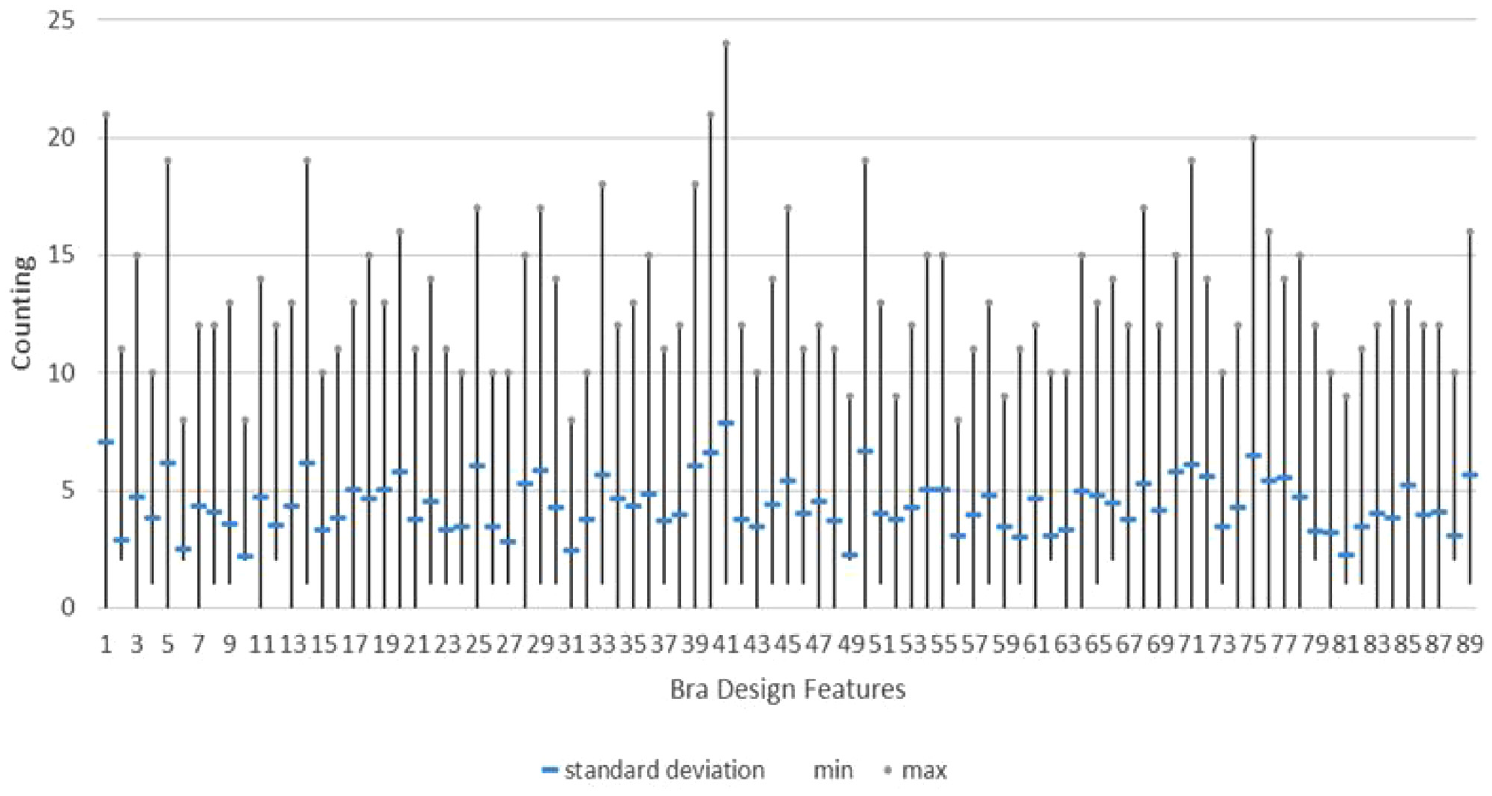
Counts of emotions for bra design features.
Confidence interval of samples X1(N1-max), X2(N2-max),…, X89(N89-max).
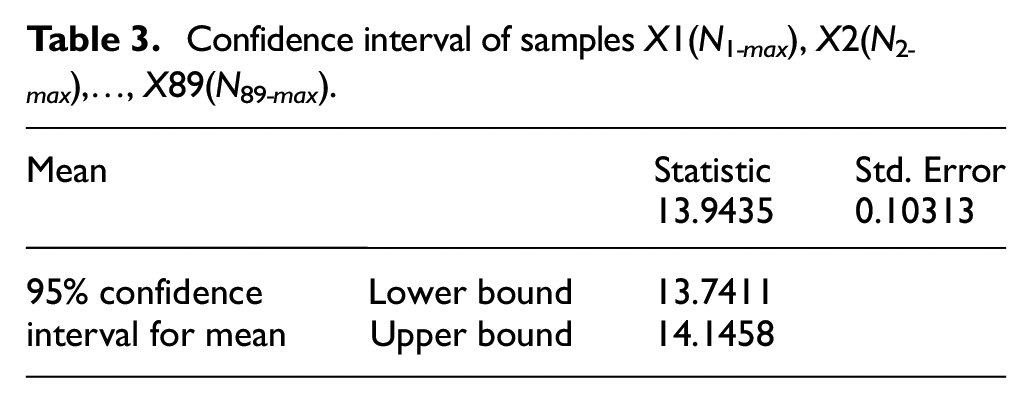
At the same time, the larger Xi-max is, the higher the emotion recognition degree of the bra design feature is. So that it is considered that bra design features have emotional attributes when the count for a certain emotion is bigger than or equal to 14. On the contrary, the emotional attribute of bra features is not obvious.
The maximum count of bra features is drawn in the scatter plot. The horizontal line represents the minimum count when the emotion of bra parts is recognized (Figures 6). And dots reflect the size of Ni-max. Therefore, the emotional attributes of bra design features can be obtained with the labels (Figure 7).
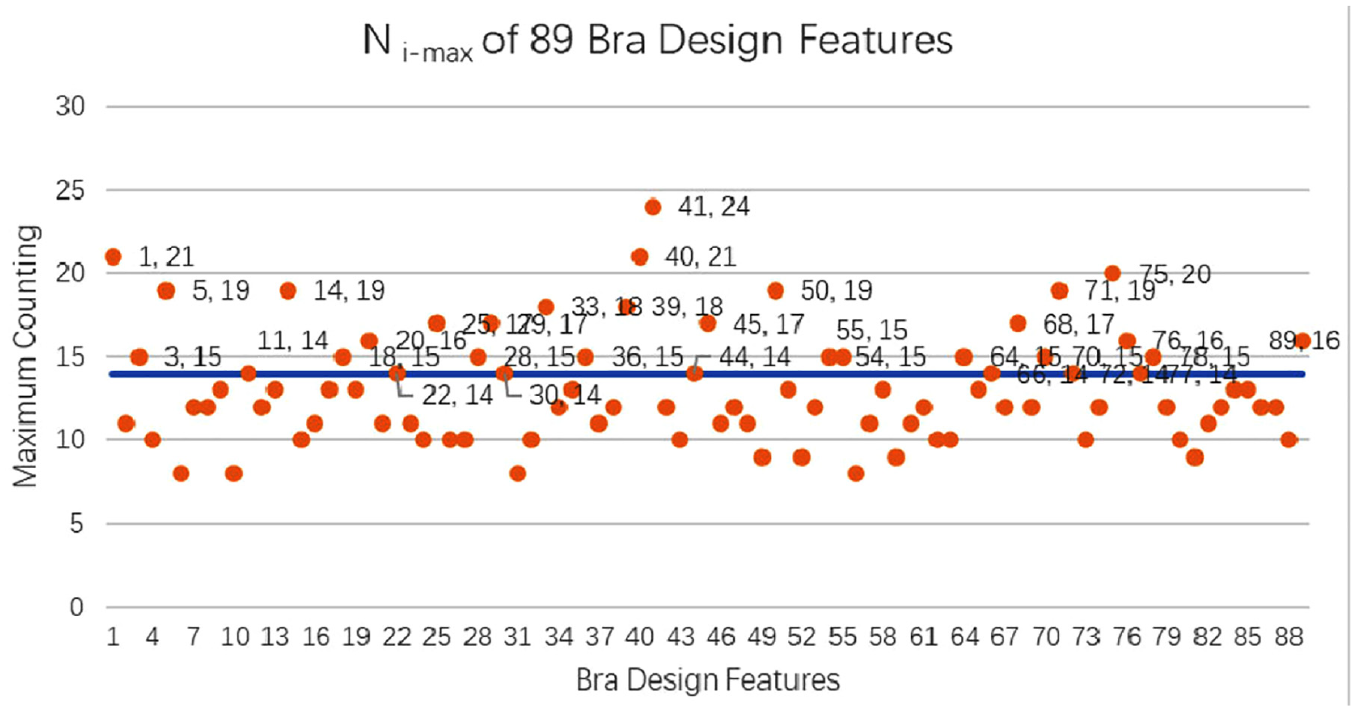
Ni-max of 89 bra design features.
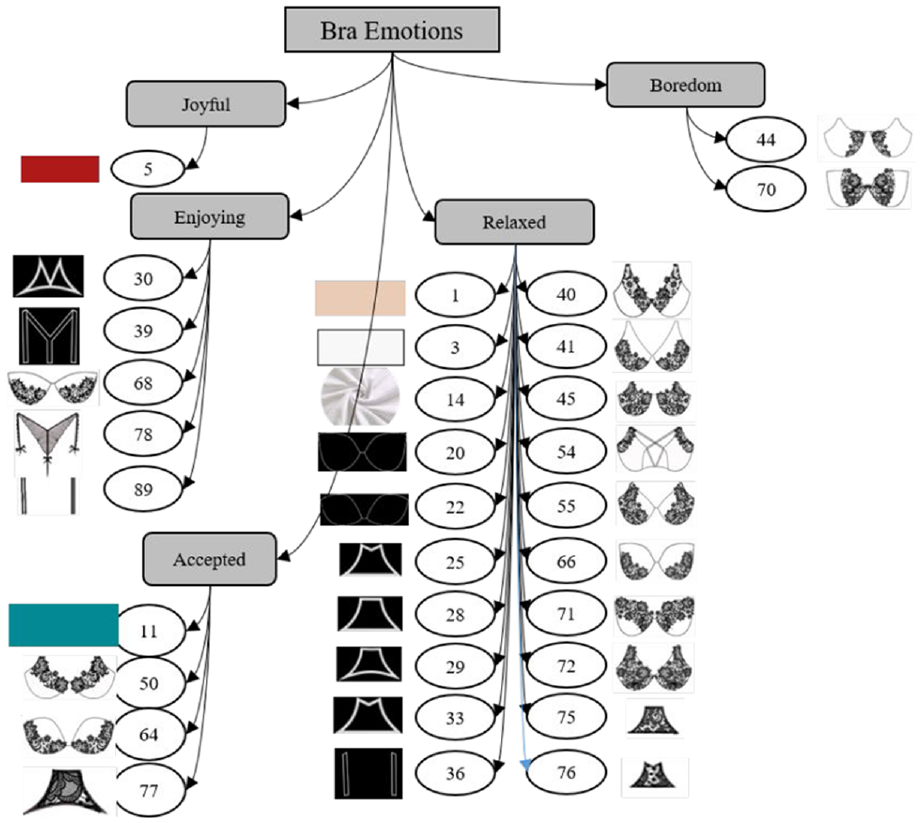
Emotion attribute of bra design features (the number corresponds to N.O. in Figure 3).
Discussion
Consumers have a different emotional understanding of bra design features. The corresponding statistics of each feature are displayed based on eight emotions, including excited, joyful, enjoying, accepted, relaxed, boredom, disappointed, and disgust. The more count there is, the larger the bubble diameter shown. Moreover, bubbles with different colors are used to draw emotions and the same scale (from 0 to 24) is set for the Y-coordinate to compare.
It can be seen that the bubbles of relaxed, accepted, and enjoying are concentrated in the upper part with a larger diameter, while the opposite situation of disgust and disappointed is shown in Figure 8. Therefore, in the process of emotional understanding and judging of bra design features, most of them are considered as three emotional categories: enjoying, accepted, and relaxed, and a few belong to joyful and boredom. However, a few features are considered as emotional attributes of excited, disappointed, and disgust. It shows that the emotional attributes of bra features are mainly belong to joyful, enjoying, accepted, relaxed, and boredom attribution based on the bra emotion model that is the comprehensive emotional feelings brought by bra aesthetics and functionality in Experiment 1. The emotional attribute of bra design features is different from emotions stimulated by the whole bra design and is just a part of emotional model. They belong to the relationship of inclusion.
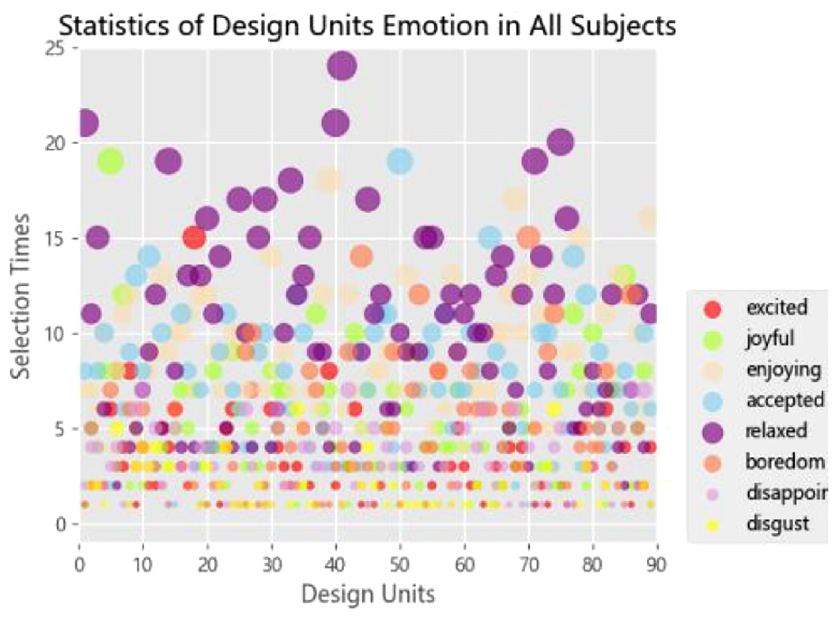
Statistics of bra design features by subjects.
As a result of counting the results of 89 bra features, it can be obtained that there are no corresponding bra design features around the positions of excited, disgust, and disappointed. The emotional attributes of bra features are located in the clockwise region from high arousal/high valence to low arousal/low valence in the bra emotional model (Figure 9).
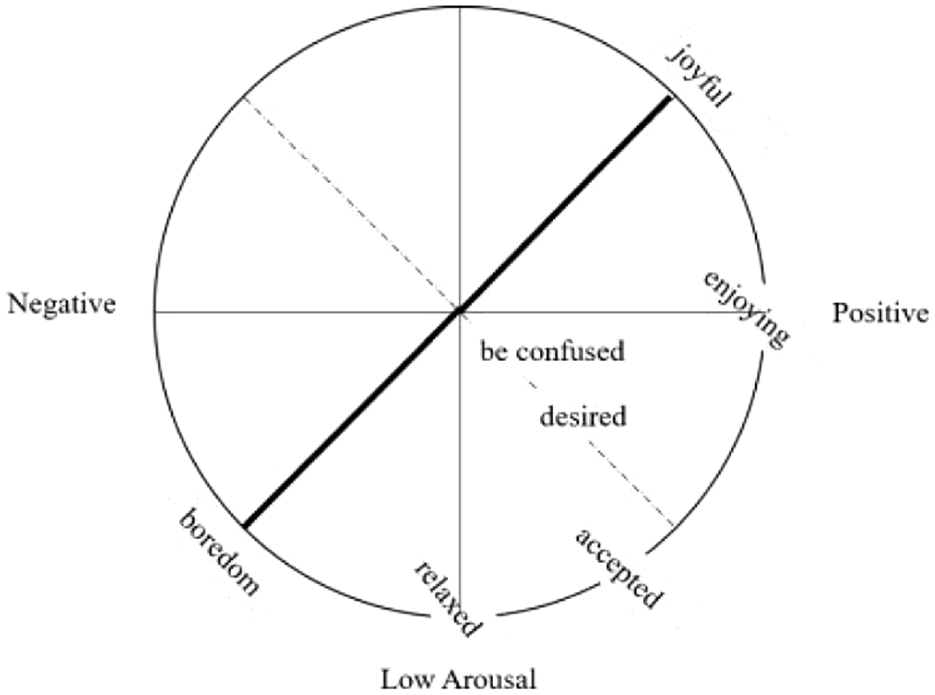
Design features emotions in the bra emotion model.
First, the bra and its design features have different physiological pathways to stimulate emotion. Donald A. Norman explained that there are two cognitive processes for humans, instinctive and reflective behavior, and three design levels for product design, visceral, behavioral, and reflective levels in his works on “Emotional Design.” The visceral level, which is the cognition of the bra’s beauty, is the most basic biological response of human beings. It can quickly judge whether the appearance of the bra suits our taste, and will then strengthen or inhibit this emotional experience through the brain at the other two levels. The behavioral level is the judgment of bra usability, which belongs to the reflection level, and can also strengthen or inhibit the instinct level. The reflective level is a reflection on own emotions and conscious summary. The three levels follow the relationship between confrontation and regulation. In the experiments, the emotional evaluation of the bra is a bottom-up cognitive behavior from instinctive level to behavior and reflection level, which integrates the evaluator’s visual evaluation, wearing experience, and experience reflection, while the evaluation of the bra design features is only limited to the visual effect of appearance but less cognitive processes. Therefore, emotions stimulated by bra design features cannot represent all emotions in the bra emotion system. When evaluating the emotions of bra design features, the emotions of joyful, enjoying, accepted, relaxed, and boredom are the main emotions.
Second, bra emotion is a compound emotion influenced by all design features. Humans have complex emotions. In existing research, emotion is usually defined as a discrete and dimensional model. The discrete model, such as Ekman’s 22 six basic emotions consists of fear, anger, joy, sadness, disgust, and surprise. The most classic model of the latter is the two-dimensional model adopted in this article. However, these two models struggle to describe complex emotions within the constraints of the number of emotions and their independence characteristic, which is composite emotions derived from two or more original emotions. 23 Plutchik has offered a three-dimensional model, called the Wheel of Emotion.23,24
Emotions of bra are the result of the comprehensive operation of emotions stimulated by different design features, so that bra design features can be further analyzed and classified based on their important role in visual appearance.
Emotional Design of Bra
Design of Moderate Arousal and Moderate Valence
If the bra design features have no obvious emotional attributes, they can be seen as features with moderate arousal and valence, which is “shy” emotion in the bra emotional model. From the relationship of design features and emotions, the design features with serial numbers 2, 13, 19, 32, 34 and 38 in Figure 3 can be selected to design the bra’s color, fabric, cup, core, wing and straps, respectively. Therefore, the design of moderate arousal and valence, which is called a Basic Emotional Bra, can be obtained following these features (Figure 10).
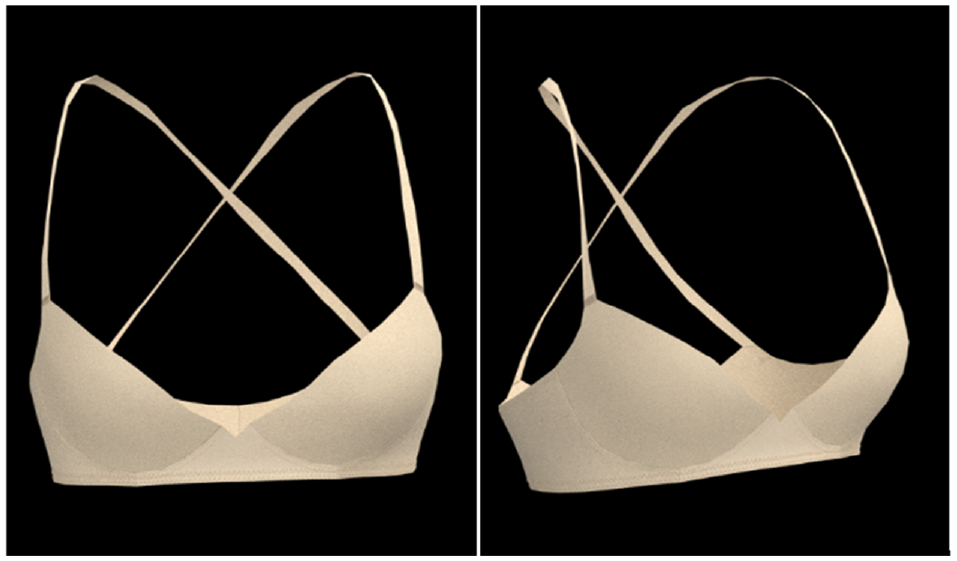
Bra with moderate arousal and valence.
Emotional Design With Love
Human movements are complex. Plutchik’s 26 emotional wheel reflects the relationship between movements' intensity change and combinations.26,27According to his emotion theory, emotions of acceptance and admiration are the mild and the intensity level of trust is higher, so the emotion of trust can be obtained by increasing the intensity of emotion acceptance. In addition, on the basic emotion wheel, trust and joy can be combined with the emotion of love. Therefore, the relationship between love, joy, and acceptance can be formed as follows:

By using the above formula, selecting the corresponding bra design features based on their emotional attributes, features with the serial numbers 11, 50, 77, and 5 would be selected. Combined with the basic emotional bra style together, the bra with love emotional attributes can be designed (Figure 11).
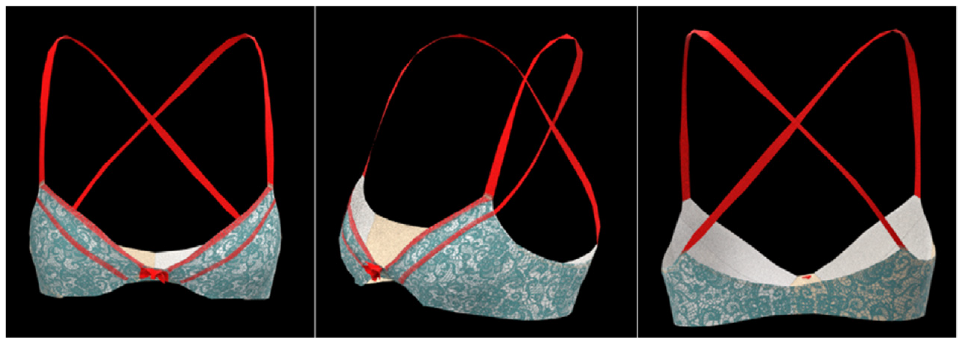
Bra emotional design with love.
Conclusion
This article mainly contains three parts: (1) obtain the bra affect model in two-dimensional space based on Russell’s two-dimensional emotion model, and then discuss the orderings of these emotions in circle space with the vertical axis (relaxed–excited) and the horizontal axis (disappointed–enjoying); (2) based on the unique affect model of the bra, analyze emotional attributes of bra design features. It has been found that design features would mainly reflect five main emotions, joyful, enjoying, accepted, relaxed, and boredom. (3) The design with love is completed by determining emotional attributes of bra design features in emotions of joyful and accepted.
This research mainly focuses on emotional recognition and emotional design of the bra in the background of artificial intelligence technology and realizes intelligent manufacturing and personalized customization of bra through consumer-oriented data. In the mature market of bras where there is little difference between products; designers can select bra design features with required emotional attributes from our conclusion to carry out the bra emotional design, which can improve the pleasant experience of consumers and thus obtain their favor.
Although there is some progress, it still needs to be improved: (1) analyze emotion granularity related to bra design features to distinguish users’ needs under different levels of positive emotion; (2) clarify the context of emotional words and combine them with consumer motivation to make better design scheme; and (3) further research should consider the influence of cultural differences on emotional experience.
Footnotes
Declaration of Conflicting Interests
The author(s) declared no potential conflicts of interest with respect to the research, authorship, and/or publication of this article.
Funding
The author(s) disclosed receipt of the following financial support for the research, authorship, and/or publication of this article: Study on the influence mechanism of parametric characteristic of breast prosthesis and bra on fitness. (72171188)
