




Abstract
Clothing and bedding that are labeled as “wrinkle-free,” “iron-free,” or “easy-care” use formaldehyde resins that can release a significant amount of formaldehyde. For patients who are allergic to formaldehyde, this can trigger allergic contact dermatitis. Unlike many other countries, formaldehyde levels in clothing are not regulated in the United States. The purpose of this study is to measure the amount of formaldehyde released from a variety of men’s dress shirts, women’s clothing, children’s clothing, and pillowcases, before washing and after washing using a Rotawash. This study has also looked at whether the price of an item has any correlation with the amount of formaldehyde released.
Keywords
Introduction
Cotton is a common natural textile fiber used in clothing and bedding. Cotton’s ability to insulate while absorbing moisture and remaining soft to the touch makes it both functional and comfortable. However, cotton is prone to wrinkling and shrinking. To combat this, the textile industry formulated formaldehyde resins. 1 Formaldehyde by itself is a water soluble, colorless gas, and is stored as an aqueous solution. In the textile industry, formaldehyde is used as a cross-linking agent for cotton’s easy-care and anti-wrinkle properties in formaldehyde resins. 2 Natural cotton fibers contain chains of cellulose and by washing and drying, these cellulose chains move and shift, causing wrinkles and shrinking. To restrict the movement of the cellulose chains, cross-linking resins are used, and these resins can release significant amounts of formaldehyde. 3 The main side effect of the use of formaldehyde resins in textiles is the allergic contact dermatitis (ACD), which is a delayed hypersensitivity reaction to a specific allergen.4,5 ACD can manifest as a chronic scaly, red, and pruritic rash. 6 In the setting of a formaldehyde textile allergy, the rash can occur where clothing is tight on the body such as the anterior thighs, buttocks, waist, flanks, and posterior arms. Patch testing is the diagnostic test for ACD, and in North America, positive patch test reaction rates to formaldehyde range from 5.4% to 7.4%. 7
Formaldehyde resins have been used in textiles since the 1920s, but since then, resins with low or no formaldehyde release have been developed. One of these low-formaldehyde release resins is dimethoxymethyl dihydroxyethylene urea or DMDHEU, which was introduced in the 1940s. 8 Along with some of its modified versions, DMDHEU is responsible for over 85% of all crease-resistant chemicals today. 1 In the last few decades, a number of low or formaldehyde free cross-linking resins have been developed and one such method uses polycarboxylic acids. However, finishing cotton with polycarboxylic acid needs an expensive catalyst that is not cost-effective. Other discoveries similar to using polycarboxylic acids also involve very expensive processes and not used commercially.1,9 In the previous studies, ACD has been induced from cosmetic products with formaldehyde measurements between 200 and 300 ppm; however, even lower levels of formaldehyde can trigger ACD in allergic persons. The amount of formaldehyde exposure necessary to trigger ACD from textiles has still not been determined. 4
Currently, formaldehyde levels in clothing are not regulated in the United States, but many other countries restrict the amount of formaldehyde allowed in textiles. European countries like France, Finland, and Norway have a formaldehyde limit of 100 ppm for textiles in direct contact with the skin. 10 The most stringent limits are in Japan, where 75 ppm is the maximum limit for products that come into direct contact with the skin.11,12 The American Apparel and Footwear Association has published voluntary textile industry standards for levels of formaldehyde in clothing. These standards limit formaldehyde content to <20 ppm for children <3 years of age and <75 ppm for children older than 3 years of age and adults. 13 Textiles that do not come into direct skin contact (such as outerwear) are limited to <300 ppm. Standards such as OEKO-TEX® Standard 100 (a globally standardized, independent testing, and certification system) certify that certain textiles in direct contact with the skin, such as clothing and pillowcases, limit formaldehyde release to 75 ppm. 14 Even though some US manufacturers are using the newer low-formaldehyde resins, the amount of textiles imported is increasing and the finishing techniques of these manufacturers are still unknown. 15 In this study, the amount of formaldehyde released in men’s dress shirts, women’s clothing, children’s clothing, and pillowcases is measured, before and after washing with a Rotawash. This study also looks at whether the price of an item has any correlation with the amount of formaldehyde released.
Method
The American Association of Textile Chemists and Colorists Test Method 112 (AATCC TM112-2014) was used for the determination of formaldehyde released and the American Association of Textile Chemists and Colorists Test Method 61 (AATCC TM61-2013) was used as a guideline for accelerated laundering.16,17 These methods are briefly summarized as follows.
Reagent
A Nash reagent was made with 150 g of ammonium acetate, 3 mL of glacial acetic acid, and 2 mL of acetylacetone diluted with deionized water into a 1-L volumetric flask. The Nash reagent is used to create a color reaction with formaldehyde that allows the use of colorimetry to determine the concentration of formaldehyde released in a sample.
Standard
An external standard was used to generate a standard calibration curve for calculating the formaldehyde levels of clothing and pillowcases. A stock solution was made with 3.8 mL of 37% reagent grade formaldehyde diluted with deionized water into a 1-L volumetric flask and equilibrated for 24 h. The stock solution was then diluted by pipetting 25 mL into a 250-mL volumetric flask with deionized water. The diluted stock solution was diluted again to create 1.5, 3.0, 4.5, 6.0, and 9.0 μg/mL solutions by pipetting 5, 10, 15, 20, and 30 mL aliquots of the stock solution into 500 mL volumetric flasks and then diluting to volume with deionized water.
In order to determine the concentration of the first stock solution, a back titration was performed with 0.02 N sulfuric acid and using 0.1% thymolphthalein in ethanol as the indicator. In duplicate, the standard sample was made by pipetting 50 mL of 1 M Na2SO3, two drops of the indicator, and 10 mL of the original formaldehyde stock into a 150-mL Erlenmeyer flask. The solution was then back titrated with 0.02 N H2SO4 until the blue color disappeared.
The following equation was then used to calculate the actual concentration of formaldehyde:

where C is the Wt/Vol concentration of formaldehyde (μg/mL), A is the Vol of acid used (mL), and N is the normality of the acid.
This number will be used to correct the concentration of formaldehyde for the external standard calibration curve.
Sample Preparation
To prepare the samples, the thread option was used from AATCC TM112-2016 where 1 g of sample was obtained and thread was strung across the sample. The threaded sampled was then suspended over 50.0 mL of deionized water in a 0.95-L mason jar and capped with a gas sealing cap. 16 The samples were then put in a temperature-controlled oven at 49 ± 1 °C for 20 h. After 20 h, the samples were removed and cooled for 30 min. The samples were taken out of the jar. The jar was recapped and agitated to collect any condensation formed on the jar sides.
Washing Technique
One gram samples were prepared and laundered using AATCC TM61-2013 condition 2A with AATCC detergent M223D5. Each Rotawash cycle is equivalent to five home washes, which means washing twice is equivalent to ten home washes. After each wash cycle, the samples were rinsed with tap water for roughly a minute, then rinsed three times with deionized water and allowed to dry before sample preparation. For samples that were washed twice using the Rotawash, the samples were rinsed and dried after the first wash cycle before washing them again.
Sample Information
Cotton and polyester fabrics known to be untreated with formaldehyde finishes were used to verify the experimental method since there should be no formaldehyde released from these fabrics. The following untreated fabrics were purchased from Test Fabric, Inc: the cotton was bleached desized, Style 400 and Lot 1275; the polyester was disperse dyeable, Style 777 and Lot 2701. Each formaldehyde concentration was averaged over nine samples of fabric in each condition as follows: unwashed, after five home washes, and after ten home washes.
Twelve different pillowcases from eight different brands were purchased with suggested manufacturer prices ranging from US$9.47 to US$60.00 per pillowcase. Pillowcase samples were prepared from three different pillowcases of the same brand and color. For each individual pillowcase, three samples were taken to measure formaldehyde concentrations in each condition as follows: unwashed, after five home washes, and after ten home washes. These experiments were repeated and each formaldehyde concentration was averaged over 18 samples.
Five different brands of white men’s shirts were purchased with suggested manufacturer prices ranging from US$60.00 to US$89.50. Men’s dress shirt samples were prepared from four different shirts of the same brand and color. From each individual shirt, three samples were taken to measure formaldehyde concentrations in each condition as follows: unwashed, after five home washes, and after ten home washes. Each formaldehyde concentration was averaged over 12 samples.
Eight different articles of women’s clothing from six different brands were purchased with suggested manufacturer prices ranging from US$19.99 to US$98.50 per article of clothing. Women’s clothing samples were prepared from three different articles of clothing for each brand and color. From each individual shirt or pants, three samples were taken to measure formaldehyde concentrations in each condition as follows: unwashed, after five home washes, and after ten home washes. Each formaldehyde concentration was averaged over nine samples.
Twenty-three different children’s clothing samples from eight different brands were chosen with suggested manufacturer prices ranging from US$6.00 to US$39.50 per piece and sizes ranging from newborn to age 6 years. Three articles of each brand and piece of clothing were prepared and formaldehyde concentrations were measured in each condition as follows: unwashed, after five home washes, and after ten home washes. Each formaldehyde concentration was averaged over nine samples.
Testing Technique
To prepare solutions for colorimetry, 5 mL of Nash reagent was pipetted into small test tubes, along with 5 mL of sample or standard solution. Deionized water was used to create a blank solution. All solutions were mixed and then placed into a 58 ± 1 °C water bath for 6 min. The cooled solution was analyzed with a Thermo Spectronic Genesys 20 spectrophotometer at a wavelength of 412 nm.
To calculate the amount of formaldehyde released, an initial calculation was used to find the amount of formaldehyde in solution using the equation given from the external standard calibration curve created. To calculate the amount of formaldehyde released from each sample, the following calculation was used:

where F is the concentration of formaldehyde (μg/g or ppm), C is the concentration of formaldehyde in solution as read from the calibration curve, and W is the weight of the test fabric (g).
Results and Discussion
Standards
Untreated cotton showed a parts per million (ppm) formaldehyde concentration of 2.11 ± 0.51 ppm (unwashed), 0.40 ± 0.41 ppm (five home washes), and 1.02 ± 0.45 ppm (ten home washes). Untreated polyester showed formaldehyde concentrations of 2.50 ± 0.67 ppm (unwashed), 0.13 ± 0.22 ppm (five home washes), and 0.36 ± 0.36 ppm (ten home washes). These measurements indicate that untreated fabrics show no significant amount of formaldehyde released with our experimental method.
Pillowcases
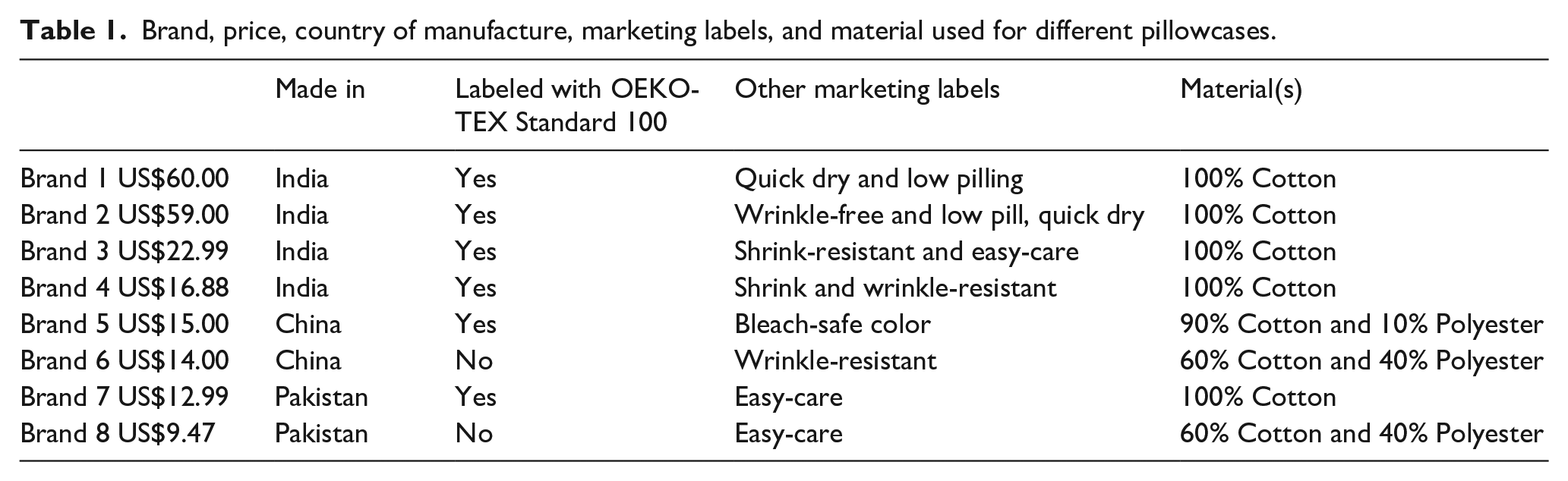
Pillowcases of various brands, prices, country of fabrication, and fabric blend were tested. The details for each pillowcase are shown in Table 1. Figure 1 summarizes the amount of formaldehyde released versus the number of washes for corresponding brand of the different pillowcases.
Brand, price, country of manufacture, marketing labels, and material used for different pillowcases.
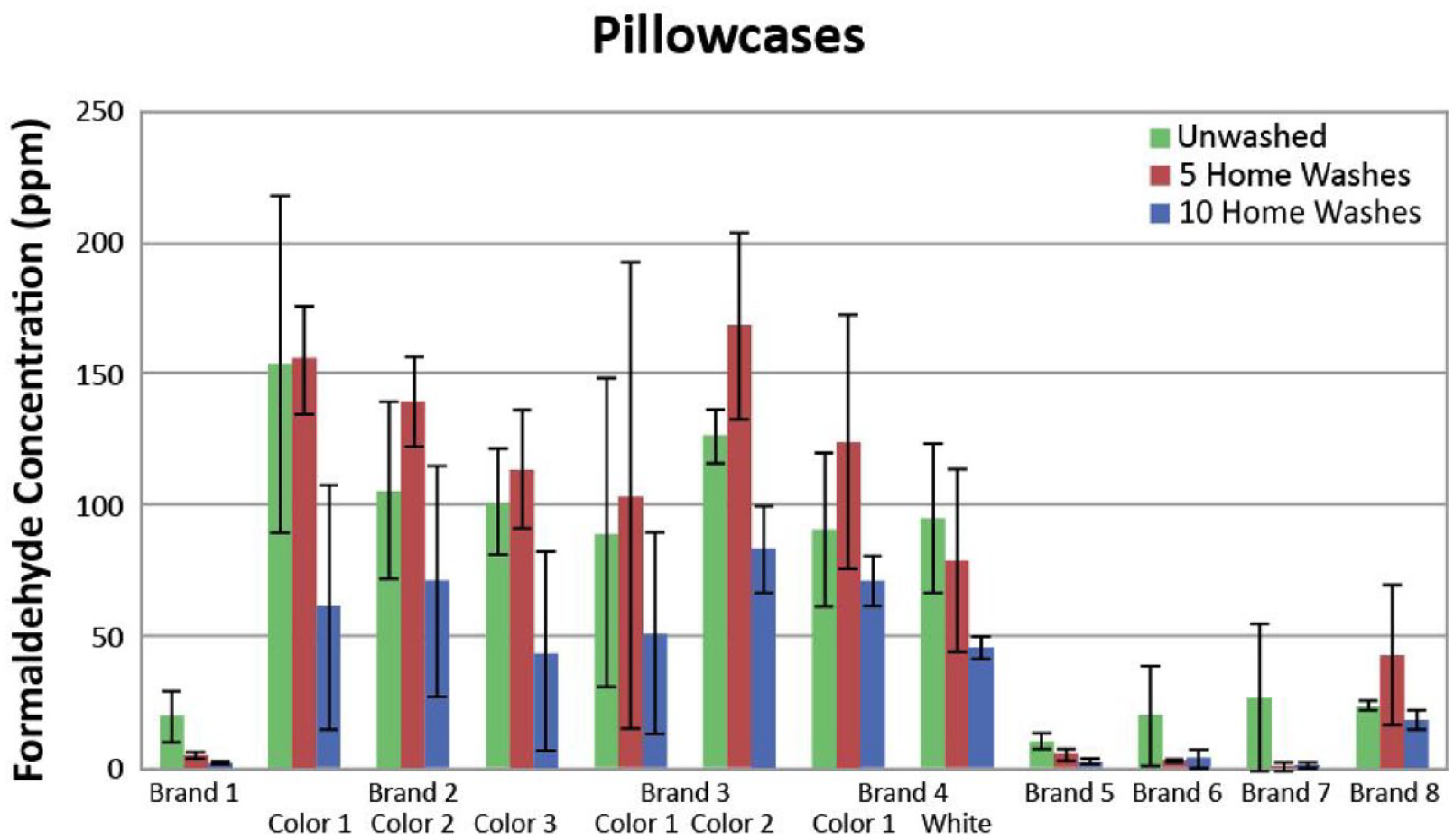
Formaldehyde released versus the number of washes for different brands of pillowcases.
The general trend for the formaldehyde released for each brand of pillowcase (Figure 1) shows an initial increase of formaldehyde released after five home washes, which indicates that any loosely bound formaldehyde was removed in those first washes. After ten home washes, all brands showed less formaldehyde released than before washing and after five home washes, indicating that any remaining formaldehyde is tightly bound within the wrinkle-free resin. The most formaldehyde released was from Brand 2 with 154 ppm before any washings, even though it was labeled with the OEKO-TEX® Standard 100 (Table 1). No correlation with the price of pillowcase or color versus the amount of formaldehyde released was found, meaning that a higher cost did not correlate with less formaldehyde released.
The large error bars in our data have at least two possible sources. One source is the variability of uniform application and curing within a single pillowcase. Samples taken from different parts of a single pillowcase can show substantial differences in the formaldehyde concentration. The second source is the variability between pillowcases of the same color and brand. Both of these sources are due to inconsistencies of the application of chemicals as well as the curing process after application of the chemicals. 18
Men’s Dress Shirts
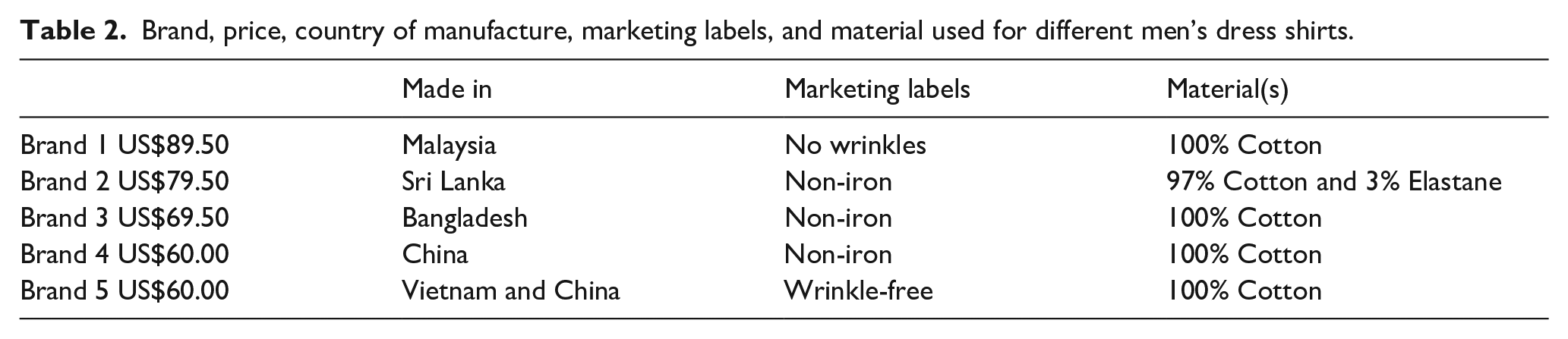
White men’s dress shirts with a non-iron or anti-wrinkle label of various brands, prices, and country of fabrication were tested. White men’s dress shirts were selected due to the prevalence of anti-wrinkle labels and use of crease-resistant resins. The details for each shirt are shown in Table 2. Figure 2 summarizes the amount of formaldehyde released versus the number of washes for each brand of shirt. Note that Brand 5 had shirts produced in two different countries, which have been reported separately in Figure 2.
Brand, price, country of manufacture, marketing labels, and material used for different men’s dress shirts.
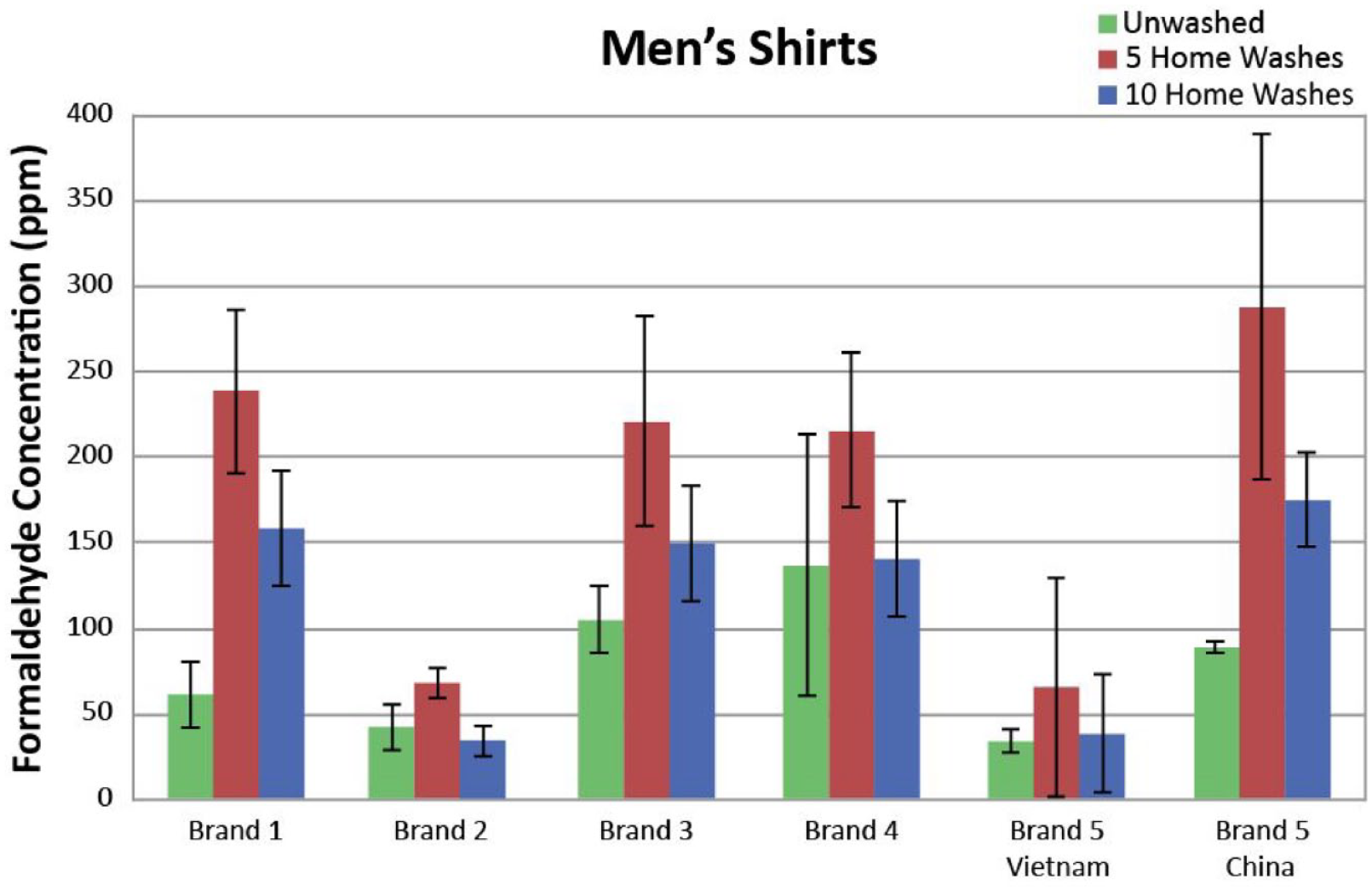
Formaldehyde released versus the number of washes for each brand of men’s dress shirt.
Overall, men’s dress shirts released higher levels of formaldehyde compared to the pillowcases tested. Each unwashed shirt released less than 140 ppm with the highest at 136 ppm and the lowest 33.3 ppm (Figure 2). However, Brand 5 manufactured in China shows 288 ppm of formaldehyde released after five home washes. This is well above the benchmark standards of 75 ppm set for many textiles around the world. After ten home washes, Brand 5 manufactured in China still shows a high release of formaldehyde at 174 ppm. In fact, four of the six shirts tested still showed over 140 ppm formaldehyde released after ten home washes, implying that more than ten home washes are needed to decrease the formaldehyde levels below the OEKO-TEX® Standard 100 suggested levels. Similar to the pillowcases tested, the prices of men’s dress shirts did not correlate with the amount of formaldehyde released. Brand 5 released the highest amounts of formaldehyde after washing and cost US$60 (Table 2), which is one of the least expensive shirts tested. The most expensive shirt (Brand 1), which cost US$89.50, showed comparable formaldehyde levels released to the least expensive shirt (Brand 5). The differences in the country of manufacture were associated with changes in the amount of formaldehyde released. Three of four Brand 5 shirts were made in Vietnam, whereas one of the four was made in China. These shirts showed significantly different formaldehyde levels released, even though they were sold together in the same store and under the same brand name.
Similar to the pillowcases, when looking at the relative increases and decreases in formaldehyde levels in all men’s shirts, all the men’s shirts showed an increase in formaldehyde released after five home washes, indicating a large amount of loosely bound formaldehyde initially on the shirts. Many still showed high levels of formaldehyde released even after ten home washes. All the tested shirts showed a decrease in formaldehyde released when laundered five versus ten times, suggesting that all the loosely bound formaldehyde is removed in the first five washes, and subsequent formaldehyde released is at a much lower rate. As was previously mentioned, this subsequent formaldehyde released could also be due to inconsistencies in the chemical application or curing process, leading to variability in tightness of the bound formaldehyde.
Similar to the pillowcases, our data exhibit a wide range of formaldehyde values for men’s shirts. We attribute this to the same sources, the variability of chemical application within a single shirt as well as the variability in chemical application and curing between shirts of the same color and brand. We were not able to verify the batch number or test between batches and shipments to stores.
Women’s Clothing
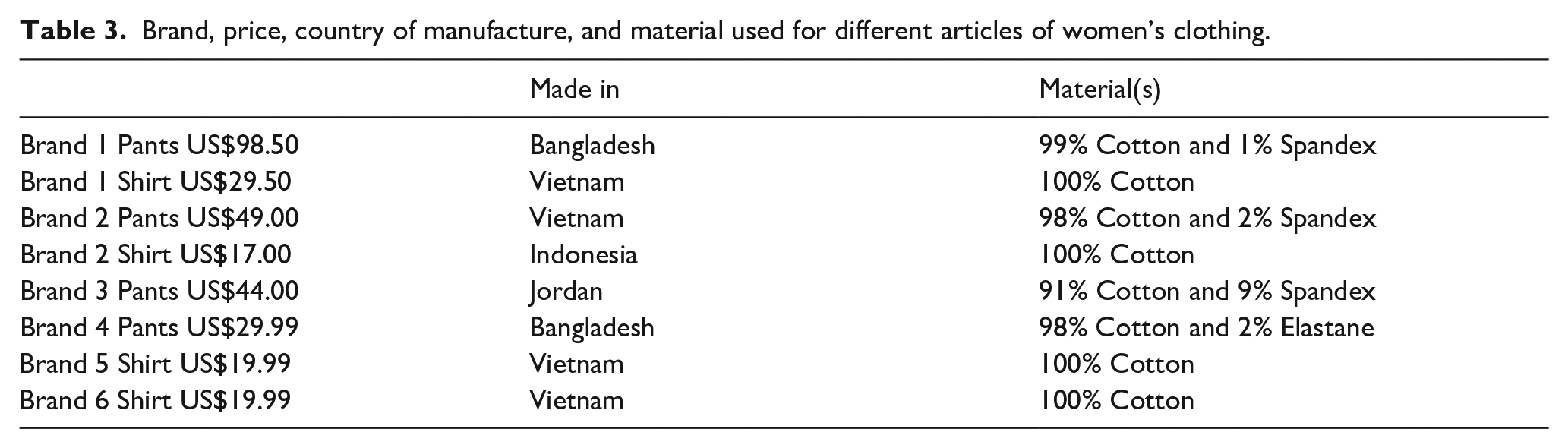
White women’s clothing of various brands, prices, country of fabrication, and fabric blend was tested. The details for each article of clothing are shown in Table 3. Figure 3 summarizes the amount of formaldehyde released versus the number of washes for each article of clothing.
Brand, price, country of manufacture, and material used for different articles of women’s clothing.
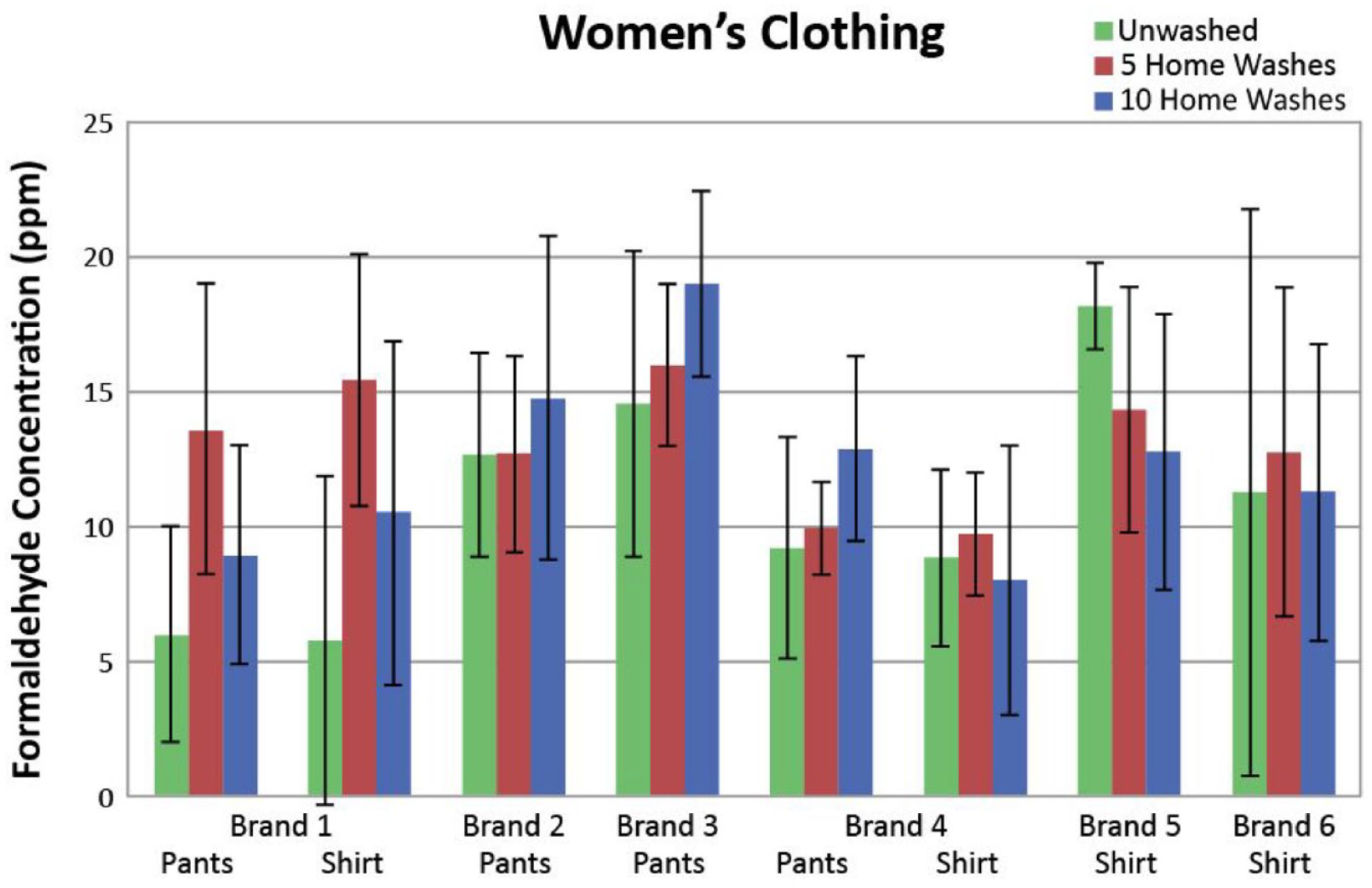
Formaldehyde released versus the number of washes for corresponding brand and price of different articles of women’s clothing.
The amount of formaldehyde released from women’s clothing was noted to be much lower than that from the pillowcases and men’s shirts, with no measurements over 20 ppm found (Figure 3). These results are expected because none of the women’s clothing was labeled as wrinkle-free or easy-care (Table 3), meaning they were most likely not treated with any formaldehyde resins. Similar to the previous results, we found no relationship between price or color and the amount of formaldehyde released.
Children’s Clothing
Children’s clothing of various brands, prices, country of fabrication, and fabric blend was tested. Overall, children’s clothing showed the lowest formaldehyde release of the tested clothing. The details for each article of clothing are shown in Table 4.
Brand, price, country of manufacture, marketing labels, and material used for different articles of children’s clothing.
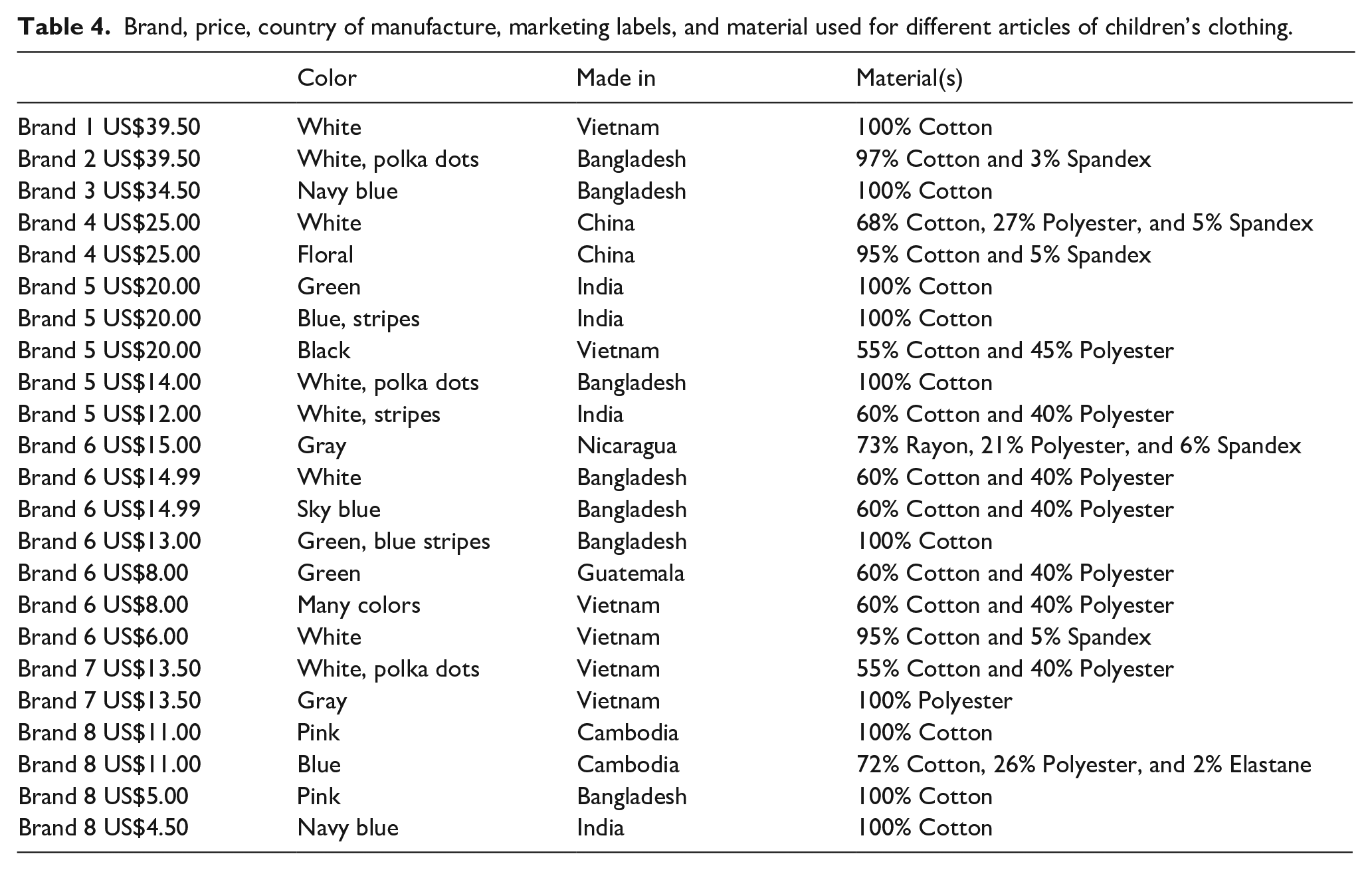
Most formaldehyde concentrations ranged from 0 to 8 ppm (most likely within experimental error), with only one article of floral-patterned pants measuring as follows: 44.0 ± 11.7 ppm (unwashed), 42.7 ± 24.3 ppm (five home washes), and 23.9 ± 6.68 ppm (ten home washes). These data are well within industry standards for children’s clothing. These results are also expected, considering that none of the clothing was labeled as wrinkle-free or easy-care. Similar to all other sets of clothing, we found no relationship between price and the amount of formaldehyde released.
Conclusion
In this study, formaldehyde concentrations released from a variety of pillowcases and men’s, women’s, and children’s clothing were measured. Certain pillowcases and wrinkle-free men’s dress shirts demonstrated formaldehyde release higher than many international industry standards. With all four groups of samples, there was no correlation with price and the amount of formaldehyde released, meaning that a high cost did not guarantee less formaldehyde released. Our data for pillowcases and men’s shirts that are advertised as “wrinkle-free” show a large range of formaldehyde concentrations, which we attribute to the variability of chemical application within a single article as well as the variability in chemical application and curing between articles of the same color and brand in different batches or country of manufacture.
Formaldehyde levels in clothing are currently not regulated in the United States; however, voluntary standards published by the American Apparel and Footwear Association limit formaldehyde content to <20 ppm for children <3 years of age and <75 ppm for children older than 3 years of age and adults. 13 Textiles that do not come into direct skin contact (such as outerwear) are limited to <300 ppm. The demand for easy-care or wrinkle-free articles is not declining; therefore, more methods of low or no formaldehyde release finishes should be developed and an international standard limit should be determined for the importation of products. In the meantime, the only way to limit ACD for patients who are sensitive to formaldehyde is to avoid wrinkle-free finishes as much as possible. This means that formaldehyde allergic individuals would need to avoid formaldehyde exposure by wearing 100% untreated cotton, silk, or textiles that are made with polyester, acrylic, or nylon, depending on their sensitivities. Further studies are needed to study the formaldehyde release from elastomeric materials that are often present in many articles of clothing in modern society, as well as to determine the amount of formaldehyde released in textiles to cause ACD in formaldehyde allergic persons.
Footnotes
Declaration of conflicting interests
The author(s) declared no potential conflicts of interest with respect to the research, authorship, and/or publication of this article.
Funding
The author(s) disclosed receipt of the following financial support for the research, authorship, and/or publication of this article: The research reported in this publication was supported by the Skin Diseases Research Center (SDRC) Core Grant P30AR066524 from the National Institute of Arthritis and Musculoskeletal and Skin Diseases of the National Institutes of Health and the Beckner Fund in the School of Human Ecology, University of Wisconsin–Madison. The content is solely the responsibility of the authors and does not necessarily represent the official views of the National Institutes of Health or the School of Human Ecology.
