




Abstract
Change is historically seen as incompatible with built heritage. Paradoxically, change can charge heritage with enough cultural activity to facilitate its ongoing valorization. Change may therefore be better understood as a collection of recreations by contemporary societies, like how UNESCO portrays intangible heritage. However, to understand built heritage in this way, interpretative approaches must reconceptualize physical sites as constantly evolving in response to their ever-changing sociocultural context. Expanding on the history of linguistic analogies for architectural interpretation, this article explores ‘translation’ as an analogy that can illuminate constantly recreated traditions at built heritage sites. Using the Grade 1 listed Coventry Cathedral, UK, the craft traditions associated with the site are used as a vehicle to reconceptualize built heritage as constantly recreated in relation to temporal traditions (or ICH), which both perpetuate and transform the physical building across time. The article concludes by suggesting physical changes made to the site have simultaneously sustained and changed its craft traditions. Through constant recreation or translation, the site has maintained a commitment to its history whilst continually responding to present-day social needs. This not only ensures relevance to contemporary society but also creates a rich foundation for translation of its heritage into the future.
Keywords
Introduction: The Context of Change
Physical change to built heritage is typically the main cause of concern when reviewing approaches towards the conservation and adaptation of the historic built environment. At the core of this concern is the idea that cultural memory is an intrinsic quality of physical heritage which must be protected from change (Boccardi, 2019, p. 7; DeSilvey, 2006, p. 326; Jokilehto, 2018, p. 420). Consequently, ‘minimum intervention’ has long been endorsed as the most appropriate tactic if needing to work with built heritage (Jones & Yarrow, 2013, p. 11). However, in more recent decades, altering heritage buildings in England (i.e., listed buildings) has been positively reinterpreted as the representative mark of contemporary societies (see Historic England, 2008, p. 22). Correspondingly, the definition of conservation in England has also been reinterpreted as ‘…the process of managing change’ (Historic England, 2008, p. 22), as opposed to halting or avoiding change (Kamel-Ahmed, 2015, p. 69; Scott, 2008, p. 54).
Within a broader UK context, this redefinition of conservation operates within a values-based methodology of heritage assessment and interpretation, which is utilized to articulate the ‘…special architectural or historic interest’ of a listed building (HM Government, 1990, p. 1). Therefore, despite the values-based methodology increasing the prevalence of so-called ‘intangible values’ (which articulate the more-than-physical qualities associated with a listed building), the illumination of these values is ultimately subservient to the conservation (or stasis) of physical fabric (Fredheim & Khalaf, 2016, p. 474; Jones, 2017, p. 24; Pendlebury, 2013, p. 715).
In contrast to this focus on physical heritage in the UK, some scholars suggest heritage should be thought of as something produced through ongoing processes (Harvey, 2001; Skounti, 2009, p. 75). By applying this concept more specifically to listed buildings, it creates an opportunity to see beyond their physicality or permanence and perceive them as cultural events (DeSilvey, 2017, p. 29; Kirshenblatt-Gimblett, 2004); as constantly transforming entities (Latour & Yaneva, 2008); or indeed, as containers of intangible heritage (Skounti, 2009, p. 83). In theory, this reconceptualization of listed buildings should work well with a values-based approach, which by definition requires the ongoing reappraisal of what is valued by ever-changing societies (Harrison, 2013, p. 198). It is also a way of interpreting physical heritage that merits further exploration from a Western perspective, where there is evidence of a rising interest in a more intangible conception of heritage (see Djabarouti, 2020; Harrison, 2013, p. 86).
The interpretation of material sites in this more dynamic way—particularly listed buildings—benefits from a consideration of not just the chronological accumulation of any changes, but in what ways these changes maintain a continuity of heritage across time. Similarly, the application and utility of UNESCO’s description of intangible cultural heritage (hereafter ICH) (see UNESCO, 2003) to built heritage implies that their interpretation would need to prioritize how they are ‘…constantly recreated by communities and groups in response to their environment, their interaction with nature and their history’ (UNESCO, 2003, p. 2). The notion of intangible heritage being constantly recreated refers to the ability of ICH to adapt to societal changes, which in turn challenges traditional notions of built heritage maintaining a fixed authenticity (Lenzerini, 2011, p. 108; Skounti, 2009, p. 78). Thus, in applying the ICH concept of constant recreation to buildings of heritage value, conceptual space is made for them to be interpreted as a collection of ‘(re)tellings’ (Hollis, 2009, p. 13)—or re-creations—by contemporary societies.
Within Western built heritage and architectural practices, research suggests this concept of constant recreation is most compatible with a temporal understanding of tradition, which balances contemporary innovation with a deep connection to and reverence for the past 1 (for example, see Frost, 2017, p. 263; Jencks, 2016; Pallasmaa, 2012, p. 15; Plevoets & Cleempoel, 2019, p. 99). This is what Lowenthal (2015, p. 158) refers to as a form of ‘innovative imitation’; what Jencks (2016) refers to as the ‘novel variation’; and what UNESCO (2005, p. 2), in quoting Igor Stravinsky, describes as ‘…a living force that enlivens and nourishes the present’. A temporal understanding of tradition, therefore, allows change and recreation to be a part of the cultural transmission process. This is in stark contrast to the traditional views of built heritage that are rooted in nineteenth-century ideology (Lowenthal, 2015, pp. 92–93; Pallasmaa, 2012, p. 15), whereby cultural transmission is concerned only with protecting and maintaining a fixed understanding of the past and the physical artefacts that represent it.
As will be discussed, the linguistic analogy of reading buildings denotes an accepted interpretative approach in relation to building conservation and architecture. However, its conceptual limitations justify the exploration of the comparatively less common linguistic analogy of translation as an approach that may better support the recent turn to consider heritage values as existing simultaneously through both tangible and intangible modes or expressions. In particular, understanding built heritage as translated across time may better harmonize with the dynamics of intangible heritage as a constantly evolving and recreated practice in response to its ever-changing cultural context (Fairchild Ruggles & Silverman, 2009, p. 11; Lenzerini, 2011, p. 101).
A Translation Approach
There is no definitive method for interpreting listed buildings. However, a thorough understanding would undoubtedly go beyond the physicality of buildings, architecture and their associated facts, to uncover a multiplicity of meanings that support cultural diversity (as per Borden & Dunster, 1995, p. 1; ICOMOS, 1994, p. 46). In architecture, a multiplicity of meaning has persisted through analogies with cognitive linguistics, which inspired postmodern architects to apply an architectural language to their work—implying buildings can be read (Wells, 2007, p. 7; Whyte, 2006, p. 154). For example, in Charles Jencks’ seminal work, The language of Post-Modern Architecture (1977), linguistic analogies were utilized as inspiration to create an architectural language. Jencks believed there are ‘…various analogies architecture shares with language and if we use the terms loosely, we can speak of architectural “words”, “phrases”, “syntax”, and “semantics”’ (Jencks, 1977, p. 39). From this postmodern perspective of architecture, we can comprehend the architectural language as a means of communication between buildings and people. The architectural language is therefore not where meaning resides; rather, it is how meaning can be accessed—just like how cognitive linguistics theorizes human language (written and spoken) (see Freeman, 2003, p. 253). Expanding on this, Walter (2014b, p. 641) describes the applicability of a ‘textual metaphor’ for cultural artefacts, whereby architectural heritage can be read in order to interpret its meaning for society.
The historical reading of buildings, particularly complex historic buildings, can be extremely challenging, as their static monumentality often means they are representative of specific customs and traditions from the past, which may be perceived as outmoded when contextualized within contemporary values 2 (Harbison, 1997, p. 176). Whyte’s (2006) paper suggests an alternative linguistic analogy of translation is a more appropriate method for interpreting old buildings, asserting that the more popular alternative of reading is flawed (see Whyte, 2006, p. 177). Whyte puts forward three main propositions that support a translation approach over a reading approach 3 . Firstly, whilst a textual metaphor may have utility, in reality, there is little resemblance between a novel and a building (Whyte, 2006, p. 154). Secondly, the restriction of the representation and interpretation of architecture to that of just text imposes interpretative limitations (Whyte, 2006, p. 154). Lastly, and perhaps of most importance, the comprehension of meanings will change across both the interpretative and physical lifespan of a building, as not only will the physical building be subject to alterations across time (i.e., physical change), but it will also be interpreted through changing frames of reference by the reader (i.e., interpretative change). The story being read is not fixed like on paper—it evolves, transforms and is (re)told in different ways depending on the personal and cultural perspectives of the interpreter (those who are reading the building) (Hassard, 2009, p. 162; also see Stone, 2019, p. 79; Whyte, 2006, p. 155).
Similarly, Scott (2008, p. 11) also describes the process of change that historic buildings go through (what he calls ‘alteration’) to be more akin to the act of translation. He notes its specific imperative being to bring a building from the past into the present (Scott, 2008, p. 79). Plevoets and Cleempoel (2019, pp. 10, 33, 2013, p. 16) refer to this approach as translation, whereby the historic building acts as a precedent (or blueprint) for contemporary changes. Stone (2019, p. 33) concurs, noting how the process of translation is concerned with the imposition of contemporary cultural values upon a historic building, which in turn informs contemporary readers’ ability to interpret a version of the past. Consequently, the notion of change must carefully balance multiple meanings from multiple cultures across time, whilst also being representative of the desires and cultural identities of those in the present (as per UNESCO, 2003, p. 2, 2005, p. 2).
Traditional building crafts, such as stone masonry or carpentry, can be utilized as a relevant theme to explore the translation of buildings, particularly if these skills are regarded as ‘…an approach, an attitude, or a habit of action’ (Adamson, 2007, p. 4). A craft skill, for example, must not only be passed on across generations through a tradition of observational replication (Karakul, 2015, p. 138); but must also evolve across time to maintain relevance to present-day societies (Sennett, 2008, p. 26). This reflects the broader concept of craft ‘revivals’, which is outlined by Peach (2013, p. 161) as follows:
…revivals are not simply a repetition of the past. Because craft is in a constant process of reinvention and reinvigoration, so-called ‘revivals’ are instead uniquely complex and historically changing, reflecting more about the present and the future than the past.
Peach (2013, p. 162) further highlights how craft practice is ‘…linked to wider social, cultural and political structures and processes’ and is thus not only a reflection of but oftentimes a reaction to, social change. Note the similarity here between the concepts of craft revival; the translation analogy; and the constantly recreated nature of ICH.
Using the Grade 1 listed Coventry Cathedral as a case study, this research explores the utility of the concept of translation as a way to reconceptualize built heritage as being constantly recreated in relation to temporal traditions (or ICH), and that it is these very traditions that both perpetuate and transform the physical building across time (not dissimilar to Hollis, 2009, p. 13). The article aims to highlight how the evolution of the cathedral is an example of translation in relation to its craft traditions (both social- and skill-based craft heritage). When considering the cathedral as a series of craft translations, at least 1,200 years of history must be discussed, which frames the site as an active and constantly evolving entity in the development of the city. To further refine the scope, specific focus is given to craft skills, craft guilds and mystery plays. These themes are used to illustrate how it is possible to approach the cathedral as a translation of tacit craft-centred knowledge and practices, which have influenced ongoing physical changes to the site, stimulated new uses, and amalgamated with its dominant heritage narrative concerning WWII.
Case Study: Coventry Cathedral
Overview: A Site of Three Cathedrals
The Cathedral Church of St Michael—or Coventry Cathedral as it is most commonly referred to—is a listed building of significant heritage interest, 4 and is located in the centre of the city of Coventry, England (Figure 1). In the period before 1043, there was no cathedral on the site, yet its association with religious worship was already underway, with a nunnery being in existence up to the early eleventh century until it was ransacked and ruined by Danish invaders (Historic England, 2019; Williams, 1985, p. 6). Following this lesser-known prologue is the more commonplace yet equally complex history of three buildings—or cathedrals—which continue to have a physical presence at the site 5 (Figure 2).
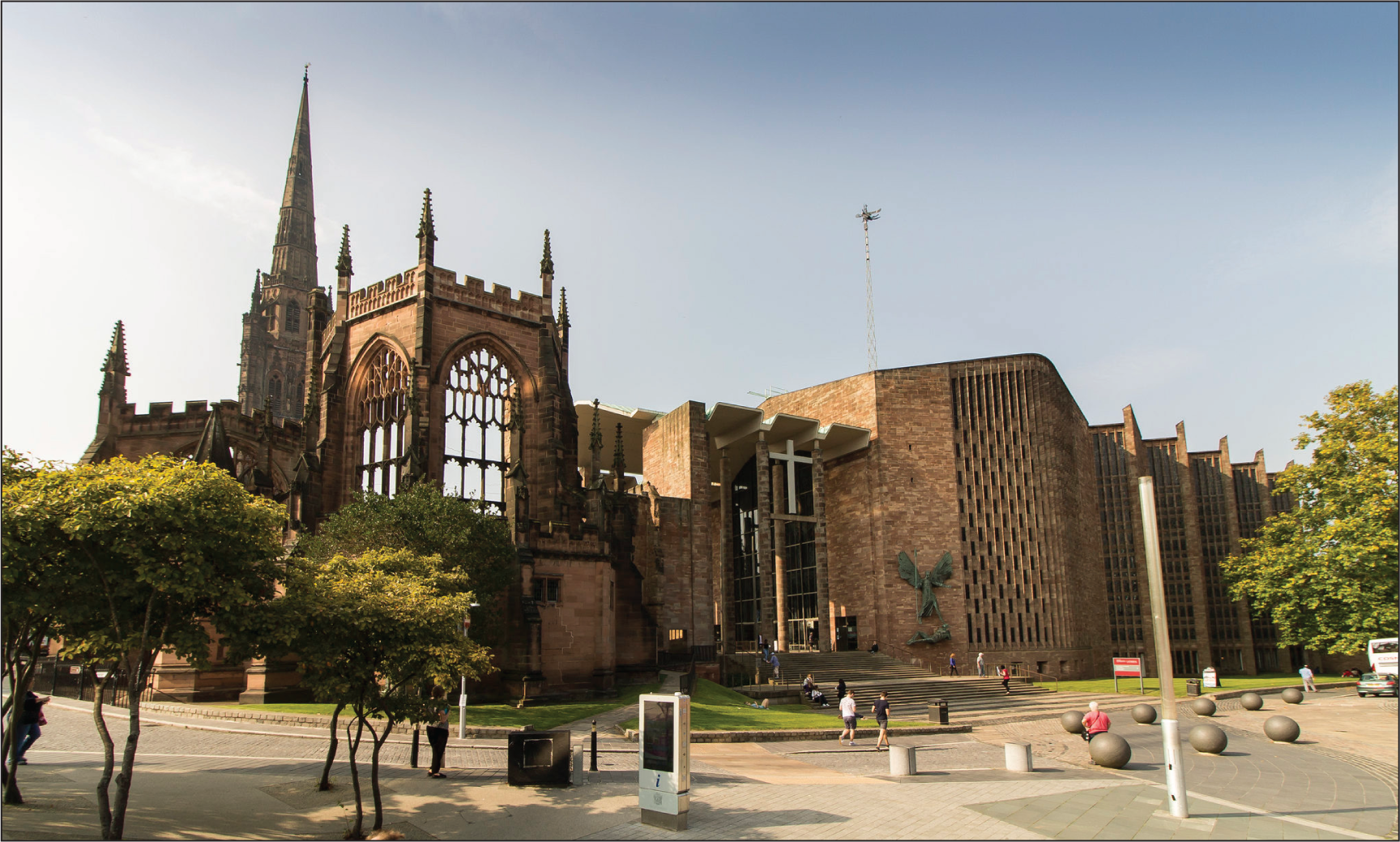
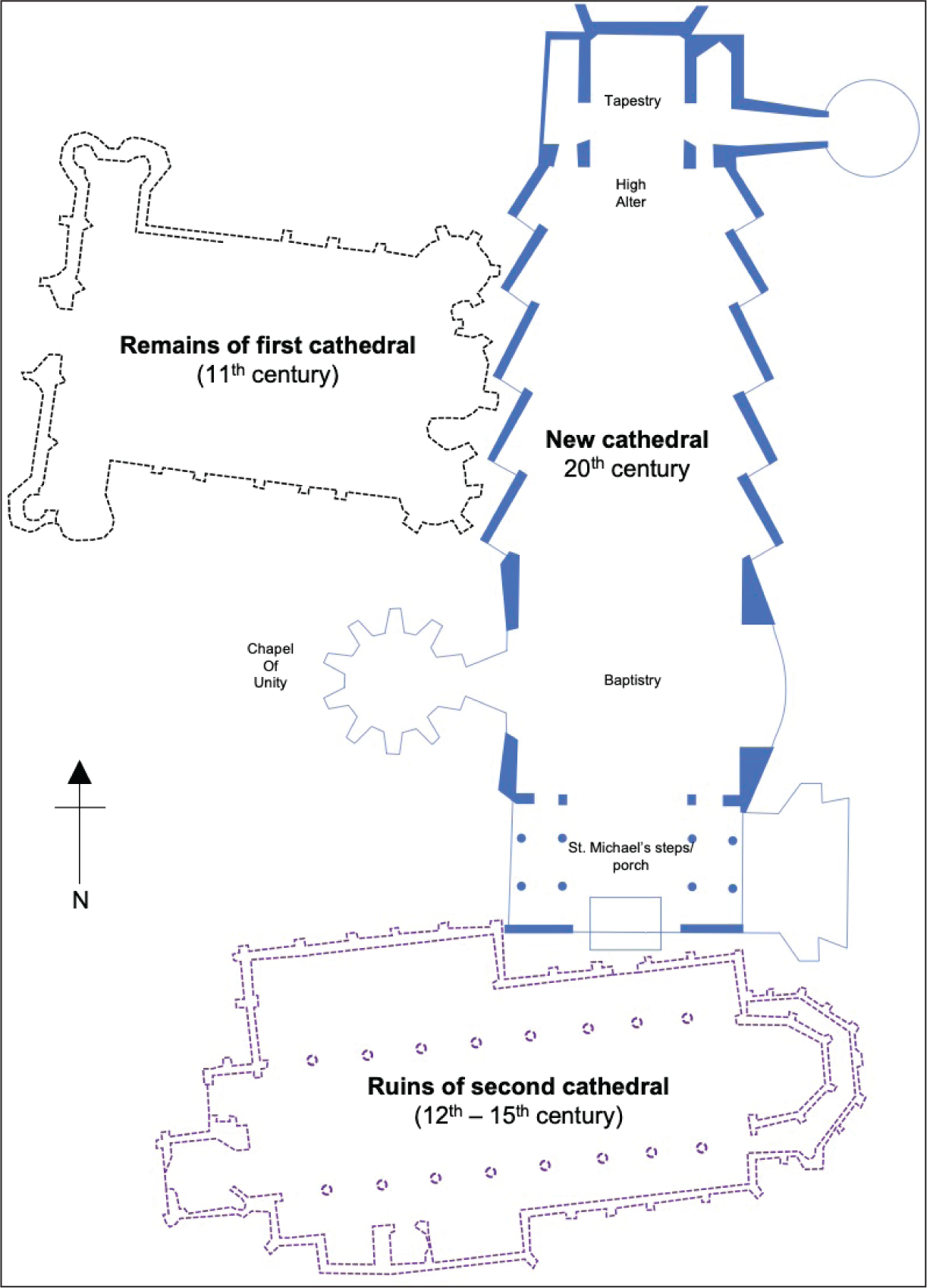
First, there was the construction of the Benedictine Priory of St. Mary, a religious house that represented Benedictine religious principles (an order of the Catholic Church). Its consecration ceremony was held in October 1043 (Williams, 1985, p. 6) 6 and it later became Coventry’s first cathedral in 1102 (Lamb, 2008, p. xvii). This elevation to cathedral status made it the principal church for the district and would have also been contributory to Coventry’s eventual promotion to city status in 1345. Following several changes (adaptations and enlargements) over the succeeding 200 years, the monastery was eventually dissolved under the rule of Henry VIII in 1538/39 as part of England’s separation from the Catholic Church—a tactic he employed to legitimize his divorce from Catherine of Aragon. Following this, the site eventually fell into ruin (Lamb, 2008, p. xvii; Sadgrove, 1991, p. 3).
Second, there was the eventual construction of what is now known as Old St Michaels, which was built in the fourteenth century and is celebrated as a magnificent example of the Gothic architectural style (Williams, 1985, p. 14). It was only in 1918 that it became Coventry’s second cathedral and this subsequently revived the Diocese 7 of Coventry (Lamb, 2008, p. xvii). However, this elevation in status was short-lived, when during WWII it was destroyed by the German Luftwaffe in the sustained air attack that Coventry was subjected to (Williams, 1985, p. 2) (Figure 3).
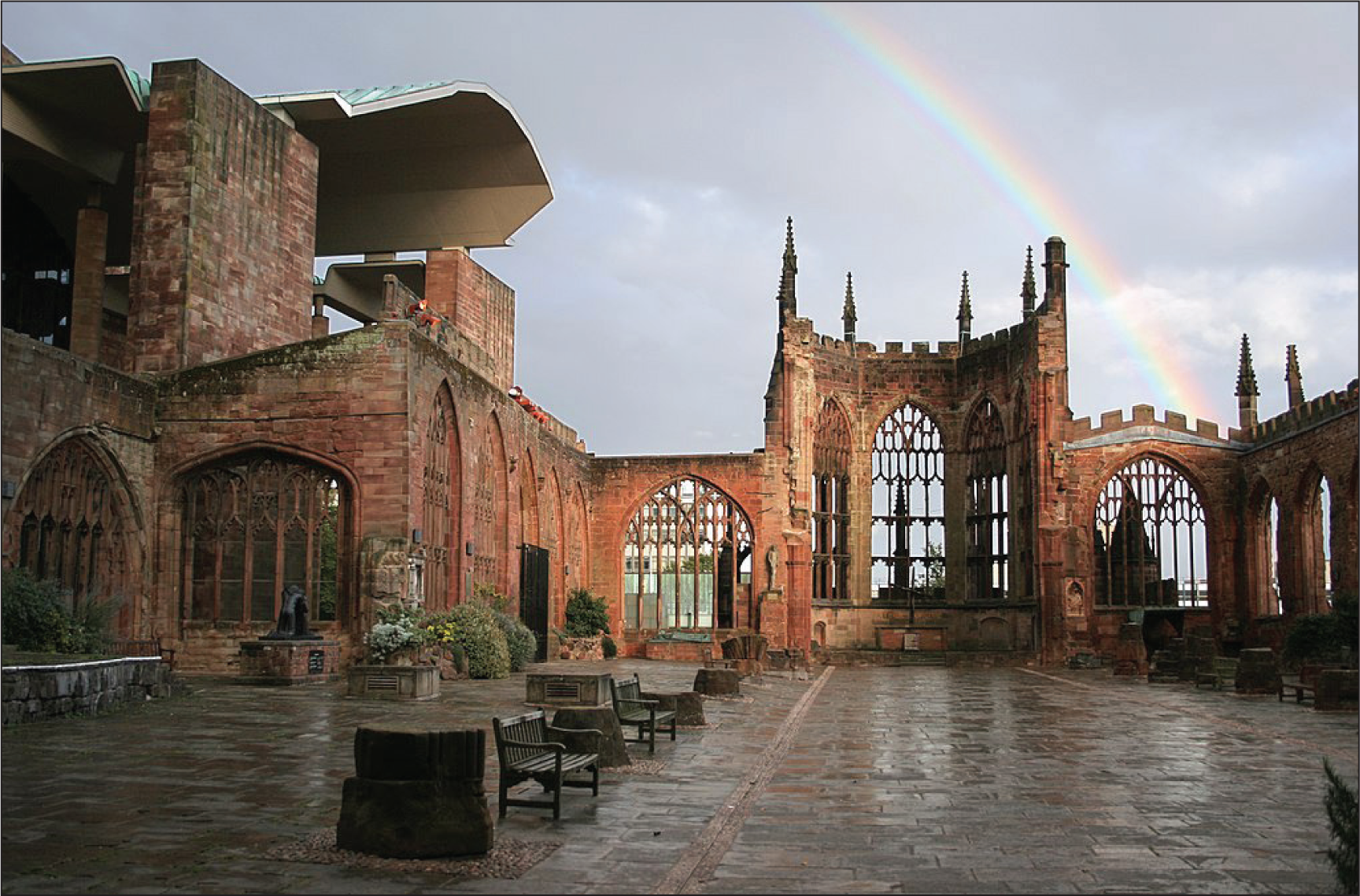
The destruction of the second cathedral was all the more devastating due to the enhanced focus that early twentieth century British society placed on physical manifestations of culture—with cathedrals in particular being caught up within the Western ‘monumental complex’ (see Campbell, 2008, p. 3). This destruction lastly set the scene for the third and final cathedral to grace the site. The New St Michael’s—a cathedral designed by Scottish architect Sir Basil Spence 8 in 1950 9 —was completed and consecrated in 1962 (Williams, 1985, p. 57). 10 The uniqueness of Spence’s design lay in the overall architectural concept. Rather than proposing to remove the ruins of the bombed-out cathedral, or suggesting it should be rebuilt, Spence designed a new cathedral building to sit alongside the consolidated ruins of the old, creating a symbolic contrast between conflict and resolution (Williams, 1985, p. 3).
The cathedral embodies an overarching strength of memories related to WWII, with the site accommodating this remembrance at both national and personal scales. The Old St Michael’s ruin is employed not only as a symbol of national memory but also as a space for personal remembrance and contemplation—a ‘zone of memory’ for contemporary society to connect with past trauma (Campbell, 2008, p. 29). Indeed, historically layered and emotionally charged sites such as Coventry Cathedral can act as ‘…a placeholder for the exchange and transfer of memories among contemporaries and across generations’ (Rigney, 2008, p. 345). These memories can be understood as being rooted in shared human practices, the collective nature of which lies in the common desire for society to remember and commemorate—themes that are often implemented within architectural projects (Cohen, 2011, p. 294). For example, at Coventry Cathedral, the retained cathedral ruins are now registered as a ‘war memorial’ 11 and serve the city as a ‘sacred space’ for contemplation (Coventry Cathedral, 2021).
Despite the intensity and continuity of WWII memories that are intimately tied to the history of the cathedral, there is also a pre-existing and equally strong (though significantly less documented) continuity of social- and skill-based craft heritage associated with the site, which will now be explored. From the Benedictine monks who established traditional crafts in Coventry during the eleventh century; to the influential craft guilds of medieval Coventry and the mystery plays that these craftsmen participated in from the fourteenth to the sixteenth centuries; to the Neo-Romantic interpretations of these social- and skill-based practices in a post-war Britain. The ongoing influence of this craft heritage on all three cathedral buildings—both in terms of their construction and (re)use—contributes towards understanding the site as a process of translation; with all cathedrals connected across a continuity of craft practices which have carried the site across time (Scott, 2008, p. 79).
A Translation of Craft Skills
It is likely that the Benedictine Priory first brought to Coventry a practical selection of craft skills. Whilst these skills were originally exercised as a means to demonstrate faith to God (and therefore embroiled within an all-encompassing practice of monastic devotion), they eventually led to craft being one of the key factors that instigated the initial growth of the city (Williams, 1985, p. 6). The craft skills originally practised by these monks established a line of tradition that connects to the formation of medieval craft guilds in Coventry. These craft guilds maintained an influential role in society, especially due to the distinction between craft and social guilds being blurred within medieval social structures (Anderson, 2013, p. 43). Consequently, merchant and artisan craft guilds became the backbone of Coventry’s economic and civic growth (Cherry, 2011, p. 182); and the skills that those Guilds both practised (artisanal guilds) and represented (merchant guilds) played an influential role in the mechanisms of the city (Sennett, 2008, p. 57). This was not only from the perspective of economic influence (Ogilvie, 2007, p. 1) but also from overall social influence (Epstein, 2008, p. 155; Ogilvie, 2007, p. 1). Their impact is also evident in the construction, use, alteration, planning 12 and decoration of churches (Anderson, 2013, p. 43; Williams, 1985, p. 6). For example, as with many English churches, the aisles of Old St Michaels (the second cathedral) were eventually doubled in size in order to adequately house the various craft guild chapels 13 (Anderson, 2013, p. 45; Williams, 1985, p. 35). Thus, the medieval cathedral acted not only as a physical manifestation of craft skills but also a social space for craft guilds to meet and discuss important socio-economic affairs.
The preservation and integration of Old St Michaels within the 1950’s design concept of the third cathedral, the New St Michaels, was an example of gothic architectural craftsmanship being utilized as an instrument to project a strong national identity (Campbell, 2018, p. 87). This decision was set within the context of a post-war spirit of optimism and Britishness—a reaction to both the physical and social damage brought about by WWII. In particular, the focus on ‘national character’ that was instigated by the Festival of Britain
14
around this time, resulted in the third cathedral embodying the spirit of the festival, in terms of both its architectural philosophy and visual style (Hauser, 2007, p. 9; Wiebe, 2012, p. 193). As Wiebe (2012, p. 193) explains:
…Coventry Cathedral mediated between tradition and modernity in its vision of renewal. It was in part a war memorial, the ruins preserved as a monument to national and civic loss. The new Cathedral looked back to a medieval past in which the Church was integrated with society and the arts…. Despite all these signs of a preoccupation with the past, however, the Cathedral, like the Festival of Britain, worked hard to declare its modernity and offer a vision of renewal.
Thus, whilst the ruin of the second cathedral was retained as an outward symbol of hope, the new cathedral addressed a perceived loss of spirit (Alison & Hoole, 1987, p. 7), with Spence using it as a vehicle to both propagate and recreate traditional crafts and skills through the gathering of leading Neo-Romantic artisans (Campbell, 2008, p. 14; Wiebe, 2012, p. 8) (Figure 4). This included the work of Neo-Romanticists such as Graham Sutherland (his Christ in Glory in the Tetramorph 15 tapestry) and John Piper (his 195-pane-stained glass baptistry window) (Figure 5).
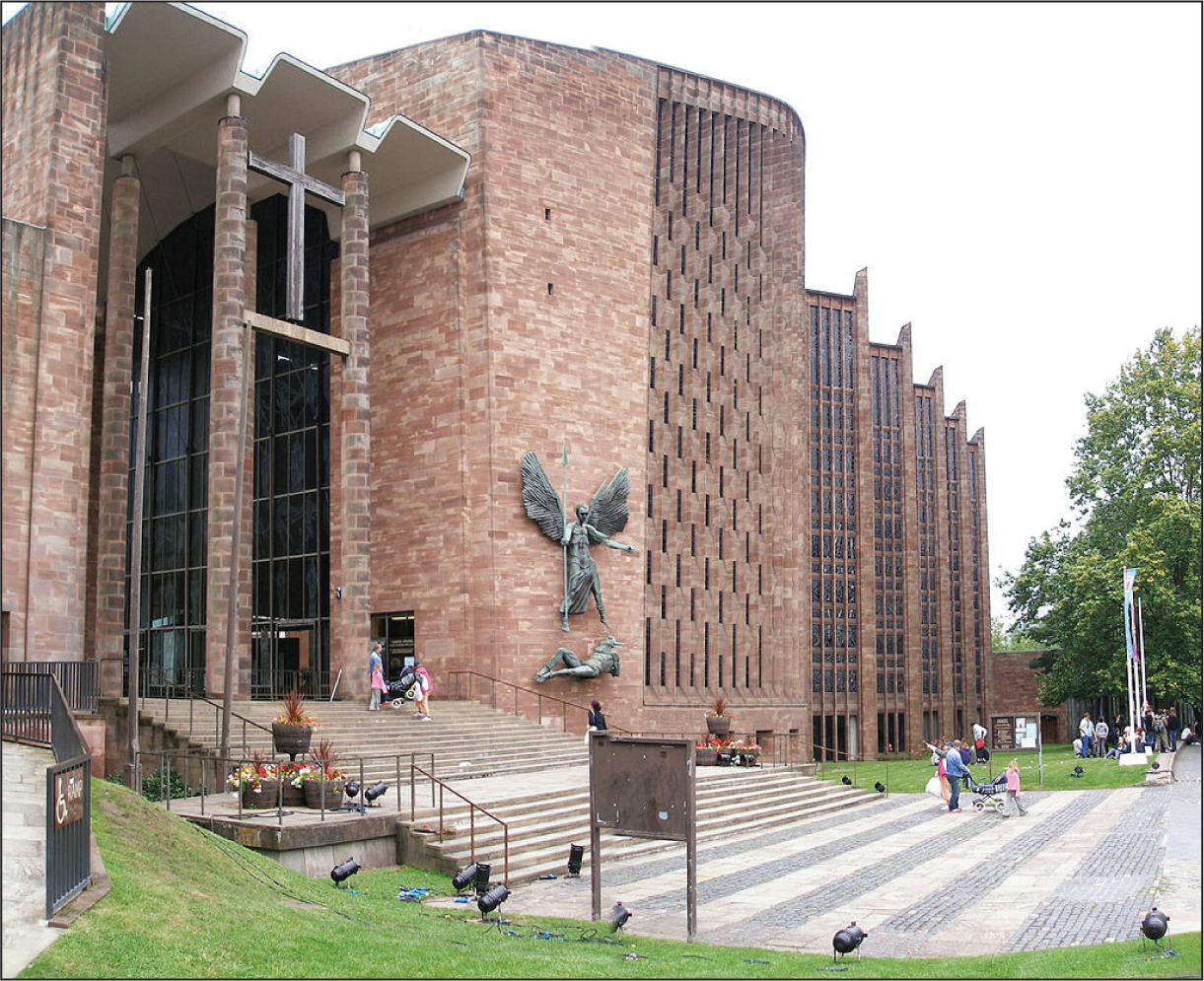
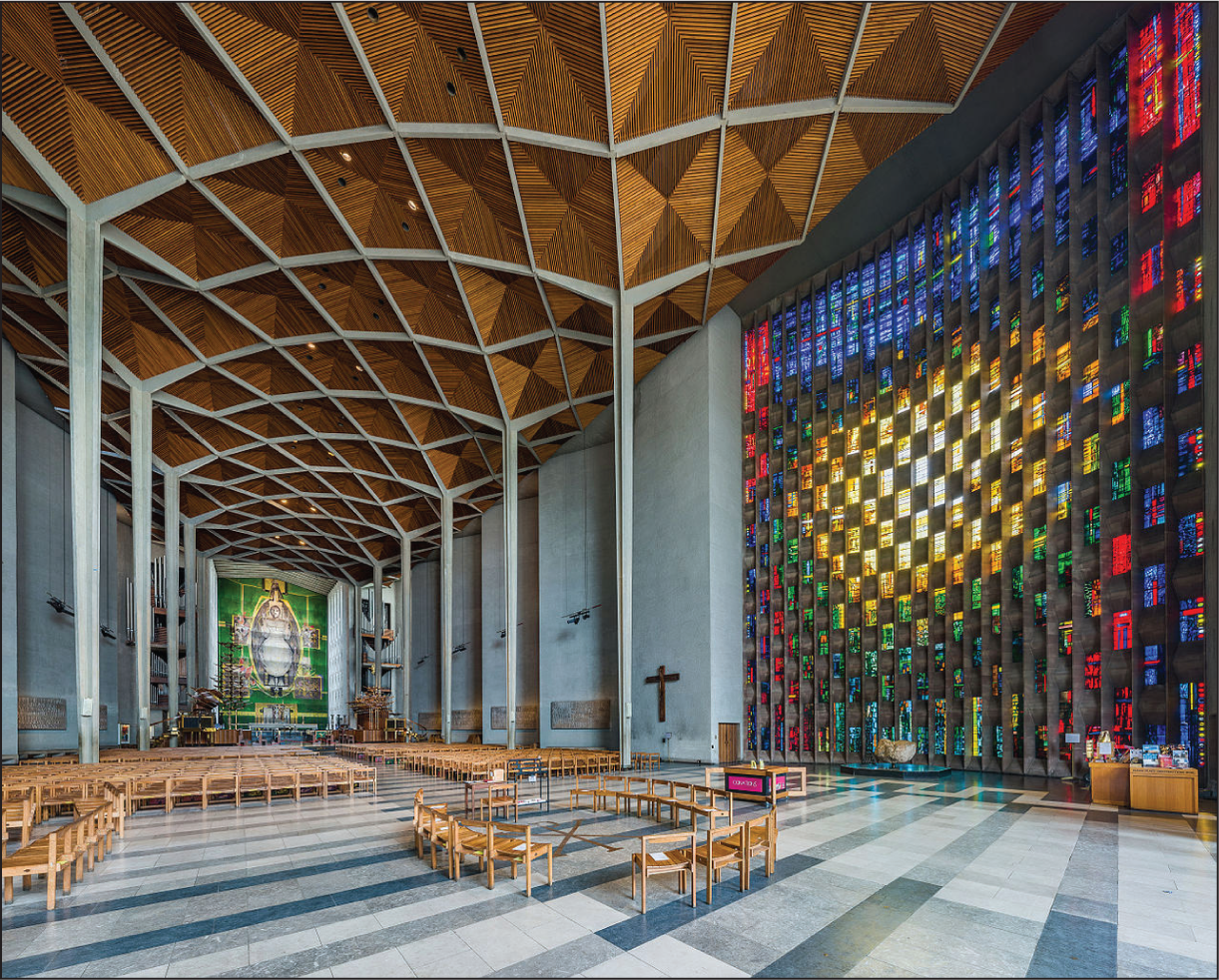
Whilst for many the new Coventry Cathedral was a contentious modern interpretation of traditional liturgy, its design also stimulated the re-emergence of artisanal craft practices at the site (Herbert, 1999, p. 544; Williams, 1985, p. 35). Campbell (2008, p. 26) concurs, referring to the project as a ‘…renewal of national architectural and craft traditions of the 1950s…’.
For the Neo-Romanticists, and indeed for Spence, the new Coventry Cathedral was conceived as a physical expression of society’s position between the destruction of WWII, and the new challenges that lay ahead in the guise of modernism/universalism (Wiebe, 2012, p. 8). The former, the WWII destruction, was reconciled by utilizing the ruined cathedral as a representation of the historical continuity of place, and thereby explicitly acknowledging the physical and spiritual voids created by wartime chaos (Alison & Hoole, 1987, p. 7; Mitchell, 2014, p. 277). The latter, the future-oriented challenges, were addressed more generically through the broader Neo-Romantic focus on genius loci (or spirit of place). As Mitchell (2014, p. 259) explains:
Neo-Romanticism was a search to revive what painter Paul Nash called the genius loci, ‘the spirit of place’. In this sense, Neo-Romanticism was also an ethical sensibility and practice, for while visual art and architecture can certainly have profound differences between them, Neo-Romanticism was pushing back against the move toward the universal and abstract in both fields.
In this sense, contemporary craft revival was utilized in the same way as the medieval crafted ruin, in that both sought to build upon the traditions of the site with something new. The ruined cathedral did so literally through its retention and reuse as a memorial; and the craftsmanship of the new cathedral (artistic, artisanal, architectural) did so through its emphasis on a mutual ‘framing’ of past and present into a highly charged social symbol 16 (Hauser, 2007, p. 252; Mitchell, 2014, p. 265). It was therefore not only the palimpsest of existing buildings that were utilized as a blueprint for something new but also the spirit of local and national society at that time. A bond was thus formed across all three cathedral sites, starting from the initial practice of craft by the Benedictines, to the gothic architectural craft skills of medieval Coventry, and finally the post-war gathering of Neo-Romantic artisan craft skills in Spence’s new cathedral.
The position of the third cathedral at the crescendo of post-war optimism has resulted in it also becoming a symbolic conclusion to the post-war spirit of the early 1950s (also represented by the Festival of Britain and the Neo-Romantic movement)
17
(Hauser, 2007, p. 252; Mandler, 2008, p. 1084). As Spence himself stated in 1965:
If I could build Coventry again, I wouldn’t build it in the same way. The mood is different now: there’s not the same emotional intensity. Sir Basil Spence interview from 1965 (quoted in Campbell, 1996, p. 254)
Indeed, in many respects, the 1960s needed another cathedral—a fourth—to represent its forward momentum, wholesale acceptance of modernist principles, and increasingly secular outlook. Whilst this translation could not be achieved physically at the site, it is through its associated social practices, themselves rooted in the social function of craft, where the ongoing evolution of the site can be interpreted through translation.
A Translation of Social Practices
The medieval guild system fostered not only the transference of craft skills (Epstein, 2008, p. 155) but also held an important social role in terms of its influence on social mobility and social order (Djabarouti & O’Flaherty, 2020, p. 425; Sennett, 2008, p. 57; Swanson, 1988, p. 30). Guilds held a significant public position in social life through their production and performance of mystery plays (Stephens, 1969; Swanson, 1988, p. 29). These were performances (pageants) of a liturgical nature enacted primarily by the craft guilds 18 of the Midlands and North of England (Anderson, 2013, p. 43). At Coventry Cathedral, mystery play processions acted as a source of education and communication between church and society (Wallace & Lamb, 2008, p. 73), and it was the Grey Friars who were well known for their annual performance on Corpus Christi Day, which was set on a moving stage outside the cathedral (Williams, 1985, pp. 14–15) (Figure 6).
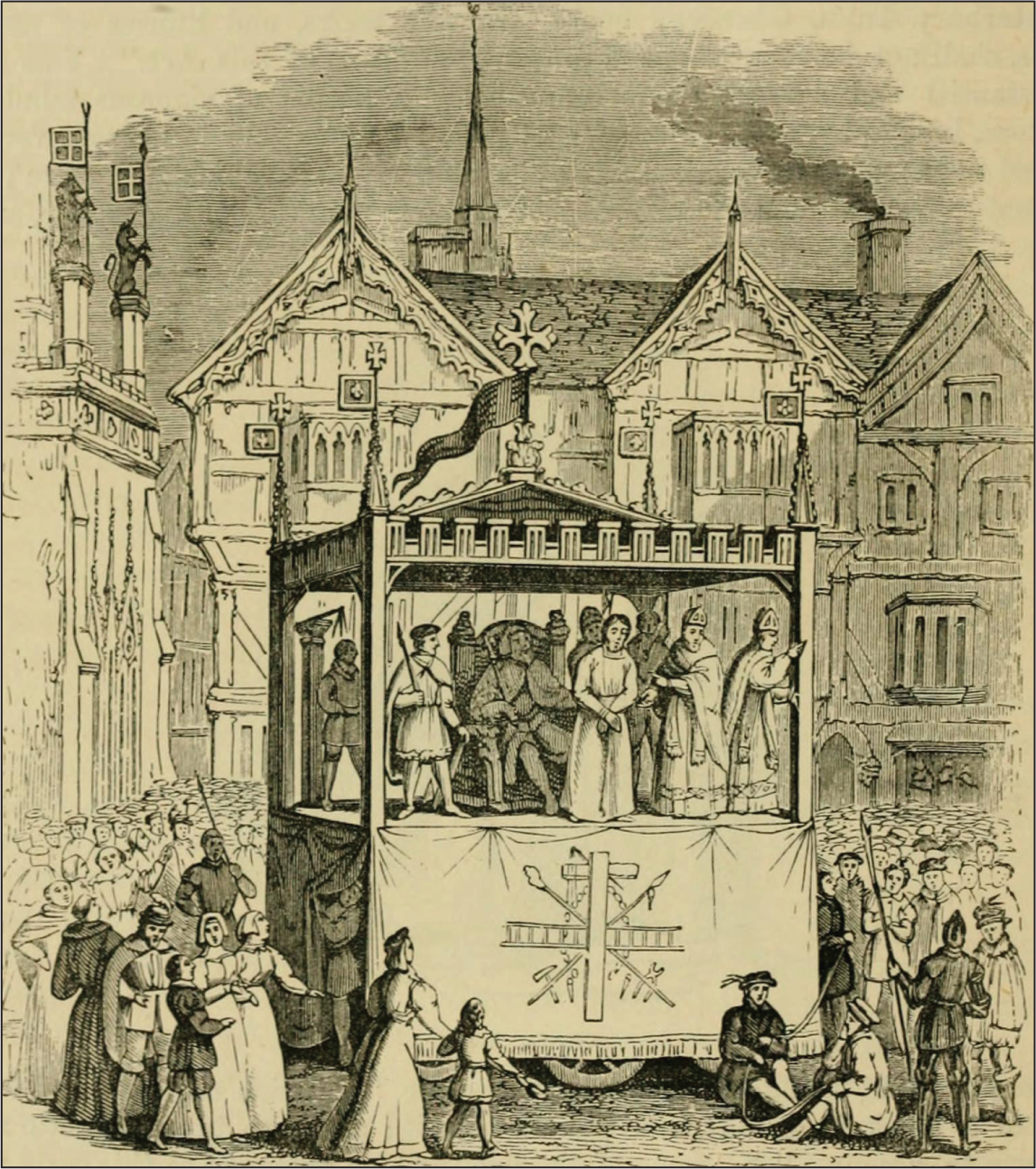
As many medieval cities held their own mystery plays, the content of these public performances reflected the city within which each play was performed, with the Coventry Weavers’ play, for example, exploring social hierarchy and authority in Coventry 19 (Alakas, 2006, p. 17). Thus, whilst the physical act of crafting things may often be representative of societal dynamics (Sennett, 2008, p. 7), so too were the associated social performances that were undertaken. Indeed, part of the purpose of these events was to reinforce the position and success of the craft guilds through ritual and ceremony (Swanson, 1988, p. 44).
The public mystery plays that were originally produced and performed by the medieval craft guilds have survived through translation across time, which has been encouraged by their integration within the physical and social changes that have occurred at both local and national scales. For example, in tandem with the prominence of Neo-Romanticism, medieval mystery plays experienced a resurgence in the 1950s. Various re-enactments occurred as part of the Festival of Britain, with cycles at York, Chester, as well as at Coventry within the ruins of the second cathedral (Gill, 2001, p. 159; Wiebe, 2012, p. 159, 163) (Figure 7). This was coupled with the first post-war recreation of the equally long-standing Godiva Procession, 20 which over the centuries has been staged ‘…infrequently enough for each revival to be a notable local event’ (Gill, 2001, p. 157) (Figure 8).
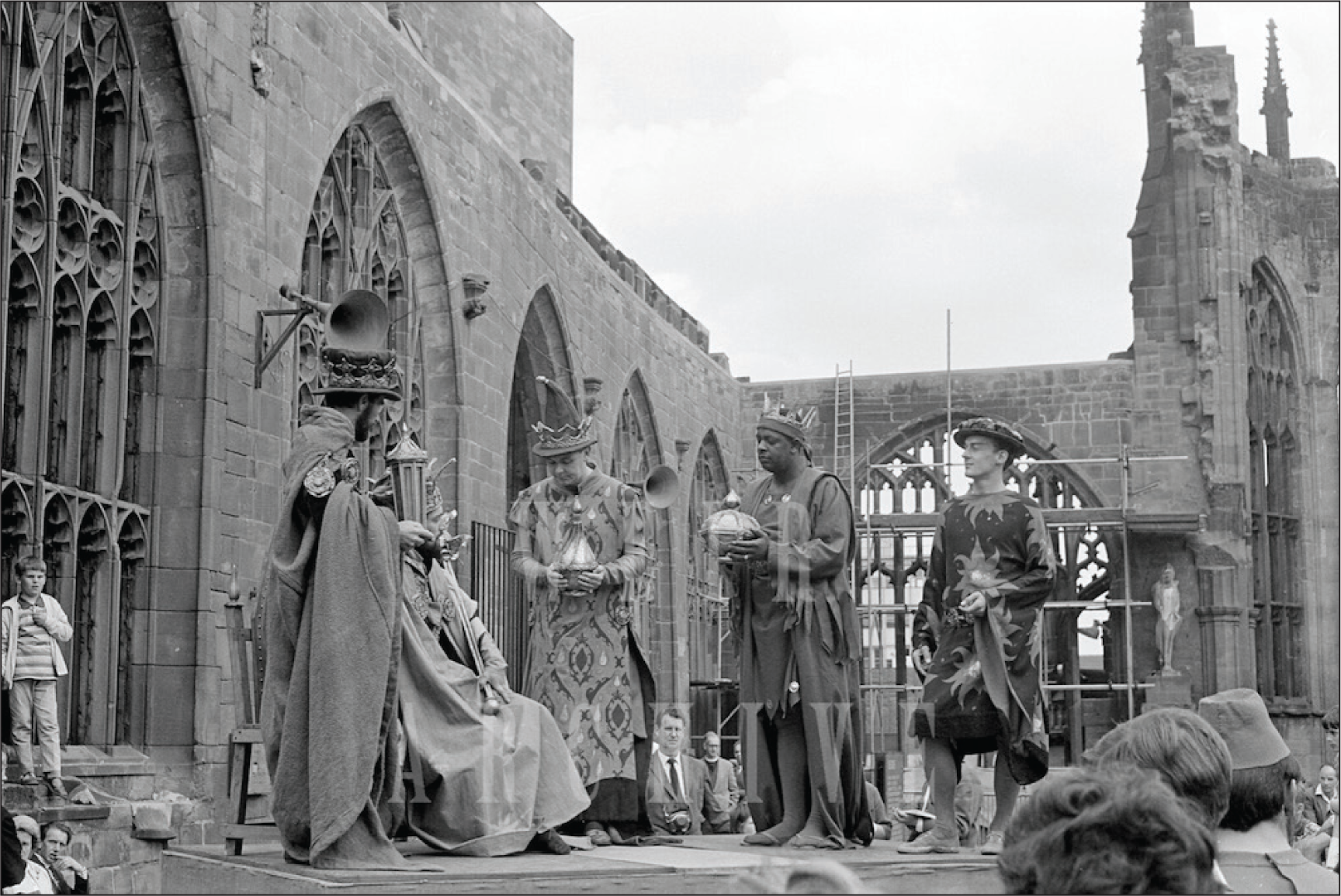
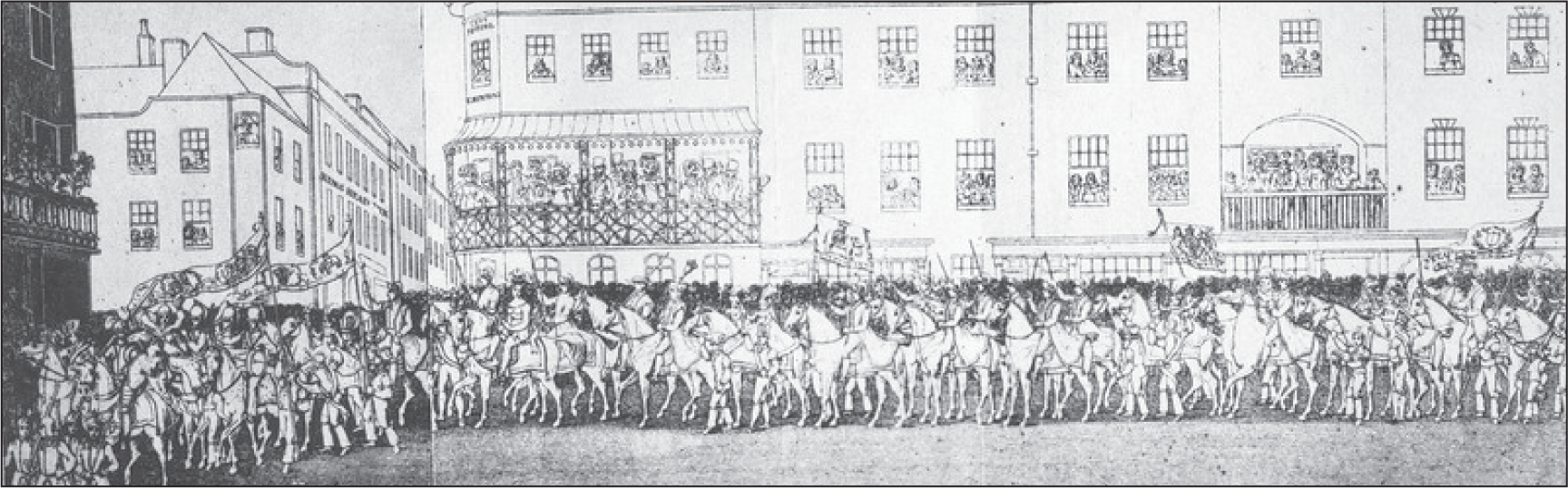
The combination of these two events as part of the Festival of Britain served to not only capture the spirit of reconstruction in Coventry at that time (Gill, 2001, p. 157) but also contributed towards a sense of British culture that the festival sought to harness as part of a broader ‘…act of national reassessment, and corporate reaffirmation of faith in the nation’s future’ (Cox, 1951, p. 6). 21 As already outlined in the previous section, it was this melting pot of reconstruction, reassessment and reaffirmation that underpinned the design concept for the third cathedral, which was eventually completed and consecrated some 10 years after the festival. Since the festival, mystery plays have continued to be recreated within various ‘play sites’ at the cathedral grounds, with the retained Old St Michaels ruin continuing to act as an ‘open stage’ for recreating these traditional craft guild performances in new ways that appeal to contemporary audiences (Wallace & Lamb, 2008, p. 73) (Figure 9). The result is an urban spatial experience that is constantly in flux—balancing chaos, contemplation, renewal, recreation and present-day issues—all within a correspondingly pluralistic setting of medieval and Neo-Romantic craft associations.
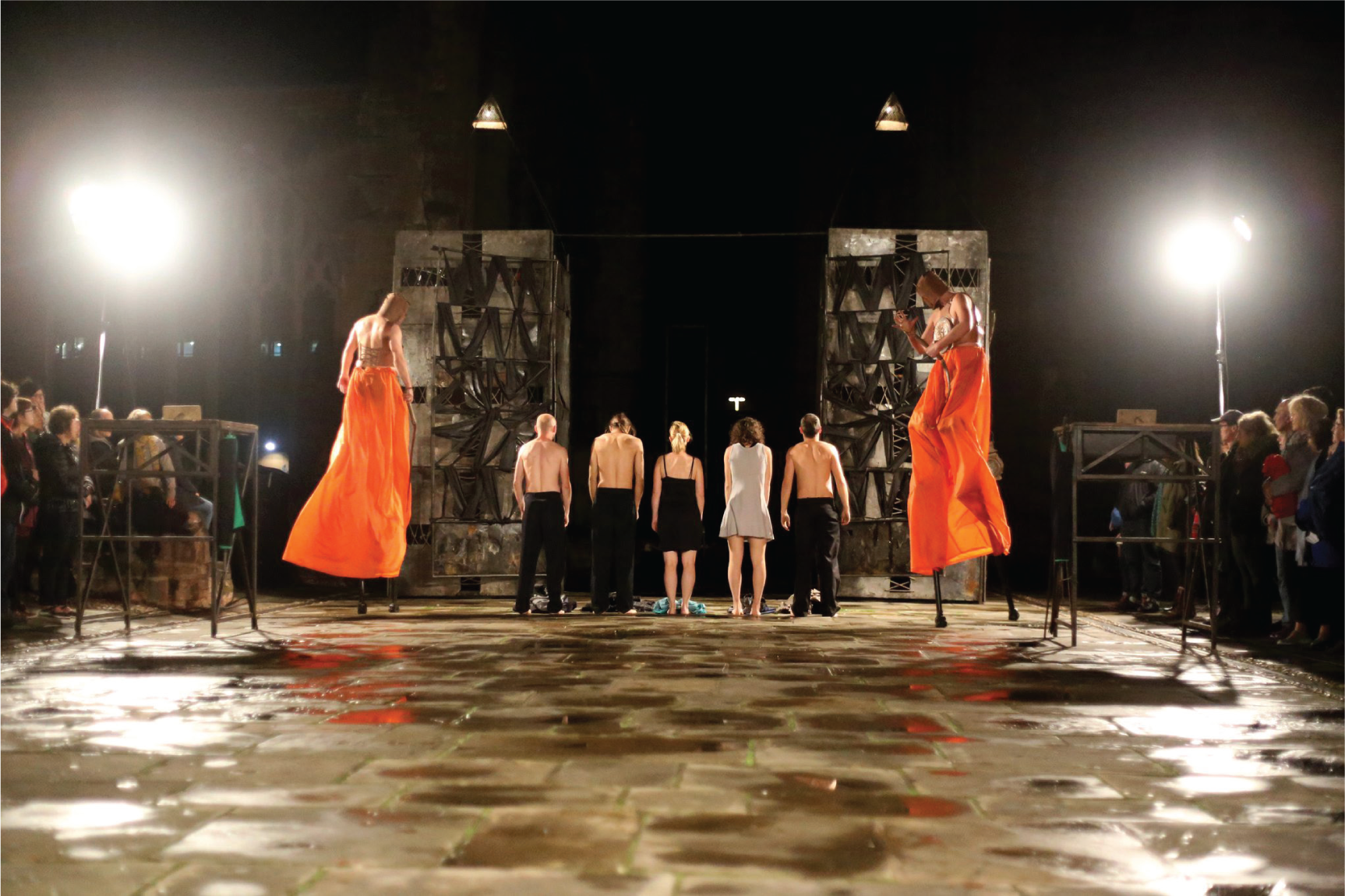
Equally, it is also possible to interpret other cultural events at the cathedral as secular reinterpretations of the mystery plays, including the diverse contemporary drama that has been performed on the steps of the new cathedral to the general public (Williams, 1985, p. 25). This evolution of performance at the site as an act of culture rather than religion is a necessary translation to facilitate survival of intangible heritage practices within an increasingly secular society 22 (Campbell, 2008, p. 26). Alongside various ad hoc performances, the medieval mystery plays have also been revived through the Coventry Mysteries Festival, which states to be ‘…a new spectacle of music, colour and theatre that maintains the glorious medieval atmosphere’ (UNCOVERED, 2014). The Godiva Procession has also been reinvented as the Godiva Festival, which ‘…build[s] on the success of the ancient Godiva Procession…to create a free festival of entertainment as an extension of traditional celebrations’ (Coventry Godiva Festival, 2021). The cathedral ruins themselves are also now host to various smaller-scale rock festivals and events. Whilst from one perspective these events may transcend the original use of the ruins as a space of quiet contemplation and reflection (see Lamb, 2008, p. xviii), they also seek to retain the medieval sentiment of public performance through the appropriation of its immediate urban context.
The spirit of the mystery plays and their ability to fuse religious, social and craft practices, has been constantly re-examined, appropriated and performed across time in relation to the changing nature of the cathedral site (as per Rigney, 2008, pp. 348–349). A balance between tradition and innovation is consequently achieved, whereby the spirit of the original pageant plays performed by the craft guilds is maintained through translation, which ensures relevance to contemporary society (as per Hollis, 2009, p. 13). Thus, a continuity of craft heritage has not only been sustained through the provision of ‘transferable skills’ via the medieval guild system of training (Epstein, 2018, p. 684) but also through the integration of other guild and craft practices within the broader social and cultural mechanisms of the city across time.
Conclusion: A Translation of Intangible Heritage
In summary, when considering Coventry Cathedral as a series of translations, what is actually being discussed is at least 1,200 years of history of a site that is alive, constantly evolving and an ‘active participant’ in the development of Coventry (as per Walter, 2014a, p. 4). This is grounded in the relationship of three distinct yet interconnected buildings, which far from representing a linear process of historical or cultural development, demonstrate a diverse and overlapping dynamic that operates across space and time. Accordingly, it is not just Spence’s contemporary cathedral that is being discussed, but all three cathedrals, with aspects of their tangible and intangible heritage forming durable craft narratives that bind together various points in time to create a palimpsest of tangible and intangible heritage.
Whilst the craft heritage of Coventry Cathedral may not be the dominant or often considered narrative (i.e., in comparison to the profile given to the devastation of WWII), an underlying translation of tacit craft-centred knowledge and social practices have contributed towards ongoing physical changes at the site through construction and (re)use. From the initial practice of craft skills at the site by the Benedictine monks to the post-war gathering of Neo-Romantic craft skills in Spence’s new cathedral; and from the first mystery play by the Grey Friars to the secular play performances that now take place within the ruins of Old St Michael’s, Coventry Cathedral provides a productive site against which to consider the value of translation, as a concept through which both the dynamics and value of social- and skill-based craft heritage can be revealed. It demonstrates how built heritage can accommodate a commitment to history whilst remaining wholly conscious of its obligation to contemporary societal needs through constant recreation, or translation. In many ways, this poignantly reflects the principles of the Neo-Romantic ethos that underpinned the design of the third cathedral.
To conclude, in referring back to Whyte (2006, p. 170), he fittingly states ‘[t]he study of architecture, moreover, is about more than just the study of a single building’. This is most true for Coventry Cathedral, where a consistent thread of craft practice ties the earliest monastic carved block to the last stitch of Graham Sutherland’s tapestry. Craft-based intangible knowledge and practices at the site have been creatively imitated across time, with each new cathedral carrying forward the craft heritage of the site. This not only ensures relevance to contemporary society but also creates a rich foundation for the translation of intangible heritage into the future.
Footnotes
Acknowledgements
This article is mostly derived from research conducted whilst undertaking my AHRC funded PhD at the Manchester School of Architecture. I would therefore like to thank my PhD supervisory team, Eamonn Canniffe, Sally Stone, and Dr. James Robertson, for their insightful comments and reflections on the ideas discussed.
Declaration of Conflicting Interests
The author declared no potential conflicts of interest with respect to the research, authorship and/or publication of this article.
Funding
The author declared receiving the following financial support for the research, authorship and/or publication of this article: This work was supported by the AHRC North West Consortium Doctoral Training Partnership under grant number D92204B.