




Abstract
Immaterial manifestations of culture have received increasing attention over the past two decades. This is of particular relevance to the contemporary built heritage professional who must not only consider intangible heritage within assessments but attempt to understand its relationship with the physical building fabric. Underpinned by a ‘Practice Theory’ ontology, this research explores how social network analysis (SNA) can reveal entanglements between tangible and intangible heritage by focussing on practices and relationships. Using the Grade II* Long Street Methodist Church and Sunday School, Greater Manchester, UK, the study demonstrates how the basic use of SNA for built heritage assessment can offer a deeper insight into the significance of a listed building. The study demonstrates how SNA can support: an equality of visibility across heritage domains, a better understanding of tangible–intangible relationships and the illumination of underlying practices that sustains these relationships. Perhaps most importantly, it emphasizes the dynamic and unpredictable nature of heritage by de-emphasizing the centrality of the building within heritage assessment processes and reconceptualizing it as an inherent part of social phenomena. In doing so, it suggests one must accept the notion that socio-material practices should be considered for conservation and safeguarding, alongside the physical building itself.
Keywords
Introduction
Since the origin of the UK conservation movement in the mid-nineteenth century, the value of historic buildings has been dominated by historic, scientific and aesthetic considerations, which place an emphasis specifically on their physical fabric and emphasize notions of permanence (Jones, 2017, p. 23; Smith & Waterton, 2009, p. 290). This results in the conservation sector maintaining ‘…an epistemological bias towards scientific materialism’ (Winter, 2013, p. 533); which is structured upon ‘exclusion and resistance’, rather than ‘inclusion, negotiation and transcendence’ (Winter, 2014, p. 8). In reaction to this dominant heritage discourse, it is proposed instead that ‘…heritage only becomes ‘heritage’ when it is recognisable within a particular set of cultural or social values…’ (Smith & Akagawa, 2009, p. 6). This is more broadly captured within the ‘postmodern’ turn in heritage studies (Ruggles & Silverman, 2010, p. 11; Muñoz Viñas, 2002, p. 26; Walter, 2014, p. 637), which places an emphasis on the ‘intangible’ heritage domain and is composed of immaterial manifestations of cultural representation. These broader developments within critical heritage studies are consequently adding additional complexity to the role of built heritage professionals, who must now consider the complex relationship between these two heritage domains within assessments (Kearney, 2009, p. 220); for example, Douglas-Jones et al. (2016, p. 824) have more recently described the conservation and management of built heritage as ‘…a complex process involving not only physical fabric, but also cultural, aesthetic, spiritual, social and economic values’. This is particularly problematic, especially when considering the built heritage industry is already a complex sector involving many professionals with different perceptions and priorities (Djabarouti & O’Flaherty, 2020; Jones, 2009, p. 11; Mısırlısoy & Gan Günç, 2016, p. 92).
Responding to this context, this research aims to address the problematization of immaterial manifestations of culture within the built heritage paradigm by offering a novel approach for built heritage assessment using social network analysis (hereafter SNA). This alternative approach seeks to illuminate how an enhanced immaterial focus might impact heritage assessment and management by addressing the following questions: how can a built heritage professional consolidate immaterial and ephemeral notions of heritage within their material-focussed role? How might the relationship between tangible and intangible heritage impact built heritage assessment? And lastly, what might the impact of these considerations be on the overall assessment of built heritage significance?
The application of SNA to this growing complexity concerning what heritage is and how it should be measured is largely understudied. However, the ability for SNA to both simplify and represent complex social data, as well as reveal its underlying qualities, is particularly applicable to this matter (see Wasserman & Faust, 1994, pp. 347, 445). This is especially the case when considering the increasing demand in the heritage sector for methods that can assist in rationalizing increasingly complex cultural information (Cuomo et al., 2015, p. 539). It is hypothesized that by focussing on the relationships that underpin what heritage is and does (as opposed to its heritage domain classifications), SNA will reveal a better understanding of how heritage significance is created, structured and sustained. This hypothesis is explored using Long Street Methodist Church and Sunday School (hereafter Long Street), a Grade II* listed 1 building located in Middleton, approximately 5 miles North East of Greater Manchester, UK. The building was designed by Edgar Wood in 1899, a notable Manchester architect who is considered a significant contributor towards the development of European Modernism (Jensen & Thorogood-Page, 2009, p. 273; Morris, 2012, p. 159). Having up until recently been listed on the Heritage at Risk register due to its poor condition, a conservation project in 2017 (as part of a Heritage Lottery funded project) has facilitated its restoration, adaptation and ongoing use by the local community. It is this conservation project that is the primary focus of this case study, and in particular, the ensuing Edgar Wood Renaissance that it has prompted.
Using various primary and secondary research methods related to the site and the conservation project, an inter-heritage–domain relationship model was constructed using SNA, with both tangible and intangible heritage assessed in relation to the various practices that entangled them together. This study focuses on three particular heritage entanglements uncovered from this analysis, namely society and fundraising activities, the building design and its association with Edgar Wood and the memories of building events and window memorialization. It posits that the strength of these practices (as revealed by the SNA)—along with their socio-material hybridity—warrants their consideration for conservation and safeguarding, alongside the physical building itself. As demonstrated later, this proposition has broader implications for heritage assessment, especially from the perspective of an epistemological broadening within the discipline of heritage management that decentres materialism and works towards the conception of buildings as socio-material hybrids.
Literature Review
From Tangible to Intangible Heritage
Standard approaches towards heritage assessment and management are increasingly being criticized as part of an overarching classification system that renders built heritage (particularly listed buildings) as containers of immutable value and authenticity (Jones & Yarrow, 2013, p. 6; Walter, 2014, p. 635). From this perspective, buildings are both the producers and possessors of objective value and significance, which encourages the process of heritage management to be led by the material site and the values extracted directly from it (Pocock et al., 2015, p. 962). There are some key factors that make this a preferable approach for built heritage professionals: it supports a static interpretation of buildings (Tait & While, 2009, p. 734); it makes heritage both visible and recognizable (Kearney, 2009, p. 210); and it promotes the idea that an assessment of heritage can be an impartial and ‘value neutral’ scientific exercise (Winter, 2013, p. 539).
In more recent times, contemporary understandings of heritage have challenged the notion of value being inherent within material sites, and instead have redefined it as a construct of contemporary society and its context (Glendinning, 2013, p. 424; Jones & Yarrow, 2013, p. 6). As Smith and Akagawa state:
…any item or place of tangible heritage can only be recognised and understood as heritage through the values people and organisations like UNESCO give it – it [built heritage] possesses no inherent value that ‘makes’ it heritage. (Smith & Akagawa, 2009, p. 7)
This conceptual relocation of ‘value’ away from material sites and towards people and culture is evidence of a more flexible, broader and people-focussed approach towards identifying, narrating and measuring the value of built heritage (Glendinning, 2013, p. 431; Jokilehto, 2018, p. 2). More specifically, this understanding of heritage is perhaps most definitely captured under the term ‘intangible cultural heritage’ (hereafter referred to as ICH)—a heritage domain that is extraneous to any form of built heritage. UNESCO formally define it within their ‘Convention for the Safeguarding of the Intangible Cultural Heritage’ (hereafter the ‘2003 Convention’) as:
the practices, representations, expressions, knowledge, skills – as well as objects, artefacts and cultural spaces… that communities, groups and, in some cases, individuals recognize [sic] as part of their cultural heritage. (UNESCO, 2003, p. 2)
The 2003 convention promotes an immaterial concept of heritage that is comprised of community-centred practices, activities, participations and contributions (ICOMOS, 2013, p. 8; Kamel-Ahmed, 2015, p. 69), and while it is heavily focused on the empowerment of indigenous societies and their participation in the heritage process (Marrie, 2009, p. 169), it also has utility within a Western context in relation to heritage use (Delle & Levine, 2011, p. 52). Nonetheless, the notion of heritage as a cultural ‘practice’ remains largely understudied and outside standard perceptions in heritage management—no doubt due to its overarching position within the planning system (Glendinning, 2013, p. 285).
Society and Historic Buildings
Despite prevailing understandings of heritage as physical assets, contemporary heritage policy and guidance in England is becoming increasingly concerned with ‘…the positive contribution that conservation of heritage assets can make to sustainable communities…’ (Ministry of Housing Communities and Local Government, 2019, p. 55), as well as becoming more openly interested in engaging communities at a local level (The National Lottery Heritage Fund, 2019, p. 10). When appraising architectural heritage, this manifests as ‘communal value’, which Historic England (2008, p. 31) describes as ‘…the meanings of a place for the people who relate to it…’, and more specifically ‘social value’, which Jones (2017, p. 21) describes as ‘…the significance of the historic environment to contemporary communities’. Literature highlights communal and social value as being less reliant on the physical fabric of material sites (Historic England, 2008, p. 32; Jones, 2017, p. 26) and focussed more on the participation of communities that are impacted by the conservation of heritage (Muñoz Viñas, 2002, p. 30). However, there is a body of literature that highlights the practical difficulties of consolidating these understandings of heritage within the heritage sector (Aikawa-Faure, 2009, p. 36; Seeger, 2009, p. 122), as well as literature that emphasizes the conflicting views between local and ‘official’ authorities (Aikawa-Faure, 2009, p. 28; Mydland & Grahn, 2012). Other literature poses potential solutions to the tension between community involvement and official mechanisms, such as a wholesale rejection/ reappraisal of the current formalized heritage system (Byrne, 2009, p. 249; Mydland & Grahn, 2012), integrating professional practices and performances that integrate communities (Buckley & Graves, 2016, p. 153; Jones, 2017, p. 25; Longley & Duxbury, 2016, p. 1) and the reinterpretation of communities as the ‘link’ between tangible and intangible practices (Kamel-Ahmed, 2015, p. 69).
The Relationship Between Tangible and Intangible Heritage
Despite an implicit growth in concern for intangible heritage in policy and guidance, the relationship between the two heritage domains remains complex. There is a body of literature that states tangible and intangible heritage are wholeheartedly interlinked and inseparable, forming ‘two sides of the same coin’ (Byrne, 2009, p. 230; Kamel-Ahmed, 2015, p. 67; Kirshenblatt-Gimblett, 2004, p. 60). Kearney (2009, p. 211) describes the relationship through a phenomenological lens, stating ‘being’ is at once both tangible and intangible. Conversely, other literature describes the tangible as a ‘contact point’ or ‘memory marker’ for the intangible (Byrne, 2009, p. 246; Kamel-Ahmed, 2015, p. 68). Taylor (2015, p. 73) takes the relationship between tangible and intangible a step further, stating a distinction must first be made between the values (message) of heritage and the embodiment (medium) of heritage, with both able to be either tangible or intangible. The variety of interpretations available make evident the need to more succinctly understand how these heritage domains may interact and influence one another, and in particular how this interaction may influence heritage assessment and management in practice.
Alternative Ontological Approaches
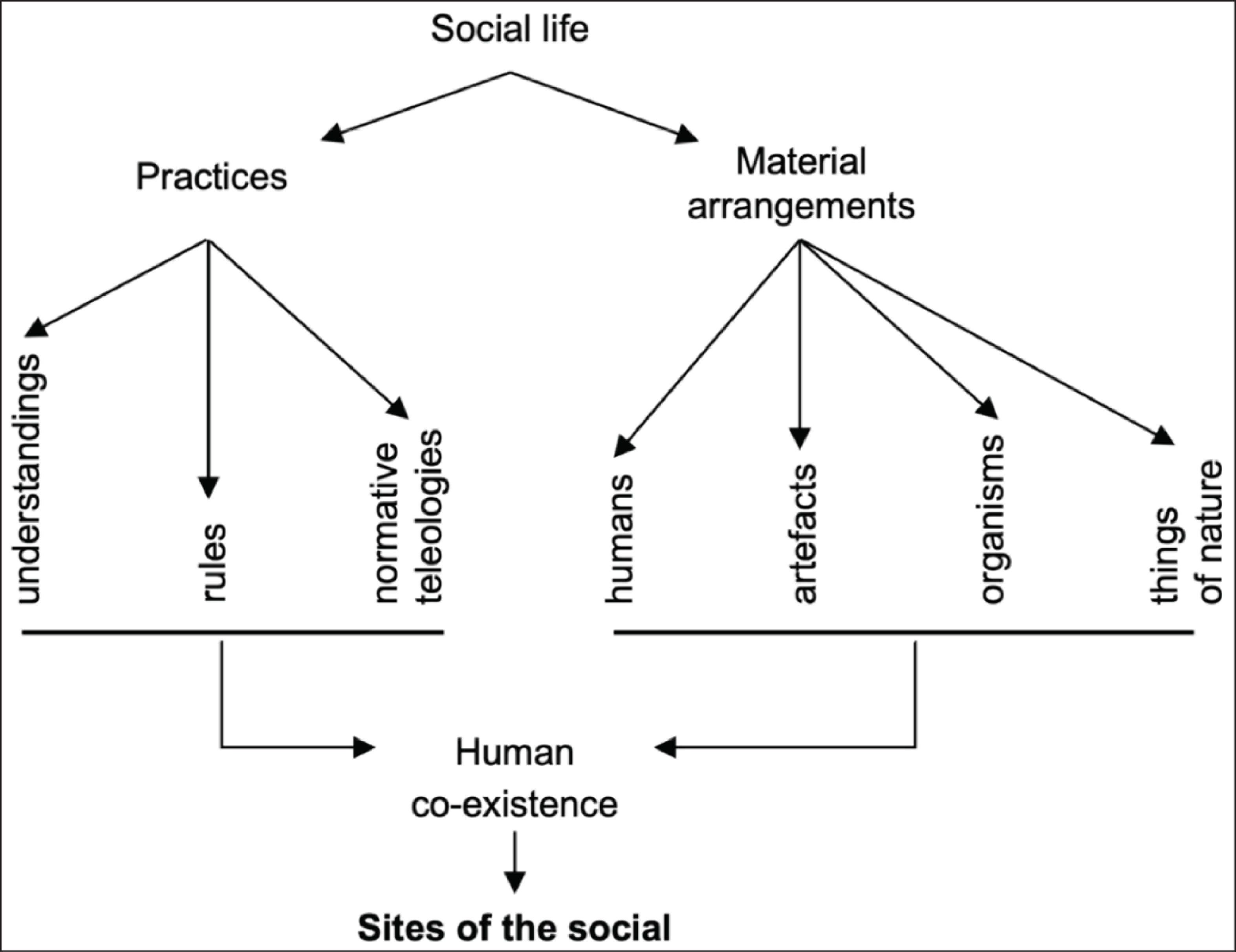
As contemporary heritage practices shift from a sole concern with material preservation to a more dynamic understanding of intangible heritage, alternative approaches, which can accommodate buildings as changing, dynamic entities, are undoubtedly required (DeSilvey, 2017, p. 50). A variety of ontological shifts have already been suggested in order to achieve this, such as a ‘managed decline’ approach (DeSilvey, 2017), conceiving buildings as events (Kirshenblatt-Gimblett, 2004), perceiving buildings as containers of intangible heritage (Skounti, 2009, p. 83); a ‘null ontology’ (Tait & While, 2009) and the reinterpretation of buildings as stories (Djabarouti, 2020; Hollis, 2009; Walter, 2014). What these theoretical works have in common is their ability to transform listed buildings into what DeSilvey (2017, p. 29) describes as ‘…processual events, continually formed and transformed by their movement through a field of social and physical relations’. Looking slightly further afield, the social theory of Theodore Schatzki is particularly applicable in this regard. Schatzski’s version of ‘Practice Theory’ (see Schatzki, 2010) entangles humans and non-human materials together as ‘…nexuses of human practices and material arrangements’ (Schatzki, 2010, p. 123). For Schatzki, it is about how ‘material arrangements’ (especially ‘humans’ and ‘artefacts’ as relevant to this study) become connected with ‘practices’ (comprised of ‘understandings’, ‘rules’ and ‘normative teleologies’) in order to explain and understand the social and cultural world (Schatzki, 2010) (refer to Figure 1).
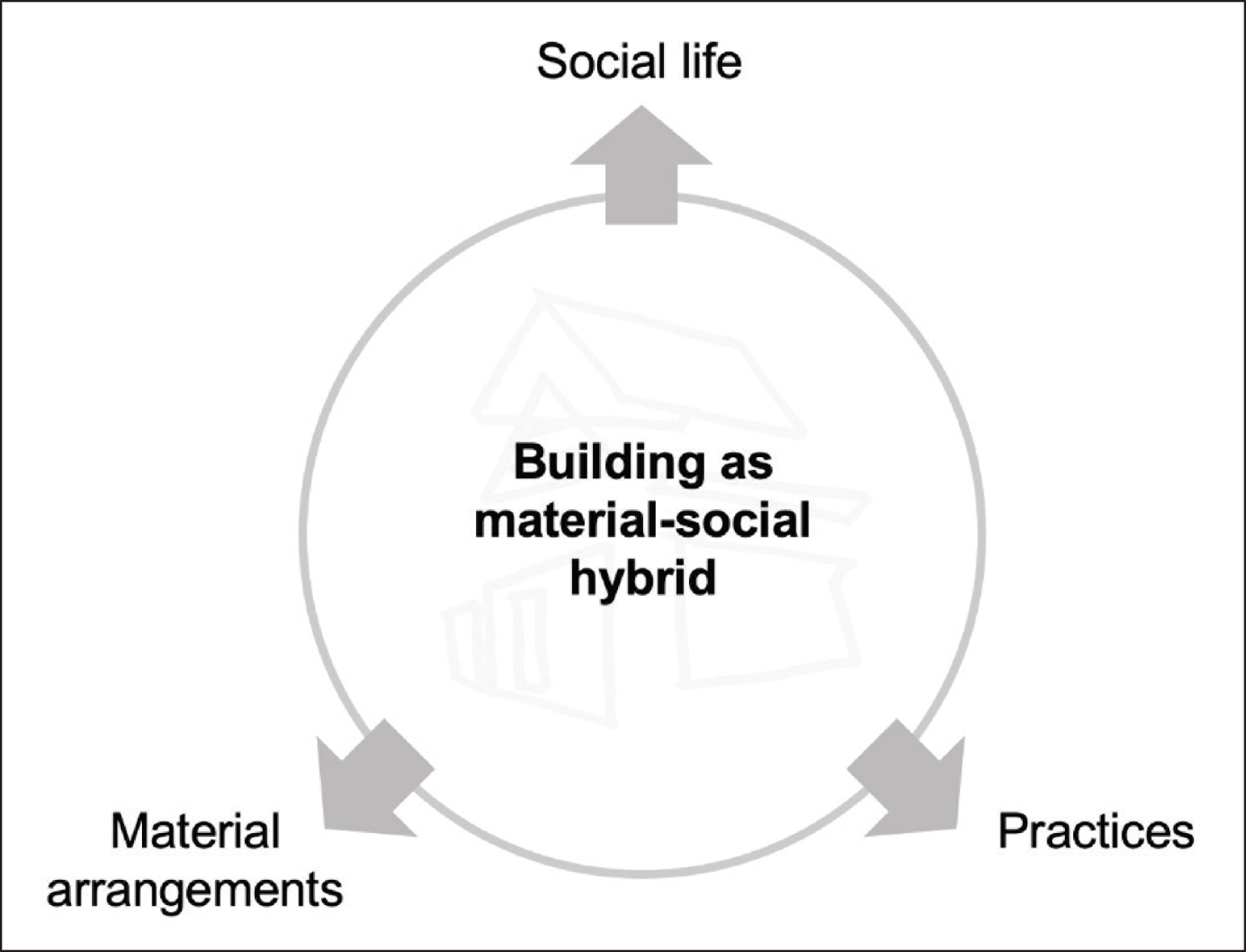
While Practice Theory offers an applicable ontological approach towards the consolidation of tangible and intangible heritage at material sites, it does not necessarily confirm how the heritage professional should interpret listed buildings (beyond them being a material ‘things’ that are embroiled in social life). The work of Tait and While (2009) is particularly useful in this regard. Their research describes the existence and status of historic buildings as collections of ‘things’—physical objects that can decay, be removed, replaced, relocated and so on. For them, the building becomes a fluctuating assemblage of various elements across space and time (Tait & While, 2009, p. 724). This viewpoint embeds itself well within Schatzki’s overarching ontology, by encouraging a spatiotemporal understanding of historic buildings as material and social hybrids—as opposed to static, solid objects (Tait & While, 2009, p. 721; refer to Figure 2). The elements of a building thus become considered as part of a socio-material practice that not only determines the ongoing changes to their physical form, condition and location, but equally their value and significance at any given moment in time.
Methodology
The dominant assessment method for listed buildings in England is reliant upon the identification of ‘values’ (Walter, 2014, p. 634). Once identified, they are consolidated and organized into a written statement that formally represents the ‘significance’ of the built heritage asset within the planning system. This approach originates from The Burra Charter (ICOMOS, 2013, originally 1979), which along with the Nara Document (ICOMOS, 1994) are cited as blueprints for Historic England’s assessment model (see Historic England, 2008, p. 71). Where this current model falls short in relation to this research project, is its inability to overcome the ‘nature-culture split’ that Hill (2018) describes as fundamental in the formation of heritage ‘domains’. Put simply, the values that are utilized to assess tangible heritage (e.g., aesthetic, artistic, architectural) are segregated from those values that are used to assess intangible heritage (e.g., social, symbolic or spiritual). Indeed, in practice, the latter are often noted as subsidiary and separated in relation to the former (Fredheim & Khalaf, 2016, p. 474; Jones, 2017, p. 24; Pendlebury, 2013, p. 715). Hence, while a values-based approach may be more democratic and more open to pluralistic conceptions of heritage (McClelland et al., 2013, pp. 593–594; Wells, 2007, p. 10), it is nonetheless conceptually incapable of accommodating a true inter-domain assessment of heritage practices and relationships. This is not so much a criticism, rather an intentional consequence of its design—it is a typologies-based methodology (McClelland et al., 2013, p. 589).
By contrast, SNA is an interdisciplinary approach that places an emphasis on relationships between things, allowing social concepts to be defined and theories developed from this (see Wasserman & Faust, 1994). It removes focus from individuals and places focus instead on the interweaving of social relationships and interactions (Freeman, 2004, p. 1; Scott, 1988, p. 109). Rather than simply a tool for processing data, it is better utilized as a theory for interpreting social structures (Mische, 2011, p. 80). Hence, for interdisciplinary use of SNA, it is advantageous to employ discipline-specific perspectives that can conceptually accommodate the emphasis on relationships and knowledge flows (Serrat, 2017). For Mische (2011, p. 80), SNA offers an opportunity for those within the social Sciences to engage in ‘relational thinking’ by focussing on ‘…the dynamics of social interactions in different kinds of social settings’. More specifically, Mische (2011) offers four ways in which culture and social networks are interlinked: networks as cultural conduits, networks and culture as omnidirectional influencers, cultural forms as pre-existing conceptual networks and networks as cultural interactions. The similarities between how intangible heritage is defined and how Mische describes the culture–network relationship is clearly evident; for example, Mische notes how SNA can offer ‘…a more dynamic, processual account of the culture-network link’. Perhaps then, SNA may be able to conceptually accommodate the changing nature of cultural heritage and better address the inherent dualities between immaterial manifestations of culture and monumental heritage.
There have already been attempts to utilize network analysis within heritage studies more generally, including the analysis of heritage to improve its digital application and consumption (Capodieci et al., 2019), the use of SNA to enhance management processes of cultural heritage from a cultural tourism perspective (Moretti et al., 2016), to enhance cultural heritage experiences by analysing user perceptions/personalities (Antoniou, 2017), as well as to both enhance and explore visitor interactions with heritage collections that are both physical (Cuomo et al., 2015) and digital (Hampson et al., 2012). Others have concentrated more specifically on the relationship between SNA and intangible heritage by using it to analyse the global actors and institutional networks concerned with intangible heritage (Severo & Venturini, 2016) as well as to understand how intangible heritage is transmitted through specific community relationships (Oh, 2019).
Despite this varied use of SNA within heritage studies (ranging from a tool to enhance a methodology to a more integrated conceptual approach), there have been no studies that attempt to explore its potential application towards the assessment of listed buildings—particularly as a means to illuminate significance through an analysis of the relationship(s) between tangible and intangible heritage. This is surprising when considering the frontiers of critical heritage studies are engaging in related research themes concerning flat ontologies and the problematization of heritage domains (Harrison, 2015; Hill, 2018), as well as the role of digitization in relation to the interpretation of heritage and its participatory function (Rahaman & Tan, 2011; Taylor & Gibson, 2017). In an attempt to address the shortcomings of a values-based approach in relation to the interests of this study, as well as address the clear gap in the SNA literature concerning its use during listed building assessment, this study utilizes a case study method in order to test the validity of SNA as an analytical approach for built heritage assessment.
Case Study: Long Street Methodist Church and Sunday Schools
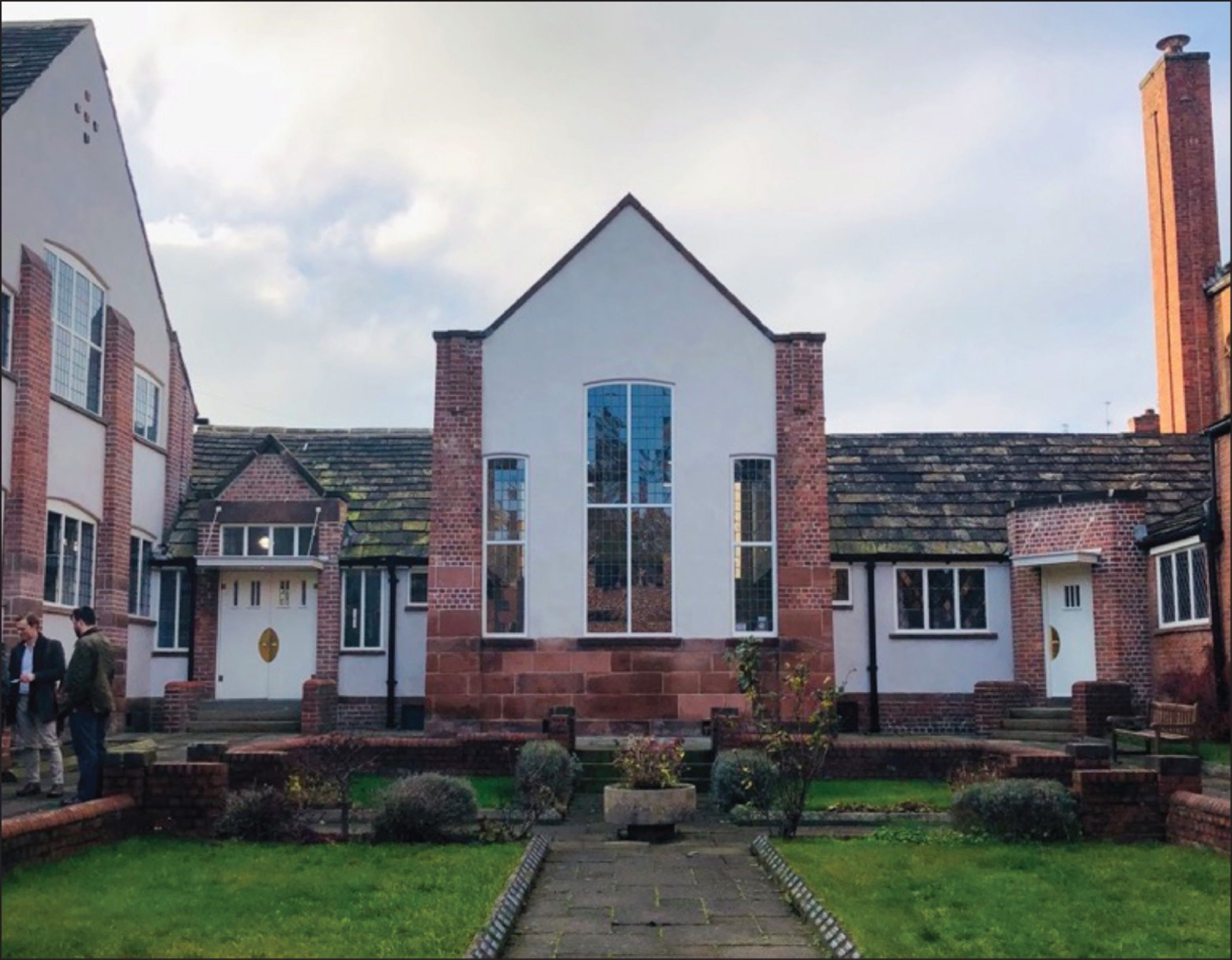
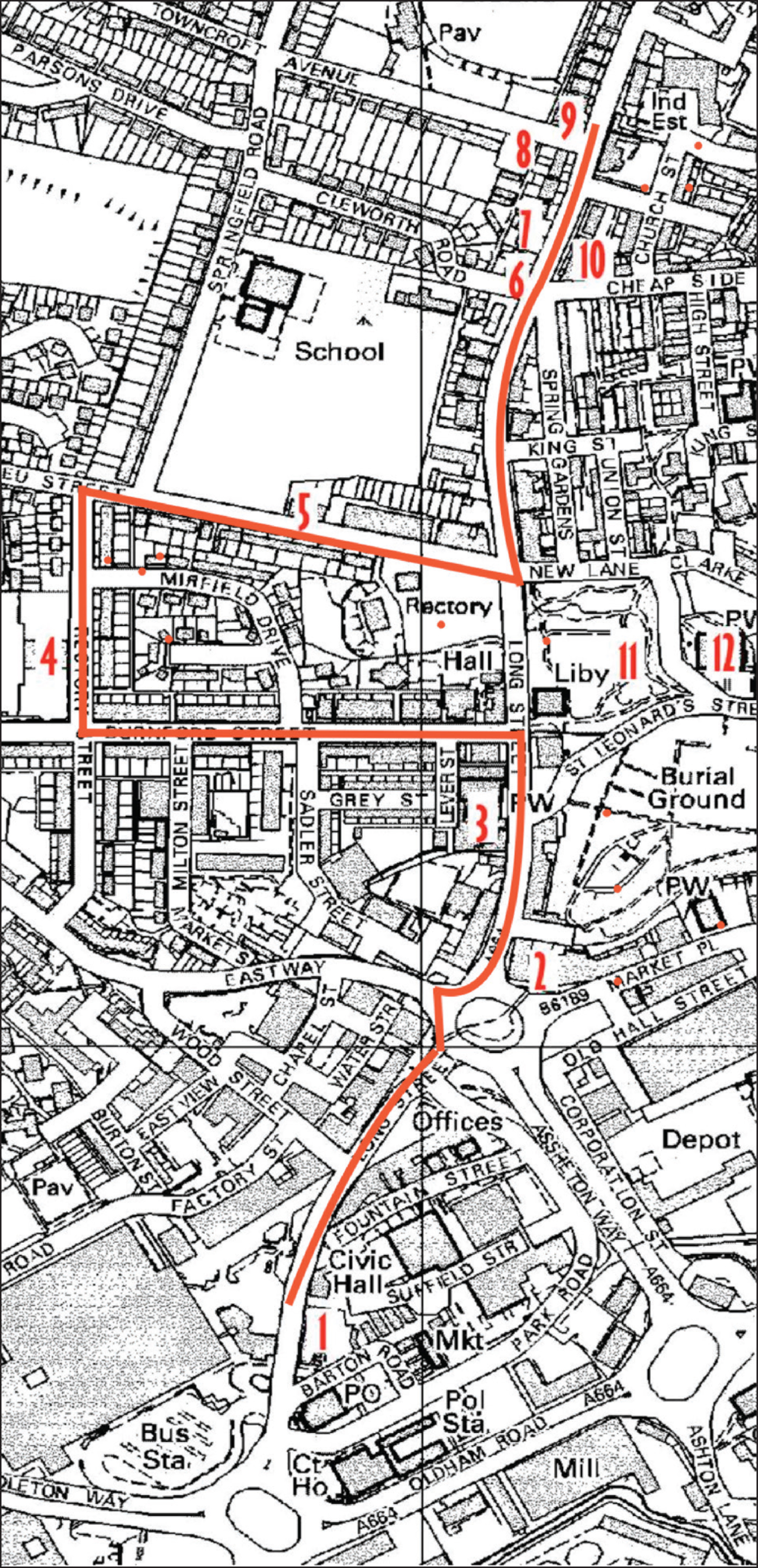
Long Street is a listed building located within the locality of Middleton, which lies within the borough of Rochdale to the North East of Greater Manchester, UK. The building was designed by notable architect Edgar Wood in 1899, and in 1969, it was listed Grade II*. It is described as a unique and forward-thinking chapel design of interconnected buildings, which encloses a courtyard garden (Historic England, 2014; Morris, 2012, p. 142; refer to Figure 3).
In 2014, Long Street was added to the Historic England ‘Heritage at Risk Register’ and assigned ‘Category A - immediate risk of further rapid deterioration or loss of fabric; no solution agreed’ (Historic England, 2014). Subsequently, the Heritage Trust for the North West acquired the building, and, coupled with a Heritage Lottery Fund grant obtained by Rochdale Council, funds were channelled into the building in 2017 to facilitate its repair, conservation and restoration. The completed restoration project has enabled the ongoing use of the building by the Methodist Church, as well as the now former Sunday School being adapted to allow for a mixture of programmatic functions (such as weddings, conferences, as well as other smaller-scale community-based uses).
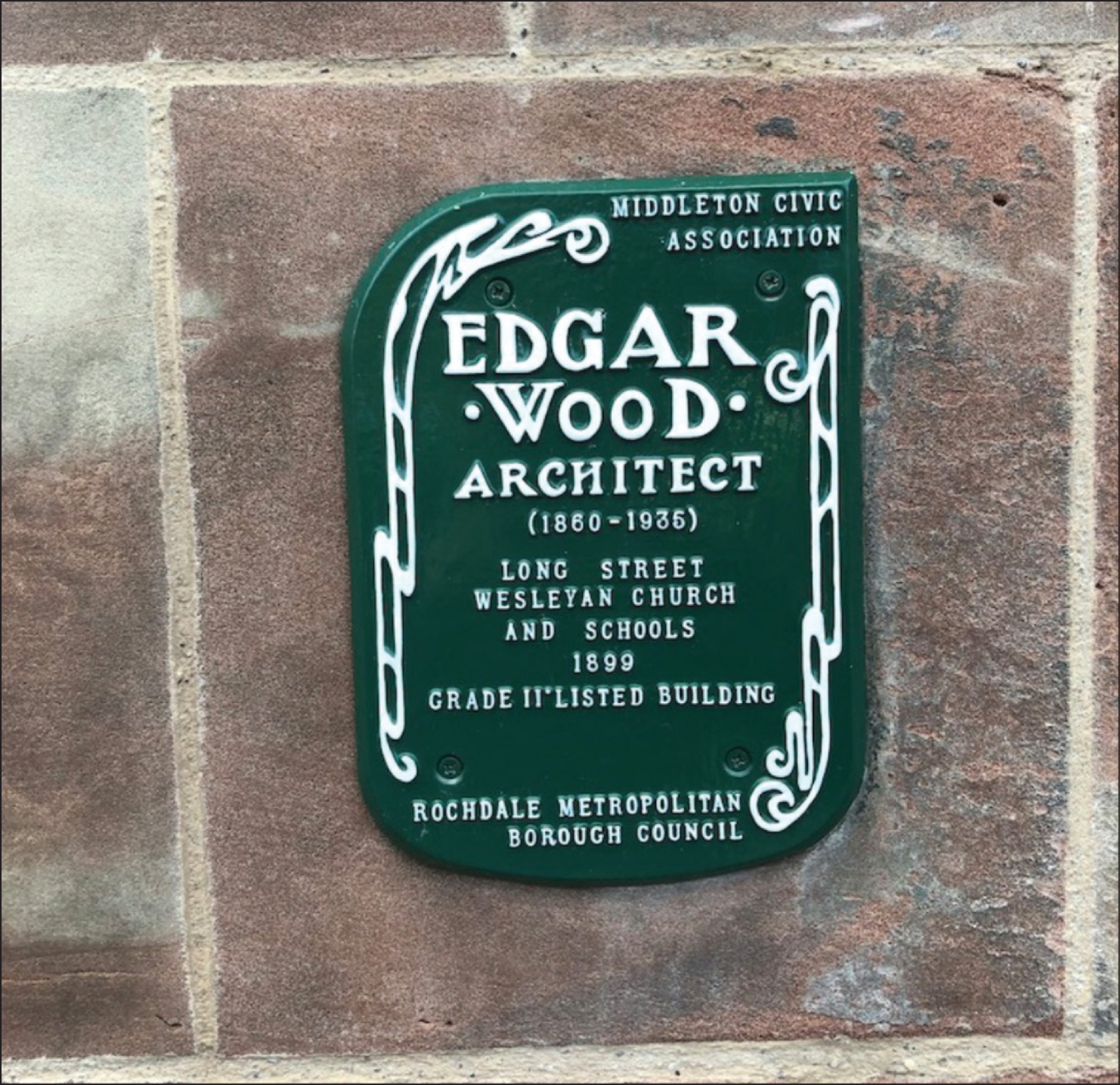
The formal significance of the building is ‘historic’ and ‘architectural’, which places it within the interests of the principal 1990 Act (HM Government, 1990). The building is also perceived as stylistically significant—the pinnacle of Wood’s approach to the Arts and Crafts architectural style (Morris, 2012, p. 127). Following a sustained period of obscurity throughout the majority of the twentieth century (Morris, 2012, p. 130), the last decade has witnessed a kind of Edgar Wood Renaissance, with both his buildings and himself being observed with a renewed sense of fascination and wonder. This, combined with the aforementioned heritage funding, has led to the formation of a number of significant organizations, events and activities, not limited to: the lottery funded ‘Edgar Wood & Middleton Townscape Heritage Initiative’, the release of an Edgar Wood documentary film, 2 the formation of the ‘Edgar Wood Society’, the creation of Edgar Wood ‘green plaques’ (refer to Figure 4), an Edgar Wood ‘Heritage Trail’ (refer to Figure 5) and various ‘Heritage Open Day’ tours of his buildings. In addition, this renaissance has also inspired a host of new research and reports that builds on the significance of Long Street, Wood and his broader architectural oeuvre. 3 In particular, it offers an improved perspective of Wood’s impact on Modernism. Interestingly, at the heart of most of these activities is Long Street, which, aside from being a focal point of Wood’s legacy (Morris, 2012, p. 158), is also now intensely entwined within these numerous contemporary events and practices.
How then might heritage professionals consider these contemporary events and practices when assessing the significance of a listed building? How do these intangible, community-based considerations relate to the physical building itself? And might SNA be an appropriate approach for heritage professionals to utilize when assessing the significance of built heritage (both locally and nationally)?
A Social Network Analysis of Long Street
The SNA relationship model was constructed from data obtained from both primary and secondary research related to the building. This included qualitative interviews, surveys, archival data and site visits. While the interviews conducted by the researcher were with built heritage professionals, the relationship model did make use of a large body of existing interview data with local residents, which was undertaken by the Greater Manchester Building Preservation Trust. 4 These were primarily ‘recollections’ about the building and its importance to those who care about it. Despite the researcher being unable to liaise directly with local community groups (due to project constraints), the use of existing interview data does highlight the capacity for this approach to utilize first-hand qualitative data acquired from community engagement (e.g., semi-structured interviews, focus groups, ethnographic studies)—methods that may better capture the ambiguous, dynamic and intangible nature of social value (Jones, 2017, p. 26). Following data collection, a basic relationship model of all uncovered tangible and intangible heritage related to the building was created using a free open-source tool for social network data analysis. The approach was to utilize the basic features of network analysis to understand whether it was a viable assessment method that could offer insights into alternative conceptions of the building’s heritage.
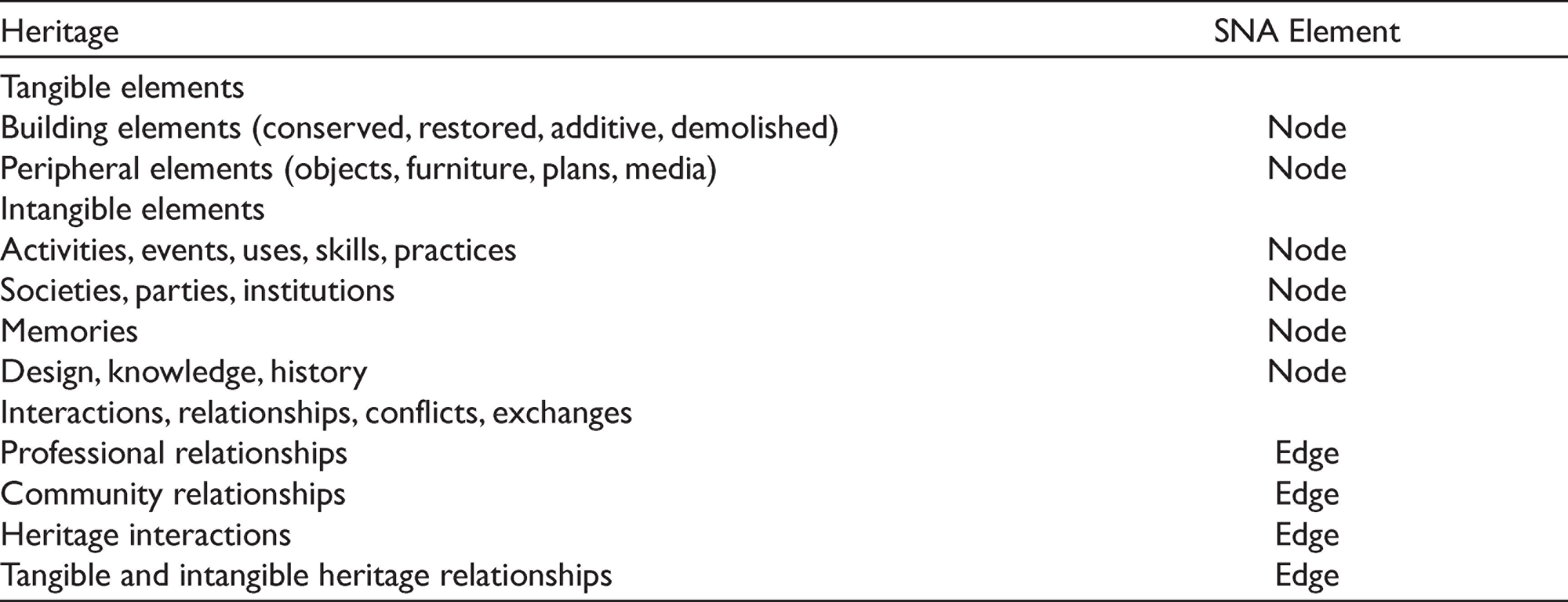
The Translation of Key Concepts Between Heritage and Social Networks Used for Long Street Analysis
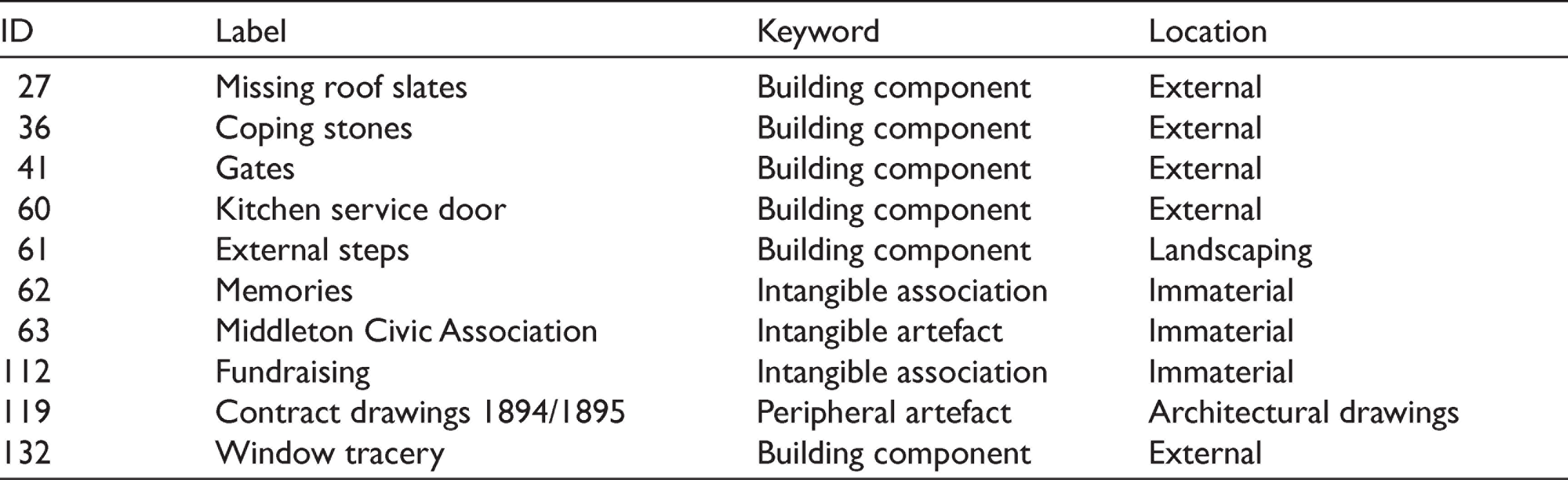
Extract Example of the Nodes Inputted
At its very basic, SNA consists of two elements—‘nodes’ and ‘edges’. Nodes can represent people, places, things and feelings, hence can be both tangible and intangible. Edges are the defined connections (or relationships) between nodes. This basic model was used to map the various physical and non-physical heritage of the building, as per Table 1.
The nodes inputted into the network capture a wide range of tangible and intangible heritage—from missing original roof slates, to local memories of the building and from original architectural drawings to recent fundraising activities (refer to Table 2). Similarly, a wide variety of edges were also inputted into the network; for example, if a local member of the community had a particular memory of an event at a particular location, a ‘memories’ node was linked to the relevant community, event and room nodes, or if a particular heritage organization had a relationship with another organization, these nodes were also connected.
Results and Discussion
Heritage Entanglements
The resulting SNA model for the building is comprised of 144 nodes that are interconnected via a total of 486 edges. Figure 6 illustrates the overall network model—what can be conceived as the ‘heritage entanglements’ of Long Street. The overall model serves to illustrate the variety and complexity of relationships between the various actors (human or non-human) and practices that the building is situated among. While the elucidation of this overarching network model is illuminating in itself, particular visual characteristics of the model (node size, location, colour and grouping) shall now be discussed in more detail.
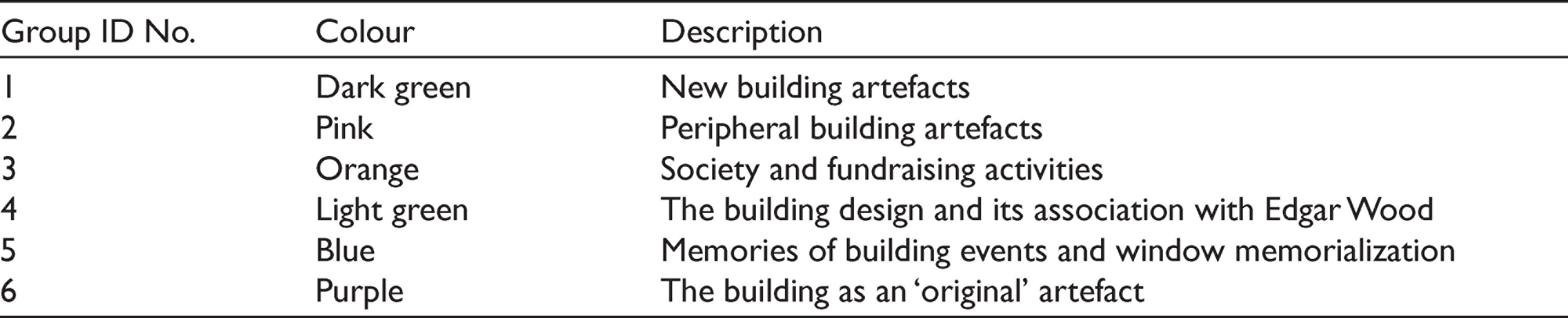
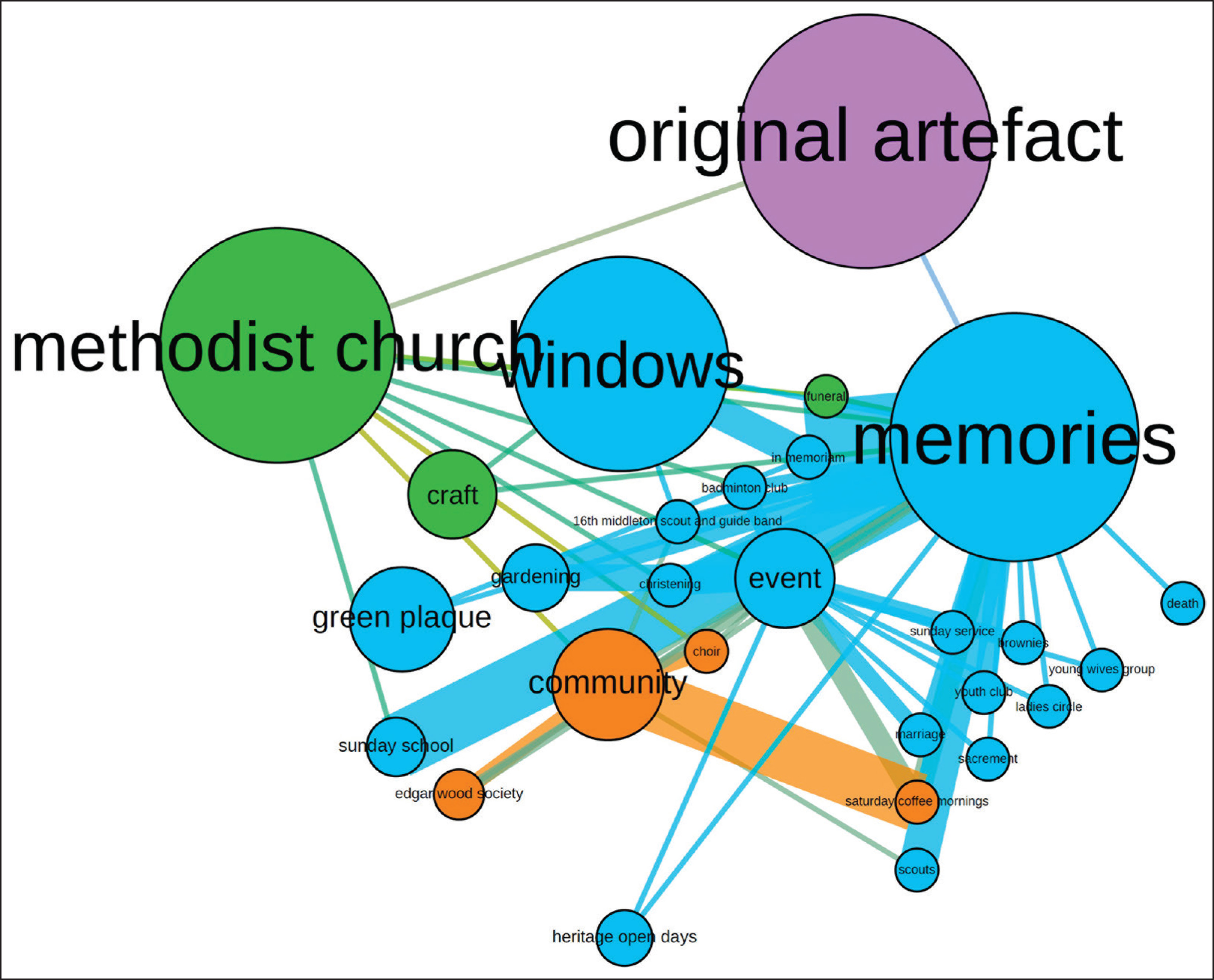
Two visual characteristics of the heritage network will immediately be obvious—the variation in node size as well as the various colours used to articulate particular groups of nodes. Firstly, the size of each node is relative to the number of connections the node has. This reveals the most connected (or ‘entangled’) nodes being ‘design’, ‘Edgar Wood’, ‘memories’, ‘fundraising’, ‘Methodist church’, ‘windows’ and the building as an ‘original artefact’. Secondly, the colour coding represents clusters of nodes that have a high number of internal connections with one another, or put simply, a highly connected group of nodes. By visualizing these two characteristics together, it is possible to not only see which nodes are most influential within the network but also which nodes they are influencing and entangling. This makes it possible to not only determine the connections between tangible and intangible heritage but also to determine which practices are bringing them together.
A total of six groups have been identified from the network analysis, which can be interpreted from a Practice Theory perspective as ‘…intercalated constellations of practices, technology, and materiality’ (Schatzki, 2010, p. 123; refer to Table 3). This study will further explore the practices related to society/ fundraising, the building design, and community memories.
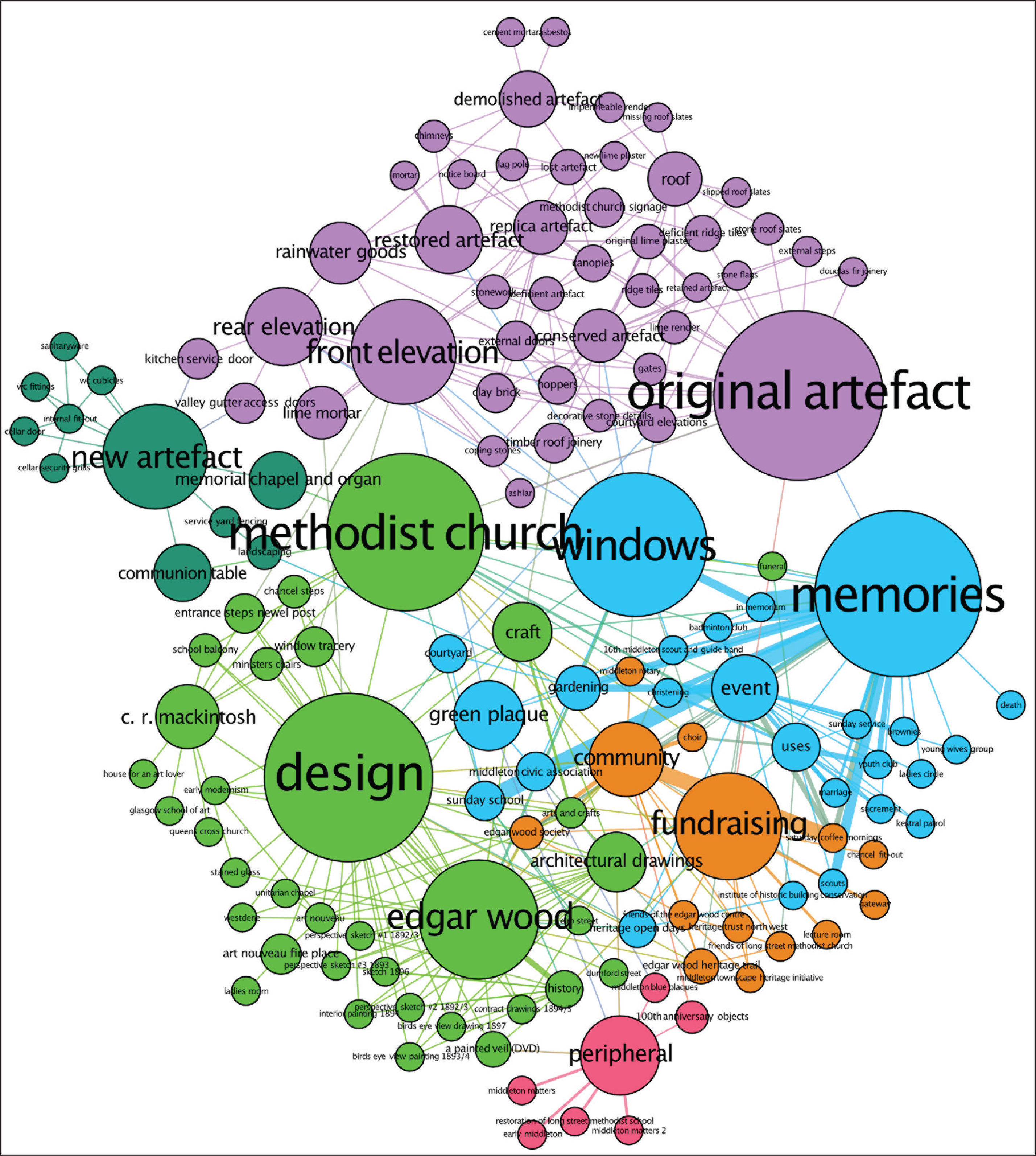
Communities Identified by Network Analysis, as Demonstrated in Figure 6
Heritage Practices: Memory, Design and Community
Memorial Practice
During the 2017 restoration works for Long Street, a fundraising initiative was devised that allowed members of the local community to dedicate a restored window to a friend, family member or loved one in exchange for a donation towards the window restoration process (refer to Figure 7).
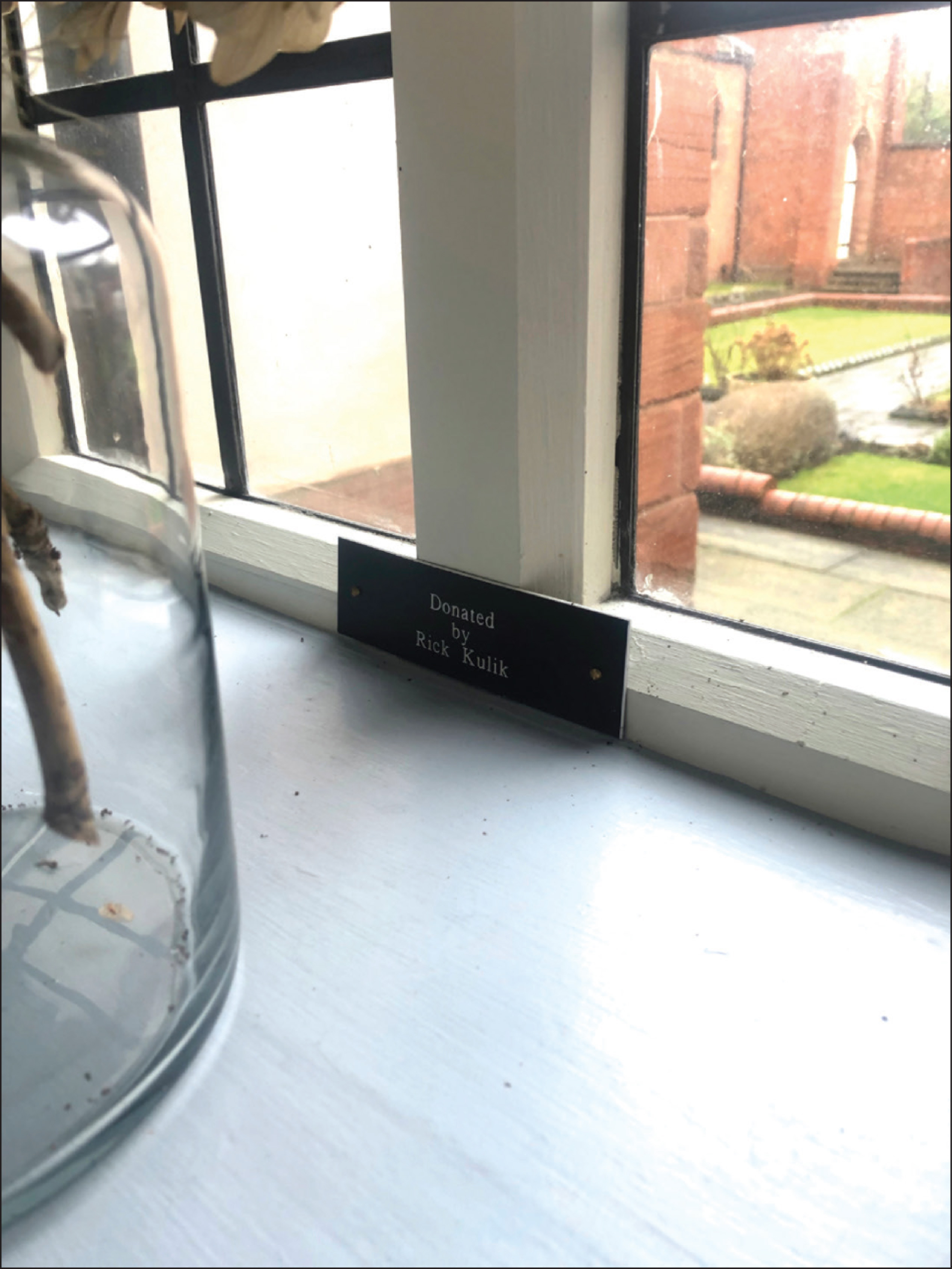
Some donations came from individuals, while others came from local clubs/groups through various incentives and charity work. In striving towards a replication of the original Edgar Wood design (an expensive task involving research, craftsmanship and high-quality materials), a ‘memory practice’ was employed that not only instigated various fundraising activities/events within the local community but also nurtured a contemporary relationship between the memories of the local community and the restoration of the building (see Figure 8).
This new relationship between living memory and the physical building fabric has not only helped to safeguard the building fabric, but it has also contributed towards bringing the building back into viable use as a space for contemporary community practices, and subsequently, a space for the creation of new memories. The memory practice therefore enhances the memorial efficacy of the building, which now not only represents the broader narratives of Edgar Wood but also the meanings of the building to the local community in the early twenty-first century.
Design Practice
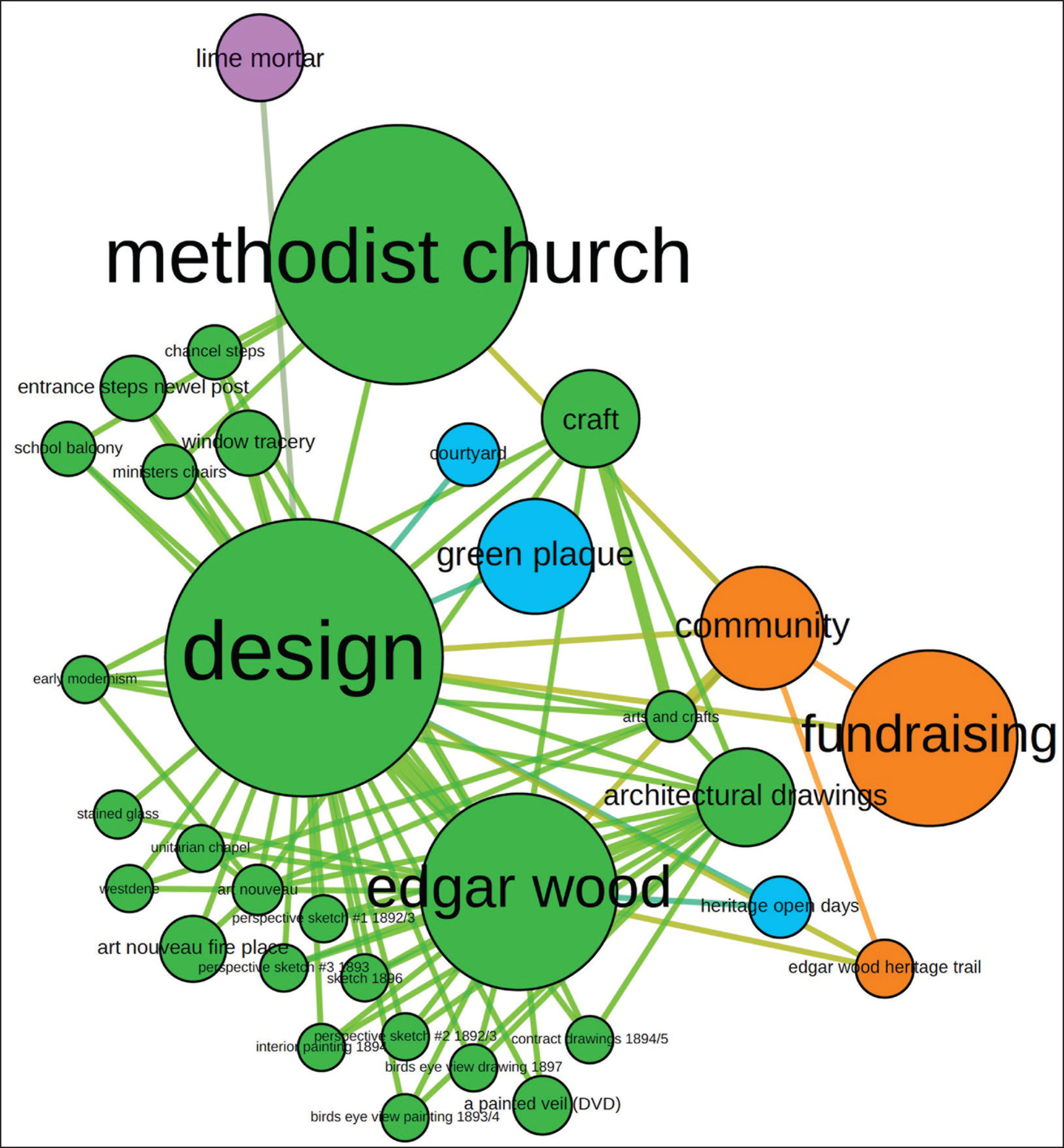
Unsurprisingly, the SNA calculated a group of highly connected nodes that reflect the building design and its association with Edgar Wood (refer to Figure 9). It also highlights the close relationship between the original building design and the recent community fundraising activities that have supported its protection and subsequent restoration back to Wood’s originally conceived design.
Various peripheral artefacts have helped to achieve this, such as key architectural design drawings across the building’s design evolution. However, more significant to the original design is the continued use of the building as a Methodist church. This has been sustained by a continuity of events and activities by the church community that support the safeguarding of the original Edgar Wood design as per the original design drawings. Activities in the present-day are therefore very much interested in the building acting as a symbolic site of inscription of Wood’s artistic integrity (Glendinning, 2013, p. 78; Olsen, 2010, p. 3).
The Relationship Between Tangible and Intangible Heritage
Using SNA as an approach to generate a network model for a listed building clearly has its merits in relation to understanding the relationship between its tangible and intangible heritage. It also has a noticeable capacity to amalgamate contemporary themes in heritage surrounding digitization and the problematization of heritage domains (Harrison, 2015; Hill, 2018; Rahaman & Tan, 2011; Taylor & Gibson, 2017). First, an SNA approach offers an equality of visibility across heritage domains that helps to address the difficulties associated with assessing and managing immaterial heritage (Smith & Waterton, 2009, p. 298). Windows can sit alongside memories, and reciprocal relationships can be established on equal terms. Second, it offers an opportunity to understand these various tangible–intangible relationships, which can work towards supporting the built heritage professional’s evolving role in defining what is significant and which values have more prominence than others (de la Torre, 2013, p. 163); for example, by illuminating the importance of ‘memory work’ undertaken at the building and its ability to merge broader narratives within local narratives, the significance of the building as a symbol of community practices in Middleton is intensified. Third, it offers an opportunity for heritage professionals to uncover the underlying processes that keep heritage as heritage. This is achieved by looking beyond established ‘cultural activities’ and emphasizing the ordinary, everyday practices that contribute towards its significance—what Kamel-Ahmed (2015, p. 74) describes as the analysis of ‘life patterns’. Choir, youth club and coffee mornings sit alongside the more notable use of the building as a place of worship, and the daily mechanisms of various organizations are revealed as vitally important in maintaining a continuity of these life patterns. Lastly, and perhaps most noteworthy, an SNA approach emphasizes the dynamic and unpredictable nature of heritage by de-emphasizing the centrality of the building within assessment and management processes, and instead reconceptualizing it as an inherent part of social phenomena (Schatzki, 2010, p. 141). The network model therefore encourages an assessment of socio-material histories and an appraisal of how best these histories can be managed and sustained for the future.
Concluding Remarks
This study has demonstrated how a rudimentary use of SNA can offer a deeper insight into the heritage significance of a historic or listed building. It has shown how it can encourage parity across tangible and intangible heritage domains during assessment; as well as foster a re-aligned professional focus that concentrates more on the various practices that sustain and give meaning to built heritage assets—rather than a materialistic point of departure for assessment. Critical to this is the adoption of a renewed sense of what a building is, or could be, in order to utilize SNA to its full potential. This requires an ontological realignment that reconceptualizes buildings as ever-changing material and social hybrids. In this instance, Practice Theory was utilized as the broader ontology to achieve this. Perhaps most importantly, the use of SNA in assessing the significance of a listed building has demonstrated that while guidance and policy for built heritage professionals often compartmentalize heritage into ‘domains’, it is perhaps more illuminating and essential to understand the socio-material structures in place that entangle the various material and immaterial heritage, and in doing so, one must accept the notion that these socio-material practices should be considered for conservation and safeguarding, alongside the physical building itself.
Limitations and Further Research
This study used only the basic principles of SNA in assessing the heritage of its case study building. The researcher does not have a background in SNA; hence, its potential as an analytical tool has been vastly underused. Future research would benefit from an interdisciplinary team of researchers from both heritage and SNA fields (e.g., computer science, mathematics, statistics) to explore a fuller and richer range of heritage assessment and interpretation possibilities. How a real-world use of SNA might be integrated within the role of the heritage professional when assessing the significance of listed buildings is unclear at this stage. However, it is possible that the key concepts reinforced by this study (i.e., a mindfulness of parity across heritage domains, an openness towards ontological redefinitions of buildings and the consideration of heritage ‘practices’) are already capable of being integrated within individual professional approaches towards the assessment and management of built heritage assets, without the need to utilize SNA-specific software.
Footnotes
Acknowledgements
The author would like to acknowledge the invaluable input of David Morris (conservation officer, historic buildings advisor and authority on Edgar Wood) who shared a significant amount of research and knowledge in relation to Long Street and Edgar Wood.
Declaration of Conflicting Interest
The author declared no potential conflicts of interest with respect to the research, authorship and/or publication of this article.
Funding
The author disclosed receipt of the following financial support for the research, authorship and/or publication of this article: This research was supported by the North West Consortium Doctoral Training Partnership [grant number D92204B].