



Abstract
Many small towns in the Western Cape, South Africa, are struggling with unemployment and lack of resources. While the government has introduced national development strategies to uplift these areas, socio-economic challenges persist. Due to the demise of many small-town industries and the impact of COVID-19 in already struggling communities, many small towns, under poverty-stricken conditions, are nearing collapse. There are little to no micro-scale data available on the lived experiences of small-town residents to establish a more rounded view of their challenges, which could better inform policy and upliftment strategies. The focus of this article is, therefore, centred around the lived realities of the community of one such small town, Touws River, an ex-railway town situated in the Western Cape province. Semi-structured interviews were used with an emphasis on conversation and narrative inquiry. Results show that most residents are nostalgically bonded to Touws River, even though daily life is a constant struggle and, for some, COVID-19 brought with it additional challenges. The national government appears to have neglected socio-economic investments in uplifting small towns. Instead of generalised upliftment strategies, what each small town requires is to be researched independently and supported by considering specificities of place, its people’s stories and its unique history.
Keywords
Introduction
Globalisation has created significant advancements in the modern world in terms of healthcare, basic service delivery and transport, but there has also been an exacerbation of inequality and poverty, especially in global South cities (Khor, 2000; Marais, 2015; Roberts, 2014, 2019). There are multiple reasons for this uneven development between the North and the South: no direct returns from global trade for residents of the global South; persistence of neoliberal ideologies; degradation of the environment due to limitless extraction of natural resources; a handful of powerful corporations holding most of the world’s economic power; low negotiation capabilities when pricing exported goods; lack of soft and hard infrastructure due to past colonialism; and government corruption, among others (Harvey, 2005; Khor, 2000; Peck, 2017; Roberts, 2019).
Against this backdrop, how was a country like post-apartheid South Africa—with excessively high levels of inequality, a rapid urbanisation rate (which brings about a host of other socio-economic problems) and racialised spatial geographies—meant to manage the impacts of this ever-increasing uneven development? The negative outcomes of globalisation manifest in various ways and trickle down from large metros to secondary cities and the smallest towns. As Marais (2015) points out, the economic vulnerabilities felt outside metro cities are due to ‘boom–bust cycles of the global economy’, as these areas are forced to keep up with world trends and the control of resources and businesses by powerful foreign corporates. Industry resource towns (IRTs) are specifically known for these boom–bust cycles, and Hayter (2008, p. 303) plainly describes the inevitability that most IRTs face: ‘They exist because cores want them; they are often closed down when cores do not. They are vital to the economy but are highly vulnerable. They grow because they are specialized, but their survival depends on diversification’. Small towns are essentially the ‘in-betweener spaces’ (somewhere along the spectrum) between cities and rural areas within the South African hierarchy of settlements (Marais & Cloete, 2017; Small Town Regeneration Strategy [STRS], 2021).
Although there has been an attempt to revive small towns in the country and invest in local development since 1996 (Bernstein & McCarthy, 1996; Integrated Urban Development Framework [IUDF], 2016; STRS, 2021), there remains much to be researched politically, environmentally, socially and academically (Hoogendoorn & Visser, 2016). The motivation for my research stems from this gap, to bring the stories of small-town residents—in this case Touws River—into the discussions around South Africa’s development strategies, to draw from the neighbourhood or household level to possibly enrich small-town policies and local economic development (LED) strategies by bringing to light voices from the communities. These stories aim to provide a window into the various relationships that Touws River residents have within their households, with their neighbours, with their hometown, with the municipality and with people or goods and services outside of their town. Essentially, these small-town narratives may provide insight into the bond people have with a particular place and, therefore, into the importance of keeping these places alive.
The second part of this article explores the sometimes problematic association of ‘normal’ urban words and terms with space and place. Haysom and Fusieni (2019) point out the limitations that arise with the use of traditional definitions concerning small and secondary towns and instead propose that we start thinking about towns in terms of their typologies (rather than their physical size and closeness to rural areas). The present way in which small towns are defined provides a sense of what they are and where they are found in relation to larger metros, but we need to expand on their features in terms of typology, role and function to possibly provide a window into the communities that reside in these towns.
The COVID-19 pandemic and subsequent lockdown had a devastating effect on people’s livelihoods and everyday lives. For a small town like Touws River—where the main source of livelihood ceased to exist 30 years ago—the added stress of COVID-19 in an already struggling town (Payne & Geach, 2021; Tshuma, 2022) was something that the research could not ignore, particularly given that interviews with participants were conducted just over one year after the lockdown came to an end.
This article details one part of the author’s master’s dissertation 1 revolving around the lived experiences of the community of Touws River situated in the context of post-COVID-19 realities. The structure of the article is as follows: first, an introduction into what small towns are and the priority given to them; second, why a move away from traditional definitions assisted me in qualitative research; third, an introduction to Touws River and objectives of the study; and fourth, gaining insight into the lives of community members from their stories. The urge to conduct research on South Africa’s small towns was initially conjured up whilst the author frequently travelled on the more than 1,400 km route between Johannesburg and Cape Town by car. It was during these trips that many of these ‘dorpies’ (how small towns are commonly referred to by locals) revealed themselves, precisely because of how forgotten they seemed to be and how heavily contrasted they were with the main city centres of Johannesburg and Cape Town. The intention then for this research was to find a way of making the country’s small towns more ‘seen’ by sharing the stories of the people who live in these towns. With these stories, small towns could, perhaps, start receiving attention from policymakers and national governments, similar to the attention afforded to main metros. To demonstrate this idea, the research was conducted through the case of Touws River, a small town situated two hours from the city centre of Cape Town.
Small Towns: A Brief Overview
Globally, there are no precise definitions for the term ‘small town’ in the fields of geography and urban studies (Dewar, 1996; Donaldson & Marais, 2012; Guin, 2019; Haysom & Fusieni, 2019; Servillo et al., 2017; STRS, 2021; Steinführer et al., 2016; Tong et al., 2020). According to Servillo et al. (2013, cited in Servillo et al., 2017), small and medium towns of the European Union
2
are classified as having a population between 5,000 and 50,000 and a density of 300 and 1,500 persons per square kilometre (sq km), with towns having a population of under 5,000 labelled as ‘very small towns’. Tong et al. (2020, p. 3) provide a summary of small-town classification for the following countries:
China has no agreed-upon definition of small towns amongst academics, although Han et al. (2023, p. 2) show that small towns are categorised according to an administrative management unit and a spatial structure (urban or rural/agricultural). In India, towns are classified by the Census of India as either Statutory Towns or Census Towns, the former consisting of more ‘formalised’ characteristics such as having a municipality, a military station, various public services and a town committee; the latter not recognised as urban by the government, but having urban characteristics, such as a population of more than 5,000, population density of at least 400 people per sq km, and 75 per cent or more employable male residents working in the non-agricultural sector (Guin, 2019; Tiwana, 2020; Tripathi & Mitra, 2022). Germany classifies small towns as having a population of 5,000–20,000 in the area or having a main function. France classifies small towns as urban areas that are considered functional and employ 10,000 people, of which 40 per cent is in or close to the core. The United States has no formal classification, but the authors suggest that its use of the term ‘urban clusters’ can be used for small towns if the population falls between 25,000 and 50,000 people.
Historically, small towns in South Africa were known for their mining, railway and agricultural economies, but since the closing of many of these industries, small towns declined rapidly. In fact, according to Van der Merwe (1982, cited in Donaldson, 2018), the socio-economic decline of small towns had already begun at the end of the twentieth century. For instance, the Karoo, a partly desert region spanning four of South Africa’s provinces, or 30 per cent of the country’s land (Xaba, 2023, p. 218), and home to many small towns, faced economic hardship during the late 1990s due to several factors: distant location from main metros; high-drought climate; relatively poor purchasing power of residents and low market success; priority given to cities by policymakers; and poor agricultural linkages (Atkinson, 2009, p. 273).
More than 500 small towns exist in South Africa (Bernstein & McCarthy, 1996; Xuza, 2012) in which approximately 5 million residents reside (Reynolds & Antrobus, 2012). These small towns make up the vast majority of the country’s landscape (Figure 1).
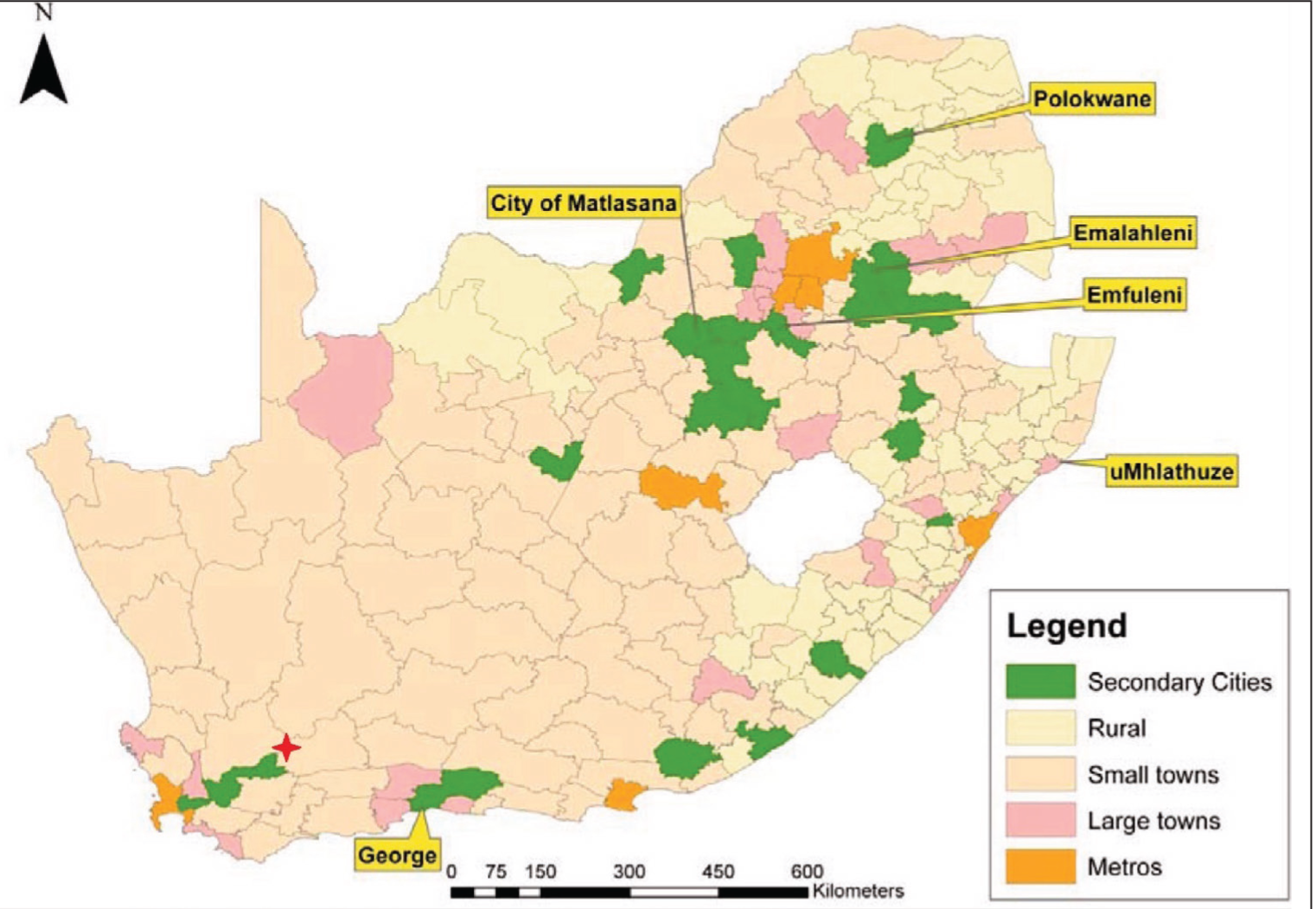
Secondary cities and small towns are most commonly known in South Africa’s urban hierarchy as places with rural–urban linkages: the ‘dynamism’ of products, people and money between rural and city regions, and the connections amongst different economic sectors (mostly agricultural) between rural and city spaces (Agergaard et al., 2019). As Swinney et al. (2018, p.12) state, ‘cities are not islands’ and as such they depend on the labour force of surrounding town residents (satellite towns) to drive the economy. Further, small towns often survive as a single-source economic sector in industries such as mining, agriculture or railway services, which makes them vulnerable to fluctuating global systems (Hayter, 2008; Hoogendoorn & Visser, 2016). What does this then mean for the communities of small towns once their main source of livelihood closes? Small towns need to be more deeply analysed, beyond the overly simplistic association of agriculture and rural themes (Haysom & Fusieni, 2019, p. 11) or as mere stopovers for travellers.
There has been a noteworthy increase in interest in South African small towns amongst scholars from varying disciplines since 2012 (Donaldson & Majiet, 2023; Donaldson & Marais, 2012). However, the abundant research and importance attached to South Africa’s metros, while understandable and needed, still far outweighs what we know about its small towns. As city centres are business hubs providing opportunities for employment, urbanisation has increased significantly within the country with 67 per cent of the population now living in or near city centres (South African Cities Network [SACN], 2022). Owing to this, innumerable documents, initiatives, policy frameworks, academic papers and reports exist around ensuring properly functioning cities. In contrast, the same cannot be said about small towns (Donaldson, 2018; Haysom & Fusieni, 2019; Hoogendoorn & Visser, 2016; Magidi, 2023; Marais, 2015; Roberts, 2014; United Nations Habitat, 2022).
Importance of Rethinking Urban Vocabularies
The use of specific vocabularies and definitions is largely inspired by Gautam Bhan’s ideas on Southern urban practice (Bhan, 2019), particularly that of renewing our common urban practitioner language so that we can better implement specific forms of practice, especially if these words are roused from the specific place we are researching. Why is this important? Words commonplace in urban policy frameworks and used in formal educational courses can often provide a one-dimensional picture of various geographies, which creates what Bhan calls a narrowing of theory and ‘common sense’. There are two issues with this. First, while Southern cities (or towns in this case) share similar problems such as poverty, inequality, exclusion and past colonial history, each city possesses its own heterogeneous characteristics. Therefore, urban knowledge should be born from a particular place instead of falling back on all-encompassing and generalised theories (Atkinson, 2008; Donaldson et al., 2022; Todes & Turok, 2017). Second, set words can take up space that is believed to be reserved only for those practitioners working in their specific professions. Instead, words should be non-hierarchical and accessible to all as this allows for the exploration of different modes of practice. 3
My reason for highlighting the importance of rethinking urban vocabularies is that these are essentially the building blocks for the definitions of things or ideas. If we look at small towns in the South African context, the standard way of defining them is by size, population and closeness to rural areas (Haysom & Fusieni, 2019); hence, all spaces that are similar will fit into one category under these headings. Like Varzi’s (2019) discussion on exploring what a city is, I too agree that broad, basic definitions are necessary to ‘get a start’ on things, to allow for the beginning of comprehending what is at hand even if these ideas are initially generalised. However, the ‘urban hierarchy of settlements’ (Hoogendoorn & Visser, 2016; Marais, 2015) of South Africa is a specifically named construct that seems out-of-place for a country known for its past racialised space divisions across the land, Bantustans or homelands, which were areas with little infrastructure and far away from city centres (Khapoya, 1980). To this day, these past racial space divisions significantly impact the everyday lives of poorer inhabitants due to pollution, inadequate housing and sanitation, and high transport costs to get to places of work in the inner city.
The terms ‘hierarchy’ and ‘small’ (for small towns) immediately suggest connotations from most to least significant, and that the settlements further down the ladder are there to benefit those on top. Turok (2015), in his piece on redundant and marginalised spaces, states that the South African government will always be faced with the dilemma of whether to choose between the people or the place, but that the well-being of the people is what should always dominate the decision-making process. AbdouMaliq Simone (2004) introduced the concept of ‘people as infrastructure’. Further to this and to the aim of this research, Southern cities and towns, while most likely sharing the same underlying issues, each have their own unique stories. These ‘specificities of place’ are what should be searched for, questioned, analysed and incorporated into dominant forms of knowledge and practice (Bhan, 2019; Donaldson et al., 2022; Pieterse, 2011; Todes & Turok, 2017) to bring richness and better understanding to blanket definitions of what small towns are. Lewis Mumford (1937, cited in Batty, 2022) asks us to look at cities as social institutions, not just physical spaces. Mumford (1937, p. 28, cited in Batty, 2022) states: ‘Most of our housing and city planning has been handicapped because those who have undertaken the work have had no clear notion of the social functions of the city’. Pieterse (2011, p.12) suggests moving towards ‘more interpretive, phenomenological and relational accounts of social and cultural dynamics and psychological dispositions’ in urban research.
Touws River
Touws River is located in the Breede Valley Municipality of the Western Cape Province of South Africa, right next to the national highway, approximately 180 km from Cape Town’s central business district. According to South Africa’s 2011 census, 8,126 people live in Touws River (Stats South Africa, 2011). 4
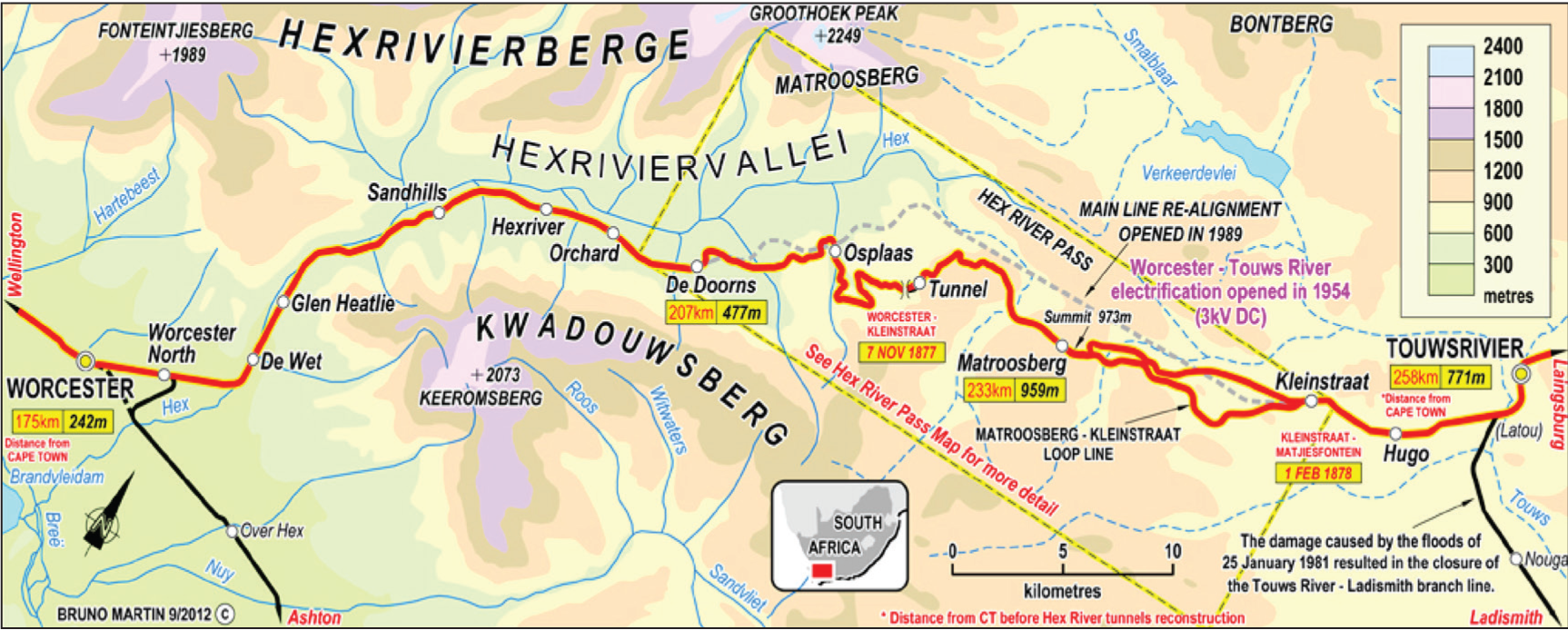
After diamond mines in Kimberley were discovered in 1867, there was a need to build a railway from Cape Town to Worcester, Beaufort West and beyond to Kimberley. In 1877, a station was built along the Worcester and Matjiesfontein line, initially called Montagu Road and later renamed Touws River (Figure 2), with the site’s main service used for locomotive refuelling (Frandsen, 2019; Haarhoff, 2018). Being a railway town was Touws River’s primary purpose, but, due to floods, fires and the construction of the Hex River Tunnel, the railway town’s operation quickly started to decline in 1989 (Frandsen, 2019; Haarhoff, 2018) (Figure 3).
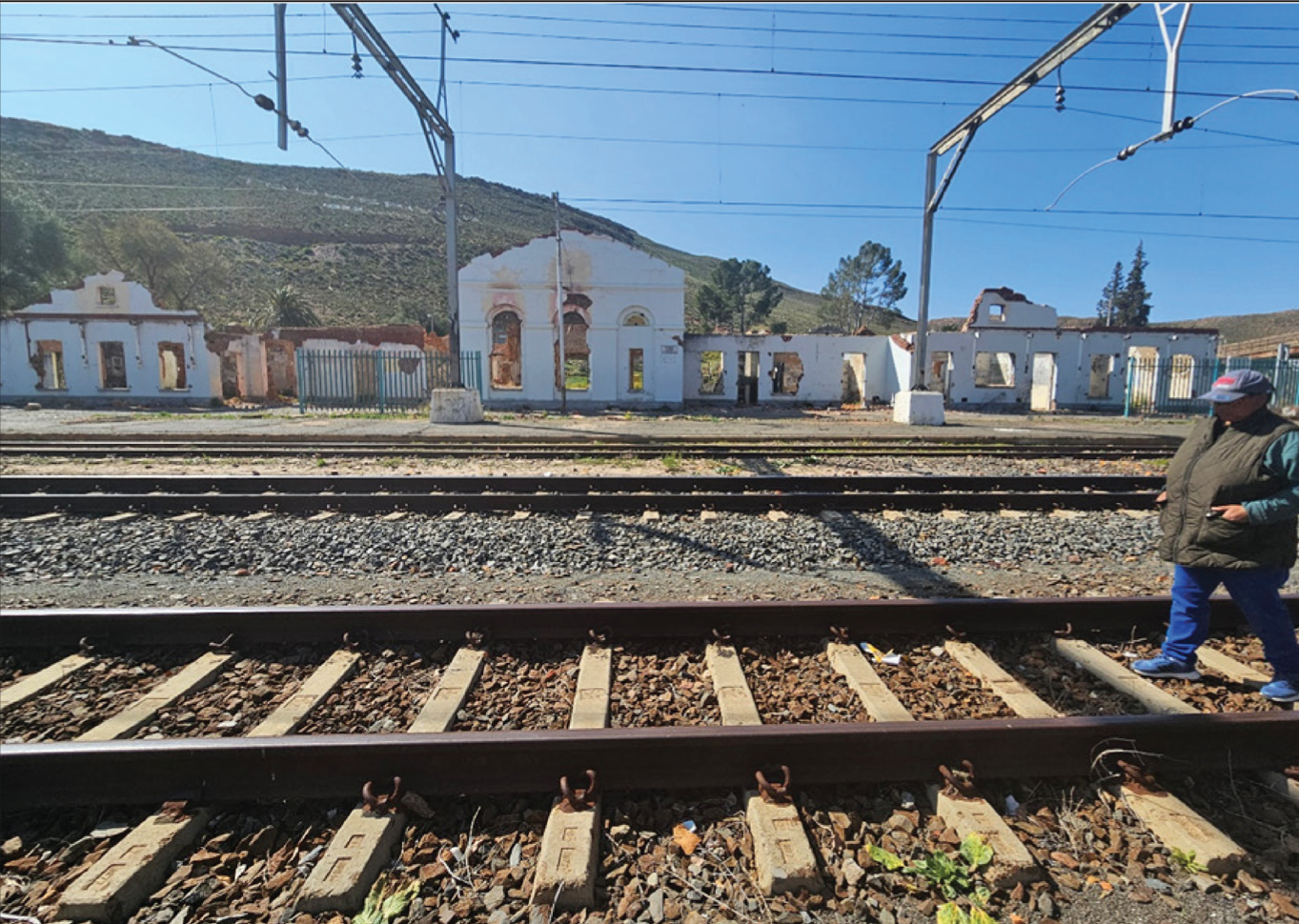
It is generally well known that when the main industry in an area ceases to exist, the socio-economic fabric of that place declines significantly (STRS, 2021). When the railway’s use slowed in the mid-1990s, no efforts were made to diversify the economy. Today, there is no thriving core industry and few retailers operate in the area. The bulk of employment occurs between early spring to late summer (November–March) 5 when demand for manual labour spikes to support grape-harvesting in the nearby town of De Doorns (Investec, 2023). For the rest of the year, however, there is no work for the majority of the people. According to various articles from news outlets and non-governmental organisations, Touws River has been undergoing economic hardships resulting in a lack of food to meet daily requirements (eNews Channel Africa, 2022; Gift of the Givers, 2022; Malgas, 2021; Metelerkamp, 2022; South African Broadcasting Corporation [SABC], 2022; Thebus, 2022). Presently, more than 80 per cent of Touws River residents are unemployed (du Plessis, 2023; Investec, 2023) with figures allegedly higher during the COVID-19 pandemic. Furthermore, the absence of hospitals and the significantly high unemployment figures further exacerbate the town’s current situation, with residents having to travel one hour to Worcester in order to obtain serious medical assistance (Metelerkamp, 2022; Thebus, 2022).
Today, Touws River is known as a stopover for travellers, for its merino sheep farming and for operating the world’s largest concentrated photovoltaic (CPV) solar plant (Investec, 2022; South African History Online, 2021).
Demographics
Of the 62 million people who live in South Africa, 81.4 per cent are Black, 8.2 per cent are Coloured, 7.3 per cent are White and 2.7 per cent are Indian/Asian 6 according to the census taken in 2022 (South African Government, 2024). While this is the racial profile of the country, the racial profile of the study site is markedly different according to the country’s 2011 census, where 84.9 per cent are Coloured, 7.5 per cent are Black, 6.6 per cent are White and 0.3 per cent are Indian/Asian (Stats South Africa, 2011).
As per the 2011 census, of the 8,126 people in Touws River, 30.3 per cent were in the 0–14 age bracket, 63 per cent were of working age in the 15–64 age bracket, and 6.8 per cent were in the 65 and above age bracket. The sex ratio for Touws River was 92.2 males for every 100 females (Stats South Africa 2011). 7
As mentioned previously, there has been a renewed scholarly interest concerning small towns since the beginning of the 2000s (Donaldson & Majiet, 2023; Donaldson & Marais, 2012). It is imperative to mention the ongoing work done by Donaldson et al. (2022) that has uncovered the extent to which COVID-19 impacted Ceres, Tulbagh, Riebeek Kasteel and Riebeek West, four small towns located in the Western Cape; and the various book titles categorised under the GeoJournal Library 8 book series ‘Urban Perspectives from the Global South’, in particular, that of Socio-Spatial Small Town Dynamics in South Africa (Donaldson, 2023). The chapters in this book dive much deeper into the lives of small-town inhabitants to show their chronic day-to-day struggles. For example, Donaldson and Majiet (2023) state that while much of the focus on small towns has been around LED and tourism, further research is required concerning housing delivery, community development, state and city capture, Zoom towns, and uncovering the pasts of small towns in today’s social climate (Mabin, 2021, cited in Donaldson, 2023). Addressing some of these points, Gardiner and Donaldson (2023) studied the well-being of mining town communities in the Northern Cape by looking at the ‘three pillars of well-being’: material factors such as income and what people own; quality of life indicators, namely, education, social engagement and personal health; and the sustainability of future resources in the areas of economic, natural, human and social capitals (p. 150). Ntema et al. (2023) delve into the persistent issue of inadequate housing provision in small towns due to the country’s historical practices, which indisputably aggravated a discriminatory geographical landscape. The problem of housing in small towns (usually a big talking point in metro politics) is a key area for research as housing is essential to ensure the basics of well-being are being met.
The objective of this research is, therefore, to build on these narratives in a more personal way, to know more about the daily experiences of residents in Touws River to further our understanding of small-town communities and the spaces that they occupy.
Methodology
Touws River has appeared mainly in news and railway articles and is mentioned briefly in the Small Town Regeneration Strategy of 2021 (an official government document; STRS, 2021). Broader information about the town is almost exclusively from tourism sites, and much of the socio-economic information has come from news channels, Gift of the Givers 9 social media updates, YouTube and Daily Maverick. 10 All of the aforementioned sources made up the bulk of my secondary research as the academic journal articles I found were mostly related to the natural sciences (aquatic sciences) and about the past railway lines from the field. This was the first time I realised the ‘overlookedness’ (Nugraha et al., 2022) of the town in academia.
My first introduction to Touws River was in March 2023 when I was put in touch with the Western Cape Economic Development Partnership, to attend the Touwsrivier Food Learning Journey Lab aimed at better understanding the food system in the town. This initiative was supported by local and regional governments, the Western Cape Economic Development Partnership, Southern Africa Food Lab, academics, journalists, local residents and others.
During the two-day lab, I eventually connected with four key community members who agreed to show me around the town and act as guides to facilitate the one-to-one interviews to inform my research. Through these four group members, I met and had personal conversations with 19 Touws River residents. These interactions took place face to face in July, August and September 2023 with both employed and unemployed women and men aged 19–70 and from all race groups. All participants were given an information sheet in English or Afrikaans (to their choosing) to explain the nature of the study and all signed a consent form. Participants were interviewed in a relaxed conversational manner, with engagements lasting from 20 minutes to 1.5 hours. General, informal conversations were also had with other residents, which provided invaluable context and insights into the history of the town and people’s everyday lives.
One does stick out in a small town. This was initially an assumption I made, but, very quickly, I was noticed as ‘someone new’. People were interested and mostly friendly, but undoubtedly this was attributed to the fact that I was already associated with members of the town. Participants consisted of a high school principal, young adults who had recently completed grade 12 (high school), NGO workers, firefighters, a policewoman, the unemployed and those working in the Community Work Programme (CWP). The CWP is a national government initiative aiming to provide a few workdays per week to people while they look for permanent jobs; what the government calls a ‘job safety net’ (Department of Cooperative Governance and Traditional Affairs, 2024).
Challenges
The biggest obstacle for me was the language barrier. While I mostly understand Afrikaans, by far the most widely spoken language in Touws River, my spoken Afrikaans is below average. There is a sense of pride that the community takes in speaking suiwer (pure) Afrikaans and I was told that not only did being an inkommer (person not originally from the town) work against me, but I was also a Coloured person who could not speak the language. Despite most of the participants graciously giving me their time, some of them even enjoying the chance to speak about their lives, what this ultimately meant was that it would be tricky to approach anyone on the road. All but two interviews were arranged by the four guides—the interview with the area manager of Touws River and one with another inkommer from Cape Town. Of course, the problem with gatekeeping was something that I had to be aware of, but when I realised that some of the older participants (aged 40–60) had many of the same viewpoints as the guides (with whom I quickly became very friendly), I pushed for them to organise interviews with people who they may know but were not close with. Having private one-to-one conversations with participants who were comfortable talking in English was also much preferred to having the guides sit in on the interviews.
For the next section, I detail the experience of meeting the community members who partook in the research, themes that were consistently present, and my own challenges during the process.
Stories and Reflections
More than ever before does place matter. (Banai, 2020, cited in Donaldson et al., 2022; p. 1612)
How can we study any socio-economically deprived region with the hope of improving it, without knowing its people intimately? As Thelwall and Nevill (2021, p. 1) observe: ‘Qualitative interviews also give a direct voice to non-researchers, allowing them to articulate their perspective in their own words and reducing the chance that the researcher imposes their own perspective or constrains the scope of discussion’. The same thinking could be employed by policymakers and government officials so as to reduce the practice of using one broad ‘small-town (or rural) development framework’ to oversee all small towns in South Africa. Atkinson (2008, p. 5) urges the South African government to abandon the practice of using one economic development policy to oversee the upliftment of all small- and medium-sized towns, as the considerable differences between each town make the use of a one-size-fits-all strategy possibly ineffective.
Topics of Discussion
The Touw River residents are the main focus of this article the spaces they occupy are usually painted by tourism sites as idyllic destinations for those looking for an offbeat adventure; quaint, picturesque areas to stop over at while travelling from one metro to the next; the undeniable hospitality from the gas station or restaurant local employee. This is what many of us outsiders buy into—the romanticism of a rural visit to recharge before heading back to the city—perhaps unaware that many small-town communities are struggling, many people are largely unemployed, many remain in the background, not seen or thought about.
Governmentally, alongside data, policies and generalised plans concerning small-town development, no micro-level data exist to bring out the voices of the residents. The aim of the research was to get to know ‘the person’ as a Touws River resident, with questions focused on the participants’ life history growing up in Touws River; their present day-to-day schedules; the railway during its operation, if its closure affected them and their families and to what extent; government assistance during and after the railway closure and during and after COVID-19 (the two catastrophes that hit the town in the space of 25 years); their attachment to Touws River and what they envision for its future; their feelings on being interviewed about their lives; their hopes and aspirations for the future; and, if from elsewhere, when and why they moved, and how they managed to settle into Touws River.
Other topics discussed were concerning the effects unemployment and lack of infrastructure have on day-to-day living. These included inadequate social support for single young mothers, addiction, mental illness, trauma counselling and those affected by domestic violence. Lack of proper housing, the absence of banks, malls and restaurants, and lack of ATMs were also mentioned as daily challenges for the residents. They also reported dependence on government grants in the form of child welfare or old-age pension. 11 The South African government provides various forms of monetary compensation for its citizens, including to those caregivers who cannot provide adequately for their under-18 children and to those who are over the age of 60 (South African Government, 2024). Many of the participants mentioned the ‘joy’ in the town during the spring/summer harvest time when residents can earn up to R4,000 (approximately $224 or £177) a month. To this point, two of the younger participants mentioned that ‘Touws River is a different place then’ and that they wished the media and outsiders would experience the town then and not only during winters. In April 2022, the COVID-19 lockdown officially ended in South Africa (Rumney, 2022). Fieldwork for this project was conducted almost entirely in 2023, and so the issue of how (if at all) the pandemic affected the lives of residents presented itself in every interview. This is especially owing to the widely known fact that, generally, it was poorer people who struggled the most and took the longest to recover during and after the COVID-19 disaster. While 11 participants said that the pandemic negatively impacted their lives or the lives of close friends and family mainly due to job loss and food insecurity, for one particular participant, the immediate ban on alcohol and cigarettes was found to be the biggest challenge.
Many of these topics were chosen by the author because of the potential they have to open other areas of conversation and exploration. The intention was for the participants to speak about themselves and their lives, past and present, for as long as they wanted to. Some conversations lasted more than 1.5 hours, others less than 30 minutes.
To detail all 19 participants’ stories is beyond the scope of this article but a few quotes that really bring them to life have been included.
Education and Unemployment
We are living in an agricultural area, and we do not have agriculture as a subject at school. We don’t have tourism and consumer studies at school (but we have Aquila and other game reserves close by). (Male, 45–55 years old, permanently employed)
When the wine farms are open, the streets are empty cos everyone has work, there’s life in TR [Touws River]. When the season closes, then you don’t want to be in TR, then everyone does what they want to, but when there is work, the atmosphere is completely different, you can feel. (Male, 20–30 years old, seasonally employed)
Employment opportunities in Western Cape’s small towns are few compared to surrounding metros (Atkinson, 2008; STRS, 2021). In Touws River, unemployment is said to be at around 80 per cent and was as high as 90 per cent during the COVID-19 lockdown (Bonthuys, 2023; du Plessis, 2023; Investec, 2023). Of the 19 participants interviewed, only 7 were permanently employed while the others were either unemployed or working a few days every week for CWP. Atkinson (2008) emphasises the importance of diversifying local market economies in small towns that are not related to agriculture, a safety net to fall back onto during risky financial periods. In my conversations with the residents, people still firmly rely on government grants and grape-picking work during the summer months. Atkinson (2008) elaborates further about the detriment a small town faces when technical colleges or training centres are closed—as is the case in Touws River—as these institutions provide the necessary skills for students to become future entrepreneurs and expand local market activities within their area. According to one of the residents I spoke to, a school had closed down in 2002 or 2003 and the building has stood empty since then. Another resident wishes to use the building as an old-age home, especially for those struggling with mental illness.
Healthcare
There is no hospital in Touws River. The closest hospital is in Worcester, approximately one hour’s drive from the town. Hitchhiking to and from Touws River is common as the return taxi fare to Worcester is R110 (estimated at $6 or £9). This, various participants said, is a significant amount for those who are without regular work.
The timely arrival of ambulances is also unpredictable. A resident told me of an incident where a school child was severely wounded during a sporting event and had to wait more than half a day for an ambulance to arrive. The community could not move him from the sports field to avoid worsening his situation. Another interviewee relayed an incident when due to a heart condition they had called the ambulance and only heard back eight hours later, but on another occasion, when his diabetic partner had a problem, the ambulance arrived within minutes because it happened to be close to Touws River on that day.
The sister [nurse] will decide if I can see the doctor then you get an appointment with the doctor sometimes only in two weeks’ time, or next month. Sometimes people gets healed before they see the doctor, or they die before they see the doctor. (Female, 40–50 years old, employed part-time)
We have 2 doctors, for the whole town—they come three times to the clinic a week, that’s it. And it’s mostly chronic [ongoing medical conditions], they’re only chronic doctors. You need to make an appointment and sometimes wait 3–4 months to get an appointment. (Male, 40–50 years old, self-employed)
Social support and challenges
During my time spent in the town, impressionistic evidence suggests that most people are friendly towards each other out of familiarity or relationships built over time. Residents and participants reported stories of neighbourly support through help with food provision or care of children and that ‘everyone knows everyone’, which adds to the safety of the town. However, tension does and can exist between inkommers and the residents of Touws River. This issue came up twice during two separate interviews.
When asked if they will ever leave Touws River:
No, not at the moment. As long as I can make a difference here in TR, along with the people that stands with me, will I continue here. (Female, 35–45 years old, permanently employed) Also it’s safer here, everyone knows everyone. Sometimes people do judge you but then they get to know you and get to know Touws and then they’re like ‘oh this place is kwaai’ [slang terminology meaning cool or great]. (Male, 19–25 years old, unemployed)
When asked if there was tension between her and the Touws River residents when a participant had made the move from Cape Town:
Absolutely and up until today also, even if you speak Afrikaans, whatever, they just got that mentality, that you’re not from TR. (Female, 60–65 years, self-employed)
Conversations also addressed what city folk think of small-town communities—that they often feel looked down upon, that people on the outside assume small-town people do not know much about worldly things. While engaging in these conversations, it always came across to me that the people of Touws are proud of who they are and where they come from, from their home-spoken language to valuing their town as peaceful and safe compared to Cape Town. One of the guides who showed me around her house (but who I did not interview) found beauty and appreciation in the oft-overlooked aspects of her daily life. She was content that she and her adult siblings, including her sister’s husband and children, all stay on one property. She proudly showed me the firewood oven in which the popular ‘roosterkoek brood’ is baked and how they managed to connect the electricity line from the main house to the separate dwelling at the back. Many of the older residents spoke of a sense of fondness regarding their family and their easy childhood days when most of the people (their parents) were employed during the operation of the railway.
Where to From Here?
A once-bustling and thriving small railway town reduced now mainly to seasonal farm work and unemployment, Touws River is possibly just one example of many small towns in South Africa whose attraction and vibrancy have declined over the years. My hope is that some of these stories will allow us to understand the aspirations, frustrations, perspectives and feelings of small-town communities so that we can learn alongside them and from them.
First, my assumptions were challenged, which I was relieved about because it reinforced this sense that we as outsiders are mostly unaware of people’s realities. In Donaldson and Marais (2012, p. xi), the editors mention that, in the book Small Town Geographies in Africa: Experiences from South Africa and Elsewhere, no matter what their specific area of focus, none of the contributing authors agreed that ‘small towns should just be allowed to die’. After learning through conversations with participants that most of them love their home, their town, and have no desire to move away, it strengthens the argument of not just allowing small towns to wither away, that there are people who are bound to their community and home. The attachment to place is perhaps worth exploring more in small-town research. Diener and Hagen (2020, p. 182) talk about broadening geographical theories and methods concerning the ‘notion of place’, and Roy (2015, p. 201) also relays the difficulties in trying to join the dots between theories and empirical ‘on the ground’ realities, stating, ‘and yet theory is so often characterized by its disembodied voice and unmarked location’.
Residents, including those who moved to Touws River, praised the safety of the area compared to big cities like Cape Town, owing to the fact that ‘everyone knows everyone’. I thought it was interesting how much pride the people took in the Afrikaans language as opposed to viewing it as ‘the coloniser’s language’, which is a common thing to hear in Cape Town. I did not sense any tensions between South Africans from different races (racial tensions are very commonly spoken about in my circles socially or in university). Except for one older male participant, there was no talk about racism between Coloureds (majority of the town) and the ‘richer’ Whites. There were, however, conversations around the tensions towards foreign-owned shops, which is also something that Hoogendoorn and Visser (2016) mention in their recent review of South African small towns. To this point, two of the participants felt that they would never belong or be truly accepted by the Touws River community because, despite them being Coloured and speaking Afrikaans fluently, they would always be seen as inkommers. Similarly, residents felt that ‘city people’ looked down on ‘small-town people’. There is undoubtedly a significant sense of pride and community bond amongst the people of Touws River even if they and other small towns are not ‘up there’ with the big cities.
The town is relatively cleaner environmentally than what I have experienced in city areas. This clean space, safety and friendly atmosphere are immediately evident on the outside. However, behind this picture, participants detailed lives of addiction, teenage pregnancy, child neglect, housing issues (there is Zion Park, a housing settlement of ‘shacks’ not instantly noticeable coming into the town), tensions between local government members and residents, and the significant dependence on government grants. Although approximately 80 per cent of the residents are not permanently employed, there was a feeling of irritation at the ‘younger generation’s laziness’ but also at the parents who have ‘allowed this behaviour in their children’. Although there has been much promise around economic development in small towns (Donaldson & Marais, 2012; IUDF, 2016; South African Local Government Association [SALGA], 2021), there is an urgent need for technikons (vocational education institutes) and/or other skills development facilities (Atkinson, 2008), and consistent workshops and training around social development and mental health.
During my time spent there, I learned that Touws River residents are exceptionally sports-oriented, especially favouring rugby and running. Hence, developing a space to encourage sports, something that the residents feel positively towards, could also be a means of development for Touws River.
Infrastructure around affordable transport to the closest large town, Worcester (about 76 km away), and everyday accessibility to a doctor or hospital were two of the biggest issues that residents shared. A population of around 8,000 people who do not have immediate access to fully functioning healthcare services highlights the dire need for government intervention.
Interestingly, the detrimental effects of COVID-19 were not felt by everyone in the way I had expected—which I thought would be a complete change in their day-to-day lives and unimaginable struggles—perhaps owing to the fact that approximately 80 per cent of the residents were already unemployed before the pandemic hit. Food was the main factor in surviving the lockdown, and there were mentions of ongoing soup kitchens by various NGOs and private individuals throughout the lockdown that helped substantially. There are others who insist that food insecurity has always been a major problem in Touws River, even before COVID-19.
I also reflected on the joy and contentment that is to be found in permanent work. Abject poverty imprisons many parts of a person’s life, so while one may be legally free, one is sorely prevented from living a fulfilled existence because of reduced capabilities to access those spaces and opportunities (Sen, 1999). 12 Hence, what permanent employment can do for one’s overall well-being cannot be stressed enough. It allows for what you hope for yourself to be more attainable and brings inner stability partly because basic needs are being met. Permanent work also alleviates the boredom and discontent that comes from waiting around. 13 There is also a sense of waiting around for a job opportunity; waiting six months for seasonal work to begin; waiting around for the next government grant to come through; waiting for the next meal at the soup kitchen to be dished out and then waiting in the long queue to receive the meal; and waiting weeks for the next available doctor’s appointment (Stasik et al., 2020; Wafer, 2017). In a world where, for many of us, these scenarios are either not part of our daily lives or they are something we can get to almost immediately, this reveals the stark difference between the lifeworlds of the rich and poor, the city folk and small-town people.
Conclusion and Future Endeavours
This article is centred around the community of Touws River post-COVID-19, in an attempt to understand the lived realities, challenges, hopes and perspectives from their voices. After the closure of its railway in the mid-1990s, the town experienced a decline in economic prosperity, a trend similarly seen in other single-source industry towns. Presently, unemployment sits at an average of 80 per cent according to various news reports, with more regular work available only in the summer months.
The need to conduct this research stemmed from the qualitative and quantitative data disparity between metros and small towns, with little household-level data existing for the latter. I was unable to locate first-account narratives by South African small-town residents that detail their day-to-day life experiences, something I found could add an eye-opening layer to the current literature on small towns. A future goal would be to explore how we use what has been learned from the residents’ stories, to better employ appropriate place-based policies.
This research was also important to undertake to highlight that all citizens should have their needs met regardless of where in the settlement hierarchy they reside and, as such, serious attempts by governments need to be made to uplift and upskill our small-town communities. Further, while it is understandable that concrete definitions are needed to make categorisation for policy and administrative purposes more manageable, these definitions are limited in that they tend to focus on small towns only as physical spaces with physical characteristics and often ignore the function of why that town exists and the particular social aspects of that town. A more conceptual approach around the weightiness of certain words was also briefly examined—words entrenched in the country’s policies and laws and how these words can inform practice or encourage ‘urban bias’ thinking. Lastly, this article looked at moving towards place-based research, which can provide a holistically accurate representation of a specific area owing to the study having been done and experienced from the place in question (Bhan, 2019), and in this case, not assuming the homogeneity of small towns (Hardoy & Satterthwaite, 1986, cited in Dewar, 1996, p. 4). Bhan (2019, p. 641) explains: ‘I do not believe that vocabularies of practice can be created other than incrementally from multiple locations, so that they may then begin to speak to each other to see if shared theoretical frames can emerge across these locations’. In the same way, what if the day-to-day lives of residents in neighbouring small towns were researched intimately (Bhan, 2019) and then analysed to see if similar themes emerge? Although, as mentioned previously, there has been a revival of scholarly interest in these areas with much of the findings pointing unarguably towards socio-economic decline. There have also been blanket upliftment strategies put in place—which has the potential to work for some small towns, but not others—a practice that, according to Dewar (1996), does not take into account contextual settings and that Binns (2009, cited in McKibbin et al., 2012, p. 399) warns is highly problematic.
We as researchers owe much of our academic achievements to those in the community who assist us in navigating unknown areas so that we can successfully carry out our research. Without them, not much would be possible in terms of data collection. During a webinar around ethical research in the academic realm, host Mthunzikazi Mbungwana in conversation with Corinne Knowles (2024), discussed the importance of moving forward by including ‘the subjects of study’ as research colleagues to bridge the gap between ‘us’ and ‘them’, to avoid extractive research methods, to acknowledge that ‘those on top’ do not always know what is best for the future of the local communities in study. Thus, working with participants can assist in formulating more thorough, micro-scale policies and projects. For future research in small towns, Knowles urges us to take seriously Moletsane’s (2015) request:
People’s realities are often defined and explained by outsiders and that the interventions that come their way, are likely to be irrelevant to their lives’ needs. To address this, what is needed is context-specific knowledge, cocreated and co-disseminated with the local people themselves. (p. 43)
There are very real issues facing small-town residents: communities whose stories are hardly heard and whose daily lives go amiss amongst the barrage of the country’s ‘more pressing’ socio-economic challenges. My argument is that while it is understandable that most of the focus is around main city centres and metros due to them being the business hubs of a country, there cannot be a separation in priorities when it comes to different communities judged entirely on the area that they inhabit. All lives, irrespective of where you reside, matter.
Footnotes
Acknowledgements
This paper is based on the fieldwork conducted as part of my master’s dissertation at the University of Cape Town. I would like to express my heartfelt thanks to Isolde de Villiers, who encouraged me to contribute a paper to Urbanisation—without her contacting me, this would not have come to fruition. I am also hugely grateful to Julia Wesely for all her efforts in guiding my work and offering invaluable editing advice. I am indebted to the few South African scholars who have dedicated a huge part of their academic vigour to bringing to light the very dire needs of our forgotten small towns. These are the names that consistently come up in my literature review and readings and who have made a very real presence in this field as Ronnie Donaldson and Lochner Marais ( ) call them the ‘South African Small Town School of Thought’. Without their work, I would have very little background knowledge or understanding of the socio-economic standings of small towns in the Western Cape. Lastly, thanks to Professor Lochner Marais and Bruno Martins for allowing me to use their images.
Ethical Approval and Informed Consent
The study was approved by the Engineering and Built Environment Committee at the University of Cape Town (Ethical Clearance Reference Number: EBE/00145/2023) on 12 June 2023. All participants provided written informed consent prior to participating.
Declaration of Conflicting Interests
The author declared no potential conflicts of interest with respect to the research, authorship and/or publication of this article.
Funding
The author disclosed receipt of the following financial support for the research, authorship, and/or publication of this article: During the time of the research, the author was in receipt of a study scholarship by the University of Cape Town.