



Abstract
This article conducts a historical analysis of urbanisation in Iraq and identifies three factors for its unsustainability—political instability, rapid population growth and oil discovery—which are discussed and analysed. In 1930, only 25 per cent of Iraq’s population lived in urban areas. This figure rose to 71 per cent in 2020 due to rural to urban migration, forced migration and internal displacement due to ethnic and sectarian conflicts and wars. Oil has brought economic development, but it has also led to militarisation and wars, which diverted authorities’ attention from the rapid urbanisation and led them to miss opportunities to deal with it in a timely manner. A reversal of the unsustainable urbanisation in Iraq would require genuine political reform, ending corruption and preparing a national development plan that deals with the crucial challenges brought on by urbanisation.
Introduction
Ancient urbanisation first emerged in modern-day developing nations and spread northwards into Europe and North America (Knox & McCarthy, 2012, pp. 23–25), and today draws the attention of scholars, planners and politicians because of the changes it brings to urban and rural areas. Urbanisation gives rise to economic development—in some countries and occurs without it in others (Christiansen & Lanjouw, 2013)—as well as urban problems, such as housing and public services shortages, unemployment and poverty.
Urbanisation in Mesopotamia/modern Iraq is a consequence of political changes caused by colonisation, coups, internal conflicts and wars, as well as demographic trends. In 1930, the population of Iraq was estimated to be slightly over 3 million, of which 68 per cent was rural, 25 per cent urban and 7 per cent nomadic (Hasan, 1958, p. 344). The total population has since surged, especially the urban population. Oil exploration since 1927 and its export to the world market since 1934 (Tripp, 2000, p. 71) accelerated urbanisation and economic growth and enabled the government to implement economic development programmes (Al-Habib, 1955, pp. 187–89) that created thousands of jobs in cities (Phillips, 1959, p. 409). Iraq’s urban history demonstrates that the actual beneficiaries of urbanisation are urban dwellers who can afford and profit from urban amenities. Those who cannot are deprived, and this inequality makes urbanisation unsustainable. Urban expansion into agricultural land, climate change and unequal sharing of water between neighbouring countries are furthering migration and water scarcity (Gavlak, 2022).
This article uses historical analysis to discuss urbanisation in Iraq from 1921 till the present day and analyses three factors that have affected urbanisation and economic growth: rapid population growth, constant political turmoil and oil discovery. What is intended here is to understand how urbanisation has occurred, in order to inform the management of present challenges and urban planning policies for future urbanisation.
The data used in this article was obtained from publications by the Ministry of Planning of Iraq, the Central Statistical Organisation, Annual Abstracts and from academic books, journal articles and reviews.
Global Urbanisation
Urbanisation first started around 4,000 B.C.E. (Davis, 1955, p. 429) in many modern-day developing countries, including Iraq, Egypt, India, China, and in South America in the Andes and Mesoamerica (Knox & McCarthy, 2012, p. 24). The second phase of global urbanisation began in West Asia in the seventh century, when urban life in Europe declined during the Dark Ages (Costello, 1977, p. 8). Thus, the cities of Baghdad, Cairo, Fustat, Tripoli (Lebanon), Aleppo and Istanbul embodied urbanisation in West Asia. In the late fifteenth and early sixteenth centuries, urban life in West Asia waned because of the occupation of most of West Asia and North Africa by the Ottoman Empire, and the European penetration into West Asia in the early sixteenth century (Costello, 1977, p. 17). Modern urbanisation commenced in the sixteenth century in Europe (Wallerstein, 1974), not just due to progress in science and technology, but also because of the European colonisation of developing countries (Ward, 1976). Europeans entered West Asian countries in the nineteenth century through trade (Costello, 1977, p. 23). Both the Ottoman occupation and European penetration shaped urbanisation in most West Asian countries, including Iraq.
Thus, urbanisation is not a new phenomenon. Davis (1965/2011) states that the concentration of a large number of people in the cities of urbanised countries is a significant stage in human social development. The first cities, which emerged 5,500 years ago, were small and encircled by a large rural population. Today, urbanised societies have agglomerations of sizes never reached before, with a high proportion of the population concentrated in these agglomerations.
The modern phase of urbanisation that emerged in Europe and North America in the nineteenth and twentieth centuries (Bairoch & Goertz, 1986, p. 285), and in developing countries after the 1950s, exemplifies Davis’s definition. Improvements in the health and educational systems, housing and provision of clean water and sanitation reduced mortality rates first in industrialised countries and later in developing countries, which led to an increase in world population and urbanisation. In 1900, the world population was over 1.5 billion, and 2.5 billion in 1950 (Weeks, 2012, p. 33), and is expected to reach over 8.5 billion in 2030 (United Nations Department of Economic and Social Affairs (Population Division), 2022). The rapid growth of the world’s population in the twentieth century was accompanied by a surge in urban population and urbanisation, particularly in developing countries. Between 1950 and 1975, the urban population of some countries increased to 70 per cent. At the beginning of the 2000s, developing countries accounted for 80 per cent of the world’s population (Coast, 2002, p. 2). The urban population will further increase due to natural growth in population, rural to urban migration and land reclassification. The rise in urban population has led to an increase in the number of cities (Bhattacharya, 2002, p. 4219; Cohen, 2004, p. 29). By 2050, 68 per cent of the world’s population will live in cities, with the addition of 2.5 billion people to the global urban population, and a 90 per cent surge in Asia and Africa (United Nations Department of Economic and Social Affairs (Population Division), 2019, p. 1) (Table 1).
Increase in World Population.

Table 1 shows the continuous increase in the global urban population, which is projected to reach over 6.6 billion by 2050. Table 1 also shows that the increase in rural population is projected to be less than the increase in urban population, especially in developing countries, as different push and pull factors can affect the rate of urbanisation. Kojima (1996, p. 349) considers rural to urban migration as the principal driver of urbanisation. Rural populations move to cities to improve their living conditions, or when they become landless because of land laws/reforms or civil wars (World Bank, 2018) caused by ethnic and sectarian clashes, which displace millions of people. Globally, in 2019, there were 45.7 million internally displaced persons and 26 million refugees (United Nations High Commissioner for Refugees, 2020) increasing the population of the cities to which they migrated. External, international migration also leads to an increase in urban populations (Ortega & Peri, 2013, p. 47). The political unrest caused by civil wars and wars between countries forces people to move to safer cities and from rural to urban areas (Hugo, 2006, p. 69; Muana, 1997, p. 82). Schulz (2015) defines this type of population mobility as war urbanisation.
Some scholars believe that a correlation between urbanisation and industrialisation is more evident in developed countries, nonetheless, many developing nations have high rates of urbanisation with limited industrialisation. However, others think urbanisation occurs with or without industrialisation, as is the case in many developing nations (see Gollin et al., 2016, p. 36). In most developing countries, industrialisation has not gone hand in hand with urbanisation because colonisation adversely impacted indigenous industries and precluded the gradual progress of industrial development; cheap, European-manufactured goods had invaded the markets of the colonies and local products could not compete, and thus indigenous industries disappeared (Costello, 1977, p. 22). After independence in the 1950s and 1960s, the national governments of developing nations intended to industrialise their countries and established industries aimed at self-sufficiency (Roberts, 1989, p. 266). Some established heavy industries by importing technology and manufactured materials but failed because of competition and marketing problems (Adewale, 2017, p. 141). However, urbanisation continued despite the failure of industry.
The oil industry is a driver of urbanisation in oil-producing countries. At the outset of the nineteenth century, oil became a vital commodity for Western industries. Thus, European powers fought hard to colonise oil-rich countries in West Asia and elsewhere. The oil industry became a significant job provider and turned towns and villages into hubs for the industry. Administrative and service centres that attracted job seekers grew rapidly because of urbanisation (Cunningham, 2015). Several new towns were built by foreign oil companies for their offices and as residences for their employees, for example, the new Kirkuk (Bet-Shlimon, 2013, p. 28) within the ancient city of Kirkuk (locally Kerkuk) in Iraq, and the city of Ibadan in Iran (Costello, 1977, p. 30). In the 1970s, Iraq expanded its oil industry and built three oil terminals in the Gulf—Mina al-Baker, Khur al-Zubyer and Khur al-Maya. They became magnets for jobseekers, increasing urbanisation in southern Iraq. Cities in North America, like Calgary in Canada (Breen, 1977, p. 61), and Rifle, Colorado and Farmington, New Mexico, in the United States (Raimi & Newell, 2016), also developed in this way. Thus, the oil industry triggered urbanisation in these cities and towns.
This snapshot of global urbanisation has revealed that urbanisation has historically increased and waned because of political, demographic and economic forces.
Urbanisation in Iraq: An Overview
Iraq is strategically located in West Asia (Figure 1). Its location grants it easy access to adjacent countries in both Asia and Europe and facilitates the establishment of trade relationships.
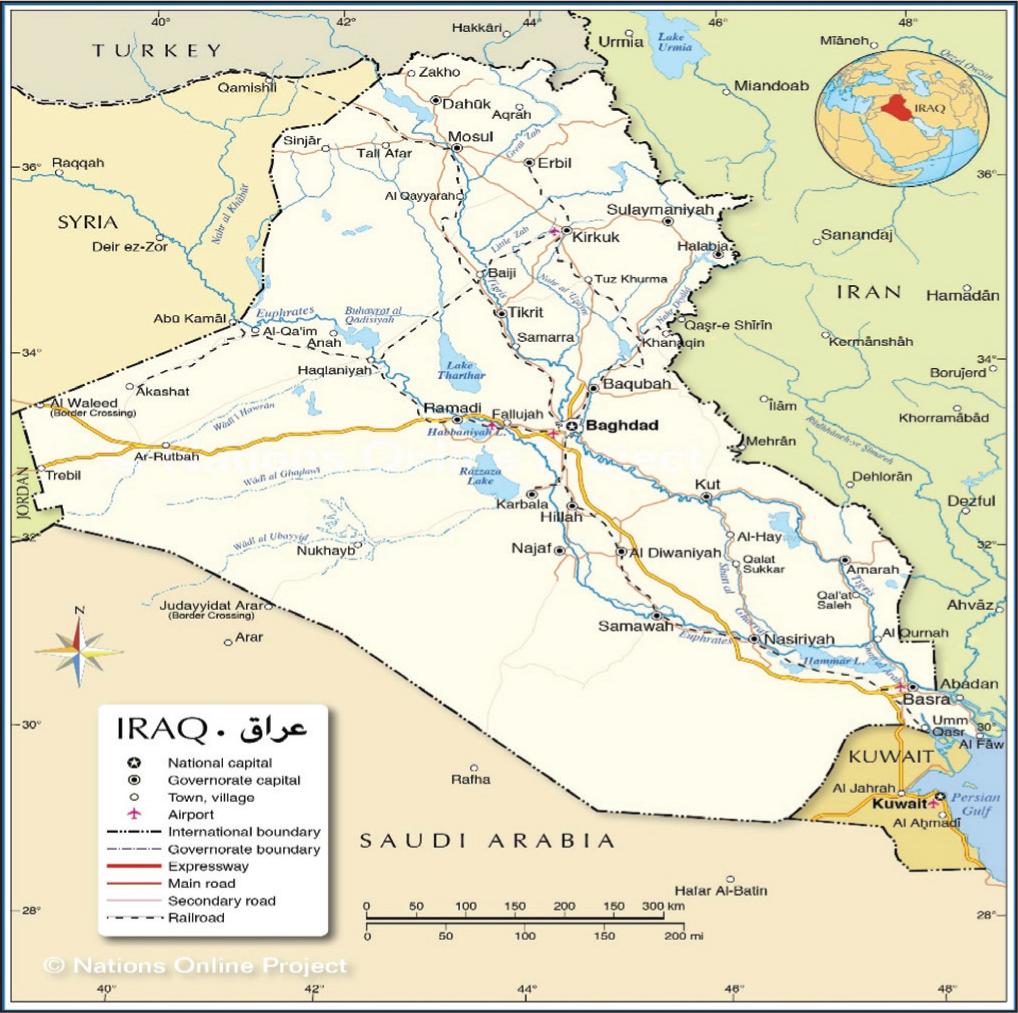
Urbanisation has been occurring in Iraq for about 4,000 years since the ancient Mesopotamians built permanent human settlements (Ur et al., 2015, p. 89). Like most developing countries, Iraq has been occupied and reoccupied numerous times by regional and Western powers. Thus, the political history of Iraq is characterised by violence and constant instability, partly because of foreign conquests and wars, and partly due to intrastate conflicts by different political regimes.
The Kingdom of Iraq, 1921–1958
The British occupied Iraq during the First World War (1914–1918), ending nearly four centuries of Ottoman rule. They had the mandate of the League of Nations to administer Iraq, and thus, they established the Kingdom of Iraq in 1921. In 1930, Iraq had a population of about 3 million, of which over 50 per cent were Shiite Arabs, less than 20 per cent were Sunni Arabs, 20 per cent were Kurds and 8 per cent were other ethnic minorities, such as Turkomans, Assyrians, Armenians and Mandaies (Tripp, 2000, p. 31). The mandate obliged the British authorities and the government of Iraq to protect the rights of minorities. Before the formation of the Kingdom of Iraq, the Kurds hoped to have their own independent state, like other peoples of the Ottoman Empire, and in 1918, they secured British support. However, this was not honoured because the British could not decide whether southern Kurdistan should be attached to Iraq. The Kurds eventually realised that the British wanted them to be part of Iraq for their own political and economic interests. Thus, between 1919 and 1930, the Kurds revolted several times under the leadership of Shaikh Mahmud in Sulaymaniyah City. The revolts, and the British bombardment that followed, caused the city to become a war zone, disrupting citizens’ daily lives. Hence, in 1924, about 7,000 Sulaymanians migrated to Kirkuk city (Gorgas, 2008, p. 541; McDowall, 1996, p. 163), reducing the population of Sulaymaniyah by half and increasing that of Kirkuk.
In 1920, the Shiites and Sunnis in central and south Iraq also revolted against British occupation, and in 1923, their uprising was crushed in the same manner. Between 1931 and 1945, the Kurdish revolt restarted in Barzan district, led by Mustafa Barzani, who sought autonomy for the Kurdish region in northeast Iraq. Their demand was rejected, and the revolt ended in 1945. Barzani, along with 500 fighters (Peshmarga), crossed the border into Iran and from there, into the Soviet Union (Short & McDermott, 1981, p. 9).
Political instability in Iraq persisted because of three coups that occurred. The first was in 1936, led by General B. Sidqi. It resulted in a change of government, but the regime survived. The second, in 1941, was led by General R. A. Al-Gaylani and was foiled by the British. The third, in 1958, was led by Brigadier A. Qasim, and resulted in the fall of the monarchy and the creation of a republic. These events reflect the political struggles for power and calls for political reform seemingly inherent in Iraqi politics. These political developments have determined the pattern of urbanisation in Iraq.
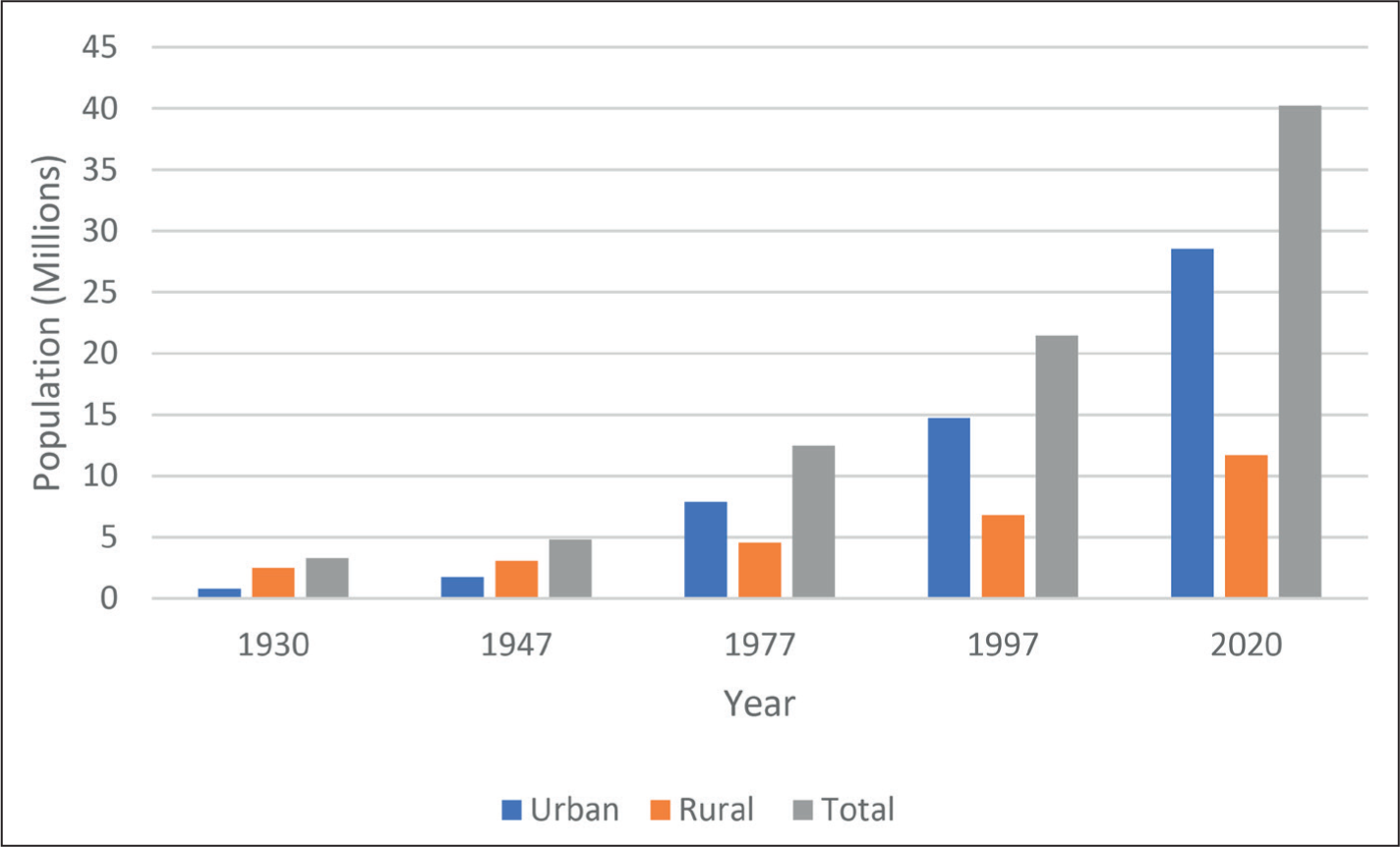
Figure 2 shows the continuous increase in the gross national population between 1930 and 2020. The urban population also rose because of rural to urban migration and land reclassification, that is, the elevation of a large village to a higher administrative status (Rezvani & Hossain, 2013, p. 204), thus reclassifying its population as urban. The rise in the total population is related to the slight decline in mortality rates, due to improvements in the health and education systems, and the provision of clean water to people (Adams, 1956, p. 159) in major cities, such as Baghdad, Mosul and Basra. In 1930, 75 per cent of the population was rural and was engaged in agriculture, forming the backbone of the Iraqi economy. However, in 1947, the rural population declined to 61 per cent (Hasan, 1958, p. 344). With the drop in the export of agricultural products and livestock (Longrigg, 1953, p. 316), due to two global events—the Great Depression (1929–1931) and the Second World War (1939–1945)—the prices of crops and livestock sharply dropped, negatively affecting the rural economy. These incidents coincided with the passage of two significant land laws—the Land Settlement Law of 1932, which empowered landlords to acquire vast areas of agricultural land, particularly those that capitalised on irrigation pumps (Tripp, 2007, p.69), and the Law Governing the Rights and Duties of Cultivators of 1933, granting landlords power over peasants, by holding them accountable for crop failure (Tripp, 2007, p. 83). Both laws favoured the landlords, and most peasants became landless wage labourers and debtors. By 1958, nearly 1.5 million peasants were landless (Faruk-Sluglett & Sluglett, 1983, p. 500). Many of them migrated to the major cities for a better life. Consequently, the urban population rose from 25 per cent in 1930 to 39 per cent in 1947. In 1956, government officials estimated the number of migrants in Baghdad to be 120,000 (Baali, 1969, p. 64).
In the 1930s and 1940s, the government of Iraq was concerned that the country’s limited industry was not automated and worked from small workshops, using indigenous technologies that were unable to compete with imported products and create enough jobs. Nonetheless, some modernised industries were established by the public and private sectors, increasing the cities’ appeal and opportunities, and attracting jobseekers (Al-Saadi, 1978, p. 397). Thus, the three economic sectors—primary, secondary and tertiary—provided some employment. In the 1950s, 55 per cent of the workforce was engaged in agriculture, 10 per cent in commerce and 7 per cent in industry, and the remainder was distributed among the other sectors (Adams, 1956, p. 156).
The discovery of oil in 1927 near Kirkuk city and its export from 1934 onwards increased Iraq’s income in the early 1950s (Habermann, 1955, p. 179), and created jobs in Kirkuk, and later in Mosul and Basra. Accordingly, in 1950, the government established the Iraqi Development Board (IDB) to implement its economic development programme, which included several public irrigation and housing projects in rural and urban areas. The execution of these projects created thousands of jobs and improved the living standards of the working class and government employees, and led to economic growth and expedited urbanisation. However, Phillips (1959) noted that rural living conditions barely improved in some areas and decreased in others because the growing expenditures of absentee landlords led them to raise the crop share rents of tenants. Thus, many peasants migrated to the cities, increasing the urban population (Figure 2). This situation created frustration among citizens, prompting a political change in Iraq.
The Republic of Iraq, 1958–1963
In July 1958, a group of army officers, led by Brigadier A. Qasim and Colonel Abdulsalam Arif, overthrew the monarchy and established a republican state. A Sovereignty Council of three members—a Shia, a Sunni Arab and a Kurd—was formed until a president for Iraq could be elected. Qasim became the prime minister and Arif, his deputy. A general amnesty was declared, securing the release of political prisoners and the return of those in exile, including Al-Gaylani and Barzani. The republican government reversed most of the previous regime’s laws and policies and replaced them with new ones to improve the living conditions of citizens and to eliminate inequality in rural areas. Thus, the Agrarian Law No. 30 of 1958 was passed (Tripp, 2007, p. 150), which appropriated 75 per cent of all privately owned agricultural land and redistributed it among the landless peasants. Simmons (1965) believed that the law achieved its political goal but not its socio-economic goal, since not many improvements were made in the countryside. Hence, many peasants moved to the cities, raising the urban population from 38 per cent in 1947 to 51 per cent in 1965. This figure is considered relatively high for a country that was not industrialised.
Table 2 shows the growth of inhabitants in the cities of Baghdad, Mosul, Kirkuk and Basra between 1947 and 1957. Migration from rural to urban regions increased the built-up area in cities. These changes were very evident in Baghdad, the capital of Iraq, which recorded the highest growth in absolute terms, Baghdad exemplifies the rapidity of urbanisation in Iraq and its impact on the structure of cities in Iraq. 1
The land law faced serious challenges from landlords and conservatives. Hence, two coups (including an assassination attempt) to oust Qasim were attempted, but both were thwarted. These political events were coupled with growing unrest in the countryside owing to the new social and political transformations. The landlords reduced agricultural production in retaliation to the agrarian reforms and left for the cities. The children of the farmers—educated, adult males—were not interested in farming, and thus, migrated to the cities as well. The Republican education policy of 1958 expanded the educational system by building more schools and universities outside of Baghdad, creating professional jobs in the major cities that required university graduates to fill them, thus increasing urbanisation (Mohammed, 2014, pp. 254–256; see Table 2).
Population Growth of the Major Cities of Iraq in 1947 and 1957.

The political events during this period created a crop shortage, which, coupled with the increase in the population of Iraq from 6 million in 1957 to 8 million in 1965, obliged the government to import grains. Further migration of peasants to the cities exacerbated crop scarcity. Thus, the government tried to discourage rural to urban migration and improve the rural economy by granting relief loans to peasants, which they were not expected to repay (Simmons, 1965, p. 131).
Despite these efforts, rural to urban migration persisted because the rural economy remained stagnant. To improve the economy, the republican regime adopted a planned economy model based on the Soviet model and abolished the IDB, replacing it with the Ministry of Planning. The ministry prepared a Provisional Revolutionary Plan (PRP) in December 1959 (Marr & Al-Marashi, 2017, p. 79) and also expanded the educational and health systems, and social welfare, built affordable housing for low-income families, promoted women’s rights by protecting them from arbitrary divorce polygamy and child marriage. To further enforce equality before the law, the Tribal Criminal and Civil Deputies rules were eradicated and a Land Reform Law was passed in September 1958 for the redistribution of land between landlords and landless peasants (Abdullah, 2011, p. 121).
The republican regime’s emphasis was on both agriculture and industry, and on industrialising Iraq, with 30 per cent of investment being devoted to industry. This was a shift from the monarchy’s policies, which focused mainly on agriculture. In addition, the PRP reflected the new government’s intent to eliminate inequality between urban and rural residents through access to education, and to reduce rural to urban migration. Between 1958 and 1959, the total number of peasants that migrated to the cities was 19,497 (Baali, 1969, p. 65). This can be attributed to the turbulent regime change. The measures that the government took to halt migration can be regarded as an implicit urban policy.
The economy of Iraq was still heavily reliant on revenues from the oil industry, an important employment and finance provider. However, the government wanted to develop the oil industry to free it from manipulation by foreign companies, which were not paying their fair share of revenues to the government (Alnasrawi, 1991, p. 42). Thus, in 1961, Public Law No. 80 was passed, by which the government confiscated 99.5 per cent of the British-owned Iraq Petroleum Company’s (IPC) concessionary land (Abdullah, 2011, p. 122). In retaliation, oil companies increased production, thereby reducing the price of oil, and harming the economy, causing unemployment in both rural and urban areas. Hence, many farmers left their villages and resettled in the cities in the hopes of finding employment there. Despite the republican regime’s significant investment, industrial development decelerated because of their socialist policies and the land reform act. Both discouraged the private sector from investing in industry. The republican regime avoided nationalisation of domestic industries and protected them by increasing tariffs on imported manufactured goods (Abdullah, 2011, pp. 121–122). Urbanisation during this era occurred without economic growth (Fay & Opal, 2013, p. 4).
Arab Socialist Iraq, 1963–1968
Returning to the Kurdish question, after Barzani returned from exile in 1958 (Short & McDermott, 1981, p. 9), he established a good relationship with Qasim and renewed his demand for Kurdish autonomy but was rebuffed by the nationalist army officers advising Qasim. Thus, the relationship between them deteriorated and the military attacked the Kurdish region in 1961 (McDowall, 1996, p. 308). These problems isolated Qasim from his supporters and the continued pressure from his opponents led to his downfall.
In February 1963, the Ba’athist army officers, led by Ahmad H. Al-Baker, and Arab nationalists, headed by Abdulsalam Arif, ousted Qasim and brought the Ba’ath Party to power. In November 1963, Arif removed the Ba’athists from the government due to ideological and political differences. Hence, a new Arab socialist regime emerged—a period that was characterised by political unrest. Between 1963 and 1968, three coups occurred, three presidents ruled Iraq and six cabinets were formed, reflecting the political uncertainty of the time. The government continued to encounter economic problems and thus adopted an Arab socialist economic policy comparable to that of Egypt (Marr & Al-Marashi, 2017, pp. 97–98). In 1964, they nationalised all banks, insurance companies, important industries and 27 of the largest privately owned industrial firms. The private sector, a dynamic actor in economic growth, was further marginalised by the policy. Agriculture also suffered because of natural disasters, such as droughts and floods (Simmons 1965, p. 131), and limited investment, since investors feared the redistribution of land among the landlords and the landless peasants (Marr & Al-Marashi, 2017, p. 128). In 1963 and 1964, crops continued to decline, worsening the rural economy and the living conditions of the peasants. Hence, the government revived the land reform programme to further halt the drop in agricultural production.
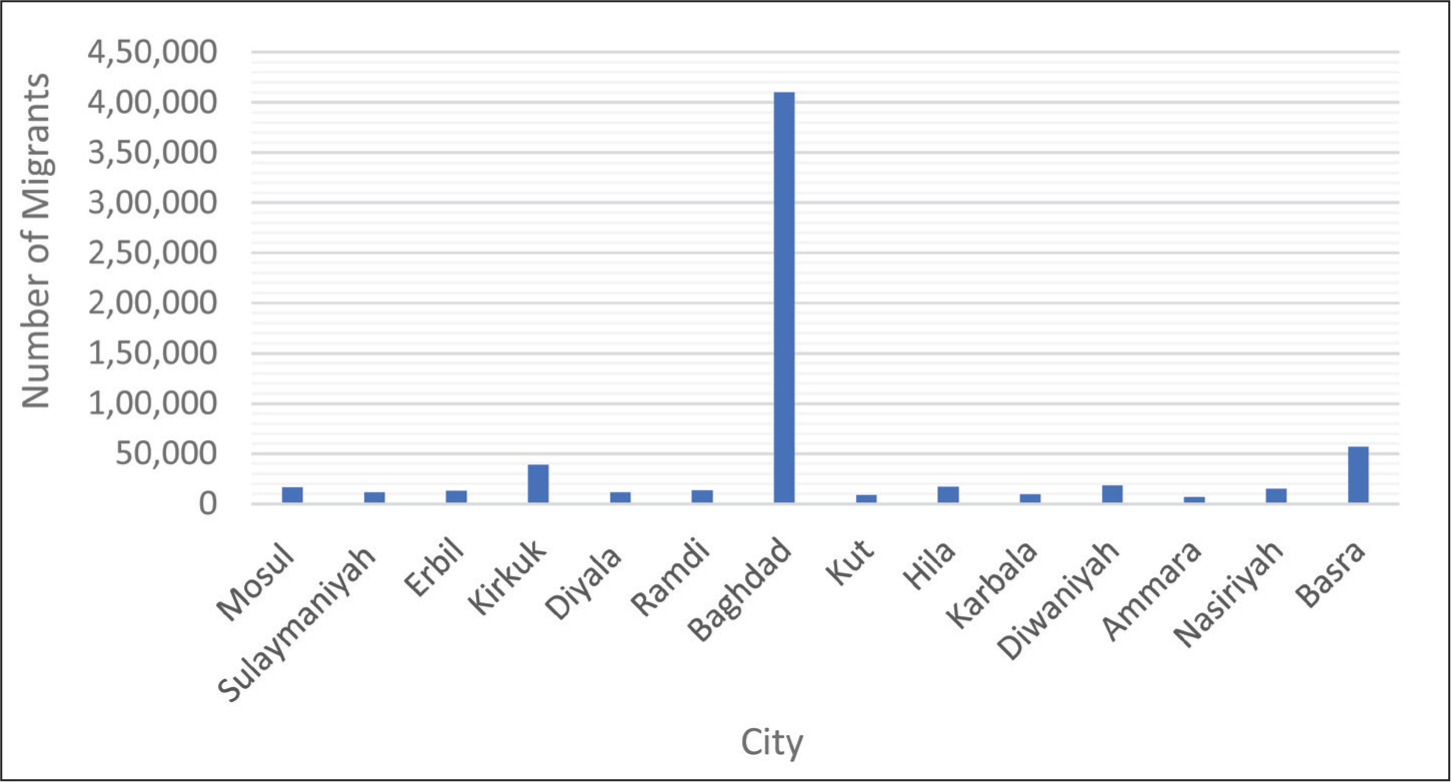
To boost the economy, the government began developing the oil industry by establishing the Iraq National Oil Company (INOC) in 1964 and renegotiating with the IPC to resolve the differences that were generated by Law No. 80 of 1961. In 1965, the government and the IPC signed an agreement that granted them access to most of the land that was earlier confiscated, though in cooperation with INOC, leading to an increase in oil revenue. The government prepared a 5-year plan for economic development, which created 427,000 jobs and raised the gross national product by 29 per cent (Ozlu, 2006, p. 12). Although, these economic and political developments improved the economy, unemployment, housing and basic service shortages persisted because of continued urbanisation. Thus, the economy remained weak due to the government’s nationalisation policies, the rural to urban exodus, and urbanisation that persisted without economic growth. Figure 3 shows that Baghdad, Mosul, Basra and Kirkuk were the preferred destinations for rural migrants, because of the availability of employment and proximity to their places of origin.
To enhance the economy and establish political stability, in 1964, the government decided to negotiate with the Kurds. Due to differences that could not be resolved, the negotiations were discontinued, and fighting resumed, displacing thousands of Kurds from their villages (Lawless, 1972, p. 104). Upon the sudden death of President Abdulsalam Arif in 1966 in a helicopter crash, the Defence Council elected his brother, General Abdulrahman Arif, as the new president of Iraq. In May 1966, the civilian prime minister A. Al-Bazzaz renegotiated with the Kurds and agreed to most of their demands, including autonomy. Nonetheless, the nationalist military officers felt that the civilian government had marginalised them and undermined their power (Tripp, 2000, p. 186). Furthermore, they worried they would lose their war allowances, and hence, the fighting continued. Between 1961 and 1970, 700 Kurdish villages were destroyed, and 300,000 people were displaced or rendered homeless in the Kurdistan region (Short & McDermott, 1981, p. 9). This intrastate conflict had a devastating impact on the stability of the country and on the rural economy since many cultivators were forced to leave their villages and resettle in the major cities in the Kurdish region, increasing their population, and causing poverty and overcrowding. The government’s critics increased, and the Ba’athists regrouped to overthrow the government.
One-Party Rule, 1968–2003
On 17 July 1968, the Ba’ath Party reseized power with the help of military officers led by Colonel A. Al-Naief and formed a new government. On 30 July 1968, the Ba’ath Party removed non-Ba’athist military officers from the government and established the one-party regime that ruled Iraq until 2003. Al-Baker became president and prime minister. The new regime adopted a socialist model, and in 1970, passed new land reforms to enhance the rural economy. Although the reforms had benefits, they failed to halt the decline of agricultural productivity because the landlords decreased production in retribution (Metz, 1988b). 2 The increase in national population, from 8 million in 1965 to over 12 million in 1977, further complicated the unfavourable situation (Tripp, 2007, p. 198), compelling the government to import cereals. To improve the situation, the government took several actions (Marr & Al-Marashi, 2017, p. 159), among them being a revision to their economic policy. 3 Despite these measures, the reform policies failed, as indicated by a disappointing economic performance. By the late 1970s, the unemployed and landless cultivators had no choice but to migrate to the cities, leading to a surge in urban population, from 51 per cent in 1965 to 63 per cent in 1977 (Figure 2)—more than half of Iraq became urbanised.
In the early 1970s, the government turned its attention to economic development, which required political stability. For this purpose, they contacted opposition groups, that is, the ICP, the Kurds, and other factions, requesting them to join the National Progressive Front created by the government. All but the Kurds joined (Abdullah, 2011, p. 129), due to differences between the two parties. Nevertheless, on 11 March 1970, the government and the Kurds signed a peace accord, and in 1974, the Autonomy Law for the Kurdistan Area (ALKA) was passed, by which the Kurdistan Area for Autonomy (KAFA) was delineated (Short & McDermott, 1981, pp. 10–11). The peace accord brought temporary political tranquillity.
In 1974, the government unilaterally implemented the 1970 peace agreement with the Kurds, but the Kurdistan Democratic Party (KDP) rejected it because the agreement excluded the oil-rich Kirkuk province from the KAFA and refused to conduct a census in the areas where the Kurds were a majority (Short & McDermott, 1981, pp. 10–11); both issues formed the essence of the agreement. Nonetheless, several former members of the KDP, who had separated from the party due to differences in interpretation of the autonomy agreement, accepted it. Thus, in early 1975, fighting resumed between the government and the Kurds who had Iran’s support. Feeling the pressure of the Kurds’ resistance, Saddam as vice president of Iraq signed the Algiers Agreement with the Shah of Iran on 15 March 1975, after making critical concessions. Iran halted military support for the Kurds and the KDP ended the fighting on 23 March 1975. It was a disaster for the Kurds and the government because thousands from both sides were killed. About 250,000 Kurds crossed the border into Iran, and over 600,000 were forcefully displaced. Those who had deserted the Iraqi army to join the Kurdish movement were expelled to the southern provinces of Iraq (McDowall, 1989, p. 22). The government had also destroyed 50 villages on the Iranian and Turkish borders (Wong, 2006) to build a 10–20 km buffer zone, forcing their inhabitants to move to the cities of Erbil, Sulaymaniyah and Duhok (McDowall, 1989, p. 22). This forced migration depopulated the countryside and destroyed its economy. Urbanisation in the Kurdish region thus increased as a result of the civil war.
In 1972, the oil industry was nationalised, enhancing the financial position of the government substantially, and ending the IPC’s monopoly over oil (Kubursi, 1988, p. 285). Accordingly, oil revenues rose considerably from US$600 million in 1972 to US$8.5 billion in 1976, and to US$26.5 billion in 1980, enabling the government to embark upon a massive economic development programme. It produced two development plans, the first, to develop an independent economy, and the second, for the oil industry (Sanford, 2003, p. 9). Between 1971 and 1984, the industrial sector expanded because of immense investment in heavy and light industries, which employed hundreds of thousands of workers in the public and private sectors (Sanford, 2003, p. 34).
The national population reached 12.5 million in 1977, of which 63 per cent was urban, and rose to 16 million in 1987, of which 70 per cent was urban. This population surge was because of massive investment in the education and health systems, which improved living conditions. The government also invested enormously in industry—including the petrochemical, iron and steel, oil refining, tractor manufacturing and tire industries (Chambers, 2021)—by getting technical assistance from the Union of Socialist Soviet Republics (USSR). None of the earlier governments had this amount of capital to invest. Hence, industry became a significant employment provider. In 1984, state sources claimed that 170,000 workers were employed in industry, 80 per cent of whom worked in the public sector, 13 per cent in the private sector and 7 per cent in the mixed economy (Metz, 1988a). This illustrates the growth of industry during the economic boom that started in the mid-1970s after the nationalisation of oil.
The private sector also contributed to the economy by opening small factories, subsidised by the government, to produce goods for domestic consumption. The services and informal sectors also contributed to economic growth, for they offered jobs to skilled and unskilled migrants in urban centres (Looney, 2006, p. 991). Economic activity within cities attracted an enormous number of job seekers, whether in the oil industry or in other industries, which increased urbanisation, underscoring the correlation between industrialisation and urbanisation (Gollin et al., 2013, p. 2). Iraq’s GDP grew from US$1.68 billion in 1960 to US$3.28 billion in 1970 (World Bank, 2021), illustrating urbanisation with economic growth (Henderson, 2003, p. 64). Nonetheless, this ambitious industrialisation strategy was discontinued because of the wars that Iraq was engaged in.
Iran–Iraq War, 1980–1988
The war between Iran and Iraq started on 22 September 1980 (Ferretti, 1990, p. 201), and ended on 20 August 1988. The war caused substantial human and financial loss and destruction of infrastructure for both countries. Urban warfare killed and displaced thousands of people, destroyed property and forced residents to move to safer cities (Ozaltin et al., 2020, p. 589). The fighting between the Kurds and the government that resumed in 1975 continued through the 1980s, during which, the government continued to destroy thousands of villages in the Kurdish region under the pretext that villagers were assisting the Kurdish forces (Peshmarga), and used chemical weapons against them (Wong, 2006). Thus, the war forced thousands of Kurds to resettle in cities, embodying ‘war urbanisation’ and political instability. The war caused Iraq to face a severe financial crisis.
The First Gulf War, 1990–1991
Iraq was embroiled in another war after invading Kuwait in 1990 for several reasons (Abidi, 1991, p. 1), chiefly financial. The UN ordered Iraq to withdraw from Kuwait, but Iraq rejected the order. On 6 August 1990, the UN passed Resolution 661, which prevented Iraq from trading—including oil—with other countries, except for food and medicine (Marr & Almarashi, 2017, p. 175). The UN’s decision had catastrophic consequences for the people of Iraq and its weak economy. The US and its Western and West Asian allies’ forces attacked Iraqi forces on 17 January 1991 and liberated Kuwait on 28 February 1991, but the UN embargo remained. In March 1991, the groups opposing the Ba’athist regime—Shiites in the south, Kurds in the north and some Sunnis (Zenko, 2016)—revolted against the regime and gained control of several cities, but the government regrouped and ended the uprisings. Thousands of Iraqis were killed, 2.5 million became refugees in Iran and Turkey, and hundreds of thousands were internally displaced, eventually resettling in safer cities. The government’s attacks on the Shiites and the Kurds provoked global condemnation and the media coverage spurred Western governments to establish two no-fly zones with UN consent, one in the north and the other in the south, to protect the Kurds and the Shiites from the government’s air attacks and to ensure the safe return of refugees (Abdullah, 2011, p. 148). In 1991, the Iraqi government suddenly withdrew from the Kurdish region leaving a political, security and administrative vacuum, and uncertainty. The KDP and the Patriotic Union of Kurdistan (PUK), which was founded in 1975, along with other smaller political parties, formed the Kurdistan Regional Government (KRG) in 1991 in Erbil city.
The government defied UN sanctions for 6 years, enormously harming Iraqis, and causing unemployment and poverty. In 1996, the government was obliged to sign the Oil-for-Food (OFF) agreement with the UN, slightly improving the economic situation. But Iraq became involved in a third war, which brought about dramatic political and economic changes.
Federal Iraq, 2003–Present
The Second Gulf War, or the invasion of Iraq, started on 20 March 2003, because the United States and its allies believed that Iraq possessed weapons of mass destruction (Council on Foreign Relations, 2003). This belief was borne from Iraq’s use of chemical weapons during the Iran–Iraq War, and against the Kurds in the 1980s (Garamone, 2003). By April 2003, Iraq was occupied, and one-party rule ended. The American occupation authority established a federal regime, and in 2004, transferred power to the Iraqis. A new constitution was ratified in October 2005.
After 2003, political instability continued due to religious, sectarian, ethnic and nationalistic tendencies and corruption. Following the federal election in 2006, the Shiite majority formed a coalition government headed by N. Al-Maliki under very tense circumstances, due to daily violence by groups loyal to the former regime and by the radical Islamic group, Al-Qaida. The latter destroyed a holy Shiite shrine in Samarra in 2006 (George & Abdul-Zahra, 2016), which led to clashes between Sunnis and Shiites between 2006 and 2007, displacing thousands of citizens, forcing them to resettle in other cities. Some of those displaced resettled in cities with the same ethnic or sect groups.
By 2007, the political and economic situation improved after the Sunnis joined the government. Furthermore, the government signed the International Compact with the UN, amid bringing the country back into the world economy, enabling them to implement several institutional and economic reforms, and invest in the economic sector. The rise in oil prices in 2008 improved the financial situation in Iraq (Marr & Al-Marashi, 2017, p. 317) and revived economic activity in the cities, increasing employment. But the relative political stability was interrupted in June 2014, when the Islamic State in Iraq and Syria (ISIS) occupied the cities of Mosul, Faluja, Sinjar and Bashir, and destabilised the country. Thus, more than half a million Mosulians were forced to head to the cities of Erbil and Duhok in the Kurdistan region. In December 2017, the government announced the defeat of ISIS. This was a relief, but political rivalries continue to cause instability (Lipin & Hussein, 2019).
In 2013, a 5-year plan (2013–2017) for expanding the economy was formulated (Salman, 2013), for improving the living conditions, however, it encountered hurdles because of, political, sectarian turmoil and corruption (Mansour & Al-Shakeri, 2022). Thus, urbanisation continued, despite inadequate public services and employment for urban and rural dwellers.
In the 2000s, neither agriculture nor industry expanded due to political uncertainty, meagre attention and lack of investment. Agricultural productivity worsened due to internal migration and natural problems, that is, water shortages due to dams built by Turkey, Syria and Iran on the Tigris and Euphrates, which reduced Iraq’s share of water. Water scarcity caused by climate change also became a push factor for migration (International Organization for Migration, 2021).
Since urban populations are still rising, urban problems are getting worse. The surge in urbanisation has increased the number of cities from 168 in 1947 to 528 in 2016. Since the 1950s, formal and informal settlements (sarifa) (Phillips, 1959, p. 411) have emerged in Baghdad and Basra as the outcome of migration, for example, Madinat Al-Thawra (Revolution City). This trend has continued in other major cities as well. To reduce the pressure of urbanisation on Baghdad and Basra, several new towns have been built or are under construction, for example, the new towns of Bismayah, Al-Basra and Rafael (Sattar, 2021). Accordingly, the built environment has changed rapidly due to urbanisation.
Conclusion
This article identifies and analyses three key factors that have affected urbanisation in Iraq—political instability, rapid population growth and oil discovery. The analysis has revealed that the instability caused by political unrest due to the occupation and reoccupation of the country, and rivalries among political parties, have created a culture of conflict that has impacted many aspects of life including that of the urban. This has led to coups, intrastate conflicts and wars, which have led to forced migration, internal displacement and the destruction of rural and urban economies. The analysis has also unearthed that the improvement in health and education systems in the 1950s and 1970s due to oil booms led to a 1,123 per cent growth in the national population between 1930 and 2020, and a 3,476 per cent growth in urban population, that is, an increase in the proportion of urban dwellers from 25 per cent in 1947 to 71 per cent in 2020. Between 1947 and 2020, the number of cities grew by 214 per cent, illustrating the extent of urbanisation in Iraq during the period of study.
The analysis also showed that the discovery of oil in 1927 and export from 1934 onwards increased oil revenues by 1,415 per cent between 1949 and 1953 to 4,416 per cent between 1972 and 1980, which enabled the government to embark on economic development programmes in the early 1950s and mid-1970s. The implementation of these projects generated employment and attracted hundreds of thousands of migrants to the cities, raising the number of urban inhabitants. The wars that Iraq engaged in during the 1980s, 1990s and 2000s destroyed the economy, and a great part of the revenue from the oil booms was lost in the wars; urbanisation continued without economic growth. The cities’ populations grew because of migrants and forcibly displaced persons. The economic boom between 2008 and 2014 slightly improved the economy, but the living conditions of most citizens deteriorated because of the continuous rise in the population of cities and corruption. Thus, of the 71 per cent of Iraqis residing in cities in 2020, most were poor, unemployed and experienced water, electricity, and housing shortages because of corruption, political ambiguity (Fordham, 2021; United Nations Children’s Emergency Fund, 2020) and high urbanisation. The findings also show that political unrest has significantly diverted national and local government’s attention from rapid urbanisation and has led them to miss opportunities to deal with it in a timely manner.
The 2030 Agenda for Sustainable Development, adopted by the UN in 2015, includes 17 goals, one of which is ‘Sustainable Cities and Communities’ (Chassioti, 2021). It concentrates on sustainable urbanisation by making cities liveable, safe, sustainable and inclusive, and responsive to the needs of its inhabitants. Today, most of these needs are lacking in the cities of Iraq because of political instability and corruption. Furthermore, the consequences of urbanisation in Iraq are unemployment, shortage of public services, informal housing, overcrowding and environmental problems. Thus, this article concludes that urbanisation in Iraq is unsustainable.
However, there is still hope to reverse this unsustainable urbanisation. What is required is genuine political reform, ending corruption and preparing a national development plan that deals with the crucial challenges that rural and urban areas have been encountering. This includes improving the rural economy by avoiding the hurdles that prevented the implementation of land reforms in the past, eliminating the inequality between rural and urban areas, reducing the income gap, eliminating gender inequality and addressing environmental problems caused by human activity and climate change.
Footnotes
Acknowledgements
I would like to express my gratitude to the reviewers and editors for their constructive comments.
Declaration of Conflicting Interests
The author declared no potential conflicts of interest with respect to the research, authorship and/or publication of this article.
Funding
The author received no financial support for the research, authorship and/or publication of this article.