




Abstract
Implementing carbon mitigation through urban spatial optimisation is a possible solution for alleviating global warming. However, the relationship between urban carbon emissions and urban spatial structure has not been well clarified, as adequate mapping of high-spatial-resolution urban carbon emissions from different sectors (particularly residential sectors), a precondition to solving the problem, has yet to be achieved. This study proposes a hybrid method of mapping the spatial distribution of urban residential carbon emissions on a 1 km × 1 km scale using multi-source data and exemplifies it via a case study of the Chinese city of Suzhou. The purpose of using this method is to differentiate residential carbon emissions by commuter population and home-based population, as the time they spend at home differs. The mobile signalling data of Suzhou were used to identify commuter and home-based populations. The number and spatial distribution of these two groups were then calibrated by referring to land use and O-D data. Using calibrated data, the proportion of electricity consumed by the two groups in different residential districts across the city was calculated. Total urban residential carbon emissions were then proportionally allocated to 1 km × 1 km grids. By validating estimated data against the data from the Statistical Yearbook, we found that the proximity level is higher than 93%. Furthermore, comparing these outcomes against the results estimated by using NTL data and the size of the identified population as the proxy data, it was observed that the results estimated by the hybrid method are of higher accuracy and stability.
Keywords
Introduction
Carbon emissions are a key cause of global warming. Therefore, carbon mitigation is regarded as an imperative human action to alleviate the pressing global warming challenge. Large-scale human activity since industrialisation has consumed massive amounts of energy in a relatively short time, which has contributed tremendously to global carbon emissions, resulting in global warming (IPCC, 2014). Mapping the spatial distribution of carbon emissions with a high-spatial accuracy is a prerequisite for exploring the relationship between carbon mitigation and urban spatial restructuring. However, the primary means of achieving this thus far have been studies or policy implications that focus on the interpretation of aggregate carbon emissions on a national, provincial, or city scale, rather than the optimisation of the spatial subunits of cities from which emissions are generated. The challenge in formulating mitigation policies from the latter perspective is a lack of deep understanding of how urban spatial structures shape carbon emissions. This is a result of the fact that the spatial distribution of carbon emissions within a city cannot be easily mapped without large-scale, resource-consuming investigations (Bai et al., 2018). Therefore, it is necessary to explore modelling methods for mapping urban carbon emissions with higher spatial resolution and accuracy to circumvent this difficulty.
The primary methods of spatial mapping of urban carbon emissions fall into two types: top-down and bottom-up modelling. Regarding top-down modelling, the goal is to decompose the aggregate carbon emissions of the city into portions and allot them to smaller land plots proportionately by referring to a certain plot attribute. The data used to describe the plot attributes are called proxy data. The advantage of top-down modelling is its ability to save time and resources. To apply this approach, it is essential to ensure that the proxy data is accurate enough that it can denote the percentage of carbon emissions from the concerned plot as closely as possibly to reality. In contrast, the bottom-up approach requires a large-scale dataset of emission sources and their locational information. The total amount of emissions from each emission source is then calculated by considering the real energy consumed. For example, some scholars have used the statistics of the energy use intensity of different buildings to map building carbon emissions across a city, whereas others have used point emission source, gridded emission, and supplementary socioeconomic data to spatially map carbon emissions across China (Cai et al., 2018a, 2018b; Wu et al., 2018; Jing et al., 2018; Sharifi, A., et al., 2018). Generally, spatial mapping of urban carbon emissions based on this approach is highly accurate (Cai et al., 2018a, 2018b). However, constrained by the unavailability of detailed energy consumption data for specific emission resources, the bottom-up modelling approach cannot be implemented without large-scale surveys which can be unaffordable (Jing et al., 2018).
Based on the various types of human activities, carbon emissions can be generalised into four categories: industrial, commercial, transport, and residential. As industrial carbon emissions are determined by the technical processes of production lines, it is possible to use the energy consumption data of point-based sources directly to map emissions (Cai et al., 2018). Commercial carbon emissions can be estimated and spatially mapped by referring to large-scale building datasets because the commercial functionality of buildings is highly homogeneous in terms of energy consumption (Wu et al., 2018). Similarly, by using detailed traffic flows on city roads, transport carbon emissions can be well modelled and spatially mapped (Cai et al., 2020). By combining these two approaches, the UK 1 km × 1 km resolution emission map (https://naei.beis.gov.uk/data/) and the China High Resolution Emission Database (CHRED) have been developed. Their modelling methods are similar; for large industrial and commercial sources, emissions are compiled from surveys or a variety of official regulatory sources. For diffuse emission sources, distribution maps are generated using the appropriate surrogate statistics for each sector. The experiences of the United Kingdom and China indicate that the choice of surrogate statistics is the key to the accuracy of the distributed emission map, which influences the accuracy of the final emission map.
The estimation and spatial modelling of residential carbon emissions are commonly performed using building data and night-time light images as proxy data (Zhuo et al., 2015; Shi et al., 2016; Meng et al., 2014). However, the phenomenon of a high housing vacancy rate should not be overlooked because estimating carbon emissions by assuming that all XXX buildings are fully occupied is unreliable. Additionally, when modelling carbon emissions by referring to the digital number (the value of dn) extracted from night-time light images, the value of dn does not change proportionately with the density of light when it reaches its maximum. This means that the carbon emissions of sites with an excessive intensity of energy consumption cannot be estimated correctly. More importantly, night-time light images can only represent energy consumption during the night; the main drawback being that the energy used by home-based populations in daylight is not well represented (Xie and Weng., 2016; Cai et al., 2021).
One solution to the abovementioned issues is to use the spatial distribution of residents as the proxy data to estimate and model residential carbon emissions across the city (Cai et al., 2018). Compared to the methods presented above, this approach generally has better performance in terms of accuracy and stability. However, it is worth noting that the percentage of general commuters in daylight could vary, which may lead to differences in carbon emissions among different resident groups of the same size. As residential carbon emissions largely come from the energy (e.g. electricity or gas) used by people when they are at home, the quantity of residential carbon emissions needs to be estimated not only by the size of the population but also by the time they spend at home. The key to spatially mapping residential carbon emissions with higher accuracy is to differentiate time spent at home among different groups.
In summary, effective top-down modelling approaches have been proposed for spatially mapping industrial, commercial, and transport carbon emissions. Regarding the approach to mapping residential carbon emissions, what has been proposed is acceptable, but higher accuracy in both quantity and spatial resolution can be achieved if we can use the real time that people spend at home as proxy data in combination with specific locational information of the population. This study proposes a hybrid modelling method to spatially map residential carbon emissions using multi-source data, including mobile signalling data. The key is to identify home-based residents and regular commuter-working residents within all identified residential districts so that the time these two groups spend at home can be well differentiated. Taking Suzhou as an example, this study also illustrates how this method can be applied in practice and the level of accuracy and stability that it can achieve.
Materials and methods
Study area and data
The city selected for this case study is Suzhou, which is located in the Yangtze Delta and is expected to have a population of more than 10 million permanent residents in 2021. It consists of 6 districts (Figure S1 in the Supplementary Material). In 2021, the urbanisation rate was 81.93%. It has a comparatively competent economy, with a total GDP of 334.14 billion dollars and a per capita GDP of 26,231 dollars.
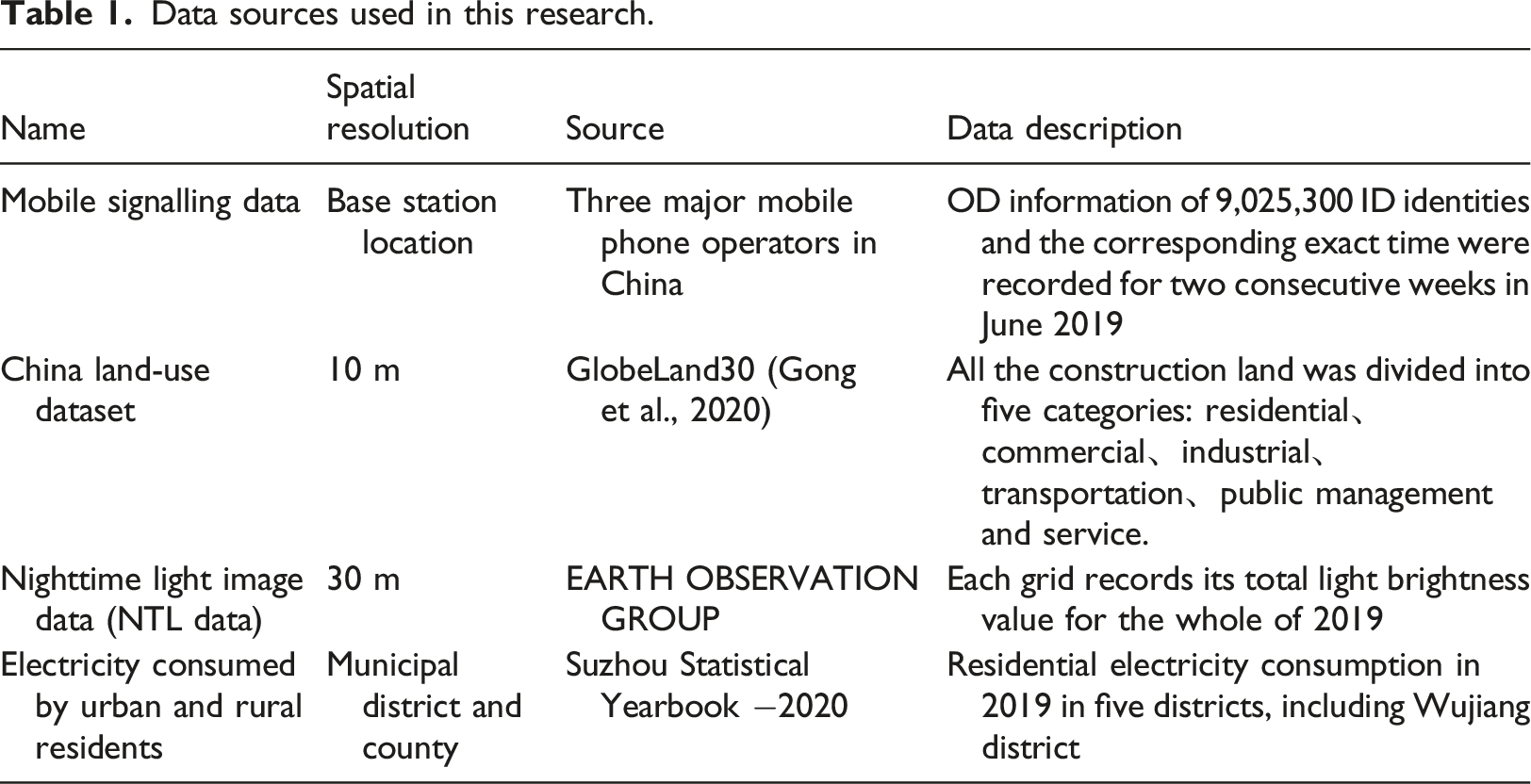
Data sources used in this research.
Research framework
The research framework for this study is illustrated in Figure 1. The key to the hybrid modelling method is to determine the correct proxy data so that the total residential carbon emissions can be reasonably decomposed and assigned to each spatial grid. Therefore, the first step in this research was to calculate the proxy data, that is, the time spent at home by home-based residents (Nhome) and regular commuter-working residents (Ncommute). To do this, first the spatial distribution of the population within Suzhou was identified using the mobile signalling data. This population distribution map was then calibrated by referring to the land-use map of Suzhou so that the number of home-based residents and regular commuter-working residents in each grid could be differentiated and acquired. Assuming that the time spent at home by these two groups differed, the total time spent by all residents at home in each grid (1 km × 1 km) was calculated. The total time was then used to estimate the percentage of residential carbon emissions that each grid took up. Therefore, the total residential carbon emissions for the entire city of Suzhou can be decomposed and assigned to each grid proportionately according to the corresponding percentage that it shares. The research framework.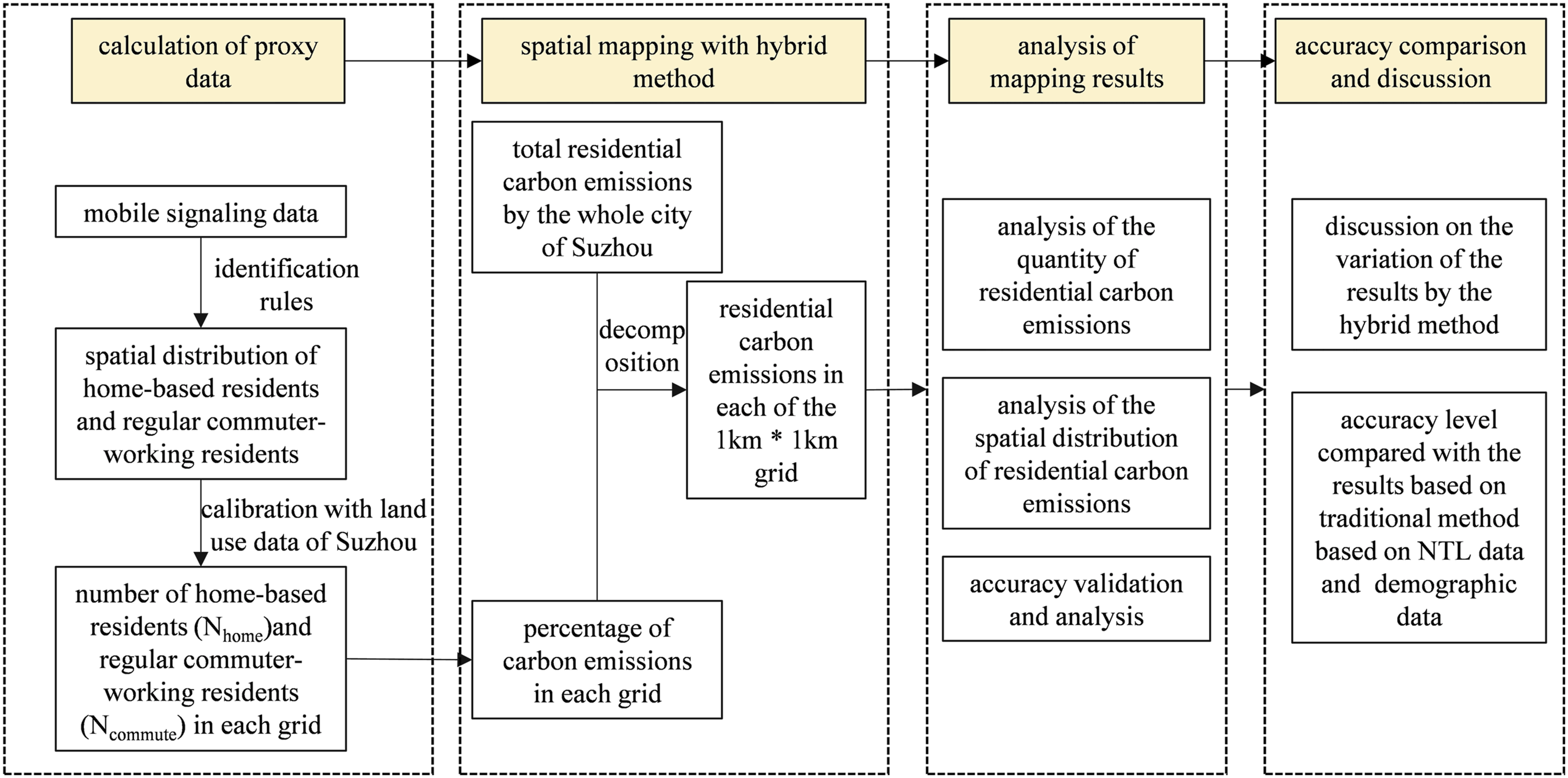
The emission data of all grids were then visualised in ArcGIS, which generated a residential carbon emission map of Suzhou with a spatial resolution of 1 km × 1 km. Based on the mapping results, the quantity and spatial distribution of residential carbon emissions in Suzhou were analysed. Additionally, to justify accuracy, the total amount of residential carbon emissions from each municipal district and/or county was calculated by combining the residential carbon emissions from all grids within each administrative district. The resulting emissions figure in each administrative district was then checked against the data, as stated in the Statistical Yearbook of Suzhou (2020), to determine the difference between the two.
To highlight the merits of the hybrid modelling method, we used demographic and NTL data as proxy data to map the residential carbon emissions of Suzhou. The mapped results based on these two conventional methods were compared with the results of the hybrid approach. One dimension was to ascertain which of the three results was closer to the data, as stated officially in the Statistical Yearbook, and the other was to ascertain which method can produce a more stable estimation (i.e. closeness to the real data with less variance).
The hybrid mapping model
Identification of the home-based residents and regular commuter-working residents
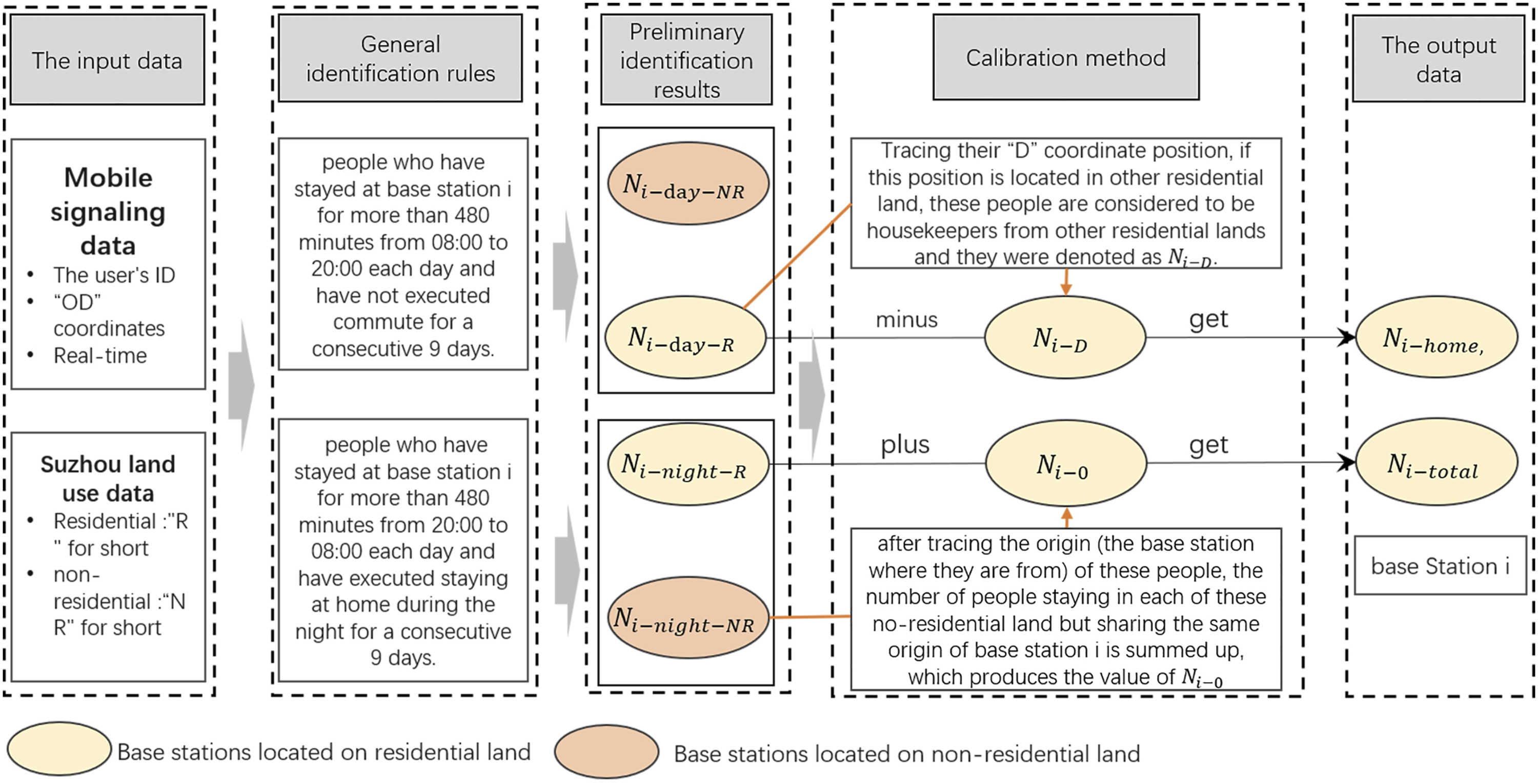
To facilitate the explanation of the identification method (Figure 2), it was assumed that we were dealing with the identification and differentiation of home-based and regular commuter-working residents recorded by a base station located on residential land. Generally, by using mobile signalling data covering the timespan from 08:00 to 20:00, we can directly acquire the total population recorded by base station i during daylight, denoted as Identification and calibration methods.


Comparison between the identified population and the population from statistical book.
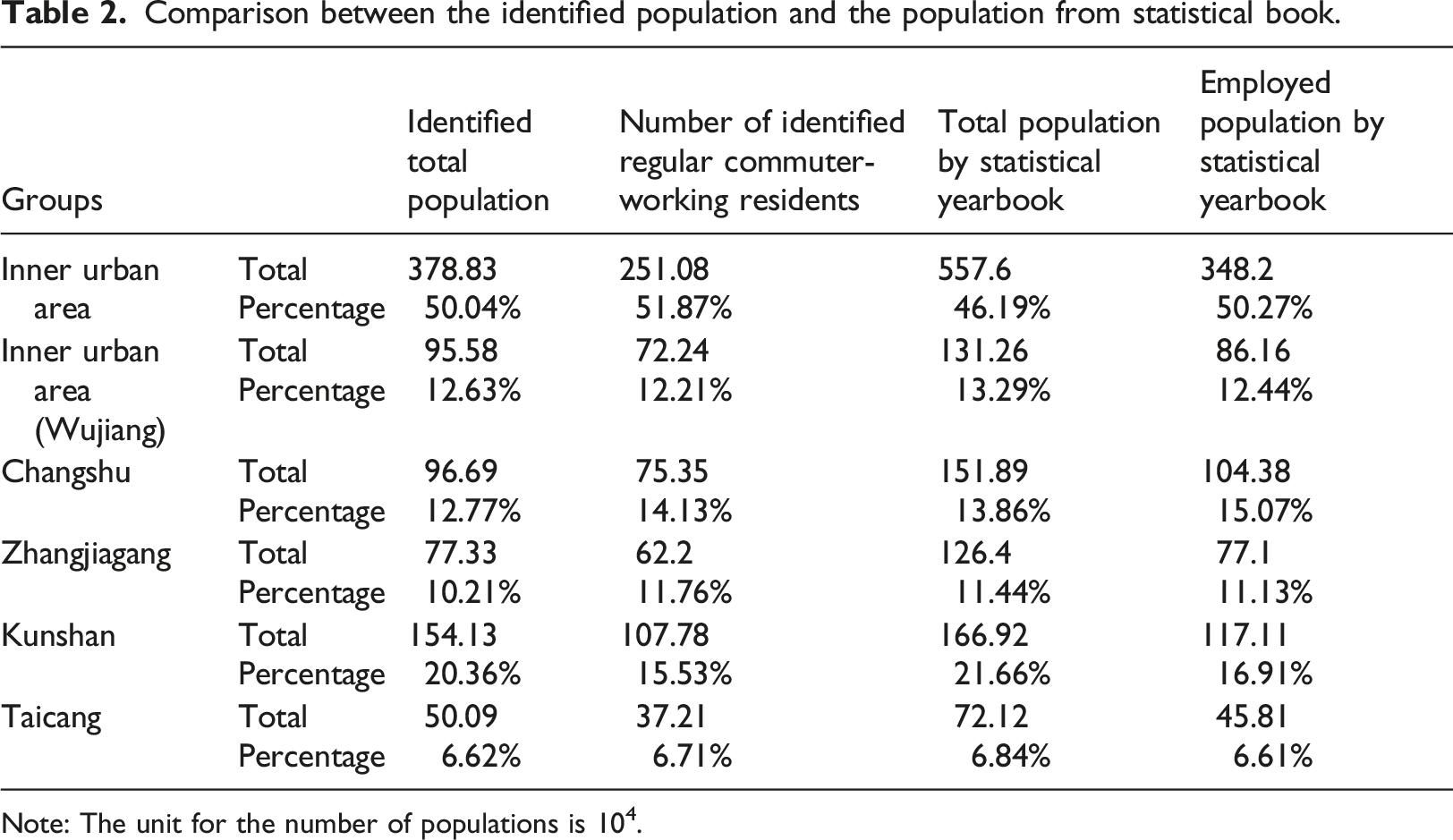
Note: The unit for the number of populations is 104.
Calculation and mapping of the residential carbon emissions
To achieve a high-spatial-resolution simulation, the entire city of Suzhou was first gridded with a spatial resolution of 1 km × 1 km using ArcGIS. Then, by overlap analysis, the grids subject to or containing residential land-use plots were identified, through which 2186 grids were selected as the statistical units. Then,
In this study, it was assumed that the time spent at home by home-based residents is 24 h and that spent by regular commuter-working residents is 12 h. Therefore, the total hours spent by residents consuming energy at home in grid j (
Assuming that each resident consumes the same amount of energy per hour, the total residential carbon emissions in grid j (
Results
Estimation accuracy level
To justify the estimation accuracy of the proposed hybrid method, we propose the statistic 
As illustrated in Figure S2 in the Supplementary Material, the estimated results show that urban areas have the highest residential carbon emissions, reaching 5548.10 kt annually, followed by Kunshan. In contrast, Taichang had the lowest annual residential carbon emissions, with annual emission of 689.83 kt. Regarding the accuracy of the estimation, each of the six administrative districts had percentages higher than 93%. Changshu had the highest accuracy level at 98.22%, implying that the hybrid mapping model as proposed in this study is highly reliable.
Total residential carbon emissions
The mapping results show that residential carbon emissions from inner urban areas accounted for more than half of the total emissions in Suzhou. More importantly, approximately 39.56% of the residential carbon emissions are contributed by the centre-most area of Suzhou (the inner urban area without Wujiang district), where high a density of human activities occurs. In contrast, Taicang and Zhangjiagang contributed the lowest percentage of residential carbon emissions to the total emissions of the city.
Regarding the quantitative distribution feature, and by taking the residential grid as the statistical unit, the Pareto plot of the residential carbon emissions revealed that for the entire city of Suzhou, 30.92% of the residential sites have contributed 80% of the total residential carbon emissions. However, as shown in Figure S3 in the Supplementary Material, there were variations among the six administrative districts. Changshu and Taicang had the lowest percentages at 18.94% and 21.31%, respectively, which closely conforms to the Pareto principle. In contrast, the remaining districts, including the inner urban area, Wujiang, Zhangjiagang, and Kunshan, had a percentage higher than 30%, with Zhangjiagang having the highest. This means that residential carbon emissions are more evenly distributed in these districts than in Changshu and Taicang.
Spatial distribution of residential carbon emissions
Figure 3 illustrates the mapping results for residential carbon emissions. Each of the six administrative districts had a clustered area with high residential carbon emissions. Generally, these clustered areas are the centres of the districts. However, Kunshan and the inner urban areas displayed distinctiveness. For example, the spatial distribution of residential carbon emissions in Kunshan has shown residential carbon emission corridors extending from the centre of Kunshan towards the metropolitan area of Shanghai, located to the southeast. Additionally, it has also formed an emissions corridor connected to the core urban area (as shown encircled by the red line in Figure 3), which accounts for approximately 60% of the residential carbon emissions of Suzhou. This coincides with the fact that numerous residential buildings are occupied by a large number of citizens along traffic arteries between the core urban area and centre of Kunshan. The mapping results of 1 km * 1 km resolution residential carbon emission (unit: kt).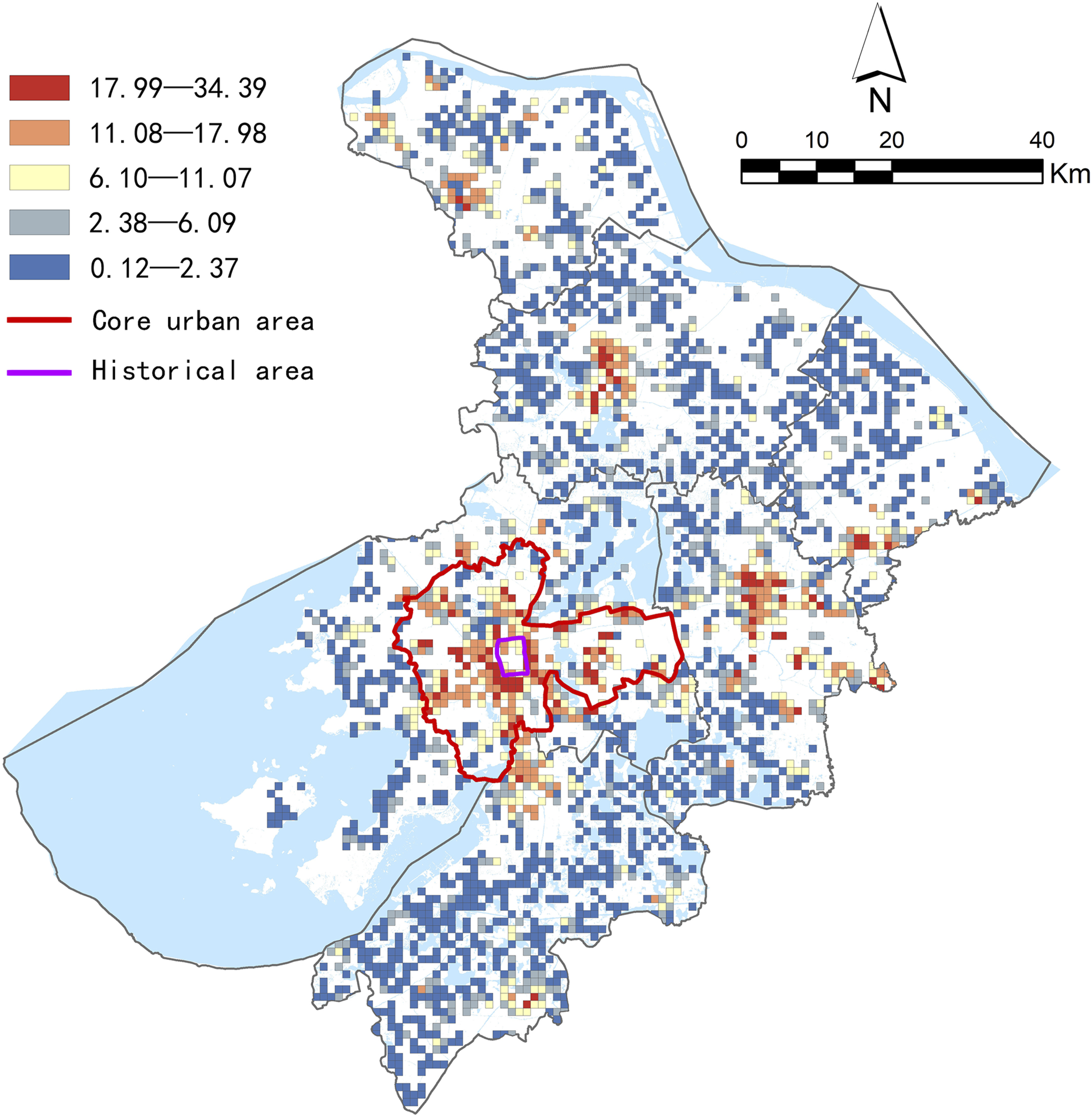
In inner urban areas, sites with high residential carbon emissions also showed a clustering pattern. In contrast to the other districts, these sites of high emissions are not collocated within a small area but dispersed within the core urban area. Notably, it displays a low-high-low pattern from the core to the outside. Additionally, it featured a radiative pattern with some high-emission corridors extending from the historical area towards its fringe. It is worth noting that the low emission density site is located in the old historical urban area (encircled by the purple line). The sites of high-density emissions come close to the historical urban area, with some residential grids in particular featuring the highest density located near its south. This outcome aligns with the fact that the old historical urban area is being strictly preserved and housing around it is being favoured by citizens, particularly the rising middle class (He and Liu, 2010).
Discussion
Nuance between the estimated values and those from the Statistical Yearbook
Despite the high proximity level of the estimated values to the data from the official Statistical Yearbook, there is still a need for further exploration. The largest difference in the official values and the estimated values is approximately 6%. One cause for this nuance could be the supposition that all residents in Suzhou share the same amount of energy consumption per capita. In a general sense, it is very likely that people with higher incomes have a higher level of per capita energy consumption at home and, thus, a higher level of per capita residential carbon emissions. This might explain why the estimated residential carbon emissions in the inner urban area were slightly lower than the values from the Statistical Yearbook. In general, the average income of residents in the inner urban area was higher than that in other districts. Therefore, the average per capita energy consumption was higher in the inner urban areas. However, the estimation assumes the same per capita energy consumption, which will assuredly lead to underestimation of residential carbon emissions in the inner urban area.
It is also possible that the total population in the residential grids was overestimated using mobile signalling data, which could consequently lead to an overestimation of the total amount of residential carbon emissions. In practice, industrial grids may surround residential grids. In this circumstance, if the mobile phone base station is located precisely in these grids, then those workers in the industrial grids could be counted as residents subject to the residential grids, which in certain cases will lead to an overestimation of residential carbon emissions. As these possibilities are commonly observed in Kunshan, Zhangjiagang, and Taicang, the estimated values for these three districts are slightly higher than those shown in the Statistical Yearbook.
The supposition that the time spent at home by regular commuter-working residents at home is 12 h and that of home-based residents is 24 h could also lead to this nuance. To justify this point, the time spent by regular commuter-working residents was taken as an example for further analysis, when the time spent by home-based residents at home was still supposed to be 24 h. We re-estimated the residential carbon emissions of each grid by changing the assumed time to 6 h, 7 h, 8 h, 9 h, 10 h, 11 h, and 13 h. The results show that with the supposition of 7 h, the estimated values for almost all six administrative districts, reached the highest accuracy level with the highest average proximity level, 98.38%. In particular, the proximity level for Changshu reached 99.80% (Table S1 in the Supplementary Material). Although this result does not appear reasonable, as 7 h of home time is very small, it is enough to show how much overtime Chinese people work and how busy their lives really are.
Advantages of the hybrid modelling method
To justify the advantage of the proposed hybrid modelling method over conventional approaches, we estimated residential carbon emissions using NTL data (denoted method A) and the identified total population as proxy data (denoted method B). By referring to previous studies (Zhuo et al., 2015), grids (1 km × 1 km) with a proportion of residential land-use greater than 50% were identified as residential grids. It was found that 1398 grids were residential grids. Regarding Method A, the residential carbon emissions of each of the identified residential grids were calculated using Formula (5), treating
With the estimated residential carbon emissions, it was possible to calculate the proximity levels of both method for each of the six administrative districts. As illustrated in Figure S4 in the Supplementary Material, the average proximity level of Method A was 85.54%, with 67.82% as the lowest level and 96.64% as the highest. In contrast, the highest proximity level for Method B was 93.98%, whereas the lowest was 91.26%. This implies that, generally, the accuracy level of the modelling method, considering the size of the identified population as proxy data, is higher than that using NTL as proxy data. In particular, neither Method A nor Method B have an accuracy level higher than that of the hybrid modelling method, which takes the total time at home as proxy data. Moreover, considering the deviation in the proximity level, the hybrid method has the lowest deviation, whereas Method B has a slightly higher deviation, and Method A has a much higher deviation. This indicates that the estimation of residential carbon emissions based on the hybrid method was more stable and reliable.
Conclusions
In this study, we propose a hybrid modelling method to map urban residential carbon emissions with a spatial resolution of 1 km × 1 km using multi-source data. The central idea is to use the total time spent at home by residents as proxy data rather than the number of identified residents or the brightness of the grid based on NTL data, which are commonly adopted in conventional modelling approaches. Therefore, a clear identification of regular commuter-working residents and home-based residents is key because their time spent at home differs. To do this, we used land-use data in conjunction with mobile signalling data to identify the residents on night shifts and those possibly working as housekeepers during the day. With these data, it was possible to calculate the number of home-based residents and regular commuter-working residents in each 1 km × 1 km residential grid.
Assuming that home-based residents spend 24 h at home and regular commuter-working residents spend 12 h at home, we produced a high-spatial resolution map of the urban residential carbon emissions of Suzhou. The results show that more than half of the residential carbon emissions originated from the inner urban area (core urban area plus Wujiang). Additionally, residential carbon emissions were roughly clustered at the centre of each of the six districts. In contrast to the other districts, residential carbon emissions in the inner urban area displayed a low-high-low spatial pattern from the centre towards the fringe, with some high-emission corridors extending outwards from the historical area.
By comparing the estimated results with the data stated in the official Statistical Yearbook, the average proximity level is greater than 96.37%, which implies that estimation of the residential carbon emissions based on the hybrid method is highly accurate. It is worth noting that the results would be more accurate if there were real statistics for a certain number of grids to be verified. It was also found that by the hybrid method, the average proximity level can reach up to 98.38% if we assume that the regular commuter-working resident spends 7 h at home. To justify the advantage of the hybrid method, we also calculated the proximity level of the method using the size of the identified population as the proxy data and the brightness based on the NTL data as proxy data. It was revealed that the estimated results based on the hybrid approach had the highest accuracy and lowest deviation, whereas the performance of the method based on NTL data was the worst.
In this study, high-resolution spatial mapping of residential carbon emissions was obtained using a hybrid approach of 1 km × 1 km grids, which helped achieve high-resolution spatial mapping of citywide sectoral carbon emissions. This is important for gaining understanding of the complex socio-ecological system and implementing sectoral and space-based strategies for carbon mitigation (Duit et al., 2010). The hybrid modelling method can also be used to map residential carbon emissions by sector, such as transport and commercial activities. However, this hybrid approach cannot be executed or applied to other cases without the availability of long-term (at least 1 week) mobile signalling data and detailed land-use data. Additionally, if we can acquire detailed data on the energy consumed by each residential district/household, then there is no need to use this approach, and the residential carbon emissions from each residential grid can be easily calculated. However, in practice, this type of data cannot be easily acquired because of privacy protection issues. Therefore, the hybrid approach proposed here is still a viable choice, as it not only overcomes the privacy issue but also has prominent performance in terms of estimation accuracy and stability.
Supplemental Material
Supplemental Material - Hybrid method of mapping urban residential carbon emissions with high-spatial resolution: A case study of Suzhou, China
Supplemental Material for Hybrid method of mapping urban residential carbon emissions with high-spatial resolution: A case study of Suzhou, China by Junyang Gao, Helin Liu, Yongwei Tang and Mei Luo in Environment and Planning B: Urban Analytics and City Science
Footnotes
Declaration of conflicting interests
The author(s) declared no potential conflicts of interest with respect to the research, authorship, and/or publication of this article.
Funding
The author(s) disclosed receipt of the following financial support for the research, authorship, and/or publication of this article: This work was supported by The Natural Science Foundation of Hubei Province; 2021CFB012, National Natural Science Foundation of China; 52278063, 41901390.

Supplemental Material
Supplemental material for this article is available online.
References
Supplementary Material
Please find the following supplemental material available below.
For Open Access articles published under a Creative Commons License, all supplemental material carries the same license as the article it is associated with.
For non-Open Access articles published, all supplemental material carries a non-exclusive license, and permission requests for re-use of supplemental material or any part of supplemental material shall be sent directly to the copyright owner as specified in the copyright notice associated with the article.
