




Abstract
Vacant and abandoned land can be public eyesores that can potentially result in neighborhood distress in the long term. In some cases, the contextual conditions of a neighborhood have been shown to have more of a negative effect on communities than the vacant property itself. Maximum opportunities to actually reuse vacant and abandoned land is known to primarily exist in cases where the surrounding area has locational benefits or when local economic conditions are hopeful. This study examines and compares neighborhood socioeconomic characteristics around vacant lots in Minneapolis, Minnesota, USA, to identify spatial heterogeneity within vacancy types and neighborhood characteristics. Specifically, we examine 1) if the socioeconomic characteristics of a neighborhood can predict existing vacant lots and 2) what neighborhood characteristics are associated with certain vacant lot types. Three logistic regressions were tested with different buffers around each vacant lot, and a total of eighteen regressions were performed to capture the effects on six vacancy types. Results suggest that there are various types of vacancies interacting differently at the neighborhood scale, and that a large-scale neighborhood context matters when predicting vacancy types. The results also indicate three salient points. First, minority populations are a strong predictor of residential and commercial vacancies. Second, high-income areas tend to predict vacancies with potential investment opportunities or vacancies as a part of an existing park or recreational system. Third, vacant properties designated for institutional land uses tend to be found in lower-income areas, yet, not necessarily in areas with high minority populations. Managing and repurposing vacant and abandoned land should be handled more progressively with a better understanding of the socioeconomic characteristics of neighborhoods. Further, examining vacancy types by community can be a way to diagnose potential neighborhood risks associated with vacant and abandoned land.
Keywords
Introduction
Vacant and abandoned land are growing concerns in urban areas as the accumulation of disinvested lots can bring social and economic problems at both community and municipality levels. Recent views on vacant and abandoned land underscored opportunities for reuse as green infrastructure or temporary community spaces (Kim et al., 2015; Schilling and Logan, 2008; Németh and Langhorst, 2014). Since Popper and Popper’s (2002) introduction of the concept of smart decline, which suggests that cities should plan for future vacancies through the management of decline rather than chasing developmental incentives, positive approaches toward reusing existing vacant and abandoned land have increased. In fact, vacant and abandoned land is not just a concern for declining (or shrinking) cities as even steadily growing areas would still be concerned about vacancies. To mitigate existing concerns, it has been suggested that vacant lots be utilized as green space, repurposed as space for temporary community functions, or managed as a tool for right-sizing cities experiencing excessive depopulation (Popper and Popper, 2002; Schilling and Logan, 2008; Németh and Langhorst, 2014).
Such optimistic views on vacant and abandoned land can bring new opportunities, yet we must also question if such opportunities are similar across communities. Communities could convert vacant properties into green space to potentially benefit from increased green infrastructure considering the known benefits on, for example, neighborhood crime (Kondo et al., 2015; Heinze et al., 2018; Branas et al., 2011). However, the opportunity to reuse vacant and abandoned land may only exist in cases where the surrounding areas have high locational benefits or when the local economic condition is strong. Certain communities may not have vacant land that could be brought into affluent neighborhoods where vacancy is considered an opportunity, encouraging the land to be repurposed. In fact, in many lower income or underserved neighborhoods, abandonment tends to endure for longer periods of time and can eventually become a severe neighborhood problem contributing to decline (Kremer et al., 2013; Foo et al., 2014). The same type of vacant property may be considered an opportunity in one neighborhood and, in another neighborhood, an unsafe environment.
In this research, we explore the distribution of vacant lot types across different neighborhood socioeconomic characteristics using Minneapolis, Minnesota, as a study area. Vacant and abandoned land can be aesthetic eyesores, and can potentially bring more disadvantages such as lower property values, increased depopulation, or even increased vacancies (Whitaker and Fitzpatrick Iv, 2013; Han, 2013; Yin and Silverman, 2015). Sometimes, however, because the contextual conditions of a neighborhood can dictate residential perception (Sampson and Raudenbush, 2004; O'Brien et al., 2019), neighborhood characteristics may matter more than the condition of the vacant property itself. This study examines and compares neighborhood socioeconomic characteristics around vacant lots in Minneapolis to identify spatial heterogeneity in vacancy types and neighborhood characteristics. Specifically, we examine 1) if the socioeconomic characteristics of a neighborhood can predict the probable conditions of existing vacant lots and 2) what neighborhood characteristics are associated with certain vacant lot types.
Literature review
The problems linked to vacant and abandoned land in urban areas have been extensively and globally addressed in the current literature (especially in depopulating cities), primarily reflecting issues related to distressed neighborhood conditions and augmented or further disinvestment within communities (for example, Martinez-Fernandez et al. (2012); Shetty and Reid (2014); Hollander (2010)). Vacant urban land has been referred to in some literature as “dead land” that is unmanaged and not actively included in any economic activities (Aschman, 1949). These lands typically include foreclosed properties and can be an indicator of urban decline. Some other examples of the negative impacts that vacant and abandoned land can have on neighborhoods include increased crime rates (Kondo et al., 2015; Ellen et al., 2013), exacerbated physical and mental health issues (Garvin et al. (2013), and decreased housing values (Han, 2013; Whitaker and Fitzpatrick Iv, 2013; Noh et al., 2020). Studies have shown that unused industrial sites (e.g., brownfields) can both create and spread soil contamination; and such circumstances often produce environmental justice issues around vacant lots (Kibel, 1997). According to the Broken Windows Theory (Wilson and Kelling, 1982), the existence of excess vacant and abandoned land in a neighborhood can bring further neighborhood distress (especially when the land has been in existence long-term)—concentrated social and economic distress which point toward lower living standards for residents (Kasarda, 1993). The underlying construct of this theory that Wilson and Kelling (1982) introduced nearly forty years ago posits that the existence of vacant and abandoned land can trigger negative perceptions on a larger scale, which then leads to a spillover effect of increased vacancy and abandonment.
Relatedly, marginalized communities are known to have lingering effects related to neighborhood abandonment. Vacant and abandoned land can result in a vicious cycle facilitating further increases in long-term vacancies by stimulating perceptions of neighborhood distress (Perkins et al., 1992; Immergluck and Smith, 2006; Németh and Langhorst, 2014). Positive views related to the opportunities for reusing vacant and abandoned land (and returning the spaces back to community use) are meaningful, as those who suffer most from abandonment are typically more in need of public services and protection. At the same time, many studies have shown a spatial heterogeneity in the formation of vacant lots (Németh and Langhorst, 2014; Foo et al., 2014; Shlay and Whitman, 2006). Unfortunately, lower socioeconomic status neighborhoods are known to be less resilient (both economically and socially) and are more heavily impacted by neighborhood vacancy and abandonment. Affluent populations are typically less likely to face the negative symptoms related to vacant and abandoned land compared to lower-income populations (Dewar and Thomas, 2012). Lower-income neighborhoods tend to experience fewer activities on vacant lots (Kremer et al., 2013), long-term vacancies (Kremer et al., 2013; Foo et al., 2014), and more spatial clustering of vacancies (Kremer et al., 2013; Sternlieb et al., 1974).
The spatial distribution of vacant and abandoned land is not always random but can have patterns (Usui and Perez, 2020). The geography of opportunity, a concept which presupposes that where individuals live affects their life outcomes and opportunities (Rosenbaum, 1995), it can be applied to the distribution of vacant and abandoned land across communities. Accordingly, certain types of vacancies may be more prevalent in lower-income areas than other types and may also show significant associations with neighborhood distress following the fate of its encompassing neighborhood (Accordino and Johnson, 2000; Sternlieb et al., 1974; Kremer et al., 2013). The Collective Efficacy Theory explains that neighborhood perception is based on contextual circumstances (Sampson and Raudenbush, 2004; Sampson, 2012; Sampson et al., 1997), and is not necessarily site scaled. According to the theory, the same physical conditions of a land parcel can be seen differently, depending on the social status or historical context of a neighborhood. These circumstances include class stigmas, built environment features, and neighborhood socio-demographics. Likewise, certain neighborhood profiles, such as racial and social characteristics, can dictate general perceptions of observed vacant or abandoned land. This approach mostly agrees with, but goes beyond the concept of the Broken Windows Theory (Wilson and Kelling, 1982) by describing the effect of site-scaled vacant properties on surrounding properties. In this sense, the ways in which neighborhood abandonment is perceived and how vacancies can lead to either future investment or additional vacancies are heavily dependent on the socioeconomic context of the neighborhoods in which they are located (Pinto et al., 2021).
The characteristics and definitions of vacant and abandoned land vary across space and socioeconomic conditions, making it difficult to research across municipalities or neighborhoods (Lee and Newman, 2019). Each municipality defines and inventories the conditions based on their own designations (Newman et al., 2016). To better gauge the characteristics of urban vacant land, a handful of investigations have created vacant land typologies to help address this issue. For example, Berger (2007) created typologies for vacant urban lands based on their potential for being repurposed, classifying them into “waste landscapes” of 1) dwelling, 2) transition, 3) infrastructure, 4) obsolescence, 5) exchange, and 6) contamination. Bowman and Pagano (2004) developed vacancy typologies based on their parcel scaled properties and characteristics. The research suggested six different types of vacant urban land: 1) vacant parcels not large enough to be developed, 2) odd-shaped parcels of vacant land, 3) vacant land in the wrong location, 4) vacant land in undersupply, 5) parcels that have been vacant too long, and 6) vacant land in oversupply. Further, Loures and Vaz (2018) analyzed vacant land data from 25 cases to suggest the redevelopment potential of different brownfield sites, proposing five typologies: 1) abandoned land, 2) contaminated land, 3) derelict land, 4) underutilized land, and 5) vacant land. An urban vacant land typology was also developed for in Roanoke, Virginia, by Kim et al. (2018) based on each parcel’s physical, biological, and social characteristics. In Kim’s study, vacant lots were classified as either 1) post-industrial, 2) derelict, 3) unattended with vegetation, 4) natural, or 5) transportation related. While these typologies can categorically assess vacancy abandonment, they tend to only be applied to singular municipalities, as case studies which are not intended to be applied nationally or globally. To fill this gap, Lee and Newman (2019) developed a classification scheme to distinguish vacant land types using parcel size, ownership type, and land use as the primary organizing devices to produce typologies using a citywide inventory. They developed an easily applied method which uses citywide parcel data to classify vacancies and more easily compare them across cities. The study created a classification scheme which designated vacant lands as 1) remnant, 2) floating, 3) reserved, 4) dormant, 5) civic, or 6) recreational. It was found that smaller parcels as well as publicly owned, industrial, institutional, and/or recreational vacancies tended to result in longer-term vacancies.
Methods
Study area and dataset
Until the recent COVID-19 pandemic which hit the world in 2019, Minneapolis had historically been characterized by a stable economy with high education and home ownership levels (Miller, 2015; Guo, 2015). The median household income in Minneapolis in 2015 was $51,480, which is significantly less than the county or state average ($65,834 in Hennepin County and $61,492 in Minnesota), but slightly higher than its twin city St Paul ($48,757). Simultaneously, the city had experienced some inequality issues between different socioeconomic groups. With the total population consisting of 64% White (it was 93% in the 1970s), racial segregation became a social problem as it resulted in gaps in quality at the neighborhood scale (Guo, 2015). Educational achievement, when examined by racial group in Minneapolis, shows a large gap between White and African American population groups (Miller, 2015; Guo, 2015). These urban inequality issues also require a deeper understanding of the connections between urban dynamics and socioeconomic characteristics.
A longitudinal vacant lot dataset of Minneapolis is publicly accessible in a GIS format through the Hennepin County (2016) website. This dataset includes information about parcel size, ownership, and land use, as well as whether the parcel is vacant or not. For this study, we extracted 5440 vacant parcels from the 2015 parcel datasets for Minneapolis. Following Lee and Newman’s classification scheme, we chose to use the same dataset of the 2015 parcel information. Socioeconomic characteristics are measured using the 5-years estimates of the 2011–2015 American Community Survey (ACS). Locational characteristics, such as nearby schools, hospitals, amenities, and highway information were downloaded from the publicly accessible website, Open Minneapolis (City of Minneapolis, 2017).
Research design
This research examines associations between neighborhood socioeconomic characteristics and vacant lot types in Minneapolis, Minnesota, in 2015. The unit of analysis is each individual vacant lot in Minneapolis, and the sample size is 5440 vacant lots. The first step in our approach is to identify different types of vacant lots within the city. A small remnant property, for instance, would have different characteristics than a huge vacant lot. A publicly owned vacant lot would not be active in the market compared to privately owned lots. A vacant lot in a residential area would be different from a vacant space in a commercial area. Although there is no universal way to define various vacancy types, we attempted to categorize them based on the size, land use, and ownership status of the parcels using Lee and Newman’s (2019) typology (see Measurement section for the six vacancy types). We then examined whether or not neighborhood-scale and site-scale characteristics could predict vacancy type. Neighborhood characteristics for each of the 5440 vacant properties were then studied in the areas surrounding each vacant property, which is further discussed in the Measurement section. Figure 1 describes the study’s overall methodological construct. Conceptual design of the study.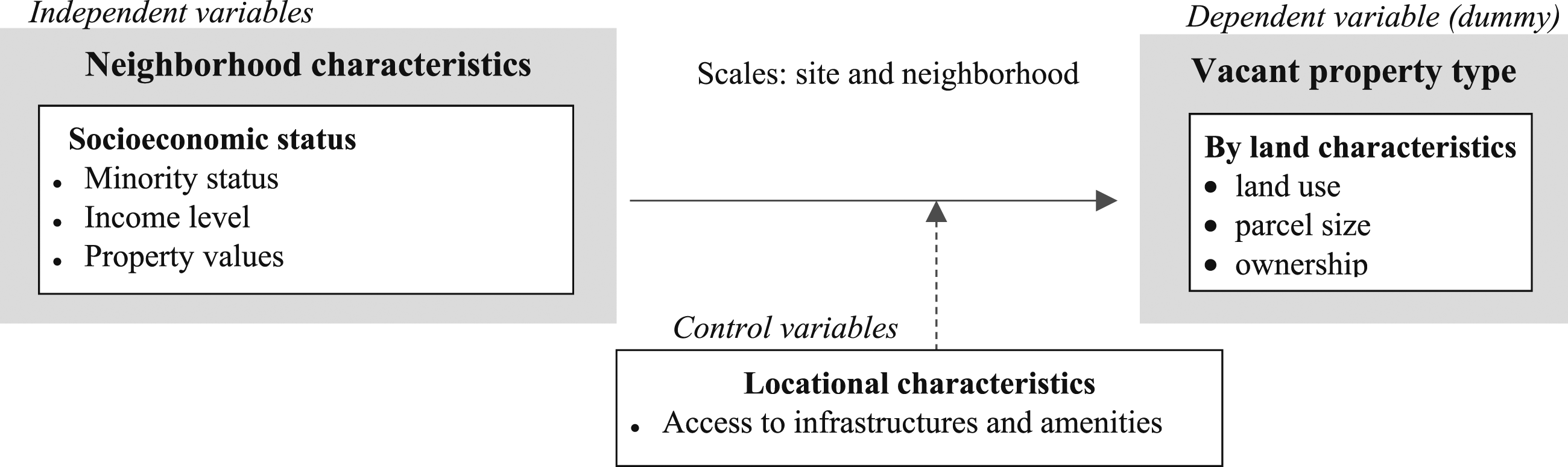
Measurement
As noted, to classify vacancy types, we allocated types for all 5440 vacant lots in Minneapolis and categorized each into a specific classification by applying Lee and Newman’s (2019) vacant land classification scheme. This classification method specifies vacant property type based specifically on land characteristics that affect the duration of a vacancy (specifically, land use, parcel size, and ownership information). This method is helpful as each vacancy type describes a different potential fate for a vacant lot and is easy to apply when using a large-scale vacant lot inventory. We first identified vacant lots with a designated land use for 1) a park or open space (Recreational vacancy) and 2) industry (Dormant vacancy). We also identified vacant lots 3) owned by institutions (Civic vacancy). The remaining commercial and residential vacancies were then separated into three different groups (by quartile) based on the lot size, and the smallest size group was designated as 4) Remnant vacancy. For the middle size group, privately owned properties were designated as 5) Floating vacancy representing economically active lots. The remaining 5) vacant lots (Reserved vacancy) include properties from the largest size group as well as the publicly owned vacant lots from the middle size group. Figure 2 includes the maps of existing vacant properties with a brief description of each vacancy type. After allocating a vacancy type for each vacant property, six dummy dependent variables were generated to determine the type for the property. Existing vacant lots in Minneapolis, Minnesota (2015).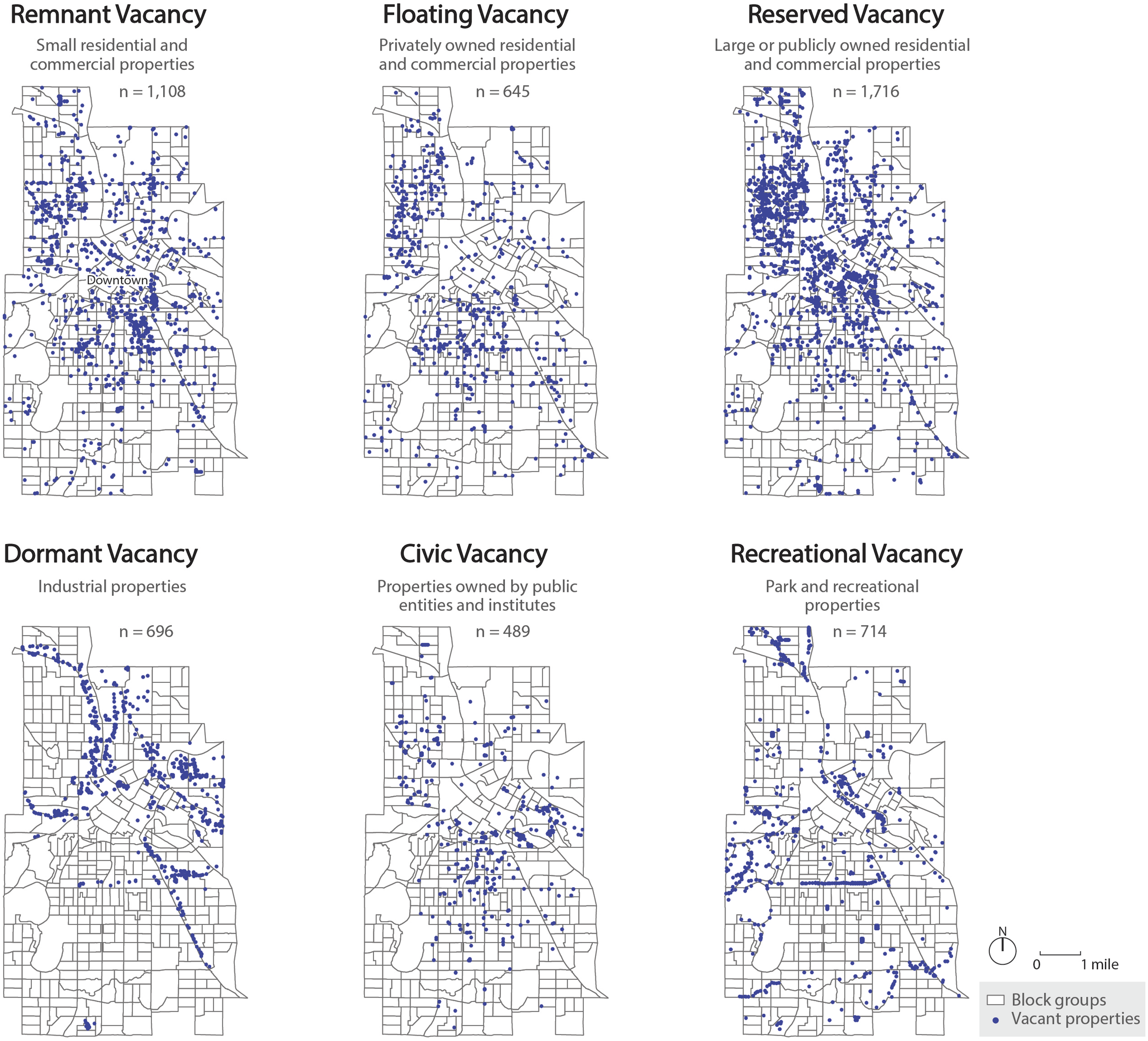
We measured socioeconomic characteristics around each vacant property at multiple scales to compare different ranges of neighborhood characteristics. It may be possible to use existing neighborhood boundaries, such as a census tract, block group, or municipal neighborhood boundaries. However, if a vacant property is located at the edge of a pre-defined neighborhood or across multiple block groups, the characteristics may not fully represent the surrounding area of the property. Thus, for this study, we instead used buffers to capture the area ratios of surrounding block groups which is the smallest unit necessary to retrieve socioeconomic characteristics from ACS. In order to measure the socioeconomic features inside the buffers, data at the level of the census block group was initially retrieved from the ACS. Census block groups are a geographic area defined by the U.S. Census Bureau and are the smallest areas with a population between 600 and 3000 that have socioeconomic information publicly available (U.S. Census Bureau, 2019). The socioeconomic characteristic variables within the buffered area were then averaged based on the ratio of how much area of each block group was situated within the buffers (excluding the area of the vacant lot itself). For instance, if a buffered area for a vacant property included two block groups with equal area for each, the socioeconomic characteristics of each block group were averaged with an equal ratio.
We can determine which scale predicts vacancy types better by comparing different buffer ranges, and doing so will also improve the reliability of the operational neighborhood boundaries. The exact buffer distances utilized to measure socioeconomic variables were 100 feet, 0.25 miles, and 0.5 miles (Figure 3). We first intended to operationally measure the average socioeconomic conditions around each vacant property using a 100-foot buffer. A 100-foot buffered area does not mean that only the socioeconomic characteristics within this were captured (which is impossible to collect). Instead, we intended to capture socioeconomic characteristics at the block group level and added a 100-foot buffer in case a vacant lot is spread across several block groups or located at the edge of a block group. We then measured the socioeconomic characteristics within 0.25 and 0.5 mile buffers. This is a typical five to 10 minute walking distance (Frank and Engelke, 2005) from the vacant lots. Eventually, we expect that the 100-foot buffer would represent the smallest available scale for socioeconomic conditions (called site-scale hereafter), while the 0.25- and 0.5-mile buffers would represent a larger range of neighborhood features (called neighborhood-scale hereafter). Operational measurements of neighborhoods using three buffers.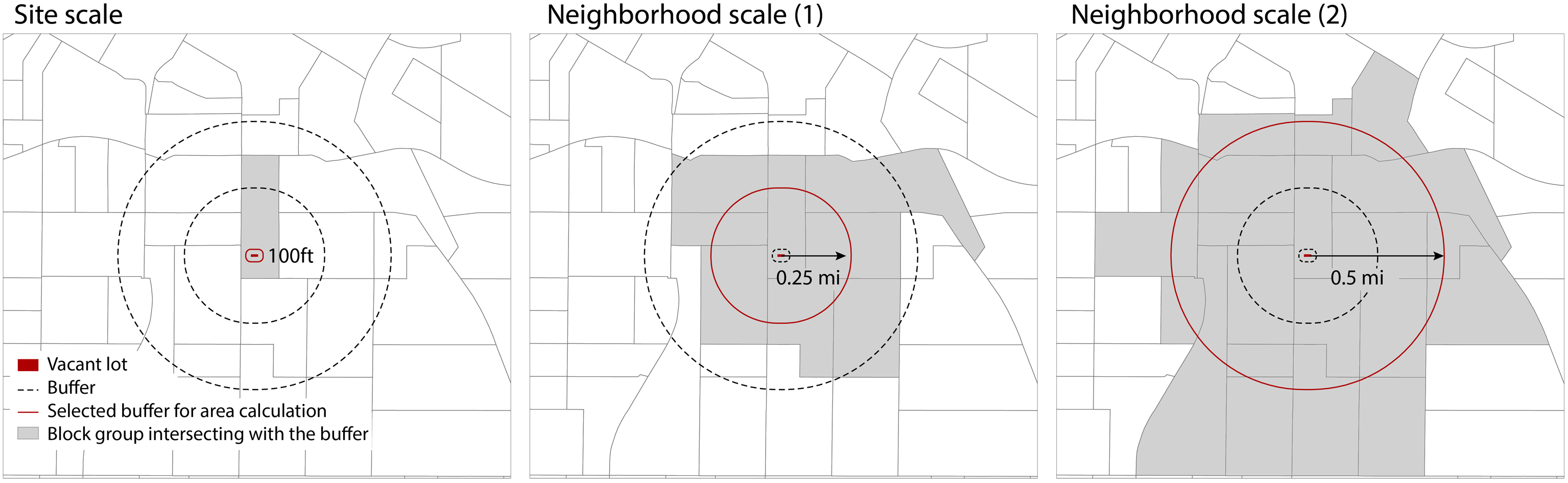
Summary statistics for vacant lots in Minneapolis.
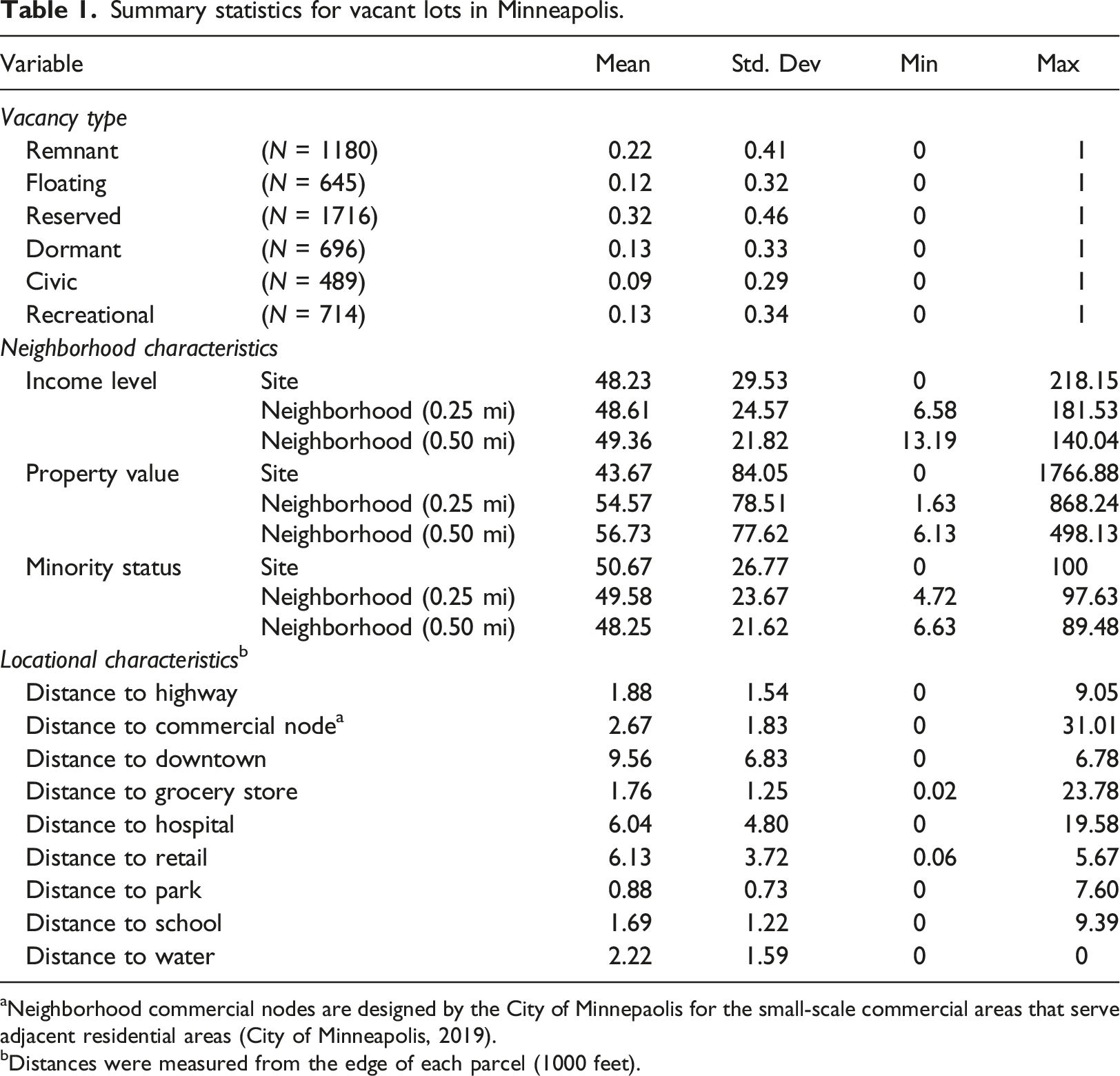
aNeighborhood commercial nodes are designed by the City of Minnepaolis for the small-scale commercial areas that serve adjacent residential areas (City of Minneapolis, 2019).
bDistances were measured from the edge of each parcel (1000 feet).
Analytic approach
A logistic regression was performed for each vacancy type with six dichotomized dependent variables. This helps determine if the neighborhood characteristics can predict the vacancy type, rather than which types are relatively better predicted.
The conceptual model for this study can be stated as:
Log
Where P is the probability that a vacant property is designated to be type i; MIN, INC, and VAL are the socioeconomic characteristics of the surrounding buffered area d defined by minority status, income level, and property value, respectively; LOC represents the locational characteristics of the vacant property defined by the distance to infrastructures and amenities, respectively; i represents one of six vacancy types; d represents one of three buffered areas; j represents each vacant property, βi are regression coefficients; and ε is the measurement error term. Using this model, we examined if certain size of neighborhood characteristics would predict vacancy type. Three scales were tested to increase the robustness of the models with the operational neighborhood boundaries. This procedure generated three models with one site-scale and two neighborhood-scale buffers for each type, a total of eighteen models run for all six vacancy types. A multinomial logistic regression is then used to compare all six vacancy types in one model to see if the socioeconomic factors would better predict any particular vacancy type.
Results
When multiple ranges of socioeconomic characteristics around each vacancy type were examined, a few significant patterns were found. Figure 4 visually compares how different levels of variables predicted each vacancy type based on the regression results (see Tables S1, S2, and S3 in the Supplementary Material for the full results). The center of each diagram shows the vacant lots with multiple rings to represent the three buffered areas. The darker areas show a more significant increase or decrease in the effect size of the relationship with the socioeconomic variables. This allows a visual comparison of site- and neighborhood-scale effects and captures the neighborhood effects at multiple levels for each vacancy type. Socioeconomic characteristics predicting vacancy at different scales.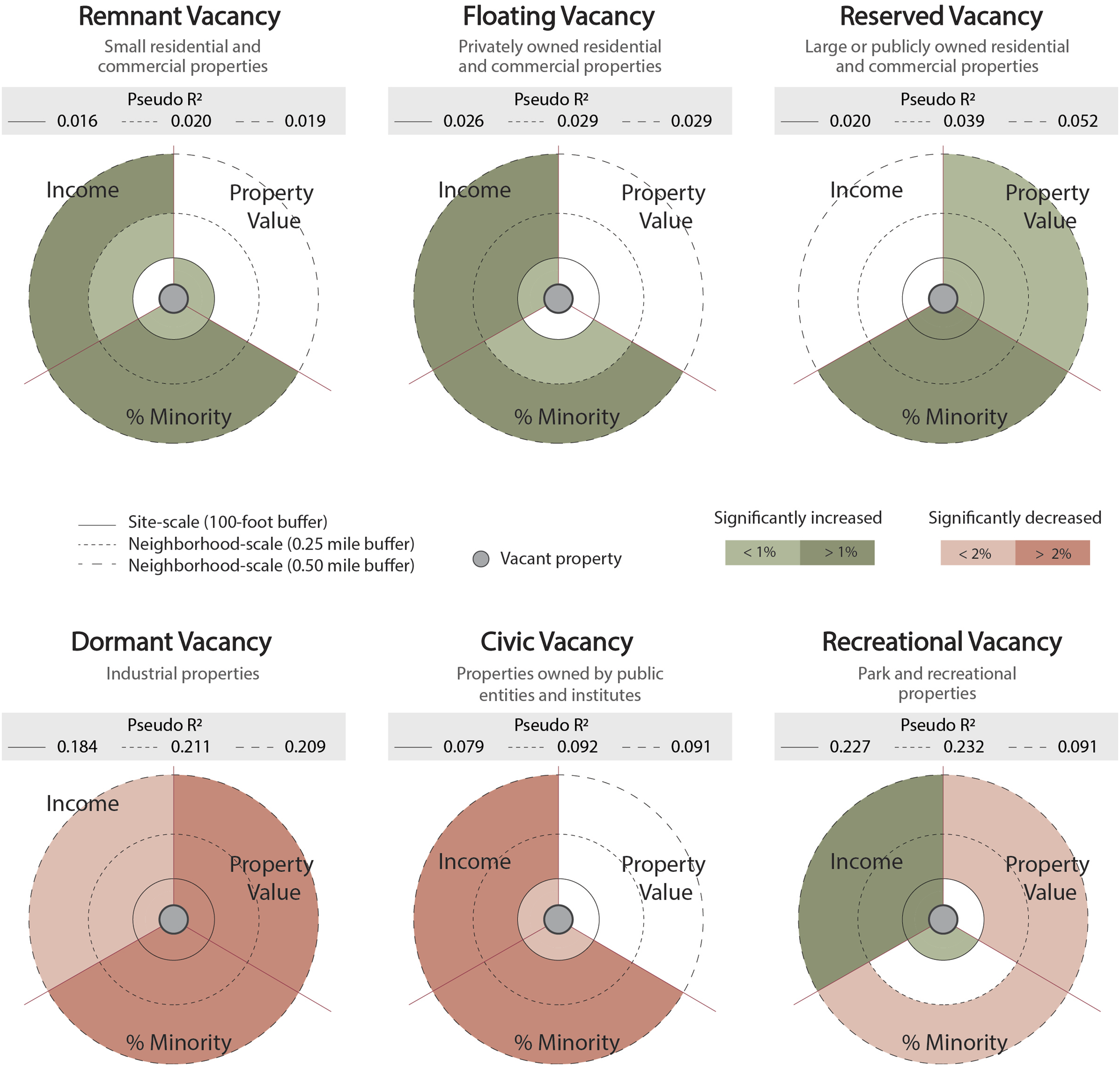
For most, the percentage of the minority population was shown to significantly predict residential and commercial vacancies (Remnant, Floating, and Reserved type vacancies from Figure 2) across all site and neighborhood scales. As the percentage of the minority population increased, the odds of finding these three vacancy types increased by 0.51–1.87%. There was also no significant difference among the types when vacancy types were measured as a categorical variable (Table S4). Areas with high-income populations tended to predict vacancies for Floating, Remnant, and Recreational vacant lands across all scales, with an increased odds of finding these vacant land types ranging from 0.4 to 1.54% in high-income areas with no significant difference among the vacancy types. These three vacant land types can, in fact, favor the residents in different ways. Floating vacancies are privately owned and have a moderate parcel size. This type of vacant lots has the highest potential for market activity to bring future investment opportunities (Northam, 1971; Schenk, 1978; Newman et al., 2016; Lee and Newman, 2019). On the other hand, vacant lots that are too small to be developed (Remnant vacancies) or already have green space (Recreational vacancies) have the potential to serve nearby areas as large or small-scale green spaces. A small lot size can limit potential site development (Greenstein and Sungu-Eryilmaz, 2004; Lester et al., 2014), and some properties are intentionally kept vacant and cleared to increase green infrastructure and provide an area for recreational use (Desimini, 2015; Heckert et al., 2015).
Additionally, areas with high property values have shown to predict Reserved vacancies (Figure 4). Reserved vacancies include residential and commercial lots that are either publicly owned or large in size. This implies that publicly owned or large size vacant properties may not necessarily be a proxy for abandonment or a risk to neighborhoods threatened by the impacts of urban decline. This pattern may also support the effectiveness of land banking policies (by municipalities purchasing existing vacant lots) to maintain a housing market, when necessary. However, this relationship requires further examination using specific information of ownership and the land banking history of the areas. At the same time, minority populations are typically found near these Reserved vacant lots in Minneapolis, highlighting the necessity and potential to regenerate Reserved vacant lots to better address issues in minority communities.
There are also vacancy types negatively related to neighborhood socioeconomic characteristics (Figure 4). For instance, Civic vacant lots show a strong association with low-income levels but smaller minority populations, while property values do not significantly affect them. If Civic land can, indeed, be regenerated to provide public services, this is a somewhat questionable finding underscoring the potential inequality issues for minority communities lacking Civic lands. Further examination of the distributions of Civic vacancies would aid in the understanding of the location of vacant lots owned by public institutions. Dormant lands—or industrial vacancies—are found in areas with low income, low property values, and also low minority populations. This seems to typically represent industrial vacancies on the outskirts of a city.
We also compared the effects of three different scales to analyze potential associations with neighborhood-scale socioeconomic environments (Figure 4). The results show that neighborhood-scale socioeconomic characteristics are generally better predictors of vacancy types than are the site-scale characteristics. While, typically, the significance level does not change by the scale of neighborhood, as the scale becomes larger, the coefficients for each variable tend to have higher values. A model fitness test (Bayesian Information Criterion, BIC) that compares models and determines which one has a better fit (Vrieze, 2012; Neath and Cavanaugh, 2011) verifies this result. An interesting pattern is with high-income areas that predict Remnant and Floating vacancies better at neighborhood scales than the site scale. Possibly, high-income residents could favor vacant properties in the community to serve as a green space or a community area as long as these spaces are not too close to their homes.
Conclusions
Findings
This study compared site and neighborhood-scale socioeconomic characteristics around vacant lots in Minneapolis to identify potential heterogeneous vacancy resources by neighborhood context. It investigated whether neighborhood scale is a better predictor of vacancy type than is a site scale. Three regressions were tested on different scale for each vacancy type, and a total of eighteen regressions were performed to capture the effects on six vacancy types. While urban vacancies are known to bring negative perceptions and can also serve as a proxy for neighborhood distress, this study suggests that there are various types of vacancies interacting differently at the neighborhood scale, and that the large-scale neighborhood context matters more when predicting for vacancy types.
Additionally, three salient points are understood from the results. First, minority populations are a strong predictor of residential and commercial vacancies (Remnant, Floating, and Reserved vacancies). Second, high-income areas tend to predict vacancies with potential investment opportunities (Remnant and Floating vacancies) or vacancies as parts of existing park or recreational systems, although not always officially designated as a park or recreational area (Recreational vacancy). Third, vacant properties designated for institutional land use (Civic vacancy) tend to be found in areas with low incomes, yet, not in areas with high minority populations. These properties tend to stay vacant longer than land with other designated uses because of restrictions on uses of the land, but, at the same time, bring development potential to the area and can serve the community.
The regression results on the effects of neighborhood characteristics and locational characteristics show that Dormant and Recreational vacancies (representing industrial and green space vacancies) have higher pseudo R2 scores at over 0.20 (see Figure 4). This is much higher than the regressions on other vacancies, which have R2 scores less than 0.10. This indicates that industrial and green space vacancies are under a greater neighborhood effect than are other vacancies. These are also the types that can become long-term vacancies, so special attention is necessary for proper regeneration of these properties.
Limitations
This study has some limitations as a quantitative research on the citywide vacant lots in Minneapolis. While we followed the typology designation process of a precedent study, more studies need to be conducted to further validate the classification scheme. Also, some of the regression results indicate very low pseudo R2 scores, suggesting that the effect size of the neighborhood characteristics is not large and may be subject to omitted variable bias. In fact, there are more site-scale characteristics that could be associated with urban vacancies such as visual aspects, management, or safety concerns. Further study can be conducted to explore and measure the physical and perceptional aspects of the neighborhood. We also used buffered areas to measure nearby neighborhood socioeconomic characteristics. We tried to increase the model robustness by including multiple ranges of neighborhood boundaries, but averaging socioeconomic information from the block group level carries the potential of misrepresentation. We also want to suggest a cautious interpretation of our results when these findings are applied in different city contexts—especially in cities outside the U.S. Although we attempted to use a vacancy typology that could be used across localities, how cities classify land uses and how certain land uses or ownership are designated could differ by municipality.
Discussion
We conclude with a few suggestions. First, managing and repurposing vacant and abandoned land should be handled more progressively with a better understanding of the socioeconomic characteristics of the neighborhood. Our findings suggest that neighborhood context is an important factor that predicts the probable conditions of vacant properties typically with a larger effect size (Figure 4). Due to distinctive neighborhood characteristics, urban vacancies may not spread or cluster as the Broken Windows Theory typically describes. When the neighborhood context supports developable conditions, vacant properties may be considered as an opportunity and be quickly repurposed and utilized.
Thus, when planning to manage vacant and abandoned land, different strategies can be implemented depending on neighborhood contexts (Pinto et al., 2021). Vacant lots in areas with high development potential can be regenerated first to allow the positive economic effects to spread to the surroundings. Alternatively, vacant lots located in a distressed area can trigger further decline and may need to be properly managed through land banking and lot purchasing policies. In an effort to stabilize neighborhoods through repurposing vacant lots, for example, Chicago has been pursuing the Large Lots Program since 2014 to sell city-owned vacant lots for one dollar as a part of their housing plan (City of Chicago, 2021). In fact, Minneapolis has been also proactively promoting city-owned vacant lots for lease and selling move-in ready homes (City of Minneapolis, 2021) to manage existing vacant lots and increase home ownership and diverse opportunities. These types of programs could also serve environmental justice by acknowledging potential displacement or gentrification when converting vacant lots into green spaces or land for new investment, which leads to the next suggestion.
Second, examining vacancy types by community can be a way to diagnose potential neighborhood risks associated with vacant and abandoned land. According to this study, marginalized communities may have less opportunity to have available land for additional public services in the future. While recent views on depopulation and urban shrinkage focus on the positive aspects this can bring to the city, not all vacant lots are eligible to serve as green infrastructure or community spaces (Schilling and Logan, 2008). Certain communities may have brownfields with contamination issues leading to public health concerns (Alker et al., 2000). Clustered vacant lots can be contagious and lead to economic decline (Han, 2013). Marginalized communities tend to have less investment capital, and vacant lots in these neighborhoods pose a stronger threat than in other communities (Németh and Langhorst, 2014). Certain vacant properties may even bring gentrification to the areas by serving as available properties for development (Lee and Newman, 2021). Thus, through inventorying and identifying conditions of existing vacant lots, policies related to managing citywide vacant lots should provide justice and equity for underserved communities that may not have the same opportunity as others. It is, indeed, planners’ responsibility to recognize potential risks certain communities might be undertaking and identify the heterogeneous vacancy resources.
Footnotes
Declaration of conflicting interests
The author(s) declared no potential conflicts of interest with respect to the research, authorship, and/or publication of this article.
Funding
The author(s) received no financial support for the research, authorship, and/or publication of this article.
