




Abstract
Fecal sludge management (FSM) stakeholders have hitherto been unable to benefit from analytical approaches based on systems thinking principles, as studies utilizing theoretical frameworks to analyze governance structures remain in a nascent stage. One such prominent framework is the Systems Theoretic Process Analysis (STPA), which has no FSM-related applications in the literature. Relying on official documents such as ministerial ordinances, this study conducts a multistage STPA for a well-established and sustainable FSM system, that is, the Johkasou system in Japan. The analysis maps the key stakeholders and their interactions to comprehensively identify potential risks and corresponding novel indicators to help manage risks within the Johkasou system. The features of governance structure thus obtained also highlight the steps necessary to address governance issues for Japan and other countries attempting to establish sustainable FSM. The study extends the STPA literature by providing a substantial validity of STPA’s capability for analyzing the FSM governance structure against robust and independent criteria that define the objectives of a “good” governance structure, that is, efficiency, accountability, and legitimacy. The STPA results identify novel leading indicators to guide Japanese policymakers to improve FSM management. The results from STPA also effectively provide valuable insights for other countries by highlighting the various features contributing to an effective governance structure of the Johkasou, such as centralized decision-making in a combination of a hierarchy of goals to establish a clear division of responsibility across various actors. The study also notes potential challenges for field implementation of STPA and discusses directions that future work could explore.
Keywords
Introduction
Given the challenges of providing a centralized wastewater system in dense urban settlements with inadequate sanitation services, on-site sanitation systems and the associated fecal sludge management (FSM) are essential in achieving sustainable sanitation for all (Strande and Brdjanovic, 2014).
Recent academic studies theorize FSM through the lens of systems thinking, where FSM is considered a complex sociotechnical system. Sociotechnical systems are often characterized by interactions between multiple agents in the form of information coordination, influencing actions, and feedback (Meadows, 2008). Interactions between technical and social components of FSM affect its emergent properties, such as the overall operating performance and effluent quality of the systems. Existing studies in the FSM sector also highlight the need to shift the focus of FSM from a predominantly technical system to one that encompasses the underlying governance structure for sustainable management and services (Akumuntu et al., 2017; Lüthi et al., 2011). Governance structure refers to the interaction and decision-making process between various actors with specific roles, responsibilities, processes, and rules to ensure project goals (Brunet and Aubry, 2016). Designing a suitable governance structure or improving the existing governance structure to support sustainable FSM services continues to be a problem of great importance for local and national policymakers, nongovernment organizations, international organizations, and FSM practitioners across the globe (Ekane, 2018; Hashimoto, 2019; Lerebours et al., 2021).
However, the prevalent theoretical frameworks for identifying risks and suggesting improvements to existing FSM governance structures have fallen short of benefiting from rigorous analytical approaches based on systems thinking (Neely, 2013). Prominent researchers on the topic have demonstrated that systems-thinking-based formal analytical approaches could provide more profound and more consistent findings for FSM governance structures than prevalent approaches in the field (Narayan et al., 2020). They also recognize that the literature utilizing systems-thinking-based frameworks for analyzing existing governance structures in FSM is still at a nascent stage. Hence, a critical research gap exists in exploring applications of various formal systems-thinking-based analytical approaches for identifying risks and suggesting improvements for FSM governance structures (Narayan et al., 2020).
Systems theoretic process analysis (STPA) (Leveson, 2004) is a state-of-the-art systems thinking-based framework that enables researchers to analyze the governance of complex sociotechnical systems (Bugalia et al., 2020a; Leveson et al., 2003) and has yet to be applied to FSM (Patriarca et al., 2022; Zhang et al., 2021). Although STPA was developed initially to contribute to safety management, researchers have demonstrated its versatility and ability to analyze broader performance goals in organizations managing water resources. For example, Merrett et al. (2019) used STPA to design and analyze the governance structure for drinking water resource protection programs; Dokas et al. (2013) developed a framework for leading indicator identification and monitoring using STPA to analyze technical components of a water treatment system; Leveson et al. (2003) highlighted deficiencies in an existing governance structure for a Canadian water supply management system that accidentally released contaminated water through a city’s main supply. STPA, thus, demonstrates promise and potential as a tool for analyzing the complex context-specific governance risks 1 related to FSM. Despite such potential, the STPA approach has yet to be used as a framework for identifying process-specific governance risks and suggesting improvements in FSM (Patriarca et al., 2022; Zhang et al., 2021).
This paper aims to demonstrate the capability of STPA for analyzing and improving governance structures for FSM. The term “analysis” here refers to identifying risks in the governance structure of an existing FSM structure. In contrast to a conventional definition of risk involving the probability and severity of undesired events, the current study adopts a non-probabilistic and qualitative definition of risk, aligned with contemporary systems theory (Aven, 2022). Thus, risks refer to all factors and scenarios emanating throughout a given FSM system’s life cycle under which the existing governance structure is likely ineffective in processing and discharging effluent quality within the permissible limits to protect human and environmental health. This study contributes to the nascent academic literature exploring systems thinking-based approaches to analyzing FSM governance structures through two essential contributions. First, the study extends the STPA literature by being the first application of STPA to analyze FSM governance against robust and independent criteria that define “good” governance structure. Second, the study demonstrates the added value of STPA for improving FSM governance practices worldwide. Suggestions have been generated on enhancing FSM management practices in an existing (Japanese) FSM system, and recommendations are also considered for FSM systems in other countries.
The current study relies on an in-depth case study of the Johkasou system, a central FSM system utilized in Japan. Japan’s success in FSM is underpinned by robust technology and governance structures through the different life stages of Johkasou, such as manufacturing, installation, operation, and desludging (Seetharam et al., 2018). However, due to Japan’s declining and graying population, the robust Johkasou system has faced issues (Endo and Koga, 2021; Hashimoto, 2021). The current study examines risk factors related to scenarios involving agencies responsible for operating, emptying, and inspecting existing Johkasou units and does not consider how the expansion of its system capacity should be governed. With a focus on existing FSM governance structures, important issues that contribute to delivering new FSM systems, such as the role of civil society in promoting the social acceptance of FSM solutions, and of FSM finance (Lerebours et al., 2021), are beyond the scope of the current study.
The rest of the paper is organized as follows. The section Literature Review provides an overview of the literature and the STPA methodology. The section Methodology elaborates specific aspects of multistage STPA implementation in the current study. The section Results of the STPA presents an analysis of the Johkasou system through a multistage STPA. Discussions on STPA’s analytical capability in FSM against “good” governance criteria are summarized in the section STPA’s Analytical Capability in FSM against “Good” Governance Criteria, while STPA’s value addition to FSM practice is discussed in the section STPA’s Value Added for FSM Practice. All conclusions are outlined in the Conclusions section.
Literature review
Challenges with existing approaches for analyzing fecal sludge management governance structures
Most academic studies focusing on FSM have relied on a participatory approach to identify risk in existing governance structures. In this regard, Strande and Brdjanovic’s (2014) systems thinking-based 13-point framework for generic macro-level risks related to FSM governance structures has been commonly utilized. The framework highlights some of the success factors of FSM governance structures, such as a clear distribution of roles among various actors and transparency. While such frameworks were considered comprehensive in the FSM literature, they provide little guidance to systematically identify the context-specific risk factors that could emerge within existing governance structures. Researchers using Strande and Brdjanovic’s (2014) framework were only able to provide generic recommendations to improve the role and responsibilities, with no specific advice on the scope or aspects of such improvement (Akumuntu et al., 2017; Kreter and Cardona, 2017; Mason et al., 2020; Ruiters and Matji, 2015). For example, in Akumuntu et al. (2017), the FSM-related responsibilities such as monitoring and coordination do not provide any information about indicators that need to be monitored or the information that needs to be coordinated. Furthermore, participatory approaches can be limited by stakeholder perceptions that are formed through interactions with a limited part of the system, and they can often lack an understanding of the full complexity of the FSM system in place. Similar observations have also been made by Narayan et al. (2020) concerning prevalent tools for governance analysis in the FSM sector.
Alternatively, Narayan et al. (2020) propose utilizing a formal social network analysis (SNA) framework to analyze FSM and address some of the limitations posed by existing general theoretical frameworks. Their work demonstrates the strong visual appeal of SNA and its effectiveness as a systems thinking tool in arranging the governance structure for FSM systems. In general, SNA is a powerful tool for highlighting the importance of public policy and governance that requires more exploration (Neely, 2013; Victor et al., 2017). However, there are several significant limitations of SNA methods for analyzing the risks emerging from governance structures. Firstly, although SNA is one of the many formal systems thinking approaches, it does not account for the feedback of information between agents. According to systems theory, feedback is an essential element forming the basis of improvement and adaptations in systems, in the absence of which systems could fail (Leveson, 2011). The lack of dynamic perspectives within existing water governance studies (Stein et al., 2011) is evidence of the developing use of systems thinking-based analytical approaches for analyzing FSM governance structures. Second, SNA can only offer a limited and specific understanding of risks because a large proportion of SNA measures can only be interpreted relative to another network (Narayan et al., 2020). Lastly, the definitions of what constitutes a link between two actors can often become ambiguous, leading to multiple types of information simultaneously being represented in a single network. This ambiguity represents a challenge for researchers that need to understand the relevance of SNA results to governance structures, as the governance structures described in these studies are not based on specific criteria of successful or “good” governance structures. For example, while accountability is considered an essential requirement for sustainable FSM governance structures (Strande and Brdjanovic, 2014), Narayan et al. (2020) do not define any direct relationship between SNA results and their impact on accountability.
The various approaches to analyzing the governance structure described here apply multiple definitions of risks and corresponding mitigation strategies to improve the system. SNA is just one of the many formal approaches, and it does not incorporate some of the commonly recognized risks identifiable through systems thinking-based analytical approaches. For example, SNA does not account for information feedback between agents and does not take a dynamic perspective on changing risks (Leveson, 2011; Stein et al., 2011). Due to the pluralistic nature of the underlying concepts, objective assessments of different approaches also become challenging. Considering the limitations of these existing methods, a critical research gap exists in the need to apply formal systems thinking-based analytical approaches to identify risks and suggest improvements for FSM systems against specific governance criteria.
Criteria of a good governance framework
To apply a systems thinking-based approach to governance, independent criteria defining the objectives of a good governance structure are also required (Harris et al., 2011) so that the analysis can suggest system improvements that represent “good” governance structures. Notwithstanding the need for defining FSM-specific criteria for objectives of a good governance structure, the current study relies upon literature specific to objectives of a “good” governance structure for public projects. Brunet and Aubry (2016) identify three objectives of governance structures for public projects based on the public administration theories of scientific management, new public management, new public governance, and the UNDP’s principles of good governance. Their study argues that any governance structure in this context should contribute to (1) improved efficiency, (2) increased accountability, and (3) enhanced legitimacy.
Efficiency
Efficiency relates to achieving maximum productivity with minimum wasted efforts. Brunet and Aubry (2016) argue that features that could ensure efficiency in a governance structure include the notion that the structure should be based on analytical processes instead of political decision-making and exhibit a high degree of centralized control. Centralized control refers to a setup in which the decision-making authority is concentrated in specific bodies, and decisions are communicated to peripheral or lower-level stakeholders for implementation.
Accountability
Accountability refers to legal and procedural devices that stakeholders may be held answerable for their actions. The literature also recognizes that accountability is increasingly challenging to enforce in modern-day complex systems, as complex interactions between stakeholders make it difficult to distinguish a specific individual’s particular decisions. Therefore, features of accountability for any governance structure include the idea that the structure should offer a comprehensive understanding of the underlying process with a clear definition of the roles among actors (Brunet, 2021; Brunet and Aubry, 2016).
Legitimacy
Legitimacy refers to accepting a degree of centralized decision-making among various involved actors (Brunet, 2021). According to Brunet and Aubry (2016), features legitimizing any governance structure should ensure centralized decision-making and exert a regulatory system based on an analytical process.
To the best of the authors’ knowledge, a coherent document summarizing FSM-specific criteria for objectives of the good governance structure is yet to be developed through formal academic studies. However, numerous academic studies have discussed the governance challenges in the sanitation sector, emphasizing the relevance of Brunet and Aubry’s (2016) framework to FSM. For example, Ueda and Benouahi (2009) describe the essential role of accountability in the governance structure in well-functioning sanitation services. Similarly, poor coordination and communication between stakeholders (related to accountability) and inappropriate institutional and legal frameworks (related to legitimacy) have been identified as among the biggest governance challenges in sanitation (Ekane et al., 2014). However, the academic debate related to governance structure and efficiency has not yet been settled for the FSM sector. In addition to the management and economic nature of efficiency described in the study, efficiency has also been applied to the ability of a governance structure to strengthen stakeholder participation and incorporate conflicting views among stakeholders (Iribarnegaray and Seghezzo, 2012). These two definitions of efficiency are contrasted; however, FSM systems focusing solely on a single dimension of efficiency have shown little success (Allen et al., 2008; Ekane, 2018). Therefore, the definition and features of efficiency adopted in the study, according to (Brunet and Aubry, 2016), are still relevant to the FSM sector.
In summary, independent criteria defining the objectives of a good governance structure suitable for FSM systems can be characterized based on the features of efficiency, accountability, and legitimacy. STPA’s capability as a framework to analyze governance structures can be assessed by demonstrating STPA’s role in identifying these features in a given FSM governance structure.
STPA applications and gaps for analyzing governance structures
The STPA method can be applied in various ways to generate recommendations for system improvement. It can be applied as a retrospective accident analysis that systematically tracks dysfunctional interactions across different system components at the time of an accident (Bugalia, et al., 2020a; Leveson et al., 2003). STPA can also be applied prospectively to identify and mitigate risks before an accident occurs and to generate recommendations for designing a new system (see Merrett et al., 2019), for example, for an analysis of a drinking water resource protection program). The current study is relatively distinct in presenting a prospective STPA of an existing governance structure. The analysis has been guided by the STPA handbook (Leveson and Thomas 2018), which discusses how to conduct a prospective analysis of existing sociotechnical systems from a governance perspective. Further details of the analytical steps will be outlined in the following section.
Whether the existing studies are retrospective or prospective or aim to contribute to the development of new systems or enhance existing systems, the conventional STPA literature has tended to focus on interactions between technological and human controllers. Somewhat limited attention has been given to analyzing existing governance structures involving interactions between regulatory, organizational, and human components relevant to the scope of the current study (Kazaras et al., 2014; Leveson and Thomas, 2018; Patriarca et al., 2022). Furthermore, in most cases, the STPA guidelines for identifying risks and suggesting system improvements have been shaped by practitioner experiences in various safety-critical sociotechnical systems (Leveson and Thomas, 2018). None of the previous studies have attempted to establish the capability of STPA against robust and independent criteria defining the objectives of a “good” governance structure for public infrastructure projects (Patriarca et al., 2022; Zhang et al., 2021).
In summary, this study extends the STPA literature by presenting the first application of STPA to an FSM system. The novel application of STPA to this particular sociotechnical system addresses various limitations within the literature, such as the lack of information feedback and the ambiguity of governance terms within SNA, as well as the need to interpret and evaluate STPA results against robust and independent governance criteria (Patriarca et al., 2022).
Methodology
Case selection
The current study relies on an STPA of the on-site wastewater treatment system utilized in Japan, commonly known as Johkasou in Japanese. Johkasou is a sophisticated septic tank that uses aerobic treatment to achieve high treatment efficiency. The quality of Johkasou effluent is such that it can be discharged directly into rivers and other water streams. However, Johkasou septic tanks also require desludging operations, placing them in the FSM solutions category. Japan has witnessed a steady growth in the number of Johkasou systems and has gained over 30 years of experience managing and installing systems since the 1970s. Japan’s success in FSM is underpinned by robust technology and governance structures through the different life stages of Johkasou, such as manufacturing, installation, operation, and desludging (Seetharam et al., 2018). Because of its success, there has been strong encouragement from various international organizations to replicate the success of Johkasou for FSM in Asia (Hashimoto, 2019). Therefore, a study focusing on the robust institutional and governance structure of the Johkasou system can help gather lessons for other countries.
On the other hand, the recent demographic changes of a declining and aging population have contributed to a decline in the total number of Johkasou installed since the early 2000s (Ministry of Environment, 2015). In this context, even the robust Johkasou system has faced issues; for example, only 43% of the scheduled annual inspections for Johkasou systems were carried out in 2017 (Hashimoto, 2021). Therefore, a comprehensive STPA of the Johkasou system can also help identify proactive management strategies for Japanese stakeholders.
STPA-based analytical approach for fecal sludge management governance
Overview of STPA
State-of-the-art system safety theories such as STPA (Leveson, 2004, 2011) assert that control-feedback structures are necessary to maintain safety in complex systems. Figure 1(a) shows a generalized control-feedback loop that includes a controlled process and a controller. A controller, such as a government agency, provides control actions to lower-level system components, such as entities involved in the sanitation value chain, to prevent system behaviors from producing hazards. The control actions in this example refer to the regulations, standards, and certifications provided by the government agency (the controller) to ensure that the performance of the controlled process (entity in this case) is adequate. A more FSM governance-specific interpretation of STPA terminology has been provided in the next section. Overview of STPA. (a) Generic control-feedback loop (b) Generic Safety-Control Structure. Source: Adapted from Leveson (2004).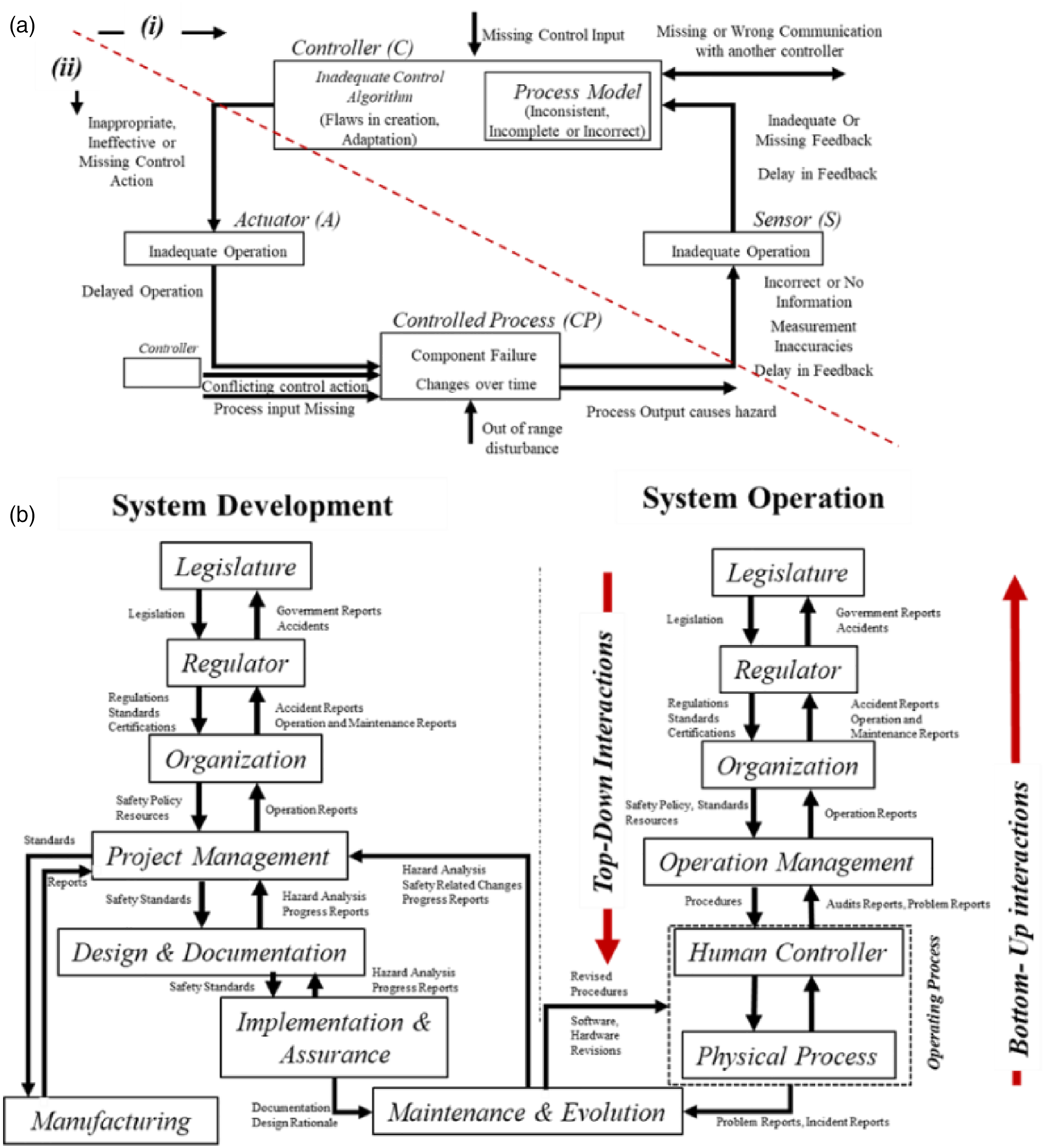
The control-feedback structures can be conceptualized between system components at various hierarchical levels, from technical components at the bottom to the organization and regulatory components at the top, in a system, forming a safety control structure (SCS), as shown in Figure 1(b). Alternatively, the control structure is synonymous with the current study’s governance structure, where interaction and decision-making processes between various actors with specific roles are described using control-feedback relationships among them. The functional interactions among all system components can then be analyzed systematically across all levels of an SCS to trace any dysfunctional interaction from physical systems upward to the regulatory and institutional levels.
In typical practice, the following four-step method can be used to identify risk factors through STPA methodology: (1) Define the purpose of analysis, (2) Model the control structure, (3) Identify unsafe control actions (UCAs), and (4) Identify loss scenarios by systematically tracing the information flow throughout a control feedback loop for any UCA (Leveson, 2011; Leveson and Thomas, 2018; Patriarca et al., 2022). Additional details of the steps have been provided in the supplementary material.
STPA-based multistage prospective analysis for Johkasou
To demonstrate STPA’s applicability as a viable tool for analyzing existing governance structures, this study applies and extends methods consistent with the STPA handbook (Leveson and Thomas, 2018). The analytical stages involve a) a full-scale SCS analysis and b) an in-depth risk analysis of specific control-feedback relationships (Leveson and Thomas, 2018). The risk analysis results also reveal assumptions about the system that are no longer true, potentially due to the dynamic nature of contextual factors governing the systems (Leveson and Thomas, 2018). According to the STPA literature, these assumptions can then be monitored in the form of leading indicators. Such an assumption-based leading indicator approach forms the basis of proactive risk management for a given governance structure (Leveson, 2015).
In the first analytical stage, a full SCS is developed, which illustrates the various essential functional relationships between actors across different life stages of the Johkasou system, such as installation and operation. The analysis focuses on a specific actor, namely, the inspection agency (IA), for the next stage. Theoretically, an in-depth analysis can be conducted for all system components across different hierarchical levels of the FSM system. However, the current study focuses on the IA, taking on the crucial role of a sensor for the Governor’s office within the Johkasou. Previous researchers have discussed the importance of this node, arguing that when information from the IA does not reach the Governor’s office adequately, the latter may lose control, affecting the overall efficacy of operations (see Leveson et al. (2003) for an analysis of an E. coli outbreak in Canada). Furthermore, as highlighted in the previous section, demographic trends in Japan are increasing pressure on IAs to provide adequate inspection coverage of the extensive Johkasou systems.
This study extends the conventional STPA approach that focuses on human-technical interactions to analyze the IA. The current study utilizes a modified STPA framework to capture human, organizational, and regulatory nuances through the “STAMP 2 extension for humans and organizations using guidewords” (SHOW) approach (Stringfellow, 2010). In the SHOW approach, Step 4 of the original STPA (see the section Overview of STPA) is modified by applying a taxonomy of factors (see Supplementary Table S1) that could lead to UCAs and hazards for humans and organizational-type controllers (Stringfellow, 2010). Additionally, Stringfellow (2010) proposed a set of contextual guidewords that could help systematically develop loss scenarios accommodating the contextual factors governing the system. Details of the SHOW method applied to this study can be found in the supplementary material.
Relating STPA results to the objectives of a “good” governance structure
Figure 2 summarizes the current study’s essential innovation in relating the outcomes of STPA for analyzing and improving governance structure against the theoretical objectives of a “good” governance structure for FSM (see the section Criteria of a Good Governance Framework for details). The results from the full SCS help illustrate the degree of centralized control in the FSM system. These features are identified using a combination of abductive and inductive reasoning based on the authors’ prior experience with related concepts discussed in the STPA literature (Leveson, 2011). For example, the results from the full SCS also help visualize commonly observed risk factors related to the complexity of the governance structure for the current Johkasou system. Many-to-one or one-to-many relationships, multiple controllers controlling the same process or having the same overlapping responsibility, a lack of appropriate or independent oversight of decision-making, or missing feedback paths and missing controls are some of the risk factors that can be identified through a simple examination of the full SCS (Leveson and Thomas, 2018). Such relationships are then discussed for their potential effects on clearly identifying the roles and responsibilities of each stakeholder, thereby enhancing accountability. Overview of the methodological steps adopted in the study.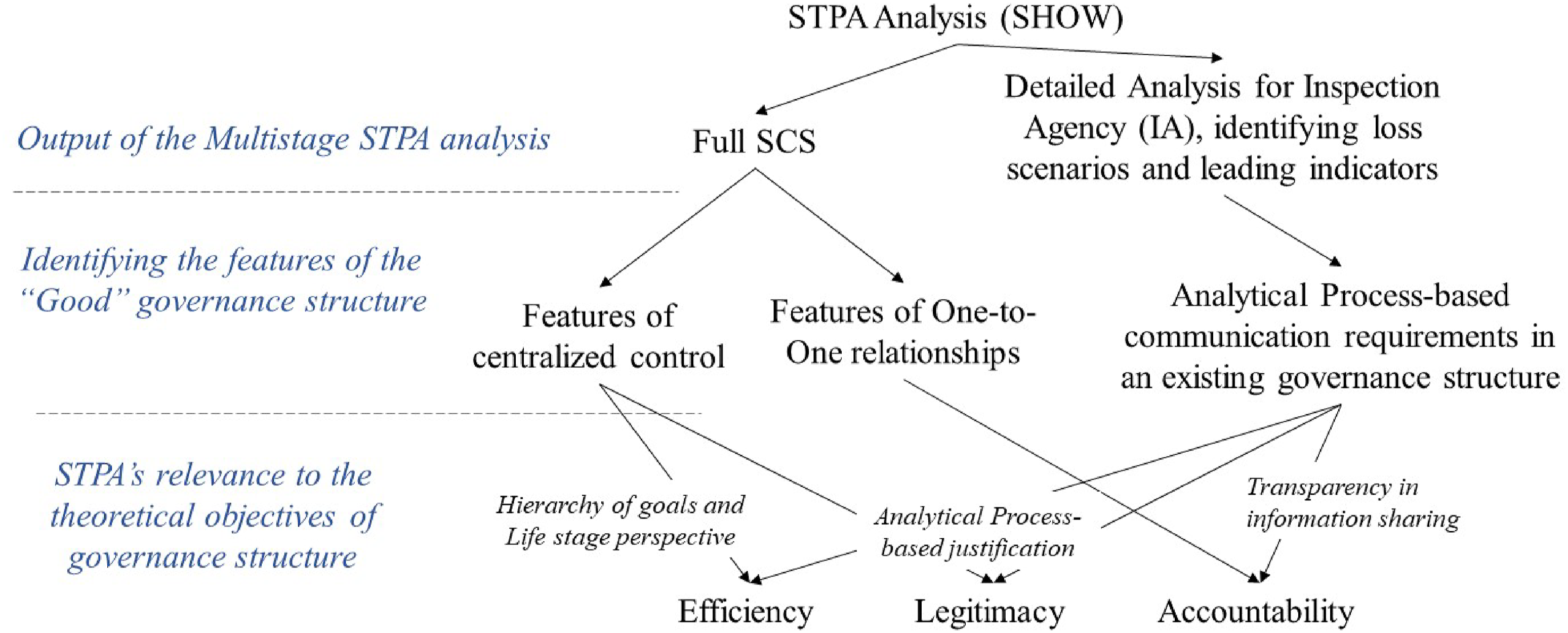
However, even in the STPA literature, there is no clear guidance for identifying centralized control features for a given SCS. The STPA literature recognizes that safety-critical decision-making should be centered in an entity independent of general project management goals such as financial matters within the system with sufficient power and resources to implement actions (Leveson, 2011). However, according to Leveson (2011), the multiple SCSs can achieve the same goals, and the exact design of the SCS can depend on the cultural and political norms contextual to the system. With such limitations, the current study innovatively relies on a comparative analysis of the full SCS developed for the Johkasou with the generic full SCS available in the STPA literature (Figure 1(b)) to reveal how centralized the essential functions are for Johkasou. For example, as discussed later in detail, the system evolution related to standards and specifications for Johkasou is coordinated at the highest levels of SCS between various ministries, as opposed to at the lower-level controllers in the generic full SCS. The features of centralized control, such as a hierarchy of functional goals across different life stages, are then discussed to reveal their effect on the Johkasou system’s efficiency and legitimacy for centralized control.
On the other hand, the in-depth analysis of the IA helps identify the loss scenarios under which its performance could be compromised. Information on these loss scenarios can help identify leading indicators for anticipating and managing potential future loss scenarios, preferably by a higher-level controller (Leveson, 2011). Comparing the results from STPA and the leading indicators about IA as per the existing Johkasou system helps identify the essential communication requirements currently not present in the system. The relevance of such novel communication requirements identified through a systematic and objective analytical process is then discussed to enhance transparency and accountability in the FSM governance structure.
STPA implementation
In line with previous applications of STPA, the current study relies on several official documents to develop the SCS: the official translation of the Johkasou Act from 1983 (Ministry of Environment, 1983), the corresponding ministerial ordinance (Ministry of Environment, 2012), and the official Johkasou brochure (Ministry of Environment, 2015). These documents provide detailed information on the legal responsibilities of various stakeholders involved in the proper functioning of the Johkasou system, thereby helping to understand the functional relationships (represented through control-feedback structures) among different stakeholders.
One of the authors, who was familiar with the Johkasou system and the STPA application through their professional engagement in an international organization working for FSM management, took a lead role in developing the SCS for the Japanese system. The reliability of the SCS is also ensured by comparing the SCS with similar information described in other secondary sources (Hashimoto, 2019; Seetharam et al., 2018). The official Johkasou brochure obtained from the Ministry was also used to understand the overall context governing the Johkasou system, along the main dimensions shown in Supplementary Table S2. These contextual factors were additionally confirmed through feedback from presentations at two professional conferences given by personnel involved in various stages of the Johkasou business, such as manufacturing, inspection, and training.
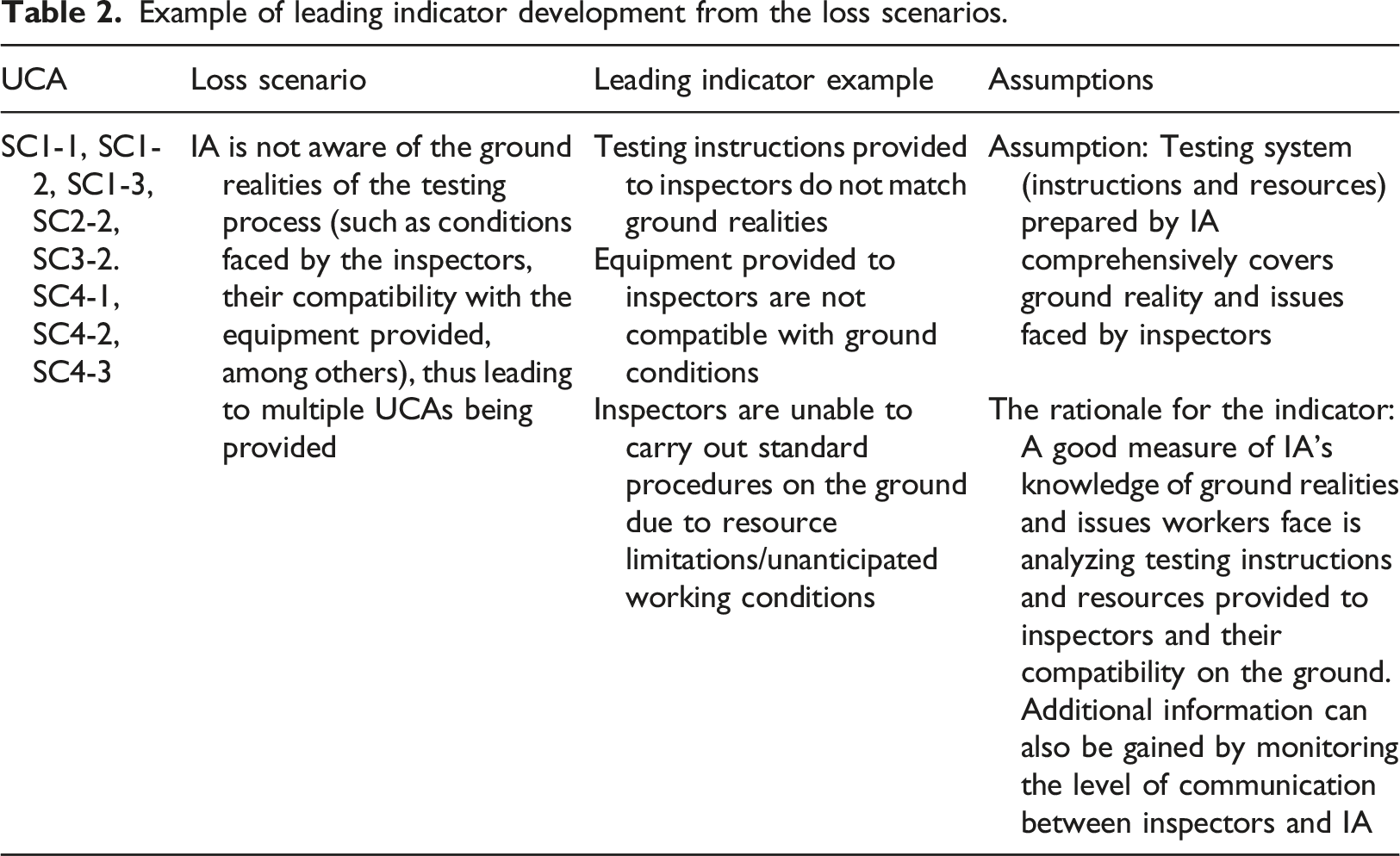
Finally, STPA was conducted using the SHOW method to generate a variety of loss scenarios specifically for the functioning of IA. SHOW processes are designed to minimalize subjectivity in the analytical process systematically. However, the quality of STPA results can vary greatly depending upon the analyst’s capabilities. At this point, the author leading the SCS development engaged with another lead author familiar with the STPA method to discuss the SCS, the underlying assumptions, and contextual factors governing the Johkasou system in Japan. The two authors independently conducted the STPA, identifying the loss scenarios and the indicators thus developed. The cross-examination of results demonstrated high inter-analyst reliability as both the authors had suitably captured essential scenarios. The details of all the loss scenarios thus identified have been summarized in the supplementary material. Leading indicators were developed to identify underlying system-level assumptions inherent in the loss scenarios as recommended in Leveson (2015). A simplified list of indicators was then obtained through iterations, removing the duplicity of indicators implicit across different scenarios.
It is important to note that the validity of the STPA, that is, the capacity of STPA to identify credible risks within complex sociotechnical systems, is still a matter of ongoing academic debate (Hulme et al., 2021). Nevertheless, in line with the literature, the added value of STPA in this study is demonstrated by a comparative analysis of STPA’s results with the set of risks and indicators already recognized within current Johkasou practice (Patriarca et al., 2022). The indicators for evaluating the IA’s effectiveness prescribed in official documents (Ministry of Environment, 2012) are compared with STPA results. A comprehensive validation strategy involving inputs from stakeholders is desirable. However, practical constraints, such as language limitations and a lack of familiarity with formal systems thinking terminology by FSM practitioners, restricted access to such information.
Results of the STPA
Full-scale safety control structure
As an output of the first part of the multistage STPA process, the entire SCS of the Johkasou system across the installation and operation life stages is shown in Figure 3. Control-feedback structures can be observed through the structure and combination of controllers, control actions, and feedback links within the system. Government agencies provide control actions to lower-level system components, such as regulations, standards, and certifications, to ensure the performance quality of these entities. In turn, the controller relies on the feedback received from the entities to form a belief about their current state. For FSM, the entity’s feedback could be in the form of periodic operation and management reports. For example, the government agency then compares the status of the entity’s operations with the target or desired level for the entity’s operations. The feedback can update the controller’s process model, which contains the controller’s belief about the functioning of the controlled process. For example, a government agency may believe that stringent regulations can help improve an entity’s compliance with the regulations. Subsequently, a controller can provide additional control actions, such as increased regulations or certification requirements, based on the information available in the process model and preexisting control algorithms (rules, process, etc.) (Leveson, 2004). Full-scale safety control structure of the Johkasou system in Japan. N.B. Installation and Operations refer to different “life stages” of Johkasou. Source: Authors.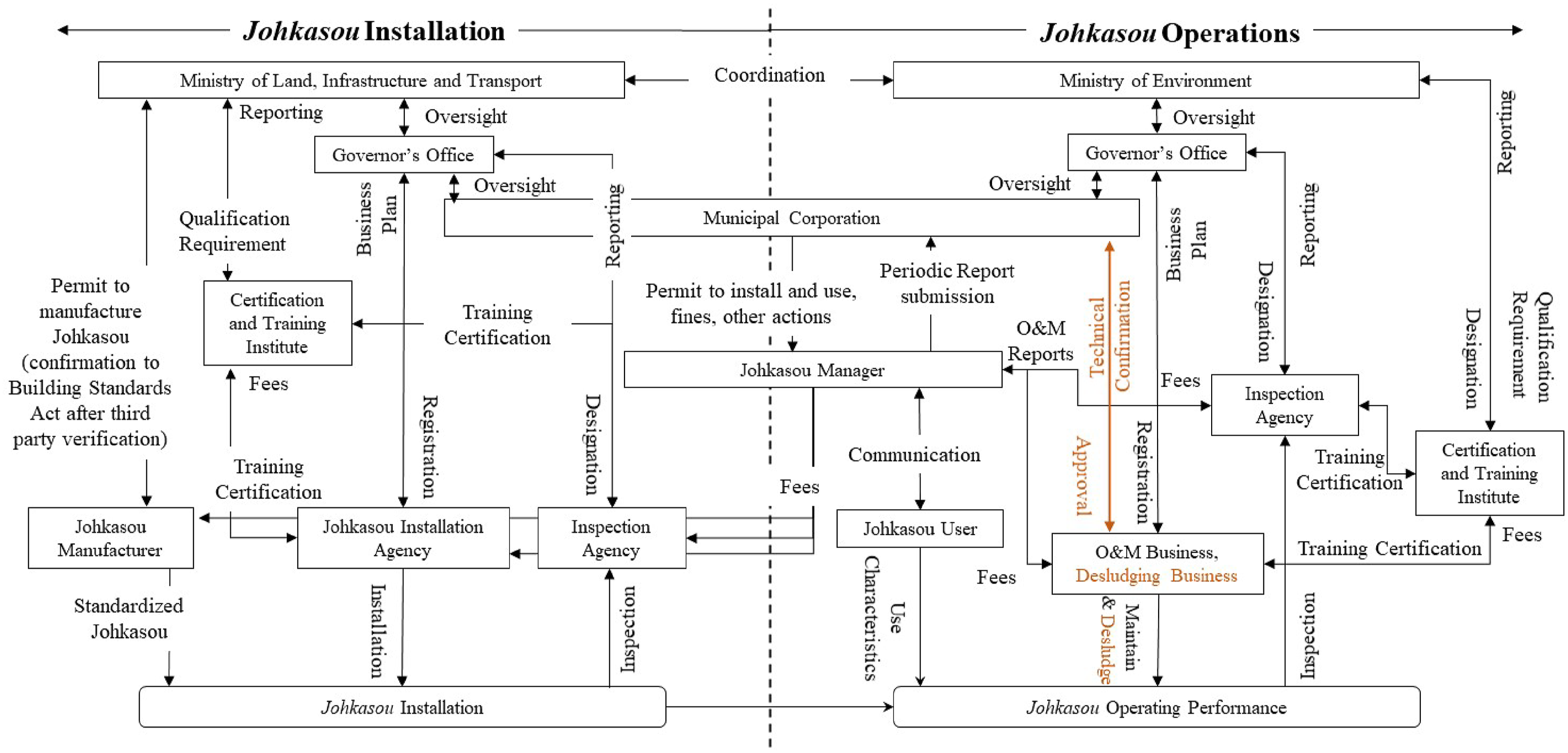
For brevity, most control-feedback structures in Figure 3 are shown using double-sided vertical arrows, whereas the respective control actions or feedback details are shown near the arrowhead. Like the generalized SCS described by STPAs (Figure 1(b)), the Johkasou system also features two parallel hierarchies of stakeholders for installation and operation stages. For the installation phase, the national Ministry of Land, Infrastructure, Transport, and Tourism (MLIT) takes a central role in setting up and maintaining the detailed technical standards that the Johkasou system needs to satisfy. MLIT then approves organizations to manufacture Johkasou equipment, provided their manufactured products match the designated performance and technical standards. Similarly, the MLIT also specifies the qualification requirements for Johkasou installers at a given site. The Johkasou, once installed, is subjected to a thorough inspection by inspectors certified by an authorized training institute.
The national Ministry of Environment (MoE) leads a similar hierarchical structure at the operation stage. The MLIT, along with the MoE, sets qualification requirements to be used by the national certification agency for training and certifying various personnel such as Johkasou operators, desludging personnel, and inspectors. The law mandates that only certified personnel can be engaged for various aspects of Johkasou. As a result, the core competencies and technical skills needed for the successful operation of Johkasou are strongly centralized at the national ministry level, providing uniform nationwide standards. However, various other factors are managed in a decentralized manner at the prefectural or municipal level. For example, the Johkasou operation and maintenance (O&M) businesses and the inspection business agencies must receive periodic approval for their license to operate based on reviews of business plans and performance undertaken by the Governor’s office. For desludging businesses, permission must be received from the respective municipality. Municipal corporations ensure that the Johkasou manager makes appropriate payments according to Johkasou laws for desludging operations, inspection, and O&M vendors. The two ministries also periodically revise various standards by coordinating the lessons learned across different life stages. The existence of various dynamic relationships has been supported in the literature (Hashimoto, 2019, 2021; Seetharam et al., 2018). A more detailed view of the roles and responsibilities of various stakeholders for the Johkasou is graphically shown in Supplementary Figure S1 3 .
Safety control structure focusing on the inspection agency
The detailed analytical steps and the outputs related to in-depth analysis of IA as part of the multistage STPA have been discussed in subsequent sections. The feedback about the overall functioning of the Johkasou and the effectiveness of other stakeholders in fulfilling their responsibilities becomes crucial for the Governor’s office to execute effective control. Since the IA serves as an essential sensor for the Governor’s office, an in-depth analysis of the risk factors that could affect feedback from the IA during Johkasou operations has been carried out using SHOW/STPA principles.
In Japan, an IA is designated at the prefectural level by the Governor’s office, limiting the legal authority to carry out Johkasou inspections to said agency. IAs can only hire qualified Johkasou inspectors for conducting such work; these qualifications are defined in the Johkasou Act. The Governor’s office can revise the status of an IA through careful monitoring of the agency’s functioning. Supplementary Table S3 shows the indicators listed in the Johkasou Act that the Governor’s office should monitor to ensure an IA’s effective performance, for example, the status of equipment, testing facilities, qualifications of the personnel, and the financial sustainability of the business model. Upon request from the Johkasou manager, an IA is expected to conduct inspections and submit the results to the Governor’s office within a predesignated time. The inspection contents include visual inspection, water quality tests, and document check tests. In addition to the report on the water quality parameter, the inspection agency should also conduct a risk assessment (related to Johkasou managers, the O&M business, or the desludging business) and communicate risks to the Governor’s office.
STPA for the inspection agency
Step 1: System-level constraints
STPA specifies system-level constraints as system conditions or behaviors to be satisfied to prevent hazards (Leveson and Thomas, 2018). Based on the information described above, it can be inferred that the system-level safety constraint for IA is that the entity should always communicate the status and problems of Johkasou operating conditions to the Governor’s office. If information from the IA does not reach the Governor’s office adequately, the Governor’s office may lose oversight, leading to a potential release of poor-quality Johkasou effluent in nearby water resources. Independent inspections have also been identified as a critical constraint in Ireland, where the Environmental Protection Agency can identify and correct septic tanks that require attention. In the absence of such independent inspections, researchers argue that the sustainability of FSM programs often cannot be achieved across different countries (Hashimoto, 2021; Lerebours et al., 2021).
Step 2: Control structure
The control structure thus developed focusing on the IA’s role in Johkasou operations is shown in Supplementary Figure S2. The control algorithm and process models of the IA and the Johkasou inspector (I) are also shown in Supplementary Figure S2. While the Johkasou inspectors are certified by an independent agency, all IAs also have in-house training processes that provide “on-the-job training” (OJT) to fresh recruits and employees. The IA also develops detailed procedures necessary to carry out inspection work effectively. IAs are also responsible for providing the equipment required to carry out inspection tests and analyze their results. Some tests can be conducted on-site to measure the water quality, while others require careful sample collection, storage, transfer, and testing that require in-house laboratories (Ministry of Environment, 2015). Based on the combined reports of test results, inspection reports, and risk assessments provided by both the laboratory and the inspectors, the IA delivers a detailed report to the Governor’s office, including information on potential risks.
Step 3: Unsafe control actions (UCAs)
Example UCA and loss scenario.
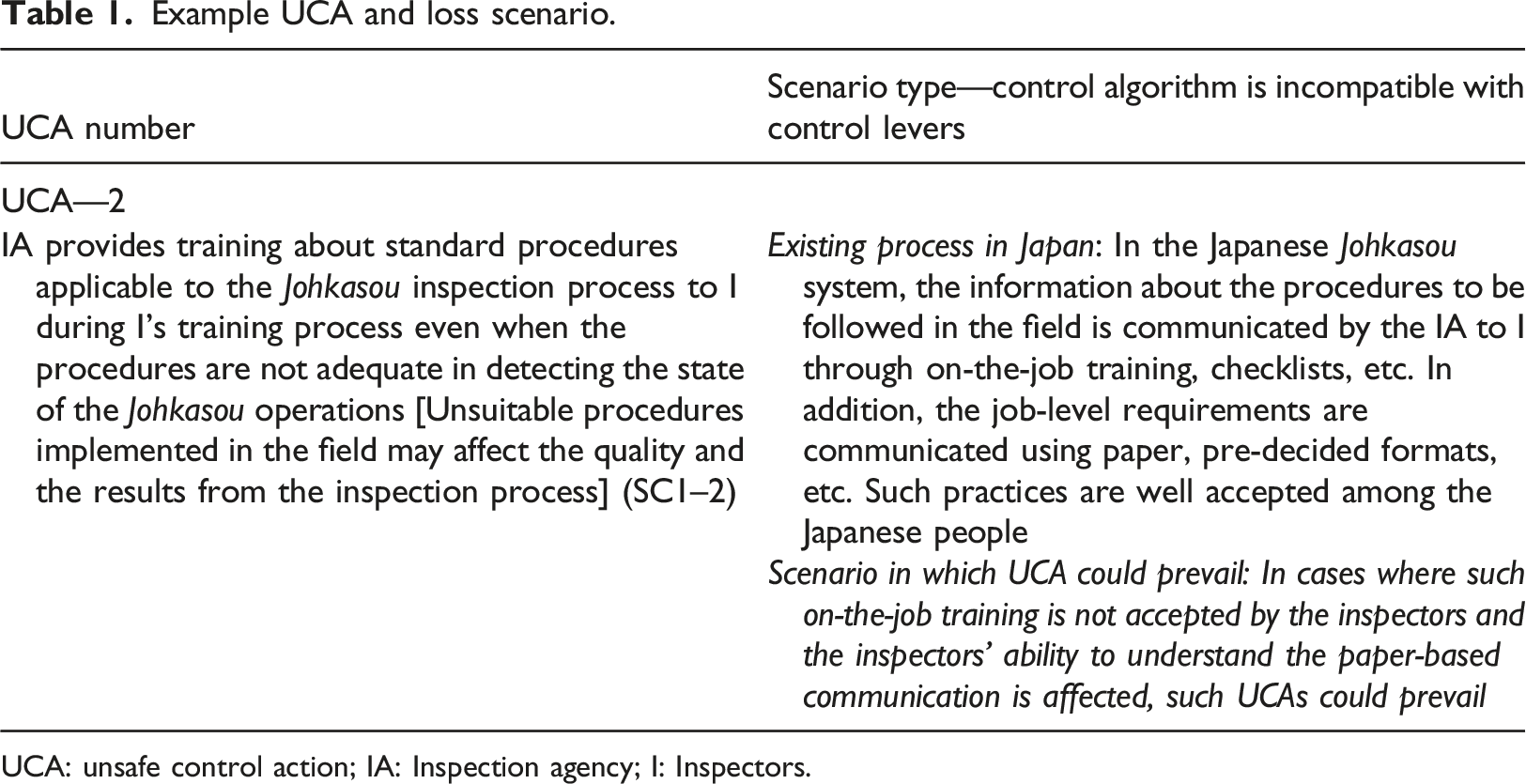
UCA: unsafe control action; IA: Inspection agency; I: Inspectors.
Step 4: Loss scenarios and risks
Table 1 also shows an example of how loss scenarios can be developed by combining the information related to contextual factors governing the overall system. The generic guidelines for STPA have been well developed for human and machine controllers (Leveson and Thomas, 2018). However, since IA is an organizational controller, a more suitable STPA-based approach for organizational controllers, that is, SHOW, has been used to link guidewords for developing scenarios (Stringfellow, 2010). In line with systematic guidelines developed for STPA/SHOW, loss scenarios are assumed not to be governed by the past occurrence of such scenarios. The loss scenarios are developed from a more pessimistic perspective to identify all theoretical conditions in which the system could suffer losses. An exhaustive list of 67 unique loss scenarios conceptualized by the analysts has been listed in Supplementary Tables S6–S10 in the supplementary material.
Leading indicators
Example of leading indicator development from the loss scenarios.
List of indicators developed through STPA of the inspection agency for the Japanese Johkasou.
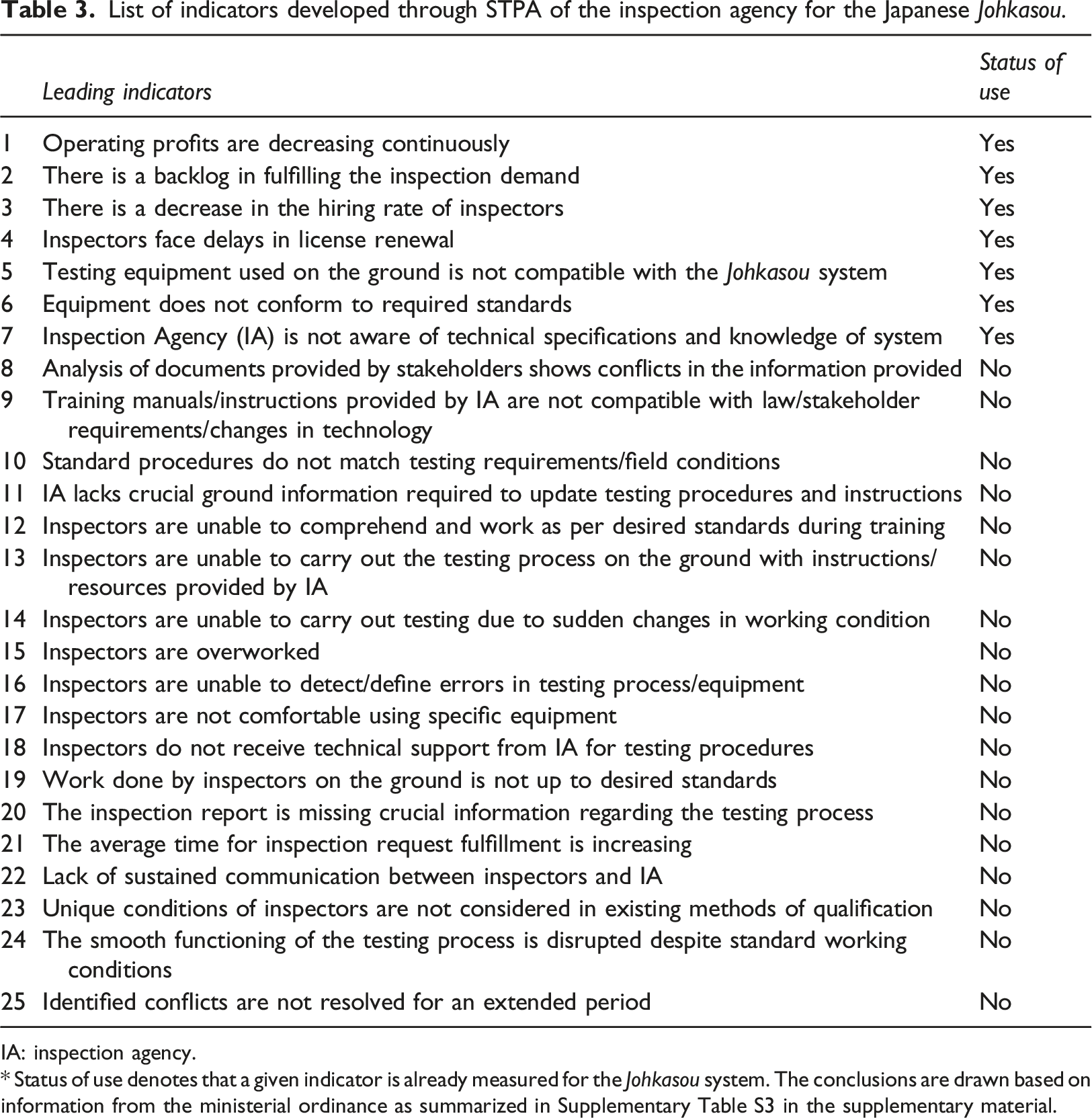
IA: inspection agency.
* Status of use denotes that a given indicator is already measured for the Johkasou system. The conclusions are drawn based on information from the ministerial ordinance as summarized in Supplementary Table S3 in the supplementary material.
On the other hand, several significant limitations of the indicators identified in the current study should be noted. Leveson (2015) discusses the possibility of several biases that could affect identifying the leading indicators (details in Supplementary Table S14). While a comprehensive method such as STPA can help overcome these biases, particularly for this study, the indicator results are potentially affected by the bias known as the incomplete search for possible causes. The bias arises not because of the methodology adopted but due to the current study’s stakeholder involvement-related limitations. For example, the current study could not obtain in-depth information about the organizational culture within IAs and their potential effect on the non-technical system elements such as inspectors. Organizational culture is a multifaceted concept that can influence the behavior of its human resources in various ways, such as a lack of reporting of real-world conditions (Bugalia et al., 2021a). Nevertheless, as described later, STPA’s capability to identify new indicators, even for a well-established system, can significantly improve the risk management and governance of the Johkasou system.
Discussion
STPA's analytical capability in fecal sludge management against “good” governance criteria
The discussion here focuses on demonstrating STPA’s effectiveness in identifying features of a “good” governance structure in a given FSM governance structure and improving it. Results from each of the two stages in the multistage STPA will be discussed to consider how improvements to the efficiency, legitimacy, and accountability of a governance structure can be facilitated.
Interpreting the full safety control structure: Governance efficiency and legitimacy
As described in the section Challenges with Existing Approaches for Analyzing FSM Governance Structures, a high degree of centralized control and analytically driven decision-making are the features of a governance structure that can enable the efficiency and legitimacy of a system. The full SCS for the Johkasou system can help identify several essential features related to the efficiency of the governance structure. First, the full SCS can reveal the presence of strong centralized decision-making in the Johkasou system. For example, coordination between the installation and operation phases occurs at the highest level of the SCS, that is, between the MLIT and the MoE. Compared to the generic coordination shown in Figure 1(b), the coordination observed here indicates a substantial degree of centralized control in the Johkasou. Both ministries are individually consolidating the experiences based on feedback received from various system components below them. Such coordination is necessary to ensure that systems reflect the changing socioeconomic environment and evolve accordingly. Centralized decision-making is also visible in the performance-related feedback on Johkasou operations brought to the notice of the Governor’s office through IAs. Coordination with Johkasou operators and desludging businesses regarding the current state of Johkasou operations is not left at the hands of the IA, as became the case with a water utility in Canada, which led to significant public health accidents (Leveson et al., 2003).
In addition to elaborating the features of centralized decision-making, the full SCS also reveals a hierarchy of functional goals in the Johkasou system. A highly centralized system could mean inefficient decision-making if the national ministries are not aligned with FSM issues at the local level. Sluggish information coordination concentrated on a central actor can also affect the overall efficiency of the FSM program. However, as the information on the arrows provided in the full SCS reveals, the highest priority concerns from the environmental and public health perspectives receive attention at the national ministry level. On the other hand, specific issues surrounding the various entities such as the Johkasou operators, desludging companies, and inspection agencies are managed by the Governor’s office. The citizen-level concerns and behaviors are then addressed by the municipal government offices, which are better situated to understand specific issues faced by citizens, thereby increasing the efficiency of the FSM. For the system, the findings suggest that SCS should be structured so that safety-related decision-making is centered within an influential entity that can work independently of the other functional goals possibly interfering with safety, such as business sustainability and quality control (Leveson, 2011).
Additionally, a comparison of the full SCS for Johkasou with the generic SCS (see Figure 1(a)) reveals that in the Johkasou system, quality control-related concerns for each relevant constraint have been addressed through centralized control across each of the different life stages, such as Johkasou manufacturing, installation, and operation. For many FSM systems worldwide, deregulation-based governance systems are becoming commonplace to promote innovation and competition in the industry, especially for upstream functions such as manufacturing. The generic full SCS, as shown in Figure 1(b), also reflects a similar trend observed across different sociotechnical systems. Such a market-driven approach could reduce the work burden of the regulator but may also result in substandard products being adopted and inefficient management of the effluent quality through FSM (Bugalia et al., 2020b). However, this does not appear to be the case in the current Johkasou system in Japan. For example, this case reveals how the MLIT sets clear performance-based standards for the Johkasou systems. According to the performance evaluation system for Johkasou, precise characteristics of wastewater flowing into Johkasou (such as pollutant load, inflow pattern with the time of day), and desired effluent quality parameters have been described. The Johkasou manufacturers can then propose developing new Johkasou designs as long as they can meet the effluent parameters under specified inflow characteristics (Flamand and Kumokawa, 2019). Such centralized control of public and environmental benefits across different life stages is deemed one of the essential features for Japan’s ability to ensure over 50 years of efficient and sustainable FSM services (Hashimoto, 2021). In this way, the full SCS can help researchers analyze the governance efficiency of FSM by explicitly tracing various features of centralized decision-making.
Relying on centralized decision-making based on the systematic analytical process was deemed essential for improving the legitimacy of public governance processes (Brunet and Aubry, 2016). The ability of the full SCS to identify features of centralized decision-making suggests that a full SCS can thus enhance the legitimacy of the governance structure through enhanced efficiency (see the section Challenges with Existing Approaches for Analyzing FSM Governance Structures).
Interpreting the full safety control structure: Governance accountability
The full SCS helps visualize one-to-one, one-to-many, and many-to-one relationships between various controllers and controlled processes that have implications for improving the system’s accountability (Leveson, 2011). For example, many controllers providing control to one controlled process may lead to duplicity in the reporting lines for organizations, affecting the overall information coordination and accountability in the SCS (Leveson and Thomas, 2018). As discussed in the previous section, information coordination from many controlled processes concentrated on a central actor can also affect the overall efficiency of the SCS.
A large proportion of the control-feedback structures present in the Johkasou SCS are one-to-one type relationships, demonstrating the transparent distribution of roles and responsibilities of each stakeholder. Agents acting as a controlled process in such a governance structure are expected to report to only one controller, potentially avoiding confusion caused by parallel reporting lines in governance structures (Leveson and Thomas, 2018). In addition, no single controller is responsible for providing different types of control actions, thereby avoiding contradictions and confusion among various functional goals. For example, while the MoE is responsible for setting up suitable standards, the prefectural or municipal government execution bodies ensure compliance with the standards. In conjunction with legal provisions that support the inspections conducted by the IA, the transparent distribution of roles and responsibilities within Johkasou contributes to strengthened legal accountability throughout the system (Hashimoto, 2021). Therefore, a simplified full-SCS that illustrates the number of control-feedback loops between system components and the information being exchanged through them can reveal potential accountability improvements for a given governance structure.
Inspection agency analysis: Efficiency and legitimacy
As discussed previously, the IA’s position within the governance structure reveals efficiency characteristics through centralized decision-making features, such as the Governor’s office possessing concentrated monitoring capability over the IAs functions. The efficient functioning of this centralized structure can be examined further through the in-depth STPA of the IA. The STPA literature dealing with the loss scenarios and leading indicators also guides risk management processes in a sociotechnical system based on centralized decision-making principles. The assumption-based leading indicator program of STPA emphasizes a top-down approach, where high-level controllers in the SCS are expected to identify the indicators, periodically monitor indicators, and take necessary corrective actions (Leveson, 2015). Such centralized risk management based on indicators is also expected to bring efficiency to the governance structure. For the current study, the indicators thus developed from the STPA help identify additional information about the functioning of IAs that the Governor’s office should monitor to ascertain its performance and prepare proactive actions (see Table 3).
The simultaneous interpretation of various contextual factors with relevant STPA and systems thinking literature (Leveson, 2015) enables the generation of specific lessons for the legitimacy of the governance structure. For example, one of the standard approaches for risk management is to focus on risk events or hazards that have occurred frequently in the past. The Johkasou system itself has evolved based on risk events from the past (Flamand and Kumokawa, 2019). This approach leads to the monitoring of only a handful of indicators, and less frequent risks gradually become marginalized from monitoring activities (Leveson, 2015). Under such a risk management paradigm, the governance structure’s legitimacy could be compromised as the system’s infrequently occurring risks are increasingly neglected. Alternatively, the STPA shows that changing contextual factors can reveal risks that have not yet been realized in the past. STPA, thus, recommends a comprehensive risk assessment, and the rigorous analytical approach warranted by STPA can remove ambiguity and biases in identifying prominent risk factors (see the section Leading Indicators). Prioritization criteria can be developed that consider the possibility of whether a risk is likely to appear in the system’s useful life. For such prioritization criteria, risks receiving less priority could receive less frequent monitoring while not being completely neglected, which would address the systemic shortcomings of conventional risk management approaches (Leveson, 2015). In such a manner, STPA results could set the foundations for stakeholder coordination or risk monitoring based on a rigorous analytical process and allow the stakeholders to make an informed decision about the desired level of legitimacy from the governance structure.
Inspection agency analysis: Accountability
The leading indicators developed through the in-depth STPA of the IA provide further guidelines on how transparency and information coordination between stakeholders could be improved based on a systematic process to ensure a sustainable FSM. The rigor warranted by the STPA in context-driven scenario development and the discovery of additional indicators can also help develop confidence in increasing or establishing coordination efforts between stakeholders for newly identified indicators (Leveson, 2011). Such process-driven information flows can be free of political motivations and can help improve overall accountability in the system (Brunet and Aubry, 2016). However, it is important to note that political processes, organizational biases, and psychological biases are difficult to eliminate from any organizational process, and STPA findings also face this challenge (Leveson, 2015). For example, while the STPA could reveal many indicators for the Johkasou system, a decision to monitor these indicators would be dependent on the prioritization and selection process adopted by the stakeholders involved. Hence, practical constraints and biases can still affect efforts to develop prioritization criteria for the indicators, although, as described later, the STPA-based indicator approach does provide guidelines on prioritization to minimize various biases.
The discussions presented here on the full SCS and the IA’s functions extend the STPA literature by illustrating the effectiveness of STPA in systematically generating suggestions to improve a given FSM governance structure. STPA has been shown to reveal potential areas for improvement in all three objectives of a governance structure, that is, efficiency, accountability, and legitimacy. No previous studies have attempted to establish the capability of STPA against robust and independent criteria to define objectives of a “good” governance structure for the public and specifically for FSM projects (Patriarca et al., 2022; Zhang et al., 2021).
STPA's value added for fecal sludge management practice
Fecal sludge management improvement lessons for Japan
A comparison of the indicators identified through STPA and indicators already measured in the Johkasou system is summarized in Table 3. The results demonstrate that the STPA results can be coherent with existing information coordination requirements prevalent in the Johkasou system. For example, for an IA to approve or renew its license, the prospective agency should prove its capabilities to manage the anticipated inspection services. Capabilities are assessed on parameters including the availability of necessary equipment to conduct inspections and necessary tests; the adequacy of the number of inspectors; operating profitability; and delays in inspection processes (Ministry of Environment, 2012) (1–7 in Table 3). Moreover, the comprehensive STPA-based leading indicator identification approach adopted here enables the identification of several unique indicators for the Johkasou system (8–25 in Table 3).
The in-depth STPA for the IA in Johkasou and its associated novel leading indicators have implications for the existing risk management practices in the Japanese FSM system. According to the original design of the Johkasou governance structure, the macro-level indicators for the IA, such as the overall financial performance, status of equipment, and status of inspectors, were deemed sufficient. However, the micro-level potential indicators identified in the study emphasize the necessity of suitably monitoring the differences between approved procedures, equipment, and qualifications and those implemented in the field. New hazards, such as the possibility of conflicting procedures because of multiple agencies involved in affecting procedures or evolving technology over the years, have been identified. Under such circumstances, indicators related to checking the compatibility of the existing procedures with the ground realities have been identified (see example indicators 8, 9, and 10 in Table 3).
Furthermore, there have been significant improvements in the types, size, and technologies available for the Johkasou system over the years (Flamand and Kumokawa, 2019). However, the indicators currently being used in the Johkasou system do not reflect the degree of change management implemented across different IAs (see Table 3). In many parts of Japan, the impact of the aging and declining population facing the Johkasou system has been more severe than the projections made when designing the systems (Endo and Koga, 2021). Under such a changing operating environment, many pressures may have been on the non-technical controls of the system. For example, the inspectors may face a severe workload; they may have been aging, affecting productivity and efficiency. Further, the resources provided to inspectors by the IA for executing their control responsibilities may have been restricted. All these factors may affect the effectiveness of the non-technical control elements of the system. Leading indicators corresponding to these elements have been identified in the current study (see 11–20 in Table 3). Hence, STPA results can also guide Japanese policymakers to improve FSM management beyond the currently utilized macro-indicators. Such findings highlight the necessity of systematic approaches such as STPA to identify systemic issues and enhance monitoring activities within FSM inspection processes.
In addition, risks and corresponding indicators in the current study have been identified consistently with the pessimistic theoretical stance provided by STPA, which does not consider the likelihood of risks resulting in losses (Leveson, 2015). Hence, the current study does not propose any process for assigning priority and selecting risks and indicators based on their likelihood. Instead, the study recommends relying on an alternative concept termed “vulnerability,” which refers to the assessment that an underlying assumptions indicator could plausibly (rather than its probability) fail during the system’s lifetime (Leveson, 2015). Accordingly, indicators based on assumptions that are not deemed vulnerable by stakeholders can be omitted from the final selection. For the remaining vulnerable indicators, stakeholders can consult with one another to decide when and how often the assumptions should be checked, rather than omitting certain risks and indicators from being monitored altogether.
However, the study also acknowledges the lack of strong practical support for its theoretical findings. Colloquial discussions with Johkasou stakeholders also revealed a tendency of high confidence in the effectiveness of the current governance structure of the Japanese Johkasou system. Therefore, more robust regulation and monitoring of micro-issues for the IA did not strongly resonate with the stakeholders. For example, during one of the informal discussions, one stakeholder had revealed the sincerity among the Japanese Johkasou inspectors concerning their work and therefore negated the need to monitor their work closely. Stakeholder disapproval does not necessarily invalidate the findings of this study, as an STPA can identify the unexpected scenarios less well known to the organization managing these complex systems. Nevertheless, 43% coverage for the inspection process is alarmingly low for the Johkasou system (Hashimoto, 2021). Under such circumstances, future work could leverage the current study’s findings for methodical discussions with the relevant stakeholders at all levels of the Johkasou system to develop consensus about STPA-based indicators’ relevance to improving the Johkasou system.
Governance-related lessons from Japan for other countries
The STPA results highlight specific features of the Johkasou system’s effective governance structure, such as the importance of centralized decision-making for a hierarchy of goals across different life stages and a clear division of responsibility across various actors within FSM. The Japanese experience suggests that the core standards-setting that regulate the successful operation of Johkasou should be strongly centralized at the national ministry level. In contrast, various other executive responsibilities should be managed in a decentralized manner at the prefectural or municipal level. Such features are coherent with the generic principles for FSM governance highlighted in Strande and Brdjanovic (2014) and previous work on FSM governance utilizing SNA (Narayan et al. 2020). The case studies in Narayan et al. (2020) suggest that mid-tier cities with a centralized control function (at the municipal corporation level) on FSM standards and implementation perform better than large cities with decentralized control (focused at the level of utilities). The governance structure features obtained from STPA are also consistent with prominent practitioners’ accounts on the topic, highlighting the potential for Johkasou features to address the main governance issues prevalent in FSM systems in various countries (Hashimoto 2021: 14).
However, in addition to the recommendations from previous studies, the STPA emphasizes the need to understand FSM operations and maintenance work on a micro-level. The current study emphasizes the importance of an agency such as an IA and its centralized management by actively monitoring and coordinating micro-issues such as information on conflicting procedures, differences in work as done on the ground, and work as imagined across different stakeholders (see the section Leading Indicators).
The discussion in the previous section reveals that suggestions for FSM system improvement can be identified even for a well-established FSM system through a systematic and comprehensive analytical approach such as STPA. Furthermore, STPA is versatile and can be utilized for risk analysis and governance structure improvement for any existing or proposed FSM system. For existing systems facing governance issues, a retrospective analysis can help identify areas for improvement in governance structure at all levels of the sociotechnical system. A prospective analysis for a new system design is also feasible through STPA (Leveson and Thomas, 2018), although a discussion on the relative advantages and disadvantages of the STPA approach compared to other methods is necessary to make an informed assessment about its practicality.
Advantages and disadvantages of STPA relative to other analytical approaches
This study contributes to the nascent academic literature focused on exploring systems-thinking-based approaches for analyzing governance structures by demonstrating STPA’s viability in analyzing risks and suggesting improvements for FSM governance structures. Compared to the generic 13-point governance framework prevalent in the FSM sector (Strande and Brdjanovic, 2014), the STPA systematically identifies risk factors even within the well-functioning Johkasou system in Japan (see Supplementary Tables S6–S10).
STPA also offers several advantages over SNA for governance-related analysis. For example, the lack of explicit roles and specificity on information exchanged between stakeholders in SNA provides limited learning opportunities concerning accountability within a given governance structure (Brunet, 2021; Narayan et al., 2020). At times, SNA can even misrepresent the features of a governance structure, such as the centralized structure. For example, the SNA could misrepresent the ability of a lower agent, such as a municipality, to influence communication within a decentralized FSM system due to the number of inter-agent connections. However, such a hierarchy is not representative of the functional hierarchy of the system, in which a national ministry may have decisive control over municipal stakeholders, despite the lack of prominent inter-connections with other agents in the system. With a focus on functional hierarchy, STPA can effectively represent the features related to centralization and the many-to-many nature of functional relationships among various stakeholders. STPA has also been recognized for its comprehensive ability to identify risks scenarios compared to other contemporary risk analysis approaches for various modern-day complex systems (Underwood and Waterson, 2014; Yousefi et al., 2019). A prospective analysis conducted through STPA has the potential to be cost-effective, as the comprehensive recommendations to improve the system proactively can be saved from the costly damages of accidents when they materialize (Leveson, 2015; Leveson and Thomas, 2018).
However, the STPA implementation-related experience shared by different organizations suggests that the STPA approach can suffer from its resource requirements due to the time-consuming analytical process, the requirement of skilled analysts, and its visual appeal (Kafer and Koglbauer, 2021; Leveson and Thomas, 2018). Such requirements could then prove detrimental for field implementation for the FSM sector because an STPA requires extensive input from the stakeholders involved, who may not be familiar with its aspects. In comparison, SNA has already been applied to FSM practice and is acknowledged as a quick and effective tool (Narayan et al., 2020).
One possible way forward could be to have a core team of analysts familiar with STPA and the FSM sector that leads the analysis and design of governance structures. In addition, a peripheral team could then help validate critical assumptions generated from the STPA on the ground through stakeholder participation and, in turn, help improve the governance structure through coordination with the core team. However, the validity of such approaches needs to be tested with field-scale implementation. Future work could also explore combining the two tools and assess their effect on analyzing governance structures. For example, SNA could develop a preliminary governance structure based on stakeholder participation. Then a prospective STPA could be used to strengthen further the preliminary governance structure developed through SNA.
On the other hand, STPA may lose in terms of its visual appeal when compared to SNA. In this regard, another comprehensive tool based on sound systems-thinking principles and with strong visual appeal is the functional resonance analysis method (FRAM) (Patriarca et al., 2020). Recent applications of FRAM have also shown its capability for analyzing risks in multi-organization settings (Bugalia et al., 2021b). New studies have also explored the synergy between SNA and FRAM (Cardoso Júnior, 2021), and hence, future work could also explore such tools for the analysis of governance structures.
Limitations of the study and future work
Despite the efforts of this study to triangulate information from as many primary and secondary sources as possible, the current study is limited in bringing a richer understanding of the ground realities of the Johkasou inspection-related work. Future work should focus on assimilating practitioner interviews and ethnographic studies to identify the risks and indicators comprehensively. The concept of governance is a complex subject. Future studies should develop a specific framework for defining governance and evaluating various existing methodologies such as STPA and SNA against objective criteria. Another critical limitation of STPA relates to its reliance on textual rather than visual information. Such a limitation can partially be compensated for by combining the findings of the STPA with other methods rooted in systems thinking-based principles such as systems dynamics. In this regard, future works could also focus on leveraging tools such as SNA in combination with STPA for developing visuals demonstrating gaps in information, power hierarchy, and other dynamic relationships.
Conclusions
The current study demonstrates the capability of STPA for analyzing and improving FSM governance structures. Through such a systematic approach to identifying the risk factors and indicators specific to FSM, the current study contributes to the scarce literature on FSM governance, which has conventionally relied on macro-level, generic theoretical frameworks. The in-depth STPA for the IA in Johkasou and its associated novel leading indicators have implications for the existing risk management practices of the Japanese FSM system. The results can guide Japanese policymakers to improve FSM management beyond the currently utilized macro-indicators. These findings highlight the need for systematic approaches such as STPA to identify systemic issues and enhance monitoring activities within FSM inspection processes.
The features of the Johkasou governance structure revealed through STPA, such as the importance of centralized decision-making for a hierarchy of goals across different life stages and a clear division of responsibility across various actors within FSM, are also consistent with the necessary steps espoused by prominent practitioners and academics to address FSM system governance issues across various countries (Hashimoto, 2021). The systematic analytical process of STPA adopted for examining the role of inspection agencies highlights that even for mature and well-established systems, process-specific indicators can be identified at the micro-level, contributing to enhanced accountability and legitimacy through governance structures.
The study also finds that STPA can help identify several governance-related features representing “good” governance criteria. The STPA results help illustrate the features of centralized decision-making and hierarchy among various functional goals that emphasize three essential features of good governance structures for FSM, that is, efficiency, accountability, and legitimacy. No previous studies have attempted to establish the capability of STPA against robust and independent criteria defining the objectives of a “good” governance structure for the public. Furthermore, this study represents the first application of STPA to analyze FSM systems from a governance perspective.
However, in the absence of a participatory stakeholder approach, the current study is limited in bringing a richer understanding of the ground realities of the Johkasou inspection-related work. Further, only limited attention has been given to many possible aspects of governance in the current study. Future work could develop robust evaluation criteria for governance structures specific to FSM and use the criteria to test various analytical tools relying on systems thinking principles. Finally, the validity of the STPA approaches needs to be tested with field-scale implementation.
Supplemental Material
sj-pdf-1-epb-10.1177_23998083221075639 - Supplemental material for A systems theoretic process analysis (STPA) approach for analyzing the governance structure of fecal sludge management in Japan
Supplemental material, sj-pdf-1-epb-10.1177_23998083221075639 for A systems theoretic process analysis (STPA) approach for analyzing the governance structure of fecal sludge management in Japan by Nikhil Bugalia, Surjyatapa R Choudhury, Yu Maemura, K E Seetharam in Environment and Planning B: Urban Analytics and City Science
Footnotes
Acknowledgments
The authors would like to acknowledge the support received from Professor Kazumasa Ozawa of The University of Tokyo, a scholarship by the Ministry of Education, Culture, Sports, Science, and Technology of the Government of Japan, and a language editing support provided by the Asian Development Bank Institute that made this research possible.
Declaration of conflicting interests
The author(s) declared no potential conflicts of interest with respect to the research, authorship, and/or publication of this article.
Funding
The author(s) received no financial support for the research, authorship, and/or publication of this article.

Supplemental material
Supplemental material for this article is available online.
Notes
Author Biographies
References
Supplementary Material
Please find the following supplemental material available below.
For Open Access articles published under a Creative Commons License, all supplemental material carries the same license as the article it is associated with.
For non-Open Access articles published, all supplemental material carries a non-exclusive license, and permission requests for re-use of supplemental material or any part of supplemental material shall be sent directly to the copyright owner as specified in the copyright notice associated with the article.
