




Abstract
Existing knowledge regarding the role of household adaptation in pursuing urban resilience, especially in developing countries, is limited. Upon this rationale, the study provides in-depth empirical evidence on how resilience is framed, pursued, and realized from the perspective of low-income households in the Philippines. The study adopted a mixed-methods strategy to expound on the dynamics that affect resilience-building measures at the household level. The quantitative tools were chosen to provide empirical evidence on how residents in selected areas understand resilience and the actions undertaken to realize desired outcomes. The findings were further examined through analysis of data gathered from key informant interviews, relevant local policies, and regulations. Key findings show that autonomous household responses are intended, albeit intuitively, as resilience-building measures from the need to address risks immediately. These measures are undertaken independently and can provide direct benefits to the household. However, they may become counterproductive when analyzed from the point of view of collective resilience. The key to addressing this is institutional interventions that allow flexible modes of resilience that could enable households to pursue better resilience-building measures. Autonomous household responses, transitioning to a more collective level approach, challenge the distribution of decision-making processes and could result in framing appropriate urban resilience policies, strategies, and measures.
Keywords
Introduction
Resilience is the ability to effectively resist or adapt, and efficiently recover from perturbations. Resilience, as a concept and an approach to urban planning, is a key policy response to vague and ever dynamic, often unpredictable, future hazards and risks (Coaffee et al., 2018; Matyas and Pelling, 2015; Meerow et al., 2016). Unfortunately, it remains largely a theoretical concept with recent evidence worldwide concluding that operationalization remains a challenge (Meerow et al., 2016; Murphy et al., 2018).
The implementation gap compels stakeholders to independently pursue community resilience. It must be noted that community resilience consists of varying responses, and is affected by an integrated and interdependent place-specific set of contextual conditions—multiplicities of levels, actors and institutions, vertical and horizontal interactions, and heuristic connections (Berkes and Ross, 2016; Pelling and Manuel-Navarrete, 2011; see also Nunan, 2018).
The literature highlights co-creation with diverse actors to promote collective action in building urban resilience effectively. Among key actors, resilience from the household perspective merits special interest because existing knowledge on what goes in the process of resilience-building at household-scale, especially in developing countries, is sparse (Elrick-Barr et al., 2016).
Philippines is an archipelagic country composed of three major island groups—Luzon, the Visayas, and Mindanao. Mindanao used to be “typhoon free.” However, the weather pattern identified during 1990–2015 pointed out that typhoons were occurring every 1.32 years (Rodolfo et al., 2016). The impact of these now regular events was exacerbated by urbanization-related problems, such as the increase of informal sectors, improper waste management, deterioration of natural resources, flooding, and increasing carbon emissions (Espinueva et al., 2012).
A pivotal point occurred in 2011, when the city of Cagayan de Oro (CDO), in the island of Mindanao, was affected by Tropical Storm Washi, which poured twice the average amount of Northern Mindanao’s monthly rainfall within 6 hours, leaving unprecedented damage. It was the Philippines’ most deadly tropical storm and the second most deadly tropical cyclone worldwide in 2011. The disaster was a result of the interplay among urbanization-related factors relating to the environment, climate, and socio-economics (Carrasco et al., 2016a; Espinueva et al., 2012; Franta et al., 2016; Rasquinho et al., 2013; Yonson, 2017).
Based on the city’s climate disaster risk assessment, typhoons and flooding are the most significant hazard. There is a distinction between typhoons and flooding because urban flooding could occur even without any typhoon. The extent of damage caused by Washi affected almost half of the “barangays,” the smallest political units within the city level. Most areas severely destroyed by Washi were declared as no build zones, leaving many of its former inhabitants homeless.
Approximately 85% of affected households come from informal settlements who knew their location’s high-risk or have adapted to recurring flooding (Carrasco et al., 2016a). Most work as minimum wage earners or informal laborers in the services and construction sector in the downtown area before Washi occurred (Escalante et al., 2012). Implicitly, a great majority of affected families are already vulnerable since low-income families have minimal capacity to adapt and respond due to having lesser resources (Yonson, 2017) and insecure housing arrangements.
The positive economic outlook enticed people to migrate to CDO in hopes of obtaining better opportunities. The burgeoning population drove people to live in high-risk areas including floodplains, former mangrove areas, dried-up riverbeds, and sandbars. Inadvertent concretization and poor maintenance of critical infrastructures restrained soil infiltration capacity. Saturation of soil infiltration capacity compounded river flooding, triggering a flash flood that gushed huge amounts of water that carried logs, uprooted vegetation and other debris downstream, thereby washing out communities and properties along the CDO river. The natural flow of water was either obstructed by clogged built drainages or prevented by other cemented structures. Furthermore, unchecked anthropogenic activities in the upstream led to erosion and sedimentation in the rivers and subsequently hampered the river’s water storage capacity. In addition, the long history of Mindanao not experiencing extreme weather or major flood disasters had created a false sense of security. People had become complacent despite notices about an incoming tropical storm. Lastly, the city lacked a flood warning system even in communities that are frequently flooded (RDC-Northern Mindanao, 2012).
The objective of this study resonates from existing knowledge gaps and exposes how resilience is perceived from the household perspective: it transitions from idea to action, to the outputs and outcomes that may match collective—public policy—goals. Ultimately, the findings contribute to a better understanding of the context of low-income households in the complex processes of pursuing urban resilience objectives.
In this context, the study attempts to substantiate autonomous household response as direct measures by households from the necessity to address hazards and risks. These are often conjectured from views that government capacity to manage threats and risks are late and inefficient (Mycoo, 2014). Thus, autonomous household response refers to ability of households to prevent, minimize, accommodate, or recover from the impacts of a hazard individually, with little or no consideration to formal land-use planning, or public subsidies. As a result, households and communities formulate strategies that build neighborhood resilience and support individual action (Usdin, 2014). Regrettably, these could become imprudent and detrimental. Furthermore, independent responses occurring outside formal policy channels are more prevalent among the poor in low-income countries (Murphy et al., 2018).
Research design and method
Understanding the processes by which a wide array of stakeholders ideate and translate resilience into tangible measures is critical in addressing the implementation gap. We opted to contextualize resilience as a fundamental characteristic rather than specific to a particular hazard, as broader framing provides attention to the ripple effect that may induce possible trade-offs across multiple scales, which is most needed in urban planning policy analyses (Chelleri et al., 2015; Coaffee et al., 2018).
The complex processes of community resilience-building are examined by analyzing how household actions engage the city’s land-use plan’s resilience targets. From this perspective, the actions actively undertaken by the households promote a “dialogue” that exposes the interplay between them and land-use plan objectives, the extent of its relationship, and interaction. In this sense, Figure 1 shows the conceptualization of autonomous household responses: on one side, there is the government in charge of land-use plan objectives that are oriented to create collective resilience. On the other, households undertake self-governed measures to manage risk impact and are affected by socioeconomic and political contextual conditions. These two factors affect resilience outcomes of the city. Yet, while the goal is the same, the starting points are distinct, and so are the interpretations of resilience and the ranking of priorities to achieve them. Therefore, autonomous household response is framed as the interplay between the context of households relating to notions of urban resilience and actual household-initiated interventions to become more resilient (see Mycoo, 2014).
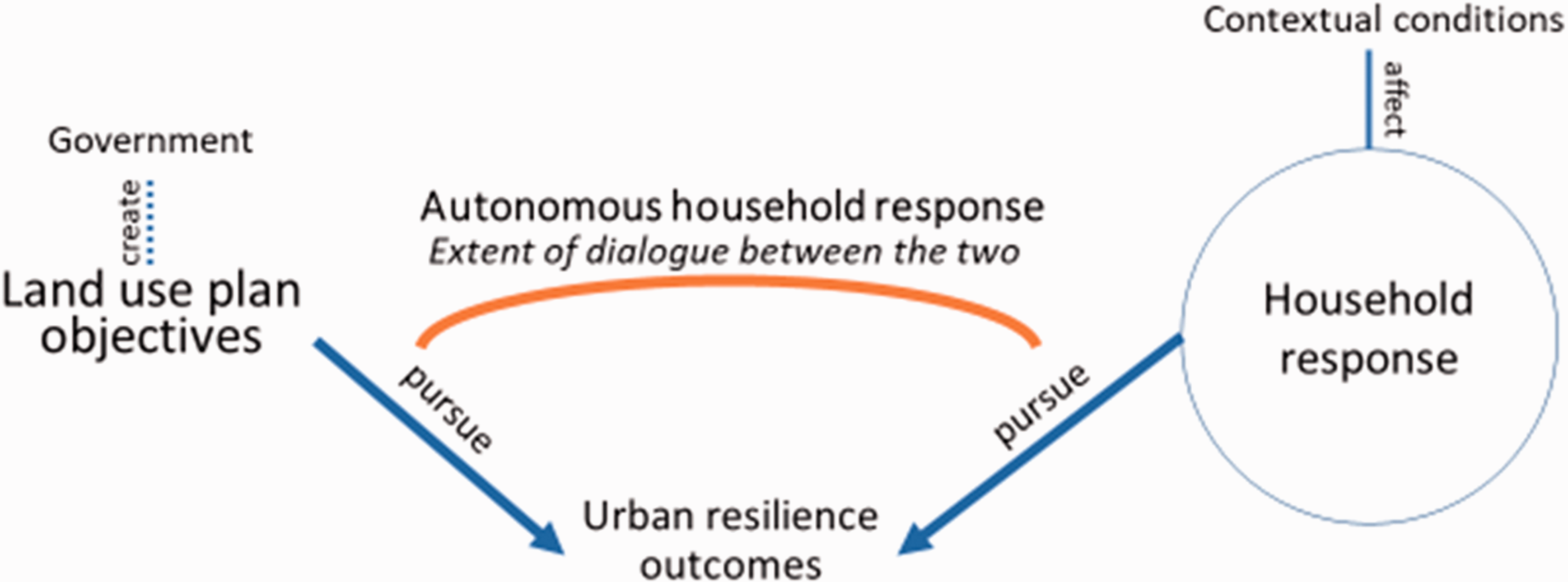
Conceptualization of autonomous household response.
The study relied on a broad set of tools, approaching the topic from a mixed-methods perspective, with a close symbiosis between quantitative and qualitative analysis. The quantitative tools were chosen to provide empirical evidence on how residents understand resilience and the actions undertaken to adapt their own property in selected areas. These findings were further analyzed considering the relevant local policies and regulations, through policy analysis and interviews with governmental officials.
Thus, there are three main pillars: (i) the desk research, composed of a literature review, as well as of policy and regulations; (ii) the surveys and interviews with households; and (iii) the in-depth semi-structured interviews with other stakeholders, including governmental officials and civil society organizations (CSOs).
In the first stage of the research, through the literature review and from informative interviews with governmental officers, three areas in CDO City were identified as the most appropriate cases (Figure 2).
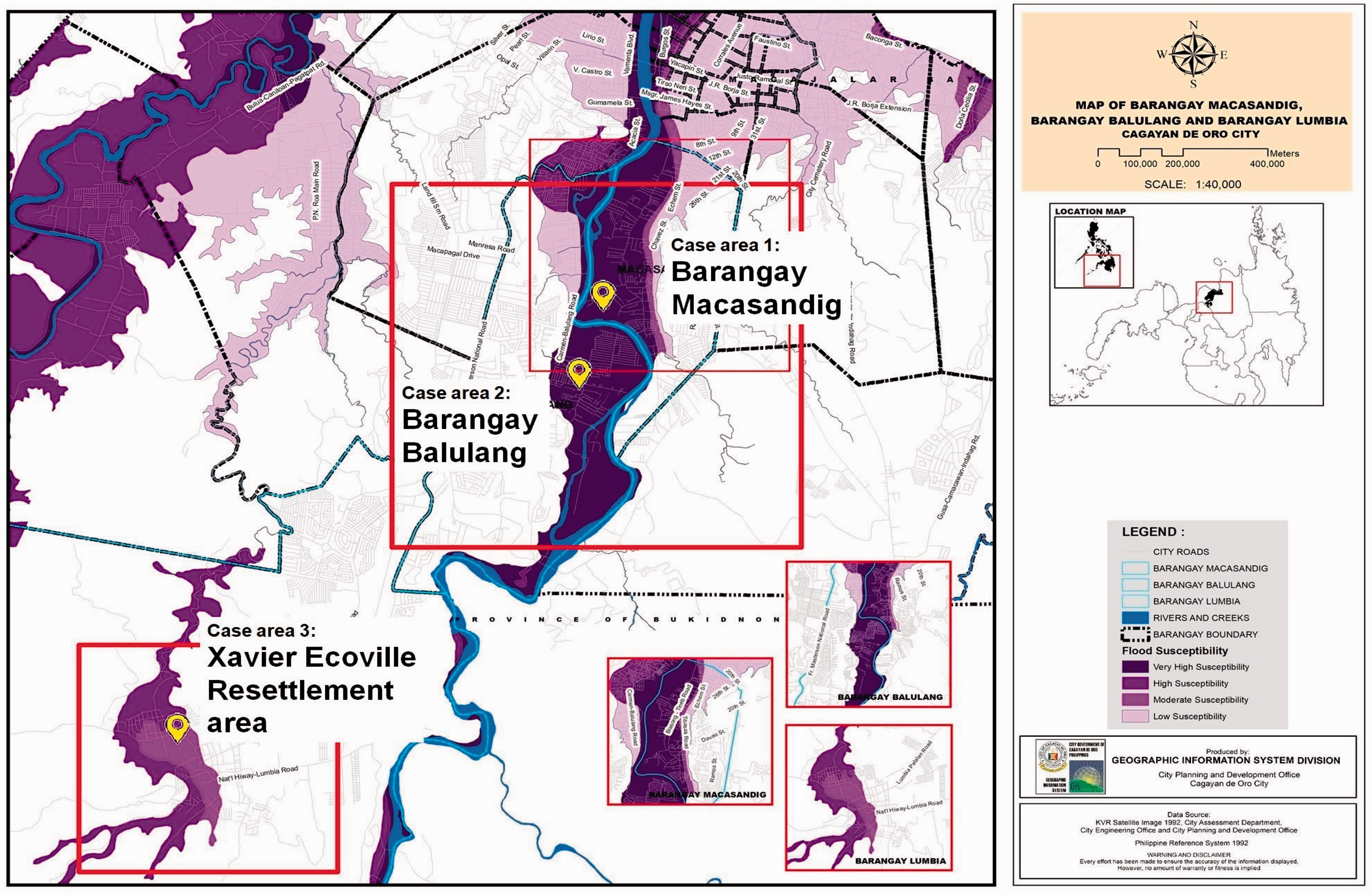
Selected case areas vis-a-vis flood prone areas. Source of base map: CDO City Government.
Macasandig is considered the ground zero for Washi. Sitio Cala-cala was the location of a socialized housing project that encouraged people to reside in risky areas. It was declared as a no-build zone, and it prohibited any structure except for the lone surviving house that serves as a reminder of the tragedy.
On the other side of the riverbank is Balulang, our second area study. Also severely damaged, the area is known by hosting a number of subdivisions or villages, with most households possessing formal property tenure. Both Balulang and Macasandig are on the riverbanks of low-lying areas of the CDO River.
Lastly, the Xavier Ecoville resettlement project is the first university-led resettlement in the world. Households undergo a rigorous screening process before they are given permanent housing units to ensure that beneficiaries are those that were heavily affected by Washi. Total permanent houses given are 568. Many of the household respondents from Ecoville came from Macasandig.
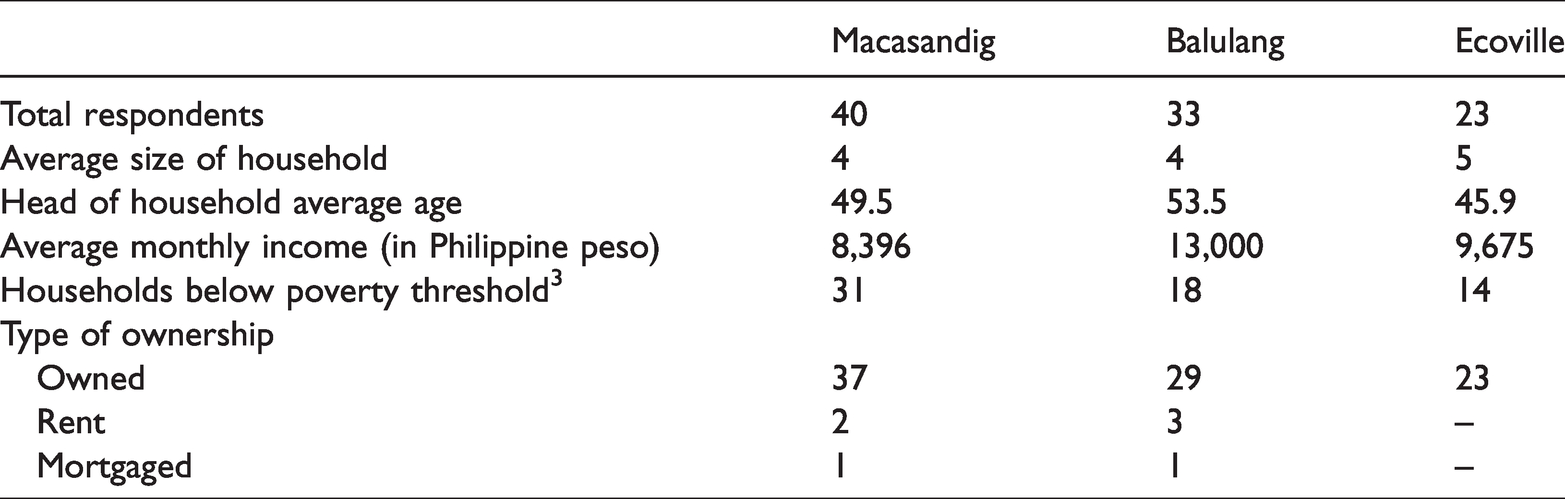
The cluster sampling resulted in 96 low-income household respondents from riverbank easements or areas with the highest level of flood water (Table 1).
Profile of household respondents.
In the empirical research phase, surveys and face-to-face interviews enabled direct observation of actual resilience-building measures in real-life settings. Face-to-face structured interviews extracted how households comprehend urban resilience, what measures were taken, and the extent of their level of engagement to land-use planning post-Washi. Eight household respondents were chosen based on their extent of knowledge and the uniqueness of experience for key informant interviews—three worked with Washi affected communities; three are entrepreneurs; and one each for people with disabilities, and women’s sectors.
Moreover, 11 local government officials, considered as disaster risk reduction and management (DRRM) frontline offices, and seven development workers from CSO were interviewed. CSOs tapped are umbrella organizations involved in strengthening local governance structures, managing watershed, and assisting Washi survivors.
With this research design, the literature and relevant policy review were utilized to increase reliability and validity of quantitative and qualitative analysis including triangulating results of data gathering.
Results and discussion
Resilience from a household perspective
Respondents ranked a priori objects according to flood-proofing priority. They mainly focus on protecting their assets. They prioritize measures that minimize disruption of day-to-day function and potential financial loss. At times of imminent threat, households need basic utilities to be uninterrupted in order to continuously monitor the status of flooding and other hazards until evacuation is required.
From a household standpoint, public infrastructures like streetlights, roads, and bridges need to maintain integrity and performance in face of the threat to guarantee their mobility to safer areas should flooding worsen. Furthermore, public spaces such as covered courts and schools should be available to serve as evacuation areas. In connection, households link basic government services like water, sanitation and hygiene, health services, and food provision as essential in evacuation centers.
When asked about what causes flooding, at least three in every four respondents relate increasing flooding risk to dysfunctional drainages, failure to properly manage solid waste that blocks waterways, and denuded forest in the upland that results in higher surface runoff.
The respondents’ notion of resilience supports the literature discussion that household responses principally resonate at individual needs. Furthermore, they concur with usual flooding factors identified in the literature. However, location-specific risks, and even climate change, are not commonly perceived causes of flooding.
Actual household response: Structural and nonstructural measures
Structural measures pursued by respondents are categorized into repairs and renovation. Rebuilding rooms and walls, strengthening foundations of houses, and reconstructing gates or fences are considered repairs. Meanwhile, any construction that adds or removes structures within house premises is renovation.
Two in every three respondents reported that they have done renovations. The most common measure of respondents is adding floors or raising the house (Figure 3). Another is installing a mezzanine-like structure, usually adjacent to the attic or the highest area inside the house, to be used for storing important personal effects that are not necessary during evacuation. Respondents also constructed walls outside their houses. These measures are intended to keep personal belongings inside the house from being flooded.
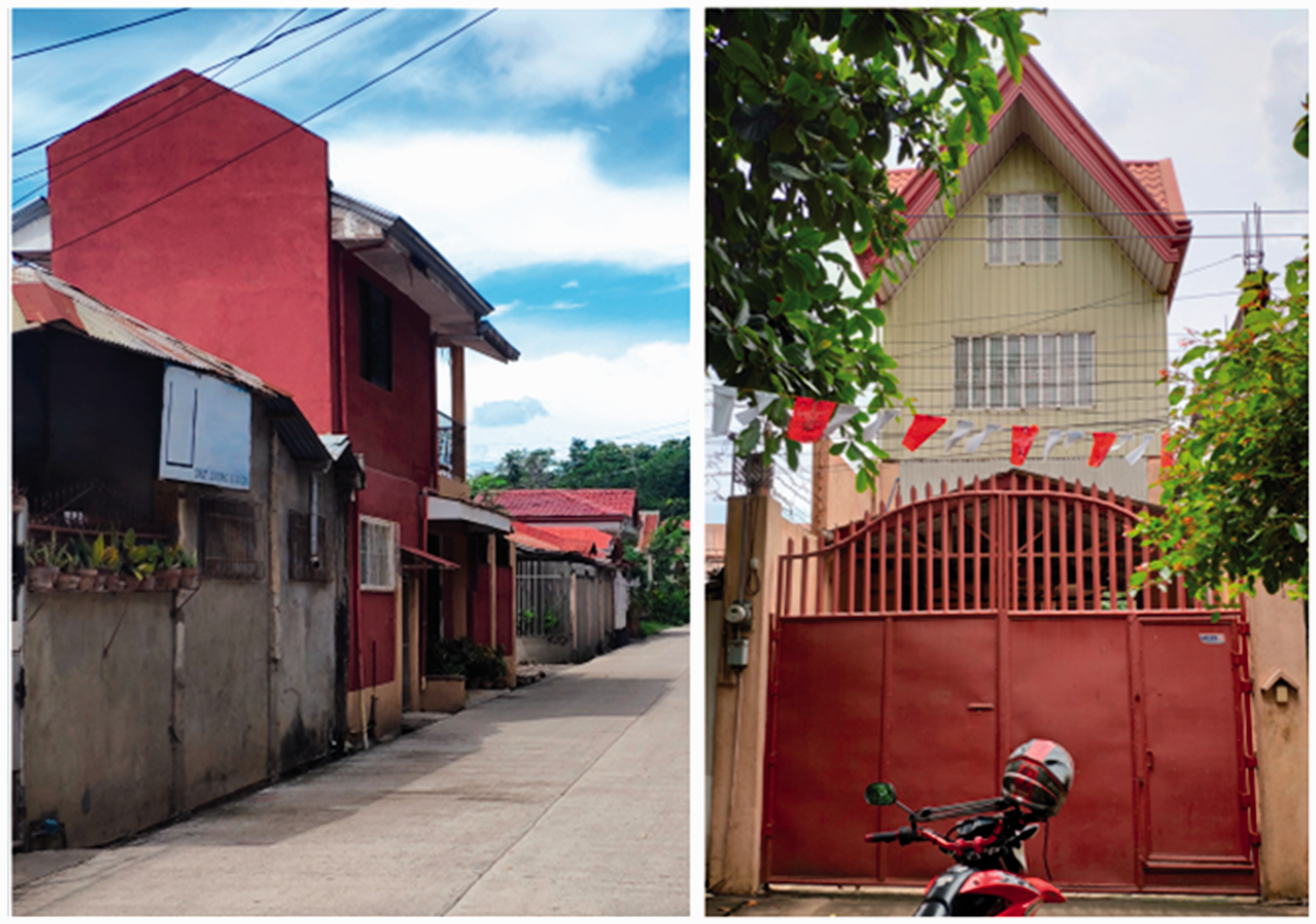
Most common structural measures involve raising houses above perceived base flood elevation. Source: First Author.
There are limited technicalities when households pursue structural measures. Households determine the elevation of these measures intuitively, relying only on recent flooding experience. Furthermore, respondents pursue structural measures without proper engineering design due to financial constraints. Notably, there are a significant number of respondents that were not able to actualize planned structural measures because of funding.
From the data gathered, households have varying views regarding upkeep of drainage and canals. Some owners treat built canals as part of their private property. They build concrete structures over it which prevents water flow. It is self-defeating and many of them have done so without any technical assistance or due regard to the original design and layout of the settlement area (Carrasco et al., 2016b). Furthermore, littering and discharging of household wastewater without treatment results in the inundation of canals. Some households think maintenance of canals is solely the obligation of the government or local authorities, while others believe it should be everyone’s responsibility. We cannot do anything because we can’t avoid floods. All you can really do is clean. The drainage part is the responsibility of the government. –Ecoville respondent We go home whenever code orange is declared. Regardless if work is suspended or not. We also have standby grab bags. Grab bags contain everything that we might need should evacuation be necessary. –Macasandig respondent
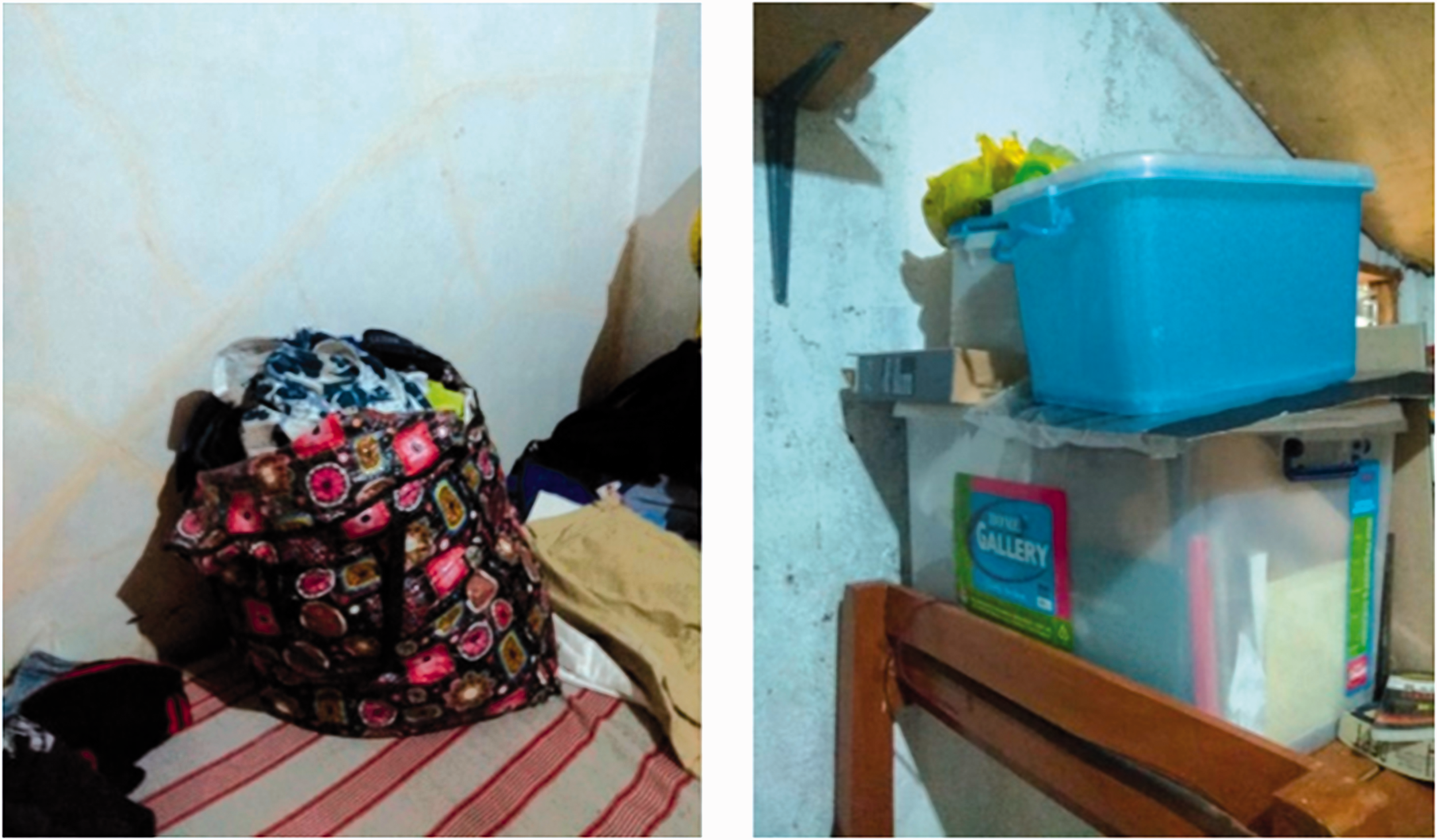
Flood-proofing techniques. Personal effects are stored in (L) plastic bags and (R) “megaboxes.” Source: First Author.
We store all our personal belongings in megaboxes. These are transparent plastic boxes or containers. It is more convenient for us to store those megaboxes in the attic whenever there is threat of flooding. Also, megaboxes protect our things from getting wet. Our house doesn’t have anything fancy, it’s too functional. I do not even put my books anymore in the shelves but in those megaboxes.
–Macasandig respondent
Another common response refers to localized environmental solutions. This includes cleaning communal spaces, de-clogging canals, proper disposal of garbage, and greening activities. Semi-structured interviews reveal that an organized community, especially those with direct support from external institutions, has a higher possibility of sustaining these activities because neighbors are encouraged to engage each other.
Source of knowledge for deciding upon resilience-building measures
Household respondents were asked to enumerate the basis for deciding which resilience-building measures to pursue (Figure 5). Primarily, respondents base their decisions on previous experience. Typical among households is being accustomed to perennial flooding. Over time, they acquire institutional memory regarding the flood path, the highest water level, and exit routes. This connects to the predicament where households pursue structural measures despite limited or no actual consideration of safety principles and little regard to impact on other households or at other scales.
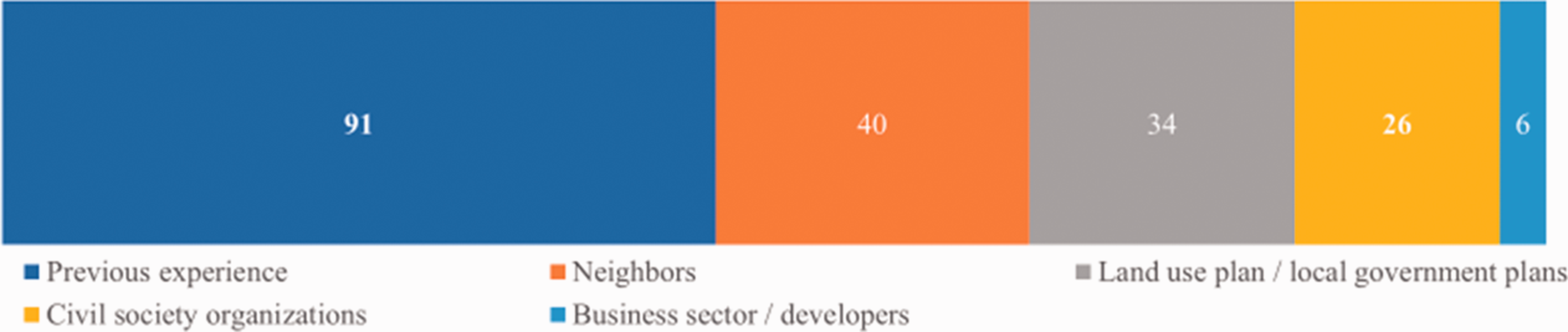
Response count regarding basis for which resilience-building measure to pursue.
Strong linkage among neighbors, availability of government assistance, and community extension of CSOs also directly affect a household’s ability to realize resilience-building measures. Accordingly, one of the challenges often mentioned is the lack of technical competency to determine the best course of action notably in pursuing structural measures. Despite limited technical knowledge, households do it anyway.
Finally, household respondents highly depend on external support for post-disaster recovery. Quick resource mobilization of the government, business sector, religious, and other donor organizations enable households to accommodate, absorb, and recover the impacts of flooding. This is evident in the responses where the majority said they were able to recover mainly because of donations or subsidies including from relatives. Only one-third of the responses indicated savings and income as a source of financing.
Resilience narratives of special interest
A 45-year old respondent, college-level, and who has been living in Barangay Macasandig since childhood, recounts that people have adapted to occasional flooding. He even cites the ability of the community to assess flood threat instinctively. However, the construction of a nearby flood-wall sometime in 2009 dramatically raised the flood water level, causing an unpredictable flooding pattern in their area. He further adds that the presence of the flood control project ushered development of the area leading to increased business establishments. As a result, flooding experience worsens because of these additional concrete structures. We do not need more developments here. We do not need more buildings or commercial spaces because this area is a natural waterway. In a couple of years’ time, we will find ourselves using boats because the waters will never subside if we continue to build more infrastructure that will not help lessen or alleviate the flooding that occurs even if it’s just a minor typhoon.– –Macasandig respondent Our priority is really just to have a place to sleep in. We have a house in the resettlement area which we use from time to time. Mostly during times when there are threats of flooding. Also, a lot of people have relatives that live in higher areas. So, when the barangay warns us of a threat of excessive flooding, we can just go to them and stay at their houses until it is safe to return. –Macasandig/Ecoville respondent
In contrast, respondents from Balulang organized the Balulang Women’s Development Council (BWDC). BWDC is a women’s cooperative whose members meet twice every month to discuss community matters and progress of their livelihood project. Consequently, they have regular meetings to allow them to discuss and resolve community matters jointly. The BWDC was a recipient of the government’s Bottom-up Budgeting (BUB) Program. BUB allowed Washi survivors and sectoral people’s organizations to formulate, secure funding, and implement alternative sources of livelihood. As a result, Washi-survivors became entrepreneurs.
Respondents from Balulang observed an increase of renters in their area who may have limited awareness regarding existing flood risks. This is a result of neighbors who transferred to uptown or safer residential areas, putting their house either up for sale or for lease at more affordable rates.
Lastly, households who have been living in high-risk areas for a long period of time have considered property as an heirloom, thereby fostering a deeper connection with the land.
Household context and land-use plan objectives
Respondents rated using a Likert-type scale, 1–3 signifying agreement and 4–6 as disagreement, eight statements that gauge the effectiveness of communication and the extent of adoption of land-use plan objectives by households. The results, shown in Figure 6, highlight that respondents disagree that they are informed of the city’s land-use plan objectives or any planning-related processes. Respondents disclosed that they have not heard of the land-use plan in at least the last five years. Furthermore, almost half of the respondents had no idea what land-use plan objectives are. Meanwhile, other responses hint toward interlinked ideas of protecting and conserving the integrity of the environment, managing disaster risks, and enhancing the livability of a specific area, including projects like socialized housing, and flood dikes. Households neither consult nor refer to land-use plans when pursuing resilience.
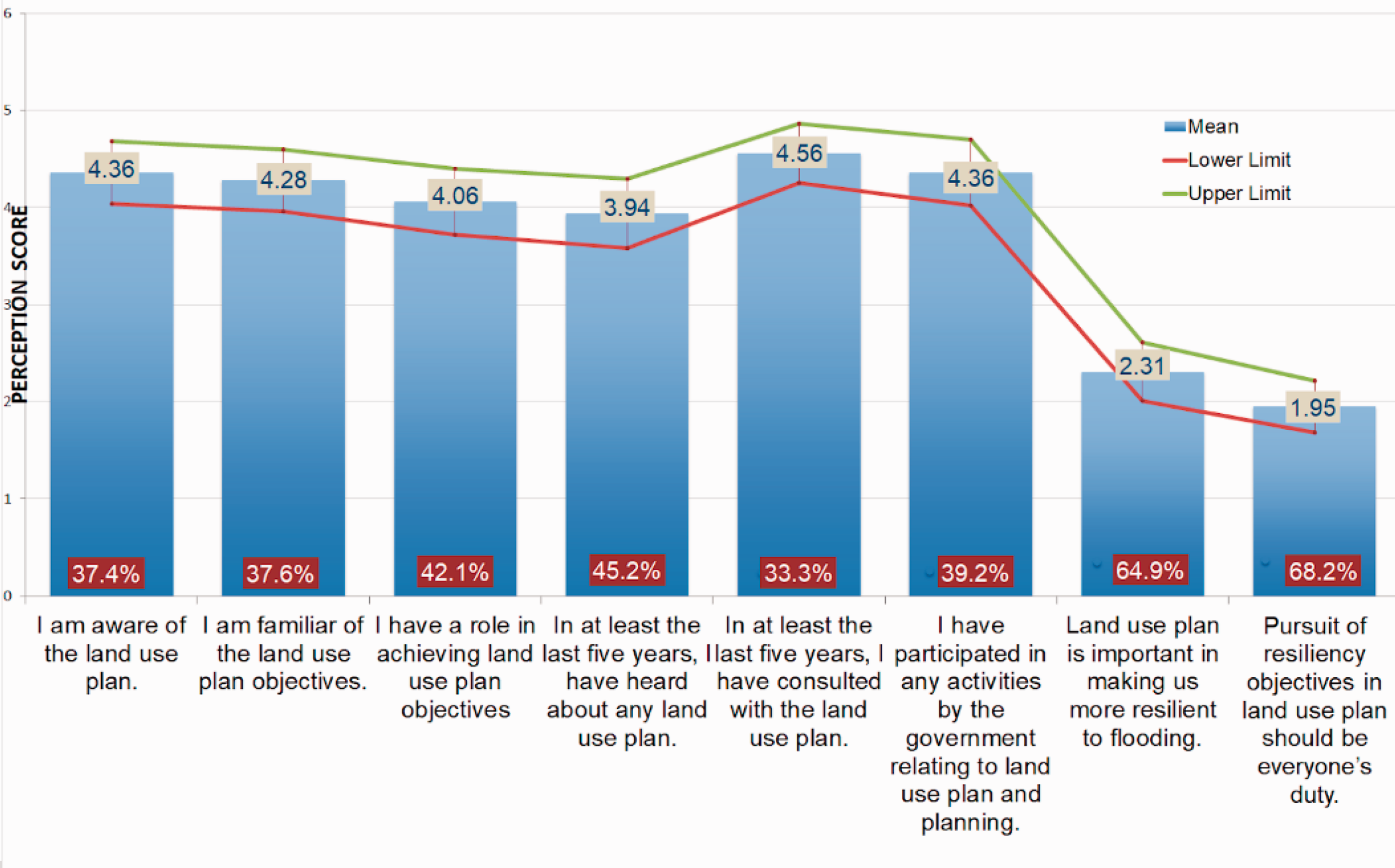
Central tendency and variability of response regarding communication and adoption of land-use plan objectives.
In comparison, the analysis of key informant interviews and policy suggest that land-use plans significantly influence the quality of household resilience measures.
Dialoguing of household measures and land use
The CDO’s main resilience objectives from its comprehensive land-use plan include relocating informal settlers to safer decent locations, enhancing local DRRM capacity, and improving watershed management. Results from a meta-analysis of the literature investigating the post-Washi scenario in CDO, and data gathered during fieldwork indicate a long-term housing solution and DRRM initiatives as land-use plan objectives, which have greatly affected the household context.
From interviews, DRRM is viewed by local authorities as the more efficient and effective measure, resource-wise, in building urban resilience. Bureaucracy delays the development of major infrastructure interventions like flood control projects, which can make public investment obsolete.
Long-term housing solution
Households that cannot financially afford to relocate signed up for the Urban Poor Emancipation Program. The program is a refinement of the previous Piso-Piso Socialized Housing Program. Piso-Piso encouraged already vulnerable households to dwell in risky areas without capacitating them to better manage inherent risks. Conversely, DRRM and climate change adaptation instruments were already available before Washi but were not necessarily utilized. For example, the local government unit had access to a hazard map from the Philippine Mines and Geosciences Bureau indicating Sitio Cala-cala in Macasandig as one of the most at risk of flooding (Franta et al., 2016).
Piso-Piso is an example of misplaced long-term intervention, as it increased exposure of poor households, and widespread complacency to impending hazards. Based on interviews and official documents, informal settler families receive “piecemeal” access to home lots in a flood-prone area in exchange for paying piso 1 daily. Households were only given a certificate of occupancy that holds more political than legal effects, leading the citizens to an unstable tenure situation. Furthermore, households knew about flooding hazards but did not have any incentive to upgrade the resilience degree of their properties given the insecurity of tenure (Mosqueda, 2018).
After Washi, households became more active in the city’s resettlement strategy. The LGU issued Executive Order2,3 No. 079-15 to rectify counterproductive housing solutions by creating a multi-sectoral task force. The task force promoted participation and integration of household context in the reformulation of housing programs. As a result, households are given control over shaping housing solutions regardless of political alignment. Also, households are more able to abide with no-build zoning regulations, as now the resettlement strategies are better communicated.
Despite the efforts, reports from the City Housing and Urban Development Department indicate that only around 12,205 beneficiaries, or equivalent to 35% of informal settler families needing resettlement in 2013, have been provided permanent housing as of July 2019. Moreover, resettlement areas are located outside the city, giving the residents a whole set of new challenges.
First, access to urban amenities and services like commercial establishments, schools, and economic prospects force households to return to high-risk areas despite receiving permanent resettlement houses. Respondents pointed out that essential goods and services such as school supplies, day-to-day food, areas for leisure, and convenient transportation are neither affordable nor readily available.
Washi only caused temporary slowing down in the general performance of the business sector, and the trajectory for the city’s investment outlook remained steady. Seemingly, Washi did not significantly affect labor conditions of the region in the immediate year after the disaster. Job opportunities in the service and construction sector located in the downtown proper remained constant, connoting additional cost for households in resettlement projects (Escalante et al., 2012).
Disaster preparedness
Household level of disaster preparedness increased drastically from trainings conducted by CSOs post-Washi. This was complemented by the city’s enhanced disaster relief and response capability. Local authorities shared that institutionalization of an annual ex ante budgeting for DRRM, referred to as the Local DRRM Fund (LDRRMF), secured financing for DRRM activities.
Under the Republic Act 10121, also known as the Philippine DRRM Act of 2010, 30% of LDRRMF is appropriated for disaster response while the remaining 70% for prevention and mitigation, preparedness, rehabilitation, and recovery. The budget increase financed the city shelter plan, increased rescue capability by buying top of the line equipment and vehicles for land and water, established a 24/7 emergency operations center, and empowered frontline units by providing training on the incident command system. All these reinforced the operationalization of the early warning and evacuation system.
People’s agenda
The local government unit issued the Executive Order 97-2015, which streamlined a People’s Council through membership in special local governing bodies. The council is composed of sectoral representatives, including members that survived Washi. With the help of CSOs, households engaged with various government agencies to catalyze a “People’s Agenda.” The People’s Agenda outlined solutions regarding income generation, livelihood improvement, security of tenure, and rehabilitation of critical infrastructure post-Washi. This mainstreams strategies that respond to concerns at the household level to the LGU’s budget cycle as proven in the BUB program among programs (Mosqueda, 2017).
Resilience outcomes
Despite households detaching from the land-use plan, household resilience outcomes point to a significant decrease in terms of subsequent flooding impact, which is reflected at the city level. Official post-disaster reports indicate over time that there has been substantial reduction in the extent of damage. A significant factor is the relocation to safer areas, observance of early warning system and disaster response, as Table 2 shows.
Succeeding major urban flooding in CDO post-Washi.
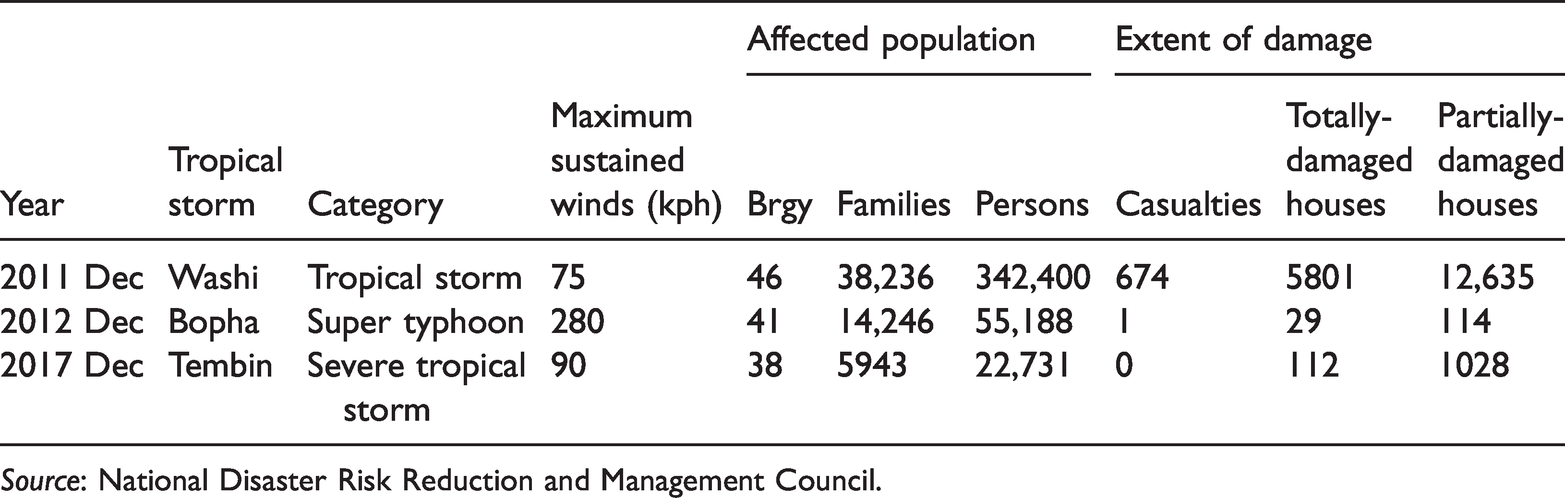
Source: National Disaster Risk Reduction and Management Council.
Many former inhabitants residing in risky areas relocated to safer locations. Interestingly, respondents indicated that they are better able to recuperate from the impact of succeeding major flooding due to the presence of immediate disaster relief, recovery, and rehabilitation assistance provided by the government. Additionally, the convergence of multi-sectoral disaster response further enables households to withstand, absorb, and recover from the immediate impact of not just flooding but also other hazards. Continuous access to information in times of flooding threat enabled households to respond appropriately by participating in preemptive and forced evacuation.
Aside from limited resources, the opportunity loss remains a serious problem. Respondents need to spend a significant amount of time securing their belongings, reinforcing flood-proofing measures, and evacuating prior to flooding. After flooding, households would need to spend days sorting things, cleaning, removing mud, and other debris from their property. Respondents also expressed concern over continuous access to public transportation, and clean water at times of severe flooding.
However, resilience outcomes also come from decreased livability, which affects quality of life. By pursuing nonstructural measures to increase adaptive capacity, household conditions become too practical. While, in itself, this is not bad, households desire to make their structures more comfortable. Unfortunately, they are left with no choice but to invest less in household assets to cushion the severity of possible financial loss. Meanwhile for those who rely on resettlement projects, their capacity to respond to other hazards is reduced because of fewer livelihood opportunities. It feels like this is not us anymore. It does not feel cozy or homey anymore. –Balulang respondent
Conclusions
An important caveat is that autonomous household responses can be detrimental because it operates at the level of individual interests, which are competing, and could be contradicting to others. Also, it can reinforce social inequality since the options for the already vulnerable low-income households are limited, leading them to become susceptible to resilience-building measures that disregard sound and robust planning.
In the case of CDO, land-use plan objectives were vital policy responses as outlined strategies integrated socioeconomic development and DRRM. The Philippine DRRM Act provided legal grounding for institutional and financial arrangements that complement autonomous household responses with catalytic public investments that sustain household responsiveness, resourcefulness, and reflexivity.
Ironically, a land-use plan is immaterial in the ideation of resilience-building measures from a household perspective. Households mostly engage with nongovernment actors in the formulation of resilience objectives, particularly in capacity development for DRRM. CSOs play a more active role at the community level, particularly in improving disaster preparedness, relief, and response. As such, households do not associate these processes with land-use planning and detach themselves to land-use objectives. Optimistically, households are amenable to the land-use plan, and the engagement of households in achieving its resilience objectives is important.
CDO as a case study underpins the importance of the flexibility of land-use plan objectives to allow localizing modes of resilience. Cases in point, the BUB program, ex-ante DRRM budgeting, and the People’s Council underline the far-reaching impact potential of institutional interventions to household resilience outcomes.
CDO’s experience in pursuing urban resilience post-Washi from a household standpoint hints at contemporary approaches to systemic processes that resonated to household level. Landmark policy instruments eradicated the silo mindset of households by broadening the perspective of lessons learned. Furthermore, interorganizational interdependence, with CSOs acting as conduits, was considered to enable households to pursue resilience objectives and still be independent from governance structures. In the process, permitting formal policy channels to accommodate flexibility and adaptability which allowed a shift away from unresponsive and static traditional methods.
Finally, it is important to process household narratives to a collective level since knowledge required for resilience can be expressed and reshaped from an individual perspective to a shared and informed meaning of diverse experiences. This can also challenge the distribution of decision-making processes and move toward more collective action (see Goldstein et al., 2015; Usdin, 2014).
Moving forward
From the findings on the role of autonomous household response in operationalizing the urban resilience objectives of land-use plans, it becomes clear that academia, government, and development organizations need to establish mechanisms to rewrite the disaster experience of various actors to collective resilience narratives. Imperative is acknowledging the varying technical competence of agents and structures, and integrating pockets of individual actions to formal policy channels of interventions in anticipation of desired future outcomes.
Considering the bottom-up narratives from the residents and their endeavors to make their households disaster proof, it would be undoubtedly beneficial to juxtapose these findings with the context of other actors, such as the business sector, the CSOs, as well as governmental and regulatory changes in the pursuit of urban resilience.
Footnotes
Acknowledgements
The first author would like to express his gratitude to Dr. Rita Padawangi for her invaluable inputs in the writing of this paper, to the Cagayan de Oro City’s Planning and Development office for the documents and maps related to the city’s comprehensive land-use plan, to family and friends who continue to provide whatever needed support.
Declaration of conflicting interests
The author(s) declared no potential conflicts of interest with respect to the research, authorship, and/or publication of this article.
Funding
The author(s) disclosed receipt of the following financial support for the research, authorship, and/or publication of this article: This article is based on the first author’s master’s thesis. He received a scholarship from the Orange Knowledge Programme. The author received no additional financial support for the research or authorship of this article.
