



Abstract
There have been numerous attempts to identify what makes the ground floor interfaces of street edges engaging for pedestrians. Their subdivision has often been highlighted as important, predominantly, in line with functions along their length. However, the effect of subdivision on street edge engagement is yet to be empirically tested. We use mobile eye-tracking to systematically examine where and for how long pedestrians visually engage ground floors in relation to their subdivision. We consider three scales of subdivision: morphologically defined plinths (different building ground floors), territorially defined segments (different areas of territorial ownership) and spatially defined micro-segments (different spaces separated by pillars and partitions). Results show that segments dominate ground floor visual engagement, with micro-segments also having a significant influence. Plinths were shown to have no direct effect upon such engagement. We subsequently use these findings to show how subdivision should be approached by design decision-makers when seeking to actively encourage pedestrian engagement with ground floors along street edges.
Introduction
Streets are the most abundant area of open space in many towns and cities (UN-Habitat, 2013). As such, they serve an important societal function by providing space for everyday activities (Gehl, 2010; Mehta, 2019). The success of streets, as places that people want to inhabit and use on a daily basis, is influenced by numerous factors. Of particular importance, is the way ground floor interfaces of street edges engage the senses of pedestrians walking past them (Gehl et al., 2006; Karssenberg et al., 2016; Thwaites et al., 2020). However, even though their importance is well-documented, there is limited systematic understanding of the effect that differences in the structure and composition of street edges have on pedestrian engagement with ground floors.
Our study analyses how different scales of street edge subdivision influence pedestrian experience. We start by drawing upon existing theory (see ‘Background and Theory’ section) to show how street edge ground floors can be subdivided, beyond a focus towards the functions they accommodate, as plinths (morphologically defined by building ground floors), segments (contrasting realms of territorial ownership) and micro-segments (spatially distinct areas of segments defined through pillars or partitions). During this section, we then introduce mobile eye-tracking as a technology capable of capturing direct insight into pedestrian engagement with their surroundings. Using this equipment on urban streets in the UK, we examine where and for how long pedestrians visually engage with ground floors in response to the different scales of subdivision introduced. Our findings are subsequently reviewed in the context of planning and design decision-making. This is done while considering how best to approach each scale of subdivision and, in turn, establish ground floors that are structured to effectively stimulate pedestrian sensory engagement.
Background and theory
Street edges, ground floors and subdivision
Street edges can comprise multiple storeys, however, it is their ground floor interfaces (see Figure 1) that are disproportionally important from the perspective of routine pedestrian experience. For Gehl et al. (2006), they are the point at which people engage most intensely with buildings while walking, sitting, standing and socialising. Karssenberg et al. (2016) re-enforce such an argument, stating that a “ground floor might only be 10% of a building, but it determines 90% of the building’s contribution to the experience of the environment” (p.16). Even though ground floors are important, their capacity to stimulate pedestrian engagement can vary greatly. Factors such as whether they are passive or active (Gehl et al., 2006), their diversity of facilities and functions (Mehta, 2009; Karssenberg et al., 2016) as well as composition of social opportunities, spatial complexity and material richness (Thwaites et al., 2020) are all influential. Importantly, variation in such qualities affects the overall vitality of streets, and in turn peoples’ emotions and psychological well-being. Hard, blank ground floors negatively impact people’s quality of life (Ellard, 2015; Montgomery, 2013) and low-quality street edges, containing a lack of openings, articulation and ornamentation, affect how people feel emotionally (Hollander and Anderson, 2020). Beyond impacting well-being, the extent to which a ground floor is engaging or not can also influence the success of streets as thriving social-economic centres. They contribute towards influencing property values (Hamidi et al., 2020), affect access to differing businesses and amenities (Mehta and Mahato, 2019), and prominently display levels of urban deprivation and decline (Kickert, 2016; Talen and Jeong, 2019). However, while this is understood, there remains limited systematic analysis of distinct factors that affect direct pedestrian engagement with street edges, particularly, the influence of their subdivision across different scales. Ground floor interfaces from a pedestrian perspective.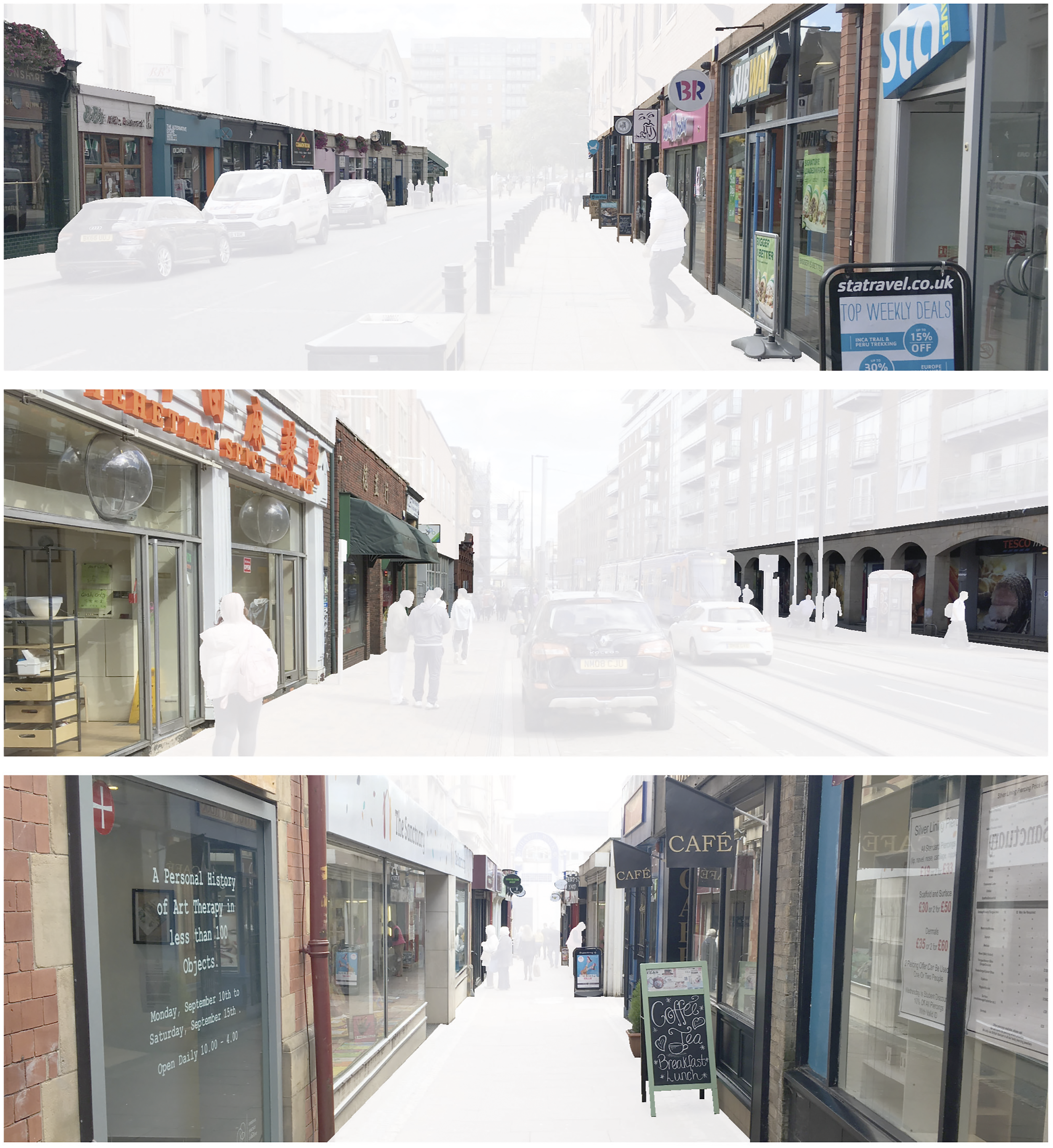
The subdivision of street edges, into smaller-scale spaces along their length, provides a structure into which diversity and variation in street edge qualities can establish (Gehl et al., 2006; Thwaites et al., 2020). This, in turn, affects the overall sensory complexity and vibrancy of street edges (Ewing and Clemente, 2013). The composition of ground floor subdivision has been shown to influence the rate with which opportunities for new experiences reveal themselves to people when walking streets (Gehl et al., 2006; Hassan et al., 2019). Subsequently, this affects a street edge’s overall capacity to stimulate sustained pedestrian interest along its extent (Thwaites et al., 2020).
To date, the subdivision of ground floors is often understood in line with distinct functions (e.g. different shops, cafes and restaurants) alongside key aspects of them, notably doorways and windows. Ground floors that accommodate a greater number function-based subdivisions slow pedestrian movement by encouraging intense and prolonged engagement with the surrounding street edges (Gehl et al., 2006). Within such a situation, the number of functions is expected to have an influence upon the diversity and variety of facilities that pedestrians can experience along a street. For example, a street edge with 5 functions has the potential for less diversity than a street edge containing 8 functions. As such, it has been recommended that ground floors need to contain a minimum of 10 functions per 100 m in order to stimulate pedestrian engagement along them, with the most engaging street edges comprising 15–20 different units per 100 m (Gehl et al., 2006; Karssenberg et al., 2016). However, this focus towards functionality limits the wider consideration of scales of subdivision that may also affect pedestrian engagement with street edges.
There is a growing appreciation that street edges need to be considered across multiple scales, within which ground floors and further scales of subdivision are embedded (Feliciotti et al., 2016; Karssenberg et al., 2016). Spanning these scales, different groups of people, encompassing planners, developers and architects through to shop owners and managers, influence not only the spatial and material characteristics of street edges but also how they function socially (Thwaites et al., 2020). There is opportunity, therefore, to improve our understanding of the way street edges can be subdivided, beyond functionality, and assess how different scales of subdivision affect pedestrian experience. In the following, we consider three scales of ground floor subdivision: morphological plinths, territorial segments and spatial micro-segments (Figure 2). Within each of these scales is the potential for variation in ground floor qualities that can stimulate pedestrian interest and engagement, beyond a focus towards the functions that populate a street edge. Subdivision of street edge ground floors.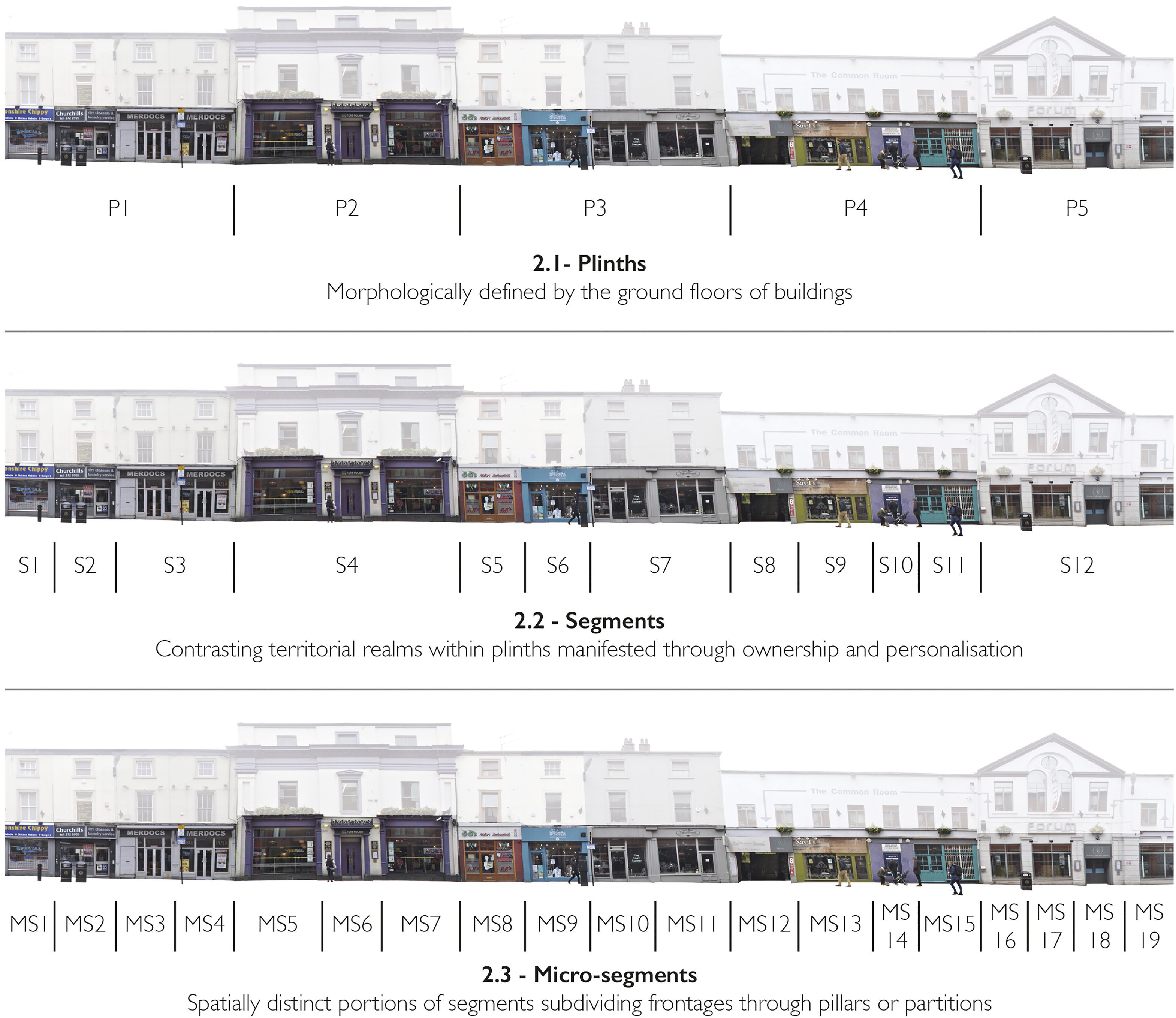
Morphological Plinths: Buildings along streets provide the built morphology of street edges (Feliciotti et al., 2016; Harvey et al., 2017). Plinths are the ground floors of these buildings, resulting in a scale of street edge subdivision that is morphologically defined (see Figure 2.1; Karssenberg et al., 2016). The attributes of plinths often align with the building they are embedded within, with their proportions being defined by the size (depth and width) of individual buildings (Feliciotti et al., 2016). Due to the way that buildings along street edges can vary in size, age and architectural style (Ewing and Handy, 2009; Jacobs, 1993), plinths can often have differing spatial and material characteristics, as well as varying capacities for accommodating different functions and qualities along them (Karssenberg et al., 2016; Thwaites et al., 2020). In line with this, variation in the characteristics of buildings and the number of buildings within a street edge has been shown to contribute to the richness and complexity of street edges, subsequently affecting if a street edge is engaging for pedestrians (Ewing and Clemente, 2013).
Territorial Segments: Territorial actions clarify areas of individual and group ownership, in turn making the environment more complex and richer, at the same time as providing a stage for human interaction (Mehta, 2013). Within street edges, such territorialisation is noticeable through the way ground floor spaces dynamically adapt and change in line with social, cultural and economic pressures (Kickert, 2016), and are appropriated and thus stabilised in time (Dovey and Wood, 2015). Such territoriality underpins Thwaites et al.’s (2020) street edge segments (Figure 2.2), with segments being established in response to ownership and personalisation. These spaces are areas of ground floors that often reflect an owner’s identity (Van Oostrum, 2020), with personalisation stimulating pedestrian interest and providing an opportunity for social engagement between individuals and groups to take place (Mehta, 2009; Thwaites et al., 2013). Segments vary not only in function but also social opportunities, spatial complexity and material richness, and thus influence the diversity of opportunities for pedestrian experiences (Rahman and Mehta, 2020; Thwaites et al., 2020). Such ideas establish a distinction between ground floor functions and territorially defined segments. For example, a restaurant might be stimulating for a pedestrian even though they are not looking for something to eat. The segment’s function is therefore not the primary focus of pedestrian interest per se but the spatial and material result of territorial actions, on the part of the owner/manager, captures interest (Thwaites et al., 2020).
Spatial Micro-segments: Individual segments often comprise a number of spatially distinct realms embedded within them (Rahman and Mehta, 2020; Thwaites et al., 2020). For example, a single shop (segment) can comprise more than one shop front/window spatially separated by a pillar or partition, in turn creating spatially distinct spaces (micro-segments; Figure 2.3). There is potential for these spaces to be materially arranged differently by those who have territorial influence over them, or provide opportunities for contrasting social activities (Thwaites et al., 2020). In line with this, previous studies have found that high-levels of small-scale street edge complexity, encompassing number of doorways and windows and the number and type of design elements on building facades, increases pedestrian engagement with street edges (Ewing and Clemente, 2013; Heffernan et al., 2014; Hussein et al., 2018). Similarly, studies on consumer behaviour within a retail context have highlighted the significance of small-scale shop front subdivision, with shop windows influencing engagement, purchasing decisions and judgements on whether to enter a shop or function (Oh and Petrie, 2012; Sen et al., 2002).
Mobile eye-tracking to analyse urban visual experience
Many different techniques have been used to better understand how people experience and engage with urban streets (Gehl and Svarre, 2013; Tang and Long, 2019). During the current study, we employ the use of mobile eye-tracking. Eye-tracking allows researchers to quantify where people look and the duration of this engagement. Understanding the distribution and intensity of gaze makes comprehensible what parts of an environment or stimulus dominate visual attention, allowing an understanding of its effect on real time perception and cognition (Duchowski, 2017; Holmqvist et al., 2011). As such, eye-tracking is a precise method to determine the point of pedestrian interest, compared to indirect measures such as observational studies that have tended to dominate studies on human streetscape interactions so far (Uttley et al., 2018). The mobile application of the technique outdoors, has provided detailed understanding of peoples’ visual engagement with urban environmental stimuli, captured in dynamic real-world urban situations. It has shown how pedestrians visually engage other pedestrians (Fotios et al., 2015); navigate while using maps in built environments (Kiefer et al., 2014) and visually engage different styles of architecture (Lisiń ska-Ku ś nierz and Krupa, 2020). We have previously used mobile eye-tracking to assess pedestrian gaze upon street edges (Simpson et al., 2019a, 2019b), and found that street edges, and especially ground floors, dominate what pedestrians look at when walking streets. Such engagement does, however, vary in response to different street edges being engaged and peoples’ activities. These findings provide a foundation for using mobile eye-tracking to explore how pedestrian visual engagement with ground floors is affected by street edge subdivision.
Research design and hypotheses
Using a mobile eye-tracker, we examined the duration of time that pedestrians distributed their gaze upon subdivisions along city centre street edges characterised by mixed functions and amenities. Understanding where and for how long pedestrians gaze upon different plinths, segments and micro-segments provides opportunity to understand the influence of each scale upon visual experience. A longer duration of visual engagement is associated with a greater intensity of attention and cognitive activity directed at the street edge subdivision being viewed. Based upon this, and the theory introduced, we hypothesised: (i) The number of morphological plinths, territorial segments and spatial micro-segments within a street edge will influence the duration of time that pedestrians spend visually engaging with its ground floor. This is because each scale individually contributes to ground floor complexity, while affecting the rate of opportunity for new pedestrian experiences along a street edge. More of each subdivision should, encourage a greater duration of ground floor visual engagement. (ii) Different plinths, segments and micro-segments (i.e. different subdivisions at the same scale) will be visually engaged for varying durations of time. This is because each scale of subdivision can within it comprise contrasting qualities and characteristics that can engage or disengage people. Highlighting such variation, within each scale, will offer opportunity to isolate if plinths, segments and micro-segments individually affect where pedestrians distribute their visual engagement upon ground floors.
Materials and methods
Participants
Twenty-four participants (n = 12 female, n = 12 male; mean age = 35 years (range = 21–61 years)) were recruited through opportunity sampling using a volunteers list held by the University of Sheffield. This sample size of participants was deemed appropriate for this scale of study, while representing a trade-off between maximising the number and diversity of participants with the time-consuming nature of mobile eye-tracking data collection and processing. Academic staff were not invited to take part so that the sample was not biased towards higher education levels. All participants had normal to corrected-to-normal vision (via contact lenses). Participants did not know the aim of the investigation at the point of data collection and all had previous experience of the study streets walked.
Apparatus
Mobile eye-tracking glasses (Eye-tracking Glassess 2.0, SensoMotoric Instruments (SMI), Teltow, Germany) were used. In the rim of these glasses is a forward-facing camera, which captures a video of the environment in front of the wearer, and two backward-facing cameras record the wearer’s eye-movements. BeGaze software (SensoMotoric Instruments (SMI), Teltow, Germany) was used to process the output from the eye-tracker, providing a single video of the environment in front of the participant with their gaze location superimposed on top. Study participants also wore a peaked cap to limit the impact of sunlight on data quality (Kiefer et al., 2014).
Procedure
We have previously used the mobile eye-tracking data analysed during the current study to assess how pedestrians visually engage different aspects of streets and street edges (Simpson et al., 2019a, 2019b). These previous studies are referenced throughout the remainder of the methods, and wider study, as they provide a foundation for the analyses and processes employed.
All data collection took place between the hours of 10 am and 2 pm to limit any influence of the time of day upon participants’ visual engagement with street edges (Davoudian and Raynham, 2012). The eye-tracking glasses were put on by a participant and calibrated, with this process being repeated if necessary (e.g. poor tracking accuracy). Separately, each participant was then requested to walk a six-street route (either Route 1 or 2, see Figure 3) comprising a range of non-pedestrianised and pedestrianised streets in Sheffield City Centre, UK. These streets, spanning commercial and mixed commercial/residential streets, were selected because their street edges varied in the type, composition and number of plinths, segments and micro-segments along them (see Figure 3 for subdivision information). This resulted in a dataset that could be used effectively when assessing how each scale of subdivision influences where and for how long pedestrians visual engage with street edge ground floors. Eye-tracking data was collected as pedestrians walked along the study streets and visually engaged their surroundings. This meant that the different plinths, segments and micro-segments were viewed at angles and distances typically experienced during routine walking. As a result, each subdivision could only be viewed at certain points when walking the street and often not in their totality, aligning the data collected with real-world pedestrian viewing behaviours. Visual engagement was only considered with the street edge on the walked side of non-pedestrianised streets (both sides were considered along pedestrianised streets), which accounts for the overwhelming majority of pedestrian visual engagement with street edges (Simpson et al., 2019b). This resulted in a total data set of potential visual engagement with 83 plinths, 165 segments and 339 micro-segments. Study streets from pedestrian eye-level and composition of plinths (P), segments (S) and micro-segments (MS) along their street edges.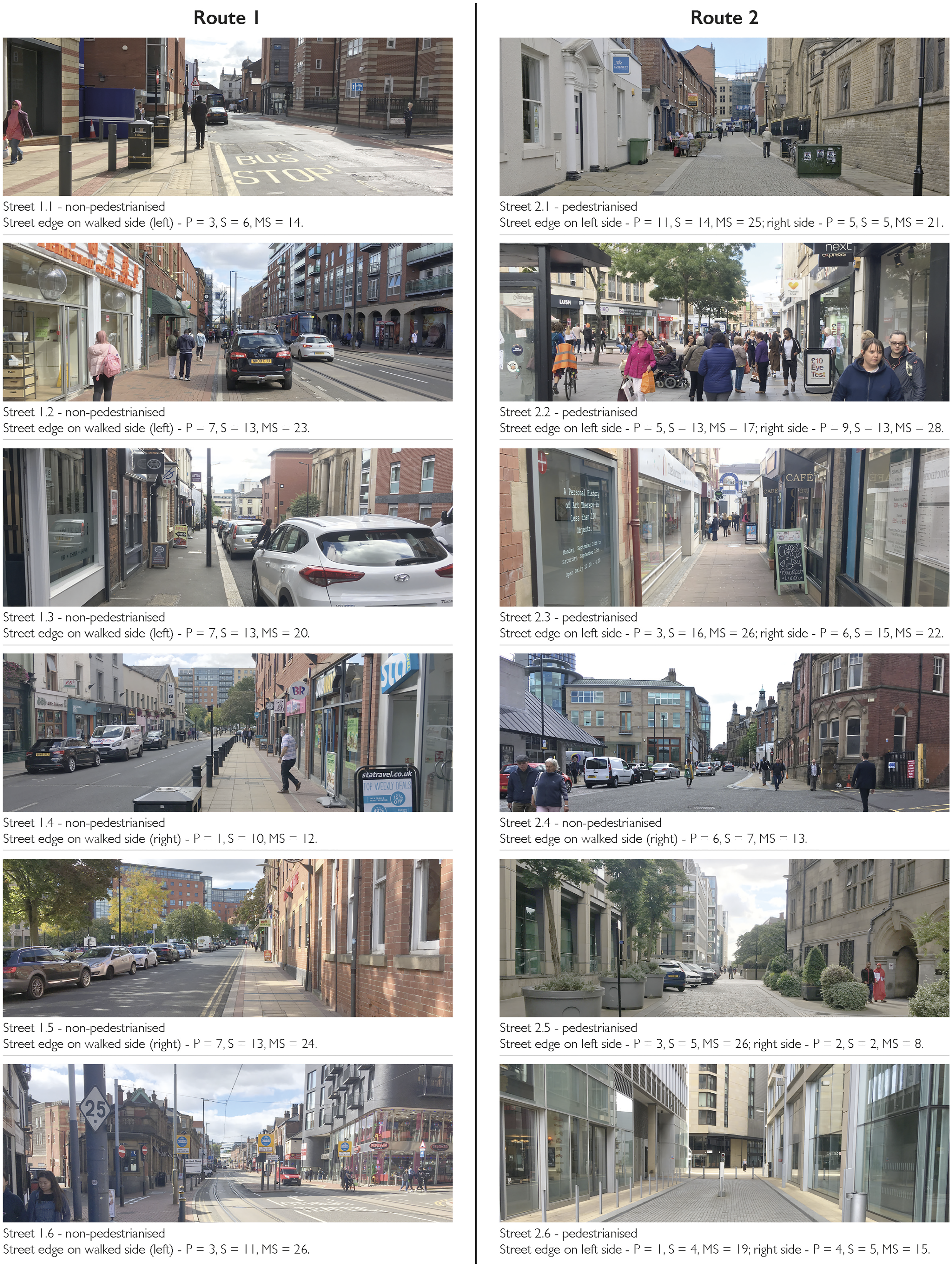
Participants were assigned a routine activity to undertake prior to walking each separate street. This was in order to simulate everyday actions of how these streets tend to be used and therefore align the study with everyday scenarios. Six activities were used based upon onsite observation of pedestrian actions and Gehl’s (2010) categorisation of routine urban activities: optional activities (break-time stroll, going for a coffee and window-shopping) and necessary activities (rushing to work, dropping an item off with a friend, walking to the bus). Research has shown that optional activities are associated with a greater duration of visual engagement with street edges (Simpson et al., 2019a), as they are less focused and time-sensitive tasks, which encourage more open viewing of the inhabited environment and surrounding street edges (Simpson et al., 2019b). However, street edges that are visually engaged for longer while undertaking optional activities are also visually engaged for longer while undertaking necessary activities (Simpson et al., 2019a). As the nature of the activity will impact upon visual engagement, we accounted for the effect of activity when analysing our data in the current study (see ‘Data processing, coding and analysis’ section). The selected activities were randomised across the streets, with each participant undertaking each activity only once along a specified street (i.e. six tasks along six streets of one route).
Data processing, coding and analysis
We examined the duration of pedestrian visual engagement with different street edge areas of interest (AOIs) as they walked past them. Definition of AOIs is common during eye-tracking studies, with them acting as pre-defined regions of a stimulus that are the focus of research interest (Holmqvist et al., 2011). Previously, we have used the eye-tracking videos to analyse broad AOIs such as street edges in their entirety (Simpson et al., 2019a) as well as street edge ground and upper floors on different sides of streets (Simpson et al., 2019b). AOIs during the current study were more focused and defined based upon ground floor subdivision in line with i) plinths, defined morphologically by different building ground floors; ii) segments, defined territorially through differences in ownership along ground floors; and iii) micro-segments, defined spatially in line with pillars and partitions that subdivide ground floors (see Figure 2 for an example of AOI definition and Figure 3 for the number of different AOIs along each street). The eye-tracking data for each walked street was exported as a video (10 frames per second) following data collection and then manually coded using VideoCoder (Foulsham et al., 2011) to assess the total duration of participant gaze upon the different AOIs along each street edge.
All statistical analyses were undertaken in the R statistical language and computing environment (R Core Team, 2020). The relationship between the number of plinths, segments and micro-segment within a street edge (expressed as number of subdivisions per 100 m) and the average amount of time participants gazed upon its ground floor (in comparison to their total visual engagement with all aspects of the street walked) was assessed using linear regression.
To determine if study participants varied the duration of their visual engagement upon different plinths, segments and micro-segments, linear mixed-effects models (‘lme4’ package; Bates et al., 2020) were used. Duration of visual engagement (in milliseconds), the response variable in the models, was first log transformed to improve normality (i.e. to correct for right-skewed data). ‘Scale’ (plinth, segment or micro-segment) was the fixed effect of interest. To isolate the influence of each scale of subdivision upon visual engagement, we accounted for other factors known to effect street edge visual engagement (Simpson et al., 2019a). To do this, we included ‘activity’ (optional or necessary) as an additional fixed effect in the model. The identity of the street and the type of street (pedestrianised or non-pedestrianised) could not be accounted for in the models as they were confounded by the identity of the scale unit (e.g. the identity of a specific segment). To account for inter-participant variation in visual engagement, ‘participant’ (participant number 1–24) was included as a random effect, which allows for different intercepts for each participant (i.e. variation in baseline level of visual engagement). p-values were generated by comparing this model to a grand mean model using parametric bootstrapping (‘pbkrtest’ package; Halekoh and H ø jsgaard, 2014) with 10,000 simulated generations. The ‘R.squaredGLMM’ function (‘MuMin’ package; Barton, 2020) was used to assess goodness of fit for all models. Marginal R2 values (those associated with the fixed effects only) suggested models were a good fit to the data, explaining a considerable proportion of variation (plinth analyses: r 2 = 0.53; segment analyses: r 2 = 0.45; micro-segment analyses: r 2 = 0.41).
To provide further detail and assess if there is a relationship between scales of subdivision, which could affect pedestrian ground floor visual engagement, linear regression was used to assess the relationship between the number of segments in a plinth and the a) duration of participant visual engagement with a plinth; and b) duration of visual engagement with each segment within a plinth. Linear regression was also used to assess the relationship between the number of micro-segments in a segment and the a) duration of participant visual engagement with a segment; and b) duration of visual engagement with each micro-segment within a segment.
Results
The effect of number of plinths, segments and micro-segments on the duration of ground floor visual engagement
We found that there was no significant relationship between the duration of ground floor visual engagement and the number of plinths (F(1,15) = 0.78, p = 0.39; r2 = 0.01); or the number of micro-segments (F(1,15) = 1.23, p = 0.29; r2 = 0.01). There was, however, a highly significant positive correlation between the number of segments and duration of ground floors visual engagement (F(1,15) = 38.16, p < 0.001; r2 = 0.69). Therefore, only the number of segments within a street edge influences how long pedestrians visually engage with street edge ground floors (Figure 4). The relationship between the percentage of participants’ visual engagement with street edge ground floors and number of plinths, segments and micro-segments per 100m of street edge. Each point is the average data for visual engagement with one street edge.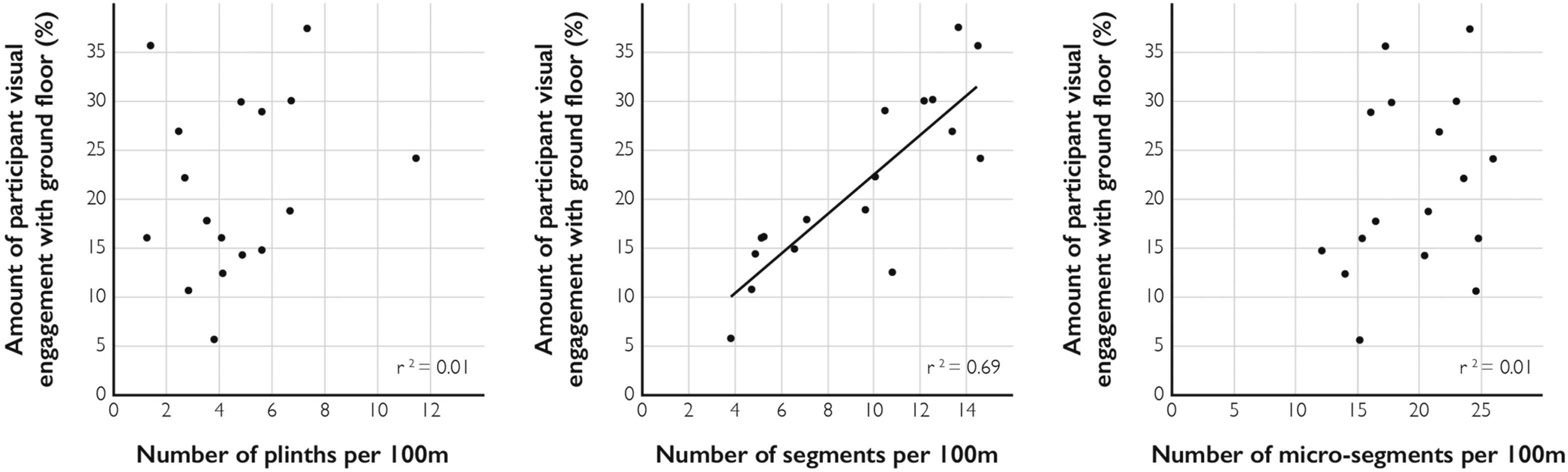
Variation in the duration of visual engagement with different plinths, segments and micro-segments
We found that there was variation in visual engagement within each scale of subdivision. Each significantly improved the ability of the models to explain how pedestrians visually engage different plinths (likelihood ratio test (LRT) = 532.18, p < 0.001), segments (LRT = 973.88, p < 0.001) and micro-segments (LRT = 1712.43, p < 0.001) for varying durations of time. The average duration of visual engagement with plinths was 3.96 s (interquartile range (IQR): 1.34–4.59 s), with segments it was 2.03 s (IQR = 0.86–2.86 s) and with micro-segments it was 0.97 s (IQR = 0.86–2.86 s). Pedestrians, therefore, distribute their visual engagement with ground floors in response to different plinths, segments and micro-segments. These effects were above and beyond those caused by other factors that influence street edge visual engagement. Across all scales, optional activities were associated with significantly higher number of visual hits (p < 0.001). In comparison to necessary tasks, optional activities resulted in more hits on each plinth (+1.76 hits (±0.18)), segment (+1.44 (±0.12)) and micro-segment (+0.98 (±0.06)).
Variation in the duration of visual engagement with plinths and segments due to number of segments in a plinth
We found that the more segments a plinth contains, the greater the duration of pedestrian visual engagement with it (F(1,7) = 16.06, p = 0.005; r2 = 0.65; Figure 5(a)). The duration of visual engagement with each segment within a plinth was consistent (range = 1.59–2.62 s) and was not associated with the total number of segments in that plinth (F(1,7) = 0.09, p = 0.77; r2 = 0.13; Figure 5(b)). Therefore, the amount of visual engagement with plinths is affected by the number of segments within them. However, the duration of visual engagement with segments is not affected by the number of them within a plinth. The influence of number of segments within a plinth upon the duration of participant visual engagement with a plinth (a); and the duration of participant visual engagement with each segment (b). Error bars represent 1 standard error around the mean.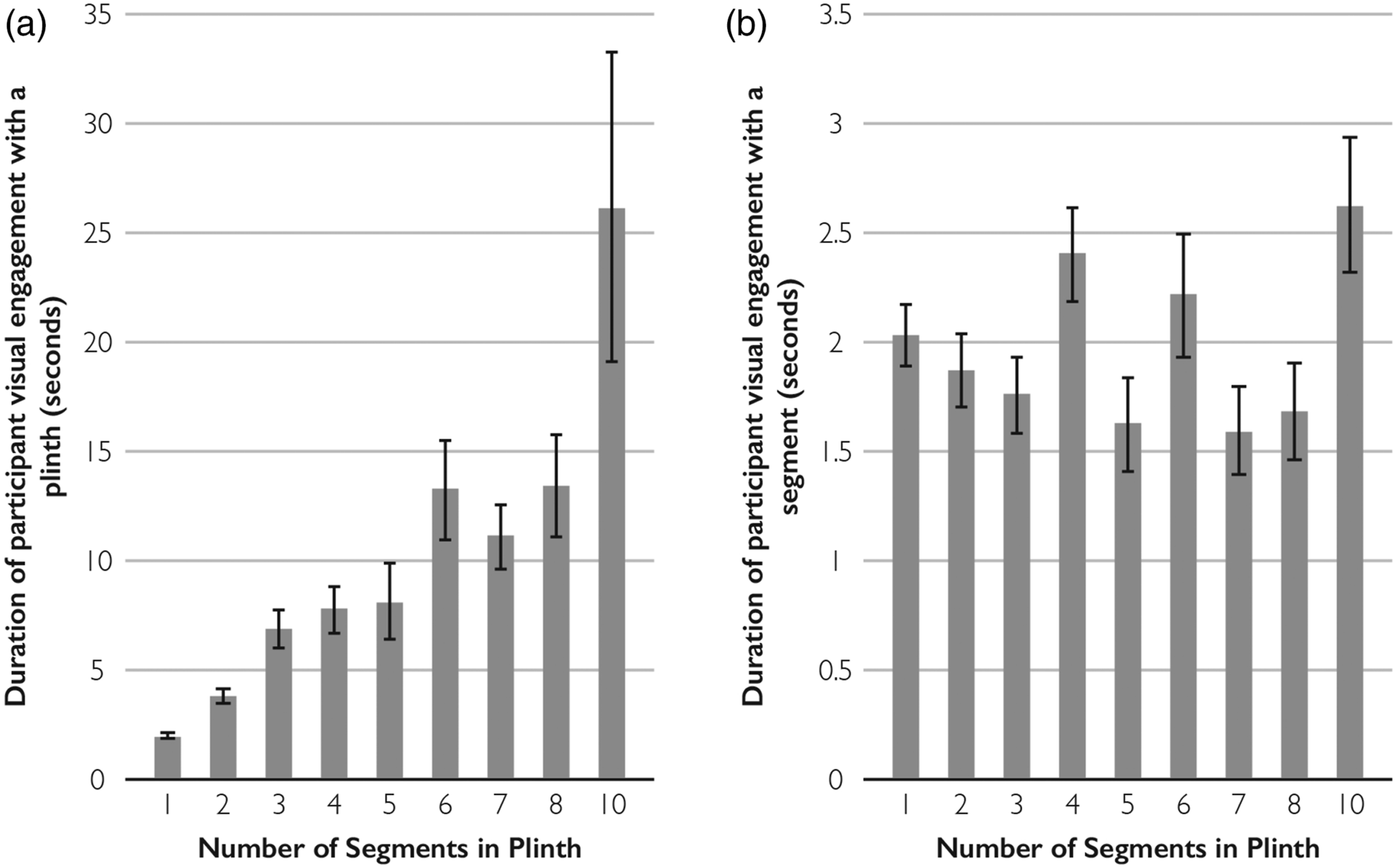
Variation in the duration of visual engagement with segments and micro-segments due to number of micro-segments in a segment
The duration of visual engagement with a segment was affected by the number of micro-segments within it (F(1,7) = 65.01, p < 0.001; r2 = 0.89; Figure 6(a)), with more micro-segments associated with a greater duration of visual engagement. This is despite a negative relationship between the number of micro-segments within a segment and visual engagement with each micro-segment (F(1,7) = 7.23, p = 0.03; r2 = 0.43; Figure 6(b)). Therefore, the duration of visual engagement with micro-segments is affected by the number of them within a segment, which also affects the duration of visual engagement with a segment overall. The influence of number of micro-segments within a segment upon the duration of participant visual engagement with a segment (a); and the duration of participant visual engagement with each micro-segment (b). Error bars represent 1 standard error around the mean.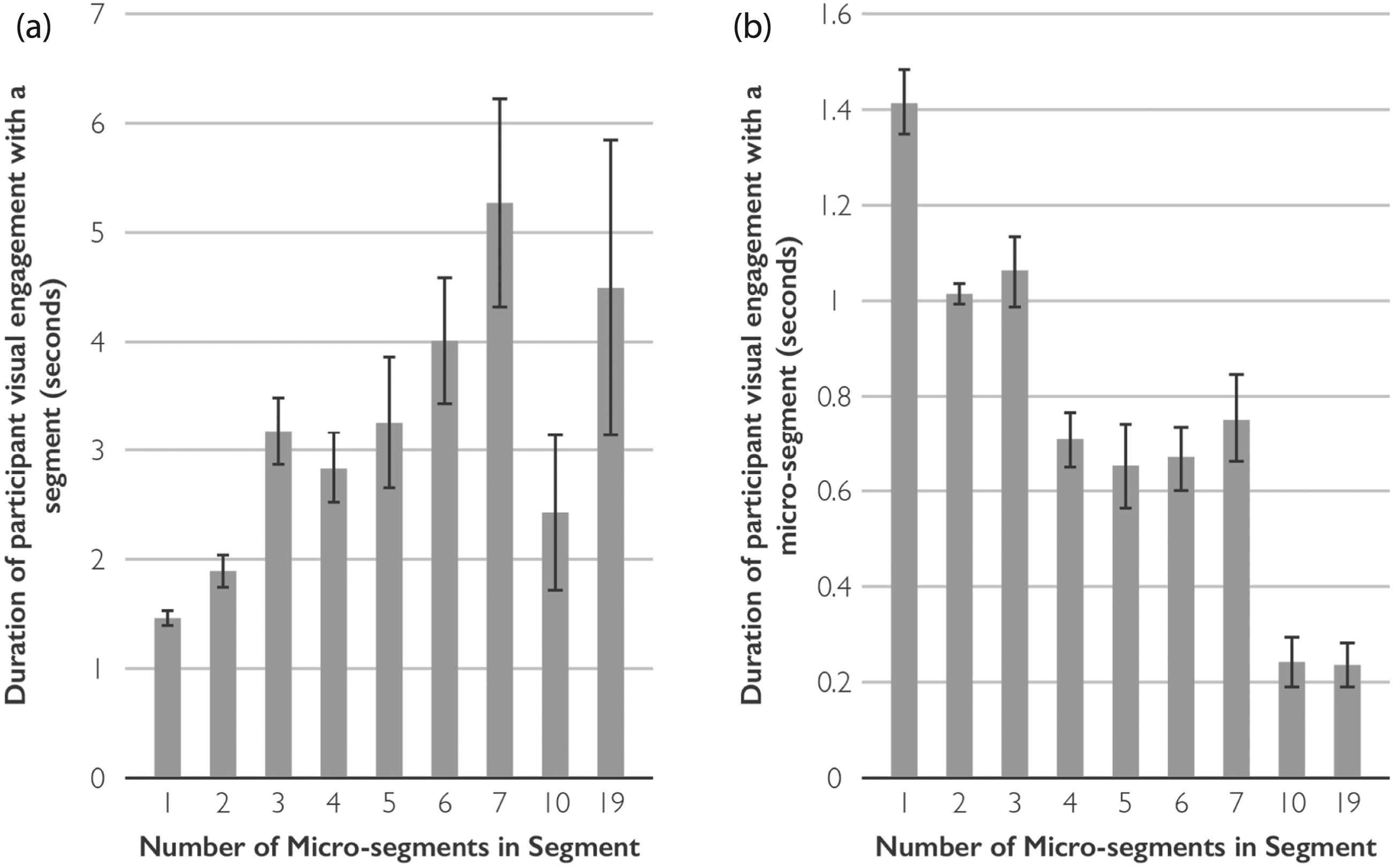
Variation in the duration of visual engagement with plinths and micro-segments when accounting for the influence of segments
An additional analysis was undertaken based upon the finding that only the number of segments influences how long pedestrians visually engage with street edge ground floors (Figure 4), but different plinths, segments and micro-segments are all visually engaged for varying durations of time. To determine if a plinth in itself is a scale that requires consideration, and not because of its capacity to accommodate segments, we assessed if the duration of pedestrian visual engagement varies across different plinths once the effect of segment was accounted for. Likewise, to determine if micro-segment requires consideration, and not because of the influence of the segment it is embedded within, we assessed if the duration of pedestrian visual engagement varies across different micro-segments once the effect of segment was accounted for. To do this, linear mixed-effects models were used, as before, but with ‘segment’ (the identifying code given to each segment) as an additional fixed effect.
We found that, once segment had been accounted for, the influence of plinth was not significant (LRT = 3.33, p = 0.19). In contrast, micro-segments had a significant positive effect (LRT = 684.79, p < 0.001), over and above that of segment. Therefore, plinths provide no additional explanatory power for understanding where pedestrians distribute their visual engagement with ground floors over that of segments, but micro-segments do.
Discussion
We found that segments dominate where and for how long pedestrians look at the ground floor interface of street edges. Plinths play no direct role in such engagement. Micro-segments have some influence, but not to the same extent as the segments they are embedded within. These results, captured using mobile eye-tracking, provide the first systematic assessment of the way different scales of subdivision influence pedestrian gaze upon ground floors. Importantly, such findings provide clear evidence to inform how subdivision should be approached when structuring street edges that stimulate pedestrian engagement, beyond a focus on the functions that occupy ground floors.
Recent developments in street edge thinking has introduced the importance of territorial segments (Thwaites et al., 2020). We found that only the number of segments in a street edge influences the duration of pedestrian ground floor visual engagement (Figure 4). This aligns with Gehl et al.’s (2006) argument that 15–20 shops per 100 m creates a more engaging street edge, with the most visually engaged street edge in our study containing 15 segments. Our results also show that subdivision in line with segments is the most effective way to understand how pedestrians vary the distribution of their gaze upon ground floors. Their influence is so significant that variation in the duration of engagement with plinths is driven solely by the segments embedded within them (i.e. building ground floors in themselves are not important, what is territorially within them is what counts). We provide further insight into the relationship between segments and plinths by showing how the number of segments within a plinth affects the duration of visual engagement with a plinth (Figure 5(a)), while not affecting the duration of engagement across these segments (Figure 5(b)). The significance of segments is, therefore, at some level independent from the plinth they are within (i.e. a single segment in a plinth can influence pedestrian gaze just as much as a segment within a plinth that contains numerous segments).
We predicted that pedestrians would vary their visual response to morphological plinths, based upon to the differing spatial and material characteristics and qualities of building ground floors along street edges (Ewing and Clemente, 2013; Karssenberg et al., 2016). However, once the influence of segments has been accounted for, we found that it is only segments that causes variation in the duration of gaze upon different plinths. Adding to this is the finding that plinths containing more segments are visually engaged for longer (Figure 5(a)). We also found that the number of plinths along a street edge has no effect on the duration of ground floor visual engagement (Figure 4). This result goes against our expectation that more subdivisions, across all scales, would contribute to increased street edge complexity and thus visual engagement. Overall, these findings show that plinths have no direct effect on pedestrian visual engagement with ground floors.
While the segment scale of street edge subdivision has the greatest influence over pedestrian visual engagement with ground floors, micro-segments, which spatially subdivide segments, still play a role in such engagement. Our findings show that visual engagement with different micro-segments varies in time, over and above the dominant influence of segments. An understanding of street edge subdivision, therefore, needs to incorporate an appreciation of micro-segments, with them influencing where pedestrians distribute their gaze. In line with this, a greater number of micro-segments in a segment, results in greater amounts of gaze upon a segment (Figure 6(a)), highlighting a clear relationship between these two scales of subdivision. The total number of micro-segments in a street edge does not, however, influence the overall duration of pedestrian ground floor visual engagement (Figure 4). We predicted that more micro-segments would increase ground floor complexity along a street edge and therefore stimulate more visual engagement, but this was not shown to be the case. We showed that this was caused in some way by the fact that an increased number of micro-segments within a segment results in reduced engagement with each individual micro-segment (Figure 6(b)). This suggests there is a threshold in visual engagement with micro-segments of the same segment, above which there is a reduction in engagement across them and thus reduced gaze upon a street edge overall. As a result of this, we would anticipate that a ground floor containing 5 segments, each comprising 3 micro-segments (15 micro-segments overall), will stimulate a greater amount of visual engagement than a street edge subdivided by 3 segments each with 5 micro-segments (also 15 micro-segments overall). Within this scenario, it is the number of segments alongside the relationship between the segments and micro-segments that is influential, not the overall number of micro-segments.
Structuring the subdivision of ground floors to stimulate pedestrian interest and engagement
Our findings show that segments should be the primary scale at which to focus attention for urban planning, design and management decision-making when dealing with street edges. Directing interest towards them provides the best foundation from which to understand where pedestrians distribute their visual engagement upon ground floors. It is also the most effective scale to focus upon when attempting to increase levels of street edge engagement from passing pedestrians, with more segments directly increasing the amount of their gaze upon ground floors.
The primary importance of plinths, at the point of pedestrian visual engagement, is their capacity to provide a morphological structure into which territorial subdivision, at the scale of segments, can take place. Such insight is invaluable against a backdrop of declining ground floor functions, notably large-scale retail within urban centres (Kickert, 2016; Talen and Jeong, 2019). Their decline signals an opportunity to explore how street edges, and particularly plinths along them, could be structured in the future so that they actively promote pedestrian engagement. Our findings show that subdividing plinths, so that they accommodate more segments, is a way of achieving this.
The primary importance of micro-segments, as shown through the eye-tracking data, lies in their ability to influence the amount of pedestrian visual engagement with individual segments, which in turn affects ground floor visual engagement more widely. As a result, decision-making attention should be attached to subdivision at both segment and micro-segment scales, as well as the relationship between them, when attempting to create engaging ground floors.
Overall, in combination, to encourage pedestrian interest and engagement, priority should focus towards the creation, manipulation and management of ground floors so that they sustain higher numbers of territorial segments. This subsequently provides greater opportunity to consider the role that owners and managers of ground floor spaces individually and collectively have in the creation of engaging street edges. The focus of interest, in line with this, is not just what facility they offer or what they sell (function) but what they territorially establish and display in the spaces (micro-segments) that comprise their premises (segment). In order to achieve this, street edges need to be structured to comprise buildings with plinths that have capacity to be subdivided to accommodate, where appropriate, numerous segments. The influence of micro-segments also needs to be considered. These spatial subdivisions, in combination with segments, directly influence where pedestrians gaze upon ground floors. However, too many of them in a segment can have a negative effect on ground floor engagement.
Future research
The study we undertook establishes clear foundations for future research. Analysing wider factors relating to the scales of subdivision we assessed, as well as the relationship between them, would add value to the insights presented. All three scales we considered have the potential to vary hugely in how they are spatially and materially composed overtime, which offers opportunity for further detailed assessment. For example, studies could examine how differences in the architectural style of plinths affects territorial subdivision at the scale of segments and as a result street edge engagement. Another example is the evaluation of how micro-segment change over time, such as the regular re-making of shop windows, affects segment engagement. These assessments would help to provide a more detailed understanding of the influence of ground floor subdivision, building directly on the findings we present.
Technological improvements, particularly in the software used during the coding of dynamic eye-tracking data, will shorten the time-consuming process of data processing. Previous discourse has already highlighted opportunities presented by virtual-reality eye-tracking, machine-learning and automated categorisation of areas of interest (Uttley et al., 2018; Simpson, 2021). This would allow more data (in terms of number of participants and study streets) to be collected and analysed within a given time frame, which is a current limitation when seeking to undertake large-scale mobile eye-tracking studies in real-world settings.
The findings we present were captured in one particular, yet common type of mixed urban context (Sheffield, UK). However, the scales of subdivision we evaluated (morphological plinths, territorial segments and spatial micro-segments) are present along urban street edges across the world. Further research, spanning a broader range of street types, would provide a more comprehensive understanding of the influence of these subdivision upon pedestrian engagement spanning different geographical, social and cultural contexts.
Conclusions
Using mobile eye-tracking in urban streets, we show that the human eye pays little attention to building ground floors that morphologically define plinths. The eyes are instead grabbed by segments – distinct units of territory embedded within building ground floors; with micro-segments, which spatially subdivide segments, also contributing towards this engagement. Such insight moves beyond the current focus in the literature where ground floor subdivision is primarily understood in line with distinct functions. Our use of territoriality, at the scale of segments, further directs attention away from the functions ground floors accommodate towards a more open appreciation of ground floor adaptation, personalisation and management (Thwaites et al., 2020). This highlights a shift in street edge thinking that has clear consequences for those who influence how street edges are structured. Understanding the subdivision of street edge ground floors, encompassing the scales we evaluated, provides a new foundation from which to structure street edges that encourage greater levels of pedestrian engagement.
Footnotes
Declaration of conflicting interests
The author(s) declared no potential conflicts of interest with respect to the research, authorship, and/or publication of this article.
Funding
The author(s) disclosed receipt of the following financial support for the research, authorship, and/or publication of this article: This work was supported by the Economic and Social Research Council [ES/J500215/1].
