




Abstract
The ‘pride in place’ mission of the UK Government’s Levelling Up agenda has foregrounded the importance of feelings in local and national development strategies. While pride in place gestures to the emotional symptoms of geographical inequality and the so-called left behind, it does not address their structural causes. This article explores how the lens of pride, and the affective governance it demands, has been used to reimagine place in UK policy. We argue that governance has taken a therapeutic and palliative turn, and that the pride in place mission obscures ideological inconsistencies in policymaking. The article explains how the government’s narrow conception of pride as a mechanism of affective governance illustrates tensions in places at different scales: between national and local issues; between public and private spheres; and between individual and collective identities. It claims that a more meaningful understanding of pride must be predicated on people’s collective capacity for felt and emotional responses. Crucially, any metrics for pride must capture that complexity to help restore social infrastructure in places.
Keywords
The emotional urges which are inescapable, and are perhaps even necessary to political action, should be able to exist side by side with an acceptance of reality. —GEORGE ORWELL, ‘Notes on Nationalism’ (1945).
The UK Government’s Levelling Up Fund states that for many people, ‘the most powerful barometer of economic success is […] the pride they feel in the places they call home’ (HM Treasury, 2021: 2). Enlisting pride to quantify economic success has foregrounded the importance of feelings in local and national development strategies. The affective turn in policy is particularly acute in England, which has had Levelling Up programmes such as the Stronger Towns Fund. Responding to criticism about the geographical distribution of funding (e.g. Reuben, 2024), the government has highlighted per capita funding levels across the devolved nations (Ward, 2023). This UK-wide context demands novel thinking on how policymakers create, capture and represent emotional responses to place. In the words of George Orwell, ‘emotional urges’ are not new in politics (2018: 31), but this iteration of affective governance needs more interrogation, specifically about how it shapes public perceptions of policy.
It is not hard to discern why the language of pride is resurgent in the policy domain. The term’s suggestive tensions give it a far-reaching cadence: pride is at once national and local; public and private; individual and collective. It is imbued with both nostalgia for the post-war moment and support for progressive identity politics. Above all, pride gestures to the emotional symptoms of geographical inequality and to the assumed, imagined and real anxieties of the so-called left behind, but it does so without addressing their structural causes.
Negative feelings associated with people’s experience of geographical inequalities, such as anger, nostalgia and resentment, are ‘particularly powerful and disruptive for established democratic norms’ (Moss et al., 2020: 1–2). Supporters of Donald Trump in the US and nationalist parties across Europe often draw upon these negative feelings in lieu of expert knowledge (Fieschi, 2019; Hochschild, 2018). Ethnonationalist attitudes and authoritarian, populist political sympathies prosper in this environment, and the stronger people’s emotional attachments to such group identities, the weaker their desire for collaboration and compromise, which leads to increasing intolerance and political cynicism (Hobolt et al., 2021; Iyengar et al., 2019). Pride can be activated in dangerous ways, which demonstrates the need for a more thoughtful handling of how pride manifests, how it activates political engagement, and how its place-specificity must be carefully understood.
Negative feelings of place can be harnessed productively for policy ends, though, and this phenomenon is not unique to the UK. France’s ‘Action Coeur de Ville’—loosely translated as ‘reviving the heart of the city’—responds to the grievances of Gilets Jaunes protesters. It aims to revitalise the urban centres of small and medium-sized towns by rebuilding social ties (Tomaney et al., 2024). In Japan, many municipalities have adopted ‘civic pride charters’, which explicitly define how local pride is constituted and managed (Shaw et al., 2022). Galvanising pride in the electorate has become increasingly important to UK local and central government policy (Collins, 2017; McKay et al., 2022; Shapely, 2012; Shaw et al., 2022). In Levelling Up, pride is explicitly enlisted as an outcome to be measured, tracked and evaluated.
We understand pride as part of the language of localism and devolution, which has long been a rhetorical feature of UK politics (Prosser et al., 2017; Steiner and Farmer, 2018; Wills, 2016). Its latest iteration, ‘pride in place’, functions as a target for local governments and as a signifier for community identities (HM Government, 2022a: 7). According to polling in 2022 by UK in a Changing Europe (UKICE), people were broadly proud of where they lived, and the sources of pride could be mapped: the majority of those surveyed agreed that green spaces, fellow residents, and high streets were important for generating local pride. Feelings of pride varied at the neighbourhood level, however, and those with less financial security expressed diminished levels of pride and place attachment (McKay et al., 2022: 3).
This article pays critical attention to how the lens of pride, and the affective governance it demands, has been used to reimagine place. Pride reflects the values and aspirations that local authorities are required to understand (Shapely, 2012); it provides a basis for knowing how places promote identities and defend local autonomy (Collins, 2017); and it reveals how emotions shape and figure within urban policy (Anderson and Holden, 2008). Through Levelling Up, this affective approach to governance has taken a therapeutic and palliative turn. Though it seeks to appeal to the electorate, the specific pride in place mission obscures ideological inconsistencies in policy and ignores the structural causes of inequalities. We argue that this mission, as it sits in the contested raft of Levelling Up strategies, is affective governance par excellence. To substantiate this claim, the article explains how the UK government’s narrow conception of pride as a mechanism of affective governance illustrates tensions in places at different scales: between national and local issues; between public and private spheres; and between individual and collective identities. A more meaningful understanding of pride must be predicated on people’s collective capacity for felt and emotional responses. Crucially, any metrics for pride must be able to capture that complexity if they are to be effective in helping restore social infrastructure in places.
We deploy a flexible lexicon of affect, feeling and emotion, following Derek P. McCormack’s open formulations of affect ‘as a prepersonal field of intensity’, feeling ‘as that intensity registered in a sensing body’, and emotion ‘as that felt intensity expressed in a socio-culturally recognizable form’ (2008: 426). Drawing on McCormack’s framework, we acknowledge the prepersonal, sensorial and expressive qualities of pride, which correspond to the separate categories of affect, feeling and emotion, and it seeks to highlight how these qualities produce a more complex understanding of pride in place than is conceived by policymakers and government.
Feeling Towns
This article draws on case-study data and Levelling Up grey literature. We conducted case-study research in several English towns from 2021 to 2023 with projects that followed the delivery of Levelling Up funding. In the project Towns and the Cultural Economies of Recovery, we traced the dispersal of the Stronger Towns Fund. The project sought to understand how local authorities in England planned to restore civic, cultural and heritage infrastructures in the context of decade-long budget cuts. The National Audit Office, for instance, had identified an average 49.1% real-terms reduction in grants from central to local government from 2010 to 2018, and the real-terms spending power of local authorities fell by almost 30% in the same period (2018: 7).
We investigated how towns deployed and imagined culture as a strategy for socioeconomic regeneration, using a mixed-methods approach to capture the spatial and temporal scales of this fund (Marsh et al., 2021). We surveyed all 101 Town Boards to identify the people who supported the decision-making process. We also obtained qualitative data for understanding these decisions, conducting semi-structured interviews and focus groups. We used snowball sampling methods to identify key decision-makers from local authorities, businesses, education, cultural-heritage organisations and community groups, gathering the views of more than 200 people. During on-the-ground fieldwork visits, we studied local development plans in four towns and small cities: Southend, Bournemouth, Darlington and Hereford. We observed that although emotions such as pride are vital to civic ecosystems and governance, there was a need for more critical and empirical accounts that could sharpen stakeholders’ understanding of the role of people’s feelings in local decision-making.
Our next project Feeling Towns sought to understand how these stakeholders were responding to the pride in place mission as it emerged in the Levelling Up white paper. First, we sought to understand specifically how it influenced their work and policy outlook. Second, we followed how pride in place was being measured and understood by policymakers, heritage analysts, arts practitioners and local government officers. Third, we investigated how the aspiration to increase pride in place affected different types of decision-making and how it could account for the multiple scales, aspects and manifestations of pride.
We spoke with policymakers in several Westminster government departments, and we collaborated with national heritage bodies, English local authorities and community organisations in Darlington, Southampton and Ledbury in 2022. The case-studies were grounded in fieldwork across these three localities. We co-designed methodologies with our partners, a process of co-production which addressed the specific needs of each organisation and place. A researcher from our team was embedded in live local development projects and conducted semi-structured interviews, focus groups, observations, workshops and textual analysis of local plans and creative artefacts in each place. We gained regular access to key individuals and stakeholders, engaging them as critical friends and observing local development meetings and other professional-community settings. We spoke with over 300 people across our three locations, generating ethnographic and hyper-local insights, which revealed rich, place-specific understandings of how Levelling Up is comprehended, enacted and felt. Our approach is reminiscent of ‘multi-sited ethnography’ (Ekström, 2006) and ‘patchwork ethnography’ (Günel et al., 2020), including shorter-term participant observation across multiple sites. It enabled us to observe how Levelling Up and the pride in place mission were being understood and processed at several locations simultaneously. We understand our approach as part of a ‘deep place’ methodological turn in infrastructure studies (see Tomaney et al., 2024), and which we consider in the conclusion.
We were attentive to how researching people’s thoughts and feelings about the future of places can be exploratory, impressionistic and lack parameters. This point demands conceptual consideration of the ‘more than’ and the ‘non-representational’ (Closs Stephens, 2019; Lorimer, 2005; Thrift, 2008). To elicit fuller, multi-modal accounts of our participants’ understanding of place and pride—and to give the non-representational some symbolic and discursive value—we experimented with a range of creative ethnographic methods that were adapted for the communities who live, work and volunteer in these places.
These methods also allowed us to defray the risk of over-determining people’s responses to direct questions about feelings of pride in place. Our activities drew on and contributed to existing methodological literature and included photo elicitation (Harper, 2002), timeline drawing (Adriansen, 2012), emoji mapping (Madgin, 2021), and poetry collage (Fravashi, 2023; Nissel, 2022; Owen, 2023). We reflected on the possibilities and limitations of these methods by creating a Think Kit that we made available to partners. In this document, we noted the practical and ethical limitations of our approach (see Supplementary Materials). These challenges included establishing baselines, producing longitudinal research, being attentive to inclusive sampling, and developing non-judgmental language in research. We asked participants to reflect on what made them proud about the places where they lived, prompting them to consider the past, present and future of their neighbourhoods.
Levelling Up
Levelling Up is part of a longer history of political phrasemaking not limited to the Conservative Party (e.g. Hunt, 2004; Nandy, 2018), which tries to recalibrate the social contract by emphasising a localist framework for governance. One recent example is the Big Society (Balazard et al., 2017; Espiet-Kilty, 2012), which commentators argued was designed to conceal the impacts of austerity and the state’s withdrawal from its responsibilities to vulnerable people and places (e.g. Parker, 2018). Although references to the Big Society subsided during the 2010–2015 Coalition Government, its principles remained at the core of centre-right localism and have re-emerged with vigour since Brexit (Ryder, 2020; Williams, 2019). The term Levelling Up has been described as an ‘empty signifier’ like political slogans such as Take Back Control and Make America Great Again (Dobson, 2022: 171). This populist rhetoric exploits simplistic narratives of decline and loss, and Levelling Up, in particular, seeks to prolong the unfulfilled promises of the 2016 EU referendum and the 2019 General Election.
By promising a shift in funding from metropolitan centres to small towns and hinterlands, Levelling Up brought renewed political attention to places on the margin and those perceived as ‘left behind’ (Pike et al., 2023). Many areas, especially those in the North and the Midlands, had suffered from austerity measures and been left with weaker, low-skilled and service-based economies (Centre for Cities, 2021). Crisis-austerity measures and COVID-19 exacerbated the structural and geographical inequalities that lay behind Levelling Up analyses (Harvey, 2016; Rex and Campbell, 2022; Rimmer, 2020). Previous funding streams and delivery mechanisms designed to increase regional growth outside of the capital, such as the Regional Growth Fund, Local Enterprise Partnerships and Enterprise Zones, ‘primarily operate[d] as instruments of economic development’ and did not engage with wellbeing and belonging (Shaw, 2017: 630). Levelling Up is explicitly concerned with the emotional life of citizens, and leverages pride in place within its urban and not so urban entrepreneurial framework. It has become a favoured device in the well-established neoliberal urban planning script (Howcroft, 2023). This type of governance demonstrates ‘the disciplining and constraining effects of interurban competition [that] induce cities to behave entrepreneurially’ (Peck, 2014: 398), and it shows the infiltration of neoliberalism in all aspects of our lives, including the emotional life.
This argument suggests a tension in Levelling Up, which seeks to appeal to voters in areas where there are fewer opportunities to prosper. Rather than focus on sustainable, long-term socioeconomic development, the agenda appears to be more concerned with targeting citizens’ feelings of loss, neglect and abandonment. Levelling Up contains significant policy and ideological contradictions that it seeks to resolve through a form of ‘governing as political spectacle’ (Jennings et al., 2021: 309). Indeed, many successful bids for the Levelling Up Fund were based on town centre regeneration and capital infrastructure projects with high public visibility and emotional appeal. Levelling Up appears more ‘driven by electoral calculation than a real engagement with tackling deep inequalities’ (Tomaney and Pike, 2020: 43). The government has deployed the agenda ‘as a tool for public communication and as a broad motif’ that cannot overcome the intractable complexities of its ‘ideological ambiguity’ (Newman, 2021: 312). Others have described the agenda as an example of ’pork barrel politics’ (Hanretty, 2021; Jennings et al., 2021). Levelling Up claims to tackle deprivation, provide equality of opportunity, promote economic liberalism and restore national unity, which requires a broad and possibly unmanageable political coalition. The various ideological dimensions of Levelling Up indicate a flexible approach, which allows authorities to take ownership of the agenda to address local priorities.
Restoring pride in place
Levelling Up sought to award projects that could ‘restore a sense of community, local pride and belonging, especially in those places where they have been lost’ (HM Government, 2022a: 7). For Andrew Haldane, the former Bank of England Chief Economist who led the Levelling Up Taskforce, the pride in place mission is mostly concerned with strengthening social capital, describing it as the ‘secret source of economic as well as personal growth’ and a uniquely ‘vital counter-cyclical’ stabiliser that builds resilience in the face of systemic and historical crises (2023). For the Brexit-supporting Boris Johnson, the UK Prime Minister who made Levelling Up a key plank of his government’s agenda, visible espousals of national pride—such as being photographed in 2012 when London Mayor, hanging from a zipwire and waving two Union Jacks—were crucial to his boosterish political brand (see Alexandre-Collier, 2022; Beck, 2023). Such displays use signifiers of pride to efface the practicalities of reconciling social divisions and addressing regional imbalances in social mobility and life chances.
This gesturing to pride appeared in government policy documents that used the terms ‘local pride’ and ‘civic pride’ interchangeably (e.g. HM Government, 2022a: 13; HM Government, 2023). The two exploratory metrics for pride in place focused on local area satisfaction and civic participation, and the government itself acknowledges that these were inadequate metrics (Interviews, 2022; see also HM Government, 2022b). More developed metrics for pride in place appeared in January 2024, weeks before the Public Accounts Committee (2024) noted that only around 10% of the Levelling Up funds had been spent. The narrative for the pride in place mission foregrounds its affective complexity and reliance on a ‘sense of attachment, belonging and deep-rooted contentedness’ (HM Government, 2024). Yet these complexities are not captured in the final metrics, which instead focus on ‘Anti-Social Behaviour’, ‘Attractiveness of Area’, and the ‘Social Fabric Index’. This latter index, developed by the centre-right think tank Onward, fails to engage with lived and felt experience. The questions it poses are underpinned by uncontested norms and blunt quantification, demonstrated by the metric: ‘share of people who say, “this is a close-knit neighbourhood”’ (Blagden and Valentin, 2023).
The government’s commitment to econometrics, and its impulse to adopt affective policy terminologies, encourages misunderstandings on-the-ground about the pride in place mission. Our participants commonly associated the term pride with LGBTQ+ issues, which obscured the government’s intended meaning of pride in place as a policy objective. Local authority officers commented on inconsistent government communications, short lead-in times and top-down approaches to measuring pride (Interviews, 2022). A common problem was that bid writers had to approximate what pride meant in their applications, and they had to assemble a bricolage of proxies to gesture at pride indicators that they could use in the future. This mismatch between the government’s vague criteria and the local authorities’ needs resulted in some frustration and a loss of faith in the agenda (Interviews, 2022). As one local authority officer told us, ‘We don’t have the language to do a Levelling Up evaluation [because] the Towns Fund metrics don’t match the vision of our plan’ (Interview, 2022).
The government’s initial reluctance to publish a definition not only reflects the extent of ministerial and civil service churn (Coyle and Muhtar, 2023), but also the ambivalence that shapes the interdisciplinary literature about pride as an affective, felt and emotional category. Despite the pervasiveness of pride in everyday conversation, it has only recently received scientific and critical attention compared to other emotional states (Tracy and Robins, 2007: 506). In behavioural science, pride has a dual complexity: ‘authentic pride’ produces positive effects derived from hard work and accomplishment; ‘hubristic pride’ produces negative effects derived from narcissism and egotism (Tracy and Robins, 2007: 507; Tracy et al., 2009). Authentic pride plays a vital role in developing social capital through acts of leadership (Williams and DeSteno, 2009), which suggests that it has wider repercussions than personal happiness and life satisfaction. Hubristic pride has adverse effects on social cohesion, promoting discrimination and negative attitudes against stigmatised others (Ashton-James and Tracy, 2012).
Experiencing different forms of pride has contrary implications for individuals and local communities. The ‘belongingness’ of pride (Sullivan, 2014), and its ability to form collective identities, accentuates its positive and negative aspects. An effective, meaningful metric for pride must account for the ideologies and social forces that facilitate, reinforce and reconfigure emotional experiences of ‘us and them' (Sullivan, 2014: 184). This tribal us-and-them sensibility manifests in public debate, especially in the context of left behind places, where opportunities for the development of people’s personal pride are closely linked to socioeconomic circumstances. The acute sense of social indignity that ‘enshrouds neighbourhoods of relegation’ can be reduced by forcing stigma onto a demonised other (Wacquant, 2007: 68). This feeling develops people’s entrenchment and territoriality, which subsequently limits potentially productive forms of collective pride. There exists what Featherstone has termed ‘negative civic pride’ (2013: 182), and which Catherine Baker and Michael Howcroft explore as civic shame in their case-study of Kingston upon Hull (2023). Current Levelling Up evaluation metrics fail to account for collective proud feelings and do not recognise differences in how positive or negative prides occur.
Classifying pride as an affective category recasts the practical and intellectual tensions between nationalism and localism, between public and private, and between the individual and the collective. Essential policy questions pertaining to people’s feelings of autonomy, identity and agency are often viewed from multiple perspectives: at a national and local level, in the context of countries and regions, or as a set of specific geographies (such as counties, cities, towns, and villages). As the UKICE report found, ‘people tend to agree on the things that are important to pride’, including green spaces, residents, local businesses and the high street, but there are also ‘local particularities’ (McKay et al., 2022: 20). In the next section, we argue that for pride to have an effective role in place-based policymaking, it requires understanding of three interconnected factors: the relational and collective dynamics of pride; the different communities and histories of places; and the individuals who live in and identify with these places.
Pride in people, places and things
The dominant scholarship on place-based pride situates it at the national scale (e.g. Anderson, 1991; Billig, 1995). Yet the concept of ‘vernacular creativity’ suggests that national identity is ‘not only located and experienced at renowned symbolic sites’ but is equally asserted at the local scale (Edensor, 2000: 186). Expressions of latent national pride can be found in the minutiae of everyday lives and relationships. As Merriman and Jones argue, ‘relational and collective affiliations are central’ to many formations of national identity, noting ‘that there is always something excessive and mobile about national forces and affects’, which may be ‘partially located, grounded or sited—taking hold of particular bodies, in particular places, at particular times’ (2017: 602). It may be more constructive for people to feel pride in a city because ‘civicism’ can curb the ‘excesses of nationalism’ (Bell and de-Shalit, 2013: 2). Our research identified these complex connections between the geographical scales of pride in place, but it found that people’s local identity, rather than their national or city-based identity, was often more powerfully asserted. As Stéphane Gerson argues, local histories, collective memories and provincial specificities constitute sources of pride in place, but for national governments these can be ‘at once appealing and problematic’, shoring up citizens’ connections to nationhood while emphasising regional differences (2003: 280–228). Being a proud citizen requires devotion to common causes and enthusiasm for cultural symbols such as flags, language and music. Discourses, representations and everyday practices of pride are central to such constructions of legitimacy, authenticity and, importantly, local belonging (Shusterman, 1999; Bourdieu, 1990: 63).
We found that residents conceived of pride in place in their relationships to friends, families and neighbours, without recourse to national sentiments. These expressions appeared at the hyperlocal level and in unlikely circumstances. One participant in the Harefield ward of Southampton listed her many concerns about the local area and her disdain for the ineffectiveness of local decision-makers, before beating her chest and exclaiming, ‘I’m Harefield through and through’ (Interview, 2022). In the Northgate ward of Darlington, despite there being a strong sense of local history and an appreciation of built heritage, residents often stated that ‘the people’ were the most important source of pride in place (Interviews, 2022). That Darlington was considered ‘welcoming and non-judgmental’ was particularly valuable to residents (Interviews, 2022). The collective and relational sensibilities of pride not only contribute to a wider national imagining, but to self-defined, place-specific understandings of community that express a sense of local autonomy and civic ownership. Such feelings, when nurtured and cultivated, have the potential to generate new forms of community activism and identity.
We met with many organisations and individuals who harness the potential we describe. We discovered that key services were being provided by small organisations located in often interstitial spaces. They had fraught and precarious relationships with larger umbrella organisations. For example, TOMA (The Other MA) was a visual art collective in Southend operating from an empty retail unit in a shopping centre that doubled as an exhibition and studio space. TOMA was financially supported by small local authority grants, by arts workshops (the non-accredited ‘MAs’ of its name), and by the time given from its volunteers. The space self-consciously and radically foregrounded its own financial fragility by exhibiting shows on alternative and care economies. TOMA’s core organisers responded to our invitation for a collaborative workshop on the cultural economies of the town. They produced a ‘Salty Southend Art Pub Quiz’, which took their experience of public art projects to councillors, consultants and commissioners, and which created an art piece from these stakeholders’ responses (see Supplementary Materials). The video installation reflected the complexity of being an artist in the community and reimagined the possibilities of pride in place. The front image of the quiz, which was shown on Big Screen Southend at the Focal Point Gallery, is adorned with a ‘Southend’s Not a Shit Hole’ badge (Figure 1), a gesture that wryly challenges the deficit models that the relationality of pride in place implicitly produces. Screenshot from What Makes Good Public Art? By Lu Williams and Emma Edmondson, 2021. The full video can be viewed here: https://www.andtowns.co.uk/southend-on-sea.
A senior local politician in Darlington described the town as the ‘poster child for Levelling Up’ because Treasury services were being relocated there (Interview, 2022). Yet in the Northgate ward, a boxing gym (Figure 2) operated in a similarly precarious manner to TOMA. Located behind the council’s social services building, the gym provided free boxing sessions for young people and refugees: ‘if they don’t have the money or they can’t afford it, they don’t pay’ (Interview, 2022). The gym had no formal service-provider relationship with the council, and despite its long-standing community contributions, was at risk of losing its premises. Nevertheless, the gym owner understood the boxing gym as a source of pride for the young people who used it, particularly in a town ‘where no one cares about the youth’ (Interview, 2022). Young people who attended sessions noted that without the gym, they would have ‘nothing to do’, and that they ‘enjoyed’ being there (Interviews, 2022). In the emoji mapping exercise, many participants selected the gym as their only source of pride in the town (Interviews, 2022). For others, the gym provided them with basic confidence and skills: one participant started boxing because she was being bullied at school and wanted to ‘lose weight and learn self-defence’ (Interview, 2022). The gym also provided a site for reimagining conventional meanings of pride in place. Residents in Darlington found it hard to imagine what might replace sites that were abandoned or dilapidated: ‘anything’ was a frequent and forlorn refrain (Interviews, 2022). Yet in the gym, participants articulated the radical possibilities of events and activities, rather than heritage assets and physical infrastructure, as solutions for derelict spaces. One young person wanted to see a festival take place in the car park that had been mooted as the site for the Darlington Treasury Campus (Interview, 2022). Inside Ward Degnans boxing gym, Darlington, 2022. Photo by the authors.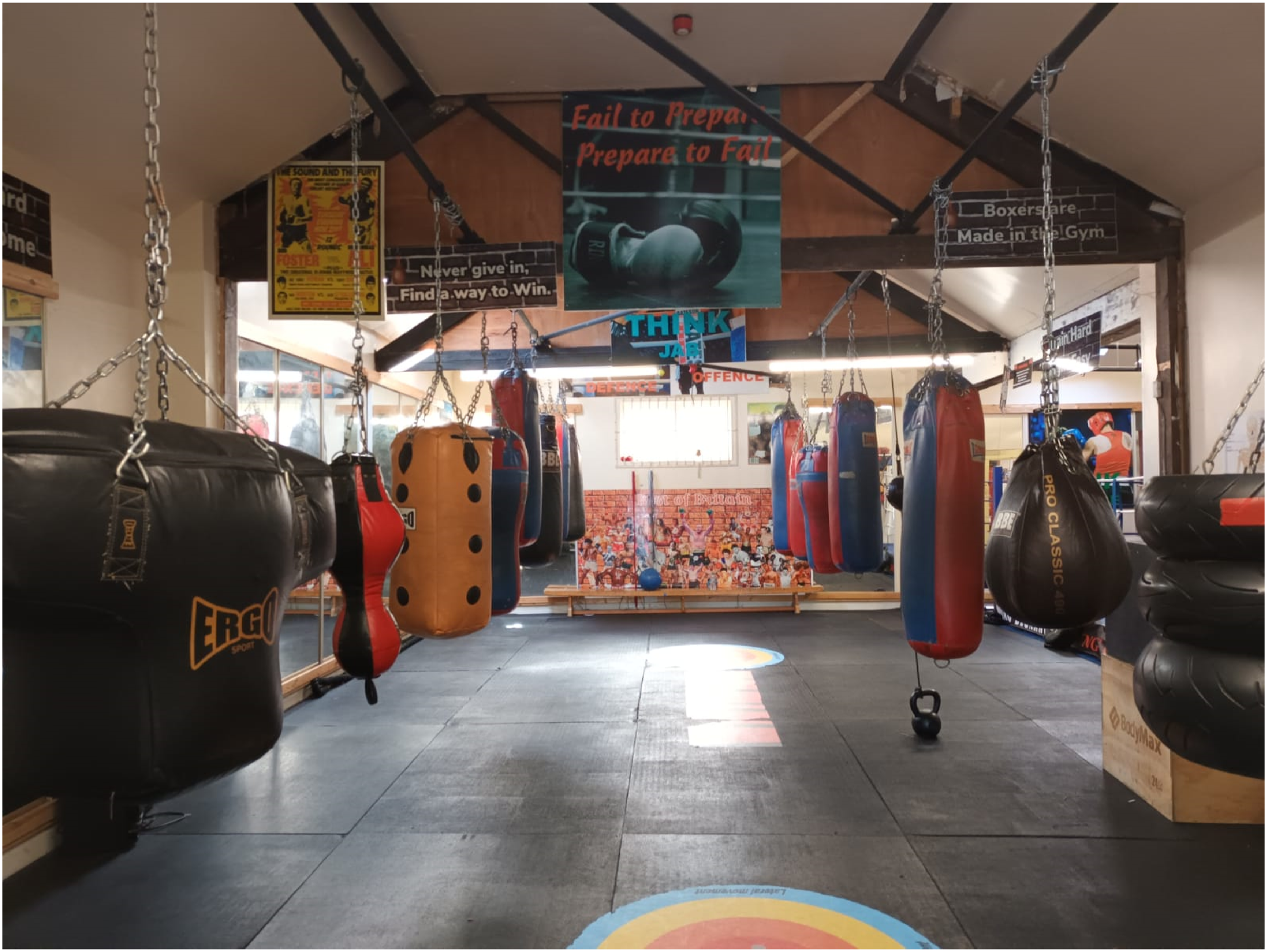
The localist, conservative ideology underpinning Levelling Up relies on community engagement, volunteerism and active citizens. In our case-studies, the pride and place attachment that supported these kinds of engagements were fragile, at risk from both local government funding cuts and the redevelopment agendas that were seen as its solution. Indeed, 18 months after our fieldwork in Southend, TOMA now ‘operates nomadically’: its ability to occupy a physical space is ‘dependent on funding to enable us to do so’, and it ‘operates from grant to grant’ (The Other MA, 2022). Likewise, since we completed our fieldwork in Darlington, plans for the Northgate redevelopment have progressed, and the gym owner remains concerned about a proposed compulsory purchase order of his building for future regeneration schemes (Interview, 2022). The gym had received occasional small grants, but, as the owner put it, ‘if the council helped you a little bit more, you could do more for them to help the local community’ (Interview, 2022). Such experiences are familiar in the critical discourse of culture-led regeneration (e.g. Pratt, 2011), in which attention typically focuses on neoliberal understanding of ‘creative cities’ and ‘creative class’ (e.g. Florida, 2004). Such competitive placemaking can cause the marginalisation of local cultures and low-income populations, leading to their displacement and the re-entrenchment of inequalities (Harvie, 2013). Such processes cannot be captured by the current administrative foundations of Levelling Up and its one-size-fits-all evaluative framework.
Increasing volunteer capacity remains crucial to many Levelling Up projects. The white paper highlights ‘voluntary groups which perform a million acts of kindness daily’ (HM Government, 2022a: 1), and the government sought to measure the pride in place mission through the Community Life survey, which ‘captures evidence on community engagement, volunteering and social cohesion’ (HM Government, 2022b: 9). Yet our research found that volunteering was not always inspired by feelings of pride in place per se. The motivations of Ledbury Poetry Festival volunteers depended on their circumstances. Young people volunteered to learn skills and receive training relevant to the job market; older people volunteered to build friendship networks and to contribute expertise to the community. Pride was revealed to be complex, emerging not only from long-standing relationships with place. There was a cross-generational consensus that place attachment did not depend upon whether people came from Ledbury or how long they had lived there. Rather, it depended on how much they wanted to be in a place and the sense of community they could develop in situ. These sentiments were generated by participants in a poetry collage workshop (Figure 3), which featured lines including: Festival volunteers are committed, proud, passionate about what it means for Ledbury [...] Folks from all over, all sorts of different reasons, to learn, to give, to share, to belong [...] New faces, who are they? Who are they visiting? Welcome to places no longer visited or forgotten [...] Reminds me how much I love this place, formed me, informed me. (Workshop participant, 2022) Excerpt from a collage poem produced by volunteers at Ledbury Poetry Festival, 2022.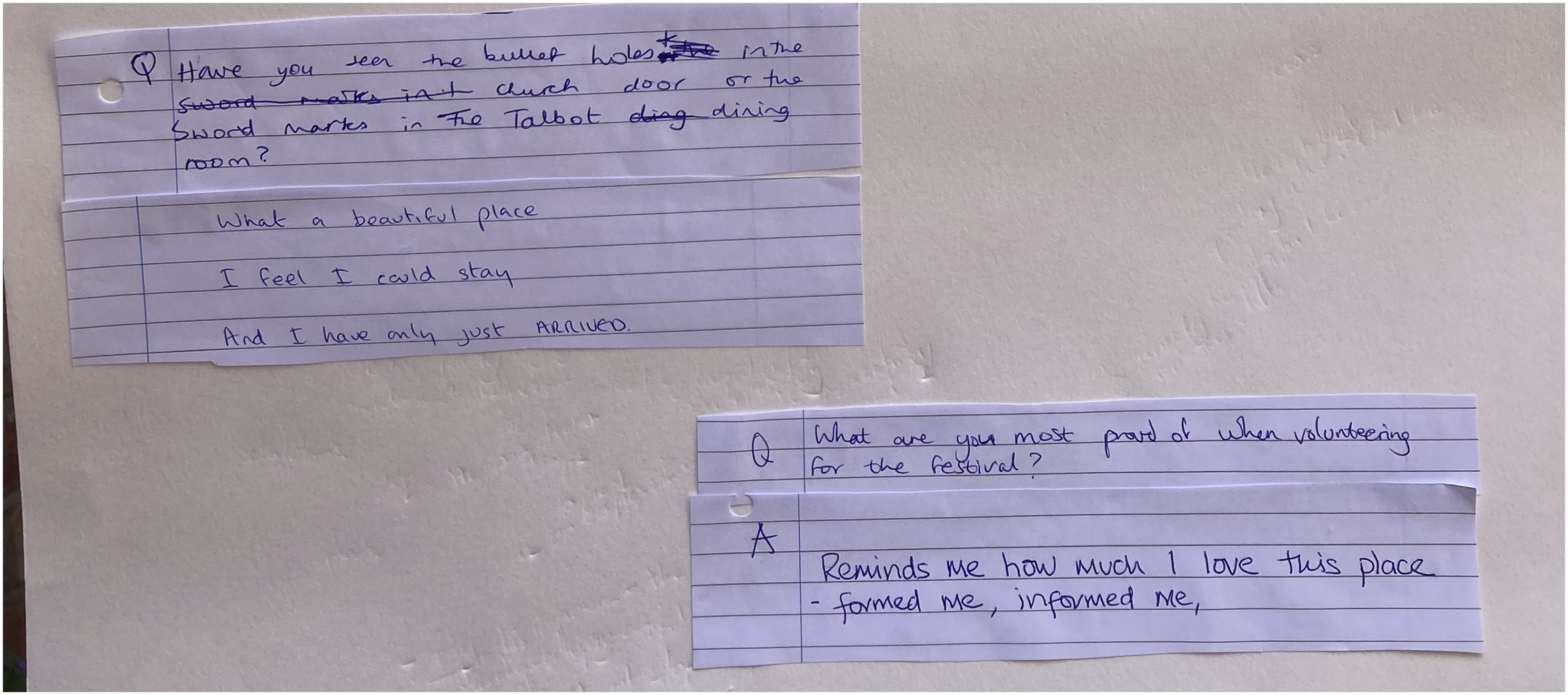
Funding cuts to libraries, schools and hospitals have required volunteers to keep services running. This process is geographically and socially uneven because capacities for volunteer engagement vary (Mohan, 2012: 1121–29). Austerity has also led to funding cuts to the voluntary sector, which undermines the capacity of third-sector organisations to sustain their presence in a landscape of escalating need. There is a danger of structurally disadvantaged areas declining further under proposals for neighbourhood renewal based on volunteering and community action, unless ways of supporting levels of participation among citizens are found. This process might involve differentiating policies according to volunteer age groups and activities, as well as coordinating more effectively with local mentoring and skills strategies. We recommend integrating reflection and evaluation on local skills into Levelling Up programmes, including assessments of on-the-job training and skills development through volunteering placements. More place-centred research might enable a fuller, evidence-based understanding of the relationships between distinctive cultural identities and volunteering capacities.
Pride and competitive place-making
Levelling Up risks not accounting for the relational properties of pride: the idea that pride in one place may produce shame in another. This view appears in scholarship that explores the connections between local cultural capital, socioeconomic participation and prosperity. Abigail Gilmore critically interrogates the ubiquitous terminology of ‘cold spots, crap towns and cultural deserts’ in her work on ‘cultural consumption within “ordinary” localities and mundane places’ (2013: 86). Studies have shown how urban renewal schemes exploit the negative reputation of an area (e.g. Slater and Anderson, 2012). Some schemes even pathologise areas perceived as ‘problem places’ (Paton et al., 2012). Drawing on international case-studies, Tommarchi and Bianchini describe how ‘speculative practices by real estate developers and financial actors may contribute to reinforce stigmatisation’, which can lead to the ‘demolition of affordable housing, displacement and renewal schemes targeted at wealthier city residents’ (2022: 480). Such schemes redefine working class people’s lives and sanitise deprived locales to maximise profit (Harvie, 2013; Paton et al., 2012).
Regeneration was similarly understood as a zero-sum game by our case-study partners, especially within the competitive frameworks of the Stronger Towns Fund and Community Renewal Fund. Local authorities knew that they were being pitted against one another for funding, and that the blunt national aggregation of metrics was enforcing simplistic and top-down interventions, which flattened and homogenised local histories and identities. One council invited an artist to decorate an area of the town centre that a century ago had been the site of the local meat industry, containing abattoirs and related professions, and which now housed small independent shops and offices. The brief was to generate a hyper-localised placemaking initiative that would boost footfall and increase visitor spending. The artist presented brightly coloured designs of striped awnings and ‘feminine’ patterns, which were intended to create a ‘fantasy’ environment that would make ‘people feel like they were somewhere else’ and entice visitors to explore the area (Interview, 2022). Though the decision-makers we spoke with claimed to be proud of this regeneration scheme, the local business owners petitioned the council to reconsider the new designs, concerned that their individual brands were being replaced and their presences minimised. As one participant put it, ‘this [project] has nothing to do with us’ (Interview, 2022).
The competitive placemaking favoured by Levelling Up schemes also plays out at the hyper-local level. In Ledbury, residents were proud of the international reputation of the Poetry Festival, the presence of the festival on the high street, and the ‘increased signage’ in the town and at the train station (Interview, 2022). These sources of pride were predicated on the status boost that comes with being recognised by people from other places, illustrated by the fact that Ledbury’s high street had been featured in a national broadsheet newspaper as one of ‘the best places in the world for Christmas shopping’ (Interview, 2022). In Darlington, the perception that the town was ‘on the up’ was closely linked to the view that regeneration would boost economic growth and provide local jobs (Interview, 2022). In Southampton, residents in two neighbouring wards demonstrated an us-and-them attitude, citing the other as ‘having more going on’ and being ‘where stuff happens’ (Interviews, 2022). Being seen and ranking above others was important to most residents across our case-studies. In Southampton, the view that nearby wards were better serviced, combined with the lack of cultural assets and provision, made residents feel a sense of shame and hyper-localised loss. In Ledbury, being visible to outsiders, combined with a confidently articulated cultural identity, made residents feel pride and place attachment. Pride and shame therefore functioned at different, contested and complex geographical scales.
Pride, proxies and privatisation
Three proxies in the white paper quantified pride in place during the bidding process for Levelling Up funding (HM Government, 2022a: 206–232). The first proxy—that ‘people’s satisfaction with their town centre and engagement in local culture and community […] will have risen in every area of the UK’—aims to capture the increase in social capital of an area in ways that Haldane has prescribed (HM Government, 2022a: 7). It follows a trend in these types of metric initiatives, such as the UK ONS well-being index and the OECD priority for measuring well-being and progress. Measuring the increase in place attachment and the rise in volunteers necessary to deliver it indicates a ‘turn’ in governance that relies on the affective ‘categorizing, classifying and coding’ of populations (Fortier, 2010: 22). Proxies two and three are much blunter, focusing on housing and crime: the second states that ‘renters will have a secure path to ownership with the number of first-time buyers increasing in all areas’; the third claims that ‘homicide, serious violence and neighbourhood crime will have fallen’ (HM Government, 2022a: 7). These proxies illustrate an ideological preference for the private sphere over the public realm, which undercuts the authentic collective possibilities of both civicism and pride in place.
The association between housing, pride and crime evoked in the document has a long history. The radical languages for socially planned housing rejected the distinctions of relationality and rank that pride requires. For Thomas More, pride was problematic because it relies on comparisons ‘with the miseries and incommodities of others’ (Bruce, 2009: 185); for Ebenezer Howard, it was suggestive of an individual ‘luxury’ that is antithetical to the ‘delightful streets, highways, and passages’, which are maintained for the common good (1902: 106). More and Howard influenced Lewis Silkin, a political architect of the postwar New Town movement, but Silkin shifts register by incorporating civic pride into his vision for a new type of town, which would create ‘a new type of citizen, a healthy, self-respecting, dignified person with a sense of beauty, culture and civic pride’ (1946).
The history of this failed New Town movement is embedded in political discourse but contested by cultural historians; in this discrepancy, we see a specific language for pride emerge. The failure of the New Towns was both ideological and inextricable from the fate of social housing. As Lynsey Hanley notes, the flush of the postwar period equated the swapping of the slums for council housing with ‘a fair and equitable stake in the collective wealth of the nation’ but it was an ideal that ‘barely had time to bear fruit before it was punctured’ (2007: 10). Everything that the ‘corporation’ represented—the council house, the planned infrastructure of work and leisure, and the regulation of green spaces—became incompatible with an emerging economic neoliberalism (Hanley, 2007: 10). Ironically, a problem that beset the New Towns was the failure of the evaluation planned for these communities. A lack of community-engaged research meant that the lived experiences of those occupying the towns were never captured and there was no serious attempt to go beyond the stereotypes that quickly framed their lives (Alexander, 2009: 112). The assumption that pride could be felt only by those in possession of a mortgage was assumed by the literal architects of social housing. Town planners suggested that ‘people don’t take responsibility and pride as they do when they have paid £200K’ (Rivera, 2021: 55).
The shame projected onto council estates extended to the spaces and communities that operated within them. John Boughton’s history of municipal housing emphasises the key role that the associations of criminality played in the demonisation of the physical places of council estates, evoked so powerfully by David Cameron’s 2016 assertion that council estates are ‘a gift to criminals and drug dealers’ (2012: 175). The association between criminality and council housing lay not simply in the denigration of its residents but in the idea of ‘defensible space’, which suggests that public spaces fail because they are insufficiently observed or owned (Lees and Warwick, 2022). It is this assumption—that the only safe space is a privately owned space—that resurfaces in the twinned proxies of housing and crime in the Levelling Up white paper. It is another way of damning the possibility of a pride in place not rooted in private ownership, despite all the contradictions and problems of privatised pride that have been drawn out by our research.
Our case-studies show that the relationship between the private sphere and the public realm is inherent to many people’s understandings of pride in place. In Ledbury, there were contradictions between participants’ appreciation of green spaces and their acknowledgement that new housing developments were needed. This friction played into a wider local debate about the benefits of including newcomers in volunteering networks against the effects of diversity on established communities. Paradoxically, while residents were proud of the Poetry Festival for attracting temporary visitors to the town, they were wary of strangers coming to live permanently in ‘their place’ (Interviews, 2022). In Darlington, housing developments earmarked for green spaces were regarded with anxiety and there was a fear that new populations of young people would bring disruptive and antisocial behaviour. For the proposed redevelopment of the derelict Northgate Tower, some participants hoped that the building would be transformed into offices or a hotel rather than flats. Other views on housing were relayed with nostalgia. As one local leader put it, ‘if I ever won the lottery, I’d buy all the run-down houses and build them up to how they used to be’ (Interview, 2022). These examples suggest that private ownership is often seen as a solution to public ills, and that pride will necessarily follow from relinquishing public ownership and responsibility to the private realm. Our conclusion argues that another way is possible.
Pride as social infrastructure
Levelling Up mobilises pride in place as an idealised and undefined panacea for regional inequality, and the proxies used to frame the agenda prevent it from being meaningfully understood and measured. There is, we suggest, a recurring mismatch between what our analysis reveals is needed to restore pride in place and how the government deploys the language of pride in its investment plans, prospectuses and bidding documents. To approach this contradiction, we have made three key, interconnected claims. One, that 14 years of government austerity have reduced the capacity of towns to invest in and regenerate communities, thwarting their ability to restore pride in place. Two, that a weak pride and place literacy, including the opaque definition of the pride in place mission, confuses people’s individual and collective aspirations, revealing a disconnect between policymaking and on-the-ground evidence. Three, that communities can express authentic and collective feelings that supersede individual emotional responses. There are benefits that this type of pride could bring to places on the economic margins. The empirical data in our article supplies evidence for how a less economic and instrumental mobilisation of pride provides mechanisms for imagining alternative modes of being and belonging in place.
Our research shows how small interventions from within places can make important contributions. Grass-roots initiatives, such as the boxing club in Darlington and the art collective in Southend, often subvert top-down approaches. While the critique of nostalgia in pride discourses is important, we do not discount the importance of heritage and collective cultural memory. The past is a vital resource for interpreting the present and envisaging better futures: our case-studies demonstrate how identification with the past helps to formulate both individual and collective identities. Pride, place and identity formation are intrinsically linked. To identify with a place is to be aware of its traditions, folklore, culture and inheritance: these sentiments are crucial for imagining communities. We propose a version of Levelling Up that forges new senses of community and revitalises local democracy, instead of pitting underdog places against one another in resource-intensive competitions for meagre funding.
These findings underline the need for more critical research on capturing, representing and measuring the felt experiences of place. In a similar vein, Rebecca Madgin has asked what policy and placemaking advances might occur if ‘we deeply incorporated the lived and felt experiences of place within our decision-making processes […] beyond seeing place solely as a geographic location or an administrative boundary or even a functional economic area’ (2022, our italics). For decision-makers, ‘felt relationships are a missing but crucial piece of the place jigsaw’ (ibid). We suggest that the evaluation of pride in place requires a more open and longer-term approach that extends beyond the quantitative, positivist and econometric methods that currently dominate policy. Analysis of Levelling Up may find that levels of pride in place change, but what does that observation mean in practice? We do not know from current evaluation methods how residents understand these feelings, what specifically generates proud responses, and what it might mean when pride wanes should an initiative not be delivered as planned. Our research has explored some of the consequences of government policy that tries to mobilise the emotions of place, and new qualitative methods could be designed to investigate and register the many kinds of pride in place, particularly its multiple, partial and dynamic qualities. This work should consider negative feelings, a lack of interest towards pride within communities, and importantly, the hubristic qualities of pride.
New approaches to measuring social and cultural infrastructure suggest serious conceptual attempts to understand the economic and political implications of feelings about place (Alexandrova et al., 2024; Tomaney et al., 2024). The Bennett Institute acknowledges that understanding the impact of ‘cultural infrastructure’ relating to ‘belonging, community cohesion and cross-community engagement’ requires an ‘examination of the histories and make-up of particular places and communities’ (Alexandrova et al., 2024: 15). Future work might explore how pride in place addresses the evidential and conceptual gaps in this emerging literature, such as those between hard/soft and tangible/intangible social infrastructure. We have shown how creative methods, focused on the felt experience of place, enable earlier-stage engagement with communities. Our methods reveal a lack of operational clarity when policymakers seek econometric evaluations, and they suggest that human-focused approaches would generate more meaningful understandings. Increased ‘pride literacy’ among policymakers, and greater confidence using creative methods in place-based decision-making, might support these humanities-led perspectives. If written explicitly into Levelling Up programmes, schemes such as the Community Ownership Fund and Stronger Towns Fund would be well-placed to lead on such approaches.
Questions remain about how societies should address the negative feelings and emotions that impede progressive community development. One approach suggested by Jörg Flecker emphasises: the importance of policies directed at reducing feelings of insecurity and injustice through concrete measures of providing secure and stable employment and income resulting in satisfactory living conditions and subjectively meaningful integration into society. (2007: 245)
We agree with Flecker that such social infrastructure is needed to provide the conditions for social capital that improves towns and cities, and that it can be related to some versions of pride. Pride in place, though, is too nebulous an idea against which to measure policy success, and the government’s top-down approach to Levelling Up has aggregated the pride in place mission beyond meaning. The practical application of Levelling Up—its competitive framework, loose definitions, pork-barrel politics and inadequate proxies—generates a formula that misrepresents both pride and places. Incidentally, it also undermines the stated aim of the government: to restore pride in place.
Supplemental Material
Supplemental Material - Levelling Up, affective governance and tensions within ‘pride in place’
Supplemental Material for Levelling Up, affective governance and tensions within ‘pride in place’ by Michael Howcroft, Nicky Marsh and Joseph Owen in Environment and Planning C: Politics and Space
Footnotes
Acknowledgements
Thank you to all our participants who shared their experiences, feelings and hopes for the future. Thank you to Will May and Catherine Clarke, Co-Investigators on Towns and the Cultural Economies of Recovery. Thank you to the two anonymous reviewers for their insightful and helpful comments.
Declaration of conflicting interests
The author(s) declared no potential conflicts of interest with respect to the research, authorship, and/or publication of this article.
Funding
The author(s) disclosed receipt of the following financial support for the research, authorship, and/or publication of this article: This work was supported by the AHRC: AH/V005804/1: Towns and the Cultural Economies of Recovery: A new multidisciplinary mapping and AHRC: AH/W008696/: Feeling Towns: The role of place and identity in governance and local policy.

Supplemental Material
Supplemental material for this article is available online.
References
Supplementary Material
Please find the following supplemental material available below.
For Open Access articles published under a Creative Commons License, all supplemental material carries the same license as the article it is associated with.
For non-Open Access articles published, all supplemental material carries a non-exclusive license, and permission requests for re-use of supplemental material or any part of supplemental material shall be sent directly to the copyright owner as specified in the copyright notice associated with the article.
