




Abstract
Energy production from fossil fuels is gradually phased out as many countries aim to transition to a low-carbon society. As society and technology are intertwined, phasing out fossil fuels impacts people and communities. Especially those who heavily rely on the fossil fuel industry will be worse off. Therefore, calls are being made for ajust transitionthat ensures the rehabilitation of workers, regions, and communities negatively affected by fossil fuel industry closures. We argue that spatial justice can help inform just transition’s theoretical and practical aspects. Therefore, a spatial justice approach should be a prerequisite for a just transition. The concept of spatial justice is intertwined with the social justice principles of procedural, distributive, and restorative justice, which are central to the current conceptual understanding of just transition. We use the case of the closure of peat-based electricity production in rural Ireland to demonstrate how a spatial justice approach can underpin a just transition and how it can help with practicalities like identifying and addressing the issues and concerns in local communities. To ensure a just transition, a spatial justice approach is needed to identify and address the deeper problems affecting the resiliency of rural and mono-industrial regions dependent on fossil fuels.
Introduction
Many countries are implementing decarbonisation policies to limit greenhouse gas emissions in energy production to limit global average temperature rise. Consequently, unprecedented changes are taking place in the use and production of fossil fuels and will continue over the next decades (Morena et al., 2020; Stevis and Felli, 2020). Workers and community members who depend on this sector for livelihood and economic vitality are likely to be severely impacted by the contraction of the sector (Banerjee and Schuitema, 2022; Morena et al., 2020). In the European Union context, as many regions primarily depend on fossil fuel mono-industries, the closure of fossil fuel industries will increase regional disparities and inequalities, creating further challenges for the territorial cohesion agenda (Madanipour et al., 2022; European Commission, 2020). Therefore, scholars have argued that the decision to reduce fossil fuel production needs to be dovetailed with rehabilitation measures that minimise and compensate for the livelihood disruptions of the fossil fuel workers and economic ramifications on embedded communities in the short and long term (Sanz-Hernández et al., 2020; Weller, 2019). Such a rehabilitative approach is referred to as ajust transition, implying that policies should ensure that decarbonisation plans do not disproportionally negatively impact workers and members of proximate communities. A good understanding of the concept and practicalities of a just transition becomes critical as many fossil fuel-dependent regions are likely to face unfavourable short and long-term socio-economic impacts (Cha, 2020; Kuchler and Bridge, 2018).
The call for a just transition has resonated in international political agreements, such as the preamble of the Paris Accord and the 2018 Silesia Declaration on Solidarity and Just Transition, and in many national climate policies (Stevis and Felli, 2020). For example, the European Union has created a Just Transition Funding Mechanism as part of the New Green Deal to fund projects to mitigate the socioeconomic fallout of the contraction of fossil fuel industries like coal, peat, and oil and gas (European Commission, 2020). However, while such political commitments for financial investments in the region for economic diversification are increasing, it is still being determined whether and how these measures would benefit local communities, specifically the most vulnerable people and communities (Mercier, 2020).
A just transition that entails the rehabilitation of workers and re-development of regions in socially, economically, and environmentally sustainable ways so that “no one is left behind” is not an easy task (Kuchler and Bridge, 2018; Sanz-Hernández et al., 2020; Weller, 2019). Material realities of energy production are geographically embedded. Changes in energy production require massive re-configurations in terms of location, landscape, political and social power, culture, norms and traditions, and development trajectories (Bridge et al., 2013). These rigors can be easily ignored when just transition is treated “in an aspirational and uncritical way” (Ciplet and Harrison, 2019, p.439). However, there remains a narrow understanding of the term within policymaking forums (Morena et al., 2020). As a result, just transition plans and policies may fail to deliver just and equitable solutions to workers and regions, aggravating their discontent with energy policies and government initiatives for a low-carbon energy transition (Olson-Hazboun et al., 2018). Therefore, theorizing, debating, researching, and assessing just transition cases with empirical research is essential to strengthening the term and its impacts.
Scholars have suggested that “social justice” should be at the core of low-carbon transition policies and plans, ensuring they are just and fair (McCauley and Heffron, 2018; Fuller, 2021; Morena et al., 2020). In this paper, we argue that the theory of spatial justice can further add to the theoretical and practical scope and understanding of just transition. We first show how spatial justice theory can be an effective analytical tool to explain and understand how place, its physical realities and structural conditions, its socially valued resource allocation, its influences confining or enhancing opportunities for people, and its histories play an essential role in how social (in)justices can be exacerbated or improved under just transition. We then follow this up by showing how the spatial justice concepts can help provide a lens to identify the justice dimensions in the concerns expressed by community members facing the closure of a local fossil fuel industry that provided livelihood and socioeconomic stability to their region. In the next section, we explain how spatial justice theory can help strengthen the concept of just transition.
Just transition and spatial justice
The term “just transition” originated in the US labour unions in the1970s to emphasize that workers and communities should not unfairly bear the socioeconomic consequences of the closure of highly pollutive chemical industries due to strict environmental regulations (Stevis and Felli, 2020). In addition, trade union leaders demanded a just transition to rehabilitate the workers, reduce local joblessness, and counteract the local economic downturn (Stevis and Felli, 2020). Recently, the closure and divestments of fossil fuel industries have resulted in similar calls for a just transition for the affected workers, communities, and regions (Morena et al., 2020; Kuchler and Bridge, 2018; Sanz-Hernández et al., 2020; Weller, 2019).
Scholars have provided various definitions and theoretical underpinnings of the term just transition, leaning on the climate, energy, and environmental justice literature (Wang and Lo, 2021). Some scholars propose that the three social justice principles of distributive, procedural, and restorative justice are necessary for a just transition (McCauley and Heffron, 2018; Fuller, 2021; McCauley et al., 2013). Distributive justice refers to an equitable and fair distribution of benefits and burdens; procedural justice implies that fair and transparent processes are put in place for stakeholder participation and consultation at various stages; and restorative justice suggests that those who are harmed are rehabilitated through adequate and meaningful compensations and protected from future harm (McCauley and Heffron, 2018). In addition, there is an increased understanding that the socioeconomic realities of space matter, especially where transitions to a low-carbon society are happening (Sovacool, 2017). Specifically, regions, communities, and workers bear many burdens of local fossil fuel industry closures. However, improving their socioeconomic conditions needs to be more adequately understood to deliver a just transition to people and regions, especially how to mobilise the complex network of resources, material realities, culture, history, and social norms of the space in which they live. We add to this literature by further fleshing out the spatial dimensions of social justice and how just transition can benefit from the theory of spatial justice.
Soja (2009) proposes that space and society co-produce each other and that ‘spatial (in)justice can be seen as both outcome and process, as geographies or distributional patterns that are in themselves just/unjust and as the processes that produce these outcomes.’ (p. 3). As space is “filled with politics, ideology, and other forces shaping lives,” it impacts society as the “geographies in which we live can have both positive and negative effects on our lives” (Soja, 2013: p.19). Therefore, as spaces differ regarding geographical characteristics, natural resource access, and availability of socially valued resources (like education, healthcare, and transport), social (in) justice can be enhanced due to the geographies in which people live. Soja (2013) argues that locational discrimination can happen when people are discriminated against based on where they live. As a result, people benefit unequally in accessing socially valued resources like education, transport, and health services, as their locations play an essential part in distribution decisions (Soja, 2013).
Furthermore, unjust geographies are also created when exogenous geographies influence certain regions to remain underdeveloped and persistently dependent on developed areas that economically exploit and culturally dominate them (Soja, 2013). Additionally, the space in which one lives affects the political power the people enjoy and their influence on policymaking (Soja, 2009). Unequal power in influencing favourable policy outcomes can further produce and exacerbate inequalities. Thus, the theory of spatial justice helps explain how the space in which people live affects their socioeconomic and political lives.
Besides recognising geographies as a cause of injustice, spatial justice theory can also help to address those injustices by improving spaces to increase the capabilities and opportunities in the region (Marcuse, 2010; Israel and Frenkel, 2020). Harvey (2010) points out that spatial injustices are often the result of neoliberal policies and capitalist exploitation, and only structural changes can solve such injustices. However, while making structural changes, Nordberg (2020: p.56) suggests that “spatial justice is about equitable, not equal treatment,” meaning similar and equal structural changes may not result in similar results. Structural solutions based on spatial justice should be place-based and choice-centric as peoples’ meaning of well-being, development, justice, and opportunities need to align with their geographic realities (Jones et al., 2019; Sen, 2008; Bennett and Layard, 2015). While freedom, liberty, development, and well-being are common goals, different regions should be provided with choices to meet these goals in their own ways (Storper, 2011).
Notably, rural and urban spaces differ, with rural areas remaining peripheral to more urbanised regions. As a result, rural spaces are often affected by various factors that produce and reproduce spatial injustices (Nordberg, 2020). These factors include a lack of accessibility to opportunities (Farrington and Farrington, 2005) for education, health services, jobs, recreation, and other facilities that help rural people to improve their “life chances” (Smith, 1977: p. 63 in Farrington and Farrington, 2005). Therefore, it is crucial to recognise rural spatial (in)justice so that rural and peripheral regions can define their future based on their regional priorities rather than a predefined set of ideas by outsiders (Jones et al., 2020; Nordberg, 2020). Rural spaces need to be understood based on local conditions rather than from an urban perspective (Johansen et al., 2021). Recognising the right of the people to collectively create the place they inhabit to suit their lives (Landy and Moreau, 2015) and expressing a diversity of ideas on how the future would look like (Marsden et al., 2012) is critical. Thus, rural spatial justice underscores the idea that people in rural regions can exercise their rights to determine their future rather than as a space where land is reserved for ecosystem services, renewable energy, cultural heritage preservation, and recreational projects or second homes for urban dwellers (Woods, 2010).
Principles of spatial justice and its offshoots in rural spatial justice can also aid in just transition theory and practice by filling gaps in a social justice approach to just transition based on distributive, procedural, and restorative justice tenets. For example, distributive justice only ‘can be exercised whenever there is some divisible good or evil that can be distributed among individuals’ (Acton, 1972: p. 422). However, not all things are tangible goods and services that can be distributed or redistributed. Additionally, certain historic distributive injustices continue to influence current distribution processes, and (re)produce inequities within or across a region. In such cases, spatial justice helps to recognise the ‘relational spatiality of (in)justice in society’ (Madanipour et al., 2022: p. 810). As a result, a spatial justice approach helps fill gaps in distributive justice.
Spatial justice can inform procedural justice by underlining the importance of finding inclusive processes where decision-making reflects the ideas and visions of the local communities and otherwise unheard voices (Soja, 2013). Spatial justice also helps recognise that defining a policy problem is often political. Living in specific spaces influences peoples' (or their elected representatives') political power to participate in decision-making processes where policy problems are defined, and policies are shaped (Ingram et al., 2007). People often have unequal citizenships where the problems of some groups are solved through public policies. In contrast, for other injustices are perpetuated as they have lesser power to bargain their stakes or are at lower positions in the political power hierarchy (Ingram et al., 2007: p. 100).
Concerning restorative justice, spatial justice can draw attention to differences in the capabilities of spaces. As a result, achieving restorative justice in just transition policies to rehabilitate regions needs to be attentive to the differences in regions' structural and natural endowments to support the people’s livelihoods. Consequently, rehabilitation of a region for a just transition should be place-based, recognising that people living in rural and peripheral areas have the right to define their future rather than being dictated by urban-centric ideas of development and structural changes. Therefore, spatial justice can strengthen restorative justice by drawing attention to the point that as space influences people’s lives, the rehabilitation of socio-economic conditions of a region should be attentive to their right to define and pursue future goals and aspirations without shame or disrespect (Honneth, 2004).
The remaining paper provides an empirical case study to show how a spatial justice theory can inform and strengthen just transition theory and practice and why spatial justice should be a prerequisite for a just transition. We also demonstrate how spatial justice strengthens the three tenets of a just transition, that is, distributive, procedural, and restorative justice. The case study is on the closure of the peat industry impacting the rural areas in the Irish Midland region (henceforth, Midlands). Before we present our empirical research, we provide a brief background of the political context.
Peat fuel for electricity in Ireland: The past, present and no future
Peat, a subcategory of brown coal fossil fuel, is found abundantly in the Midlands and is traditionally used as a domestic fuel mainly for heating and cooking. In the 1940s, Irish peatlands became the source of cheap and locally available fossil fuel that could fire several thermal power plants in the country. As a result, national policies were put in place to support the large-scale extraction of peat for fuel. A state-owned company Bord na Móna, was also established during this time to drain the bogs and set industrial-scale peat extraction processes to supply peat fuel to thermal power plants across the country (Tuohy et al., 2009). This peat-based electricity production held nationalistic pride and was hailed as a remarkable engineering feat that reduced dependence on fuel import (Kearns, 1978). Until recently, peat was an essential fuel for Ireland’s electricity production (Connolly, 2019).
Bord na Móna converted the traditional activity of manually extracting peat using rudimentary tools, a part of Irish culture, into a heavily mechanised and efficient process using sophisticated machinery over the years. In doing so, the company employed thousands of people in the Midlands, which varied across seasons. Also, thermal power plants owned and run by the semi-state Electricity Supply Board (ESB) employed people locally. Thus, Bord na Móna and ESB were significant employers in the Midlands for decades. These jobs were critical in the region that has witnessed decades of outmigration due to the lack of non-agricultural livelihoods (Brereton et al., 2011). The peat industry and the bogs have influenced Irish culture, history, literature, and society and are ‘fundamentally part of the Irish consciousness’ (Gladwin, 2016: p. 75). Locally, the peat industry did not just create jobs but also helped the people preserve their identity in the Midlands, creating a sense of security and equality. However, peat extraction fell over the years. Bord na Móna began to re-invent themselves in the renewable energy sector, especially wind farms, as existing peatlands scoured out of peat have become available landbank for the company (Bresnihan and Brodie, 2021).
At the end of 2019, ESB announced that the company would close two of the remaining thermal power plants (West Offaly and Lough Ree Power Station) in December 2020, when their planning permission expired. ESB arrived at this decision as the extension of planning permission for operating the power plants on a mix of biomass and peat (due to the fall in peat production and strict environmental regulations that protected peatlands as critical habitats) was rejected by An Bord Pleanála in July 2019. ESB indicated that the main reason for the closure was the lack of viable business models to keep the power plants operational, considering the environmental and commercial challenges of using peat and biomass as fuel (ESB, 2019). In addition, as these power plants solely operated on peat purchased from Bord na Móna, their closure knocked on industrial-scale peat extraction in the region. Bord na Móna, already vested in the wind farm business, finally suspended industrial-scale peat extraction in mid-2020, intending to further convert their peatlands into wind farms and other low climate impact industries.
To ensure that communities and workers depended on employment by Bord na Móna, the government of Ireland promised to ensure a just transition in the region that would create sustainable green jobs (Ryan, 2019). Accordingly, a national Just Transition commissioner was appointed for consultation with stakeholders like the workers, communities, employers, and government agencies to deliberate and formulate plans and investment decisions for a just transition. Initially, the government proposed three types of projects to help enable a just transition in the region: retrofitting houses for energy efficiency, rewetting the peatlands and community-led projects, and creating a Just Transition fund to allocate money for the purpose. Eventually, under the CAP, 2023, a commitment was made of 22 million euros grant funding for the region till 2024 and a total of 169 million euros investment in the region under the European Union Just Transition Programme till 2030 CAP, 2023.
The alternative businesses suggested for the region, like wind farms and data centres, are often criticised for the need for local embeddedness and alignment with local skills (Bresnihan and Brodie, 2021). In addition, the media has expressed concerns about the progress of a just transition in the Midlands due to the region’s various issues that challenge a just transition (McCormack, 2021). Though money has been recently allocated, there has yet to be a clear indication of how increased funding would close the gap between the ideal and the practice of a just transition. This can be reduced by theorising how distributive, procedural, and restorative justice can be underpinned by spatial justice.
Research methods
Data collection involved document research and interviewing community members to understand how communities directly affected by the closure perceived its impacts and what would a just transition meant to them. To get familiar with the context, the researchers tracked the case from the beginning when media reports suggested relevant authorities were discussing the closure of the peat industry. In addition, the lead researcher attended public seminars where stakeholders discussed the implications of the closure of the peat industry on the workers and the communities, the rehabilitation plans, and the possibilities and challenges of a just transition in the region. Further, the lead researcher also attended election campaigns in the region to understand how different political parties addressed the issues of job loss and the region’s economic future in their campaigns to understand their policy stance. Further interactions with high-level actors like local council members, trade union leaders, members of parliament, high-ranking Bord na Móna officials and national-level think tanks offered a general overview of the region’s prospects. Finally, researchers reviewed discussions in the news and social media to provide an overall perspective using the document analysis research method (Bowen, 2009).
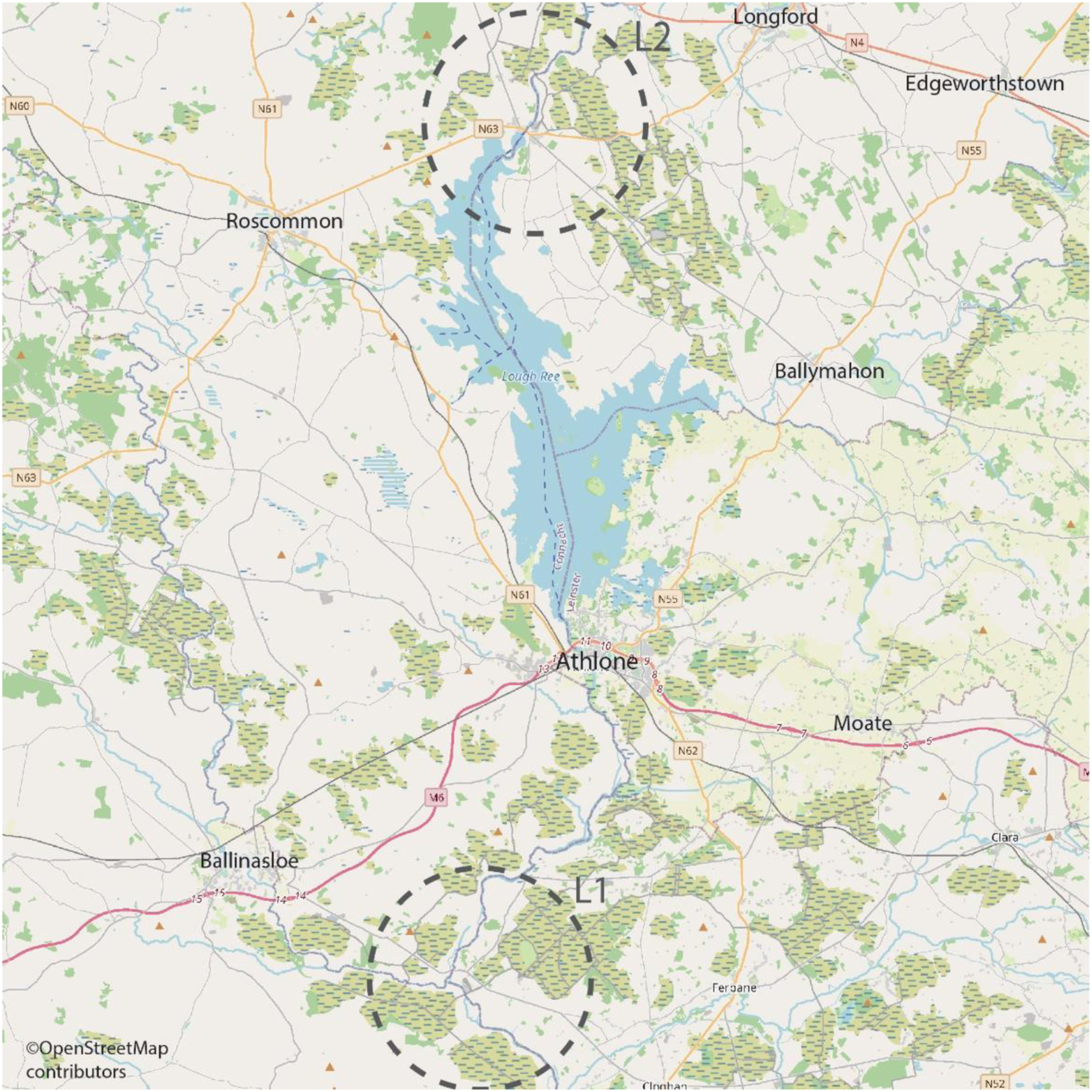
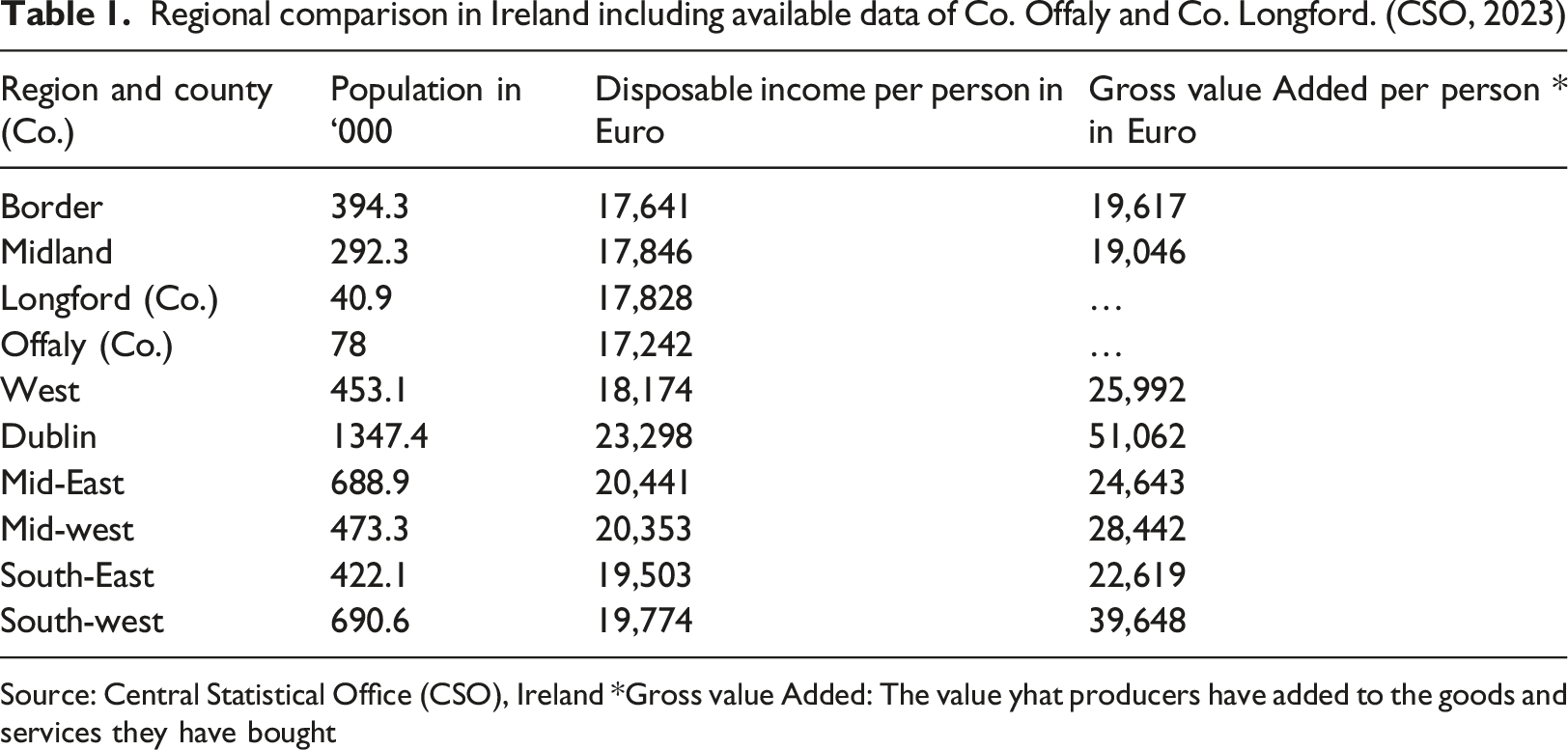
A total of 30 community members who lived in the local community surrounding West Offaly (County Offaly) and Lough Ree Power Stations (County Longford) in the Midlands (which were operating on peat fuel and were closed subsequently) were interviewed in person. The Irish Midland region (consisting of counties Offaly, Longford, Westmeath, and Louth) overall is one of the poorest regions in Ireland (CSO, 2023), and Co. Offaly and Co. Longford are among the poorest counties of the country (Carey, 2023). Map 1 shows the location of the two power stations, and Map 2 shows general areas of interviewee recruitment. Maps 1 and 2 give an idea of how the communities lie in a region considerably far from economic hubs and urban centers in the country, like Galway in the west and Dublin, Cork, and Limerick, which falls in the wealthier Southeast region of the country (Morrissey, 2016). Table 1 also provides pertinent statistics that reflect the overall socioeconomic conditions that have developed over decades in the Midlands and how this region compares with other Irish regions. Overall, these statistics show how the Midlands, especially counties like Offaly and Longford, lag in economic prosperity and remain one of the least densely populated parts of the country. Location of the closed power stations in Ireland. Areas of the community interviews (L1 and L2). Regional comparison in Ireland including available data of Co. Offaly and Co. Longford. (CSO, 2023) Source: Central Statistical Office (CSO), Ireland *Gross value Added: The value yhat producers have added to the goods and services they have bought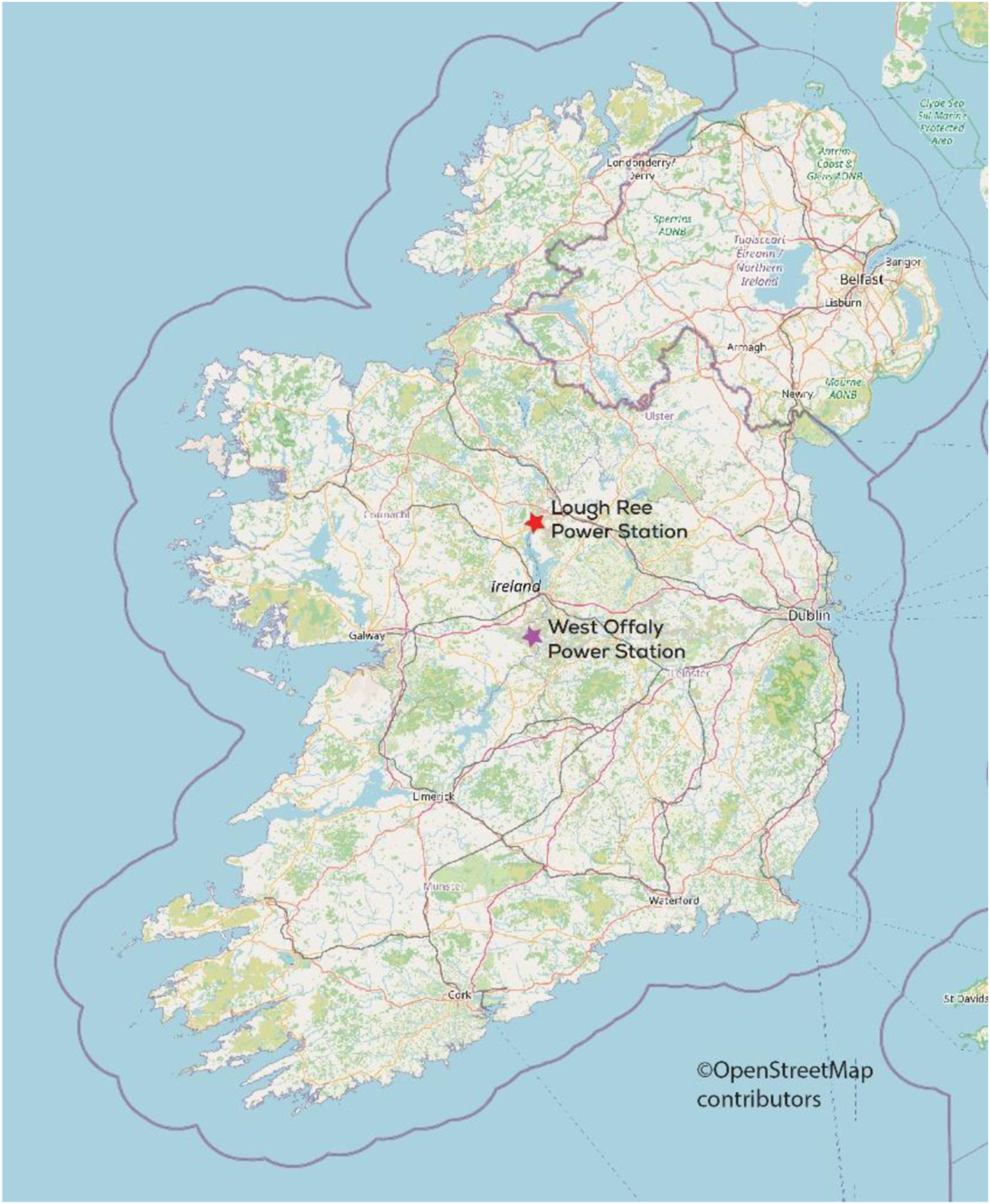
The peatlands surrounding these communities were used for peat extraction for the power plants. Therefore, these communities were in the physical space where the entire supply chain of peat-based electricity was evident. As a result, many participants were actively engaged in community-based discussions and planning for a just transition in the region. In addition, all participants were asked to recommend other community members (for snowball sampling) who held similar and disparate views about the developments happening in the region (Noy, 2008). Therefore, the sampling method focused on collecting a diversity of views of community members on the issues. Interviews were conducted between November 2019 and early 2020 before the pandemic made it impossible to conduct face-to-face interviews.
An interviewee protocol was created based on the document research and participant observation and was approved by the institutional review board. In-person, face-to-face interviews were conducted after informing the participants of their rights and privileges to decline to answer any questions and the academic nature of the research. The personal interface while conducting in-person face-to-face interviews gave the researchers a connection with the interviewee creating an ambiance based on empathy and trust that helped ask follow-up questions that aided in better data collection. Interviews lasted between 20 and 90 min. They were audio-recorded with consent after the interviewer informed each interviewee in detail about the purpose of the research, data confidentiality, and their rights as participants. Each audio file was transcribed verbatim and coded to identify the common themes.
The interview questionnaire consisted of semi-structured and open-ended questions designed to enable interviewees to cover broad thematic areas and go in-depth as probed by the interviewers. The first set of questions, also used as warm-up questions, was to understand what respondents liked and disliked about the place and the opportunities and challenges of living in the community and the region. The second set of questions focused on perceptions of the decisions to close the ESB power plants in the area that additionally had a knock-on effect on peat extraction activities. Third, questions focused on attitudes towards the Irish electricity sector’s decarbonisation plans. The fourth set of questions was on their perceptions of a just transition in the region. Finally, questions were asked about how they perceive the region’s future and what can ensure a sustainable future. The researchers coded the answers into themes and subthemes using NVivo 12.
Results and discussion
The broad themes from the data analysis are presented below, followed by a discussion on how spatial justice theory helps identify and address each theme. Finally, this section explains why spatial justice should be used as a prerequisite for a just transition in practice and how spatial justice theory can strengthen the theoretical underpinnings of the just transition as a concept.
Spatial embeddedness of the peat industry and implications for distributive justice
One of the primary themes that emerged from the data analysis was how the peat industry was embedded in the socioeconomic and cultural life of the region for decades. People pointed out that freedom fighters founded the peat industry after independence in the 1940s for domestic fuel supply for thermal power plants. Since its inception, the peat industry has created stable jobs locally with decent salaries, perks, and overtime payments. Even though the peat industry declined over the years after its peak in the 1990s (Clarke, 2010), peat jobs remained critical in the region until its closure, especially where other core industries rarely operated (Morrissey, 2016). Apart from agriculture, peat industry jobs were the only few local livelihood options people had. As one interviewee pointed out, ‘in our times, you didn’t have a choice of jobs. You did what was available, and Bord na Móna jobs were the best ones locally’ (Interviewee 020). In addition to the permanent jobs, the industry also created seasonal employment during the summer when peat was harvested. Almost all interviewees pointed out that they have worked in the peat industry either as seasonal or permanent workers or members of their family did. For many, the seasonal opportunities helped raise college money to pursue other careers, often in more urbanized centres, or supplemented their farming income. Interviewees also pointed out that the peat jobs attracted people from all over the country to settle locally, expanding local towns and building new communities.
While many interviewees pointed out the quantifiable loss, like the loss of jobs due to the closure, others pointed towards more intangible losses. The parallel that emerged was how the peat industry was interwoven with the local social and cultural fabric. Peat was a local resource, and local people carved out their livelihood by extracting the natural resource. Also, interviewees suggested that working in the peat industry was hard work, and it helped build strong work ethics. Peat jobs helped build communities as workers were also neighbours as they lived in small communities around the space that linked them together: the peatlands. Even extracting peat from local peatlands during the summer as seasonal or part-time employment was a character-building exercise for local youths for generations helping them understand the meaning of hard work. One interviewee pointed out the intangible implications of the peat industry closure by taking the example of his son: ‘My son is just at the age now when he was hoping to go and work for Bord na Móna next summer, but there won’t be work there for him now… What was he going to gain? He was going to learn about life…an opportunity for him to learn it here on his own doorstep’ (Interviewee 001)
The other intangible impact of the closure of the peat industry is the deep nostalgia associated with the material reality and the artifacts of the peat industry. The machinery, sounds, locomotives, men’s sheds, cutaway bogs, and the like were intertwined with the landscape and how people made meaning of the place. Most interviewees mentioned personal anecdotes and incidences from their childhood that were associated with the peat industry. While some remembered how the noise of the locomotives carrying peat to the thermal power plants pierced through the quiet rural communities, others remembered their amazement in noticing heavy peat-extracting machinery in the local peatland or the black peat dust that covered everything in the house during summer. For others, the Bord na Móna bogs were such an integral part of community life that they acted as local landmarks. The interviewees often used specific bogs to refer to a place or a community.
Due to these tangible and intangible connections between the people and the space created by the peat industry, the closure decision evoked a sense of loss, albeit varied. The interviewees associated varied types of loss with the end of the peat industry: local livelihoods, way of life, traditions, pride, meaning-making, sense of place, and an industry operating on local natural resources. For some, the loss was personal as their family had worked in the peat industry and was a part of the family’s tradition. For example, one interviewee recalled:‘my father worked for Bord na Móna, so it’s been in my blood… I think the community was probably built on Bord na Móna’ (Interviewee 002). Some pointed out that the peat industry was deeply entrenched in their community’s history, and there was a sense of communal loss. The local peat industry was also a source of local pride for others. It was a nationalistic project providing energy security to the country and local jobs in the region. The sense of pride was evident in many conversations as one interviewee said, ‘in the Midlands, we had our bogs. Bord na Móna was tasked with creating employment by the government. That took place here. It woke the Midlands. It brought them to a new sense of what people can achieve’ (Interviewee 003).
The above findings suggest that the people expressed a 'high degree of self-identification' (Sanz-Hernández et al., 2020, p. 6) with the space linked to the local peat industry. With the closure of the peat industry, this sense of self-identification, the way the peat industry was intertwined with the socio-economic lives of the people, and the capability of the region to provide localised livelihood were damaged. It was not just the permanent jobs of the peat industry that were lost or the range of ancillary industries that were losing their principal customer; numerous intangible impacts were also evident. Intertwined were the loss of traditions, a loss of historical connections with the place and family, a loss of self and communal identity, a loss of local livelihood, and a loss of meaning of place. In other words, the whole interlinked and interconnected network of people supported in various ways by their specific place-based local industry faced an uncertain future regarding direct job loss and indirect effects on the local socio-economic and cultural fabric.
Just transition policies based on distributive justice aim for policies aiming to distribute costs and benefits fairly. As a result, funds will be allocated to create alternative livelihood options for the people. However, distributive justice only ‘can be exercised whenever there is some divisible good or evil that can be distributed among individuals’ (Acton, 1972: p. 422). Therefore, just transition policies based on distributive justice can be inadequate in assessing the extent of the problem. For example, there are risks of under-recognising or undervaluing the space-related and intangible impacts of the loss of the peat industry on the people and its deeply meaningful connection with local life. Analysing and understanding the findings through the lens of spatial justice helps expand the concept of just transition. It highlights how the peat industry influenced the socioeconomic life of the people with historical linkages as ‘forces shaping lives’ (Soja, 2013: p. 19). The industry enhanced the capability in the region to support livelihoods that, in turn, help build or expand small communities. Local people could access socially valued resources like education, local pubs, grocery stores, post office, and other places that brought people together. Therefore, while focussing on distributive justice aims to ensure a fair distribution of the tangible impacts of the closure of the peat industry, applying a spatial justice lens to this can enhance its scope by identifying and addressing space-related and intangible losses.
Unheard voices in policy decisions and implications for procedural justice
One of the other major themes that emerged from the interviews was the sudden end of the local peat industry when the decline of the industry was evident for many years. Though community members became gradually aware that their region was earmarked as a region where funds would be allocated for a just transition by the European Union, they were surprised at how little was done in the area over the years to prepare the area for the imminent closure of the peat industry. As more was needed in the region to regenerate livelihood opportunities once the peak peat period was over in the 1990s, interviews were also apprehensive of the outcome of the just transition mechanism. The data revealed these apprehensions and how disconnected people felt with the just transition plans unfolding in the region. For example, interviewees were apprehensive about how the money will be spent ‘it is not about the money, it is about using it' (Interviewee 001). Some expressed a lack of faith and hope in a just transition in the region and frustration with the politicians who ‘run with the hare and hunt with the hound…’ (Interviewee 009). Others pointed out that processes in place lacked recognition of the diversity of views expressed by different social groups. As a result, they felt that the politicians are ‘going through motions with not a bit interested in the end result’ (Interviewee 011) to improve the socioeconomic conditions of the Midlands that have remained socioeconomically peripheral when compared to the highly developed coastal cities. Many attributed the lack of proper just transition planning to the space where it was taking place; that is, it was seen as a continuation of neglect for the needs of rural Ireland in policymaking. A general lack of hope was evident in the overall outcome of a just transition process. One interviewee pointed out: ‘I would have very little faith in the Just Transition, to be honest. That’s my honest opinion. The Just Transition is really a political thing. It’s politicised and it’s all a game, is my honest opinion. Politicians don’t want negative PR and it’s about soundbites.’ (Interviewee 023).
Most interviewees also mentioned their frustration that those who lived in the affected space were not included in the just transition process. They felt the just transition process needed to bring together the communities and the policymakers in inclusive processes. For example, one interviewee mentioned that the policymakers lacked ‘the vision to say, let us sit down with our communities and discuss, say, what the Midlands will be like, in 20 years’ time? This process should have started maybe from 10 years ago, and work from there and then say this is what we want to do’ (Interviewee 017). The lack of pluralism in the decision-making and being driven solely by politicians without engaging other stakeholders was also evident in the results. To quote one interviewee: ‘People like to get up and talk, and that's what politicians do. But really, on the ground, you know it, why would someone set up an industry here? It has to appeal to whoever’s setting it up. You're not going to come out here to set up an industry… no matter how they work around it, throw out money, they’ll throw money at it, and they’ll give money to the local councils…the money will go everywhere, but there won’t be a lot of jobs.’ (Interviewee 019).
Due to the lack of concerted efforts where different stakeholder groups representing different spaces were given representation to plan together for cumulative positive impacts on the region, many interviewees thought the just transition results would be less impactful. Interviewees also believed that a lack of proper planning and time could initiate a series of repercussions in the region that would require much more time and effort to undo. One interviewee pointed out that a lack of planning causes damage to their spatial future as it would createa ‘a snowball effect for generations to come, and unfortunately, it’s not good for the area…you’re looking at least two generations before this settle down… the rural life has been destroyed’ (Interviewee 002).
Finally, community members talked about their ideas for the future, which were very different from Board na Móna’s plan to develop a wind farm. People stressed the need to create a sustainable future through alternative business plans and developments, like setting up a local ecotourism industry, healthcare facilities, and the creation of an eco-park to coincide with peatland rehabilitation. In their view, these plans fit much better in the local space than wind farms. This aligns with other local Irish communities responsible for protecting the local environment and natural heritage (Međugorac and Schuitema, 2023). Simultaneously, a trend to resist technologically driven industrialisation is followed by national industrial policies (Leonard, 2007; Garavan, 2007). Such industrial developments are often perceived as top-down approaches that do not incorporate the needs and concerns of those living in that space. Our interviewees expressed anger and frustration because they felt neglected and thought the just transition did not support them. These feelings might not have occurred had they been more engaged from the start of the process, and their resistance to wind farms may have been less intense.
In sum, the result shows that procedural justice is crucial for people, and a lack thereof causes frustration and scepticism. The spatial justice lens can help achieve procedural justice by underscoring the problem of how space impacts peoples’ political power. As defining a policy problem is often a political exercise and not all voices are recognised in such political exercises as people are affected by unequal citizenship, a space-based approach to procedural justice where all voices are represented can result in inclusive policymaking. For example, we found that the people in the Midlands alluded to how their region has remained ignored historically because their voices remained unheard. This is also the case in current just transition decision-making. Their feelings stemmed from decades of economic marginalisation of their space. Spatial marginalisation and peripheralization create unequal citizenship and hence peoples’ ability to participate and influence policymaking, which needs to be recognised to achieve procedural justice. Therefore, spatial justice theory should be embedded in the procedural justice component of just transition by identifying the differences in political powers of the people due to the space they live in (Soja, 2009) and ensuring that more (vulnerable) groups are included. This may enhance inclusivity and reduce the ‘relational spatiality of (in)justice in society’ (Madanipour et al., 2022), which suggests that issues in certain places are solved while other problems remain unresolved.
Spatial inequalities, historic urban-rural divide, and implications for restorative justice
Restorative justice requires that regions be rehabilitated after fossil fuel industries are closed. However, due to the economic marginalisation of their region for decades, the interviewees pointed out that their region needed more capacity to provide a life of freedom, liberty, and well-being to the local people, as alternatives were very few. Furthermore, the historical lack of rural focus in highly centralised policymaking in Ireland has affected their region’s ability to reach its full potential affecting chances of peoples’ livelihood rehabilitation locally after their redundancy in the peat industry. The interviewers viewed that the urban-focussed policy tendency in government policymaking continues and is reflected in how just transition policies were designed from an urban perspective without intensive rural inputs. For example, one interviewee stressed how their space was affected by pointing out that ‘at the moment, it looks like they want to close rural Ireland. They are closing centres of employment left, right and centre…’ (Interviewee 004). Others pointed out that rehabilitation of their region is challenging as decades of policy inaction have reduced local people’s access to public transport, education, and healthcare facilities in the region. Interviewees were also worried about further reduction of the local population due to increased outmigration in the future as local jobs were reducing. They feared that this would affect the local tax base. Schools would get smaller or close permanently as families move out, and maintaining public transport would become unaffordable. Others feared the entire region would change, and one interviewee somewhat dramatically informed that their region would turn into ‘towns seen in a Western movie when the gold rush went out with dust and tumbleweeds everywhere and the doors falling off’ (Interviewee 020).
A few interviewees mentioned that their space and the nature of their communities are already changing. Rural communities are turning into commuter towns where people live to avoid the expensive accommodation of urban centres and travel by car to work daily in urban hubs. As their communities change into commuter towns, the fundamental fabric of their and the culture that binds the region’s people has begun to erode. However, the interviewees also pointed out that the rehabilitation required for their region to thrive again is impossible without recognising the spatial problems caused by years of policy inattention which cannot be solved in the short run. All this can be summed up by quoting one interviewee: ‘The infrastructure of Ireland is in Dublin [Ireland's capital]. The airport, the main roads all head to Dublin. The trains, they all head to Dublin. We've nothing here. It's gonna be bleak, … politicians don't care about what happens outside the M50 [the motorway that forms a ring road around Dublin]. There is not many work going on in Dublin, but if you take the software industry and the pharmaceutical industry out of it, there's very little manufacturing in Ireland. If there is no industry, what would we do now? So the problem is that proper planning wasn't put here for 30 years. They didn't see this happening, for 30 years, they didn't see it’ (Interviewee 001).
The findings resonate with existing research on centralisation. Ireland is one of the most centralised countries in Europe; policies are mainly made centrally (Hesse and Rafferty, 2020). Centralisation of policymaking “weakens the influence of rural localities in terms of traditional politico-bureaucratic system” (Nordberg, 2020: p.57). In the Irish Midlands, a history of centralised policies has created what the interviewees living in rural communities perceive as a rural-urban divide where an urban-centric development around the major coastal cities was followed, with negligible economic diversification in the Midlands region. They pointed out that due to such an approach, the peat industry remained the most significant regional employer since the 1940s, with few alternative livelihoods except agriculture. There were very few industries in the region, and a few successful outcomes emerged over the years from government policies promoting small and medium-scale industries. Interviewees also pointed out that even during the economic boom between 1994-2007, when the country developed rapidly, few government jobs, like a new prison, were brought into rural areas like the Midlands. No significant investments were made in the local area to make it attractive for significant industrial investments, which could have created a healthy economic outlook for the region and a labour market for laid-off peat workers.
Spatial justice theory helps recognise the rural-urban divide and the resultant injustices and inequalities of the rural space. The rural-urban divide and spatial marginalisation are consequential for achieving restorative justice. Restorative justice focuses on rehabilitating the workers and the region exiting fossil fuel industries. A spatial justice approach can broaden its scope as it can incorporate the spatial challenges of a region. For example, the decades of economic marginalisation that have left the Midlands region in an underinvested region imply that it is difficult to implement just transition policies. Spatial challenges are, for example, related to a need for more access to socially valued resources like public transport, education, and digitalisation. The lack of an alternative industry and labour market revealed the historical and systematic underinvestment in these rural spaces once more. Hence, the belief that the just transition would not sufficiently support them felt like another blow that emphasised the country’s unequal spatial development and investments.
Conclusion
Many regions around the world face the socioeconomic consequences of a fossil fuel industry closure which is often the main economic activity in the area. It is widely agreed that policies are needed to ensure a just transition for the impacted regions, communities, and people, especially to reduce the negative impacts of a winding down of industrial activities in rural regions. We make the case that spatial justice theory offers important clues to strengthen the justice concepts that underpin a just transition. We used the case of the just transition in the Irish Midlands to demonstrate that spatial justice theory is an essential prerequisite to developing a just transition policy plan that reduces the negative impact of the transition.
To design a just transition policy, it is critical to understand the interconnections of human lives with the space they live in and how geographies influence their life outcomes. By accounting for these changes, policies will better align with the intangible and space-related impact of change and therefore be perceived as more just. A just transition policy based on spatial justice builds on the idea that the rehabilitation of regions requires structural changes seen as fitting in that place. This requires that the people living and working in these regions and communities be fully engaged in the process (Honneth, 2004) to allow them to be part of the development of their future space. Irrespective of whether a transition takes place in an urban or rural space, space-specific future options must align with that space’s geographical realities (Jones et al., 2019).
The transition away from fossil fuel will often take place in rural spaces. Therefore, rural development must become part of a long-term just transition policy plan. One may argue that a just transition is a band-aid for a deeper problem. If rural mono-industrial regions dependent on fossil fuels were developed to be resilient to change, like the closure of fossil fuel industries, a just transition would not be necessary.
Footnotes
Acknowledgement
The authors gratefully acknowledge Eloise James for her help with the graphics used in the paper and the three anonymous reviewers for their comments and feedback.
Declaration of conflicting interests
The author(s) declared no potential conflicts of interest with respect to the research, authorship, and/or publication of this article.
Funding
The author(s) disclosed receipt of the following financial support for the research, authorship, and/or publication of this article: This work was supported by the Science Foundation Ireland (SFI) (SFI /15/SPP/E3125).
