




Abstract
Meeting international climate targets will require deep and rapid shifts in urban demand patterns. While the literature has emphasized the role played by cities in the response to climate change, it remains unclear whether or how urban-level interventions actually affect possibilities for low-carbon living, and contribute to the re-configuration of everyday practices. In this paper, we use a social practice lens to understand how, and to what extent a range of Nordic cities target everyday demand patterns in the development of low-carbon policies. Contemporary demand-side approaches have been critiqued for their focus on the provision of low-carbon technologies and individual-level interventions. Instead, we argue that understanding how measures target and intervene in everyday practices provide a relevant lens for approaching the success of low-carbon interventions. Using an intervention-in practice-framework to understand urban interventions, we find that current measures rely heavily on non-committal measures in the domains of mobility and housing and forms of household self-governance. This paper concludes by discussing the policy implications of taking a practice view in developing climate interventions in urban setting, arguing that such perspective broadens the range of governance approaches adopted by cities to govern a reduction of urban emissions.
Keywords
Introduction
Pathways consistent with the 1.5°C target held under the Paris Agreement will require ambitious and coordinated mitigation efforts over the next 30 years (Masson-Delmotte et al., 2018). Demand-side policies have come to play a critical role in meeting these climate targets, both in reducing reliance on controversial technologies and in reducing transition risk (Grubler et al., 2018; Sorrell, 2015). Recent scholarship has shown how behavioural, infrastructural and technological interventions can affect volumes and patterns of consumption (Abrahamse et al., 2005; Ivanova et al., 2018; Ivanova et al., 2020; Moran et al., 2018), revealing that everyday choices in home energy, transport or dietary practices present considerable mitigation potential.
While this literature has the capacity to inform about necessary changes in consumption, it is at odds with the notion that transforming consumption is a matter of individual choice only. Typically, low-carbon interventions have been characterized by policies that emphasise technological efficiency and informed individual consumption (Abrahamse et al., 2005; Dubois et al., 2019). However, a wide sociological literature has shown how consumption is instead deeply ingrained in a behavioural and cultural context, and is modulated through infrastructure and institutions (Coutard and Shove, 2019; Warde, 2017). Transforming consumption therefore requires wider structural change (O’Rourke and Lollo, 2015).
In this paper, we are interested in understanding the urban implications of changing patterns of demand. Understanding the way that demand measures will play out in cities globally is crucial in order to contextualise the profound social as well as technological changes required (Mundaca et al., 2018). Everyday practices and their associated climatic impacts are highly influenced by the structure and organisation of cities (Ewing and Cervero, 2010; Lamb et al., 2018), and a major part of the projected energy and material consumption in the 21st century is expected to take place within them (Grubler et al., 2012).
Changing demand patterns can therefore be viewed as a multi-scalar governance challenge, engaging multiple actors across a wide range of institutions (O’Rourke and Lollo, 2015). Building on Castán Broto’s (2017) work, we understand cities as strategic arenas for climate change mitigation and emphasise the role of governance in ‘[coordinating] multiple forms of state and non-state action’ (Castán Broto, 2017: 1). Interventions such as facilitating car free living, supporting shifts to plant-based diets, producing renewable energy, or facilitating refurbishment of old housing stock with low-carbon materials are all measures that urban governments can use to mitigate demand. While cities and other urban settlements constitute critical spaces for intervening in the consumption of everyday life, it remains unclear whether or how urban-level interventions affect urban demand, or contribute to the re-configuration of everyday practices.
Starting from a social practice theory (SPT) perspective, this paper approaches urban energy demand as a consequence of how social practices are organised spatially and temporally across the city. This perspective entails several implications for understanding the relationship between demand and urban interventions.
First, many commentators have underlined that urban form provides structural conditions for specific consumption behaviours (Creutzig et al., 2016a, 2016b; Sanne, 2002). A favoured type of housing will affect commuting distances and their modal source, the energy requirement of housing and their utilities, or the access to different goods and services. Changes in urban form also alter social life through allowing or hampering access to specific spaces of leisure and opportunities for sociability (Heinonen et al., 2013; Shove and Walker, 2010). Framing demand as a matter of consumer end-use only, might therefore disregard how building design, urban infrastructure and systems of provisions influence particular carbon intensive practices (Shove and Trentmann, 2019).
Second, demand is inherently modulated through varying and evolving social practices across the urban landscape (Rinkinen et al., 2020). The idea that policy makers ought to meet demand with a matching supply discounts the notion that changes in urban living are constitutive of an evolving urban demand. Changes in apartment size, the technologies used in the household, or forms of preferred mobility will come to matter for the range of densities, access, forms and quality of energy seen as relevant. For SPT, understanding how changes in social practices affect expectations of urban livelihoods is therefore necessary to grasp how routines, practices and urban form interact (Rinkinen et al., 2021).
Third, the modulation of demand also has a temporal dimension. Indeed, since the performance of practices is invariably linked to the use of things, space and infrastructure, these also fluctuate daily and seasonally (Shove et al., 2013). The timing of practices, their duration and changes throughout the year come to inform how patterns of demand cluster or spread. This perspective emphasises that changing demand might not only be a matter of affecting the scale of its peaks and troughs, but also of affecting different forms of household time use (Wiedenhofer et al., 2018). Together, these implications suggest that urban infrastructures, social practices and the spatio-temporal patterns of demand are interlinked and that they mutually influence each other (Coutard and Shove, 2019; Rutherford, 2020).
In this paper, we build on a SPT lens to explain and understand how climate interventions affect everyday practices in a number of Nordic cities. This offers a way to understand how city-level measures target the dynamic of demand through their climate plans. Empirically, we use the SPT intervention framing offered by Spurling and McMeekin (2015) to consider the extent to which governance measures target everyday practices and categorise urban climate interventions according to the three practice-informed intervention model: ‘re-crafting’, ‘substituting’, and ‘changing how practice interlock’. We infer that climate and energy goals (and their implementation through policy and strategic documents) represent one particularly important governing tool for cities (Hofstad and Vedeld, 2020). Structuring urban action, these goals and their measures indicate how urban climate and energy governance is organised, which interventions are prioritised, which are not. In other words, understanding climate governance through their stated climate and energy goals and measures reveals the policy space developed by cities locally.
In the context where a number of cities are exploring the implication of affecting consumption-related emissions (Bailey et al., 2019; Johnson, 2020), this paper contributes with an empirical characterisation of demand-side urban climate interventions. Through an evaluation of climate and city strategies in 10 Nordic cities we assess the extent to which their respective climate measures target specific domains, the regulatory approach adopted and the type of intervention-in-practice employed. Framing urban interventions through an intervention-in-practice framework, we uncover the potential of contemporary urban governance to contribute to a deep and rapid shift toward low-carbon demand. We answer the following research question: to what extent, and with what approaches are urban climate measures intervening in consumption dynamics?
The paper is structured in 6 parts. In Conceptual approach: Social practices, interventions and urban consumption, we outline our theoretical approach, expanding on social practice theory and Spurling and McMeekin (2015)’s intervention framework. In Methods, we describe the methodology. After a presentation of the cities comprising this study, the empirical results are detailed in Results: Characterizing urban climate interventions where we analyse current strategies for urban climate interventions. In Discussion-Urban climate interventions in demand, we discuss the findings and reflect on the role of cities in relation to consumption governance with consideration for how the design and implementation of climate governance can be strengthened. Conclusion-Towards governing urban consumption provides concluding remarks, outlining key insights a social practice approach incurs for the realisation of low-carbon urban futures.
Conceptual approach: Social practices, interventions and urban consumption
Social-practice approaches are common in consumption studies (Røpke, 2009; Shove and Warde, 2002; Warde, 2005) and their relevance has been stressed in work on energy demand more broadly (Creutzig et al., 2018; Rinkinen et al., 2020). As a contribution to the sociology of everyday life, social practice theory is useful for integrating consumption, routines and the role played by both social and material arrangements in explaining behaviour (Southerton, 2013). In this section, we detail how this theoretical approach and the specific intervention-in-practice framework proposed by Spurling and McMeekin (2015) are used to understand how urban policy measures intervene in demand dynamics.
Consumption and social practice theory
Consumption, for Warde (2015), can best be understood as a moment in the performance of a practice, not as an activity in and of itself. Commuting to work, cooking food or engaging in recreational activities will use resources when people engage in these practices. For social practitioners, these are accomplished in the process of realizing certain standards and norms, for the sake of leisure or other purposes (Warde, 2017), therefore normalizing the type and quantity of resources that are consumed, or the pollutants released during its performance. Attention to social practices allows researchers to understand and situate the reasons why and how people engage in consuming activities (Sahakian and Wilhite, 2014).
The wide body of research pertaining to SPT (see Reckwitz, 2004 for an overview) has produced differing interpretations of what a social practice, as unit of analysis, is. Shove et al.’s (2012) highlights the role played by ‘materials and infrastructure, competencies and skills, shared tastes and meanings’ in explaining the performance and evolution of practices. To focus on practices as a locus of change shifts the lens of policy analysis away from individuals. For SPT, individuals do not choose specific practices in as much as they are recruited into a practice, and in the process of doing so reproduces its form (Shove et al., 2012). Scholars have stressed how the availability and the integration of these elements are the conditions for a practice to reproduce.
More recently, the literature has also stressed how practices are often sequenced as a ‘bundle’ or in succession of one another, patterned and sequenced across space and time (Schatzki, 2015). Urban infrastructure and social rhythms play a decisive role in affecting social practices and are seen as interlinked with the patterns of demand that follow (Cass et al., 2018; Shove et al., 2013;; Shove and Trentmann, 2019).
Intervention in practices
While SPT offers robust theoretical and practical cues to describe the nature of social systems, proponents have proved more shy in articulating policies based on its insights, though we observe some empirical cases emerging (e.g. Doyle and Davies, 2013; Jack, 2013; Laakso, 2019; Sahakian, 2018; Schäfer et al., 2018). Chatterton (2011) stresses that affecting social practices across the range of both material and social elements of a practice is important for achieving comprehensive policy approaches. Informing this perspective, Spurling and McMeekin (2015) have contributed with an intervention model to understand how policy framings affect social practices. The authors argue that ‘taking social practices – such as commuting, eating, cooking, laundering – as the unit of analysis provides us with a better way to look at change’ (19), and propose a three-part framing for interventions in practices, where interventions are understood as a matter of ‘re-crafting’, ‘substituting’ or ‘changing how practices interlock’.
‘Re-crafting’ entails a change in one or several of the elements of a practice, with the aim of reducing its material footprint. For the authors, this intervention type is in line with traditional policy interventions which focus on the provision of efficient technologies and increased consumer choice. Examples of re-crafting include policy measures such as the introduction of low-carbon technologies or information campaigns for energy savings that would respectively target the material and meaning elements of household energy usage. Importantly, the re-crafting of a practice is primarily interested in reducing its overall impact and ‘questions neither the necessity of the practice [...] nor the means to fulfill the practice’ (Schäfer et al., 2018: 17). A range of traditional urban policy measures fall into this category of intervention since they rarely intervene in more than one or few elements of a practice and therefore seldom approach practices systematically.
Second, ‘substituting’ practices rests on the intention of replacing carbon intensive practices with other low-carbon practices. In this intervention framing, more sustainable variants of a practice are channelled by policy makers so as to fulfil similar needs or wants, albeit with lower environmental footprint. Unlike the former intervention type, a substitution of practice will question the necessity and means to achieve a said practice to a wider extent than an intervention that seeks to re-craft its individual element(s). Examples of this approach include policies that seek a change in the ‘recruitment to and defection from practices’ (Spurling and McMeekin, 2015: 28) as well as an attention to how variants of a practice compete for time, space and other resources. Policies that would support modal shift towards other forms of commuting practices, for example, from car-based to public transportation or cycle commuting, are an illustration of this intervention type.
Third, ‘changing how practices interlock’ assumes a deeper intervention in the bundle of practices that make-up everyday life. The focus is on altering the routine ways in which a wide range of practices are connected and synchronised together, and this type of intervention framing aims to affect the whole range of practices that contribute to unsustainable resource consumption. For the authors, the two ways in which this type of intervention affect bundles of practices is through considering spatial arrangements, relating to where practices are performed, and the temporal organisation of everyday life, relating to when they take place. how e.g. school and work timetables (Spurling and McMeekin, 2015). Changing eating practices in this framing is equally a matter of intervening in work practices (such as the time and space availability for eating), as it is for systems of food provision and novel institutional organisations, such as after-school canteens (see Shove et al., 2013). A defining feature of this approach is that it questions the needs and social organisation of practices to a much wider extent than other forms of intervention, and requires policy makers to look for intervention areas often outside of the targeted sectors.
Spurling and McMeekin (2015) stress that the intervention types differ in the scale of changes assumed. While the re-crafting of a practice concerns measures that are informative, noncommittal, and which do not require much citizen involvement to be carried out, the substituting of a practice will affect how citizens engage with a practice, and seek to affect its performance vis-à-vis a more sustainable one. In terms of policy making, the different intervention types indicate how consumption and patterns of demand are targeted through various policy instruments (Kammerlander et al., 2020; Schäfer et al., 2018). Since climate interventions will come to affect the materials, competences or meaning of social practices differentially, planning documents and climate strategies can be converted into practice interventions of re-crafting, substitution and changes in sequencing. In the following part, we outline how this approach is employed to uncover city-level approaches.
Methods
In this paper, we interrogate how urban governments, through their climate and energy plan, affect the consumption domains of mobility, housing and food. Direct and indirect emissions related to these domains are non-negligible and account for about three-quarter of total household footprints (Ivanova et al., 2016; Tukker et al., 2010). Mobility, housing and food represent key domains for urban policy-maker engagement (Dawkins et al., 2019; Lamb et al., 2018).
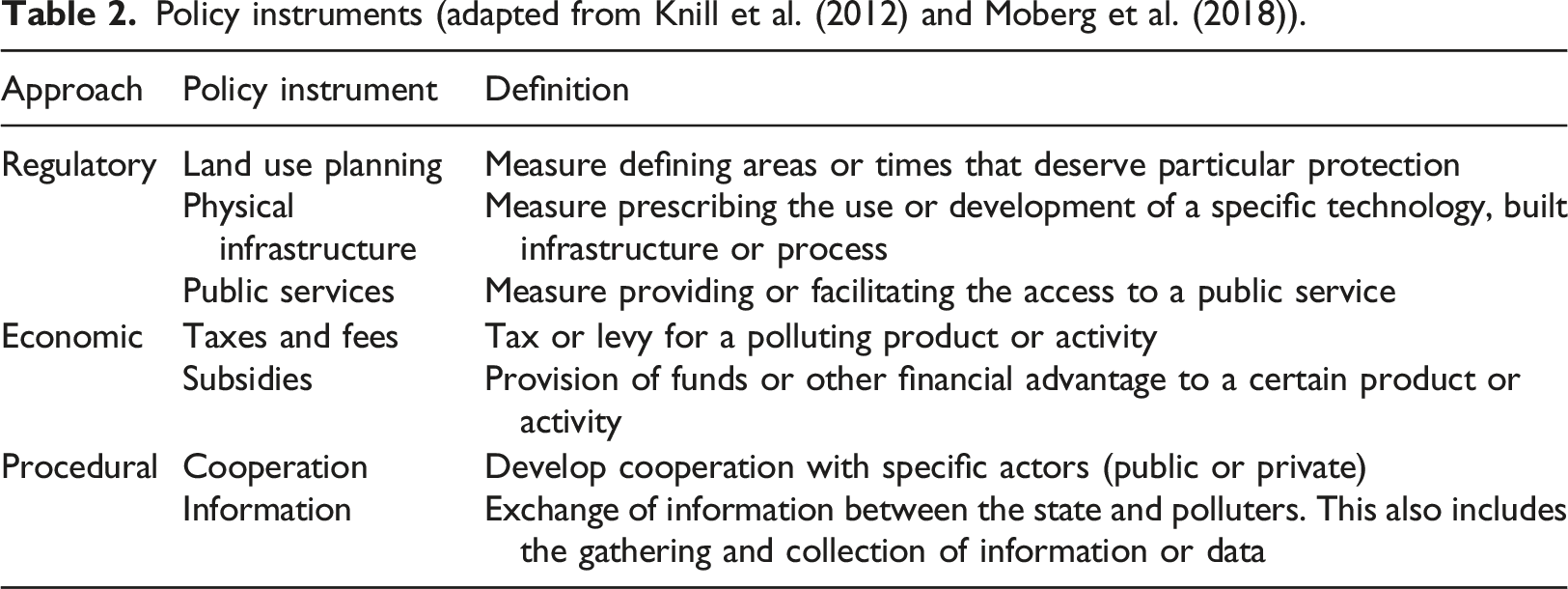
Municipal authorities can affect emissions directly through regulations, the prescription of specific technologies or the provision of public services, but also indirectly through novel forms of planning and zoning, by affecting systems of provision or through changes in urban form (Creutzig et al., 2016b). This part outlines the research methods and analysis carried out for this paper.
Research method
In order to assess the extent to which cities target consumptive practices, we consider the crucial role played by policies. A common approach in policy analysis employed to map governmental interventions is an assessment of policy density, defined as the number of policies instruments in a policy field (Knill et al., 2012). Such approach allows researcher to gauge public policies in relation to defined goals and targets, essentially allowing to evaluate the efficacy of a range of policies. Individual measures are thus defined as ‘building blocks’ (Schaffrin et al., 2015) and can be analysed individually according to the sector they target as well as the instrument logic employed.
Examples of different intervention types for each demand category.
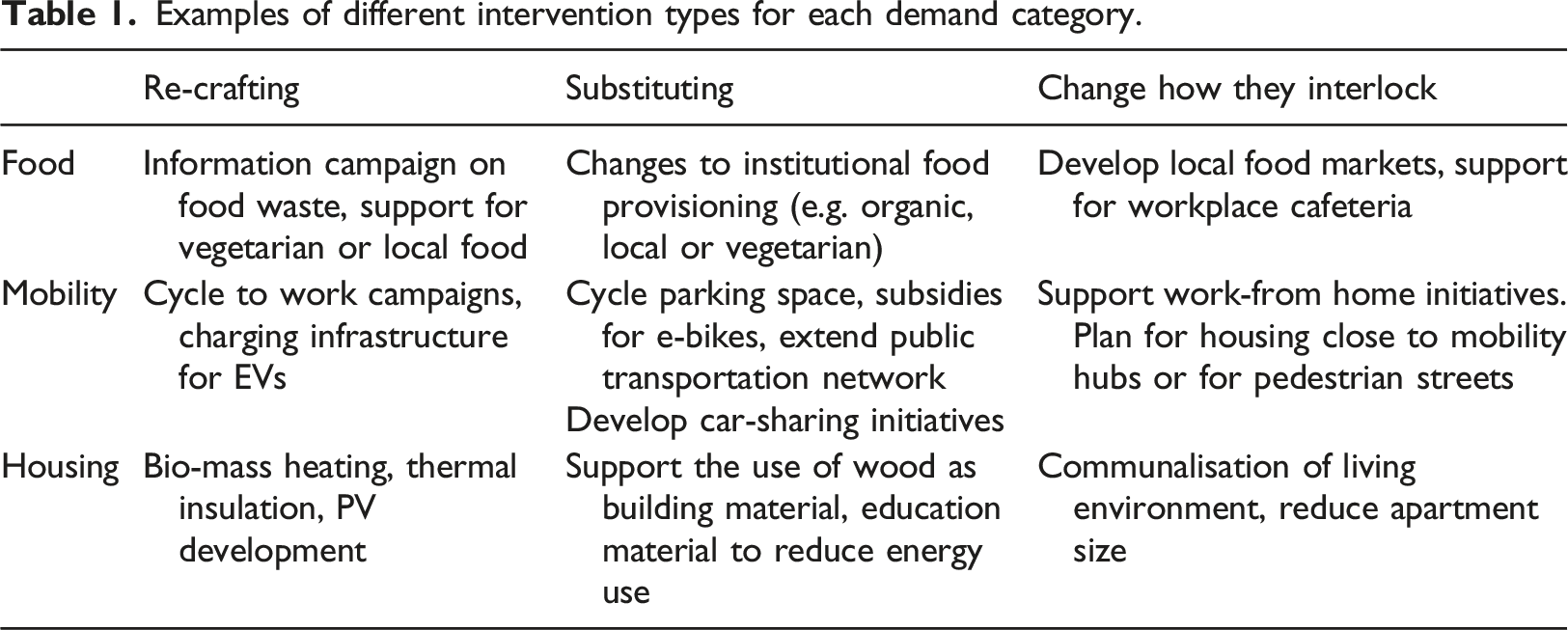
Assessing policy density and intensity provides a way to compare across different sites of policy development and implementation (Dubois et al., 2019; Jahn and Kuitto, 2011; Knill et al., 2010), and is used in this paper as a comparative analysis of policy output across different consumption domains (Knill et al., 2012).
An approach that considers both density of approach and depth of intervention in consumptive practices provides a unique foray in understanding patterns of local climate governance. While policy density has been employed as a method to assess how policies target household consumption (Dubois et al., 2019; Moberg et al., 2018), to our knowledge no studies have used the intervention model detailed above to assess extent of intervention. Inversely, while some literature has employed the intervention model to qualitatively assess municipal-level interventions (Hausknost et al., 2018; Schäfer et al., 2018), no academic literature has done so with a broad policy analysis in view.
The data in this paper was obtained through analysis of cities’ climate strategy reports (See Appendix 1), which we authenticated through interviews and field notes. A limitation of this approach relates to applying the intervention-in practice framework to climate policy documents only. While arguably a wide range of urban interventions would have climate, and practice-related impacts, this paper focuses exclusively on measures from climate strategy and policy documents. Therefore, the breadth of measures included attest more of the cities’ particular approaches through their climate measures, than of the way in which interaction of climate plans with other city-level strategies (such as urban development plans) come to affect everyday practices. This analysis only considered records in English, Swedish, Danish and Norwegian.
Analysis
Policy instruments (adapted from Knill et al. (2012) and Moberg et al. (2018)).
Results: Characterizing urban climate interventions
The present section reviews how 10 Nordic cities identify and articulate a range of policies and projects to govern greenhouse gases. In the following, we provide a background to Nordic cities, and characterize the climate interventions forged by these cities. While the dataset showcases diversity in the policy instrument and intervention type employed in the different domains, this overview also reveals where current approaches converge.
Background to Nordic cities
The 10 cities chosen for this study include capital cities in the five Nordic countries, Norway, Sweden, Iceland, Denmark and Finland, as well as second tire cities in the region. Beyond the five capital cities, the five cities Gothenburg, Aarhus, Bergen, Turku and Malmö were chosen with the purpose of gaining a breadth and diversity of climate approaches within the Nordic region. In a global context, these are small and medium sized cities, ranging from approximately 100,000 to 1 million inhabitants. All cities have a predominantly quaternary and tertiary sector economy with a variable degree of secondary sector economic activity. Several of the cities in this study have set ambitious climate strategies and partake in setting global climate agendas through international networks (such as C40, Eurocities, ICLEI, The Covenant of Mayors, Strong Cities Network, Smart Cities Initiative, Fossil-free Energy Districts, Carbon Neutral Cities Alliance).
The five Nordic countries display different energy market features but have overall built their decarbonisation strategies around renewable electricity and heat along with energy efficiency and a focus on transport and industry (Sovacool, 2017). The Nordic region can more generally be contextualised through ‘the Nordic model’, understood as a form of welfare capitalism. Greater equality and a strong welfare state are associated with this model where poverty level is considerably lower than the OECD average (Wessel, 2010). While arguably Nordic cities are comparatively different, this context means that these have developed relatively similar forms of political-administrative patterns of governance based on a relative autonomy from central government, forms of state-led planning and social cohesion (Calmfors et al., 2019).
We have selected the cities in this study based on their relative position within the individual countries and the Nordic region, as well as their public engagement with climate change strategies. These cities share important institutional, but also cultural, economic and political traits, and while playing an important role in framing urban climate action locally and nationally, studies have also highlighted their role in informing climate action elsewhere (see e.g. Johnson, 2020). Additionally, a focus on Nordic cities is of particular importance as the literature on urban climate governance has highlighted gaps between commitments to climate change and action to curb emissions (Van der Heijden, 2019). This paradox is perhaps even more pronounced in Northern Europe, where national and sub-national authorities show comparatively high levels of commitment to low-carbon measures while displaying high rates of consumption (Peters et al., 2011).
Intervention in mobility
All cities target mobility practices to a wide extent and this category receives the highest density across the dataset with 265 measures. Figure 1 displays the regulatory instruments employed to intervene in mobility practices over the dataset. We used the sub-sectors of air traffic, private cars, cycling, public transportation and freight transportation to further detail policy focus. We observed that private vehicles received most policy attention with 126 individual measures, followed by freight, then public transportation, and finally cycling (56, 50 and 26, respectively). The cities that developed measures to address aviation-related emissions is Gothenburg and Stockholm which together detailed three measures, employing information and cooperation-based instruments. Intensity and density of intervention in the domain of mobility.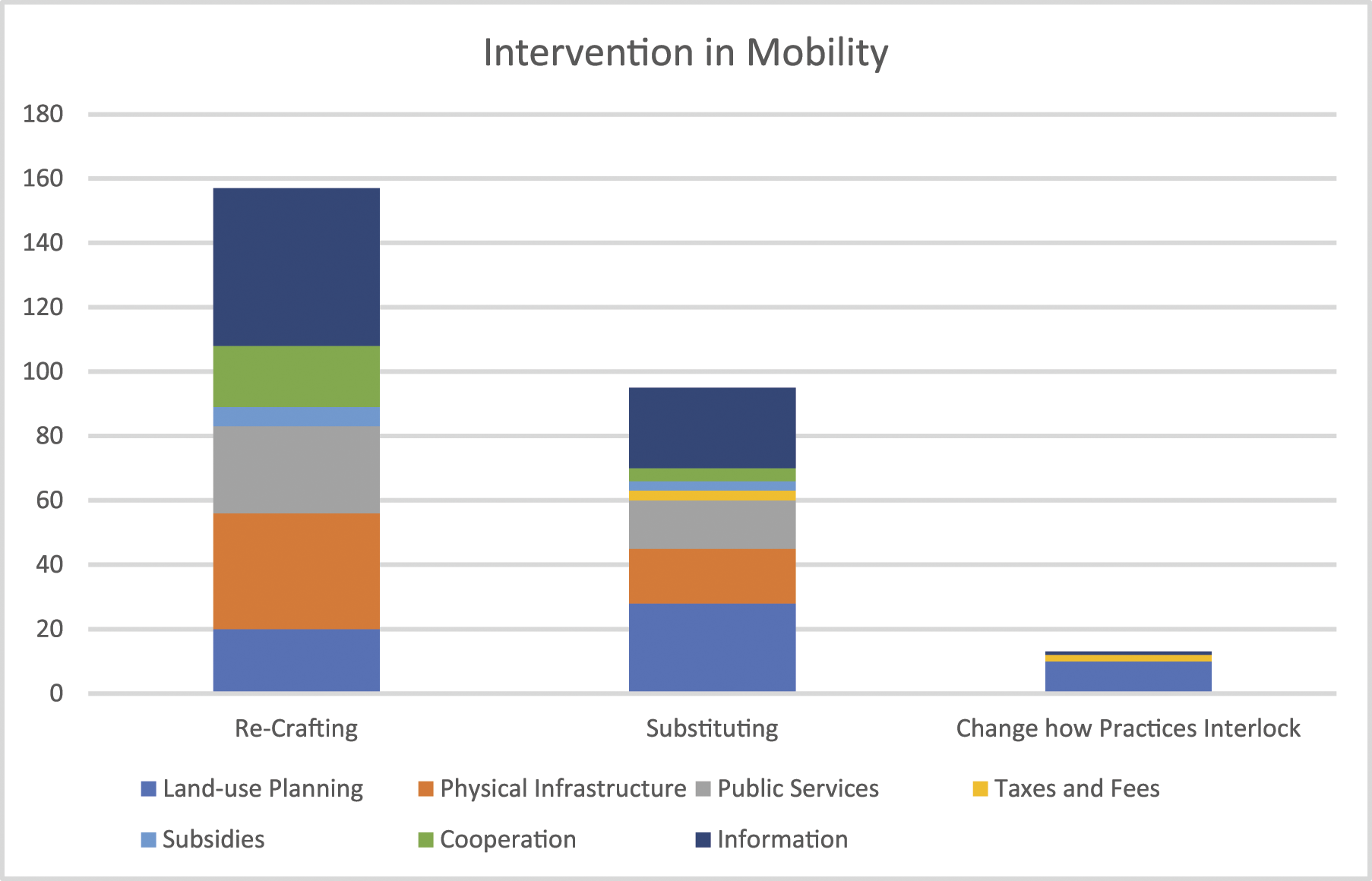
While the different sub-sectors are targeted differentially, we observe general patterns of intervention. Overall, the range of measures that target mobility practices is dominated by the prescription and support of specific low-carbon technologies (such as electric vehicles or biofuels), information campaigns (promotion of bicycle pools, safety and informational campaigns) and land-use and physical changes in infrastructure (provision of bicycle infrastructure, charging nodes for cars or public buses, provision of parking space or areal zoning). Interestingly, the provision of public services also remains a strong intervention approach. Here we collected 42 measures which aimed at reducing climate impacts of services provided by the municipality. These included the development of emission standards for public buses, certification schemes for fuels sold within city boundary or improved maintenance on bicycle routes. Instruments such as taxes and fees or the subsidisation of certain products or activities receive however very little attention by policy makers. The literature on regulation and intervention in practices both emphasise the need to diversify the range of policy instruments in targeting an activity (Stirling, 2010). We observe however a strong homogeneity in instruments used with a predominance of both regulatory and procedural instruments. Economic instruments remain de-prioritised.
The cities show to have more ease in engaging with a re-crafting of mobility practices. Overall, these interventions are linked with specific regulatory instruments such as the cooperation with other actors (regional or national government, energy or housing companies), information provision, changes in physical infrastructure and the provision of public services. These interventions have a tendency to target single or multiple elements of a practice without questioning the provision for that specific practice, and are aimed at changing the energy intensity, rather than volume, of social practices. For example, we observed across a number of cities efforts to switch public transport fleet to use low-carbon fuel sources (biofuel or electric), thus not affecting citizens’ commuting practices, and only targeting the material element of a practice. The focus on re-crafting of mobility dynamics is paralleled by a generous emphasis on measures that seeks to substitute existing mobility practices. Private cars and cycling receive the majority of policy attention here (59 out of 95). While the sector of mobility shows to have a comparatively higher potential for changing the way that practices interlock (Cass and Faulconbridge, 2016), as it connects sites of practices through time and space within the city, relatively few measures in our dataset engage such interventions. We find that these interventions tend to relate to policy objectives not directly related to climate mitigation, but instead focus on urban infrastructure projects or time and environmental-based zoning strategies, which in turn have the effect to reduce the requirement or need for being mobile around the city.
Interventions in housing
Housing receives considerable policy attention in our dataset with a total of 253 measures across the 10 cities. This is comparable to the policy density received in the domain of mobility. Overall, these measures target the production, transport and use of electricity, gas and heat, covering-energy related emissions as well the emissions embedded in housing energy and building maintenance. The distribution of instruments employed across intervention types is displayed in Figure 2. The supply and use of energy receive highest policy prioritisation with 108 and 73 measures, respectively. Policies targeting building design and waste reduction in energy production and use follow with 46 and 25 measures, respectively. Intensity and density of intervention in the domain of housing.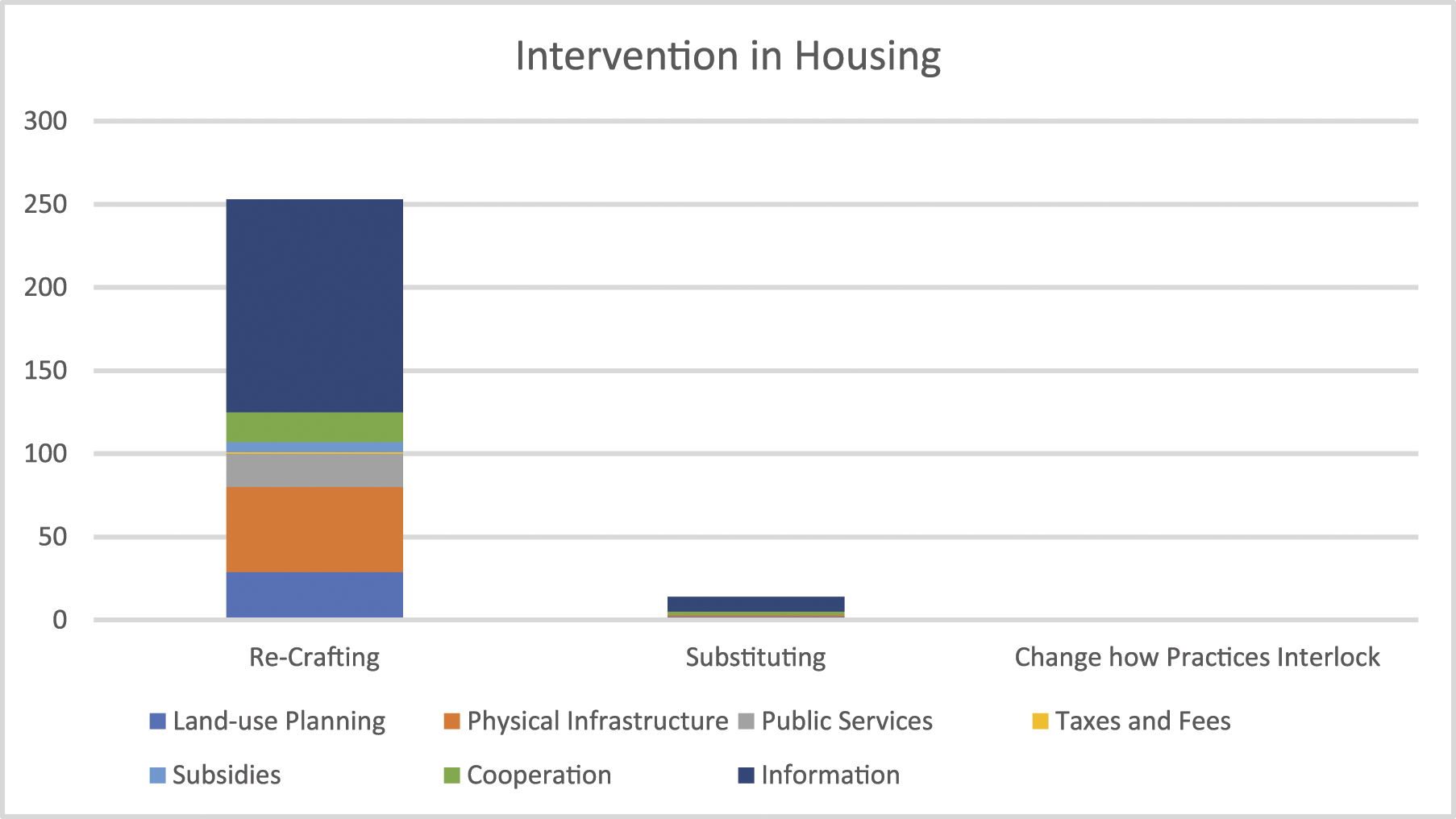
In this domain, policy approaches can be characterized by a focus towards both a decrease of the intensity by which energy is consumed and a decarbonization in the energy supplied. The instruments used in this domain are dominated by information-based instruments which receive approximately half (128 measures) of policy attention in this domain. Here, we coded a variety of measures which pertained to the provision and collection of data. While the former concern the development of energy guidelines for reducing residential consumption, the later focus on the collection of data across the cities’ respective housing stock. The fact that information-based measures dominate the policy mix across different cities has received much attention in the literature, and we find this particularly relevant for the domain of housing. Changes in infrastructure, physical planning and public services receive, respectively, 51, 29 and 20 individual measures. These regulatory approaches tend to focus on the promotion, development or planning for low-carbon energy sources such as the development for district heating, phasing out of fossil-fuels through areal planning or the use of renewable electricity in the housing stock. The use of taxes and fees to target this domain remain absent.
In terms of the intervention types employed to target this sector, we observe a majority of measures that aims at re-crafting housing practices. In relation to reducing demand, these interventions offer little perspectives in reconsidering volumes of consumption. This result is stronger than in the domain of mobility. More than 85% of measures are coded as a re-crafting of practice in the domain of housing. The remaining measures where coded as a substituting of practices and focused mainly on the replacement of heating infrastructure (Figure 2)
Interventions in food
Compared to mobility and housing, the domain of food showed to receive less policy attention. Across the dataset, we observe only 26 measures targeting food-related practices which comparatively, amount for less than 5% of the total count of measures across the 10 cities (See Figure 3 below). This correlates with previous studies which highlighted the lack of policies targeting food consumption at the household-level (Moberg et al., 2018), and this despite the fact that it represents a considerable share in household emissions and holds a high mitigation potential (Ivanova et al., 2018). Intensity and density of intervention in the domain of food.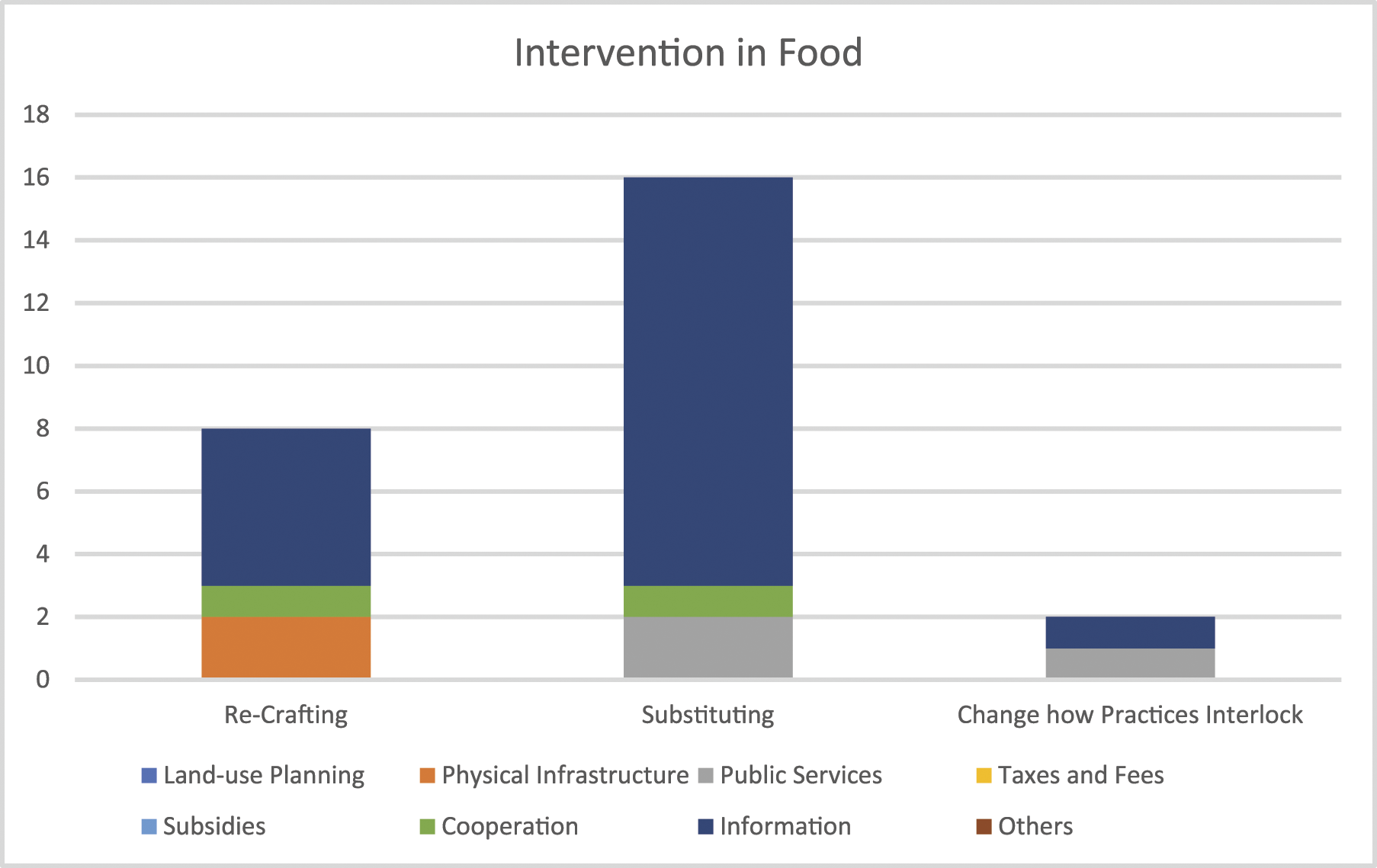
The mix of measures that target this sector has limited diversity as we only coded four types of instruments. Information-based instruments in pair with public services dominate the policy mix. These measures focused on the promotion of local food, dietary changes or food waste reduction through information guides to residents, training for cooking staff and the provision of vegetarian meals in municipally-owned institutions. We did not code any measure employing economic policy instruments. The domain of food shows therefore high potential in targeting consumption dynamics as it is characterized both by a low policy density and a low heterogeneity in policy instrument mix.
Most interestingly, this sector shows more measures that aim at substituting practices than re-crafting them. Our dataset illustrates that while cities tend to articulate policies for sectors such as housing and mobility, the food sector is increasingly seen as a relevant area when planning for climate measures. Earlier studies show that local government have an interest in promoting shifts in food consumption patterns (Dhar and Baylis, 2011; Granvik, 2012), and that there is reduced resistance encountered in these political spaces. In the measures found for this domain, we observe that substitutive interventions concern optional or information-based measures which have low-levels of compulsion. Further, we also coded two interventions in regards to changes in how food practices interlock. These concerned a reduction in meals including meat through support for collective food provisioning.
Discussion – Urban climate interventions in demand
Using an intervention-in-practice approach, we analysed how urban climate policies intervene in demand dynamics. Discussing the relevance of this paper through this lens, we highlight three contributions.
First, understanding demand through an SPT perspective has the capacity to open-up the range of policy instruments used in climate strategies. Though our dataset revealed variations in climate interventions, we find that the measures overall focus primarily on a re-crafting of mobility and housing practices, and on approaches of household self-governance, both emphasising non-committal measures. In relation to energy demand, these ‘shallow’ intervention types might not be sufficient to address the bundles of practices that maintain current volumes and patterns of consumption. For policy makers interested in promoting low-carbon practices, a SPT perspective allows to extend the scope of policy intervention, notably in identifying the complementary range of interventions required to change a practice (Kammerlander et al., 2020). Indeed, since social practices depend on the constant and daily integration of their elements for their reproduction, changing unsustainable practices requires developing measures that affect meanings, materials and competences simultaneously. For example, affecting practices of car commuting becomes then a matter of affecting urban infrastructure and public transport, transforming images of alternative travel choices (which can be perceived for being too costly, in time, money or status), and support the development of competences which challenge preferences for high emission travel choices. Inherently, this will require increased cross-silo cooperation within city administrations, as it becomes a concern for policy makers involved in changing particular systems of provision, forms of spatial planning and affecting regional mobility patterns (Oseland, 2019).
While this reveals the need to explore how other institutional structures might be more adapted to allow for deeper forms of intervention (Schäfer et al., 2018), it notably also implies that intervention is a matter of continuous engagement with the different elements of a practice, the support for alternative ones, or the destabilization of high-carbon ones. The policy implications of such re-configuration might include forms of engagement currently under used by urban actors, such as experimentation, vision building workshops, strategic conferences and public debates (Geels et al., 2015). In relation to policy formulation, Stirling (2010) suggests that while the intensity and density of policy formulation might be important, assessing their disparity across multiple criteria might provide a novel lens to better assess how demand is targeted.
Second, an attention to the dynamics of social practices compels policy makers to more directly account for the normative implication of shaping a ‘living’ urban fabric towards set political goals. Although the need to move towards targeting consumption behaviour in urban climate policy making were stressed during dialogues with civil servants, they expressed concerns as to how this translated into novel policies. Understanding demand through a SPT lens entails that governing social practices is contingent on how practitioners adhere, refuse or cooperate with specific policy interventions. The effect (and success) of an intervention, whether they concern the development of city bikes, the support for local energy production or campaigns to eat locally, are contingent on being included in the routine and habits of urban citizens (Laakso, 2019). Governing practices therefore comes with a number of caveats. One of them being that urban interventions cannot be seen merely as temporary and bounded attempts to challenge a high-carbon network of practices. Rather, they are constitutive of the long-term work of reducing climate emissions in a number of domains (Shove and Walker, 2010). This has a number of implications for how governance processes are designed, specifically whether and how practitioners are included in the development, implementation and communication of climate measures (Keller et al., 2016).
Another caveat is that interventions need to be understood in relation to the meaning, materials and competences of different practitioners. Cities are characterised by high forms of inequality in the availability and access to practice elements, which will have implications for who’s capacity and who’s meaning is affected in the re-configuration of everyday practices. Alternatively, bringing attention to a diversity of practices in housing, food and mobility can also increase the visibility and credibility of alternative low-carbon practices (Laakso et al., 2021). Together, these caveats contribute to the necessity to include forms of reflexive governance in the development, implementation and follow-up of urban climate interventions (Shove and Walker, 2010).
Third, when understood as part of a dynamic network of practices, efforts that aim at targeting a single practice will have a limited impact if the range of practices with which it is enmeshed are not also considered. Findings from this study suggest that cities possess more policy instruments to engage with how practices connect across space, than with their temporal dynamics. We coded a limited though consistent number of measures that sought to change the way practices interlock, and observe that they overall pertain to changes in land-use or the material infrastructure of the city. By challenging material arrangements, these interventions will have an impact on the need for specific practices, therefore spatially re-arranging the bundles in which they are enmeshed. On the other hand, challenging their temporal arrangement would necessitate a range of intervention types not yet countenanced in policy making. Policies such as work time reduction (Pullinger, 2014) would allow for flexibility and have an impact on when consumptive practices might take place, affecting both systems of provision and individual capacities for re-arranging how everyday practices are reproduced.
Yet, the spatial and temporal distribution of practices, and their related emissions, remains an understudied area. These dimensions of practices allow for greater understanding of how factors such as socio-economic conditions, work-life organisation, and global production chains are linked-up with emissions. While research could map the temporal and spatial distribution of practices, the political willingness and the availability of regulatory tools to interfere in such established dynamics also provides ample research focus. Deeper intervention strategies that affect the way that practices interlock, might contest established notions of public and private divides, conceived notions of freedom of choice as well as socio-economic organisation across scales (Hausknost and Hammond, 2020). In this, refusals to cooperate and forms of contestation might best be seen not as ‘barriers’ in the governance process, but rather as part and parcel of intervening and shaping an urban fabric of social practitioners (Wanvik and Haarstad, 2021). Reconfiguring established patterns of demand would require novel approaches to political legitimacy and the development of new regulatory tools.
Conclusion – Towards governing urban consumption
In a context where social, cultural, institutional and material mechanisms are organised towards inconspicuously high levels of consumption (Boström, 2020), targeting its dynamics will necessitate continued academic and policy engagement. While this has been much more researched at the national level (Kern et al., 2017; Jacobsson and Lauber, 2006; Lockwood et al., 2017; Merkisz et al., 2014; Rosenow et al., 2016), there is a need to understand how cities contribute to, or challenge, its consolidation.
With the intent of understanding practice changes that are induced by urban climate strategies, this paper is relevant for policy makers in working with the design of demand-side policies, beyond forms of ‘consumer scapegoatism’ (Akenji, 2014). In characterizing climate interventions in a number of Nordic cities, we observed that efforts to reduce emissions of greenhouse gases are limited to a range of interventions which seek to re-craft a practice, and which offer little possibilities for affecting patterns or volumes of consumption. Such approach, for Royston et al. (2018: 128), ‘do [es] not address the historical and socio-technical constitution of consumption patterns’ and therefore do not break away from the inertia that supports unsustainable levels of energy and material demand. This procedural lack in considering the demand for goods, services and energy in the way city-level climate strategies are articulated leaves out a considerable quantity of unaddressed emissions which, as ‘invisible energy’ (Cox et al., 2016; Royston et al., 2018) requires a set of policies and governance arrangements that better understand, uncover and address them.
In addressing this topic, this paper outlined some of the implications of taking a SPT approach, and chief among those is the necessity to recognise the dynamic and emergent nature of intervening in social practices. Doing so will entail new forms of behaviours and new technologies, but also need to be anchored around a reflection of what social functions, levels and patterns of demand will a low-carbon urban form be required to fulfil (Jalas et al., 2017). Scholars have showed that movements to reduce household’s living spaces, improving building efficiency and politics of urban densification might not lead to intended economies of scale, but instead might contribute to higher total carbon footprints (Minx et al., 2013; Moran et al., 2018; Ottelin et al., 2019). This will unavoidably challenge cities in their current efforts, and will require new and novel forms of social innovations.
Seen under this light, the requirement for social policies affecting urban demand will unavoidably face the politics of everyday life, and indeed create tensions, or instabilities as to the political or social feasibility of their implementation. This could limit the use of more ambitious policy instruments and deeper ‘interlocking’ intervention types, or come to affect the policy space through which systems of practices could be affected. As climate effects are becoming increasingly felt in cities throughout the world, undoing the institutionalized ways in which inconspicuously high demand organises everyday life remains a critical task. In this, understanding the range of routines and habits that can be subject to policy intervention will thus be a trial for urban governments.
Footnotes
Acknowledgements
We thank two reviewers who provided helpful comments on earlier drafts of the manuscript.
Declaration of Conflicting Interests
The author(s) declared no potential conflicts of interest with respect to the research, authorship, and/or publication of this article.
Funding
The author(s) disclosed receipt of the following financial support for the research, authorship, and/or publication of this article: This research was partly funded by Trond Mohn Foundation (‘European cities’ project, grant no BFS2016REK04).

Appendix