




Abstract
As the British Neuroscience Association commemorates 50 years of existence in 2018, this article recalls its founding as a discussion group, its establishment as the Brain Research Association, its transition to a professional society encompassing all aspects of neuroscience research, both clinical and non-clinical, and its re-branding as the British Neuroscience Association in the late 1990s. Neuroscience as a branch of life science has expanded hugely in the last 25 years and the British Neuroscience Association has adapted, frequently working with partner societies, to serve as an interdisciplinary hub for professionals working in this exciting and crucial field. The authors have attempted to highlight some key events in the Association’s history and acknowledge the contributions made by many people over half a century.
Steven Rose – the beginning
Steven Rose (Figure 1) was a founding member of the Black Horse Group – the predecessor of the British Neuroscience Association (BNA), and he has been closely involved with the Association over its 50-year history. He is an Emeritus Professor at the Open University and continues to write books with the sociologist Hilary Rose, the most recent being Can Neuroscience Change Our Minds? (2016). In 2012, the BNA gave him a lifetime award for ‘Outstanding contribution to British neuroscience’.

Steven Rose, one of the four scientists who founded the London Neurobiology Discussion Group in the 1960s.
There is some debate about when the Brain Discussion Group began, which later (1968) became the Brain Research Association (BRA) and, later still (1996) the BNA, with 1965 (Abi-Rached, 2012), 1967 (Bachelard, 2004) and 1968 (Richter, 1989) proposed. Informal meetings were certainly held at the Black Horse Pub in Rathbone Place, Soho, London (Figure 2) in 1965 involving Robert Balazs (Figure 3), John Dobbing, John Lagnado and Steven Rose, but a society was not formed until 1967. It seems almost incredible that half a century ago ‘neuroscience’ was an unfamiliar term – it was coined by Francis Schmitt, a biophysicist at the Massachusetts Institute of Technology, in the early 1960s. Initially shy of the term neuroscience, the gathering was simply known as the Black Horse Group. Senior academics were discouraged from attending the meetings, so that the younger researchers felt free to encourage discussion of interdisciplinary topics – sleep, memory – from whatever expertise they had: be that biochemical, molecular, systems or behavioural.

The Black Horse public house in Rathbone Place, London, where the early meetings were held.

MRC Neuropsychiatric Research Unit, Carshalton (1963). Early BRA members include Derek Richter (front row, centre), Robert Balazs (front row, fifth from left), Herman Bachelard (second row, 7th from left), John Lagnado (second row, 8th from left) and Rudi Vrba (far right).
The enthusiastic informality of the Black Horse Group was put onto a more regular footing in 1967 by the arrival in London of neurophysiologist Patrick (Pat) Wall (Figure 4), who had a small grant from a US foundation to foster neuroscience communication. Together with Pat came John O’Keefe (Figure 5), fittingly the 2014 Nobel Laureate in Physiology or Medicine for his work on – in the words of his and Lynn Nadel’s ground-breaking 1978 book – The Hippocampus as a Cognitive Map. The next goal for the fledgling BRA was the creation of an interdisciplinary Brain Research Institute to match those that existed elsewhere in Europe and in the United States. The project foundered on the rocks of institutional rivalry, ironically emphasising the need for an interdisciplinary approach to the brain, and it is gratifying to see the huge Sainsbury Wellcome Centre for Neural Circuits and Behaviour, opened in May 2016 and directed by O’Keefe, located close to the site where the BNA had its origins.

Patrick (Pat) Wall pictured in 1979. He was the first Chairman of the Brain Research Association from 1968 to 1974.

John O’Keefe pictured in 2014 after the announcement of his Nobel Prize for medicine or physiology. He was a co-founder of the Brain Research Association and served as Secretary from 1977 to 1981.
The London group spawned regional equivalents and in the period 1969–1970 some 16 branches were formed (Bachelard, 2004), and the BRA became a national society. Prodded by Derek Richter, the UK representative of the International Brain Research Organisation (IBRO), the membership was formalised, a constitution was written and adopted and elections were held for places on a national committee. Annual meetings and schools soon followed (documented in 1), along with all the trappings of a learned society, with the exception of a house journal, which was resisted. Abi-Rached (2012) in a footnote commented, “Another contentious debate worth mentioning is the one concerning the need to have a British journal dedicated to the neurosciences. According to Steven Rose, this debate was even more salient than the debate over the name of the association, although curiously not mentioned once in the minutes. The issue seems to have been resolved with the publication of the European Journal of Neuroscience, the official publication of the Federation of European Neuroscience Societies (FENS) founded in 1998.”
With the benefit of hindsight, the decision not to publish its own journal came to be regretted. Many learned societies, notably the Physiological and Biochemical Societies, have enjoyed significant income from their flagship journals, which have enabled those societies to generate assets which have been employed to further their influence and benefit their members. One only has to look across the Atlantic to see how the Society for Neuroscience, formed a few years after the BRA, has become a mighty behemoth attracting up to 40,000 participants to its annual conference – 20 times more than the BNA has ever mustered – including many from the United Kingdom who choose to present their new findings at that meeting, rather than in the country that, in many instances, funded the research.
Yvonne Allen – developing the BNA
Yvonne Allen was Lecturer in Neuroscience at the University of Liverpool, until her retirement in 2016 when she formed a company (Neurofest17) to manage specifically the organisation of the third BNA Festival of Neuroscience in 2017. Her involvement with the BRA started in 1994 as an elected committee member. Thereafter, she was instrumental in the development of the BNA, serving as its first Executive Secretary (1997–2009). She is an Honorary Life Member of the BNA.
In 1997, the BRA was at a crossroads. It had just changed its name to the more embracing British Neuroscience Association, so it was clearly poised to move forward and expand both its membership and its activities, welcoming everyone working in any aspect of neuroscience and its related disciplines. At the same time, despite a thriving committee with enthusiastic and dedicated members brimming with wonderful ideas, the advent of the Research Assessment Exercise (RAE) and increasing student numbers meant academics had less and less time to devote to external activities, such were the demands from their institutions. A pivotal moment for the BRA arose at the AGM in that year (1997). Susan Iversen, President at the time, clearly recognised the enormous sacrifice time-wise (and stress-wise) involved in organising the annual National Meetings, and suggested instead that a lecturer should be hired and funded by the BRA to take over the teaching and administrative duties of the academic tasked with delivering the National Meeting. To many, it seemed an odd way round to resolve the problem; surely the opposite was required – a centralised and permanent administrative secretariat to manage the National Meeting and, ambitiously, all its other affairs as well, while busy academics concentrated solely instead on advising the programme content? Yvonne Allen had been the BRA committee member who had just organised the annual meeting that year in Liverpool, so her proposal to be the first such professional appointee seemed compelling and was warmly welcomed. The BRA, as it became the BNA, therefore had its first (part-time) Executive Secretary, and the BNA Committee, spear-headed by people like Colin Blakemore, Paul Bolam, Mike Stewart and Duncan Banks, could contribute ideas and expertise that could much more easily transpire into events and activities for its members because of the administrative support now on hand.
To this end, the University of Liverpool was also incredibly supportive, both in agreeing to second Yvonne Allen on a part-time basis to take on this newly established BNA role, and by freely donating its infrastructure facilities. This meant the BNA had minimal office expenses in the early years and so could devote its resources entirely to its members. In addition, The Wellcome Trust was equally generous in allowing gratis use of its vacated premises in Park Square West near Regents Park for a short time – a fine address for the fledgling ‘nerve centre’ of the newly launched BNA.
Based in Liverpool, Yvonne Allen was only able to visit the London office infrequently, but each time was exciting and immensely rewarding as the pile of membership applications collected on the door mat. With more income from membership and from loyal supporters such as GlaxoSmithKline (GSK), Pfizer and Eli Lilly, the BNA could raise its profile both nationally, by hosting a range of events throughout the year, and, internationally, for instance, by exhibiting at Society for Neuroscience (SfN) meetings for the first time (in New Orleans that year – 1997). With no prior experience of exhibiting, the BNA booth had no carpet and no chairs (unknowingly, that required a separate order form), but at least it had a visible presence. Members, new and old, flocked by in acknowledgement of the re-launch, and enjoyed a celebratory Reception one evening, hosted by the newly incumbent President, Colin Blakemore.
For the next few years, a major aspiration for the BNA was to become a national umbrella organisation to support neuroscientists and their activities wherever and whenever they took place, much like the SfN which, ironically, it had spawned a few decades earlier. In this pursuit, the events calendar flourished, with events ranging from the BNA’s inauguration special event, ‘A Celebration of British Neuroscience’; to several focused one-day meetings; to the ‘Decade of the Brain’ lectures that swiftly morphed into the wonderful present-day Christmas Symposia; to the ‘Wellcome Trust Masterclasses’ in topics at the clinical and basic neuroscience interface, to name just a few in addition to its flagship biennial National Meeting, of course. A number of BNA prizes were inaugurated, including the annual ‘Contribution to British Neuroscience’ and ‘Public Service’ awards, and the prestigious and highly competitive undergraduate and postgraduate student prizes, presented at packed audiences gathered for the annual Christmas Symposium. Generous funds were also set aside for student bursaries to attend Federation of European Neuroscience Societies (FENS) and BNA meetings, and to support the activities of the expanding ‘local group’ network. At the same time, the ‘newsletter’ evolved from a couple of photocopied stapled sheets into a sizable quarterly publication, eventually re-branded in 2004 as the ‘BNA Bulletin’ that is still enjoyed today. ‘The BNA is flying’, a member commented at the time.
However, perhaps most contentiously at this time was the move away from university premises to professional conference venues for the BNA National Meetings, by now a biennial event alternating each year with the pan-European FENS Congress. The BNA was clearly beginning to outgrow what university facilities could offer and, although some members were reticent at first, trade exhibitors conversely were delighted with this move, having grown weary of the ill-equipped sports halls or gymnasia they had previously had to endure. As a consequence, the National Meetings became extremely successful, both scientifically, as capacity grew, and financially, as the BNA attracted more exhibitors and other sponsors, so funds were constantly ploughed back into the BNA. Hosting the hugely successful FENS Congress on UK soil (Brighton) in 2000, for instance, with well over 5000 delegates, simply could not have happened without the centralised administration and acquired professionalism that accompanied those early years, culminating in the formation of BNA Ltd soon after in 2001. Nancy Rothwell’s support and enthusiasm as President at this pivotal time should not be underestimated.
However, by 2008 and three secondments later, the University of Liverpool was expecting Yvonne Allen by now to be returning to her academic post. On reflection, it had been an exhilarating yet exhausting time, with patchy secretarial support, so it seemed timely for her to step down and allow someone else with fresh momentum to take over. The future seemed ominously uncertain to many on the Committee, but with a healthy bank balance, and such talented and enthusiastic people in command (Trevor Robbins was about to take over the Presidency from Graham Collingridge), the BNA would undoubtedly prevail and move on to (even) better things. So, in 2009, Yvonne Allen’s stewardship (12 years) closed much as it has begun for her, with the National Meeting fittingly hosted, for the second time, in the city of Liverpool.
Ian Varndell – 21st-century aspirations
Ian Varndell joined the BNA in 1997 and served on the National Committee and Council in several capacities – Corporate Representative, Treasurer, Director and Acting Chief Executive. He retired from full-time employment in 2010 after 20 years as managing director of a life science research products company with a particular interest in neuroscience. He is an Honorary Life Member of the BNA.
Without a regular revenue stream other than from membership, genuine financial sustainability has been a major problem for the BNA since its inception. An enormous step was taken in 2002 with the appointment of Dr Yvonne Allen as the first full-time paid member of staff. Yvonne had been working for the BNA in a voluntary part-time capacity for several years, but as the hours required to complete the myriad tasks needed to drive the BNA forwards increased, the Directors agreed to finance a salaried post. Yvonne’s commitment to the BNA was immense and the current organisation is indebted to her leadership. The first business plan was put in place in 2002 under the Presidency of Nancy Rothwell (Figure 6). Even with secretarial assistance, it became obvious over the next few years that an active professional body demands a great deal of time and energy, and many of the projects contained in the early business plans approved by the National Committees and presided over by clinician Richard Frackowiak (2004–2007) and plasticity expert Graham Collingridge (2007–2009) did not generate the level of income that was projected, simply because there was insufficient resource – finance and manpower – to carry them out.

Nancy Rothwell DBE, BNA President 2000–2004.
In 2009, after several months of discussions led by Yvonne Allen and incoming President Trevor Robbins (Figure 7), the Gatsby Charitable Foundation made a generous financial commitment to the BNA for 2 years, and this enabled two staff members to be engaged in Cambridge (Hannah Critchlow and Arciris Garay-Arevalo) to take over the administration of the BNA following the return of Yvonne Allen to her academic post at the University of Liverpool. During the Presidency of Trevor Robbins, business was a constant theme and the BNA re-formed its Scientific Advisory Board and engaged Dr Richard Dyer (former Director of Biotechnology and Biological Sciences Research Council (BBSRC) Babraham Institute, Cambridge) to assist with strategic planning. An executive, decision-making, Council was established and one of the key initiatives was a membership survey. This revealed that there was a significant interest in the BNA hosting a large, multidisciplinary, neuroscience conference and a proposal was put to the then Directors of the BNA early in 2010. Preliminary discussions with potential sponsors, including Dr John Williams (Wellcome Trust) and Dr Sarah Caddick (Gatsby Charitable Foundation), were highly encouraging and later in 2010 the Scientific Advisory Board – then a formidable group of 30 senior academics and corporate scientists – enthusiastically endorsed the idea of holding a ‘Festival of Neuroscience’ in the slot normally occupied by the BNA’s biennial meeting, at a major venue in central London. A sub-committee identified the Barbican Centre as a suitable location, capable of hosting 2000+ delegates in an iconic building, with good access and facilities, with the capacity to run multiple symposia in parallel, supported by a highly professional on-site conference team. By engaging with a number of other societies with an interest in neuroscience and neurology, and producing an ambitious scientific programme with high-profile keynote speakers, coupled with a large commercial exhibition, the financial projections suggested that there was a chance of making a sizable surplus, although the risks of hosting a meeting on this scale were clear to all. David Nutt, a neuropsychopharmacologist at Imperial College London with a high profile in the media (BBC News, 2009), succeeded Trevor Robbins as President at the 2011 biennial meeting in Harrogate and was hugely supportive of hosting a large, multidisciplinary event, perhaps without a full appreciation of the potential risks. In hindsight, that was probably a good strategy!
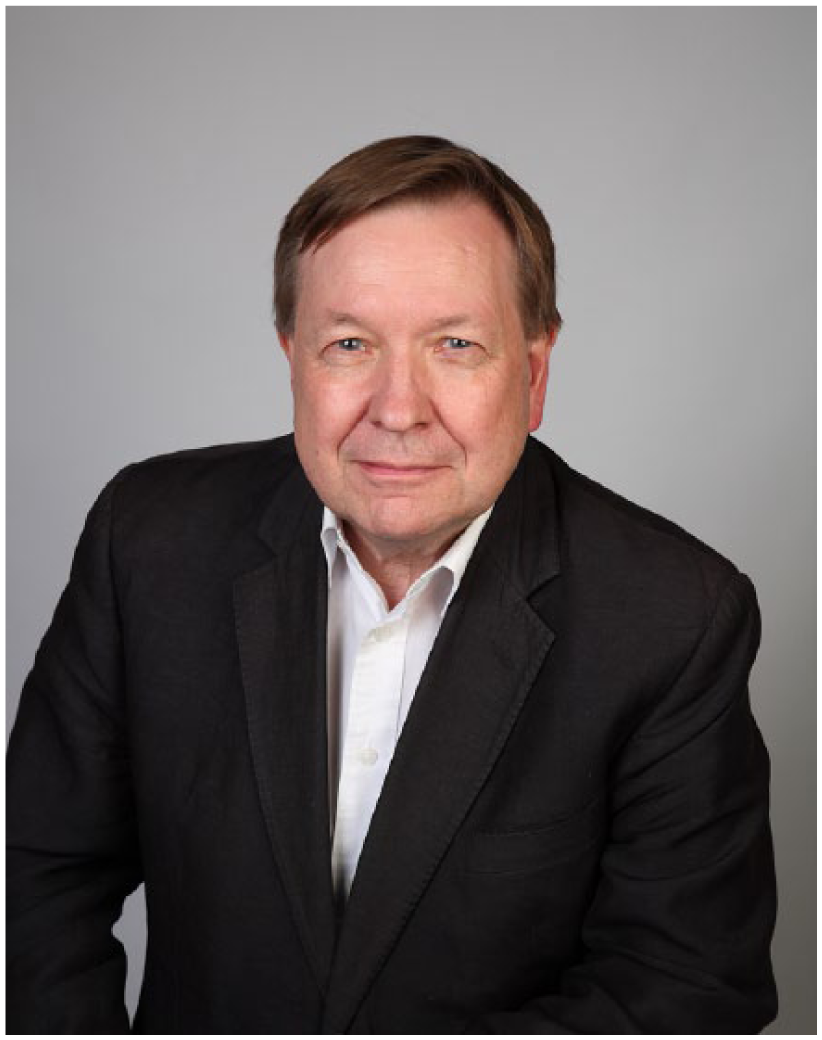
Trevor Robbins CBE. As BNA President (2009–2011), he proposed the first Festival of Neuroscience held in 2013.
The first ‘Festival of Neuroscience’ was scheduled for 10–13 April 2013. Narender Ramnani (Royal Holloway University of London) chaired the Programme Committee and assembled 7 plenary lectures and 56 symposia and workshops featuring over 240 speakers, which attracted 1800 delegates and over 760 poster presentations. Seventeen partner societies participated in the Festival covering a wide range of neuroscientific disciplines and this innovative co-operative approach contributed immeasurably to the breadth and quality of the scientific content. The Wellcome Trust was the main sponsor of the scientific meeting, but it also organised ‘WONDER – Art and Science on the Brain’ – a public engagement event centred at the Barbican Centre which ran concurrently and which attracted an estimated 15,000 members of the public. This was the first time that a major UK scientific meeting had taken place side-by-side with a detailed programme of events for the public. The meeting lived up to its ‘Festival’ title. Feedback from the delegates who expressed an opinion revealed that 96% thought that the BNA should organise another Festival of Neuroscience in 2015. By any measure, except arguably financial, BNA2013 was a great success.
Building on the 2013 model, BNA’s first Chief Executive Elaine Snell and President Russell Foster (2013–2015) formulated plans for BNA2015 which took place at the Edinburgh International Conference Centre (12–15 April 2015), with over 1600 delegates present. BNA2015 generated a reasonable surplus which, together with generous core funding from the Wellcome Trust, secured financial stability for the BNA. The third Festival was held in Birmingham in 2017 under the Presidency of John Aggleton and the BNA’s current Chief Executive Officer, Anne Cooke. Planning is well underway for the 2019 meeting which will cross the Irish Sea to Dublin’s Conference Centre.
Footnotes
Acknowledgements
The authors are indebted to Dr Duncan Banks (Open University, Milton Keynes, UK) for providing many of the photographs used in this article and for his contributions to the BNA over many years. A large number of people have been involved in the administration of the BRA and BNA over the last 50 years and without their time, enthusiasm and dedication, the Association would not have developed and prospered. We are very grateful for their support and contributions to the organisation.
Declaration of conflicting interests
The author(s) declared no potential conflicts of interest with respect to the research, authorship and/or publication of this article.
Funding
The author(s) received no financial support for the research, authorship and/or publication of this article.