




Abstract
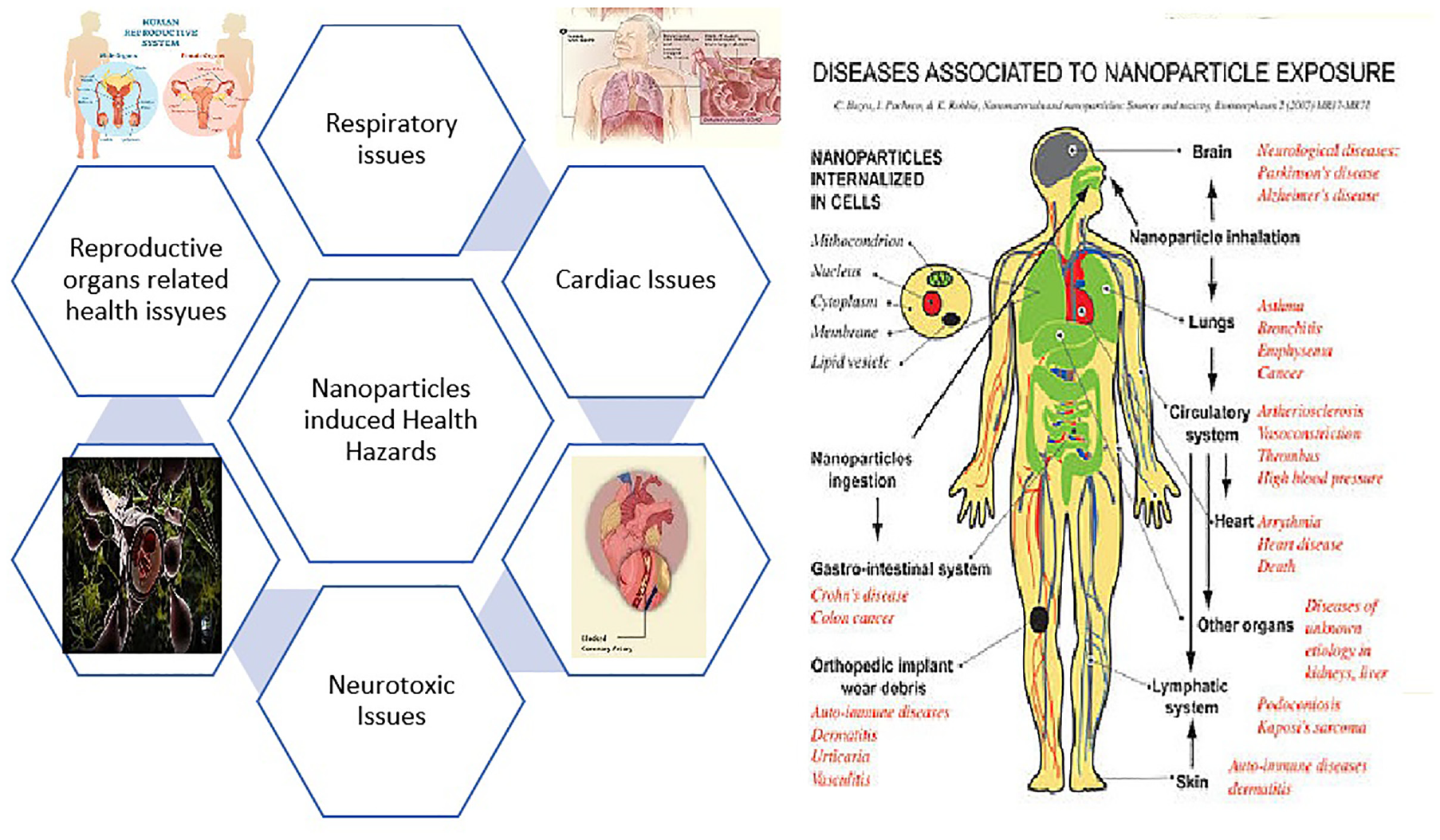
The swift applications of nanoparticles (NPs) in different fields such as pharmaceuticals, semiconductor, and decontamination require a comprehensive evaluation of their impacts on the health of human beings. This critical review consolidates the current knowledge on the nanoparticle toxicity with an attempt to unravel the biochemical and physiological processes by which NPs may harm human health. Exposure routes including aspiration, skin permeation, and direct consumption are involved and especially assessed in terms of biodistribution and biokinetics in living organisms. An exploration of physico-chemical characteristics such as particle size, morphology, surface charge, and chemical make-up yields the fact that all those things play an important role in the regulation of toxicity of nanoparticles in relation to other processes that include cell uptake, generation of oxidative stress, and inflammation. New data that define linkages between NP exposure and respiratory and cardiovascular diseases, Neurotoxicity, and potential carcinogenicity. The review further relies on the present methodological deficiencies and lack of harmonization in existing toxicity assessments for chronic exposure risks and call for more standardized testing protocols and elaborate long-term epidemiological investigations. The goal of this review is to highlight the health hazards associated with nanoparticles. In addition, authors also tried to contribute regulatory guidance and define directions for design of safer nanomaterials which will help to protect population health at the dawn of nanotechnologies.
Get full access to this article
View all access options for this article.