




Abstract
Hybrid work increasingly shifts collaboration toward technology-based virtual interactions parallel to traditional face-to-face contacts. Since trust dynamics are a crucial part of collaboration in organizations, we investigate how they develop in this hybrid approach to collaboration. Findings from a case study conducted during an innovation contest at a large university reveal that alternating between collaboration modes in hybrid work can intensify trust dynamics, as online practices that supplement offline practices can shape the trust dynamics relevant to effective collaboration. We identify five stages of trust dynamics: formation, facilitation, establishment, acceleration, and reinforcement of trust. While we consider operating practices to support trust intensification, we find that users’ embrace of both offline and online spaces is the driving force that triggers the transition from one stage of trust dynamics to the next. Our findings demonstrate the Janus-faced nature of technological affordances: while technologies such as instant messaging are typically used for task-related exchanges in teams, in our hybrid collaboration setting, we found that these technologies were also used for non-task-related exchanges, which we usually observe in face-to-face settings. This finding presents a significant theoretical puzzle related to the evolution of trust, which is greatly determined by the trust and reliance behavior of people: Whereas disclosure behavior has historically been linked to in-person interactions and reliance behavior to operational duties, the growing use of technology in hybrid work environments seems to blur these concepts of trusting behavior. This requires a more thorough investigation of how disclosure and reliance behaviors and trust dynamics shift in hybrid work environments, especially where operational and emotional behaviors converge. The study contributes to research by developing a novel framework for the dynamics of trust in hybrid work.
Introduction
Trust plays a major role in how people collaborate in organizations (e.g. Lewicki et al., 2006), so trust is a well-studied research topic in various disciplines. Korsgaard et al. (2018) find that establishing and developing trust after a change in context or boundary conditions usually requires a lengthy and complex dynamic process during which trust can dynamically evolve, that is, pass through various stages and relations of trust and distrust. Such trust dynamics can positively or negatively influence collaboration (Mayer et al., 1995). The dynamics of trust in real-world collaborations are well studied and trust in virtual forms of collaboration (e.g. virtual teams) is also the subject of well-established research (e.g. Wilson et al., 2006). In addition, studies identify multiple types of trust development in online and offline collaboration (e.g. Brahm and Kunze, 2012; Van der Werff and Buckley, 2017). For instance, Crisp and Jarvenpaa (2013) find that collaboration in virtual teams is frequently enhanced by the quick evolution of trust that is often found in temporary work settings—so-called swift trust (Meyerson et al., 1996)—while Anderson et al. (2017) show that developing trust in face-to-face settings takes time.
According to Gillespie’s Behavioral Trust Inventory (Gillespie, 2003: 35), there are two forms of trusting behavior in professional relationships: disclosure, which means disclosing sensitive or personal information to others, and reliance, which is determined by relying on others. Traditionally, reliance behavior is necessary to uphold trust and maintain operational work. At the same time, disclosure behavior fosters trust, which comes bare in moments of personal exchange. Such personal exchange is mainly carried out in face-to-face contact, fostering affective bonds between actors. In contrast, personal sharing, often critical to fostering deeper trust and affective bonds, typically occurs at the behavioral level of disclosure facilitated by face-to-face interactions.
However, work today is often done in varying locations, and collaboration alternates online and offline (Kaiser et al., 2022; Krehl and Büttgen, 2022). In virtual or hybrid teams, for instance, communication increasingly relies on technologies that enable online interactions and take place synchronously or asynchronously (Rhymer, 2023). Traditionally, these online interactions were additional to offline interactions in offices and for operational work or actual cooperation. In this sense, reliance behavior could be seen as the predominant precursor for trust evolving in the online world. Collaboration, however, is increasingly comprised of both operating work (such as working on shared documents) and personal exchange (such as video calls or instant messaging). These alternating forms of collaboration are often subsumed under the umbrella term “hybrid work” (Iqbal et al., 2021; Petani and Mengis, 2023). Previous studies discussed whether different practices are required for virtual and in-person teams to establish trust (Breuer et al., 2020). Although hybrid work is now prevalent in most organizations, we know little about how the “hybrid” part—the alternating online and offline collaboration in multiple locations—changes the evolution and dynamics of trust in teams. Considering the rapid advancement of hybrid work in organizations and the research that suggests differing ways in which trust develops in online and offline settings, fully understanding trust dynamics and their role in effective collaboration has particular value in today’s settings, where online and offline interactions alternate. Therefore, we ask: How do trust dynamics develop in hybrid work?
To answer this research question, we conducted a case study of trust dynamics in hybrid work during an innovation contest at a large university. In our study, we turn to this new space of online interactions for trust to evolve in personal exchange and analyze trust dynamics in alternating online and offline interactions where personal exchange occurs face-to-face and via instant messaging. Our findings reveal that online practices that supplement offline practices can shape the trust dynamics relevant to effective collaboration. Our observations showed that, although the innovation contest started in a mode of low trust, trust increased during the innovation process by alternating between online and offline practices, with the formation of trust during offline collaboration facilitated and accelerated by online collaboration and vice versa. Overcoming low levels of trust by alternating between online and offline collaboration facilitated open knowledge-sharing in teams, leading to more effective collaboration. We also observed that competition intensified later in the innovation contest, and participants who exploited the benefits of online collaboration won the competitions. These findings suggest that online interactions via technologies fostered disclosure behavior and thereby shaped trust dynamics relevant to collaboration, leaving alternating the collaboration modes intensifying trust dynamics.
Our research highlights how trust dynamics are strengthened by adopting technological affordances (e.g. Faraj and Azad, 2012; Fox and McEwan, 2017) and by offline interactions. Using Gillespie’s Behavioral Trust Inventory (Gillespie, 2003), we used the two forms of trusting behaviors in professional relationships—disclosure and reliance—to explain technological affordances. Surprisingly, our study found that although technologically mediated and typically associated with operational tasks, instant messaging communication also promoted disclosure behavior normally shown in face-to-face exchanges.
With these findings, our study extends research on trust dynamics (e.g. Korsgaard et al., 2018) by deepening our understanding of the role of hybrid work in shaping trust dynamics among collaborating actors (Young et al., 2019). Our central contribution to the literature is a novel framework for the dynamics of trust in hybrid work and the trust-intensifying role of alternating modes of collaboration. Within this framework, we identify five stages of trust dynamics and the working constellations of offline and online collaboration—the embrace of offline and online space—that trigger the transition of trust from one stage to the next, thus intensifying the dynamics of trust. Beyond, our study raises a significant theoretical challenge for trust behavior research: while trust and reliance have long been associated with operational tasks and online interactions and disclosure with face-to-face interaction, the evolving use of technology in hybrid work settings appears to blur these boundaries. Therefore, our research extends the extant literature on technological affordances (Faraj and Azad, 2012; Fox and McEwan, 2017) by uncovering their Janus-faced nature. On the one hand, technology promotes trust by affording confidentiality and privacy, allowing team members to share private information. On the other hand, it promotes accessibility and transparency, both essential for collaboration at the reliance level. Technology initially appeared for task-related interactions, but in addition to its main purpose, it now enhances the relationship level of trust. This suggests that even in hybrid work contexts, where traditional face-to-face opportunities for disclosure might be limited, technology can enhance the dynamics of disclosure and thus influence trust development at an affective behavioral level.
Theoretical background
Trust dynamics
We define trust as “the willingness of a party to be vulnerable to the actions of another party based on the expectation that the other will perform a particular action important to the trustor, irrespective of the ability to monitor or control that other party” (Mayer et al., 1995: 712). Beginning with Deutsch (1958), leading trust researchers have agreed on the context of risk as an elementary boundary condition for trust, as trust is unnecessary in the absence of risk (Mayer et al., 1995). Trust is a critical success factor in an organizational context. For example, trust is a precondition to employees’ creativity (Julmi and Scherm, 2013), and creativity is central to innovative collaboration. Other positive outcomes of trust are increased employee well-being, satisfaction, cohesion, and collaboration; decreased employee turnover; and increased member support (Hacker et al., 2019). Moreover, trust is a decisive success factor for collaboration in projects (Bond-Barnard et al., 2018), and studies on inter-organizational projects demonstrate a positive impact of trust on external knowledge acquisition, which fosters product innovation (Maurer, 2010) and demonstrates the financial value of trust in such projects (Smyth et al., 2010).
Trust is often studied in terms of swift trust, which forms rapidly, usually in short-term situations, and depends on the initial level of trust between strangers that is based, for example, on predisposition and context (Meyerson et al., 1996). Decisive factors include responsibility, reputation, social affiliation, and external factors (Dietz and Den Hartog, 2006; Meyerson et al., 1996). Heuristics and active communication are also relevant to the ability to form swift trust (Blomqvist and Cook, 2018), as are high pressure in the work environment and team members’ assumption that the other players will not exploit their vulnerability (Meyerson et al., 1996). Swift trust requires that the team does not allow unfamiliarity to determine the project’s continued progress (Möllering, 2002) and benefits from early communication and a generally positive tone (Gilson et al., 2015).
Swift trust, emphasizing rapid formation and context-dependent mechanisms, provides a useful lens for understanding how trust can emerge in dynamic and transient settings. However, a deeper examination of the behavioral dimensions of trust reveals a more nuanced understanding, as highlighted in Gillespie’s Behavioral Trust Inventory (Gillespie, 2003), which distinguishes between the professional foundation of trust and the emotional depth of disclosure. The basic forms of this inventory are reliance and disclosure. The rather “professional” basis of trust is reliance, covering aspects of competence, skills, and reliability. In contrast, disclosure is firmly rooted in deeply emotional and relational aspects of trust. Actors achieve this through sharing personal information or revealing vulnerability (Gillespie, 2003).
Given the evolving nature of trust, trust research benefits from examining and clarifying trust dynamics. Trust dynamics include the development of and decline in trust that can occur through the phases of trust formation, dissolution, and possible restoration (Lewicki et al., 2006). One model of trust dynamics examines the interdependencies between trust development and information-sharing (Zand, 1972). While trust dynamics develop when human relationships change and evolve (Baer et al., 2018), they also develop through shifts in boundary conditions and actors’ reactions to those changes (Korsgaard et al., 2018). Dynamic trust models address this complexity with spiral movements, where trust is continuously approached or distanced from, or process approaches, where trust evolves over time (e.g. Lewicki et al., 2006; Zand, 1972). According to Korsgaard et al. (2018), trust is initially fragile and susceptible to violation. Such events as getting to know each other informally can establish trust at this early stage.
Trust in offline and online collaboration
In traditional offline collaboration, trust can develop in a limited space, like an office, but the trust dynamics are more complex in spatially distributed organizations that do substantial work online (De Jong and Elfring, 2010). The literature assesses trust in virtual spaces like computer-based work constellations (e.g. Wilson et al., 2006) and digital platforms (e.g. Bhappu et al., 2020). In such work environments, interactions among workers are typically mediated by technology (Ciriello et al., 2018), which makes those interactions more impersonal and frequently anonymous, so trust is harder to achieve (Brahm and Kunze, 2012). Trust in traditional teams is widely studied, such as in relation to performance (e.g. De Jong et al., 2016), trust measurement (e.g. Feitosa et al., 2020), and intercultural relationships (e.g. De Jong et al., 2021). Meta-studies and reviews that examine virtual teams (e.g. Gilson et al., 2015; Hacker et al., 2019; Martins et al., 2004) find that trust has been one of the most studied variables in the virtual team literature (Gilson et al., 2015). These meta-analyses stress that trust is more important in virtual collaboration than in traditional, offline collaboration because of the uncertainties and risks associated with electronic communication (Breuer et al., 2016), for example, anonymity, lack of transparency, and risk of deception. Studies also find that trust positively influences a virtual team’s success and depends on communication behaviors like feedback, open communication, and timely responses (Gilson et al., 2015).
In online collaboration, digital technologies facilitate trust by enhancing accessibility and transparency so collaborators benefit from an ongoing and open flow of information. Information-sharing is typically associated with increased trust (Zand, 1972). Trust and knowledge-sharing are widely studied in virtual teams (Gilson et al., 2015), where both trust in technology and trust in the team are requirements for knowledge-sharing (Golden and Raghuram, 2010). Insufficient knowledge-sharing in virtual teams can be due to insufficient trust in technology when sensitive information is shared via electronic communication (Breu and Hemingway, 2004). Computer-mediated communication can also be challenging because virtual teams take four times as long as offline teams to exchange messages (Walther, 1995). Especially in a competitive context, a personal, face-to-face introduction eases activities like getting to know other team members, which facilitates the development of trust and collaboration in computer-mediated teams (Hill et al., 2009).
Technological affordances in hybrid work
While trust dynamics emerge in both traditional and virtual collaboration, recent developments, such as the COVID-19 epidemic, have led to a surge in demand for hybrid workplaces (Iqbal et al., 2021). “Hybrid” in this context refers to a new way in which technology is integrated into human (work) lives (Iqbal et al., 2021). In hybrid work settings, employees sometimes communicate and work with each other face-to-face on-site and sometimes via digital technologies. Hybrid teams are often placed along a continuum, with face-to-face teams on one side of the spectrum and virtual teams on the other (Alves et al., 2023). Hybrid work is characterized by fluid and frequent changes in the means of collaboration, so these changes are also likely to result in changes in the dynamics of trust.
Overall, digital technologies are now increasingly important in hybrid work because they expand the space for interaction (Ciriello et al., 2018, 2019). This spatial extension is increasingly based on spatial hybridity (Halford, 2005), as employees can work remotely or on-site (Iqbal et al., 2021). Since changes in communication behavior often accompany spatial hybridity, the interactions essential to trust also change. Unlike exclusively online or offline practices, hybrid forms of work combine aspects of both practices’ communication patterns and interactions. Actors switch, merge, and alternate their online and offline tools, influencing the evolution of trust. Thereby, technologies and their so-called affordances (e.g. Faraj and Azad, 2012) can also play an active role in the practices of offline teams that work together both offline and online (Young et al., 2019). Technological affordances are typically referred to as the various characteristics of a technology that enable different possibilities for use and interaction, typically depending on the userʼs interpretation (e.g. Faraj and Azad, 2012). It is important to note that technologies such as instant messaging have specific communication affordances such as accessibility, editability, and anonymity. At the same time, they offer similar possibilities for privacy and personalization, such as face-to-face communication (Fox and McEwan, 2017). Beyond, technologies like instant messaging can foster collaborative practices among users (Bonini et al., 2024) and directly impact face-to-face interaction; for instance, they can help improve offline relationships among workers (Cho et al., 2005). However, computer-mediated communication is often perceived as impersonal and superficial (Lowry et al., 2010). Therefore, recent studies also address employees’ affective (emotional) interaction in the hybrid workplace (e.g. Petani and Mengis, 2023), which usually has to be established during relatively infrequent on-site meetings.
Wilson et al. (2006) examine trust development and collaboration in computer-mediated and face-to-face teams. Although trust tended to start at a lower level in the virtual teams, trust’s subsequent development and stability were comparable to face-to-face teams. This pattern persisted for teams that shifted between face-to-face and online communication. Some virtual teams that switched to face-to-face interaction saw an increase in trust. However, switching to online interactions had no negative impact, so the authors suggest trust as “sticky” in some situations (Wilson et al., 2006). Breuer et al. (2020) investigate team trust in both face-to-face and virtual teams to approximate trust in hybrid work and identify perceived trustworthiness factors and risk-taking behaviors. In investigating monitoring behavior and subordinates’ trust, Zheng et al. (2023) explore trust in hybrid work contexts and shed light on control-trust dynamics. In a recent study of hybrid teams, Alves et al. (2023) investigate trust and conflict regarding the teams’ effectiveness.
In sum, the literature points to trust dynamics in both online and face-to-face practices, but understanding trust dynamics in hybrid work and the related alternating modes of collaboration is lacking. Against this background, our study examines how trust evolves during collaboration in hybrid work.
Methods
We conducted a case study (Yin, 2018) using a large university’s project-oriented course in which postgraduate students create product prototypes and develop corresponding business models for startups. Successful startups have emerged from this education format. From the beginning, the project work was competitive, as students had to complete application documents to be chosen to compete. The project work lasted 2 weeks. During the first few days, participants got to know each other face-to-face and divided themselves into eight interdisciplinary teams of four to five participants. Eight of the 38 participants were female. Three of the eight teams had exclusively male team members. Half of the teams were English-speaking, as eight participants had an international background. Three roles were represented within the teams, which the participants had already referred to in their application: business expert, problem expert, and tech developer. Participants in the teams did not know each other before the event, so they were working together for the first time. In developing product prototypes and corresponding business models, the teams’ methods and approaches were comparable to those of project teams in organizations (e.g. working in sprints). On the last day, the teams demonstrated their prototypes to the public, including experts from academia and companies, and the best teams were elected online in a live public vote.
The first author’s involvement in the steering committee achieved access to the field. Concretely, the first author was responsible for the moderation and implementation of team reflections on days four and six. Furthermore, she was the contact person for team dynamics. She provided soft skills training as required—deep insights into how the teams work were possible in mediating interpersonal challenges within the team. In addition, the close relationship with the individual teams enabled insights into complex interpersonal issues. As external team coaches can potentially positively influence teams (Rapp et al., 2016), the critical ongoing reflection of the first author’s actions was essential. The steering committee consisted of seven members: six organizers (“coaches”) from the implementing university and the first author as an external coach. Appropriately representing the interdisciplinary nature of the innovation contest, the organizers had different professional backgrounds, for example, entrepreneurship, software, electronics, design, business models, and team dynamics. In addition, four alumni of the program provided support as student assistants in organizational matters such as the program schedule and the coronavirus hygiene concept. Due to the highly complex organizational environment, considering the conflicting goals of coaches and team members was central. Core study participants were the team members, with organizers reflecting on their perceptions, for example, in teams’ development relevant to emerging trust dynamics.
We use primary observation data as part of a case study and draw extensively upon it. We conducted 125 hours of observations of the work in the teams and plenary sessions, focusing on trust behavior. We paid particular attention to the face-to-face and online interactions between participants and their actions where participants relied on each other or disclosed (sensitive) information. This operationalization approach is based on the Behavioral Trust Inventory (Gillespie, 2003), which is commonly used for studying interpersonal trust in the work context (e.g. Lee et al., 2010; Schoorman et al., 2007). We also conducted 46 interviews with participants and organizers. Interviews with the organizers focused on their impressions of each team and their perceptions of the teams’ trust levels and trust dynamics, whereas the interviews with participants focused on their experiences and their perceptions of how trust developed among their team members. Additionally, we used the participants’ applications (e.g. videos), communication data from the online learning platform (e.g. teaching material, questions by participants), student presentations, team profiles, the full history of plenary chats on WhatsApp, an online diary in the form of a survey that documented participants’ learning progress, and the online streams of final presentations to deepen our insights into the role of online practices in trust dynamics. Figure 1 shows an overview of our data sources in chronological order of their collection.
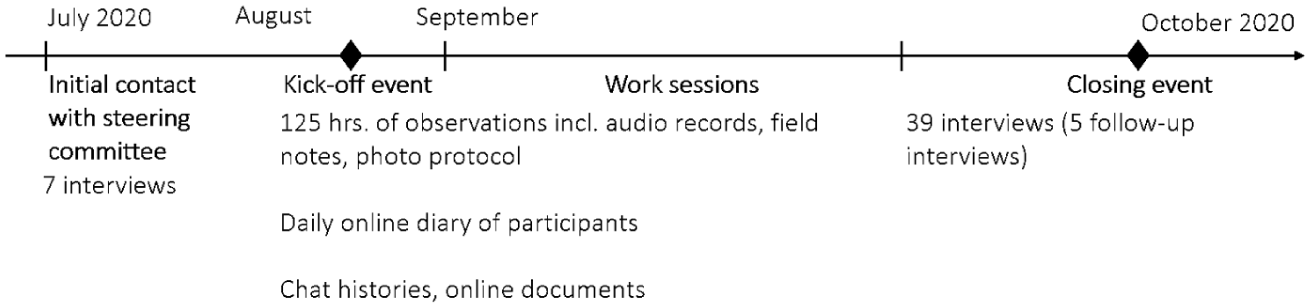
Data sources in chronological order of their collection.
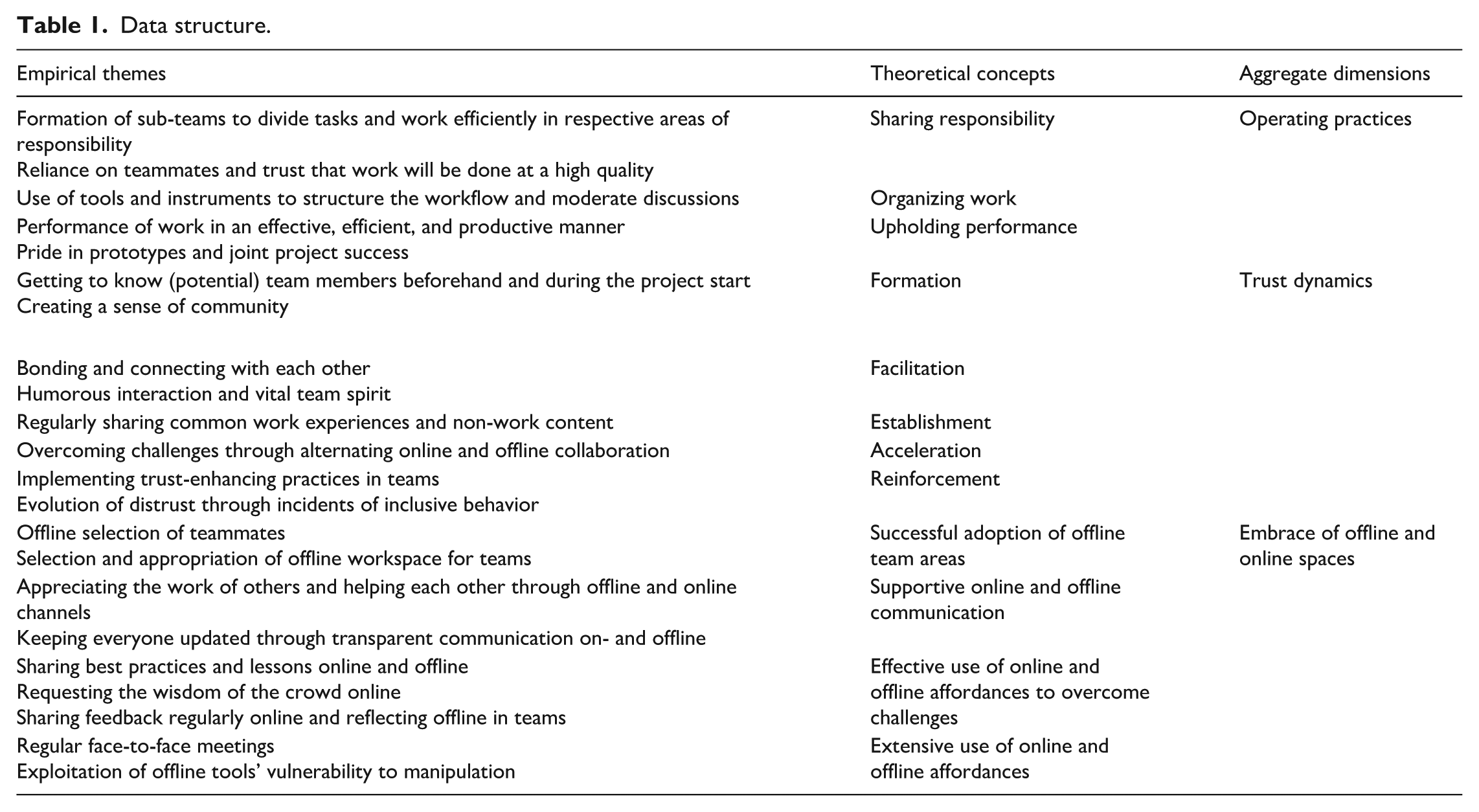
Our data analysis used a process study approach to take advantage of qualitative research on sense-making and grounded theory development (Langley, 1999), with structured procedures for analyzing data and articulating theory that followed an inductive approach (Corbin and Strauss, 2015). The inductive analysis of our data (Gioia et al., 2013) resulted in a data structure with empirical themes, theoretical concepts, and aggregated dimensions. For instance, we initially found that team members shared tasks and relied on each other’s work (empirical themes), which we subsumed under the theoretical concept of “sharing responsibility.” We also observed that team members collaborated smoothly using tools and instruments, thus “organizing work,” and we saw that team members developed a common sense about working effectively and efficiently, which we subsumed under “upholding performance.” We aggregated these theoretical concepts into overarching dimensions (“operating practices”). Similarly, we identified stages of trust dynamics by analyzing how trust-related themes (e.g. reliance on team members, disclosure of personal information) varied over time. We bracketed any discontinuities we identified (Langley, 1999) into the levels of trust, thereby identifying the five stages of trust formation, facilitation, establishment, acceleration, and reinforcement. Table 1 provides an overview of our data structure. Finally, we asked for the “why” of these discontinuities. We realized in the analysis of our material that team members used the offline and online space—what we call the “embrace of offline and online space”—in varying ways throughout the stages. Thus, we identified the triggers that initiated the evolution from one stage of trust to the next.
Data structure.
Findings
This section presents our findings on how trust developed in alternating offline and online collaboration. In addition to the five stages in which trust evolved, we identified factors of trust that consisted of the operating practices of responsibility, team management, and performance. We observed that trust intensified when teams embraced the offline and online spaces and identified four triggers that initiated transitions from one stage of trust dynamics to another: adoption of an offline team area, development of supportive offline and online communication, effective use of offline and online affordances to overcome collaboration challenges, and extensive use of offline and online affordances.
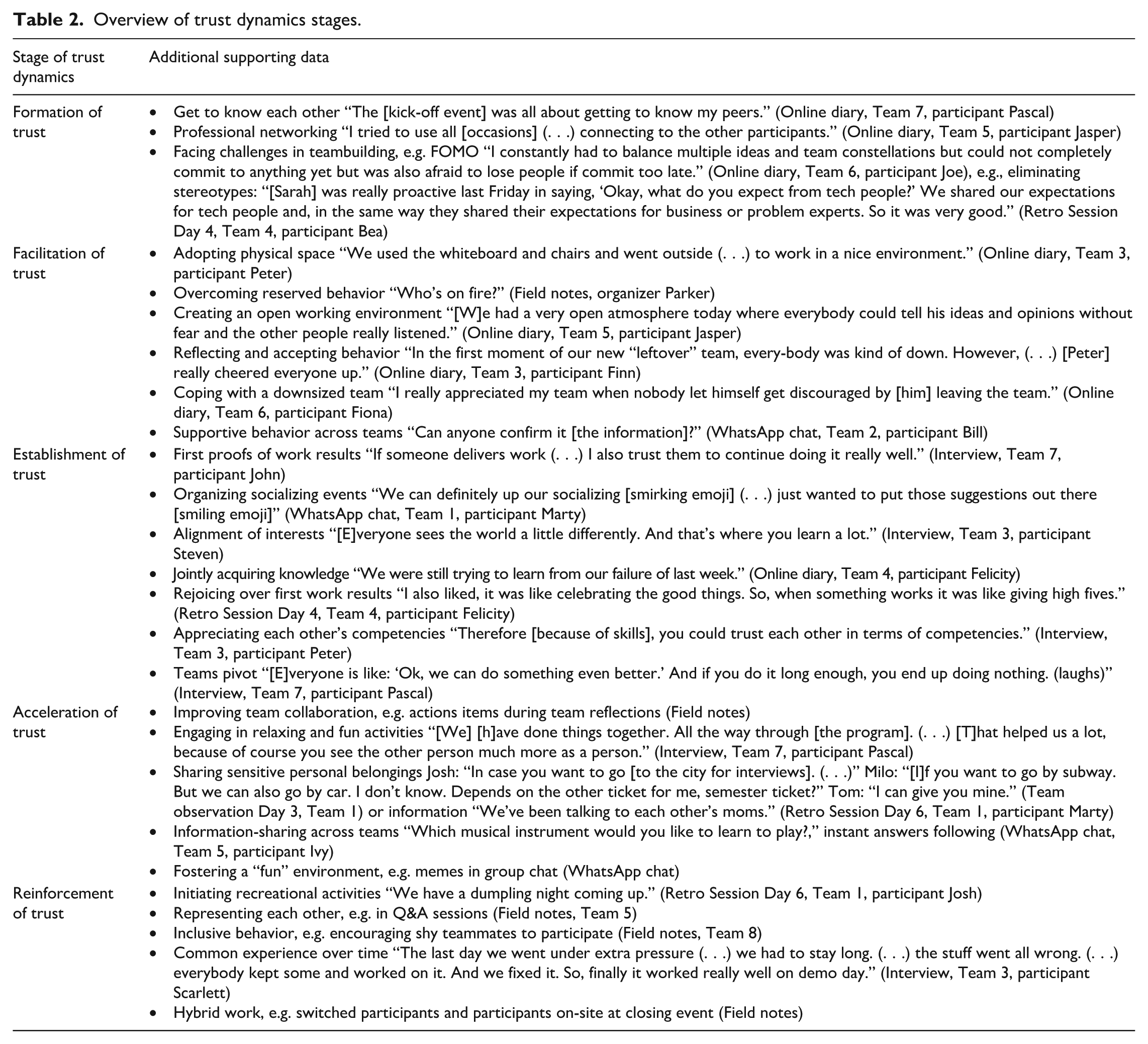
Five distinct stages of trust dynamics are identified as a result of the review of trust dynamics across time: formation, facilitation, establishment, acceleration, and final reinforcement of trust. Table 2 shows an overview of the stages of trust dynamics. Central elements are explained by drawing on additional supporting data, for example, participant quotes.
Overview of trust dynamics stages.
Formation of trust
The formation of trust in teams began with their getting to know each other face-to-face. When choosing team members, getting to know each other was important to the participants. For example, Jasper used every opportunity to connect with his peers and find a team, as he described: I think the biggest opportunity on the [kick-off] event was getting in touch with people. Therefore, I tried to use all the breaks, the time after the event, and the train ride home to connect with the other participants. (Online diary kick-off event, Team 5, participant Jasper)
Otherwise, developing trust dynamics seemed difficult in offline practices, intertwined with the challenging formation of teams. Participants independently reported feelings of stress, discomfort, and despair during that phase. After organizer Parker tried to speed up the process, participants requested additional time for personal and professional exchanges with other participants: “Can we get to know each other and talk for 2-3 minutes with each other instead of pitching ideas?” (Field notes Day 1, Team 6, participant Joe). Fear of missing out (“FOMO”) continued from the formation of trust stage and correlated with trust dynamics until the acceleration stage. Some teams reflected on the team formation process during in-depth team discussions. Team 6 mentioned that pointing to potential team members while standing in a circle was not perceived as productive, as mental stress, discomfort, and insecurity played a major role in the situation. The fear of not finding a suitable team in time was omnipresent, as one participant described: “There was a risk of being left alone without a team” (Online diary kick-off event, Team 1, participant Marty). Team 7 complemented these perceptions by comparing team formation to an auction where participants had to sell themselves and their competencies. Having to prove their worth to strangers made many participants feel insecure and vulnerable. Some participants reported fears and hurdles in getting in touch with others: “I did not approach people multiple times in fear of being rejected while trying to socialize and network” (Online diary kick-off event, Team 5, participant Sebastian). Team 7 felt considerable pressure during team formation. One team member referred to the pandemic situation as the distancing regulations triggered additional fear of contact. Participants also feared committing to a team too early, lest they face disadvantages later in the innovation contest. The dilemma between committing and trusting on the one hand and hesitating with caution on the other seemed to be a real feat of strength and challenge for many participants, resulting in hindered formation of trust. However, vulnerability to being rejected by teams and the risk of missed opportunities were ideal conditions for the formation of trust once it was all over. As soon as team formation was completed, participants felt security and release: “A load fell from the shoulder” (Field notes Day 4, Team 6).
The orientation phase paved the way for the early development of trust since it inhibited multiple challenges for the teams to overcome. Team members reported that topics in this phase included orientation to roles and responsibilities, communication within the team, and corresponding solutions. We observed that trust dynamics during the orientation phase increased trust by overcoming obstacles and setting a common basis for trust. For instance, one participant described how her team eliminated stereotypes of other team members, which at the beginning hindered trust: [Sarah] was really proactive last Friday in saying, “Okay, what do you expect from tech people?” We shared our expectations for tech people and, in the same way they shared their expectations for business or problem experts. So it was very good. (Retro Session Day 4, Team 4, participant Bea)
Team 1 used another approach to trust formation similar to that of Team 4. Talking about personal strengths, weaknesses, and expectations, they created a stable basis for trust in future collaboration through open communication.
Instructions by the organizers said that team formation could be done freely as the participants saw fit. This kind of independence and autonomy could have positively impacted the teams’ development of trust. Organizers followed a strict “on-demand” scheme, where teams had to ask for support or input outside a few fixed appointments with the organizers. Such empowerment gave team members self-confidence, which might have resulted in greater trust in the team (Field notes). Successful team formation triggered the transition to the next stage, the facilitation of trust.
Facilitation of trust
Following the team formation phase, face-to-face collaborations were supplemented by online interactions for the first time. After the initial stage, the formation of trust, where an initial basis for trust had been laid, the following activities in the offline and online spaces served as a facilitation of trust, that is, they furthered the intensification of trust. One task for the teams was adopting physical space, such as a group table, which was necessary for the facilitation of trust by establishing a close work environment: They already have a team and they already moved their tables. So, as soon as you’re a team, take your tables and move them somewhere as a team table. And then just start working. (Field notes Day 1, Team 7, organizer Mike)
Like creating a common basis for interpersonal relationships, clear expectations about the participants’ relationship to the surrounding space were agreed on, highlighting the spatial separation of work and “team areas.” Team areas were often assigned as neutral areas (i.e. unrelated to work) and playful areas where trust among team members could evolve apart from work. For instance, team discussions and retrospectives often took place in outdoor spaces (e.g. green space, benches, café).
Casual get-to-know-you exercises on the first day were difficult to do because of a range of pandemic-driven regulations (e.g. single tables with >1.5 m distance). Distancing was also observed in plenum discussions (e.g. few requests to speak in public discussions). Some participants sought to attract members for their teams by pitching their ideas (e.g. participant Martin, Team 7; participant Stan, Team 2), but otherwise, participants tended to display reserved behavior. As one of the organizers reported, they “almost fall asleep. The first were already on their cell phones” (Field notes Day 1, organizer Parker). Parker revived participants’ attention with activating methods like asking “Who’s on fire?,” stretching exercises, going outside, shouting, and clapping. Trust facilitation was initiated through trust-fostering measures like Parker’s reactivation initiative and pitches by volunteers.
Team 7 provided an example of open communication as a trust-facilitating behavior. Whenever a member left the group discussion or worktable, they informed the rest of the group. Even small undertakings (e.g. refilling a water bottle) were communicated. Similar observations of honest and direct communication occurred in Team 5. For example, two members were late to a team appointment with the organizers, ran in, out of breath, and apologized sincerely to all present. Their physical and obvious effort to arrive on time for the appointment, paired with their honest apologies, facilitated trust.
Given that an open working environment was established, further practices emerged. First, participants’ reflecting and accepting behavior in the teams during the team formation facilitated the development of trust. Peter’s impressions of the team formation phase correspond with his team members’ experience. In an informal talk, the participants expressed feelings of despair: Many people thought, “Okay, we still have two hours left.” And then suddenly there was a sense of panic because there were only 15 people left. And then everything was very, very, very unpleasant, very, very unpleasant. And then I was also with the other four from my team. We were just. . . I think, we were just the remnants of the teams. (Interview, Team 3, participant Peter)
However, how they handled these feelings differed. While Scarlett was stressed out, Scott appeared confident in finding a team. In the end, both found themselves in Team 3 (“leftover team,” “remnants of the teams”). In the first act of trust, every team member left to perform work packages from home. Through this hybrid collaboration, Team 3 first showed cautious indications of trusting behavior; they relied on each other and were confident that their work results would be coherent the following day.
For Team 6, a surprising twist occurred when one team member announced via phone that he was dropping out because of his work responsibilities, which could interfere with his ability to work on the innovation project. This sudden loss of a team member strengthened the cohesion among the remaining members, as the closeness and increasing familiarity through overcoming a challenge together facilitated trust development. Using the anonymous protection of telephone technology, the member who quit limited his vulnerability and blocked potential trust dynamics in offline areas by choosing to interact online. At this point, online practices affected offline trust development in the hybrid work constellation, with technology enabling the development of interpersonal trust.
Team 1 not only improved the cohesion in their group but also offered their play equipment to other teams (“In case you feel stressed out”). Supportive behavior across teams facilitated positive trust dynamics among all of the participants in the innovation contest. Other supportive behavior occurred via WhatsApp when teams helped each other out by, for example, verifying information (“Can anyone confirm it?”), providing contacts for interviews and practical overviews (“Super helpful, thanks!”). These face-to-interface practices fostered a supportive working environment, leading to offline trust development. In this hybrid collaboration setting, supportive communication in the offline and online spaces triggered passage to the next stage, where trust was established.
Establishment of trust
With the first proofs of work results, trust in each other’s competencies and reliance continued to increase: “If someone delivers work (. . .) I also trust them to continue doing it really well.” (Interview, Team 7, participant John). Trust was also increasingly established in online practices: Starting from the kick-off event, informal meetings were organized by the contest organizers and volunteers (e.g. participant Bea, Team 4). Information exchange and agreements took place online via Wonder Speed Dating or WhatsApp.
Participant Marty from Team 1 organized social events like visiting a beer garden (Figures 2 and 3). In the first approach, Marty proposed to “up their socializing” (Figure 2). With concrete suggestions for location and setting, he opened up the possibility of a discussion round (“we can discuss details tomorrow”). Although the initiation took place as an online practice, the open exchange again took place in an offline practice, which made the hybrid working context more visible.
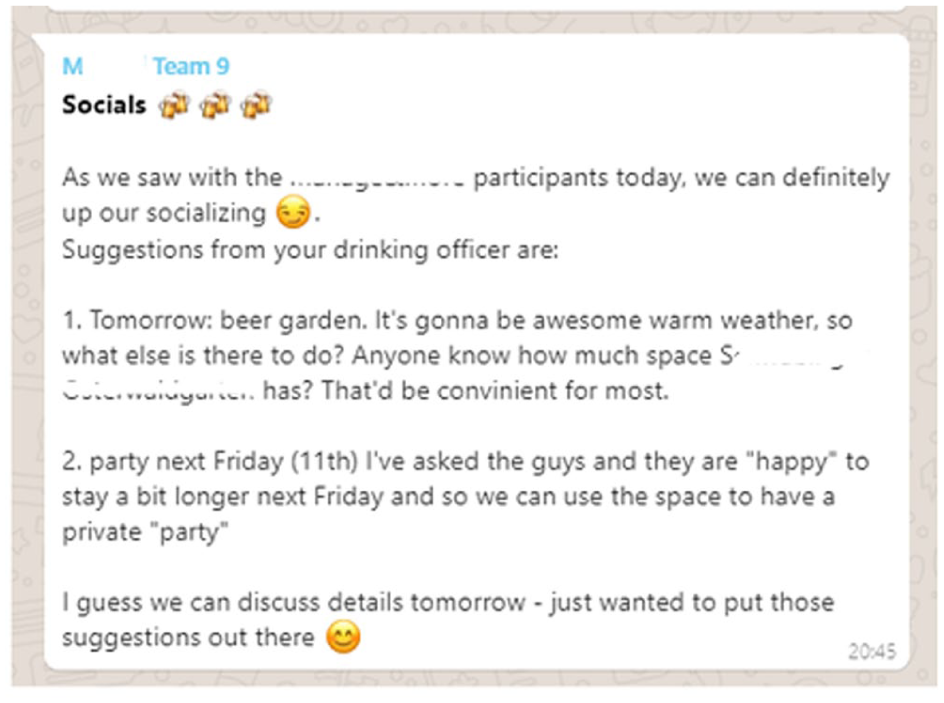
Online practice of organizing socializing events for the establishment of trust.
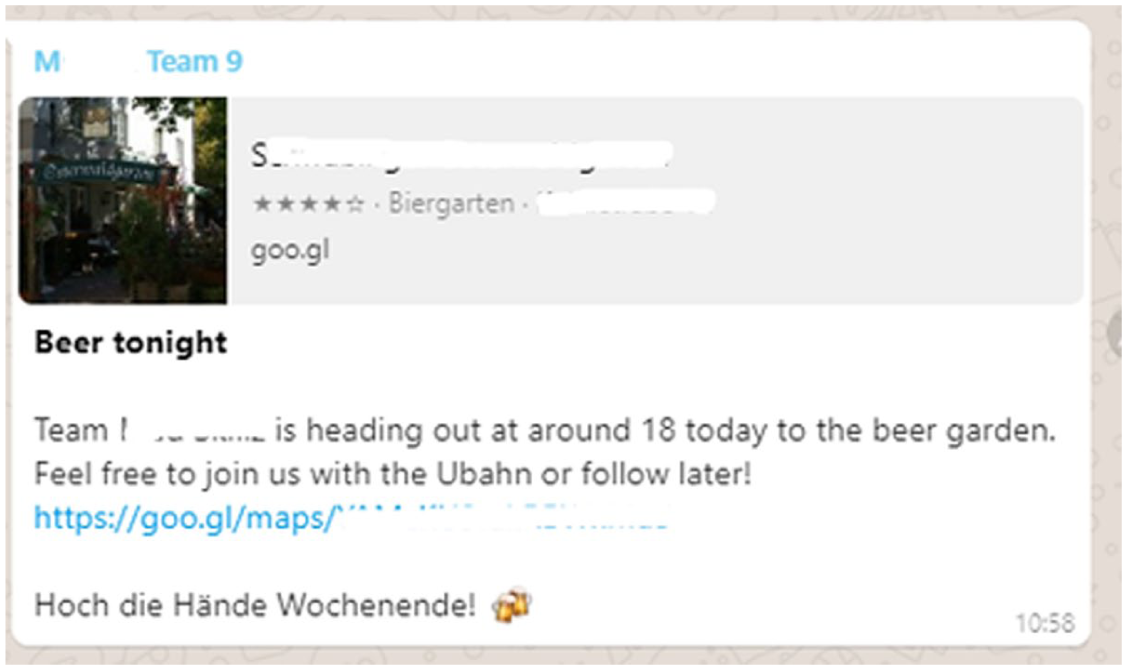
Online practices through informal agreements for the establishment of trust.
The announcements were made via WhatsApp, and other participants sent positive feedback in the form of, for example, positive emojis, GIFs, and comments. Marty “took over” the organization of the socializing events and, for example, updated the specific time on the relevant days (Figure 3). At the same time, he encouraged the other teams to participate (“feel free to join us”). The linking of online practices, informal agreements, and offline face-to-face exchanges positively reinforced the trust dynamics, which is evident in establishing trust.
The online practices of the socializing events were continued during the innovation contest (Figure 4). The sustainable implementation of this practice contributed significantly to the establishment of trust. Especially at the beginning, when the participants hardly knew each other personally, the trust-building effect of using technology was astonishing. The chat messages created closeness and protected space that enabled the participants to allow disclosure behavior. Online practices also fostered the establishment of trust development offline. During the innovation contest, the participants stayed in contact until late at night via WhatsApp, informing each other if they were headed to another student party and sharing addresses and locations. Informal gatherings and exchanges fostered trust facilitation, resulting in changing trust dynamics.
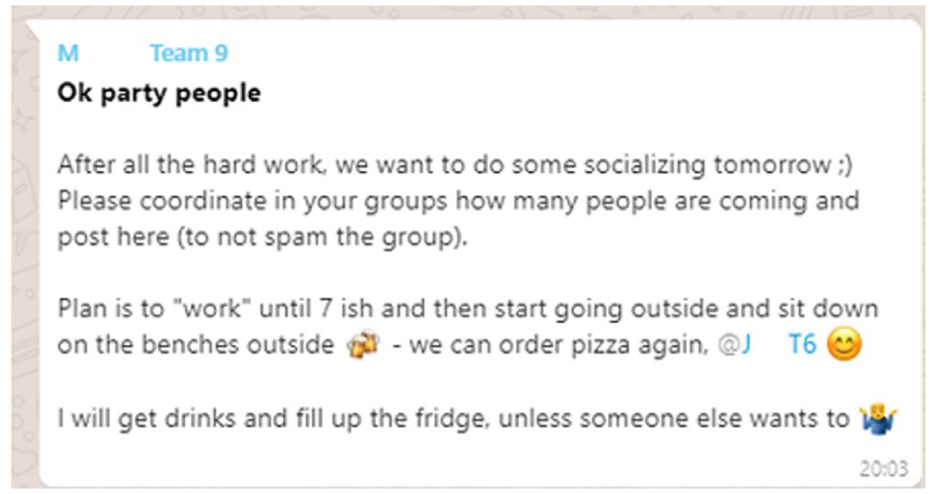
Continued online practices of organizing socializing events for the establishment of trust.
After activities in the online and offline spaces furthered the development of trust, we observed that trust was established on solid ground with only minor fluctuations of trust during collaboration in teams. The teams established trust by aligning their interests, such as when business experts learned to program a website. The team atmosphere was described as “like a collaborative, where everyone contributes what they can” (Retro Session Day 4, Team 7, participant Martin).
Deciding on a common ground enabled work to be done and established a level of trust: We don’t want to have the perfect product now—having fun is the top priority. That was a good decision; the only thing was that the seriousness got lost a bit. (Interview, Team 7, participant Martin)
The team members jointly acquired new knowledge (e.g. by attending tech courses), rejoiced over their first work results, and appreciated each other’s competencies: You could trust each other in terms of competencies. We don’t have to become best friends and the perfect team. We simply have to function to a certain degree and perform to a certain degree. (Interview, Team 3, participant Peter)
On day five, which organizers described as “U-turn day,” many teams pivoted, changing their business ideas and starting all over again. Many ideas were discarded, reconsidered, or criticized. Teams showed a variety of coping mechanisms to overcome these challenges. While one team admitted their failure openly and decided to brainstorm in a relaxed atmosphere (“Looks like we all need to get some ice cream again”; Field notes Day 5, Team 7, participant Jessica), other teams expressed anger toward their team members because of endless and overly democratic discussions. Although trust had been established generally, trust dynamics changed rapidly from positive to negative and back again. Trust levels seemed to depend on both the affect within teams and the performance outcomes.
Other offline practices fostered the establishment of trust. Some teams practiced executing a handstand outside during lunch break. Besides honest and constructive feedback for improving the technique, participants cheered and applauded after successful handstands. These interactions enabled disclosure behavior through positive emotions and bonding among participants. When effective use of these practices was at play, trust accelerated, and a new stage of trust dynamics was reached.
Acceleration of trust
In the new stage of acceleration of trust, trust dynamics switched more frequently while trust relationships deepened. The decisive part of observations on trust dynamics was in-depth group discussions. These discussions involved defining the action items the teams wanted to work on, such as stopping cross-talking, increasing planning, and implementing focused time slots. Some teams got creative by, for example, using instruments (e.g. a squeaky dog toy) to interrupt endless or aimless team discussions. Continuous interruptions annoyed other teams, such as other teams or organizers stopping by. These individual face-to-face interactions enabled teams to get into a working mode, which accelerated trust development on both the professional and personal levels.
As was the case with trust formation, Team 1 engaged in fun activities by playing roundnet outside. In multiple conversations, they jokingly reported a stress-relieving effect of these game breaks, as otherwise, there would be “too much testosterone,” as it was a male-only team. They took active countermeasures by resolving stress and conflict situations with regular interruptions, which hindered any escalation that might have decreased trust. Another collaborative behavior we observed was sharing student tickets among the team members so they could get into the city cost-effectively. Sharing sensitive personal belongings like personalized tickets showed that trust was present. Similar effects came to place, when the team shared sensitive information. Team 1 worked on a product for older people and demonstrated high levels of trust by interviewing each other’s mothers. Team members risked exploitation and demonstrated vulnerability by allowing others to intrude on private space and family. These effects continued in online collaboration, so trust was intensified by team members’ using the affordances of offline and online spaces effectively to overcome challenges in collaboration.
After trust dynamics evened out at an established level of trust, offline practices accelerated trust further. The fear of missing out (FOMO) on potentially better teams had provoked insecurities in the teams, but these insecurities were overcome through online interactions. Across teams, a “fun” environment fostered the acceleration of trust when, for example, team members shared pictures of failure (e.g. an exploded prototype in a 3D printer, a customer survey reminding them of a failed proposal) in the WhatsApp group (Figure 5). Humorous interactions between the teams in the online space (e.g. reacting with laughing emojis) addressed disclosure behavior. In addition, information-related practices online addressed reliance behavior. In combination, information-sharing across teams increased, facilitating the acceleration of trust.
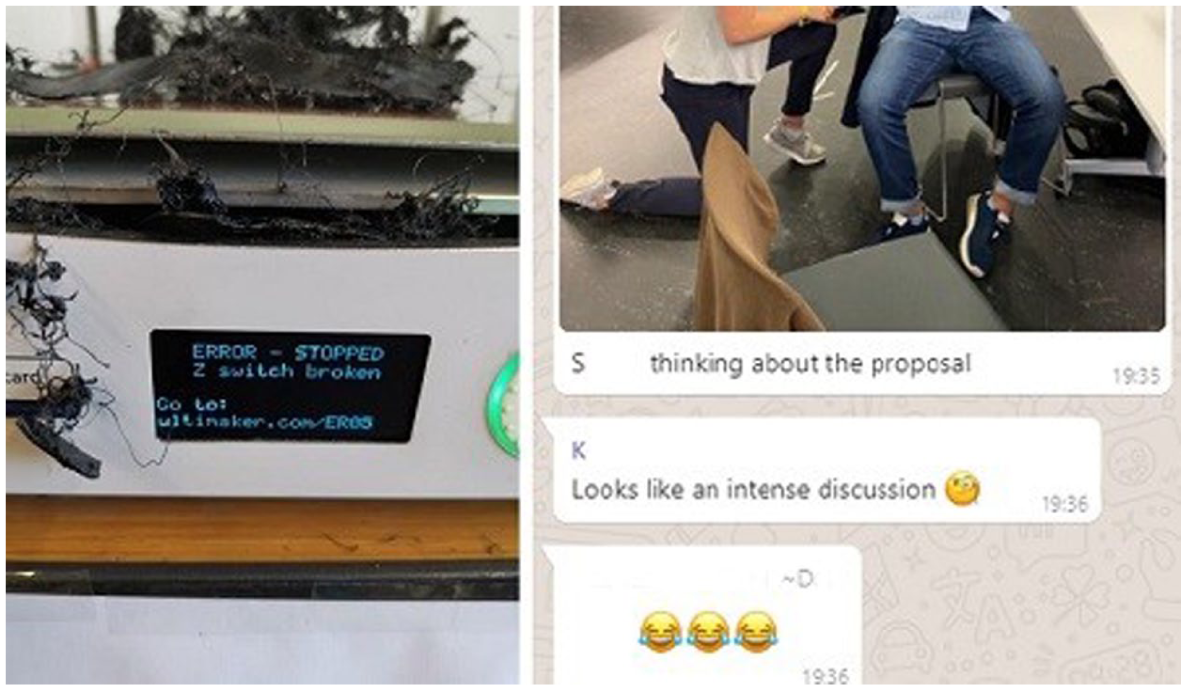
The online practice of a “fun” environment to foster the acceleration of trust.
In addition to trust dynamics when team members worked together offline, we observed that trust was facilitated and trust problems were overcome through additional online collaboration. We saw alternating and parallel effects between online and offline practices, such as when we observed low trust between groups and almost no interaction in plenary presentations. Still, inter-group interaction occurred in parallel when the groups also used digital technologies. Something that took place on day five illustrates this development, as described in our field notes: This afternoon, midterm presentations for the teams were scheduled. Ivy presented the current state of work for team 5. Team 5 wanted to benefit from the swarm intelligence of the other participants, so Ivy asked the plenum to answer on WhatsApp, “Which musical instrument would you like to learn to play?” Immediately, a large part of the other teams answered. (Field notes)
Hence, the lively participation in the online space (Figure 6) showed accelerated trust: While Ivy admitted vulnerability and needed help for her team, the other teams took the initiative and reciprocally reflected helpful trusting behavior. The reliance behavior is based on the practice of providing information. Afterward, we saw that the resulting trust across groups in the virtual space affected trust in offline relationships. Other teams approached Team 5 afterward, giving feedback on their answers. This example illustrates that technologies fostered the exchange of work-related information across rival teams.
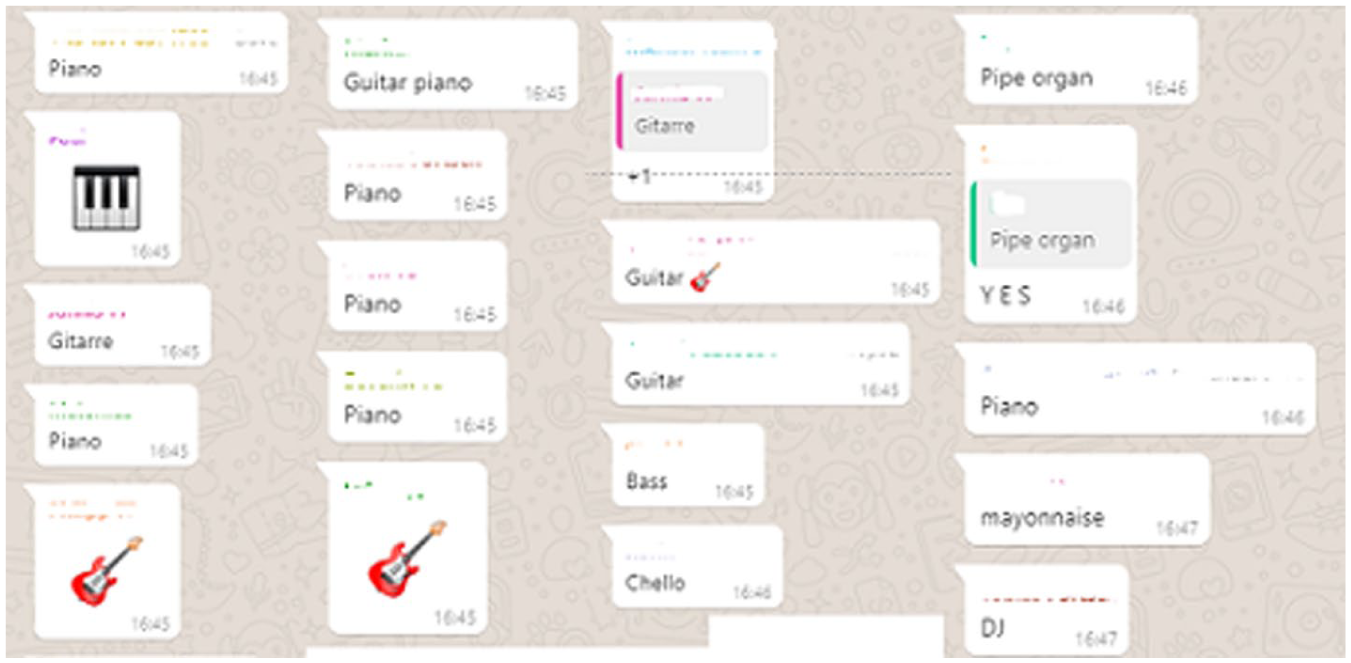
The online practice of helping rival teams with work-related issues by providing swarm intelligence for acceleration of trust.
Although teams tried to foster a “fun” environment via digital collaboration tools, strenuous work phases also occurred. Teams reported feeling tired and demotivated, described collaboration as increasingly exhausting and worked quietly in contrast to discussion-rich phases from earlier days. With a certain level of familiarity, trust could accelerate through social behavior, such as giving high fives compliant with the distancing rules due to the pandemic when a team accomplished a task. Hence, online collaboration increased trust in face-to-face interactions. As trust continued to intensify, a peak point of trust in hybrid work was enabled through the extensive use of offline and online affordances. This peak point triggered a reinforcement of trust in the last stage of trust dynamics.
Reinforcement of trust
Some teams reinforced their intrateam trust through face-to-face interactions by initiating recreational activities (e.g. climbing, Team 7). Other teams spent evenings with private cooking events at one member’s home. They came from a professional work relationship and managed to include these relationships in the private field. While reliance behavior was already visible throughout earlier stages of trust dynamics, the increased disclosure behavior (e.g. sharing personal information and space) intensifies trust. These deepened relationships, characterized by attachment and mutual care, are decisive for the current stage, reinforcement of trust.
Furthermore, reinforced trust was visible when team members represented each other in team appointments, such as when only one team member was present during a meeting with the organizers. Team members relied on each other’s competencies and each other acting in the team’s best interests.
Other trust-enhancing practices in teams included open behavior in scheduled and spontaneous team reflections or inclusive behavior by encouraging shy teammates to contribute to discussions. Showing empathy for each other and recognizing heterogeneous team constellations reinforced trust. A sense of community and unity through shared experiences and vulnerability strengthened trust. This common experience over time lead to stable trust relationships among participants. As the final days of the innovation contest were marked by time pressure to finalize prototypes and pitches, reinforced trust was a central resource to most teams: “The last day we went under extra pressure (. . .) we had to stay long. (. . .) the stuff went all wrong. (. . .) everybody kept some and worked on it. And we fixed it. So, finally it worked really well on demo day.” (Interview, Team 3, participant Scarlett)
By all pulling together and “being in the same boat,” the teams delivered high performances in the final. We also observed reinforcement of trust at the closing event. By combining both online interactions (e.g. some participants were online switched via video conference tool) and offline interactions (e.g. discussion and wrap-up in plenum, feedback sessions in teams), interdependencies across online and offline trust dynamics became clear. These interdependencies were expressed when most participants indicated by a show of hands that the innovation contest was about the people and their teams, not the final prototype (Field notes). At this event, technology enabled a connection between online participants and on-site participants, functioning as a reinforcing element of trust dynamics.
Discussion
This paper presents our findings from a case study of trust dynamics in hybrid work with alternating online and offline modes of collaboration in the context of an innovation contest. Our framework on trust dynamics in hybrid work aggregates our findings (Figure 7).
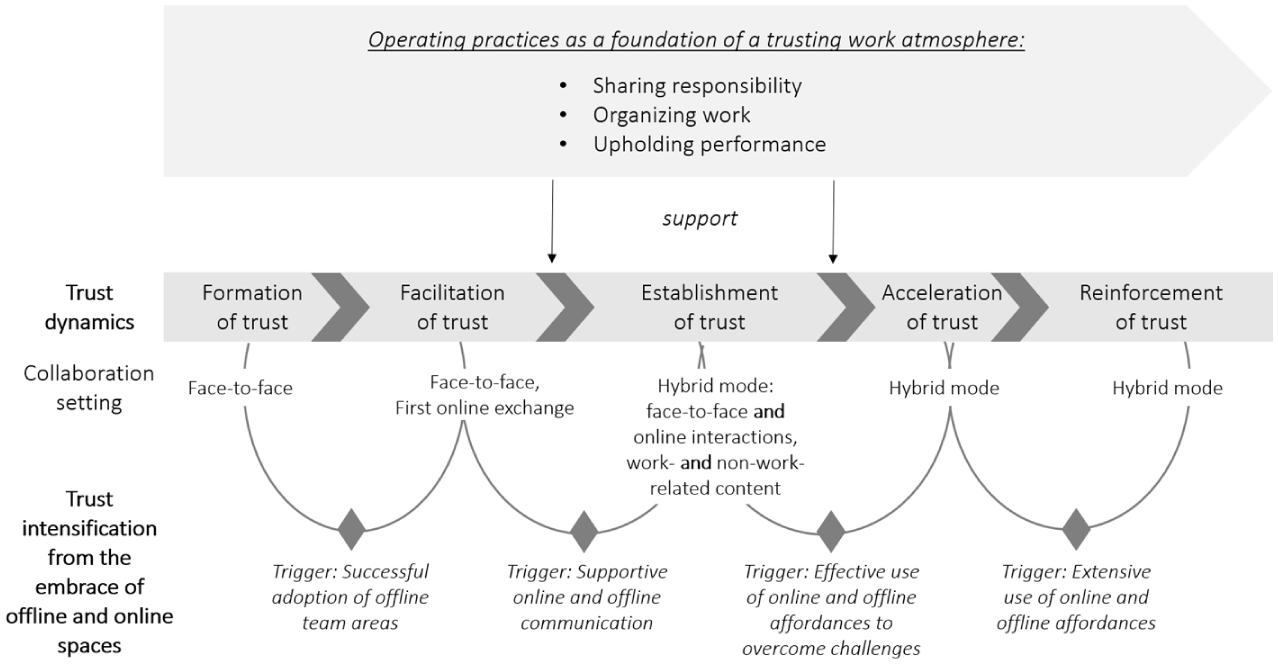
Trust dynamics in hybrid work collaboration.
Several forms of trust appeared in our field study as trust dynamics changed over five evolutionary stages during the innovation contest: formation of trust, facilitation of trust, establishment of trust, acceleration of trust, and reinforcement of trust. These trust dynamics came into play in actions within teams and took place both offline and online. We observed that trust intensified through the teams’ unfolding embrace of offline and online spaces and identified triggers that initiated the shift from one stage of trust dynamics to another. Swift trust derived from online collaboration also intensified trust, with operating practices creating a foundational form of trust and running along as a baseline.
Operating practices: Trust was ensured in a fast-moving project by framework factors like reputation and structure. In this context, we identified operating practices like sharing responsibility, organizing work, and upholding performance that create a trusting working atmosphere. Provided that the participants worked in their roles and functions, a daily structure was maintained in the team, so the operating practices supported the development of trust.
Formation of trust: Trust formation started with the collaborative setting of face-to-face interactions. During this phase, following professional networking, teams were created. The newly formed teams overcame initial challenges, such as apprehension during team formation and building. Team members built a sense of community while getting to know each other. When a team successfully formed, the shift to the next collaboration mode and the next stage of trust dynamics was triggered.
Facilitation of trust: Facilitation of trust was accompanied by face-to-face interactions and the first online exchange. These first introductions of digital communication occurred through newly established WhatsApp plenary chats and online meet-ups and get-togethers. In parallel, teams began to adopt physical space. Trust intensified as the teams were formed and embraced the offline space. This stage was determined by a sense of curiosity and a newly established feedback culture in the teams after an inclusive approach in which all opinions were heard. In a study of virtual and face-to-face teams, Breuer et al. (2020) found that trust develops positively when there is a positive feedback culture in the team, confirming our results for hybrid teams. Reflecting on teamwork and sharing personal information facilitated trust and even resulted in supporting behavior across teams on- and offline, triggering the next phase.
Establishment of trust: The establishment of trust was the first stage of introducing the collaboration setting of hybrid work. Trust was clearly established with the first visible proofs of work results as reliance behavior and organizing socializing events as disclosure behavior. Team-led compromises continued to influence the development of the trust dynamics positively: Individuals took a back seat to the collective good as individual expectations aligned with team goals and visions. Teams appreciated each other’s experiences and disciplinary backgrounds. Supportive online and offline communication to overcome these challenges was determined by a mutual appreciation of each other and each other’s work. It fostered a sense of curiosity and the possibility to learn from each other, triggering the next phase.
Acceleration of trust: After establishing trust, trust dynamics merged into an acceleration of trust. In the team’s daily workflow and communications, both face-to-face and online interactions were established and alternated. The alternating modes of collaboration in hybrid work were also used to exchange work and non-work content and were used by the teams to overcome collaboration challenges (e.g. workflow problems alleviated through jokes in online chats). Engaging in relaxing and fun activities and sharing sensitive personal belongings or information accelerated trust tremendously. This stage continued to involve interactions in hybrid constellations, alternating online and offline spaces. In preparation for the final stage, the last switch was triggered by supportive communication and overcoming challenges.
Reinforcement of trust: Particularly in the final sprint in the innovation contest, which was characterized by time pressure, many teams had to overcome final hurdles and demonstrate competence in joint problem-solving. The high tension and stress levels increased the potential for interpersonal conflict. Transparent online and offline communication, such as keeping others informed about one’s work, positively affected the trust dynamics.
Our framework highlights the trust dynamics in hybrid work settings and the intensifying role of alternating modes of collaboration. Our framework offers a nuanced perspective on trust in collaborative work by extending research on hybrid work settings and specifying the trust dynamics in hybrid work. Initial trust in the team competition started at relatively low levels, increasing as participants came to know each other in the team-formation process. The low level of trust was apparent from the team members’ lack of confidence and passivity (Lewicki et al., 1998) during the facilitation of trust phase, as participants were uncertain about their team fit. When trust was established, multiple offline practices occurred on the team level. Work results were visible, resulting in team members’ re-evaluating other members’ trustworthiness and trust development (Williams, 2001). Teams increasingly showed appreciation for each other’s competencies and acquired new skills together. Investigating the technologies in use, WhatsApp as an instant messaging service was applied. Participants engaged in real-time texting for both work-related content and disclosing personal information. While the use of WhatsApp has been investigated in multiple studies (e.g. Ahad and Lim, 2014; Church and De Oliveira, 2013), a specific application for hybrid teams is new. Participants openly expressed themselves, for example, by using humorous comments and pictures, and forming strong personal attachments ultimately leading to increased trust. A recent study constitutes a positive effect of instant communication and flexible connectivity on well-being in virtual teams (Hill et al., 2024). Thus, such an open and satisfied attitude of the participants through instant messaging could reinforce the positive effect on trust.
Likewise, a review of virtual teams identified informal communication as a central element (Morrison-Smith and Ruiz, 2020). This informal exchange between colleagues usually takes place, for example, in the coffee kitchen or at the water dispenser. Interestingly, the teams in our study managed to achieve a similar familiarity and informal exchange via instant messaging. The participants were able to connect and open up to each other in this personal way. Corresponding practices contributed to disclosure and resulted in positive trust dynamics. It is exciting that technologies, in this case, impact the personal and affective levels of trust.
In contrast to the task-oriented exchange and collaboration approach, technological affordances enabled a positive development of trust dynamics. As trust dynamics accelerated, some participants experienced a fear of missing out on other team members’ competencies and regretting their choice of teams. These effects declined in the last stage of trust dynamics as participants felt increased cohesion and a sense of community in their teams.
Our analysis reveals that digital technologies foster collaboration by extending the space for interaction (Ciriello et al., 2018, 2019), where trusting team relations can evolve. Our study shows that to understand offline work practices such as the development of prototypes, we must consider that a large part of offline work practices is complemented and facilitated by—but can also be hampered by—online practices. In this context, our study highlights the role of embracing offline interactions on-site and technological affordances, as such acceptance furthers the intensification of trust dynamics. Drawing on Gillespie’s behavioral trust inventory, the two forms of trusting behavior in professional relationships, disclosure and reliance (Gillespie, 2003), served to explain technological affordances in our study. Operational work is often carried out at the behavioral level of reliance. At the behavioral level of disclosure, personal interactions occur. This is mostly accomplished by in-person interactions, strengthening emotional ties between actors. Technology enables communication in virtual or hybrid teams. Reliance behavior is used since most exchanges are for genuine collaboration or operational coordination. Surprisingly, instant messaging communication promoted interpersonal interaction in our study. Hence, parallel communication on and offline offers privacy, for example, chatting in a private WhatsApp group on a team level. On the other hand, technological affordances enhance the accessibility of overall space, for example, through plenary group chats.
These findings highlight the Janus-faced nature of technological affordances. On one side, technology fosters trust dynamics through confidentiality and privacy, allowing team members to engage in personal disclosure. On the other side, it promotes accessibility and visibility, essential for collaboration at the reliance level. While technology has traditionally been designed for task-related exchanges, it now serves a dual purpose, supporting the relational level of trust. We argue that technological affordances accelerate trust dynamics by bridging the gap between reliance and disclosure. Technology facilitates both operational and relational exchanges and reshapes how trust develops in hybrid and virtual work settings. This dual functionality underscores the evolving role of technology as a driver of both task-oriented collaboration and relationship-building.
We identify four team actions that describe this embrace of offline and online interactions and serve as tipping points in initiating the next stage of trust dynamics: (1) adoption of offline team areas, (2) supportive offline and online communication, (3) effective use of online and offline affordances to overcome challenges, and (4) extensive use of online and offline affordances. By newly identifying how offline and online interactions are embraced, we uncover the underlying dimensions of trust dynamics in hybrid work.
Our study contributes to discussions on work practices that span offline and online interactions (e.g. Patroni et al., 2022) by shedding light on the role of technology in forming offline social relationships and the quality of these relationships (Young et al., 2019). Studies find that practices in online and offline spaces are interrelated (Vaast, 2007) and affect how people use online resources (Wang et al., 2020). We build on and extend this work by revealing the role of technologies in work practices (Leonardi, 2011; Young et al., 2019), particularly how people use technologies’ affordances (Faraj and Azad, 2012) in their offline practices. Those offline practices account for the dynamics of trust in face-to-face interactions. Thus understood, the affordances of digital technologies can facilitate trust dynamics (such as its establishment). Our finding that online collaboration practices affect the quality of face-to-face social relationships calls for trust researchers to rethink the spaces and boundaries of trust dynamics (Möllering, 2018).
We identify swift trust that derives from online work as a force for intensifying trust dynamics in hybrid work. More concretely, we show that the operating practices of responsibility, team management, and performance form a basis for swift trust in hybrid teams. Typical antecedents of swift trust (e.g. Meyerson et al., 1996) include role responsibility and task arrangement, which contribute to a supportive work environment for trusting collaboration. We also offer a nuanced perspective on trust in collaborative work by extending research on hybrid work settings to specify trust dynamics in hybrid work with the five stages of formation, facilitation, establishment, acceleration, and reinforcement of trust. Unlike conventional process models (e.g. Lewicki et al., 2006), these stages consider the hybrid nature of collaboration. In shedding light on hybridity in work contexts, we find that the role of technological affordances is inevitable.
Like all studies, our study has limitations. While controlling instances and monitoring behavior foster security in social relationships (McKnight et al., 1998), the innovation contest we examined offered the participants freedom of action and autonomy. This independence might have accelerated the voluntary exchange of information and enabled successful product innovations (Janetzke, 2013). The interdependencies of trust and control offered the working teams a wide range of opportunities and resulted in several kinds of trust dynamics, from low-trust to high-trust working environments. Furthermore, the particularly young age structure of the master’s students certainly had an influence, for example, the regular very high usage of WhatsApp (e.g. Ahad and Lim, 2014). Furthermore, physical proximity with regular face-to-face contact was a given in these hybrid teams. This possibility may unconsciously affect behavior in instant messaging, for example, through assessing the direct personal reaction of the other party to online interactions.
Although we examined trust dynamics only in teams, the organizers might have influenced the teams’ trust dynamics through such effects as power asymmetry of information flow and final grading. Hence, the institutional level might have influenced trust dynamics in the teams, potentially limiting our findings. Our results are also somewhat limited because the actors were students, and the innovation contest might have been less important for the students than similar settings in real practice would have been. However, successful startups have emerged from the contest, suggesting that the contest had a certain importance for its participants. Moreover, we suggest that our findings potentially apply to other knowledge workers. Thus, the results of our study are most relevant to temporary organizational settings with flat hierarchies, such as innovation labs or knowledge-intensive project work. Since trust in relationships among knowledge workers has rarely been the subject of research (Abgeller et al., 2025), the insights gained from student teams contribute valuable additions to the field’s current state. We are also aware that our study focuses on the specific context of an innovation contest. Consequently, central organizational elements such as organizational culture or power dynamics potentially differ in other fields of application. Therefore, hybrid teams in other organizations might experience increased complexity due to pre-existing structures, organizational culture, or power dynamics. Future research could explore these interdependencies between trust dynamics and other central organizational elements in greater depth.
The present study is principally concerned with practices that foster trust-building in hybrid work environments. However, it is acknowledged that trust breaches and subsequent repair mechanisms represent critical areas for further research. Trust dynamics are inherently complex, and breaches of trust—whether due to technological failures, miscommunications, or unmet expectations—might significantly disrupt collaboration processes. Addressing these aspects could enrich the understanding of trust dynamics in hybrid work settings and contribute to a more comprehensive theoretical framework that accounts for both the formation, breach, and restoration of trust.
In addition to its theoretical contributions, our research has implications for practice. Recent developments, such as the COVID-19 pandemic, have accelerated the increasing flexibility of organizational spaces (Schawbel, 2021), where technologies are increasingly actively involved in shaping people’s social relationships in the work context and beyond (Krehl and Büttgen, 2022; Maurer et al., 2022). Our research reveals that offline work practices shape people’s online relationships and vice versa, and in collaboration practices today, teams alternately collaborate offline and online. Thus, our study suggests that practitioners should care for online interactions as much as they do for offline interactions, perhaps by providing informal online collaboration platforms like in-house social media, where workers can informally exchange ideas or have fun (Hauptmann and Steger, 2013).
Conclusion
Starting from a theoretical lens that emphasizes trust dynamics in either online or offline contexts, we use data from a case study of an innovation contest to show how trust dynamics develop in hybrid work. We contribute to previous research by developing a novel framework for trust dynamics in hybrid work, where modes of collaboration alternate between online and offline spaces. In this framework, we identify five stages of trust dynamics that, together with the embrace of offline and online space, send trust development from one stage to the next. Our research emphasizes how adopting technology affordances and offline interactions on-site contributes to deepening trust dynamics. The two types of trusting behavior in professional relationships—disclosure and reliance—were used to explain technological affordances in our study, drawing on Gillespie’s Behavioral Trust Inventory (Gillespie, 2003). Our findings show the Janus-faced character of technology affordances. On the one hand, technology encourages trust by protecting privacy and secrecy, which enables team members to disclose personal information. Conversely, it encourages transparency and accessibility, both of which are necessary for cooperation at the level of reliance. Although the technology was initially developed for task-related interactions, it now supports the relationship degree of trust in addition to its primary function. We argue that technological affordances accelerate trust dynamics by bridging the gap between disclosure and reliance. Swift trust, which is seen frequently in virtual teams, emerged in the contestant teams’ operating practices and served as a basis for the intensification of trust dynamics. Thus, trust dynamics also reflect this expanded hybrid work.
