




Abstract
This systematic review aims to comprehensively examine research on burnout and personal crises in managers, offering insights into their impact on work performance, engagement, and overall well-being of managers. The article is based on a systematic review of 125 articles published in journals indexed on Web of Science. The identified texts are subjected to thematic analysis. The review summarizes key findings, identifies prevalent themes, and provides HRM recommendations. Additionally, it proposes a research roadmap, advocating methodological advancements and interdisciplinary approaches to enhance understanding in managerial contexts. The paper reveals a dramatic lack of qualitative studies that shed new light on problematic aspects of managerial practice and mature understanding of their psychologically challenging situation. Further research should focus on comparisons between manager burnout and ordinary workers, focus on a qualitative understanding of the context and lived experience of managerial practice, and shape recommendations that reflect the specifics of managerial work.
Introduction
In recent years, managers have faced mounting pressure due to various factors (Ganster, 2005; Hambrick et al., 2005; Maxfield and Hale, 2018). The COVID-19 pandemic introduced significant changes to the work environment (Knight, 2020), including remote work and increased technology use (Adekoya et al., 2022; Budhwar et al., 2022; Zerfass et al., 2020), disrupting traditional managerial practices. Amid global competition, economic uncertainty, and demographic shifts, managers must swiftly adapt to an uncertain business landscape (Bakshi, 2017; Drucker, 1999). These dynamics increase stress and burnout risk (Schaufeli and Bakker, 2004a, 2004b) as managers strive to balance personal and professional lives (McCarthy et al., 2010). Personal crises, such as family issues or health concerns, can further compound this pressure (Gallo, 2017; Nawaz, 2020). While the recent developments have undoubtedly introduced challenges for managers, it is important to recognize the potential positive aspects as well. The shift toward remote work and increased use of technology has provided greater flexibility and work-life balance for many employees. Moreover, remote work can increase job satisfaction (Brown et al., 2012). Virtual collaboration tools have enabled more efficient communication and coordination across geographically dispersed teams (Haas and Mortensen, 2016). Despite the growing recognition of workplace mental health, our understanding of how managers perceive personal crises and their impact on human resource management remains incomplete.
Burnout, as a condition characterized by exhaustion, cynicism, and reduced professional effectiveness, has been identified as a significant workplace problem for several decades (Freudenberger, 1974; Maslach, 1976). The chronic nature of this phenomenon can have long-term effects on individual health and well-being as well as on organizational productivity and performance (Wright and Bonett, 1997). Furthermore, the COVID-19 pandemic has intensified these problems, with many employees experiencing high levels of stress and burnout due to the increased demands and uncertainty of the work environment (Baker and Zuech, 2021; Kotera et al., 2021).
Understanding how to effectively manage critical workplace situations and prevent managers’ personal crises that can lead to burnout or work stress is vital for leadership development. Such insights can inform human resource management strategies. While burnout research is extensive in fields like healthcare, social services, and education, the role of personal crises and critical moments contributing to burnout among managers remains poorly understood. Given their leadership roles, personal crises can significantly hinder managers’ decision-making and team management, leading to reduced productivity, job satisfaction, and increased turnover. Recognizing the impact of personal crises on managers and how they handle them is essential for HR management to develop effective support strategies and mitigate burnout.
This systematic review aims to comprehensively analyze existing research on burnout and personal crises in managers, summarizing findings, identifying trends, and evaluating HRM recommendations. It will also propose a roadmap for future research. The review’s findings will inform evidence-based HRM strategies to enhance managers’ well-being and organizational performance. The research questions guiding this review are:
RQ1: What is the scope of the research on burnout and personal crises in managers and what are its main findings?
RQ2: What direction should future research on burnout and personal crises in managers take?
Theoretical background
Manager, executive, leader, and entrepreneur
While this systematic review focuses explicitly on managers, we recognize that the terms “managers,” “leaders,” and “supervisors” are often used interchangeably in the organizational literature. As Zaleznik (1977) and Kotter (1990) discuss, the distinction between management and leadership lies in emphasis—managers are often associated with planning, organizing, and controlling, while leaders are linked with vision and inspiration. However, these roles frequently overlap in practice, making it challenging to delineate distinct burnout experiences exclusive to one role. This limitation constrains our review’s focus, potentially excluding relevant insights from studies labeled under “leaders” or “supervisors.” Future research could explore a broader inclusion criterion to capture a wider spectrum of organizational roles.
Managers can be defined as individuals who coordinate and oversee the work of others within an organization to achieve specific goals and objectives (Okhuysen and Bechky, 2009). Their key responsibilities encompass formal authority over a team, department, or organizational unit. Managers are tasked with planning and organizing work processes, allocating resources effectively, and setting priorities to ensure efficient operations. A crucial aspect of their role involves directing, monitoring, and evaluating the performance of subordinates or team members under their supervision. Additionally, managers represent their unit’s interests in cross-functional decisions and initiatives, serving as a liaison between their team and other organizational entities. This definition captures the core managerial roles of planning, organizing, leading, and controlling, as outlined by classic management theories (Fayol, 1949; Mintzberg, 1973). It distinguishes managers from non-managerial professionals based on their formal oversight and authority over others within the organizational hierarchy. Research on managerial work suggests that managers play an important bridging role, facilitating coordination and enabling information sharing across different parts of the organization. Effective managers help build shared understanding and commitment to goals among employees through ongoing communication and sensemaking activities (Chapman, 2001).
Executives, on the other hand, typically refer to senior-most management level roles such as Chief Executive Officers (CEOs), Presidents, Vice Presidents, and other top-level strategic decision-makers (Finkelstein et al., 2009). While executives are also considered managers, their primary responsibilities revolve around strategic decision-making, organizational vision, and long-term planning, differing from the more operational and tactical focus of middle managers. Executives play a crucial role in setting the overall direction of the organization, formulating strategic objectives, and ensuring the alignment of resources and efforts toward achieving those objectives (Angwin et al., 2009). This systematic review encompasses both higher-level executives and senior management positions, as well as middle managers, reflecting the inclusion of the keyword “executive” in the search criteria. By considering this broad range of managerial roles, the review aims to capture a comprehensive understanding of the factors contributing to burnout across various organizational levels and contexts.
While leaders, supervisors, and entrepreneurs may share some similarities with managers, they also have distinct roles and contexts that could influence the factors contributing to burnout. Leaders often have broader strategic responsibilities, decision-making authority, and influence over organizational culture and direction (Dinh et al., 2014). Leaders’ burnout experiences, particularly emotional exhaustion, may be more closely tied to dealing with challenging job demands that are specific to their leadership roles (Courtright et al., 2014). Moreover, leadership is often viewed as a broader concept that can exist separate from formal managerial roles (Kotter, 1990). However, as we suggest in the limits and future research section, the following systematic reviews on burnout could include leaders and identify how their role is operationalized in publications and what are overlaps with managerial roles.
Entrepreneurs are individuals who conceive, create and take substantial risk to establish a new business venture or enterprise (Shane and Venkataraman, 2000). They face unique challenges associated with venture creation, risk-taking, and the need for continuous innovation. Their burnout may stem from the high-stakes nature of entrepreneurship, financial pressures, and the lack of established organizational support structures (Baron et al., 2016; Shepherd et al., 2010). A systematic review focused specifically on managers can capture the distinct organizational stressors, work demands, and resource constraints that this group faces, such as managing day-to-day operations, achieving goals set by superiors, and navigating complex reporting structures. This targeted approach allows for a more nuanced understanding of managerial burnout and tailored interventions for this group.
Defining burnout
Burnout is a highly debated issue that occurs in many professions. Despite extensive discussion and the frequency of cases, “burnout is still not fully accepted as a distinct mental disorder in academia, particularly in clinical psychology and psychiatry” (Heinemann and Heinemann, 2017: 1). However, burnout can be characterized as a form of illness or health problem, which is confirmed by its inclusion in the ICD-11 (2019) list for WHO mortality and morbidity statistics. However, even in this list (section QD85), burnout is not explicitly listed as a disease, but is categorized under “Problems related to employment or unemployment” in the category “Factors affecting health status or contact with health services.”
Freudenberger (1974: 159) defines burnout as “exhaustion due to excessive demands on energy, strength, or resources” and is associated with symptoms such as fatigue, headaches, insomnia, shortness of breath, and gastrointestinal disturbances. Similarly, Maslach and Jackson (1981: 99) mention that it is “a syndrome of emotional exhaustion and cynicism that is often found among people who do some ‘people work’” and that is associated with “dehumanization,” “dehumanized perceptions of others,” and “a tendency to negatively evaluate oneself.” In particular, it is a consequence of “a prolonged response to chronic emotional and interpersonal stressors at work,” which is defined by three categories: exhaustion, cynicism, and stress (Maslach et al., 2001: 397).
Burnout researchers aim to consolidate various research findings into a cohesive framework that comprehensively represents the complexities of burnout across diverse work settings (Richardsen and Burke, 1995). Since its inception in the 1970s (Freudenberger, 1974), numerous models have emerged. The Maslach and Jackson (1981) model, renowned for its depiction of burnout stages, identifies emotional exhaustion, depersonalization, and reduced personal efficacy as key dimensions. This model underscores the interplay between these dimensions, emphasizing burnout’s origins in prolonged stress and a mismatch between job demands and individual resources (Maslach et al., 1997; Maslach and Jackson, 1981). Similarly, Karasek’s (1979) Demand-Control Model explores how job demands and control influence psychological and health outcomes. This model delineates high strain, low strain, and active job situations based on the interaction between job demands and control (Karasek, 1979). It emphasizes how varying combinations of demands and control affect employee well-being and work engagement.
Expanding on these models, Demerouti et al. (2001) propose the Job-Demands Resource (JD-R) Model, which examines the interplay between job demands and resources. Job demands, such as workload and role conflicts, can lead to burnout when outweighing available resources like supervisor support and autonomy (Demerouti et al., 2001). The JD-R Model underscores the importance of adequate resources in mitigating burnout and fostering work engagement. Another prominent model, the Areas of Worklife Scale (Leiter and Maslach, 2004), proposes that burnout arises from a mismatch between the person and six key areas of their worklife: workload, control, reward, community, fairness, and values congruence. Complementing these perspectives, existential and psychoanalytical approaches (Pines, 1993) link burnout to broader existential experiences of meaninglessness and a lack of transcendence, highlighting the deep psychological and philosophical underpinnings of the phenomenon.
Methodologically, burnout research has witnessed several critical developments. The introduction of multidimensional measurement tools, notably the Maslach Burnout Inventory (MBI), has enabled the assessment of burnout’s three core dimensions: emotional exhaustion, depersonalization/cynicism, and reduced personal accomplishment/efficacy (Maslach et al., 1997). Other measures like the Oldenburg Burnout Inventory (Demerouti, 1999) and the Copenhagen Burnout Inventory have further enriched the measurement landscape (Kristensen et al., 2005). Efforts have also been made to distinguish burnout from related but distinct constructs like depression, work engagement, and workaholism (Schaufeli et al., 2008), clarifying its unique conceptual boundaries. Longitudinal designs (Mäkikangas et al., 2012) have facilitated the modeling of burnout development over time, moving beyond static cross-sectional snapshots. Moreover, researchers have expanded burnout research to encompass multilevel perspectives, studying the phenomenon at team, organizational, and occupational levels (Bakker and Demerouti, 2018). Qualitative approaches, such as interviews and observations (Cherniss, 2016), have complemented quantitative methods by capturing the lived experiences and nuanced narratives of individuals grappling with burnout.
Defining personal crisis
A personal crisis is a profound and often distressing experience characterized by a disruption of the conventional sense of identity and reality (Fahlberg et al., 1992). A personal crisis can be seen as a significant event or circumstance in an individual’s personal life that threatens their emotional well-being, performance and perceptions at work (Nawaz, 2020). This definition highlights the disruptive nature of personal crises, which can include a wide range of issues, from family problems such as mental health difficulties or loss of loved ones, to personal difficulties such as illness, substance abuse, divorce, and others (Hickman and Knouse, 2020).
Characteristically, personal crises can involve intense emotions, unusual states of consciousness, and existential questioning, which can potentially serve as phases of spiritual emergence or spiritual emergency rather than solely indicative of mental illness (Fahlberg et al., 1992). From a psychological perspective, a personal crisis refers to a state of overwhelm triggered by a situation that transcends an individual’s previous experiences and coping mechanisms (Cullberg, 2007, as cited in Segal, 2014; Viftrup, 2015).
The nature of personal crises includes disruptive events or emergencies that threaten emotional well-being, performance, and perception and go beyond the individual to affect leaders and organizational dynamics (Hickman and Knouse, 2020). Understanding personal crises requires consideration of a variety of factors, including coping mechanisms, disclosure choices, spiritual and existential dimensions, and the subjective experience of stressors within social and developmental contexts. In addition to their challenges, personal crises may hold potential positive connotations and serve as catalysts for personal growth, resilience, and transformation. Individuals experiencing crises can discover inner strengths, develop coping mechanisms, and cultivate a deeper understanding of themselves and their relationships (Hickman and Knouse, 2020; Yerushalmi, 2007). These experiences can foster psychological growth that leads to greater self-awareness, compassion, and a renewed sense of purpose (Fahlberg et al., 1992; Nawaz, 2020). In addition, personal crises can cause individuals to reevaluate priorities, leading to positive lifestyle changes and a greater appreciation of life’s blessings (Hickman and Knouse, 2020; Nawaz, 2020).
Within organizational settings, personal crises often intersect with professional roles and identities, leading to issues such as role ambiguity, identity conflicts, and existential uncertainty. In particular, managers may face crises that arise from career setbacks, ethical dilemmas or existential issues triggered by organizational change (Müller, 2021). Moreover, for personal crises, they go beyond the individual and affect workers in private or intimate areas of their lives regardless of the involvement from the manager’s organization (Hickman and Knouse, 2020).
Method
This article utilizes the method of systematic literature review (Tranfield et al., 2003). Summarizing information through systematic reviews is important not only for summarizing and integrating data from existing research, but also for determining the direction of future research (Powell and Koelemay, 2022). Systematic reviews differ from traditional narrative reviews by adopting a replicable and transparent scientific process. This detailed approach aims to minimize bias (Cook et al., 1997). During the processing of the review, the stages defined by Tranfield et al. (2003) were followed.
Planning the review
The decision to conduct a systematic review on managerial burnout and personal crises was motivated by the crucial role of managers in organizations. Despite extensive burnout research, a gap existed in understanding their impact on managers. This knowledge gap needed addressing due to the significant consequences of managerial mental health on performance and organizational effectiveness. To ensure a systematic and rigorous review, we developed a detailed review protocol. This protocol outlined study selection criteria, data extraction methods, and data synthesis strategies, ensuring consistency and transparency throughout the review process.
Conducting a review
The search for studies and their analysis and selection took place in the first half of 2023. The search for articles took place in April 2023, and data extraction and analysis in May and June. The articles were searched in the Web of Science database. The research question RQ1 and the keywords for the review were formulated using the PICo approach, which is particularly useful for qualitative reviews seeking to analyze human experiences and social phenomena (Hartviksen et al., 2019; Stern et al., 2014; The Joanna Briggs Institute, 2011). The PICo mnemonic begins with the identification of the Population. It continues with the phenomenon of Interest, and with Context. Population refers to the specific group of people being studied—in this case, managers and executives. The phenomenon of Interest refers to the issues being studied—in this case, burnout and personal crises. Finally, Context refers to the particular settings or environments where the study is conducted—in this case, corporate settings pertinent to managers and executives.
Using this approach, the keywords representing Population are manag*, executive, “becom* manager,” “first time manag*,” “becom* executive,” “first time executive*.” The keywords expressing the phenomenon of interest are burnout, “crisis experience,” “personal crisis,” “career crisis,” “existential crisis,” executive burnout, “crisis experience” executive, “personal crisis” executive, “career crisis” executive, “existential crisis” executive. And as the Context refers to corporate settings, exclusively publications from such environments were included in the review. Given the corporate context thus defined, studies that deal with the public medical sector and target health managers and physicians were not included in the literature review.
The selection of the individual keywords was guided by theoretical definitions and conceptualizations found in the literature review. The keywords such as “manag*,” “executive,” “becom* manager,” “first time manag*,” “becom* executive,” and “first time executive*” were included to identify studies focusing specifically on managers and executives taking on formal oversight responsibilities over subordinates and organizational units. This aligns with theoretical distinctions between managers/executives and non-managerial professionals or leaders without formalized authority (Fayol, 1949; Finkelstein et al., 2009; Mintzberg, 1973).
The keywords like “personal crisis,” “career crisis,” and “existential crisis” combined with “manag*” and “executive” captured personal crises as profound experiences disrupting identity and reality, which can arise from career setbacks, ethical dilemmas, or organizational changes (Fahlberg et al., 1992; Hickman and Knouse, 2020; Müller, 2021; Nawaz, 2020). The keyword “leader” was not included as leadership is theoretically considered a broader concept separable from formalized managerial roles with oversight responsibilities (Kotter, 1990). Similarly, “entrepreneur” was excluded as it refers to individuals establishing new business ventures, distinctly different from managers/executives operating within existing organizations (Shane and Venkataraman, 2000).
Most records were found for the search “manag* burnout,” where 8366 records were retrieved. 8228 records were excluded based on title and abstract examination. The majority of these discarded studies were not recruited by managers but by subordinate staff. A total of 138 studies were advanced to the next round of analyses, of which 95 were relinquished. The search for additional keywords retrieved 422 studies, of which 409 were excluded. A further 17 studies were identified as relevant in the analysis of studies included in the review. These were mainly studies related to personal crisis, for which various synonyms can be used and the phenomenon is harder to define. This screening process led to the identification of a total of 125 relevant studies. All the keywords and number of studies related to each of them is shown in Table 1.
Number of analyzed studies.
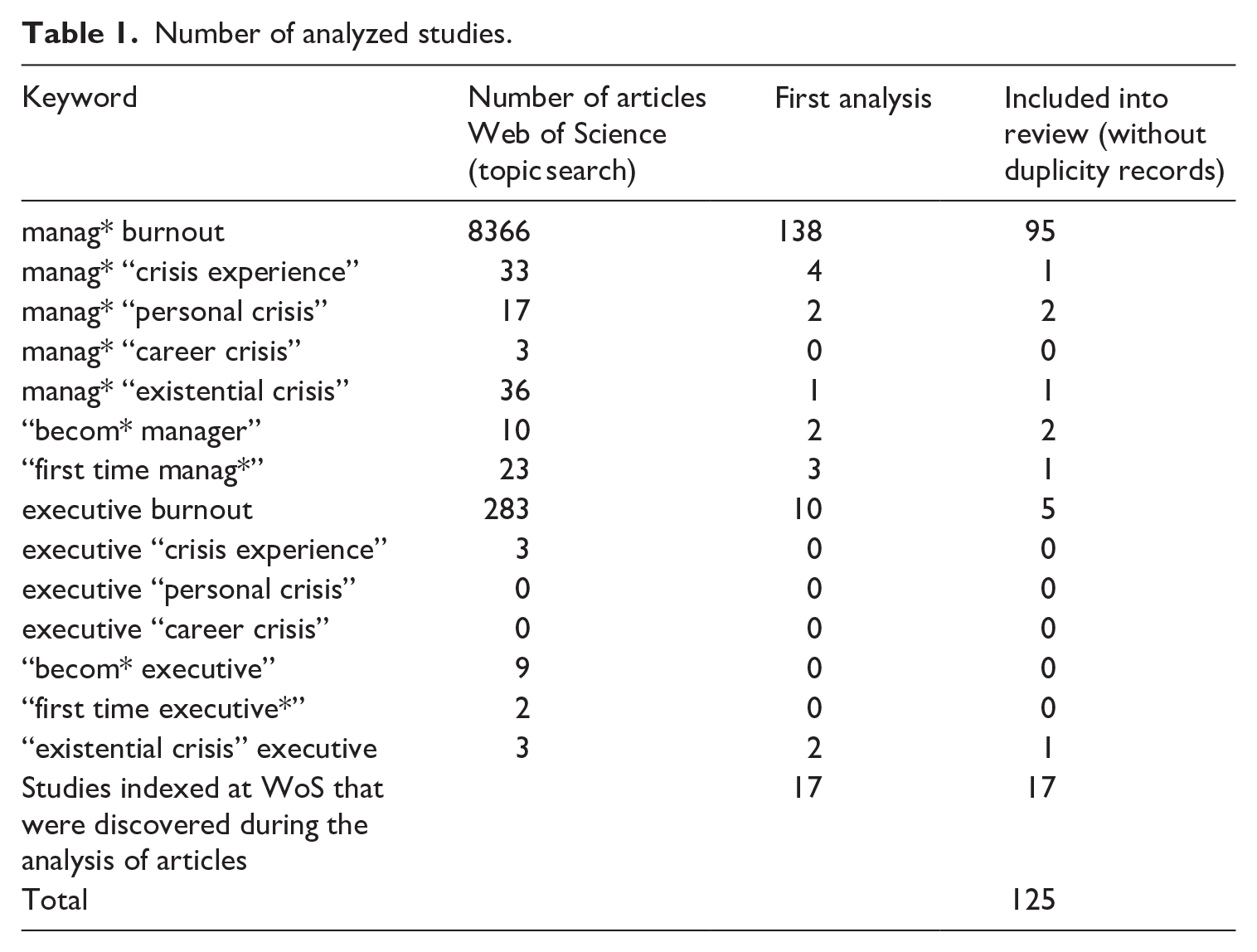
The collected data were organized and analyzed using thematic analysis (Braun and Clarke, 2006). Themes and patterns emerged from the data, allowing for a comprehensive synthesis of the findings. A list of all 125 studies included in the literature review and a summary of basic characteristics such as authors, title, aim of study, method, sample, results, practical implications can be found in Appendix 1. The studies are listed in alphabetical order by the name of the main author.
Bibliometric analysis of sample
A total of 125 articles were included in the review. Regarding the region of origin, more than half of the studies are from the USA (23 articles, 18.4%), China (17 articles, 13.6%), England (12 articles, 9.6%), Canada (10 articles, 8%) and Australia (10 articles, 8%). Regarding the Web of Science categories in which the journals in which the articles were published are listed, the categories with the largest representation are Management (54 articles), Psychology Applied (19 articles), Business (18 articles), Public, Environmental & Occupational Health (17 articles). For “burnout,” the most articles were published in 2022 (11 articles), 2020 (9 articles), and 2020 (9 articles). For “crisis,” the most articles were published in 2021 (5 articles), and 2019 (4 articles). The complete number of publications by year is shown in Figure 1.

Articles published according to years.
Figure 2 shows network visualization from VOSviewer that presents an overview of the key concepts and their relationships associated with managerial burnout and personal crisis among managers. The visualization is based on keyword co-occurrence analysis from 125 articles related to this topic, extracted from the Web of Science database. The central and largest node in the network is “burnout,” indicating its significance as the core focus of the research studies analyzed. Closely connected nodes include “job demands,” “impact,” “performance,” and “conflict,” suggesting that these factors are closely linked to managerial burnout in the examined literature. Other prominent nodes such as “work environment,” “job stress,” “resources,” “managers,” and “engagement” highlight the importance of organizational factors, job characteristics, and personal resources in understanding and addressing managerial burnout. The network also shows connections between burnout and concepts like “personality,” “behavior,” “health,” “support,” and “emotional exhaustion,” indicating that individual differences, well-being, and social support systems are also relevant considerations.
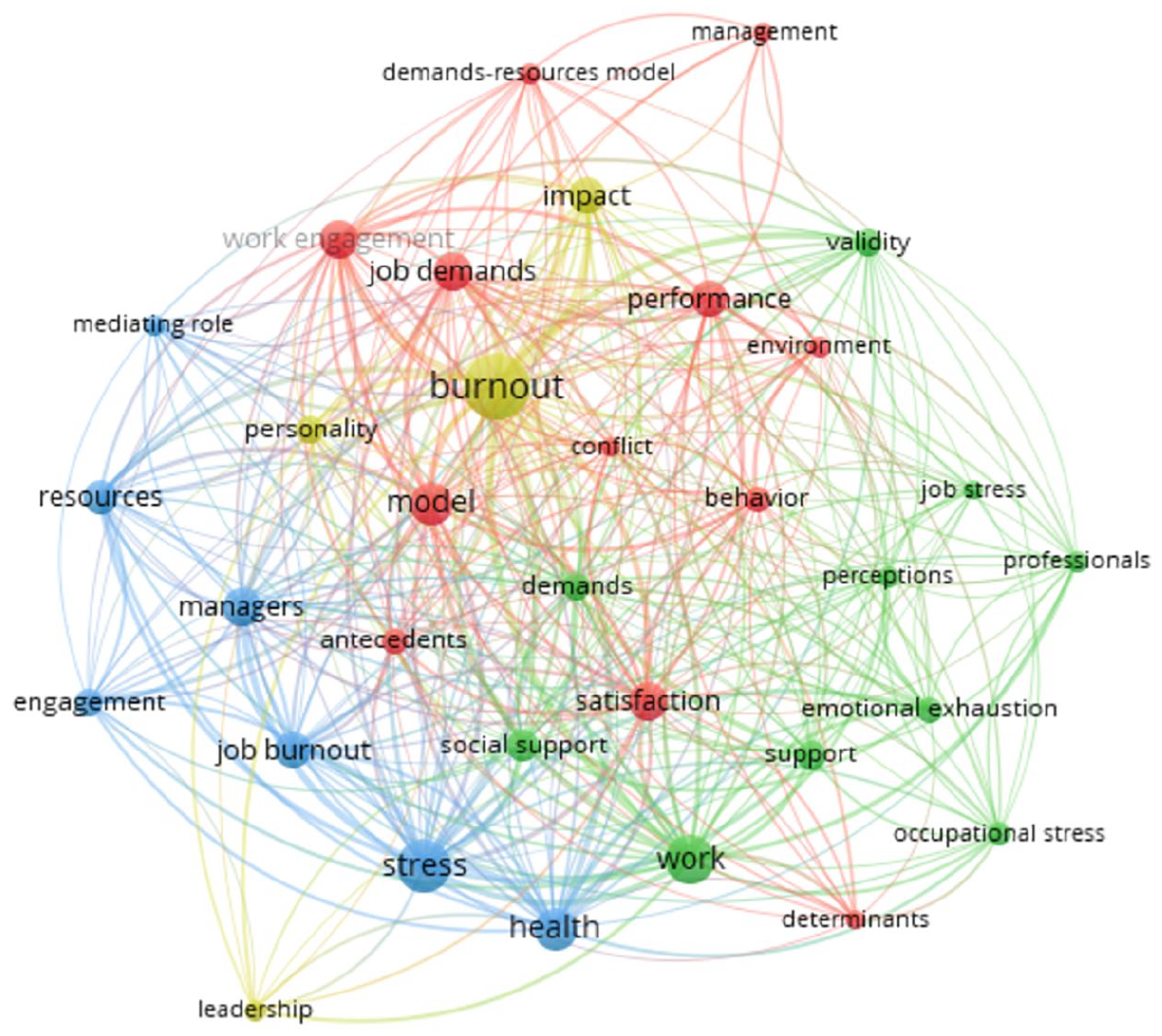
Network visualization of all keywords (author keyword, keywords plus).
The majority of the analyzed studies (87 articles, 69.7%) are based on quantitative research. The most use burnout measure is MBI. Qualitative studies account for 15.2% (19 articles, 4 of which are from the same research team). There are also 15 theoretical articles (12%) and 4 articles based on mixed method research (3.2%).
Characteristics of managers in the sample
The sample of studies analyzed included both higher level managers and line managers, with middle managers being the most numerous group. In terms of experience, they included both senior managers and first-time managers. In a number of studies, the sample comprised managers from various industries. Construction project managers were a large group. Other studies looked at, for example, bank managers, hotel managers, retail/store managers, HR managers, telecom managers, managers in the manufacturing sector, managers in the service industry, newspaper managers, etc.
Burnout in managers
Figure 3 depicts the key themes identified in the systematic review and their interrelationships. Burnout antecedents encompass various factors: high work demands, organizational aspects, and personal traits. For instance, heavy workloads and tight deadlines contribute to emotional exhaustion (Laila and Hanif, 2017), while role ambiguity exacerbates burnout due to unclear job expectations (Bhanugopan and Fish, 2006). Moreover, non-traditional work hours and lack of resources predict burnout (Atkins et al., 2023; Lingard and Francis, 2005). Organizational factors such as low ethical culture and job insecurity amplify cynicism and emotional exhaustion (Huhtala et al., 2015; Janssen, 2004). Personal factors like low emotional intelligence and high neuroticism also correlate with heightened burnout (Aftab and Qadeer, 2013; Hentrich et al., 2016). Additionally, demographic variables such as gender and age influence burnout levels (Cigarska and Birknerova, 2022; Li, 2017).
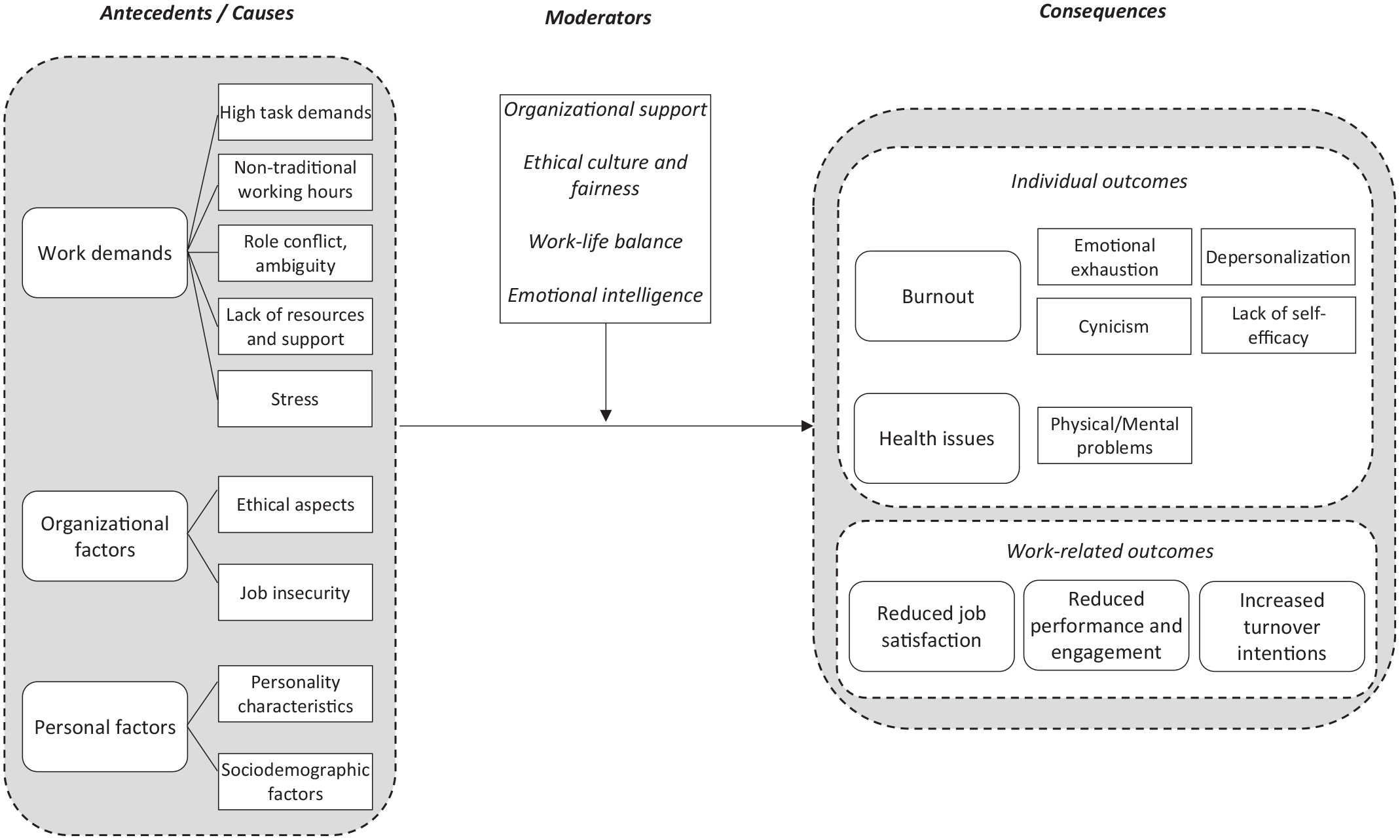
Emerging themes in research on manager burnout.
Moderators that can mitigate burnout encompass organizational support, work-life balance, emotional intelligence, and ethical culture. Support from management and the board diminishes burnout symptoms (Olinske and Hellman, 2017; Schuster, 2010). Achieving an effective work-life balance, with resources both at work and home, reduces burnout (Montgomery et al., 2003). Furthermore, high emotional intelligence aids in managing job demands, thereby reducing burnout (Aftab and Qadeer, 2013). Consistent adherence to high ethical standards within organizations also diminishes burnout (Huhtala et al., 2015).
The consequences of burnout are severe, impacting both individuals and organizations. Individuals may experience emotional exhaustion, cynicism, and health issues such as mental disorders and sleep disturbances (Jonsdottir et al., 2020; Lee and Ashforth, 1991; Malinauskas et al., 2022). Organizationally, burnout diminishes job satisfaction and commitment, while increasing turnover intentions, particularly in environments with low job adjustment and perceived unfairness (Harry and Gallie, 2019; Huyghebaert et al., 2018; Mäkikangas et al., 2012; Silbiger et al., 2017). Subsequent sections delve into each theme in detail.
Antecedents, causes, and moderators of burnout in managers
Work demands and organizational factors
The environment of the organization, such as working conditions or organizational culture, has an effect on the psychological well-being of workers (Dextras-Gauthier and Marchand, 2016). A model working with work requirements and resources is important for the analysis of the work environment. Berntson et al. (2012) identified eight groups of managerial situations that differed significantly in relation to health, motivation and performance. Understanding these situations can help organizations design interventions to improve the working conditions of managers. Laila and Hanif (2017) show that there is a strong association between high task demands and emotional exhaustion in service managers. Affective commitment partially mediates the relationship between job demands and emotional exhaustion.
Metz et al. (2012) explored how managing toxic situations affects managers’ well-being, utilizing the job demands and resources model and multiple roles theory. This role presents diverse demands, impacting health differently based on available resources and specific demands. Hamouche and Marchand (2021a, 2021b) investigated the connection between managers’ work identity, high-performance management practices, and burnout. They found a significant link between reduced endorsement of specific managerial work identity aspects (e.g. job demands and recognition) and burnout. Less endorsement of job demands was associated with lower burnout, while lower recognition endorsement correlated with higher burnout.
Digital competences are also valuable working resources. Juyumaya and Torres (2023a, 2023b) discovered that managers’ digital skills impact their work engagement positively. Greater digital skills increase the likelihood of job engagement. Conversely, digital workload, considered a job requirement, can negatively affect job engagement. Higher digital workload levels may reduce managers’ engagement. Jiang et al. (2022) explored the downside of technology use. Overusing mobile ICT led to technology-work conflict and role overload, exacerbating job burnout among project managers in the construction industry. Providing support to team members helped mitigate the effects of using mobile ICT connectivity after work on these workloads.
Zhang et al. (2020) found that using superficial acting (faking emotions) to manage workplace emotions led to increased stress and job burnout among construction industry project managers. Emotional intelligence moderated this relationship, with higher emotional intelligence linked to less superficial acting and reduced job burnout. Gracia et al. (2019) demonstrated that managers’ superficial acting was associated with higher burnout levels, particularly in terms of job demands and recognition. The belief in “contributing to others” had a moderating effect on managers’ vitality but didn’t significantly moderate burnout.
Mental health at work is influenced by non-traditional working hours. Atkins et al. (2023) discovered that job burnout increases when employees perceive a lack of resources or support in telecommuting. Overtime and non-traditional work hours also contribute to higher burnout levels. However, employees satisfied with rewards and inspired leadership experience lower burnout. Lingard and Francis (2005) found that irregular work schedules and weekly hours were related to emotional exhaustion in burnout, with work-family conflict mediating this relationship. Career interruption’s impact on affective well-being varies based on when it occurs, as shown by Mäkikangas et al. (2011). Moreover, perceived job insecurity is linked to reduced job well-being, potentially harming work-related affective well-being when employees sense workplace uncertainty.
Expatriate managers are also affected by burnout. Role conflict is a significant cause of burnout in developing countries, as found by Bhanugopan and Fish (2006). Role ambiguity is a problem as well, with role overload having the least impact. Silbiger et al. (2017) revealed that higher levels of work adjustment and interaction led to reduced burnout among expatriates. Work adjustment had a more substantial effect on burnout compared to interaction adjustment. Burnout played a full mediating role between job adjustment and exit considerations, and a partial mediating role between job adjustment and job satisfaction. Chao et al. (2019) discovered that perceived leisure freedom significantly influenced leisure engagement among expatriate managers. However, high levels of burnout, especially exhaustion, were also observed among expatriates.
Stress is an important dimension of manager burnout (Jugdev et al., 2018). As shown by Hunt (1991), larger organizations suppress individuality, leading to dissatisfaction, stress, and alienation. Job stress is significantly correlated with overall burnout and its three dimensions as well as job satisfaction (Jamal and Baba, 2000). Stressors that individuals are exposed to are positively associated with burnout and negatively affect each dimension of burnout. Particularly in the case of the personal accomplishment dimension, this relationship is negative, suggesting that higher levels of stressors are typically associated with lower feelings of personal accomplishment (Lee and Ashforth, 1991). Stressors related to obstacles are positively related to psychological distress, whereas stressors related to challenges negatively affect job satisfaction (Xia et al., 2022). The combination of organizational stressors and personality traits has a significant effect on managers’ emotional exhaustion and personal success, and it varies across participants (Dolan and Renaud, 1992).
Other studies have examined stress and burnout in the case of project managers in the construction industry. Research results have shown that job stress is a precursor to burnout (Leung et al., 2011) and physiological stress impairs managers’ task performance, with group collaboration being the most active stressor (Naoum et al., 2018). Psychological stress and emotional exhaustion are significantly associated with work coping problems in young project managers (Song et al., 2020).
Blumberga and Ziedina-Lagzdona (2014) found that HR managers experience moderate levels of stress mainly due to workload and unreasonable deadlines. Many HR managers also exhibit features of professional distortion. Stress management strategies used by HR managers include assertive behavior and social engagement. Rahim (1997) shows that the degree of internal control over one’s own destiny has been shown to be more significant than social support for managers’ coping with job stress and strain.
Personality characteristics
Psychological studies examining burnout in different occupational contexts show that there is a relationship between personality components, emotional intelligence and burnout (Cano-García et al., 2005; De Vine and Morgan, 2020). The relationship between different personality types and emotional intelligence has been significantly associated with three dimensions of burnout syndrome. Neuroticism and extroversion were identified as the best predictors of emotional exhaustion, while depersonalization was predicted by the intrapersonal component of emotional intelligence, and agreeableness and personal achievement were influenced by interpersonal skills and conscientiousness (Pishghadam and Sahebjam, 2012).
In the context of managerial research, the most frequently explored link is between emotional intelligence and burnout. Aftab and Qadeer (2013) discovered a significant predictive relationship between emotional intelligence and burnout in managers. Perceiving and managing one’s emotions were significant predictors, while managing others’ emotions and utilizing emotions were not. Emotional intelligence was also found to negatively impact emotional exhaustion, reducing the potential for turnover within an organization (Kashif et al., 2017). Demographic variables did not show a statistically significant relationship with emotional intelligence and job burnout (Srivastava et al., 2016).
Ayala Calvo and García (2018) stress the significance of resilience (hardiness) in preventing burnout. Resilience plays a role in the relationship between structural and psychological empowerment, suggesting that workplace conditions alone can’t fully explain burnout; psychological factors are vital. Zhao et al. (2022) reveal that individuals with higher levels of career adaptability are more likely to align their personality with the demands of being business manager-owners. This alignment reduces the risk of burnout.
A study conducted by Hentrich et al. (2016) examined the relationship between job demands, premorbid neuroticism, frustration tolerance, and depressive symptoms, as well as their relationship to burnout. No significant interaction effect was found, suggesting that premorbid neuroticism and frustration tolerance are not related to burnout.
Sociodemographic factors
Many studies have investigated sex differences in burnout. Several findings suggest that male managers tend to experience higher levels of burnout than their female counterparts. For instance, Li (2017) found that male managers exhibited greater emotional exhaustion and depersonalization than female managers. Similarly, Cigarska and Birknerova (2022) reported that male managers showed higher depersonalization and emotional exhaustion compared to female managers.
However, other studies suggest that female managers may experience higher burnout levels. Brunaiova et al. (2018) observed a higher prevalence of burnout syndrome in women than men, potentially due to the stress associated with juggling multiple roles. Blom et al. (2016) also found that female managers were at higher risk of burnout than male managers, as they faced elevated demands that were not balanced by greater control. In contrast, Pinto et al. (2014) reported that women experienced higher emotional exhaustion than men. Björklund et al. (2013) highlighted that women in lower managerial positions suffered more from poor health and stress. Additionally, female managers were more likely than male managers to report muscle inflammation, back or shoulder pain, and difficulty sleeping (Jonsdottir et al., 2020).
Some studies found no significant differences between men and women in burnout levels. For example, Hu et al. (2017) reported no gender-based differences in their analysis, indicating variability in findings depending on the study context.
Research suggests that burnout varies with age. Li (2017) found that the most severe job burnout was experienced by managers in the 36–45 age group. Similarly, Minarova (2018) observed that burnout risk was highest among managers with 2–5 years of experience and those with more than 11 years of experience. Conversely, Lee and Ashforth (1991) reported that age was negatively related to burnout, indicating that older managers may develop greater resilience or coping mechanisms over time.
Burnout risks also differ based on education level. Li (2017) found that managers with higher education levels (master’s degree or above) reported greater emotional exhaustion and depersonalization than those with lower education levels. This suggests that the pressures and role expectations associated with advanced education may contribute to higher burnout levels.
Ethnic diversity may play a moderating role in burnout. Galbraith et al. (2022) found that ethnic diversity often acts as a “negative moderator” of emotional exhaustion, complicating workplace dynamics and potentially exacerbating stress for managers.
Organizational support and ethical culture
Schuster’s (2010) study emphasized the importance of organizational support in mitigating burnout symptoms. Perceived organizational support had the strongest correlation with reduced burnout, underscoring the need to provide employees with support and appreciation. Hyvönen et al. (2009) focused on young managers’ personal work goals and their relation to burnout and work engagement. They found a significant relationship between the content of work goals and burnout and work engagement levels.
In organizations, support may be expressed by the board of directors. Olinske and Hellman (2017) found that when boards provide support, employees have a greater sense of well-being and a lower likelihood of burnout. Conversely, when the board intervenes inappropriately, it is associated with higher rates of mental disorders and negative perceptions of employee health. In addition, board intervention is associated with higher alienation and exhaustion, whereas board support is associated with lower employee alienation and exhaustion.
Ethical culture and fairness have a significant impact on employee satisfaction and mental health. Huhtala et al. (2015) identified five ethical culture types, with low and declining culture leading to increased cynicism and reduced work engagement, while consistently high culture contributed to sustained well-being. In the Construction Project Management field, Yang et al. (2018) found various dimensions of organizational justice had distinct effects on burnout. Temporal and spatial inequities led to exhaustion, distributive justice influenced cynicism and effectiveness, and procedural and interactional justice mitigated job stress effects on burnout. Huo and Boxall (2017) showed that perceptions of distributive justice reduced managers’ emotional exhaustion. Janssen (2004) highlighted the connection between innovative behavior, work-related anxiety, burnout, and workplace justice, with lower fairness leading to higher anxiety and burnout.
Work-life balance
Achieving a balance between work and personal life significantly impacts managers’ mental well-being. Liu and Low (2011) discovered that a challenging work environment can negatively affect employees’ non-work life, leading to various work-family conflicts, especially those related to time and workload. Research by Montgomery et al. (2003) highlighted managers’ increasing concerns about resolving conflicts stemming from their overlapping work and family roles, which can be incompatible. The theoretical model suggests that work and home demands increase job strain and reduce commitment, while work and home resources enhance commitment and reduce burnout.
Influence of the external environment
Burnout can also be influenced by macro-level factors (Brown and Quick, 2013). In management, Tijani et al. (2022) highlight the impact of external environmental factors, except political ones, on managers’ mental health. The research confirms links between economic, social, and technological factors and mental health management indicators.
Managers tend to receive more social support from non-work relationships than at work. These non-work resources provide care, acceptance, and comfort, and co-workers play a significant role in workplace support, while spouses or partners support managers dealing with work-related stressors (Lindorff, 2001).
The family can be a significant source of social support (Blanch and Aluja, 2012). However, when work-life balance is disrupted, problems may arise (Irfan et al., 2023). Experts in construction projects, particularly in the China region, frequently experience work-family conflict, impacting their mental health and burnout (Wu et al., 2018). Research by Yao and Zhang (2020) reveals that superficial behaviors and work-family conflict contribute to job burnout, with work-family conflict mediating the relationship between superficial behaviors and burnout. Liu and Low (2011) also investigated work-family conflicts experienced by Chinese project managers, highlighting conflicts related to time and tension. Moreover, a study on the effects of work-family enrichment, which involves the beneficial interplay between work and family, found that it had a more substantial impact on the mental health of project managers than work-family conflict (Li et al., 2022).
During the COVID-19 pandemic, frontline managers faced heightened emotional and practical demands, while social support played a crucial role in helping them cope with the uncertainties of the situation and the transition to remote management (Andersone et al., 2023). The pandemic brought about a shift in the key factors contributing to exhaustion, with feelings of powerlessness and entrapment emerging as the most significant factors leading to a unique form of barrier-related exhaustion (Torres and Benzari, 2021).
Burnout in managers—individual and organizational outcomes
Burnout in managers, as a consequence of the antecedents and moderators discussed earlier, manifests in unique and impactful ways that influence both individuals and organizations. Managers face distinct pressures due to their dual responsibility for personal performance and oversight of subordinates, making them particularly susceptible to burnout’s dimensions. Building on the antecedents outlined, this section delves into the specific characteristics and implications of managerial burnout, highlighting individual and organizational consequences while addressing dimensions of burnout that can be seen as both causes and effects.
Characteristics of burnout in managers and related concepts
To reduce management risks, leaders should adopt more detailed definitions of burnout (Williams, 2005). Salmela-Aro et al. (2010) proposed a reliable three-factor model for managerial burnout, encompassing job exhaustion, cynicism about work, and feelings of inadequacy. Their findings revealed the relationships between effort, reward, overcommitment, and these burnout dimensions. Similarly, Cordes et al. (1997) support Maslach’s three-factor sequential model of burnout, comprising emotional exhaustion, depersonalization, and personal accomplishment. Another perspective, the psychoanalytic-existential approach, suggests that managerial burnout stems from the need for existential meaning and the belief that work doesn’t fulfill it (Pines, 2002).
Professional managers are at a higher risk of job burnout (Hu et al., 2017). They may also experience more exhaustion compared to their subordinates (Dharani et al., 2022). This burnout is especially prominent among managers who prefer working independently, leading to overall exhaustion, reduced confidence, and energy depletion (Molek, 2011). Liu and Zhang (2022) found that over half of the managers in their study reported high burnout on all three dimensions, including emotional exhaustion, emotional action, and decreased accomplishment. These managers also scored significantly higher than the national norm on somatization, obsessive symptoms, depression, anxiety, and terror, all of which were predictive of job burnout.
In a study by Maldonado-Macias et al. (2015), senior and middle managers showed moderate levels of burnout across emotional exhaustion, cynicism, and professional effectiveness dimensions. Notably, 46.26% had higher or extreme burnout levels, 15.51% had moderate levels, and 38.23% had low or no burnout.
Depersonalization and cynicism
Depersonalization or dehumanization is often referred to as one of the dimensions of burnout (Garden, 1987). Research findings show that there is a relationship between depersonalization and job burnout in managers (Bhanugopan and Fish, 2006; Ekici, 2011). Manifestations of depersonalization may be related to role conflict (Lee and Ashforth, 1991) and burnout (Lee and Ashforth, 1993). Research by Cigarska and Birknerova (2022) shows that male managers reported more depersonalization and emotional exhaustion than female managers. Harry and Gallie (2019) suggest differences in terms of marital status and managers’ depersonalization or cynicism.
Malinauskas et al. (2022) find that witnessing bullying, job control, self-rated health, and physical inactivity were the strongest predictors of depersonalization. Direct experience of negative acts in the workplace, job control, social support, length of exposure to bullying, family crises, physical inactivity, smoking, alcohol, and body mass index were the most significant predictors of reduced personal performance.
Emotional exhaustion
Emotional exhaustion is a core element of burnout (Maslach et al., 2001). Lee and Ashforth (1991) revealed that social support, direct control, and role stress impact burnout, mediated by emotional exhaustion. Support and control reduce exhaustion by reducing role stress. Emotional exhaustion, in turn, affects depersonalization, professional engagement, and turnover intention, influenced by job and life satisfaction, time spent with clients and subordinates. Lingard and Francis (2005) found that irregular schedules and longer hours were linked to higher emotional exhaustion. Malinauskas et al. (2022) identified strong predictors of emotional exhaustion in managers, including job demands, bullying witnessing, self-rated health, night work, education, and physical inactivity. Honkova et al. (2016) highlighted the role of self-determination suppression in issues, and Jonsdottir et al. (2020) noted that managers with high workloads had a significantly higher risk of emotional exhaustion.
Shin et al. (2020) found the presence of a negative relationship between job crafting, that is, job modifications by employees, and role ambiguity. This suggests that when employees have more control over their work and can customize it, their job role ambiguity decreases. The study also revealed a positive association between role ambiguity and emotional exhaustion. Emotional exhaustion was also positively associated with an employee’s intention to leave the organization.
Emotional exhaustion plays a crucial role in managers’ musculoskeletal issues, professional effectiveness, and cynicism, as noted by Valadez-Torres et al. (2017). High emotional exhaustion reduces professional effectiveness, negatively impacting performance and productivity. Greater social support is linked to reduced job demands and lower emotional exhaustion, acting as a protective factor against work-related stress. O’Neill and Xiao (2010) found that American hotel managers’ emotional exhaustion is influenced by work demands, pressure, and self-presentation, along with personality traits. Increased emotional exhaustion is associated with high work demands and pressure, while extroverted managers are less likely to experience burnout. In contrast, neurotic managers are more susceptible to burnout.
Work engagement and performance in the context of burnout
As Schaufeli and Bakker (2004a, 2004b) show, work engagement is often considered the opposite of burnout. Engaged employees are characterized by the experience of an energetic and effective connection to the work activity performed. These workers are also considered to be able to cope well with the demands of their work. Iddagoda and Opatha (2020) in their research come up with the finding that dynamic factors such as high-performance work practices, religiosity, personal character, leadership and work-life balance are significantly and positively related to managerial engagement.
Support from both the organization and supervisors is vital for work engagement. Shi and Gordon (2019) reveals that when managers perceive lower support from supervisors, they experience higher psychological contract violation and lower work engagement compared to when organizational support is lower. The negative impact of psychological contract violation on work engagement is more pronounced when supervisor support is lacking.
Salanova and Schaufeli (2008) establish that job commitment acts as a full mediator between job resources (job control, feedback, and variety) and managers’ proactive behavior at work. Additionally, Huo and Boxall (2017) suggest that relevant training and salary levels, in addition to organizational support, significantly contribute to increasing work engagement for first-line managers. Juyumaya and Torres (2023a, 2023b) discovered that managers with transformational leaders experience higher work engagement and creative performance. Autonomy among managers moderates this relationship, suggesting that higher autonomy strengthens the link between transformational leadership and creative performance.
Job burnout negatively affects managers’ job performance (Huyghebaert et al., 2018; Naoum et al., 2018). A number of studies have pointed to the negative impact of stress, which is a precursor to burnout (Leung et al., 2011), on performance (Naoum et al., 2018; Song et al., 2020). Leung et al.’s (2008) research reveals that objective stress negatively affects task performance, whereas burnout may have a positive impact. Interpersonal performance peaks at moderate levels of objective stress, increasing alongside task performance improvement. Organizational performance, on the other hand, follows an inverted U-shaped relationship with burnout and physiological stress, worsening with objective stress. In essence, some degree of burnout and physiological stress can enhance performance, but excessive levels lead to performance decline.
Burnout in leaders results in job dissatisfaction and reduced work quality, quantity, creativity, and enthusiasm (Glicken and Janka, 1982). Huyghebaert et al. (2018) indicate that role ambiguity negatively impacts job burnout and job performance. While role conflict negatively affects job burnout, its impact on job performance is not as evident. Harry and Gallie (2019) found a significant link between a sense of coherence, work engagement, and burnout, drawing on Antonovsky’s (1987) understanding of coherence as an enduring orientation involving the belief in a predictable, manageable environment and the individual’s ability to handle its demands.
Mäkikangas et al. (2012) suggest that higher cynicism levels correspond to lower work commitment, and these dimensions are inversely related. Exhaustion and energy appear to be distinct aspects of work engagement, as high exhaustion doesn’t necessarily mean low energy and vice versa.
Personal crisis of managers and experience of critical moment
The personal crisis of managers is associated with a number of related phenomena and processes. The identified themes and their relationship are illustrated in Figure 4. The figure illustrates the antecedents, moderators, consequences, and moderators associated with personal crises experienced by managers, as discussed in the text. The antecedents include becoming a manager, coping with stress and emotions, unfulfilled expectations, increasing dependence on others, adaptation of attitudes, and the divergence between expectations and reality. External crises, such as economic, political, global pandemics, budget crises, radical changes, and threats of redundancies within the organization, are also identified as potential triggers for personal crises.
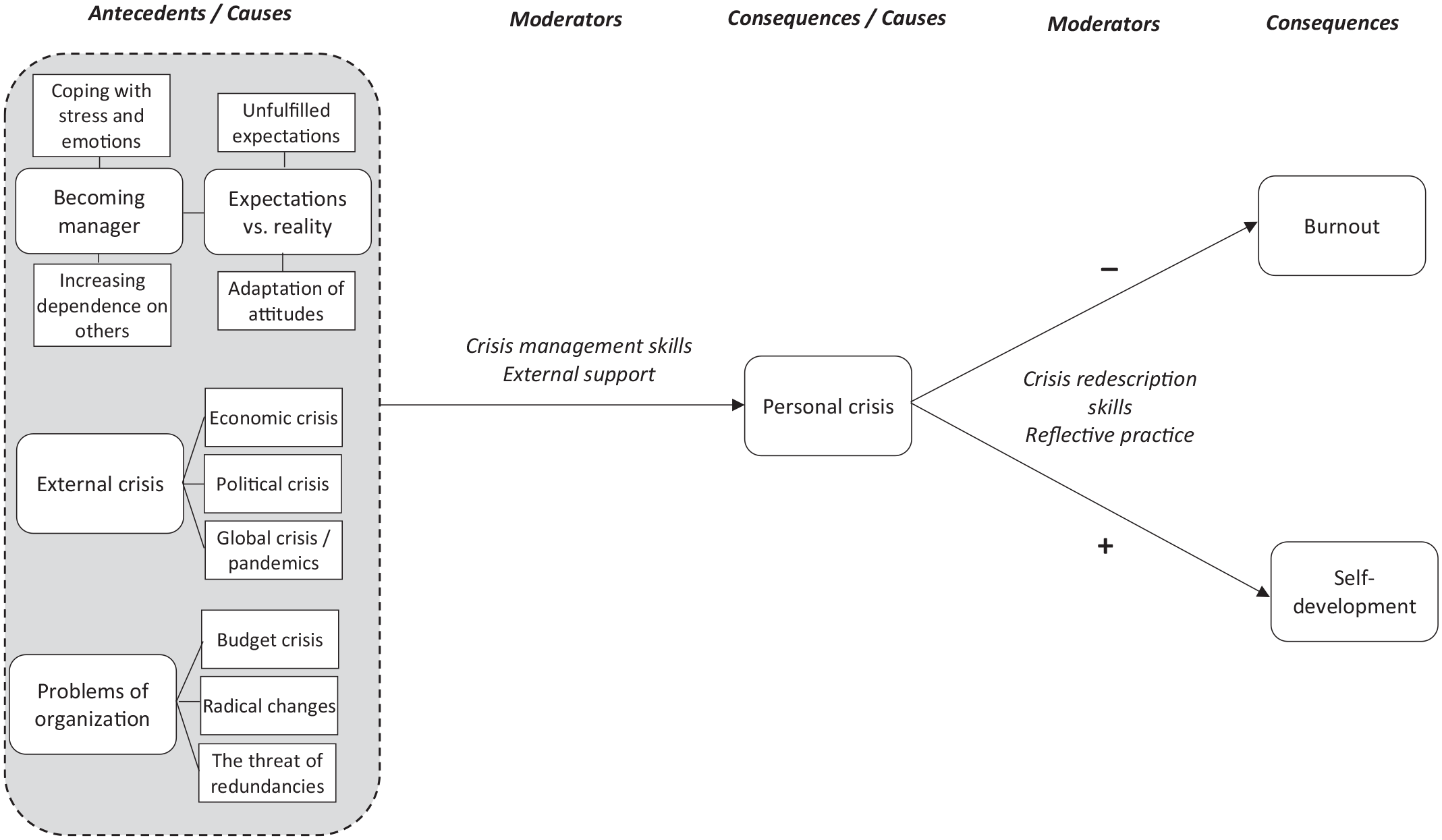
Emerging themes is research on personal crisis of managers.
The moderators depicted are crisis management skills and external support, which can influence the extent and impact of personal crises. The consequences or causes highlighted are burnout, the need for reflective practice, crisis redescription skills, and opportunities for self-development. The figure highlights the nature of personal crises faced by managers, stemming from various organizational, external, and personal factors, and the importance of developing coping mechanisms and utilizing support systems to navigate these challenges effectively. The following sections then summarize the results of the studies related to these concepts.
Becoming a manager
Becoming a manager isn’t merely a product of holding a degree; it primarily occurs through managerial practice. Bolander et al. (2019) conducted a study on the formation of managerial identity among first-time managers. They found that this identity is a delicate balance between various factors such as continuity and change, progress and stagnation, consciousness and unconsciousness, and excitement and despair. Through a narrative analysis of repeated interviews with six managers over time, they identified four primary narrative types related to the learning process of becoming a manager: “growing into managerial identity,” “struggling with managerial identity,” “adopting managerial identity,” and “leaving managerial identity.”
Bolander et al. (2019) also build on previous ideas regarding the fact that management education tends to reinforce certain heroic notions of what a manager could be (see Grey, 2004). This idealistic approach creates unrealistic expectations of managerial work. In this regard, the authors comment on the suggestion that sharing experiences of everyday managerial practice, which is fraught with certain struggles with obstacles, could increase awareness of the real nature of managerial work and the characteristics of these struggles. This approach could mitigate negative emotional reactions and lead to questioning of management ideals (Hay, 2013). It is the questioning of experienced ideals and assumptions that is an important part of managerial practice (Müller et al., 2022, 2024). A study by Bolander et al. (2019) showed that novice managers are overwhelmed by experiences of struggle, uncertainty and ignorance.
The process of becoming a manager is not just about the initial managerial position. Park and Faerman’s (2019) study shows that promotion is also an important event in the context of managerial identity formation. A qualitative study of 16 newly promoted managers describes how managers leave their original role and enter a new role. This process is associated with the development of emotional and social competence. Managers need to understand their own emotions as well as the emotions of other workers, which they use for their personal growth and for interactions with others.
Hill’s (2003, 2004, 2007) work focuses on the process of becoming a manager, a pivotal transition for future leaders. During this phase, a foundational philosophy and leadership style distinct from individual performance are shaped. Becoming a manager necessitates profound psychological adjustments and the unlearning of ingrained attitudes. Key tasks include developing interpersonal judgment, gaining self-awareness, and managing stress and emotions. New managers often grapple with dependency on others and the need for new skills and values. They may also underestimate the complexities of their role and misconstrue their authority and decision-making freedom. Beyond day-to-day operations, new managers are responsible for driving performance improvements in their teams. Despite initial fears of seeking help, many find supervisors more supportive than anticipated.
In the 21st century, managerial roles have grown complex, with managers often facing multiple authorities and navigating organizational politics. Success hinges on reconciling conflicting interests and adeptly managing conflict and negotiation. Developing strong relationships with supervisors and colleagues facilitates learning from experience, although some managers perceive their direct supervisor as a threat rather than a developmental resource. Becoming a manager involves a shift in professional identity, the acquisition of new skills, and adaptation to novel work circumstances. Recognizing interpersonal dynamics and skilfully resolving conflicts are pivotal for managerial success in the contemporary landscape (Hill, 2003).
Segal (2017) notes a significant shift in Hill’s (2003) work, moving from a scientific-technological approach to a more existential-hermeneutic perspective on management. This shift focuses on the lived experiences of managers, particularly the challenges and uncertainties they face. While Hill doesn’t extensively delve into these philosophical contexts, she does touch on them in other writings. She highlights that becoming a manager involves a profound psychological adjustment and transformation of professional identity, often accompanied by the anxiety of letting go of familiar habits and attitudes (Hill, 2004: 121).
Plakhotnik (2017) emphasizes the need for organizations to provide support and guidance to potential managers before promotion, distinguishing between preparation and transition periods. Learning and development professionals play a vital role in creating programs to help employees make informed decisions about entering management. A well-designed preparation program is crucial, as it can determine whether a managerial promotion enhances or hinders the aspiring manager’s career.
Influence of external crisis
Managers’ response to crises, especially economic downturns, plays a pivotal role in organizational resilience (Kottika et al., 2020; Papaoikonomou et al., 2012). Kottika et al. (2020) emphasize the importance of managerial qualities and strategic orientations in navigating economic crises, highlighting the positive potential of crises as opportunities for growth and adaptation. Similarly, Papaoikonomou et al. (2012) underscore how crises, while perceived negatively due to uncertainties, also present opportunities for innovation and resource-sharing among entrepreneurs. During crises, managerial silence can be observed, reflecting skepticism toward organizational leadership (Prouska and Psychogios, 2019). Jaidi and Thévenet (2012) provide insights into managers’ emotional journey during crises, ranging from shock and relief to doubt and eventual acceptance of the new normal. Moreover, Bajaba et al. (2021) highlight the role of adaptive leadership in enhancing managers’ effectiveness and motivation during crises.
The COVID-19 pandemic has further illuminated the significance of managerial responses to crises. Van der Wal (2020) identifies stakeholder management, policymaking, and collaborative networks as critical competencies for public managers. Kuckertz et al. (2020) suggest that some entrepreneurs perceive crises as opportunities for entrepreneurial innovation and business development. Personal experiences of crisis among managers extend beyond economic downturns to encompass various contexts, including higher education and political instability (De Villa and Rajwani, 2012; Loveday, 2021). Loveday (2021) reveals the defensive mechanisms employed by academic managers to navigate institutional changes perceived as crises. Similarly, De Villa and Rajwani (2012) demonstrate how managers’ perceptions of political crises influence organizational responses. Crises also offer opportunities for organizational learning and transformation (Andres and Heo, 2023). Learning from crisis experiences enhances creative problem-solving, leadership effectiveness, and authentic ways of work (Müller and Jedličková, 2020; Müller and Kubátová, 2022). Andres and Heo (2023) advocate for emergent and decentralized approaches to crisis management, emphasizing the importance of contextual, strategic, and collective learning.
Experiencing a personal crisis by managers
In the managerial journey, reflecting on lived experiences is crucial. Sometimes, managers may not exhibit burnout symptoms, but they can grapple with conflicts between their professional identity and managerial role. Parker (2004) highlights that managers may face severe organizational challenges, like budget crises and layoffs, which can lead to feelings of being trapped and considering a job change. Unresolved issues can be frustrating, as quitting may seem like abandoning a sinking ship.
Segal (2010) examines the experience of Mort Meyerson, a managing director at Ross Perot Systems, who encountered a leadership crisis due to a misalignment of his management style with new organizational conditions. This crisis prompted him to reevaluate his beliefs about leadership itself, not just skills. He recognized the need for new leadership approaches in the changed context, even though he was uncertain about the path forward. Despite this uncertainty, he used the crisis as an opportunity to develop new leadership practices for himself and his organization’s members.
In management, disruptions in established methods are common, imposing a significant strain on managers’ mental well-being. Rolfe et al. (2016, 2017) highlight that these existential disruptions challenge habitual ways of working and often begin with feelings of inauthenticity and mediocre performance. These disturbances, marked by a lack of meaning, feelings of failure, and anxiety, lead to a critical phase of articulating the issues and threats. This articulation process promotes transformation and the reformulation of the situation, ultimately opening up new possibilities. It’s essential to recognize that such disruptions are part of the normal managerial experience, not failures. Encouraging reflective practice and dialogical learning helps managers describe their current situation and evolve.
Müller et al. (2022) highlight the impact of childhood experiences on managerial practices. Differences between childhood upbringing and parental influences can lead to dysfunctional interpersonal relationships, feelings of failure, and difficulties in managerial activities, affecting both career plans and personal life. Managers often find themselves in critical situations where conventional approaches become ineffective, challenging their very identity. However, these states are not purely negative; they also provide managers with opportunities for self-discovery, enabling them to adapt and grow both professionally and personally.
In their research, Müller et al. (2024) shows that managers navigate crises and disruptions in three ways. Some view crises as chances for personal growth and discovering new values and relationships. Others focus on reevaluating their managerial role, emphasizing ethical work and interpersonal relationships. The third approach involves leveraging the current managerial position for personal development and training colleagues. Research underscores the importance of crisis in the meaning-making process, with positive descriptions of crises and shared experiences playing a crucial role in self-regulation and improved managerial performance.
Similarly, Korotov (2021) shows that when an unexpected career event occurs, managers face immediate reactions such as psychological shock. Coaching is an appropriate tool to deal with these situations. Coaching conversations serve as opportunities to manage immediate emotional reactions to career disruption. Even when critical events are of positive significance, they can elicit mixed and conflicting reactions. Coaching conversations help to process these crisis events and enable activation of the ability to act on unexpected events in a managerial career.
Midlife crisis is a period of significant personality and behavioral changes, typically driven by factors like aging awareness, physiological shifts, and status changes (McGill, 1977). Addressing this crisis involves four key steps: helping individuals understand its behavioral changes, emphasizing its common nature, directing them toward professional help, and fostering active comprehension and organizational support. Creating a supportive work environment is vital to encourage individuals to openly discuss their issues, receive backing, and make the most of this stage for personal and professional growth (McGill, 1977).
Differences between managers, entrepreneurs, and employees in burnout levels
Managers, like entrepreneurs and employees, are susceptible to burnout, but there are distinct differences in the manifestation and contributing factors of burnout across these groups. According to the literature, managers are at a higher risk of job burnout compared to their subordinates (Dharani et al., 2022; Hu et al., 2017). Rahim (1995) found that entrepreneurs showed less burnout than managers and had a higher internal locus of control, which helped them cope better with stressors. They reported that while entrepreneurs and managers did not differ in perceived strain, entrepreneurs reported significantly less stress compared to managers. Managers often exhibit higher levels of emotional exhaustion, a core dimension of burnout (Malinauskas et al., 2022; Maslach et al., 2001). Factors like job demands, role ambiguity, and work-family conflicts significantly contribute to emotional exhaustion and burnout among managers (Lee and Ashforth, 1991; Lingard and Francis, 2005; Liu and Low, 2011).
The review by Stephan (2018) highlights that entrepreneurs’ work is characterized by high demands and stressors, which can lead to burnout. Certain antecedents, such as work characteristics like high workload, lack of recovery time, and role stress, as well as financial problems and low income, were found to be negatively associated with entrepreneurs’ mental well-being and increase the risk of burnout. Additionally, the review suggests that the close intertwining of entrepreneurs’ work and identity, coupled with obsessive behaviors and lack of boundaries, can contribute to the development of burnout over time
In contrast, the study by Obschonka et al. (2023) found that entrepreneurs experience lower levels of job burnout (operationalized as emotional exhaustion) compared to employees. This is attributed to the presence of more favorable job resources, such as higher job autonomy, and the experience of fewer hindering job demands among entrepreneurs. While work recovery through psychological detachment did not mediate the relationship between entrepreneurship and burnout, it is a crucial factor for employees’ well-being (Obschonka et al., 2023). Unlike managers, who often face role ambiguity and work-family conflicts, entrepreneurs may have higher levels of control and flexibility in their work, contributing to lower burnout levels. However, the study also highlighted that solo entrepreneurs exhibit the lowest risk of burnout among all groups, potentially due to the positive job demands-resources pattern they experience (Obschonka et al., 2023).
While burnout is a concern across different occupational groups, the sources and manifestations of burnout may vary. Managers are more susceptible to emotional exhaustion due to factors like job demands, role ambiguity, and work-family conflicts, while entrepreneurs, particularly solo entrepreneurs, may experience lower burnout levels due to higher job autonomy and more favorable job demands-resources patterns (Hu et al., 2017; Lingard and Francis, 2005; Obschonka et al., 2023). A comparison of mean scores for different dimensions of burnout (emotional exhaustion, cynicism, and professional efficacy) among managers, entrepreneurs, and white-collar employees is presented in Appendix 2. It is an example of selected studies that have used the MBI or its modified versions to measure burnout levels across different occupational groups.
Discussion
The aim of this systematic review was to explore research on burnout and personal crises in managers and to offer insights into their impact on job performance, engagement and overall well-being. The review analyzed 125 articles and revealed several key themes and findings. The analysis identified important factors that contribute to managerial burnout, including high job demands, organizational aspects, and personal characteristics. Moderators such as organizational support, work-life balance, and emotional intelligence were found to moderate burnout. The consequences of burnout were severe and impacted both individuals and organizations, including emotional exhaustion, cynicism, health problems, job dissatisfaction, and reduced job quality. In terms of personal crises, the review highlighted the challenges that managers face during critical career changes, such as taking on a senior role or being promoted. External crises, including economic downturns or pandemics, were found to have a significant impact on managers’ wellbeing and decision-making processes, and to affect work-life balance. Experiences of personal crises often led to opportunities for self-reflection, growth and the development of new approaches to leadership.
The review uncovers key insights into managerial burnout and personal crises that both align with and expand upon the existing literature. First, it reinforces the multidimensional nature of burnout (Maslach et al., 2001) but emphasizes that managers experience these dimensions uniquely due to the specific demands of their role. Emotional exhaustion, for example, is enhanced by managing one’s own emotions and those of subordinates (Zhang et al., 2020), which is consistent with theories of emotional labor (Humphrey et al., 2008).
Organizational and environmental factors such as work overload and lack of support are key antecedents of burnout, which is consistent with the JD-R model (Demerouti et al., 2001; Huyghebaert et al., 2018), which extends this model to the managerial context. The review also reveals a complex relationship between gender and burnout, with some studies showing higher burnout in male managers (Li, 2017; Cigarska and Birknerova, 2022) and others in female managers (Blom et al., 2016; Pinto et al., 2014). This suggests the need for further investigation of moderating factors such as culture (Eagly and Heilman, 2016).
In terms of personal crises, entry into managerial roles has been identified as a critical period of psychological adjustment (Bolander et al., 2019; Hill, 2003), which is consistent with theories of identity work (Ibarra and Barbulescu, 2010). External crises, such as pandemics, can also trigger personal crises in managers (Kottika et al., 2020), which extends the crisis management literature by highlighting the personal impact of such events. Reflective practice and crisis redescription skills (Müller et al., 2022, 2024) are consistent with emerging perspectives on reflexive management (Cunliffe, 2016) and suggest that personal crises can catalyze growth, resonating with theories of posttraumatic growth (Tedeschi and Calhoun, 2004). The review’s findings regarding personal crises and critical moments in managerial careers contribute to the literature on executive development. The identified themes of identity transformation and reflective practice during crises are consistent with Day et al. (2014) conceptualization of managers development as a continuous, dynamic process. Our review extends this understanding by highlighting the potential of personal crises to serve as a catalyst for managerial growth and adaptation.
The review also reveals a gap in qualitative research on managers’ experiences of burnout and personal crises. Although existing models provide useful frameworks, they may not fully address the unique challenges managers face. Integrated approaches that draw on organizational behavior, leader identity, and reflexivity are needed for a more comprehensive understanding of managerial well-being.
One of the contributions of this review is the integration of research on both burnout and personal crises in managers, which offers a more comprehensive view of the interconnectedness of these issues. We found that personal crises can contribute to burnout if not addressed, but can also provide managers with opportunities to build resilience and develop new skills. This dual nature of crises – as both threats and opportunities for growth – is a key insight about the complexity of the managerial experience. Another finding is the difference between general burnout research and specific managerial experiences. Although managers may experience similar symptoms of burnout as other employees, the underlying causes and contexts often differ due to the different pressures and responsibilities associated with their leadership roles. This points to the need for more focused research that accounts for these unique managerial challenges. Burnout manifests differently across managers, entrepreneurs, and employees. Managers are most vulnerable to emotional exhaustion due to high job demands, role ambiguity, and work-family conflicts (Lee and Ashforth, 1991; Lingard and Francis, 2005). Entrepreneurs, though facing stressors like workload and financial instability (Stephan, 2018), benefit from greater autonomy, which helps reduce burnout, especially among solo entrepreneurs who experience the lowest levels (Obschonka et al., 2023). White-collar employees, while less affected than managers, still show significant cynicism, likely due to less job flexibility. As such, the findings should be interpreted with caution. Further research using standardized measurement tools and methodologies is needed to more accurately compare burnout levels across occupational groups.
Our review also highlights the value of qualitative research in capturing complex managerial experiences. Although most burnout research is quantitative, we have found qualitative studies to be particularly effective in exploring the complex nature of personal crises and important moments in managers’ careers. This underscores the importance of using a variety of research methods to truly understand managerial well-being. Moreover, the review reflects how managerial roles have evolved in the 21st century. With the increasing complexity of organizations, rapid technological change and global challenges such as the COVID-19 pandemic, the nature of managerial work has changed significantly. These changes require a new approach to understanding and studying managerial burnout and personal crises.
Finally, our integrative approach emphasizes the need to consider the entire career path of managers-from their initial transition into leadership roles to the management of mid-career crises and beyond. This broader perspective offers a new contribution that can help shape more comprehensive strategies to support and develop managers throughout their careers.
Practical implications
Summarizing the results of the review, to improve the well-being and mental health of managers, human resource management (HRM) professionals should consider a number of recommendations. These encompass the development of resilience in managers (Huyghebaert et al., 2018; Zhang et al., 2020), the importance of leadership support (Pinto et al., 2014; Schuster, 2010), and fostering teamwork leading to support (Perryer et al., 2010). Ongoing feedback and engagement from subordinates (Kovacs et al., 2021) and the cultivation of self-awareness and emotional intelligence (Honkova et al., 2016; Minarova, 2018) are essential. Formulating management and development strategies (Bhanugopan and Fish, 2006; Silbiger et al., 2017), consideration of roles and career occupations (Huyghebaert et al., 2018; Zhang et al., 2020), and improvements in working conditions and flexibility (Atkins et al., 2023; Pinto et al., 2014) play a significant role. Additionally, addressing the cross-cultural context (Silbiger et al., 2017), implementing talent management strategies (Atkins et al., 2023; Mikkelsen et al., 2017), recognizing and preventing burnout symptoms (O’Connor et al., 2021), promoting workforce recovery programs (Schaufeli and Taris, 2005), identifying and alleviating work overload (Kovacs et al., 2021), and achieving a balance between professional and personal goals (Greenhaus and Powell, 2006).
An analysis of the studies revealed that the results of existing research show similarities between managers and regular employees in terms of burnout symptoms. Looking at the identified themes referring to the dimensions of burnout and its manifestations, we find commonly occurring phenomena in the literature. This finding suggests that research on managerial burnout may not adequately reflect the specific challenges and context of managerial work. Thus, a more thorough examination is required to distinguish the unique factors contributing to burnout in managers. Psychological tests used in studies of managerial burnout are often derived from non-managerial contexts and focus predominantly on general components of burnout. This neglects the specifics of managerial work, which may involve unique influences and stressors. Identifying some components of burnout may not provide sufficient information about managerial burnout a very complex phenomenon.
We often see general recommendations from research on managerial burnout. These recommendations tend to be difficult to interpret because they are very often based on quantitative studies that may not capture the complex situation of managers. The challenge here is to formulate specific interventions that are relevant to managers and their specific situations. Equally important, research on managerial burnout is limited compared to other occupational groups. There are far fewer studies dealing with managerial burnout than there are for other professions such as helping professions. This means that we are only at the beginning of the journey in researching this important topic.
Limitations and direction of further research
This study has several limitations. A significant limitation of this review lies in its exclusive focus on managers, as identified in the study selection process. Many studies in organizational behavior and leadership literature do not make a strict distinction between “managers,” “leaders,” and “supervisors.” This overlap suggests that burnout experiences among these roles might share significant similarities. Consequently, the exclusion of studies labeled as focusing on “leaders” or “supervisors” may have narrowed the scope of insights. Future research could address this by operationalizing and analyzing the intersections and distinctions between these roles, thereby providing a more holistic understanding of burnout experiences across organizational hierarchies. Further studies should look at other keywords such as “leader,” and it will be necessary to operationalize the understanding of leader as it overlaps to some extent with the concept of manager. It will be interesting to compare with managers because current top executives and managers are more focused of people than systems (Ghoshal and Bartlett, 1995) Another keyword that comes under consideration is “supervisor.” The focus on articles published in journals indexed on Web of Science is also a limitation. Further research should consider other databases.
Further research should focus on comparisons between managerial burnout and that of ordinary workers, to extend qualitative understanding of the context and lived experience of managerial practice, and to shape recommendations that reflect the specificities of managerial work. The serious problems of managerial work that are related to the mental condition of managers are not only related to burnout, which is operationalized and measurable through questionnaires. If we look at the problems of managerial practice in terms of managers’ personal crises, we find that it is a more complex problem that goes to the depths of managerial identity. It is qualitative research that can help to describe these deep transformations of managers’ identity and being.
There are several reasons why there is more literature on manager burnout than empirical studies examining managers’ personal crises and critical moments. The first reason could lie in the visibility of the burnout problem. Job burnout is a well-known and widespread phenomenon that is often discussed in the public space, work environment and media (Rechenberg et al., 2020). While job burnout is associated with chronic job stress and exhaustion, which has an obvious impact on job performance and productivity, personal crises and critical moments may be perceived as more intimate and personal issues, reducing their visibility.
The study of burnout can be somewhat more structured as standardized questionnaires and scales can be used for its measurement. Conversely, exploring personal crises and critical incidents often requires more qualitative approaches, such as interviews, observations, and in-depth analyses, which can be more time-consuming and costly (Opdenakker, 2006). This disparity is also evident in research on burnout syndrome, where quantitative surveys prevail over in-depth qualitative studies, of which there were only around 10%.
Personal crises and critical incidents are often associated with emotionally challenging experiences and intimate aspects of managers’ lives. Respondents may be reluctant to openly discuss these experiences, making it difficult to obtain relevant data for empirical studies (Dinos et al., 2004). On the other hand, while burnout also affects managers personally, it may be perceived more as part of the work context, leading managers to be more willing to share their experiences (Rechenberg et al., 2020).
Conclusion
Research on managers’ burnout and personal crises is a key topic in HRM that affects their work performance, engagement and overall well-being. The results of the analyzed studies indicate that burnout is a multifactorial phenomenon, influenced by the organizational environment, working conditions, personality characteristics and interactions between individual factors. A proactive approach to preventing burnout is critical to maintaining efficiency and a healthy work culture.
The research findings emphasize the importance of supporting managers and developing resilience in the work environment. Managers should provide support, appreciation and improve communication skills to reduce burnout and promote teamwork. It is also essential to develop self-awareness and emotional intelligence in managers, which will help them better cope with the demands of the role. Flexible working conditions and consideration of the balance between work and personal goals are key elements to prevent burnout.
More research is needed on the qualitative aspects of managerial crises in order to better understand the individual experiences of managers and to design more effective support measures. The research conclusions serve as an important basis for further work in the field of HRM and creating conditions for a healthy and productive work environment for managers.
Supplemental Material
sj-docx-1-gjh-10.1177_23970022251315650 – Supplemental material for A systematic review of managerial burnout and personal crisis: Navigating the interplay of individual, organizational, and environmental factors
Supplemental material, sj-docx-1-gjh-10.1177_23970022251315650 for A systematic review of managerial burnout and personal crisis: Navigating the interplay of individual, organizational, and environmental factors by Michal Müller and Jaroslava Kubátová in German Journal of Human Resource Management
Supplemental Material
sj-docx-2-gjh-10.1177_23970022251315650 – Supplemental material for A systematic review of managerial burnout and personal crisis: Navigating the interplay of individual, organizational, and environmental factors
Supplemental material, sj-docx-2-gjh-10.1177_23970022251315650 for A systematic review of managerial burnout and personal crisis: Navigating the interplay of individual, organizational, and environmental factors by Michal Müller and Jaroslava Kubátová in German Journal of Human Resource Management
Footnotes
Author contributions
All authors participated in all research activities related to the preparation of this article.
Funding
The author(s) disclosed receipt of the following financial support for the research, authorship, and/or publication of this article: This article was supported by the Ministry of Education, Youth and Sports of the Czech Republic within the project IGA_FF_2023_024 “Entrepreneurial solutions to social problems” of the Palacký University Olomouc.

Data statement
Data for the review form are available on request from the authors.
Supplemental material
Supplemental material for this article is available online.
References
Supplementary Material
Please find the following supplemental material available below.
For Open Access articles published under a Creative Commons License, all supplemental material carries the same license as the article it is associated with.
For non-Open Access articles published, all supplemental material carries a non-exclusive license, and permission requests for re-use of supplemental material or any part of supplemental material shall be sent directly to the copyright owner as specified in the copyright notice associated with the article.
