



Abstract
A good understanding of Human Resource Management (HRM) approaches is vital for designing suitable management practices in any organization. Researchers have identified different HRM approaches, including the universal approach, which recommends standardized practices across organizations, the contingency approach, which emphasizes the best fit between human resources and business strategies, and the configurational approach, which integrates internal and external organizational factors into a pattern of management practices. However, HRM approaches need to adapt to the dynamic business environment and context. This is particularly relevant for performing arts organizations, where changing customer preferences and employment factors frequently impact the business environment. Therefore, it is crucial to know which HRM approach is currently being practiced in this sector. To address this issue, a qualitative study was conducted with managers, key actors, and decision-makers of performing arts organizations in Australia. The interview data analysis revealed a unique pattern of HRM practices, such as spot-recruitment, coaching for management skills, mentoring for better performance, and protean career development. These findings support the argument for the configurational HRM approach in performing arts organizations.
Introduction
There is a lack of consensus among Human Resource (HR) scholars and professionals regarding the selection of Human Resource Management (HRM) approaches that are suitable for different organizations. While some scholars advocate for the universal approach that follows standard practices across organizations (Raeder et al., 2012), others prioritize the contingency approach, which emphasizes the need for the best fit between HRM strategies and organizational strategies (Guest, 2011; Iqbal, 2019). Still, others support the configurational approach that highlights a pattern of management practices integrating both internal and external organizational factors (Martín-Alcázar et al., 2005). An organization that adopts a universal HRM approach may focus on standardizing HR practices across the organization, such as the implementation of standardized job descriptions, performance evaluations, and training programs (Boxall and Purcell, 2000; Clinton and Guest, 2013). On the other hand, an organization that adopts a contingency HRM approach may focus on developing HR practices that are tailored to the specific needs of different work teams or business units (Boxall and Purcell, 2022). This approach can help organizations to better align their HR practices with their business needs. Therefore, the selection of the right HRM approach is crucial in designing and implementing effective HRM practices that align with an organization’s goals, values, and context (Cooke et al., 2021; Guest, 2011).
Previous research on HRM in creative organizations, particularly in the Performing Arts (PA) sector, has primarily focused on areas such as leadership, employment regulations, job satisfaction, and job security (Dean, 2007; Opara et al., 2019). For example, Hennekam and Bennett (2017) examined precarious work and employment in creative organizations across Australia, Canada, and the Netherlands and identified significant HRM challenges such as job insecurity, multiple roles, training and education, and access to benefits and protection. However, these studies have focused on isolated HR practices rather than viewing HR systems as a whole or in bundles. Iqbal (2019) argues that HRM practices should be considered as a bundle to define strategic HRM approaches. Consequently, none of these studies have specifically investigated the strategic HRM approaches adopted by PA organizations. Given the rapid changes in the business environment and employment relations within the PA sector (Labaronne and Tröndle, 2021), it is crucial to understand the current HRM approaches employed by these organizations. Such knowledge can assist HR practitioners and policymakers in developing tailored HR practices and strategies that meet the unique needs of PA organizations.
Therefore, the objective of this paper is to explore the HR practices implemented by PA organizations and to determine the current approach employed among universal, contingency, and configurational approaches. By addressing this question, this study aims to shed light on why a particular HR approach is suitable while others may not be suitable for PA organizations. To achieve this, the study conducted interviews with key informants such as policy-makers, employers, managers, and trade union leaders to gain insights into the HRM approaches in use. The analysis of interview data was then employed to explore and explain the empirically observable HRM practices in the performing arts from a strategic HRM (SHRM) theoretical perspective.
It is important to note that this study specifically focuses on the PA sector within the creative industries and is situated in the State of Victoria, Australia. The significance of this study lies in its pioneering effort to explore the adoption of HRM approaches currently utilized in PA organizations, as revealed by the literature review. This study also aims to provide a theoretically informed understanding of why the most widely used HRM approaches may not be well-suited for this unique industry. The findings of this study can provide valuable insights for HR professionals and policy-makers in comprehending the prevailing HRM approaches and developing effective HR practices tailored to the unique context of creative organizations, particularly within the PA sector, both within the region and beyond.
The performing arts industry
The Performing Arts (PA) encompass a variety of government and privately provided endeavors, such as theater, opera, dance, circus, festivals, and digital media (Masunah, 2017). These organizations comprise various professionals, including writers, visual artists, craft practitioners, dancers, choreographers, musicians, singers, and composers (Freudenberg, 2011). According to the Australia Council for the Arts (2019), some of these organizations focus on industry development by creating new employment opportunities through innovation, while others aim to entertain and engage the community. For the purpose of this paper, PA refers to those organizations that originate from individual creativity, skill, and talent, and have the potential to generate wealth and job opportunities through the production and exploitation of intellectual property (Australia Council for the Arts, 2019).
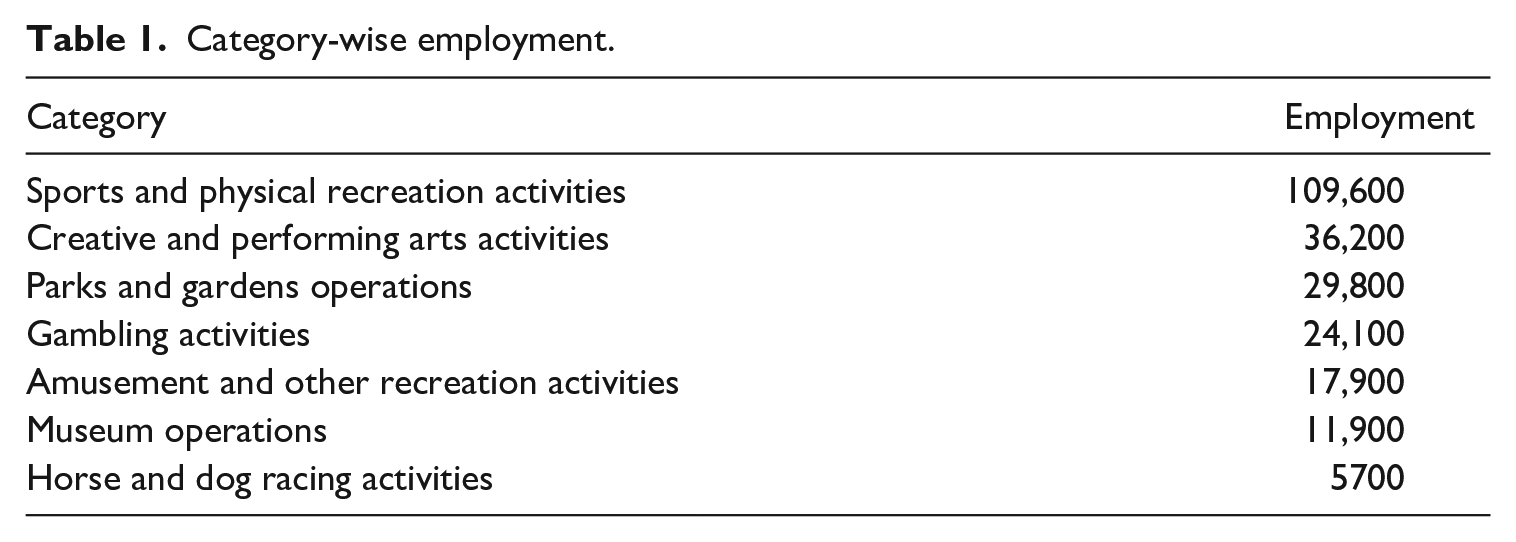
According to the Australian Bureau of Statistics (2022), an analysis of the creative industry sector indicates that cultural and PA organizations contributed $122.3 billion to Australia’s economy in 2019–2020, representing almost 6.2% of the gross domestic product. The major Performing Arts companies play a vital role in the Australian arts ecosystem, encompassing 29 prominent organizations dedicated to dance, theater, circus, opera, orchestral, and chamber music. These companies operate within the private sector and have garnered a total of $121.9 million in private sector income in 2018 (Australia Council for the Arts, 2019). In Victoria, the creative industries, including creative organizations, account for 8% of the state’s revenue, contributing nearly $23 billion and generating 220,000 jobs (Creative Victoria, 2019). Tables 1 and 2 provide employment figures categorized by business type and year (2015–2021) in the Australian PA industry. Despite their significant economic contributions, PA organizations still face major challenges in managing employee relations, job design, performance management, and other HRM issues (Opara et al., 2019).
Category-wise employment.
Yearly employment.
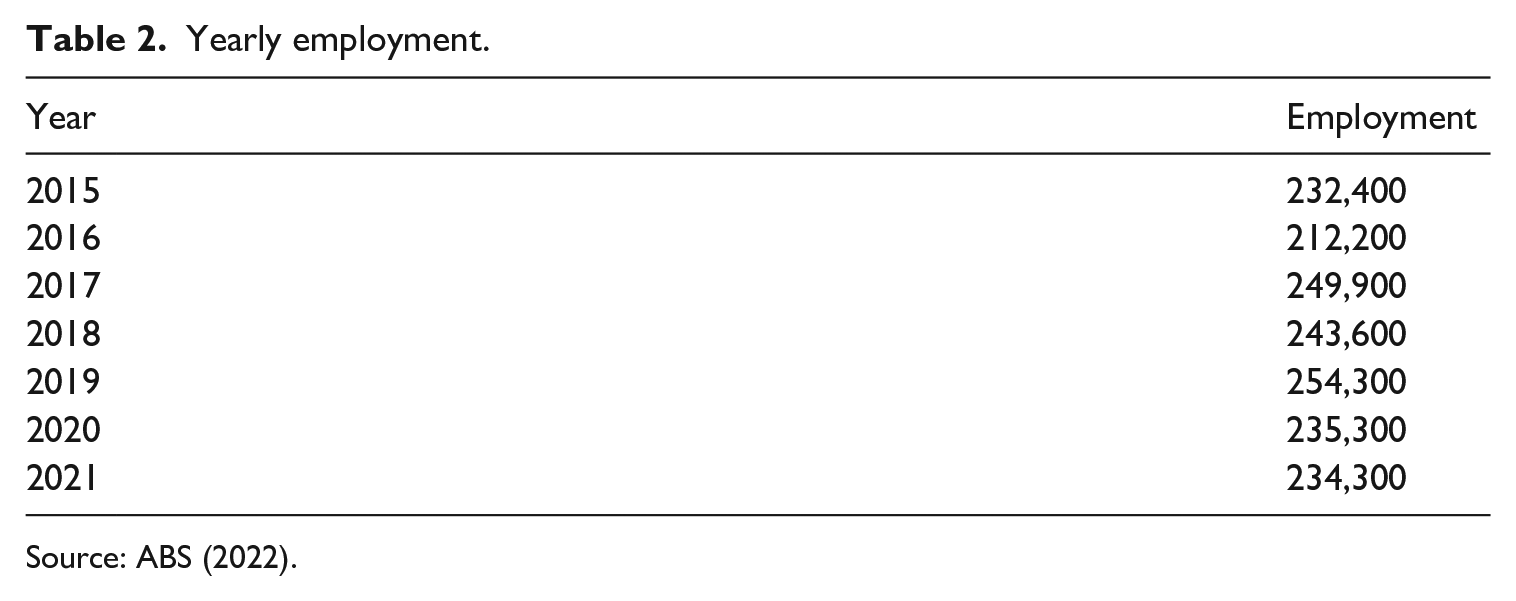
Source: ABS (2022).
Theoretical approaches to human resources management
Human Resource Management (HRM) approaches provide a general direction for managing human resources and reflect the organization’s overall values and goals (Guest, 2011). In other narratives, HRM approaches are broad frameworks that guide the design and implementation of HRM policies and practices within an organization (Iqbal, 2019). In contrast, HRM strategies reflect the organization’s overall business strategy and competitive position (Stavrou and Brewster, 2005). HRM strategies are the plans and actions organizations use to achieve their HRM goals (Gratton and Truss, 2003). On the other hand, HRM theories are detailed explanations of the underlying principles and mechanisms that govern HRM practices. HRM theories provide a theoretical foundation for understanding how and why certain HRM practices are effective or not (Boxall and Purcell, 2022).
Some scholars define HRM normative concepts as the ethical and moral principles that guide HRM practices and decision-making (Van Buren et al., 2011). HRM normative concepts reflect the values and beliefs of the organization and help ensure that HRM practices are aligned with broader societal expectations. At the bottom, HRM practices are the specific activities and policies that organizations use to manage human resources (Lepak et al., 2006). HRM practices can include recruitment and selection, training and development, performance management, compensation and benefits, and employee relations. In summary, HRM approaches, theories, normative concepts, strategies, and practices are all important components of managing human resources. HRM approaches provide a general direction, theories of SHRM provide for how and why practices are effective, HRM normative concepts provide ethical guidance, HRM strategies reflect overall business strategy and HRM practices are the specific activities and policies used to manage human resources.
In an attempt to explain the relationship between human resource management and organization performance, scholars have focused on three dominant approaches to explain HR effectiveness and performance, which are universal, contingency, and configurational (Gurbuz and Mert, 2011). Each approach has its own set of assumptions, principles, and practices that organizations can adopt based on their goals, values, and context (Guest, 2011). These three HR approaches are discussed below:
Universal approach
The universal approach to HRM argues that all organizations, regardless of size, industry, or business strategy, should adopt so-called “best practices” that are considered universal (Boxall et al., 2011; Boxall and Purcell, 2000; Gurbuz and Mert, 2011). For example, standard recruitment and selection practices are generally viewed as universal HR practices across organizations (Clinton and Guest, 2013). Researchers have uncovered that all organizations would be benefited by identifying, gaining commitment to, and implementing a set of uniform HRM practices (Delery and Roumpi, 2017; Marchington and Grugulis, 2000).
Although the universal or best-practice approaches have been supported by a wealth of literature and empirical evidence, they have been criticized for lacking clarity on what constitutes an ideal set of universal HR practices (Boxall and Purcell, 2022; Clinton and Guest, 2013). Furthermore, certain industries have distinctive HR practices that are not considered to be the best practices for other industries. HR practices that work well in one organization may not be effective in another, as they may not align with the organization’s strategy, technology, or working practices (Pfeffer, 2007). For instance, while a shift-working approach may be appropriate for a hospital with 24-hour operations, it may not be suitable for a bank that prioritizes customer relationships.
Contingency approach
In contrast to universalistic thinking, the contingency approach, also known as the best-fit approach, rejects the one-size-fits-all view and suggests that the effectiveness of HRM systems depends on an organization’s strategy and industry-specific factors (Boxall et al., 2011; Malos et al., 2003). This approach emphasizes that organizations should focus primarily on those HR plans and activities that contribute to achieving their business strategy (Lengnick-Hall et al., 2009). The contingency approach assumes that organizations that closely coordinate their business strategy and HRM activities will achieve better performance than those that do not (Clinton and Guest, 2013). The underlying assumption of the contingency approach is that the strategic performance link is applicable under high horizontal-fit conditions between the organizational strategy and HR strategy, known as the “best fit” (Clinton and Guest, 2013).
Despite its advantages, the contingency approach has been criticized for its lack of consideration of other organizational systems and environmental characteristics that may hinder the “best-fit” adoption of HRM in an organization (Iqbal, 2019). For instance, organizations require a long-term HRM strategy to develop their employees in order to achieve their business goals. However, in many organizations (e.g. call centers), employees tend to leave within a short period, making it challenging to implement a long-term HRM strategy. In consideration of these hindrances, strategy alone may not be enough to assure the competitive advantage that an organization requires, given that there are other contingencies to consider that may impact HRM adoption and practices (Intindola et al., 2017). An attempt to relate organizational strategy (e.g. competing on innovation, quality, or cost) to HR strategy (e.g. job design, lean management, performance-based pay) is not a linear, non-problematic relationship (Clinton and Guest, 2013). The criticism against the contingency approach is that it tends to over-simplify organizational internal and external realities and practices.
Configurational approach
The “configurational approach” proposes that an effective HRM system must have both horizontal and vertical alignment. Horizontal fit refers to the internal consistency of HRM policies and practices within an organization, while vertical fit refers to the alignment of the HRM system with other organizational characteristics (Guest, 2011; Stavrou and Brewster, 2005). This theory is guided by the holistic principle of inquiry, which assumes a system of “equifinality” (Fiss, 2011: 401). Equifinality means that a system can reach the same final state from different initial conditions and through a variety of different paths (Fiss, 2011). This principle recognizes that different organizations may follow different patterns of HR practices, even if they compete in the same market and business environment. The configurational approach acknowledges that there is no one-size-fits-all solution for HRM practices and emphasizes the need to consider the internal and external contingencies that impact HRM effectiveness.
Central to the configurational perspective is the understanding that the impact of HRM on organizational performance is contingent upon the effective adoption of a well-designed combination of HRM practices, commonly known as HRM bundles (Stavrou and Brewster, 2005). These HRM bundles are characterized by a unique configuration of HR practices that collectively yield high-performance outcomes within an organization (Martín-Alcázar et al., 2005). According to this perspective, an HRM system must strike a balance between flexibility and consistency with external business environmental factors (vertical integration), while also ensuring internal coherence and alignment of practices (horizontal integration) (Lengnick-Hall et al., 2009).
In the context of the rapidly evolving boundaries between work, workers, and workplaces, Snell et al. (2023) describe the current approach within the HR ecosystem, where technological mediation, impermanence, and shared governance influence the adaptation of HRM practices. The rise of data-driven HR analytics is greatly impacted by the evolution of technological tools, resulting in HR practices becoming more ad-hoc and temporary in nature (Snell et al., 2023). Additionally, the interdependency and shared nature of HR practices are becoming more evident. This recognition highlights the need for HRM to be responsive and adaptable to the changing dynamics of the organizational environment.
One notable strength of the configurational approach is its recognition that the relationship between HRM patterns and organizational performance is not linear or straightforward. Instead, it acknowledges the interdependence of HR practices, amplifying the combined effect resulting from various internal and external factors (Stavrou and Brewster, 2005). This perspective emphasizes the complexity and contextual nature of HRM, recognizing that different combinations of HR practices can have diverse effects on organizational performance, depending on the specific circumstances.
In summary, the configurational perspective emphasizes the importance of adopting effective combinations of HRM practices, or HRM bundles, that are both externally aligned and internally coherent. It acknowledges the influence of external environmental factors such as technologies, impermanence nature, and the interdependence of HR practices. By embracing this approach, organizations can gain a better understanding of how different configurations of HRM practices contribute to overall organizational performance and can adapt their HRM systems accordingly.
The above review of the literature shows that universal, contingency, and configurational approaches provide theoretical foundations for the development of HRM practices and organizational performance relationships (MacDougall et al., 2014). It can be argued that, despite the differences between these three contextual perspectives outlined above, they may complement each other by adding missing constructs to our understanding of HRM systems and practices (Stavrou and Brewster, 2005). Figure 1 below depicts the theoretical differences between the three HRM approaches discussed above:
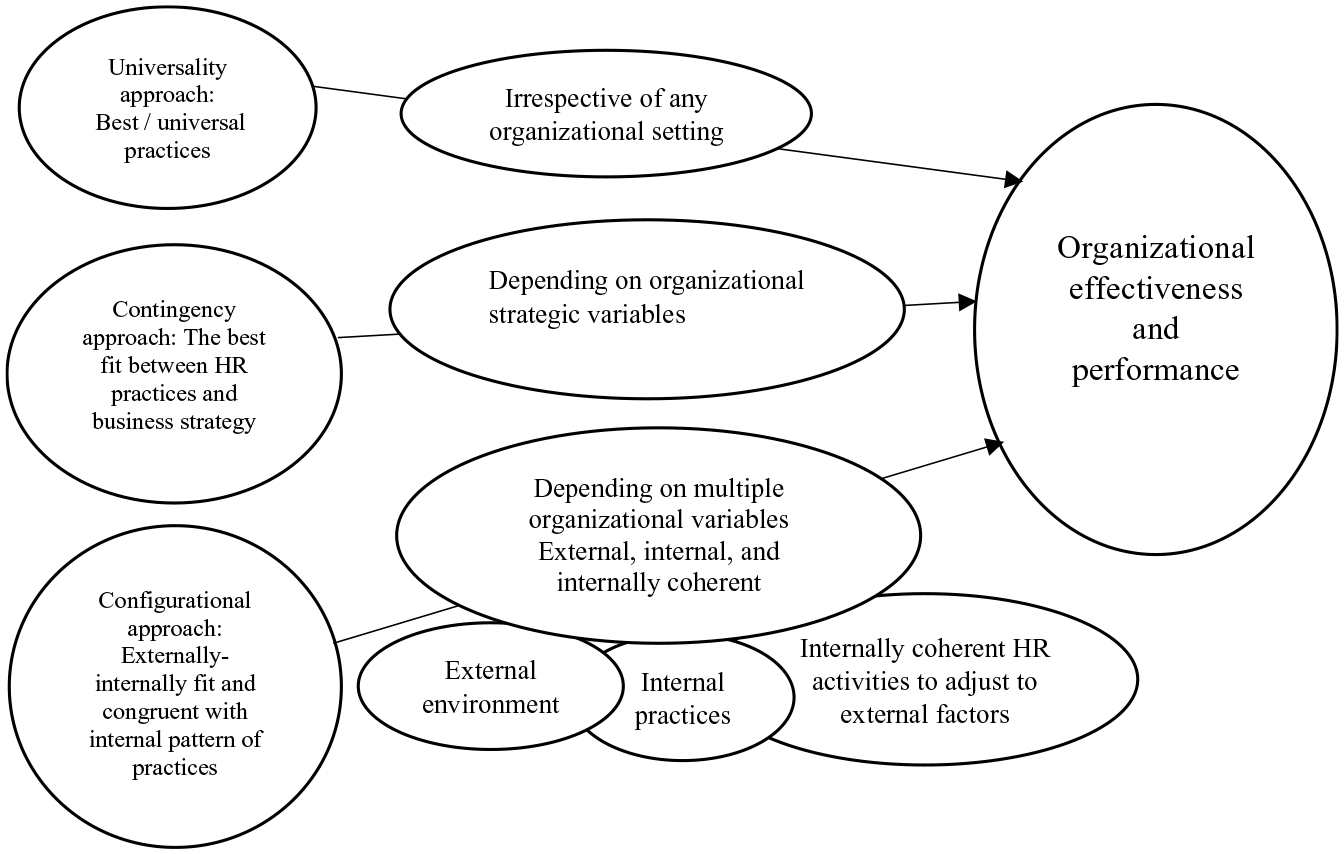
Theoretical framework of HRM approaches across organizations.
Human resource management approaches in PA organizations
The extent literature shows that there is a scarcity of studies examining HRM approaches and frameworks specifically tailored for the PA organizations (Intindola et al., 2017; Masunah, 2017). Dean (2007) explored the employment practices in theater and television program producer companies and found prominent network-based and gender bias employment. Haunschild and Eikhof (2009a) conducted research on German theater workers, revealing the use of self-marketing and network connections for employment purposes. They also highlighted the prevalence of team-based work involving technical and non-technical personnel in the industry, as well as the absence of work-family life balance and career certainty in theaters.
Scholars (Hennekam and Bennett, 2017; Opara et al., 2019) have identified major HRM challenges in the PA sector, including precarious work, short-term employment opportunities, multiple roles, and limited access to benefits and protections. On the other hand, some researchers emphasize the leadership role in creating a knowledge-sharing culture within the creative industry (Millar et al., 2017), while others highlight the challenges of retention and retirement management (Hecklau et al., 2016; Hennekam and Herrbach, 2015). Nevertheless, scholars agree that understanding different HRM approaches in PA organizations can facilitate the design and implementation of effective HRM practices aligned with organizational goals, values, and context (Cooke et al., 2021; Gurbuz and Mert, 2011).
Proper adoption of strategic HRM approaches can boost employee productivity, motivation, engagement, and retention, ultimately improving organizational performance (Alfes et al., 2013; Shin et al., 2017). By utilizing appropriate HRM approaches, managers can ensure that their HRM practices cater to the needs of all employees, thus increasing employee motivation and productivity (Vanhala and Stavrou, 2013; Colakoglu et al., 2010). Additionally, strategic HRM approaches enable organizations to place the right employee in the right position, allowing them to adjust their HRM practices to changing business environments (Hager and Brudney, 2015). This discussion thus indicates that knowledge of HRM approaches is crucial for designing effective HRM practices, enhancing organizational performance, and adapting to changing business environments.
Despite the significant importance of understanding HRM approaches, there is a noticeable lack of research examining the current use of these approaches in PA organizations. The extent literature on HRM approaches in PA has mainly focused on larger organizations, and mostly in the USA or European regions, limiting the applicability of their findings (Cameron and Ross, 2018; Hwang and Han, 2021; Stavrou and Brewster, 2005). Harney et al. (2022) argue that to gain a comprehensive understanding of HRM practices, research should encompass both large and small organizations, as HR issues, patterns of HR practices, and HRM approaches may differ in smaller organizations. Given that the PA industry consists of both large and small organizations, and where HRM practices depend on local contexts and settings, our understanding would benefit from further exploration, including the size and setting/context in PA organizations. Moreover, the creative industry, particularly the PA sector, which is known for generating a significant number of employment opportunities (Wolniak and Jonek-Kowalska, 2022), necessitating a deeper understanding of talent acquisition, reward systems, retention, skills development, career progression, and job security for performers involved in PA organizations. These HR issues are highly impacted by the changing nature of the creative industry (Barberio, 2017). Therefore, this research aims to interview concerned managers, HR directors, and performers to comprehend the patterns of these HR practices and identify the current use of HRM approaches within PA organizations. This knowledge of the HRM approach can assist policymakers, managers, and HR professionals in designing HR practices and strategies that are suitable for their organizations.
Methodology
This research study has adopted a qualitative methodology to collect data from key informants. The qualitative approach was chosen because the study aims to explore the concepts of HR practices and theories of HRM approaches in creative organizations, which requires a more in-depth and nuanced understanding of the topic. Previous studies, such as Haunschild and Eikhof (2009b), have also found that the qualitative approach is more suitable than the quantitative for the advancement and development of concepts and theories in the creative industry.
To collect data, the interview method was chosen as it allows for a more personal and detailed exploration of the perspectives, perceptions, and feelings of the informants. In-depth interviews are particularly well-suited to provide richness to the study and generate insights that would not be possible through other data-collection techniques (Dworkin, 2012). The key informant approach was also adopted as it is a suitable method for gathering qualitative and descriptive data that may be difficult or time-intensive to collect through structured quantitative data-collection techniques (Tremblay, 1957).
Interviewee selection
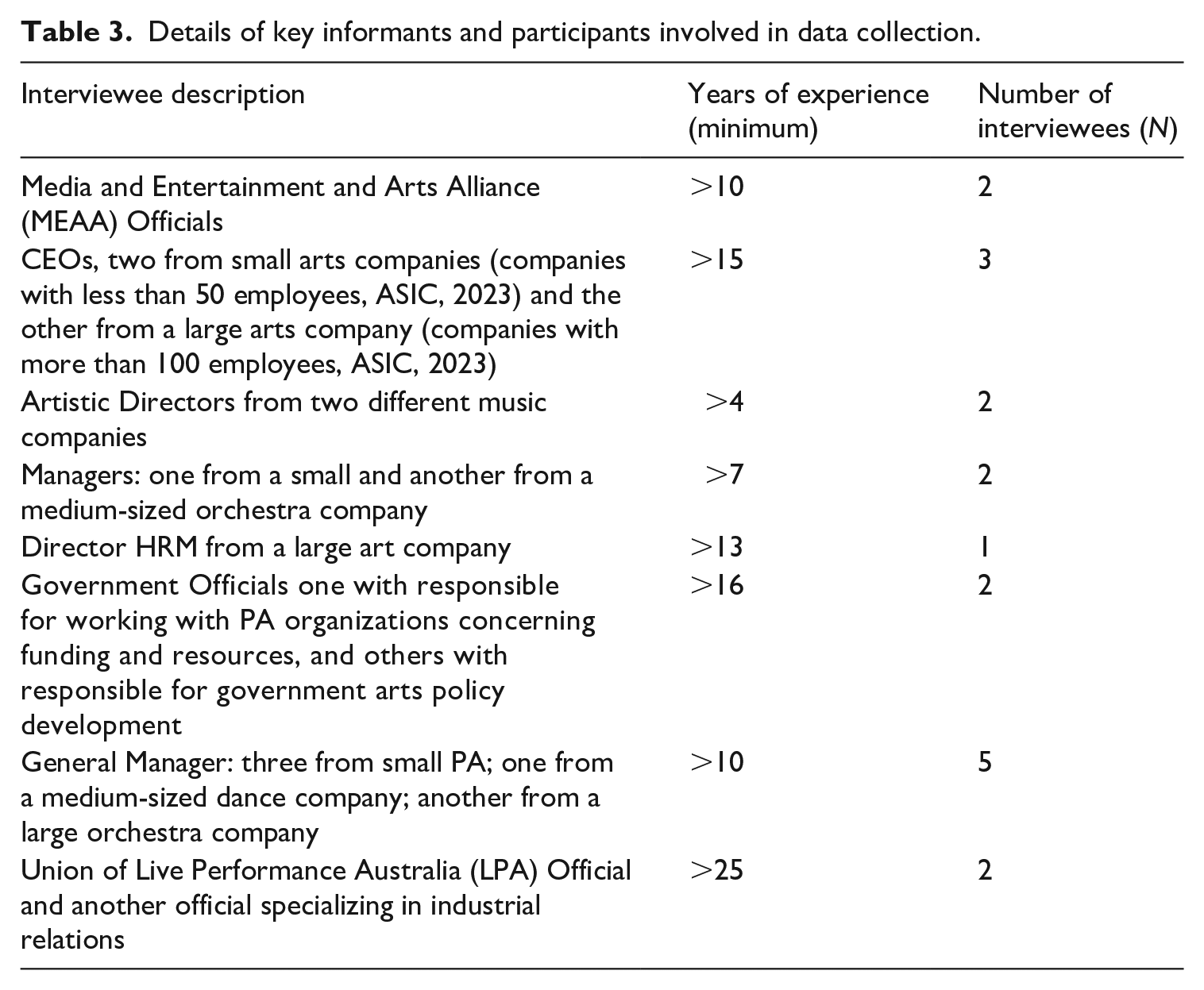
The interviewees for this research were drawn from the government, employers, management, and the major trade union in the PA industry in Victoria, Australia. A total of 19 key informants were interviewed (see Table 3 for details). According to Saunders and Townsend (2016), a range of 15–60 interviews is standard practice for qualitative research. However, although this study has only interviewed 19 participants, these interviewees represented the spectrum of government, managers, and employers who have work experience in HR areas in PA organizations previously. That means these interviewees had considerable knowledge, experience, and involvement in the development, and management of people in the PA sector.
Details of key informants and participants involved in data collection.
A semi-structured interview protocol was used to conduct face-to-face interviewees (see the outline of the interview protocol in the Appendix). This is because it allows flexibility and provides freedom to interviewees to construct their answers (Gillham, 2005).
Collecting and organizing data
The selection of key informants for this study was based on their occupied roles, ensuring their knowledge and expertise on the researched issues (Merriam and Tisdell, 2015). A combination of methods was used to identify participants. Initially, purposive sampling was employed to identify key informants through industry contacts and referrals (Patton, 2002). Subsequently, a snowball sampling technique was utilized, resulting in 12 interviewees being selected based on nominations provided by previously interviewed participants (Creswell, 2013). This snowballing approach, which involved contacts and referrals, facilitated the identification of key informants with experience in HR roles in PA organizations. Private company representatives from the dance and theater sectors were among the interviewees. Each interviewee was directly contacted to seek their consent and willingness to participate in a face-to-face interview. The interviews were conducted between March and July 2017, with each session lasting approximately 35–40 minutes. The interviews encompassed a wide range of topics, including the respondents’ current roles, experiences, and perspectives on HRM practices within the sector. All interviews took place in participants’ offices and were digitally recorded for accuracy and future reference.
The recorded interviews were transcribed into text manually. Interview texts from different participants were cross-checked by two researchers to ensure the neutrality and credibility of the study. The interview texts were then organized under different broad descriptive codes. Texts referring to the same argument were then categorized as a separate theme. Data from different interviews were finally cross-checked and triangulated to avoid any bias in analysis (Welsh and Begg, 2016).
Data analysis and findings
The interview data were carefully analyzed using coding techniques to identify three main themes corresponding to the three HR approaches mentioned earlier. The coding process involved deriving codes from the reviewed literature, with a focus on the descriptions of the three different HR approaches outlined in Figure 1. Examples of descriptive codes include uniformity of jobs, employment status, training and development, certainty of compensation, nature of work, job security, role description, written and unwritten policies, and career pathways. These coded data were then grouped together to develop the themes, which were subsequently compared with the three different HRM approaches individually. This comparison aimed to identify the prevailing patterns of management practices within PA organizations. The following sections present the findings of this study, highlighting the key insights gleaned from the analysis of the coded data and their alignment with the three HRM approaches.
The use of universal approach in PA organizations
The universal approach to HRM assumes that there is a set of best HRM practices that are universal, and adoption of them will inevitably lead to superior organizational performance (Intindola et al., 2017). During an interview, the representative from Union of Live Performance Australia (LPA) posited that there is no standard or best HRM practices in PA organizations. He further stated that there is not even any standard HR position or skilled HR personnel in small PA organizations. According to his opinion, it is the General Managers who manage people-related issues in PA organizations. The LPA representative stated:
Many arts organizations are small and a major issue for small to medium arts organizations is the lack of HRM practitioners in their ranks, so it is usually left to General Manager to implement, control and monitor HRM systems. Any HRM issue is dealt with, probably unknowingly, by General Manager, as the focus is on the end product.
One CEO from a dance company agreed with this point but added that many PA organizations have a small number of employees and as a result are unable to afford the cost of HR personnel. She further added some PA organizations use their board members who volunteer to look after HR matters in those organizations. Therefore, no standard HR practices have developed in PA organizations. She stated:
Of course, being a small company, we can’t afford to have an HR person; we just don’t have enough staff, and so ultimately that falls to me to be overseeing the HR resources of the company . . . We are lucky to have someone who is an HRM expert on our board of directors.
The representative from the LPA stated that not only do most PA organizations have a dedicated HR person, but there is also an apparent lack of standard pay structure in most of them. He explained that the pay of performers in small PA organizations mostly depends on government funding. He argued that only large PA organizations pay their staff regularly, but that also depends on individual performance and varies case by case. He commented:
The higher you get up the tree, especially when you get to the large organizations like the opera, ballet, and some of the bigger theater organizations . . . they pay their staff OK but when you get down to small organizations with a handful of people involved . . . they are not well paid.
The representative from the Media and Entertainment and Arts Alliance (MEAA) agreed but expressed her concerns that due to financial constraints and the casual nature of work in the industry, some small PA organizations are not meeting their standard compliances and legal requirements regarding payment of superannuation benefits. She believed that many people working in the PA would retire with little or no superannuation funds available to them. She commented:
The other issue and challenge that we face are that in a lot of small organizations such as we are, people are not being paid superannuation appropriately. This may be because of the nature of their employment such as casual, part-time, contract, and often project-based employment.
The LPA representative highlighted the widespread absence of formal training and development programs in PA organizations, a standard practice observed across various organizations. According to the representative, training and development tend to receive inadequate emphasis in arts organizations, and even larger organizations lack established “best practices” in this regard. He further stated that generally it is not recognized that training and development opportunities should be provided to the performers. An LPA representative stated:
One of the major challenges in our company and the Performing Arts industry, in general, is the lack of training opportunities for our employees and retaining trained employees.
During the interview, an HR Director stated that there is no standard recruitment and selection process in PA organizations. Instead, most of these organizations hire performers on an ad hoc or casual basis. He also mentioned that his company has more casual staff than permanent employees. Although he would prefer to have more permanent staff, he explained that resource constraints make it necessary to employ casual staff whenever certain roles need to be filled. The company also utilizes a lot of staff on casual, fixed-term contracts, either part-time or full-time. He commented:
We have about thirty performers whom we contract on a casual basis and about five or six technical crew whom we get to come on board for specific jobs. They come on just when there is a performance. They are on a restricted contract usually and they are for operational purposes only.
One company manager expressed concerns about the industrial relations in the arts sector and the types of employment contracts offered to staff members. She noted that casual staff members often do not receive a formal, signed contract, and that there was a lack of standardization in this area across the industry. She stated:
Every staff member has a job description that they agreed to at the start of working in this company, but it is not formalized into a written signed contract.
In summary, according to the interviewees, many arts organizations, particularly the smaller ones, lack a formal HR department or an HR manager with appropriate skills and training. The responsibility for HR management often falls on the General Manager, who may not have specialized HRM knowledge. There is also a lack of standard pay structures, which results in some arts organizations not providing superannuation payments. Furthermore, there is no standard practice for staff training and development, apart from those mandated by the government. Performers tend to progress in their careers through different organizations, which is known as protean career progression (Park and Rothwell, 2009). Overall, the study did not find evidence of universal HRM practices in the performing arts sector.
The use of contingency approach in PA organizations
The contingency approach suggests that there is no universal or uniform solution for HR policies and practices, and that they must be tailored to the organization’s context and business strategy (Malos et al., 2003). We explored the validity of this assumption in PA organizations by examining the perspectives of interviewees. According to a government official responsible for funding in PA organizations, there are barriers to aligning business strategy with HR strategy. HR practices in PA organizations are typically ad hoc because the nature of PA is project-based. Employees are hired on an ad hoc basis to perform for specific projects, rather than being aligned with the overall business strategy. He stated:
Work and employment in the arts industry are often characterized by project-based employment . . . hence you complete one project, you move to another and there is no guarantee of work and employment and that is how it is in the arts in general.
One Government representative, interviewed, also agreed that the business context and strategy of PA organizations are characterized by short-term project work, and therefore, work and employment in the arts sector are characterized by project-based employment. He explained:
I would say one of the issues in the arts industry is that work is project-oriented. Employees move from project to project, and that is the nature of the industry and it has ramifications for HRM practices
In addition, the MEAA representative explained that not only do the projects short-term but that the teams of people working on projects are often different, giving little ongoing stability, which is a barrier to following any HRM approach:
It is a project-driven industry and learning lessons from one project to the next when you might be working with a completely different group of people with different HR practices.
Because of the project-based employment in PA organizations, there is no best fit between remunerations and performance. In most PA organizations, casual work and low-wage conditions have become an accepted pattern. These casual employees often leave the arts sector to work in other sectors, to get better wages and conditions and better opportunities. One Government official explains:
Quite a few people I know recently have moved from the arts to the health sector because they get a better wage, career path, and a less stressful job. A lot of my friends have left the arts industry to other organizations . . . unless you become a manager you do not get paid better . . . unless you become a Russell Crowe or Cate Blanchet and the rest of them.
The government official also agreed and argued that HR practices, such as career pathways for employees, depend on various factors. The best fit between an employee’s career goal and the organizational goal is difficult to achieve in the performing arts industry’s business context. He added that the nature of the industry leads to multiple job holdings, with the workforce moving from one job to another to develop their careers, increase their income, and sometimes even leave the industry altogether. He argued:
There is no career pathway for the individuals and a lot of staff develop themselves by moving jobs. They go from one company to another and that is how they advance . . . certainly, that is what a lot of management staff do. You know, lack of career pathways is one of those issues in the arts industry. I think a bit more work could be done in terms of developing career pathways and yeah, I think an increase of awareness of some of the issues would be useful.
The two CEOs interviewed have also agreed that a fit between an employee’s career pathway and organizational strategy is unlikely. One stated:
There is the issue of career pathways here, and sometimes I find it difficult when dealing with my employees as I know they can only move to another company if they want to further their career in the arts. In my position in this company, I wonder sometimes what are my odds to find another job if I decide to leave or get sacked.
The CEO of a small arts company admitted that in her company, while there is a reference to succession planning within company policy, it is not implemented. HR practices in terms of succession planning do not follow any linear relation. She explained:
Ok . . . it [succession planning] has a reference in our business strategy but that is just about it, to be honest . . . I can say it does not exist because if the worst-case scenario happened and I got hit by a bus tomorrow there is no plan about who will succeed me if that makes sense. I’ve even got my computer; they wouldn’t be able to do anything else!
In summary, the interview data analysis reveals that the issue of the volatile nature of employment in the PA sector has emerged very strongly. According to key informants, this is largely due to the project-based nature of the work and the limited number of permanent positions. This unique nature of employment makes it difficult to follow the best HR strategy that may fit with business strategy in PA organizations. Moreover, there is a lack of alignment between HR practices and business strategy in PA organizations, as their primary focus is on entertainment rather than profit, as seen in commercially oriented organizations. There are also other issues likely to affect HRM practices such as size, organizational norms, and the labor market in PA organizations.
The use of configurational approach in PA organizations
The configurational approach argues that an organization’s strategies can only be understood by considering its unique situation and pattern of HR practices (Stavrou and Brewster, 2005). During the interviews, most of the respondents argued that the size of PA organizations, which are typically small to medium-sized, is an important factor in determining the adoption of distinct HRM policies and practices. For instance, the LPA representative noted that financial survival is often the overriding issue for such organizations, which are more likely to have informal, reactive, and ad-hoc HRM practices. One CEO also commented on the difficulty of keeping up with all the legislative requirements and changes, leading to unique HR practices in PA organizations:
As a small- to medium-sized organization . . . someone in my position is pretty much a generalist and has to cover a wide range of issues, and therefore it is very difficult to keep abreast of all relevant legislation, awards, and trends that impact HRM and industrial relations.
One of the CEOs from a dance company explained that HRM practices in the PA industry depend on multiple factors but stated that organizational size is a huge determinant of HRM practices. The CEO argued that, due to the small size of the company, universal best HRM practices are largely irrelevant. To him, HRM should focus on financial matters and funding for the organizations, and that is the norm for PA organizations. He identified finance as the key to company survival, and not people management:
I am so nervous about my next income and raising money and how I am going to survive the next day, that I just don’t consider HRM . . . we are a small dance company - as you can see, and we are not in a financial position to fully realize an HRM impact in the organization . . . We are all borrowing from each other to get the next job done and HRM is like . . .. the extreme for us [laughing].
Furthermore, the HR Director argued that it is not only the presence of well-developed HRM policies and systems that is important in the company but also how these HRM policies and practices are implemented. He stated that the role of the HR department in the company is to develop HRM policies in partnership with the line managers, as line managers play important roles for HRM in PA organizations. This dual authority (manage by both line and HR managers) in HRM is a unique pattern in PA organizations:
In this company line managers have various HRM and people management responsibilities such as OHS, performance management, learning and development, and specialist recruitment, as it is their responsibility rather than the HR department.
The Director of HRM spoke about the increasing employment insecurity in the arts in general, which he again attributed to the lack of sufficient government funding in the PA. At the company level, while he believed that his job was secured, he felt that there are some members of the Orchestra whose positions were not so secure. He argued that this is particularly the case if the budget is tight, and organizations are looking to cut costs—they will then look to whom they can move on. This insecurity in employment creates a distinctive pattern of selection and recruitment in PA organizations. He explained:
Government funding affects job security in the arts and production . . .and as a result, when there are not enough funding organizations look at other ways to deliver the product with fewer people and resources. There are lots of orchestras around Australia and around the world that are dealing with this issue of how to continue to meet the artistic demands with an increasing cost base.
The prevalence of short-term employment opportunities is noticeable, and it is common for individuals in the arts sector to have multiple jobs. However, a government official responsible for arts policy expressed a belief, without substantiating evidence, that short-term employment opportunities within the arts sector are on the rise. Additionally, the official emphasized that it is not just performers who experience short-term employment but also PA managers and administrators, suggesting that high levels of short-term employment opportunities extend to these roles as well. He stated:
I can tell you there is no job security in their employment and this is of course not good, but this is the nature of the work. Job insecurity is a general issue in the arts industry.
Even the Director of HRM, who worked in a large company with a dedicated HRM department, stated that most members of the PA workforce have at least two jobs, if not more, in order to maintain some financial security. Again, he attributed this situation to the nature of employment in the sector. He noted:
Job insecurity is certainly a problem in the industry . . . you know you can have a job today and next week you may not have a job to earn money to pay your bills.
The HRM Director described other challenges of HR practices in the industry. In his opinion, coaching for HR functions is a common pattern that is different from many other organizations. He explained during the interview:
The challenge for us as an HR team is more to equip managers with the skills to manage people, and this is really a shift in thinking . . . it’s been happening over the past several years, but the problem is, it is happening very gradually . . . the shift from managers seeing that all people issues come to HRM. We see that one of the main benefits that we have in the organization is coaching managers to better manage people issues so that we have fewer problems, if you like, fewer blow-ups, fewer instances of poor performance management.
The training and development of employees in PA organizations also follow a different pattern. The Company manager argued that the casualization of work in the arts is responsible for the lack of formal training, rather mentoring program is a norm. She described her experience as follows:
I think most of us that work in the Performing Arts management side of things, as opposed to performers . . . we’re all taught on the job and you learn from mentors, which is great, but formal theoretical and analytical training would complement on-the-job.
On the other hand, a General Manager saw training as an informal collaborative activity. In this way, he extended his view of training to that of learning new skills beyond those of dance. He stated:
Looking at my role I would say I am more of a mentor in terms of training and education, which is different from being an artist. Training for me is still part of my role as much as learning internally between the employees that are recruited in my office. We train each other in the process of grant writing. We are a collaborating team for a small arts organization.
The interviewees agreed that the casualization of work made it difficult to organize and train staff. Moreover, the nature of the funding arrangements often made it costly and even unaffordable for the smaller organizations; hence, they focus on providing training that is required under the legislation, such as occupational health and safety or first aid training. They argued that many employers do not feel obligated to provide training to their staff. As a result, staff members are often responsible for providing their own training and ensuring that they have the necessary skills required to maintain their employability.
I have attended one session of OHS last year but not this year yet. I am aware of our responsibilities in OHS and make sure we follow the relevant Act.
The Artistic Director described his approach to the recruitment of new dancers, pointing out that he never used a traditional audition method. He argued that he could not have a healthy working relationship with a complete stranger. Instead, he described how, as a part-time lecturer in a Dance College, he uses what could be seen as a talent-spotting approach, where he asks promising students directly if they would be interested in working with his company. He explained:
The recruitment process in the company happens over a long period of time and is relationship-based, and also the unanimous appreciation of both parties involved, as candidates are approached early in their bachelor’s degrees . . . whether they will be interested to join the company. They come onto my radar and I get to know them . . . and we form a relationship and so . . . I will never audition somebody. Across all spectrums of all dance organizations that I am aware of, there is ideally an audition process, but I don’t follow that. I set myself away from that, and that is what makes it even more interesting [he laughs].
The involvement of Board members in HR issues is another unique pattern in PA organizations. The company manager stated that although they do not have written or formalized policies in documents, he argued that the process involves board members playing an operational role in the company by dealing with any potential people management conflicts that may arise. He emphasized the importance of his immediate access to the board, claiming that:
We resolve any people management problems by involving the board members to articulate the problem and resolve it at the board level. I can call on my board members and say I need something or some help and they will respond to me within 24 hours. They are there to help and they really do.
The Artistic Director went on to describe several management challenges in the company, largely to do with managing resources—both people and financial. He described the tension that he felt between being an artist on the one hand, and a manager on the other. This was more so because, as the founder and CEO, he recognized that he is such an integral member of the company, but the management role did not come easily to him. He also stated that he finds this role so challenging that he relies on the Company Manager to manage the company:
It is always a challenge for me to manage myself at the same time managing the company. I am an artist . . . [he laughs!]. It is a constant challenge for me as an artist to work in a managerial role.
In summary, the interviewees believed that HRM strategies for managerial, administrative, and support staff in PA organizations, even in larger organizations, are weak. They viewed this not only due to the casual and insecure nature of work and employment in the industry but also the lack of funding and support, meaning that many arts organizations prioritize raising funds in order to survive. Such emphasis means that planning is often short-term and project-focused, whereas development of performers by its very nature is long-term. Moreover, the interviewees commented on a general lack of understanding of the possible value that HRM practices and processes can have in an organization. In conclusion, this study has identified a distinctive pattern of HR practices in PA organizations that involve functions such as recruitment, training, compensation, mentoring, coaching, and teamwork.
Discussion
The present study offers valuable insights into HRM approaches in PA organizations. Firstly, we found that standard HRM practices, such as recruitment and selection, are not commonly observed in PA organizations. Instead, relationship-based talent spotting is the predominant practice used across these organizations. Secondly, the reliance on limited government funding, combined with philanthropy and sponsorship, has resulted in short-term financial stability and short-term employment opportunities. This has led to many PA organizations struggling with limited resources and a high level of casualization, with performers often working in multiple organizations to make ends meet.
Thirdly, we found no standard training or skills development programs in PA organizations. The data analysis reveals that training and development are the least priority functions in many arts organizations. It is assumed that performers have already gained sufficient skills in their areas of performance and that is the standard of their qualifications for the selection. Performers generally learn skills from their mentors, inside or outside of the organization, before or after their employment. Fourthly, there is an apparent lack of a standard pay structure in PA organizations. Finally, we found no succession or career planning available for employees in PA organizations. These findings, therefore, show no support for the universal approach of HRM which suggests a standard practice in the way they manage people irrespective of the business contexts (Boxall et al., 2011; Clinton and Guest, 2013; Gurbuz and Mert, 2011).
The findings of the present study also do not support the contingency approach of HRM in PA organizations, which argues that all HRM practices should be aligned with the organization’s business strategies (Malos et al., 2003). The volatile nature of employment, organic organizational structure, and uncertain career environment create obstacles to fitting between business strategy and HR strategy in the PA sector. In most PA organizations, HR practices are predominantly ad-hoc and opportunistic rather than based on systematic and strategic considerations. A case study in Germany by Haunschild (2003) also found that the employment relations of theater workers are contingent in nature and that contingent work arrangement prevail in theaters. However, our findings reveal that HR practices in PA organizations are based on short-term planning, which is contrary to the long-term organizational and HRM strategies as outlined in the contingency approach.
In contrast, our study reveals a distinctive pattern of HRM practices within PA organizations that can be attributed to various factors. Despite the absence of formal HRM systems and policies, we identified several informal HRM practices, particularly in the realm of recruitment and selection. Interestingly, we observed two different patterns in these processes. While administrative staff members undergo a universal approach involving interviews, technical staff (including performers) are recruited through personal networks without any formal advertising, interviewing, or selection procedures. These distinct recruitment and selection practices appear to be inherent to the HRM patterns prevalent in the PA industry. Thus, because of their informal, reactive, and ad hoc nature, which align more closely with administrative HRM rather than strategic HRM, making them unique to PA organizations.
In general, our interviews with industry professionals highlight the emergence of a distinct pattern of internal HRM practices within PA organizations, influenced by external factors that shape the industry’s business environment. Our data analysis demonstrates the presence of HRM practice bundles, encompassing short-term employment opportunities, coaching for management skills, mentoring for enhanced performance, and limited internal career progression prospects in the industry. These HR practices align with the concept of HRM bundles (More et al., 2009) and support the configurational approach, which emphasizes that the impact of HRM on organizational performance depends on effectively combining HRM practices. The implementation of these HRM practices relies on both external factors such as uncertain funding and the internal organizational environment, which encompasses short-term employment opportunities and informal training.
These findings provide a systematic understanding of how HRM is practiced in PA organizations, showcasing its suitability for addressing environmental and organizational uncertainties. When compared to Snell et al. (2023) HR ecosystem framework, our findings align primarily with impermanence and shared governance, but less so with technological mediation. While technology has significantly transformed the core business aspects of PA, such as performance, its impact on HR functions remains limited. For instance, although technology has automated many recruitment functions, our findings reveal that personal network-based selection is still prevalent in the PA industry. This example shows that the configurational HR approach will prevail, potentially aiding PA organizations in sustaining themselves, at least for a while, amidst environmental uncertainties in the industry.
The absence of mentions about technology’s impact in the interviews may be attributed to their pre-COVID-19 nature. It is important to note that the landscape may have shifted considerably due to the increased adoption of technology for HR functions during and after the pandemic (Vahdat, 2022). Consequently, the data collected post-COVID-19 might yield different insights. In terms of impermanence, our findings strongly support this aspect of the HR ecosystem, as ad-hoc appointments and limited career progression align with the impermanent nature of HR functions. Additionally, our findings support the shared governance component of Snell et al. (2023) HR ecosystem, as HR functions in PA organizations often revolve around project-based or team-based work, fostering collaboration and functional sharing across different units and departments. Overall, our findings predominantly align with Snell et al. (2023) HR ecosystem in a changing environment, which is also consistent with the core principles of the configurational approach.
HR practitioners working in PA organizations should be aware of the unique configurational HRM approach used in the industry. Using other HR approaches, such as universal and contingency approaches, may not produce effective organizational outcomes in this industry. For instance, PA organizations have a distinct pattern of performance-based pay, where employee performance is evaluated by external stakeholders, primarily customers, who rate and demand performers’ output. If HR managers want to use a universal performance-based pay strategy that may discourage these performers to provide the best outcomes to satisfy their customers. In a universal or 360-degree performance evaluation system, all stakeholders’ feedback is equally weighted rather than only assessed on customers’ ratings (Tyson and Ward, 2004). Therefore, a performance-based pay system that takes into account customer ratings has been identified as suitable for PA organizations. This unique pattern observed in PA organizations can be explained and supported by adopting a configurational HRM approach.
Likewise, the relationship-based talent-spotting approach in the PA organizations cannot be easily replaced by a universal recruitment process. In the creative industry, performers’ skill development depends heavily on one-to-one mentoring, and a pre-established network can facilitate positive mentor-mentee relationships and effective learning (Hayes, 2005). While there are concerns about the possibility of “cloning of talents” when recruiters select candidates who resemble themselves through relationship-based recruitment, this may not always be a bad thing in creative industries (Yoshida et al., 2014). Therefore, different HR practices such as recruitment, training, compensation, mentoring, coaching, and rewards have collectively developed a distinctive HRM approach in PA organizations, which is a configurational HRM approach.
Conclusion
The analysis of interview data collected from individuals associated with the PA industry in this research provides evidence supporting the use of configurational approach in PA organizations. Although most interviewees state that HRM is not their focus and there are no formal HRM practices, the data analysis reveals a distinct pattern of HRM practices in PA organizations, which aligns with the configurational approach. The data analysis highlights that relationship-based recruitment, performance-based pay tied to customer ratings, mentoring-based skills development, and boundaryless career development are all unique HR bundle practices in PA organizations which consist of internal and external factors as defined in the configurational approach.
This research bears significant implications for the creative industries, particularly the performing arts and their representatives, to understand the HRM approaches in their organizations. The findings can assist managers and HR practitioners in shaping their HRM strategies within the creative and arts industry. Organizations within the performing arts industry that lack a well-defined HRM approach may struggle to cultivate and attract talent in the future, potentially impeding industry growth. Policymakers and government organizations concerned with the performing arts sector must comprehend the pattern of configurational HRM approach and prioritize policies that promote recruitment, training, and career progression to retain and foster talents in the industry.
This study makes a valuable contribution to the strategic HRM literature by examining the prevalent use of HRM approaches, specifically the universal, contingency, and configurational approaches, within PA organizations. The findings are important for managers to develop strategic HRM policies and practices that align with the unique demands of the Performing Arts industry and enhance organizational performance. Additionally, the study has significant implications for government and arts policy-makers, who can leverage the findings to formulate effective policies and make informed decisions in the Performing Arts sector. This study has also provided a theoretically informed understanding of why the most widely used HRM approaches are not well-suited for this unique industry. Furthermore, this study adds to the body of knowledge on HRM approaches in Performing Arts organizations, which has been relatively under-researched recently. However, further quantitative and qualitative research in a broader context and with a larger sample could provide deeper insights into HRM approaches in Performing Arts organizations.
