




Abstract
Agile HR is well-established in practice and has emerged as an exciting research area in the last 4 years. However, no comprehensive review of the literature on this subject has been conducted. The aim of this paper is to map the current state of agile HR research. We conducted a systematic mapping study and found 86 relevant primary studies. Our findings are organised into seven research topics that fall into two major themes: Agile for HR; how the HR function adopts agile practices, and HR for Agile; how the HR function supports an agile organisation. The HR for Agile theme is more mature, with more research papers, proposed models, and frameworks. We also review the types of publications, venues, and research methods. The body of publications is fragmented and diverse, with most articles published after 2019, primarily in multidisciplinary journals, incorporating a mix of theoretical and empirical approaches. The paper contributes a thematic analysis of research topics, a comparison of traditional with agile HR practices, a list of theories and models used, a new definition of agile HR, research gaps in the literature, and an agenda for future research. Contributions to practice include findings that agile HR practices benefit organisations, that agile talent acquisition facilitates organisational agility, and that HR can transition to agility by making small changes to their practices rather than undergoing radical change. More academic work needs to be done on agile HR to improve conceptual clarity, theory building and development, understanding benefits and value for the business, identifying challenges, understanding contextual factors, and critically exploring outcomes.
Introduction
Operating in uncertain circumstances, organisations face the challenge of responding to ever-increasing demands in their business environment (Nijssen and Paauwe, 2012; Shahsavari-Pour et al., 2021). Their ability to rapidly sense and respond to unpredicted threats and opportunities through successful adaptation is known as agility (Asfahani, 2021; Munteanu et al., 2020). Tseng and Lin (2011) explain three interrelated aspects of achieving agility within organisations. First, ‘agility drivers’, for example, increased competition and accelerated changes in dynamic environments; second, ‘organisational capabilities’ like responsiveness, adaptation, and flexibility that support reacting to changes and deriving benefits from them; and third, ‘providers’, such as organisations, people, technology, and innovation, who facilitate these capabilities. This shows that adopting agility ‘does not just happen’, but rather must be deliberately pursued and can be achieved through both organisational capabilities and providers (Nijssen and Paauwe, 2012; Shafer et al., 2001). In today’s environment, it is not surprising that many organisations are moving towards the agile paradigm (Revutska, 2021). This has, in part, been driven by the widespread and successful adoption of agile approaches by the IT function in organisations.
Over the last two decades, the relationship between human resources (HR) and organisational performance has been the dominant theme in the human resources management (HRM) literature (Nijssen and Paauwe, 2012). However, authors (e.g. Dyer and Shafer, 1998; Paauwe and Boselie, 2003) argue that HRM is not only about organisational performance, but also involves other capabilities like flexibility and adaptability (Nijssen and Paauwe, 2012). Dyer and Shafer (1998) refer to these capabilities as HRM agility, as they enable organisations to strategically respond and effectively adapt to disruptive changes such as those caused by the COVID-19 pandemic and the gig economy, thus maintaining their sustainable competitiveness (Karman, 2019; Selvam and Murugaiyan, 2020; Thani et al., 2022). Moreover, research indicates that the HRM function is a key provider for agility, especially when combined with other providers such as technology (Breu et al., 2002; Shafer et al., 2001).
Interestingly, agile HRM is an evolving approach and a relatively new area of concern for academics. The abundance of practitioner-written blogs and textbooks, training sessions, and the agile HR manifesto (https://www.agilehrmanifesto.org/) all demonstrate interest in agile HRM. The concept embraces the idea of an agile mindset, agile principles, and agile values leading to the transformation of HRM processes, structures, and roles. It is becoming more popular as a strategy to encourage HRM to move away from stricter standards, rules, and control and towards being quick, flexible, and long-lasting (McMackin and Heffernan, 2021; Thani et al., 2022). A recent industry survey on the state of agile HR in 2022 (Peters et al., 2022) reveals that about 42% of HR respondents have formulated HRM strategies that specifically lead to agile HRM principles and practices. They report that recruitment, strategic workforce planning, and performance management are the HRM practices most influenced by the agile approach.
Academic studies on agile HRM are becoming more prevalent; however, to the best of our knowledge, there are no systematic literature reviews (SLRs) or systematic mapping studies (SMSs) on agile HRM. Some SLRs have been published in related areas, including the agile workforce, workforce agility, and human-related challenges in agile transition, and these have discussed the role of HRM practices as one of the enablers in these areas. For example, Salmen and Festing (2022) review the academic literature to provide clarification on employee agility and the pivotal role of HRM in shaping it. Another systematic study was carried out by Junior and Saltorato (2021) on the progress of academic research on workforce agility. They infer that an agile workforce encompasses four dimensions: competence, flexibility, adaptability, and resilience; these can be enhanced through HRM, among other organisational practices. Pinton and Torres Junior (2020) review and classify the human-related challenges that software development organisations confront throughout the agile transition process into three groups: organisation, management, and people. ‘Management challenges’ include management support and decentralised management, while ‘organisational challenges’ include HRM practices for hiring, training, engaging, evaluating performance, and composing teams, and ‘people challenges’ include changing staff skills, responsibilities, and roles. To address challenges in agile transition, they suggest attracting competent staff, investing in training (on agile processes), developing new performance appraisal models, and considering communication, collaboration, and engagement as assessment criteria to reward performance.
A mapping study of agile HRM can help to improve the understanding of what has been discovered so far about the drivers, practical implications, and challenges raised by this growing phenomenon. In contrast to SLRs, mapping studies are meta-studies that map out research activity in a given area rather than synthesising research findings for a particular research question that has been the subject of numerous studies (Kitchenham et al., 2011; Petersen et al., 2008, 2015). SMSs are usually undertaken in areas where research activity is not very mature. Petticrew and Roberts (2006) say that mapping studies classify and systematise existing research contributions to generate insights into certain research areas by answering questions like what kinds of studies have been done and when and where they were published. SMSs are rigorous reviews that aid in the development of particular and novel study fields by framing the area, summarising findings, expounding the use of theory, identifying research gaps, and highlighting areas in which more research is required (Petersen et al., 2008, 2015). Numerous SMSs are published in the software engineering field, including aspects of agile development such as requirements engineering (Curcio et al., 2018; Villamizar et al., 2018). In contrast, there are few in HRM, but Arias et al. (2018) and Sinicropi and Cortese (2021) use SMSs to contribute new insights on workforce diversity and human resources allocation in business process management.
Most innovation in agile HRM happens in practice, but academic studies are needed to develop rich insights, models, and theories that synthesise and elucidate important elements of practice. Although SLRs have been used to investigate related phenomena, a SMS into agile HR is timely because the subject is widely talked about in practice and research in the area is growing. This study will help inform researchers and practitioners of the current state of the art, as well as specify future areas for research and practice development. The contributions of this study are fourfold:
• to provide a comprehensive overview of the current state of agile HRM research by mapping it into a thematic framework
• to systematise and classify existing research in terms of number of papers published, year of publication, publication venues, country of origin, research methods, theories, and models used
• to define agile HRM
• to identify research gaps and propose a research agenda
Research methodology
Planning
Identification and scoping
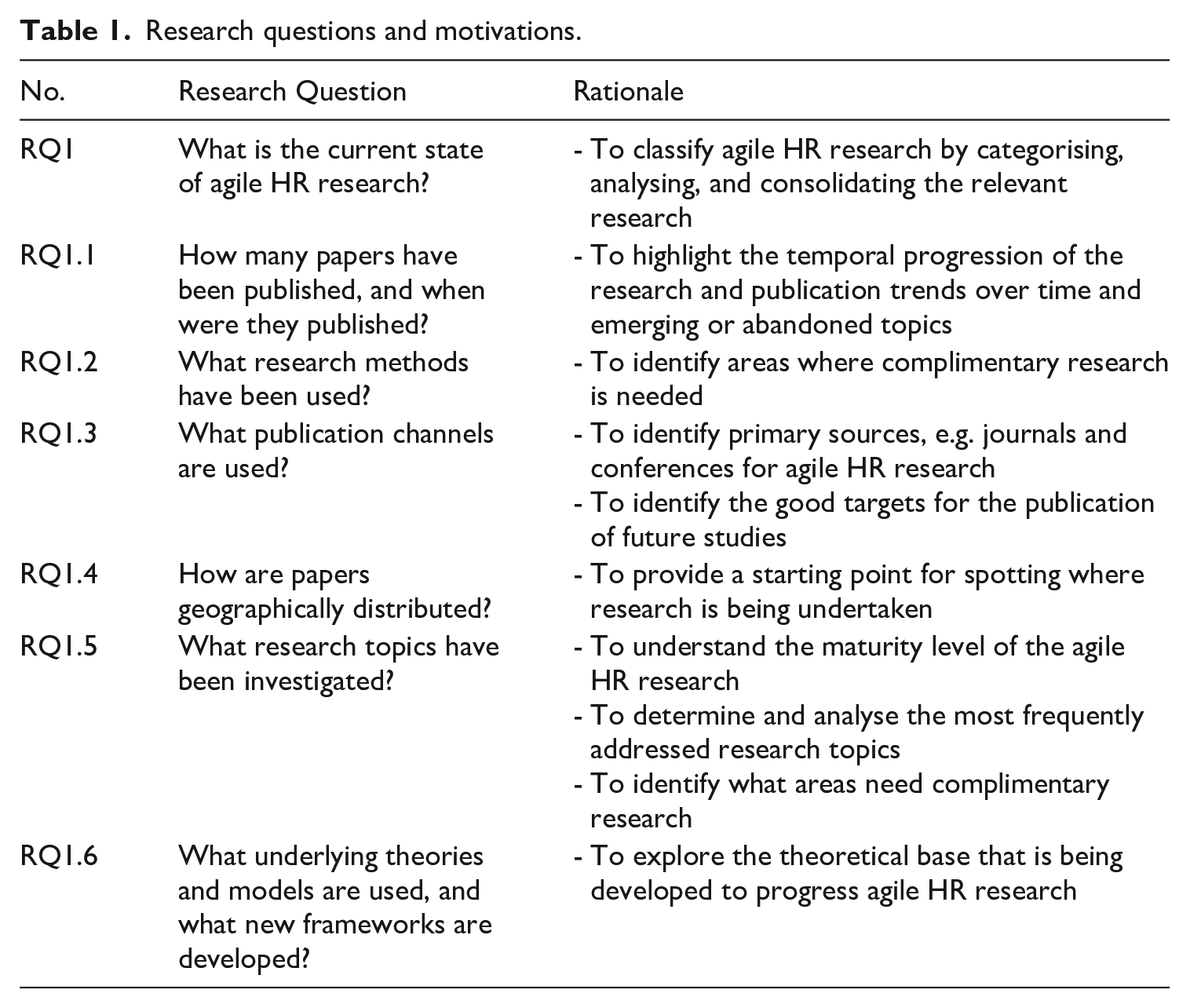
To provide a thorough ‘overview of the state-of-the-art’ through investigating the agile HRM literature, we iteratively planned, discussed, and refined our research protocol and finally settled on the following research question, which has been decomposed into more detailed sub-questions along with their rationale (Table 1).
Research questions and motivations.
Search strategy and data sources
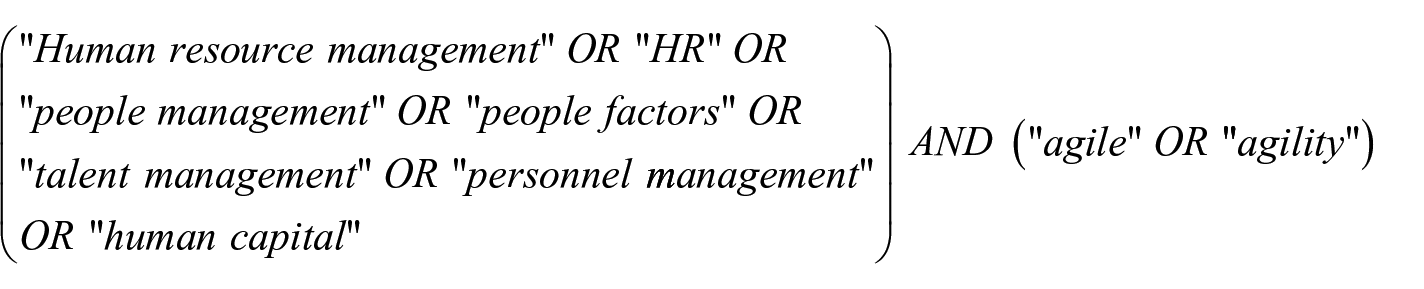
To identify as many papers as possible, nine of the widely used databases were searched: AB/INFORM, Business Source Complete, ScienceDirect, Scopus, Sage Premier Journals Online, Taylor and Francis Journals, Wiley Online Library, ACM Digital Library, and Web of Science. Our search string was developed iteratively utilising terms used in HRM and agile literature, author discussions, and trial searches (Kitchenham, 2004: 7–8). The final search string was built on the following key terms:
Inclusion and exclusion criteria
We developed a set of inclusion and exclusion criteria to guide the studies’ selection process (Petersen et al., 2015). Even though grey literature is becoming more and more important to agile HR, we decided to focus on academic studies in the field.
Inclusion criteria:
• Peer-reviewed research (journal articles, conference proceedings)
• Written in English
• Articles consider agile HRM (related to the search string)
• Aims, research questions, and research methods are reasonably present
• Available in full text
Exclusion criteria:
• Grey literature
• Non-English papers
• Articles not related to agile HRM
• Missing aims, research questions,
• The full text is not available
• Duplicates
Conducting
After the authors approved the search strategy, the search string was inserted into the selected databases (in October 2021) to yield 4103 articles. Some databases allow filtering results based on certain filters, including ‘non-English’, ‘source type’, ‘document type’, ‘duplicates’, and ‘full-text availability’. Applying filters decreased the number of returned articles to 1553 studies.
All studies were uploaded to Rayyan (http://rayyan.qcri.org) for screening. Rayyan is a free web tool and mobile application that speeds up search filtering to assist researchers in managing the study selection process in systematic reviews (Ouzzani et al., 2016). Two researchers used an iterative selection procedure (Figure 1) to find pertinent publications by first looking at the title, then the abstract, and then the whole text. At the start of each stage, we conducted a blind pilot screening, during which the first and second authors screened the same set of papers. After that, we compared and reviewed the results of each screening individually (Olofsson et al., 2017). For the title-based screening method, we also looked at the first 50 studies, and for the abstract and full-text screening, we looked at the first 10 studies. Although there was more than 75% agreement between the two screeners, additional meetings were held to settle conflicts, explain the thinking behind our choices, and guarantee that those choices would be consistent for the remainder of the data set (Polanin et al., 2019). We kept in the set any title or abstract that we were not sure whether to include or omit for a complete text-based analysis.
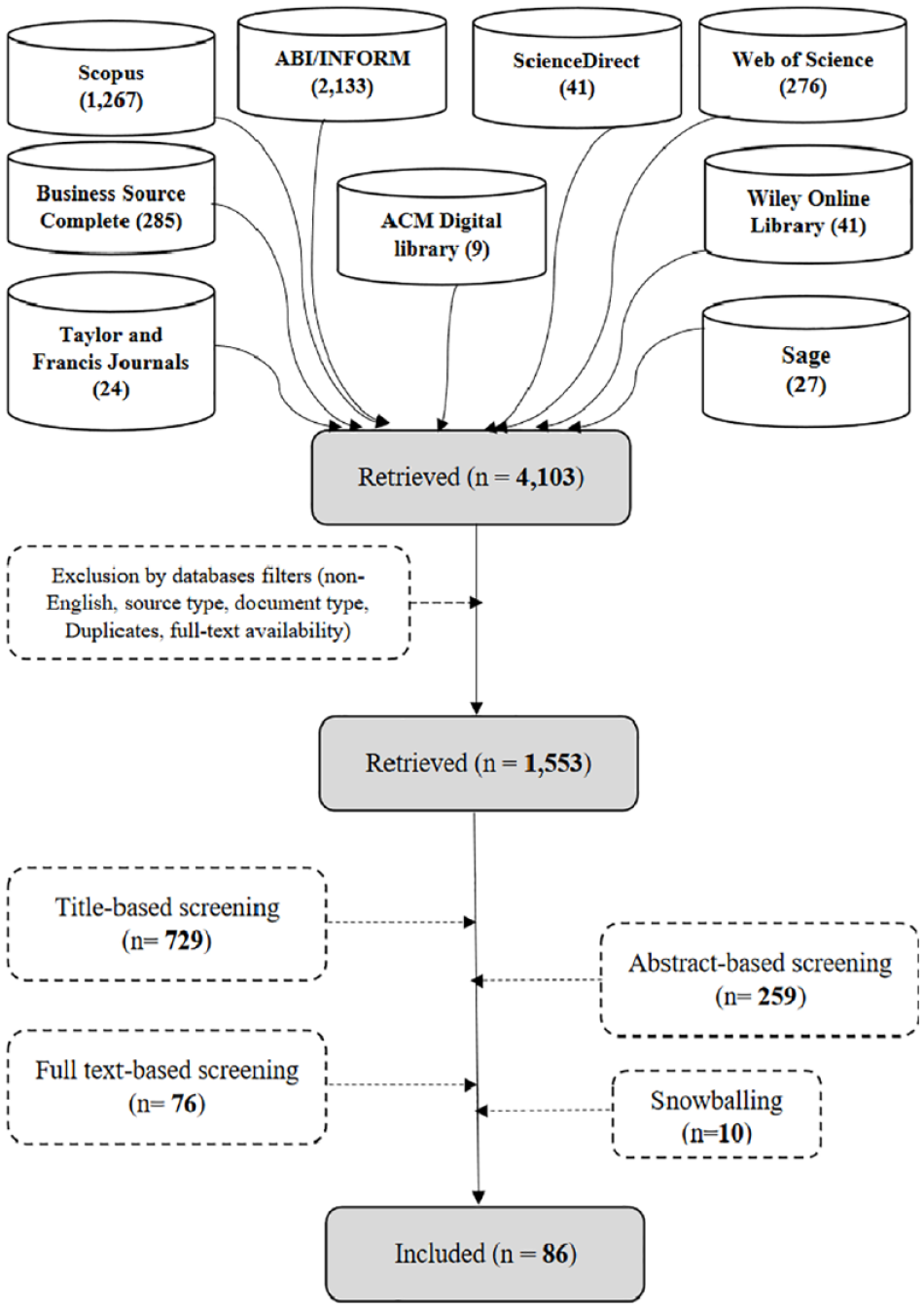
Research paper selection process.
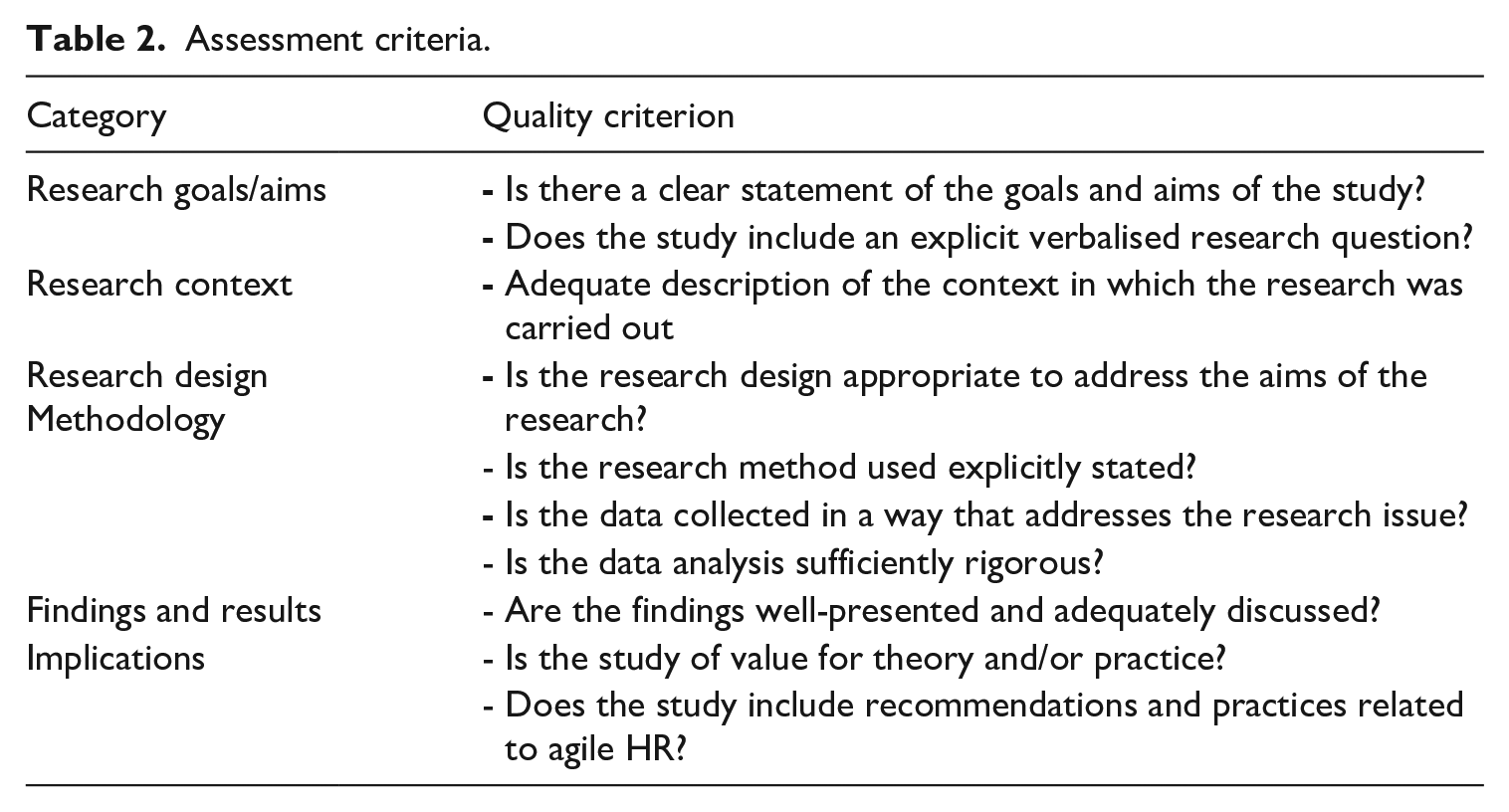
We divided the remaining papers and completed the other stages of screening independently after completing the sample screening for each step. If there were any reservations about a decision taken during this phase, the paper was flagged, and a joint decision was made at the end of the stage. A total of 259 studies qualified for full text-based screening out of 729 publications that passed both title-based screening and abstract filtering based on the abstract. Following the exclusion of a few papers of low quality, all remaining papers were read in their entirety and evaluated using the pre-established inclusion criteria along with the more specific quality criteria (Table 2) proposed by Kitchenham (2004). This process resulted in a total of 76 pertinent studies. We used snowballing by looking through the reference lists of the publications that were included (Wohlin, 2014). A final collection of 86 publications was produced after 10 studies were determined to be pertinent to the current study.
Assessment criteria.
Data extraction and analysis
Data on the title, year, publication location, goal or research question, research methodology, country, and study sample were extracted from 86 primary studies 1 to answer our research questions (Dataset, Appendix 1). We used an inductive thematic coding approach to find the themes in the research (Braun and Clarke, 2006). Based on the study area and keywords, the first author coded the chosen papers. For example, agile HRM practices, HRM shift, agile HRM assessment and measurement, benefits, and HRM and agile or agility were suggested as initial codes. Then we discussed and divided these codes into seven sub-themes (Figure 2). After further discussion and several iterations, these were then grouped into two higher-level themes, labelled Agile for HR and HR for Agile. Both terms are commonly used in the practitioner literature (McMackin and Heffernan, 2021) and succinctly describe the two main areas in which research is being undertaken. These terms are explained at the beginning of the next section. Finally, we discussed the themes and sub-themes and created a summary table with full details in Appendix 1.
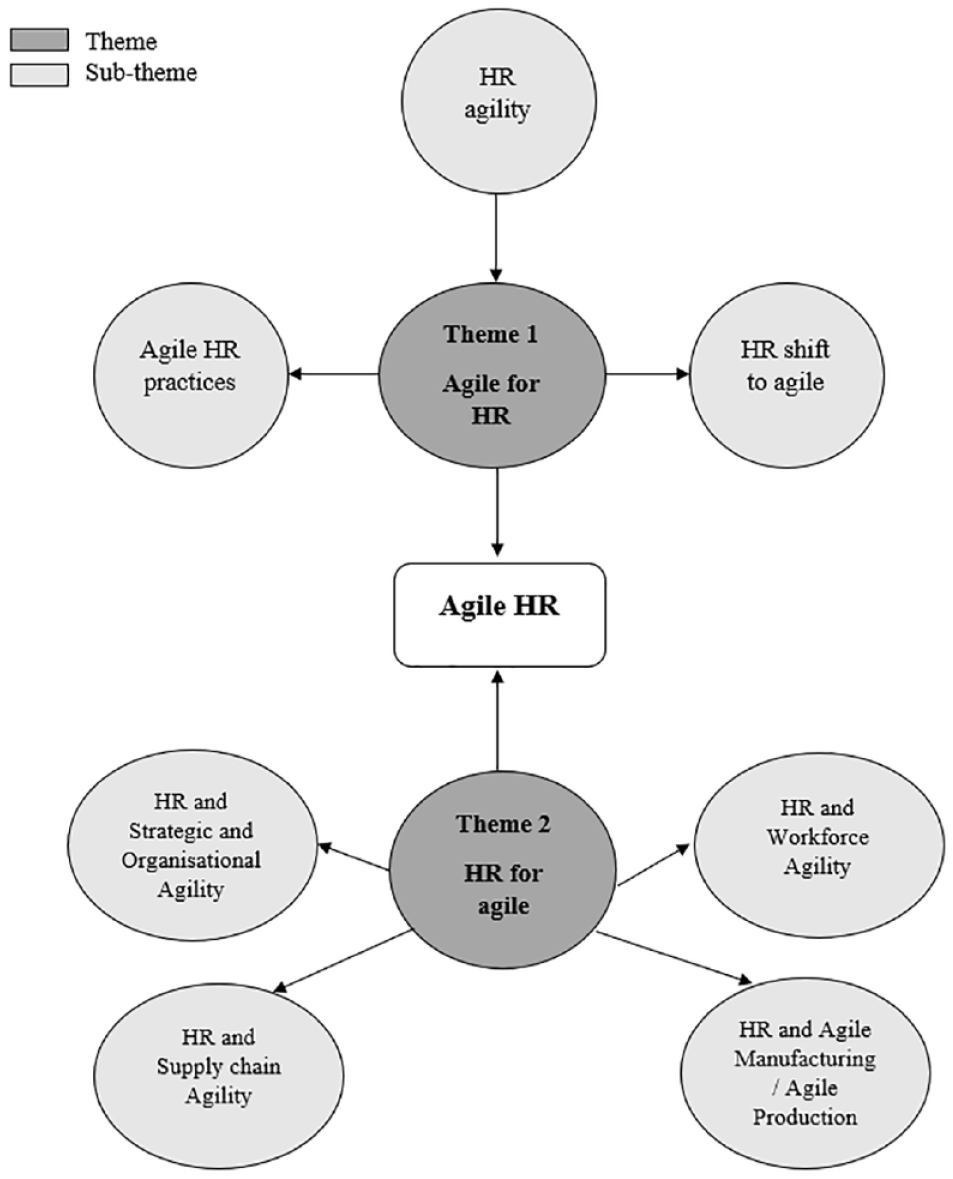
Investigated areas and emergent themes and subthemes.
Results
This section presents the results from the analysis of 86 primary studies pertaining to agile HR research.
Descriptive information about the primary studies
This section summarises descriptive information about the primary studies reviewed in this study, including the number of papers published, the year of publication, the publication venues, the country of origin, and the research methods, theories, and models employed.
How many papers have been published, and when were they published (RQ1.1)?
Of the 86 papers included, 85 were published between 1997 and 2021, with only one published in 2022. Over half of the papers were published in 2019 or later. However, no studies were published in the years 2005, 2006, 2008, or 2010 (Figure 3). Figure 3 indicates that HR for agile different sub-themes appear to be the most prominent over the years. From 2015 to 2022, there has been a noticeable increase in the number of agile for HR studies, with 2021 being the most prolific and progressive year. This indicates that agile for HR is gaining recognition and is becoming more frequently the subject of research studies. This might be partly explained by several societal changes and technological advancements like the gig economy, the global health crisis (COVID-19), and artificial intelligence, which introduced new types of work and necessitated more responsive and adaptable organisations. Consequently, we anticipate a significant increase in the rate of publication in the agile HR field in the coming years.
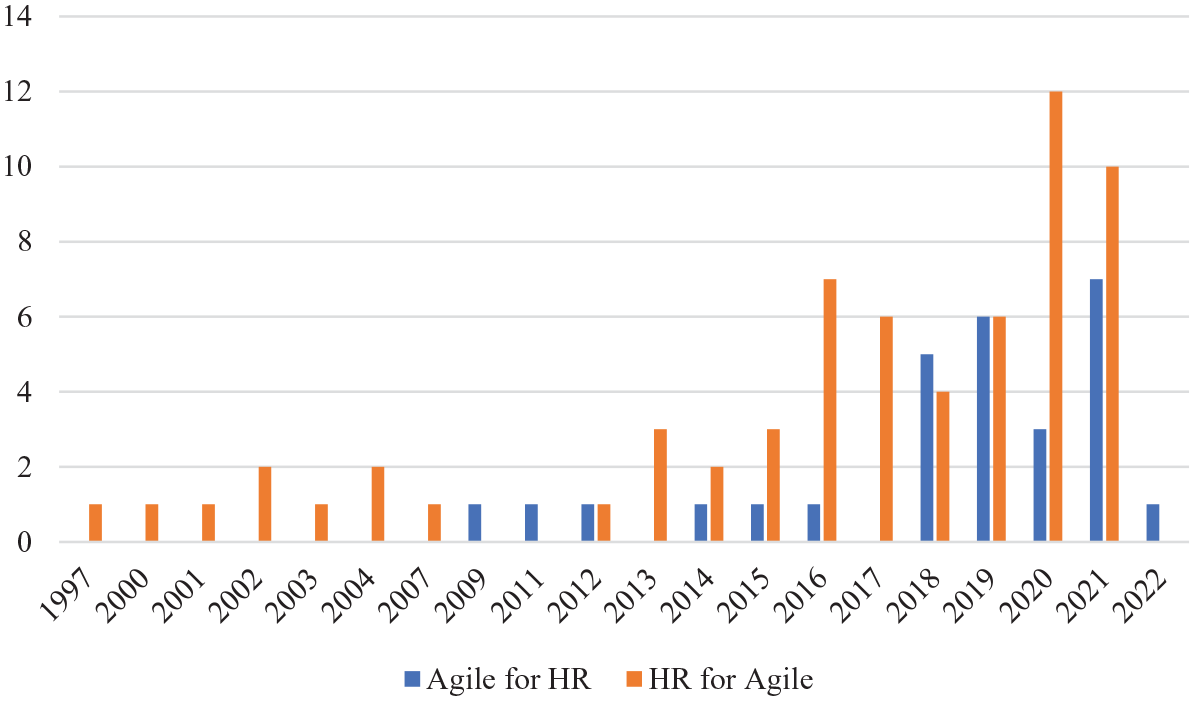
Temporal distribution of primary studies.
What research methods have been used (RQ1.2)?
The findings revealed a wide set of applied research designs and methods. For example, a quantitative design was used in 38% of the studies (58 papers), while a qualitative method was used in 20% of the studies (17 papers) through semi-structured interviews and single and multiple case studies. A mixed-methods approach was used in 9% of the studies (eight papers), combining questionnaires with interviews, focus groups, and secondary data sources. Many studies used structural equation modelling to statistically analyse relationships between variables (Appendix 1). Theoretical papers accounted for 33% of the total (28 papers). These studies were conducted in a variety of application domains, organisation sizes (large and SMEs), and industry sectors (private or public). Most of the studies were conducted in IT organisations and public and private manufacturing and service organisations (e.g. banks, universities, hospitals, and law firms).
What publication channels are used (RQ1.3)?
Publication venues include various journals and conference proceedings in a wide range of areas, from HRM, business and management, organisational studies, information technology and information systems, education, and sport to multidisciplinary scope journals and conferences, which were popular publication channels. Most papers (90%, 77) were published in journals, with only nine papers appearing in conference proceedings (Appendix 2), for example, in conferences on HRM, information technology, business and management, organisation studies, education, sport, and economics. This shows that agile HR is useful for a wide range of research topics and is evolving through different fields (Figure 4).
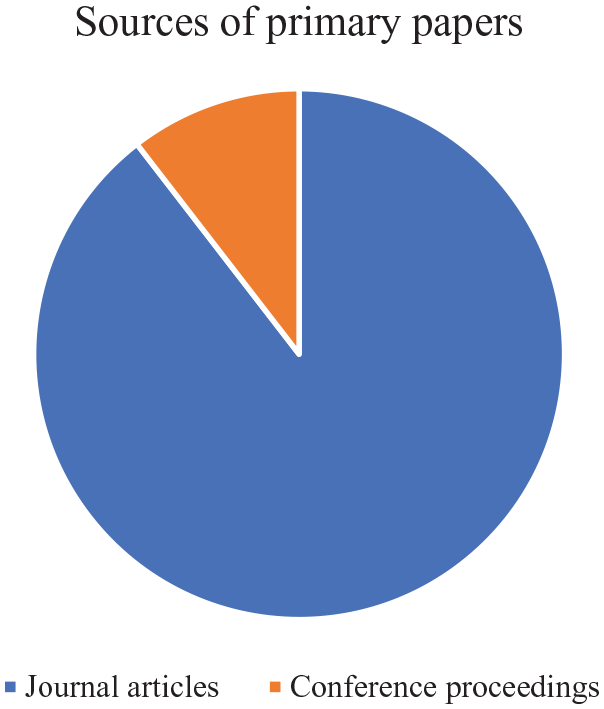
Publication venues.
How are papers geographically distributed (RQ1.4)?
More than a third of the studies originate from Europe, with 19 studies conducted in the Middle East. There were 15 studies from Asia and 11 studies from North America. The remaining studies are from various countries (Appendix 3). Interestingly, 25 papers were submitted by authors from emerging countries, 2 including Iran (13 papers) and India (12 papers). This could be ‘due to the increased resources provided to research institutions and the increase in the prevalence of crisis and uncertainty, especially in emerging markets, due to their volatile and changing nature’. (Ererdi et al., 2022: 2511). Five studies were conducted on agile HR in several countries. We anticipate that the geographical spread will expand to include more countries.
What research topics have been investigated (RQ1.5)?
This study makes a distinction between two facets of agile HRM. The first is Agile for HR, or ‘HR being agile’, which is the use of agile practices for HR operations. This refers to HR adopting agile practices and becoming agile by working in teams, delivering incrementally, and continuously improving. The term ‘agile HRM’ is most commonly understood in this sense. The second is HR for Agile, or ‘HR building an agile workforce’, which is HR helping to create the right workforce for an agile business. This is about finding, developing, and retaining the right people with agile skills. HR needs to work with the business to develop systems and processes that support creating an agile workforce.
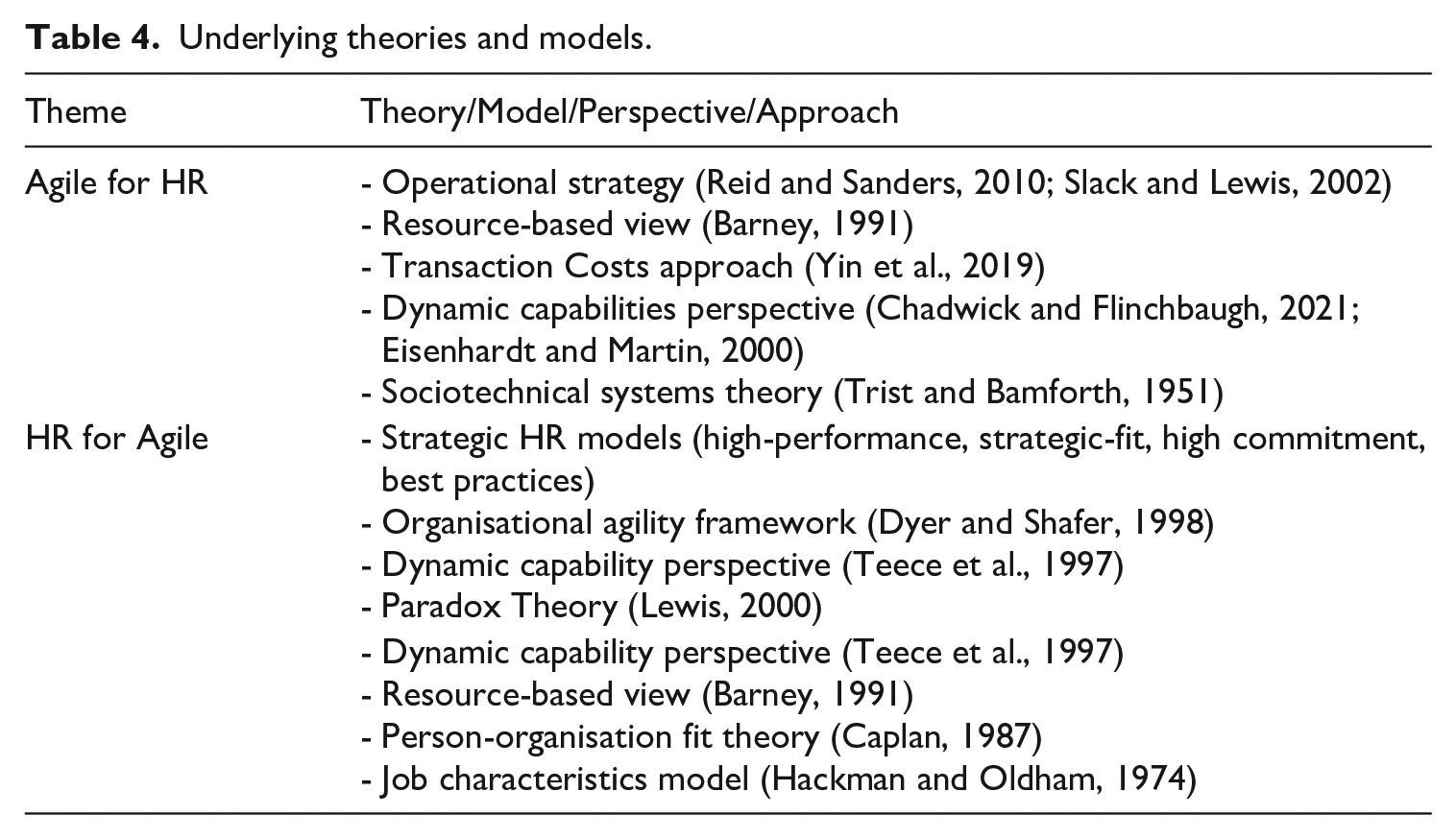
Agile HR is rarely defined in the academic literature. We only found one definition by McMackin and Heffernan (2021), which reads as follows: ‘Agile HR seeks to minimise waste and optimise the flow of value to its customers by organising the HR unit into multidisciplinary, empowered teams that continuously align with changing business requirements by sensing and adapting through open communication while operating in short cycles. Agile principles are reflected in all aspects of the HR operation, including structures, roles, processes, and tools, as well as the skills and behaviours of HR management and HR employees’ (p. 4). However, this definition is only concerned with Agile for HR. It primarily describes operational strategy (Reid and Sanders, 2010; Slack and Lewis, 2002), and is also underpinned by solid theoretical foundations, including the resource-based view (Barney, 1991), the transaction cost perspective (Yin et al., 2019), the dynamic capabilities perspective (Chadwick and Flinchbaugh, 2021; Eisenhardt and Martin, 2000), and the sociotechnical systems theory (Trist and Bamforth, 1951). Revutska and Maršíková (2021) and Nawaz and Gomes (2019, while not providing a definition, highlight agile HR’s focus on (1) adapting to customer requirements and responding to them and engaging them to get feedback; (2) breaking larger projects down into smaller and more manageable subprojects; (3) experimenting, testing, and learning from mistakes; and (4) creating self-managed teams to complete tasks more quickly. This explanation also only focuses on Agile for HR, describing how the use of agile practices can result in greater speed, efficiency, and effectiveness. Interestingly, we did not find any explicit definition of HR for agile, but we have developed a comprehensive definition of agile HR that brings both agile for HR and HR for agile together. (See definition in section 4.1.). In the following paragraphs, we provide a description of both themes.
Theme 1. Agile for HR
Agile for HR represents the first facet of the agile HR concept: how HR departments adopt and use agile principles and working practices. Studies within this theme look at HRM shifts towards agile and its benefits, agile methods, their advantages, performance evaluation, how the HR department uses them, and how they compare to conventional HRM practices (32 papers fit into this theme).
HR shift to agile
Revutska (2021) and Nijssen and Paauwe (2012) discuss how HRM is becoming more agile, noting that this trend started to pick up in 2010. They outlined the fundamental forces for the shift of HRM to the agile paradigm, including technological advancements, economic upheaval, and environmental dynamism. For example, the gig economy and the recent global health crisis (COVID-19) have changed the corporate environment and introduced new types of work, necessitating the need for organisations to reinvent their strategies and procedures. Hence, Selvam and Murugaiyan (2020) explain that HRM should quickly understand and respond to changes happening in the environment (Claus, 2019; Goebel, 2009). Similarly, Almeida and Simões (2021) emphasise the necessity of people management strategies in this change, such as promoting training and continuous learning, empowering individuals, and boosting autonomy. They also stress the role of culture and technology in disrupting HRM practices in agile organisations.
Many studies discuss the role of agile methods in HRM transformation. For instance, Al Jafa et al. (2022) and Issa et al. (2019) claim that incorporating agile methods such as Scrum, Extreme Programming, Feature-Driven Development, and Dynamic Systems Development Method into recruitment, career development, and compensation and rewards HR practices may be beneficial for employee engagement and retention. In this vein, Wijewardena (2011) talks about their experience in a software development business that implemented Kanban as an agile technique within its HRM department and documented the advantages of this move. Although Averineni and Swathi (2019) reveal that employees’ perceive agile HR practices as a ‘cost burden’, they also view them as an improvement in performance, efficiency, and responsiveness to business fluctuations. Other studies confirm the benefits of agile HR, including enhanced overall performance improvements (Budjanovcanin, 2018; Gupta et al., 2019; Wijewardena, 2011), software project success (Tam et al., 2020), employee retention (Issa et al., 2019), and sustainable competitiveness (Karman, 2019). At the individual level, studies demonstrate how agile HR can enhance staff operational performance (Goodarzi et al., 2018), increase job satisfaction (Gupta et al., 2019; Tripp et al., 2016) prompt employee adaptive behaviour (Sherehiy and Karwowski, 2014), promote employees’ creativity (Collin et al., 2018) and improve professional agency (Kiruba et al., 2020).
HR agility
Few primary studies investigate the HR agility concept, the relationship between HRM and agility, and its implications for businesses. Some of the included studies developed models of HR agility drivers and underlying mechanisms, for example, Khodabandeh et al. (2018) and Shahsavari-Pour et al. (2021). Both studies concentrate on the role of culture of change, empowerment, and technology in achieving HR agility. They also investigate the intervening influences of environment, responsiveness, speed, competence, self-development, flexibility, communication, cooperation, power-sharing practices, leadership, organisational processes, coordination and integration, intelligence, and awareness. Thani et al. (2022) similarly affirm that self-development practices are crucial prerequisites for HR agility. The authors explain the impact of HR agility on organisational innovation. Goodarzi et al. (2018) and Karman (2019) confirm the positive correlation between HR agility and employees’ operational performance, strategic orientation, adaptability, and sustained competitiveness through HR flexibility and quality performance, particularly through HR flexibility, social relations, and quality performance.
Agile HR practices
Research within this subtheme explains the agile approach and principles in designing and implementing HR practices, as well as the differences between traditional and agile HR. Subramanian and Suresh (2022), for example, provide concrete examples of agile HR practices in the retail industry. First, agile staffing or agile talent acquisition describes shorter and faster hiring cycles (sprints) by creating online platforms for talent attraction and selecting creative and problem-solving candidates to support agility (Baran and Woznyj, 2020). Agile talent management practices are characterised by faster hiring processes that lower associated expenses (e.g. conducting multiple interviews) and improve the recruitment experience for candidates (Revutska and Maršíková, 2021). Second, iterative agile training and development via programmes teaching agile concepts and methods like Scrum and Kanban. Additionally, training on agile work prioritisation, planning, experimentation, forecasting, and how to continuously improve is provided (Heilmann et al., 2020). Third, for continuous development, agile performance management entails developing transparent performance criteria, providing direct continuous feedback, evaluating learning, and discussing what works and what does not (Huzooree and Devi Ramdoo, 2015). Fourth, agile compensation rewards employees based on various agility-enhancing capabilities like proactivity and adaptability, and the ability to perform under stress (Revutska and Maršíková, 2021). Also, Gandomani et al. (2021) and Huzooree and Devi Ramdoo (2015) review and describe the agile approach to recruiting and managing talent, as well as performance management, learning and development, and compensation in agile software development. According to Gandomani et al. (2021), agile talent management models are an under-researched area (Harsch and Festing, 2020). Hence, agile frameworks do not contain guidelines on how HRM should regulate recruitment procedures or how to ensure long-term employee development in agile projects (Zavyalova et al., 2020).
Heilmann et al. (2020) explore 11 themes of HR practices that involve some form of agility in small and medium-sized enterprises (SMEs). These themes are flexible working hours and time arrangements; organising in terms of flat hierarchies and easy communication; workplace; work equipment; work-family balance; work well-being (remote working, health programmes, and events); new ways of recruitment; leadership (coaching, learning); cooperation; interaction; and development. Only Subramanian and Suresh (2022) assess the level of implementation of agile HR practices in a selected retail organisation and how to strengthen weak practices, while Nawaz and Gomes (2019) propose the EDITTDA tool to measure agile HR performance (
Few authors distinguish between traditional HR and agile HR practices. Table 3 summarises the key differences between both approaches based on the research of Huzooree and Devi Ramdoo (2015), Revutska and Maršíková (2021) and Zavyalova et al. (2020). We have contrasted traditional HR and agile HR in terms of focus, structure, processes, talent acquisition and development, performance management, decision-making, and other aspects.
Traditional HR versus agile HR.
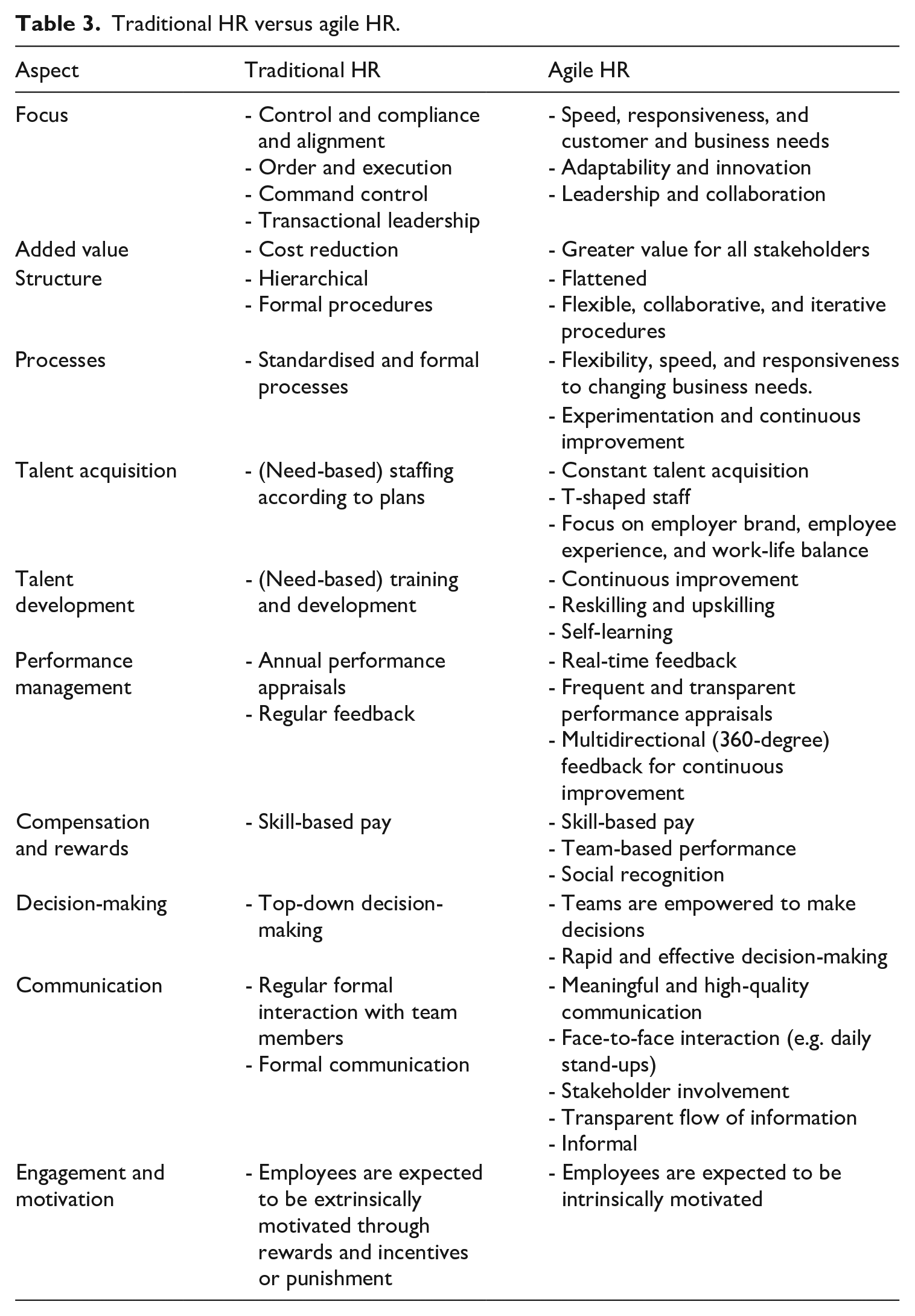
Table 3 shows that agile HR, compared with traditional HR, focuses on responsiveness, adaptability, and innovation through more flexible, collaborative, and iterative processes and practices to meet customer and business needs. For example, while traditional HR focuses on compliance and standardisation, agile HR relies on flexibility and collaboration and promotes staff autonomy and engagement. Additionally, agile HR prioritises continuous improvement and experimentation over need-based training and development. Moreover, agile HR favours team decision-making over top-down decision-making. Although traditional HR and agile HR are two different approaches to managing employees, adopting agile HR necessitates a shift and realignment of the HR departments’ processes rather than completely eliminating their traditional practices to create a more responsive and flexible function to support agility (Huzooree and Devi Ramdoo, 2015).
Theme 2. HR for agile
The second facet of agile HR, HR for Agile, describes designing and implementing HR systems and practices to help organisations find, develop, and retain people with the right skills to support ongoing agility. Here, the HR team needs to fully understand the agile organisation’s talent requirements. When HR recognises this need, it can benefit the organisation by developing employee agility, fostering a collaborative culture, and enabling autonomy and power-sharing.
HR and organisational and strategic agility
Most of the identified studies fall within this subtheme. Many conceptual and empirical studies have been conducted to investigate the relationship between HRM and organisational and strategic agility. Organisational agility is defined as ‘the adaptability and response of an organisation to a changing environment’ (Harsch and Festing, 2020: 4) which aids companies in managing volatile, uncertain, complex, and ambiguous (VUCA) environments (Baran and Woznyj, 2020; Soltani et al., 2019) and maintaining a sustainable competitive advantage (Holbeche, 2018; Saha et al., 2017). Strategic agility is defined as ‘responsive and timely decision-making and the implementation of associated business strategies in advance of, or in reaction to, evolving trends in their external environment’ (Ananthram and Nankervis, 2013: 456).
Relevant studies theorise about the relationship between HRM and organisational and strategic agility. Asfahani (2021), for example, discusses the positive impact of implementing various strategic HR models (e.g. high-performance, strategic fit, high commitment, best practices) on achieving organisational agility. Soltani et al. (2019) report the role of HR development in improving organisational agility and performance to improve organisations’ competitiveness (Khodabandeh et al., 2018). Based on the dynamic capability (Teece et al., 2016) and person-organisation fit perspectives (Caplan, 1987), Harsch and Festing (2020) propose three different models of talent management; individualistic, paternalistic and sophisticated, that promote organisational agility based on their size and agility needs.
Nijssen and Paauwe (2012) propose an extended heuristic framework for facilitating organisational agility (as a dynamic capability) in turbulent environments through HRM and other institutional mechanisms. Several authors (e.g. Al-azzam et al., 2017; Meymandpour et al., 2019; Wlodarkiewicz-Klimek, 2017) develop models of human capital characteristics that influence organisational and strategic agility to achieve organisational excellence. Shafer et al. (2001) also describe examples of HR strategies and practices that promote organisational agility in complex environments. Employee selection, orientation, training, promotions, recognition, rewards, and flexible assignments are just a few examples. Crocitto and Youssef (2003) represent a model of organisational agility and its human side based on a variety of factors, for instance, rewards systems, suppliers, organisational members, and customers linked by IT. As for strategic agility, Doz (2020) investigates how specific employees’ skills and their corresponding HR practices support strategic agility vectors (strategic sensitivity, resource fluidity, and collective commitment). Cunha et al. (2020) create the idea of ‘agile-based paradoxical HR’ practices to help with strategic agility through improvisational capabilities.
Twelve studies model, explore, and demonstrate the substantial benefits of HRM in enhancing organisational and strategic agility across a range of sectors and industries. For instance, Walsh et al. (2002) examine and contrast the impact of HR strategies and practices on organisational agility in the public and private sectors using Dyer and Shafer’s organisational agility framework (1998). Ananthram (2016) and Ananthram and Nankervis (2013) highlight that to attain strategic agility and be globally competitive in these sectors, HR professionals must work as ‘strategic business partners’ and ‘strategic architects’ and implement flexible HR systems and procedures. According to Walsh et al. (2002), among other things, HR initiatives (e.g. ongoing training and development, open communication channels, performance-based pay structures, and participatory decision-making) are essential for fostering organisational agility in higher education institutions. Melián-Alzola et al. (2020) discuss hospitals’ high-performance HR practices having a positive effect on organisational agility, while Bouaziz and Smaoui Hachicha (2018) assert that strategic HRM practices including staffing, training, participation, performance evaluation, and compensation have a significant impact on organisational agility as a component of organisational resilience in a variety of industries.
Only Hamidianpour et al. (2016) and Teimouri et al. (2017) confirm the association between electronic HRM practices that are supported by information systems and technology (e.g. e-recruitment and selection, e-training, e-performance appraisal, e-compensation and e-communication) and organisational agility in specific bank branches. Ananthram et al. (2013) discuss the connection between HRM and strategic agility in complex contexts and recommend that for organisations to remain or become more strategically agile, they must rethink and reinvent their HRM processes and practices in line with the new interpretation of HR as a strategic human asset. Based on multiple case studies, Battistella et al. (2017) offer a theoretical framework for how HR practices can be used to foster the capabilities of resource capitalisation, innovation, and networking, as well as proactive action and task crafting to foster strategic agility (Loghmani et al., 2023). To handle paradoxical tensions and strengthen strategic agility in project-based organisations, Ambituuni et al. (2021) develop different models based on the paradox theory (Keegan et al., 2019). One study (Battour et al., 2021) looks at the role that strategic agility plays in mediating the link between HRM strategies and long-term competitive advantage.
HR and workforce agility
Numerous studies have looked at the connection between HRM and workforce agility, which makes it the second most frequent sub-theme. Workforce agility explains ‘how employees handle and respond to change by adapting to changes and new conditions and using the capabilities of the firm’ (Alavi et al., 2014: 6274) for sustainable business advantage. Notably, authors allude to workforce agility using different terminology, including labour agility (Munteanu et al., 2020), employee agility (Doeze Jager-van Vliet et al., 2019) and agile workforce (Ajgaonkar et al., 2022; Martin, 2015; Plonka, 1997). Many papers examine the role of HRM practices as organisational predictors and drivers of worker agility and agility-promoting skills and behaviours in manufacturing and service organisations (Muduli, 2016; Munteanu et al., 2020) in the public and private sectors, like in educational institutions (Menon and Suresh, 2021a; 2021b) and hospitals (Mooghali et al., 2016). Figure 5 reports that the most commonly studied HR practices include selecting and hiring candidates with proactive and job crafting skills (Julio et al., 2017; Loghmani et al., 2023; Plonka, 1997); investing in training and coaching practices (upskilling and reskilling), learning and appropriate cross-training over the three phases (onboarding, integration and tenure) (Bokhorst et al., 2004; Mignenan, 2021; Plonka, 1997; Saha et al., 2017; Takpuie and Tanner, 2016; Tam et al., 2020); teamwork; reward systems; employee involvement practices, and employee voice and suggestion systems (Holbeche, 2018; Sumukadas and Sawhney, 2004): feedback and performance appraisals (Muduli, 2016); and emotional intelligence and psychological empowerment (Dorairaj et al., 2013; Luong et al., 2021; Muduli, 2016). Al-kasasbeh et al. (2016) propose a theoretical framework that incorporates e-HRM practices and workforce agility attributes (proactivity, adaptability, and resiliency).
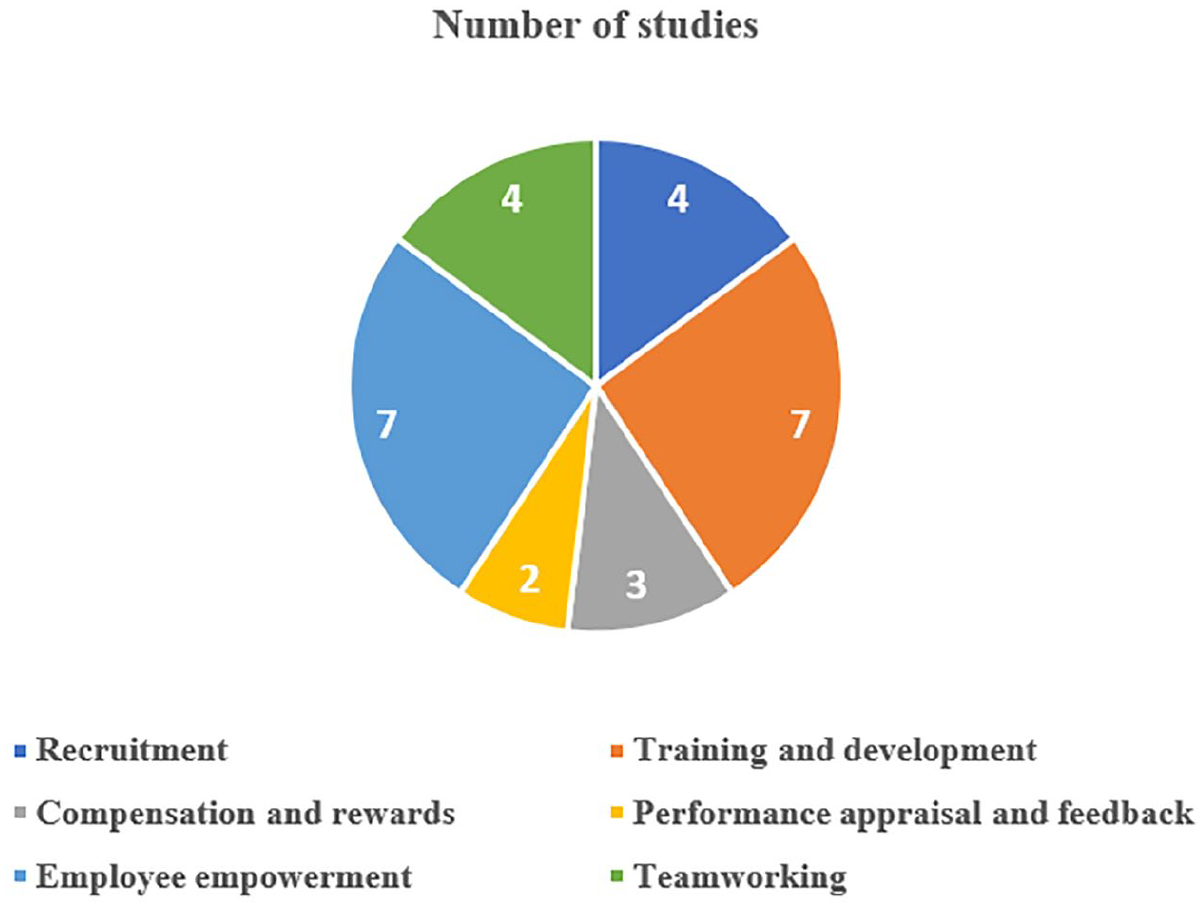
Most adopted HR practices for workforce agility.
A group of studies asserts that HRM practices and competence management are predominant for developing agility behaviours and creating agile human capital characteristics, based on the perspectives of person-organisation fit theory, dynamic capability, the resource-based view, and the job characteristics model (Almeida and Simões, 2021; Dorairaj et al., 2013; Martin, 2015; Van Assen, 2000). Ajgaonkar et al. (2021), for example, use the micro-foundations of dynamic capabilities – ‘sensing’, ‘seizing’ and ‘continual renewal’ to represent a heuristic model of HRM practices that specifically includes selection and recruitment, training and development, remuneration, and rewards as key drivers of workforce agility. Wlodarkiewicz-Klimek, 2017, 2019) discovers that HR practices (e.g. staffing, training, learning and remuneration) foster agile human capital characteristics such as ‘brightness, flexibility, intelligence, and shrewdness’, meaningful collaboration (Shafer et al., 2001) and knowledge sharing (Takpuie and Tanner, 2016) in agile software project teams. In agile manufacturing companies, Plonka (1997) emphasises the role of staffing and developing HR practices in improving agile workforce cognitive ability, manual dexterity, (team-to-team) learning and self-development, problem-solving, innovative idea generation, leading change, and accepting new technologies and responsibilities. Other studies present certain effective HR strategies and mechanisms for attracting and developing an agile workforce, like ‘employer brand attractiveness’ (Aidan et al., 2018), ‘a designed portfolio’ to evaluate employee agility performance through recurrent feedback meetings (Doeze Jager-van Vliet et al., 2019), and job design taking job demands, job complexity, and job enrichment into account (Sherehiy and Karwowski, 2014; Tripp et al., 2016).
HR and supply chain agility
The term supply chain agility indicates ‘the firm’s ability to quickly adjust its strategies, structures, and activities within its boundaries and supply chain to internal and external changes’ (Golgeci et al., 2020: 734). Golgeci et al. (2020) argue that incorporating HRM strategies like attracting, staffing, and developing a nimble workforce is likely to feed supply chain agility by improving human capital and individual capabilities and actions of sensing and responding to changes in an organisation. Similarly, Mandal (2018), from a dynamic capability perspective (Teece et al., 1997) states that human capital is a positive predictor of healthcare supply chain agility. It discusses that employees’ specialised knowledge and their ability to generate innovative ideas are critical human capital characteristics for healthcare supply chain agility. Julio et al. (2017) confirm that HR staff competencies, including education, skills, and level of experience, are a source of supply chain agility, reflecting the ability to respond quickly to changes in customer demands. Farsijani et al. (2015) create a causal model of various organisational factors (e.g. HR, supply chain agility, technological factors) and explain their effects on the agility of Iranian maritime transport chains.
HR and agile manufacturing and production
A few studies claim that companies interested in implementing agile approaches to production and manufacturing should focus on developing agile HR practices such as appropriate training and skills development, empowerment, involvement, and teamwork (Sánchez et al., 2019; Vázquez-Bustelo et al., 2007) in addition to implementing agile-based competence management (Van Assen, 2000). Only Alavi and Aghakhani (2023) present a set of green HRM practices (e.g. green development, green performance evaluation, and green reward management) that combine concepts of HRM and environmental management systems for agile manufacturing. It contends that these practices have a significant and positive impact on the development of a lean-agile mindset ‘that seeks to reduce costs by eliminating waste and strives to achieve an economic dimension’ (Alavi and Aghakhani, 2023: 1742) in agile manufacturing.
What underlying theories and models are used, and what new frameworks are developed (RQ1.6)?
Our findings reveal that some studies use several existing perspectives and theoretical frameworks, as shown in Table 4, to understand agile HR and the relationship between HRM and agility. Appendix 4 indicates that many authors develop their own conceptual models on HR agility, HR and supply chain agility, and HR and agile manufacturing and production.
Underlying theories and models.
Discussion
Implications for research
This SMS study contributes a thematic analysis and summary of the current state of research and a synthesis and summary of agile HR practices and relevant theories. In this section, we discuss and interpret the implications of our findings, add a new definition of agile HR, and provide a future research agenda. Our findings indicate that the literature on agile HR is scattered. We found 86 academic papers published since 1997 that we categorise into seven subthemes and two broad themes: Agile for HR, which explores how HR units adopt and use agile practices to deliver value, and HR for Agile, which explores how the HR function supports the agility of different stakeholders (e.g. organisation, strategy, individual). Two-thirds of the included papers fall into the HR for Agile category. However, we found some studies could fit into more than one theme; for example, when investigating recruitment practices, some studies might discuss the introduction of agile practices (Agile for HR) as well as the development of an agile workforce (HR for Agile). The annual publication rate began to rise sharply after 2015, and most papers were published in 2019 or later, indicating that interest is growing. There is a mix of theoretical and empirical research; quantitative methods predominated, especially in the HR for Agile theme, with surveys being the most used method.
The identified literature views Agile for HR as the new evolution of HR operating models (e.g. McMackin and Heffernan, 2021). However, this area is underdeveloped in academic research. Literature suggests that organisations’ investment in strategic HRM through implementing agile practices in the HR function will help them become more responsive and innovative. Furthermore, studies provide examples of specific agile HR practices, including agile approaches to talent acquisition, training, performance management, and compensation, and reveal their role in enhancing organisational agility (e.g. in SMEs and project-based organisations). These agile HR practices have been primarily derived from practitioner literature such as ‘Agile People’ by Thoren (2017), and ‘HR goes agile’ by Cappelli and Tavis (2018), which were heavily cited in many studies. The way practices are being adopted suggests that the HR function is becoming ‘agile lite’ rather than completely agile, as claimed by Cappelli and Tavis (2018). Put differently, in many instances, HR functions have adopted some agile principles and frameworks and are transitioning away from control- and compliance-based practices towards a more flexible approach. This has been accomplished by modifying existing practices in accordance with agile principles to make them more iterative and responsive. However, there are no specific agile HR methods, such as Scrum or Kanban, that were devised by practitioners for agile working in the IT domain.
Research studies within the HR for Agile theme confirm the important role of HRM practices and systems in supporting organisational agility. Adopting strategic HRM systems (e.g. high-performance work practices, strategic-fit HR practices, high-commitment HR practices, the best HR practice bundles and electronic and green HRM practices) has a positive impact on organisational, strategic, and workforce agility. However, because each organisation has a unique context and a greater or lesser need for agility, these practices and systems are not uniformly applicable. In the literature, there is a particular emphasis on developing appropriate agile HR practices and talent management models that consider specific organisational factors like industry (manufacturing or service), sector (public or private), size (large or SMEs) and demographic factors (gender and age, Gen Y/millennials). One study argues that the preferences of millennials (both employees and managers) in the workplace are compatible with the agile approach; however, more research and evidence are needed in this area. The roles of organisational culture, leadership, and organisational structure were frequently highlighted as being important in supporting agile HR implementation. However, further empirical evidence is needed to explore these relationships. Agile HR is a people-centric approach that encourages communication, interaction, and collaboration among stakeholders. Hence, there is a need to investigate the relationship between agile HR and social and power relations within organisations, including work that approaches the topic from a critical perspective. Our findings show that scholars are employing existing perspectives and theories, including the dynamic capabilities perspective, in addition to developing their own conceptual models and theoretical frameworks. These summaries provide an overview of current theory that can be a reference for future research.
We found that only McMackin and Heffernan (2021) provide a definition of agile HR, but consider it limited as it only addresses the agile for HR aspect. Other authors explain agile HR but do not offer definitions (e.g. Nawaz and Gomes, 2019). Anchoring on these explanations together with HR for agile descriptions and supported by practitioner literature in which we mainly derived the two key study themes, we offer here a concise, holistic definition that addresses both aspects of agile HR: ‘Agile HR seeks to maximise value for the organisation by implementing agile practices in the HR unit; assisting HR staff in adopting agile skills and behaviours; reflecting agile principles across all HR operations; developing and retaining people with the necessary skills to support ongoing organisational agility; and assisting in the creation of agile organisations’. Figure 6 depicts a map summarising the research areas in agile HR we identified from this study.
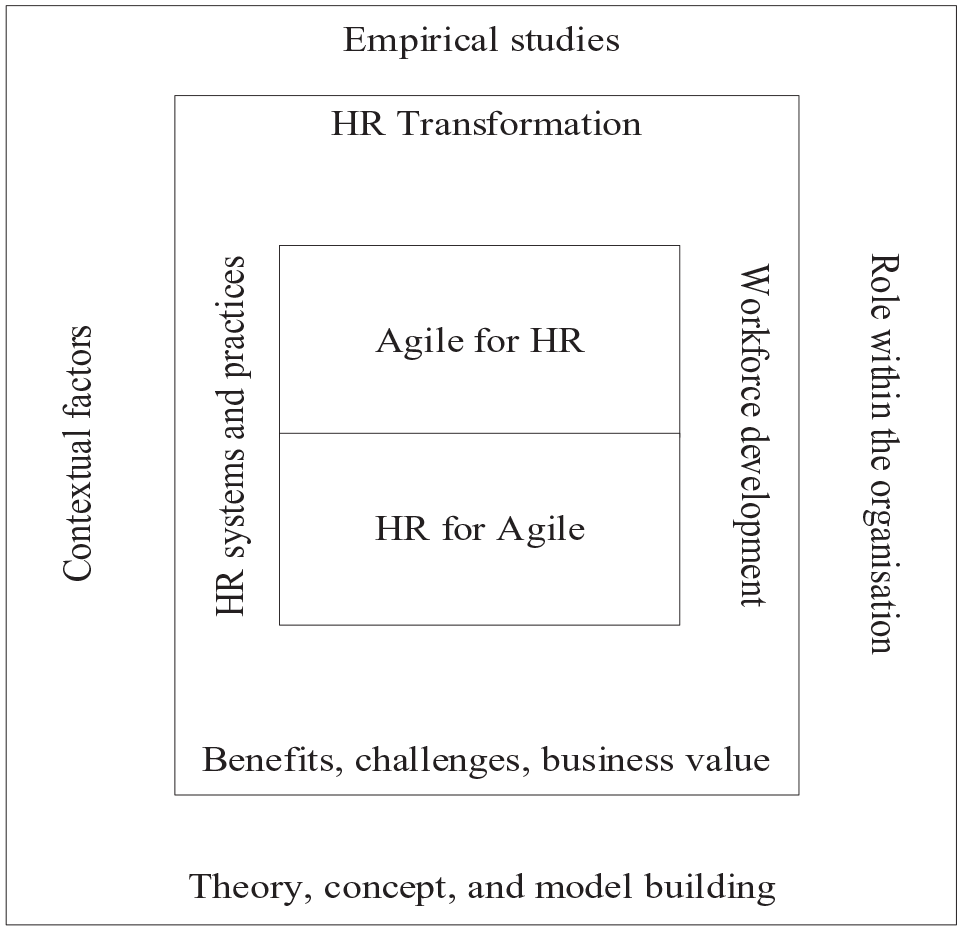
Agile HR research map.
The two central boxes identify the two main aspects of agile HR practice. In a growing field like this, much innovation and experimentation happen in practice, so research effort needs to focus on practice as well as theorising. The outer boxes identify first areas specific to agile HR and then those that are more general. Although some research studies have been undertaken in each of these areas, some are extremely underdeveloped.
Current research falls short of reporting on the Benefits, challenges, and business value of agile HR. More research into potential challenges and how to deal with them is needed. For example, we need to learn more about the challenges associated with agile approaches to reskilling and upskilling and the impact of flattening hierarchies on HR roles. More work is also needed to investigate which agile HR systems and practices are most beneficial and why. Studies suggest that HR transformation to agility is not simple and requires more than just adopting agile practices. Instead, HR must alter how it assists the business in finding, developing, and retaining qualified employees. More empirical studies are needed to examine the impact of agile HR on operational performance, employee retention, learning, decision-making, creativity, flexibility, and teamwork. Future research into Workforce development should investigate the outcomes of agile HR for employees to better understand the human side of agile. For instance, consider the effect of agile HR practices on employee engagement and commitment. Because agile HR adoption has been reported as a ‘cost burden’ more research on agile HR benefits is recommended to provide empirical evidence of agile HR value and encourage companies to invest in agile HR.
Given that agility does not happen by chance but must be actively pursued, there is a need to investigate the Contextual factors that influence agile HR practices and HR agility, as well as their mediation and/or moderation effects and hence their Role within the organisation. For example, what is the impact of organisational structure and climate on agile transformation? It has been suggested that agile HR practices in SMEs must take cultural considerations into account. Furthermore, it is critical to investigate the effects of psychological and demographic factors (gender and age, Gen Y) on the design of agile HR practices. Other factors to consider include the agility needs of an organisation, size (large or SMEs), industry (manufacturing or service), and sector (public or private).
Although we found some application of Theory, concept, and model building this is an area that requires further development and validation. We recommend that future research efforts consider applying theories that have not previously been used to extend and develop agile HR theory. For instance, social exchange theory (Cook et al., 2013) may be useful in shedding light on issues like employee empowerment. Exploring how agile can be integrated into HR operational strategy is a promising area, especially in terms of advancing the understanding of HR operating models. We contribute a new definition of agile HR in this paper that accounts for both Agile for HR and HR for Agile, but there is insufficient discussion of this topic in the literature. More Empirical studies of agile HR practice are needed, particularly ones that look at the needs and experiences of specific industries.
Practical implications
Our paper provides some useful insights for HR practitioners. Much of the academic literature since 2010 has argued that HRM functions or departments would benefit from becoming more agile to adapt to the complex changes in the workplace caused by the competitive global marketplace, gig economy, increased use of technology, disruptive innovation, talent shortage, diverse workforce demographics, and the recent global health crisis. The need to develop human capital across the entire organisation is especially important for HR to increase customer value and maintain competitive advantage. The benefits of agile HR for employees’ performance, learning, decision-making, discretionary behaviour, flexibility, and teamwork are highlighted in our paper. Existing research identifies several organisational benefits of agile HR and agile methods in HRM, like improved employee retention (e.g. through Scrum), professional agency and creativity, which drive companies’ ability to cope with uncertainty.
Findings about HR practices indicate that agile staffing and talent acquisition, agile training, agile performance appraisal, and agile compensation are key enablers for organisational agility. Furthermore, high-performance work systems, best practices, e-HRM, and green HRM practices have been shown to be beneficial in achieving various types of agility. Therefore, the findings suggest that organisations can make small adjustments to their HR practices to meet their agility needs rather than drastically changing them. These practices should be tailored to the needs and type of each organisation. There are some evaluation methods available, such as the EDITTDA tool (Nawaz and Gomes, 2019) and a multi-grade fuzzy method, that are used to measure agile HR performance in manufacturing and service companies. This is particularly useful for practitioners who are interested in assessing agile HR implementation and determining weaknesses (Subramanian and Suresh, 2022). Another helpful tool is a portfolio tool, which is used to assess and improve employee agility (Doeze Jager-van Vliet et al., 2019).
Validity threats and limitations
Mapping studies are commonly affected by threats of bias, particularly in paper selection and inaccuracy in data extraction. Although we devoted considerable attention to reviewing the literature systematically, some threats to validity exist. We used Wohlin et al.’s (2012) validity framework, which discusses four types of validity to assess the validity of the current study:
Construct validity, due to the potential bias in study selection (Ampatzoglou et al., 2019) and the constrained set of keywords used in the search string (certain databases limit search strings to eight words), it is probable that some pertinent research was overlooked. Moreover, the terminology of HRM is being rebranded (e.g. Talent Resources, Human Capital Management, People Operations). To minimise this risk, we created an inclusive search string with suitable terms, conducted pilot searches across nine databases, and then conducted additional searches on Google Scholar, reference lists, and snowballing. Internal validity is relevant if we examine causal relationships, which was not the aim of our study. Therefore, this threat has no impact on our work. The extent to which study results are generalisable is known as external validity. To make sure that the study protocol is inclusive and the papers chosen are representative, we carried out meticulous research in accordance with Petersen et al.’s (2008, 2015) guidelines to take this threat into account. Only peer-reviewed papers were chosen, even though grey literature is significant, particularly in developing fields (Aromataris and Riitano, 2014). Future research may, however, supplement this analysis with non-peer-reviewed articles and books. Conclusion validity, although bias in the interpretation of data is an issue that cannot be completely eliminated, two screeners were involved in the paper selection process to make sure that the mapping process was reasonable. Any ambiguities in interpretation were cleared up to include primary studies that complied with the standards for quality assessment.
Conclusion
The current paper presents a systematic mapping study of the agile HR literature. We conclude that, despite being practice-led, agile HR is gaining recognition among academic scholars, as reflected by the rising interest in recent years. This study reveals two predominant themes and captures seven sub-themes: Agile for HR (shift to agile, agile HR practices, HR agility) and HR for Agile (HR and organisational and strategic agility, workforce agility, supply chain agility, and agile production or manufacturing). This paper helps researchers quickly access a systematic and comprehensive research framework for agile HR, including the current state-of-the-art, its temporal progression and development, and evident research gaps. Moreover, it is among the first to offer a comprehensive definition of agile HR by bringing both Agile for HR and HR for Agile together, based on academic research and practitioner experience. Practically, the rising interest in agile HR implies that there is a pressing need for greater agility to better meet rapidly changing business needs. Hence, this study bridges the gap between theory and practice by helping practitioners understand and analyse how academic agile HR frameworks and models can be leveraged to improve business agility practices.
Supplemental Material
sj-docx-1-gjh-10.1177_23970022231226316 – Supplemental material for Agile human resource management: A systematic mapping study
Supplemental material, sj-docx-1-gjh-10.1177_23970022231226316 for Agile human resource management: A systematic mapping study by Shaima’ Moh’d, Peggy Gregory, Leonor Barroca and Helen Sharp in German Journal of Human Resource Management
Supplemental Material
sj-docx-2-gjh-10.1177_23970022231226316 – Supplemental material for Agile human resource management: A systematic mapping study
Supplemental material, sj-docx-2-gjh-10.1177_23970022231226316 for Agile human resource management: A systematic mapping study by Shaima’ Moh’d, Peggy Gregory, Leonor Barroca and Helen Sharp in German Journal of Human Resource Management
Supplemental Material
sj-docx-3-gjh-10.1177_23970022231226316 – Supplemental material for Agile human resource management: A systematic mapping study
Supplemental material, sj-docx-3-gjh-10.1177_23970022231226316 for Agile human resource management: A systematic mapping study by Shaima’ Moh’d, Peggy Gregory, Leonor Barroca and Helen Sharp in German Journal of Human Resource Management
Supplemental Material
sj-docx-4-gjh-10.1177_23970022231226316 – Supplemental material for Agile human resource management: A systematic mapping study
Supplemental material, sj-docx-4-gjh-10.1177_23970022231226316 for Agile human resource management: A systematic mapping study by Shaima’ Moh’d, Peggy Gregory, Leonor Barroca and Helen Sharp in German Journal of Human Resource Management
Footnotes
Funding
The author(s) disclosed receipt of the following financial support for the research, authorship, and/or publication of this article: This research is funded by the Agile Business Consortium.

Supplemental material
Supplemental material for this article is available online.
Notes
References
Supplementary Material
Please find the following supplemental material available below.
For Open Access articles published under a Creative Commons License, all supplemental material carries the same license as the article it is associated with.
For non-Open Access articles published, all supplemental material carries a non-exclusive license, and permission requests for re-use of supplemental material or any part of supplemental material shall be sent directly to the copyright owner as specified in the copyright notice associated with the article.
