




Abstract
The COVID-19 pandemic has fundamentally changed the way people work and live. More people than ever work from home. Due to the sudden changes, leaders are faced with various challenges, such as the fear of loss of control or keeping their teams motivated. In this study, we explore the daily experiences of leaders aiming to work effectively while using digital tools and working remotely during the COVID-19 pandemic. The overarching purpose of our study is to gain a better understanding about how leaders navigate the complexities of crisis-induced remote leadership by the use of digital tools by addressing the following questions: (1) Which practices do leaders use to deal with the complexities of day-to-day remote leadership during the COVID-19 pandemic? (2) How do different digital tools fit the diverse leadership practices? (3) What drives and inhibits leaders’ effectiveness in dealing with the complexities of remote leadership during the COVID-19 pandemic? To explore these research questions, we draw on longitudinal data from 155 qualitative diaries written by 31 leaders over a five-work-day period. We identify four categories of leadership practices, namely (1) solve problems collaboratively and monitor team progress, (2) create space for socialising and teambuilding, (3) make the team feel supported and encourage feedback and (4) communicate to build a virtual culture of trust. Our findings reveal that leaders demonstrate a broad repertoire of leadership practices, whereby relation orientation is more pronounced than task orientation. Moreover, leaders tend to focus on operational and team-oriented leadership practices, and they encounter the challenge of choosing the right digital tool to match their message. Our study’s results show that they use a variety of digital tools, but video conferences seem especially suitable for supporting remote leadership practices. However, several factors have impacts on remote leadership effectiveness, which we consider in the managerial implications.
Keywords
Introduction
The global health and economic crises related to the COVID-19 pandemic have led to extensive social distancing rules to reduce the spread of the coronavirus (Bick et al., 2020). To avoid physical contact and control the risk of spreading the virus at work, many organisations have required their employees to work from home (Brynjolfsson et al., 2020). In Germany, approximately 27% of employees worked from home during the first lockdown in April 2020, compared with 4% before the COVID-19 pandemic (Kohlrausch et al., 2021). The abrupt lockdown situation has forced rapid changes in daily routines and has made people quickly adapt to new circumstances and the intensive use of digital tools (Criscuolo et al., 2020). In the longer term, working from home could be the new normal (Sanchez, 2018), at least to some degree, for many office jobs (Criscuolo et al., 2020). Due to the COVID-19 pandemic, teams who were used to working together in an office environment have suddenly been separated. This extraordinary situation has made leadership quite challenging and complex. While research about e-leadership (Avolio et al., 2000; Cascio and Shurygailo, 2003) and virtual leadership (Hoch and Kozlowski, 2014; Liao, 2017; Ziek and Smulowitz, 2014; Zigurs, 2003) is already established, there is limited research about unforeseeable remote leadership during a pandemic crisis – especially, the effective usage of digital tools while leading from home is underexplored.
The COVID-19 pandemic is considered as accelerator of digital transformation in organisations (Bartsch et al., 2020). Scholars have recently started to investigate virtual leadership in the context of the global pandemic (e.g. Al Saidi et al., 2020; Bartsch et al., 2020; Bauwens et al., 2021a). These studies analyse changed leadership in a changed world (Uhl-Bien, 2021) and show that in remote work environments, demonstrating task-oriented leadership behaviours, and even more so, relation-oriented ones, are relevant in handling the complex virtual challenges (Bartsch et al., 2020). However, these studies lack explanatory power. Some solely cover employees’ perspective instead of leaders’ perspective (e.g. Bartsch et al., 2020). Others only focus on sectors and industries directly impacted by the pandemic, such as health, education and the government (e.g. Al Saidi et al., 2020; Bauwens et al., 2021a; Sergent and Stajkovic, 2020).
As leadership is a daily and constantly changing phenomenon, we follow the call for further studies to explore daily leadership behaviours (Kelemen et al., 2020) and their effectiveness (Van Knippenberg et al., 2005). Specifically, we explore practices of exemplary remote leadership during the COVID-19 pandemic. Leadership practices refer to leaders’ actions when doing their personal best (e.g. ‘highlights’) to accomplish extraordinary feats in their organisation (Dirani et al., 2020; Malhotra et al., 2007; Posner and Kouzes, 1988). Hence, we explore the daily experiences of leaders aiming to work effectively while using digital tools and performing their leadership practices remotely during the COVID-19 pandemic. The overarching purpose of our study is to gain a better understanding about how leaders navigate the complexities of crisis-induced remote leadership by the use of digital tools by addressing the following questions:
(1) Which practices do leaders use to deal with the complexities of day-to-day remote leadership during the COVID-19 pandemic?
(2) How do different digital tools fit the diverse leadership practices?
(3) What drives and inhibits leaders’ effectiveness in dealing with the complexities of remote leadership during the COVID-19 pandemic?
To answer these research questions, we employed an exploratory approach with the use of a qualitative study. Daily diary data were collected from 31 leaders who participated in a longitudinal study over a five-work-day period, resulting in a total of 155 diaries. With this exploratory diary study, we contribute to the literature in at least three ways. First, we add to the scarce literature on virtual leadership during crises by identifying day-to-day leadership practices from a leader’s perspective and classifying them into four categories. Considering leaders’ self-assessment of their leadership practices, our results indicate that leaders tend to focus on operational and team-oriented behaviours. Second, we enrich the remote leadership literature by providing a detailed understanding about the usage and suitability of digital tools. Remote day-to-day leadership is complex, and leaders should be able to choose the right tools. The complexity of virtual leadership is shown not only by the variety of digital tools used by virtual leaders but also by their frequent reports about using unsuitable tools. Third, we contribute to the research on effective leadership in a challenging and unpredictable situation by identifying several factors that have positive or negative impacts on leadership effectiveness as leaders try to cope with crisis-specific challenges.
Literature review and focus of the study
Crisis leadership
Identifying a situation as a ‘crisis’ varies according to individual viewpoints, hence literature provides a variety of definitions (Gigliotti, 2016). According to Grint (2005), a crisis can be defined as a critical problem with little time for decision making and action. This scenario is where leaders find themselves during the COVID-19 pandemic, in which the decision to work from home had to be made abruptly. Crisis leadership has been targeted by scholars even before the COVID-19 pandemic, showing the importance of leaders’ ability to render the environment suitable for their intended strategies (e.g. Grint, 2005). More specifically, Weick’s (1995) work about retrospective sensemaking outlines that in crisis situations individuals get challenged to make sense of complex and uncertain situations that initially make no sense. Recent studies emphasise the crucial role of leaders in the context of forced remote working and analyse technostress as one negative aspect of remote work during COVID-19 crisis (Bauwens et al., 2021b; Spagnoli et al., 2020). In sum, researchers have arrived at a consensus about the increasingly uncertain, complex, and dynamic environment in which leaders must navigate. However, the uncertainties triggered by the current global pandemic have added to the complexity of leadership, which has suddenly taken place in a virtual setup (Bartsch et al., 2020) that has not sufficiently been taken into account in previous studies.
Virtual leadership
The two main characteristics that distinguish between virtual and conventional teams are the spatial distance and the technologically mediated communication (Bell and Kozlowski, 2002). Based on existing research and in the context of our paper, we define virtual or remote leadership as leading in a (geographically) dispersed work environment, where employee interaction is based on digital tools (Bartsch et al., 2020; Huang et al., 2010). Previous research emphasises the significant role of leadership for collaborative challenges within the virtual context (e.g. Arvedsen and Hassert, 2020; Avolio et al., 2014). Scholars have investigated different facets of virtual (team) leadership, independent of the COVID-19 pandemic, as follows: e-leadership (e.g. Avolio et al., 2014; Cascio and Shurygailo, 2003), transformational leadership and virtual teams (e.g. Hambley et al., 2007; Hoch and Kozlowski, 2014), virtual teams (e.g. Gupta and Pathak, 2018; White, 2014), virtual leadership challenges (e.g. Bell and Kozlowski, 2002; Mehtab et al., 2017) and leadership effectiveness (e.g. Kayworth and Leidner, 2002; Malhotra et al., 2007). This large body of research emphasises the specifics of leading at a distance. For example, Bell and Kozlowski (2002) identify two key leadership functions in virtual teams: performance management and team development. Whereas Arvedsen and Hassert (2020) focus on talk and information and communication technology (ICT) as two types of resources available for virtual interaction, Malhotra and Majchrzak (2014) state that using ICT correctly can positively effect team performance.
Although technology plays an essential role in virtual leadership, so far, only a few studies have begun to investigate the impact of technology on leadership (e.g. Cortellazzo et al., 2019; Larson and DeChurch, 2020). Studies emphasise the importance of the task-technology fit (TTF) to explain performance impacts resulted from technology (Goodhue and Thompson, 1995). The TTF is defined as the ‘degree to which a technology assists an individual in performing his or her portfolio of tasks’ (Goodhue and Thompson, 1995: 216). Furthermore, literature draws on the two theoretical frameworks of media synchronicity (Dennis and Valacich, 1999) and media richness (Daft and Lengel, 1986) to compare the effects of communication technologies (Hambley et al., 2007). Synchronous media, such as videoconferencing, allows virtual teams to ‘work together at the same time’ (Dennis and Valacich, 1999: 5), whereas asynchronous media, such as e-mail, only allows for ‘communicating at different times’ (Hambley et al., 2007: 3). Daft and Lengel (1986: 560) outline different characteristics to describe rich media such as the number of ‘cues via body language and tone of voice’ or the provision of ‘immediate feedback’. Face-to-face communication is considered the richest medium, followed by video conferences and phone calls used in virtual teams (Hambley et al., 2007), see Table 1.
Classification of most common communication technologies towards media synchronicity (Dennis and Valacich, 1999) and media richness (Daft and Lengel, 1986).
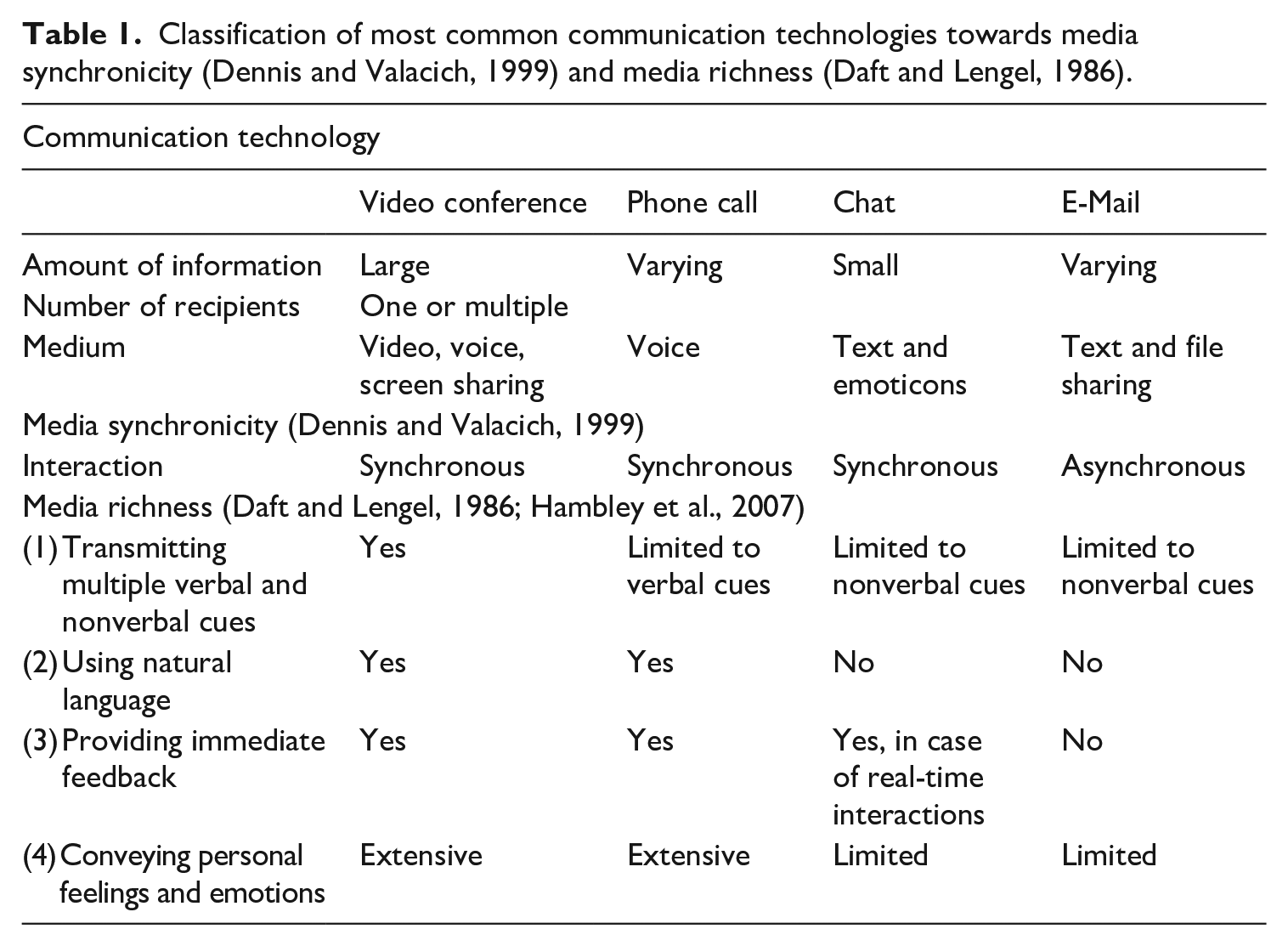
More recent empirical studies show that digital tools could significantly contribute to problem solving and monitoring processes (e.g. Cortellazzo et al., 2019). Although recent research paper structure existing work and offer some suggestions about leading teams in the digital era (Cortellazzo et al., 2019; Larson and DeChurch, 2020), these studies have limited practical explanatory power about the usage of digital tools in supporting virtual leadership practices. Moreover, the existing literature has scarcely examined the complexities of virtual leadership induced by a crisis.
In sum, scholars have largely investigated different aspects of leadership in recent years, including e-leadership and virtual leadership. However, the effective usage of digital tools while leading from home remains underexplored. Regarding the rapid advances of technology, Larson and DeChurch (2020) call for a new genre of leadership scholarship. Moreover, little empirical work has explored leaders’ perspective. Our work addresses this call by investigating the intersection of crisis leadership, virtual (team) leadership induced by the COVID-19 pandemic and the usage of digital tools from leaders’ perspective.
Method
The research questions call for an approach that allows examining daily leadership behaviours in their natural context and captures the actual experiences of leaders who use digital tools remotely (Kelemen et al., 2020). Hence, we have conducted an exploratory study to build a comprehensive understanding of day-to-day leadership practices and therefore study leadership in its natural setting. Our work is characterised by an explorative, inductive research approach in form of a qualitative diary study. Compared with many studies including students or employee perspectives, our study involves leaders’ self-reports about highlights and lowlights when leading from home during the COVID-19 pandemic.
Studying leadership on a daily basis brings several important theoretical and methodological advantages. First, qualitative daily diaries capture the leaders’ immediate and spontaneous assessment of their daily experiences, using digital tools to support leadership practices (Bolger et al., 2003; Patterson, 2005; Poppleton et al., 2008). Daily diaries allow researchers to be as close as possible to the actual experience and capture the context, as well as leadership practices and feelings (Kelemen et al., 2020). Second, examining daily leadership practices allows researchers to explore the complexity of short-term leadership processes, which vary from one day or leadership situation to another (Kelemen et al., 2020). Daily diaries allow researchers to access a detailed in-depth examination of the rationale behind and consequences of leadership (Kelemen et al., 2020). Third, an in-depth qualitative analysis enables the exploration of new and important findings (Radcliffe, 2013), including the discovery of challenges during the recent COVID-19 pandemic.
The diaries
In the first step, the diary study was piloted with three leaders and then consecutively rolled out over a 7-week period. Using UNIPARK Questback software to technically conduct the diary study turned out to be useful in providing the participants with a web and mobile frontend. The diary was structured into the following parts:
− The introduction included information about the study design and general information about the study (e.g. study set-up, General Data Protection Regulation).
− The main part contained two further sections about the highlights and the lowlights of the work day, analogous to the critical incident technique (Flanagan, 1954). The sections were designed as free text fields. The two sections were each structured into six sub-sections to offer some guidance and make the answers more comparable. After ensuring that the participants provided their reflecting on their job-related activities during the work day, considering their tasks and practices as leaders, we asked them to describe (1) the digital tools they used, (2) for which leadership practices they used the tools, (3) their motivation for using the listed digital tools, (4) their feelings during the usage, (5) how effective the usage was and (6) how they would handle the situation when not working remotely. Questions (3) and (4) were asked in particular to reinforce the mental process of putting the leaders back into the specific situation and thereby allow capturing their practices and motivation about the usage and suitability of digital tools close to their ‘life as it is lived’ (Bolger et al., 2003: 580). Finally, they were offered the possibility to leave additional remarks (see the Figures A1 and A2). The ordering of the highlights and the lowlights was varied from day to day to reduce possible order effects (Poppleton et al., 2008). The main part was repeated for another four work days.
− The final part included person-related and company-related demographics, as well as information about the following study days.
Sample
The sample consisted of 31 leaders who managed to participate over a five-work-day period, which led to a total of 155 diaries. While recruiting participants for the study, we kept in mind that the chosen method was time consuming and required a high level of dedication from them (Radcliffe, 2013). Despite these constraints, we sought to obtain a highly diverse sample in order to explore a broad range of leadership experiences. The sample was especially diverse in terms of gender, age and work experience (see Table 2). The digital diary format likely attracted the interest of more digital-savvy leaders, which might have resulted in their self-assessment of five out of seven in digital progressiveness. The data were gathered in Germany between April and May 2020. All participants were volunteers, mainly recruited via private networks and LinkedIn.
Sample consisting of 31 leaders who participated over a five-work-day period.
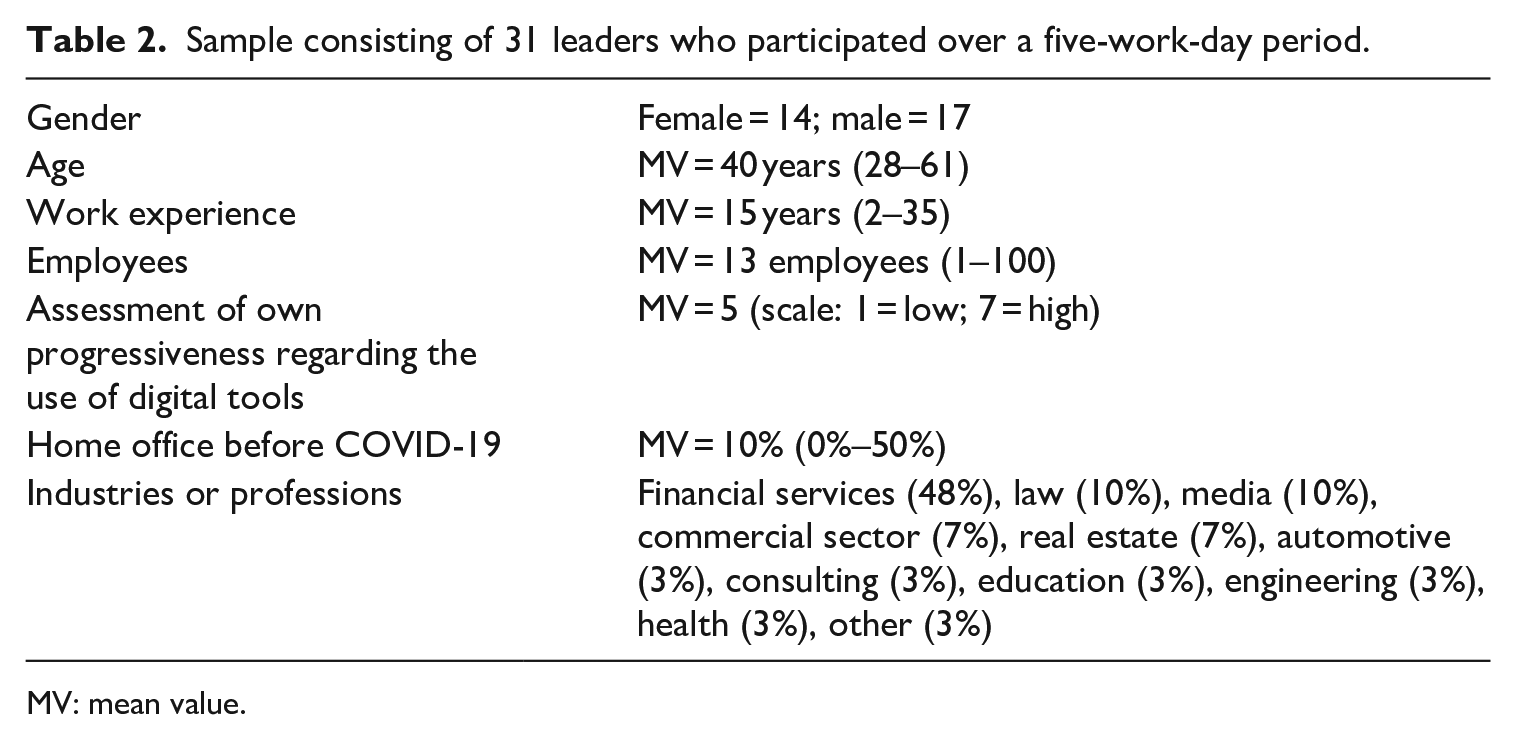
MV: mean value.
Procedure
The diaries were completed over a five-work-day period, either in the morning or in the evening. The participants received personalised daily follow-up e-mails to remind them to fill in the diary. Some leaders who worked part time or had days off did not participate for five consecutive days but continued until they completed five work days.
Data analysis
Template analysis was used to answer the research questions (King, 1998, 2004). This method is typically applied in research analysing qualitative diary studies (Poppleton et al., 2008; Radcliffe, 2013; Radcliffe and Cassell, 2015). When working with templates in the thematic analysis of text, researchers generate a list of codes (template), representing the identified themes in their data (King, 2004). The main characteristic of template analysis is that some codes are produced a priori and then modified during the iterative coding procedure (King, 2004). The data analysis was conducted using the qualitative research software MAXQDA 2020.
To guide the analysis, template analysis typically starts with a set of predefined codes (King, 2004). As a starting point, the initial template for our study was created based on the insights from the literature review and the questions for the diaries. The initial template consists of three highest-order codes – (1) leadership practices, (2) digital tools used and (3) factors influencing the use of digital tools – subdivided into one or two levels of lower-order codes (Table 3). The distinction between task- and relation-oriented leadership practices is based on previous findings emphasising the relevance of both for leadership in virtual work environment (Bartsch et al., 2020; Liao, 2017).
Initial template.
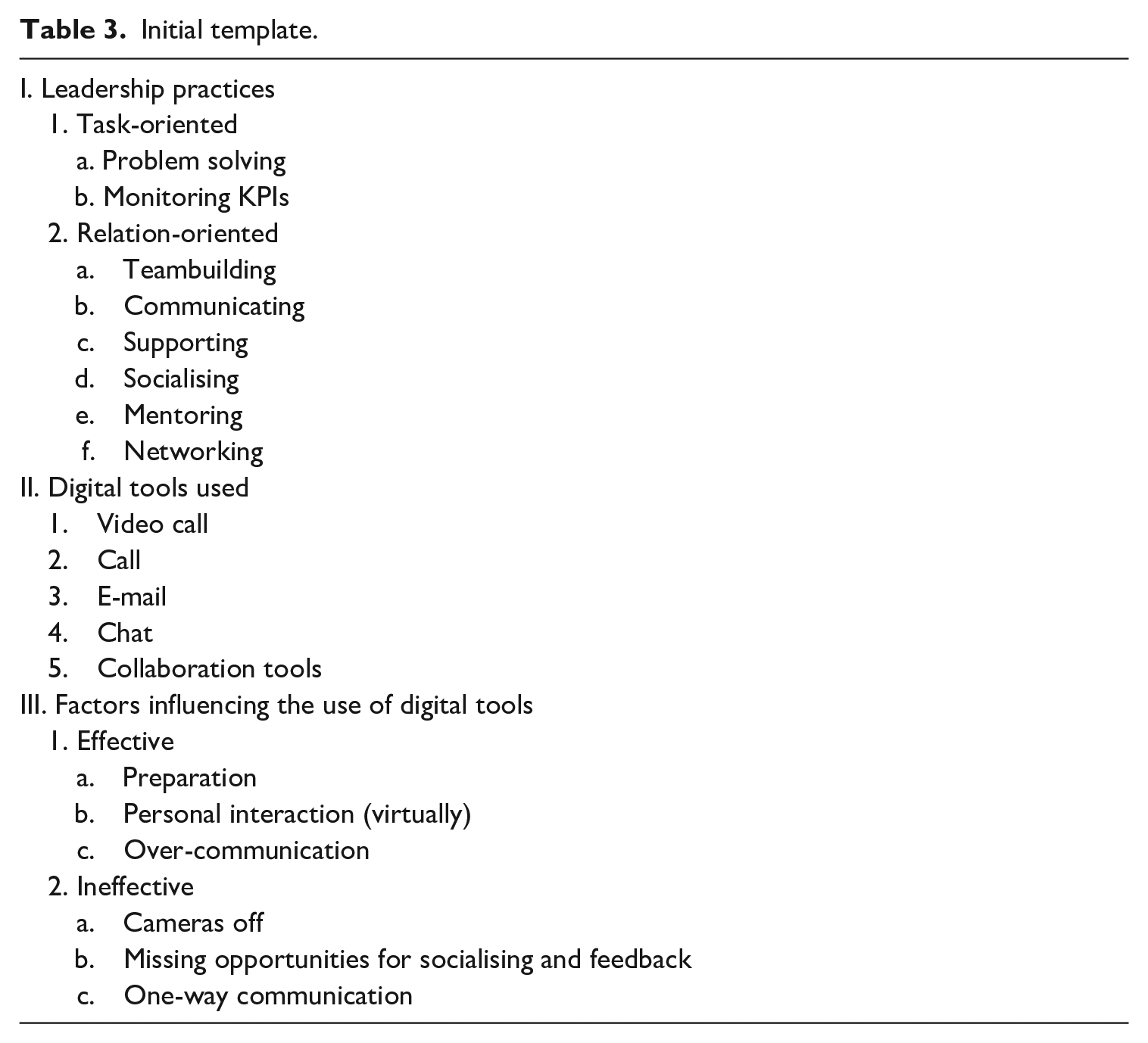
In the following step, the diaries were reviewed systematically to identify the sections of text relevant to the identified codes and research questions. First, the text sections were marked with one or more of the corresponding codes of the initial template. Second, changes were made to the template by adding or deleting codes and merging codes into groups. During this process, hierarchical coding was applied, meaning that groups of similar codes were clustered to produce more general higher-order codes (King, 2004). In general, higher-order codes represent broad themes, and lower-order codes signify more narrowly focused themes (King, 2004; Radcliffe and Cassell, 2015).
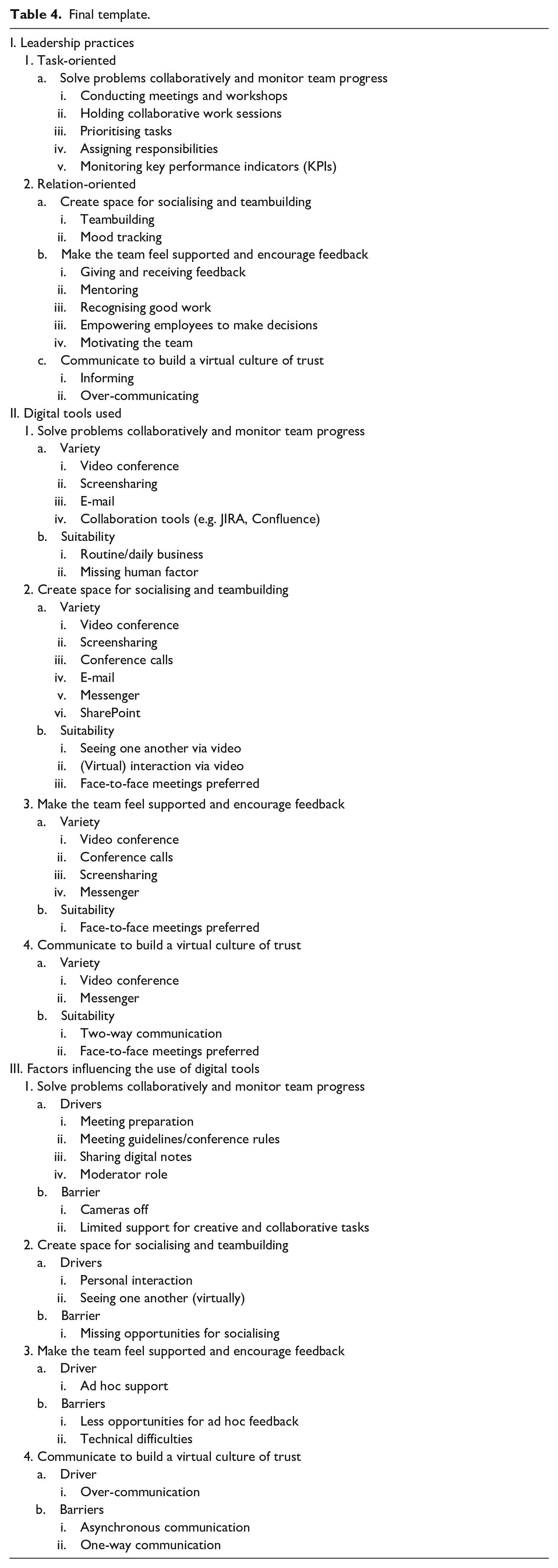
After all diary data had undergone a second analysis, the diaries were reviewed two more times to fine-tune the template by further adding or deleting codes and merging codes into groups (King, 2004). Finally, several themes were grouped together in a more insightful and informative way to gain relevant insights on the research questions (Radcliffe, 2013). After all diaries had been read through at least four times, the researchers decided to stop the iterative process and commit on a final template (see Table 4), which served as the basis for interpreting the data, which had all been coded this way (King, 2004).
Final template.
Findings
In this section, we answer the research questions by interpreting the coded data and recognising the patterns. The objective is to identify the main themes that are most relevant to our research questions, as well as select some illustrative quotes (King, 2004). Hence, in the following paragraphs, we present the major themes related to the research questions.
RQ 1: Which practices do leaders use to deal with the complexities of day-to-day remote leadership during the COVID-19 pandemic?
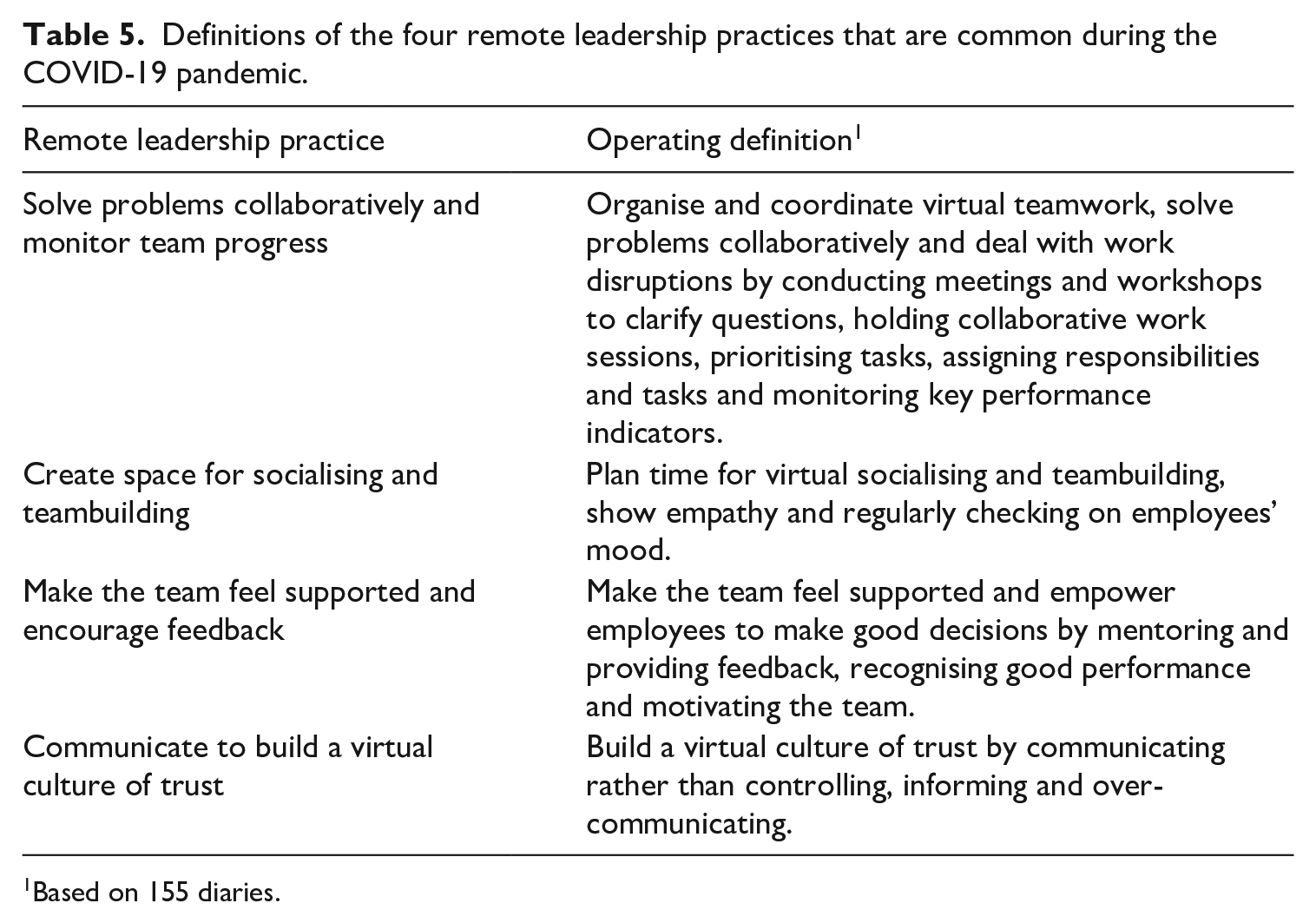
First, we bundle a set of codes related to task-oriented leadership practices (Bartsch et al., 2020). For example, our study results reveal leadership practices related to ‘conducting meetings and workshops’, ‘holding collaborative work sessions’, ‘prioritising tasks’, ‘assigning responsibilities’ and ‘monitoring key performance indicators (KPIs)’. These codes are grouped under the first meta-category of leadership practices, which we name ‘solve problems collaboratively and monitor team progress’. Leadership practices on both strategic and more operational levels are included under this meta-category. To specify, leaders do not only act on the strategic level by monitoring results and team performance, but even more, they spend a lot of time on the operational level, for example, by guiding virtual meetings to ensure that virtual collaboration works and clarifying who does what until when, or even performing operational tasks on behalf of their team members to resolve virtual collaboration issues and improve employees’ task outcomes. The following are examples under this meta-category: ‘Supporting one of my employees regarding time management and then we developed an activity plan together’ (Leader_31, Item 2, Day 4). ‘I [. . .] could have given her more background knowledge on the topic in a personal conversation in the office, where we would have discussed the points together, and in the best case, she would have made the corrections, then integrated them into the documents herself’ (Leader_15, Item 13, Day 1).
Second, we structure the codes related to relation-oriented leadership practices (Bartsch et al., 2020) and identify three categories. The diary data reveal leadership practices such as ‘teambuilding activities’, and ‘mood tracking of the team’, which we summarise under the meta-category ‘create space for socialising and teambuilding’. When leaders describe these leadership practices, they tend to enact leadership on the team level. Here are two examples reported in the diaries: ‘Capturing the current mood of the team, working from home now for six weeks’ (Leader_12, Item 2, Day 4). ‘Today it was all about teambuilding’ (Leader_27, Item 2, Day 5).
Third, the diary data show further relation-oriented leadership practices, namely ‘giving and receiving feedback’, ‘mentoring’, ‘recognising good work’, ‘empowering employees to make decisions’ and ‘motivating the team’. We label them ‘make the team feel supported and encourage feedback’ leadership practices, illustrated by these examples: ‘I gave feedback to my employee and recognised his good performance’ (Leader_24, Item 2, Day 3). ‘Today I had a meeting with my mentee’ (Leader_27, Item 2, Day 2). ‘I had to coach my team leader how to handle a difficult issue with one employee’ (Leader_10, Item 2, Day 4).
Fourth, ‘informing’ and ‘over-communicating’ comprise the ‘communicate to build a virtual culture of trust’ leadership practices. Examples are as follows: ‘Informing employees about the opportunities for short-term work programmes and discussing these with them’ (Leader_20, Item 2, Day 3). ‘Communication of important changes within the team’ (Leader_05, Item 10, Day 1).
To sum up, the remote leadership practices exhibited by the participants point out an operational and team-oriented focus (e.g. moderating meetings and workshops or teambuilding). ‘The effort for me as a moderator of the meeting was higher, since there was less discussion due to the remote set-up’ (Leader_23, Item 5, Day 5). ‘We ended the week today together as a team’ (Leader_17, Item 2, Day 4).
Table 5 shows the definitions of the specified meta-categories of leadership practices when leading from home during a global pandemic.
Definitions of the four remote leadership practices that are common during the COVID-19 pandemic.
Based on 155 diaries.
RQ 2: How do different digital tools fit the diverse leadership practices?
In addition to the variety of leadership practices, the complexity of day-to-day leadership is shown by the diversity and suitability of digital tools used by leaders leading from home. The complexity of the day-to-day leadership practices is shown in our data by the challenge faced by the leaders in their choice of the right digital tool to match their objective. Additional indicators of complexity are using a combination of different tools and switching between tools, sometimes even in a single leadership task, for example: ‘Very good and very interactive because the participants were able to ask questions in the live chat in parallel to the presentation’ (Leader_27, Item 5, Day 4). ‘A video conference would probably have been the most useful. But during the stressful day today, I thought I didn’t have time. So probably even more time was wasted with e-mail, phone calls and WhatsApp chat to solve the task within the team’ (Leader_12, Item 16, Day 5). ’Since the goal, while using the digital tool increasingly, turned out to be unachievable, the e-mail writing was stopped, and I picked the mobile phone to call and solve the task in dialogue. In this situation, I realised too late that complex issues could not be clarified quickly and efficiently in communication via email’ (Leader_03, Items 12 + 13, Day 5).
We use the four identified meta-categories to examine the variety and suitability of digital tools supporting day-to-day leadership practices. First, our findings reveal that when leaders show leadership practices related to the meta-category ‘solve problems collaboratively and monitor team progress’, they tend to feel confident about using a broad range of digital tools, such as video conferencing, screensharing, e-mail or collaboration tools. Some leaders who report these kinds of leadership practices tend to describe the use of digital tools as ‘routine’ or ‘daily business’. In their diaries, they also mention their tendency to use the same digital tools when working remotely or in the office for problem solving and monitoring leadership practices, since they have used digital tools for task management (e.g. JIRA) even before the global pandemic, for example: ‘. . .the same tools – no difference between home office and work in the office; only difference: personal contact is not possible [when] working remotely’ (Leader_18, Item 6, Day 1). ‘If not working remotely, I would use digital tools in the same way because I work in a decentralised organisation’ (Leader_25, Item 6, Day 2).
Even if digital task management seems to work well remotely, the suitability is limited since the ‘human factor’ is often missing, for example: ‘The factual level can be handled very well, but the human factor is missing a bit [. . .]’ (Leader_25, Item 8, Day 5).
Second, the diaries reveal that when leaders report leadership practices related to the meta-category ‘create space for socialising and teambuilding’, they tend to use video conferencing as the main digital tool. The diaries demonstrate the suitability of video conferencing for remote leadership since it enables leaders and team members to see one another and interact on a more personal level, for example: ‘As a leader, I get to know my employees in their private environment and see their homes in the background during video calls. That brings me closer to the employees, and I also become more approachable – if, for example, the stepdaughter waves at the camera’ (Leader_31, Item 8, Day 1). ‘We decided to use Zoom for our team jour fixe since it allows us to meet in large groups, and participants can see one another via video’ (Leader_02, Item 5, Day 2). ‘Reaching and seeing the entire team at the same time was important for me; that’s why we used MS Teams with video’ (Leader_31, Item 16, Day 1). ‘Being able to see every one of the team via Zoom and keeping the team motivated through increased personal interaction’ (Leader_11, Item 3, Day 1).
Furthermore, leaders report using additional digital tools, such as screensharing, conference calls, e-mail or messenger, to foster personal interactions within the team. They also mention using SharePoint as a data management tool to enable team collaboration. If not working from home, leaders report that they would meet in person without using any digital tools.
Third, the diaries reveal that leaders use video conferences or conference calls in combination with screensharing for the ‘make the team feel supported and encourage feedback’ leadership practices such as mentoring or providing feedback. For giving due recognition to the team, messenger is used to quickly offer compliments on good work results. In their diaries, leaders explain that especially for (critical) feedback, they would assess personal meetings in the office as more suitable. One example reported in the diaries is the following: ‘We used Skype VC and screenshare for an individual meeting with my mentee. This worked out quite well since we had direct face-to-face communication and were able to work on an action plan’(Leader_27, item 1, Day 2).
Fourth, the analysis of the diary entries related to the ‘communicate to build a virtual culture of trust’ leadership practices shows the leaders’ tendency to use different digital tools, such as video conferencing or messenger. Furthermore, the leaders find two-way communication more suitable for communicating changes. Again, they would prefer face-to-face meetings over technology-mediated communication, for example: ‘For short-term communication of important changes, I used our standard messenger tool [Slack] to communicate fast. I felt very annoyed and disappointed, since it was a one-way communication with a lot of room for misunderstanding. This asynchronous communication was ineffective since my objective was only partially [achieved]. I would have definitely preferred a face-to-face meeting with my employees’ (Leader_05, Items 10–13, Day 1).
To sum up, across all four meta-categories, leadership practices are shown with the support of a variety of digital tools, such as conference calls, collaboration tools, e-mail or screensharing, while video conferences should be emphasised as the most suitable tool for many remote leadership practices. However, except for task-oriented leadership practices, leaders would prefer face-to-face communication for all three relation-oriented categories.
RQ 3: What drives and inhibits leaders’ effectiveness in dealing with the complexities of remote leadership during the COVID-19 pandemic?
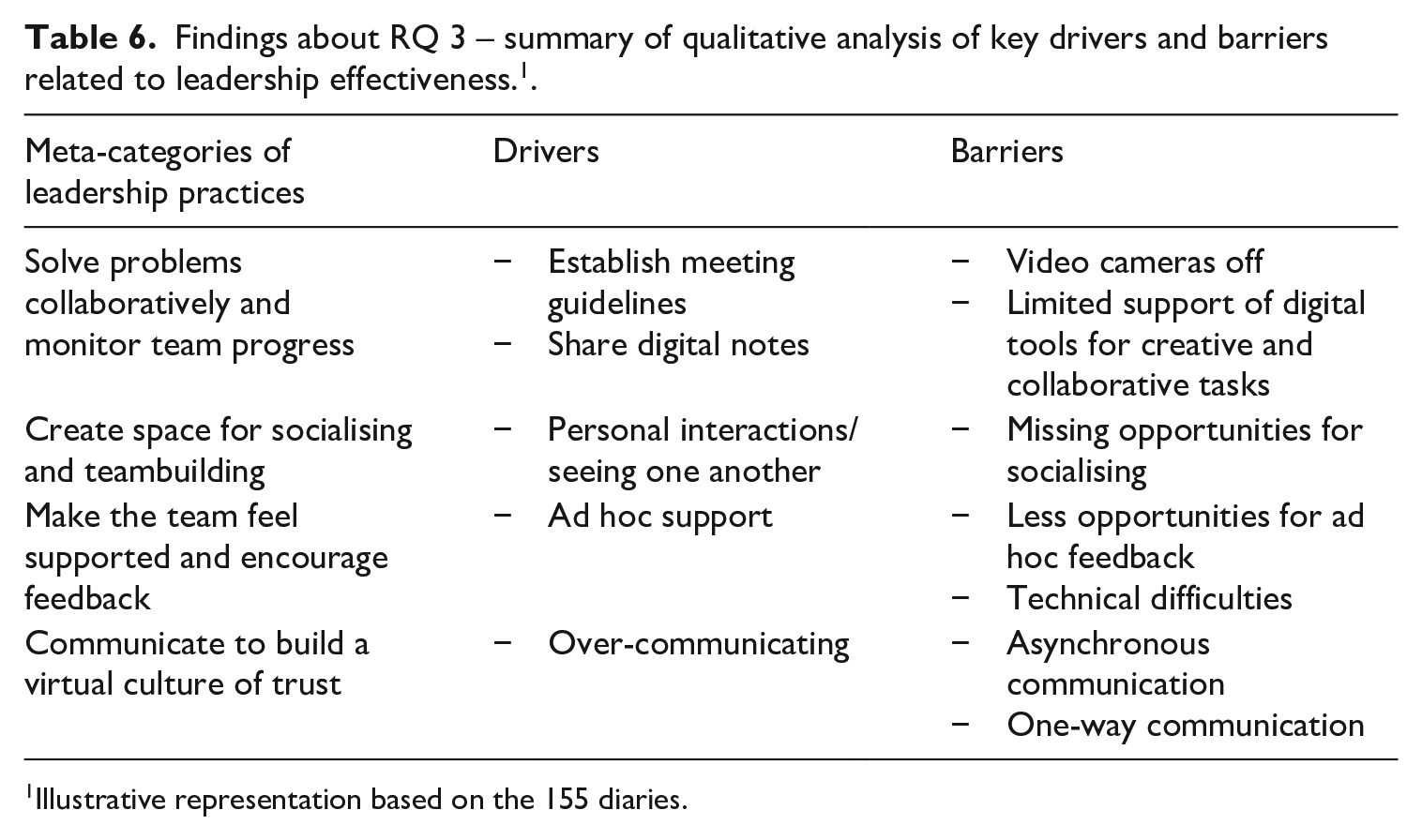
Analysing the diary data reveals that several factors have positive or negative impacts on leadership effectiveness when leading from home and using digital tools. Building on previous research, we define effective leaders as those who can ‘motivate and direct’ their team members ‘towards organisational goals’ and to ‘maintain stability and group harmony’, especially during change processes (Van Knippenberg and Hogg, 2003: 244). We summarise the positive and the negative factors under the terms ‘drivers’ and ‘barriers’, respectively. In the following sub-sections, we outline the key insights gained from the diaries, structured according to the four known meta-categories of leadership practices (see Table 6).
Findings about RQ 3 – summary of qualitative analysis of key drivers and barriers related to leadership effectiveness. 1 .
Illustrative representation based on the 155 diaries.
Drivers of remote leadership effectiveness
When leaders describe ‘solve problems collaboratively and monitoring team progress’ practices in their diaries, they highlight several experiences regarding effectivity. Many of their experiences can be summarised as constituting one key driver of remote leadership effectiveness – leveraging remote meetings requires sufficient preparation (e.g. defining the moderation role in a meeting). More precisely, establishing remote meeting guidelines or conference rules in advance contributes to effective leadership. Moreover, taking advantage of sharing digital notes supports effective leadership.
‘The moderation and the conference rules contributed to this good outcome’ (Leader_03, Item 5, Day 5). ‘[. . .] the tool helped to clarify our well-prepared points’ (Leader_08, Item 5, Day 1). ‘See one another and write and share public notes’ (Leader_06, Item 5, Day 1). ‘We would have met in person and possibly only made handwritten notes [instead of digital notes], which would have been less efficient’ (Leader_27, Item 6, Day 2).
The key driver identified regarding the meta-category ‘create space for socialising and teambuilding’ constitutes personal interactions. Seeing one another in remote meetings seems highly relevant to effective socialising and teambuilding. This driver is mainly related to video conferencing. Leaders describe situations where they are able to interpret their team members’ communication and mood only when they see the latter’s faces via video.
‘Very good if both sides use video’ (Leader_27, Item 5, Day 1). ‘Being able to see every [member] of the team via Zoom and keeping the team motivated through increased personal interaction’ (Leader_11, Item 3, Day 1).
One other key driver concerning the meta-category ‘make the team feel supported and encourage feedback’ is revealed. When leaders are handling many things in parallel, providing ad hoc support via messenger increases effective leadership. Leaders can quickly react to questions or send feedback.
‘We could clarify open questions in only a few messages in our chat, and I make sure to not be a bottleneck for my employees’ progress on this important task’ (Leader_13, Item 4, Day 3).
Another key driver related to the meta-category ‘communicate to build a virtual culture of trust’ can be identified in the diary data. In cases of interactions with their employees, leaders mention that over-communicating contributes to leadership effectiveness. If possible, leaders communicate tasks or situations one more time, just to make sure to avoid misunderstandings.
‘[. . .] all questions could be clarified; however, the communication [. . .] took longer than usual in a personal conversation’ (Leader_12, Item 5, Day 3).
Barriers to remote leadership effectiveness
In addition to drivers, several roadblocks may arise when leading from home. Related to the meta-category ‘solve problems collaboratively and monitor team progress’, based on our qualitative analysis, the key barrier is that in remote meetings, some employees tend to keep their video cameras off, which can lead to less engagement. When the video function is not or only partially used, there are less contributions in meetings, impairing leadership effectiveness. The leaders identify the digital tools’ limited support for creative and collaborative tasks as an additional barrier to effective ‘solve problems collaboratively and monitoring team progress’ leadership practices. Quite often, leaders report difficulties in using digital tools for more creative and collaborative tasks.
‘That was actually the first time today that I had the feeling that employees via MS Teams like to sit back and step back from their responsibilities by turning off the camera’ (Leader_31, Item 16, Day 5). ‘[Using] MS Teams is difficult when creating a collection and working collaboratively within the entire team at the same time. For example, due to the amount of data, no design ideas can be shared and evaluated together. So, in the creative field, I’m reaching my limits here’ (Leader_31, Items 3 + 9, Day 1).
Regarding the meta-category ‘create space for socialising and teambuilding’, missing opportunities for socialising is described as a main barrier to effective remote leadership. During busy days, when leaders find themselves in back-to-back meetings, the time for socialising is missing.
‘Time for a private conversation with my employees during lunch break or after work beer is missing’ (Leader_06, Item 14, Day 3).
Regarding the meta-category ‘make the team feel supported and encourage feedback’ leadership practices, leaders identify having less opportunities for ad hoc feedback as another key barrier. Additionally, when working collaboratively in one document (e.g. to conduct quality assurance) and synchronisation is not working in real time, the collaboration is ineffective.
‘The meeting was not so effective. I wanted to give some feedback to my employee after the appointment. Usually, I do this when I leave the meeting room, but it didn’t work that way [when] working from home. And after the meeting, I couldn’t call because we both had follow-up meetings’ (Leader_24, Item 13, Day 4). ‘I felt stressed because the sync of our SharePoint was not working and some updates hadn’t been saved’ (Leader_27, Item 10, Day 4).
Another key barrier is identified in the diary data, related to the meta-category ‘communicate to build a virtual culture of trust’. Asynchronous communication, as well as one-way communication, tends to be a barrier to effective remote leadership practices related to communicating change.
‘To communicate important changes, I used Slack, which is an established tool in our organisation. Unfortunately, the communication was not effective at all because there was no real-time dialogue possible. Also, it turned out to produce misunderstandings, and some employees did not even react at all to my message’ (Leader_05, Item 12, Day 1).
In sum, the diary findings prove that the usage of every digital tool can contribute to effective remote leadership, depending on the leadership practice and the specific usage of the tool. Nevertheless, video conferences dominate across all leadership practices, as well as the usage of a combination of digital tools, rather than a single tool. Video conferencing allows attendees to see one another, have personal interactions and get a better sense of someone’s mood. Moreover, employees are more engaged when their cameras are on, and two-sided communication with real-time interaction can take place. Generally, the diaries reveal that remote leadership tends to be more effective if the decision about digital tool use is well considered, depending on the leadership practice. In this case, each digital tool or combination of digital tools can have a positive impact on remote leadership.
General discussion
Theoretical implications
Our study offers several theoretical contributions to the scarce literature on the use of digital tools to effectively perform leadership practices while leading from home during a global pandemic. First, we use a trending study that has been set up based on longitudinal data from qualitative diaries and thereby classify remote leadership practices into four meta-categories: solve problems collaboratively and monitor team progress, create space for socialising and teambuilding, make the team feel supported and encourage feedback, and communicate to build a virtual culture of trust. Whereas the first meta-category is predominantly task-oriented, the other three are predominantly relation-oriented. Our study’s findings indicate a focus on operational leadership practices related to task orientation, as well as a team-oriented focus with respect to ‘monitor team progress’, ‘teambuilding’ and ‘make the team feel supported’. One explanation for the focus on the former might be the remote leaders’ restricted ability ‘to monitor team member performance’ and to solve problems due to the missing informal (such as coffee chat) and face-to-face interactions when leading from home (Bell and Kozlowski, 2002; Morrison-Smith and Ruiz, 2020). These remote leadership challenges tend to cause the fear of loss of control and consequently, increase the pressure to maintain the operative business and closely monitor KPIs (Bell and Kozlowski, 2002). The focus on more team-oriented leadership practices (e.g. teambuilding) might result from the loss of the sense of belonging (Yarberry and Sims, 2021). When leaders work from home, they can contribute to teambuilding by ensuring that enough time is allotted to doing so and socialising, for example, building a shared view of objectives and commitment to a collaborative team culture (Holton, 2001). Virtual leaders find themselves in this position to maintain the team culture, motivate the team and create a shared goal commitment (Bell and Kozlowski, 2002; Newman and Ford, 2021). Virtual team work also benefits from an active feedback culture, which helps create a clear understanding of expectations and provides transparency and support on individual and team levels, since in a virtual environment, employees cannot see what their colleagues are doing (Geister et al., 2006). Moreover, in new organisational arrangements, such as the abrupt home office situation, trust is a crucial element of virtual teams (Bell and Kozlowski, 2002; Jarvenpaa et al., 1998; Newman and Ford, 2021). Meaningful and frequent interactions create the fundament to build trust (Holton, 2001). Over-communication is identified as a key success factor for virtual teams (Hunsaker and Hunsaker, 2008). With the four identified meta-categories of leadership practices, we expand previous virtual and crisis leadership literature (e.g. Bell and Kozlowski, 2002) that has identified performance management and team development as the two key leadership functions in virtual teams. In line with Bartsch et al. (2020), we underpin the relevance of task and relation orientations in a virtual environment during a crisis, whereas our results emphasise the focus on relation-oriented leadership practices.
Second, we provide a detailed understanding about the support of digital tools for daily leadership practices while leading from home during the COVID-19 pandemic. Our findings complement previous literature on the TTF showing that different leadership practices require different kinds of communication, and therefore the use of different digital tools to best solve day-to-day leadership challenges (Goodhue and Thompson, 1995). For each of the four identified meta-categories, we outline which digital tools are used by leaders when leading from home. Thereby, we expand existing research stating that digital tools mainly contribute to problem solving and monitoring activities (Cortellazzo et al., 2019). Moreover, we explore the suitability of digital tools when leading from home. This analysis contributes to our understanding about the relations between leadership practices and leaders’ decisions on digital tool usage and their corresponding suitability compared with previous ways of performing leadership practices in a non-home office context. Previous studies have outlined the use of digital tools as linked to organisational culture and digital readiness (e.g. Cortellazzo et al., 2019). Our study supplements these findings by revealing that remote leaders working in decentralised or more agile organisations feel much more confident in using digital tools for task-oriented leadership practices, since they have often used digital tools for task management before. Moreover, research about leading virtual teams states that virtual leaders ‘need to be able to choose the right communication tool’ (Cortellazzo et al., 2019: 14) and outlines the ‘importance of virtual leaders establishing media through which virtual teams can most effectively communicate and collaborate’ (Hambley et al., 2007: 17). We find that leaders working from home use a variety of digital tools but often feel uncomfortable with choosing the most suitable tool or combination of tools. Previous findings about the suitability of managing more complex situations using synchronous communication as it allows communication at the same time (Bell and Kozlowski, 2002; Dennis and Valacich, 1999; Hambley et al., 2007) are supplemented by our findings about the suitability of synchronous communication tools, especially for communicating changes when leading from home. Previous studies have acknowledged the increased complexity of leading virtual teams due to the lack of face-to-face communication (e.g. Purvanova and Bono, 2009). These findings are supplemented by our study’s results, which reveal the suitability and particular use of video conferences to replace face-to-face communication when leading from home. Video conferences are considered as second richest medium after face-to-face communication (Hambley et al., 2007), as body language and tone of voice gets transferred (Daft and Lengel, 1986). In sum, these observations are congruent with work on media synchronicity (Dennis and Valacich, 1999; Dennis et al., 2008) and media richness (Daft and Lengel, 1986). However, sometimes it makes sense to use less demanding asynchronous communication tools (such as Slack) to prevent exhaustion and burnout (Whillans et al., 2021). In providing insights on the suitability of digital tools for remote leadership, we contribute to the scarce literature on leadership and technology.
Third, our paper contributes to research on effective leadership in a challenging and unpredictable context. Our study highlights several drivers of and barriers to leadership effectiveness while leaders try to cope with crisis-specific challenges. For each of the four meta-categories of leadership practices, our findings reveal which factors should be particularly considered for leadership effectiveness when leading from home during the COVID-19 pandemic. Previous research has declared a set of guidelines for virtual meetings as a critical success factor (White, 2014). This is supplemented by our findings that introducing conference rules and sharing digital notes contribute to effective leadership. Moreover, research about virtual leadership describes the lack of physical interaction as one of the main disadvantages of remote leadership (Bell and Kozlowski, 2002). However, our findings indicate personal interaction via video conferences as a motivator for employees and a contributor to effective leadership. Our study also explores the barriers. Recent research findings have revealed that during a lockdown, professional creativity does not increase, whereas everyday creativity significantly increases (Mercier et al., 2021). Concerning creativity in the professional environment, our findings indicate limited support of digital tools for creative and collaborative work. This can be a barrier to the meta-category ‘solve problems collaboratively and monitor team progress’ (e.g. virtual brainstorming with employees). In general, the drivers and the barriers across all digital tools indicate that leaders’ decision about which digital tool to use should be well considered. Research on virtual leadership states that less complex leadership practices ‘often require minimal communication’; in this case, asynchronous communication (e.g. via e-mail or messenger/chat) would be sufficient (Bell and Kozlowski, 2002: 24). Conversely, for more complex practices (e.g. support and feedback), leaders might choose video conferences in combination with screensharing.
In sum, the diaries demonstrate that leaders experiment a lot with the use of digital tools, contributing to a broad range of leadership practices; sometimes, leaders even have to use work-around solutions. These findings can be explained by the sudden change to a remote work environment without being prepared or trained as leaders and employees; employees had to ‘quickly adjust to remote work environments’ (Carnevale and Hatak, 2020: 183).
Managerial implications
Due to our detailed findings about the variety of remote leadership practices and the usage and suitability of digital tools, our study leads to specific suggestions for organisations and leaders to improve leadership effectiveness while working remotely during the COVID-19 pandemic. The study set-up, related to the critical incident technique with questions concerning leaders’ highlights and lowlights, allows us to provide a broad range of managerial implications. In total, we present six recommendations derived from the diaries, which we structure into task-oriented and relation-oriented leadership practices.
We first summarise three managerial implications related to task-oriented leadership practices. And second, we present three managerial implications regarding relation-oriented leadership practices. First, team commitment to standard tools for ‘solve problems collaboratively and monitoring team progress’ (Mehtab et al., 2017; Zigurs, 2003), such as Jira for task management, Slack for informal alignments and e-mail for documentation of meetings, can contribute to effectiveness and efficiency. Remote leaders should motivate their team members to jointly determine these standard tools and to regularly check whether these still fit (according to the organisation’s data protection rules). However, leaders and team members must have the flexibility to choose digital tools according to their tasks and needs (Goodhue and Thompson, 1995; Mehtab et al., 2017). The classification of communication technologies towards media synchronicity (Dennis and Valacich, 1999) and media richness (Daft and Lengel, 1986) in Table 1 enables leaders to carefully select digital tools. Another potential benefit of committing to use standard tools is reducing negative emotions while using digital tools, such as feeling observed or controlled as a form of invasion of privacy. Hence, in regular one-on-one meetings, remote leaders should proactively discuss with their team members how each one feels about the usage of digital tools when working from home. Moreover, to avoid employees’ negative emotions, remote leaders should enhance their own ‘sensitivity to prevent misunderstandings and promote clarity in writing’ when using digital tools (Zimmermann et al., 2008: 331).
Second, we recommend that leaders be aware that the more tools they use within the team, the more complex the daily set-up will be. To avoid too much fragmentation, effective leaders should better choose fewer digital tools with more functionalities (e.g. MS Teams for videoconferences, calls without video, individual chat, group chat). The use of digital tools during the COVID-19 pandemic requires a high learning curve for leaders, while promising much potential for a huge workplace transformation (Carnevale and Hatak, 2020; Larson and DeChurch, 2020).
Third, in line with White (2014), we recommend that leaders smartly organise their daily calendars (e.g. including enough breaks and alternating between seatwork and meetings), while keeping in mind that constant use of digital tools is tiring. Effective leaders should also save extra time in their calendars for meeting preparation and follow-up (White, 2014). Remote meetings need more preparation time to be efficient. Besides smartly structuring their own work days, leaders should proactively structure their employees’ work days, for example, by starting each day with a stand-up meeting (such as morning check-ins), where each team member talks about one’s daily objectives (Whillans et al., 2021). In this way, leaders would enable their employees to monitor their own performance (Hunsaker and Hunsaker, 2008), which would contribute to leadership effectiveness, as well as more transparency about the team’s work progress.
Fourth, remote leadership should particularly support effective communication instead of control. Communicating effectively could be achieved by defining clear communication guidelines within the team and ensuring that everyone follows them (e.g. whether video is optional). Over-communication is especially recommended to build trust in change processes (Holton, 2001; Hunsaker and Hunsaker, 2008; Newman and Ford, 2021).
Fifth, to make their teams feel supported, effective leaders should take an active role in facilitating a meeting, engage their teams and encourage everyone to participate and contribute (Malhotra et al., 2007). Thereby, effective leaders can ensure the smooth flow of the meeting and the inclusion of everyone’s input (Newman and Ford, 2021). To facilitate an effective meeting, leaders are advised to set up and distribute a clear agenda in advance. During the meeting, leaders should play the moderator’s role, ask questions and guide the attendees through the agenda.
Sixth, to improve socialising and teambuilding, effective leaders should make sure to set up virtual coffee breaks (such as virtual happy hours) or team lunches and give their teams room for chatting about non-work-related topics (Whillans et al., 2021). Sometimes, small gestures, such as using the start of a meeting for social relationship building (Malhotra et al., 2007), can have a significant beneficial impact on employees’ mood and commitment.
In sum, there is one last significant implication for practice, which includes all the aforementioned: Remote leadership during the COVID-19 pandemic and choosing the right digital tools are complex challenges for all leaders participated at our study, hence using an iterative trial-and-error approach will eventually lead to an individual ‘leadership-technology-portfolio’ to handle complexity.
Limitations and future research
While our in-depth analysis of 155 qualitative diaries has allowed us to gain deep insights into the daily challenges that leaders face during COVID-19, some limitations of this paper should be addressed in future research. First, the results are based on leaders who have mainly office jobs (e.g. financial services) and are thereby able to work remotely. According to Bauwens et al. (2021a), context matters when determining trends in leadership research. Existing research mainly focuses on sectoral contexts, such as public healthcare or education, where COVID-19 has a huge impact on daily work (Bauwens et al., 2021a); other sectors are so far underexplored. Our study sample covers a range of less explored sectors, such as financial services, law, real estate or automotive, which have high economic relevance. The sample’s focus on financial services (48%) might lead to a potential sector bias, which should be reduced in further studies. However, Willemse et al. (2020) reveal that during the pandemic, even financial service companies and their leaders are challenged to work in less hierarchical and more collaborative virtual teams, which is one indicator of a minimised sector bias. To conclude, our study results are likely to be transferable to other industries and their leaders as well since COVID-19 has accelerated the digital transformation of different sectors (Iansiti and Richards, 2020). However, future research could concentrate on a larger sample from a broader range of industries (e.g. including blue-collar jobs) and explore the impacts of the COVID-19 pandemic on leading their respective employees. Moreover, it would be interesting to investigate companies that have not previously used many digital tools for task management, so the pandemic has caused a huge change of their daily routines when working from home.
Second, the voluntary participation in the diary study means a high self-selection of the participants, since diary studies require a high commitment level over several days. Since our study participants are leaders, who typically have little spare time, their high commitment has been especially required. Thus, researchers could consider including employees in future studies to understand how working remotely would affect them as well.
Third, the diaries have encouraged the leaders to reflect on daily situations that they would usually not think about. This could lead to a reporting of experiences that might be, to some extent, shaped by the participants (Poppleton et al., 2008). However, this limitation is not exclusive to the qualitative diary method but also exists in interviews or questionnaires (Poppleton et al., 2008). Our recommendation for future research would be to use an ethnographic research design, such as participant observation (Ejimabo, 2015), to avoid these limitations, although we are aware of the challenges associated with such a research design. In sum, future research could continue exploring leading from home during a crisis. Especially, leadership in collaboration with digital tools opens an extensive research field. To intensify research about digital tools and tools selection, future research could build on the affordance theory to deeper analyse user perceptions of remote communication possibilities afforded by for example, video conferences (Faraj and Azad, 2012) and thereby deepen knowledge about the cognitive processes on choosing or not choosing a specific tool. It could be interesting to explore the work environment after the global COVID-19 crisis to understand how the use of digital tools would affect the new normal.
