




Abstract
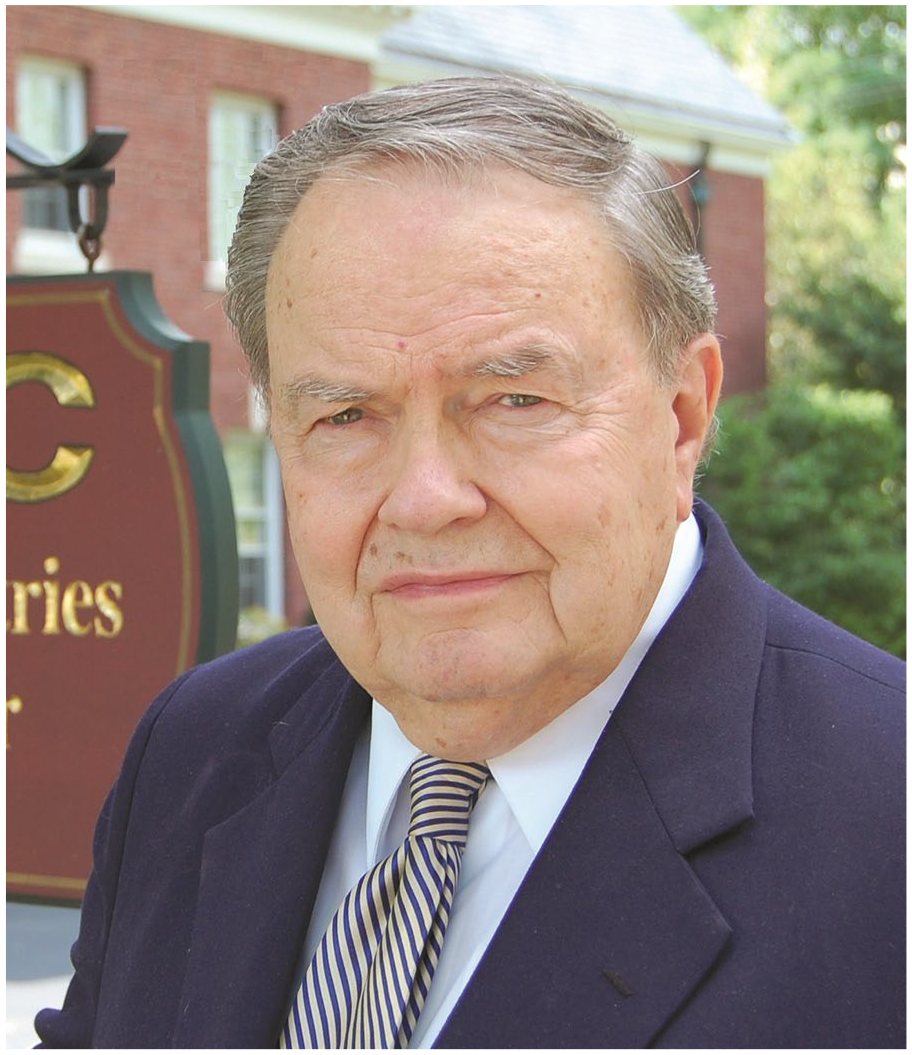
This article introduces the scholarship and administrative accomplishments of Dr. Gerald H. Anderson, longtime Director of the Overseas Ministries Study Center and Editor of the I
Keywords
Introduction
The last third of the twentieth century saw revolutionary changes in the contexts for Christian mission. With decolonization and the rise of newly independent nations in Africa and Asia, Western missionaries returned home in droves. Mission theologies and practices fluctuated among radical self-criticism, liberation and social justice, and renewed interest in evangelizing the unreached. Ironically, the general decline of Western colonial mission—and European Christianity—was accompanied by the growth of Christianity in Africa, Asia, and Latin America. By the end of the century, the field of World Christianity had emerged—along with the revival of mission studies as an innovative, postcolonial discipline. 1
In the midst of these changes, Anderson anchored a network of movements and ideas that renewed mission theory and practice beyond the mid-century Cold War, through the postcolonial era, into the contemporary period of Christianity as a worldwide, multicultural religion. Placing his work in historical context makes it possible to trace developments in late twentieth-century mission studies. 2 This article is divided into four sections. First it introduces Anderson’s calling to a life of mission service. Second, it discusses his founding of major missiological organizations. Third, it analyzes his scholarship. The bulk of the article is devoted to the fourth section, his leadership of the Overseas Ministries Study Center (OMSC) and its incubation of contemporary mission studies. Grounded in a vision of mission “to and from everywhere,” Anderson and the OMSC shaped the scholarly framework that launched the academic discourse of World Christianity. 3
From musician to missionary: Early life
Anderson was born during the Great Depression, in New Castle, Pennsylvania—known as the hot dog and fireworks capital of the world. 4 As a teenager he became an Eagle Scout. Having been a precocious musician as a youngster, playing in bands and orchestras from a young age, he founded his own orchestra that paid his way through nearby Grove City College. Instead of God calling him to transition from the big band era into rock and roll, in 1952 God told him to sell his saxophone and to enter the ministry. Attending the Boston University School of Theology from 1952 to 1955 meant he was a contemporary of Dr. Martin Luther King, Jr., as well as future great Methodist mission leaders Dean Freudenberger and Doug Wingeier; noted pacifist and peace corps leader Phil Bosserman; Dae Sun Park, president of Yonsei University; and Kim Hao Yap, the first Methodist Malaysian bishop. He remembers serving food with Kim Hao in the basement refectory of the theology school.
Anderson’s first missionary post as a newly ordained Methodist minister was church-planting in Alaska in 1955, but he left there to accept a Fulbright scholarship at the University of Marburg, Germany, followed by semesters at the Ecumenical Institute of the World Council of Churches, and the University of Edinburgh, Scotland. Anderson served as a summer pastor on the island of Iona. When he learned that St. Columba had died on his birthday, June 9, the great missionary to Scotland became Anderson’s patron saint and inspiration for his life as a missionary. In 1960, Rev. Anderson completed his PhD at Boston University and married the teacher Joanne Pemberton. It is unclear which was more difficult to achieve, given both the rigors of doctoral study and the constant efforts of parishioners to fix him up with dates. But until Joanne’s death in 2021, the Andersons were inseparable. After their marriage, they sailed on a cargo ship to the Philippines, where the budding scholar took up a post as Academic Dean and Professor of Church History at Union Theological Seminary in Cavite. Joanne taught deaconesses, and they had two children, Brooks and Allison.
Anderson’s early ministry laid important foundations for his later accomplishments. From the beginning, his training as a historian was reflected in the meticulous quality of his scholarship. Another product of his early career was his devotion to ecumenism and consistent inclusion of Roman Catholics, characterized by his publications and his relationships in predominantly Roman Catholic Philippines. His early career spanned the innovative years of the First Vatican Council. From his time in Bossey, and friendships with Lesslie Newbigin and Stephen Neill, to his representing a Filipino church at the 1968 Uppsala meeting of the World Council of Churches, Anderson was a determined ecumenist with particularly close ties to missiologists in South and Southeast Asia. In the construction of what became the field of World Christianity, he always brought Southeast Asia to the table. In his later editing of the International Bulletin, one can see the emphases on mission theology, an ecumenical mindset that spanned all the major branches of Christianity, and the historian’s attention to detail. Finally, from his early post as dean at Union Seminary in the Philippines, Anderson combined work in educational administration with astute scholarship and missionary devotion to the gospel.
Reframing and reviving missiology through professional societies
When Anderson’s position at Union Seminary was filled by a Filipino, the Andersons returned home for him to assume the presidency of the Scarritt College for Christian Workers, the historic Methodist women’s mission training institute. At the height of the Vietnam War and the civil rights era, two years before the dictator Ferdinand Marcos declared martial law, 1970 was a period of crisis for mission studies. Anderson’s alma mater, Boston University—known as the Berkeley of the east—presents a case in point. Draft card burners occupied the chapel. Theology students condemned the curriculum, especially mission studies, which seemed a relic of Western colonialism to be rooted out. Amidst devolution and pushback against colonialism, five hundred years of Western expansionism retracted: Asian and African migration northward increased. Secularization theory and condemnations of missions as cultural imperialism reigned in scholarship. In the meantime, the collapse of evangelism in the ecumenical movement increased tensions between evangelical and conciliar Protestants.
Disturbingly, when Anderson attended a meeting of the Association of Professors of Mission in 1970, he found only fourteen people there, mostly from the declining world of mainline Protestant missions. 5 Even as he published The Concise Dictionary of Christian World Mission in 1971, he noted the collapse of mission studies, with mainline presses withdrawing, and the field in freefall. He prophesied that his dictionary would be the last such book, as mission studies was collapsing even as Christianity was growing around the world. 6 Another young returned Presbyterian missionary, Ralph Winter, who had been teaching at Fuller Seminary for a few years, shared Anderson’s concern about the morbidity of mission studies in North America. Together they determined to revive it, and to signify a broader ecumenism by founding an organization of Catholics and Protestants, both scholars and practitioners, and adopting the European term missiology. Meeting at Scarritt College where Anderson was president, an ecumenical group of mission scholars planned the new organization. They recognized the need to cement the scholarly discipline by establishing an elected executive, drawing up a constitution, holding annual meetings, and founding a peer-reviewed journal. The first meeting of the American Society of Missiology (ASM) took place in June 1973, on the holistic theme “Salvation Today,” echoing the recent Bangkok meeting of the Commission on World Mission and Evangelism of the World Council of Churches. Ninety people attended. They elected Anderson president, the Roman Catholic Donald Wodarz vice president, and Ralph Winter Secretary-Treasurer. Anthropologist Alan Tippett was the first editor of the journal Missiology: An International Review, 7 and soon a board of publications was founded, chaired by Bible translator Charles Taber. Anderson held major leadership positions in the ASM for fifteen years until 1988, when he stepped down from the Editorial Committee of the ASM book series.
The challenges to mission studies in the early 1970s were not confined to North America. The same secularism and postcolonial sensibility pressed upon European mission leaders the need to secure academic respectability and shift toward a broadly ecumenical and global approach to cross-cultural mission and related subjects, including interfaith dialogue. Parallel to the founding of the ASM, the renewal of mission studies as an academic field had become an urgent issue around the world. The founding of the Southern African Missiological Society occurred in 1968. In the Netherlands, the Inter-university Institute for Missiological and Ecumenical Research (IIMO) was launched in 1969.
The need for an international organization to stabilize the field led to the 1972 founding of the International Association for Mission Studies (IAMS). Already respected for his collaborations with ecumenical European missiologists, Anderson was asked to join the organizing meeting along with German, Dutch, British, and Indian scholars. The International Association for Mission Studies represented a globalization of emerging postcolonial approaches to missiology, with an international governing board and assemblies around the world. Its vision stemmed from that of Olav Myklebust in the 1950s, but it took the Second Vatican Council and a new spirit of ecumenicity, plus the end of the age of colonial mission and the crisis of the Uppsala assembly of the WCC, to give wings to the international organization. Its first meeting in 1972 was noteworthy for the international attendance, papers representing different parts of the world, and consideration of the overarching context of secularization. Not only was Anderson on the Executive Committee of IAMS from the beginning, but he served as president from 1982–85 and wrote its official history in 2012. 8
Anderson co-founded and led two of the major scholarly organizations for mission studies in the late twentieth century, both of which moved scholarship beyond the assumptions of colonial-era mission. While I am discussing his role as founder, it is essential to mention his role in a third organization, the Mission Society for United Methodists (now TMS Global), in 1984, as a supplemental mission-sending agency for the United Methodist Church. The founding of the United Methodist Church in 1968 was accompanied by a reduction in the number of cross-cultural missionaries, the adoption of partnership as a major focus, and a shift in mission theology away from evangelism. In 1983 in Dallas, Anderson delivered a provocative address entitled “Why the United Methodist Church Needs a Second Mission Agency.” 9 The next year, thirty-four pastors and former missionaries met to launch the supplemental society. Soon the Mission Society was sending dozens of missionaries, united by their belief in the salvific nature of belief in Jesus Christ. Anderson spent twenty years as founding member on the board of the Mission Society. His commitment to primary evangelism and church planting aligned him with the major theological position of the growing Christian movement in the global South. In retrospect, this act of conscience, while painful and controversial at the time, contributed to evangelistic renewal among the missions of the United Methodist Church. As founder of organizations, Anderson was fearless. He believed in the agency of collaborative organizations. But he was not afraid to challenge either the academic or the ecclesial status quo.
The publications of Gerald H. Anderson
Anderson’s scholarship populated required reading lists in mission studies from the 1960s through the 1990s and navigated the movement from Western to postcolonial global theology. His primary reputation was as editor par excellence, with an uncanny ability to chart unfolding major themes and to persuade people to write for him. In this section, I will highlight a few themes in his major publications and indicate their importance for the emerging fields of mission studies and World Christianity.
Mission theology and bibliography
Before he had obtained a Ph.D. or turned thirty years old, Anderson was an acknowledged expert in the history of mission theology. The breadth of his future direction could be predicted by the readers of his Ph.D. dissertation on the history of the theology of missions from 1928 to 1958. Anderson is a historian, and his first reader at Boston University was the Methodist church historian Edwin Prince Booth. His second reader was L. Harold DeWolf, the systematic theologian who had been first reader for Dr. Martin Luther King, Jr., just a few years before, and his third reader was the great Swedish Lutheran ecumenist Nils Ehrenstrom. Anderson’s publications covered all these areas—church history, mission theology, and the united witness of the church in relation to social issues. In 1958, he published an annotated Bibliography of the Theology of Missions in the Twentieth Century. 10 Not only was he serving as a minister and working on his dissertation, but he had done graduate work in Switzerland and Scotland, held a Fulbright Scholarship at the University of Marburg, and was studying at John Wesley’s Lincoln College, Oxford. The bibliography was multi-lingual, including German, Dutch, French, and Scandinavian works. This early publication was in such high demand that the Missionary Research Library published a second edition in 1960, with an additional 300 titles, and a price increase from $1 to $1.50.
The basic outline of the mission bibliography, combined with the conclusions of his dissertation, shaped Anderson’s first major publication, the 1961 classic, The Theology of the Christian Mission. He divided the subject matter into sections on the biblical basis, historical studies, Christianity and other faiths, and the theory of mission—the same areas he had prioritized in the mission bibliographies. For the published volume, he recruited major voices represented in his bibliography, including Karl Barth, Paul Tillich, Oscar Cullmann, Hendrik Kraemer, Max Warren, Harold Lindsell, Alexander Schmemann, Johannes Blauw, Christian Baëta, and of course a handful of authors from his Methodist tradition including Richey Hogg, Harold DeWolf, and Franklin Littell. 11 Lesslie Newbigin wrote the Foreword. The expansive Protestant view of mission theology that emanated from the volume traced major ecumenical developments into the mid-twentieth century and concluded by naming the potential importance of a converging “radical trinitarian theocentricism,” 12 by which Anderson meant the unfolding idea of the missio Dei, as described in German by Georg Vicedom. Writing at the moment of the merger of the International Missionary Council into the World Council of Churches, Anderson argued that only mission focused on the nature of the Trinitarian God would be a broad enough platform from which to consider the uniqueness of Christ in relation to other religions and other major issues for Christian mission in the 1960s.
Anderson’s edited collection revealed an expansive vision. For one thing, it introduced the missio Dei to an English-speaking audience. It put competing conciliar and evangelical Protestant voices into dialogue with each other, and it named the theology of religions as the major emerging subject for mission theology in the 1960s. Its translation into Japanese and Korean reflected growing interest in mission theology in East Asia. All of these things were prophetic of the tidal wave of scholarship soon to come. A second edited volume on mission theology from the late 1960s reflected Anderson’s embeddedness in conciliar Methodism. He edited papers flowing from ten years of meetings between Methodist professors and executives from the Board of Missions. 13 These papers reflected the uneasy condition of North American Methodist missions in the 1960s, then devolving amidst theologies of revolution and the Cold War from a huge investment in colonial-era mission, and gearing up for merger into the United Methodist Church in 1968. Although this collection was ecclesiologically more focused than Anderson’s earlier book, the essays reflected a wide contextual reach of concern for kingdom theology including such issues as the movement of God in history, Christian-Jewish encounter, the responsible society in relation to revolution, and the purposes of mission in dialogue with nationalism. Half the authors came from Anderson’s alma mater Boston University, including such luminaries as the father of social ethics, the pacifist socialist Walter Muelder; and the two readers of Dr. Martin Luther King, Jr’s dissertation in systematic theology, Harold DeWolf and Paul Schilling.
As the tension between ecumenical and evangelical mission theology grew, Anderson’s own interest in mission theology became focused on the relationship of Christ’s uniqueness to religious pluralism, and he wrote a number of articles and published bibliographies on this subject, including the article on continuity/discontinuity in the 1971 Concise Dictionary of the Christian World Mission he co-edited with Stephen Neill and John Goodwin. 14 His edited work on this topic culminated in Christ’s Lordship and Religious Pluralism, co-edited with the President of the Paulist Fathers, Fr. Thomas Stranksy, and published in 1981, twenty years after The Theology of the Christian Mission. 15 This volume resulted from a conference on the topic held at the Presbyterian Union Theological Seminary in Richmond. The intervening years between volumes had seen ecumenism moving from the concern of conciliar Protestants to include Catholics, Orthodox, and evangelicals. Christ’s Lordship and Religious Pluralism was not only broadly ecumenical but dialogical in method, with responses published from different theological perspectives than the major papers.
In his own response to a Roman Catholic paper on Christ’s Lordship and religious pluralism, Anderson reaffirmed the position articulated in the 1940s by Methodist Edmund Davison Soper of “uniqueness with continuity.” 16 In other words, Anderson rejected both the harsh discontinuity of Barthian Reformed thought that saw an absolute gulf between Christ and other religions, and the more recent Catholic positions that saw salvation through Christ as universal, even if persons rejected him. Anderson held to a positive Anglican/Wesleyan anthropology while insisting on the necessity of Jesus Christ and the new birth for salvation. His essentially moderate evangelical ecumenism meant that by the 1980s he was straddling the evangelical/ecumenical divide and prophetically engaging an emerging missiological consensus of holistic evangelicalism that became prominent by the end of the decade. Anderson’s role as a bridge builder was apparent in his attendance both at the Lausanne Movement’s Consultation on World Evangelization held in Pattaya, June 1980 and at the WCC’s Melbourne meeting of the Commission on World Mission and Evangelism in May 1980. Anderson edited the conference proceedings into the book entitled Witnessing to the Kingdom: Melbourne and Beyond. In the Melbourne volume, one interesting development that Anderson drew attention to was the concept of mission from the margins, that the poor themselves are initiators of mission. 17
From the late 1960s through the 1980s, Anderson inhabited the difficult terrain of holding to Christ’s uniqueness and necessity for salvation and the primacy of the missionary task, while simultaneously navigating the bureaucratic liberal establishment of the United Methodist Church and the decline in conciliar missionaries. He both called for the founding of an independent Methodist missionary-sending agency and represented United Methodist bishops at ecumenical meetings. At the same time, Anderson was taking the lead in introducing contextual mission theologies to English-speaking audiences.
Here is where it is important to discuss the five volumes edited by Anderson and Stransky—the famous Mission Trends series from 1974 to 1981. 18 These little volumes were “must haves” for mission scholars around the world in that period, and I remember my own deep satisfaction in using my scarce funds to purchase them while a graduate student. More than any other books, the five-volume Anderson and Stransky Mission Trends pointed the way from Western theology to contextual theologies, in the era of rapid Christian growth in the so-called Third World. Perusal of Anderson’s mastery of mission theology, and his founding of organizations to meet the crisis in mission studies, helps to explain why the Mission Trends series highlighted the topics it did. The selected articles reflected his continual broadening of cultural, theological, and ecclesial ecumenism.
Mission Trends No.1 covered new trends in mission, including the question “what is mission?” and identifying the mission crises of imperialism and colonialism, secularization, revolution, racism, and interreligious dialogue. Published during the era of the call for a moratorium on Western missionaries—a call issued by Southeast Asians and Latin Americans who were personal friends of Anderson, I might add—the volume grappled head-on from multicultural perspectives with the colonial legacy of missions. Prominent non-Western authors included Kosuke Koyama, Emilio Castro, Manas Buthelezi, M. M. Thomas, Stanley Samartha, and José Míguez-Bonino, as well as Western mission theologians such as Johannes Aagaard, Hans Margull, Art Glasser, Peter Beyerhaus, and Hans Kung. Mission Trends No. 2, published in 1975, covered evangelization, a topic very dear to the editors’ hearts. Their treatment of evangelization included now classic authors such as John Stott, Rene Padilla, Ralph Winter, W. A. Visser’t Hooft, Philip Potter, Wilfrid Cantwell Smith, and Hans-Ruedi Weber. The volume included major statements from Roman Catholic, ecumenical, evangelical, and Orthodox conferences on evangelization.
Mission Trends No. 3 discussed “Third World Theologies: Asian, African and Latin American Contributions to a Radical, Theological Realignment in the Church.” 19 This 1976 volume squarely named contextualization, as articulated by Shoki Coe a few years prior, as the key principle for emerging mission theologies. African, Asian, and Latin American theologians were excerpted relative to some of their key ideas, including that of theological “leaping” from Chinese religions to the New Testament by C. S. Song, the emergence of African Christian theologies by E. W. Fasholé-Luke, Ernesto Cardenal on torture, Samuel Escobar on the gospel and social justice, and John Mbiti on the tension between the universal church and local realities. Mission Trends No. 4, published in 1979, focused the global conversation back to North America with its theme “Liberation Theologies.” This powerful volume was notable for including North America in the conversation about mission and liberation, one of the priorities, of course, of the Paulist Fathers. Major white Western thinkers like Robert McAfee Brown, Jürgen Moltmann, Daniel Berrigan, and Jim Wallis were juxtaposed to a section on “black experience” with entries by James Cone, Gay Wilmore, Bill Pannell, and others. Feminist experience included essays by Letty Russell, Rosemary Ruether, Virginia Mollenkott, and others. Smaller sections on Asian American, Native American, and Hispanic American experience rounded out the theme of liberation, mission, and North America. It is prophetic, given recent interest in integral mission, that Anderson and Stransky refer to this volume’s priorities as “integral salvation and full liberation,” with mission “in and to North America.” 20
The final Mission Trends No. 5 volume returned to Anderson’s core theological interest, namely, “Faith Meets Faith.” Published in 1981, some entries duplicated those published in Christ’s Lordship and Religious Pluralism. The three major themes covered were “mission and religious pluralism,” interfaith dialogue, and “interfaith relations in practice.” Once again, a who’s who of relevant theological voices were featured, including those of John Stott, Anastasios Yannoulatos, Harvey Cox, Stanley Samartha, Raimundo Panikkar, Peter Sarpong, and John V. Taylor.
The impact of the Mission Trends series cannot be overstated. Its ecumenicity, geographic and ethnic scope, identification of cutting-edge issues, useful bibliographies, accessible small paperback format, and timing during the turbulent 1970s—a key transitional time for theologies of mission at the height of secularization theory—made Anderson and Stransky household names. This series, especially considered alongside the refurbished Occasional Bulletin of Missionary Research, taken over by the OMSC with Anderson as editor in 1977, navigated from mission as product of Western colonialism, to mission theology as a global concern for a fast-growing, articulate worldwide Christianity.
Southeast Asia
A second major passion in the writings of Gerald H. Anderson were the histories and theologies of Christianity in Southeast Asia. As a missionary, Anderson was concerned to share the beauty and richness of Southeast Asian Christianity with North Americans. Here, too, Anderson’s dissertation had pointed the way, with sections on the Bangkok Conference of 1949 consisting of representatives from Asian Christian councils, the Ecumenical Lucknow Study Conference of the WCC in 1952, and the Prapat, Sumatra meeting of the East Asia Christian Conference in 1957. Hence in 1968 he published Christ and Crisis in Southeast Asia, with Friendship Press, the distributor of popular mission books to mainline Protestants. In the context of modernization and Asian nationalism, Anderson identified two major issues facing minority Christians in Asia: how to be both Asian and Christian and how to shake off the ghetto mentality of isolated minority communities. 21 Anderson wrote the article on the Philippines with Peter Gowing, a fellow missionary known for his scholarship on Islam. He highlighted the work of the East Asian Christian Conference (EACC) as the “great new fact of the ecumenical era in Asia.” 22 The EACC (from 1973, Christian Conference of Asia) promoted sending Asian missionaries, collaborative theological education, reflection on the place of Christian institutions within secular states, church/state problems, and other current issues.
As professor of Church History and Ecumenics at Union Theological Seminary in Manila, Anderson taught the history of Christianity in Southeast Asia. Thus in 1969 he published Studies in Philippine Church History, 23 another of Anderson’s books I happily scrounged from a used bookstore back in grad school. This volume intersected with the growing interest by secular historians in mission sources, a trend ably identified that same year by sinologist John K. Fairbank when he called the missionary the missing man of the history of American foreign policy. In his thoroughly ecumenical collection, Anderson organized key essays on religion and nationalism, independent church movements, Spanish and American imperialism, and important independence figures such as José Rizal and Nicolas Zamora.
Simultaneously with the publication of his Mission Trends series, by the 1970s Anderson was one of the earliest scholars to state prophetically that by the year 2000, most Christians would be in Asia, Africa, and Latin America, and to adjust his scholarship accordingly. His movement from Western missionary approaches to indigenous Asian theology was a concrete way that Anderson helped to launch the field of World Christianity, especially with his publication in 1976 of Asian Voices in Christian Theology. 24 As a theological educator in the Philippines during the 1960s, Anderson had established relationships with a range of South Asian and East Asian missionaries and local theologians. Upon returning to the United States, he spent a year as Senior Research Associate in the Southeast Asia Studies Program at Cornell University. Asian Voices in Christian Theology was one of the first books by a Protestant published by Maryknoll’s Orbis Press, which of course was beginning to publish liberation theology. 25 It was also the first English-language anthology of significance on Asian theology and is considered a classic by Southeast Asian theologians today. The volume began with a statement on theology by the East Asia Christian Conference. Anderson placed the selection of articles into the framework of Shoki Coe’s 1972 concept of contextualization and recent discussions by Asian theologians adopting the Critical Asian Principle, a cultural basis for developing indigenous Asian theologies. The volume provided essays on contextualized theology by theologians from India, across Southeast Asia, and Korea, Japan, and Taiwan. Typical of Anderson’s style, the book also included important creeds and theological statements by Asian churches, and an extensive bibliography. The sixty-page bibliography was itself worth the price of the book.
Another feature of the book was its dedication by Anderson to D. T. Niles—one of the three “N’s” with whom Anderson collaborated—the other two being Stephen Neill and Lesslie Newbigin. Anderson’s dialogue with the work of the Sri Lankan Methodist began in his dissertation and continued for many years. Niles headed the Department of Evangelism of the WCC, then the World’s Student Christian Federation. In 1957, Niles became Secretary of the East Asia Christian Conference, and he produced one of the most poignant definitions of evangelism when he described it as one beggar helping another beggar to find bread.
It is important to note that Anderson’s home base in the Philippines, and his ongoing dedication to the history and theologies of Southeast Asia, not to mention his personal relationships with key theologians there and embeddedness in Southeast Asia studies, represented an important dimension in the founding of the field of World Christianity he ensured that the International Bulletin featured authors and content from Southeast Asia. The OMSC itself became home to missionaries primarily from Asia. The presence of the Philippines was felt at the OMSC in art, in personnel, and as the source of ideas about contextualized Christianity.
Biography as mission history
A third area of Anderson’s publications essential to survey is his use of biography as a source for history and missiology. When he took the helm of the Occasional Bulletin, soon to be IBMR, he inaugurated several signature features including the annual survey of world Christian demography, lists of dissertations, and various “best of” and “notable” reference lists. Some of the most celebrated signature features of the journal were the “legacy of” and “pilgrimage” series, which were biographical and autobiographical in nature. Not only were these biographies immensely popular and award winning, but they provided friendly points of entry for narrative and contextual theologies. The IBMR used the biography series to anchor a narrative approach to missiology. The incarnational nature of mission biography is a typically Wesleyan approach toward theology, in which testifying to God’s grace in one’s own life is the starting point of Methodist identity. I would argue that the popularity of the I
Mission Legacies, the collected biographies of seventy-five mission leaders from the IBMR, was published in the American Society of Missiology Series in 1994. 26 The biographical approach illuminated both mission history in particular geographic areas, but also the major functions of missional leadership such as promoters, theologians, historians, theorists and strategists. Biography muddies the waters of over-systematization by showing the messiness, the contradictions, and the miracles in individual lives. The mission legacies series sparked the imagination for spin-offs, including the History of Missiology website at Boston University, the Dictionary of African Christian Biography, a project launched with Anderson’s support and blessing toward the end of his time at the OMSC, and the Biographical Dictionary of Chinese Christianity.
Anderson’s final major edited book project while still working at the OMSC was the 1998 Biographical Dictionary of Christian Missions, subsidized by The Pew Charitable Trusts. This important book included entries on 2,400 persons from all Christian traditions. His rationales for the project included that “the place of biography in Christianity is biblical and pivotal to the faith,” and that the book’s “availability now will facilitate an understanding of the worldwide extension of the church.” 27 He concluded his preface to the volume by quoting Adoniram Judson, whose sentiments aligned with those of Anderson’s own pioneering approach to writing and publication, “The future is as bright as the promises of God; That is the missionary spirit.” 28
Gerald Anderson and the OMSC
In 1974, Anderson became associate director of the Overseas Ministries Study Center in Ventnor, New Jersey. When he addressed the board of the OMSC for the last time in June 2000, he summarized his contribution as “26 years, 52 board meetings, 95 issues of the IBMR, over 20,000 residents.” 29 As one reads the minutes and director’s reports for all those years, however, the statistics Anderson cited are only the tip of the iceberg of what was a ground-breaking missiological think tank of the late twentieth century. He listed his own major accomplishments as organizing the January seminar for seminarians, launching and editing the IBMR, relocating the OMSC from Ventnor to New Haven, and building the Great Commission Hall.
Historical distance, however, always changes interpretations of the past. My list of Anderson’s accomplishments is different from those he named, though informed by close acquaintance in the latter half of his time at the OMSC. In this section, I focus on several ways in which he honored, extended, and reshaped the legacy of the OMSC: ecumenical commitment; through hospitality, navigating and embodying the changes in the missionary movement from a Western to a global phenomenon; educating thousands into a postcolonial yet gospel-centered approach to world mission; and bringing to birth modern academic mission studies, and from there the study of World Christianity.
Ecumenical commitment
The OMSC was born in 1922 as the Houses of Fellowship. It was run for thirty years by founder Marguerite Doane as a furlough center for North American missionaries. In his 1983 analysis of the ethos of the OMSC, Bob Coote points to Marguerite Doane’s ecumenism as a defining characteristic of the set of apartments along the New Jersey shore. The Doanes were American Baptists. During the 1920s fundamentalist-modernist splits, as I have argued elsewhere, women like Marguerite Doane focused on fellowship and relational community, resisting polarizations based on doctrine. Doane both supported Baptist women’s organizations and missionaries associated with the Foreign Missions Conference of North America, and she resourced a Baptist faith mission. At least a hundred Protestant mission boards were represented by the families who furloughed at the Houses of Fellowship. Coote argues that under her leadership, missionaries on furlough came in rough proportion to their representation as conservatives or liberals relative to the missionary population. Doane’s ecumenism thus encompassed the entirety of American Protestantism. 30
The ecumenical tone of the OMSC declined after the Doane years, as increasing numbers of independent evangelical missionaries came to outnumber mainline missionaries in the late 1960s. In addition, since the furlough home was virtually free to residents, missionaries from faith mission organizations who lacked regular salaries came to predominate and stayed longer and longer. By the mid-1960s, the anti-ecumenical spirit of the residential population had become so strong, dominated as it was by anti-Catholic conservative evangelicals opposed to the developments in mainline Protestantism, that in 1963—the same year, I might add, as both the Second Vatican Council and the Mexico City meeting launching the Commission on World Mission and Evangelism of the WCC—the board adopted “Principles of Fellowship” that affirmed a “consensus of the middle” and the traditional non-doctrinal openness of the Houses of Fellowship. By 1967, the name was changed to the Overseas Ministries Study Center and it adopted a study program for the missionary residents.
By the early 1970s, when R. Pierce Beaver became director and then hired Anderson as his associate director, the OMSC was at a crossroads. The launching of the study program began attracting mainline missionaries. Conservative evangelicals felt betrayed. From the beginning, Anderson worked to bring the growing numbers of conservative evangelical missionaries into spaces for personal growth and dialogue with other Christians. Anderson not only persuaded mainline Protestants to return to the OMSC, but he widened the ecumenism to include Roman Catholic missionaries newly animated by the possibilities for collaboration unleashed by the Second Vatican Council.
Reading the OMSC board meeting minutes of Anderson’s time reveals consistent efforts over the decades to keep all branches of Christians part of the OMSC. Especially in the first twenty years, this was very difficult, almost heroic, work. He accomplished this in multiple ways. He constantly itinerated among different ecclesiastical groups, ranging from hobnobbing with the leaders of faith mission networks, taking on responsibilities at professional societies, representing his denomination at global ecumenical meetings, and serving on the boards of groups including the American Leprosy Missions, the United Board for Christian Higher Education in Asia, and the US Catholic Foreign Mission Association. In 1983, as already noted, Anderson was a delegate both to the WCC’s meeting in Melbourne, for which he edited the official report, and was a delegate to the Lausanne meeting in Pattaya. Another way he promoted fellowship and growth among all segments of the church was through the study program. Initially, conservative evangelicals were less interested in the study program than mainline and Catholic missionaries. By the 1980s, however, faced with the growing educational levels of partners in the majority world, more conservative evangelicals became interested in study opportunities. Anderson and his program director were constantly tweaking and calibrating topics, approaches, and co-sponsorships for particular study seminars to meet the felt needs of a wide range of missionaries. They hosted sessions on the mental health of missionary children, workshops on how to set up archives, and welcomed guest teachers from across the theological spectrum. Anderson pulled in his connections—especially with missiologists working in South Asia—to have his old friends like Bishop Stephen Neill, Bishop Leslie Newbigin, Paul Hiebert, Ralph Winter, and others, come regularly to teach at the OMSC. Another way Anderson tried to keep friendly relations with conservative evangelicals was through an unpublicized, invitation-only, twice-yearly mission study group for leaders of missions and other conservative mission entities. Although R. Pierce Beaver founded this group, Anderson launched it and ran it for the entirety of his time at OMSC. Creation of private space to wrestle with cutting-edge issues in mission influenced mission policy behind the scenes. 31
Finally, one must credit Anderson’s refusal to let the OMSC be captured by one group. In considering the move from Ventnor, he rejected an invitation from the newly founded Billy Graham Center at Wheaton College. Although Wheaton graduates made up a large contingent of missionaries, to take the OMSC to Wheaton would have threatened the “consensus of the middle.” In fact, careful studies of opinions by folks across the theological spectrum showed that New Haven was seen as a suitably neutral location that would avoid internal factionalism among evangelicals, while being an academic location attractive and friendly to persons from across the theological spectrum. Anderson’s steadfast ecumenicity remained a hallmark of the OMSC for his entire tenure. Under his leadership, it retained the loyalty of a wide spectrum of Catholics, Orthodox, and Protestants, mutually committed to faithful mission over doctrinal extremes. The IBMR promoted this ecumenical spirit by featuring articles from the top Protestant, Catholic, and Orthodox missiologists from around the world.
Embodying World Christianity through hospitality: Moving to New Haven, 1987
The OMSC provided a home away from home for missionaries on furlough. Anderson’s commitment to this core purpose of the OMSC is revealed in his twice-yearly reports to the Board of Trustees. 32 He shared testimonials from grateful residents, compiled charts documenting where they were from, and recorded the many activities in which they participated, including pot-luck dinners and teas, group outings, prayer meetings, and of course residential participation in the study program. He cared about the residents, including worrying about their exhaustion from deputation for fund-raising, and the lack of activities for missionary kids. Anderson’s leadership, as shown in the minutes, involved meticulous and regular self-studies to gauge the patterns prevalent in the residential community. Reports analyze the changing composition of the missionary furlough community, from conservative evangelical to a balanced ecclesial mix, changing lengths of the average furlough based on patterns of missionary support, and careful stewardship of the hospitality resources of the organization.
In addition to what one learns about the changing nature of North American missionary patterns in the late twentieth century, probably the most fascinating aspect of the hospitality ministry was the gradual shift from North American missionaries in residence to nonwestern missionaries in residence. Shifting patterns of missionary residence embodied the increasing globalization of the missionary movement, as Western Christianity declined in relationship to the demographic dominance of nonWestern Christianity by the end of the twentieth century. Anderson saw this up close, thus making the OMSC one of the first places in North America to engage proactively the southward shift of World Christianity. 33
From its founding, there had always been nonwestern mission leaders at the OMSC, though in small numbers relative to the North American missionary population. Early minutes during Anderson’s term show his appreciation for the beneficial influence of global South residents; the OMSC regularly subsidized them with scholarships so they could afford to stay in Ventnor for a season. 34 A tipping point came in 1993–4, when nonwestern missionary residents outnumbered the Western missionary residents. The shifting demographic of World Christianity, as evidenced in the residential missionary community, required nimble adjustments on the part of the OMSC. For one thing, missionaries typically had few personal resources, and they required subsidy, assistance with visas, medical care, and orientation to American life. Their typically limited English-language skills also affected the study program, which found that speakers needed to adjust to the lower level of English-language capacity. At the same time, because nonwestern residents—except perhaps Koreans, who expected support from Korean-American congregations—did not need to itinerate to raise support in the United States, their participation in the OMSC study program was higher than that of native-born Americans. The awarding of certificates in mission studies was meaningful to majority world residents. The increase of multinationalism among residents brought many challenges, but it also expressed in microcosm the shifting parameters of the world missionary movement and embodied multicultural community in a way that the OMSC found very satisfying and exciting.
Toward the end of his tenure at the OMSC, even when the multiculturalism of the residential community was a new reality, Anderson’s administration was already studying whether missionary training and furloughs should be taking place overseas rather than in the relatively expensive context of the United States. OMSC experimented with holding sessions of the study program in diverse locations. Upon polling the residents, however, it was clear that majority-world missionaries wanted the advantages offered to them to come to the United States on furlough, including less pressure from home churches, chances to study and to improve their English, and opportunities for their children. Upon his retirement, the OMSC launched a fundraising campaign to provide scholarships for nonwestern missionary residents, called the Gerald H. Anderson and Joanne P. Anderson Scholarships Fund—a fitting celebration of how his leadership extended the commitments of Marguerite Doane into the era of Christianity as a worldwide religion.
Educating for postcolonial mission
Through its programming and careful attention to forward-looking mission trends,
35
as well as commitment to educating young people, the OMSC spoke into the missiological void and divisions of the 1970s through 1990s, to carry mission across the bridge from a colonial to a postcolonial era. The OMSC played a seminal role in introducing new models for mission, while remaining faithful to Jesus’ command to go into the world in witness. This particular contribution of the OMSC can be attributed to Anderson’s deliberate listening and networking among mission practitioners and scholars from around the world. The programming of the OMSC was prophetic and useful and was undergirded by the relaunching of the Occasional Bulletin of Missionary Research and its expansion into the I
One of the accomplishments Anderson named as a point of special pride was his launching of the January seminars for seminarians. Over a couple of decades, these seminars were the largest program run by the OMSC, with the highest attendance. The year 1984, for example, saw 177 seminarians from 30 seminaries, plus 38 others registered, including missionaries. The OMSC recruited dozens of theological seminaries and mission organizations to co-sponsor. A few seminaries offered course credit for the sessions, and other seminaries allowed a professor to work with individual students for directed study credit. A rotating cast of mission leaders and professors traveled to either the OMSC or the Mercy Center to teach the students. Some faculty, such as Alan Neely of Southeastern Baptist and then Princeton Theological Seminary, brought groups regularly.
Eventually in the early 2000s after Anderson’s time, the OMSC seminars for seminarians were shut down. The historical question remains as to why they were phenomenally effective from the 1970s through the 1990s. In my opinion as a historian, who also taught in these seminars a few times, I think that these seminars bridged a gap in mission education during the postcolonial period. The end of European colonialism and the Vietnam War era had caused a retreat from mission education by mainline seminaries in the late 1960s and early 1970s. At the same time, evangelical schools and mission agencies were committed to mission but dealing with the crisis of credibility among a younger generation. This convergence created a space into which the OMSC stepped during the J-term or semester break. The success of the program was also prior to the Association of Theological Schools’ emphasis on contextual education, and prior to the widespread proliferation of cheap air fares, new forms of electronic communication, and short-term mission trips that exploded in the 1990s. The January seminars bridged the old mission societies and personnel with the growing mission interest in postcolonial forms of mission among youth, prior to the wholescale rise of contextual education as a priority of theological seminaries. Once the ATS began taking faculty on exposure trips, schools organized more of their own contextual education programs, J-terms proliferated, and churches embraced short-term mission trips, the space in which the seminars for seminarians could operate shrank.
The bridge to postcolonial mission can clearly be seen in the series of conferences sponsored by the OMSC. During the crisis-filled years of the 1970s, the OMSC organized five years of conferences on “The Future of the Missionary Enterprise.” The final consultation from May 2–5, 1978, was on the topic “Liberation, Development, and Evangelism in Mission: Must We Choose?” Co-sponsors included the Maryknoll Mission Institute, IDOC/North America, Lutheran World Ministries, Church World Service, and an anonymous evangelical mission agency. Two weeks before the consultation, the OMSC had to limit registration to 171 persons. The OMSC, therefore, was an ecumenical laboratory exploring urgent issues of mission in light of liberation theology and other postcolonial developments. Other postcolonial issues the OMSC tackled were those of simple lifestyles and of multiethnicity and multiculturalism in mission. So, for example, April 1979 saw a conference on simple living led by Ronald Sider and the distribution of a book it produced. Also, in 1979 the OMSC sponsored a meeting of black theologians, and in March 1980 a consultation on Hispanic ministries. 36
Cutting-edge themes received attention from a broad cross-section of mission executives, seeking to lead into the future. For example, an April 1980 consultation on the situation in China in the aftermath of the cultural revolution included forty-five leaders from a range of groups including World Vision, The Assemblies of God, and the United Board for Christian Higher Education in Asia. Another entire area needing analysis, but which is beyond the scope of this article, is the importance of the Senior Mission Scholars program that Anderson led, and which brought the leading minds of the day into dialogue with residents and interested members of the community.
One fascinating area of engagement during Anderson’s time at the OMSC was that of the anti-apartheid movement. September 1984 saw a private consultation of thirty-nine mission leaders with Bishop Desmond Tutu, the General Secretary of the South African Council of Churches. Two weeks later he was awarded the Nobel Peace Prize, and by the end of the year he had become the Anglican Bishop of Johannesburg. In 1985, the OMSC board voted to divest itself of stocks in companies that would not abide by the Sullivan Principles, and it soon began exercising its right to vote on shareholder resolutions. In 1986, Anderson attended a meeting of church leaders with the US Secretary of State about South Africa. By 1994, the OMSC paid substantial dues to officially join the Interfaith Center for Corporate Responsibility, located at Trinity Church, Wall Street, the chief Christian entity engaged in shareholder activism against South African apartheid. In 1997, the board adopted a values statement to guide ethical investing, that included stewardship of God’s word combined with stewardship of God’s creation. 37
Much more can be said about the range of programming and publications that the OMSC sponsored to build a bridge from Western mission to postcolonial contexts that required new theologies, new missional spiritualities, and updated strategies for leadership formation. A sure signal toward postcolonial mission was the recognition by the OMSC that mission was to and from everywhere. Even though overseas mission was its traditional concern, OMSC’s focus on ethical integrity, simple lifestyles, facilitation of nonwestern missionaries, and recognition that the West was a mission field all showed up in the OMSC programming during Anderson’s twenty-six years of leading it. 38
Birthing modern mission studies and World Christianity
The public face of the OMSC under Anderson’s leadership was the I
The International Bulletin of Missionary Research
One of Anderson’s first acts as Director was to relaunch the Occasional Bulletin of Missionary Research. In 1981, it became the I
In the decision to move from Ventnor to New Haven in 1987, the OMSC leveraged its capacity for mediating the changing world church to academia. Welcomed by Leander Keck, Dean of Yale Divinity School (YDS), the OMSC merged its library into that of the seminary. Anderson and Keck worked out arrangements for international visiting scholars to use the Day Missions Library. In 1988, the first Senior Mission Scholar in Residence after the move to New Haven was Andrew Walls, who regularly took advantage of the OMSC’s proximity to YDS to work in the library. In fact, Walls came to speak at the OMSC so often that it stored a box of his personal effects between visits. In the meantime, Walls’s old colleague at Aberdeen, Lamin Sanneh, went to Yale Divinity School as the mission professor in 1989. The OMSC became Sanneh’s home away from home. He was there almost daily for years, and he kept an office there. The OMSC functioned as missiological think-tank, with broad dissemination of ideas through prompt publication in the I
The Pew projects
In 1990, Anderson assembled a planning committee for SISMIC, Scholars Initiative for Studies in Mission and International Christianity. This venture in planning was commissioned by Joel Carpenter, then director of the religion program for The Pew Charitable Trusts. The planning committee of ten scholars met with an advisory committee of a dozen scholars on February 8 and 9, 1991. 39 Papers by Lamin Sanneh, Gerald Anderson, Stephen Peterson, and Andrew Walls were circulated in advance for discussion and then later published in the IBMR, including Walls’ paper on “Structural Problems of Mission Research.” Over fifteen months, the committee held a series of meetings to review the state of the scholarship, and to discuss how to improve the state of mission studies in connection with the growing demographic importance of Christianity in Africa, Asia, and Latin America. SISMIC tackled issues central to the scholarly infrastructure for mission studies and what was not yet the field of World Christianity, including documentation, mentoring of younger scholars, the place of mission studies in the theological disciplines, and the question of what programs could most help Third World scholars to make scholarly contributions. It concluded that mission studies were siloed within academia and needed a fresh infusion of cash and imagination in order to fertilize other fields. Noteworthy in the documents was the occasional use of the term “World Christianity” as a casual shorthand for what was typically called “nonwestern Christianity” or Christianity in the Third World.
SISMIC submitted its report to The Pew Charitable Trusts, calling for a program of grant-giving both to individual scholars and for large group projects to document and to research important aspects of Christianity in the non-Western world. The result of SISMIC was a multi-million-dollar program funded by Pew to award grants and hold seminars for scholars working on aspects of what was not yet the field of World Christianity. SISMIC recommended three major facets of the program: the Research Advancement Program (RAP), to fund major interdisciplinary collaborative and cross-cultural projects; the Research Enablement Program (REP), with similar priorities but for individual researchers; and the Research Colloquium Program (RCP) to “bring together the majority of the grants recipients.” 40 With mission studies as the foundation, Pew launched the multiyear program of grants and seminars that brought together scholars around the world to relate to each other and realize that they were part of something bigger than just their own narrow interests.
Under Anderson, the OMSC took the responsibility for initial vetting and selecting recipients of the REP and running the RCP. Joel Carpenter recalls that between 1990 and 1995, the Pew Religion Program invested over 13 million dollars in “Cross Cultural Christian Partnership.” 41 Those of us on the REP selection committee got a bird’s-eye view of emerging scholarship and the inclusion of mission studies as a contemporary interdisciplinary academic venture. Anderson and the OMSC sat at the apex of this effort. Although there were a few scholars who served partial terms, those of us on the REP selection committee consistently until the conclusion of the program in 1997 were Gerald Anderson as Director, Dan Bays, Bob Frykenberg, Paul Hiebert, David Kerr, José Míguez Bonino, Mary Motte, John Pobee, and Dana Robert. We entertained applications for doctoral dissertation field research, post-doctoral book writing, small missiological consultations, translations into English, oral history projects, and “planning grants for major inter-disciplinary research projects.” 42 Scholars came together in the colloquia who had not previously thought of themselves as part of a larger venture called World Christianity. By the time the program concluded, it had funded 110 individual projects. The highest numbers in terms of academic disciplines were history (55), social sciences (21), religious studies (12), and missiology (11). 43 Grant recipients over the years included people like Peter Phan, Mark Mullins, Emma Wild, Mitri Raheb, Peter Ng, Matthews Ojo, Andrew Barnes, Daniel Jeyaraj, René Padilla, and many others who came to define the field of World Christianity.
This brings me to the point of nomenclature. I have in my possession notes from a 1992 meeting to draft the first announcement for the 1993 fellowships. I have scratched through the term “non-Western” and written in the word “World” to denote Christianity. The initial application to Pew had used the term “international Christianity,” but when we launched the REP program in 1992, we shifted the language to “World Christianity.” This means that the scholars receiving funds and entering the colloquia were learning that what they were studying was called World Christianity. We also changed the language from “Christian Mission Scholarship” to “Scholarship on World Christianity.” 44 During the 1990s, the Pew projects administered by the OMSC were forming the inter-disciplinary field. When Philip Jenkins’s blockbuster The Next Christendom came out in 2001, his footnotes were populated by many scholars associated in some shape or form with the OMSC.
The Yale-Edinburgh conferences
The context of the World Christianity program run by the OMSC brings me to the annual Yale-Edinburgh Group on World Christianity and the History of Mission. Both Andrew Walls and Lamin Sanneh were part of the SISMIC group chaired by Gerald Anderson: Lamin was on the three-person executive board and thus part of the Planning Committee; Andrew was on the SISMIC Advisory Council. The initial idea was hatched as a set of two conferences, one at Edinburgh where Walls was teaching, and one at Yale Divinity where Sanneh was teaching. Sanneh was also on the REP selection committee for its first year. Andrew and Lamin chaired the Committee to hold the Yale-Edinburgh Conference, and Anderson was one of three members of the advisory committee that included librarian Stephen Petersen and Werner Usdorf of Birmingham.
As someone who gave a paper at that first meeting in New Haven, I remember Anderson and OMSC staff as being chief organizers along with Martha Smalley of the Day Missions Library. After all, it was the OMSC that had negotiated with the Yale Divinity School to allow visiting scholars to use the Day Missions Library, notwithstanding efforts by Yale officials to restrict its use and to disperse it across the university. Achieving an open research policy for use of the Day Missions Library flew against Yale’s grasping proprietary trajectory. Yale officials really didn’t care that the OMSC had donated its own library to Yale and had been the chief host of international scholars there since 1987. I remember Anderson posing us all with a historic Chinese urn that had been part of a photograph for the opening of the Day Missions Library a century before. Unfortunately, nobody seems to have a copy of that picture anymore, though I suspect it was featured in an issue of OMSC literature somewhere.
Though not a co-chair, Gerald Anderson should be considered one of the founders of the Yale-Edinburgh Conferences. The OMSC was a sponsor from the beginning. The larger purpose of the first Yale-Edinburgh Conference was to show Yale authorities that scholars needed access to the Day Missions Library and cared about using it, and 1992 was the 100th anniversary of the founding of the Day Missions Catalogue. 45 The topic—documentation and sources for mission history—was designed to feature the Day Missions Library holdings and emphasize their importance. This agenda came directly from the SISMIC agenda of seeking ways to mainstream mission scholarship and to preserve archival and scholarly resources. The invitational letter from Lamin Sanneh to the first Yale-Edinburgh Conference specifically named the 100th anniversary of the Day Missions Library as the rationale for holding it. 46
It is hard for people who weren’t there to understand how tenuous was the survival of the Day Missions Library in the secularized context of Yale University. The first Yale-Edinburgh Conference, taking the name “From Christendom to World Christianity: 1492, 1792, 1892, 1992,” showed that the library was not a dusty collection of writings by obsolete imperialist missionaries, but ground zero for the rewriting of church history as multicultural World Christianity. The OMSC underwrote the Yale side of the venture by housing participants, using staff time to organize it, and providing money for majority-world scholars and students to attend. Traditionally the OMSC hosted the final day of the conference on its premises. Eventually, the final day included providing a splendid banquet lunch in Great Commission Hall, during which Lamin Sanneh typically gave a grand “wrap-up” for the conference. 47 Without Gerald Anderson and the OMSC, Walls and Sanneh would not have been able to hold the conference in New Haven. Even today, despite its move to Princeton Theological Seminary, the OMSC subsidizes majority world scholarships for the Yale-Edinburgh Conference.
Conclusion
Based on his missionary experience, his scholarship, and his founding of major missiological organizations, Dr. Gerald H. Anderson was central to the relaunching of mission studies in the postcolonial era of the last third of the twentieth century. Under his leadership, the Overseas Ministries Study Center became a hub for the emerging network of World Christianity scholarship, with the IBMR as a chief form of communication that shaped it. In recognition of his many accomplishments, he was invited to be a Fellow of Berkeley College at Yale (where the late Yale historian Kenneth Scott Latourette had earlier also been a Fellow) during his time in New Haven. Unlike the rigidity of academic institutions caught in the discourse of secularization theory, the OMSC represented a creative liminal space with the flexibility to innovate. Rather than being trapped by institutional inertia and ecclesiastical pomposity, Anderson and the OMSC incubated teams of scholars and practitioners who cumulatively formulated a new approach to the study of mission and to the understanding of Christianity as a worldwide rather than Western religion.
The Published Work of Gerald H. Anderson: Bibliography
(Book reviews not included)
Books and monographs
Bibliography of the Theology of Missions in the Twentieth Century. New York: Missionary Research Library, 1958. 2nd ed., rev. and enlarged, 1960. 3rd ed., rev. and enlarged, 1966.
The Theology of the Christian Mission. Editor. New York: McGraw-Hill; London: SCM Press, 1961. New York: McGraw-Hill, 1965 (paperback edition). Nashville: Abingdon Press, 1969 (paperback edition). Japanese tr., Tokyo: United Church of Christ in Japan, 1969. Korean tr., Seoul: Christian Literature Society of Korea, 1975.
Sermons to Men of Other Faiths and Traditions. Editor. Nashville: Abingdon Press, 1966.
Christianity in Southeast Asia: A Bibliographical Guide. Editor. New York: Missionary Research Library; New Haven: Yale University Southeast Asia Studies, 1966.
Christian Mission in Theological Perspective: An Inquiry by Methodists. Editor. Nashville: Abingdon Press, 1967.
Christ and Crisis in Southeast Asia. Editor. New York: Friendship Press, 1968.
Studies in Philippine Church History. Editor. Ithaca, NY: Cornell University Press, 1969.
Concise Dictionary of the Christian World Mission. Co-editor with Stephen Neill and John Goodwin. London: Lutterworth Press; Nashville: Abingdon Press, 1971.
Mission Trends. 5 volumes. Co-editor with Thomas F. Stransky. Grand Rapids, MI: Eerdmans; New York: Paulist Press, 1974–1981.
Asian Voices in Christian Theology. Editor. Maryknoll, NY: Orbis Books, 1976.
Christ’s Lordship and Religious Pluralism. Co-editor with Thomas F. Stransky. Maryknoll, NY: Orbis Books, 1981.
Witnessing to the Kingdom: Melbourne and Beyond. Editor. Maryknoll, NY: Orbis Books, 1982.
Mission in the 1990s. Co-editor with James M. Phillips and Robert T. Coote. Grand Rapids, MI: Eerdmans; New Haven: Overseas Ministries Study Center, 1991.
Mission Legacies: Biographical Studies of Leaders of the Modern Missionary Movement. Co-editor with Robert T. Coote, Norman A. Horner, and James M. Phillips. Maryknoll, NY: Orbis Books, 1994. Korean translation by Seo Ro Sa Rang, Seoul, published in 1998.
Biographical Dictionary of Christian Missions. Editor. New York: Simon & Schuster Macmillan, 1998. Grand Rapids, MI: Eerdmans, 1999 (paperback edition).
World Mission in the Wesleyan Spirit. Co-editor with Darrell Whiteman. Franklin, TN: Providence House Publishers, 2009.
Witness to World Christianity: The International Association for Mission Studies, 1972–2012. New Haven: Overseas Ministries Study Center, 2012.
Journals, editor
The South East Asia Journal of Theology. Special “Philippines Issue,” 4, no. 1 (1962). Guest editor.
Silliman Journal. Special issue on “Christianity in the Philippines,” 12, no. 2 (1965). Guest editor.
I
Articles
“The Theology of Missions: 1938–1957,” Nexus (Boston University School of Theology Journal) 1, no. 3 (1958): 118–22.
“Motives for the Christian Mission,” Motive 20, no. 3 (1959): 8–11.
“G. Bromley Oxnam.” In Weltkirchen Lexikon: Handbuch der Oekumene, edited by Franklin H. Littell and Hans Hermann Walz, cols. 1094–96. Stuttgart: Kreuz–Verlag, 1960.
“The Theology of Missions: 1928–1959” (Abstract of Ph.D. dissertation, Boston University Graduate School, 1960), Dissertation Abstracts 21, no. 4 (1960). Reprinted in Church History 30, no. 4 (1961): 484–85; and in Occasional Bulletin from the Missionary Research Library 11, no. 5 (1960): 9–10.
“The Challenge of the Ecumenical Movement to Methodism,” Asbury Seminarian 14, no. 2 (1960): 21–32.
“A Theocentric Approach to the Christian Mission” (Prize winning essay), World Outlook 22, no. 1 (1961): 7–10. Reprinted in South East Asia Journal of Theology 3, no. 2 (1961): 10–18.
“The Hope Within You” (Sermon of the Month), Philippine Christian Advance (Manila) 13, no. 6 (1961): 6–9.
“The World Council of Churches Assembles in India,” Philippine Christian Advance 13, no. 11 (1961): 4–6.
“The Minister as Preacher,” Union Voice (Union Theological Seminary, Manila), March 1962: 35–42.
“Christian Missions and the Meaning of History,” Silliman Christian Leader (Silliman University Divinity School, Philippines) 5, no. 1 (1962): 3–9.
“The Vatican Council of John XXIII,” Philippine Christian Advance 14, no. 10 (1962): 4–10.
“The Christian Mission Reconsidered,” Motive 23, no. 3 (1962): 16–19.
“The Enduring Experience of Easter” (Sermon), Philippine Christian Advance 15, no. 4 (1963): 6–7, 14.
“Asian Studies in Church History,” Christian Century (October 23, 1963): 1306.
“The Missionary Message of Christmas,” World Outlook 24, no. 4 (1963): 7–9. Reprinted in Examiner (December 27, 1964): 3, 58 (Manila).
“Four Centuries of Christianity in the Philippines: An Interpretation” (with Peter G. Gowing), Encounter (Indianapolis) 25, no. 3 (1964): 352–67. German tr., “Vier Jahrhunderte Christentum auf den Philippinen: Eine Deutung,” Evangelische Missions–Zeitschrift 21, no. 2 (1964): 49–65. Norwegian tr., “Fire Arhundres Kristendom pa Filippinene,” Norsk Tideskrift for Misjon 18, no. 4 (1964): 193–213.
“Missionary Readings on the Philippines: A Guide,” Occasional Bulletin from the Missionary Research Library 15, nos. 7–8 (1964): 12pp. Rev. and enlarged version in Silliman Journal 12, no. 2 (1965): 211–27.
“Grasshoppers Against Giants” (Commencement Address), Silliman Christian Leader 7, no. 1 (1964): 22–27.
“John Wesley: A Biographical Sermon,” Silliman Christian Leader 8, no. 1 (1965): 39–45.
“A Select Bibliography on the Theology of the Christian Mission,” Study Encounter (Geneva) 1, no. 4 (1965): 211–16.
“Research Libraries in New York City Specializing in Christian Missions,” Journal of Asian Studies 25, no. 4 (1966): 733–36.
“The Protestant Churches in the Philippines Since Independence,” Manila Chronicle (December 13, 1966): 4, 15 (US edition, San Francisco, California); also in World Outlook 27, no. 9 (May 1967): 12–14; and Philippines Free Press 60, no. 23 (June 10, 1967): 12, 19–20.
“Kraemer and After: A Survey Review Article: Studies in Mission Theology,” Encounter 27, no. 4 (1966): 355–62.
“Uppsala 1968: The World Council’s Fourth Assembly,” Philippine Studies 16, no. 2 (1968): 391–98.
“The Philippines: Bulwark of the Church in Asia,” with Peter G. Gowing. In Christ and Crisis in Southeast Asia, edited by Gerald H. Anderson, 135–62. New York: Friendship Press, 1968.
“Providence and Politics behind Protestant Missionary Beginnings in the Philippines.” In Studies in Philippine Church History, edited by Gerald H. Anderson, 279–300. Ithaca, NY: Cornell University Press, 1969.
“An Impartial Glance at Our Church in South East Asia.” Gerald H. Anderson et al., Teaching All Nations 7, no. 3 (1970): 194–217.
“Peace Corps Intrigue in the Philippines,” Christian Century (Jan. 7, 1970): 4–6; reprinted in Committee of Returned Volunteers Newsletter 4, no. 2 (1970): 16–17 (New York).
Articles (11) in Concise Dictionary of the Christian World Mission. London: Lutterworth Press; Nashville: Abingdon Press, 1971: “Continuity and Discontinuity,” “Far East Gospel Crusade,” “James B. Rodgers,” “Laymen’s Foreign Missions Inquiry,” “Mission Archives,” “Mission Journals,” “Mission Libraries,” “The Philippines,” “Preaching to Men of Other Faiths,” “Rebecca Parrish,” “The Theology of Mission.”
“Mission Research, Writing, and Publishing.” In The Future of the Christian World Mission, edited by William J. Danker and Wi Jo Kang, 129–40. Grand Rapids, MI: Eerdmans, 1971.
“The Singapore Congress on Evangelism,” Encounter 32, no. 2 (1971): 156–58.
“Overseas Missions: The End of the Beginning,” World Vision Magazine 15, no. 4 (1971): 20–21.
“Some Theological Issues in World Mission Today.” In Mission in the ’70s, edited by John T. Boberg and James A. Scherer, 109–28. Chicago: Chicago Cluster of Theological Schools, 1972.
“Foreword.” In Theological Battleground in Asia and Africa by G. C. Oosthuizen. London: Hurst; New York: Humanities Press, 1972.
“Introducing Missiology: Guest Editorial,” Missiology: An International Review 1, no. 1 (1973): 3–5.
“Our Man Marcos: U.S. Investment in the Philippines,” New Republic (Dec. 1, 1973): 14–16; reprinted in Philippine Times (Chicago), Dec. 15, 1973.
“Interview with an Exile [Raul Manglapus],” America (December 29, 1973): 498–500.
“A Moratorium on Missionaries?” Christian Century (January 16, 1974): 43–45; reprinted in Mission Trends No. 1, edited by Gerald H. Anderson and Thomas F. Stransky, 133–41. Grand Rapids, MI: Eerdmans; New York: Paulist Press, 1974.
“The President’s Ultimate Strategy?” Christianity and Crisis (May 27, 1974): 102–104.
“The Church and the Jewish People: Some Theological Issues and Missiological Concerns,” Missiology: An International Review 2, no. 3 (1974): 279–93. Presidential address to the American Society of Missiology in 1974.
“The Philippines: Reluctant Beneficiary of the Missionary Impulse in Europe.” In First Images of America: The Impact of the New World on the Old, edited by Fredi Chiappelli, vol. 1: 391–403. Berkeley, CA: University of California Press, 1976.
“Comments and Observations.” In African and Asian Contributions to Contemporary Theology, edited by John S. Mbiti, 137–39. Céligny, Switzerland: World Council of Churches Ecumenical Institute, 1977.
“Checklist of Selected Periodicals for Study of Missiology and World Christianity Recommended for North American Theological Libraries,” Occasional Bulletin of Missionary Research 1, no.1 (1977): 14–15.
“Religion as a Problem for the Christian Mission.” In Christian Faith in a Religiously Plural World, edited by Donald G. Dawe and John B. Carman, 104–16. Maryknoll, NY: Orbis Books, 1978.
“Supplemental Checklist of Selected Periodicals for Study of Missiology and World Christianity Recommended for North American Theological Libraries,” Occasional Bulletin of Missionary Research 4, no. 4 (1980): 176–77.
“Summary Observations on Discussions about Documentation.” In Mission Studies and Information Management: Report of a Working Party organized by the International Association for Mission Studies, held in the Urban University, Rome, 24–30 July 1980, edited by Andrew F. Walls and Willi Henkel, 111–13. Leiden: Interuniversity Institute for Missiological and Ecumenical Research for the IAMS, 1980.
“Response [to Pietro Rossano].” In Christ’s Lordship and Religious Pluralism, edited by Gerald H. Anderson and Thomas F. Stransky, 110–20. Maryknoll, NY: Orbis Books, 1981.
“Checklist of 40 Selected Periodicals in English from Mission Agencies and Institutions,” I
“Facing the Realities of the Contemporary World in Mission” and “Christian Faith and Religious Pluralism.” In Educating for Christian Missions: Supporting Christian Missions Through Education, edited by Arthur L. Walker, Jr., 49–71. Nashville: Broadman Press, 1981.
“Foreword.” Mission Studies: Journal of the International Association for Mission Studies 1 (1984): 2–3.
“Why We Need a Second Mission Agency [in the United Methodist Church],” Good News 17, no. 5 (1984): 55–62.
“Christian Mission and Human Transformation: Toward Century 21,” Mission Studies: Journal of the International Association for Mission Studies 2, no. 1 (1985): 52–65. Presidential address to the International Association for Mission Studies, Harare, Zimbabwe, January 1985.
“American Protestants in Pursuit of Mission: 1886–1986.” In A Century of Church History: The Legacy of Philip Schaff, edited by Henry Warner Bowden, 168–215. Carbondale, IL: Southern Illinois University Press, 1988. Reprinted with emendations in I
“The Report’s Silence Presents a Serious Theological Weakness,” Circuit Rider (February 1988): 8–9. (Comments on the report of the Commission on the Mission of the United Methodist Church to forge a theological statement on mission.)
“Reflections on Orlando E. Costas” (Memorial Service), Judson Bulletin (Andover Newton Theological School) 7, no. 1 (1989): 18–19.
“Christian Mission and Religious Pluralism: A Selected Bibliography of 175 Books in English, 1970–1990,” I
“Speaking the Truth in Love: An Evangelical Response [to Cardinal Jozef Tomko].” In Christian Mission and Interreligious Dialogue, edited by Paul Mojzes and Leonard Swidler, 162–73. Lewiston, NY: Edwin Mellen Press, 1990.
“Toward A.D. 2000 in Mission.” In The World Forever Our Parish, edited by Dean S. Gilliland, 125–40. Lexington, KY: Bristol Books, 1991. Abridged version, “Who Will Evangelize the World in 2000 A.D?” Good News 24, no. 2 (1990): 21–25.
“Moratorium.” In Dictionary of the Ecumenical Movement, edited by Nicholas Lossky et al., 702. Grand Rapids, MI: Eerdmans; Geneva: World Council of Churches, 1991; 2nd ed., 2001.
“Mission Research, Writing, and Publishing: 1971–1991,” I
“Theology of Religions and Missiology: A Time of Testing.” In The Good News of the Kingdom: Mission Theology for the Third Millennium, edited by Charles Van Engen, Dean Gilliland, and Paul Pierson, 200–208. Maryknoll, NY: Orbis Books, 1993. Reprinted in Mission im Widerspruch: Religionstheologische Fragen heute und Mission morgen, edited by Ralph Pechmann and Martin Reppenhagen, 308–14. Neukirchen–Vluyn: Assaat/Neukirchener, 1999.
“The State of Missiological Research.” In Missiological Education for the Twenty-first Century, edited by J. Dudley Woodberry, Charles Van Engen, and Edgar J. Elliston, 23–33. Maryknoll, NY: Orbis Books, 1996.
“Theology of Religions: The Epitome of Mission Theology.” In Mission in Bold Humility: Responses to the Missiology of David Bosch, edited by W. A. Saayman and J. N. J. Kritzinger, 113–20. Maryknoll, NY: Orbis Books, 1996.
Articles (22) in Biographical Dictionary of Christian Missions, edited by Gerald H. Anderson. New York: Simon & Schuster Macmillan Reference, 1998: Henry Ballantine, Harlan Page Beach, R(obert) Pierce Beaver, Edwin Munsell Bliss, Arnulf Camps, Emilio Castro, Marianne Cope, Damien of Molokai, George Edward Day, Ira Barnes Dutton, Charles W(illiam) Forman, Robert Allen Hume, J(ames) Herbert Kane, John Glasgow Kerr, Kenneth Scott Latourette, Sarah Rebecca Parrish, James B(urton) Rodgers, Eugene L(ouden) Stockwell, William Temple, Isabella Thoburn, James Mills Thoburn, Murray T(hurston) Titus.
Articles (3) in American National Biography, edited by John A. Garraty. New York: Oxford University Press, 1999: Robert Allen Hume, Robert Pierce Beaver, Harlan Page Beach.
“Biographical Dictionary of Christian Missions,” Missiology: An International Review 27, no. 1 (1999): 41–45.
“Missionary Biography: A Select Annotated Bibliography,” Missiology: An International Review 27, no. 4 (1999): 459–65.
“Christian Mission in Our Pluralistic World.” In Practicing Truth: Confident Witness in Our Pluralistic World, edited by David W. Shenk and Linford Stutzman, 31–45. Scottdale, PA: Herald Press, 1999. Reprinted in Kein anderer Name: Die Einzigartigkeit Jesu Christi und das Gespräch mit nichtchristlichen Religionen. Festschrift zum 70. Geburtstag von Peter Beyerhaus, edited by Thomas Schirrmacher, 232–43. Nürnberg: Verlag für Theologie und Religionswissenschaft, 1999.
“Foreword.” In Footprints of God: A Narrative Theology of Mission, edited by Charles Van Engen, Nancy Thomas, and Robert Gallagher, ix–x. Monrovia, CA: MARC/World Vision, 1999.
Articles (2) in The Evangelical Dictionary of World Missions, edited by A. Scott Moreau. Grand Rapids, MI: Baker Book House, 2000: David J. Bosch; International Association for Mission Studies.
“The Role of the Bibliographia Missionaria in Contemporary Missiology.” In La Missione Senza Confini: Ambiti della missione ad gentes. Miscellanea in onore del R.P. Willi Henkel, O.M.I., edited by Marek Rostkowski, 431–39. Rome: Missionari Oblati de Maria Immacolata, 2000.
“Christian Mission in A.D. 2000: A Glance Backward,” Missiology: An International Review 28, no. 3 (2000): 275–88. Presidential address to the American Society of Missiology in 1975.
“Response to Marcello Zago, O.M.I.” [“Global Integration of Catholic Missions in the United States Today”], I
“Comment” [on Paul E. Pierson, “The Rise of Christian Mission and Relief Agencies”]. In The Influence of Faith: Religious Groups and U.S. Foreign Policy, edited by Elliott Abrams, 171–72. Lanham, MD: Rowman & Littlefield, 2001.
“Foreword.” In Be My Witnesses: Essays in Honour of Dr. Sebastian Karotemprel SDB, edited by Jose Varickasseril SDB and Mathew Kariapuram SDB, v–viii. Shillong, India: Vendrame Institute Publications, Sacred Heart Theological College, 2001. Also “Mission at the Turn of the Twenty-first Century.” Ibid., 26–38.
“You are the Messiah.” In Cristologia e Missione oggi, edited by R. Colzani, P. Giglioni, and S. Karotemprel, 91–100. Rome: Urbaniana University Press, 2001. Revised and reprinted in Fullness of Life for All: Challenges for Mission in Early 21st Century, edited by Inus Daneel, Charles Van Engen, and Hendrik Vroom, 15–28. Amsterdam: Rodopi, 2003.
“Tribute to Dr. Charles W. Forman.” Ministerial Formation (WCC, Geneva) 96 (2002): 66–67.
“Taking Stock: Theological Education in South East Asia,” I
“World Christianity by the Numbers: A Review of the World Christian Encyclopedia, Second Edition,” I
“‘To the Jew First’: An Interreligious Encounter in Mission.” In Towards an Intercultural Theology: Essays in Honour of Jan A. B. Jongeneel, edited by Martha Frederiks, Meindert Dijkstra, and Anton Houtepen, 117–26. Zoetermeer: Meinema, 2003. Also “Foreword” in Indian reprint edition. Bangalore: Centre for Contemporary Christianity, 2010.
“Agent of Renewal,” Good News 37, no. 5 (March/April 2004): 18.
“Unity for the Sake of Mission” (Homily), Currents in Theology and Mission 31, no. 2 (April 2004): 120–22.
“Response to the China Christian Council Program on Reconstruction of Theological Thinking.” In Christianity and Chinese Culture, edited by Mikka Ruokanen and Paulos Huang, 371–75 (in Chinese). Beijing: China Social Sciences Press, 2004; English edition: Grand Rapids, MI: Eerdmans, 2010: 312–318.
“My Pilgrimage in Mission,” I
“Developments in Theological Education in South East Asia,” I
“From Iowa to Asia: A Personal Pilgrimage in Support of Theological Education.” In Partnership in Training God’s Servants for Asia: Essays in Honor of Marvin D. Hoff, edited by Sientje Merentek-Abram and A. Wati Longchar, 1–3. Jorhat, Assam: Association for Theological Education in South East Asia/Foundation for Theological Education in South East Asia, 2006.
“Peter Parker and the Introduction of Western Medicine in China,” Mission Studies 23, no. 2 (2006): 203–38. Chinese tr. in Seeking the East and West: Zhang Kaiyuan East–West Cultural Exchange Scholarship Fund Lectures, edited by Zhang Kaiyuan East–West Cultural Exchange Scholarship Fund, 84–115. Guangzhou: Huacheng Publishing House, 2011.
Articles (2) in Encyclopedia of Missions and Missionaries, edited by Jonathan Bonk. New York: Routledge, 2007: “Biography” and “Professional Encyclopedia of Missions and Missionaries Associations (Academic).”
“Trip to China for the Funeral and Memorial Service for Dr. Wenzao Han.” In Chinese Theological Education, 1979–2006, edited by Marvin D. Hoff, 395–98. Grand Rapids, MI: Eerdmans, 2009.
“Thirty Books That Most Influenced My Understanding of Christian Mission,” I
“Prevenient Grace in World Mission.” In World Mission in the Wesleyan Spirit, edited by Darrell L. Whiteman and Gerald H. Anderson, 43–52. Franklin, TN: Providence House Publishers, 2009.
“Conversation” following “A Tribute on the Occasion of Receiving the American Society of Missiology’s Lifetime Achievement Award, June 18, 2011,” by Wilbert R. Shenk, Missiology: An International Review 40, no. 1 (2012): 83–89.
“Professional Academic Associations for Mission Studies,” I
“Foreword.” In Mission, Memory and Communion: Documenting World Christianity in the Twenty-First Century, edited by Michael Nai-Chiu Poon, Marek A. Rostkowski, OMI and John Roxborough, ix–x. Singapore: Trinity Theological College, 2013.
“The Legacy of Peter Parker, M.D.” I
“ASM Tribute to Dr. Wilbert R. Shenk” (Wheaton College, June 20, 2015), Missiology: An International Review 44, no. 1 (2016): 123–24.
“A New Missionary Age.” In Contemporary Mission Theology: Engaging the Nations, edited by Robert L. Gallagher and Paul Hertig, 12–22. Maryknoll, NY: Orbis Books, 2017.
Footnotes
Notes
Author biography