




Abstract
African Pentecostalism is in continuity with popular religion in linking African challenges and problems to the spirit world. However, Allan Anderson, a leading Pentecostal theologian, argues that this continuity should be studied simultaneously with the discontinuity between African Pentecostalism and certain popular religions. Based on this argument, there exists a tension between continuity with certain popular religions in African Pentecostalism on the one hand, and discontinuity with certain aspects of it on the other hand—hence the concept “dis/continuity.” Seeking a balance, this review article explores Anderson’s text in regards to both the context of African Pentecostalism’s continuity with popular religion, where there is connection between people’s challenges and the spirit world, and the context of discontinuity, where African Pentecostalism is delinked from certain aspects of popular religion based on the very different ways in which African Pentecostalism addresses people’s various problems. In summary, while African traditional religions as an expression of popular religion use different mediums to find solutions, African Pentecostalism uses the power of the Holy Spirit for the same.
Keywords
Introduction
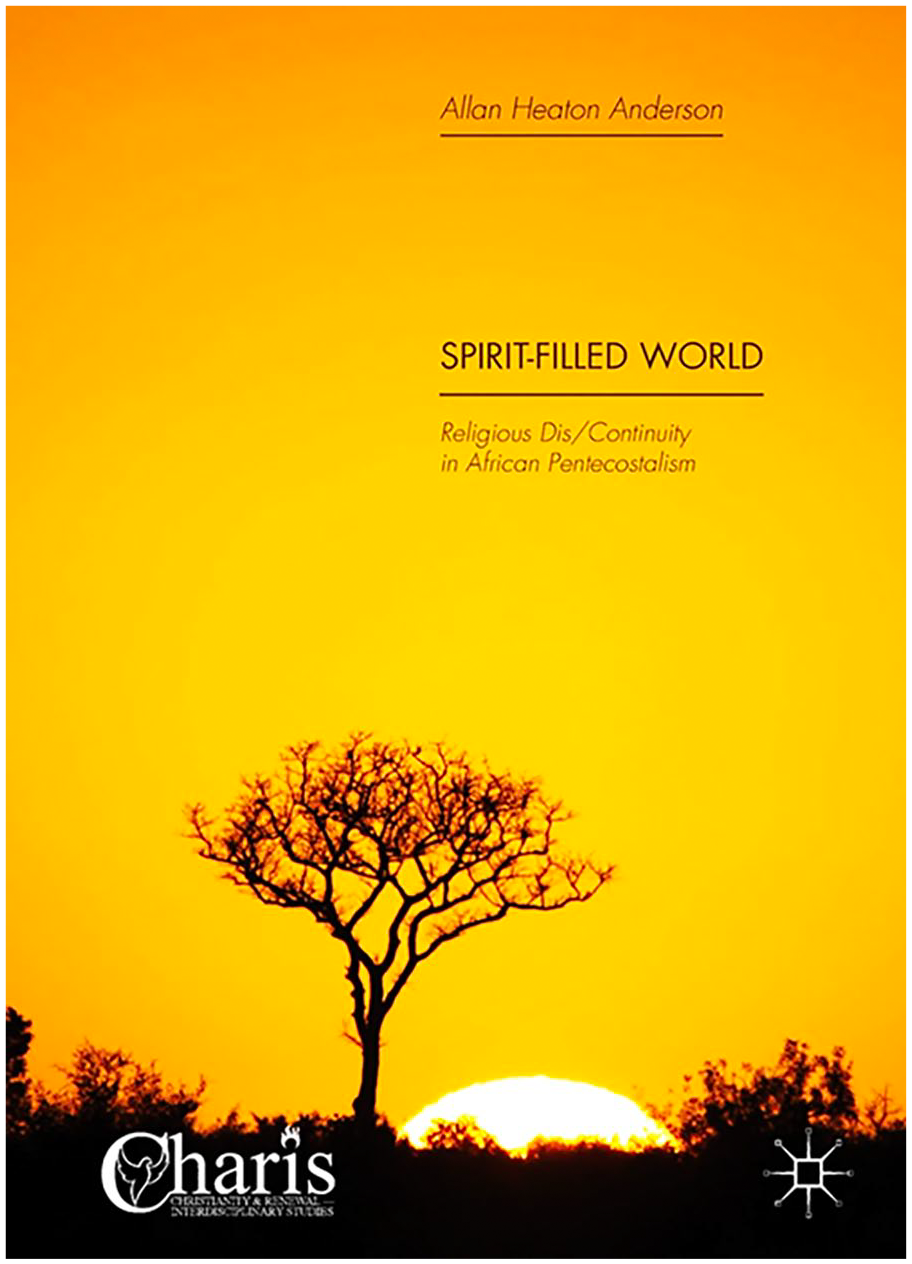
This article is a review of one of Allan Anderson’s most important contributions to African Pentecostal scholarship, Spirit-Filled World: Religious Dis/Continuity in African Pentecostalism. 1 This book and other important works by Anderson allow scholars in theology, anthropology, history, and other humanities to understand the distinction between African Pentecostalism’s continuity with popular religion and its simultaneous discontinuity with some of popular religion’s beliefs and practices. This article aims to engage Anderson’s approach to African Pentecostalism’s dis/continuity with popular religion by examining how African Pentecostalism provides solutions to African problems in ways that delink it from African traditional religions embedded in popular practices. The article will demonstrate through a literature review that whereas African traditional religions use different mediums to provide healing and deliverance, African Pentecostalism uses only the power of the Holy Spirit to do the same.
Reviewing the arc of Anderson’s argument, this article is divided into five main sections: first, it highlights the tension that exists between African Pentecostalism’s continuity with popular religion and its discontinuity with some of its beliefs and practices. The second section looks at the continuity between African Pentecostalism and popular religion as they both link African problems to the spirit world. The third section will delve into the reasons for delinking African Pentecostalism from popular religion in some of its beliefs and practices while trying to provide solutions to African problems. Fourth, the confrontation with the spirit world will be addressed as key difference. The article will conclude with a section on the balancing act between African Pentecostalism’s continuity with traditional cultures, its simultaneous discontinuity with some of its beliefs and practices, and the importance of applying this dis/continuity perspective to future studies of African Pentecostalism and religions.
The Tension between African Pentecostalism’s Continuity with Traditional African Cultures and its Discontinuity with Some of its Beliefs and Practices
Anderson’s argument that African Pentecostalism is not always in continuity with popular religion but has some discontinuity with it presents a tension between continuity and discontinuity. This tension in African Pentecostalism, according to Anderson, is also the result of the constant tension between the Holy Spirit and the spirit world. 2 Pentecostals in Africa believe that the Holy Spirit is more powerful than spirits in the spirit world. 3 Anderson states that these other evil spirits “have no power over Christians because Christians have the greater power of the Holy Spirit within them to overcome all Satan’s power.” 4 Elsewhere, Anderson has stated that African Pentecostals, like the apostles in the book of Acts, perceive the Holy Spirit as the one to fight the evil spirits, thereby presenting this tension between continuity and discontinuity. 5 Thus, by becoming Spirit-filled, the believer is also announcing the tension and conflict with other spirits which was not the case before being baptized by the Holy Spirit.
Anderson’s book also reveals that the gospel of leaving the old to embrace the new has brought about the tension between continuity and discontinuity with traditional ancestral beliefs and practices. In other words, Africans are expected to break with their evil past without necessarily having to break with all their traditional practices. According to Anderson, one of the places in which this tension manifests is the practice of the ancestors. This tension becomes an issue whenever Westerners view the African ancestors as demonic, while some Pentecostals make a distinction between respecting the ancestors as a traditional practice instead of worshipping them like a religious practice. Anderson opines that for Africans to forget the past does not necessarily mean they need to cut ties with their ancestors even though they do not worship them. 6 When respecting the ancestors, an African Pentecostal runs the risk of being accused of worshipping the ancestors, especially by outsiders. Therefore, the issue of ancestral worship has always brought to the fore this tension between continuity and discontinuity with traditional culture in African Pentecostalism.
In Anderson’s book, this tension is also present in the way African Pentecostals package the message of the prosperity gospel. According to Anderson, Africans preaching the prosperity message do not necessarily mimic their Euro-American counterparts but sometimes really want to prove that the life of poverty and suffering has no power over the Spirit-filled believer. 7 In Anderson’s worldview, seed sowing and tithe paying in African Pentecostalism are not always attempts by leaders to manipulate people to become super wealthy but sometimes ways of trying to help people come out of a life of poverty and sickness. A tension exists between continuity in the exploitation of people but at the same time discontinuity from the reasons for that same exploitation. There should never be an assumption that when an African Pentecostal preacher speaks about offerings and tithes they always solely want to enrich themselves with an exploitative prosperity message. At times, such a message also contains some genuine concern for the empowerment and development of Africans. Thus, there is a difference between the original message of the prosperity gospel and the traditional ideas of prosperity. This difference has influenced Africans on how they perceive the prosperity message.
The book also explores the tension present in those who seek to globalize Pentecostal experiences by repudiating the local Pentecostal experiences. According to Anderson, some Western scholars emphasize African Pentecostalism’s continuity with popular religion without also looking at its discontinuity with some of its beliefs and practices. 8 On the contrary, continuity should not be used as a tool to discredit African Pentecostalism but rather as a tool to understand the reasons behind this allegiance to popular religion. This way of looking at continuity would be objective and constructive, not biased and therefore implicitly rejecting. Global Pentecostalism should not be studied at the expense of African Pentecostal experiences, but rather should study different Pentecostal experiences to more fully understand the Pentecostal phenomenon. Hence, there is a need to look at the other side of African Pentecostalism’s continuity with traditional cultures and also acknowledge its discontinuity with some of its traditional beliefs and practices. Contextualization remains crucially important in the study of the Pentecostal movement, specifically in the African context.
Continuity in African Pentecostalism: A Link to the Spirit World
In his book, Anderson defines the spirit world in an African context as consisting of two important parts, that is, the world of witchcraft powers on the one hand and the world of the spirits on the other hand. 9 The spirit world is thus the world occupied by different kinds of evil spirits including forces of witchcraft and other demonic influences. Different from the Western context, the spirit world in Africa is also attached to human beings believed to be the forces behind witchcraft and hence the cause of misfortunes in other people’s lives. It is therefore common in many African contexts to ascribe one’s problems to a person with witchcraft powers and demonic spirits. The spirit world is also related to the deity in the sense that God who cannot be seen and known is perceived to exist in the spirit, hence in the context of the Trinity, he is also known as “God the Spirit.” 10 Anderson continues by saying, “the complex development of the spirit world results from what seems an inadequate concept of God.” 11 Unfortunately, this inadequate concept of God has to a certain extent resulted in some in the African context replacing the God they cannot see with their ancestors. However, it will be proved in the next section that African Pentecostals, unlike popular religions, do not seek to replace God in the spirit world with their ancestors.
The spirit world is a reality in Africa that cuts across African life and not just the religious landscape. Africans, including those who do not have any affiliation with religious life, are aware of the spirit world. In addition, the spirit world also exists in other parts of the world and not only in Africa. Anderson puts it this way: “While recognizing that the ideas concerning the spirit world are by no means homogeneous throughout sub-Saharan Africa, certain foundational similarities exist that can also be shown in other local religions outside Africa.” 12 But at the same time, Anderson acknowledges that many in the northern hemisphere do not understand the spirit world in the same way that the majority world does. 13 This should challenge them to study and understand how the spirit world functions within an African worldview so that they do not misconstrue this reality. According to Anderson, this is important given the growth of the so-called migrant African churches in America and Europe. 14 This understanding will help Westerners to get a fuller grasp of what is going on in African Pentecostal experiences.
Anderson explains that “when referring to the spirit world of Africans, or a supernatural, irrational, ahistorical religion, then this is usually being described over against the opposites: natural, rational, historical, secular, and so on.” 15 This is another important dimension that Westerners need to understand: the spirit world is a distinct reality. When Westerners understand this dimension, they will be able to minister in an African context instead of ignoring the realities of the African spirit world. This is important given the failure of earlier Western missionaries in Africa to fully understand how the spirit world in Africa functions among Africans. Consequently, many of these missionaries failed to address the problems that Africans faced because they delinked them from the realities of the spirit world. 16 Anderson explains that this had “to do with the failure to recognize the importance of the continuity of the African religious world and how Christianity can transform and confront that world in discontinuity with it.” 17 Thus, the next generation of Western missionaries will have to understand this reality if they want to succeed in doing ministry in Africa.
It is important to emphasize that this spirit world is believed to be the one causing socio-economic challenges and misfortunes in life. Anderson asserts: “This world of ancestors, witchcraft, evil spirits, witch familiars, and demonic forces is believed to be responsible for all kinds of events—including misfortune, illness, poverty, and a host of other social, economic, and political problems bringing spiritual insecurity.” 18
The influence of the spirit world in the life of Africans is not only limited to the spiritual life; all challenges that believers face are seen as related to the spirit world. This includes socio-economic challenges such as poverty, inequality, and unemployment. Instead of relating these challenges to the inadequacy of governments in Africa, Pentecostals will see the demonic forces and evil spirits in the spirit world as the main cause of their problems.
Discontinuity in African Pentecostalism
African Pentecostalism agrees with identifying the problems that people face in Africa as being caused by the spirit world, but there is a discontinuity about how such problems are to be addressed. In Anderson’s book, the three aspects of the spirit world that African Pentecostalism is in discontinuity with traditional religion are the world of the ancestors; the fearful world of witchcraft with its accompanying curses, evil spirits, nature spirits, and familiar spirits; and the world of misfortune, bad luck, and illness. 19
First, African Pentecostalism is in discontinuity with the world of the ancestors or what is also known as the ancestor cult. According to Anderson, “The ancestors are believed to be those who have died, existing in some usually undefined and unknown place to which the living have no access.” 20 African Pentecostals are aware of the ancestor cult, the ritual ceremonies, and so forth, with some of them having practiced these ceremonies in their pre-Christian life. However, most of them believe that once “born again,” they are not expected to worship their ancestors any longer. Elsewhere, Anderson in his research asked people specifically “whether they participated in ritual offerings to ancestors,” 21 a very direct question about the ancestor cult. According to Anderson, “almost all the Pentecostals surveyed said that they were opposed to the practice of offerings to ancestors; they did not reverence the ancestors and did not consult healers/diviners.” 22 Thus, here it can be deduced that while African Pentecostals agree that certain problems come from the spirit world, they do not use their ancestors as the medium to solve their problems. In Anderson’s approach, the challenge is that Western observers sometimes misconstrue spirit churches such as the Zionists and Apostolics in Africa as Pentecostals. Other than Zionists and Apostolics, several other churches might be identified as spirit churches and not Pentecostal. 23 When Anderson asked the same questions to this group, “about half observed ancestor commemorations, and about a third consulted diviners or witchdoctors.” 24 Therefore, it is pivotal when looking at discontinuity with the ancestor cult to specifically contextualize African Pentecostalism.
Second, African Pentecostalism is in discontinuity with the world of witchcraft and evil spirits. Africans believe that witchcraft exists and that some people, believed to be witches, operate in witchcraft. Anderson says in this regard, “there is also the unseen evil and antisocial power of the sorcerers and witches, the ‘wizards’ who use witchcraft to achieve their dastardly deeds.” 25 According to Anderson, it is not common in the West for people to be accused of being witches. 26 Africans fear witchcraft to such an extent that, even when it is clear that some problems are common in society, some people will still relate them to witchcraft. Some of the participants whom Anderson interviewed believed that they could not be bewitched because they were born again and believed in Jesus Christ. 27 Some, however, believed that a Christian not living a prayerful life and not reading their Bible could become a victim of witchcraft. In Africa, diviners are used to help people who have been bewitched or who suffer as a result of having a witchcraft spirit or even an ancestral spirit. 28 In African Pentecostalism, however, it is believed that prayer can deal with witchcraft.
Last, African Pentecostalism is also in discontinuity with how the cause of misfortune (also known as bad luck) is perceived. According to Anderson, it is generally believed in Africa that if people do not treat others well, it might result in bad luck for them. 29 Some people believe that this can also apply to the way a certain family relates with their ancestors—something that also has the potential to result in bad luck. Furthermore, misfortune might be caused by disrespecting the traditional practices that are commonly practiced by a certain indigenous group. Some associate bad luck with the spirit of witchcraft, hence a person with misfortune is often perceived to be bewitched. However, the African Pentecostals whom Anderson interviewed believed that bad luck was caused by Satan himself: “Satan (the devil) [is] the author of evil and misfortune, the personification of everything that went wrong in the lives of Christians. He is the one who comes to steal the things that God wants Christians to have.” 30
Therefore, there is a discontinuity in African Pentecostalism in terms of the source or causes of misfortune. This affects the way African Pentecostals address various forms of misfortune. In the next section, I discuss how African Pentecostals confront witchcraft, sickness, misfortune/bad luck, and so forth.
Confronting the Spirit World in African Pentecostalism
First, as stated earlier, the Holy Spirit is believed to be more powerful than evil spirits. African Pentecostals, instead of embracing the spirit world occupied by evil spirits, confront it through the power of the Holy Spirit. 31 Anderson states, “the power of the Spirit brings discontinuity to a continuous spirit world.” 32 African traditional religions embrace ancestral spirits and make efforts to appease them; however, African Pentecostals stand against these spirits to confront them. Anderson declares that the evil spirits “have no power over Christians because Christians have the greater power of the Holy Spirit within them to overcome all Satan’s power.” 33 Most African Pentecostals interviewed by Anderson do not believe that evil spirits can possess them or that they can be tormented by ancestral spirits. Rather, they believe that they are Spirit-filled and can overcome every demon standing in their way. Hence, the power of the Holy Spirit is emphasized in African Pentecostal preaching. African Pentecostals believe that the same Holy Spirit that gave them salvation and sanctification can confront the different evil powers and forces in the spirit world. African Pentecostals across different streams do not only speak of the baptism of the Holy Spirit and speaking in tongues; rather they emphasize the power of the Holy Spirit which is in discontinuity with other spirits. 34 Furthermore, they do not only speak of the gifts and the fruit of the Holy Spirit but also its power. Asamoah-Gyadu, cited in Anderson, points to the supreme power of the Holy Spirit who is considered to be able to overcome the demons of the traditional spiritual world, which is a world of power. 35
Second, instead of taking a sick person to a diviner, African Pentecostals believe that the sick person can be healed through the laying on of hands. Some African Pentecostals also use other methods such as anointing the sick person with oil and using anointed water but not to the same extent as diviners. Anderson explains that the use of symbols and other rituals in Pentecostalism should also be differentiated from their use in spirit churches such as the Zionists and Apostolics. 36 In addition, the diviners, in providing healing, use the spirits of the ancestors, but the pastor will use the power of the Holy Spirit in believing God for the healing of those who are sick. 37 Pastors in African Pentecostalism should be differentiated from the prophets in spirit churches like the Zionists and Apostolics. Anderson explains that the “prophets act much like diviners who determine the cause of sickness and follow certain healing rituals and remedies.” 38 Anderson explains further: “The symbols used in healing were almost invariably believed to be powerless without faith in God; the objects were not usually seen as having any intrinsic power in themselves.” 39 Therefore, healing in African Pentecostalism should be completely separated from divination; in fact, it entails the confrontation of those same spirits of divination.
Finally, some sick persons in African Pentecostalism are believed to be attacked by evil spirits and witchcraft, hence it is believed that they do not only need the laying on of hands but also a prayer for deliverance. According to Anderson, deliverance is not a new phenomenon in Pentecostalism but has always been there since the inception of the movement.
40
In the Bible, deliverance is a tool that stands in confrontation with evil spirits and demons to cast them out whenever they manifest. Anderson goes on to say, “in a world where spiritual forces are everywhere, it is no wonder that this practice is prominent throughout Africa.”
41
Deliverance often entails some sessions which people who need prayer attend to receive help for their problems. According to Anderson, during these sessions a lot of things usually happen that include the following:
These manifestations involve different things, such as shouting and screaming, sometimes speaking with a different voice, an unkempt or unwashed appearance, restlessness, violent contortions of the body (often accompanied by extraordinary strength), jumping, falling to the ground, and running around the premises. Pastors and people specializing in a “ministry of deliverance” will sometimes pray for demonized people for hours until the demons are subdued and exorcised.
42
The spirit world is confronted through deliverance ministry where evil spirits and demons are cast out.
Towards a Balancing Act between Continuity and Discontinuity
Anderson’s approach makes it very clear that African Pentecostalism is in continuity with popular religion while simultaneously being in discontinuity with aspects of it. However, the challenge that remains is that many Western observers and those outside African Pentecostalism often only emphasize continuity and disregard discontinuity. They would want to demonstrate that visiting the grave of a loved one is illustrative of ancestral worship without showing the difference between ancestral commemoration and ancestral worship. To bring a balance between the tension that exists between continuity and discontinuity in African Pentecostalism, there is also a need to understand African Pentecostalism within the broader religious landscape in Africa to avoid painting all religious movements with the same brush. Some movements may appear to look like Pentecostal movements, but a proper study will reveal that they are not. It is pivotal when addressing issues of dis/continuity to separate African Pentecostalism from spirit churches like the Zionists and Apostolics. Many other spirit-type churches in Africa do not have any affiliation with or affinity for Pentecostalism. Many of these churches embrace ancestral worship, divination, and other popular religion that are related to the spirit world. The studies on these churches cannot be used to support African Pentecostalism’s supposed continuity with these traditional cultural practices. Outsiders also have a challenge that when they cannot appropriately categorize a certain religious movement, they usually end up labeling it “Pentecostal.” African Pentecostalism should be distinguished from all other emerging religious movements in Africa which have maintained continuity with certain popular religions.
There is a need to make a distinction between religious beliefs and common practices by Africans. When African Pentecostals attend a certain ceremony such as an ancestral commemoration, most of them do so because they are part of the family, community, or larger society. They do not attend such a ceremony because they want to worship their ancestors. In Africa, being part of the community is as important as participating in a family gathering. This does not mean that a certain belief is busy worshipping the ancestors. African Pentecostals do not practice their religion in isolation; they are still part of the family and the community where their churches are located. Hence, it is important through fieldwork to hear from the Pentecostals themselves whether they believe in ancestral worship. Anderson’s approach to discontinuity in African Pentecostalism is therefore an important one because the voices of Pentecostals themselves are being heard in his study.
Conclusion
While there is a wider acknowledgment of the continuity that exists in African Pentecostalism with popular religion, this continuity cannot be studied in isolation. Scholars in the fields of theology, anthropology, history, and other humanities should be able to point to this continuity on the one hand, while also highlighting the discontinuity with other aspects of it on the other hand. This ability to apply a dis/continuity perspective flows from the unique contribution of what this article calls the Allan Anderson approach to dis/continuity in African Pentecostalism. In addition, a study on African Pentecostalism and popular religion should be a balanced one, able to deal with the tension between continuity and discontinuity. Such studies should be able to delink African Pentecostalism from popular religion in its provision of solutions to widespread African problems such as sickness, unemployment, inequality, poverty, and so forth. Furthermore, this article proposes that scholars should attempt to understand African Pentecostalism within the broader religious landscape in Africa to avoid painting all religious movements with the same brush. African Pentecostalism should be distinguished from other emerging religious movements in Africa that have seamlessly maintained continuity with popular religion. Lastly, there is also a need to make a distinction between religious beliefs and common traditional cultural practices by Africans.
Footnotes
Notes
Author biography