




Abstract
In this article, we argue that post-acquisition performance can be improved by adding an outside-in business-level strategy to synergy-driven corporate-level strategy. Multinational companies (MNCs) frequently opt to accelerate new business development through the acquisition of innovative companies. We present an in-depth case study of an integration failure after a multi-million-dollar acquisition and also explore how the integration was eventually turned into a success. Initially, the synergies between the MNC legacy business and the acquired company do not play out as expected. As new business development stalls and important growth markets are missed, corporate value destruction occurs. As often happens, consultants are hired to fix the problem, but cannot turn the tide. Eventually, the MNC empowers key people inside the company and finds a way to solve the problem. The essence of the solution lies in deep, genuine, outside-in strategizing at the business level. In hindsight, the MNC suffered from corporate strategy myopia relying on high-level analyses and net-present value (NPV) calculations of potential synergies as a starting point for post-acquisition integration, instead of a clear, outside-in view of the strategic business model required to create value.
Introduction
Acquisitions are prone to failure. Such failure tends to manifest in the integration phase and is attributed to a variety of factors, including incompatible cultures or structures and ‘minimax regret’ CEO behaviour (Schenk, 2008). According to Christensen et al. (2011), a stunning 70–90 per cent of all acquisitions fail. Given the average annual acquisition market of approximately US$4 trillion worldwide (Szmigiera, 2020), increasing our understanding of the factors that enhance acquisition success is likely to avoid substantial value destruction, and, in contrast, drive synergy value.
This article shares the outcomes of in-depth case-based research of a post-acquisition integration failure at a large multinational company (MNC) that acquired a multi-billion dollar highly innovative company (IC). When MNCs decide to acquire a new business, substantial time and resources are invested to predict how much financial value will be created. However, in practice, the expected benefits frequently fail to materialize after the deal has been struck. Using our case study, we shed light on what we believe is a common cause of failure: lack of clarity on how the acquisition will create value from a customer perspective. The concept of value creation is defined as the net benefits realized (technical, economic, service, and social) in exchange for the monetary price paid (Anderson & Narus, 1998). It is narrower than the holistic concept of creating value as, particularly, proposed by Mahajan (2016).
The case revolves around the post-integration and value creation challenges and solutions experienced by an MNC after taking over a smaller healthcare IC. The importance of IC to MNC—and the subsequent integration of the companies—cannot be underestimated. IC represented a key steppingstone to access a large growth healthcare market, which MNC needed to capture before the competition. In addition, MNC undertook the acquisition to accelerate the realization of a new general strategic direction for the entire corporation. In short, the stakes were high.
After a brief literature review of post-acquisition performance, the methodology of the case research is described. Next, we describe how outside-in and inside-out analyses at the business level can be applied to identify in detail the synergy that can be created by leveraging resources, integrating activities and aligning value propositions (Meyer, 2007) between the MNC and IC. After discussing the outcomes, a general three-stage process model that aims to create new value—instead of destroying it—is proposed for general use by companies preparing for or repairing acquisitions.
A Brief Review of the Literature on Acquisition
Much research has explored the ‘why’ of acquisitions, such as growth or gaining new skills/technologies to support strategic priorities. In general, the aim of acquisitions is to internalize economic activities and assets that are deemed important to the firm’s strategy and performance (Lei & Hitt, 1995). Other rationale for acquisitions could be to increase the value of the target company through performance enhancement, to accelerate market access for the target (or buyer’s) products or to help the development of start-ups (scale and knowledge). Strategies behind acquisitions include market consolidation, transformational mergers (the desire of companies to transform by moving into a new market served by an acquired company) and, finally, portfolio management of buying cheap in order to grow and sell later at a higher value (Koller et al., 2010). Stellner described additional reasons at a generic level: achieving economies of scale or scope, creating synergies by combining capabilities to create new opportunities and strengthening core competencies (Stellner, 2015). However, acquisitions can also be driven by non-economic or non-rational reasons. According to Schenk (2005), these acquisitions ‘…are intended to create strategic comfort when faced with the uncertain effects of a competitor’s moves, rather than economic wealth.’ Acquisitions undertaken for such reasons are likely to fail and destroy value in terms of money, jobs and missed opportunities.
Regardless of the motivation for acquisitions, the literature has traditionally focused on finding a strategic fit between the acquired company and the acquirer. Strategic fit, also called related acquisitions (in contrast to unrelated acquisitions), is used to describe acquisitions that are related to the buyer firm’s activities. Higher synergies are assumed to emerge from acquisitions of closely related companies. Strategic fit has been suggested to be a good predictor of the benefits arising from synergies through economies of scale, scope and transfer of skills/technologies. High levels of integration (mostly operational) are required to utilize the full potential of related acquisitions (Porter, 1985). After the shift from the traditional company models of the industrial age towards the banking and service sectors, it became clearer that strategic fit and a high level of operational integration are important; however, strategic fit alone is not sufficient to ensure a high acquisition success rate. Other key factors emerged, such as the rate of integration, time of acquisition, cultural fit and process alignment; for example, Datta (1991) focused on organizational fit, which consists of management styles, reward and evaluation systems and organizational structures. Variation in these elements can strongly impact the post-acquisition performance of companies. In addition to traditional operational integrations, which are an essential prerequisite to securing the benefits of acquisitions, poor organizational fit in terms of differing management styles and reward and evaluation systems can especially affect the success of acquisitions.
As demonstrated by Larsson and Finkelstein (1999), the realization of synergies from acquisitions is a function of both the similarity and complementarity of the businesses. The level of potential for combination strongly depends on the extent of interaction and coordination during the organizational integration process, as well a lack of employee resistance to formation of the combined entity. As we will demonstrate in this article, it is important to consider both the relatedness of the businesses and their organizational and cultural integration. Furthermore, the long-term performance of acquired firms must be examined to obtain the full benefit of the perceived synergies; acquired companies cannot be expected to yield their full potential in the short and medium term. Acquisition integration is an ongoing iterative process and not a one-off exercise—the synergistic potential of acquisitions becomes clearer when the management of the acquirer are closely engaged, and according to Barkema and Schijven (2008), is only actually realized over time.
Framework for Analysis
In contrast to most research on the success of acquisitions, which adopts an inside-out view looking at the corporate level, this research focuses on an outside-in strategy level at the business-unit level with a focus on customer’s needs (Day & Moorman, 2010). By analysing business units, one should be able to gain precise insights into what exactly needs to be integrated to improve post-acquisition performance.
The guiding hypothesis of this research is that a genuine outside-in strategy at the business level is required to create joint understanding and a common point of reference on what to integrate—and why—between different business units. First, an outside-in perspective is needed to understand the current and future demands of the designated market. Second, in-depth business unit analysis is required to translate the market demands into the existing post-acquisition business unit.
The literature review above provides a theoretical and contextual background to why acquisitions are undertaken and how they relate to corporate strategy. However, there is little practical information on which specific business-level aspects of an acquired company must be examined to maximize the benefit and success of an acquisition. Furthermore, tools to analyse the similarities, differences and degree of relatedness of multiple businesses have not yet been designed. One framework that could help understand this specific issue from a practical point of view is the business model concept (Johnson, 2018), combined with Meyer’s (2007) representation of interlinked business models, to represent a multi-business company (i.e., a corporation). The combination of these frameworks is likely to help to answer the question of what exactly needs to be done to successfully integrate an acquired company into an MNC in order to accelerate strategic change.
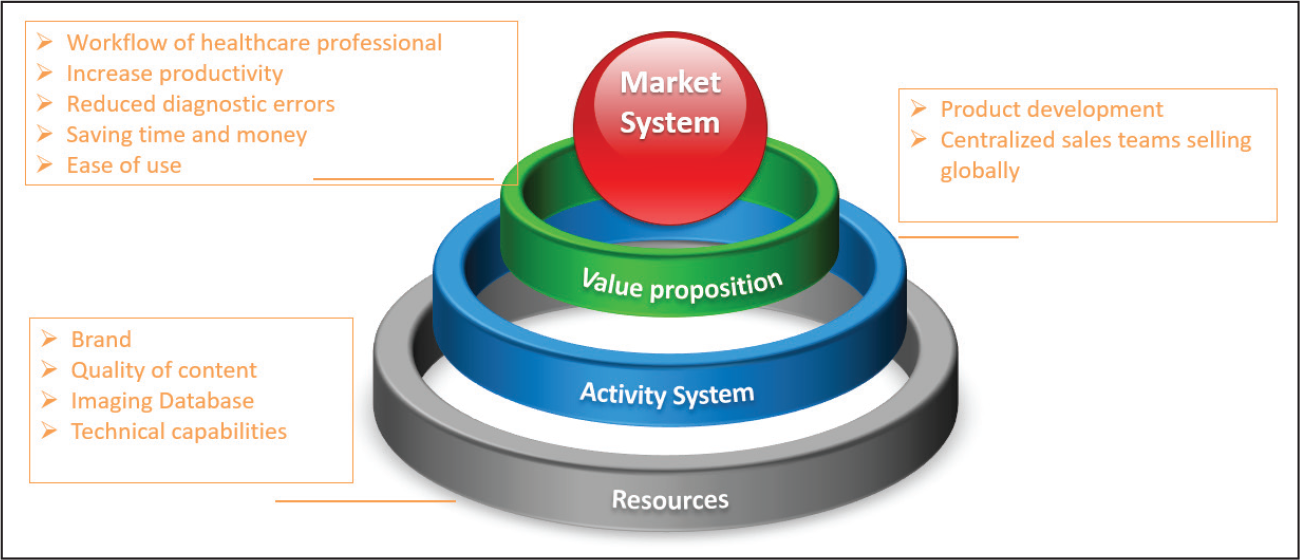
Johnson’s business model concept contains four elements. The first three revolve around value creation: the customer value proposition, the key processes to create value creation and the key resources to drive value creation. The fourth box, the profit formula, focuses on value capture (Johnson, 2018). In this article, for brevity, we focus on the three key business model components for value creation. However, we also add the concept of ‘market’ to the model to stress the importance of assessing the market when considering value creation. The resulting model is depicted in Figure 1.
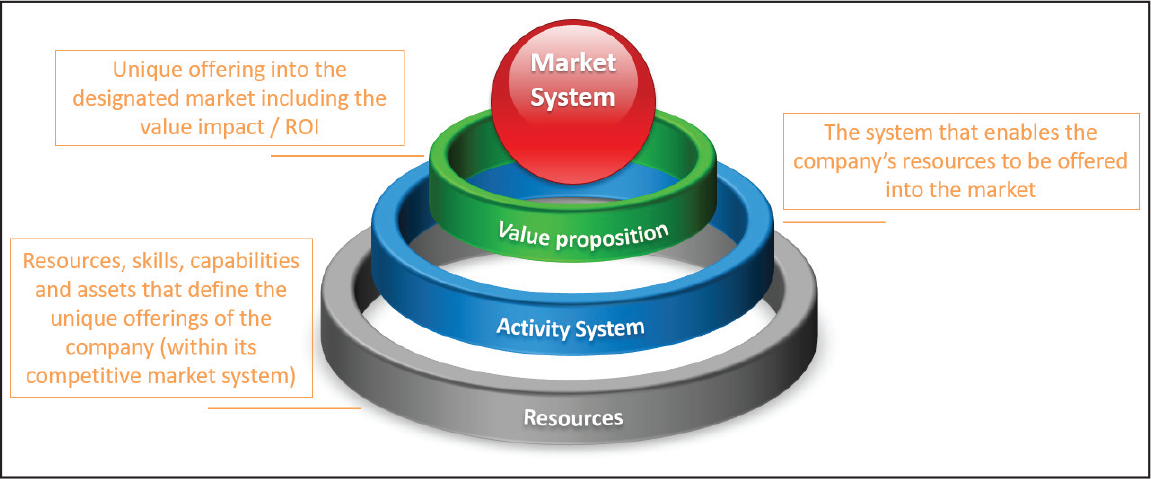
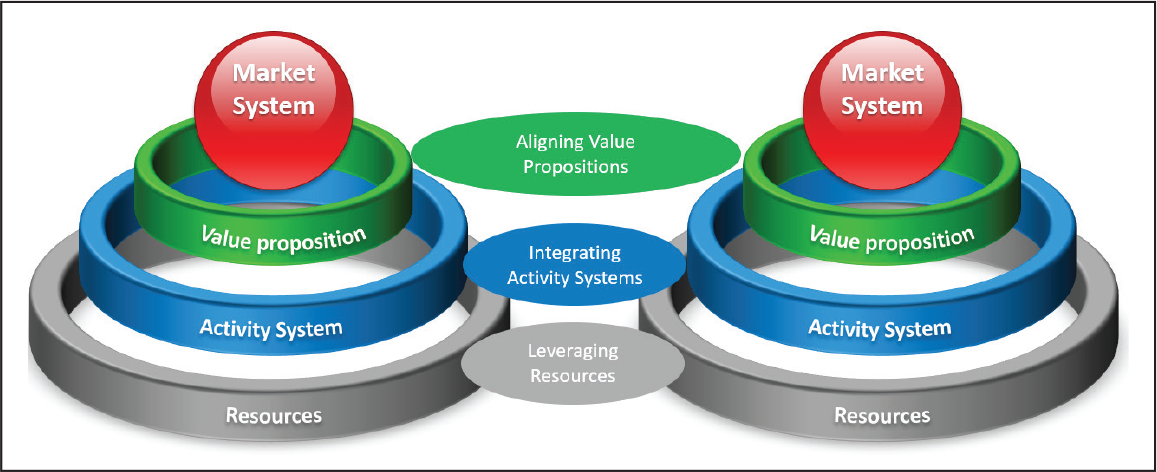
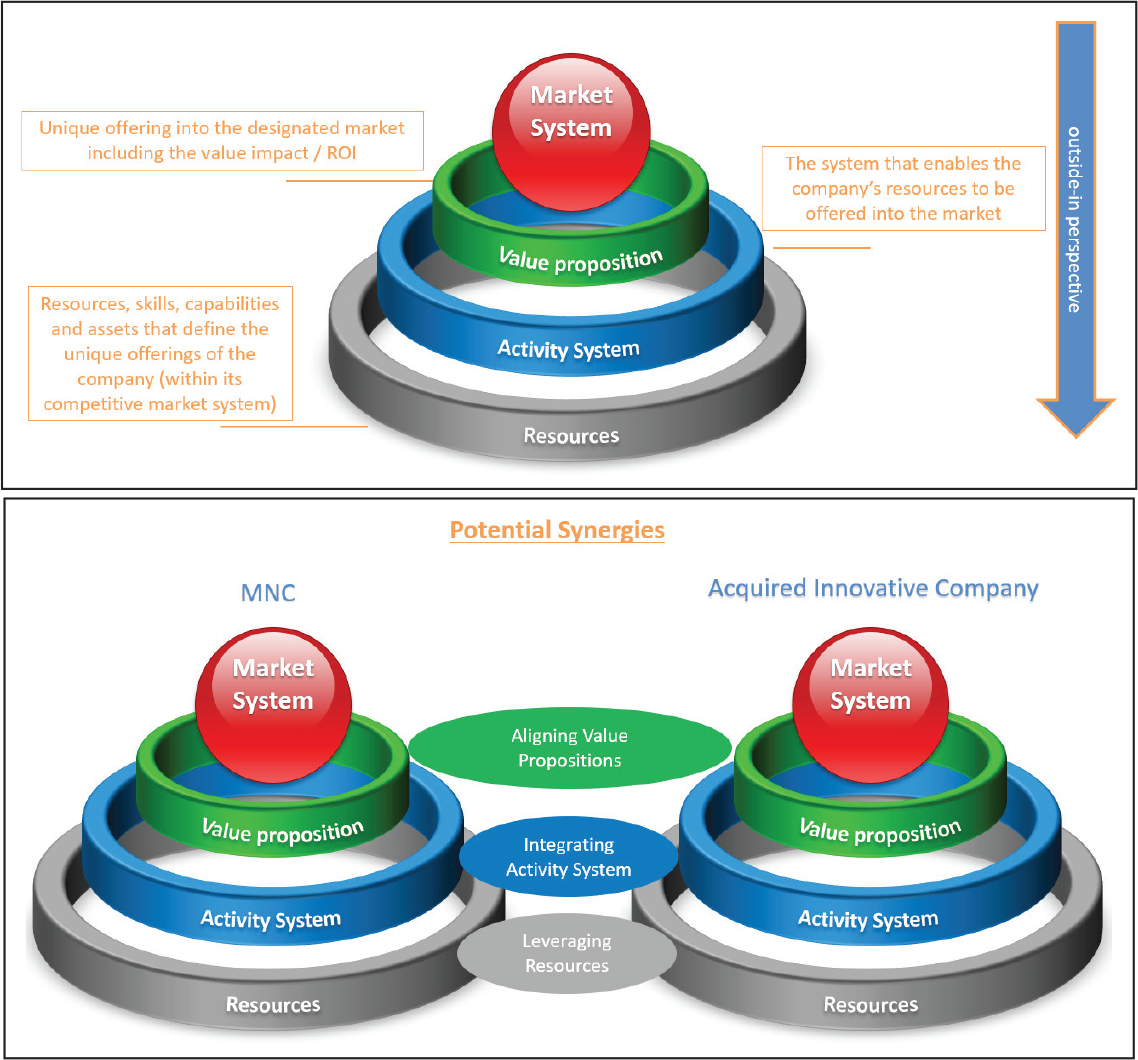
Combining the work of Johnson and Meyer and adding the market concept result in the following
Using the
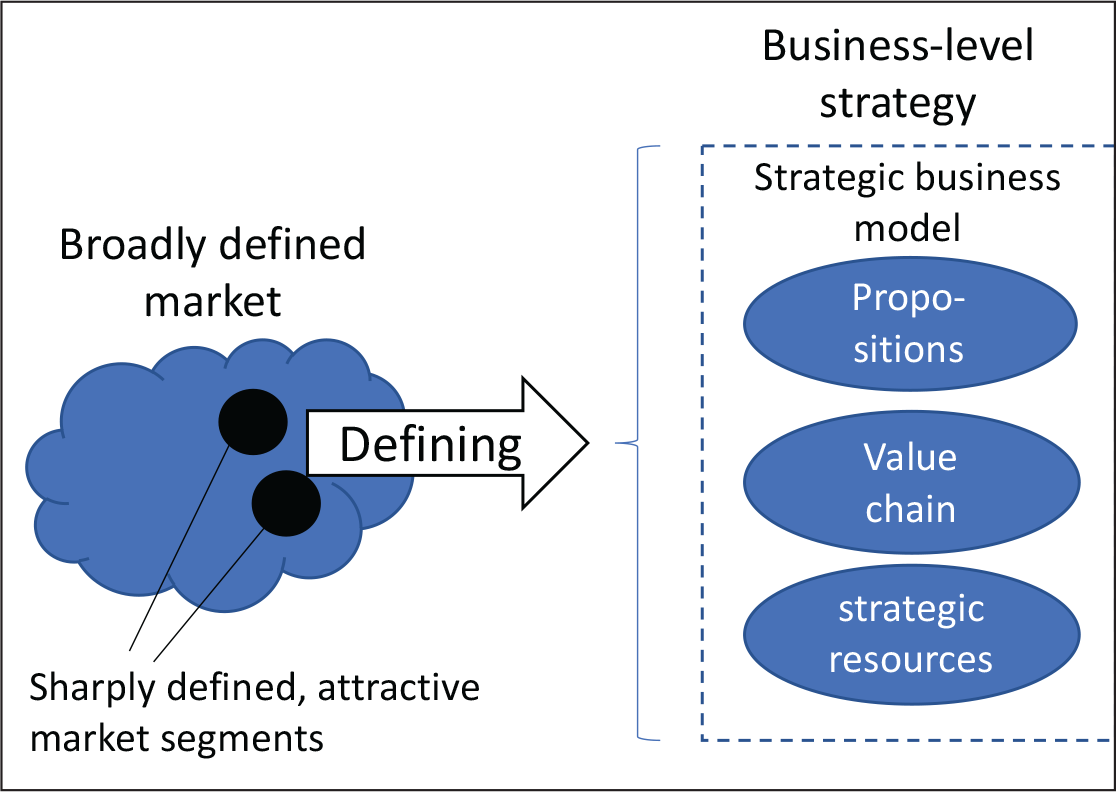
In our research, we combined the ‘single-business’ and ‘multi-business’ frameworks described into the two-step framework shown in Figure 3 to structure the in-depth case analysis. Step 1 of our analysis works from the outside-in, starting with market opportunities and then looking at the properties of the business model required to actually capture these opportunities. In step 2, the synergistic potential of both the parent and acquired companies are considered in the context of the outcomes of step one. The outcomes of step 2 help to understand what exactly needs to be integrated and why it is important for the MNC and IC to collaboratively create value in an attractive marketplace.
Methodology
Given the nature of the phenomenon to be explored, that is, finding a way around post-acquisition failure at an MNC, we adopted a case-based research approach. Following Yin (2014), a case study protocol was developed to systematically explore various unique and rich information sources to arrive at appropriate, new insights.
The case in this study features typical characteristics that one sees in rapidly changing industries, such as healthcare and information technology. Often, successful but relatively small (innovative) companies are acquired by a larger and more established MNCs. Therefore, this case is particularly interesting to draw lessons from a typical acquisition in this field. The input from customers, employees and other organizational factors all play a role in order to capture relevant case information. Input from the markets is considered essential for this case and obtained through an outside-in approach for collecting relevant data. The market data were captured from three main sources: (a) User surveys, (b) the MNC’s business intelligence unit and (c) expert interviews. An overview of the data collection steps is provided below.
Overview of Data Collection Steps
We looked at both the MNC and IC business models separately, describing the essence of their resource base, activity system and value propositions. Information on these elements was available from company resources, such as documents, and also from one of the authors of this article who knows both organizations well. This information was used to compare and contrast both business systems to find out what exactly makes each unique.
Next, market information was captured from four different channels: user surveys, business intelligence unit data, (brand) image studies and interviews. One of the interviews was held with a key opinion leader in the field.
Data on employee perspectives on the acquisition and integration attempts were captured through open interviews with a product manager and two salespersons from the acquired company.
The process of data collection, processing and writing took approximately 4 months.
Data Collection Through User Surveys
A user survey was conducted in the Netherlands among 20 users who use the point-of-care tools offered by the MNC on a daily basis. The Netherlands represents one of the most advanced digital healthcare markets and thus, provides a representative use case for capturing feedback from the market; for example, in terms of market share and digital maturity within the healthcare industry, The Netherlands has the second highest number of hospitals in Europe and an Electronic Medical Record Adoption Model level of 6 or 7 (EMRAM); 7 is the highest level of the digital maturity index (HIMSS Analytics, 2016). Twenty respondents (a mix of clinicians, medical residents and medical students) were surveyed. Given the qualitative nature of the surveys, 15 respondents are regarded as the minimum number of participants (Bertaux, 1981), whereas around 20 responses are regarded representative (Green & Thorogood, 2009). The surveys were designed to identify which elements of the acquired company business system are valuable to the users, in order to ensure IC is successfully integrated within MNC
Data Collection from the Multinational Company Business Intelligence Unit
Data from the MNC business intelligence unit used for this study include the Net Promoter Scores (NPSs). This metric is used to determine whether a customer would promote a certain product/service or whole company or not. NPS is viewed as a powerful tool to help understand, for instance, what features add value to the product and which features need to be improved for sales growth (Reichheld, 2003). Extensive data were used to analyse the feedback on the products, usage, the brand/image of the MNC and the practicality of the point-of-care tools. Using this approach, we confirmed whether the assumption of providing point-of-care solutions was actually achieved through the acquisition—by asking the customers.
Expert Interview
An expert interview was conducted with a key opinion leader, who at the time was the chair of the board of the largest medical society in the market targeted by IC. The aim of the interview was to gain direct feedback on the tools offered by MNC and to acquire a highly influential perspective on the future of this clinical specialty. The society is world’s largest society for clinicians from this specialty, with over 69,000 members from more than 157 countries. By representing these clinicians—and as a highly respected clinician and opinion leader—the key opinion leader provided their views on the workflow of this clinical specialty. The open interview helped to deepen our understanding of the practitioners’ needs and helped to confirm the direction of the user surveys and the data from the NPS and image studies. The outcomes of the extensive data collection and subsequent processing, that is, the case study have been worked into the case story presented below.
Case Study
The MNC this study focuses on has previously acquired many companies. Some of these acquisitions were more successful than others. For strategic reasons, the acquisitions have increasingly become driven by the need to access data and content in the healthcare realm. Markets are seen to move in the direction of innovation in healthcare information/data and content, and MNC has responded by adapting the composition of its corporate portfolio accordingly. IC acquired by MNC fits this picture, with its strong healthcare content and ability to structure the content/data. In addition, IC offers interesting potential synergies, as deep integration of the activities of MNC (volume business) with IC (specialized) is possible at the point of care. Especially, given the diagnostic and imaging specialties of the IC, it would have been extremely costly and time consuming for MNC to build a similar technological database by itself. Therefore, in addition to the ‘access to data’ motivation, ‘access to new technology’ also represented an important objective of this acquisition. In short, the acquisition of IC by MNC should pave the way towards the growing market for specialized, point-of-care information in healthcare.
The MNC acquired IC to accelerate their strategic objectives. In this case, MNC has the strategic desire to be the leader in global healthcare information and analytics. This strategic objective was partly driven by a change in the needs of the market; the MNC aimed to tap into this underserved market need by acquiring IC.
Lack of time, the volume of information available and the need to stay up to date with the latest innovations within the medical field have created demand among customers to be served at the right time, with the right information. Healthcare professionals need quick answers to confirm diagnoses and when making treatment decisions. Looking at the individual business systems of MNC and IC, they clearly function well in their own market system.
By comparing the business systems of MNC and IC using the frameworks mentioned in Figure 1 (step 1 of our methodology), one could find synergies and a rationale for the acquisition and also identify which elements should be focused on to ensure the post-acquisition integration is successful.
The Multinational Company Business System
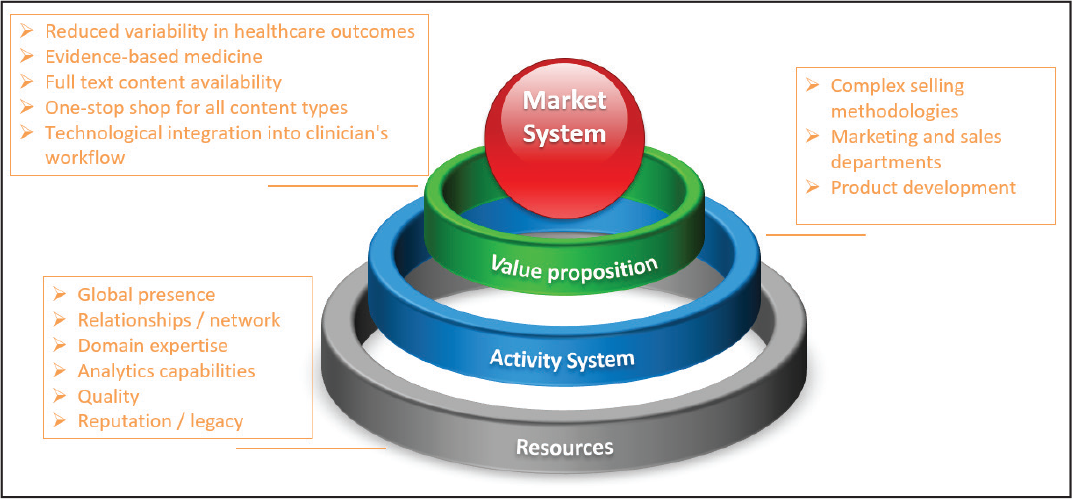
The strategic resource base of the MNC includes its global presence, network and quality. Given the geographical spread of its employees and offices, MNC is able to understand the specific local needs of its customers and collect and transmit that feedback through their employees to their headquarters (HQ). MNC has also gained a wealth of domain expertise in its core business of providing evidence-based information. By disseminating many of the world’s ground-breaking research outcomes, MNC’s offerings have been proven to be of high quality and are trusted by consumers. Thanks to their large database of information including all different types of (researcher) metrics, MNC has now built scale and capacity to analyse these data.
The main elements of the MNC activity system consist of the capability to apply a so-called value-based selling methodology. Along with their global presence, MNC has developed an extensive network of customers, who appreciate that the local sales and marketing representatives are familiar with their local culture and customs. In close collaboration with other departments, the product development team listens to their customers’ wishes and puts requests for developments on the roadmap. Furthermore, during the development of new products, MNC usually involves key customers as development partners. In this way, the product development team also initiates growth in terms of products and potential markets.
The MNC’s value proposition is based on increasing efficiencies and reducing variability in healthcare. Reduction of variability in healthcare outcomes is important in order to standardize healthcare provision and ensure patients with the same diagnosis receive the same proven treatment. However, the vast quantity and continual generation of new information make it extremely difficult for healthcare providers to remain aware of new research and best practice outcomes. Therefore, concise and reliable clinical decision support tools can save a huge amount of time by helping healthcare providers find the answers to (complex) medical questions. The benefit of providing such offerings through digital platforms is that—in theory—all of the available data and information can be made available where the end user needs it, that is, at the point of care.
The newly acquired business aims to provide up-to-date content at the point of care to aid diagnostic decision-making, with the objectives of reducing the costs to the hospital and improving (mainly physicians’) resources and response/diagnostic times in order to improve patient care. In many ways, this resembles the mission of the MNC.
The resource base of IC includes its brand, quality and radiographic imaging assets. IC is an established name in the market. All end-users are familiar with the quality of the content, as the information is written by key opinion leaders in the field. Moreover, the capability of IC to list and consistently deliver quality images for diagnostic purposes is one of its core strengths. The innovative product development team and centralized sales team are key to the activity system of IC. This value proposition is mainly what makes IC attractive to MNC, as it fits into the workflow of healthcare professionals at the point of care. Additionally, IC’s portfolio significantly reduces diagnostic errors and improves healthcare outcomes, as well as saves time and money.
The acquired portfolio can also be used for training and to help educators’ coach and guide medical residents as to which areas they should study. Thus, the acquired products represent a one-stop shop for both training and practicing diagnostic imaging professionals.
Comparison of the two business systems revealed a number of similarities between MNC and IC; for instance, both business systems provide high-quality resources and have high standards for providing reliable and usable information. Furthermore, within their own specialties, both companies have well-known brand names and images and are both known for their products.
At the same time, the business systems of MNC and IC exhibit several differences, which can help the two systems to complement each other in many ways. Importantly, the highly specialized content of the acquired business fits exactly into the daily workflow of healthcare practitioners. While MNC aimed to provide this workflow experience through their value proposition (described above), this was not the case in practice. Therefore, the next section examines whether the benefits claimed by the business systems’ value propositions are actually experienced as such by the end users.
Market Validation
In order to verify and validate assumptions on business systems and rationales for acquisition, it is important to capture feedback and experience from one of (if not) the most important stakeholders, namely the customer for whom value is being created. Ultimately, the customer and market who use the product at the point of care determine whether the company’s strategic objective of becoming the leader in this area is achieved. Interviews, user surveys and data/reports published by the customer and market insights department of MNC were assessed to capture feedback from consumers. The user surveys were designed to capture direct expert feedback on IC’s flagship product, which is regarded the true point-of-care tool of IC’s product portfolio. Reports published by MNC’s customer and market insights department include NPS scores, as well as data on extensive image and usage studies performed globally among clinicians. This feedback is important, as it can help the existing MNC organization to identify how they can develop further integration of IC in a smarter way in order achieve strategic transformation.
The IC user surveys showed that the combination of their search engine, content and technological capabilities represents a strong offering at the point of care; over 80 per cent of the users valued these elements most. As a point of improvement, the users suggested inclusion of even more specialized content into the product. Furthermore, some users (15%) also indicated it was still difficult to make use of all of the product functionalities. Therefore, users suggested the search and browse interface should be improved further. Key opinion leaders confirmed the healthcare professionals’ need for full integration within their workflows (vendor agnostic).
The NPS scores and image studies identified three main benefits of the core solution provided by MNC, namely reductions in the time spent searching for information and preparing presentations and monetary expenses on traditional information databases.
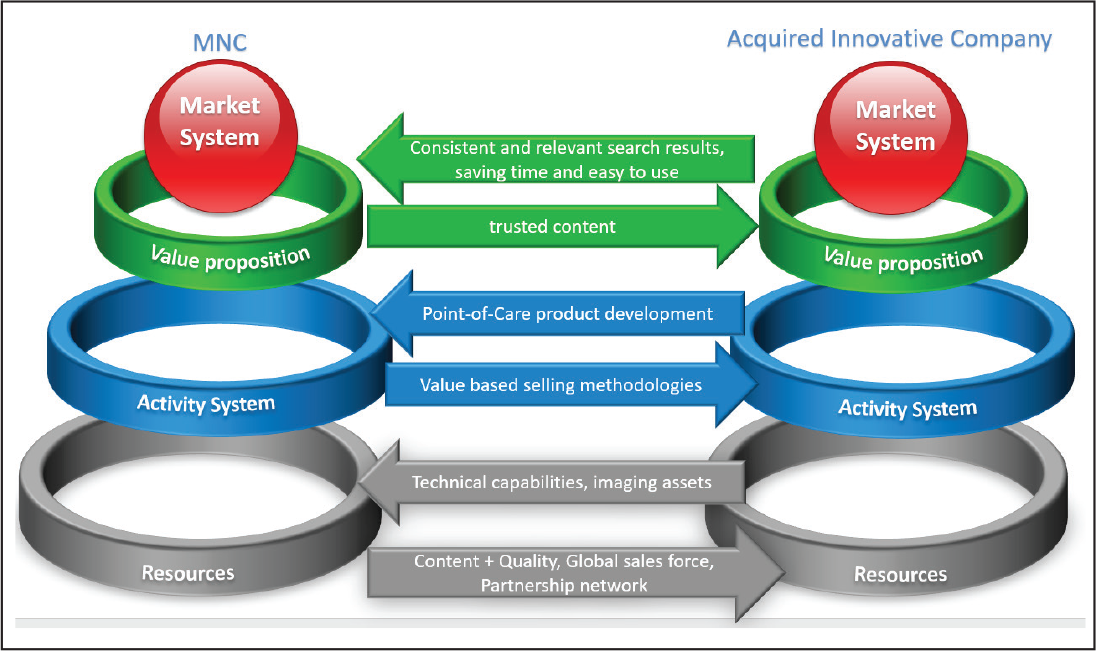
In agreement with their business system and value proposition, MNC aims to become the leader in providing healthcare information and improving patient outcomes. However, our research indicated that most consumers still rely on traditional types of content (such as books and journals). Linking these results back to the strategy map of MNC, the value proposition does not yet support the strategic objectives of MNC. The business systems of MNC and IC are compared in Figures 4 and 5.
Comparison of the Business Systems of the MNC and IC
After comparing the business systems and combining the outcomes with the market validation (as described in the methodology section), our conclusion is that the point-of-care functionality of IC’s products can be used to further develop the technologies and content of MNC’s products to accelerate their strategic objectives.
Based on our comparison of the business models, the following approach is suggested to support the strategic objectives by leveraging resources, integrating activity systems and aligning the value propositions, as indicated in Figure 6.
The elements specified in Figure 6 are highlighted due to their potential to improve development of MNC’s portfolio and also help MNC accelerate its transformation towards a healthcare information provider. This potential was identified through analysis of the market feedback and emerged as an essential component of developing a sustainable strategy to support the business growth of MNC in the long term. Successful integration of the above-mentioned business systems can only occur after addressing the major challenges regarding pricing, sales channel optimization and operational/systems integration. Since successful integration would accelerate corporate transformation, internal support for the proposed changes is crucial.
Results
After applying the methodology of looking at the individual business systems in combination with market validation through interviews, surveys and other metrics, it is clear that this approach can provide positive outcomes. After an initially challenging integration period, especially with respect to IT/systems, culture and sales structure, some of the implemented recommendations had a large positive impact on revenue and integration. Sales channel optimization, pricing adjustments, business model adjustment (from B2C to B2B) and operational/systems integration of access and IT resulted in an immediate increase in recurring revenue of over 300 per cent in just 18 months. Even though this was lower than the long-term projected growth target, this case study clearly demonstrates that pursuing an outside-in strategy as part of the post-acquisition integration process provides a solid foundation for a sustainable growth.
Reflecting on what has been learnt, one can argue that a robust outside-in strategy should be developed as a basis for identifying the synergy value that can be created at the corporate level during the preparatory stages of an intended acquisition, just like the usual due diligence and net-present value (NPV) calculations. Indeed, this robust outside-in strategy leads to a high level of integration performance, which may in turn open newly undiscovered markets or provide new knowledge for future acquisitions.
One could argue that with the increased market power, value is captured from stakeholders such as customers, health insurance companies and governments. In this case, it has to be said that despite gaining market power and tapping into new customer markets, MNC has neither been in a position to extract value from its stakeholders without creating value in the first place, nor taking a dominant place in the market. The main reason for this is the ever-evolving demand from the market for innovation. Especially within the healthcare information technology, partnerships with stakeholders are fundamental to stay ahead of the latest developments and meet the market needs.
Conclusions
The case presented in this article tells the story of a post-merger situation in which an MNC and the newly acquired company initially fail to reap the expected synergistic value due to short-sighted corporate strategy. Often, prior to acquisitions, the main focus is on NPV predictions and corporate level integration. This results in risking to overlook the importance of developing a fully fledged business-level strategy for the new combination. The case study also sheds more light on how the development of an outside-in business strategy, although quite late in the game, provided the key to achieving the intended synergy value. The findings are likely to be generally relevant to companies facing post-acquisition challenges. Hence, we have summarized and described the main findings in more abstract terms below.
The post-merger integration described in this article covers three major steps that are modelled in Figures 7–9.
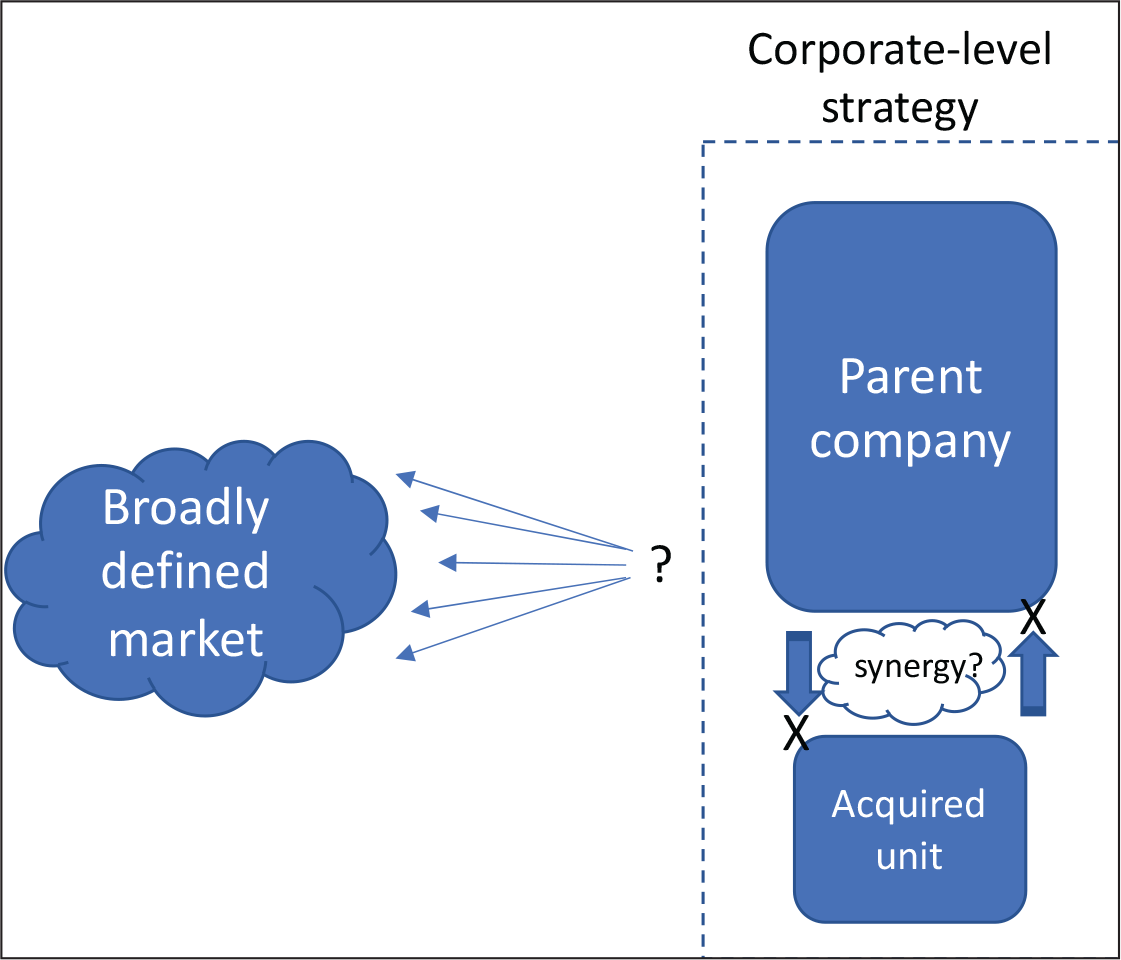
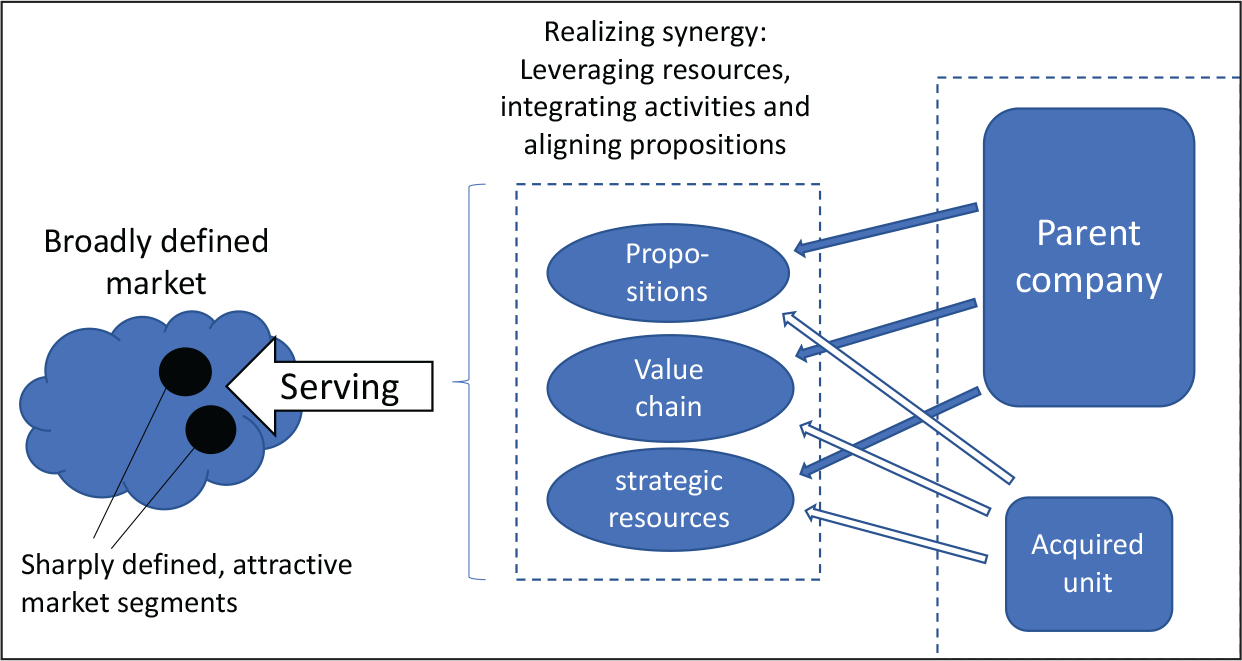
The target market is broadly defined, and so are the synergy expectations (mainly in financial terms).
One could say that successful post-acquisition integration needs to take into account the logic of ‘first strategize, then organize’. Trying to organize synergies without a clear business-level value creation strategy is a recipe for post-acquisition failure.
Limitations of This Study and a Final Recommendation
Some points related to the limitations of this case study need to be made. Our research was focused on post-acquisition integration strategy from an outside-in perspective. Change management, organizational and cultural elements were not explored but also play important roles in post-acquisition integration and might drive future research on good practices inside companies after outside-in driven acquisitions.
Reflecting on our research findings, we believe that pre-acquisition NPV calculations tend to be based on market definitions that are too high level to gain sufficient understanding of potential synergies. We recommend that even prior to the acquisition, an outside-in market scan is done at the business level to determine the potential value of an acquisition. This involves engagement with external stakeholders (the market) that contributes to shaping the future strategy (post-acquisition) and realizing the expected value of the acquisition.
Such an exercise is also an opportunity to gain a better view of potential post-integration challenges related to organizational systems, culture and structures. Using the recommendations proposed above to overcome post-acquisition challenges may seem trivial; however, in the thick of the fight, the triviality of conducting sound outside-in strategy development seems to be missed just too easily.
Footnotes
Acknowledgement
An early version of this article was presented at the First Global Conference on Creating Value at De Montfort University, Leicester, UK, and benefitted from comments of the conference organizers and participants.
Declaration of Conflicting Interests
The authors declared no potential conflicts of interest with respect to the research, authorship and/or publication of this article.
Funding
The authors received no financial support for the research, authorship and/or publication of this article.