




Abstract
Value creation through service innovation is challenging in complex, changing markets. Agility may be the key to understanding resource integration in dynamic contexts and what drives and enables service innovation. To understand service innovation, 12 interviews were conducted in four innovative companies. This study’s findings indicate that agility links adaptive and creative resource integration efforts in organizations, enabling actors to function smoothly together in dynamic contexts while engaging in disruptive activities. Creative resource integration is experimenting and reusing resources and practices in new contexts for the purpose of improving value creation. In retrospect, creative resource integration activities, which may not be considered innovative in the moment, are labelled as innovation based on aggregation. Being truly innovative requires the ability to be agile by proactively and reactively balancing adaptive and creative resource integration, the drive to constantly improve, and embracing a culture for agility congruent throughout the organization.
Introduction
Value creation through service innovation is challenging in complex, changing markets. Companies’ need to innovate and adopt agile strategies is enabled by integrating new resources (e.g., human, capital or physical resources) or integrating resources in new ways, presenting major challenges for managers. Resource integration is a central part of the process of co-creating value (Vargo & Lusch, 2008, 2016), and it represents a foundation from which service innovation emerges (Findsrud & Dehling, 2019). Further, the value created from resource integration is context-dependent (Koskela-Huotari & Vargo, 2016), and contexts are dynamic and continually changing (Edvardsson et al., 2018; Ng et al., 2012), driving actors to be agile (Bianchi et al., 2020). Actors have to adapt to changes in, for instance, technology, context or even collaboration with other actors. Agile actors adapt to predictable changes while being able to adapt to unpredictable changes quickly and efficiently (Holbeche, 2019). However, actors occupied with everyday activities move from task to task with very little reflection (Joiner, 2019), and breaking normal routines requires an active choice to engage in explorative behaviour (Kristensson et al., 2014). Service innovation comes from new and novel resource integration (Edvardsson & Tronvoll, 2013), and the literature mainly centres on service newness (Witell et al., 2016) and service innovation types (Helkkula et al., 2018). Agility is a key competence that enables actors to remain competitive and consistently create value in dynamic contexts. Services are becoming more individualized to meet specific customer needs, pressuring service employees to not only be efficient but also think outside the box (Sok et al., 2018) and adapt to changing customer requirements (Sjödin et al., 2020). Resource constraints further complicate the opportunity for value creation (Witell et al., 2017).
Scholars argue that the drivers of service innovation are customers’ demand for new services (Barrett et al., 2015; Ratny et al., 2017) and service providers’ desire to create new services for existing markets or find new markets for existing services (Barrett et al., 2015; Ratny et al., 2017). Hence, service innovation is actor driven (Edvardsson & Tronvoll, 2013) through the use of competences to co-create value (Vargo & Lusch, 2016). Use of competences implies an agency effort, as it is motivated actors’ ability to act purposefully that drives resource integration (Findsrud et al., 2018). According to Findsrud et al. (2018), motivation moderates the effect of contexts on resource integration. To understand how service innovation emerges from resource integration activities, more focus is needed on adaptive and creative resource integration that lead to service innovation and the motivation of actors to engage in innovative activities. By focusing on what drives actors to continuously create new services or new markets, we can uncover the drivers of sustainable service innovation. Consequently, this study aimed to develop a framework for understanding service innovation in dynamic contexts.
Conceptual Background
Service Innovation and Resource Integration
From an service-dominant (S-D) logic perspective, innovation is not about inventing things, but about developing systems for value co-creation (Vargo & Lusch, 2017). As the function of goods is to deliver service (Lusch et al., 2006), all innovations are service innovations in S-D logic. Service innovation indicates a new, better way for actors to co-create value through resource integration (Koskela-Huotari et al., 2016; Lusch & Nambisan, 2015). Witell et al. (2017) argue that the capability to actively address resource constraints and improvise can improve service innovation outcomes. According to Helkkula et al. (2018, p. 284) the service innovation landscape has undergone radical shifts because of accelerating technological advances, and ‘service innovation is now seen as the main engine of differentiation and growth’. To enhance service innovation, actors need to design conditions that allow resource integration mechanisms to change (Edvardsson & Tronvoll, 2013), whereby actors in the process break, make or maintain the mechanisms’ coordinating institutions in practice (Koskela-Huotari et al., 2016). The service innovation process should be understood as an ongoing process of negotiation, experimentation, competition and learning (Koskela-Huotari et al., 2016). Changing practices might require dynamic capabilities that enable service innovation (den Hertog et al., 2010; Teece et al., 1997). According to Kindström et al. (2013), dynamic capabilities comprise sensing, seizing and reconfiguring capabilities. Dynamic capabilities found in the service innovation literature (e.g., Kindström et al., 2013) conceptually overlap with the agile concept.
An Agile Approach
Agile software development was a reaction to traditional, plan-based methods (Dybå & Dingsøyr, 2008). Software developers deem agile approaches as particularly valuable in contexts including ‘highly uncertain requirements, experimentation with new development technology and clients willing to explore the ways in which an evolving product can help their business goals’ (Racheva et al., 2009, p. 145). Organizational agility challenges traditional processes (Calnan & Rozen, 2019), which often assume an optimal, predictable, and reusable solution for every problem to make the process efficient and predictable (Dybå & Dingsøyr, 2008). For instance, mathematics or natural science problems have a correct or a strict procedural way of solving problems that are independent of the context. Agile approaches, conversely, emphasize ‘continuous design, flexible scope, freezing design features as late as possible, embracing uncertainty and customer interaction, and a modified project team organization’ (Serrador & Pinto, 2015, p. 1041). Feedback and change are fundamental for agility, and agile approaches embrace rather than resist change (Williams & Cockburn, 2003). Further, unpredictable agile processes rely on people and their creativity (Dybå & Dingsøyr, 2008). The Agile Manifesto also emphasize the importance of people being motivated (Beck et al., 2001). To be able to respond quickly to changes in environment or requirements, actors must strip away as much heaviness as possible (Erickson et al., 2005). The principles of agile development can be summed up in the four core values of the Agile Manifesto, written by the practitioners who proposed many of the agile development methods: (1) individuals and interactions over processes and tools; (2) working software over comprehensive documentation; (3) customer collaboration over contract negotiation; (4) responding to change over following a plan (Beck et al., 2001; Dybå & Dingsøyr, 2008). Thus, agility may represent the missing piece for understanding value creating resource integration in dynamic contexts and what drives and enable service innovation.
Methods
To understand the drivers and enablers of service innovation this study adopted a discovery-oriented, theory-in-use approach (Tuli et al., 2007; Ulaga & Reinartz, 2011). Informants from four companies (referred to as Alpha, Beta, Gamma and Delta) considered innovative or that are working on innovative projects in their respective industries were sampled theoretically across functions and hierarchies in three industries in Norway (Tuli et al., 2007). The companies, both service and manufacturing companies that have undergone servitization, differ in size and service focus, ranging in number of employees (10–540) and turnover (€1–100 million per year). Questions were adapted to each informant according to their position (e.g., CEOs, executive board members, production managers, R&D managers, and programmers), knowledge and experience (Sklyar et al., 2019).
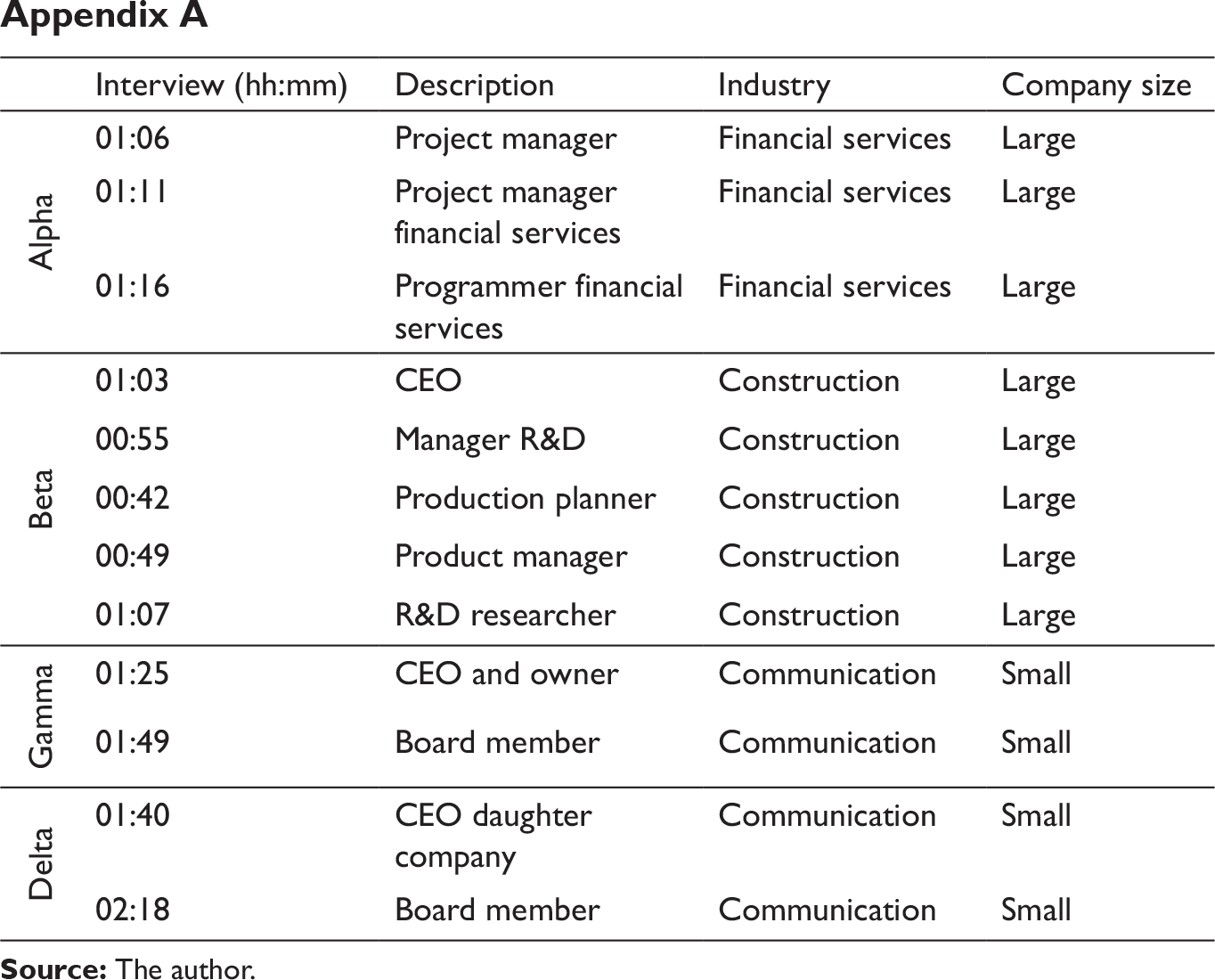
Twelve interviews were conducted in 2019, spanning from 33 min to 2 h and 18 min (mean 75 min). The interview guide focused on three topics: (1) the start of innovation projects and the perceived key factors; (2) what drove the innovation project forward; (3) the consequences of the project. Interviews were conducted face-to-face except for two conducted via Skype. Interviews were conducted, transcribed and analysed by the author. Appendix A provides details of the interviews.
Data Analysis
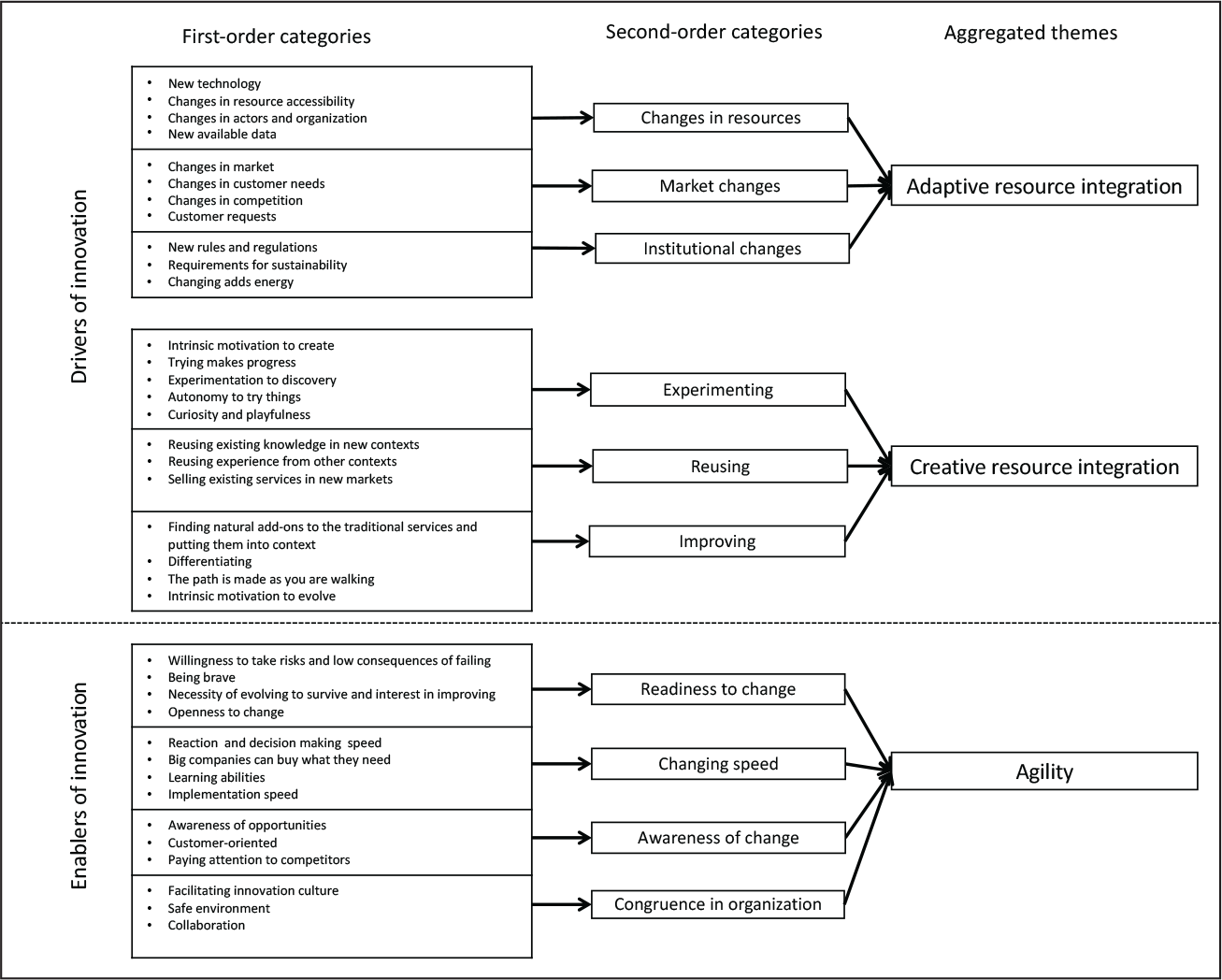
The data analysis started by analyse the content to decide firstly if the content related to a driver or an enabler of continuous service innovation. The first-order categories for drivers and enablers were based on three criteria (Tuli et al., 2007; Ulaga & Reinartz, 2011): (1) whether the enabler and/or driver was applicable beyond a specific context; (2) whether the enabler and/or driver was provided by more than one informants; (3) whether the enabler and/or driver provided interesting and useful information that is not obvious. Enablers are needed to make something possible, whereas drivers are sufficient for something to occur (MacKenzie et al., 2011). Thus, the first-order categorization as driver or enabler started with a necessity/sufficiency evaluation. Analysis of the informants’ perspectives of innovation processes unveiled three aggregated themes and 10 second-order categories for drivers and enablers of innovation processes (see Figure 1).
Results
Drivers of Service Innovation
Our findings indicate two main reasons why companies worked on innovation: (1) to adapt to changes to stay competitive or (2) to stay in the forefront. These reasons were described as fundamental for the company’s survival. According to Findsrud et al. (2018), reasons why are sufficient for something to occur and thus represent drivers. Changes force actors to adapt their resource integration, while staying in the forefront forces actors to integrate resources in novel matters that require creative resource integration.
Adaptive Resource Integration
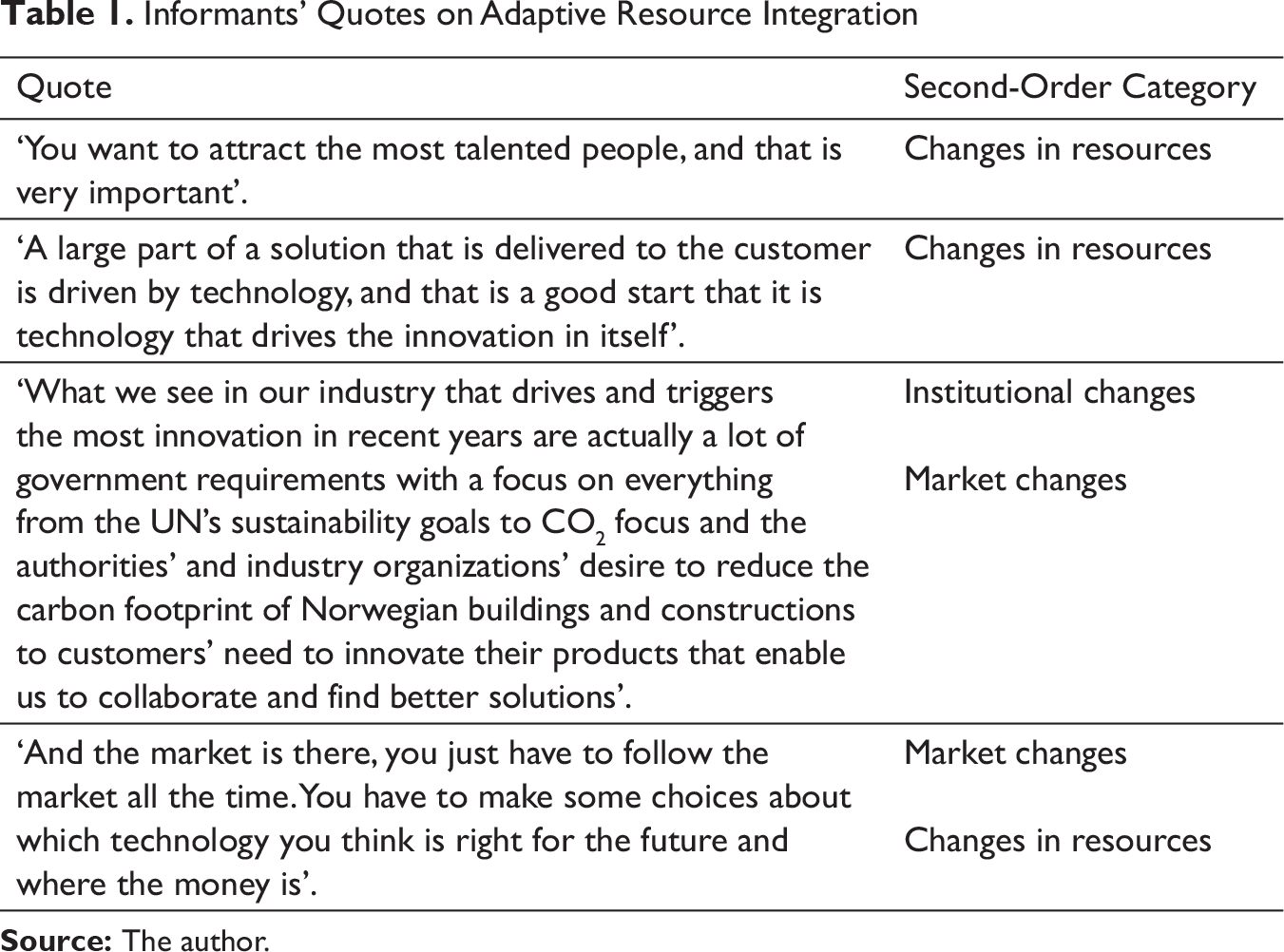
Being adaptive implicates external factors, such as changes happening in the company’s context (e.g., in rules and regulations), with competitors or in society in general. These changes function as extrinsic motivational factors that force actors to adapt to survive. According to our findings, adaptive resource integration can be triggered by changes in resources or market and institutional changes.
Informants’ Quotes on Adaptive Resource Integration
Creative Resource Integration
To stay in the front in the market, actors must engage in creative resource integration. An informant compared the need to be at the forefront with paddling a canoe:
In order to have control, you must actually have a higher speed in the canoe than the surrounding water. It’s the only thing that gives you the ability to steer. If you are slower, then you would probably just get water in the canoe and tumble over. And if you just float with the water, then you will end up where the water takes you. You need a higher pace in your innovations or your development than the market around you.
. Informants’ Quotes on Creative Resource Integration
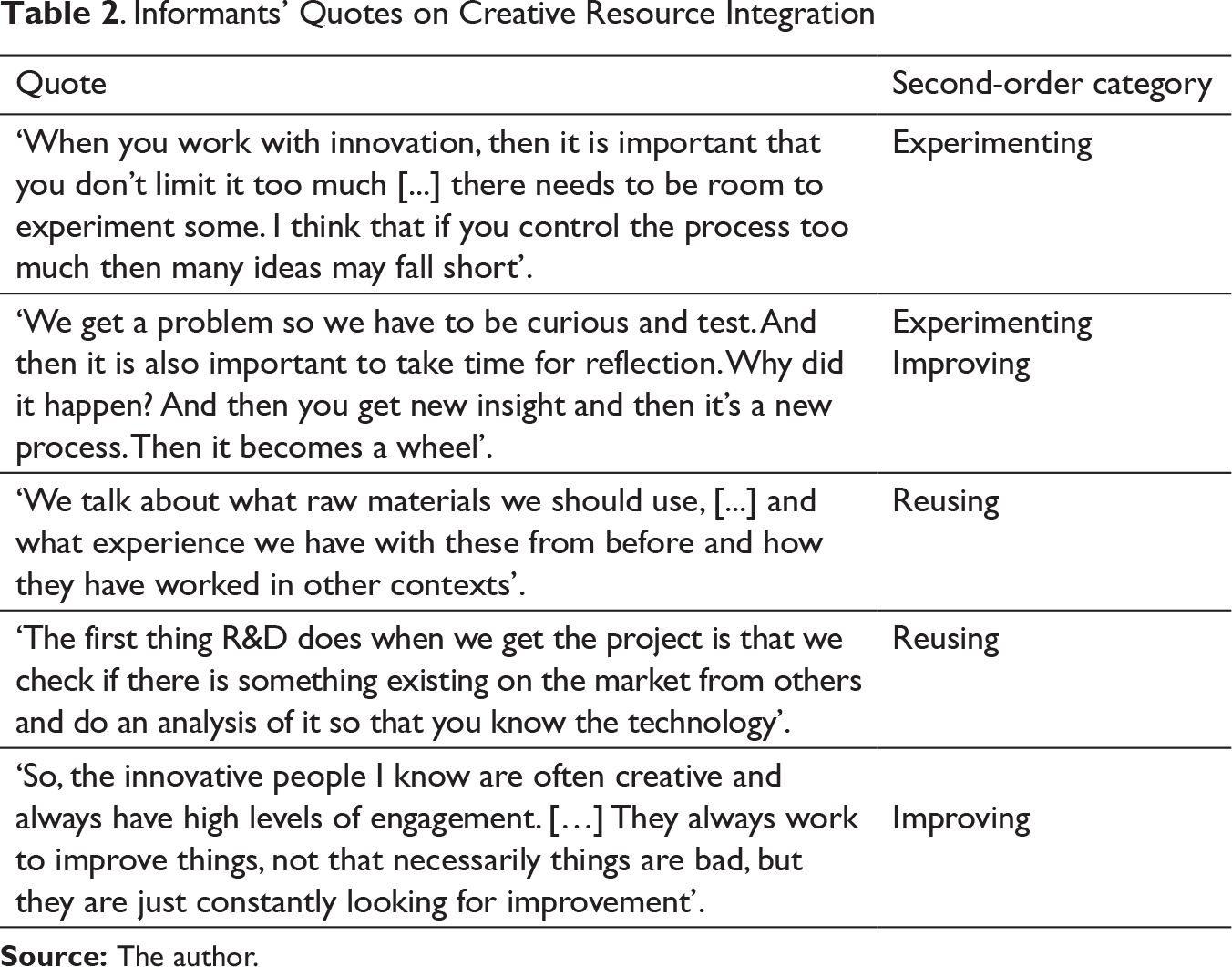
From our findings, we can define creative resource integration as experimenting and reusing resources and practices in new contexts for the purpose of improving value creation.
Enablers of Service Innovation
An enabler for innovation makes innovation possible. For service innovation, the findings show that the actor’s agility enables them to change and adapt to the opportunities that arise in the market.
Agility
. Informants’ Quotes on Agility
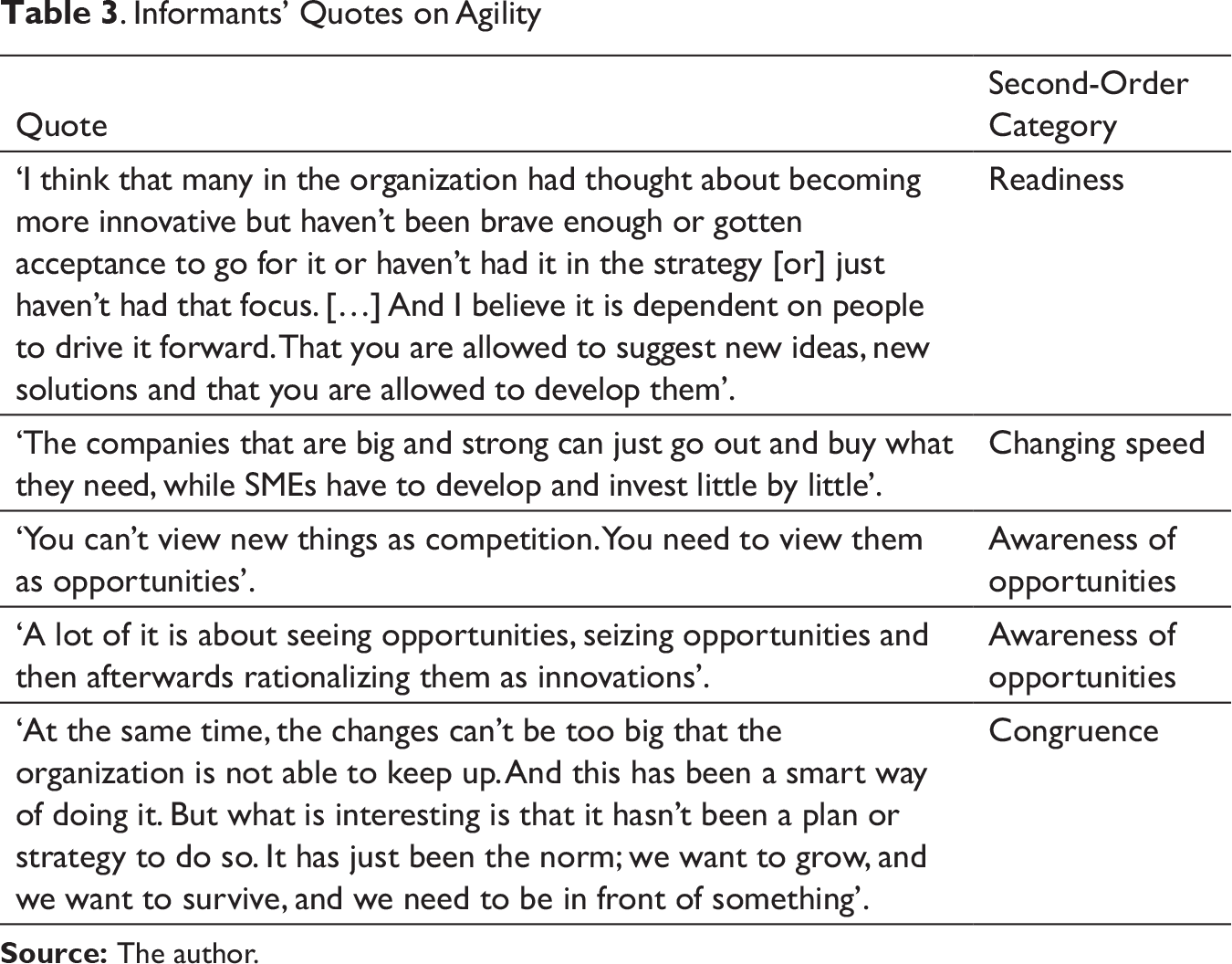
Being agile also requires the actor to be able to change quickly: changing speed enables actors to faster serve the market and adapt to opportunities. Large organizations may be viewed as the opposite of nimble, but they may have the ability to buy necessary insight, enabling them to change quickly, whereas a small organization has to innovate more step by step. An informant stated ‘innovation is driven by individuals that have the motivation to do something about it and see new opportunities’. However, before an actor can adapt to change, they need to have an awareness of change and a mindset of viewing changes as opportunities rather than threats. Actors ‘cannot adapt to changes they cannot see’ (Joiner, 2019, p. 143). The data show that for an innovation to reach the market it must first be adopted by all involved in the process, from management first hearing about the idea to the salesperson who needs to sell the new service. Once resource integration works, it needs to be translated into practice to scale it up. Innovation is distinguished from creativity by implementation rather than the mere generation of ideas (Sarooghi et al., 2015). For instance, if ‘the system is up and running, but it hasn’t been sold to anyone, then the value of that innovation is relatively small or actually it is nothing’. Thus, ‘the challenge is how to scale it up’. Agility requires congruence in the organization. Congruence does not mean that all involved actors are the same but that there is a fit and harmony between actors that lubricates the relationships among the actors.
Framework for Agile Resource Integration
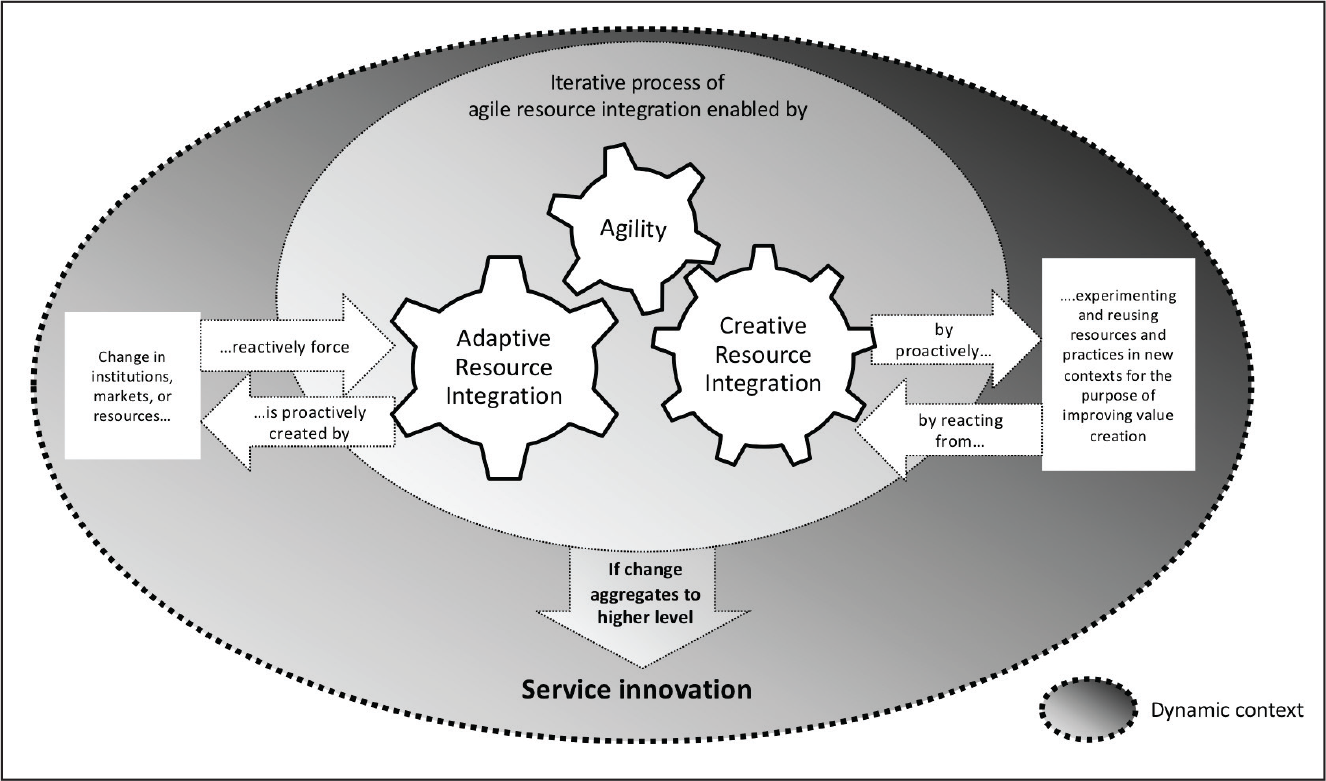
Achieving successful service innovation is challenging and demands an agile approach to resource integration. Three aggregated themes are identified in the data: (1) adaptive resource integration; (2) creative resource integration; (3) agility, indicating a need to focus on the actions and agility of proactively and reactively changing resource integration practices in dynamic contexts. This process may iteratively and incrementally develop to a point where it is introduced to others. If the new process or service is adopted by and creates value for one or more stakeholders, it is labelled service innovation (Gustafsson et al., 2020). This study focused on developing a conceptual framework for agile resource integration that shows why and how service innovation emerges from resource integration (see Figure 2). As Figure 2 shows, creative and/or adaptive resource integration results from proactively created or reactively forced change due to contextual changes. Agility links adaptive and creative resource integration efforts in organizations, enabling actors to function smoothly together while engaging in disruptive activities and operating in dynamic contexts.
The framework is discussed first by addressing the need for agile resource integration for service innovation followed by the proactive and reactive approaches to achieving service innovation. The agile resource integration approach prefers flexible processes to enable quick responses to changing environments or changing customer needs, whereas traditional innovation processes are often predictable and sequential (cf., Erickson et al., 2005).
Agile Approach to Resource Integration
It is in human nature to seek novelty and challenges, extend and exercise one’s capabilities, explore and learn (Ryan & Deci, 2000). Agility may arguably be innate in human nature. Ng et al. (2012, p. 215) posit that ‘models of resource integration must define the dynamic and context-specific configurations of form, time, place and possession of resources that achieve the ‘density’ that is necessary for optimal value creation’. Context is where actors and their actions are embedded (Edvardsson et al., 2018). As contexts change, actors must be creative in their resource integration through experimenting, reusing and improving, and/or adapt their resource integration according to changes in resources, markets and/or institutions. Failing to do so may result in bankruptcy, as Kodak demonstrated by failing to embrace digital photography (Lucas Jr. & Goh, 2009). Paluch et al. (2019) argue that agile approaches in their pure form focus on radical initiatives in dynamic contexts with unique yet to be discovered task requirements. This places agility as an extreme with a highly dynamic context and highly creative resource integration. However, we posit that this limits the understanding of agility and argue that agility describe actors’ ability to balance and switch between adaptive and creative resource integration. For instance, governmental lockdown due to COVID-19 represents an extreme change in context which forced some organizations (e.g., teaching institutions) to quickly become fully digital, requiring actors to quickly adapt. However, radical changes in contexts usually represent the exception rather than the norm. Thus, organizations also need to be creative in creating and improving services in predictable contexts, such as Alpha developing robots to automate their business processes to improve competitiveness. The service innovation process can be characterized as event driven, dynamic and highly dependent on correspondence and reciprocity (Ballantyne et al.,2011; Edvardsson et al., 2012). Similarly, any information actors perceive and process constitutes feedback throughout activities (Findsrud et al., 2018). Agile actors embrace feedback as a learning opportunity and see change as an opportunity rather than a challenge (cf., Williams & Cockburn, 2003).
Proactive Agile Approach to Service Innovation
The proactive agile approach to service innovation is driven by the motivation to be at the forefront or by the intrinsic need to develop something. This approach overlaps with the traditional approach to innovation (e.g., new product or service development) and is primarily linked to creative resource integration (i.e., experimenting, reusing and improving). In line with previous research, our data show that actors who are intrinsically motivated for innovation usually have more interest and curiosity, which in turn enhances performance, persistence and creativity (Ryan & Deci, 2000). According to Amabile (1983, p. 360), creativity includes two important elements: ‘(a) it is both a novel and appropriate, useful, correct or valuable response to the task at hand and (b) the task is heuristic rather than algorithmic’. Thus, being novel requires a functional outcome (Burroughs & Mick, 2004) or an outcome that has fit, appropriateness or utility (Runco & Jaeger, 2012), and the solution must not be clear nor have an easily identifiable path to a solution (Amabile, 1983). Sarooghi et al. (2015) posit that creativity is the seed of all innovation, as the successful creation of new products, services or business practices starts with someone thinking up a good idea and developing that idea beyond its initial state. This was the case with the production planner at Beta who had an idea and got the opportunity to develop a system for resource management.
Researchers generally recognize that an individual’s competences supply one part of the creativity equation and motivation the other part (Burroughs & Mick, 2004), which corresponds to the literature on resource integration: motivated actors use competences to integrate resources (Findsrud et al., 2018). However, actors often require a crisis (e.g., COVID-19) before change is initiated (Callander, 2011). Research shows that individuals have difficulty transcending a learning-by-doing approach to proactive learning, meaning proactively renewing competence ahead of need (Annosi et al., 2020). Thus, an agile approach is about experimenting, making mistakes and learning from them (Paluch et al., 2019). However, even the most proactive approaches in an organization have an element of being reactive, since the creation of innovation is based on assumptions about customer needs.
Reactive Agile Approach to Service Innovation
Actors may employ reactive agile approach service innovation, where changes in preconditions force actors to adapt their resource integration and solve the challenge at hand (e.g., teachers during COVID-19). When actors adapt to and exploit changes in contexts, the changes may be seen as drivers of service innovation (Edvardsson et al., 2018). Opportunities alone do not drive change, but the actors’ willingness to engage in the activity drives change (Findsrud et al., 2018), and opportunity implies ‘the chance to meet a market need (or interest or want) through a creative combination of resources to deliver superior value’ (Ardichvili et al., 2003, p. 108). Opportunities are not known to all parties at all times and thus may be recognized by some and not others (Ardichvili et al., 2003; Shane & Venkataraman, 2000). Ardichvili et al. (2003) note that these differences are due to the heterogeneity in individuals’ sensitivity to opportunities for creation and delivery of new value.
Research shows that perceiving opportunities is affected by prior experiences and competences (Ardichvili et al., 2003; Baron, 2006; Kuckertz et al., 2017; Shane & Venkataraman, 2000), which create mental schemas that provide a framework for perceiving new information. The competences need to be complementary with the new information to trigger a reaction (Shane & Venkataraman, 2000). Further, perceiving opportunities as they emerge is strengthened by alertness, which also enables opportunities to be recognized by individuals even though they are not actively searching for them (Baron, 2006). Alertness and this ability to connect the dots, at least partly, come from cognitive abilities such as intelligence and creativity (Baron, 2006).
Becoming an Agile Actor
When an environment is complex and perhaps somewhat uncontrollable and unpredictable, a variety of individuals in the organization must be able to respond to it (Mintzberg & Waters, 1985). Holbeche (2019) propose that achieving innovation from agility needs scaling up beyond R&D, thus creating congruence in the organization (Annosi et al., 2020). Learning is central for iterative processes, because merely trying to replicate past actions involves some degree of learning (Gupta et al., 2006). Service innovation cannot occur without learning (Drejer, 2004), but for learning to be considered an innovation it must be carried into practice (Toivonen & Tuominen, 2009). Service innovation occurs when learning from resource integration creates a change in practice that aggregates and creates value at a higher level. For actors to choose an agile approach, there must be readiness to learn and congruence by mutual agreement among involved individuals to be agile and balance proactive and reactive approaches. In traditional innovation processes, it is not uncommon to see projects shut down too late because of loss aversion (Tversky & Kahneman, 1991; see also Xia & Suri, 2014) or the risk lowered by including some ‘go-or-kill’ checkpoints where progress is checked against predefined performance (Paluch et al., 2019). However, in an agile approach to innovation, the path is made by walking; the combination of curiosity and willingness to break patterns is a powerful tool for service innovation, where actors trust a process without a plan (Calnan & Rozen, 2019).
Conclusion
This study’s findings show that in terms of service innovation actions speak louder than plans, and actors mainly engage in problem-solving activities, adaptation to changes and seizing opportunities in the market. The bottleneck in service innovation is often not idea generation but the lack of drive to constantly improve, the lack of a culture for embracing change among all involved actors and the lack of acceptance of both by top management. In other words, having a culture for agility congruent throughout the organization. The willingness to experiment, improve and reuse resources or practices in new contexts represents the source for creative resource integration activities, which may not be considered innovative in the moment, but in retrospect are labelled as innovation as practices aggregate. However, just experimenting is likely to accumulate costs without necessarily cashing in on short-term rewards (March, 1991). Thus, actors must simultaneously juggle reactive and proactive approaches according to the context (Luger et al., 2018). Being truly innovative requires the ability to be agile in proactively and reactively balancing adaptive and creative resource integration. Finally, and most importantly, innovation should take place with those motivated to do so, as our findings show that motivation is more important than the actor’s role (e.g., project manager, employee, programmer, customer, supplier, etc.).
Our findings indicate transferability of the principles of agile development and the four core values of the Agile Manifesto presented earlier (Beck et al., 2001; Dybå & Dingsøyr, 2008) to actors performing adaptive and creative resource integration in dynamic contexts. By integrating our findings with the four core values of the Agile Manifesto, we have four recommendations for organizations to become more agile. Actors should focus on: (1) people and interactions over processes and tools (Beck et al., 2001); (2) activities that generate value in context rather than practices; (3) collaboration over individual efforts due to emergent outcomes; (4) responding the market over making strategies.
Based on the arguments elaborated above, agile resource integration is defined as: actors’ readiness to quickly find creative ways of using and combining available resources in context, proactively or reactively embracing the iterative emergence of co-created value. This study contributes to the literature by providing a better understanding of an agile approach to resource integration and provides a conceptual framework enabling actors to develop prerequisites that drive service innovation.
Footnotes
Declaration of Conflicting Interests
The author declared no potential conflicts of interest with respect to the research, authorship and/or publication of this article.
Funding
The author received no financial support for the research, authorship and/or publication of this article.
Appendix A
| Interview (hh:mm) | Description | Industry | Company size | |
| Alpha | 01:06 | Project manager | Financial services | Large |
| 01:11 | Project manager financial services | Financial services | Large | |
| 01:16 | Programmer financial services | Financial services | Large | |
| Beta | 01:03 | CEO | Construction | Large |
| 00:55 | Manager R&D | Construction | Large | |
| 00:42 | Production planner | Construction | Large | |
| 00:49 | Product manager | Construction | Large | |
| 01:07 | R&D researcher | Construction | Large | |
| Gamma | 01:25 | CEO and owner | Communication | Small |
| 01:49 | Board member | Communication | Small | |
| Delta | 01:40 | CEO daughter company | Communication | Small |
| 02:18 | Board member | Communication | Small |
