Abstract
Abstract
As artificial intelligence (AI) and robots are increasingly taking place in practical service solutions, it is necessary to understand technology in value co-creation. We conducted a systematic literature review on the topic to advance theoretical analysis of AI and robots in value co-creation. By systematically reviewing 61 AI and robotics articles, which have been published in top marketing and service research journals, we identified four themes in literature, namely, generic field advancement, supporting service providers, enabling resource integration between service providers and beneficiaries, and supporting beneficiaries’ well-being. With the identification of the first set of literature on AI and robots in value co-creation, we push forward an important sub-field of value co-creation literature. In addition, to advance the field, we suggest building on actor–network theory and science and technology studies to understand the agency of technology in value co-creation. Considering that technology has agency, it opens new interesting research avenues around shopping bots and human-to-non-human frontline interaction that are likely to influence resource integration, customer engagement and value co-creation in the future. We also encourage our colleagues to conduct postphenomenological research to be better geared for analysing how technology (including AI and robots) mediates the individual experience of value.
Introduction
Technology has become an integral part of our lives. Smartphones wake us up and automatic toasters prepare our breakfast. Increasingly, the machines that we employ mimic cognitive functions of humans and can be programmed to carry out a complex set of actions automatically (robots). By accessing one’s calendar, analysis of sleep and learning from prior morning routines, technology knows when it is a good time for technology to start preparing breakfast. As service functions based on AI and robots become more common in markets and everyday lives, they are likely to change the way value is co-created and experienced.
Mainstream marketing has been criticized of being incapable to study fast, technology-induced changes in markets, as it is ‘underlying assumptions behind the conceptualizations of markets are rather static and mechanistic’ (Vargo et al., 2017, p. 260). Therefore, Vargo et al. (2017) argue that a systems perspective on markets, building on service-dominant (S-D) logic, would create a more realistic understanding of how technology shapes behaviour, experiences and markets, as well as the dynamics of value co-creation—the joint activities of multiple actors through which value emerges.
S-D logic’s conceptualization of value refers to a change in the viability of a system (Vargo, Akaka, & Vaughan, 2017; Vargo & Lusch, 2017). This systems-oriented conceptualization captures the nature of value through four propositions: (1) value is phenomenological: it is experienced differently by various actors in various contexts; (2) value is always co-created: it is created through the integration and exchange of resources among multiple actors; (3) value is multidimensional: it is made up of individual, social, technological and cultural components and (4) value is emergent: it comes into existence through relationships between an actor and the system.
While more systems-oriented thinking to value co-creation has been suggested for a decade (Vargo, Maglio, & Akaka, 2008), the actual interaction between a customer and a firm is still perceived the central locus in services marketing (Echeverri & Salomonson, 2017). In other words, there is more interest in value co-production—direct contact between a service provider and a beneficiary—rather than value co-creation that also takes into account market practices and other institutional arrangements that guide actors in service processes (Pohlmann & Kaartemo, 2017). And while scholars agree that technology has changed human behaviour, there has been more interest in understanding human-to-human interaction (Fairfield, 2015) than human-to-non-human resource integration (Gidhagen et al., 2017) in value co-creation.
As AI and robots are increasingly taking place in practical service solutions, it is necessary to understand technology in value co-creation. Moreover, we expect more research on human-to-non-human resource integration and non-human agency among AI-enabled autonomous robots in the future. Therefore, we decided to conduct a systematic literature review on the topic to advance theoretical analysis of AI and robots in value co-creation. In order to contribute to future research, our research question is: What is the current state of the art of AI and robots in value co-creation in marketing and service research?
To answer the question, we systematically reviewed 61 articles in top marketing and service research journals that refer to AI and robots. We classify the current conceptual and empirical evidence and suggest a future research agenda to advance the field. With the identification of the first set of literature on AI and robots in value co-creation, we push forward an important sub-field of value co-creation literature.
Methodology
This study employs a systematic literature review as its methodology. The review method is essentially based on the guidelines offered by Booth, Papaioannou, and Sutton (2012). We also follow the method by Mustak, Jaakkola, Halinen, and Kaartemo (2016) with three consecutive stages: literature search, assessing the evidence base, and analysing and synthesizing the findings.
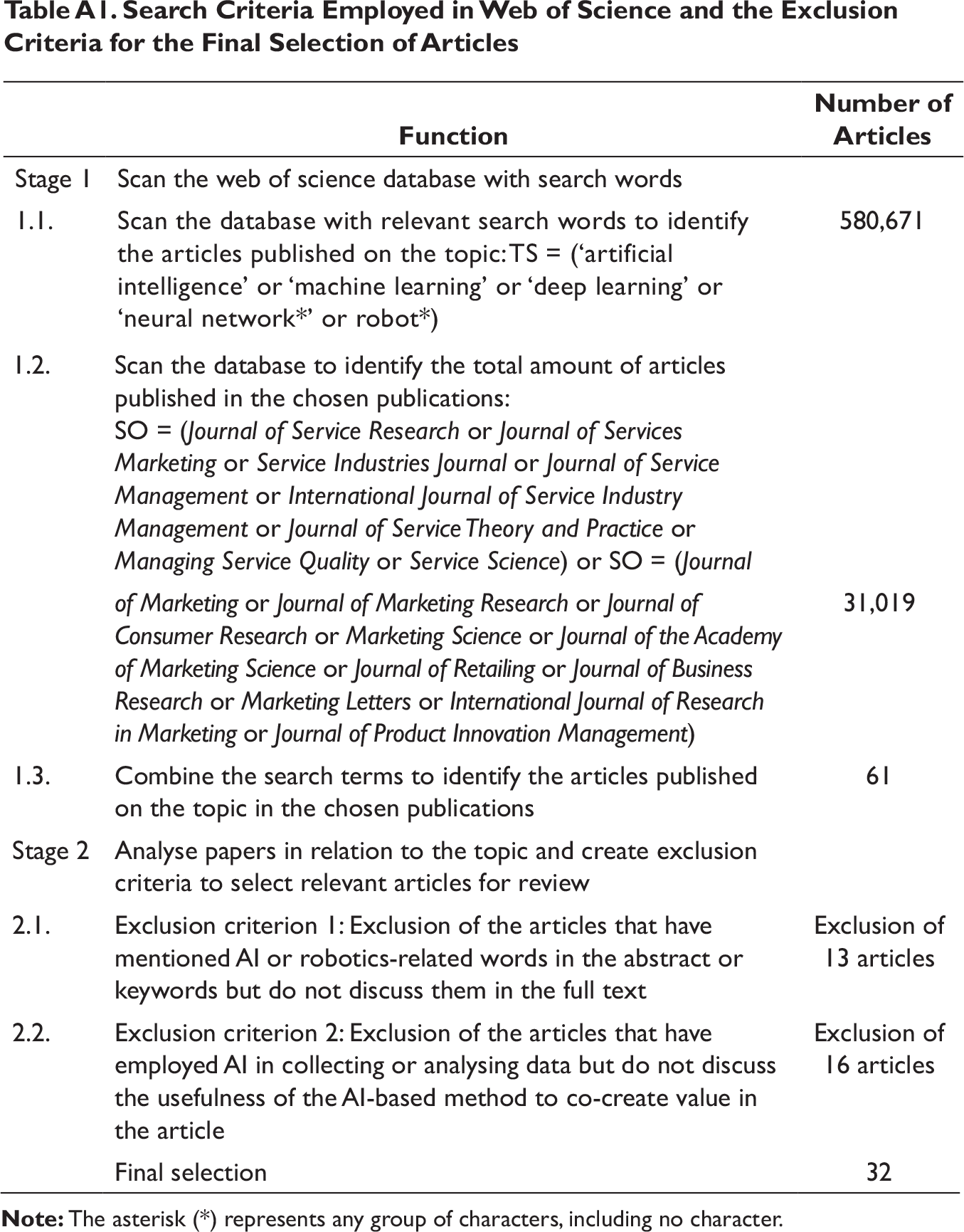
We selected the publications for the review in two stages (Table A1). In Stage 1, we scanned the Web of Science database. First (Stage 1.1), we looked for five keywords in the title, abstract or keywords (TS = Topic), namely, artificial intelligence, machine learning, deep learning, neural network and robot (580,671 articles), In Stage 1.2, we focused on the journals that were most likely to discuss AI and robots in value co-creation, that is, articles published in top marketing and service journals (SO = Publication name): Journal of Marketing, Journal of Marketing Research, Journal of Consumer Research, Marketing Science, Journal of the Academy of Marketing Science, Journal of Retailing, Journal of Business Research, Marketing Letters, International Journal of Research in Marketing, Journal of Product Innovation Management, Journal of Service Research, Journal of Services Marketing, Service Industries Journal, Journal of Service Management (formerly International Journal of Service Industry Management), Journal of Service Theory and Practice (formerly Managing Service Quality), and Service Science (altogether 31,019 articles). In Stage 1.3, we combined a search of these five keywords in the title, abstract or keywords, namely, artificial intelligence, machine learning, deep learning, neural network and robot with the above mentioned journals. The search resulted in 61 articles published in the top marketing and service journals that featured the five keywords in the title, abstract or keywords. The search extended across the whole period of time covered by the Web of Science until the end of May 2018.
In Stage 2, the suitability of the articles for the review was assessed. In case the title and abstract did not reveal the content of the paper, the full paper was read to determine whether the article was appropriate for this study. We used two exclusion criteria. In Stage 2.1, we excluded studies in which our search words were mentioned in the abstract or keywords but the authors did not discuss them in the full text (Exclusion criterion 1). In Stage 2.2, we excluded the studies that had employed AI in collecting or analysing data but did not discuss the usefulness of the AI-based method to co-create value (Exclusion criterion 2). Ultimately, we selected 32 articles for our final analysis.
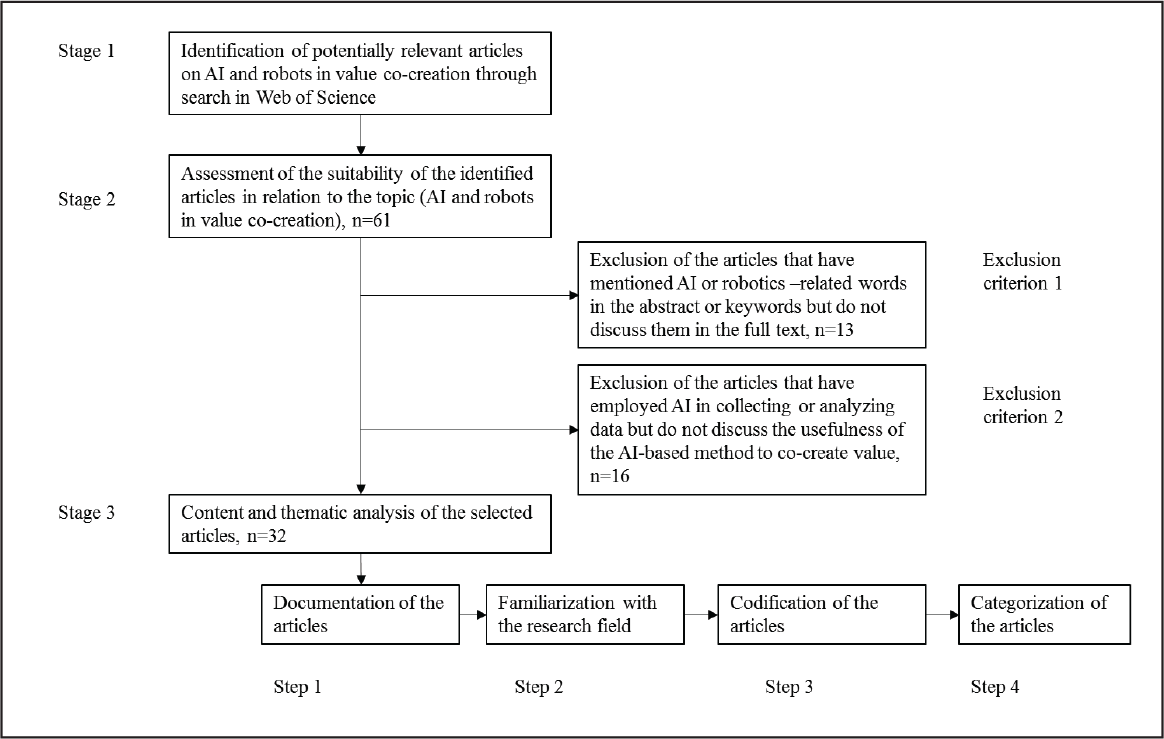
Then we analysed the selected 32 articles. The analysis included four steps: documenting, attaining basic understanding, coding and categorization. First, the details of the articles were documented using Microsoft Excel including the year of publication and the journal name. Second, the selected articles were read to familiarize with the research field and understand how the studies have developed over time. Third, whenever content related to AI or robots in value co-creation was found, it was annotated and coded for its message or content. We used inductive content analysis, which is suitable for systematically interpreting the symbolic content of written communication (Helkkula, 2011; Kolbe & Burnett, 1991). Initially, there were eight codes: forecasting, prediction, other cognitive support, understanding customers, customer interaction, division of tasks, conceptual field advancement and supporting well-being. Fourth, we employed inductive and interpretive thematic analysis (Braun & Clarke, 2006), which is suitable for a systematic review that aims at understanding a diverse research field (Jones, Coviello, & Tang, 2011). We categorized the codes based on the object of technological support. In other words, we reviewed whether AI and robots were facilitating value co-creation of the service provider or the beneficiary. In some occasions, the codes did not refer to either of the two original categories. For instance, ‘conceptual field advancement’ referred to studies discussing the potential of AI and robots to advance theoretical development of marketing and service research. Also, ‘customer interaction’ did not refer to the benefit of a service provider or a beneficiary solely but was focused on the role of AI and robots in enabling resource integration in the value co-creation process. As a result, we constructed four categories, namely, generic field advancement, supporting service providers, enabling resource integration between service providers and beneficiaries, and supporting beneficiaries’ well-being. The flow chart of our systematic review is presented in Figure 1.
Flowchart of Publications Included and Excluded by Researchers during the Selection Procedure and Consecutive Methodologic Steps of the Systematic Review
Overview of the Publications Selected
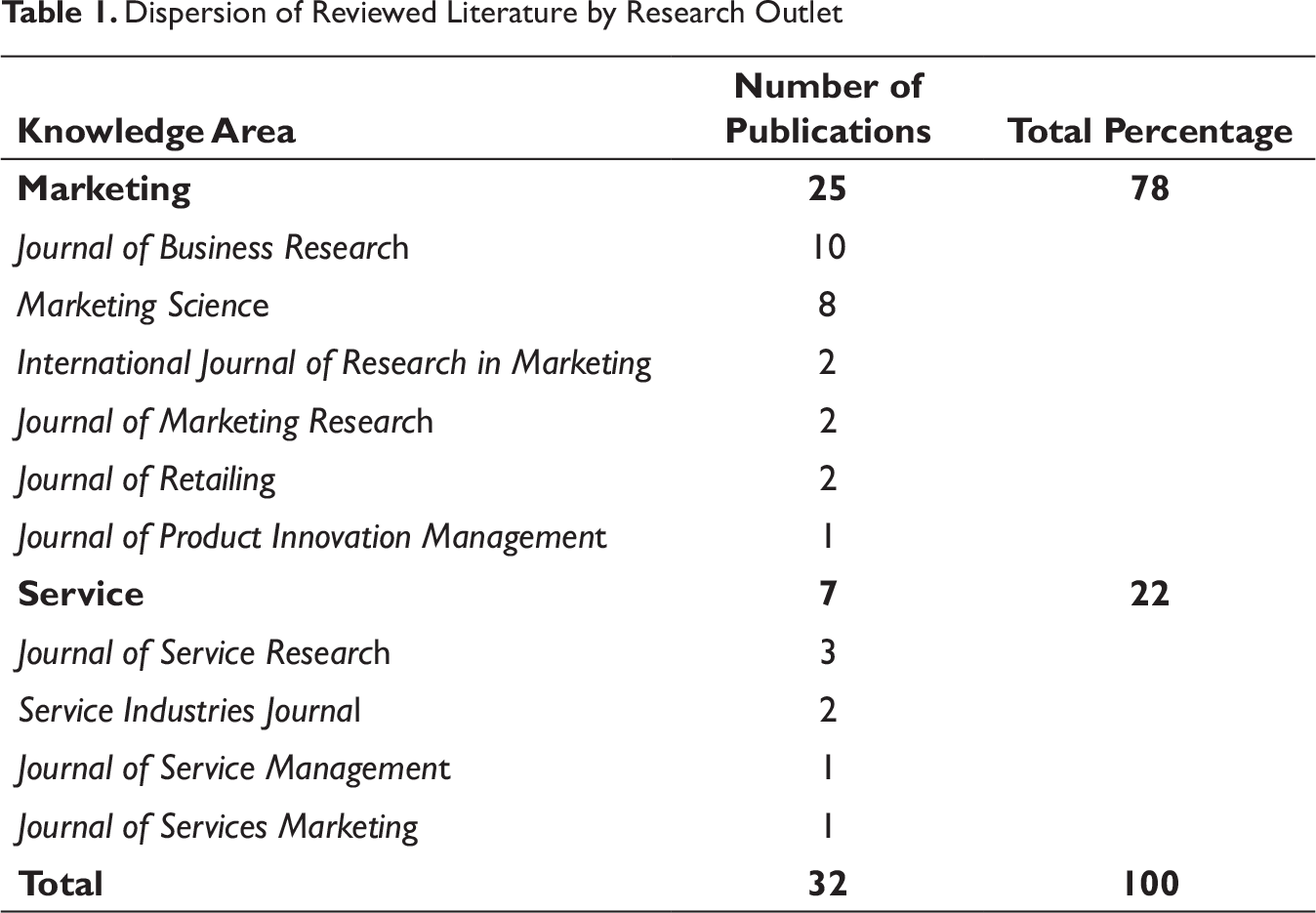
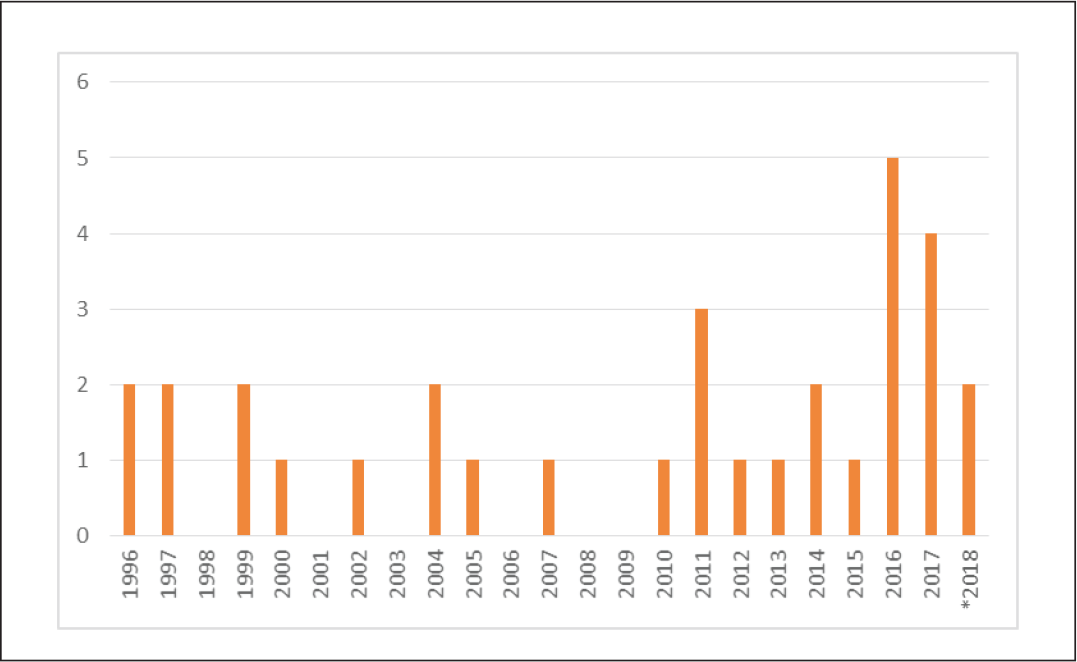
The first article on AI and robots in value co-creation was published in 1996 in Journal of Retailing (Agrawal & Schorling, 1996). Despite the initial interest in AI and robotics in marketing journals in the 1990s, there was not much research done on the topic in the early 2000s. Since 2010, there has been more research (Figure 2) and the topics have widened from forecasting market shares and predicting bankruptcies to several other themes, such as customer interaction and frontline service technologies. In fact, of the 32 articles reviewed for this study, 20 were published between January 2010 and May 2018. The most recent era has been characterized by the emergence of service research journals. The first article in a service journal (Service Industries Journal) was published in 2011. However, most of the articles were published in marketing journals with Journal of Business Research leading the rank with 10 articles (Table 1).
In the following, we discuss the findings of our systematic review.
Dispersion of Reviewed Literature by Research Outlet
Findings
The thematic analysis of the papers shows four themes that describe the content of the studies, namely, generic field advancement, supporting service providers, enabling resource integration between service providers and beneficiaries, and supporting beneficiaries’ well-being (Table 2). These themes were not predetermined as they emerged from the reviewed articles inductively.
Generic Field Advancement
Two studies aim at the generic advancement of respective fields. First, Chintagunta, Hanssens, and Hauser (2016) discuss the potential of machine learning to develop marketing science. They argue that marketing can learn from machine learning to provide new structures and theories that help firms understand and use big data. Second, Grewal, Roggeveen, and Nordfält (2017) envision AI’s influence on the future of retailing. They refer to apps that employ AI to give beneficiaries information and make suggestions, robots that help in logistics, and initiate the debate on the wider influence of AI on consumer behaviour both online and offline. Despite these two pioneering articles, the generic field advancement has remained undeveloped. There is no discussion in the reviewed articles on how AI or robots influence value co-creation in general.
Supporting Service Providers
Most of the reviewed articles (81%) focus on how AI and robots support service providers. Particularly, many of them discuss the superiority of AI in predicting changes in the market. For instance, neural network analysis and machine learning are shown to have a better predictive power than more conventional methods (Agrawal & Schorling, 1996; Barrow, 2016; Bejou, Wray, & Ingram, 1996; Fish, Johnson, Dorsey, & Blodgett, 2004; Hamid & Iqbal, 2004; Hu, Shanker, & Hung, 1999; Jalal, Hosseini, & Karlsson, 2016; Kim, 2011; Liu, Singh, & Srinivasan, 2016; Morrison, Johnson, Barnes, Summers, & Szeinbach, 1997; Parry, Cao, & Song, 2011; West, Brockett, & Golden, 1997; Yang, Platt, & Platt, 1999). Also, research shows how machine learning can be employed to understand the customers regarding their consideration heuristics (Dzyabura & Hauser, 2011; Hauser, 2014), and preferences in complex products (Huang & Luo, 2016). Other cognitive support for service providers include assessing the helpfulness of customer reviews (Singh et al., 2017), supporting complex new product development decisions (Thieme, Song, & Calantone, 2000), providing homogeneous segmentation solutions (Boone & Roehm, 2002), selecting models (Schwartz, Bradlow, & Fader, 2014), and deciding the timing of an initial public offering (Yu & Huarng, 2013). Edwards, Pärn, Love, and El-Gohary (2017) discuss how robots can in addition to hard labour replace many jobs in classic engineering that require cognitive skills and ability. Also, AI may change the division of tasks between human beings and machinery within an organization. Huang and Rust (2018) lay out a map for the way firms should decide between humans and machines for accomplishing mechanical, analytical, intuitive and empathetic tasks.
Enabling Resource Integration between Service Providers and Beneficiaries
In addition to providing support to service providers, AI and robots can learn customer needs and preferences and thus enable the resource integration between service providers and beneficiaries (Glushko & Nomorosa, 2013). By identifying customer needs and preferences, AI and robots can add human-like features to frontline service technology (Fan, Wu, & Mattila, 2016; van Doorn et al., 2017). Glushko and Nomorosa (2013) described five different situations that involve encounters between a service provider and a beneficiary, and compared human-to-human encounters to encounters, where the service provider was a machine, they discuss the potential of information that machines can utilize to provide more personalized service. van Doorn et al. (2017, p. 44) developed a concept of ‘automated social presence’ that refers to ’the extent to which machines (e.g., robots) make consumers feel that they are in the company of another social entity’. They proposed that people have different expectations for automated social presence, depending on a consumer’s relationship orientation, the level of anthropomorphization (human-like characteristics, motivations, intentions or emotions imbued to non-human agents) and the degree of technology readiness. Fan et al. (2016), in turn, studied empirically whether customers were willing to continue resource integration with an anthropomorphic machine in a service failure context. The authors found out that reactions to self-service technology failures vary depending on the degree of anthropomorphism associated with a machine (robotic vs human-like voice), an individual’s sense of power (perceived ability to influence other people in social interactions), and the presence of other customers. Their main finding was that a human-like voice of a machine changes customers’ behaviour in a service encounter.
Supporting Beneficiaries’ Well-Being
Thematization of Reviewed Articles
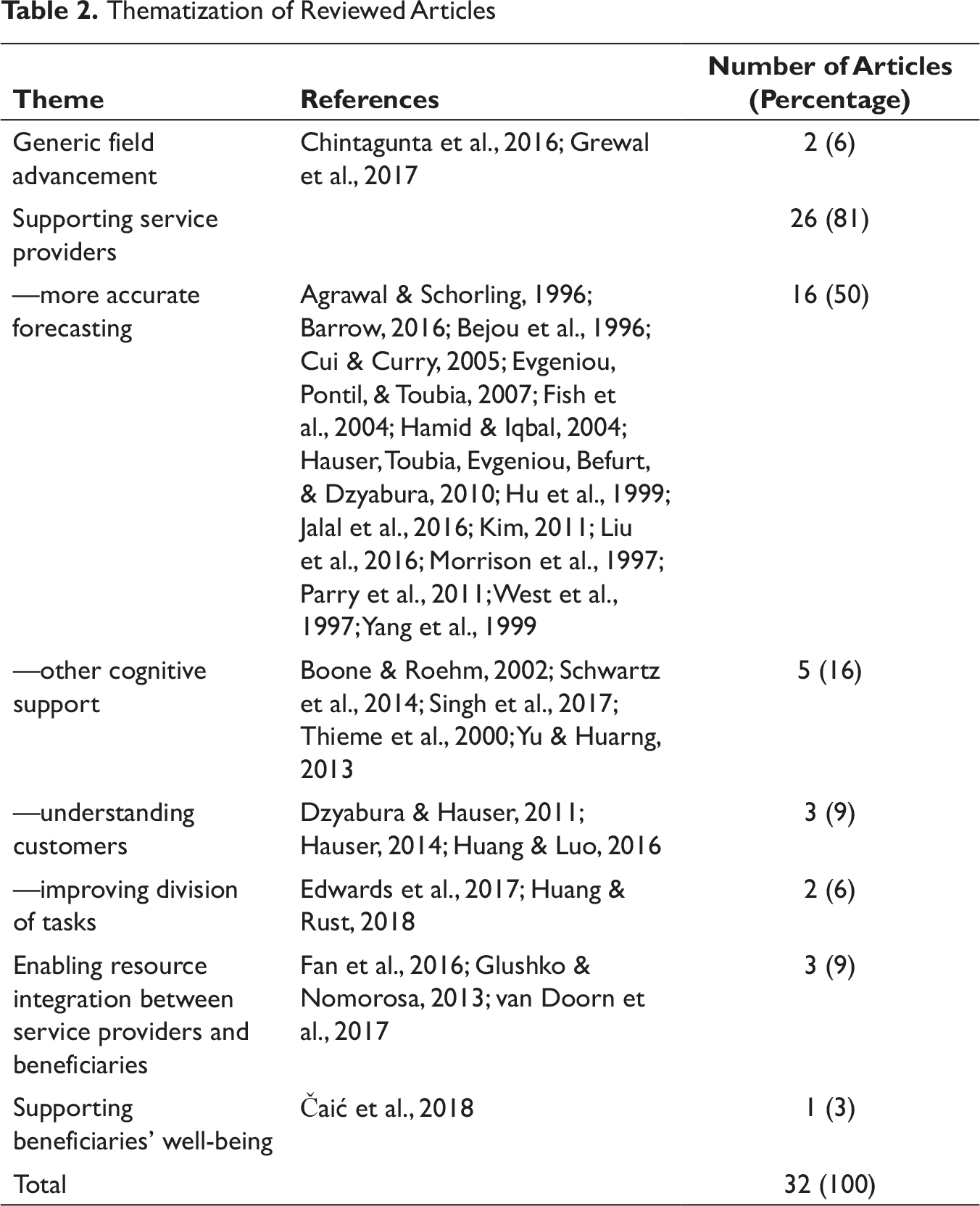
In terms of the number of publications in each theme (Table 2), there were surprisingly only four articles discussing the role of AI and robots in enabling resource integration between service providers and beneficiaries, or supporting beneficiaries’ well-being. These discussions have emerged only recently in service journals. Marketing journals have mostly focused on the theme ‘supporting service providers’. We expected more research on how AI influences customer engagement or on how robots influence the perceived value of service experience. Early research seems to approach AI and robots from an organizational view with an aim to make companies more efficient. Only more recently, scholars have paid attention to the potential of AI and robots in co-creating value with beneficiaries. We encourage marketing and service scholars to shift the focus towards understanding the roles of AI and robots in a wider context of value co-creation. In the following, we provide a research agenda to contribute to the future research.
Future Research Agenda
Compared to the vast amount of practical solutions that already exist in service practice, the small number of identified articles indicates that we need more research on AI and robots in value co-creation. Consequently, we developed a research agenda based on the results of our systematic literature review. We identified the paths for future research based on our broad reading of both technology and value co-creation literature.
Particularly, there is a need for shifting the focus to resource integration and value co-creation by beneficiaries and their service network. There are possibilities to widen the themes even further to illuminate the roles of technology in a systemic value co-creation, to understand the role of autonomous devices and to employ postphenomenological research. Along these lines, we list seven priorities for research on AI and robots in value co-creation that set up the future research agenda.
Generic Field Advancement of Technology in Value Co-creation
Although technology has become one of the keywords in S-D logic (Pohlmann & Kaartemo,
2017), generic field advancement in technology-mediated value
co-creation remains very limited. We see this as one of the key trends in the
field of value co-creation. Recent S-D logic articles acknowledge that actors
are more than humans; they also include machines and technologies (Lusch, Vargo, &
Gustafsson, 2016). In fact, Wieland, Hartmann, and Vargo (2017) and
Vargo, Wieland, and
Akaka (2015) have started building a link between technology and
market reformation by suggesting that technology and market innovation should be
studied in parallel. Moreover, S-D logic scholars presented their ideas on
human-to-non-human value co-creation and resource integration in the Naples
Forum on Service 2017 (Gidhagen et al., 2017). Yet the roles of technology and non-human
actors in value co-creation and reformation of markets are far from being fully
developed in S-D logic (see Wieland, Koskela-Huotari, & Vargo, 2016, p. 223). Therefore,
we need a better understanding of AI and robots in service ecosystems. In the
reviewed articles, only Čaić et al. (2018) discussed the role of AI and robots
as actors in networks or ecosystems. This suggests building on
actor–network theory (ANT) and Science and Technology Studies (STS)
literature on non-human agency. Future research could focus on the following
research questions: How can we better understand AI and robots as actors in
service ecosystems? How does human-to-human differ from human-to-non-human
interaction? What are the main conceptual differences between Actor-Network
and a service ecosystem?
AI and Robots in a Service Provider’s Value Co-creation
The literature on supporting service providers remains focused on predicting
changes in the market and other cognitive support in organizational decision
making. This is shocking given how AI and robots enable service provision today
at the level that is not possible with humans only. There are already a lot of
industrial robots and the market for service robots is on the rise. For
instance, van Doorn et al.
(2017) discuss how AI-based applications exist and are under
development from robot waiters to surgeon robots in hospitals. As AI and robots
take up more tasks in organizations, it becomes interesting to study how
employees perceive the robots in various contexts of service provision. Hence,
we suggest the following questions: Why do service providers adopt AI and robots in their
processes? What is the typology of AI-based benefits for service
providers? How do employees perceive different kinds of robots as
co-workers in various tasks and situations?
AI and Robots in a Beneficiary’s Value Co-creation
The roles of AI and robots in a beneficiary’s value co-creation processes
and well-being remain a nearly untouched territory in marketing and service
research. This is shocking given that we already have technologies such as Siri,
Alexa, Google Assistant and Cortana that can be employed to serve us in everyday
routines from turning on lights to ordering food. The use of AI changes our
service experience by making it easier to order but there is much more in it
that requires further research. AI can be employed to change behaviours beyond
transactions which, in turn, influence co-creation of value in a service
ecosystem (Jaakkola &
Alexander, 2014). As AI is actually using pre-programmed algorithms,
ethical considerations with software specifications are recommended in various
AI-based solutions. In the following, we provide some sample questions that
tackle these identified issues: How can robots enable better frontline customer
service? What are the ways to improve customer engagement through
AI? What are the ethical considerations when using AI-based
decision-making?
AI and Robots in a Systemic Value Co-creation
The systems-oriented conceptualization of value captures that value is
phenomenological (Vargo,
Akaka, & Vaughan, 2017): it is perceived experientially and
differently by actors in varying contexts in a service ecosystem. Therefore, we
encourage scholars to study AI and robots in various contexts referring to a
broad set of societal stakeholders (such as communities, governments and media)
that partake in co-creation of value. Particularly, we highlight the need to
study the potential of AI and robots in transformative service research. How can AI and robots facilitate transformative service
research, like improve citizens’ experience of
safety? What are the AI-enabled ways to improve the trustworthiness of
media? Does robot surgery cut healthcare costs in peripheral
areas?
Shopping Bots in Value Co-creation
Till date, robots have mostly been utilized by retailers in online shopping.
However, there are also shopping bots (alternatively, artificial software agents
or shopbots) that ‘conduct a range of shopping-related tasks via the
Internet, with minimal interaction by the individual on whose behalf the agents
are shopping’ (Redmond, 2002, p. 57). Shopping bots have been recognized to shop
based on either what they are asked to do (e.g., ‘book me a haircut every
six weeks’) or learn from their owner’s behaviour (e.g., ‘I
always reserve a table in my wife’s favourite restaurant on our
anniversary’). While the potential of shopping bots has been recognized
in the consumer market (Redmond, 2002) and the supply chain procurement (Nissen & Sengupta,
2006), there has been no discussion in the reviewed marketing and
service articles on how shopping bots affect value co-creation. How do shopping bots influence the buyer’s and
seller’s perception of value? What are the most important elements for a shopping bot to
learn to facilitate value co-creation? What influences the sense of trust when employing a shopping
bot?
Autonomous Shopping Devices (Shopping bot 3.0) in Value Co-creation
As a next logical step in the development of AI and robots, we consider that a
beneficiary’s decision-making will shift towards smarter AI-enabled
machines. We envision a future in which AI-packed autonomous devices make
purchasing decisions and act more autonomously than the shopping bots suggested
by Redmond (2002).
For instance, an autonomous vehicle can choose to go to an automobile repair
shop on its own based on its self-diagnostics and online reviews (by humans and
non-humans) of car maintenance services. It can alternatively decide to stop in
a drive-in restaurant based on its analysis of the passengers’
nutritional needs, estimated delivery times and online reviews. We call this
kind of a machine as Shopping bot 3.0. Autonomous shopping devices are linked to
each other over the Internet, and can hence learn from the behaviour of other
humans and other devices, and act autonomously. Consequently, service providers
must focus on algorithms and optimize their goods and service processes also for
shopping bots rather than just for humans. In the future, people may start
questioning how much of their daily purchase decisions are given out for
machines and how to ensure that these devices take into account the well-being
of a beneficiary as well as the viability of a wider community. How to improve technology engagement (a new form of customer
engagement for autonomous shopping devices)? How to conceptualize value co-creation for an individual and
for a wider system for machines to make better decisions in the
market? In what ways do AI and robots shape ecosystems, and what are
the consequences for service providers?
Postphenomenological Research on AI and Robots in Value Co-creation
What is not currently discussed in the reviewed articles, is how technology
mediates our perception of value. This calls for postphenomenological research
(Ihde, 2008;
Rosenberger &
Verbeek, 2015; Verbeek, 2005) in marketing and service research. Postphenomenology
can be used to describe the relations of humans with technological devices and
to explain the behaviour of humans. While ANT aims at describing actors and
their interplay around a specific technology, postphenomenology aims at
describing the construction of individual meaning, action and perception through
technological devices (Verbeek, 2005). Postphenomenology moves beyond the idea of
‘technology as an actor’ to ‘technology as a mediator of
experience’. As AI and robots become more integrated into our daily
lives, it becomes important to study the potential of postphenomenology in
understanding service experience and perception of value. New questions arise
which will look deeper into our collaboration with machines, as well as with
other human beings in the presence of robots. How will AI-backed augmented reality mediate service
experiences? Do people prefer watching sports events with a loud robot
audience or with silent humans? How does the presence of frontline service robots mediate
human to human interactions?
Limitations of the Study
The systematic literature review allowed us to focus on a manageable yet large number of studies to consolidate an unbiased (compared to simple judgmental reviews) and transparent view of the current research on AI and robots in value co-creation. We acknowledge that following the methodology can leave some key research out of scope. Particularly, this is a challenge when the search criteria are limited to title, abstract and keywords and cannot be extended to full texts. Consequently, some articles that studied the same theme but used slightly different concepts may have been excluded from our review. To avoid this, we got familiar with the research prior to conducting the systematic search and added search words (machine learning, deep learning and neural networks) that could refer to literature on AI and robots. Other scholars can review the literature by adding new search terms or alternatively by finding these terms in the full text. To ensure that we did not miss any key articles, we also glanced through the search results using full-text search in EBSCO Business Source Complete. For instance, while our systematic search did not return any articles published in Journal of Marketing, the full-text search function reveals that there are 102 articles published in Journal of Marketing (until the end of May 2018) with at least one of the search terms mentioned in the text. While there are studies that provide interesting questions for future research, like ‘What role can cognitive systems, general artificial intelligence, and automated attention analysis systems play in delivering personalized customer experiences?’ (Wedel & Kannan, 2016, p. 114), and even theme-related conceptual framework on smart technology-empowered learning from frontline interactions (Marinova, de Ruyter, Huang, Meuter, & Challagalla, 2017), in general, our choice of search terms were effective in revealing studies that focus on AI and robots.
As another limitation, this study focuses on top journals in marketing and service research. While this choice can be justified based on earlier literature reviews, we understand the threat of missing key literature in other journals. For instance, Strategy & Leadership and Decision Support Systems have featured several articles on AI and robots. A quick glance of other journals revealed interesting debate on the human–machine relationship and the required changes in company strategies. Still, references to value co-creation seem to be rare and more indirect in other outlets than in the reviewed publications.
Conclusion
We contribute to marketing and service research by initiating an important sub-field of value co-creation literature. We identify the first set of literature on AI and robots in value co-creation, namely, generic field advancement, supporting service providers, enabling resource integration between service providers and beneficiaries, and supporting beneficiaries’ well-being. While this categorization does not reveal much about the role of AI and robots in value co-creation, it is useful to illuminate the gaps in the state-of-the-art literature and give suggestions for steps forward: towards a more comprehensive understanding of technology in value co-creation. This means shifting the research focus towards beneficiaries and their technology-mediated value co-creation. Combining research in value co-creation with theories that focus on non-human agency opens new ways of approaching interaction and resource integration. Our future research agenda suggests building on ANT and STS research to understand the agency of technology in value co-creation. Considering that technology has agency, it opens new interesting research avenues around shopping bots that are likely to influence value co-creation in the future. As a part of this discussion, we envision autonomous shopping devices (Shopping bot 3.0) that are linked to each other over the Internet, and can hence learn from the behaviour of other humans and other devices, and act autonomously. We also encourage our colleagues to conduct postphenomenological research to be better geared for analysing how technology (including AI and robots) mediates the individual experience of value. While envisioning a futuristic world, we provide a set of research questions that become crucial in the near future. It is important for scholars to be prepared for the future by developing concepts and philosophies that are aligned with service ecosystems featured by AI, robots and autonomous devices.
Declaration of Conflicting Interests
The authors declared no potential conflicts of interest with respect to the research, authorship and/or publication of this article.
Funding
The authors disclosed receipt of the following financial support for the research, authorship and/or publication of this article: This research was supported by the Academy of Finland (315604).
Appendix
Search Criteria Employed in Web of Science and the Exclusion Criteria for the Final Selection of Articles