



Abstract
Objective
This study analyzed the current status of cultivating innovative thinking among university students.
Methods
Grounded theory was used with interviews and questionnaires for data collection, coding, and theory building.
Results
Only 35% of students expressed satisfaction with current teaching methods for innovative thinking, while 72% associated innovation with novel ideas. Low satisfaction stemmed from lecture-based methods, outdated content, and lack of practical connections. Participation in innovation activities was low. Grounded theory identified “Diversified Teaching Methods” as the core category, linked to nine others. Methods such as Problem-Based Learning, Project-Based Learning, and Group Collaborative Learning were effective, supported by data and student feedback on enhanced thinking and problem-solving skills.
Conclusion
“Diversified Teaching Methods” is the core category. Findings will be applied to broader contexts to explore effective cultivation modes across universities and majors.
Introduction
In the era of globalization and the knowledge-based economy, innovation has emerged as a central force propelling social advancement and economic growth. Against this backdrop, universities, as pivotal institutions for talent cultivation, have the critical mission of nurturing innovative thinkers. Innovative thinking, which serves as the foundation for innovative capabilities, is indispensable for such individuals.
Grounded Theory, codeveloped by Columbia University scholars Anselm Strauss and Barney Glaser in the 1960s, 1 emphasizes starting from actual observations and empirical data, utilizing systematic procedures to inductively develop a theory grounded in the phenomenon under study. The basic idea is to distill concepts, categories, and theoretical frameworks from raw data through open coding, axial coding, and selective coding, which is a bottom-up theory construction process that prioritizes the integration of theory with empirical evidence.
In methodological terms, grounded theory encompasses three coding processes: open, axial, and selective coding. These processes provide a robust toolkit for analyzing influencing factors and intrinsic mechanisms in cultivating university students’ innovative thinking. 2 Open coding involves a line-by-line analysis of the collected data. For instance, when analyzing interview data on student innovation projects, concepts such as “self-directed learning ability,” “faculty guidance,” and “team dynamics” may be extracted. Axial coding categorizes and integrates these initial concepts. For example, “self-directed learning ability” and “faculty guidance” can be grouped under the category “Individual and Mentorship Factors in Innovative Thinking Development,” while “team dynamics” may fall under “Environmental Factors in Innovative Thinking Development.” Selective coding further identifies the core categories and constructs a theoretical framework. In the study of university students’ innovative thinking cultivation, selective coding may highlight “pedagogical innovation” as the core category, as it reveals that diversified teaching methods, such as project-based and problem-based learning, can stimulate student engagement and autonomy, fostering innovative thinking, while traditional lecture-based approaches may constrain it.
In recent years, grounded theory has been widely applied in educational innovation research to explore complex educational phenomena and construct context-specific theoretical frameworks. For example, Chen et al used grounded theory to analyze the driving factors of eSports education, constructing an eSports endogenous drive model that identifies “interest stimulation” and “professional guidance” as key dimensions. 3 Rudrakumar et al applied grounded theory to investigate medical students’ perceptions of substance misuse education, revealing gaps between curriculum content and student needs and providing targeted suggestions for curriculum optimization. 4 These studies demonstrate the value of grounded theory in capturing the complexity of educational processes and generating practical insights.
Traditional innovative thinking cultivation models tend to adopt a “teacher-centered” approach, focusing on knowledge transmission and ignoring the interaction between teaching methods, student initiative, and environmental factors. For example, early models emphasized lecture-based knowledge input, with limited attention to practical links or student participation. In contrast, the theoretical framework constructed in this study takes “Diversified Teaching Methods” as the core, integrating nine interrelated categories (eg, students’ initiative in innovative thinking, practical teaching system, innovative learning environment). This framework breaks through the one-sidedness of traditional models by highlighting the synergistic effects of multiple factors: diversified teaching methods not only stimulate student initiative but also drive the optimization of the practical teaching system and the construction of an innovative learning environment, forming a holistic cultivation mechanism. This aligns with Xu finding that teaching reform should integrate multiple elements to enhance student creativity but further clarifies the central role of teaching methods in the system. 5
This study seeks to critically assess the current status of innovative thinking cultivation among university students by utilizing grounded theory to construct a systematic and scientifically sound framework. The findings offer theoretical support and practical guidance for reforming higher education pedagogy, as evidenced by the successful implementation of practical teaching strategies and the enhancement of students’ practical and innovative skills in various educational case studies.
Methods
Participants
The study was carried out at Xiangya School of Medicine, Central South University, Changsha, Hunan, China from March 2024 to May 2024. It was a cross-sectional study combining qualitative (interviews, observations) and quantitative (questionnaire surveys) research methods to analyze the current status and influencing factors of university students’ innovative thinking cultivation.
This study was approved by the Institutional Ethics Committee of School of Basic Medical Science, Central South University, with the approval number 2025-KT64. The study was conducted in accordance with the Declaration of Helsinki. Written informed consent was obtained from all participants (all participants were adults, no minors, deceased, or mentally incapable subjects involved). The informed consent forms are kept by the corresponding author and can be provided upon request.
The reporting of this study conforms to the Good Reporting of a Mixed Methods Study (GRAMMS) guideline. 6 The completed GRAMMS checklist is provided as Supplemental File 1.
Research Process Based on Grounded Theory
The grounded theory research process typically involves three fundamental stages: the initial stage of data collection, where researchers gather extensive information; the coding analysis phase, which involves categorizing and interpreting the data; and the theoretical construction stage, in which the findings are synthesized into a coherent theoretical framework. Informed consent to participate was obtained from all of the participants in the study.
Interviews are an important method for data collection. 3 This study employed a semistructured interview approach, focusing primarily on teachers, students, and teaching administrators. The interview outline for teachers and teaching administrators covered various aspects such as inquiries about “What are the advantages and disadvantages of selecting and implementing teaching methods? What is your understanding of fostering innovative thinking? Could you share some practical experience? What challenges have you faced during the teaching journey, and how did you tackle them?” For interviews with students, the questions included: ‘Your understanding of innovative thinking?’ Your experience participating in innovative activities? Feedback on Teaching Methods and your feelings about the development of your own innovative thinking?” The interviewees were encouraged to express themselves freely to obtain more in-depth and personalized information.
Observation is also an important method used in this study. 4 We delved into classroom teaching, innovative practical activities, and other scenes, meticulously documenting interactions between teachers and students, student behaviors, unique features of the teaching environment, and various other aspects. In group discussions during innovative practice projects, we observed how students collaborate and the dynamics of idea exchanges, problem-solving strategies, and various other factors, thereby obtaining firsthand data on fostering students’ innovative thinking. Simultaneously, we gathered pertinent literature, encompassing academic papers, educational case studies, and school administrative documents.
Coding analysis is a pivotal aspect of grounded theory research. The questionnaire was developed by us for this study. By progressively analyzing and refining the data, potential concepts, categories, and theoretical relationships can be unearthed. 5 The coding process encompasses three primary steps: open, axial, and selective coding. The ultimate goal of grounded theory research is theoretical construction. Through the integration and refinement of the coding analysis results, a theoretical model with explanatory power and practical significance was developed.
To ensure the reliability and validity of the interview data, we conducted pretests on the interview questions and made the necessary adjustments. Additionally, multiple interviewers were involved and their interrater reliability was calculated to ensure consistent data collection.
Questionnaire Survey Design and Implementation
The comprehensive questionnaire is available as Supplemental File 2. Participant inclusion criteria comprised: (1) full-time undergraduate students enrolled at Xiangya School of Medicine, Central South University; (2) willingness to participate in the survey and provide formal signed informed consent. Exclusion criteria consisted of: (1) exchange or part-time students; (2) individuals unable to fully comprehend the survey content due to language barriers or other reasons; (3) students declining to provide informed consent.
In the basic information section, we collected data on students’ grades, majors, gender, and other relevant factors to analyze the variations in the development of innovative thinking among students from diverse backgrounds. The questions posed included “What is your understanding of the definition and connotation of innovative thinking?” and “How crucial do you consider innovative thinking for your personal development?” To understand the extent of students’ awareness and the importance of innovative thinking. The extent of students’ involvement in innovative activities encompassed their frequency of participation, the types of programs they engaged in (eg, innovative practice programs, scientific research, and innovation and entrepreneurship competitions), and the outcomes they achieved. The question was “What types of innovative practice programs have you participated in? Is it scientific and technological innovation, cultural creativity, or other innovation types? What role did you play in this project? What results did you achieve?” For the evaluation dimension of teaching methods, the questions were set as “How effective do you think the lecture method is in imparting knowledge and inspiring innovative thinking?” “Considering the evolving landscape of education, what innovative strategies would you like to see implemented in the classroom to foster creative thinking and problem-solving skills?”
To ensure a diverse and representative sample, the questionnaires were distributed using a combination of online and offline methods. Online distribution was facilitated via the Questionnaire Star platform, while paper questionnaires were distributed to randomly selected students in various settings, including classrooms, libraries, and student activity centers. This approach aligns with the best practices for enhancing response rates and ensuring the quality of the collected data. A total of 500 questionnaires were distributed and 460 questionnaires were returned, with an effective recovery rate of 92%.
To ensure the reliability and validity of the questionnaire, we conducted a pilot study using a small sample of students. The Cronbach's α coefficient was calculated to assess the internal consistency of the questionnaire, and it reached an acceptable level. In terms of validity, the content validity was ensured by consulting relevant literature and experts in the field to ensure that the questions covered all aspects of the research topic.
To ensure representativeness of the sample, we used a stratified sampling method. We first divided the universities into different types according to their academic levels and disciplines. We randomly selected a certain number of universities within each stratum. In each selected university, we further stratified by majors and grades and randomly selected students from each substratum. Thus, we tried to ensure that the sample covered different disciplines, grades, and genders, making the research results more generalizable.
Statistical Analysis
Quantitative data (eg, questionnaire scores, demographic information) were analyzed using SPSS 26.0 software. Descriptive statistics (frequency, percentage, mean, standard deviation) were used to present sample characteristics and student cognitive evaluation results. Chi-square tests were used to compare differences in satisfaction with teaching methods and participation in innovative activities among students of different grades and majors. Qualitative data (interview and observation records) were coded and analyzed using NVivo 12.0 software in accordance with grounded theory procedures (open coding, axial coding, selective coding).
Results
Analysis of the Questionnaire Survey Results
Cognitive Evaluation and Willingness to Participate in Innovation Activities
An in-depth analysis of 460 valid questionnaires showed that 92% of students considered innovative thinking highly important for their learning and future development. Specifically, 85% of the respondents believe it is crucial for learning, as it helps them understand and master knowledge better, break traditional learning boundaries, and think uniquely. In addition, 90% of the students see it as vital for future progress, recognizing its role in career advancement in a competitive society.
Senior students (95%) had a slightly higher appreciation for innovative thinking than did freshmen (88%). This is likely because seniors face practical challenges such as thesis writing, internships, and employment, where they need innovative thinking. In contrast, freshmen are still adjusting to and have limited exposure to such scenarios.
Regarding disciplines, science and engineering students rated the importance of innovative thinking 4.5 out of 5 on average, while liberal arts students scored it 4.3. The nature of science and engineering majors demand more innovative thinking for theoretical and technological breakthroughs, while liberal arts majors focus more on humanistic quality and critical thinking.
Only 15% of students participated in innovative practice activities at least once a month; 45% participate sporadically (1-2 times per semester) and 40% never participated. This shows that such activities are not very popular among the students.
In terms of participation types, 35% of students engaged in science and technology innovation activities, 25% in cultural creative activities, 15% in entrepreneurial practice activities, and 25% in other activities such as volunteerism and club activities. The relatively low enthusiasm for entrepreneurial activities may be due to high skill requirements and risks.
Although 80% of the students expressed a strong willingness to participate in innovative activities, there was a significant gap between intention and action. The main barriers were a lack of information and channels (40%), time conflicts (30%), and lack of guidance and support (25%) (Figure 1).
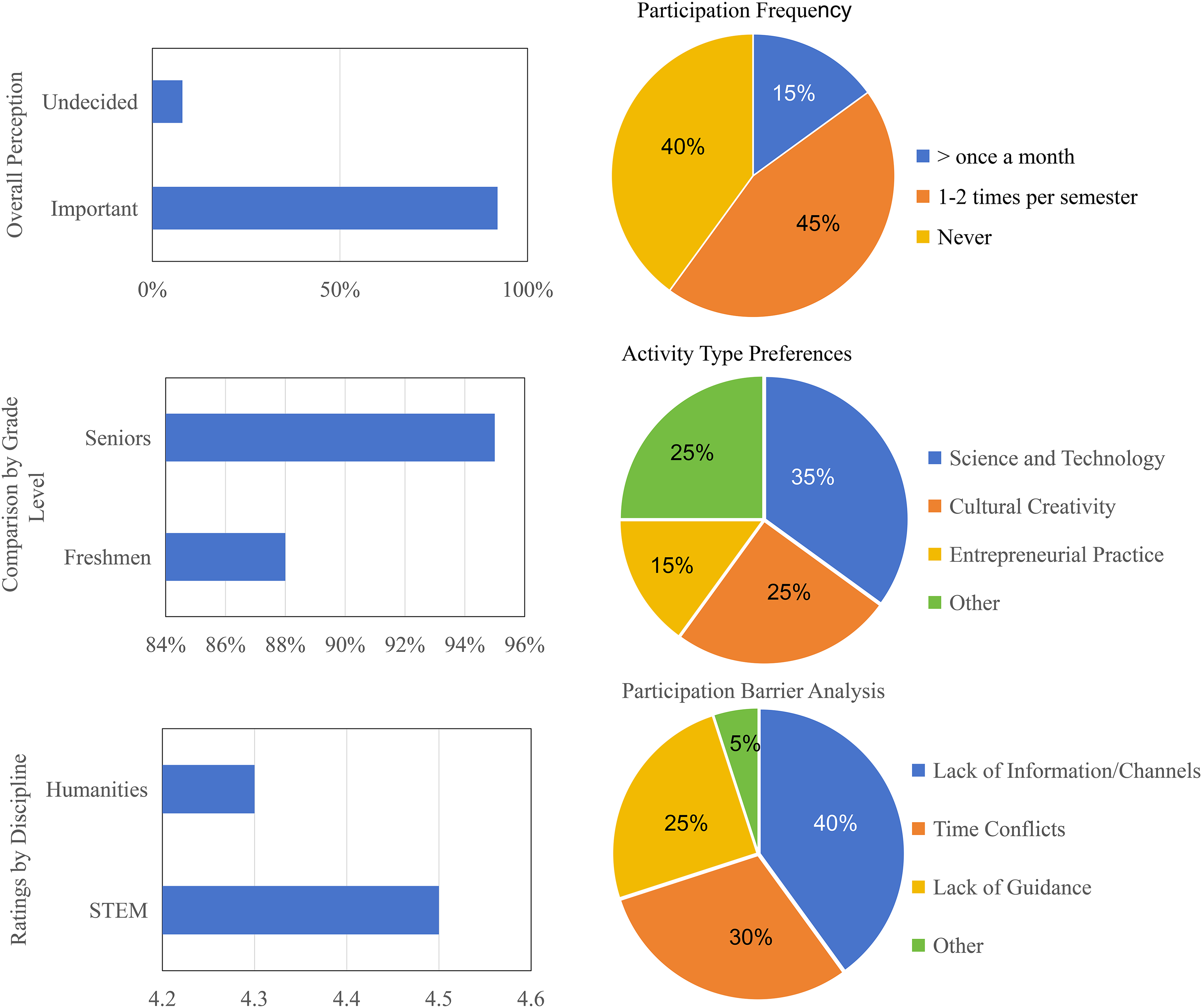
Cognitive Evaluation of the Importance of Innovative Thinking and Willingness to Participate in Innovation Activities.
Evaluation of the Existing Teaching Methods
Only 35% of the students were satisfied with the current teaching methods for cultivating innovative thinking. Among the dissatisfied students (65% of the total sample), 60% thought that the teaching method was too classroom-centered and lacked variety, 55% believed it overemphasized theory at the expense of practice, and 40% considered the teaching content outdated and disconnected from reality.
Science and engineering students had a 30% satisfaction rate, while humanities students had a 40% satisfaction rate. The practical and innovation-focused requirements of science and engineering disciplines are not well met by current teaching methods, leading to lower satisfaction.
Students suggested diverse teaching methods; 45% advocate for more practical teaching, such as experiments and internships, 35% recommend using diverse pedagogical approaches, such as group discussions, and 20% emphasize updating course content.
Interview Analysis Based on Grounded Theory
Open Coding
When analyzing the interview materials of students, one student mentioned, “In project-based learning, we need to find information and design schemes by ourselves. In this process, I learned to think actively and try to solve problems from different angles.” From this paragraph, the initial concepts of “proactive thinking,” “multi-angle problem solving,” and “project learning” project learning were extracted. Another student said, “During the group discussion, everyone expressed their opinions, clashing and sparking numerous fresh inspirations.” Thus, concepts such as “group discussion,” “collision of ideas,” and “inspire new ideas” were refined.
In the analysis of the teacher interview materials, one teacher pointed out, “I often set some open questions in class to encourage students to express their opinions and cultivate their critical thinking.” Concepts such as “open questions,’ encouragement for opinions,” and “critical thinking cultivation” were extracted. Another teacher mentioned, Practical teaching is very important for the cultivation of students’ innovative thinking. In practice, students can transform their theoretical knowledge into practical abilities and discover new problems and solutions.” Thus, concepts such as “practical teaching,” “combining theory and practice,” and “discovering new problems and solutions” were extracted.
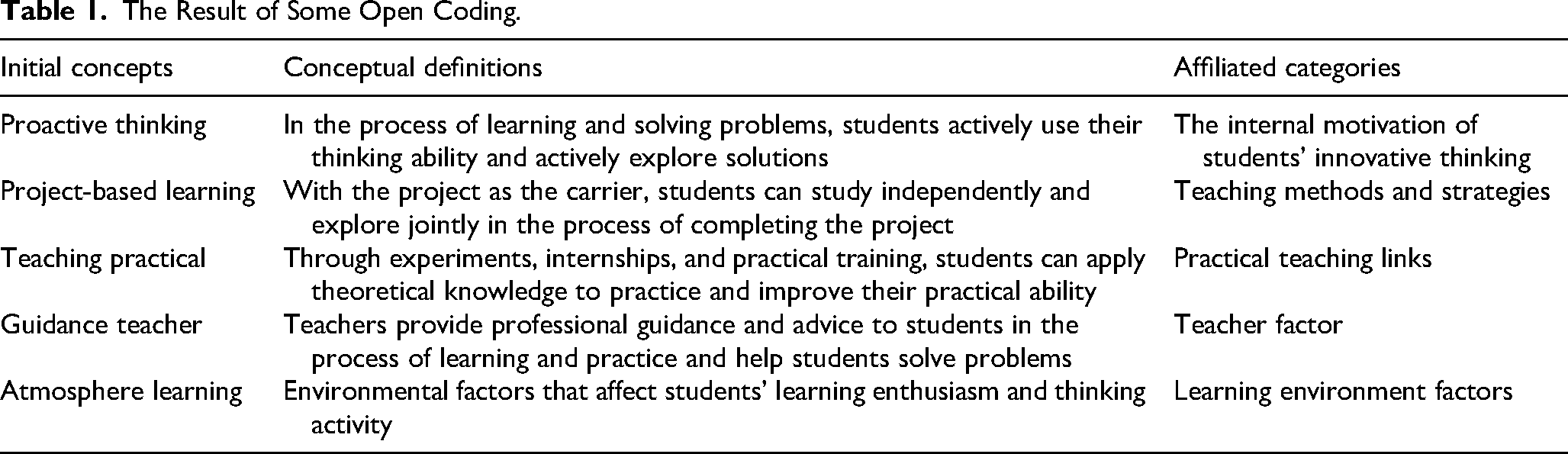
After careful analysis of all the interview materials, more than 100 initial concepts were extracted. These initial concepts were classified as streamlined subsequent analyses. Concepts such as “proactive thinking,” “active exploration,” and “curiosity” fall under “internal motivation for students’ innovative thinking”; “Project-based learning,” “group discussion,” and “case teaching” are categorized as “teaching methods and strategies”; The concepts of “Practical teaching,” “practical practice training,” and “innovative practice activities” fall under the category of “practical teaching links.” Concepts such as “teacher guidance,” “teacher encouragement,” and “teacher professional quality” are grouped under “teacher factor.” Concepts such as “learning atmosphere,” “teamwork atmosphere,” and “academic exchange environment” are categorized as “learning environment factors” (Table 1).
The Result of Some Open Coding.
Axial Coding
Axial coding is the process of further classifying and integrating initial concepts derived from open coding. This involves identifying the logical relationships among these concepts to form a coherent set of categories.
Under the category of “the internal motivation for students’ innovative thinking,” concepts such as “proactive thinking,” “active exploration,” and “curiosity” are further integrated to form the domain of “students’ initiative in innovative thinking.” This domain emphasizes that when cultivating innovative thinking, students demonstrate a proactive mindset and exploratory spirit, which serve as the internal driving force for the development of innovative thought.
In the category of “teaching methods and strategies,” concepts such as “project-based learning,” “group discussion,” and “case teaching” are summarized to form the category of “diversified teaching methods.” Diversified teaching methods aim to stimulate students’ learning interests and initiatives by applying various approaches. This promotes the thinking of collisions and communication among students, providing a favorable teaching environment for cultivating innovative thinking.
The terms “practical teaching,” “practical training,” and “innovative practice activities,” which were previously classified under “practical teaching links,” are now consolidated into the broader category of the “practical teaching system.” The practical teaching system encompasses various forms of practical teaching, highlighting the significance of practical teaching in cultivating innovative thinking among college students. Through practical activities, students can integrate theoretical knowledge with practical applications and exercise innovative thinking and problem-solving abilities.
Concepts such as “teacher guidance,” “teacher encouragement,” and “teacher professional quality,” initially categorized under “teacher factor,” are combined into the single category of “teacher guidance and professionalism.” Teacher guidance and professionalism include teachers’ guidance and encouragement during the teaching process as well as their own professional accomplishments and innovative education capabilities. These aspects play a crucial role in guiding and supporting the cultivation of innovative thinking among students.
The concepts of “learning atmosphere,” “teamwork atmosphere,” and “academic exchange environment,” previously grouped under “learning environment factors,” are now incorporated into the category of “innovative learning environment.” An innovative learning environment includes various factors in schools, classes, or teams that foster the development of students’ innovative thinking, such as a positive learning atmosphere, effective teamwork, and active academic communication. After axial coding, 10 major categories were identified (Table 2).
Results of the Axial Coding.

Selective Coding
Selective coding is a crucial stage in the grounded theory analysis. Through an in-depth analysis of the relationships between various categories, it was discovered that “diversified teaching methods” play a central role in cultivating college students’ innovative thinking.
Diversified teaching methods can stimulate students’ learning interests and initiatives, thereby promoting innovative thinking. This can enhance the practical teaching system, making it more vivid and efficient. Additionally, they can foster a conducive, innovative learning environment, encouraging communication and cooperation among students. Moreover, diversified teaching methods set higher standards for teachers’ guidance and quality, motivating them to continuously improve their abilities. This, in turn, better meets the innovative requirements of the curriculum and content and promotes curriculum reform. It also provides a solid foundation for innovating evaluation and feedback mechanisms, thereby making the evaluation more comprehensive and objective. By fully utilizing the available resources and guarantees, diversified teaching methods can improve the efficiency of resource utilization. They can recognize and accommodate individual student differences and cultivate innovative thinking through differentiated instruction. Finally, they are closely aligned with social needs and orientations, cultivating innovative talent who meet societal demands.
Based on the abovementioned analysis, “diversified teaching methods” were determined as the core category. Using grounded theory and empirical data and case studies, a theoretical model for college students’ innovative thinking training was constructed (Figure 2).
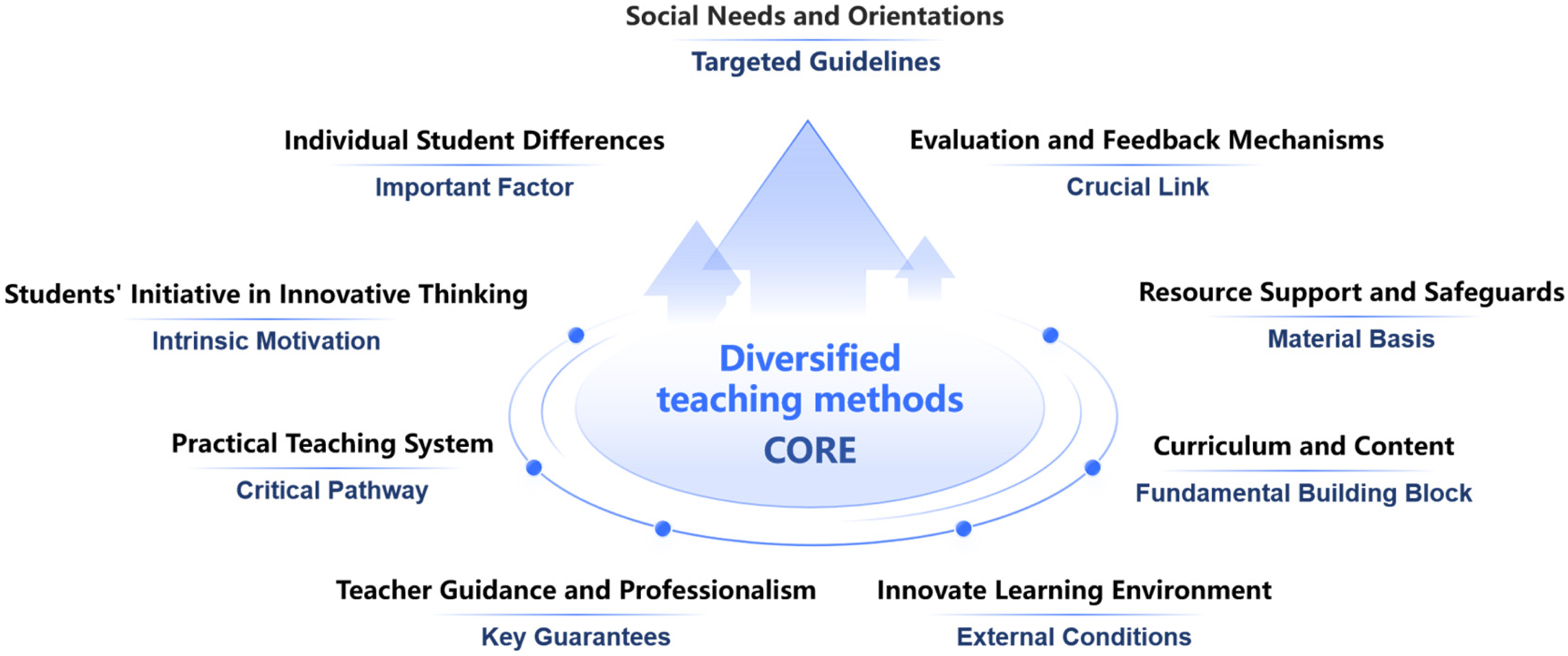
A Theoretical Model for College Students’ Innovative Thinking Training.
Analysis of the Action Path and Effect of Diversified Teaching Methods
To clarify how diversified teaching methods influence innovative thinking cultivation, this section analyzes the specific action paths of typical methods and quantifies their effect differences based on student feedback.
Action Path of Typical Diversified Teaching Methods
Problem-based learning (PBL): It operates through three core links. First, in “problem design,” teachers develop clinical cases closely aligned with professional knowledge (eg, diagnosing rare infectious diseases) to stimulate students’ curiosity and desire to explore. Second, in “group discussion,” students form teams to collect literature, analyze case details, and debate potential solutions, which promote the collision of diverse ideas. Third, in “result feedback,” teachers comment not only on the correctness of solutions but also on the rationality of students’ thinking processes, guiding them to identify logical gaps and optimize their thinking modes.
Project-based learning (PjBL): Its action path focuses on “project initiation—implementation—presentation—reflection.” In “project initiation,” students independently select topics related to professional practice (eg, designing a rapid detection kit for pathogens). During “implementation,” they apply theoretical knowledge to solve practical problems (eg, optimizing kit detection sensitivity), which cultivates hands-on innovation ability. In “project presentation,” students showcase their results and accept questions from peers and teachers, enhancing their ability to communicate and defend innovative ideas. Finally, “reflection” encourages students to summarize experience and identify areas for improvement, forming a closed loop of innovative thinking development.
Group Collaborative Learning: This method acts on innovative thinking mainly through “role assignment—collaborative problem-solving—collective evaluation.” Teachers assign diverse roles (eg, leader, recorder, presenter) to ensure each student participates. In “collaborative problem-solving,” students complement each other's strengths (eg, a student with strong logical thinking analyzes data, while a student with strong creativity proposes solutions), fostering synergy in innovative thinking. “Collective evaluation” allows the team to jointly assess the pros and cons of solutions, avoiding one-sidedness and improving the quality of innovative outcomes.
Effect Differences of Diversified Teaching Methods
Based on statistical analysis of feedback from 460 students, different teaching methods show significant differences in promoting specific dimensions of innovative thinking:
Critical thinking: PBL is the most effective, with 82% of students reporting that PBL “significantly improved their ability to question and analyze problems.” This is because PBL's problem-driven design forces students to examine information from multiple perspectives and challenge conventional assumptions.
Practical innovation ability: PjBL has the most significant effect, with 78% of students indicating that PjBL “enhanced their ability to transform ideas into practical solutions.” The hands-on nature of PjBL projects allows students to test and optimize innovative ideas in practice.
Collaborative innovation ability: Group Collaborative Learning performs best, with 75% of students stating that this method “improved their ability to innovate through teamwork.” The role-based collaboration and collective problem-solving process cultivate students’ ability to integrate diverse ideas.
Knowledge application ability: Case Teaching ranks highest, with 70% of students reporting that analyzing real cases “helped them apply theoretical knowledge to innovative scenarios.” Case Teaching bridges the gap between theory and practice, providing a context for innovative thinking.
Discussion
This study explored the innovative thinking practices of college students. Key findings include: (1) Only 35% of students are satisfied with current teaching methods, which rely too much on lectures and lack practical sessions. The participation rate in innovative activities was low. (2) “Diversified Teaching Methods” is the core category, interacting with other factors like students’ initiative and practical teaching system.7,8
This study has three main strengths: (1) It adopts a mixed-methods design combining questionnaires, interviews, and observations, which enriches the data sources and ensures the comprehensiveness of the analysis. For example, questionnaires provide quantitative data on student satisfaction and participation rates, while interviews and observations capture qualitative insights into the actual process of innovative thinking cultivation. (2) Based on grounded theory, it systematically constructs a theoretical model of university students’ innovative thinking cultivation with “diversified teaching methods” as the core, providing a new theoretical perspective for higher education teaching reform. Unlike existing studies that focus on single factors (eg, teacher leadership 7 or risk-taking 8 ), this model highlights the interaction between multiple elements, offering a holistic understanding of the cultivation mechanism. (3) The research focuses on medical students, a group with specific professional characteristics, and the findings have targeted guiding significance for innovative thinking cultivation in medical education.
To address the gap in comparative analysis of different university types, this section summarizes the characteristics of innovative thinking cultivation in comprehensive universities, science and engineering colleges, and liberal arts colleges, and compares them with the findings of this study: (1) Comprehensive universities: These institutions typically emphasize interdisciplinary integration in innovative thinking cultivation.9,10 In contrast, this study (focused on medical students) found that while interdisciplinary elements are valued, the integration is mainly limited to medical-related fields (eg, combining microbiology and clinical diagnostics). This suggests that medical colleges could further learn from comprehensive universities’ interdisciplinary models to broaden students’ innovative perspectives. (2) Science and engineering colleges: Practical project-driven teaching is the core approach here, which significantly enhances their practical innovation ability.11,12 This aligns with our finding that PjBL is effective for practical innovation, but science and engineering colleges have a more mature project support system. Medical colleges could optimize their practical teaching system by referencing this support model. (3) Liberal arts colleges: These colleges focus on critical thinking and humanistic innovation, which improved students’ ability to question and reflect. 13 Our study also found that open questions in PBL promote critical thinking, but liberal arts colleges’ emphasis on dialogue and reflection could be integrated into medical teaching to enhance the depth of students’ critical thinking. Overall, the “diversified teaching methods” identified in this study are applicable to different types of universities, but their implementation should be adjusted based on disciplinary characteristics. Medical colleges, for example, can combine the interdisciplinary advantages of comprehensive universities, the project support of science and engineering colleges, and the reflection-oriented teaching of liberal arts colleges to optimize their innovative thinking cultivation model.
This study has several limitations that need to be addressed in future research: (1) The sample is limited to 5 majors of Xiangya School of Medicine, Central South University, lacking representation from nonmedical disciplines and universities in other regions. This geographical and disciplinary singularity may affect the universality of the research conclusions. For example, the low satisfaction rate of science and engineering students (30%) may not reflect the situation of science and engineering students in other regions, as regional differences in educational resources could influence satisfaction. (2) A formal sample size calculation was not performed before the study, which may lead to insufficient statistical power for some subgroup analyses. This could result in unreliable differences in satisfaction rates or activity participation between subgroups. (3) The study was conducted from March 2024 to May 2024, making it impossible to track the long-term effect of diversified teaching methods on students’ innovative thinking. (4) The research did not fully explore the influence of family and social and cultural backgrounds on students’ innovative thinking. For example, students from families with a scientific research background may have higher participation in innovative activities, but this factor was not analyzed. (5) Although the questionnaire had a Cronbach's α coefficient of 0.82 (good internal consistency), no formal external validation was conducted. This means the questionnaire may not be applicable to students from other universities or disciplines, limiting the generalizability of the quantitative results.
To address the above limitations and expand the research, future studies can focus on the following specific directions:(1) Conduct multicenter, multidisciplinary research covering medical and nonmedical disciplines (eg, engineering, liberal arts) and universities in different regions (eg, North China, East China). Use stratified sampling to ensure the sample represents different types of universities and disciplines, thereby improving the universality of conclusions. (2) Design a 1-year longitudinal study to track students’ innovative thinking development (eg, measuring critical thinking and practical innovation ability at 3-month intervals) after the implementation of diversified teaching methods. This will help clarify the long-term effect of these methods and provide evidence for sustained teaching reform. (3) Integrate family background (eg, parents’ occupation, educational level) and social cultural factors (eg, regional innovation policies) into the theoretical model. Use structural equation modeling to analyze the interaction between these factors and diversified teaching methods, making the model more comprehensive. (4) Use AI and big data technology to analyze students’ learning characteristics (eg, learning pace, thinking style) based on online learning data (eg, time spent on PBL tasks, frequency of participating in discussions). (5) Develop personalized diversified teaching schemes: for example, recommend PBL for students with strong logical thinking, PjBL for students with strong hands-on ability, and seminar-style teaching for students with strong reflective ability. Collaborate with educational technology companies to build an intelligent teaching platform to implement these personalized schemes. (6) Collaborate with engineering colleges and liberal arts colleges to develop interdisciplinary courses for medical students, such as “Medical Device Innovation Design” (combining medicine and engineering) and “Medical Innovation Ethics” (combining medicine and liberal arts). Evaluate the effect of these courses on innovative thinking using pretest and posttest designs, providing a new path for interdisciplinary innovative education.
Conclusion
This study used grounded theory to analyze university students’ innovative thinking cultivation. Only 35% of students were satisfied with current teaching methods, and participation in innovative activities was low. “Diversified Teaching Methods” was identified as the core category, interacting with factors such as students’ initiative and practical teaching systems. The findings provide a theoretical basis for higher education teaching reform, but the sample has limitations. Future research should expand the sample scope to improve conclusion universality.
Supplemental Material
sj-docx-1-mde-10.1177_23821205251396169 - Supplemental material for University Students’ Innovative Thinking Training Based on Grounded Theory: An In-Depth Analysis of Teaching Methods and Practices
Supplemental material, sj-docx-1-mde-10.1177_23821205251396169 for University Students’ Innovative Thinking Training Based on Grounded Theory: An In-Depth Analysis of Teaching Methods and Practices by Yuan He, Lang Sun, Guojun Wu, Lili Wang and Yurong Tan in Journal of Medical Education and Curricular Development
Supplemental Material
sj-docx-2-mde-10.1177_23821205251396169 - Supplemental material for University Students’ Innovative Thinking Training Based on Grounded Theory: An In-Depth Analysis of Teaching Methods and Practices
Supplemental material, sj-docx-2-mde-10.1177_23821205251396169 for University Students’ Innovative Thinking Training Based on Grounded Theory: An In-Depth Analysis of Teaching Methods and Practices by Yuan He, Lang Sun, Guojun Wu, Lili Wang and Yurong Tan in Journal of Medical Education and Curricular Development
Footnotes
Acknowledgements
The authors would like to express our gratitude to all the teachers, students, and teaching administrators who participated in the interviews and questionnaire surveys for their support and cooperation. The authors also appreciate the guidance provided by the experts during the research process.

Ethics Approval and Participant Consent
The study was approved by the Institutional Ethic Committee of School of Basic Medical Science, Central South University (No: 2025-KT64). The study adhered to the Declaration of Helsinki. Written informed consent was obtained from all of the participants in the study (all participants were adults, no minors, deceased, or mentally incapable subjects involved). The informed consent forms are kept by the corresponding author and can be provided upon request.
Author Contributions
Yuan He did the questionnaire survey and write the draft. Lang Sun did the interview analysis. Guojun Wu and Yurong Tan did the observations. Yurong Tan and Lili Wang reviewed and refined the paper. All authors endorsed the final version.
Funding
The author(s) disclosed receipt of the following financial support for the research, authorship, and/or publication of this article: This study is funded by the Educational Revolution Research Project in University Undergraduate Education of Hunan Province (202401000348 and 202401000347).
Declaration of Conflicting Interests
The author(s) declared no potential conflicts of interest with respect to the research, authorship, and/or publication of this article.
Data Availability Statement
The data used and/or analyzed during the current study are available from the corresponding author on reasonable request.
Supplemental Material
Supplemental material for this article is available online.
References
Supplementary Material
Please find the following supplemental material available below.
For Open Access articles published under a Creative Commons License, all supplemental material carries the same license as the article it is associated with.
For non-Open Access articles published, all supplemental material carries a non-exclusive license, and permission requests for re-use of supplemental material or any part of supplemental material shall be sent directly to the copyright owner as specified in the copyright notice associated with the article.
