



Abstract
Objectives
This study aimed to determine the relationship between cultural intelligence and cultural competence (CC) of the school of nursing and midwifery students from the Zanjan University of Medical Sciences in 2020-2021.
Methods
This cross-sectional study was conducted on 245 from 600 nursing and midwifery students of the Zanjan University of Medical Sciences from November 24, 2020, to March 18, 2021. Data were collected using three questionnaires of demographic information, Cultural Intelligence Scale, and The Nurse Cultural Competence Scale. Data analysis was done through Pearson's test and the logistic regression model using SPSS Version 22.
Results
The response rate was 40.83%. The results showed that the total score of cultural intelligence had a strong positive relationship with CC (r = 0.88). Also, the logistic regression model showed that the cultural intelligence variable could predict nursing and midwifery students’ CC (B = 0.1, P = .013).
Conclusion
It is recommended to pay more attention to increasing the cultural intelligence and CC of nursing and midwifery students.
Introduction
Nursing and midwifery students constantly face the cultural diversity of patients. 1 In this respect, nursing and midwifery students must know their cultural diversity to provide care to patients with different cultural backgrounds. Failure to meet the healthcare needs of patients can lead to patient isolation and dissatisfaction. 2 In medical crises such as COVID-19, healthcare professionals are involved in its medical and social effects. Culturally diverse groups, such as minorities and ethnic groups, experience more severe health effects during crises due to health disparities. 3 The COVID-19 pandemic has exacerbated healthcare disparities, disproportionately affecting racial and ethnic minority groups. Having underlying diseases, economic poverty, social problems, and low access to health services in some ethnic groups during the COVID-19 pandemic will multiply the problem. 4 With cultural competence (CC), healthcare professionals and students can meet the cultural needs of patients. CC is the ability to interact with individuals from different cultures effectively. This competency for students is vital for delivering quality nursing and midwifery care across culturally diverse groups.5,6 Acquiring CC is an important educational requirement in all healthcare disciplines. 7
Considering the multiethnicity of Iran, as it has 24 cultural and religious ethnicities, 8 acquiring CC is essential for nursing and midwifery students. Acquiring CC begins during the student period. 9 So the schools of nursing and midwifery should prepare students to provide care based on the client's culture. 10 Due to the outbreak of the COVID-19 pandemic, some training at medical science universities was conducted virtually. These conditions cause students to stay away from the university environment and clinical fields. The development of their skills and competence, such as CC, faced a problem. 11 Meanwhile, these students should acquire CC in managing crises. Research has shown that under normal conditions, students’ CC has been unfavorable.12,13
Despite the obstacles to effective education in developing students’ competence, it has been seen that some students have flexibility when facing different cultures and show behaviors. These students have good cultural intelligence (CQ). Also, it has been evidenced that there is a relationship between CQ and social interactions, communication skills,14,15 professional competence, 16 and leadership. 17 However, no study has been found on the relationship between CQ and CC.
Iran has 24 cultural and religious ethnicities. 8 The official language of the country is Persian. Zanjan Province with 1,057,461 population and eight cities is in the northwest of Iran. The capital of the Zanjan Province is Zanjan City. The population of Zanjan speaks the Azerbaijani language, and they are Muslims. Its proximity to the Kurdish cities and the northern cities of Iran, where the people speak in local dialects, has faced the city with a wide variety of languages and cultures. Locating Zanjan city across the Silk Road has created many job opportunities for many decades ago. The city's several mines have attracted many immigrants from other cities. So students and healthcare workers in the culture of Zanjan City face different cultures in the hospital environment. The present study aims to determine the relationship between CQ and CC of the school of nursing and midwifery students of the Zanjan University of Medical Sciences in 2021.
Methods
Study design, setting, and sampling
A cross-sectional study was used in this study, conducted from December 25, 2020, to March 19, 2021. University students were recruited from the School of Nursing and Midwifery, the Zanjan University of Medical Sciences. This School has 600 undergraduate students and 100 postgraduate students. This date was in the distance between the second and third peak of COVID-19 in Iran. During this period, the entire country was regularly quarantined, and there were foremost concerns and fears about this disease in the community and the health system. 18 All theory classes and some internships were held online.
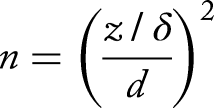
Inclusion criteria were willingness to participate in this research, a study in the third semester and above, and a study in one discipline of nursing, midwifery, operating room nursing, and anesthesia nursing. Guest students were excluded from the study. A pilot study was performed on 45 nursing students. Considering α = 0.05 and d = 0.1, the sample size of 221 people was estimated using the following formula. Considering the 10% drop, the final sample size was estimated at 245 people.
Measures
Three questionnaires, including a demographic questionnaire, Cultural intelligence scale (CQS), and the Nurse Cultural Competence Scale (NCCS), were used.
Demographics
Demographic questions included age, gender, residence, major, semester, and whether to speak a second language (Appendixes).
Cultural Intelligence Scale
This scale was developed by Ang et al. 19 The scale includes four dimensions and 20 items, meta-cognitive (four items); cognitive (six items); motivational (five items); and behavioral (five items). It is scored on a 7-point scale (ranging from 1 = strongly disagree to 7 = strongly agree), with its scores varying from 20 to 140 (20–60 = low CQ; 61–100 = moderate CQ; and 101–140 = high CQ) (Appendixes). Ang et al reported the internal consistency of this scale with Cronbach's alpha of 0.93. 19 CQS has been used in previous studies in Iran and its validity and reliability have been confirmed.20,21 In this study, the questionnaire was given to 10 experts. Corrections were made based on expert opinions. For this questionnaire, content validity ratio (CVR) and the Content Validity Index (CVI) were calculated. The mean CVR and CVI of the questionnaire were 0.72 and 0.88, respectively. Also, in the present study, the CQS was given to 45 nursing students in a pilot study, and its reliability was obtained using Cronbach's alpha test of 0.83.
The Nurse Cultural Competence Scale
This scale was developed and psychometric by Karami-Matin et al in Iran among 192 healthcare providers. 22 This scale is 21 items with five dimensions of cultural skill (eight items), cultural awareness (four items), cultural desire (five items), cultural encounter (two items), and cultural behavior (two items) (Appendixes). Overall, five factors of cultural skill, cultural awareness, cultural desire, cultural encounters, and cultural behavior described 62.44% of the assumed model. Overall, five factors of cultural skill, cultural awareness, cultural desire, cultural encounters, and cultural behavior described 62.44% of the assumed model. Cronbach's α coefficient of each construct was: cultural skill (α = 0.85); cultural awareness (α = 0.80); cultural desire (α = 0.80); cultural encounters (α = 0.81), and cultural behavior (α = 0.70). It is scored on a 5-point scale (ranging from 1 = strongly disagree to 5 = strongly agree), with its scores varying from 24 to 120 (24–40 = low CC; 41–80 = moderate CC; and 81–120 = high CC). 22
Procedures
After obtaining the code of the ethics committee, data collection was done with the official permission of the Dean of the Faculty of Nursing and Midwifery. The online questionnaire was created via Porsline and its URL link was sent by social networking applications such as Telegram channel or WhatsApp groups. Data were then extracted into an Excel file from the Porsline. The objectives of the study were explained to the participants at the beginning of the questionnaire. If the student wanted to participate in the study, he/she would answer the questionnaire online.
Ethical consideration
This study was approved by Iran's National Committee for Ethics in Biomedical Research (approval code: IR.SEMUMS.REC.1398.048). The objectives of the study were explained to the participants at the beginning of the study. Participants were ensured of the anonymity of the questionnaires and the confidentiality of the data. Then, written informed consent to participate in the study was obtained online prior to the study initiation. All methods were carried out in accordance with relevant guidelines and regulations.
Statistical Analysis
The data was analyzed using SPSS V.22 software. Descriptive statistics were used to analyze the continuous variables, such as age reported as mean and standard deviation, and the categorical variables, such as gender, semester, and whether to speak a second language, were reported as frequency and percentage. The normal distribution of the data was assessed using the Kolmogorov–Smirnov test. Also, the Pearson correlation coefficient was applied to investigate the relationship between CQ with CC. Finally, the logistic regression model was applied to predict the CQ for CC. The level of statistical significance was set at P < .05.
Results
Of the 600 nursing and midwifery students of the Zanjan University of Medical Sciences, 245 completed the questionnaires and were included in the analysis. The response rate was 40.83%. The mean age of students was 21.18 ± 1.41 years. Most students were female and often spoke two languages (Table 1).
Demographic variable in the students of nursing and midwifery (n = 245).

The results showed that 18.4% (N = 45) of the students had low CQ, and 81.6% (N = 200) had moderate CQ. Also, 91.4% (N = 224) of students had moderate CC, and 8.6% (N = 21) had high CC. Based on the obtained results, students’ CQ and CC were at a moderate level (Table 2).
Mean and standard deviation of CQ and CC dimensions.
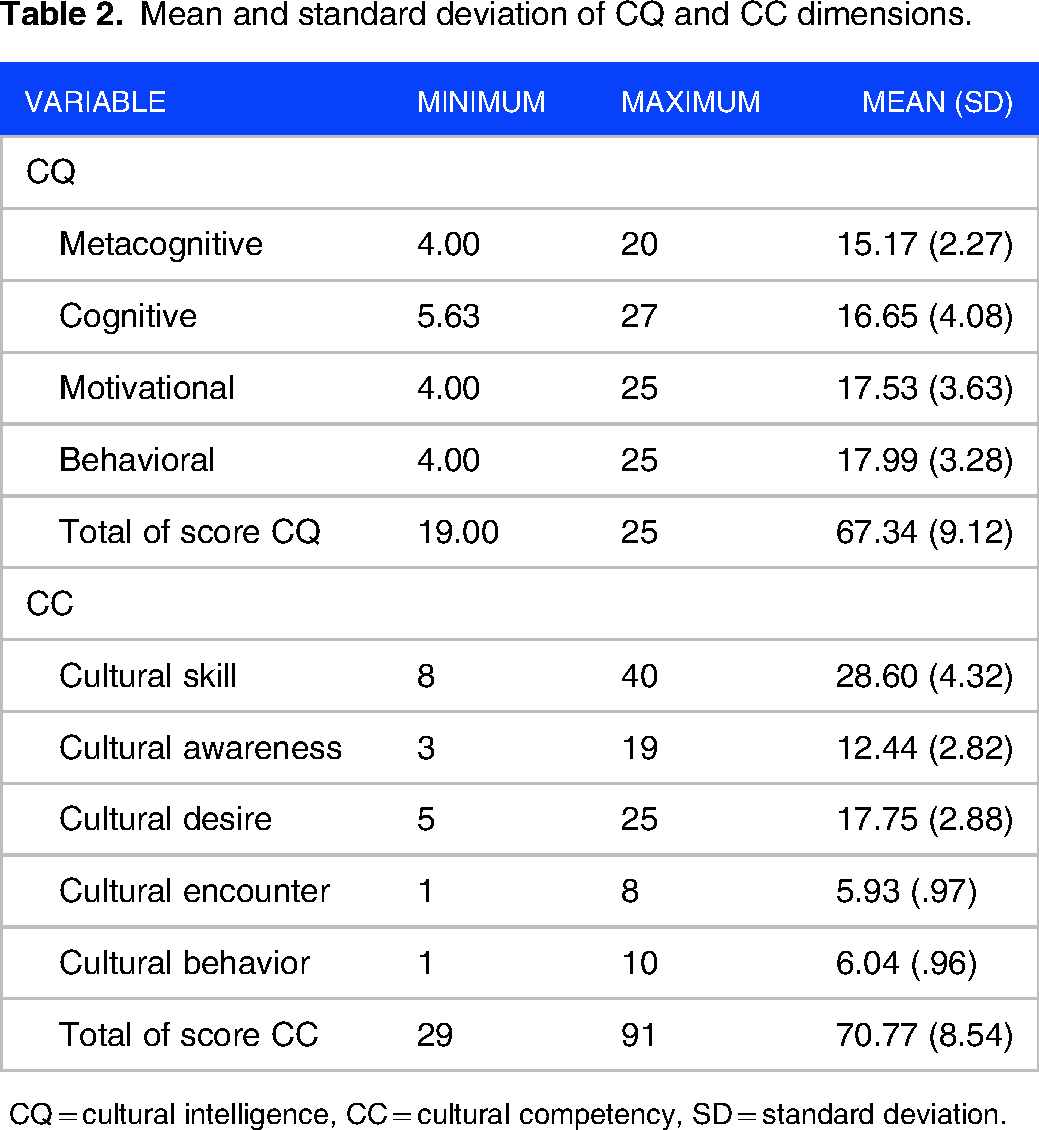
CQ = cultural intelligence, CC = cultural competency, SD = standard deviation.
The CQ total score had a strong positive correlation with CC (r = 0.88). In the dimensions of CQ, the motivational dimension had a strong positive correlation (r = 0.49), and the cognitive dimension had a weak positive correlation (r = 0.26) with the total CQ score. Also, in the dimensions of CC, the cultural awareness dimension had a strong positive correlation (r = 0.60) with the total score of CQ. Among the dimensions of CC, the cultural awareness dimension had a strong positive correlation (r = 0.79), and the cultural desire dimension had a weak positive correlation (r = 0.15) with the total CC score. In the dimensions of CQ, cognitive and motivational dimensions had a strong positive correlation (r = 0.55) with the total score of CC (Table 3).
Correlation between dimensions of CQ and CC.

* = p < 0.05, ** = p < 0.001, CQ = Cultural intelligence, CC = Cultural competency, X1 = Metacognitive, X2= Cognitive, X3= Motivational, X4= Behavioral, X5= Total of score CQ, X6= Cultural skill, X7= Cultural awareness, X8= Cultural desire, X9= Cultural encounter, X10= Cultural behavior and X11= Total of score CC.
A logistic regression model with a forward selection (likelihood ratio) method was used to predict CC.
The variable of CC was considered a dependent variable, while gender, age, major, semester, residence, and speaking a second language were independent variables. Also, CC scores were entered into the model as a categorical variable by dividing it into three categories: low, medium, and high. This model showed that only the CQ variable could predict students’ CC (P = .013). The omnibus test results showed the model's fit (chi-square = 12.80, df = 1 P < .001). Cox and Snell R square (R2Cox&Snell) and Nagelkerke R square (R2Nagelkerke) were 0.05 and 0.12, respectively. These coefficients showed CQ could predict between 5% to 12% of changes in CC. The odds ratio for CQ was 1.11, indicating that increasing CQ enhanced CC 1.11 times (Table 4).
Discussion
Our findings showed that students’ CQ and CC were at average levels. Also, a positive and significant relationship was identified between CQ and students’ CC. In some studies, the CQ of healthcare professionals was at a moderate level.14,15,23 Rahim Rahimaghaee et al reported that nurses’ CQ level was high. 24 These differences are attributed to cultural differences in research environments. In line with the present study, some studies showed that the students’ CC was average.12,25,26 However, contrary to the present study, Nafar et al in Tehran reported that the level of CC of healthcare professionals working in comprehensive health centers was favorable. 27 As the capital of Iran, Tehran, has the most cultural diversity. Evidence shows that multiple exposures to different cultures increase an individual's CQ and CC.28,29 In addition, Anna Majda et al found more contact with different cultures effective in promoting physicians’ CC and CQ. 30 The present study found a positive relationship between CQ and CC. CC is a phenomenon influenced by several factors, including CQ. In this respect, improving CQ allows providing the growth of students’ CC. Healthcare professionals with high CQ are interested in interacting with individuals from other cultures and are more effective in cultural interactions. 14 Appropriate communication between students and patients leads to the provision of better health services and the enjoyment of encountering new cultures. These outcomes may promote effective communication and greater professional competence. The COVID-19 pandemic affected communities disproportionately, including first responders, racial, ethnic, and religious minorities, immigrant groups, the elderly, people with underlying health conditions, and those in prison.31,32 The lack of awareness of healthcare professionals about the cultures and beliefs of ethnic minorities in crises affects the mental health of these people.31,33 So students must acquire CC to deal with these health disparities and solve these problems. The COVID-19 pandemic also gave another lesson for most countries, leading to a revolutionary change in educational approaches and accelerating the use of virtual space for the education of nursing and midwifery students. 34 The distance of the students’ environment from the real environment reduced the cultural exposure. Using remote learning as an emergency measure has affected students, faculty, support staff, and administrators. Still, this condition has also provided many opportunities, such as incorporating online learning into the curriculum and upskilling and reskilling into new technologies.34,35 So administrators and faculty should appropriately use the real and virtual environment facilities to develop students’ CQ and CC.
Strength and Limitation
This research increased our knowledge about the state of CQ and CC of students of the Nursing and Midwifery Faculty of the Zanjan University of Medical Sciences. The existence of a relationship between CQ and CC suggests the necessity of paying attention to increasing CQ from childhood. Globalization will confront different cultures both in the real environment and in the virtual space. The training empowered health staff requires paying more attention to nursing and midwifery students’ CQ, increasing future staff's CC. As for the unique culture of Zanjan city, these cultural and social conditions of the research environment limit the generalizability of its results.
Conclusions
This study showed a significant relationship between CQ and students’ CC, and CQ could predict students’ CC. According to the results, it is recommended to pay more attention to increasing the CQ and CC of nursing and midwifery students. Increasing students’ CC will reduce health inequalities among ethnicities and cultural minorities.
Logistic regression analysis to predict CC in participant.

CC = Cultural competency, CI = confidence interval.
Supplemental Material
sj-docx-1-mde-10.1177_23821205231184042 - Supplemental material for The Relationship Between Cultural Intelligence and Cultural Competence of Students of Nursing and Midwifery During COVID-19: A Cross-Sectional Study
Supplemental material, sj-docx-1-mde-10.1177_23821205231184042 for The Relationship Between Cultural Intelligence and Cultural Competence of Students of Nursing and Midwifery During COVID-19: A Cross-Sectional Study by Zeynab Bakhtiari, Nasrin Hanifi and Nasrin Jafari Varjoshani in Journal of Medical Education and Curricular Development
Footnotes
Acknowledgements
This study is part of the project results at Zanjan University of Medical Sciences (A-11-148-24). A part of this project in the journal J Med Educ Dev (2022; 15(45): 19–25  is published. The researchers appreciate the financial support of the Zanjan University of Medical Sciences, the participation of patients, and the cooperation of nurses in this study.
Author Contributions
Study design: NH, ZB, and NJV; data gathering: NH and ZB; statistical analysis and interpretation of the data; NH drafting of the manuscript: NH and ZB; critical revision of the manuscript: NH, ZB, and NJV.
Declaration of Conflicting Interests
No conflict of Interest.
Ethical Consideration
This study was approved by Iran's National Committee for Ethics in Biomedical Research (approval code: IR.SEMUMS.REC.1398.048). The objectives of the study were explained to the participants at the beginning of the study. Participants were ensured of the anonymity of the questionnaires and the confidentiality of the data. Then, written informed consent to participate in the study was obtained online prior to the study initiation. All methods were carried out in accordance to relevant guidelines and regulations.
Funding
The author(s) disclosed receipt of the following financial support for the research, authorship, and/or publication of this article. This work was supported by the Zanjan University of Medical Sciences.
Supplemental Material
Supplemental material for this article is available online.
Appendixes
References
Supplementary Material
Please find the following supplemental material available below.
For Open Access articles published under a Creative Commons License, all supplemental material carries the same license as the article it is associated with.
For non-Open Access articles published, all supplemental material carries a non-exclusive license, and permission requests for re-use of supplemental material or any part of supplemental material shall be sent directly to the copyright owner as specified in the copyright notice associated with the article.
