



Abstract
BACKGROUND
Differential diagnosis (DDx) is a core clinical reasoning skill that all medical students and physicians must acquire and develop. Metamemory techniques (MMTs), including mnemonic devices and other heuristics, are frequently taught to students as a means of enhancing DDx generation. The Heart is A House (HIAH), an MMT that works by prompting students to think about cardiac disease in terms of four structural subsystems, can be used to facilitate the generation of cardiac differentials, but its efficacy has not been studied.
METHODS
In a 3-hour DDx workshop, second-year medical students were given a brief case vignette of a patient with chest pain and dyspnea and asked to generate initial differential diagnoses before and after learning HIAH. Descriptive statistics and paired T-tests were used to compare the sizes of cardiac-only and total differentials pre-/post-HIAH. Cardiac diagnoses were classified according to the structural categories described by HIAH, and Simpson's Diversity Index (SDI) was used to evaluate the effect of HIAH on the variety of cardiac diagnoses produced.
RESULTS
All students in the course (N = 111) submitted pre-post differential lists. The mean number of diagnoses included in their differentials did not change significantly after exposure to HIAH (7.98 vs. 8.71, P = .09). However, the number of potentially correct cardiac diagnoses increased from 1.79 to 4.75 (P < .0001), and the variety of structure/function cardiac categories considered by students increased more than twofold (from an SDI of 0.16 to 0.4, P < .0001). These increases were accompanied by a small increase in incorrect diagnoses ( + 2.47%, P = .0003) and a larger decrease in potentially correct noncardiac diagnoses (−41.88%, P < .0001).
CONCLUSION
The use of HIAH was associated with an increase in the size and variety of cardiac differentials. This increase may have come at the cost of a reduced noncardiac differential. Educators may find HIAH useful for guiding students as they reason through cases involving potential cardiac etiologies. As with all heuristics, care must be exercised to avoid introducing unwanted bias.
Introduction
Differential diagnosis (DDx), the process of developing a list of candidate diagnoses to explain a patient's symptoms and findings, is central to clinical reasoning. It is the task of all medical learners to acquire and refine DDx skills, and educators have applied a wide variety of pedagogical approaches, both evidence-based and otherwise, to this vitally important subject.1–5 It is customary in most US medical schools to teach DDx in an “in-line,” contextual manner, utilizing both fictional and actual patient cases.6–8 Although some institutions may have implemented explicit curricular elements aimed at teaching the technique of DDx proper, little of this is described in the literature. 7 Recently, we reported the successful implementation of a DDx workshop for third-year medical students built around teaching heuristics and mnemonics, collectively termed metamemory techniques (MMTs). 7 In that study, we evaluated “general-purpose” MMTs that facilitate the generation of large initial differentials across a wide variety of clinical scenarios – an example being the classic VINDICATE(S) acronym for generating differentials by pathophysiology.9,10 Although not assessed in that study, “use case-specific” MMTs are also widely taught and are in common use among students and experienced clinicians alike. Examples include the PB KTL (“lead kettle”) mnemonic for recalling cancers likely to metastasize to bone, 11 and the “NAACP” for the differential diagnosis of eosinophilia. 12
MMTs may also be of intermediate specificity, i.e., applicable to differentials for a particular organ system or pathophysiology. In our experience, one of the common obstacles students encounter in generating DDx is a difficulty in translating their considerable knowledge of anatomy and pathophysiology into specific diagnostic possibilities. When asked for a differential for chest pain, such a student may say “well, it could be cardiac…”, reaching an impasse when prompted for specific diagnoses. Encouragement to think in terms of pathophysiologic processes can be helpful, and MMTs such as VINDICATE(S) can facilitate this kind of thinking.7,13 However, in our experience, as well as in our recent study, 7 some students find the use of VINDICATE(S) cumbersome and unwieldy, at least as applied to an entire organ system. What students may need, in this scenario, is an intermediate use-case anatomic MMT that helps them to focus their considerations of pathophysiology, and thereby accelerate their transition from system to diagnosis.
Within the integrated, heuristics-centered DDx curriculum at our institution, we have utilized and taught several such “system-specific” MMTs, informally noting their apparent effectiveness and popularity with students. The efficacy of these MMTs, however, has yet to be quantitatively measured. In this study, we chose to evaluate an MMT called The Heart is a House (HIAH; developed by author F.S.L.), which is designed to facilitate initial generation of cardiac differentials. This MMT is a heuristic that works by dividing the heart into structural subsystems, then applying the principle of analogy between something familiar and another less familiar (ie, a house and a heart). It also employs both rhythmicity and a simple visualization, both common features of effective MMTs. 14 The phrase used with students is: “the Heart is a House: it has big plumbing, small plumbing, wiring and walls.” (Figure 1). The student is then guided to consider, within the context of a cardiac presentation, diseases that involve the heart's structural components, as organized according to HIAH: valves and great vessels, the coronary arteries and microvasculature, the conduction system, and the mural layers of the heart (endocardium, myocardium, and pericardium), respectively. Our working hypothesis is that the use of HIAH will be associated with an increase in both the size and variety of differential diagnoses for clinical presentations in which cardiac etiologies are being entertained.

The heart is a house.
Methods
Incoming second-year medical students at Wright State University Boonshoft School of Medicine engaged in a three-hour, in-person, interactive introductory DDx workshop (“DDx Zero”), the first of several sessions that comprise the institution's three-year “DDx Curriculum Suite.”
After a brief discussion of general DDx principles and concepts, students were given a brief case vignette of a patient with exertional dyspnea (Figure 2), and without additional prompting or instructions, were given 3 min to generate an initial DDx. This was presented as a skills assessment challenge, and students were not informed that they would be re-assessed using the same case. Upon completion, they were immediately given brief instructions in the use of HIAH (approximately 2-3 min of lecture, which emphasized cardiac anatomy rather than specific diagnoses), and again were given 3 min to develop a DDx for the same case. Students were encouraged to use HIAH if they found it helpful in generating their differentials, but were given no specific instructions otherwise. In an effort to isolate the effect of HIAH on their differentials, students were asked to work alone, and were instructed not to use the Internet or other reference materials.

The case of the bass at the base.
Responses were collected and de-identified using Qualtrics, replacing student names with randomized six-digit identifiers. Pre-HIAH and post-HIAH differentials for each student were counted and categorized into five accuracy/relevance categories according to a master key constructed by the authors, utilizing a number of diagnostic reference texts15–17 to insure completeness and accuracy.
Cardiac Correct—cardiac diagnoses that are specific and could conceivably account for the clinical presentation described Incorrect—diagnoses that do not reasonably fit the presentation Redundant—a synonym or a restatement of a correct diagnosis already listed Imprecise—substitution of a broad diagnostic category (symptom, organ system, or pathophysiological process) for a discrete diagnosis Noncardiac Correct—correct diagnoses that are not cardiac in etiology “Big plumbing”—diseases of valves and great vessels “Small plumbing”—diseases of coronary arteries (as well as veins and microvasculature) “Wiring”—diseases of the conduction system (dysrhythmias and heart blocks) “Walls”—diseases of the endocardium, myocardium, or pericardium
Correct cardiac diagnoses were further categorized by structural subsystems, using the following HIAH schema:
For diseases affecting multiple cardiac subsystems, diagnoses were arbitrarily but consistently assigned to a category that the authors considered to be most representative (eg, “walls” for cardiac amyloidosis).
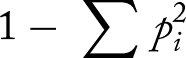
To examine the dispersion of the correct diagnoses among the four subsystem categories, we calculated the Simpson's Diversity Index (D). The Simpson's Diversity index, originally applied in ecological systems, can more generally reflect the dispersion in multiple categories with higher values suggesting greater diversity.
18
It has been recently used in examining diversity in medical education
19
and is defined using the following equation, where pi is the proportion of diagnoses for each i category (ie, big vessel, small vessel, conduction, walls):
Statistical analysis
The total number of diagnoses for each specific category was summed and divided by the total number of diagnoses to create a proportion (multiplied by 100 to create a percentage) of diagnoses for each category. Descriptive statistics were conducted to describe the mean percentage of diagnoses that fell into each category with means and standard deviations; 95% confidence intervals (CI) were calculated around the difference in means pre and post. To examine changes in the percentage of diagnoses in each category and the Simpson's Diversity Index, paired t-tests were conducted. Effect sizes, defined as the standardized mean difference (mean difference/standard deviation), were also calculated for each test. All data were analyzed using SAS version 9.4 and P-values < .05 were regarded as statistically significant.
Results
Table 1 presents the mean number of diagnoses provided by the student participants (N = 111), pre- and post-HIAH, with a breakdown by accuracy/relevance category (Cardiac Correct, Incorrect, Redundant, Imprecise, and Non-Cardiac Correct). Students produced an average of 7.98 diagnoses (95% CI, 7.47-8.49) pre-HIAH and 8.71 (95% CI: 7.83-9.59) post-HIAH – a nonsignificant difference (mean difference [Md] = 0.73; effect size [ES] = 0.16; t = −1.73; P = .09). There were significant post-intervention increases in the percentage of correct cardiac diagnoses, from 21.66% pre-HIAH to 47.45% post-HIAH (Md = 25.79%; ES = 0.65; t = −6.88; P < .0001). There was also a significant decrease in the percentage of correct non-cardiac diagnoses (55.36% to 13.37%, Md = 41.99%; ES = 1.96; t = 17.81; P < .0001), and a very small but significant increase in the number of incorrect diagnoses (0.82% to 3.29%; Md = 0.16%; ES = .35; t = −3.72; P < .0001).
Percentage of Diagnoses for each Category, Pre- and Post-HIAH (N = 111).

Change = Post—Pre.
Degrees of Freedom = 110 for all tests.
Paired t-test.
ES = Effect Size—defined as the standardized mean difference.
*98.0% of students had zero redundant diagnoses.
In Table 2, the mean number of cardiac diagnoses pre-HIAH (1.79, 95% CI 1.42-2.16) and post-HIAH (4.75, 95% CI 4.12-5.38) are shown, and are significantly different (Md = 2.95; ES = 0.72; t = −7.53; P < .0001). The number of cardiac subsystems included in the student differentials also increased significantly, from 1.22 (95% CI 1.02-1.14) to 2.18 (95% CI 1.95-2.41) (Md = 0.96; ES = 0.53; t = −5.57; P < .0001). As also noted in Table 2, the subsystems represented in the students’ differentials showed a number of significant pre/post-HIAH changes – most notably a decrease in small vessel diagnoses (27.04% to 13.83%; Md = 13.20; ES = 0.35; t = 3.71; P = .0003), with reciprocal increases in the other subsystems, particularly conduction (6.26% to 12.47%; Md = 6.22; ES = 0.26; t = −2.77; P = .007) and walls (24.45% to 39.00%; Md = 14.55; ES = 0.31; t = −3.28; P = .001). The overall subsystem variety of students’ cardiac differentials was also assessed. To quantitate the subsystem variety of differentials, the Simpson's Diversity Index was calculated and found to increase post-HIAH, from 0.16 (95% CI 0.11-0.21) to 0.41 (95% CI 0.36-0.46) (Md = 0.25; ES = 0.62; t = −6.50; P < .0001).
Cardiac Diagnoses by Subsystem (N = 111).

ES = Effect Size.
Degrees of Freedom = 110 for all tests.
Paired t-test.
Discussion
DDx is central to the processes of clinical reasoning, and acquisition of DDx skills should be considered among the highest priorities for all physicians-in-training. In our previous work, 7 we have made a case for a heuristics-based approach to DDx pedagogy, and presented some preliminary evidence for both efficacy and acceptance by students. The DDx MMTs evaluated in that study were of the “general purpose” variety, chosen for their broad applicability to a wide range of clinical presentations. In the present study, we chose to evaluate the impact of a single MMT, with a use case of intermediate breadth, on DDx generation.
In our teaching and precepting sessions, we have found HIAH to be a heuristic that works well for our many students who “get stuck” when asked to generate a cardiac differential. Such students tend to be guided by unconscious and automatic heuristics such as availability and search satisficing13,20—often around the “small plumbing” pathologies such as myocardial infarction and the various forms of angina (consider what most people are likely to think of when they hear the phrase “heart disease”). While these are indeed among the most common cardiac diagnoses, they may “anchor” students and limit their ability to consider other kinds of cardiac pathology. HIAH, in our hands, has been helpful in prompting students to broaden their cardiac differentials.
MMTs like HIAH have a compound structure—which includes a trigger (per Belleza, a “cognitive cueing structure”) for activating contextual memory, and a “payload” that is the key content retrieved from memory.14,21–23 We believe that HIAH is effective partly because the trigger phrase—the Heart is a House, it has big plumbing, small plumbing, wiring and walls—consists of both rhythmic cues (with emphasis on the underlined words) and visual imagery that help make it memorable. However, we also note that the payload is mnemonically active, operating on the principle of categorical organization.21,24 HIAH divides the functional anatomy into four structural classes that may not be immediately obvious to a nonexpert, and which may facilitate categorical thinking about diseases of the heart. In fact, the functional anatomy of the heart can be divided in numerous ways—by tissue layers (as we described in our recent publication as the Mental CT Scan 7 ), by histological tissue types, by chambers, etc. And, of course, it can also be approached with pathophysiological MMTs like VINDICATE(S). If HIAH has an advantage over these schemas, it is that it operates with a relatively small and manageable number of structural categories that relate to function—and therefore, to pathophysiology.
In this study, we report that exposure to The Heart is A House was associated with larger and more varied cardiac differentials for a timed test case vignette of chest pain with dyspnea. Moreover, the observed effect on the variety of cardiac diagnoses reflected a distinct “fingerprint” in which the percentage of “small plumbing” (ie, coronary) diagnoses decreased, while valvular/large-vessel, conduction system, and mural diagnoses increased. This suggests that HIAH may help students escape the aforementioned availability and search-satisficing biases that seemingly predispose them to equate “heart disease” with “coronary artery disease.”
It should be noted that HIAH increased the average size and breadth of appropriate cardiac differentials, but not the overall differential size. There was, in fact, a very slight but significant increase in incorrect diagnoses post-HIAH. However, there was also a significant decrease in the number of noncardiac diagnoses. In effect, the expanded cardiac differential was developed at the expense of the noncardiac differential. This finding was surprising, but may be explained in part by a trivial priming/anchoring effect 25 —i.e, students were predisposed to think of the organ system most recently discussed. Nevertheless, these findings may have real-world implications for educators who teach the use of intentional heuristics. The possibility that MMTs like HIAH can generate anchoring or availability bias for the organ system of interest should not be overlooked. The clear implication is that HIAH, like any intentional heuristic, must be employed with care, and may require debiasing 20 in the form of a simple self-reminder to consider other organ systems. Accordingly, we have added a slide in the course deck that alerts students to the potential pitfall of excluding noncardiac diagnoses when using HIAH.
Our study was constrained by certain limitations. First and foremost, this was a pilot study, and HIAH was only evaluated using a single abbreviated case. This was a consequence of the overall design of the introductory DDx Zero course, which presents HIAH in the context of a fundamental course concept: that differential diagnosis begins with the Chief Complaint. An initial “flash differential,” favoring sensitivity over specificity, is itself a commonly applied heuristic for history-taking,13,26,27 and can be generated from a limited database such as that described in Figure 2. Within these constraints, we do think that our results have some degree of practical significance. The simplified case that we used in the study was built on a typical constellation of symptoms–chest pain, dyspnea, dizziness—that might occur in any number of diseases involving one or more cardiac subsystems. As those symptoms would tend to appear over and over again in a cardiac case series of any size, we would expect the effects associated with HIAH to be observed in a multicase study. Nevertheless, the single-case design is a limitation that cannot address biases related to case context and complexity. Future studies using a randomized panel of cases would be required to address these issues.
The study was also limited by its sequential, paired, pre-post design, in which the class served as its own control. This design, which was intended to both parallel and to measure a typical educational intervention in a classroom setting, does not rigorously support a causal relationship between HIAH and expanded cardiac differentials. Nevertheless, we think it reasonable to conclude that exposure to HIAH was the most likely explanation for the effects described herein. If, for example, the effect was explained by students simply having more time to think about the case, we might expect a different pattern of post-intervention differentials, with equivalent increases in cardiac, noncardiac and total differential sizes. Similarly, it would be difficult to ascribe the effect to course content other than HIAH itself. Between the pre- and post-differentials, the only material presented was a brief description of HIAH itself – which, for MS2s, involved no new curricular content. It might be argued that the discussion of HIAH merely refreshed students’ knowledge of cardiac anatomy, but in fact, that is precisely the point of an MMT – to remind, and to organize knowledge learned in one context for use in another.
Finally, it must be emphasized that the intended purpose of HIAH is to aid the development of an initial differential diagnosis. HIAH is taught in the context of the Generation–Filtering–Ordering (GFO) model, 7 and therefore, serves primarily to facilitate the generation (sensitivity-dominant) phase. Although generation is frequently, in our experience, the “rate-limiting step” in DDx for medical students, filtering (specificity-dominant) and ordering (priority-dominant) are obviously of equal importance—and these may lend themselves to other kinds of heuristics.28–30 We are currently engaged in studies to identify and evaluate teachable metacognitive techniques for enhancing the filtering and ordering of differentials.
Conclusion
Herein we report that the use of The Heart is a House, a cardiac-specific metamemory technique for generating DDx, is associated with increased size and variety of cardiac differentials. This is, to our knowledge, the first report in the literature of an evidence-based, cardiac-specific DDx heuristic. As such, it may be of interest to medical educators as a teachable skill to include in their own clinical reasoning curricula. As with all intentional heuristics, care must be exercised to avoid introducing unwanted bias.
Footnotes
Acknowledgments
We would like to thank Dr Paul Hershberger, Dr Katharine Conway, and Dr Peter Reynolds for reviews of the initial draft of the manuscript.
Funding
The authors received the following financial support for the research, authorship, and/or publication of this article. This publication was supported by the Health Resources and Services Administration (HRSA) of the U.S. Department of Health and Human Services (HHS) as part of an award totaling $498,823 with 0% financed with nongovernmental sources – under HRSA PCTE grant TOBHP30029. The contents are those of the authors and do not necessarily represent the official views of, nor an endorsement, by HRSA, HHS, or the U.S. Government.
Declaration of Conflicting Interests
The authors declared no potential conflicts of interest with respect to the research, authorship, and/or publication of this article.
Author Contributions
All authors were involved in the design and implementation of the project and experimental protocol described herein. The corresponding author was responsible for supervision and oversight of the project and manuscript. The initial draft of this paper was written by the first author, and all authors participated in reviews, revisions, and preparation of the final manuscript.
Ethics Approval
As this study was undertaken as part of an established predoctoral education program, it was reviewed and classified as Exempt by the Wright State University Institutional Review Board.
Informed Consent
Not applicable, because this article does not contain any studies with human or animal subjects.
Trial Registration
Not applicable, because this article does not contain any clinical trials.
