




Abstract
Introduction:
Chronic temporomandibular disorders (TMDs) affect a notable portion of the population, with a prevalence of 5% to 12%. These conditions often lead individuals to adopt a soft-food diet to manage pain, but such dietary adjustments can inadvertently cause nutritional deficiencies. This issue may be compounded by medications used to manage TMD symptoms, which can contribute to fatigue and reduced daily functioning. In addition, TMD encompasses not only pain but also functional disorders, such as joint locking, which can further affect the individual’s quality of life.
Aim:
This study aimed to delve into the lived experiences of individuals with chronic TMDs, focusing specifically on how their condition affected their daily activities including dietary habits and interactions within social settings.
Materials and Methods:
This study used interpretative phenomenological analysis (IPA) with semi-structured interviews with participants referred from specialists in Montreal, Canada, who were diagnosed with TMDs for at least 6 mo. The interviews were transcribed verbatim and analyzed to uncover the nuanced challenges faced by individuals living with TMDs.
Results:
Six participants were interviewed. The thematic analysis identified 4 main themes: (1) limited functioning and energy levels highlighting fatigue and frustration by TMDs; (2) communication challenges due to pain, affecting professional roles and social interactions; (3) impact on social and professional life necessitating adjustments and accommodations; and (4) seeking medical assistance such as medications and physiotherapy, reflecting proactive approaches to managing TMDs’ symptoms.
Discussion:
The findings demonstrated the wide effects and complex needs of individuals enduring chronic TMD. These effects attributed to TMD medications causing fatigue and impairing daily activity levels suggest a need for comprehensive care approaches that address both physical and psychological dimensions.
Conclusion:
The multifaceted effects of chronic TMDs on individuals’ lives highlighted the necessity for integrated health care approaches that address diverse aspects of well-being. By incorporating patient perspectives and experiences into clinical practice, health care providers can enhance treatment outcomes and quality of life for TMDs’ patients.
Knowledge Transfer Statement:
This study highlighted the daily challenges faced by individuals with temporomandibular disorders (TMDs), emphasizing the importance of tailored interventions to improve their quality of life. These insights can inform health care providers in developing holistic approaches to address the multifaceted needs of TMD patients, ultimately leading to improved health outcomes.
Keywords
Introduction
Chronic temporomandibular disorders (TMDs) refer to several conditions affecting the temporomandibular joint and surrounding muscles, characterized by persistent pain, dysfunction, and discomfort in the jaw area. These disorders, which can result from factors such as jaw injury, bruxism, stress, or misalignment, involve symptoms such as jaw pain, clicking sounds, limited movement, and muscle soreness (Valesan et al. 2021). The study focused on participants with TMDs lasting 6 mo or more to include those experiencing chronic effects of the disorder. This time frame was selected to understand how TMD affects daily activities such as schoolwork, work responsibilities, social life, physical activities, and self-care. Chronic TMD often leads to significant and ongoing disruptions in these areas, affecting overall quality of life (Valesan et al. 2021). Understanding the chronic nature of TMDs helps in developing effective management strategies and tailored interventions that address both the physical and psychosocial challenges associated with the condition.
Chronic TMD represents a significant health burden worldwide, affecting a notable portion of the population and ranking second only to chronic lower back pain among musculoskeletal disorders (Cimmino et al. 2011). The impact of TMDs extend beyond mere discomfort, often leading to restricted jaw movement, stiffness, and pain, severely compromising individuals’ ability to carry out daily activities. Studies indicate that TMD-related issues afflict a substantial proportion of the general populace, with a prevalence of 31% among adults (Valesan et al. 2021). Chronic TMD generally affects 5% to 12% of the population (Cimmino et al. 2011; Slade and Durham 2020). Pain emerges as the foremost concern for more than 97% of TMD patients, significantly impairing their capacity to chew food effectively and thereby affecting their overall quality of life (Isong et al. 2008). This debilitating condition often results in decreased activities of daily living and heightened fatigue, further exacerbating the challenges faced by individuals grappling with TMD (Kimura et al. 2013). Compounding the issue, medications prescribed for TMD, coupled with a diet low in dietary fiber, can worsen existing medical conditions, creating a vicious cycle of discomfort and debilitation (Touger-Decker et al. 2014). Even after undergoing treatment, a significant proportion of TMD patients continue to suffer from persistent pain, with far-reaching consequences that affect various facets of their lives, including difficulty chewing, fatigue, sleep disturbances, and social withdrawal (Touger-Decker et al. 2014). Despite the prevalence and severity of TMDs-related issues, health care providers often focus solely on the medical aspects of treatment, neglecting the holistic suffering experienced by these patients (Safour and Hovey 2022).
Despite the prevalence of myofascial pain, with estimates ranging from 30% in primary care settings to 85% in specialized pain management centers, effective management strategies remain elusive (Gerwin 2001; Raphael et al. 2002). Individuals suffering from TMDs often gravitate toward soft diets that require minimal chewing due to both pain and dysfunction associated with the condition. This dietary adjustment can inadvertently compromise their intake of essential nutrients such as dietary fiber, whole grains, and vegetables rich in vitamins and minerals (Nasri-Heir et al. 2016). Consequently, TMDs’ patients are at increased risk of protein-energy malnutrition, exacerbating global concerns regarding malnutrition and its associated health implications (McMichael and Butler 2005). The debilitating effects of TMDs-related pain extend beyond mere physical discomfort, significantly affecting individuals’ cognitive functioning, emotional well-being, and overall quality of life (Kimura et al. 2013; Lind et al. 2013). Furthermore, the adverse effects of TMDs’ medications, compounded by nutritional deficiencies, further exacerbate the challenges faced by these patients. This highlights the critical need for a comprehensive understanding of their experiences and needs (Touger-Decker et al. 2014). The aim of this study is to thoroughly investigate the personal experiences of individuals with TMDs, particularly examining how the condition influences their ability to carry out everyday tasks and affects their interactions within various social environments.
Method
Research Approach
An interpretive phenomenological analysis (IPA) approach was used to explore the experiences of individuals with chronic TMDs who had altered dietary habits and digestion. IPA was selected for its capacity to deeply analyze and interpret the “lived experiences” of participants (Englander 2016; Alase 2017; Alsaigh and Coyne 2021). This qualitative method is well-suited for examining complex issues such as the impact of TMDs on daily life (Creswell 2012). focusing on how individuals make sense of their significant life experiences (Tindall 2009). Rooted in psychology, IPA emphasizes understanding subjective experiences without altering participants’ narratives.
Ontology and Epistemology
This study was grounded in a constructivist ontology, which posited that reality was constructed through human experiences and interactions. The epistemological stance aligned with interpretivism, emphasizing understanding participants’ subjective meanings and experiences. This philosophical foundation supported the use of IPA, which sought to interpret how individuals made sense of their lived experiences (Carnaghan 2013).
Researcher Characteristics and Reflexivity
In this study, a dental master’s student with clinical experience as a dentist investigated TMDs, focusing on how the condition affects daily activities and social interactions. Reflexivity was maintained through continuous reflection on how personal experiences and biases may have influenced data interpretation and analysis. The researcher’s clinical background provided valuable insights into the lived experiences of TMDs’ patients, while collaboration with a PhD-qualified supervisor specializing in qualitative research ensured methodological rigor and theoretical grounding. Engagement with TMDs’ specialists further validated the accuracy and relevance of the study’s findings. Specific examples of reflexivity include regular discussions with the research team to address potential biases and ensure the validity of interpretations. The objective intended to be explored in this study was to understand how TMDs affect individuals’ daily activities and social interactions, and this aim guided the research process.
Participant Selection
Participants were selected to provide rich, detailed accounts of their experiences with persistent TMDs. The study used information power (Malterud et al. 2016). This approach considered the amount and relevance of each participant’s information, allowing for a smaller, more focused sample. The number of participants was determined based on the richness of the data required for IPA analysis, ensuring that the sample size was adequate to explore the phenomena in depth.
Participant Recruitment
Participants were recruited through referrals from specialists at the McGill University Student Dental Clinic, the Jewish General Hospital, and the Montreal General Hospital in Montreal, Canada, between September and November 2017. Informed consent was obtained from each participant. The sample size was deemed appropriate for the interpretive phenomenological approach used in this study. The focus of this methodology is on the depth and richness of the data rather than the number of participants.
The recruitment process aimed to include individuals diagnosed with various TMDs, specifically those who had experienced significant impacts on their daily activities and social interactions. Diagnoses among participants included arthralgia, myofascial pain, and mixed TMDs’ conditions. The study did not seek to generalize findings but to provide insights relevant to similar healthcare settings and contexts.
Data Collection
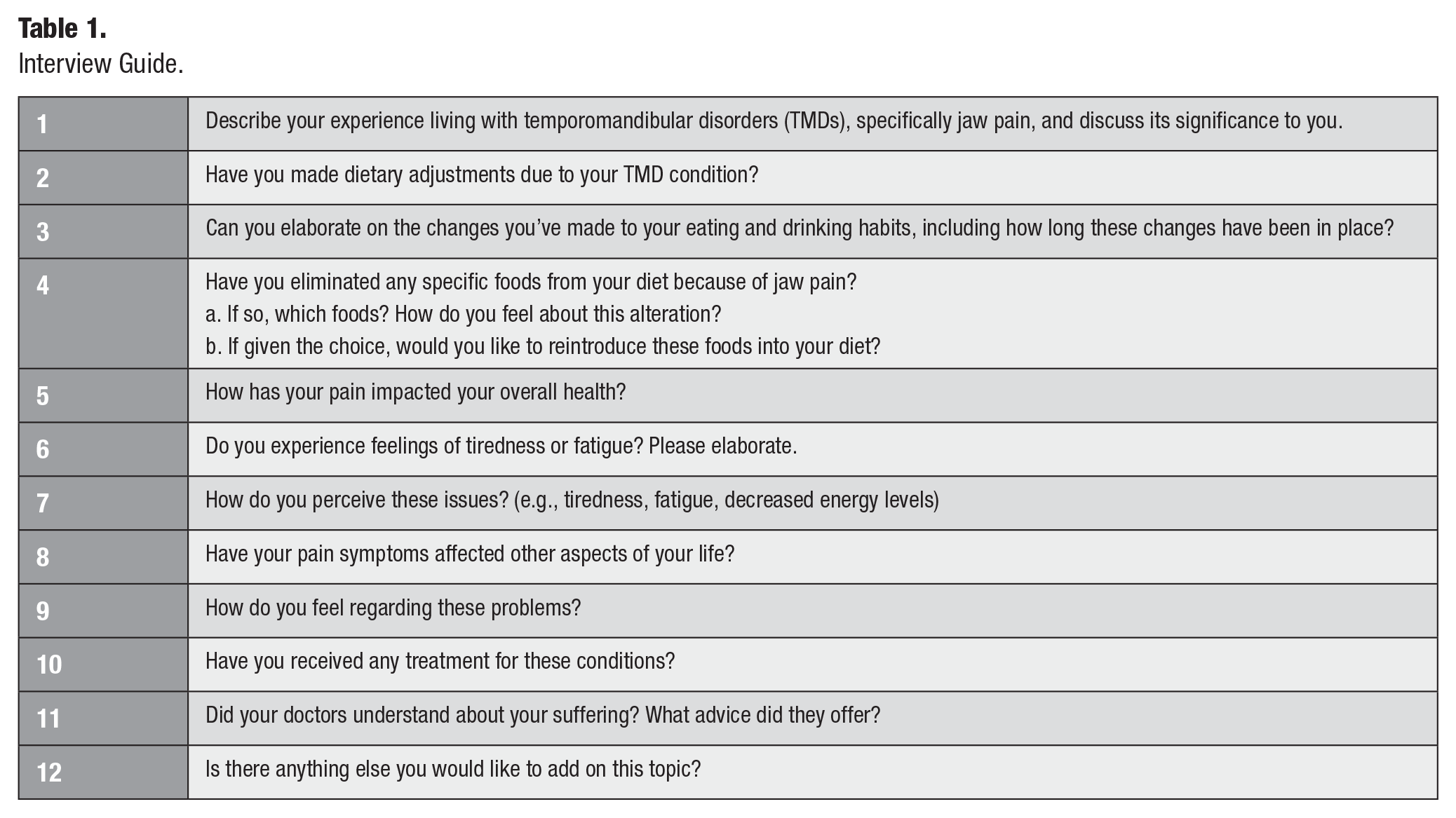
During data collection, open-ended questions, Semi-structured interviews served as the cornerstone for gathering rich insights into the lived experiences of individuals coping with TMDs Kallio et al. (2016). The interviews were conducted by the researcher, a master’s student, in a meeting room at McGill University, rather than a clinical setting, to create a comfortable environment for participants. The interviews lasted between 30 and 90 min, depending on the depth of each participant’s responses. Although no pilot study was conducted, the interview guide was carefully developed based on a thorough literature review and expert consultation to ensure it captured the essential aspects of TMDs and its impact on daily life (Table 1). This structured yet flexible approach allowed participants the freedom to share their personal experiences and perceptions in depth, facilitating a nuanced understanding of the multifaceted impacts of TMD on individuals’ lives. (Tindall 2009).
Interview Guide.
Data Analysis
Phenomenological data analysis was flexible and responsive to research questions, focusing on understanding human experiences (Laverty 2003; Englander 2016). The analysis process included several steps:
Transcript data coding: Transcripts of the interviews underwent coding to extract significant statements and themes.
Identifying themes: Experiential themes unique to each participant were developed, reflecting their perspectives.
Writing interpretive summaries: These themes were synthesized across cases to uncover common patterns and group experiential themes.
Nonverbal cues and emotions observed during interviews were also noted to enhance data interpretation. The data analysis was performed collaboratively by the research team, consisting of the master’s student who conducted the interviews and the PhD-qualified supervisor. The analysis was established through discussions and feedback between the student and supervisor, ensuring continuous refinement of the identified themes and interpretation.
Ethical Considerations
McGill University’s Research Ethics Board Office obtained ethical approval (A06-B31-13A). Participants provided informed consent before participating. Confidentiality was maintained by using pseudonyms, and all data were securely stored. Participants’ identities were protected throughout the research to ensure their privacy and safety.
Results
Participants and Sample Description
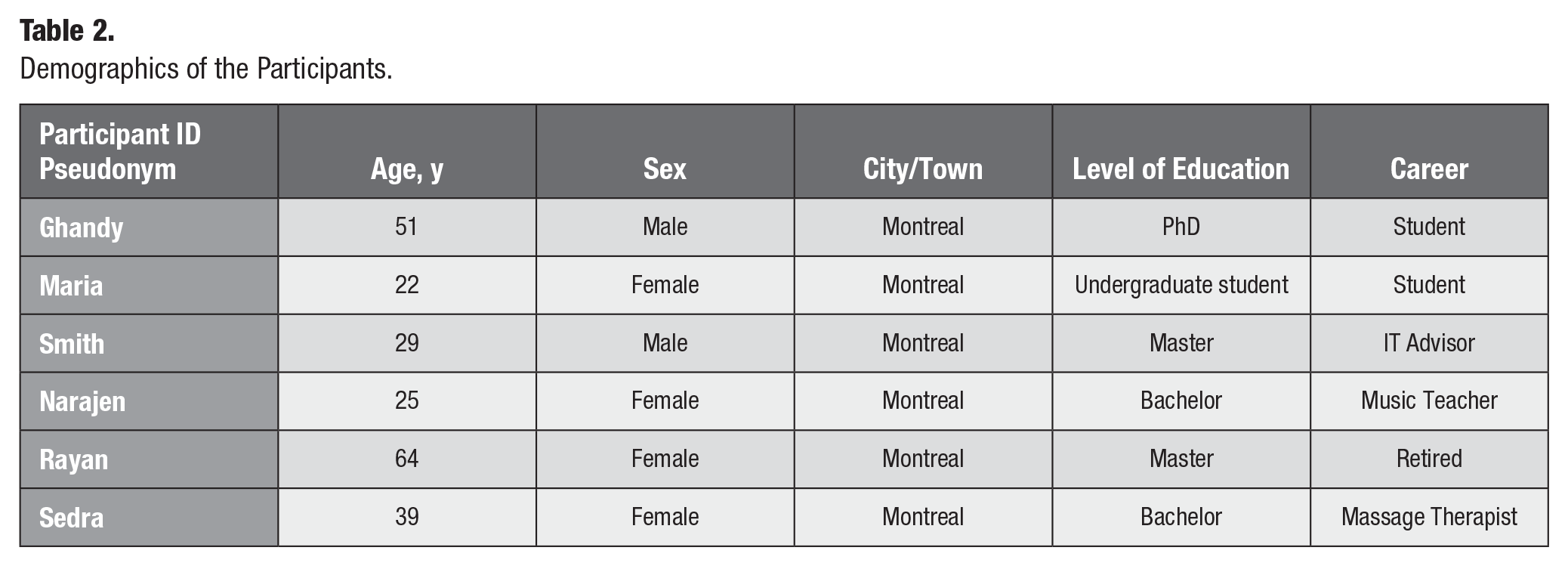
Participants were recruited from specialists at McGill University Student Dental Clinic, the Montreal General Hospital, and the Jewish General Hospital in Montreal, Canada, between September and November 2017. The sample consisted of 6 participants (2 men and 4 women) aged 25 to 64 y (Table 2). Selection criteria included English-speaking adults diagnosed with painful chronic TMDs for more than 6 mo, experiencing changes in dietary habits and symptoms of lethargy. The decision to focus on these specific criteria aimed to gain a diverse range of experiences related to TMDs management and its impact on daily life. By prioritizing the transferability of findings over generalizability, the recruitment strategy sought to ensure that the insights gained would resonate across similar contexts. This approach acknowledged that while each individual’s experience with TMDs may have varied, common dietary adjustments and fatigue themes could be relevant and applicable across diverse populations facing chronic TMDs challenges. By emphasizing transferability, the study aimed to provide insights that could inform clinical practices and interventions in various settings rather than seeking broad generalizations that might overlook context-specific nuances (Nazar et al. 2022)
Demographics of the Participants.
The findings were presented based on the IPA methodology, drawing on Gadamer’s hermeneutics and Englader’s phenomenological approach to understand participants’ lived experiences deeply (Englander 2016; Alsaigh and Coyne 2021).
Triangulation was achieved by incorporating multiple perspectives, including the researcher’s clinical experience and the supervisor’s qualitative research expertise. This collaborative and iterative process enhanced the credibility and reliability of the findings.
Theme 1: Limited functioning and energy levels highlighting fatigue and frustration by TMD
This theme delved into the profound impact of TMDs on participants’ daily lives, particularly their energy levels and capacity to engage in daily tasks. These experiences were interpreted as not just isolated instances of fatigue and frustration but as reflections of a deeper, shared struggle against the physical limitations imposed by TMDs. Participants’ narratives revealed how their bodily pain transcended the physical realm and infiltrated their emotional and mental states, affecting their sense of agency and well-being (Englander 2016; Alsaigh and Coyne 2021).
In the context of functional limitations, this often-covered essential activities such as eating, chewing, and speaking, which are directly affected by TMD. Participants reported a significant reduction in their ability to engage in these daily activities, leading to fatigue, frustration, and a diminished sense of control over their lives. The limited functioning experienced by participants highlighted the complexity of managing even basic tasks due to the physical strain of TMDs. For instance, Maria, a student, described her constant tiredness and its effect on her ability to study: “I’ve just been so tired lately. I’m not getting the right nutrients. I can’t study well. Trying to go through midterms and assignments feels really hard.” Maria’s narrative was not merely about fatigue but about the disruption of her normal life and identity as a student. The act of studying, which was central to her daily experience, became an exhausting task, and her inability to fully engage in it represented a broader challenge to her sense of self and capability. Her exhaustion was emblematic of the way chronic illness reshaped one’s understanding of their abilities and daily life.
Similarly, Ghandy described how his fatigue and headaches limited his productivity: “I feel tired and fatigued . . . lack of this kind of crunchy food . . . I have headaches and pain . . . which is not very good.” Ghandy’s narrative was understood through Gadamer’s lens as an articulation of his ongoing negotiation with the physical limitations of TMDs. His reference to “crunchy food” symbolized the lost pleasures and freedoms that once defined his normal existence. This simple dietary restriction was emblematic of a larger struggle with his sense of autonomy, as the pain and fatigue confined him to a new reality shaped by his condition. His story reflected the hermeneutic circle in which his lived experiences and interpretations of his suffering were in constant dialogue, reshaping his understanding of what it meant to live with TMDs.
In both cases, the participants’ fatigue and limitations in chewing, eating, and speaking served as poignant illustrations of the physical, emotional, and mental toll that TMDs exacted on their lives. This theme captured the complex interplay between the functional limitations of TMDs and the broader emotional and psychological fatigue that accompanied their condition.
Theme 2: Communication challenges due to pain, affecting professional roles and social interactions
This theme addressed how TMDs affected participants’ ability to communicate, in both their professional and social lives. IPA informed the understanding of this theme by highlighting the disruption of one’s ability to participate in dialogue—a key aspect of human experience and self-expression. The limitations in speech imposed by TMDs were not just physical but symbolized a broader estrangement from normal social and professional roles.
Rayan, a teacher, discussed how he sometimes had to limit his teaching activities: “Sometimes I told the students that today it would be a quiet day because I couldn’t speak when I taught.” Rayan’s inability to speak not only reflected the physical limitations of TMDs but also represented an interruption in his ability to engage in the communicative act that defined his professional role. Teaching, as a form of dialogue, was central to his identity, and being unable to communicate with his students disrupted his sense of purpose and professional self. His need to declare a “quiet day” marked a shift in how he perceived his professional identity.
Narajen, a music teacher, shared a similar experience of being forced to take a break from her teaching career: “I had to talk a lot . . . taking a break because of what I had right now [TMDs].” For Narajen, the decision to step back from her career due to TMD pain could be interpreted through IPA’s emphasis on the relational nature of understanding. Her experience with TMDs were not just an individual struggle; it reflected a broader existential challenge. The inability to speak as a music teacher signified not only the loss of physical ability but also a rupture in her connection to her students and her profession. IPA helped us see that her suffering was compounded by the isolation and separation from the communicative practices that defined her professional and personal life.
Theme 3: Impact on social and professional life necessitating adjustments and accommodations
This theme examined the ways in which TMDs affected participants’ broader social and professional lives, leading to social isolation, career changes, and diminished self-esteem. Using IPA, these experiences were interpreted not merely as outcomes of physical pain but as disruptions in the shared meaning-making processes that formed the fabric of social interaction and identity.
Maria expressed how her condition had affected her social life: “It was hard to laugh . . . I was usually smiling and laughing.” Maria’s struggle to laugh, a seemingly simple act, took on much deeper significance when viewed through IPA. Laughter was a communal act, a way of participating in social life, and its loss represented a form of social exclusion. IPA’s emphasis on dialogue helped us understand that Maria’s experience was not just a personal loss but a break in her ability to engage with others in a meaningful way. Her condition had reshaped her social identity, making her feel disconnected from the joyful, participatory nature of her past interactions.
Narajen also emphasized how TMDs led her to take a break from her career: “It’s not like I completely dropped it, but I was just taking a break to see how it went.” Narajen’s decision to step back from her teaching role could be understood as a form of existential disruption. IPA would argue that her identity as a teacher was closely tied to her ability to engage in dialogue and communication. The break from her career was not just a professional setback but a deeper disruption in her ability to participate in the shared world of meaning that defined her role as an educator. This temporary retreat from her career represented a renegotiation of her identity, as she sought to find new ways of relating to herself and her professional role.
Theme 4: Seeking medical help
The final theme revolved around participants’ efforts to manage their symptoms through medical interventions, which often provided only temporary relief. This theme reflected the broader hermeneutic process in which participants strived to understand and cope with their condition.
Maria described her use of muscle relaxants and painkillers to manage her pain: “I took a couple of Advil every once in a while . . . just to manage the pain.” Her reliance on medication was interpreted through the IPA lens as part of her ongoing attempt to negotiate her illness. The use of painkillers was not merely a physical remedy but a part of her broader struggle to manage the disruption in her life caused by TMDs. The medication offered temporary relief but did not fully address the deeper, existential challenges she faced.
Similarly, Smith expressed frustration with the temporary nature of pain relief: “I used painkillers to get through the day, but it wasn’t a permanent solution.” His experience highlighted the tension between seeking immediate relief and grappling with the persistent, unresolved aspects of his condition. From an IPA perspective, the use of painkillers reflected an attempt to regain a sense of normalcy, yet it underscored the limitations of medical interventions in addressing the comprehensive experience of chronic illness. This theme illustrated that while medical treatments were necessary, they often fell short of resolving the profound, lived experiences associated with TMDs.
Discussion
This study illuminated the multifaceted challenges faced by individuals with TMDs, focusing on how the condition affected their energy levels, daily functioning, communication abilities, and social and professional lives. The findings illustrated that the effects of TMDs extended beyond physical symptoms, deeply affecting participants’ emotional and social domains. The use of an IPA approach allowed a comprehensive understanding of these lived experiences, shedding light on the depth of participants’ struggles and adaptations (Englander 2016; Alase 2017; Alsaigh and Coyne 2021).
The findings indicated that TMDs significantly impaired participants’ daily functioning and energy levels. Participants reported fatigue and frustration linked to dietary restrictions and pain, aligning with previous research (Ganzberg 2010; Giri 2014). This included constant tiredness adversely affecting academic performance and decreased productivity due to fatigue and stress. These accounts highlighted how physical discomfort and dietary limitations intertwine, affecting participants’ overall energy levels and daily functioning.
In addition, difficulties with speaking, as described by participants, influenced their professional and social interactions. This finding corroborates earlier studies (Kafas and Leeson 2006), which underscores the significant implications of TMDs on communication abilities and social engagements. The effects of TMDs on personal and professional lives, as noted reflecting similar observations in the existing literature (Ha and Longnecker 2010; de Souza Barbosa et al. 2016). Although variations in demographics across studies may contribute to differences in findings, the consistency reinforces the validity of our results.
The study also revealed that participants sought various coping mechanisms, including medical interventions, to manage their symptoms. This aligns with previous research emphasizing the need for effective medical management in TMDs (Ganzberg 2010). The narratives reflected participants’ resilience and determination to improve their quality of life despite persistent challenges. The findings suggest that tailored interventions and enhanced education for health care providers on TMDs management—including nutritional guidance and adaptive communication strategies—are essential for better support and management of the condition.
Limitations
Several limitations of this study should be noted, including the study’s sample size of 6 participants, all drawn from specific health care settings, which relates to the transferability of the findings. Future research should include a broader and more diverse participant pool to enhance the applicability of the results to different populations and settings. While the interview guide was developed with a thorough review of the literature and expert consultation, there may be areas in which the findings did not fully align with the intended focus. Future studies could benefit from refining the interview guide to ensure it comprehensively captures the intended aspects of TMDs experiences and aligns closely with research objectives.
The in-depth exploration of individual experiences provided rich insights but may be limited. The thorough examination of individual experiences offered valuable insights, but this approach may have restricted the result to be general to the broader population of people with TMDs. Future research should focus on replicating the study with a larger and more varied sample to enhance the applicability and the reliability of the findings.
Finally, although IPA offered deep insights into participants’ experiences, the subjective nature of qualitative research means that findings are based on individual interpretations. Employing additional methodological approaches, such as mixed-methods research, could provide a more comprehensive understanding of TMD’s impact.
Conclusions
Participants reported substantial disruptions to their daily activities and social roles as well as challenges in managing their condition through medical interventions. These findings underscore the need for comprehensive care strategies that address both the physical symptoms and the broader emotional and social impacts of TMDs. Future research should focus on developing and evaluating integrated interventions to enhance the quality of life for individuals with TMDs. In addition, improving health care provider education on TMDs management, including tailored nutritional and communication strategies, is essential for effective patient support.
Author Contributions
W. Safour, contributed to conceptualization, design, data collection, data acquisition, interpretation and analysis, drafted and critically revised the manuscript; R. Hovey, contributed to conceptualization, design, data acquisition, interpretation and analysis, critically revised the manuscript. All authors gave final approval and agree to be accountable for all aspects of the work.
Footnotes
Declaration of Conflicting Interests
The authors declared no potential conflicts of interest with respect to the research, authorship, and/or publication of this article.
Funding
The authors received no financial support for the research, authorship, and/or publication of this article.
