




Abstract
Without updated job descriptions, workers are likely to lack role clarity and the effectiveness of important human resource management (HRM) functions will be hindered. Yet, organizations frequently scrimp on or altogether skip the process necessary for producing those descriptions: job analysis. Many introductory HRM students similarly identify job analysis as the most opaque and least interesting topic they learn about. The job analysis interview exercise (JAIE) addresses these pedagogical challenges. It involves conducting a job analysis interview with a university employee who is working in a job related to students’ occupational field of interest. They use this information to produce a job description and critical assessment of the job’s design, then receive feedback on their process and output. In addition to enhancing students’ interest in and comprehension of job analysis, the JAIE contributes to the meaningfulness of interviewees’ jobs by allowing them to connect with the beneficiaries of their work.
Job analysis holds the dubious distinction of being one of the most important but also one of the most misunderstood and overlooked managerial tasks (Dierdorff & Wilson, 2003). This is concerning because having accurate and up-to-date job descriptions is essential for providing workers with role clarity, which in turn reduces strain and enhances job performance (Kauppila, 2014). Undergraduate students usually learn about job analysis as part of a foundational human resource management (HRM) course. However, there are several reasons why, akin to their managerial counterparts, students struggle to grasp this concept. First, unlike other HRM functions such as recruitment or training, the abstract nature of job analysis and students’ lack of previous exposure to it limits their intrinsic interest. Second, since most have not participated in a primary data collection process, they tend to have difficulty conceptualizing how the phases of job analysis fit together. Finally, students frequently conflate job analysis interviews with recruitment interviews, which creates problematic misunderstandings.
The currently available job analysis-focused experiential exercises do not simultaneously address these instructional challenges. Activities where students construct job descriptions for simple jobs like restaurant server (e.g., Kottke, 1988; Perrachione, 1986) provide practice developing job statements; however, the disconnect between these jobs and the ones students hope to perform after graduation results in less-than-optimal engagement. Asking students to find a professional to interview can be intimidating and is most appropriate for near-graduates (Cheramie, 2014). In addition, while there are valuable exercises referencing job analysis but focused on other HRM functions like staffing (e.g., Doll, 2018; Mann et al., 2018) and performance management (e.g., Gillespie & Parry, 2009; Rachman-Moore & Kenett, 2006), they do not allow students to experience the phases of the job analysis process itself. Starting with these more complex exercises can exacerbate confusion about the difference between recruitment and job analysis. In short, there is a need for an introductory exercise that can not only help students understand job analysis, but also underscores how important it will be for their future organizations. These are the aims of the job analysis interview exercise (JAIE).
In the JAIE, students work in a team to conduct a job analysis interview with a university employee who is doing a job that is connected to their personal career interests. They use their data to collaboratively produce a job description along with recommendations for how to improve the motivating potential of the assigned job. Feedback on their output is then provided by the instructor and interviewee. The JAIE’s link to students’ goals increases their interest in learning about the interviewee’s job. By meeting with a fellow university member as a team, they report increased confidence engaging in the “interviewer” role. Furthermore, because the interviewee is already doing the job, it helps students realize that the purpose of the conversation is not to recruit for the position. Incorporating job design principles fits with the growing need for HR managers to not only understand the jobs within their organizations but also to ensure that they constitute decent and meaningful work (Blustein et al., 2023). The JAIE’s generative approach to job analysis can help students become “active agents” of job design, which is likely to be centrally relevant in their future careers (Fan et al., 2024, p. 17).
Theoretical Background
Job analysis is the process of gathering data about the components and requirements of a job, in its current form, so that organizations have a record of the tasks involved and skills needed to complete them (Belcourt et al., 2020). It is used to produce a “job description,” which is a written summary of the work involved in a position (i.e., performed by one jobholder) or in a job more broadly (i.e., relevant to all individuals sharing a specific job title) (Schippmann et al., 2000). Job analysis is a foundational HRM function because knowledge about the content of jobs is necessary before managers can inter alia recruit for, train for, or compensate those jobs (Dierdorff & Wilson, 2003; Morgeson et al., 2004). The pace at which many jobs are evolving due to technological advancements like artificial intelligence (Chowdhury et al., 2023) is heightening the importance of conducting routine job analyses (Morreli, 2023).
A standard job description includes four main components (see Belcourt et al., 2020; Harvey & Wilson, 2000). It begins with a “job title,” which should be related to the content of the job, followed by a “job identification” section that captures how the job fits within the organizational structure (e.g., affiliated department and reporting relationships). The first main substantive section is activity-focused, outlining the tasks required to be performed, working conditions, and tools needed, typically under the heading of “job duties.” The other main section is person-focused and identifies essential characteristics of the worker (i.e., knowledge, skills, and abilities) needed to effectively perform those duties and referred to as “job specifications.”
Incumbents are a critical source of job information, and interviews with them remain the basis for many job analysis approaches (Sanchez & Levine, 2000). These data can also be productively supplemented through information gathered from job databases, analysis of work output, and interviews with supervisors (Belcourt et al., 2020). Collecting extensive data, creating precise job specification statements, and linking those statements explicitly to job duties are additional ways of enhancing the quality of job descriptions (Morgeson et al., 2004). Table 1 lists the components of a job description along with illustrative incumbent-directed job analysis interview questions for generating the information needed to produce one.
Illustrative Job Analysis Interview Questions for Assessing Job Description Components.
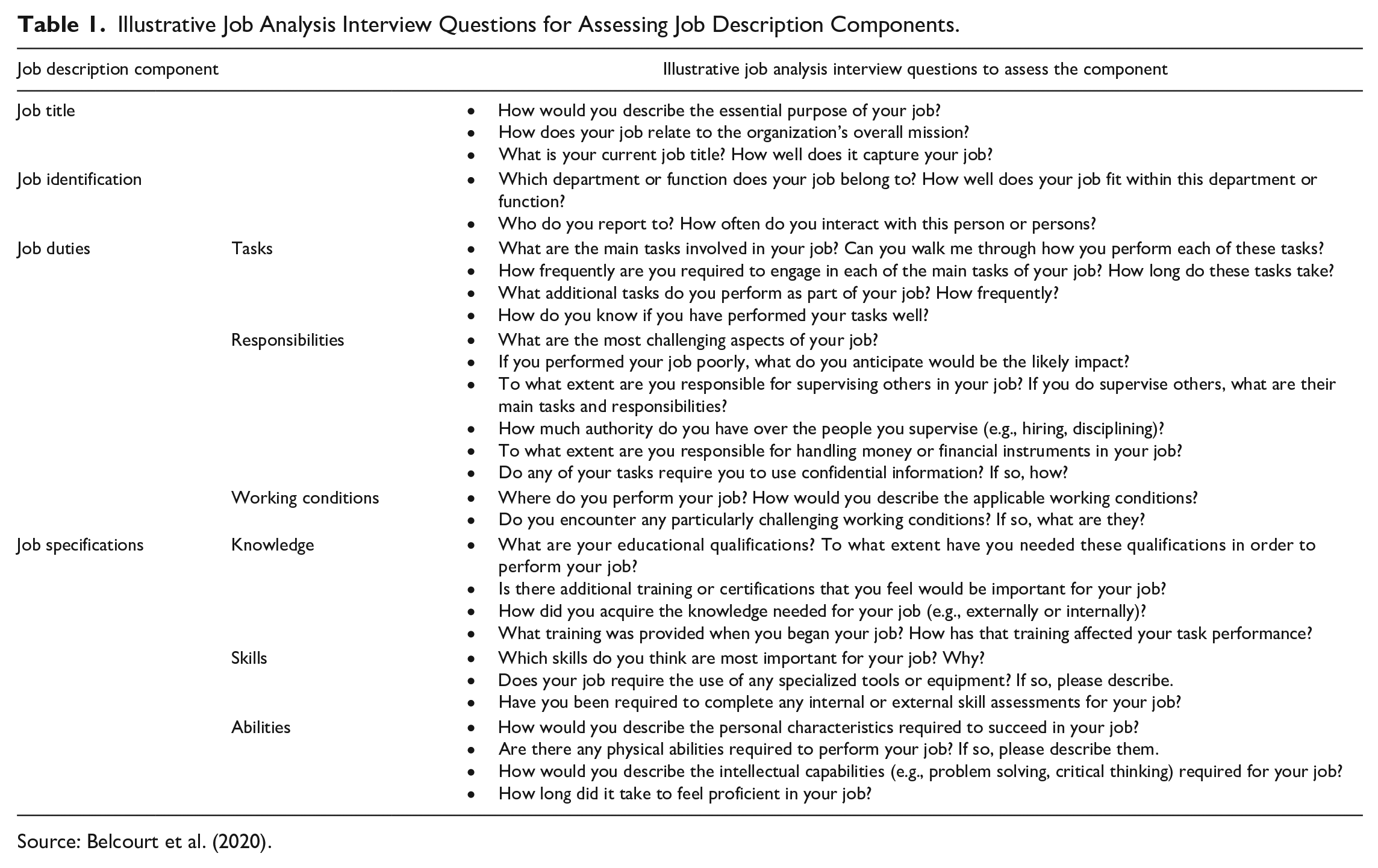
Source: Belcourt et al. (2020).
The job description is a snapshot of what is currently being done in the organization and must be accurate to be useful. However, accuracy does not mean the job will be motivating and satisfying to incumbents. Addressing this latter issue requires knowledge of the principles of job design, such as Hackman and Oldham’s (1980) job characteristics model. Recent research additionally supports the importance of beneficiary contact (e.g., Grant, 2012) and realizing one’s potential (De Boeck et al., 2019) in promoting experienced meaningfulness and motivation. The connection between job description components and job design characteristics, along with example interview questions for tapping them, is summarized in Table 2.
Job Description Components Mapped to Job Design Characteristics and Illustrative Job Analysis Interview Questions.
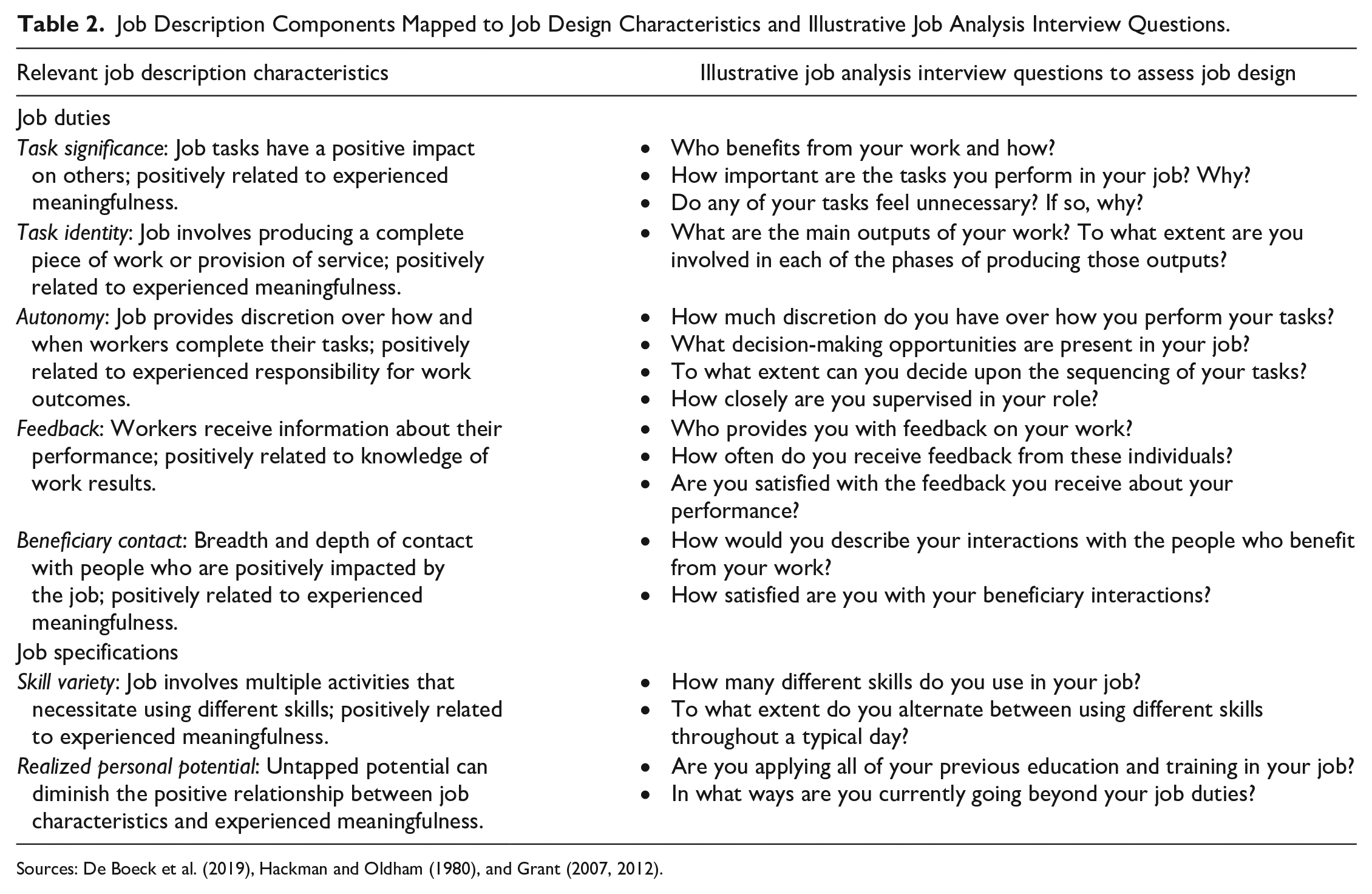
Sources: De Boeck et al. (2019), Hackman and Oldham (1980), and Grant (2007, 2012).
Learning Objectives
The JAIE’s learning objectives are that by the end of the exercise students will be able to:
Conduct a job analysis interview.
Produce a complete and accurate job description.
Identify the motivating factors of a job.
Apply the principles of job design to increase a job’s motivating potential.
Assess the extent to which a job’s duties and specifications match their career interests.
Instructions for Running the JAIE
Overview
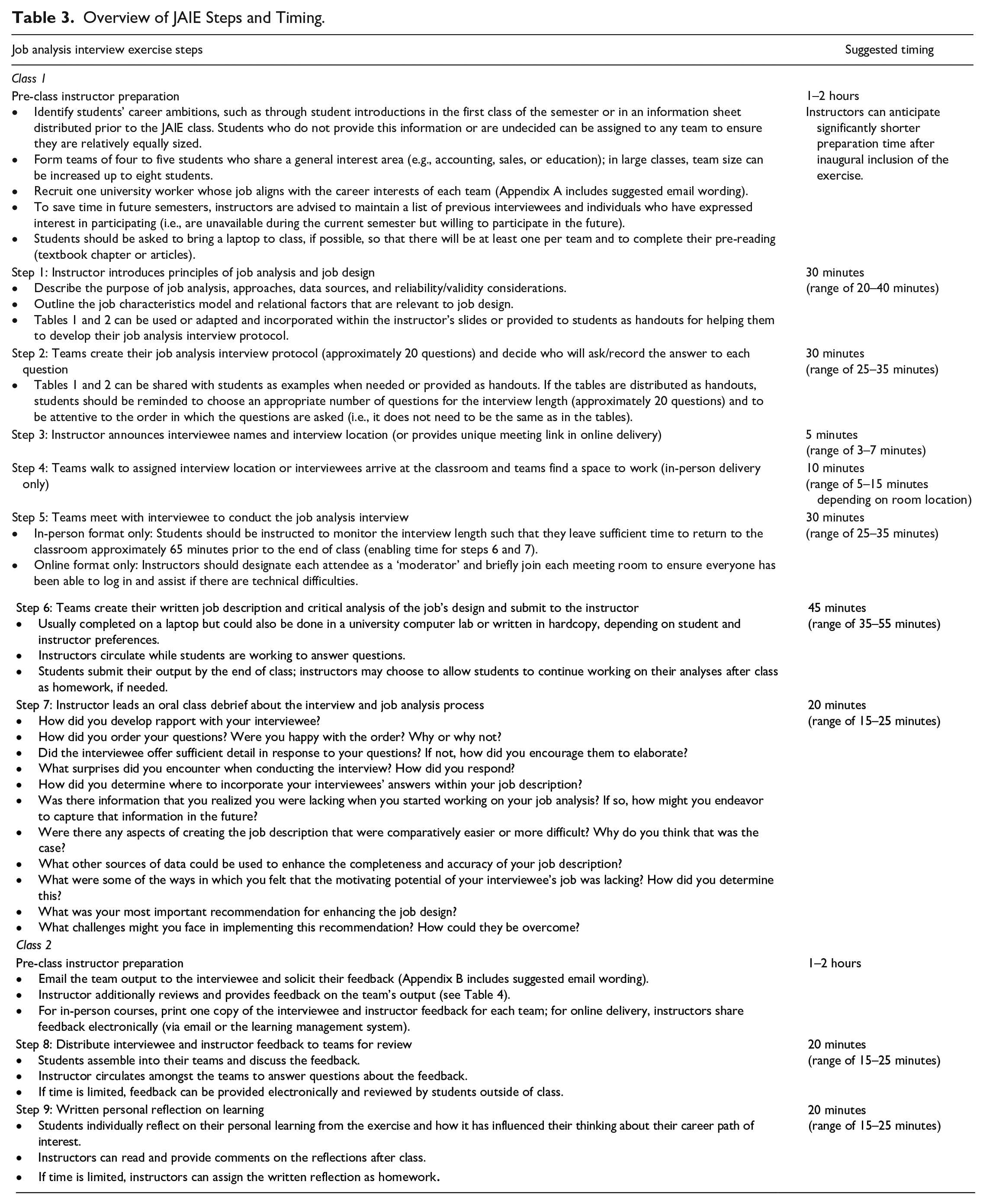
The JAIE requires a 3-hour class session, followed by approximately 1 hour of time for additional feedback and reflection in a subsequent session. More information about pre-class preparation and how to carry out each exercise step is included in Table 3.
Overview of JAIE Steps and Timing.
Logistics
Instructors must undertake two tasks before the first JAIE class: (1) form teams of four to five students who broadly share occupational interests, and (2) recruit enough volunteer interviewees (one per team) from within the university whose jobs relate to the teams’ interests. Students who are considering a career in marketing, for instance, could be matched with the university’s Director of Communications. Instructors should contact potential interviewees at least two to three weeks before the scheduled JAIE class so that there is time to share preparatory information about the exercise. Interviewees may be unfamiliar with job analysis, so will benefit from an explanation of the JAIE’s purpose and example interview questions (see sample email in Appendix A). They should also be advised about their role in providing feedback and the timeframe for doing so. Feedback will ideally be emailed to the instructor within one week from the interview.
For in-person courses, securing private space for the interview, such as the interviewee’s office or a small boardroom, enhances the exercise’s authenticity. But, multiple interviews can be conducted within the classroom if needed. Students generally prefer to produce their output using word processing software so are asked to bring a laptop to class.
Step-by-Step Instructions
Introducing Job Analysis
Instructors should begin the class with a short lecture on the job analysis process and principles of job design (step 1). These topics are included as part of one chapter in most HRM textbooks (e.g., Belcourt et al., 2020; Dessler et al., 2019; Steen et al., 2013) and completing this reading before class can help to prepare students for the JAIE. 1
Planning the Interview
Student teams convene to develop a job analysis interview protocol comprised of approximately 20 questions (step 2) and are then informed of who they will be interviewing (step 3): a current university employee who has been selected to align with their career interests. To ensure all students practice their interview skills, they are required to alternate who asks each question and takes notes on the answers.
Conducting the Interview
After arriving at the designated meeting space (step 4), students introduce themselves and proceed through their protocol (step 5). They are permitted to deviate from the protocol if new questions arise that they recognize would provide valuable information for their job analysis. Because student teams will usually be geographically dispersed and to bolster their sense of autonomy, instructors should not observe the interviews.
Producing the Output
Students return to the classroom and use their notes to create: (1) a job description for their interviewee’s job, (2) a critical analysis of the current motivating potential of that job, and (3) realistic recommendations for how the job could be redesigned to increase this potential. Teams submit their output by the end of class (step 6). The job description should follow a professional format (i.e., with grammatically correct bullet point phrases), but the job design analysis may be written informally so that it can be completed within the allotted time.
Debriefing and Feedback
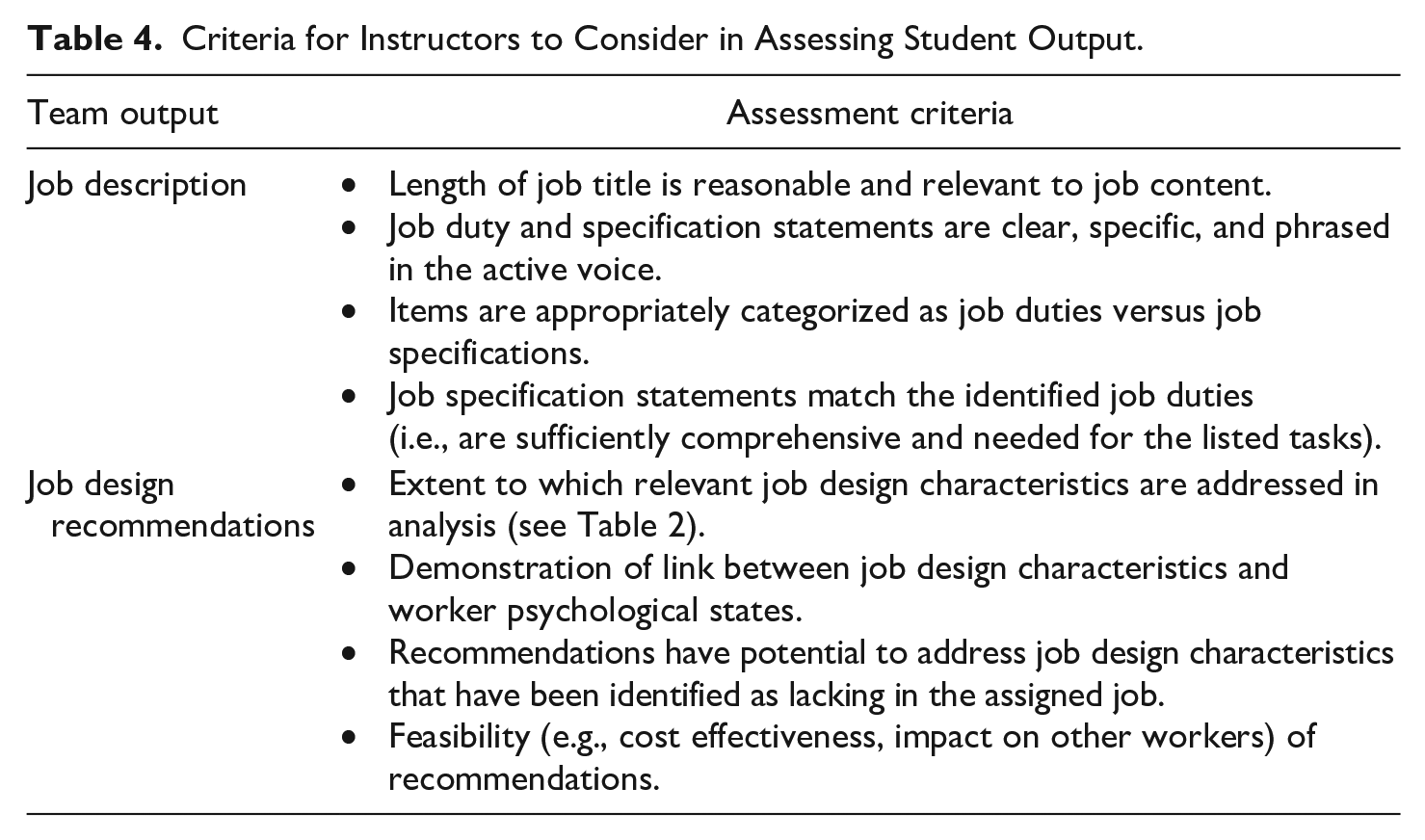
The remaining JAIE class time is used for an in-class debrief about the interview process (step 7). Students are asked to share their ideas for redesigning the assigned job, which usually prompts an engaging class discussion. For example, in one case, students caught that a senior HRM employee had only received two formal evaluations over a 20-year span, which prompted their appropriate recommendation to implement an annual review process to increase knowledge of results. In another, students mistakenly advised increasing task significance by reducing the requirement to produce “bored reports” leading to the humorous realization that the interviewee was referring to “board reports”; however, the in-class discussion surfaced that meaningfulness could still be increased by facilitating more contact between the worker and board members. During the following class, students receive written feedback on their output from the instructor and interviewee (step 8). Table 4 includes assessment criteria for instructors and the sample email in Appendix B can be used to guide interviewees’ feedback provision. The JAIE concludes with students writing a reflection (see Bradford, 2019; Peltier et al., 2005) on their experiences conducting the job analysis and on how learning about the interviewee’s job relates to their career decision-making (step 9).
Criteria for Instructors to Consider in Assessing Student Output.
Variations
When running the JAIE online, the exercise steps remain unchanged, but the interview and teamwork are done in private online meeting rooms using software (e.g., Zoom). Instructors should create the meeting links and provide them to all team members and the interviewee. Finally, for classes shorter than 3 hours, Appendix C outlines alternatives for distributing the JAIE steps. If instructors are limited in how much time they can devote to covering job analysis, feedback provision (step 8) and the written reflection (step 9) can be carried out as homework.
Exercise Results and Conclusions
Students’ reflections indicate that the JAIE achieves its intended learning objectives. Because the interviewee is already working in the job, it helps them distinguish between job analysis and recruitment interviews, as well as to overcome the misconception that job descriptions are only relevant for staffing purposes. Students describe gaining confidence in conducting interviews, including learning how to develop rapport with interviewees and adapt questions to glean important information. The opportunity to put their learning into practice enhances their engagement. Illustrative comments include: “It was a very cool experience” and “Meeting someone to interview for the job analysis was really interesting.”
Interviewees also report being energized by their experiences. As faculty members, it is easy to forget how many university jobs are intended to benefit students, but where incumbents rarely interact directly with them. Interviewees have stated how: “It’s a nice refresher to remind us why we are here, to ultimately serve students” and “I feel like I don’t really get much direct student interaction, so I am thrilled to have the opportunity to meet and discuss my role with them!” These connections with beneficiaries can enhance interviewees’ prosocial motivation and the meaningfulness of their work (Grant, 2007). As a result, they often volunteer to participate in subsequent semesters, which makes recruiting sufficient interviewees easier over time.
The JAIE’s design is based on the characteristics of motivating jobs, which instructors can point out in their feedback. It enhances the relational architecture of the class, increasing students’ sense of belongingness within the university community. They have autonomy to create their questions and leaving the classroom to interact with someone new introduces variety. By producing a complete job description, students can identify a clear output from their work. In several cases, interviewees have provided this output to their managers to be used as a basis for updating official job descriptions or improving the design of their jobs, contributing to felt significance for students. Finally, students receive ample feedback on their work from the instructor and more impactfully from the interviewees themselves. When interviewees share how meaningful it was for them to meet the students, it illustrates the importance of beneficiary contact, in line with the framework that students are exposed to in the introductory lecture.
Prior to developing the JAIE, it felt like students simply wanted to “get through” the job analysis class so they could move on to more interesting topics. Now, job analysis is a highlight of the semester that has also allowed the author to deepen her connections with colleagues in beneficial ways. For example, HRM interviewees have suggested new guest speakers for other course modules, and marketing interviewees have instigated connections with media outlets interested in showcasing faculty research. In the busyness of our day-to-day work and despite awareness of the affective and instrumental resources that are derived from intraorganizational relationships, it is easy to neglect to invest in them. By implementing the JAIE, instructors will not only enliven their job analysis class, but also reinforce the importance of workplace relationships for students, interviewees, and themselves.
Footnotes
Appendix A
Appendix B
Appendix C
Suggested Distribution of JAIE Steps for Classes of Different Lengths.
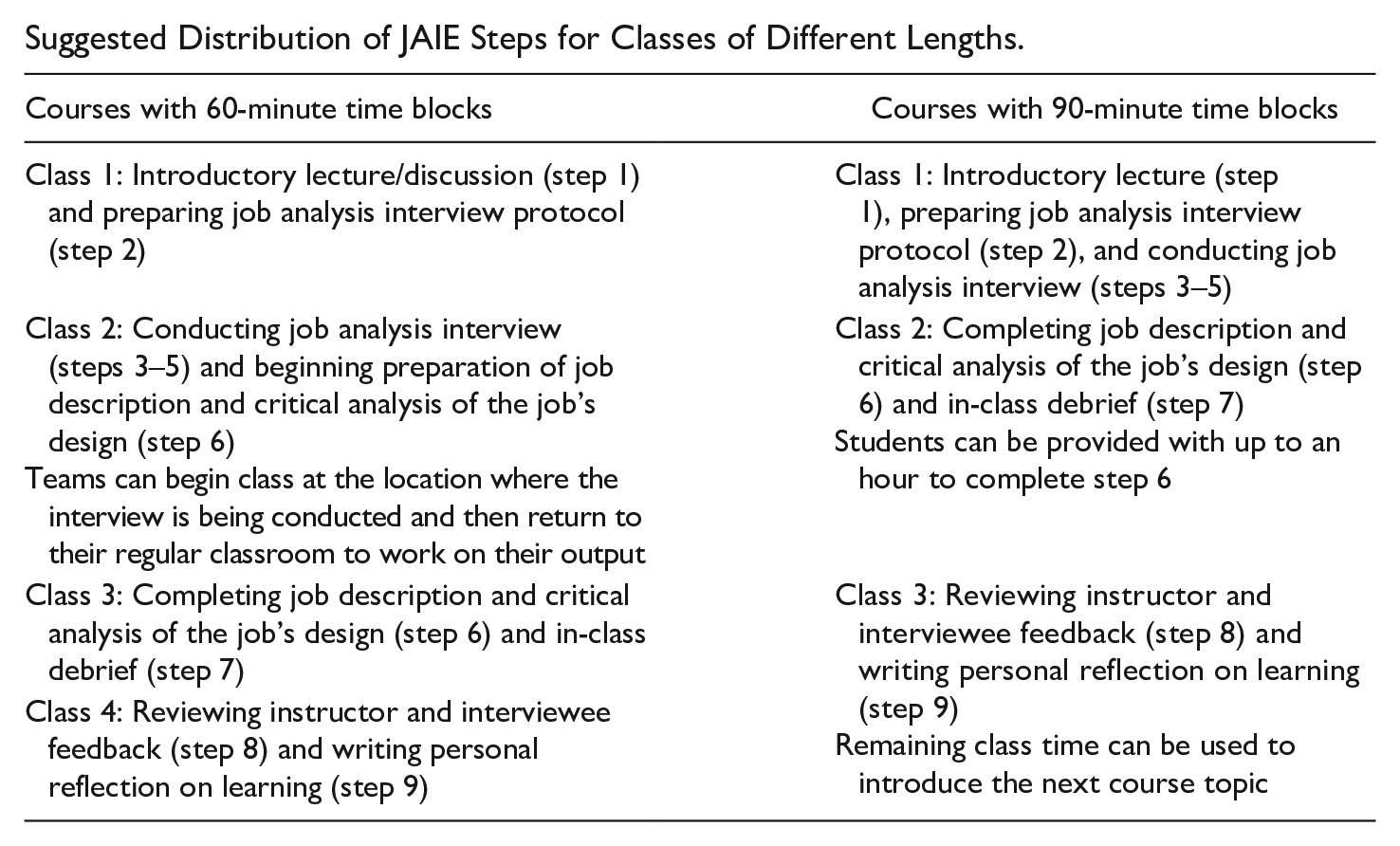
| Courses with 60-minute time blocks | Courses with 90-minute time blocks |
|---|---|
| Class 1: Introductory lecture/discussion (step 1) and preparing job analysis interview protocol (step 2) | Class 1: Introductory lecture (step 1), preparing job analysis interview protocol (step 2), and conducting job analysis interview (steps 3–5) |
| Class 2: Conducting job analysis interview (steps 3–5) and beginning preparation of job description and critical analysis of the job’s design (step 6) Teams can begin class at the location where the interview is being conducted and then return to their regular classroom to work on their output |
Class 2: Completing job description and critical analysis of the job’s design (step 6) and in-class debrief (step 7) Students can be provided with up to an hour to complete step 6 |
| Class 3: Completing job description and critical analysis of the job’s design (step 6) and in-class debrief (step 7) | Class 3: Reviewing instructor and interviewee feedback (step 8) and writing personal reflection on learning (step 9) Remaining class time can be used to introduce the next course topic |
| Class 4: Reviewing instructor and interviewee feedback (step 8) and writing personal reflection on learning (step 9) |
Acknowledgements
The author would like to thank Cindi Fukami and Dale Rude for their helpful comments on an earlier version of this manuscript, provided as part of the Management Education and Learning Writers Workshop at the 2022 Academy of Management Meeting.
Declaration of Conflicting Interests
The author declared no potential conflicts of interest with respect to the research, authorship, and/or publication of this article.
Funding
The author received no financial support for the research, authorship, and/or publication of this article.
