




Abstract
The authors focus on a traditional culture in which the elderly tend to live with their children, aiming to shed light on whether the education of own children within the same household helps reduce the chances of elderly parents’ being mentally and physically abused by family members. Using multivariate analysis to investigate the association between children’s education and domestic elder abuse from the Vietnam Aging Survey 2011, comprising 2,700 elderly individuals aged 60 years and older, the authors find that the higher the education level of an elderly person’s children living in the same household, the lower the risk for the elderly person’s being abused. Those facing the highest risk for violence are women aged 80 years and older, those who have some difficulty with daily activities, and those who live in urban areas. The authors call for policy attention to an issue that is rarely investigated, especially in traditional households where elderly parents live with their children.
Keywords
As a result of many drastic demographic shifts, global population aging has occurred relatively quickly, particularly in emerging nations (Długosz and Raźniak 2014). Problems such as economic burdens, health burdens, pension system funding, and social policies related to population aging have been widely recognized (Lloyd-Sherlock 2000). And among such issues, violence against the elderly—or “granny-battering,” as the English psychiatrist Anthony Baker termed it decades ago (Burston 1975)—has become a more serious concern, as acknowledged at both global and national levels in recent decades (Yon et al. 2017). However, the initial concerns about elder abuse by medical professionals were rather tepid and limited in the 1970s. The phenomenon tended to be lumped together with other medical problems relating to the health and well-being of the elderly, which included physical abuses as almost an incidental concern (Lachs and Pillemer 2015). In 1996, the World Health Assembly finally designated elder abuse as one of the various acts of violence that need to be prevented, in addition to violence against children and youth, sexual violence, partner violence, self-harm behaviors, community violence, and so on (Krug et al. 2002). In acknowledgment of the prevalence of elder abuse among the aging population, the International Network for the Prevention of Elder Abuse, which holds Economic and Social Council status with the United Nations, was established in 1997 to increase international awareness of elder abuse in both developed and developing countries (Sooryanarayana, Choo, and Hairi 2013). And thus, more recently, the term elder abuse has been refined to refer to both the intentional and unintentional behavior perpetrated against the elderly that causes physical or mental distress, violates their personal rights, exploits them financially, and generally neglects them or disregards their needs (Cooper, Selwood, and Livingston 2008; Daly, Merchant, and Jogerst 2011; Yan, Chan, and Tiwari 2015).
Although elder abuse has received more attention and broadened definitions within various communities over the past several decades, it is still being concealed and underreported worldwide (Podnieks et al. 2010). Elder abuse tends to receive less attention than does violence against women, children, and disadvantaged populations in terms of research, policy implementation, and intervention (Dong 2015). Incidence of elder abuse is hidden in most countries because it is viewed as a matter of personal and family privacy rather than a community issue (Crome et al. 2014). In traditional culture, such as Asian countries, elder abuse cases are hidden even by the elderly because of shame and fear of losing support from the family (Fraga Dominguez, Storey, and Glorney 2021; Shankardass 2013). Moreover, in most traditional cultures, elder abuse is further overshadowed by the belief that filial piety and respect for the elderly are important cultural traditions (Pang 2000). So, being exposed as engaging or being involved in such abuse would be especially shameful. Thus, incidents of elder abuse are usually regarded as best kept “hidden.”
In Vietnam, elder abuse was officially recorded for the first time in the Vietnam Aging Survey 2011 (VNAS 2011). This survey revealed that approximately 16 percent of the elderly had experienced at least one form of violence, including being spoken to loudly, having experienced physical abuse, not being allowed to speak, or being ignored by family members in the making of decisions about important family matters (Vietnam Women Union 2012). Vietnam’s law on the elderly (39/2009/QH12), the first law concerning the elderly, was issued in 2009 and stipulated that any abuse of older adults from family members, including sons, daughters, or grandchildren, is illegal and that abusers can be imprisoned for up to five years. Furthermore, it states that the elderly need to be cared for and loved by family members (The National Assembly 2009). However, the first National Action Program for the Vietnamese Elderly during 2012 to 2020 did not mention any policy or intervention that aimed to prevent elder abuse (Prime Minister 2012). Thus, elder abuse is still underreported because of a lack of public and governmental concern. Additionally, there remains a serious lack of elder abuse research in Vietnam and other countries that have similar cultures, which in turn would lead to a better understanding of the factors leading to it. To the best of our knowledge, one study has explored the determinants of elder abuse in Vietnam, gauging differences by gender (Le, Dang, and Nguyen 2021). This gap in research suggests an urgent and crucial need to address the contexts around the elder-abuse issue in order to develop timely policy recommendations to protect older people from violence.
Prevention of violence against the elderly can be explored from the perspective of investment in human capital with respect to elderly persons’ own children. According to human capital theory and the old-age security hypothesis, parents often invest in their children as insurance for their own old-age care. Better elderly care from more highly educated children in this case is considered a way to recoup the cost invested in their children’s education (Becker 1964; Nerlove, Razin, and Sadka 1985). Children in some cultures are considered a valuable asset and are expected to become a crucial resource for parents in their old age. This is especially true in traditional societies, especially in Asian or Confucian societies, in which the family is the cradle of the society and family members are expected to take care of each other (Canda 2013; Mehta and Leng 2006). In these societies, children are expected explicitly or implicitly to repay their parents for their parents’ investments in them. This is especially meaningful in countries with nonexistent or limited policies to support the elderly (Frankenberg, Lillard, and Willis 2002). For example, caring for and supporting parents in old age is considered a main responsibility of children among Muslims in Indonesia (Frankenberg et al. 2002). In Vietnam, filial piety and caring for parents is a moral standard and norm that has been in effect for thousands of years and is considered a core value for maintaining human behavior standards (Tho and Hanh 2016). With this filial piety standard, taking good care of children is clearly considered an important responsibility for parents. In return, children are expected to provide support for their parents as their parents age (Mestechkina, Son, and Shin 2014).
A part of parents’ “taking good care” of their children involves seeing to their education, which is considered an important human capital investment (De Neve and Fink 2018). Research indicates that children’s higher education is closely related to an increase in filial piety, psychological well-being, and old age support among Chinese children and their elderly parents in China and the United States (Jiang 2019). Lillard and Willis (1997) also find that Malaysian parents’ investments in their children’s education tend to be reciprocated in old age by their receiving either financial support or care from their adult children. In India, even after controlling for economic factors, it is reported that parents of children with tertiary education tended to report being healthier than parents of children with less than primary school education (Thoma et al. 2021). And in Mexico, children’s higher level of education was shown to increase the life expectancy of their parents as well as the level of the children’s financial support because of their greater earning potential (Yahirun, Sheehan, and Hayward 2017).
Although living alone or living with a partner is popular in Europe and the United States, living with children is considered one of the most popular forms of living arrangements among older persons in Asian countries (Kim et al. 2015). Previous studies in many countries indicate that the educational level of one’s children is a key factor influencing living arrangements and care of the elderly (Teerawichitchainan, Pothisiri, and Long 2015). In China, for example, children with a higher education tend to live apart from their parents but provide larger net transfers than do other children (Lei et al. 2011). Therefore, in this study, we propose that children’s education not only affects the choice of living arrangements but also has an impact on elder abuse when elderly persons actually live with their children. It is also documented that having a higher level of education level increases the bargaining power of a member in the household (Cheng 2019; Yusof 2015). Along with the expectation that children live with and take care of their parents in old age in filial piety cultures comes the prospect of elderly persons’ being abused by their children. The aim of our study is to evaluate the effects of the level of education of children living in the same household as their elderly parents on elder abuse by the educated children themselves and by other family members, so-called “domestic elder abuse.” Assuming that the incidence of elder abuse by household members is influenced by the bargaining power of their own children living in the same household and that children with higher education can bargain for greater well-being of their parents in the filial piety setting, we hypothesize that the higher the education level of the children living with elderly parents, the lower the risk for the parents’ being abused at home because of higher protection their parents from other household members. Even in cases in which the perpetrators are elderly persons’ own children, we still expect a positive return on children’s education so that children with higher education abuse their parents less than do those with less education.
In this regard, using data from Vietnam, we aim to add important information regarding the benefits of parents’ investment in the education of their children, especially with regard to noneconomic benefits. Vietnamese society is a good representative of a traditional Asian culture, in which close relationships between family members are apparent with regard to the care of the elderly. In such societies, parents are expected to have a great influence on the care of their children and, in return, children are normally expected to live with and care for their parents when their parents age. Our study is one of the first studies of domestic elder abuse and its relationship with children’s education in the context of traditional families in which the elderly live with their children. It aims to pave a way for future research on violence toward the elderly, which has been little studied within the household context.
Method
Data source
We use VNAS 2011, which is the first representative national survey of the elderly in Vietnam with up-to-date information on elder abuse in households. VNAS 2011 collected data on individuals aged 50 and above. Its sample size and the sampling method were calculated and implemented on the basis of the sample framework of the Population and Housing Census 2009 in order to ensure that the sample collected by VNAS 2011 was representative of the entire targeted population (Vietnam Women Union 2012). The sampling process was separated into four phases. To begin, 12 provinces or cities were chosen at random from Vietnam’s six geographical economic areas. Second, 200 villages were randomly picked from these 12 provinces or cities. Third, in each village, two communities were chosen. Finally, each community randomly chose 15 adults aged 50 years and older for face-to-face interviews (10 for interviews and 5 as replacements) (Dang and Sukontamarn 2023).
Sample
As the “Vietnamese elderly” are defined as people aged 60 years and older (The National Assembly 2009), our samples extracted from VNAS 2011 include only those aged 60 years and older. These comprise 2,700 elderly individuals, including 1,093 men and 1,607 women. In this data set, information on “abuses by family members” was observed. We use this information as a proxy for “domestic elder abuse.” As our interest is to investigate the effects of elderly parents’ children’s education on “domestic elder abuse,” we limit our sample to only those older persons who lived in a household with at least one of their biological or adopted children regardless of gender. Thus, the final samples were limited to 1,642 older persons: the 1,001 men and 642 women who answered elder-abuse questions.
VNAS 2011 was approved by the Research Council of the Institute of Social and Medical Studies, authorized by the American Medical Board. Participants were given clear explanations of the goal of the study and had the right to interrupt or stop the interview at any time. All participants’ information is confidential and used only for research purposes. Consent forms were also signed before the interviews were conducted.
Variable Measurements
Main Dependent Variable
The elder abuse measurement was based on Pillemer et al. (2016). Therefore, domestic elder abuse information is derived from the questions on whether respondents had experienced the following four abuse domains from “family members” in the previous 12 months: being spoken to harshly, not being allowed to talk, being shaken or hit, and being ignored in terms of providing input for family decisions on major events. Physical abuse is defined as being shaken or hit while mental abuse is defined as experiencing at least one of the three aforementioned abuse domains (namely, being spoken to harshly, not being allowed to talk, and being ignored in terms of providing input for family decisions on major events).
Main Independent Variable
The main independent variable in this study is “education of one’s own children,” including both biological and adopted children. As Cheng (2019) and Yusof (2015) suggested that having a higher level of education increases the bargaining power of a member of the household, we use the highest education levels of children living with elderly parents as a proxy for the level of education of the elderly persons’ own children in the case that they live with more than one child, under the assumption that the child with the highest level of education will play a key role in decision making in the family with regard to dealing with their elderly parents.
The level of education is a categorical variable: no schooling or incomplete primary school, completed primary, lower secondary, upper secondary, and university and above.
Covariates
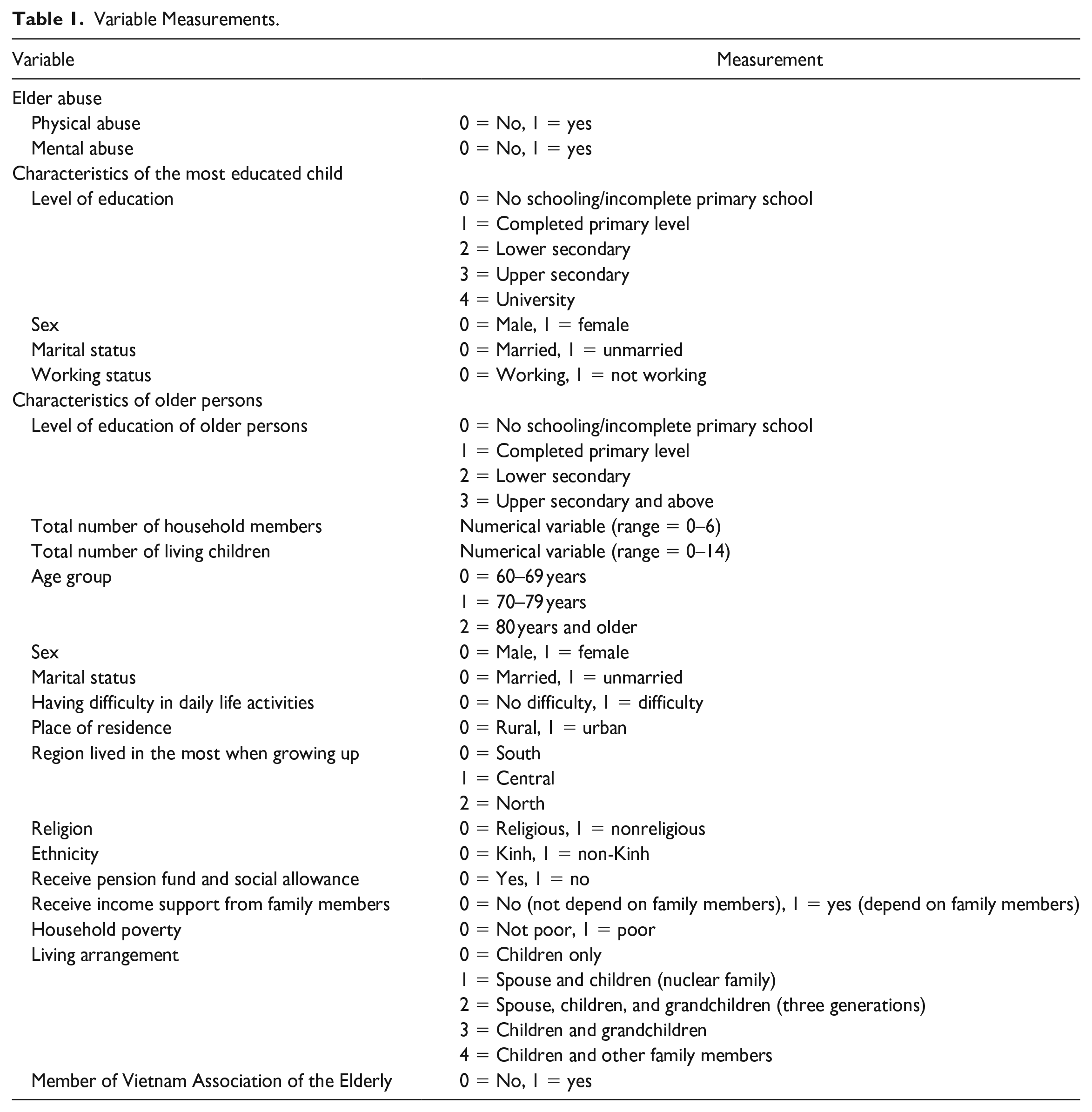
The covariates that measure the characteristics of the most educated child in this study include sex, age, marital status, and working status. The sociodemographic covariates used to capture the characteristics of the older persons include age, level of education, region lived in the most when growing up, total number of living children, place of residence (urban or rural), ethnicity, sex, receipt of pension or other social allowance, receipt of income support from family members, living in a poor household, religion, being a member of the Vietnam Association of the Elderly, difficulty in daily life activities (whether the older person has difficulty in one of five daily life activities: eating, getting dressed and undressed, bathing and washing themselves, getting up from a lying position, and getting to and using the toilet), total number of household members, and living arrangements (whether older persons are living with children only; spouse and children [nuclear family]; spouse, children, and grandchildren [three generations]; children and grandchildren; or children and other family members). Table 1 presents variable measurements.
Variable Measurements.
Data Analysis
First, we performed descriptive analyses of types of domestic elder abuse and the level of education of the child with the highest education. Chi-square tests were used to examine differences in mental abuse and physical abuse with respect to different levels of the children’s highest level of education.
In the multivariate analyses, the main dependent variable is a binary variable: whether the elderly person experienced any physical or mental abuse. In this study, we apply probit regression models to examine the effects of the education of children on elder physical or mental abuse. The estimated probability of the elderly experiencing the abuse (Y = 1) comes from:

where Pr denotes the probability that the elderly is abused, Φ is the cumulative distribution function of the standard normal distribution, β is estimated by maximum likelihood, and
Results
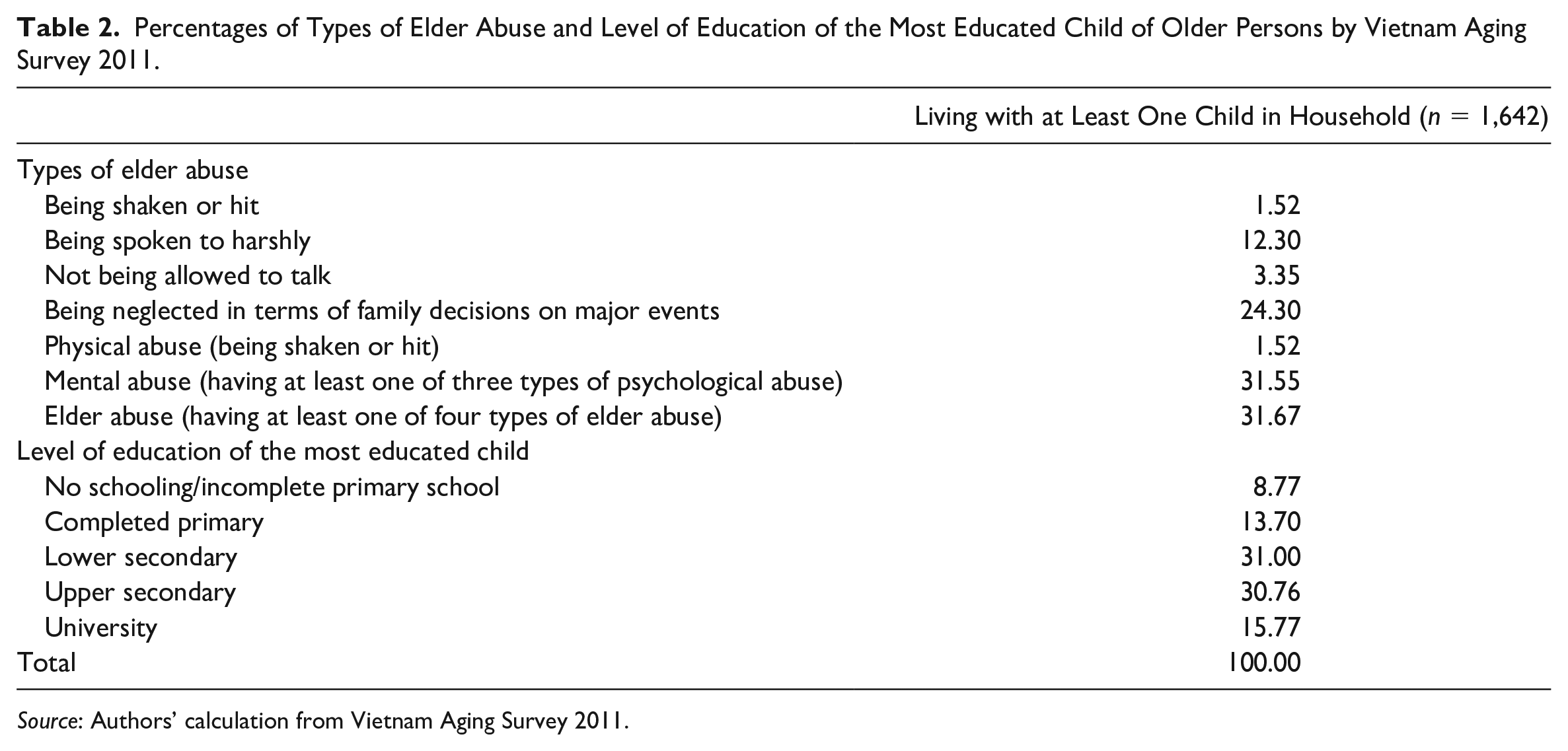
Table 2 shows that nearly one third of older persons (31.67 percent) experienced at least one type of physical or mental abuse, including being spoken to harshly, not being allowed to talk, being shaken or hit, and being ignored in terms of providing input on family decisions on major events. Regarding the types of elder abuse, experiencing the feeling of being ignored in terms of providing input on family decisions on major events ranked the highest among the different types of elder abuse (nearly 25 percent). The second most prevalent type was being harshly talked to by family members (>12.30 percent). The experiences of not being allowed to talk and being shaken or hit had the lowest percentages (about 2 percent to 3 percent). Overall, the elderly experienced greater mental abuse (>30 percent) than physical abuse (1.52 percent).
Percentages of Types of Elder Abuse and Level of Education of the Most Educated Child of Older Persons by Vietnam Aging Survey 2011.
Source: Authors’ calculation from Vietnam Aging Survey 2011.
In terms of the highest level of education of children living in the household, lower secondary education had the highest percentage (31 percent), followed by upper secondary education (30.76 percent) and university (15.77 percent). No schooling or incomplete primary school had the smallest proportion (8.77 percent).
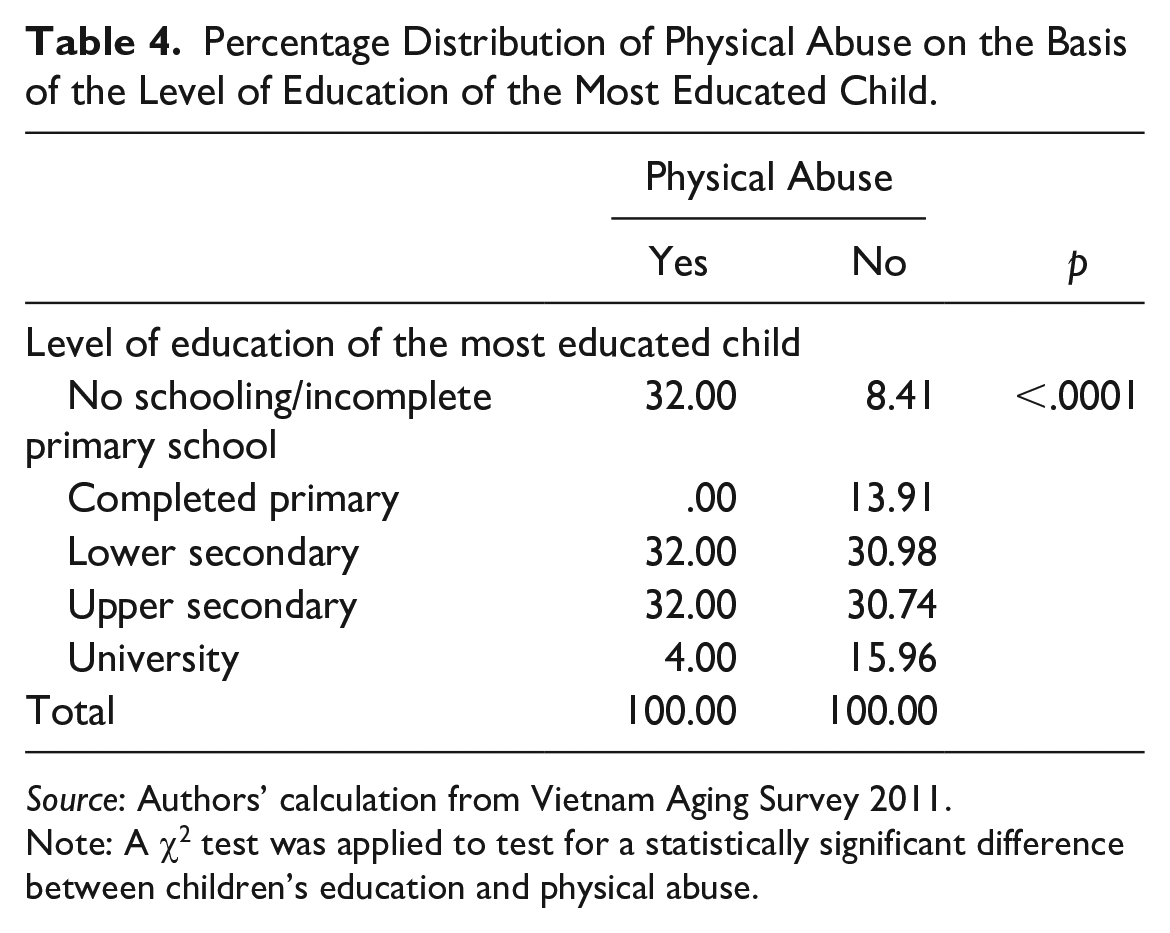
Chi-square tests were used to determine the significance of the differences in terms of mental and physical abuse by the level of education of the most educated child living in the same household (Tables 3 and 4). We find the chances of being abused differ with respect to the education of the most educated child for both mental abuse and physical abuse of older persons in Vietnam.
Percentage Distribution of Mental Abuse on the Basis of the Level of Education of the Most Educated Child.

Source: Authors’ calculation from Vietnam Aging Survey 2011.
Note: A χ2 test was applied to test for a statistically significant difference between child education and mental abuse.
Percentage Distribution of Physical Abuse on the Basis of the Level of Education of the Most Educated Child.
Source: Authors’ calculation from Vietnam Aging Survey 2011.
Note: A χ2 test was applied to test for a statistically significant difference between children’s education and physical abuse.
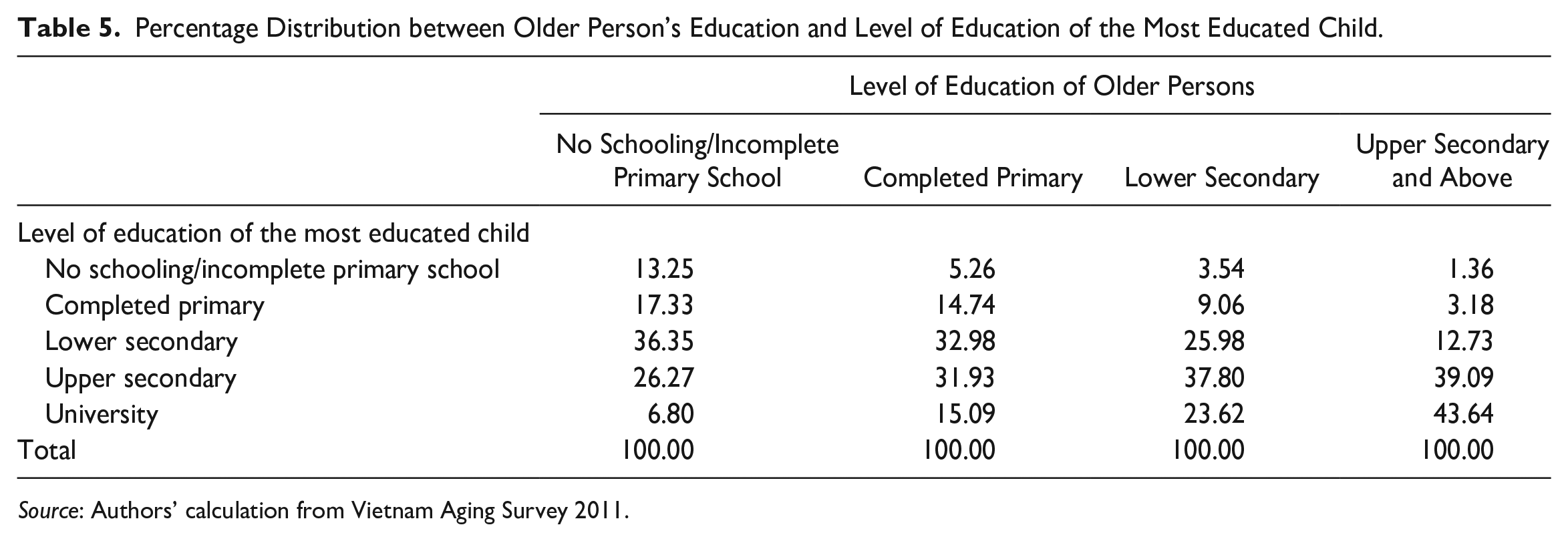
Furthermore, Table 5 indicates that the level of older persons’ own education is closely related to their children’s education. In other words, the highest level of children’s education tends to be equivalent to or one level higher than the level of their parent’s education. For example, in the group of older persons with high school and above education, their children with university education accounted for the highest proportion (43.64 percent). In the group of older persons with lower secondary education, their children with high school education accounted for the highest proportion (37.80 percent). Finally, for the elderly with completed primary and no schooling/incomplete primary school education, their children with lower secondary education accounted for the highest proportion (32.98 percent and 36.35 percent).
Percentage Distribution between Older Person’s Education and Level of Education of the Most Educated Child.
Source: Authors’ calculation from Vietnam Aging Survey 2011.
Although education is generally considered the first and most important form of investment in children and a channel for transferring wealth from parents to children, our analysis suggests that parents with a high level of education tend to invest more in their children’s education than do those with lower levels of education.
Table 6 uses probit regressions to evaluate the effect of the education of the most educated child on potential physical and mental abuse of elder parent in the household, controlling for both the child’s and the older person’s characteristics. Our analyses show that the level of children’s education plays a positive role in whether the elderly are abused. Marginal effects are reported from these probit regressions. We find that the higher the educational attainment of the children living in the same household, the lower the chance that the elderly will experience domestic mental and physical abuse.
Probit Regression Results on the Link between the Most Educated Child and Types of Elder Abuse on the Basis of the Vietnam Aging Survey 2011.

Note: Values in parentheses are standard errors. All calculations are weighted analysis given by the survey administration.
p < .005. **p < 0.01. ***p < .001.
Regarding the child’s characteristics, we find that the elderly tended to suffer more mental abuse and physical abuse from unmarried children than from those with married children. Furthermore, children who are working have a higher tendency to mentally abuse their parents compared with children who do not work. However, we do not find any statistically significant effects of the work status of children on physical abuse.
Regarding older persons’ characteristics, it is interesting to find that education of the older persons does not affect the chance that the elderly experiences domestic mental or physical abuse at home. Rather, older persons are more likely to face domestic mental and physical abuse once they begin to have difficulty with daily life activities, regardless of their education. There is a difference in the association between age group with domestic mental abuse. With respect to the age of the elderly, we find a depressing result in that older persons aged 80 years and older were more likely to experience domestic mental abuse compared with those aged 60 to 69 years. Besides, older women are more likely to experience both domestic mental and physical abuse than are older men. In addition, older persons from poor households are more likely to experience domestic mental abuse compared with those who are not from poor households. We also find that there are differences in the likelihood that the elderly experience domestic physical abuse according to the regions they live in. The elderly living in the Central and North regions tend to experience domestic physical abuse at a higher rate than do those living in the South. However, there is no regional effect on mental abuse. We find also that the type of living arrangement had no effect on either type of elder abuse. Additionally, being a member of the Vietnam Association of the Elderly tends to decrease the chance of experiencing mental abuse in the household.
Discussion
This study explores the relationship of the level of education of children of the elderly living within the same household and domestic abuse of their elder parents. We find that the higher such children’s education, the lower the chance that the elderly will experience domestic physical and mental abuse in the household. This result marks an important milestone in understanding domestic elder abuse, especially in Asian countries and countries that are strongly influenced by cultural traditions that promote close family relationships and in which parents tend to live with their children from their children’s birth through their old age, as is the traditional case in Vietnam (Teerawichitchainan et al. 2015). Although many studies indicate that living with one’s children in old age is a better choice than living alone because doing so means facing less of a burden when dealing with a disease, reducing loneliness, and providing more happiness (Dang and Sukontamarn 2020), our finding reveals a hidden cost of living with one’s own children in terms of exposure to abuse.
Although various research confirms that investing in children can ensure well-being and security in old age (De Neve and Fink 2018; Mu and Du 2017), our findings give a deeper understanding, namely, that investing in children’s education can in fact reduce the chance of parents’ being abused when they become old, particularly for those who must remain with their children. In other words, investing in children’s education is an investment that has long-lasting effects throughout parents’ lives, not only in terms of economic benefits and financial security, but also through physical and emotional security in old age, especially in traditional households where the elderly live with their children.
Additionally, although we find that children’s education can reduce domestic elder abuse in the household, older persons’ education does not have any effect on their being abused once we control for the level of education of their own children. Previous studies have consistently shown positive effects of one’s own education on reducing the risk for experiencing adverse factors at all ages in terms health risk behaviors, psychological well-being, economic status, etc. (Cutler and Lleras-Muney 2006; Eide and Showalter 2011). This may be because the effect of the elderly’s own education is subsumed by the level of education of the their own children through investment in education, given that more highly educated parents tend to invest more in the education of their children. On the other hand, the results of our study may contribute to the research gap on the benefits of education in old age. That is, although education is seen as necessary for individuals, it has no effect on lowering the potential of being abused when a people grow old, especially when they reach age 80, when they tend to face greater probability for being abused regardless of their education.
Additionally, although studies show that increasing women’s education reduces the risk for violence from partners and family members by increasing their status, empowering them, and encouraging their independence from their husbands or family members (Kreager et al. 2013), our study finds that education of the elderly is not of any significance with regard to domestic elder abuse in Vietnam. Although highly educated women can easily improve their lives by participating in the labor market or by increasing their perception of what constitutes domestic violence (Erten and Keskin 2018), female elderly might be, in fact, quite dependent, according to their health and economic status (Abellán et al. 2011). As a result, even highly educated elderly people may still find it difficult to exert or maintain power within the household because of diminished physical health or economic condition. Therefore, their own educational attainment may not contribute to a decreased risk for domestic abuse among the elderly, especially among women.
Additionally, there are two attributes of the elderly that need attention with regard to the risk for being mentally and physically abused at home. The first is gender. We find that elderly women are more likely to face both domestic mental and physical abuse than are elderly men. This finding is in line with a pressing concern that violence against women is a global social issue and deserves greater attention in the context of sustainable development (Garcia-Moreno et al. 2005). Such violence against women is more severe in countries strongly influenced by paternalism and rigid gender roles (Hunnicutt 2009). Vietnam is also one of the countries heavily influenced by Confucianism and where the problem of domestic violence against women still exists (Vu et al. 2014). Even in developed countries, such as the United States, older women have also been shown to be more prone to physical violence compared with men (Friedman et al. (2017). Yon et al. (2019) have assessed the diverse forms of violence against older women, including physical abuse, sexual abuse, psychological/emotional abuse, financial abuse, and neglect. Therefore, older women should receive continued attention and support to help combat domestic violence perpetrated against them.
The second attribute of concern from our findings on elder abuse is the ability of the elderly to perform daily activities. Difficulty in mobility and difficulty in carrying out daily activities are considered risk factors for physical and emotional abuse, such as has been found among Swiss elderly (Simone et al. 2016). In addition, there is some evidence that the higher the level of dependency on caregivers, the higher the tendency that the elderly will be abused (Yan and Tang 2004). Our findings conform with previous findings that the elderly who have difficulty in mobility or with daily life activities and who are thus more dependent on support from their caregivers face a higher risk for violence compared with less dependent elderly.
Finally, we find that older people living in urban areas are more likely to experience domestic mental abuse than are older people living in rural areas. This pattern is similar to the global trend of domestic violence against women. It is specifically noted that regions with a high pace of socioeconomic development changes see an increase in the number of women suffering from abuse as a result of the high population density (World Health Organization 2005).
Study Limitations
Our study has some limitations. First, our study uses secondary data that do not include information on the frequency and the intensity of the abuses. Second, the data are of mental and physical abuse perpetrated only by family members, which gave us a chance to investigate domestic abuses extensively but excludes other abuse that elders may have experienced outside the home or that was perpetrated by others. Third, our data do not offer comprehensive demographic and socioeconomic information on children of the elderly, such as individual income, their sector of employment, and their living conditions, which could possibly influence elder abuse by family members. Fourth, the data rely on parents’ reports without confirmation from adult children in the household. The accuracy of reported abuses may be affected, but self-reporting in absence of caretaker’s presence could avoid underreporting to some extent.
Conclusion
The study is expected to be one of the first studies to explore domestic elder abuse with a focus on a new dimension in population aging in the context of traditional living arrangements in developing countries in which the elderly live with their children. We use data from the first and updated national survey of older persons in Vietnam with up-to-date information on elder abuse in households to explore the effect of education of parents’ children on mental and physical abuse by family members. Our contribution aims to better understand whether the education of their own child living in the same household helps reduce the chances of such parents’ being mentally and physically abused by family members in their old age. We find that the higher the education level of their children, the lower the risk for parents’ being abused by family members when they live with their children in old age.
In addition, we focus on the education of the elderly’s children as a key investment in the elderly’s own future when looking ahead to their living arrangements in old age in traditional households as a way to decrease the risk for mental and physical abuse. Interestingly, once the information of the education of the child living in the same household is controlled for, we find that the education level of the elderly itself does not contribute to reducing the risk for their being abused when living with their children. We call for the Vietnamese government and similar countries to pay more attention to domestic elder abuse, especially toward the elderly who are at high risk for violence, such as elderly women, those who live with children with low education, those who are aged 80 and older, those who have difficulty performing daily life activities, and those who live in urban areas. It is also hoped that this study can serve as new reference to knowledge related to aging population policies with regard to domestic elder abuse and a new resource for the government in Vietnam and similar countries to reduce the risk of elder abuse, which has been largely overlooked thus far.
Footnotes
Acknowledgements
We would like to acknowledge the Institute of Social and Medical Studies, which provided VNAS 2011.
Funding
The author(s) disclosed receipt of the following financial support for the research, authorship, and/or publication of this article: This research project is supported by the Second Century Fund, Chulalongkorn University, Bangkok, Thailand.
