




Abstract
Background
Although e-learning has become routine in nursing education, many courses still lack explicit, structured guidance targeting students’ motivation in online environments. Evidence remains limited regarding whether such motivational guidelines improve objective learning achievement, particularly in maternity nursing.
Objective
To evaluate the effect of e-learning motivational guidelines on motivation and learning achievement among maternity nursing students.
Methods
A quasi-experimental design with intervention and control groups was conducted at the Faculty of Nursing during the 2021–2022 academic year. A systematic random sample of 261 students was assessed using three tools: (1) a computer skills assessment sheet, (2) a motivation for e-learning assessment sheet, and (3) an auditing checklist to evaluate learning achievement. The intervention group received an e-learning course integrated with structured motivational guidelines, whereas the control group received the usual e-learning course.
Results
Postintervention, 69.7% of the intervention group exhibited high motivation across all domains of total motivation for e-learning, compared with approximately 62% of the control group who demonstrated positive motivation across related items. A strong, statistically significant positive correlation was found between total learning achievement and total motivation in the intervention group (r = .983, p < .001).
Conclusion
Embedding structured motivational guidelines within e-learning was associated with higher motivation and improved learning achievement among maternity nursing students, addressing a key gap by linking explicit motivational support to measurable academic outcomes in this specialty context.
Introduction
Motivation is a multifaceted construct in educational psychology that shapes multiple dimensions of learner engagement (e.g., beliefs, values, goals, and regulation). This includes influences on attention, strategy use, and engagement patterns (Eccles & Wigfield, 2002; Schunk, 2020). It affects individuals’ choices about where to invest time, the intensity of effort they apply, their cognitive and emotional responses during tasks, and their persistence in continuing those tasks (Eccles & Wigfield, 2002; Ryan & Deci, 2000). In the present study, motivation was operationalized as students’ selection of learning tasks, the time and effort devoted to them, determination to engage with learning activities, and capacity to overcome challenges—dimensions consistent with established educational motivation frameworks (Schunk et al., 2014). Ultimately, motivation is a key determinant of academic success in the teaching–learning process, with motivated learners showing stronger engagement and achievement (Pintrich & De Groot, 1990; Schunk, 2020).
Motivating students involves intentionally inspiring engagement in learning activities while cultivating adaptive study habits (self-regulated learning) and a sense of purpose that supports goal pursuit (Pintrich, 2004; Yeager et al., 2014). Motivation functions as a driving force in the teaching–learning process that sustains effort and directs behavior toward learning objectives (Eccles & Wigfield, 2002; Schunk, 2020). Accordingly, educators should actively cultivate student motivation by creating need-supportive, well-structured environments, and encouraging active participation in academic activities (Freeman et al., 2014; Jang et al., 2010).
e-Learning refers to the use of information and communication technologies to support web-based, computer-assisted, digital, or fully online learning (Moore et al., 2011; OECD, 2005). In knowledge-based economies, the expansion of network infrastructure and digital platforms has reshaped how learners access and participate in instruction (OECD, 2005). These developments have also changed how learners communicate and interact through both asynchronous and synchronous modalities, thereby influencing engagement and the experience of learning (Hrastinski, 2008). In the present study, students used the Faculty of Nursing's official e-learning platform to access lessons and complete learning activities.
Student learning achievement serves as a key indicator of both the quality of educational outcomes and the overall effectiveness of the educational process (UNESCO IIEP Learning Portal, 2023a). Strong learning achievement is often demonstrated through students’ academic performance and grades (Brookhart, 2017). An effective teaching–and–learning process plays a vital role in enhancing student success, as shown by consistent gains from active-learning approaches (Freeman et al., 2014). Learning achievement encompasses the evaluation of the knowledge, skills, and competencies students acquire during their educational experience (UNESCO IIEP Learning Portal, 2023b).
A guideline is a structured statement that provides evidence-based recommendations to assist decision making, typically grounded in systematic reviews and explicit judgments about benefits and harms (Graham et al., 2011). Its primary purpose is to give rationale-based direction for recurring practices using transparent, standardized development processes (World Health Organization, 2014). Guidelines may be produced by government bodies and professional societies, and they are used to standardize practice and improve quality (Arnett et al., 2019; Substance Abuse and Mental Health Services Administration, 2020). Although they inform best practice, guidelines generally are not legally binding and typically state that they are not a substitute for professional judgment (American College of Surgeons, 2020). Accordingly, guidelines function as frameworks to promote consistent, informed decisions across settings (Graham et al., 2011).
Egypt had invested in building its information and communication technology (ICT) infrastructure since 1985, laying foundations that later underpinned e-learning initiatives (Kamel & Hussein, 2002). These sustained ICT efforts supported growth in digital services and educational applications (Kamel et al., 2009). Egypt continued to prioritize e-learning, especially in higher education, to enhance instructor motivation and student learning, as documented in analyses of Egyptian universities (El-Sayad et al., 2021). Internet use also rose markedly from 2013 to 2019, reaching approximately 51 million users by 2019, enabling broader online learning adoption (El-Sayad et al., 2021).
The evolving competencies across nursing's three pillars—education, research (scholarship), and clinical practice—underscore the relevance of examining digital approaches in contemporary curricula (AACN, 2021; Institute of Medicine, 2011). Prior evidence suggested that integrating e-learning strategies might enhance student performance, particularly in theoretical components of nursing courses (Du et al., 2022; Liu et al., 2016). As healthcare systems increasingly relied on technology, the rationale for studying blended models that combined face-to-face instruction with digital platforms was strengthened (AACN, 2021; Du et al., 2022). Online learning was described as offering flexible, interactive, and supportive environments that could facilitate mastery of complex nursing concepts (Phillips et al., 2023; Regmi & Jones, 2020). In parallel, attention had turned to faculty professional development to build the competencies needed to design and deliver effective, motivational e-learning (Godsk & Nielsen, 2024; Kebritchi et al., 2017).
The present study added to evidence that motivational e-learning strategies such as gamification and serious games could enhance nursing students’ academic achievement and performance (Lee et al., 2024; Nylén-Eriksen et al., 2025). Future research should examine the long-term effects of these approaches on behavior and clinical skill development beyond immediate post-tests (Lee et al., 2024). In particular, further studies could evaluate how e-learning supports the acquisition of practical nursing skills, including medication administration and physical assessment techniques (Ma & Zhou, 2024; Mahou et al., 2024). Additionally, researchers should address adoption barriers such as technological limitations and variable digital health literacy to inform inclusive and accessible strategies for nursing students (Abou Hashish & Alnajjar, 2024; Khatatbeh et al., 2024).
Integrating e-learning strategies into prelicensure nursing education policy is a critical consideration for preparing a digitally capable workforce (Pearson & Shumway, 2025; World Health Organization, 2020). Policymakers should develop evidence-based guidelines that promote e-learning tools embedded with motivational components (e.g., serious games and gamification) to improve learning outcomes (Lee et al., 2024; Nylén-Eriksen et al., 2025). As healthcare systems increasingly rely on digital solutions, aligning educational methods with the demand for technologically competent professionals is essential (International Council of Nurses, 2023; World Health Organization, 2020).
Policymakers should also allocate funding and resources for robust e-learning infrastructure such as virtual simulation platforms, especially in underserved or rural regions where access to traditional training is limited (Hayden et al., 2014; World Health Organization, 2020). Furthermore, nursing regulatory bodies should explore integrating digital and e-learning competencies into licensure or registration requirements to ensure graduates can leverage technology in practice (Nursing and Midwifery Board of Ireland, 2023; Nursing and Midwifery Council, 2018/2024). Evidence from higher education also shows that well-designed online learning can support student achievement when platforms and pedagogy are thoughtfully implemented (Coman et al., 2020).
In the current study, the researchers used several key principles and variables. e-Learning referred to students’ use of the Faculty of Nursing's official e-learning platform to access their curriculum, participate in learning activities, and utilize instructional resources related to maternal and neonatal health nursing. However, despite the widespread adoption of e-learning in nursing education, there was limited specialty-specific evidence in maternity nursing on whether embedding explicit, structured motivational guidelines within a course improved objectively assessed learning outcomes. Most prior work emphasized readiness, satisfaction, or self-reported motivation rather than audited academic performance, leaving uncertainty about effects on achievement. In the institutional context, no studies were identified that evaluated such guidelines within maternal and neonatal health nursing using a quasi-experimental design with a concurrent control group.
Learning achievement in this study was also assessed by analyzing students’ official academic records, specifically their scores on the midterm examination in the maternal and neonatal health nursing course. This examination was conducted by the course department as part of the formal evaluation process during the study period. Using official midterm scores as the primary outcome directly addressed the common limitation of relying on self-report measures and provided an objective test of educational impact.
Another major variable was motivational guidelines, which referred to a set of structured strategies developed and applied by the researchers to enhance nursing students’ motivation toward e-learning. These strategies incorporated elements from the ARCS model of motivation (Attention, Relevance, Confidence, and Satisfaction) and self-determination theory, focusing on intrinsic and extrinsic motivators. The guidelines also included steps for improving students’ technological competencies and addressing common barriers to e-learning, along with practical methods for overcoming them. A supportive printed booklet, created by the researchers and grounded in relevant literature and scientific references, was distributed. This booklet presented the content in clear, accessible language and was supplemented with illustrative visuals to ensure comprehension and engagement across varying student literacy levels. By integrating motivational design (ARCS/SDT) with technology skills scaffolding and barrier mitigation steps in a single, structured package, the intervention targeted both psychological drivers of engagement and practical obstacles—an approach that had been rarely tested in maternity nursing e-learning.
Research gap and aim: Taken together, the absence of specialty-specific, quasi-experimental evidence linking explicit motivational guidelines in e-learning to objective academic achievement delineated a clear gap. Therefore, this study aimed (1) to evaluate the effect of structured e-learning motivational guidelines on nursing students’ motivation and (2) to determine their impact on objective learning achievement (official midterm scores) compared with usual e-learning.
Literature Review
Prior work showed that e-learning could match or outperform traditional instruction in knowledge and skills (Pei & Wu, 2019) and that adding motivational strategies could raise motivation, performance, and course interest (Akpen et al., 2024; Nylén-Eriksen et al., 2025; Ucar & Kumtepe, 2020). At a systems level, policy reports framed e-learning as an opportunity to reimagine education under evolving societal and economic pressures and urged frameworks that kept student success and wellbeing central (OECD, 2019; UNESCO, 2021). Meta-analytic and large-scale syntheses also showed that motivational factors predicted academic performance and interplayed with self-regulated learning processes (Jansen et al., 2019; Richardson et al., 2012).
However, three practice-critical gaps remained. First, much of the literature stopped at what motivated learners and rarely translated theory into actionable, replicable guideline packages that could be embedded into course design and daily teaching decisions; practical “how-to” guidance remained underdeveloped in e-learning contexts (Regmi & Jones, 2020). Second, effects were often demonstrated through self-reported outcomes (e.g., motivation and satisfaction) rather than objectively assessed achievement, which limited inferences about academic impact and prompted calls for stronger designs and clearer mechanisms (Janson & Janke, 2024; Regmi & Jones, 2020). Third, even when motivation was targeted, studies seldom integrated motivational design with supports that removed common e-learning barriers (e.g., variable technology skills, platform navigation, and digital study routines), which left a practical gap between intention and sustained engagement.
The present study was conducted to address these gaps. It evaluated a structured, course-embedded package of motivational guidelines that (a) explicitly mapped to ARCS and self-determination theory, (b) paired motivational strategies with technology skills scaffolding and barrier mitigation steps, and (c) was delivered in a concise, implementation-ready format (a researcher-developed booklet with clear language and visuals). Crucially, the study examined objective learning achievement using official midterm examination scores rather than only self-reports within a clearly defined context (maternal and neonatal health nursing). By testing a replicable, theory-informed, and practicality-oriented guideline package against usual e-learning, this study directly responded to the literature's calls for applied guidance and stronger outcome evidence and offered educators concrete procedures to enhance motivation and measurable academic outcomes (Akpen et al., 2024; Jansen et al., 2019; Nylén-Eriksen et al., 2025; OECD, 2019; Pei & Wu, 2019; Regmi et al., 2020; Richardson et al., 2012; UNESCO, 2021).
Methods and Subjects
This study was reported in accordance with the TREND (Transparent Reporting of Evaluations with Nonrandomized Designs) statement for nonrandomized evaluations and used the TIDieR (Template for Intervention Description and Replication) checklist to fully describe the intervention (Des Jarlais et al., 2004; Hoffmann et al., 2014).
Research Design
This study employed a quasi-experimental, nonequivalent groups design with allocation by academic term to minimize cross-contamination: third-year students in term 1 formed the control cohort (usual e-learning), and those in term 2 formed the intervention cohort (usual e-learning plus motivational guidelines).
Research Setting
The study was conducted at the Faculty of Nursing, which was established in the early 1980s and received accreditation in 2013. The faculty offered Bachelor of Science (BSc), diploma, master's, and PhD programs and served a large undergraduate and postgraduate student population, functioning as a leading institution for nursing education in the region.
Study population and sampling technique. The study population comprised all third-year students who were registered in the maternal and neonatal health nursing course during the 2021–2022 academic year at the Faculty of Nursing (total N = 261). Given that the total population matched the target sample, all 261 eligible students were included (census sampling). Group assignment followed a quasi-experimental, nonequivalent groups design by academic term (term 1, control; term 2, intervention); no individual-level randomization was performed.
Sample Size
The sample size was calculated using G*Power software, based on the study by Elfaki et al. (2019), which compared attitudes toward e-learning between an experimental and a control group. The reported mean and standard deviation (SD) for perceived e-learning usage were 8.74 ± 2.71 in the experimental group and 6.26 ± 2.86 in the control group, with a statistically significant difference (p = .015) and an effect size (R2 = .725), α = .05, power = .80. The minimum required sample was 48 students (24 per group). Allowing 10% to 15% attrition, the target was increased to 54 to 56 students.
Regarding actual enrollment (census), in the study year all third-year students registered in the maternal and neonatal health nursing course were available and eligible; therefore, a census was conducted, and N = 261 students were included (term 1 control = 129; term 2 intervention = 132). This approach improved precision, supported subgroup and sensitivity analyses, and ensured adequate power for the primary, objective outcome (official midterm examination score). With this N, the minimum detectable effect at 80% power was approximately d = .35 (two-tailed, α = .05), enabling detection of more modest but educationally meaningful differences.
Inclusion Criteria
All third-year students who were registered in the Department of Maternity and Gynecological Nursing (maternal and neonatal health nursing course) during the first and second semesters of the 2021–2022 academic year.
Exclusion Criteria
Students who were not registered in the Department of Maternity and Gynecological Nursing during 2021–2022. Operationally, any student who lacked the primary outcome (official midterm score) or who declined participation, if applicable, was also excluded.
Data Collection Tools
In this study, the independent variable was the e-learning motivational guideline, while learning achievement served as the dependent variable. To collect data, three tools were utilized. These tools were selected and modified to align with the study objectives and to ensure relevance, validity, and clarity.
Computer Skills Assessment Sheet
This tool was adopted from Ismail and El Wahab (2017) and was deemed appropriate for the purpose of the study. Modifications were made to improve clarity and relevance, including revisions to the tool's design and the removal of nonessential items such as academic semester, gender, and previous e-course experience.
The tool consisted of two parts, each comprising multiple-choice and closed-ended questions, and was administered as a preassessment for both the control and study groups. Part one (Q1–Q5) assessed general characteristics of the participating maternity nursing students, including name, age, and academic year; part two (Q6–Q11) evaluated students’ computer skills and previous experience with e-learning.
Motivation for e-Learning Assessment Sheet
This tool was adopted from Fowler (2018) and was modified to better suit the objectives of the study. Modifications included changes in layout and wording for improved clarity (e.g., simplifying complex item statements) and the removal of nonessential items such as the task value component.
The tool comprised 32 items grouped into six subscales, each designed to assess a specific dimension of motivation in an e-learning context: intrinsic goal orientation (Q1–Q4), extrinsic goal orientation (Q5–Q8), control of learning beliefs (Q9–Q12), self-efficacy (Q13–Q20), social engagement (Q21–Q25), and instructor support (Q26–Q32). This assessment was administered as a pretest for both the control and study groups to evaluate baseline motivational levels.
Scoring System—Motivation with e-learning Assessment Sheet:
This tool comprised a total of 32 items. Each item was scored on a three-point Likert scale as follows:

The total score ranged from 0 to 64. A total score between 0 and 32 was interpreted as indicating low motivation, while a score between 33 and 64 indicated high motivation.
Auditing Checklist: This checklist was used to assess student learning achievement. It was adapted from Ismail & El Wahab (2017) and modified by the researcher. The checklist was administered once to both groups after the midterm examination.
It categorized student performance into levels based on the scoring system of the faculty curriculum, as shown below:

Validity and Reliability of the Tools
First and Third Tools
Content Validity
Content validity referred to the extent to which a tool accurately measured the intended construct. For both the first and third tools, content validity was established through expert review. A jury committee comprising three professors from the maternity and neonatal nursing department evaluated the tools for relevance, clarity, and comprehensiveness. While no modifications were necessary for the tools themselves, the committee provided suggestions regarding the accompanying supportive materials, which were subsequently taken into consideration.
Reliability
The internal consistency of the first tool (computer skills assessment) was assessed using Cronbach's alpha coefficient. The analysis yielded a Cronbach's alpha value of .83, indicating good internal consistency and acceptable reliability.
Second Tool
Validity and Reliability
The second tool, the Motivated Strategies for Learning Questionnaire (MSLQ), had previously undergone validation and reliability testing by other researchers who adapted it for various educational contexts. The construct validity and internal consistency of the MSLQ were established through comprehensive psychometric evaluation.
The instrument included six subscales, each comprising four to eight items. Internal consistency for these subscales was determined by calculating Cronbach's alpha coefficients, which ranged from .62 to .93, indicating acceptable to excellent reliability and homogeneity among the items within each scale.
Language and Cultural Adaptation of Instruments
Original and Administration Languages
All three instruments (computer skills assessment sheet, motivation for e-learning assessment sheet [MSLQ-based], and the auditing checklist) were originally developed in English. For this study, they were administered to students in Arabic (Modern Standard Arabic) to maximize clarity and accessibility.
Translation and Back-Translation Process
The research team followed established guidance for cross-cultural adaptation: forward translation → reconciliation → back-translation → expert committee review → cognitive debriefing/pilot testing → finalization. Specifically:
Forward translation: Two independent bilingual nursing educators translated the English versions into Arabic, emphasizing conceptual (rather than literal) equivalence. Reconciliation: A third senior educator reconciled discrepancies and produced a single Arabic draft. Back-translation: An independent professional translator, blinded to the originals, back-translated the reconciled Arabic version into English. Expert committee review: A bilingual panel (nursing education and measurement experts) compared the back-translation with the source, resolved semantic and idiomatic issues, and ensured content equivalence. Cognitive debriefing/pilot: The pre-final Arabic instruments were piloted with third-year students to confirm clarity, relevance, and cultural appropriateness; minor wording refinements were made. Finalization and documentation: The finalized Arabic versions were approved by the research team; all adaptations (e.g., simplified wording, removal of non-essential items, 3-point Likert-type scaling) were documented in the instrument appendix.
Fieldwork
Prior to the implementation of the guidelines, and to strengthen their abilities in e-learning, the researchers underwent a training session on e-learning activities conducted by the e-learning unit coordinator of the department. Additionally, the researchers attended an orientation session on the use of the e-learning platform at the beginning of the academic semester, organized by the e-learning unit. They also reviewed all official tutorial videos related to the platform's use to ensure full familiarity with its functions and features.
Data collection was carried out in two phases: from the control group during the first semester of the 2021–2022 academic year, and from the study group during the second semester. Before participation, written informed consent was obtained from all students after the study's aim had been clearly explained. Participants were assured of the confidentiality of their responses and were informed that the data would be used solely for research purposes without any impact on their academic grades. Detailed instructions on how to complete the assessment tools were also provided.
The participating students were divided into two groups: control group, students enrolled in the first semester who did not receive any intervention; and study group, students enrolled in the second semester who received a motivational strategies intervention developed and implemented by the researchers.
As part of the intervention, a printed guideline was distributed to all students in the study group. This guideline was designed to support maternity and neonatal health nursing students in enhancing their motivation for e-learning. Its objective was to improve academic achievement by helping students understand key concepts related to e-learning, the impact of e-learning on learning outcomes, motivational strategies and models applicable to e-learning environments, barriers to effective learning in e-learning settings, and practical methods to overcome these barriers.
The intervention in this study was conducted in three phases: assessment, implementation, and evaluation, as detailed below.
Assessment Phase
All participants from both the control and study groups were assessed for personal data, computer skills, and prior experience with technological tools using the computer skills assessment sheet (tool 1). Following this, students’ motivation levels toward e-learning were assessed using the motivation for e-learning assessment sheet (tool 2).
The administration of these assessment tools required approximately 20 minutes per participant in both groups.
Implementation Phase (Study Group Only—Second Semester)
The study group received a motivational guideline in the form of a self-learning booklet, developed by the researcher. This booklet covered the following topics: definition and types of e-learning, objectives of the guideline, concept and types of motivation, and strategies to enhance student motivation for e-learning.
Additionally, a training session was conducted by the researchers in collaboration with the e-learning unit coordinator from the Faculty of Nursing. This session provided students with practical guidance on how to access and interact with online lectures and course materials effectively.
To further support the study group, a WhatsApp group was created to offer continuous communication, clarification of booklet content, and assistance with challenges related to the e-learning process.
Evaluation Phase
After the midterm examination in the nursing subject, both the control group (first semester) and the study group (second semester) were evaluated as follows: motivation toward e-learning was assessed again using the motivation for e-learning assessment sheet (tool 2), and learning achievement was evaluated using the auditing checklist (tool 3), based on students’ midterm grades. This phase aimed to measure the impact of the intervention on students’ motivation and academic performance.
Strategies to Minimize Bias
To minimize potential sources of bias, the following strategies were implemented: random assignment, whereby participants were assigned to either the intervention (study) group or the control group to reduce selection bias; double-blind procedure, in which neither participants nor assessors were aware of group allocation during the evaluation phase; diverse sampling, with students drawn from varied socioeconomic backgrounds to enhance generalizability; and tool validation and reliability testing, whereby all research tools were reviewed and validated by subject-matter experts. Test–retest reliability was conducted to ensure the consistency and stability of outcome measurements over time.
Ethical Considerations
Ethics Approval and Consent to Participate
The study protocol was reviewed and approved by the research ethics committee (REC), Faculty of Nursing. Departmental endorsement was obtained for course logistics; this did not replace institutional ethical review. The study adhered to the Declaration of Helsinki and internationally recognized ethical guidelines. Written informed consent was obtained from all students before any data collection. Participation was voluntary and had no effect on grades or course standing. Identifiable information was not included in the analytic dataset; records were stored on password-protected servers accessible only to the research team.
Statistical Analysis
Data were analyzed using the Statistical Package for the Social Sciences (SPSS), version 27 (IBM Corp., Armonk, NY). Descriptive statistics were employed to summarize participants’ demographic and baseline characteristics. Frequencies and percentages were used to describe categorical variables, while means and standard deviations (SDs) were used for continuous variables.
To examine associations between categorical variables, the chi-square (χ2) test was utilized. Correlation coefficients were calculated to assess the strength and direction of linear relationships between continuous variables. A p < .05 was considered statistically significant, while p < .01 was considered highly statistically significant.
Results
Table 1 showed that the vast majority of students in both the study and control groups were aged 21 to 23 years, accounting for 100% of the study group and 96.8% of the control group. The mean age was 20.6 ± 0.71 years for the study group and 20.4 ± 1.23 years for the control group.
Number and Percentage Distribution of Students in the Study and Control Groups According to General Characteristics (n = 261).

Regarding educational background, most students in both groups had a general secondary education, representing 90.2% of the study group and 90.7% of the control group. A smaller proportion of students came from technical nursing institutes (9.8% in the study group and 9.3% in the control group).
Figure 1 illustrated the levels of total motivation toward e-learning among students in both the study and control groups. A greater proportion of students in the study group (69.7%) demonstrated positive motivation compared to 62.0% in the control group.

Distribution of total motivation toward e-learning among students in the study and control groups (n = 261).
Figure 2 illustrated the levels of learning achievement in both the study and control groups. Among the study group, 30.3% of students achieved an excellent level of performance, while only 3.8% experienced failure. In comparison, 30.2% of the control group attained a very good level of achievement, whereas 8.5% demonstrated poor learning outcomes.

Distribution of learning achievement among students in the study and control (n = 261).
Figure 3 showed a strong, statistically significant positive correlation between total motivation toward e-learning and total learning achievement among students in the study group. The Pearson correlation coefficient was r = .983, with p < .001, indicating a highly statistically significant relationship. This finding suggested that higher levels of motivation toward e-learning were closely associated with improved academic performance.

Correlation between students’ motivation toward e-learning and their learning achievement in the study group (n = 132).
Figure 4 presented the correlation between total motivation toward e-learning and total learning achievement among students in the control group. A statistically significant positive correlation was observed, with a Pearson correlation coefficient of r = .693 and p = .001. This indicated a moderate-to-strong positive relationship, suggesting that, even in the absence of an intervention, higher motivation levels were associated with better academic performance.
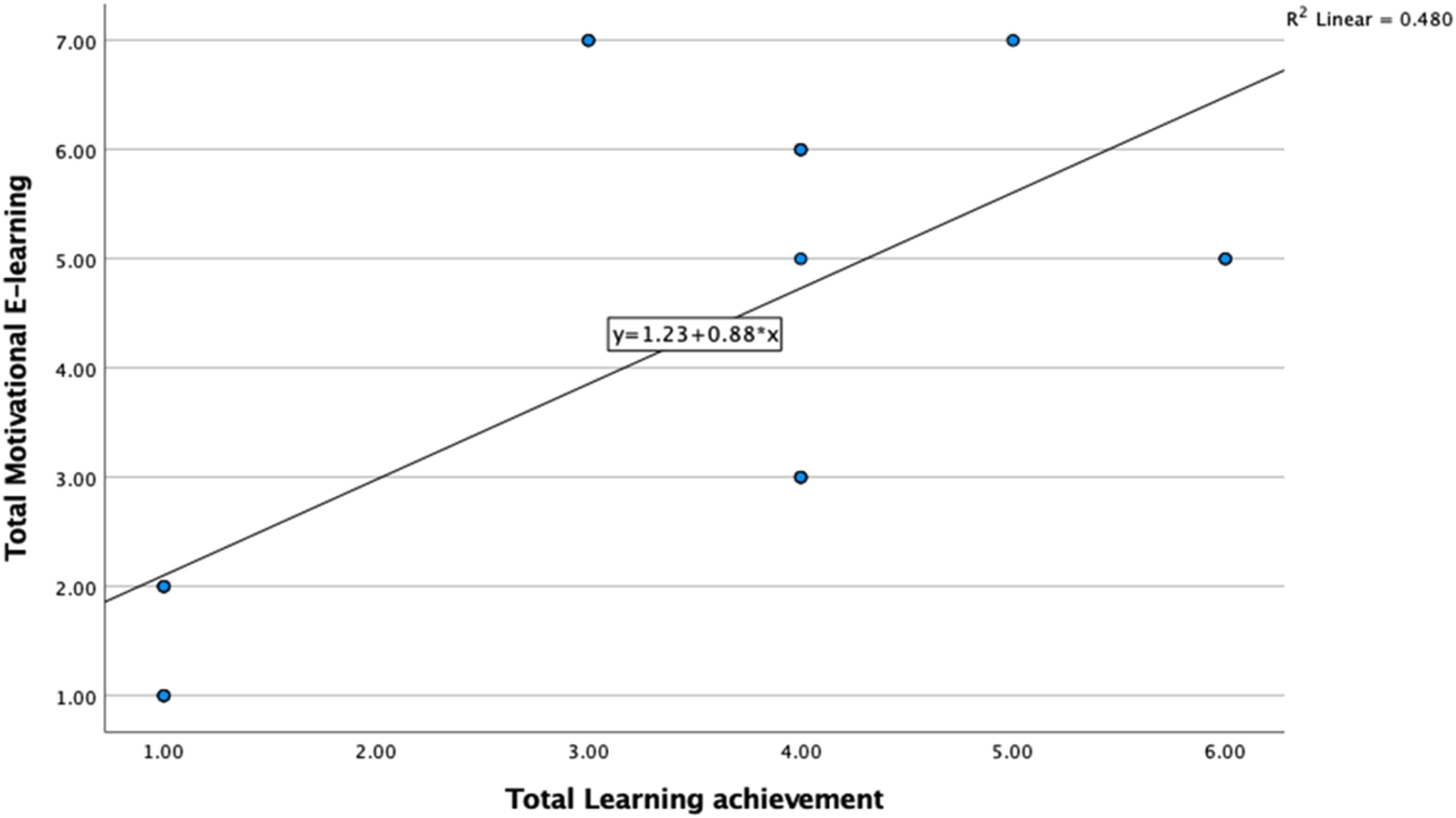
Correlation between students’ motivation toward e-learning and their learning achievement in the control group (n = 129).
Discussion
The higher education system was undergoing continuous transformation as universities responded to rapidly evolving learner needs and societal demands (OECD, 2023; UNESCO, 2021). Motivating students to engage with information technologies and e-learning systems was a critical determinant of success in digital education ecosystems (Regmi & Jones, 2020; Richardson et al., 2012). Universities were increasingly investing in digital platforms and educational technologies, with studies documenting widespread adoption and student perceptions of online learning in higher education (Coman et al., 2020; OECD, 2023).
This study aimed to evaluate the effectiveness of motivational guidelines for e-learning on the academic achievement of maternity nursing students. This objective was addressed through the following research hypothesis: implementing motivational guidelines for e-learning would enhance the learning achievement of maternity nursing students.
The present study revealed that the majority of students in both the study and control groups held a general secondary education certificate. This finding was consistent with the results of a study conducted by Elfaki et al. (2019). Similarly, Diab and Elgahsh (2020) reported that most nursing students in their sample had completed general secondary education. In contrast, a study by Koirala et al. (2020) reported a higher mean age of nursing students, recorded as 22.3 ± 2.9 years. This variation may be attributed to differences in academic levels or years of study among student populations across the respective studies.
The findings of the present study demonstrated a notable improvement in total motivation among students in the intervention group compared to the control group. While more than half of the students in the control group exhibited positive motivation across items related to e-learning, approximately two-thirds of the intervention group demonstrated positive motivation. From an interpretive perspective, this difference may be attributed to the influence of the motivational guidelines, which appeared to enhance students’ engagement and motivation toward e-learning.
According to the study findings, the effectiveness of e-learning motivation lay in its ability to offer equitable, convenient, and frequent access to online educational resources while accommodating diverse student learning styles. Additionally, the flexible nature of the e-learning environment further contributed to increased student interest. As highlighted in the literature review, the researcher posited that the integration of various instructional techniques—such as task value, critical thinking, and peer learning—may have played a key role in elevating students’ motivation (Elshareif & Mohamed, 2021).
These results were in line with previous studies. For instance, Ucar and Kumtepe (2020) reported a high level of student motivation following the implementation of motivational strategies. Similarly, Naciri et al. (2022) confirmed that motivation scores improved in the intervention group when compared to the control group. Park and Yun (2018) also observed that over half of the students in the control group demonstrated positive motivation. Furthermore, Kew et al. (2018) found that the majority of students in the control group exhibited an upper-medium level of motivation in e-learning. Collectively, these findings from multiple studies underscore the positive influence of motivational strategies in fostering student motivation within various educational contexts.
Consistent with the results of the present study, research conducted by Valencia-Vallejo et al. (2018) indicated that a majority of students in their study group exhibited positive motivation. Similarly, a study performed by Ucar and Kumtepe (2020) found that the group utilizing motivational strategies demonstrated significantly higher gains in motivation. This similarity in findings may be attributed to the e-learning motivational guideline employed, which may have raised students’ motivation, course interest, volition, and general performance levels.
Regarding maternity nursing students’ learning achievement following the implementation of motivational guidelines, the present study demonstrated that the majority of students in the study group achieved excellent and very good scores. In contrast, less than one-fifth and less than one-third of students in the control group attained excellent and very good scores, respectively. Furthermore, only a small proportion of students in the study group experienced failure, while nearly one-quarter of the control group received failing scores, indicating a highly statistically significant difference between the two groups. These disparities may be attributed to intrinsic factors such as the curiosity stimulated by engagement in innovative teaching methods among the study group. Additionally, the motivational strategies employed likely contributed to the observed improvements in learning achievement.
These findings were consistent with those of Naciri et al. (2022), who examined student motivation and performance in a flipped classroom setting among nursing students and reported significant improvement in post-test scores compared to pretest scores. Similarly, Alamri (2023) found a significant enhancement in learning achievement following the implementation of a motivational model. Fernandez et al. (2022) also emphasized the positive impact of the e-learning environment, digital readiness, and academic engagement, highlighting how academic engagement significantly influenced learning achievement. Their results supported the notion that institutions fostering a collaborative and motivating virtual learning environment—by aligning the goals of educators and students—were better positioned to promote academic success.
The present study revealed a highly statistically significant positive correlation between total learning achievement and total motivation toward e-learning among students in the study group. This finding suggested that e-learning motivation could substantially enhance academic performance among nursing students. Flexible, interactive, and personalized learning environments fostered greater engagement, content retention, and interest in nursing education, which could ultimately lead to better learning outcomes and more competent healthcare professionals.
This result aligned with previous research by Na et al. (2020), who emphasized that students’ motivation levels were a key factor in determining their intention to engage in online learning. These insights highlighted the importance for educators to design appropriate and engaging e-learning resources tailored to students’ motivational needs, thereby increasing the likelihood of academic success. Similarly, Yavuzalp and Bahcivan (2021) found a significant positive correlation between self-regulation skills and academic achievement, supporting the idea that students with higher motivation and self-directed learning skills tended to perform better in online education settings.
A highly statistically significant positive correlation was observed between the control group's total learning achievement and their total motivation toward e-learning. This aligned with earlier research by Alkış and Temizel (2018), which demonstrated a significant relationship between students’ motivation for e-learning and their academic achievement. Similarly, Fernandez et al. (2022) found that motivation had a positive effect on academic success in online learning environments. In agreement with these findings, Hoerunnisa et al. (2019) also reported that motivation, as a key element of self-regulated learning, significantly influenced students’ learning experiences, including achievement, satisfaction, and course completion outcomes.
Strengths and Limitations
A key strength of this quasi-experimental study was the inclusion of a full census of all eligible third-year maternity nursing students (N = 261), which increased statistical power and reduced the risk of selection bias. The intervention was theory informed, explicitly mapping to the ARCS model of motivation and self-determination theory and being described in detail using the TREND and TIDieR frameworks, thereby enhancing transparency and reproducibility. Additional strengths included the use of validated, culturally adapted instruments with acceptable to excellent internal consistency and reliance on an objective outcome measure based on official midterm examination scores rather than self-reported performance.
This study used a nonrandomized, quasi-experimental design, which limited causal inference and left the possibility of residual confounding despite efforts to standardize teaching across groups (Des Jarlais et al., 2004). The research was conducted in a single faculty and course context (maternal and neonatal health nursing), which may have constrained generalizability to other nursing specialties, institutions, or educational systems (Pei & Wu, 2019). The primary outcome was a midterm examination score, emphasizing cognitive achievement in theoretical components; clinical competencies (e.g., OSCEs) were not assessed, and therefore effects on practical skill performance could not be determined (Hayden et al., 2014). Intervention fidelity was not prospectively tracked using detailed learning management system (LMS) usage analytics (e.g., time on task and module completion milestones), which limited certainty about dose delivered versus dose received (Hoffmann et al., 2014). Finally, implementation occurred during ongoing digital transformation efforts, so technology access and digital literacy may have varied among students, potentially influencing engagement and outcomes (Regmi & Jones, 2020).
Implications for Practice
For prelicensure nursing education, the results suggested that embedding motivational design principles into e-learning (e.g., ARCS-based strategies, serious games, and structured engagement prompts) could be a pragmatic approach to improve achievement in theoretical courses (Nylén-Eriksen et al., 2025; Ucar & Kumtepe, 2020). Programs should pair these designs with faculty development that targets online pedagogy, assessment alignment, and feedback practices to sustain quality at scale (Kebritchi et al., 2017). Institutions were encouraged to invest in LMS analytics and virtual simulation capacity to support monitoring of engagement and to extend learning into practice-proximal tasks, particularly where clinical exposure was constrained (Hayden et al., 2014). To promote equity and access, curricula should incorporate digital literacy support and inclusive design so that motivational e-learning benefits are realized across diverse student populations (Regmi & Jones, 2020; World Health Organization, 2020). Future course cycles could integrate routine intervention fidelity tracking and skill-based assessments (e.g., OSCEs) to link motivational e-learning more directly with competency attainment (Hayden et al., 2014; Hoffmann et al., 2014).
Conclusion
Based on the findings of the current study, it was concluded that the implementation of the e-learning motivational guideline significantly enhanced learning achievement among maternity nursing students. Furthermore, a strong positive correlation was identified between the study group's total learning achievement and their motivation toward e-learning. These results supported the stated research hypotheses and emphasized the effectiveness of motivational strategies in improving educational outcomes in online learning environments.
In light of these findings, it was recommended to implement an educational program for first-year students to enhance their online skills in alignment with faculty policies. This program should include workshops and booklets focused on improving computer skills, communication strategies (both direct and indirect), and techniques for effectively engaging with online lectures. Additionally, an awareness program aimed at enhancing students’ presentation and case study skills was recommended to be introduced, ideally through online lectures, to improve learning outcomes and boost students’ self-confidence. Furthermore, the study recommended that future research be conducted to explore additional academic support strategies that could further enhance students’ learning achievements in online learning environments.
Footnotes
Acknowledgment
Authors would like to express their great appreciation for all parturient women who agreed to participate in this study.

Ethics Approval
Prior to initiating the study, ethical approval was obtained from the Scientific Research Ethical Committee of the Faculty of Nursing, under Approval Number 24.05.314.
Consent to Participate
The purpose of the study was clearly explained to all participants to ensure transparency and build trust. Written informed consent was obtained from each student prior to participation. Students were assured that their participation was voluntary and that they had the right to withdraw from the study at any time without any negative consequences. To maintain confidentiality, a coding system was used for data collection, and all information was handled privately and securely. Participation in the study posed no risks or harm to the students.
Funding
The authors received no financial support for the research, authorship, and/or publication of this article.
Declaration of Conflicting Interests
The authors declared no potential conflicts of interest with respect to the research, authorship, and/or publication of this article.
Availability of Data and Materials
All data available in site the manuscript