




Abstract
Introduction
Presenteeism is a significant issue among nurses, especially during the COVID-19 pandemic, contributing to high healthcare costs, impaired patient safety, and negative well-being. Given the global nursing shortage and the critical role nurses play in healthcare, addressing presenteeism is essential to maintaining quality care and organizational efficiency.
Objectives
This study aimed to clarify the concept of presenteeism among nurses, the largest proportion of healthcare professionals, during the COVID-19 pandemic.
Method
Walker and Avant's concept analysis procedure was adapted to clarify the conceptualization and operationalization of the concept. The Cumulative Index of Nursing and Allied Health, PUBMED, EMBASE, and Research Information Sharing Service were systematically searched for the analysis.
Results
Presenteeism among nurses during the pandemic was conceptualized as work impairment with a detachment of mind and body and disengagement among nurses when present at the workplace. The antecedents of presenteeism in nursing were health problems, worsened work conditions, risk of infection, and the uniqueness of the nursing culture. The consequences included work productivity loss and deterioration in quality of care and patient safety.
Conclusions
Presenteeism among nurses is a complex phenomenon that may influence their job satisfaction and patient health outcomes. Nurses being the most affected frontline workers by the pandemic, nursing managers need to be aware of this phenomenon and try to prevent nurses with health problems to work by adopting organizational policies that allow them to treat their conditions effectively. In addition, nurses should be properly informed and treated for presenteeism and its effects.
Introduction
Work productivity is central to the success of any organization, and has become a critical factor in the strength and sustainability of overall business performance (Koopman et al., 2002). Two important concepts in measuring work productivity are absenteeism and presenteeism, and these situations lead to a decline in work productivity (Brouwer et al., 2023; Papakonstantinou & Tomos, 2022). Absenteeism refers to the absence of a worker from work due to personal conditions (Howard et al., 2012). In the past, many related studies mainly focused on absenteeism, there has been growing interest in research on presenteeism in recent years. Presenteeism is the concept of attending work while experiencing physical or psychological health problems (Gosselin et al., 2013). It refers to the lost productivity that occurs when employees are not fully functioning in the workplace because of an illness, injury, or other condition, and has received much attention in business management, economy, and organizational science associated with work productivity (Chapman, 2005). It is estimated to cause significant economic losses for companies (Laranjeira, 2013). Presenteeism has also become an essential issue for healthcare professionals, especially registered nurses due to a global shortage of nurses (Laranjeira et al., 2022), rapidly increasing healthcare costs (Yaghoubi et al., 2022), and the global health crisis of the COVID-19 pandemic (Galon & Navarro, 2023).
Nurses are one of the most important professionals in the healthcare system and a crucial workforce advocating public health. The scarcity of qualified health personnel, including nurses, is one of the biggest obstacles in achieving health system effectiveness (Buchan & Aiken, 2008). Adverse health outcomes by nurse shortage have consistently been reported in various countries. Hence, the Organization for Economic Cooperation and Development has declared that nurse shortage is the foremost agenda for advanced healthcare systems globally (Simoens et al., 2005). There is strong agreement that the management of presenteeism from the perspectives of nursing workforce management, quality of care, and work productivity is crucial. According to previous research, presenteeism is rather common among nurses and reportedly deteriorates the quality of nursing and reduces the organizational efficiency of the healthcare system (Pilette, 2005; Rainbow, 2019). Nurses provide direct patient care despite physical, environmental, and psychological health hazards. Moreover, they face risks of high stress levels and health problems due to patient relationships, cooperation with various healthcare personnel, shift work patterns with alterations in daily life patterns, and intensive physical workloads (Pereira et al., 2022). Given that nurses continue to work despite the symptoms of contagious diseases, presenteeism can contribute to perpetuating occupational transmission during pandemics (Eisen, 2020).
Coronavirus disease (COVID-19) is a respiratory disease that spread rapidly worldwide. Healthcare personnel, particularly nurses, in close contact with COVID-19 patients experienced physical and mental health problems such as fatigue, stress, depression, anxiety, and exhaustion due to overwork (Liu et al., 2020). Nurses are experiencing significant difficulties while performing their duties at the forefront of infectious diseases (Jackson et al., 2020). Especially, shortages of personal protective equipment heightened their stress and sense of vulnerability, yet many nurses felt morally obligated to continue working (Simões Marques dos Santos et al., 2022). Chronic understaffing and the absence of adequate substitutes forced nurses to work while ill, out of concern for overburdening their colleagues (Galon & Navarro, 2023). Additionally, personal experiences with COVID-19 infection and fear of transmitting the virus to family members contributed to emotional exhaustion. The pandemic amplified presenteeism among nurses through a combination of heightened emotional strain, institutional pressures, and systemic gaps in worker support (White-Means et al., 2022). These pandemic-related factors are essential to understanding how presenteeism uniquely manifested during this period, differentiating it from general or prepandemic presenteeism. Thus, it is timely and meaningful to define presenteeism among nurses in the context of the COVID-19 pandemic, which has caused significant changes and chaos in the medical field and in societies worldwide. Presenteeism has assumed greater significance during the COVID-19 outbreak owing to high healthcare costs, impaired patient safety, and negative nurse well-being (Mosteiro-Díaz et al., 2020).
Though absenteeism has been the most frequently used measure of work productivity, presenteeism may have a more significant impact than absenteeism on the quality of care provided by healthcare workers, because instead of replacing a worker who is experiencing poor health, the employee is present at work but does not fully meet the demands of the job (Letvak & Ruhm, 2010). Hence, it is imperative to discuss and clarify the concept of presenteeism among nurses during the COVID-19 pandemic, a population that accounts for the largest proportion of healthcare professionals and perform essential and even dangerous duties.
Research Methods
Study Design
This study conducted a conceptual analysis of presenteeism among nurses during the COVID-19 pandemic by applying the method described by Walker and Avant (2019). Walker and Avant's strategy assumes essentialism, with some degree of conceptual variability depending on context. Their method was employed as a rigorous and systematic approach to identify the definitions, attributes, antecedents, consequences, and empirical referents of the concept to clarify and define its essential characteristics (Walker & Avant, 2019). Figure 1 illustrates the conceptual diagram of the concept. This strategy was adopted in light of slight variations in the definition of “presenteeism” across researchers and contexts, such as the COVID-19 pandemic, although its core characteristic—work productivity loss—remains consistent.
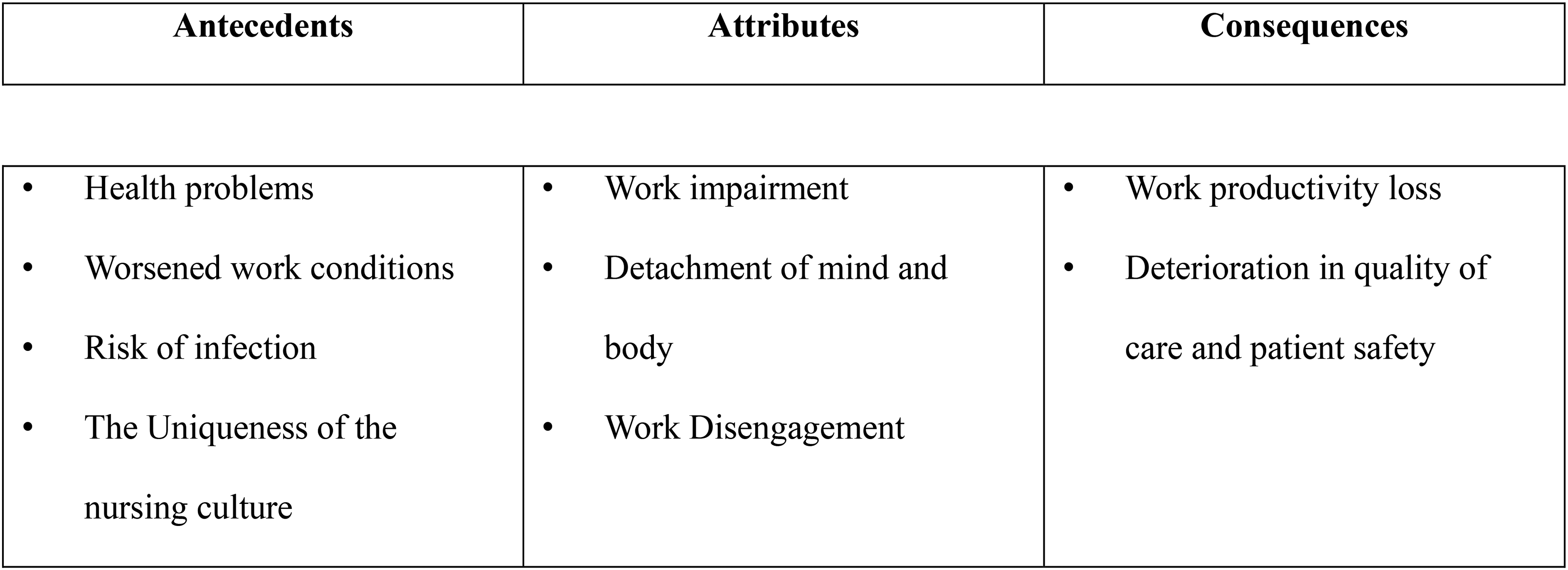
Conceptual Diagram of the Concept.
Data Sources and Collection
The Cumulative Index of Nursing and Allied Health (CINAHL-complete), PUBMED, EMBASE, and Research Information Sharing Service (RISS) were systematically searched using the key search terms: presenteeism AND nurs* AND (COVID-19 OR pandemic). The literature search covered the period from the inception of each database until December2024. The inclusion criteria were articles written in English and Korean, original articles that provided full text, and those that described or studied presenteeism among nurses during the COVID-19 pandemic. Studies on healthcare personnel, including nurses, were also included in the analysis, but were limited to papers that could distinguish and confirm attributes of the concept, antecedents, and/or consequences of presenteeism for nurse. Figure 2 illustrates the flow of the study selection process. A systematic search identified a total of 148 records from four electronic databases: PUBMED (n = 27), EMBASE (n = 98), CINAHL (n = 16), and RISS (n = 7). Following the removal of duplicates (n = 31), nonoriginal articles including abstracts and editorials (n = 8), and records not published in English or Korean (n = 1), 108 records remained for title and abstract screening. Of these, 84 records were excluded for not being relevant to the research topic. The full texts of 24 potentially eligible studies were retrieved, but one report with full text could not be obtained. The remaining 23 full-text articles were assessed for eligibility, resulting in the exclusion of eight studies due to ineligible study populations. Consequently, 15 studies met the inclusion criteria and were included in the final review.

Flow of Study Selection.
Data Analysis Procedure
The nursing theory enables us to understand, explain, and predict nursing phenomena. Therefore, the development of this thesis is directly related to nursing practice and science (Yi et al., 2006). The following steps of Walker and Avant’s (2019) method were used: after selecting the concept of presenteeism in nursing during the pandemic, we established a theoretical foundation for presenteeism in nursing. Thereafter, all the uses of the concept were identified and critical attributes were determined and defined. Finally, we placed the model cases, related, and contrary cases, identified the antecedents and consequences, and clarified the empirical referents.
Results
The results of the concept analysis include the use of the concept, definitions of presenteeism in nursing during the COVID-19 pandemic, its’ attributes, constructed cases (model, contrary, and related cases), antecedents, consequences, and empirical referents.
Uses of the Concept
It is crucial to identify all uses of the concept to examine the essential elements of “presenteeism among nurses during the pandemic” (Supplemental File 1). Presenteeism has been approached from diverse perspectives since the late 20th century. Most definitions have been used as negative perspectives of presenteeism due to loss of productivity. However, Koopman et al. (2002) suggested a more flexible definition: the degree of work performance in the workplace despite having health problems. In other words, decreasing productivity is related to health problems, and this phenomenon occurs when workers attend work but cannot generally perform their duties due to health problems (Lohaus & Habermann, 2019).
Attributes
The attributes of the concept define and differentiate their characteristics (Walker & Avant, 2019).
Work Impairment
Presenteeism occurs when an employee is affected by an illness but remains at work, with the consequent undermining of the performance and quality of services (Alves et al., 2024; Hall et al., 2022; Lui et al., 2018). There is strong support for the need to prevent workers with unfavorable health conditions and impaired workability from working (De Vries et al., 2013). One of the significant causes of workability impairment and job stress is the threat to the physical and mental health of nurses, which causes problems while working (Burton et al., 2004; Hall et al., 2022). Moreover, there is an increased possibility of decreased nursing service quality and difficulty in focusing on nursing duties (Gun et al., 2011). Therefore, presenteeism during the COVID-19 pandemic may have caused reduced concentration in work, which refers to impairment in work (Alves et al., 2024).
Work Disengagement
Healthcare workers who come to the workplace with illnesses are associated with poorer engagement because health affects both the quantity and quality of work, leading to insufficient attention to their jobs (Admasachew & Dawson, 2011). In addition, there is some evidence that healthcare workers with presenteeism are not able to do their work appropriately, and experience high strain, lack of energy, and disengagement from their work (Krane et al., 2014; Pillay et al., 2024). Moreover, the nature of the nursing profession, including their loyalty, together with workforce shortages, has resulted in disengagement among nurses during the pandemic (Pillay et al., 2024).
Detachment Between Mind and Body
Some studies have identified greater physical and psychological detachment among nurses (Laranjeira et al., 2022; Letvak et al., 2012), reflecting a pessimistic condition, including losing one's mind and spirit (Alves et al., 2024), physical and/or psychological fragility, and the knowing-doing gap among nurses (Laranjeira et al., 2022), but they still present in the workplace (Mosteiro-Díaz et al., 2020). Nurses with presenteeism tend to lose “meaning in work” (Lee, 2015). A previous study reported that the essential theme of nurses’ presenteeism was losing their minds (Kim et al., 2016), often leading to the loss of nursing spirit. Presenteeism behaviors may also negatively affect nurses’ mental and physical health (Li et al., 2021).
As a result of the concept analysis, the following definition of “presenteeism among nurses during the pandemic” was developed: A state of work impairment characterized by a detachment between mind and body and disengagement, occurring when nurses are physically present at work.
Antecedents
Antecedents are factors that precede the occurrence of the concept (Walker & Avant, 2019).
Health Problems. Presenteeism can generally be defined as employees going to work sick or tired, remaining on the job, and not being productive as usual. The major contributors to this phenomenon are stress, depression, illness, headaches, or other disorders (Laranjeira et al., 2022; Lowe, 2004). It is believed that a person's ability to work is significantly affected by their health status. Importantly, worker health has been found to directly affect their productivity, especially in professions such as nursing, which have high physical demands in the workplace (Turpin et al., 2004). Several health problems cause presenteeism, such as allergic reactions, colds, pregnancy, chronic conditions, and mental health disorders (Letvak et al., 2012). Chronic conditions are likely to have a more significant long-term impact on workers, especially in terms of costs (Letvak & Ruhm, 2010). In fact, the previous review (Lui et al., 2018) suggested that illnesses associated with presenteeism are more prevalent than illnesses related to absenteeism.
Worsened Work Conditions. Presenteeism can also be defined as the presence of excessive working hours in the workplace as an expression of commitment or a way to cope with job insecurity (Lowe, 2004; Mosteiro-Díaz et al., 2020; Nelson & Rushton, 2021). Moreover, negative work conditions (Mosteiro-Díaz et al., 2020; Pillay et al., 2024) include a lack of support (Laranjeira et al., 2022; Schulze et al., 2022), impaired safety (Zhang et al., 2024), and high workload with pressure (Laranjeira et al., 2022; Schulze et al., 2022; Yaghoubi et al., 2022). Therefore, despite their physical presence at work, these employees do not function at peak capacity (Rainbow, 2019). Furthermore, the pandemic dramatically worsened work conditions among nurses (Laranjeira et al., 2022; Mosteiro-Díaz et al., 2020; Silva Cunha et al., 2023).
Risk of Infection. During the pandemic, nurses were at a high risk of infections and may have spread the infection to patients and coworkers (Basar et al., 2024; Bußmann & Pomorin, 2023; Schulze et al., 2022; Silva Cunha et al., 2023). Working with respiratory disease symptoms was common, with as many as 92% of healthcare workers reporting working while being symptomatic (Jiang et al., 2019). This situation was caused by employees working despite health problems (Lohaus & Habermann, 2019). The growing number of patients, emotional loss of colleagues, and risk of infection caused by the COVID-19 pandemic have increased healthcare workers’ vulnerability to burnout and fatigue, resulting in high presenteeism (Leo et al., 2021).
The Uniqueness of Nursing Culture. Nurses generally experience feelings of guilt and shame when they recognize that they are unable to perform their duties properly (Nelson & Rushton, 2021). Nurses with a strong commitment to their patients and colleagues often sacrifice personal health and well-being (Cheslack-Postava et al., 2022; Laranjeira et al., 2022; Mosteiro-Díaz et al., 2020). Nursing profession is associated with a culture of teamwork, loyalty to colleagues, and professional identity, which fosters the supernurse phenomenon even when nurses feel physically and mentally unable to work (Mosteiro-Díaz et al., 2020). Moreover, nurses continued to work during the crisis because of feelings of responsibility and professionalism while suffering from physical and mental symptoms (Li et al., 2021). A previous study reported that nursing managers also experienced ethical dilemmas during the COVID-19 pandemic regarding risking health and safety of the nurses for the sake of ethical commitment to patient care (Silva Cunha et al., 2023).
Consequences
There are healthcare organizational aspects and personal consequences of nurses’ presenteeism as they comprise the most significant number of healthcare professionals. Nursing performance can affect the quality of care in various ways, including increased occupational accidents, threats to patient safety, satisfaction and outcomes, reduced productivity, and increased health-related costs.
Work Productivity Loss
Several studies have reported that long-term presenteeism could affect productivity by increased absence rates (Alves et al., 2024; Brborović et al., 2017; Koopman et al., 2002). This phenomenon tends to be more common in the nursing profession, especially due to current workforce shortage in public health emergencies (Kinman & Grant, 2021). The importance of managing presenteeism relies primarily on the associated reduced productivity at work, and its costs have been estimated using both medical expenses and sick leaves (Lui et al., 2018). Moreover, the costs associated with presenteeism are more difficult to track than those associated with absenteeism. A nurse who calls in sick could be replaced by other nurses, but a nurse with presenteeism might not fully meet patient demands (Letvak et al., 2012). They remain at work, but are not productive because of excessive stress, depression, illness, or other health problems. The presence of ill or medically impaired care personnel results in high costs due to decreased productivity in the workplace (Graf et al., 2016).
Deterioration in Quality of Care and Patient Safety
Presenteeism affects the quality of work-related outcomes as it can cause errors in tasks due to a reduction in attention (Lui et al., 2018). Nurses’ poor performance at work can have serious consequences for patient safety and can even be a hazard of contagion of illnesses for patients and visitors (Rainbow, 2019). Specifically, presenteeism is associated with increased medication errors, patient falls, infections, and lower self-reported quality of care. Hence, healthcare managers need to recognize that poor worker health affects not only productivity but also employee and patient satisfaction and quality of care (Chapman, 2005; Laranjeira, 2013; Lowe, 2004).
Constructed Cases
The constructed cases define a concept by describing its existence in a model case. In contrast, the absence of a concept is explained and a related topic reveals the differences between the concept and closely associated concepts (Walker & Avant, 2019).
Model Case
Ms. J is a registered nurse working in an intensive care unit (ICU). Post pandemic, the ICU workload became unimaginable. Recently, she experienced frequent abdominal pain due to stress caused by excessive work, which had worsened since the previous night, but she could not be absent from work that day. She had already requested all breaks and felt afraid of harming her colleagues. Although she started work, she still felt terrible with continuous discomfort and decided to leave the workplace and lie in bed (Disengagement). She could not reach the patient on time despite continuous alarm bell calls and missed the regular medication time. Moreover, she got irritated by an assigned patient who asked repeated questions about his progress (Work impairment). After returning to the nurses’ station, she stopped making nursing records, due to overwhelming depressive emotions regarding the meaning of her work life. She also missed asking about the patient's status when the doctor in charge came to the nurses’ station (Detachment of mind and body).
Contrary Case: Absenteeism
A newly graduate nurse, Ms. L, was caught by a senior nurse in the previous week. She experienced extreme depressive emotions during the weekend, and was absent without notice this week. Due to the numerous nursing duties of new COVID-19 inpatients in the ward, there was a heavy workload. Ms. L's colleagues had to assume her duties.
Related Case
Ms. K, who worked in the emergency room, experienced severe job stress. Patients and their families were extremely temperamental because of the uncertainty of infectious diseases. Incredibly, she felt severe physical and mental exhaustion from Mr. P, a newly hospitalized patient, with repeated and endless claims of nursing services. In addition, she suffered from sleep disorders and migraines because she had recently worked night shifts. She felt disappointed in changing brisk and coldhearted attitude as a nurse.
Empirical Referents
Empirical referents are processes that measure the concept (Admasachew & Dawson, 2011). All measures of presenteeism are self-reported survey instruments. Several well-established presenteeism scales are widely used across many workplaces, regardless of profession. For example, some scales have been designed to assess the degree of difficulty in performing specific tasks, while others focus on productivity loss by determining the number of times problems occur (Prasad et al., 2004).
The Stanford Presenteeism Scale, developed by Koopman et al. (2002), has been considered as the most reliable instrument to test presenteeism as the intrinsic capacity for performing while being distracted (Laranjeira, 2013). The scale assesses the relationship between presenteeism, health problems, and productivity in working populations and measures the workers’ ability to concentrate and accomplish work-related tasks despite health problems. It embodies the concept of presenteeism when measuring the cognitive, emotional, and behavioral aspects of concentration. This encompasses the processes and outcomes of work, and the worker's perception of the ability to overcome the distraction of a health problem while accomplishing work-related goals. Based on these basic constructs, it may also be possible to develop a new tool that reflects the concepts related to presenteeism in a pandemic situation additionally derived from this study.
Discussion
In this study, the identified attributes of the presenteeism were work impairment, disengagement, and detachment of mind and body among nurses in the pandemic. During the pandemic, these attributes warranted heightened caution and thorough consideration across multiple dimensions of healthcare practice and policy. The COVID-19 pandemic revealed an increase in presenteeism among nurses (Galon & Navarro, 2023). Nurses faced heightened risks of COVID-19 infection and were subjected to increased pressure to work during public health emergencies due to high workloads, extended hours, staffing shortages, and a strong sense of professional duty. As a result, many continued to work despite experiencing work impairment, disengagement, and a detachment of mind and body, driven by both organizational and personal stressors during the pandemic. This suggests that the key attributes of presenteeism became more pronounced during the COVID-19 pandemic.
A qualitative study on nurse presenteeism during the pandemic identified a worsening trend among nursing professionals in the context of COVID-19. The study also highlighted institutional pressure to return to work despite illness, alongside experiences of mental distress, and feelings of devaluation and dehumanization in the workplace—even amid their critical contributions during the crisis (Galon & Navarro, 2023). According to a study conducted by White-Means et al. (2022) involving nurses and therapists in the Memphis area, 77% of respondents self-reported experiencing presenteeism, and most indicated that they continued to perform their duties despite reduced concentration or mental distraction. These findings suggest that presenteeism among healthcare providers may increase in situations involving serious patient harm or disease transmission, particularly during pandemics (Baldonedo-Mosteiro et al., 2020). In this context, the severity and characteristics of presenteeism among healthcare professionals, including nurses, during outbreaks of infectious diseases have led to the emergence of an additional concept: “infectious presenteeism” (Challener et al., 2021).
Furthermore, this study identified several antecedents of nurses’ presenteeism during the pandemic—such as health problems, worsened working conditions, risk of infection, and the distinctive characteristics of the nursing culture. Additionally, the consequences identified were work productivity loss and deterioration in the quality of care and patient safety. When the definition of presenteeism is combined with its antecedents and consequences, it can provide a more useful definition of presenteeism in nursing during the COVID-19 pandemic. This study is significant in that it systematically clarifies the concept of presenteeism as experienced by nursing professionals who were burdened with excessive frontline responsibilities during the COVID-19 pandemic. The results of this concept analysis contribute to a deeper understanding by healthcare organizations of how to foster a healthy work environment for nursing professionals.
Previous studies have shown that such presenteeism can serve as a risk factor for absenteeism, which often manifests as sick leave (Yaghoubi et al., 2022). Both absenteeism and presenteeism have been associated with job dissatisfaction, exhaustion, and burnout (Silva Cunha et al., 2023). Among these, nurses’ burnout is a concept that is frequently addressed, and it should be described as a serious condition of overwork that can lead to physical or mental illnesses, such as lethargy, anxiety, or depression (Guixia & Hui, 2020). According to the research from Hämmig (2024), burnout and work disengagement are both considered long-term responses to prolonged work-related stress. While high job demands and strain are primarily associated with exhaustion and burnout, a lack of job resources tends to lead to demotivation and disengagement over time. Accordingly, the conceptualization of presenteeism proposed in this study diverges to some extent from related constructs such as absenteeism, burnout, and work disengagement, both in terms of its theoretical scope and its positioning as a potential antecedent or outcome within occupational health frameworks.
The global health crisis caused by the COVID-19 pandemic has increased interest and the need to understand nurses’ work–life balance. According to the International Nursing Council, nurses have been the most affected frontline workers during the pandemic (ICN, 2020). This issue was especially relevant during the COVID-19 pandemic, when nurses were on the frontlines in the healthcare sector. As the number of patients increased, nurses’ workload increased, and their health threatened (Shan et al., 2020). The pandemic has also heightened the need for increased awareness and understanding of nurses’ presenteeism (Johnson et al., 2021; Meyer et al., 2021). Nurses’ mental and physical well-being has been negatively affected during this time, as many experienced extreme stress, burnout, and the risk of infection (Basar et al., 2024). Physical or psychological fragility can impair quality of care and patient safety (Alves et al., 2024; Rainbow, 2019). Although presenteeism among nurses during the pandemic is a crucial issue that affected their job performance and productivity, not much research has targeted nurses’ presenteeism in this period.
Nursing professionals constitute a significant healthcare workforce. The nursing shortage problem in the practical field reveals no substitution options for nurses with health problems (Kim et al., 2014). Presenteeism among nurses contributes to various personal consequences, including burnout, deteriorating mental health, and increased intention to leave the profession (Basar et al., 2024; Li et al., 2021; Silva Cunha et al., 2023; Zhang et al., 2024;). Moreover, evidence has consistently shown that nurses’ presenteeism is associated with long-term adverse patient outcomes and increased medical costs (Hall et al., 2022; Laranjeira et al., 2022; Letvak et al., 2012; Li et al., 2021; Mosteiro-Diaz et al., 2020; Yaghoubi et al., 2022). Coming to work while in an unhealthy condition can create imbalances in both individual and organizational health. From the nurse's individual perspective, it may decrease job satisfaction and adversely impact mental and social well-being. From the organizational standpoint, it can undermine nurses’ work performance and contribute to a decline in the quality of healthcare service (Kim & Ryu, 2015). Therefore, interventions aimed at reducing presenteeism are essential for improving the quality and cost-effectiveness of nursing services (Rainbow & Steege, 2017). The loss resulting from presenteeism among nurses is complicated, essential for dealing with the declining quality of nursing services, and is connected to patients’ health outcomes (Gun et al., 2011). In other words, nurses’ presenteeism is not merely a personal issue but is closely linked to patient outcomes, organizational performance, and the broader national healthcare system. Therefore, the health status of nurses—an essential factor influencing the quality of nursing services, organizational productivity, and healthcare competitiveness—should not be overlooked (Kim & Ryu, 2015).
A particularly important factor that should be addressed in relation to nurses’ presenteeism is the unique professional culture that discourages absenteeism and does not readily tolerate work interruptions, even in the presence of personal health problems. Previous studies have shown that factors contributing to nurses’ presenteeism may include fear of disappointing colleagues and losing respect, and feelings of pressure (Kang et al., 2024). According to a study by Nelson and Rushton (2021), many nurses reported feeling guilty about being absent from work due to health problems, as they believed their absence might place a burden on colleagues and pose a risk to patient care. Nurses may experience guilt due to the potential harm their absence could cause to patients and colleagues, and may perceive absence as a violation of core professional values. Guilt arises from a discrepancy or conflict between personal values and beliefs. When guilt reaches an unhealthy threshold, it may manifest as shame. This mechanism can create a discrepancy between nurses’ genuine emotions and the emotions they are expected to display, leading to chronic psychological stress (Kinman, 2019).
Presenteeism is a phenomenon that must be diagnosed and treated regardless of whether it indicates a problem in individual employees or in the workplace environment. There is strong evidence of an unfavorable psychosocial work environment, particularly among nurses. A previous study concluded that a shortage of the nursing workforce may be the primary cause of the high workload and strict leave system in the nursing profession, and to some extent, nurses usually take those for granted and sacrifice their health to complete their work (Shan et al., 2020). Gerlach et al. (2024) reported factors influencing presenteeism, including workload, team culture, job insecurity, and leadership practices, through a systematic review of the nursing profession. Highly demanding jobs where workers have little control, increase stress and hence risk one's mental and physical health (Rainbow & Steege, 2017). Another significant factor impacting nurses’ presenteeism is emotional exhaustion. Nurses suffered more from work and home interferences, poorer health, feelings of emotional exhaustion, leading to increased presenteeism (Boumans & Dorant, 2014).
Implications for Practice
This study highlights that the concepts of presenteeism among nurses during pandemic era. Previous reviews have shown that the prevalence of presenteeism among nurses ranged from 37.9% to 55.3% depending on the settings, with a global pooled prevalence of 49.2% (Min et al., 2022). The COVID-19 pandemic revealed a worsening of presenteeism in nursing practice (Galon & Navarro, 2023), by ranging between 32% and 94% (Gerlach et al., 2024). The crisis has presented new health challenges for worldwide healthcare delivery systems, including work productivity loss—presenteeism.
This study clarifies the concept, antecedents, and consequences of presenteeism in nursing among COVID-19 pandemic. The results of this concept analysis increase healthcare organizations’ insight into providing a healthy work environment to nursing professionals. Among the antecedents, the nursing leaders should focus on the uniqueness of the nursing culture as well. That is, the results of this study can be used as the scientific basis for planning improvement methods such as screening and early intervention (support and assistance) for nurses’ physical and mental health problems, improvement of the rest system, and provision of social support in organizations. In the current situation, where there is concern about another pandemic after a long pandemic, there is a need for attention and multifaceted improvement in nurses’ presenteeism and related factors. Through this, we hope to reorganize the global healthcare system and prepare for another pandemic.
This concept analysis has several limitations. First, this study was conducted based on existing studies written in English and Korean. However, it is also necessary to obtain more comprehensive and generalizable concepts by including analyses of studies written in other languages. Second, this study analyzed studies conducted during the pandemic, and the combination of concepts extracted may overinterpret the antecedents, consequences of subfactors on presenteeism in the specific periods. In addition, this concept analysis was conducted by two independent researchers, and may include some bias—selection, extraction, and analysis bias. Despite these risks, the analysis was conducted systematically and reviewed by the authors.
Conclusion
This article bridges the gap in the understanding of the concept of presentism among nurses during the COVID-19 pandemic. Presenteeism among nurses is a complex phenomenon that can influence their job satisfaction and patient health outcomes. In particular, the COVID-19 pandemic is considered a strong factor that significantly influenced nurses’ presenteeism. Managers of healthcare organizations and nursing units should be aware and must try to prevent nurses from working when afflicted with health problems by adopting organizational policies to treat their conditions effectively. Additionally, nurses should be appropriately informed about presenteeism and its effects. The results of this study can enable theoretical discussions and further research on nurses’ presenteeism. Furthermore, it will be possible to improve healthcare policies and organizational cultures for nurses after the pandemic.
Supplemental Material
sj-docx-1-son-10.1177_23779608251356385 - Supplemental material for Concept Analysis of Presenteeism Among Nurses During the COVID-19 Pandemic
Supplemental material, sj-docx-1-son-10.1177_23779608251356385 for Concept Analysis of Presenteeism Among Nurses During the COVID-19 Pandemic by Jiyeon Jung and Jihyun Moon in SAGE Open Nursing
Footnotes

Author Contributions
conceptualization or/and methodology: Jung, J; data curation or/and analysis: Jung, J and Moon, J; investigation: Jung, J and Moon, J; project administration and/or supervision: Jung, J; resources or/and software: Moon, J; validation: Jung, J and Moon, J; visualization: Moon, J; writing: original draft or/and review and editing: Jung, J and Moon, J.
Funding
The authors received no financial support for the research, authorship, and/or publication of this article.
Declaration of Conflicting Interests
The authors declared no potential conflicts of interest with respect to the research, authorship, and/or publication of this article.
Ethics Statement
We declare that ethical approval is not applicable, as this manuscript does not involve research involving human participants or animal subjects.
Supplemental Material
Supplemental material for this article is available online.
References
Supplementary Material
Please find the following supplemental material available below.
For Open Access articles published under a Creative Commons License, all supplemental material carries the same license as the article it is associated with.
For non-Open Access articles published, all supplemental material carries a non-exclusive license, and permission requests for re-use of supplemental material or any part of supplemental material shall be sent directly to the copyright owner as specified in the copyright notice associated with the article.
