




Abstract
Background
The integration of artificial intelligence (AI) into education has the potential to revolutionize teaching and learning practices, especially in nursing education, which combines theoretical and practical knowledge. However, challenges such as infrastructural limitations, ethical considerations, and a lack of educator preparedness hinder its widespread adoption in settings with limited access to technology, insufficient funding, and inadequate training opportunities for educators.
Aims
This study explores nursing educators’ perspectives on integrating AI into academic settings.
Methods
Using the Technological Pedagogical Content Knowledge framework, this qualitative study employed a phenomenological approach to understand nursing educators’ lived experiences. Data were collected through 14 semistructured interviews and three focus group discussions with 16 participants from three nursing colleges in Bangladesh. Thematic analysis was conducted to identify key insights and trends.
Results
Nursing educators recognized the potential of AI tools, such as adaptive learning platforms, virtual simulations, and predictive analytics, to enhance teaching efficiency, personalize learning, and engage students. However, barriers such as insufficient training, infrastructural challenges, and ethical concerns related to data privacy, algorithmic bias, and AI-driven decision making were highlighted. Thematic analysis revealed five major themes: (1) perceived benefits of AI, (2) barriers to AI integration, (3) ethical considerations in AI use, (4) educator readiness and adaptation, and (5) AI as a tool for personalized learning. Many educators expressed a need for professional development and institutional support to effectively integrate AI technologies. Strategies for overcoming these challenges included targeted training programs, ethical guidelines, and addressing disparities in resource distribution.
Conclusions
AI holds transformative potential for nursing education, offering opportunities to enhance teaching and learning. However, its effective integration requires addressing educators’ readiness, ethical challenges, and resource limitations. These findings underscore the importance of equipping nursing educators with the necessary competencies to prepare future nurses for AI-enhanced clinical environments, thereby bridging education with evolving healthcare practice.
Introduction
The rapid advancement of artificial intelligence (AI) is transforming numerous fields, including education, where it has the potential to significantly enhance teaching and learning practices (Alam, 2021). In particular, AI is revolutionizing the way educators design curricula, assess student performance, and provide tailored feedback, making education more accessible and effective (Labrague et al., 2023). Nursing education, which combines theoretical knowledge with hands-on practical training, stands to benefit greatly from the integration of AI technologies (Luo et al., 2024). The increasing complexity of healthcare demands that nursing students acquire not only foundational medical knowledge but also critical thinking, clinical decision making, and problem-solving skills. AI-driven tools are playing a crucial role in bridging this gap by offering dynamic learning experiences that adapt to individual student needs (Abujaber et al., 2023). Tools such as adaptive learning platforms, virtual simulations, automated grading systems (Lifshits & Rosenberg, 2024), and predictive analytics are already reshaping the educational experience by enabling personalized instruction, interactive learning environments, and data-driven decision making (Buchanan et al., 2021).
For instance, AI-powered virtual simulations provide students with an immersive, risk-free environment to practice clinical skills, bridging the gap between theoretical knowledge and real-world application (Hwang et al., 2024). These simulations can replicate diverse clinical scenarios, allowing students to develop competencies in patient care, emergency response, and critical medical interventions (Seth et al., 2023). Moreover, AI-driven feedback mechanisms help learners identify areas for improvement, thereby promoting continuous skill enhancement (Zuhair et al., 2024). However, despite the promise of these technologies, integrating AI into nursing education poses distinct challenges, particularly in resource-limited settings (Abdelwahab et al., 2024).
Review of Literature
Globally, nursing educators are beginning to adopt AI tools to enhance student engagement and improve learning outcomes (Hwang et al., 2024). Adaptive learning platforms like Smart Sparrow and DreamBox adjust instruction to meet individual learning needs (Harmon et al., 2021), while virtual simulations such as Shadow Health and SimX allow students to engage with realistic scenarios that develop their clinical decision making and technical skills (De Gagne, 2023). Automated grading systems, such as Gradescope, facilitate faster and more objective assessments, providing timely feedback to students (O’Connor et al., 2023). Predictive analytics tools like Brightspace Insights help educators monitor performance and identify areas where students may need additional support (Georgieva-Tsaneva et al., 2024). These tools demonstrate how AI is revolutionizing education by fostering greater personalization, efficiency, and adaptive learning experiences (Gunawan et al., 2024).
Despite these advancements, the integration of AI in nursing education is accompanied by significant challenges (Ronquillo et al., 2021). Concerns surrounding data privacy, algorithmic bias, and ethical implications of AI-driven decision making remain substantial hurdles (Rony, Parvin, & Ferdousi, 2024). Additionally, many nursing educators lack the technical training necessary to implement AI tools effectively (Krueger et al., 2024), highlighting the need for professional development programs that equip educators with the knowledge and confidence to integrate AI into their teaching practices (Charow et al., 2021). Furthermore, disparities in technological access between urban and rural institutions exacerbate existing educational inequalities, emphasizing the importance of context-sensitive AI integration strategies (Harmon et al., 2021; Labrague & Sabei, 2024).
AI has the potential to address some of these challenges by enhancing efficiency, reducing administrative burdens, and providing tailored learning experiences (Rony, Kayesh, et al., 2024; Wangpitipanit et al., 2024). For example, automated systems can alleviate educators’ administrative workload, allowing them to focus more on mentorship and personalized instruction (Seo & Kim, 2024). Similarly, AI-driven analytics can help identify struggling students, enabling timely interventions to improve learning outcomes (Hwang & Chien, 2022). However, despite the increasing adoption of AI in nursing education, there is a limited understanding of how nursing educators perceive and integrate AI into their teaching practices, particularly in resource-constrained settings. Therefore, this study aimed to explore nursing educators’ perspectives on AI integration, focusing on both opportunities and barriers to adoption, to provide insights that inform effective implementation strategies.
Methodology
Conceptual Framework
This study utilized the Technological Pedagogical Content Knowledge (TPACK) framework (Mishra & Koehler, 2006) as a guiding lens to understand how nursing educators incorporated AI technologies into their teaching practices. The TPACK framework emphasized the interplay between three core components: technological knowledge (TK), pedagogical knowledge (PK), and content knowledge (CK; Figure 1). In this study, TK was operationalized as educators’ awareness, familiarity, and application of AI tools such as adaptive platforms, virtual simulations, and predictive analytics (Mishra & Koehler, 2006). PK referred to their instructional strategies, such as how they engaged students using AI-enhanced tools, adapted teaching methods, and managed classroom dynamics (Voogt et al., 2013). CK was defined as their domain-specific expertise in nursing and their ability to align AI technologies with curricular goals, clinical competencies, and professional standards (Ait Ali et al., 2023). The integration of these domains helped to explore how nursing educators perceived and adapted to AI's potential to enhance teaching effectiveness, student engagement, and the overall learning experience (Lin et al., 2015). By employing this framework, the study assessed readiness, challenges, and strategies for AI integration, ensuring findings were grounded in a holistic understanding of the complexities involved in incorporating AI into nursing education.

Conceptual Framework for AI Integration in Nursing Education using the TPACK Model. The Integration of AI in Nursing Education Necessitates a Comprehensive Combination of Technological, Pedagogical, and Content Knowledge.
Research Design
This study adopted a qualitative research design with a phenomenological approach (Thomas, 2005) to explore nursing educators’ lived experiences and perspectives on the integration of AI into academic settings. The phenomenological approach was well suited for capturing the depth and complexity of participants’ beliefs, attitudes, and experiences, as it emphasized understanding phenomena through the perceptions of individuals directly involved. The Standards for Reporting Qualitative Research guidelines (Supplementary file S1) were followed to ensure rigor, transparency, and comprehensiveness throughout the research process (O’Brien et al., 2014). Employing this design enabled the identification of nuanced insights crucial for understanding how AI could be effectively integrated into nursing education.
Population and Sampling
The target population consisted of nursing educators actively employed in academic institutions offering nursing programs. To ensure participants’ relevance to the study's focus, the inclusion criteria required individuals to have a minimum of one year of teaching experience in nursing education. Educators with direct AI exposure or those with substantial AI familiarity but without prior practical exposure were included. Purposive sampling was employed to recruit participants who could provide rich, detailed information relevant to the study's aims. The selection of nursing colleges followed a two-step process: first, institutions with advanced classroom technological facilities were identified; then, from this pool, two nursing colleges in Dhaka and one nursing college in the Chittagong division were randomly chosen. This approach ensured that participants had direct experience with or knowledge of AI in education. The rationale for selecting institutions with advanced technological infrastructure was to ensure participants had sufficient exposure to AI-related tools and environments, enabling them to provide informed insights into its integration in academic settings. While this approach supports the study's objective, it may limit the generalizability of findings to institutions with fewer technological resources.
Following the selection of institutions, potential participants were identified through faculty lists and referrals from department heads. Invitations were sent to eligible educators, and those willing to participate were recruited. Efforts were made to include educators from diverse academic institutions, roles, and levels of familiarity with AI technologies to capture a wide range of perspectives. The sample size was determined by data saturation—the point at which no new themes or insights emerged from the data. Specifically, data saturation was considered achieved when three consecutive interviews and one focus group yielded no new codes or conceptual categories during the coding process. A total of 30 participants (14 interviewees and 16 focus group participants) were included, which aligns with established norms in phenomenological studies, as supported by previous research that employed similar sample sizes to explore lived experiences in depth (Engberink et al., 2020; Rony, Parvin, et al., 2024). This sample was adequate to capture a diverse range of perspectives while allowing for meaningful thematic analysis and manageable data interpretation.
Development of Interview Guide
The interview guide (Supplementary file S2) was created following an in-depth review of existing literature on the use of AI in education, nursing, and higher education contexts. The questions were structured to investigate three key areas: (1) participants’ knowledge and experiences with AI technologies, (2) their views on the advantages and challenges of integrating AI, and (3) their readiness and suggestions for incorporating AI into nursing education. To ensure the guide's clarity, relevance, and appropriateness, a pilot test was conducted with a small group of participants (Figure 2). Feedback from this process was used to refine and improve the questions.

Data Management Flowchart. The Flowchart Illustrates the Data Management Process, Including Sampling, Data Collection, Trustworthiness Measures, and Thematic Analysis for Qualitative Research.
Data Collection
Data for the study were gathered through a combination of semistructured interviews and focus group discussions. A total of 14 semistructured interviews were conducted between 10 July 2024 and 30 September 2024, offering participants the opportunity to share their experiences and perspectives in a manner that was both focused and adaptable. To maintain consistency across interviews while allowing for the exploration of emerging themes, an interview guide was developed. This guide featured open-ended questions designed to gather insights into participants’ views on AI integration, its potential benefits and challenges, and their readiness to incorporate AI into their teaching practices. Depending on participant preference, interviews were conducted either in person or virtually via Zoom. Each session, lasting approximately 50–60 min, was audio-recorded with participants’ consent to ensure accurate transcription and analysis.
In addition to individual interviews, focus group discussions were conducted to encourage interaction and the sharing of ideas among 16 participants. These discussions served as a dynamic platform for exploring collective experiences and generating shared insights. Three focus group sessions were conducted, with Group A consisting of four participants, Group B consisting of five participants, and Group C consisting of seven participants. Each session was moderated by the researcher using a structured guide to maintain focus and productivity during the discussions. Audio recordings were made of all sessions, and field notes were taken to document nonverbal cues and group dynamics. To express appreciation, participants were given a small gift box upon completing their participation.
Data Analysis
The data analysis followed a structured qualitative approach to ensure rigor and transparency. The process began with transcription and repeated reading of interview transcripts and field notes to achieve familiarity with the data (Oluwafemi et al., 2021). Significant statements and phrases were coded to identify key ideas and concepts. The frequency and recurrence of these codes were carefully analyzed to highlight predominant themes emerging directly from participants’ quotes. These codes were subsequently grouped into categories based on their similarities and conceptual relationships. To resolve discrepancies in coding or theme identification, two researchers independently coded the data and compared results. Any differences were discussed and reconciled through consensus, and when necessary, a third reviewer was consulted to ensure consistency and accuracy.
To ensure alignment with the conceptual framework, the coding and theme development process were guided by the components of the TPACK model—TK, PK, and CK. This deductive orientation helped map emergent themes to the relevant knowledge domains, ensuring that findings were grounded in and interpreted through the lens of the TPACK framework. Themes and subthemes were then systematically derived from the most frequently occurring codes, providing a clear representation of the educators’ experiences and perspectives regarding AI integration. This systematic approach resulted in a comprehensive thematic framework that clearly reflected the participants’ views.
Trustworthiness
To ensure trustworthiness, this study implemented rigorous and transparent research methods (Supplementary file S3). Credibility was achieved through member checking, where participants reviewed preliminary results to confirm the accuracy of interpretations and the authenticity of their experiences (Motulsky, 2021). Dependability was ensured by maintaining a thorough audit trail that documented research decisions, interview schedules, coding processes, data analysis steps, and any methodological adjustments, promoting both transparency and traceability (Rodgers & Cowles, 1993). Confirmability was reinforced by the researcher's use of a reflexivity journal, which captured personal reflections, observations, and potential biases, ensuring that findings were rooted in participant data rather than influenced by subjective assumptions (Ahmed, 2024). Transferability was supported through detailed descriptions of the study's context, participant characteristics, and findings, allowing readers to evaluate the relevance of the results to other contexts (Tam et al., 2023). Moreover, triangulation was utilized by incorporating multiple data sources, methods, and perspectives, ensuring that the findings were well-rounded, robust, and validated from a variety of angles (Renz et al., 2018). This triangulation process enhanced the depth of the analysis and helped confirm the consistency of key themes across interviews and focus groups, ultimately strengthening the credibility and interpretive accuracy of the study's conclusions.
Ethical Protocols and Participant Safeguards
Prior to the start of the study, participants were provided with comprehensive information about the research, including its objectives, procedures, potential risks, and anticipated benefits. This information was communicated both verbally and in written form. Participation was entirely voluntary, and individuals were assured of their right to withdraw at any point without facing any consequences. Signed consent forms were collected to document informed consent before participation began. To protect participants’ confidentiality and ensure anonymity, all personal information was anonymized, pseudonyms were assigned in transcripts and reports, and any identifiable details were removed. Data were securely stored in password-protected files that were accessible exclusively to members of the research team. Specific measures were also explained to participants to address privacy concerns in group settings, such as during focus group discussions. Moreover, ethical approval for the study was obtained from the Institutional Review Board of the Imperial College of Nursing (Study/HR/NUR05072024), and the research was conducted in accordance with internationally recognized ethical principles, including respect for persons, beneficence, and justice.
Results
Participant Demographics
The qualitative results reveal insights into the perspectives of 30 nursing educators regarding AI integration in education. The mean age was 31.5 years (SD = 5.17), with 80% female and 20% male participants (Table 1). Experience ranged from 2 to 18 years, with an average of 7.3 years. The educators specialized in diverse fields, including medical-surgical nursing, pharmacology, community health nursing, and nursing leadership. Notably, 43% of participants attended AI-related conferences or training, showing greater confidence in AI adoption, while those without exposure expressed concerns about ethical issues, lack of institutional support, and technical challenges. Younger educators (<10 years of experience) were more open to AI tools, while senior educators displayed skepticism regarding its implementation. The thematic analysis identified five major themes and corresponding subthemes based on the most frequent codes derived from participants’ narratives. These findings underscore the need for structured AI training programs, addressing knowledge gaps and fostering confidence in AI's role in nursing education. Institutional policies should ensure equitable access to AI technologies and ethical guidelines for implementation.
Participants’ Characteristics.

Note. AI = artificial intelligence.
Perceived Benefits of AI in Nursing Education
This research highlighted the profound impact of AI integration on teaching efficiency and student engagement within nursing education (Figure 3). The findings indicated that automating administrative tasks, such as grading and tracking student progress, allows educators to allocate greater attention to meaningful responsibilities like developing course content and providing mentorship. Participants emphasized that the automation of routine administrative tasks significantly improved their ability to dedicate time to essential teaching activities. For example, one participant noted, “I don’t have to spend hours grading anymore… AI handles that, so I can focus on helping students understand complex concepts (P9).” This redistribution of workload not only increased productivity but also enabled educators to personalize instructional strategies more effectively. Another educator echoed this perspective, stating, “Hmm, with AI managing student progress has become so much easier. I feel like I have more control over my teaching time (FG1-P1).”
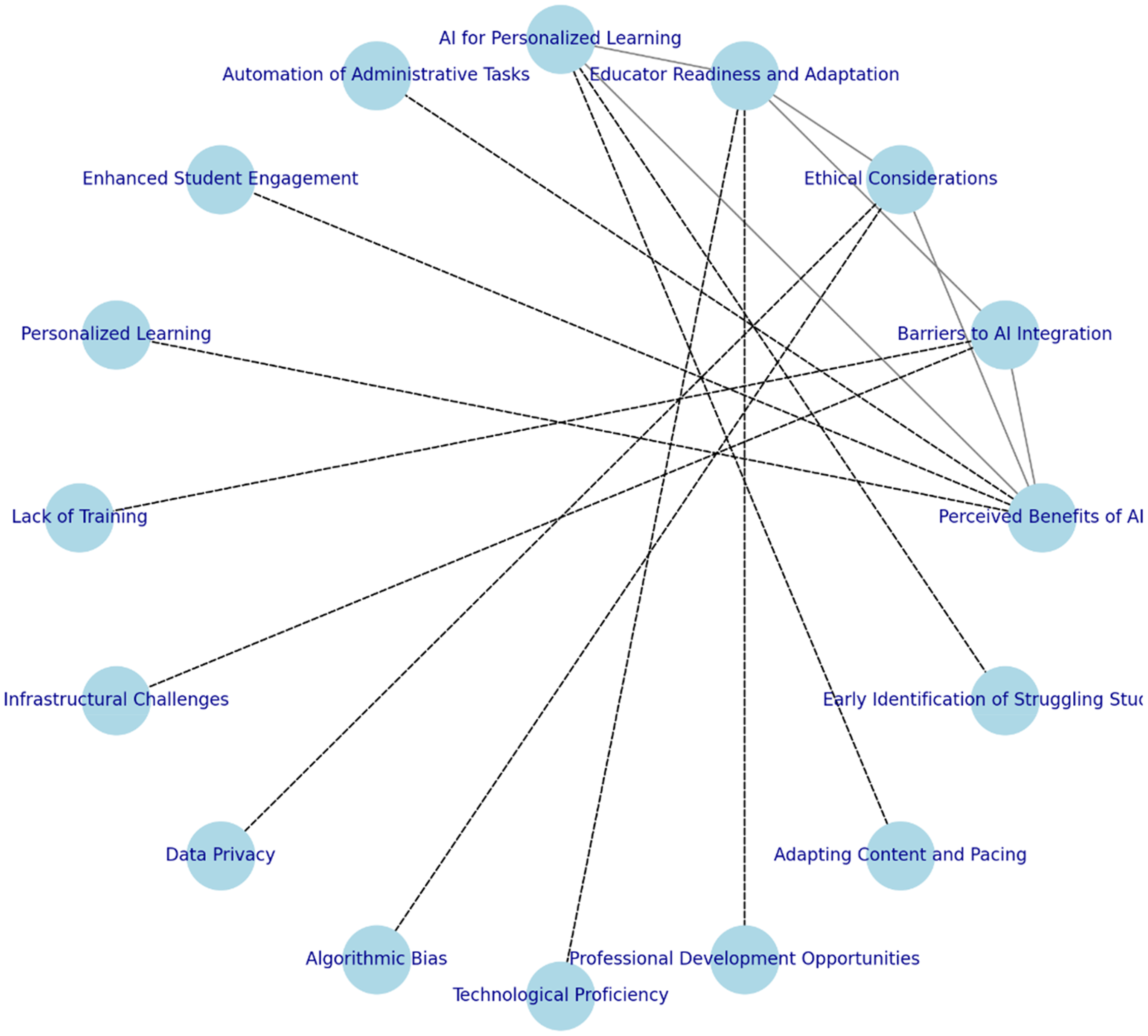
Thematic Map Integration of AI in Nursing Education.
Additionally, AI tools demonstrated substantial improvements in student engagement by providing interactive platforms, such as virtual simulations. Participants emphasized how these immersive tools enhanced the learning experience. As one participant described, “The students love the simulations… It's so much more interactive than just reading about patient scenarios (P5).” Another educator reinforced this perspective, remarking, “AI brings the classroom to life. You can see how students get excited about practicing in a safe, virtual environment (FG2-P2).” Furthermore, AI-driven educational technologies facilitated more dynamic instructional methods, leading to greater student participation. An educator explained this benefit clearly, stating, “It makes lessons more engaging because students can learn by doing rather than just listening to lectures (FG3-P4).” Additionally, educators highlighted AI's supportive role in managing routine administrative tasks, comparing its assistance to having an extra assistant. One participant illustrated this viewpoint, saying, “It's like having an extra assistant who… umm… takes care of the repetitive work while I do what really matters—teaching (P12).”
Barriers to AI Integration
This study revealed several notable challenges associated with incorporating AI into nursing education, primarily related to insufficient training and inadequate infrastructure. Many educators reported lacking sufficient preparation and institutional support to utilize AI tools effectively, leading to uncertainty and hesitation regarding adoption. One participant expressed concern by stating, “I tried exploring an AI tool once, but I gave up because I didn’t understand how to use it (P1)” (Table 2). This lack of preparation results in educators feeling uncertain and reluctant about integrating AI into their teaching practice. Participants also highlighted the absence of comprehensive training, with one explaining, “We want to use AI, but there's no training. It feels like we’re being handed tools without a manual (FG3-P1).” Even educators who demonstrated interest in AI integration reported hesitation due to insufficient guidance and support, exemplified by one participant's comment: “Even if I’m interested, I don’t feel confident enough to start without guidance (FG3-P5).”
Themes and Subthemes of AI Integration in Nursing Education With Educators’ Insights and Codes.

Note. AI = artificial intelligence.
Furthermore, the study revealed that infrastructural limitations, such as outdated classroom technology and unreliable internet connectivity, significantly hinder AI adoption. One educator illustrated these challenges, remarking, “Our classrooms are not equipped for AI tools. It feels like we’re being asked to build a house without bricks (P11).” Technical constraints were further emphasized by participants, who cited unreliable internet connectivity as an impediment. One participant questioned, “The internet connection is so unreliable. Umm… how can we use advanced technology in these conditions? (P4).” These technical inadequacies negatively affect educators’ ability to implement advanced technological tools. Additionally, despite the willingness to integrate AI, resource constraints remain prominent barriers. A participant clearly summarized this issue, stating, “We have the enthusiasm but not the resources. That's the main issue holding us back (P13).” Addressing these identified barriers through targeted professional training, improved technical infrastructure, and resource allocation is critical to facilitating effective AI integration and enabling educators to confidently utilize AI-driven tools in nursing education.
Ethical Considerations in AI Use
The findings indicated that ethical concerns regarding AI use in nursing education primarily revolve around issues of data privacy and algorithmic bias. Educators expressed significant concerns about the collection, storage, and utilization of student data, emphasizing the importance of establishing transparent data governance policies. As one participant noted, “I’m always worried about how student data is stored. Who has access to it, and how is it being used? (P6).” Participants highlighted the risk associated with inadequate data governance, including the potential compromise of sensitive student information, which could ultimately undermine trust in AI technologies. Supporting this viewpoint, another participant remarked, “If we’re not careful, AI could collect too much data about students, and that's a big red flag for me (FG3-P7).” Additionally, participants questioned data accountability practices, as exemplified by one educator who stated, “There's always a question about what happens to the data once it's entered into the system (FG1-P3).”
Participants also raised concerns regarding algorithmic bias, fearing that AI systems might perpetuate existing inequities and result in unfair evaluations of student performance. Emphasizing the importance of fairness, one participant noted, “We need to make sure AI is fair, you know? If it's biased, it could seriously affect certain groups of students (FG3-P6).” Educators further questioned the perceived objectivity of AI systems, with one participant expressing, “Sometimes I wonder if the AI decisions are truly objective or if there's hidden bias we don’t see (P14).” Reinforcing this perspective, another educator warned about possible negative consequences, stating, “A biased algorithm could misjudge students’ abilities, and that's not something we can accept (FG2-P1).” To promote equity in education, it is essential to ensure that AI tools are designed and implemented in a manner that is both fair and free from bias. Addressing these concerns highlights the importance of establishing robust ethical oversight and accountability measures during the development and deployment of AI systems in educational environments.
Educator Readiness and Adaptation
The findings revealed significant variability in educators’ readiness to adopt AI, which was influenced primarily by their technological proficiency and the availability of professional development opportunities. Educators with more technological experience found it easier to engage with AI, whereas others encountered difficulties due to limited prior exposure or training. One participant acknowledged, “Some of my colleagues are naturals with technology, but I feel like I need extra help to keep up (P3).” Similarly, another educator expressed concerns about technological advances, stating, “It's hard to admit, but I sometimes feel intimidated by how fast technology is advancing (FG2-P4).” This variability in technological readiness highlights a notable gap among educators, which participants identified as an issue requiring targeted intervention. As one educator emphasized, “Not everyone is at the same level. Hmm, and that gap, like, really needs to be addressed (P2).”
To bridge this gap, the participants advocated for professional development initiatives, including tailored workshops and structured training sessions, to enhance educators’ proficiency and confidence with AI. The value of practical training was clearly supported by a participant who asserted, “Workshops would make a big difference. If we could practice using AI, more educators would feel confident (FG3-P2).” Another educator further underscored this need, stating, “We can’t just be told to use AI without training. Professional development should be a priority (FG1-P2).” Similarly, the importance of clear instructional sessions was highlighted by another participant who commented, “I’d be more willing to integrate AI if… hmm… there were clear sessions teaching us how to use it (P8).” By fostering a culture of continuous learning, institutions can ensure that all educators, regardless of their initial skill level, are prepared to embrace the opportunities AI offers.
AI as a Tool for Personalized Learning
The findings demonstrated AI's ability to personalize learning experiences and its critical role in early identification of students experiencing academic difficulties, highlighting it as a significant advantage in nursing education. By analyzing individual student data, AI tailors educational content and adjusts pacing according to each student's unique learning requirements, creating a more inclusive and effective educational environment. Participants emphasized this personalization capability, as one participant explained, “AI can, like, figure out exactly where a student is struggling, and it's like having a personal tutor for everyone (FG3-P3).” Another educator further supported this view, stating, “Students learn better when their needs are directly addressed, and AI helps us do that (FG2-P3).” Additionally, one participant specifically praised AI's adaptability, noting, “It's amazing how AI adapts the pace and content based on each student's progress (P7).”
This customization facilitates increased student engagement by allowing learners to interact with educational material suited to their own competency levels, thereby improving comprehension and retention. Participants also underscored AI's capability to quickly detect early signs of student struggles, providing educators with timely opportunities for intervention. One educator described their experience, explaining, “I noticed how quickly the AI flagged a student who wasn’t doing well. It gave us the chance to intervene early (FG2-P5).” Furthermore, participants recognized the value of AI's pattern recognition in educational contexts, with one stating, “AI lets us, umm, see patterns we might miss, like, when students are falling behind before it's too late (FG1-P4).” Another participant emphasized the importance of proactive support, remarking, “The ability to, you know, identify struggling students early can really make a difference in their success (P10).” These capabilities demonstrate AI's potential to promote equity and success in education by providing targeted and personalized assistance.
Discussion
The integration of AI into academic settings has sparked a range of perspectives among nursing educators, encompassing both optimism and caution. Insights from these educators reveal a nuanced understanding of AI's transformative potential, its challenges, and its implications for nursing education (Figure 4). These insights not only emphasize the promises AI holds but also shed light on critical areas requiring attention and development, offering guidance for navigating the evolving educational landscape.

Thematic Tree Depicting the Most Frequent Codes from Participant Quotes on AI Integration in Nursing Education.
Nursing educators widely view AI as a valuable tool for enhancing teaching and learning through its ability to personalize education (Abdelaziz et al., 2024). For example, adaptive learning systems and data-driven feedback mechanisms present opportunities to tailor instruction to meet individual student needs (Cary et al., 2024). Research by Jallad et al. (2024) highlighted how such tools improve knowledge retention and engagement, findings supported by Lukić et al. (2023), who emphasized their capacity to promote inclusivity by accommodating diverse learning styles. Furthermore, adaptive systems can help identify areas where students are struggling, enabling timely interventions and support (Gosak et al., 2024). However, these systems are not without limitations. Educators have expressed concerns that overreliance on AI might lead to passive learning, potentially disengaging students from critical thinking and hands-on problem solving. Athilingam and He (2024) underscored this concern, emphasizing the need to maintain active and analytical engagement as central components of nursing education, even as AI tools become more prevalent.
One significant implication of AI integration is the redefinition of competencies required for future nursing professionals. Technological literacy, data interpretation, and algorithmic decision making are increasingly viewed as essential skills (Rony, Parvin, et al., 2024). Teixeira et al. (2024) argued that these competencies align with broader trends in healthcare that prioritize digital proficiency. Similarly, Hamad et al. (2024) suggested that competency-based frameworks incorporating AI could help bridge the gap between traditional nursing roles and emerging demands in digital health. Despite these benefits, many educators have voiced concerns about their ability to effectively teach these skills (Akutay et al., 2024). Sarman and Tuncay (2024) found that many nursing faculty members lack confidence in integrating AI into their curricula, highlighting the need for targeted professional development programs. Addressing these gaps is crucial to ensure that educators can guide students through the complexities of AI-driven healthcare environments (Krumsvik, 2024).
Ethical considerations also play a key role in discussions surrounding AI integration. Nursing educators stress the importance of preparing students to address ethical challenges such as patient privacy, data security, and algorithmic bias. Srinivasan et al. (2024) emphasized that ethical literacy should be a core component of AI-focused curricula, while Gapp (2023) illustrated how unchecked biases in AI could worsen disparities in patient care. For instance, biased training data could result in algorithms that unfairly disadvantage certain patient populations, a scenario that educators should train students to recognize and address (Simms, 2024). Moreover, educators have highlighted the need for critical awareness of the ethical implications of delegating decision making to AI systems. The call for clear guidelines and policies to govern AI use in educational settings aligns with recommendations from global regulatory bodies, which advocate for a principled and inclusive approach to AI adoption in healthcare education (Ronquillo et al., 2021).
Beyond pedagogy, AI's potential to streamline administrative tasks and enhance curriculum management is particularly appealing (Byrne, 2024). Automated grading systems and predictive analytics tools, for instance, have been identified as valuable for reducing educators’ workloads. Sapci and Sapci (2020) noted that these tools significantly reduce time spent on routine tasks, allowing educators to focus more on providing personalized support to students. Predictive analytics, in particular, has been praised for its ability to identify at-risk students and enable early interventions. Akca Sumengen et al. (2024) supported these findings, highlighting how AI-powered systems can improve academic outcomes by addressing issues before they escalate. Nevertheless, these benefits come with challenges. Technical issues, such as system malfunctions or the need for frequent updates, can disrupt workflows and reduce perceived efficiencies (Migdadi et al., 2024). Educators have also raised concerns about data privacy and the ethical implications of using predictive models, emphasizing the importance of maintaining transparency and accountability in AI applications.
When contextualized within the broader research literature, the findings from this study support existing evidence underscoring both the opportunities and complexities associated with AI integration in nursing education (Ng et al., 2022). Bahroun et al. (2023) highlighted that successful AI implementation necessitates a careful alignment of technological capabilities with educational objectives and institutional strategic goals. This perspective aligns closely with educators’ advocacy for strategic planning and stakeholder collaboration identified in previous studies (Rony, Numan, et al., 2024). For example, achieving effective AI integration requires not only adequate technological infrastructure but also fostering a cultural shift within educational institutions to embrace innovation without compromising core pedagogical values (Barbosa et al., 2024). Such an alignment is crucial to ensure that AI technologies augment rather than supplant traditional educational practices.
Furthermore, the findings of this research reinforce the notion that AI holds transformative potential, particularly in facilitating innovative and enhanced learning experiences. Virtual simulations powered by AI technologies have demonstrated effectiveness in creating realistic and immersive learning environments for nursing students to develop clinical competencies. A study conducted by Hwang et al. (2020) provided empirical support for the effectiveness of AI-driven simulations in improving students’ self-confidence and procedural competence, effectively narrowing the gap between theoretical classroom instruction and real-world clinical application. These results mirror nursing educators’ enthusiasm for utilizing AI to advance experiential learning opportunities (Ahmed et al., 2024). Nevertheless, the substantial financial investment required for adopting advanced AI tools remains a significant concern for many educational institutions, especially those with limited financial resources (Krumsvik, 2024). To address these financial barriers, it is essential to identify viable funding avenues and pursue collaborative partnerships with technology vendors to facilitate greater accessibility to AI solutions (Warghane & Singh, 2024).
Strengths and Limitations of the Study
This study provides important insights into nursing educators’ perspectives on the integration of AI into academic environments, utilizing a robust methodological approach and a well-grounded conceptual framework. By employing the TPACK framework, the research effectively captured the complex interplay between TK, PK, and CK. The use of a phenomenological approach facilitated an in-depth understanding of educators’ lived experiences, ensuring that the findings reflected genuine and nuanced viewpoints. The inclusion of participants from multiple institutions contributed to the transferability of the findings, while the credibility of the study was reinforced through member checking and the use of an audit trail to maintain transparency.
Nevertheless, certain methodological considerations should be acknowledged. While the qualitative design provided rich and detailed data, it limits the extent to which findings can be generalized to larger populations. This limited generalizability means the findings should be cautiously applied beyond the contexts specifically studied, especially in institutions with significantly different technological capacities or resources. The purposive sampling approach may have introduced selection bias, as those with stronger opinions or more extensive experience with AI might have been more likely to participate. Additionally, the research primarily focused on institutions with relatively advanced technological infrastructure, potentially overlooking the challenges faced by less resourced or rural settings. Future research could mitigate these limitations by employing broader sampling methods, such as incorporating diverse institutions, including those with varying resource levels, to enhance representativeness and generalizability of findings. Finally, the fast-paced advancements in AI technology mean that some findings may become outdated as new tools and applications continue to emerge.
Implications for Practice
The results of this study highlight several important implications for incorporating AI into nursing education practice. First, integrating AI-driven technologies can significantly enhance teaching efficiency by automating administrative tasks such as grading and student performance tracking. This automation allows educators to shift their focus toward more meaningful educational responsibilities, including mentorship and instructional innovation. Institutions should therefore strategically invest in AI tools to maximize educators’ capacity to deliver personalized and impactful learning experiences. Moreover, considering the identified barriers, it is essential for educational institutions to proactively address infrastructure and resource limitations. Enhanced access to reliable technological infrastructure, comprehensive professional development programs, and targeted workshops will help overcome educators’ uncertainties and hesitations toward adopting AI. Training sessions should be thoughtfully designed to accommodate varying levels of technological proficiency, ensuring all educators are adequately equipped and confident in leveraging AI tools effectively.
Additionally, ethical considerations should be systematically integrated into nursing education curricula. Given educators’ expressed concerns regarding data privacy, algorithmic fairness, and the potential for AI-driven biases, curricula revisions should explicitly include ethical decision making and data governance. Nursing programs should provide students with the skills necessary to identify and address these ethical challenges proactively, ensuring equitable and responsible use of AI in healthcare. Furthermore, the capacity of AI to facilitate personalized learning and early identification of at-risk students underscores its potential to promote equity in education. Educational institutions should leverage AI's analytical capabilities to create inclusive and responsive learning environments tailored to diverse student needs, enhancing both academic achievement and clinical preparedness.
Future Directions for Research
Future research should address the limitations identified in this study while further investigating the multifaceted aspects of AI integration in nursing education. Large-scale quantitative studies could help generalize findings and provide a broader understanding of AI's impact on nursing students’ learning outcomes and overall institutional performance. Comparative research across various educational contexts, including resource-constrained environments, could offer deeper insights into how AI adoption differs and the specific challenges faced by both nursing students and educators in diverse settings.
Longitudinal studies are particularly important to evaluate the long-term effects of AI on nursing students’ engagement, skill development, and academic performance, as well as its influence on teaching practices. By examining how AI integration evolves over time, researchers can identify trends, effective strategies, and areas requiring further improvement. Interdisciplinary collaborations involving experts from computer science, ethics, healthcare, and education could contribute to designing AI tools tailored to the unique needs of nursing education. These collaborations would ensure that such technologies are not only innovative and practical but also ethically aligned with the core values of healthcare. Specifically, interdisciplinary collaborations between nursing educators and AI developers will be essential to ensure that technological solutions are directly responsive to educational objectives and clinical realities.
Faculty development and nursing student preparedness are critical areas for future research. Studies should explore effective training programs for both educators and students, assessing their impact on confidence and competence in using AI tools. Understanding barriers to adoption among nursing students and educators can help design comprehensive support systems that enable effective use of AI. Additionally, future research should examine the ethical implications of AI in nursing education, focusing on data privacy, algorithmic bias, and equitable access to technology for both students and educators. Addressing these issues will foster a more inclusive, ethical, and sustainable integration of AI into nursing education, ultimately preparing nursing students for the complexities of modern healthcare. Future research can build on these findings by evaluating specific outcomes resulting from collaborative partnerships and identifying best practices to enhance effective communication among interdisciplinary teams.
Conclusions
The integration of AI into nursing education represents a substantial advancement with the potential to fundamentally transform instructional and learning methodologies. This study provided an in-depth examination of nursing educators’ insights, elucidating both the potential advantages and inherent challenges associated with AI adoption. Although AI demonstrates clear benefits in enhancing personalization, student engagement, and administrative efficiency, it concurrently raises considerable ethical and practical issues that must be systematically addressed to achieve equitable and responsible deployment. To fully capitalize on AI's capabilities in nursing education, priority should be given to targeted faculty training programs, curricular revisions aligned with technological progress, and promoting interdisciplinary collaborations. These strategic measures will better prepare educators and students to effectively manage the complexities of contemporary healthcare environments. Further empirical research is essential to advance this integration, ensuring AI serves as an impactful and ethically sound mechanism for sustained improvement in nursing education practices.
Supplemental Material
sj-docx-1-son-10.1177_23779608251342931 - Supplemental material for Nursing Educators’ Perspectives on the Integration of Artificial Intelligence Into Academic Settings
Supplemental material, sj-docx-1-son-10.1177_23779608251342931 for Nursing Educators’ Perspectives on the Integration of Artificial Intelligence Into Academic Settings by Moustaq Karim Khan Rony, Sumon Ahmad, Sabren Mukta Tanha, Dipak Chandra Das, Mosammat Ruma Akter, Mst. Amena Khatun, Most. Hasina Begum, Md Ibrahim Khalil, Umme Rabeya Peu, Mst. Rina Parvin, Daifallah M Alrazeeni and Fazila Akter in SAGE Open Nursing
Supplemental Material
sj-xlsx-2-son-10.1177_23779608251342931 - Supplemental material for Nursing Educators’ Perspectives on the Integration of Artificial Intelligence Into Academic Settings
Supplemental material, sj-xlsx-2-son-10.1177_23779608251342931 for Nursing Educators’ Perspectives on the Integration of Artificial Intelligence Into Academic Settings by Moustaq Karim Khan Rony, Sumon Ahmad, Sabren Mukta Tanha, Dipak Chandra Das, Mosammat Ruma Akter, Mst. Amena Khatun, Most. Hasina Begum, Md Ibrahim Khalil, Umme Rabeya Peu, Mst. Rina Parvin, Daifallah M Alrazeeni and Fazila Akter in SAGE Open Nursing
Supplemental Material
sj-docx-3-son-10.1177_23779608251342931 - Supplemental material for Nursing Educators’ Perspectives on the Integration of Artificial Intelligence Into Academic Settings
Supplemental material, sj-docx-3-son-10.1177_23779608251342931 for Nursing Educators’ Perspectives on the Integration of Artificial Intelligence Into Academic Settings by Moustaq Karim Khan Rony, Sumon Ahmad, Sabren Mukta Tanha, Dipak Chandra Das, Mosammat Ruma Akter, Mst. Amena Khatun, Most. Hasina Begum, Md Ibrahim Khalil, Umme Rabeya Peu, Mst. Rina Parvin, Daifallah M Alrazeeni and Fazila Akter in SAGE Open Nursing
Footnotes
Acknowledgements
The authors are deeply grateful to the Miyan Research Institute, International University of Business Agriculture and Technology, Dhaka, Bangladesh. Additionally, this research was supported by the Deanship of Scientific Research, King Saud University, Riyadh, Saudi Arabia.
ORCID iDs

Ethical Considerations
Ethical approval for the study was obtained from the Institutional Review Board (IRB) of the Imperial College of Nursing (Study/HR/NUR05072024) on 5 July 2024.
Author Contributions
Conceptualization: Moustaq Karim Khan Rony, Sumon Ahmad, Sabren Mukta Tanha, Dipak Chandra Das, Umme Rabeya Peu, Daifallah M. Alrazeeni, Fazila Akter. Data curation: Moustaq Karim Khan Rony, Sumon Ahmad, Sabren Mukta Tanha, Dipak Chandra Das, Mosammat Ruma Akter, Most, Hasina Begum. Formal analysis: Moustaq Karim Khan Rony, Sumon Ahmad, Dipak Chandra Das, Mst. Amena Khatun, Umme Rabeya Peu. Investigation: Moustaq Karim Khan Rony, Mst. Amena Khatun, Most, Hasina Begum, Fazila Akter. Methodology: Moustaq Karim Khan Rony, Sumon Ahmad, Sabren Mukta Tanha, Dipak Chandra Das, Mst. Rina Parvin. Project administration: Moustaq Karim Khan Rony, Mst. Amena Khatun, Mst. Rina Parvin. Resources: Moustaq Karim Khan Rony, Md Ibrahim Khalil, Fazila Akter. Software: Moustaq Karim Khan Rony, Sabren Mukta Tanha, Dipak Chandra Das. Supervision: Moustaq Karim Khan Rony, Daifallah M. Alrazeeni, Fazila Akter. Validation: Moustaq Karim Khan Rony, Mosammat Ruma Akter, Md Ibrahim Khalil. Visualization: Moustaq Karim Khan Rony, Mosammat Ruma Akter, Most, Hasina Begum, Md Ibrahim Khalil. Writing – original draft: Moustaq Karim Khan Rony, Sumon Ahmad, Sabren Mukta Tanha, Dipak Chandra Das, Mst. Rina Parvin. Writing – review and editing: Moustaq Karim Khan Rony, Sumon Ahmad, Sabren Mukta Tanha, Dipak Chandra Das, Mosammat Ruma Akter, Mst. Amena Khatun, Most, Hasina Begum, Md Ibrahim Khalil, Umme Rabeya Peu, Daifallah M. Alrazeeni, Fazila Akter.
Funding
The authors received no financial support for the research, authorship, and/or publication of this article.
Declaration of Conflicting Interests
The authors declared no potential conflicts of interest with respect to the research, authorship, and/or publication of this article.
Supplemental Material
Supplemental material for this article is available online.
References
Supplementary Material
Please find the following supplemental material available below.
For Open Access articles published under a Creative Commons License, all supplemental material carries the same license as the article it is associated with.
For non-Open Access articles published, all supplemental material carries a non-exclusive license, and permission requests for re-use of supplemental material or any part of supplemental material shall be sent directly to the copyright owner as specified in the copyright notice associated with the article.
