




Abstract
Introduction
The nursing profession is a cornerstone in the healthcare workforce. Yet, it remains vulnerable to severe mental health challenges, stemming from a complex interplay of social and occupational factors. It is evident that crisis situations have profound influence on the mental-wellbeing of nurses.
Objective
To explore the association between behavioural modification in response to the prevailing economic crisis and mental health outcomes of nurses from teaching hospitals, Sri Lanka.
Methods
This cross-sectional study was carried out among nursing professionals (n = 261) who are employed in distinct teaching hospitals (n = 7) in Sri Lanka. Considering the bed-capacity of each hospital, participants were purposively selected and invited to complete an online-based self-administered questionnaire to collect demographic characteristics and lifestyle modifications to deal with the economic crisis, while Depression, Anxiety, and Stress Scale (DASS-21) a set of three self-reported scales to assess the level of depression, anxiety, and stress, was used. Data was analyzed using the SPSS 23.0 version, Descriptive analysis was performed to present frequencies of both demographic characteristics and lifestyle and symptoms of depression, anxiety, and stress, while the Chi-square test was used to determine the association between selected independent variables and mental health outcomes. A multivariate regression model was performed to determine the predictors of mental health outcomes of the study participants.
Results
There were a total of 261 participants, 86.2% were married, and 66.2% had children. The proportion of mild to extreme depression, anxiety, and stress were 58.2%, 65.9%, and 72.0% respectively. In response to the economic challenges, 91.6% of study participants reported reducing expenditures on general household needs, while the proportion of participants who curtailed spending on food, monthly savings, and entertainment were 75.9%, 79.3%, and 73.6% respectively. Notably, 81.6% of participants initiated the process of applying for overseas employment, and 50.6% pursued academic programs to be eligible for foreign placements.
Conclusion
The present study observed a higher level of depression, anxiety and stress among nurses from teaching hospitals in Sri Lanka. It was noted that nurses had taken steps to respond to financial strain by reducing essential elements of their routine. Additionally, study participants chose to seek foreign placements as a solution to the economic burden, as a result just over half of the respondents completed an academic program in order to be qualified for jobs abroad. Further, these initiatives are significantly associated with negative emotional disorders of the participants. Therefore, interventions should be implemented to promote positive mental health outcomes of nursing professionals in Sri Lanka.
Introduction
The nursing profession is one of the imperative workforces among healthcare workers (WHO, 2012). As an occupation that is highly demanded emotionally and physically, nurses are identified as vulnerable to stress, anxiety, and depression (Agyemang et al., 2022; Al-Amer et al., 2021; Gershon et al., 2007). Previous studies have shown that nurses are exposed to high workload, low levels of appreciation, poor sleeping patterns, shift work patterns, conflicts with patients and colleagues, poor support from superiors, family characteristics, and service durations; these conditions are also reported as the main contributors to mental disorders among nurses (Koinis et al., 2015; Perry et al., 2015). In addition, recent findings have demonstrated the influence of the working environment on these severe mental health outcomes in places such as intensive care units, emergency care units, and casualty wards where the incidence of high traumatic events or situations is significantly greater than that in other clinical settings (Fradelos et al., 2014; Perry et al., 2015). For instance, a recent study reported that nurses who work in intensive care settings are highly depressed due to heavy workloads, while no intensive care workers are stressed due to conflicts with patients and the unavailability of resources for clinical procedures (Kaushik et al., 2021). Moreover, it is apparent that the mental well-being of nurses is influenced by a multitude of factors, including various pandemics, disasters, crisis situations, and broader social and cultural dynamics (Sanghera et al., 2020). Healthcare system represent a pivotal focal point highly susceptible to the economic fluctuations of a country. Consequently, both recipients and providers of healthcare services, including the nurses, are likely to endure the adverse effects of the nation's economic hardships. Therefore, it becomes crucial to comprehend the ramifications of the country's financial strain on the psychological well-being of nursing professionals to uphold the quality of care delivered to patients.
Review of Literature
Previous studies have explored the profound impact of different crises situations such as global pandemic of SARS-CoV-2 and COVID-19 on the emotional well-being of nurses (Sanghera et al., 2020). A notable example is the global pandemic of COVID-19, which significantly affected the mental health of nursing professionals in multiple ways (Hadi & Mohammed, 2022; Sampaio et al., 2021). Nursing professionals in low- and middle-income countries face an increased risk of developing negative mental health symptoms during such crises situations (Chowdhury et al., 2021). For instance, 61.9% nurses in Bangladesh suffered from mild to severe mental health problems during COVID-19 period while (Chowdhury et al., 2021), while 43.7% of Iranian nurses showed depression symptoms during the pandemic (Sharifi et al., 2022). In addition to epidemic scenarios, the social and economic burdens of a country can also exert diverse influences on nursing professionals. The operations of the healthcare system are overwhelmingly integrated with the social, cultural and economic dynamics of a nation. Consequently, economic hardships of a country can significantly impact on the system, thereby, directly affecting the wellbeing of healthcare professionals. (Huang et al., 2023). As the largest contingent of healthcare professionals and often the primary point of contact for patients, nurses bear the brunt of the ramifications stemming from the aforementioned dynamics within the clinical settings (Mohammadi et al., 2011). Moreover, alongside managing these internal challenges, nurses must navigate the delicate balance their professional duties and personal lives, both of which can be vulnerable to the social and economic pressure at play. As a result, addressing the mental health challenges faced by nurses is crucial not only for ensuring their well-being but also for sustaining a resilient healthcare workforce capable of effectively navigating complex and challenging circumstances. On the other hand, there has been a paucity of research investigating the effects of economic pressure on the mental well-being of nurses. Consequently, comprehending this correlation is essential for improving the overall health outcomes within a nation.
Even though Sri Lanka has achieved higher levels of health indicators than most developed nations have, the pressure on healthcare workers, including nurses, is high due to staff shortages despite greater demand for such services (Jayawardene et al., 2013). In addition, previous evidence affirms that approximately one-fifth of nurses in Sri Lanka are working in heavy mental distress situations (Jayawardene et al., 2013). On the other hand, the impact of current economic crisis on individuals has been multifaceted, leading to a nearly doubling of poverty over the past two years. Further, the people of Sri Lanka are now faced with the urgent need to adapt to these economic shifts (World Bank, 2023). Professionals within the country are actively seeking ways to adjust their lifestyles accordingly. However, this rapid transformation is expected to exacerbate mental health challenges among the healthcare workforce and could potentially have adverse effects on employment outcomes. Therefore, it is important to explore the correlation between prevailing economic challenges and implementing strategies to address them is crucial for enhancing the job satisfaction of nurses. Hence answering to the research question of the present study which is whether the current economic challenges have a severe impact on mental health among nurses, is a key to introduce initiative in addressing these determinants. On the other hand, this exploration may generate new knowledge to the field of research for developing and designing comprehensive interventions aimed at mitigating the adverse effects experienced by nurses in the face of economic hardships. In Sri Lanka, nursing officers serve their duties for wide array of community groups from rural hospitals to teaching and national hospitals which are equipped with all the medical facilities including non-intensive and intensive care services. Furthermore, nurses affiliated with teaching hospitals often contend with substantial workload, resulting in a heightened prevalence of psychological disorders compared to their counterparts in other clinical settings (Abeynayake et al., 2022). Thus, investigating the interplay between economic fluctuations and mental health outcomes become imperative for crafting effective strategies and policies aimed at safeguarding the well-being of nurses in Sri Lanka. Hence, the purpose of this study was to explore the association between behavioural modification in response to the prevailing economic crisis and mental health outcomes among nurses from teaching hospitals in Sri Lanka.
Methodology
Study Design and Study Setting
This was a cross-sectional survey carried out with nurses who were employed in teaching hospitals in Sri Lanka. Survey sample was recruited from seven teaching hospitals, namely, Anuradhapura, Kandy, Polonnaruwa, Peradeniya, Colombo South, Kurunegala and Karapitiya, where having bed capacities in each hospital 2165, 4156, 960, 1474, 8110, 671, and 2353, respectively. Participants in the study represented both intensive and non-intensive care settings.
Research Question
What are the measures have been taken by nurses to face the ongoing economic crisis in Sri Lanka?
What are the strategies being practiced by the nurses to find solutions for the prevailing economic burden in Sri Lanka?
Is there a relationship between behavioural modification against the economic pressure and mental health outcomes of nurses
Study Sample
This study was conducted from 20th March to 30th April 2023. The sample size was calculated using the following formula (Lwanga & Lemeshow, 1991): to calculate the sample, the prevalence of mental health distress among nurses in Sri Lanka, 21% (Pathiraja et al., 2022) was considered as the expected prevalence (p), while
Inclusion Criteria
All the nurses who were employed in government teaching hospitals were eligible for data collection.
Exclusion Criteria
Nurses who self-reported receiving treatment for psychological issues were excluded from the study. Based on the previous evidence, it is anticipated that newly appointed nurses will likely to report elevated levels of mental health issues stemming from the demanding workload of the nurses encounter during the first year of their assignment (Lin et al., 2020). To minimize the possible bias, nurses who had less than one year of experience were not included in the study
Study Instrument
An online-based self-administered questionnaire had two types of questions, first two-way questions that collected sociodemographic, and second, lifestyle information from the study participants, which consisted of three sections: section one collected information on sociodemographic characteristics such as marital status, age, and work experience, and employment details, and section two queried how study participants changed their lifestyle by restricting expenses for food items, other general expenditure (utility bills, decors, cleaning supplies, furniture, electronic equipment, kitchen equipment, storage and organizational items), monthly savings and entertainment activities in response to the financial crisis of the country. Section three explored strategies such as exploring overseas employment opportunities, initiating the process of applying for foreign employment, and pursuing an academic programme to find a way out from economic hardship. The questions used in sections two and three were adopted from recent studies (Grappasonni et al., 2018; Nohra et al., 2022). In addition, the questionnaire consisted of a psychological instrument known as the Depression, Anxiety and Stress Questionnaire short form (DASS-21), which has 21 statements each of which was rated by the participants on a four-point Likert scale ranging from 0 to 3 (0-did not apply to me at all; 1- Applied to me to some degree or sometimes; 2- applied to me very much or a good part of the time; and 3- applied to me very much or most of the time).
Data Collection
The questionnaire was translated to the local language (Sinhala), and distributed among eligible study participants via a Google form comprising an information sheet and consent form. This web-based questionnaire was distributed among study participants through WhatsApp and emails. The questionnaire was pre-tested with a small sample (n = 12) to ensure the understanding ability and sensitivity of the questions included. Since this was a self-administered questionnaire, each section was comprehensively explained to ensure the accuracy of the responses.
Statistical Analysis
The data were retrieved from an online questionnaire, organized in a Microsoft Excel sheet, and subsequently subjected to a cleaning process involving the identification and rectification of missing values and the elimination of any double entries. During this process, researchers of the study detected five missing values (2%), and addressed them by imputing values based on other observations. Furthermore, no instances of duplicate entries were found. The Statistical Package on Social Studies (SPSS) version 23.0 was used to analyze the data. Following the guidelines of the Depression Anxiety and Stress Scale (DASS-21) questionnaire, each mental health condition was categorized into five levels ranging from normal to extremely severe based on the total score (Lovibond & Lovibond, 1995). For instance, depression scores fell within the ranges of 0–9 for normal, 10–13 for mild, 14–20 for moderate, 21–27 for severe and >28 for extreme severe. The anxiety scores were categorized as 0–7 for normal, 8–9 for mild, 10–14 for moderate, 15–19 for severe, and >20 for extreme severe, while stress scores were classified as 0–14 for normal, 15–18 for mild, 19–25 for moderate, 26–33 for severe and >34 for extreme severe. The presence of symptoms related to depression, anxiety, and stress was dichotomously categorized as either ‘yes’ or ‘no’. Following the DASS-21 protocol, individuals with scores equal to or exceeding the cut-off values of ≥10 for depression, ≥8 for anxiety, and ≥ for stress were considered to be experiencing these disorders.
Descriptive analysis was employed to extract mean values, standard deviations (SDs), frequencies and percentages from both categorical and continuous variables. The associations between demographic variables and mental health outcomes were assessed using the chi-square test. Additionally, a multivariate regression analysis was conducted to identify significant predictors of depression, anxiety and stress among the study participants. The Odds Ratio (OR) represents the likelihood that a specific outcome will occur concerning a particular exposure. Hence, the association between factors and outcomes as odds ratios (ORs) with 95% confidence intervals (95% CIs), and a significance level of p < 0.05 was used.
Results
With a 92.8% response rate, 261 nurses participated in the survey. Approximately one-third (29.5%) of the respondents represented the 40-year-old and above age group, and the majority (27.5%) had five to ten years of experience as professional nurses in government service. Furthermore, approximately half (47.1%) of the survey participants had an average of 100,000 LKR (332 USD), while 36.8% received 100,000– 150,000 LKR (332–500 USD) monthly household income. It was revealed that 91.6% of the study participants restricted their expenditure to general needs, while nearly two-thirds (75.9%) cut monthly expenses for food items. In addition, 79.3% of the study participants were not able to allocate money for savings, while 73.6% of them had limited entertainment activities. Moreover, more than half (65.0%) of the study participants explored overseas employment opportunities (Table 1).
Demographic Characteristics of the Study Participants (n = 261).
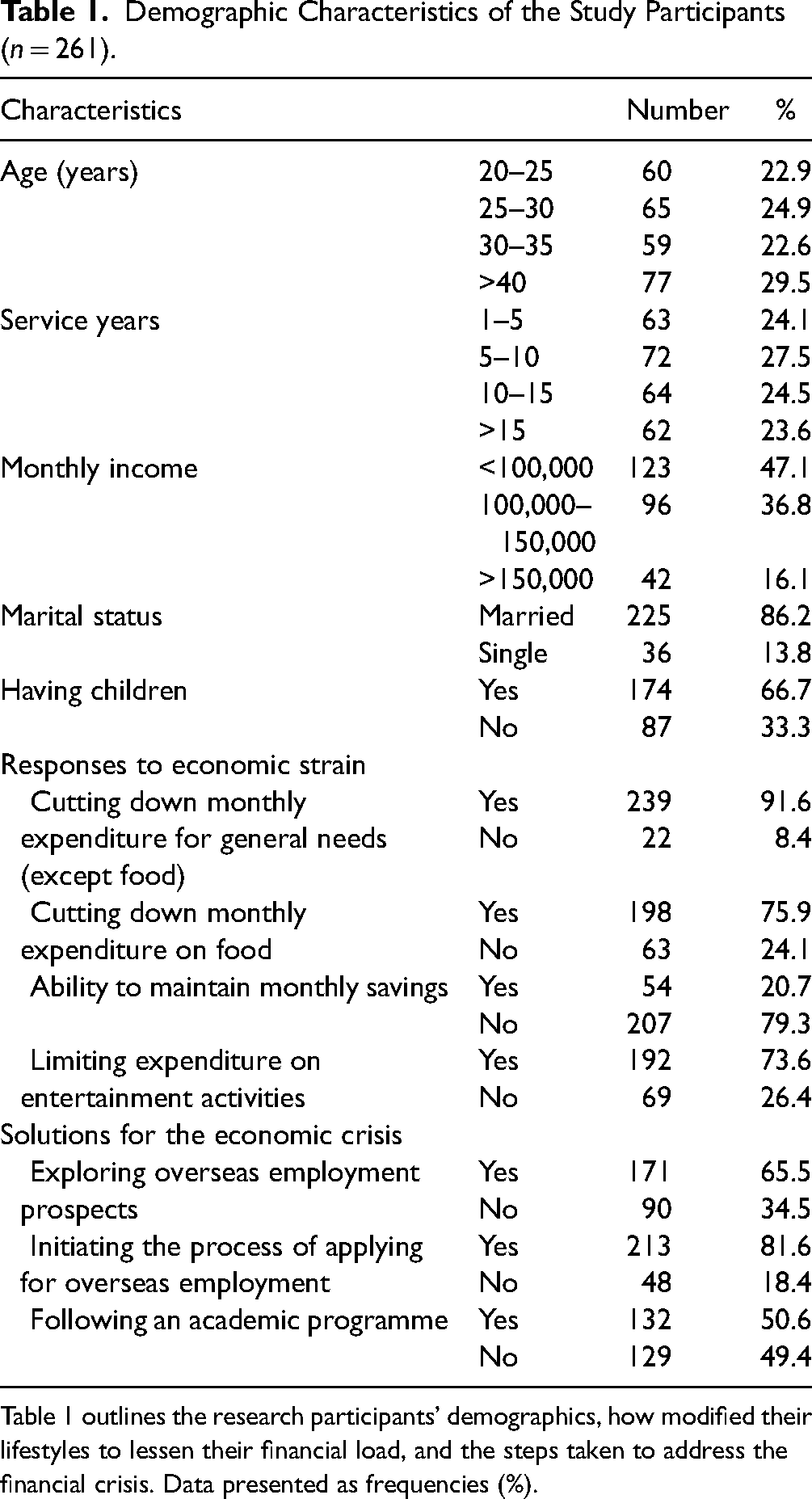
Table 1 outlines the research participants’ demographics, how modified their lifestyles to lessen their financial load, and the steps taken to address the financial crisis. Data presented as frequencies (%).
The mean scores for depression, anxiety and stress were 12.85 (±7.8), 13.44 (±9.4) and 18.36 (±9.4), respectively. Amongst the study participants, 7.7% nurses experienced extreme severe depression, while 5.4% of them self-reported with extreme severe anxiety symptoms. In addition to that, 13.4% of the survey population were living with extreme severe stress. Considering the cumulative prevalence of each level of mental disorders, the analysis revealed that the mild to extremely severe prevalence rates for depression, anxiety and stress were 58.2%, 65.9% and 72.0%, respectively. The classification of the three emotional disorders from mild to extremely severe is mentioned in Table 2 below.
Levels of Depression, Anxiety and Stress among Nurses (n = 261).

The frequencies of various stress, anxiety, and depression levels among research participants are shown in Table 2. Based on the overall score for each mental health condition, study participants were divided into five levels: normal, mild, moderate, severe, and very severe. Data presented as frequencies (%), SD (Standard Deviations ±).
Table 3 indicates that nurses earning a monthly household income less than 100,000 (LKR) are likely to experience depression (95% CI 1.041–1.640, p < 0.05) compared to their counterparts earning more than 100,000 LKR per month. Furthermore, nurses who curtailed household expenses in response to economic hardship faced a 2.6 higher value of risk (95% CI 0.149–3.997, p < 0.05) of depression than did their colleagues who did not reduce household expenditures. Considering anxiety levels, there was an elevated risk of experiencing anxiety among nurses who had reduced monthly expenditures on general needs (2.60, 95% CI 0.149–3.997, p < 0.05), food (2.57, 95% CI 1.679–3.955, p < 0.05) or lack of monthly savings (5.92, 95% CI 3.101–11.315, p < 0.05). Moreover, the likelihood of risk of anxiety among those engaged in academic programmes was 1.65 (95% CI 1.453–1.840 p < 0.05) than those not persuading academic work.
Association of Factors with Depression Symptoms among Study Participants According to the chi-Square Test (n = 261).
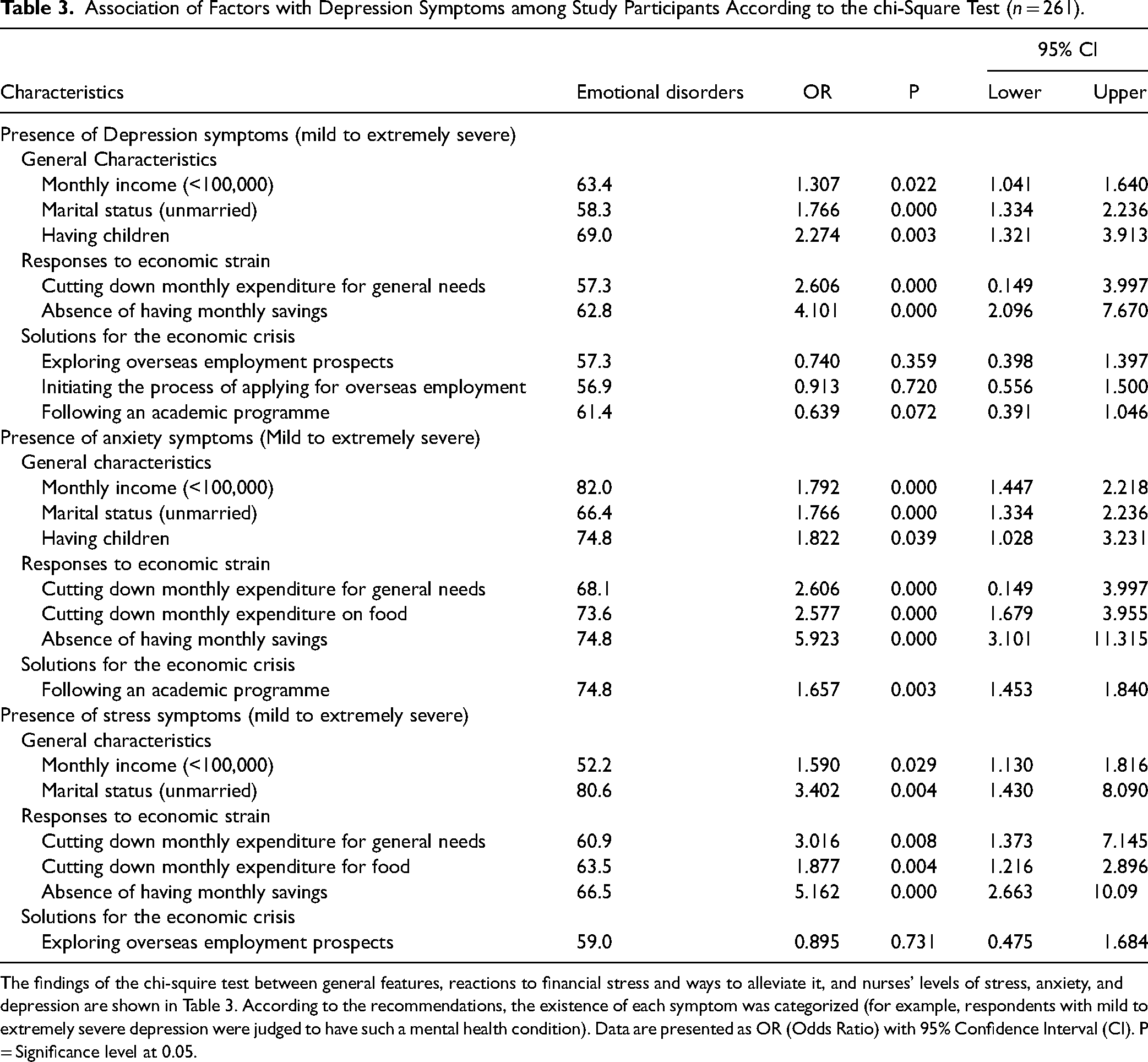
The findings of the chi-squire test between general features, reactions to financial stress and ways to alleviate it, and nurses’ levels of stress, anxiety, and depression are shown in Table 3. According to the recommendations, the existence of each symptom was categorized (for example, respondents with mild to extremely severe depression were judged to have such a mental health condition). Data are presented as OR (Odds Ratio) with 95% Confidence Interval (CI). P = Significance level at 0.05.
According to multivariate logistic regression analysis (Table 4), after adjusting for factors such as age, service years, income, marital status and having children, the odds of experiencing depression symptoms was 2.9 (95% CI: 1.447–1.864, p < 0.05) among those who limited their monthly expenditure on general needs, and 1.9 times value r (OR = 1.921, 95% CI: 1.014–2.640, p < 0.05) among participants who explored overseas employment opportunities. According to the anxiety model, there were positive associations with anxiety related to reducing food expenditures (OR = 3.805, 95% CI = 1.714–8.444), missing monthly savings (OR = 0.140, 95% CI = 0.061–0.322), and following an academic programme (OR = 2.828, 95% CI = 1.424–5.616). Additionally, four variables, namely, decreasing monthly expenditures for general needs (OR = 1.490, 95% CI = 0.503–4.415), the absence of monthly savings (OR = 2.788, 95% CI = 1.324–5.123) and following an academic programme (OR = 1.921, 95% CI = 1.011–3.111), were significantly associated with stress among the study participants.
Multivariate Regression Analyses of Factors Associated with Depression, Anxiety and Stress among Nurses (n = 261).

The findings of a multivariate regression analysis pitting adjusted behavioural modification factors against financial pressure and the existence of depression, anxiety, and stress in study participants are summarized in Table 4. Data presented as frequencies (%), B = coefficient (beta), AOR: Adjusted Odds Ration (95% Confidence Interval (CI)), p = significance at 0.05.
Discussion
This is the first study to explore the influence of the prevailing economic strain on the mental well-being of nursing officials serving in the government sector of Sri Lanka. While prior research has predominantly focused on mental health dynamics during pandemic situations such as COVID-19 (Pathiraja et al., 2022: Udayanga et al., 2022), this investigation uniquely explored the specific impacts of economic challenges on this professional category in Sri Lankan healthcare system. Exploring the intricate relationship between a nation's economic landscape and the mental well-being of the populace poses a multifaceted challenge (Ng et al., 2013). Previous studies in to this connection have often been hampered by methodological bias and limitations (Silva et al., 2018). Furthermore, there has been a notable scarcity of research focusing on the adverse effects of economic factors on the mental health of specific professional groups. Addressing this gap, present study presented a methodologically sound framework, for examining the interaction between ongoing economic hardship and the mental health outcomes of nurses in Sri Lanka. This study identified three key domains related to the diverse factors influencing the mental health outcomes of the study participants. First, this study investigated the general demographic characteristics of the participants. Subsequently, explored the measures adopted by participants in response to economic strain. Finally, investigators examined the strategies used by nurses to seek solutions to navigate the prevailing financial crisis in the country. Measures such as restricting household necessities and food expenditures, reducing entertainment opportunities and eliminating monthly savings were associated with emotional disorders among study participants. In addition, strategies such as searching for foreign employment opportunities and persuading academic programme was notably associated with the mental health outcomes of nurses. This study reported a greater prevalence of depression, anxiety and stress among nurses, whose prevalence was nearly twofold greater than that reported in two studies in Sri Lanka, one study investigated this prevalence in 2012 (Jayawardene et al., 2013) where nurses likely to show general dynamics in their mental health level, while the other one carried out in 2021 (Pathiraja et al., 2022) where nurses were in critical situation dealing with COVID-19 pandemic. Both studies indicated a gradual increase in negative mental health outcomes over the period. It was observed a notable increase in mental health disorders in this professional group over the last two years when the economic crisis severely impacted people in Sri Lanka. Therefore, this variation may be due to the influence of the economic crisis of the country. Conversely, findings of this study align with studies conducted in Australia (Maharaj et al., 2019), China (Lijuan et al. 2023), India (Nayak et al., 2022), and Egypt (Abdalgeleel et al., 2023; Quan et al., 2023). However, all the studies compared were generally conducted during the COVID-19 crisis which is likely to elevate the risk of psychological issues among healthcare workers as frontiers of the operations, it affirms the association between crises and mental health outcomes of nurses. However, this study indicates a greater prevalence of mental health outcomes than studies conducted in Vietnam (Pham et al., 2023), Sudi Arabia (Abdoh et al., 2021), and Canada (Stelnicki & Carleton, 2021). Furthermore, the findings of this study disagree with those of other studies (Khodadadi et al., 2016; Rachubińska et al., 2023), as these studies reported a greater incidence of mental health disorders among nurses. This disparity may be attributed to differences in the demographic characteristics of the study participants, as many of the aforementioned studies recruited participants from a single institution, potentially limiting the generalizability of their findings to the global context (Białowolski et al., 2019).
Top of Form
Present study identified a significant association between the marital status of study participants and the depression symptoms of nursing officials. Additionally, having children increased the risk of anxiety, while monthly income influenced both anxiety and stress symptoms. These observations are in agreement with similar findings in the literature (Cheung & Yip, 2015; Maharaj et al., 2019), reinforcing the impact of these factors on mental health outcomes. Since the studies compared different regions and various periods, it is evident that these factors are common for elevating negative mental health problems among nurses. However, in this study, it is arguable that these factors coupled with economic crisis, trigger the mental health issues in this cohort. For instance, unlike other studies, unmarried nurses showed a greater risk of having depressive systems compared to study participants who are married. This might be due to married nurses having extra support with their economic matters compared to unmarried participants. Therefore, this is essential for future studies to investigate further into this association further, exploring the intricate interplay between these demographic factors and their collective impact along with the financial burden on mental health. Consistent with prior research highlighting an inverse relationship between income levels and mental health outcomes among nurses (De Assis et al., 2022), present study affirms this trend. In particular, the absence of monthly savings emerged as a predictor of all three emotional disorders, while restricting household expenses to general needs was correlated with symptoms of depression and stress. Further, this study indicated that the majority of the study participants curtailed expenses on household essentials in response to the economic strain in the country. This transition was significantly associated with depression symptoms among the study participants. The reasons for these psychological disorders may be attributed to the disruption of the participant's accustomed lifestyle during times of economic normalization. Moreover, a lack of adaptability and financial management skills may play a crucial role in precipitating these mental health issues among these professionals. Consequently, the implications of this study extend to the development of self-supported programmes designed to aid nurses in enhancing their financial management and life adaptability skills, ultimately empowering them to navigate through economic hardship more effectively.
Due to the uncertainty of the economic situation in the country, more than half (65.5%) of the nurses in this study, intending to leave the country, and actively initiated searches for foreign work placements. Consequently, people pursuing overseas employment opportunities are likely to face an elevated risk of depression. This trend is in line with the global pattern, demonstrating a gradual rise in the pursuit of overseas job opportunities in response to the ongoing economic crisis (ILO, 2022). However, preparing for a foreign employment can be notably impact on mental health outcomes for nurses due to the several key milestones must be completed. For example, aspiring nurses are required to fulfil specific eligible criteria outlined by international bodies such as National Health Service (NHS) in United Kingdom. This entails completing an undergraduate programme and passing certain examinations. Nonetheless, previous studies indicate that participation in academic programme may correlate with adverse mental health outcomes (Pulido-Martos et al., 2011). Although concrete evidence to substantiate this assertion is currently unavailable, present study revealed the imperative for additional research to explore this association further. Nevertheless, the findings of this study can serve as a foundation for crafting interventions aimed at assisting individuals in shaping their career pathways.
The demanding nature of the profession, coupled with economic pressure, often leads to psychological distress among nurses (Chen et al., 2021). Engaging in leisure and entertainment activities is a crucial strategy for reducing stress and improving overall quality of life. However, this observation revealed that nurses tend to limit their spending on leisure pursuits in response to financial strain. Remarkably, this research highlights that the absence of leisure is predicted to increase the risk of stress among nurses. This finding aligns with previous studies by (Cheung et al., 2016; De Assis et al., 2022; Finnerty et al., 2022) which demonstrated the doubled risk of stress among nurses who lack adequate leisure opportunities compared to their counterparts. Recognizing the potential impact of restricted leisure options on stress levels, the findings of the present study emphasize proactive initiatives aimed at providing recreation opportunities.
Limitations and Strengths of the Study
Several limitations of the present study need to be considered in future research. First, there is an absence of precise definitions for economic hardship, which could pose difficulties in disseminating the findings within the nursing community, hindering the translation of the results into actionable insights. While numerous studies have explored the connection between economic stress and mental health outcomes in the general population, the evidence regarding this association among nursing officials is notably limited. Consequently, this study lacks strong recent evidence to fully support its findings. Next, important to note that present study did not examine the work-related factors liked to mental health levels among nurses. Hence, establishing a direct causal relationship between the economic burden and adverse mental health outcomes among nurses becomes challenging. Finally, it is essential to acknowledge that the findings of this study cannot be generalized to the entire nursing population of the country. This limitation arises from the fact that the survey sample exclusively represents nursing professionals from teaching hospitals, Sri Lanka.
Despite these limitations, present study has several strengths and novel contributions. Notably, this is the first investigation into the relationship between economic stress, which is a critical issue in Sri Lanka, and emotional disorders among nursing officials in the country. Additionally, the study's strengths lie in the diverse representation of participants from various healthcare institutions across the country. Finally, the findings of the present study hold significant practical implications for the improvement of work quality among nurses. This information can be instrumental in developing mechanisms to enhance the overall service quality of healthcare workers in Sri Lanka. Therefore, these findings could contribute to the advancement of the healthcare sector in the country.
Implication for Practice
According to the findings, most survey respondents had deprioritized basic household needs to cope with the country's economic burden. This situation impacts their work-life balance significantly. However, a notable number of participants were preparing for overseas employment opportunities as a long-term solution to the nation's financial difficulties. Consequently, this trend creates a shortage of trained healthcare workers, adversely affecting the healthcare system. Moreover, this entire scenario is closely linked to nurses experiencing negative emotional disorders, which significantly impact the quality of healthcare delivery in the country. Therefore, the current economic crisis directly and indirectly influences the quality of healthcare services in the country. As a result, the administrative authorities ought to act swiftly to improve the mental health of nurses by implementing focused measures that would raise the standard of healthcare delivery. The ramifications touch on two crucial areas.: firstly, at the national level, the government must enact operational measures focusing on restoring economic stability. This proactive approach would alleviate the financial strain experienced by professionals including nurses, consequently mitigating the propensity for skilled migration and alleviating the resultant pressure on the broader healthcare workforce. Secondly, a comprehensive intervention framework is encouraged to foster career advancement opportunities and reduce emotional distress among nurses. This intervention should incorporate a spectrum of activities including,
Facilitating nurses in exercising effective financial management practices to ensure prudent utilization of their monthly earnings. Creating a mechanism to offer career development opportunities for nurses by facilitating financial and institutional arrangements to harmonize their professional and academic endeavours. The Hospital system could facilitate entertainment and recreational opportunities to enhance mental-wellbeing of nurses. The organization structure should be reformed establishing psychological support services such as counselling and peer-support services to approach individuals who are living with depression, anxiety, and stress symptoms.
Conclusion
This investigation revealed a strikingly elevated incidence of depression, anxiety, and stress in the study participants. This investigation highlights the economic strain within the country, potentially amplifying the participants’ perceived level of depression, anxiety, and stress. Furthermore, this study showed that the strategies and career progression measures that nurses adopted to address the economic crisis increased their level of emotional disorders. Therefore, the findings of this study can serve as a foundational framework for crafting policies and guidelines aimed at bolstering nursing officers. In light of these findings, this study indicated the imperative of implementing effective mechanisms to support individuals in enhancing their capabilities in financial management. By leveraging the insights gleaned from this research, tailored support structures can be established to facilitate timely career progression for nursing professionals in Sri Lanka. This strategic approach aligns with the broader objective of fortifying the resilience and well-being of the nursing workforce in the face of economic challenges.
Supplemental Material
sj-sav-1-son-10.1177_23779608241272679 - Supplemental material for Exploring the Association Between Behavioural Modification in Response to the Prevailing Economic Crisis and Mental Health Outcomes of Nurses from Teaching Hospitals, Sri Lanka
Supplemental material, sj-sav-1-son-10.1177_23779608241272679 for Exploring the Association Between Behavioural Modification in Response to the Prevailing Economic Crisis and Mental Health Outcomes of Nurses from Teaching Hospitals, Sri Lanka by C.P Senevirathne, L. Senarathne and M. Fernando in SAGE Open Nursing
Supplemental Material
sj-docx-2-son-10.1177_23779608241272679 - Supplemental material for Exploring the Association Between Behavioural Modification in Response to the Prevailing Economic Crisis and Mental Health Outcomes of Nurses from Teaching Hospitals, Sri Lanka
Supplemental material, sj-docx-2-son-10.1177_23779608241272679 for Exploring the Association Between Behavioural Modification in Response to the Prevailing Economic Crisis and Mental Health Outcomes of Nurses from Teaching Hospitals, Sri Lanka by C.P Senevirathne, L. Senarathne and M. Fernando in SAGE Open Nursing
Supplemental Material
sj-docx-3-son-10.1177_23779608241272679 - Supplemental material for Exploring the Association Between Behavioural Modification in Response to the Prevailing Economic Crisis and Mental Health Outcomes of Nurses from Teaching Hospitals, Sri Lanka
Supplemental material, sj-docx-3-son-10.1177_23779608241272679 for Exploring the Association Between Behavioural Modification in Response to the Prevailing Economic Crisis and Mental Health Outcomes of Nurses from Teaching Hospitals, Sri Lanka by C.P Senevirathne, L. Senarathne and M. Fernando in SAGE Open Nursing
Footnotes
Acknowledgement
The authors of the present study extend sincere gratitude to the nursing professionals, whose enthusiastic participation was invaluable.
Author Contribution
Chamil Priyanka Senevirathna: Conceptualization and writing of the original draft; Lalith Senarathne; Investigation and writing, review and editing; Manoj Fernando, Methodology and writing, review and editing
Declaration of Conflicting Interests
The authors declared no potential conflicts of interest with respect to the research, authorship, and/or publication of this article.
Ethical Statement
This study was conducted in accordance with the principles outlined in the Declaration of Helsinki and received approval from the Ethics Review Committee, Faculty of Applied Sciences, Rajarata University.
Funding
The authors received no financial support for the research, authorship, and/or publication of this article.

Supplemental Material
Supplemental material for this article is available online.
References
Supplementary Material
Please find the following supplemental material available below.
For Open Access articles published under a Creative Commons License, all supplemental material carries the same license as the article it is associated with.
For non-Open Access articles published, all supplemental material carries a non-exclusive license, and permission requests for re-use of supplemental material or any part of supplemental material shall be sent directly to the copyright owner as specified in the copyright notice associated with the article.
