




Abstract
Introduction
The COVID-19 outbreak disrupted the nursing education across the world. The nursing students faced many challenges in their learning process.
Objective
The study explored the experiences and challenges faced by nursing students who had virtual education in India.
Methods
The study adopted an exploratory sequential mixed-methods design. The study was conducted as two phases. Phase 1: Qualitative data were collected using direct focus group interview with 18 students. Phase 2: Quantitative data were collected from 477 students using a Likert scale prepared by the investigators of the study on challenges experienced by nursing students on their education. The analysis was done using the descriptive and inferential statistics and thematic analysis.
Results
Phase 1: The analyzed data produced seven themes and 10 sub-themes; (1) technical issues—a concern, (2) regular rhythm in educational training—but not complete, (3) stress and strain, (4) evaluation—a concern, (5) communication, (6) comfort zone, and (7) easy distraction. Phase 2: Majority of the students (54.71%) experienced high-level challenges with the nursing education during pandemic. The overall mean and SD of all the domain-wise challenges were 103.39 + 7.11 with the range from 30 to 150. The mean and SD with educational challenges were (20.27 + 3.04), environmental challenges (6.92 + 1.66), communication challenges (17.61 + 4.01), technical challenges (17.39 + 3.75), evaluation challenges (7.09 + 1.94), physical and mental challenges (20.47 + 4.33), career challenges (7.06 + 1.91), and financial challenges (6.61 + 2.1). The demographic variable gender (P = 0.045) showed a statistically significant association with the challenges.
Conclusion
Considering the experiences and challenges faced by the nursing students, the nursing administrators shall design educational strategies to mitigate these challenges in nursing education during a pandemic.
Implication
Virtual nursing education offers flexibility in teaching and learning, self-paced learning opportunity, lower the costs, career advancement, comfortable learning environment, more opportunities for participation, easier to track documentation and improves skills in technology. Therefore, the challenges in virtual nursing education should be lessened to have successful teaching learning experiences.
Introduction/Background
The world faced unprecedented challenges during COVID-19 global pandemic (World Health Organization, 2020). The pandemic changed the lives of people at different levels. Additionally, social distancing shaped the social relationship and behavior (Kaveh et al., 2022). COVID-19 significantly strained the healthcare system. In addition, it affected the education in academic institutions and universities to a greater extent (Dewart et al., 2020). As a preventive and control measure, all the schools, colleges, and universities were closed (Mustafa, 2020). In April 2020, 94% of learners worldwide were affected by the pandemic, representing 1.58 billion children and youth in 200 countries (De Giusti, 2020). Likewise, nursing education has undergone many radical changes both in developed and developing countries. The situation affected the learning opportunities of nursing students as their clinical placements were suspended and the face-to-face teaching moved into online teaching. Additionally, the pre-clinical activities such as laboratory and simulation-based teaching were affected due to social and organizational restrictions to limit unnecessary access and contact with others (Tomietto et al., 2020).
To continue the teaching–learning activity, the academic institutions adopted various digital platforms including Zoom, Google meet, WebEx, Udemy, Edmodo, Google classroom, etc. (Mishra et al., 2020). Moreover, web-based conferences were routinely organized by educational institutions during this pandemic (Kaware, 2022). In addition, educational institutions have placed greater emphasis on ERP systems, library modules, fee modules, and examination modules. The virtual learning enhanced the comfort, accessibility, and encouraged remote learning (Mukhtar et al., 2020). Similarly, the learners found it easy to access the online material, were able to record meetings and sessions and retrieve information (Alsayed & Althaqafi, 2022). The faculty and students expressed that online education is useful during the COVID-19 pandemic; it was convenient, flexible, cost low, and encouraged self-learning (Almahasees et al., 2021). Likewise, online education improved the flexibility, ability to teach large classes, increased interaction between the teachers and students and increased learning opportunities for the learners (Hako, 2021). Ultimately, these educational technologies have had significant positive impact on the learning of the students. Additionally, it paves the way toward the blending of technology synchronously or asynchronously into education (Thaheem et al., 2022).
Review of Literature
Although online education was beneficial to both the teachers and learners, it posed various challenges to the faculty and students (Nimavat et al., 2021). Poor student attendance, loneliness, issues with internet connectivity and lack of information and technology skills were reported as challenges of online education (Hako, 2021). The faculty and students indicated that efficacy of online teaching and learning is less effective than face–face teaching and learning. Moreover, online learning is ineffective for deaf and hard of hearing students. Likewise, online education is linked to lack of interaction and motivation, data privacy and security and technical issues (Almahasees & Amin, 2021; Alsayed & Althaqafi, 2022). Furthermore, online education was inefficient in terms of maintaining academic integrity (Mukhtar et al., 2020). The teachers reported difficulties in motivating the students without visual connection during online teaching (Moustakas & Robrade, 2022). Also, Atout et al., (2022) reported lack of resources for the clinical learning, distracting home environment and challenging evaluation of learners as the barriers for virtual learning.
The challenges faced by the instructors includes transitional difficulties from offline to online teaching, communication barriers, changes in the teaching style and additional time and resources for preparation of teaching. The institutions experienced challenges such as need for additional training for faculty and students, technical and multimedia support, online counselling sessions for teachers and the need to have technical troubleshooting team. Students experienced challenges related to having technical skills to learn online, lack of readiness, network and speed issues, and lack of identity, interaction and participation. There were challenges related to content such as development of new material, regular assignments, multimedia tools, and checking assignments and sharing regular feedback with the students. Technological challenges included device suitability, network stability and speed, tools of conferencing software for online teaching and ease of use. Lastly, the motivational factors included lack of sense of job security, non-availability of salary on time, and lack of family support, mental and emotional support from colleagues and higher authorities (Siddiquei & Kathpal, 2021).
To enhance the online teaching and learning, technical aptitude enhancement, resource management and utilization, time management, control over the learning environment and help seeking are essential (Barrot et al., 2021). Furthermore, formal training for the teachers, and enhancement of psychosocial wellbeing of both the learners and teachers are necessary to curb the feelings of loneliness and isolation. Moreover, the nature of the problems related to the shift from face to face to online learning should be identified to combat these challenges (Hako, 2021). In India, both the undergraduate and postgraduate students were badly affected during the COVID-19 pandemic and experienced many challenges with online education (Joshi et al., 2020; Kamal & Illiyan, 2021; Muthuprasad et al., 2021; Pandit & Agrawal, 2022; Rannaware et al., 2022; Sengupta, 2022). However, very few studies explored the challenges encountered by the nursing students during the online learning (Gaur et al., 2020a; George et al., 2022; Kanagaraj et al., 2022; Lata & Kudi, 2022). Therefore, the authors decided to understand the experiences and challenges encountered by nursing students in their nursing education during the COVID-19 pandemic. We believe that the study finding will be beneficial to the educational authorities, curriculum developers, and policy makers to design appropriate measures and strategies to enhance effective learning both in nursing education and practice.
Methods
Design
An exploratory sequential mixed-methods design was utilized in this study. The study integrated qualitative data into quantitative data to understand the experiences and challenges experienced by nursing students’ during the pandemic.
Research Setting
The study was conducted among nursing students of Narayana Hrudayalaya College of Nursing, Koshy's College of Nursing and Kirubanidhi College of Nursing, Bengaluru, Karnataka, India. These colleges initiated virtual classes from April 2020. Therefore, these colleges were selected as settings for the study.
Population
The target population of the study included both Diploma and BSN students. The accessible population included both Diploma and BSN students studying in Narayana Hrudayalaya College of Nursing, Koshy's College of Nursing and Kirubanidhi College of Nursing, Bengaluru, Karnataka, India.
Sample, Sample Size, and Sampling Techniques
Three nursing colleges were conveniently selected for the study. In Phase 1, the researchers used purposive sampling technique to collect the qualitative data from six students in each college (Narayana Hrudayalaya College of Nursing, Koshy's College of Nursing and Kirubanidhi College of Nursing, Bengaluru, Karnataka, India). The data collection was done face to face. Thus, in total, 18 students participated in the focused group interview during phase I. For Phase 2, the sample size calculation was done based on the previous cross-sectional study (Thapa et al., 2021). Having the expected proportion of challenges experienced by nursing students as 15%, with 95% confidence interval, and with the precision, the minimum required sample size was 400. In total, all the three nursing colleges had 654 students. Convenient sampling technique was used to collect the data in phase II.
Inclusion and Exclusion Criteria
The study included nursing students who were enrolled for Diploma and BSN program, exposed to online learning, and second, third, and fourth year nursing students. The study excluded those who were not willing to participate, and first year nursing students as they had limited exposure to the virtual theory and clinical classes, which may give a limited and inaccurate data. Considering the inclusion and exclusion criteria, 477 students participated in the study.
Description and Interpretation of Study Instrument
The instruments used in the study were prepared by the researchers of the study. The qualitative data collected during the first phase of the study was utilized in preparing the tool used for the quantitative phase of the study. It included four parts namely demographic variables, background variables, open-ended questions to explore the participant's experiences and challenges and Likert scale to assess the challenges.
Part 1 included the demographic variables of the participants including age, gender, course of study, year of study, residence, and place of attending online classes.
Part 2 comprised of the background variables such as gadgets used for attending online classes, source of internet, mode of theory classes taken during the last 6 months, mode of practical training, methods of teaching theory classes, audio visual aids used, and the virtual platform used.
Part 3 consisted of a questionnaire related to students’ experiences and challenges. It included 15 open-ended questions related to the aspects of theoretical learning, practical learning, study materials, teaching methodology, evaluation process, issues related to physical and mental health, issues related to technology and issues related to finance.
Lastly, Part 4 included a Likert scale on challenges having 30 questions with eight domains; educational challenges (six items), environmental challenges (two items), communication challenges (five items), technical challenges (five items), evaluation challenges (two items), physical challenges (six items), career challenges (two items), and financial challenges (two items). Dimensions were evaluated using 5-point Likert scale varying from strongly disagree (1), disagree (2), neutral (3), agree (4) and strongly agree (5). The total score ranges from 30 to 150. The domain-wise challenges were interpreted as 1–50 = low challenges, 51–100 = moderate challenges, 101–150 = high challenges. The instrument was prepared in English and no translations were done.
Reliability and Validity of the Tool
Content validity was obtained from eight experts in the field of nursing education. The calculated content validity index was 0.80. Pilot study was conducted with 10% of the study participants (42 students) to test the reliability of the tool before administering to the main study participants. Using Cronbach's alpha (inter-item reliability), the internal consistency assessed was 0.89, which is highly reliable. The participants participated in the pilot study were excluded from the main study.
Ethical Considerations
Ethical approval was obtained from the Research and Ethics Committee of Narayana Hrudayalaya College of Nursing (NHH/AEC-CL.2022-BI5 dated 22/3/2022), Kirubhanidhi College of Nursing (KCC/22/22 dated 04/3/2022), and Koshy's College of Nursing (KCN/15 dated 07/3/2022) and Institutional review board. After getting the ethical approvals, formal permission was obtained from the Head of Nursing colleges to collect data. The researchers explained the purpose of the study to the participants involved in both quantitative and qualitative data collection. The participants were informed that their participation in the study was voluntary. Since the participants were not forced to participate in the study, they were given the freedom to withdraw from the study at any time without any penalty. The participants signed the informed consent and responded to all the questions and returned the completed questionnaire. All the audio recordings were coded and password protected. It was explained to the participants that they were not exposed to any kind of risk. To keep the data anonymous, no identifying information was collected from the participants. The researchers maintained confidentiality of information throughout the study period. All the collected data were stored in a password protected file. Only, the investigators of the study had access to the data.
Data Collection (Qualitative Phase)
In Phase I of the study, three focus groups were selected using purposive sampling technique. Each group included six participants with a total of 18 nursing students. After getting the consent, the participants shared their experiences and challenges faced during their educational training in the pandemic. The interviews were conducted from 25/2/2022 to 25/3/2022 and each interview lasted for 1.30 h to 2 h. The first and third authors conducted the interview. The first author is a PhD and the third author is a BSN holder. The first author is an assistant professor and the third author is a staff nurse. Both of them were females. Both of them were trained in qualitative data collection. The researchers established rapport with the study participants. The researcher used 15 open-ended probing questions and the participants were given the freedom to express additional views and comments. All the interviews were conducted in person in the college and audio recorded with their consent. Focus group discussions were continued till the data saturation occurred. The transcripts were returned to the participants for their correction.
Data Collection (Quantitative Phase)
In Phase II, the quantitative data were collected using convenient sampling technique. The total number of students participated in the study were 477. The questionnaires were transferred to Google forms and were circulated to the students after explaining the objectives and getting the informed consent. The quantitative data were collected from 11/04/2022 to 20 /04/2022. The response rate was 72.9% (477) which included Narayana Hrudayalaya College of nursing (88 participants), Koshy's College of nursing (235 participants) and Kirubanidhi College of nursing (154 participants).
Data Analysis (Qualitative Phase)
The data were analyzed using thematic analysis. The collected data were transcribed and analyzed using Braun and Clarke's thematic analysis. Reflexive thematic analysis was performed in this study (Clarke & Braun, 2017).
Data Analysis (Quantitative Phase)
The quantitative data were analyzed using descriptive and inferential statistics using SPSS version 22.
Credibility, Dependability, and Transferability
To ensure credibility of the data, the researcher strongly engaged with the focused group interviews by means of observation, documentation, and taking notes. Dependability was achieved through reviews and comments given by the research guide, who is the second author of the study who has full knowledge of the study design and methodology. The data collected from participants and the findings could be applicable to other contexts, situations, times, and populations and the study setting. It ensures transferability.
Rigor
The researcher adhered to rigor by carefully collecting data via audio recordings and by taking field notes. Each focus group interview was transcribed immediately after the interview. The transcripts were given to the participants for cross-checking and approval. In addition to ensuring rigor through trustworthiness criteria, the authors followed mixed-methods research legitimation criteria by ensuring design quality, design suitability, within design consistency, design fidelity, and analytic adequacy (Teddlie & Tashakkori, 2009).
Trustworthiness
Trustworthiness was established by using an unbiased approach in selecting the participants and by participant's being honest, clearly recorded, and accurately presented inputs. The transcriptions, coding, and themes–subthemes were discussed by the research team for their verification. Then based on the themes and subthemes the quantitative questionnaire was created by the researchers.
Results
Phase 1 Qualitative Phase
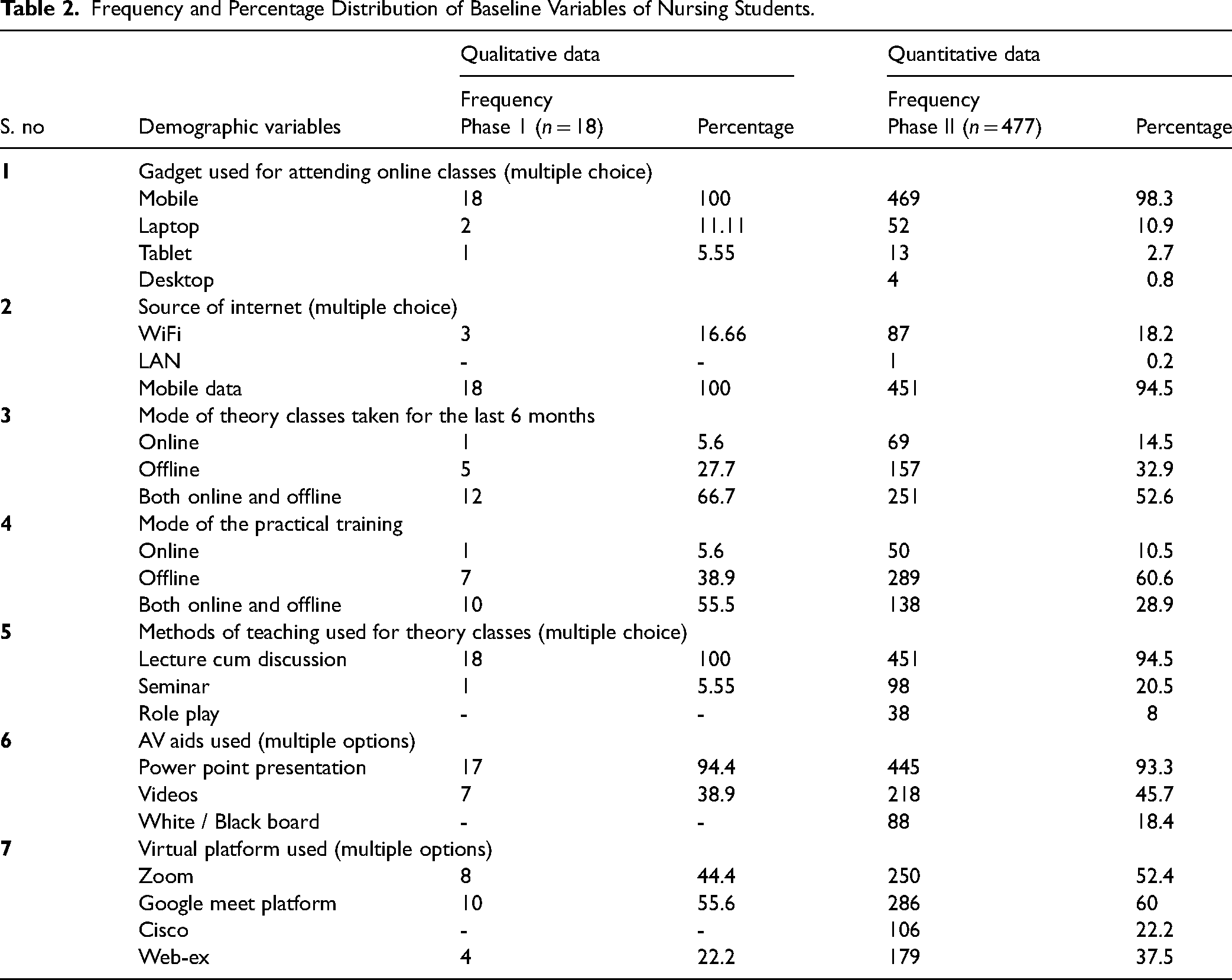
Table 1 shows the frequency and percentage distribution of background variables of 18 participants who shared their experiences and challenges faced during their educational training in the pandemic. Table 2 shows the frequency and percentage distribution of participants’ background variables.
Frequency and Percentage Distribution of Demographic Variables of Nursing Students.

Frequency and Percentage Distribution of Baseline Variables of Nursing Students.
Experiences and Challenges Faced by the Nursing Students
In Phase 1, the experiences and challenges experienced by nursing students with their educational training during the pandemic were analyzed using thematic analysis. Table 3 reports seven themes and 10 sub-themes. The themes identified includes: (1) technical issues—a concern, (2) regular rhythm in educational training—but not complete, (3) stress and strain, (4) evaluation—a concern, (5) communication, (6) comfort zone, and (7) easy distraction. The sub-themes were: (1.1) problems with internet connectivity, (1.2) issues with the digital platform, (2.1) theoretical learning experience-better, (2.2) deficient practical skills, (3.1) physical stress, (3.2) mental stress, (4.1) unfair evaluation and lack of feedback, (5.1) decreased quality of communication, (6.1) very convenient, and (7.1) difficult to concentrate.
Themes and Subthemes of Experiences and Challenges Faced by Nursing Students.

Theme 1: Technical Issues: A Concern
Modern technology is progressive in all sectors. With this technology, it was possible to deliver training in all educational sectors including nursing education during COVID-19. Though it was helpful, technical problems interrupted the teaching–learning process. Most of the participants expressed their concern related to technical issues. It includes issues with internet connectivity, and issues with the digital platform.
Subtheme 1: Problems with Internet Connectivity
Constant network issues were an unavoidable fact for many students. Students could not be connected to the virtual class on time due to the internet connectivity issues and they had to miss attending the classes.
“Sometimes it keeps on showing error code and by the time I get connected the class is completed by the faculty” (5A).
Students stated that they faced technical and network issues while attending the classes.
“During online classes, we have faced a lot of technical and network issues” (2A).
In addition, fluctuations in the network connectivity were another technical issue faced by students and it affected the virtual learning of the students.
“I faced fluctuations in my network during a natural calamity in my place so I missed many classes during that time” (13A).
Subtheme 2: Issues with the Digital Platform
There are various platforms used to deliver online educational training. The participants expressed their difficulties as they had hitches in updating the digital platforms, and mentioned that the lack of experience in using the platforms affected their learning.
Digital platform did not work if the application is not updated on time. This was stated as below;
“If I did not update the app on time, it will not work” (1A).
Students faced problems in joining the virtual platform due to issues with the virtual platform.
“Sometimes I faced problems with joining with the virtual platform” (8A).
Lack of experience in using the virtual platform by both the faculty and student was another challenge stated by the students.
“Had struggle to join the meeting initially for both students and faculties because it was very new to us” (5A).
Students faced difficulties in submitting the assignments and answer sheets, as they did not have previous experience in submitting it through digital platforms.
“I struggled while submitting the answer sheets /assignment through digital platforms” (4A).
Theme 2: Regular Rhythm in Educational Training: But not Complete
Virtual education is a boon during pandemic. It took the education system in a rhythmic manner. Though the online lectures were beneficial, at times, students faced few challenges.
Subtheme 1: Online Theoretical Learning Experience
The students utilized the opportunities to learn from online classes with few challenges in attending online classes.
Commencement of online classes helped the students to have continuity in their studies. As the online classes were started on time immediately, it did not affect their theoretical learning.
“…It was not at all possible for the colleges to continue the offline classes so that the apex body instructed to start with online classes and it's good that we were in touch with our studies” (12A).
Different methods and techniques of teaching adopted during online classes enhanced interest in their learning.
“During online classes teacher used to teach with PPTs, and some good videos to make the session interesting. Sometimes they used to conduct lecture cum discussion. That time I was interested to listen to the class” (15A).
“I was interested to attend the online theory classes when teachers used to take a class by showing some videos related to theory content. It was good” (16A).
Students encountered issues with the storage of study materials as they had minimal storage space in their gadgets.
“Teachers used to send notes in PDF form in the mail or by WhatsApp. When I have storage issues in my gadgets, I deleted the content because of storage issues” (18A).
Subtheme 2: Deficient Practical Skills
Practical training is a major part of nursing profession. Students faced many challenges while attending online practical classes.
Most of the students stated that their theoretical learning through virtual mode was excellent. However, students felt that learning practical skills through direct clinical experience is rewarding than learning through virtual platform.
“…theory classes were very good. But in case of practical, like IV infusion, it was very easy to watch the procedure in a virtual platform, but it was very difficult to perform. I feel offline clinical exposure is better than online” (3A).
Students stated that they learnt basic nursing skills through direct clinical experience before the pandemic. However, the students lack confidence in performing the skills that they learnt through videos. The students felt nervous while performing the skills directly on the patients, as they did not get hands-on experience during virtual learning.
“…During my first-year clinical posting, I learnt basic procedure like vital signs checking, wound care, surgical dressing, etc with the direct clinical experience, suddenly everything goes on online, the faculty used to show us best videos. While watching videos I feel I can do. But when it's time to do directly, my hands were shivering and I was not confident. I feel offline exposure is better, we can get more exposure” (1A).
Huge gap in practical learning due to the pandemic affected the learning of the students. Thus, the students did not recommend online learning for learning the skills.
“I did not get adequate practical posting in my first year because of COVID-19. It continued with the second year too. So I have a huge gap with practical learning. For practical learning, online learning is not appropriate” (7A).
Theme 3: Stress and Strain
Prolonged online training affects the students’ physical as well as mental health. They felt more stressful.
Subtheme 1: Physical Stress
Students experienced physical symptoms such as strain in the eyes, neck pain, back pain and numbness in the legs due to prolonged usage of phone and sitting.
“I have to write my notes by seeing my phone. Every time I need to continuously see my mobile and make notes. It was straining my eyes and stressful for me” (16A).
“While attending online classes I used to keep my video on and listen to the class. Due to prolonged sitting, I have neck pain, eye strain also” (5A).
“I felt back pain and numbness in my leg while attending the online classes with prolonged sitting. I used to walk in between for some time to reduce the numbness” (12A).
Subtheme 2: Mental Stress
Students were anxious, as they could not complete the given tasks in online classes.
“I was anxious because I did not complete my task given in online classes, I was lazy” (4A).
As the students did not get practical experience in the clinical area, their confidence levels were low during the pandemic. Moreover, as the students did not get any opportunity to practice directly in the clinical area during the pandemic, they felt tensed and lacked confidence to directly practice on the patient after the pandemic.
“Due to lack of practice in clinical, my confidence had come down” (8A).
“I felt stressed out when I am thinking about my practical learning. I did not get adequate opportunity to practice” (10A).
“After lockdown when I came in the clinical setting, I was tensed about how I will handle the patient” (15A).
Theme 4: Evaluation: A Concern
Evaluation is the process of providing feedback to the students to improve themselves. The test, examination, assignment, and evaluation were new for the students and faculty during the pandemic and there were malpractice incidences by the students.
Sub-Theme 1 - Unfair Evaluation and Lack of Feedback
Students felt conducting exam using Google form as useful.
“Some faculties conducted few exams in Google Form, it was good because at that time I studied and attend the exam” (16A).
Malpractice in the online exam could be observed in the students during virtual learning.
“For the online exam, I never used to study because I can copy from PPT, my screenshots, or from Google and score good marks” (2A, 8A, 17A, 18A).
Students stated that they did not get proper feedback on their assignments.
“In my point of view, some faculties did not give us proper feedback on my assignment writing” (6A).
One student stated the unfair evaluation as the students copied scored well.
“I feel very bad when I write without copying and score very less marks; while the students who did malpractice scored well. So the evaluation was going very wrong” (4A).
Theme 5: Communication
It is necessary to build proper communication between the teachers and students to continue a smooth training session online. However, students felt that this distance learning created a communication gap between teachers and students.
Sub Theme 1- Decreased Quality of Communication
Limited and disrupted communication with the friends and teachers created distress in the students.
“It was not possible for me to communicate face to face with my friends and teachers during the online classes. It was quite distressing” (1A).
“Online class communication was the major problem. We could not communicate with faculties and peers like offline” (18A).
Students felt that they could not clarify their doubts with the faculty. However, faculty responded to their queries through WhatsApp and social media.
“If it comes to communication, it was very limited… During offline we can directly ask doubts to the faculty, but not now” (2A).
“During the online classes communication was not easy like face to face communication. But teachers were responding by WhatsApp and other social media after class time also” (6A).
Theme 6: Comfort Zone
Online classes were attended by the students either from hostel or home.
Subtheme 1: Very Convenient
Students felt comfortable staying home and attending online classes.
“It was convenient for me. Because I can stay at home, take care of my family and attend class also” (8A).
“For me, it was convenient, I got more time and can get up late to attend classes” (2A, 3A, 7A).
Students expressed that their transport expenses could be minimized, as they were not required to travel during the pandemic.
“I could save time. Even transport expenses could be minimized” (10A).
Theme 7: Distraction
Distraction was very high in online classes.
Sub-Theme 1: Difficult to Concentrate
Students were distracted during the online classes due to many notifications received from other online applications and disturbance from their siblings.
“As my internet is on I will get many notifications from other apps during class, it was a distraction for me” (4A, 9A, 11A).
“I attended online classes from my home only. I had disturbance from siblings, during my online classes” (7A, 16A).
Students themselves got distracted as they were using social media in between the online classes.
“I used to browse on Facebook, Instagram, YouTube, etc. during the online classes” (13A).
Phase 2: Quantitative Phase
Table 1 shows the frequency and percentage distribution of participant's demographic variables. Majority (90.6%) of the participants were in the age group between 18 and 23 years. Most of them were females (76.7%). 69.4% of the students were undergraduate (BSN) nursing students, while the rest were in Diploma nursing program. 47.4% of the participants were in their second and 47.4% were in their third year of study. Nearly half (45.3%) were from urban areas and 23.7 were from semi-urban areas, while the remaining (31%) were from rural areas. A large number (83.4%) of students attended the online classes from their hostels.
Table 2 outlines the frequency and percentage distribution of participants’ background variables. The results showed that the majority (98.3%) of the students used mobile phones to attend online classes. Most of them (94.5%) used the mobile data to have the internet connection. Almost half of the participants (52.6%) attended both online and offline classes. More than half (52.6%) of the participants had both online and offline practical exposure, and around 33% had offline clinical exposure. Most of the students (94.5%) attended lecture and discussion sessions. A huge number (93.3%) used power point presentation, and 45.7% of them used videos for teaching. Majority (60%) used Google Meet, while 52.4% used Zoom. The remaining used multiple platforms like Cisco, and Webex.
Figure 1 describes the frequency and percentage of distribution of level of challenges. It was classified as low, moderate, and high level of challenges. Majority of them (54.71%) experienced high-level challenges, 44.6% encountered moderate-level challenges, and the remaining experienced low-level challenges related to their nursing education during the pandemic.
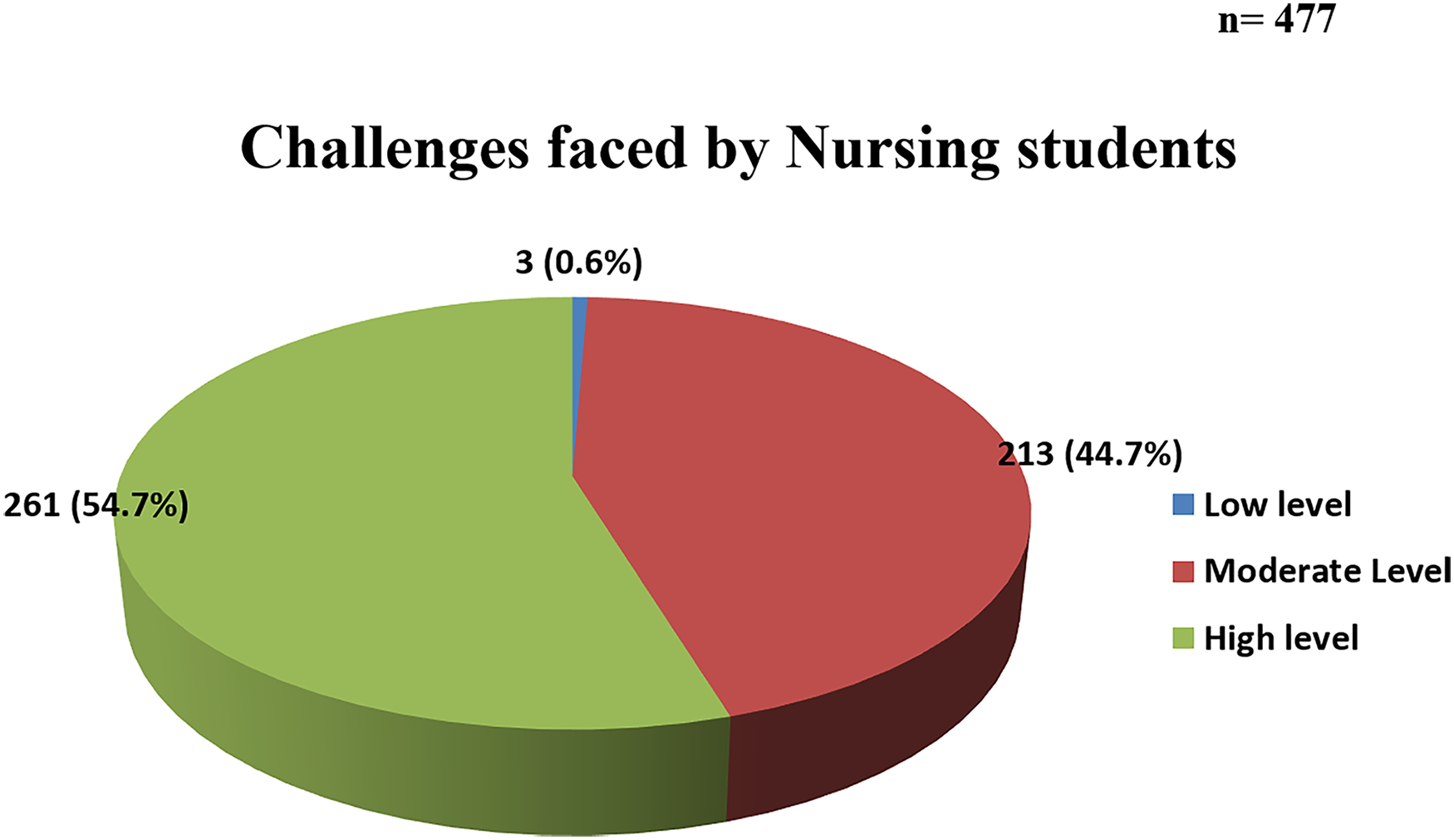
Frequency and Percentage Distribution of Challenges Faced by Nursing Students During Their Educational Training.
The domain-wise challenges with nursing education during pandemic were shown in Table 4. The eight domains included educational challenges, environmental challenges, communication challenges, technical challenges, evaluation challenges, physical and mental challenges, career challenges, and financial challenges. The mean and standard deviations for educational challenges is (20.27 ± 3.04), environmental challenges (6.92 ± 1.66), communication challenges (17.61 ± 4.01), technical challenges (17.39 ± 3.75), evaluation challenges (7.09 ± 1.94), physical and mental challenges (20.47 ± 4.33), career challenges (7.06 ± 1.91), and financial challenges (6.61 ± 2.1). The overall mean and S.D. of all the domain was 103.39 ±
Assessment of Mean and Standard Deviation of Domain-Wise Challenges Faced by the Nursing Students n = 477.

Table 5 displays the item-wise challenges. The results of Educational Challenges indicated that almost 38.57% responded that they lack interest in learning. 15.93% either strongly agreed or agreed that face-to-face learning is very effective than E-learning. A larger portion (78.62%) of participants mentioned that the notes and lectures were inadequate. More than half of the participants (54.3%) agreed that virtual demonstration is not very effective for the practical patient care, and 61.21% mentioned that they lack confidence while taking care of patients. The participants provided similar responses during the qualitative phase of the study. The students lack confidence in performing the skills that they learnt through videos. Similarly, the students felt nervous while performing the skills directly on the patients, as they did not get hands-on experience during virtual learning. However, one third of the respondents (33.75%) expressed that they could learn the modern ways of handling patients through videos.
Item-Wise/Domain-Wise Analysis of Challenges Faced by Nursing Students.

With regard to Environmental challenges, 41.51% expressed that they were comfortable with their home or hostel environment to attend online classes. However, more than half (58.91%) said that they were easily distracted while attending classes. Similar findings were seen in the qualitative phase of the study. Students were distracted during the online classes due to many notifications received from other online applications and disturbance from their siblings. Further, the students were distracted as they were using social media during the online class.
In terms of Communication challenges, almost half of them (46.96%) expressed that they had difficulty in sharing their view with the teachers, and 45.91% said that teacher–student interaction was passive. More than half (57.86%) of them expressed that peer group socialization has decreased, missed interaction (48.64%) with other college mates/seniors and experienced loneliness (56.6%) without interacting much with peer groups. Similar to these findings in the quantitative phase, in qualitative phase, the students mentioned that limited and disrupted communication with the friends and teachers created distress in the students. Moreover, the students could not clarify their doubts with the faculty.
Regarding Technical challenges, 44.03% had uncertain internet connection that interrupted the learning process. Around 37.32% expressed that the teachers had difficulty in using technical aspects of the online platforms initially. Around 39.63% had internet issues in their place. Almost 55.56% students faced technical issues with learning platform/device and around 59.54% had difficulty while submitting the answer sheets/assignment through digital platforms. Likewise, the qualitative findings revealed that the students faced technical and network issues while attending the classes. In addition, fluctuation in the network connectivity was another technical issue faced by students and it affected virtual learning. The participants expressed their concerns as they had difficulties in updating the digital platforms, and mentioned that the lack of experience in using the platforms affected their learning. Students faced difficulties in submitting the assignments and answer sheets, as they did not have previous experience in submitting it through digital platforms.
Related to Evaluation challenges, almost half of them (51.15%) mentioned that the online evaluation might create irrational discrimination between students with network issues, and 51.99% of them said that the evaluation/test conducted online was unfair. Consistent findings could be noted during the qualitative phase of study. Students mentioned that malpractice in the online exam occurred and it affected their grades. In addition, students stated that they did not get proper feedback on their assignments.
With respect to Physical and mental challenges, more than half 62.06% experienced physical strain like headache, backache, neck pain, and eye strain, 47.17% experienced insomnia, around 70.86% had mental stress, 46.75% got addicted to phone due to prolonged usage other than for learning purpose, 56.82% mentioned that the regular life style has changed, and lastly 48.21% were worried about the online teaching applications which lack proper security system. Likewise, same results are discovered in the qualitative phase of the study. Students experienced physical symptoms such as strain in the eyes, neck pain, back pain, and numbness in the legs due to prolonged sitting and continuous usage of phone. Additionally, students were anxious, as they could not complete the given tasks in online classes. Further, as the students did not get practical experience in the clinical area, their confidence levels were low and they felt tensed and lacked self-confidence to directly practice on the patients after the pandemic.
In terms of Career challenges, 56.4% agreed that virtual practical training may affect their career as a registered nurse, and 49.06% agreed that they may not be able to work as a skillful nurse with the virtual learning. Regarding Financial challenges, almost 58.07% agreed that extra money was spent for good internet package and 38.37% bought a new laptop/mobile/electric gadget to attend virtual classes.
With regard to association of demographic variables, only gender (χ2 = 6.218, p = 0.045) has shown statistically significant association with problems or challenges faced by the nursing students during educational training in the pandemic at p < 0.05 level of significance.
Discussion
During COVID-19 pandemic, face-to-face teaching and learning were converted to virtual learning and the clinical experiences were suspended to protect the students from the pandemic (Agu et al., 2021). The experiences with the online classes were very new for the nursing students. Moreover, the online education became unavoidable and was a good choice for the faculty and students during this pandemic across the world. Even though, the students and teachers had a positive view of the technology, which helped in the teaching–learning process during pandemic, it posted many challenges (Mousavizadeh, 2022).
We conducted a mixed-methods study to explore the experiences and challenges faced by nursing students in their education during COVID-19 in India. The study adopted an exploratory sequential mixed-methods design. The study was conducted as two phases; the qualitative data were collected during Phase I using focus group interview with the students. The qualitative data collected during the first phase of the study was utilized in preparing the tool for the quantitative phase of the study. The quantitative data were collected using a Likert scale prepared by the investigators of the study on challenges experienced by nursing students on their education. During Phase 1, the analyzed data produced seven themes and 10 sub-themes on the challenges. These themes produced during the qualitative phase further explained the challenges experienced by the nursing students in their education during COVID-19 pandemic in the quantitative phase.
Educational Challenges
Learning motivation encourages learners’ activities and directs and maintains their progress, allowing students to immerse themselves in learning (Kim, 2020). However, virtual learning decreased students’ attention and interest in classes, which then decreased their motivation to learn (Morfaki & Skotis, 2022). Likewise, in the current study most of the students expressed that they lost interest in their learning. Student's interest is very important for academic achievement, so different methods of teaching and learning need to be adopted in future to improve the learning among students during online education (Mousavizadeh, 2022).
During COVID-19 pandemic, the medical and nursing institutions used learning management systems (LMS) and uploaded various reading materials, videos, quizzes, and presentations to encourage the engagement of students in asynchronous learning activities. In addition, online discussion forums were created to facilitate the virtual learning process (Atwa et al., 2022). Some students preferred online learning as it provides structured learning materials and enables studying from home at their own pace and convenience (Paechter et al., 2010; Zheng et al., 2021). However, most of the students in different studies conducted across the world preferred face-to-face learning for acquiring motor skills, for establishing interpersonal relationships, and for achieving student learning outcomes (Arias et al., 2018; Faidley, 2021; Ramani & Deo, 2021; Lim et al., 2021). Similarly, Muthuprasad et al. (2021) advocated that the online mode of learning may not be a viable option for practical/skill-oriented courses and therefore hybrid/blended curriculum involving both face to face and online modes of learning shall be adopted by the institutions.
The faculty used different methods of teaching and audio visual aids to enhance the teaching–learning process during the pandemic (Reimers et al., 2020). However, students in the present study mentioned that the notes/lecture content were inadequate. Similar findings were reported in other studies that the quality and effectiveness of lecture were low; and inconsistencies were observed in some professor's lecture during COVID-19 (Cengiz et al., 2022; Dziurka et al., 2022; Mousavizadeh, 2022; Mukasa et al., 2021; Rohde et al., 2022). This warrants the educational institutions to monitor the quality of teaching delivered by the faculty to their students during this pandemic. In addition, the faculty should take self-initiatives for the professional empowerment (Osmanovic Zajic et al., 2022).
The professional preparation of nurses involves many hours of practical and theoretical classes which is conducted face to face, which gives a real learning experience (Dziurka et al., 2022). However, COVID-19 pandemic caused alterations, restrictions, limited clinical placements and simulation training in the campus (Rohde et al., 2022). Thus, many nursing institutions adopted virtual theoretical and practical learning modes. Various studies across the world including the present study reported that virtual practical learning was inappropriate and ineffective in doing practical skills. Additionally, the nursing students lack confidence in taking care of the patients as they did not have hands on training (Cengiz et al., 2022; Dziurka et al., 2022; Gheshlagh et al., 2022; Mukasa et al., 2021; Rohde et al., 2022; Wajid & Gedik, 2022). Therefore, in addition to direct face-to-face practical training in the clinical areas, more nursing simulations, virtual reality, artificial intelligence and telenursing should be utilized to enhance the practical learning of nursing students (Dziurka et al., 2022).
Environmental Challenges
Student engagement during the virtual classes are very essential. The students are expected to actively participate, show positive conduct, self-regulated, display deep learning and understanding, and should demonstrate positive reactions to the learning environment, peers, and teachers (Bond et al., 2020). However, students in the current study and many other studies were distracted very easily while attending online classes, which limited their learning during pandemic (Bergdahl, 2022; Farrell & Brunton, 2020; Fazza & Mahgoub, 2021; Hollister et al., 2022). Therefore, more peer-to-peer conversations and faculty–student exchanges are recommended to enhance the engagement and learning during the pandemic.
Communication Challenges
Effective communication between the educator and the students enhances the learning experience and creates a positive learning environment. In addition, it improves the exchange of ideas, knowledge, and thought to fulfill the purpose of teaching and learning. However, ineffective communication creates frustration, impaired interpersonal relationships, and lack of motivation (Alawamleh e al., 2020). In consistent to this study, the present participants had difficulty in sharing their view with the teachers, could not socialize with peer groups, and experienced loneliness. Furthermore, studies reported that impaired communication during online learning creates uncertainties and insufficiencies in learning (Cengiz et al., 2022; Mousavizadeh, 2022; Mukasa et al., 2021). Thus, effective communication with the students should be streamlined for successful virtual learning (Mukasa et al., 2021).
Technical Challenges
Online education can be effectively integrated in the nursing curriculum as it guarantees effective problem-based learning. However, the nursing colleges were not adequately prepared to effectively utilize the online teaching and learning in developing and under developed countries (Molefe & Mabunda, 2022). Technical aptitude was lacking among the faculty and students, which posed various challenges (Barrot et al., 2021). Moreover, technical challenges limited the satisfaction of students and faculty toward online teaching and learning (Mahyoob, 2020). Furthermore, failure of internet services, website failures, problems in logging into the site disrupted the teaching–learning process during the pandemic (Fuchs, 2022; Gaur et al., 2020b). Similar to these studies, the present study participants mentioned that they experienced uncertain internet connection, faced technical issues with learning platform/device, and had difficulty while submitting the answer sheets /assignment through digital platforms. In addition, the teachers had difficulty in using technical aspects of the online platforms. This calls for improving the instructional design and pedagogical methods by training the faculty and students to utilize the digital platforms effectively, which might improve the motivation and engagement of faculty and students during the online education (Aivaz & Teodorescu, 2022).
Evaluation Challenges
Significant changes in the teaching and learning during the pandemic created profound opportunities and threats. Stakeholders and students reported that the evaluation during online learning was biased and ineffective (Krishnamurthy, 2020) and experienced uncertainty toward the examination (Idris et al., 2021). Besides, online learning affects the test scores and grades, student outcomes, attitude, and overall satisfaction with learning (Szopiński & Bachnik, 2022). In the same way, the students in the current study mentioned that the online evaluation created irrational discrimination between students and the evaluation conducted online was unfair. Therefore, standard setting in the evaluation is an essential step considering the learners and educator's perspective, which would improve the teaching–learning process (Wasfy et al., 2021).
Physical and Mental Challenges
COVID-19 pandemic disproportionately affected the physical and mental health of students (Ro et al., 2021). Students missed eating, did not participate in extracurricular activities, and experienced computer-related physical stress (Idris et al., 2021). Likewise, students experienced increased stress due to homework, social isolation and lack of social interactions (Rao & Rao, 2021). In congruent with these study findings, the participants in the present study experienced headache, backache, neck pain, eye strain, insomnia, and mental stress. The authors recommend addressing the physical and mental health issues of the students by promoting the utilization of physical, emotional, and mental health support programs (Idris et al., 2021).
Career Challenges
COVID-19 pandemic impacted the career preference, career perspective, and ideal workplace (Wang et al., 2022). In the same way, the students struggled with the career decision-making process during the pandemic (Jemini-Gashi & Kadriu, 2022). Likewise, working students lost their jobs, which affected their lives, studies, and health (Tsurugano et al., 2021). In line with these studies, students of the present study expressed that virtual practical training will affect their career as a registered nurse and they may not be able to work as a skillful nurse. This calls for the initiation of a structured and well-designed practical training program for the nursing students in the hospitals before their placement as a registered nurse in the clinical practice.
Financial Challenges
The pandemic put a number of students under financial strain, which severely affected their mental well-being (Negash et al., 2021). Similarly, the university students were disproportionately affected by the economic consequences of the pandemic, which escalated the economic uncertainty (Gewalt et al., 2022). The students who lost their economic resources during pandemic experienced higher prevalence of depressive symptoms (Tancredi et al., 2022). Participants in the current study mentioned that they had to spend extra money for good internet package and bought a new laptop/mobile /electric gadget to attend virtual classes, which increased their economic burden. To counterbalance these economic challenges, financial aid schemes for students need to be made available to relieve distress and allow students to focus on their studies (Gewalt et al., 2022).
Strengths and Limitations
The study findings are limited to only few nursing colleges in India. Therefore, the study findings may not be generalizable to other states of India. As the study population was not selected through probability sampling strategy, the representativeness of samples might be lacking in the current study. Moreover, the study instruments were prepared by the investigators of the study that did not undergo rigorous standardization process, which might limit the strength of the study. Based on the study findings, the institutions where the study was conducted should design strategies to mitigate the challenges to have effective teaching and learning.
Implications for Practice
Virtual nursing education can be improved by refining the content and delivery methods, training of nursing faculty to use online educational strategies, and by reducing the technical and environmental barriers. Hybrid and blended teaching–learning strategies may further improve the learning among nursing students.
Conclusion
Virtual education can be very successful if we address the challenges and experiences of the students by performing appropriate groundwork by upgrading the required hardware and software, teaching how to use the facilities, and developing innovative teaching techniques and standard protocols for virtual education.
Supplemental Material
sj-docx-1-son-10.1177_23779608241272484 - Supplemental material for Nursing Students’ Experiences and Challenges in Their Education During COVID 19 Pandemic: A Mixed-Method Study
Supplemental material, sj-docx-1-son-10.1177_23779608241272484 for Nursing Students’ Experiences and Challenges in Their Education During COVID 19 Pandemic: A Mixed-Method Study by Puvaneswari Kanagaraj, Judie Arulappan, Arpita Pradhan and Shimmaa Mansour Moustafa Mohammed in SAGE Open Nursing
Supplemental Material
sj-docx-2-son-10.1177_23779608241272484 - Supplemental material for Nursing Students’ Experiences and Challenges in Their Education During COVID 19 Pandemic: A Mixed-Method Study
Supplemental material, sj-docx-2-son-10.1177_23779608241272484 for Nursing Students’ Experiences and Challenges in Their Education During COVID 19 Pandemic: A Mixed-Method Study by Puvaneswari Kanagaraj, Judie Arulappan, Arpita Pradhan and Shimmaa Mansour Moustafa Mohammed in SAGE Open Nursing
Footnotes
Acknowledgments
The authors thank the students and faculty members who participated in this study. The authors are thankful to the Deanship of Graduate Studies and Scientific Research at University of Bisha, Saudi Arabia for supporting this work through the Fast-Track Research Support Program. The authors would like to acknowledge the nursing students who have participated in the study. Special thanks to the administrators and faculty members of the institutions for their motivation and support during data collection.
Author Contributions
PK designed and conducted the study and wrote the initial draft of the manuscript. JA edited and added additional content and refined the manuscript. AP collected the data. SM edited the manuscript.
Declaration of Conflicting Interests
The author(s) declared no potential conflicts of interest with respect to the research, authorship, and/or publication of this article.
Ethical Approval
Ethical approval was obtained from the Research and Ethics Committee of Narayana Hrudayalaya College of Nursing (NHH/AEC-CL.2022-BI5 dated 22/3/2022), Kirubhanidhi College of Nursing (KCC/22/22 dated 04/3/2022), and Koshy's College of Nursing (KCN/15 dated 07/3/2022).
Funding
The author(s) disclosed receipt of the following financial support for the research, authorship, and/or publication of this article: The authors are thankful to the Deanship of Graduate Studies and Scientific Research at University of Bisha, Saudi Arabia for supporting this work through the Fast-Track Research Support Program.

Supplemental Material
Supplemental material for this article is available online.
References
Supplementary Material
Please find the following supplemental material available below.
For Open Access articles published under a Creative Commons License, all supplemental material carries the same license as the article it is associated with.
For non-Open Access articles published, all supplemental material carries a non-exclusive license, and permission requests for re-use of supplemental material or any part of supplemental material shall be sent directly to the copyright owner as specified in the copyright notice associated with the article.
