




Abstract
Introduction
Many studies highlight the importance of family support in enhancing the experience of childbirth among women.
Objective
This qualitative study aimed to describe the lived experience of family support from the perspective of women during and after childbirth in the Jordanian context
Methods
A qualitative descriptive phenomenological approach was used to explore the experiences of women's family support in the context of their childbirth experiences. A total of 11 Jordanian women participated in the study. Face-to-face semi-structured interviews were conducted to collect data.
Results
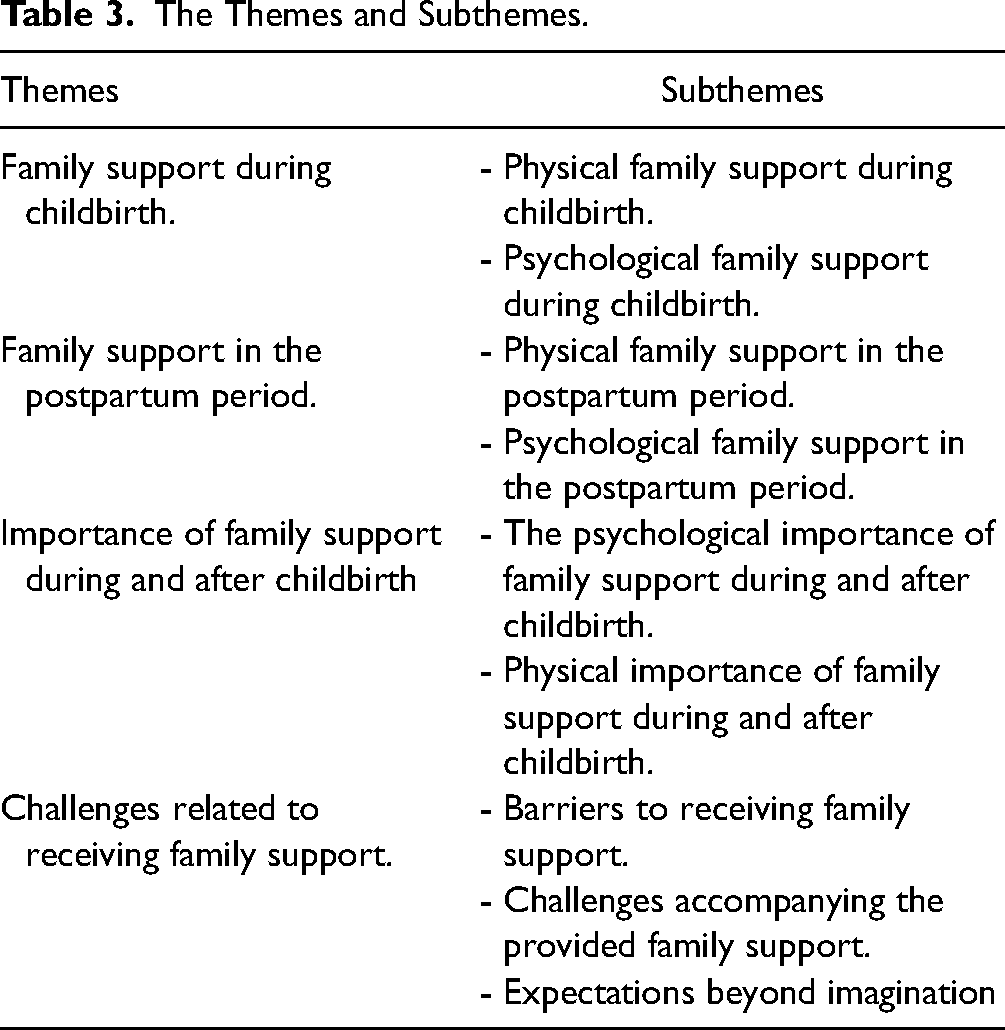
Four major themes emerged from the data describing family support provided to women during and after childbirth. These themes were family support during childbirth, family support in the postpartum period, importance of family support during and after childbirth, and challenges related to receiving family support. Supportive family members primarily included the husband, the woman's family, and the family-in-law, according to the traditions inherited in the Jordanian context and culture.
Conclusion
The study findings could help maternal health professionals screen pregnant women who are at risk of receiving low family support, contribute to developing effective interventions regarding family-centered care, and enhance the overall childbirth experience for women in Jordanian cultural contexts.
Introduction
Childbirth is a significant event in a woman's life. Childbirth experience could affect the psychological, emotional, and physical health of the woman. Strong evidence has emerged from many studies regarding the importance of social support to achieve a positive experience of childbirth (Lunda et al., 2018; Slomian et al., 2017). Social support during and after childbirth as reported by literature is deemed a preventive measure for many postpartum complications such as postpartum anxiety and postpartum depression (Hijazi et al., 2021). Moreover, perceived social support especially from a significant person (such as a spouse) significantly improves the overall childbirth experience (Zamani et al., 2019).
Many studies focus on the importance of social support including family support in enhancing the experience of childbirth among women. However, a dearth of studies aimed to describe the experience of family support during and after childbirth from the perception of mothers, especially in developing countries. Additionally, women after childbirth are anticipated to take several weeks off to recover after giving birth. Frequently, food and presents are brought by family members who visit the new mother and child every day. Occasionally, women are only required to care for the infant and are not expected to do anything else. The significant impact of family support on women's psychological, emotional, and physical health during and after childbirth serves as the foundation for the investigation of this phenomenon. Therefore, the present study was conducted to fill the gap and to explore the essence of the experience of family support from the Jordanian women's perspective and describe the forms of family support the women receive in their childbirth process. The results of this qualitative study could be useful in designing strategies to improve the status of family support during and after childbirth, which would enhance maternal and neonatal conditions.
Review of Literature
Social support for mothers during and after the childbirth process may come from many sources encompassing family members such as the mother, mother-in-law, sisters, and spouse (Yamada et al., 2020). In particular, family support plays an important role in reducing maternal and neonatal mortality and morbidity (Fuentes-Afflick et al., 2021). Furthermore, adequate family support contributes to the transition of women to motherhood safely and adequately (Jakalat et al., 2024; Lévesque et al., 2020). However, cultures vary in presenting family support and the way of providing it (Volling & Cabrera, 2019). To exemplify, extended families, in some cultures, the dominant in society, and these families provide care for the mothers and newborns physically and psychologically (Xiao et al., 2020). In others, family structures, norms, or living away may be obstacles to providing care (Robertson et al., 2019), which may affect the psychological and emotional status of mothers.
Jordan is a developing country in the Arab region. Childbirth occurred in hospitals in a percentage of 99% (DOS, 2021). The presence of a companion during the childbirth process is not common. Hence, the forms of family support in Jordanian culture may be the presence of a spouse or female relative at the time of childbirth outside the ward, helping women after childbirth in the postpartum ward, providing care for women and newborns in the postpartum period at homes, and may be as psychological or emotional support in all previous stages (Miller & Petro-Nustas, 2002).
Methods
Design
This study used a qualitative descriptive phenomenological approach to explore women's experience of family support. Descriptive phenomenology is the most frequent approach used by qualitative researchers (Renjith et al., 2021). Descriptive phenomenology was used in the current study to achieve a sense of the meaning that the women construct from their perspectives without any applications of theories or conceptual models (Fuster Guillen, 2019). In phenomenology, the researcher's role is eliciting, seeking clarifications, and interpreting meaning in alliance with women. In the current study, we used bracketing during data analysis, in accordance with phenomenological principles, to recognize and temporarily set aside any potential biases held by the study team. In order to ensure that the participants’ lived experiences were examined without being unduly influenced by our biases, this deliberate method attempted to preserve impartiality throughout the data collection and analysis (Dörfler & Stierand, 2021). This study involved a vital conversation between the researchers and women to describe the phenomenon of family support from women's points of view, which helped researchers explore women's experiences using their own words. In order to have a thorough grasp of the phenomena being studied, this required digging deeply into women's experiences in order to extract rich details and unique insights and form the essence of the phenomenological study.
Research Question
This study aimed to describe the lived experience of family support from the perspective of women during and after childbirth. Therefore, it answered the following research question: What is the lived experience of Jordanian women regarding the family support they receive during and after childbirth?
Setting and Sampling
The study took place in two public maternity and children's health centers in Irbid and Jerash cities in Jordan. The researchers invited women during their presence in those health centers within the timetable of the national program of children's vaccination in the first 3 months of the child's life (BCG vaccine, congenital diseases screening, and the first dose of Hexa vaccine). The researchers used purposive sampling to maximize variations in participants’ characteristics and provided an enriching description of their experiences of family support during and after childbirth.
Inclusion/Exclusion Criteria
Women were included in the current study if they met the following inclusion criteria: (a) Jordanian women, (b) giving birth during the last three months, (c) being able to comprehend, and (d) willing to participate and invite the researchers to their homes. As a result of these inclusion criteria, this descriptive phenomenological study guaranteed a thorough description of experiences associated with the phenomena under investigation. Exclusion criteria were women who were unable to participate and give consent including women with cognitive impairment, linguistic problems, or any other conditions that might limit their capacity to participate.
Ethical Consideration
Before commencing the data collection, ethical approval was obtained from the Institutional Review Board (IRB) at Research and Ethical Committee of Ajloun University College/ Al-Balqa Applied University and Jordanian Ministry of Health (MOH). Ethical approval number is 1327/H. R/6. Before conducting the interviews, participants were informed and received verbal and written information related to the nature and purposes of the study from the researchers themselves. Women received the information sheet and invitation letter. In addition, they were notified of their right to withdraw from answering any question they did not want to answer and to withdraw from the interview at any time they wanted. Participants were assured that their data were treated in a confidential method and were kept in a safe system. Data were kept in a personal computer in a folder locked by a password. No names or any identifying information were used with the data. Also, the researchers used codes to identify the women is the method that most researchers use to conserve confidentiality and anonymity. Interviews were held in the homes of the women in private rooms without the presence of any relatives.
Data Collection and Analysis
After gaining access to the health centers, the primary researchers met midwives working in these centers and elaborated the study by defining the purpose, significance, approach, population, and inclusion criteria. Midwives assisted in finding the eligible women. The researcher (A.A) opened a friendly conversation with women and provided the invitation letter and information sheet which included all information needed for participation. Then, women who were interested in participating were contacted by researchers, agreed upon the time of the interview, and signed the consent form.
Face-to-face semi-structured interviews were conducted with women who signed the consent form between March 2023 and May 2023. Interviews were conducted by the researcher (NA) who had experience in maternity and neonate health nursing. The interview duration ranged between 45 and 65 min. The researcher (NA) used the interview guide to collect data. Relevant questions emerged during the sequence of data gathering and were used to encourage participants to fully describe their experiences during the interview especially if the participant provided short answers that did not include adequate details. The researcher used phrases such as “tell me more about that” and “can you clarify more” to promote deeper and more detailed investigation of the phenomenon. In addition, (NA) digitally receded the interview, took notes, and brought food and drink as this is a customary gesture of respect and connection in Jordan. (AA, NA, SA) transcribed the tape recording, and translated the text into English. To ensure language cultural transferability, the researchers revised all interviews to make sure that the translation of the transcripts from Arabic into English was accurate, (Table 1). Concurrently, data collection and preliminary analysis were carried out. The authors (AA, NA, SA, MA, and AR) conducted each analysis individually and concurred that the interviews yielded no new information after the 11th. Interview (Mason, 2010). This brings the overall number of participants to 11. All interviews were conducted at each participant's home, as agreed upon by the participants. A phenomenological reduction was applied to uncover the essence of the family support phenomenon. As well, the descriptive phenomenological method was also employed to assess the qualitative data. This included carefully reviewing each participant's response individually and using coding and categorizing to find reoccurring patterns. An iterative strategy was used, with the research team doing several rounds of analysis, discussion, and validation of the emerged themes among the research team to guarantee rigor and reduce bias by applying bracketing. Six iterative steps comprise Braun and Clarke's thematic analysis including reading the data aloud several times, creating codes by applying them to contextual segments using color coding, organizing codes into themes using tables, evaluating themes by going over coded data again, identifying and labeling emerging themes and subthemes, and finally writing the report (Braun & Clarke, 2006). This approach places a strong emphasis on topic creation, code production, and systematic immersion to provide a thorough and trustworthy investigation into qualitative data.
Questions of Face-to-Face Interview.

Also, member checking was used to make sure our findings were accurate. Women were provided with a summary of the major themes that emerged from their experiences once the data was analyzed. They were asked to offer suggestions, rectifications, and other information to confirm the accuracy of our interpretations.
Study Rigor
According to Lincoln and Guba (1985), a guide for the trustworthiness of the current study, confirmability was assured as all interviews were undertaken by the researcher (NA) who is clinically competent (held a master's degree in maternity and neonates). transcripts were translated by (AA, SA, and MA) (they have English language courses and passed English exams) and checked by two independent experts. Besides recorded interviews, (NA) took some notes to confirm the understanding of the women's words. Transferability was maintained by describing the procedure and all details of the study for the reader, using the same data collector and method, and continuing data collection until data saturation was reached. As a result, other investigators or readers can compare the results and determine whether they are applicable to their context. Dependability was ensured by the participation of all researchers in the data analysis process by inter-coder agreement to establish consistency, and researchers ensured a strict rigor analytical process. The credibility was ensured by asking women to give feedback on the transcripts of interviews, and depending on peer examination for each step of the study.
Results
Participant Characteristics
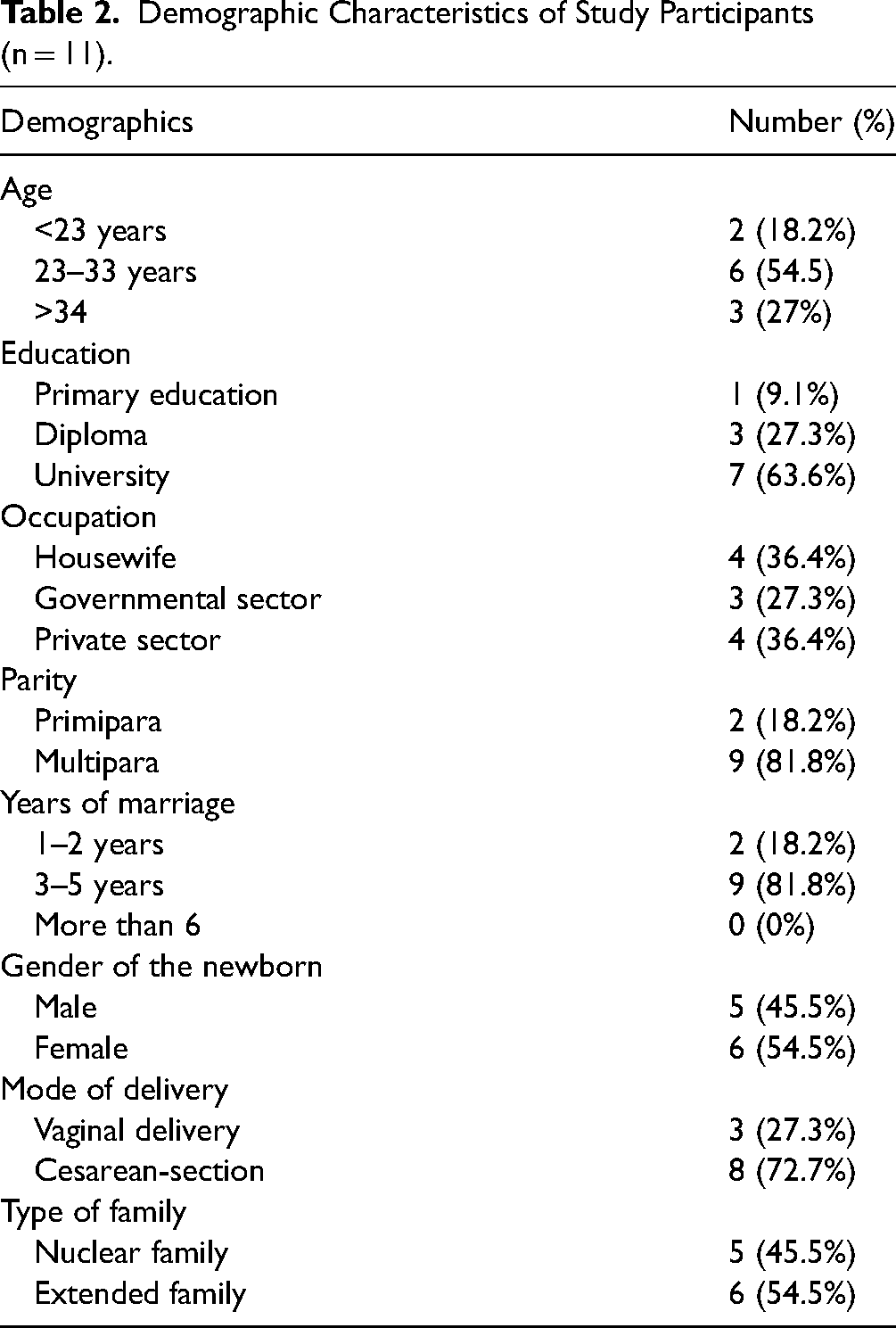
A total of 11 Jordanian women participated in the study. The research encompassed a diverse group of participants with the subsequent demographic profile, Table 2. Four major themes emerged from the data describing family support provided to women during and after childbirth (Table 3). Those themes primarily focused on the support provided by family members to the women during and after childbirth, those members mainly are the husband, the woman's family, and the family-in-law, according to the traditions inherited in the Jordanian context and culture. Additional description of the thematic analysis method as well as a full description of themes and subthemes was included in the supplementary file.
Demographic Characteristics of Study Participants (n = 11).
The Themes and Subthemes.
Family Support During Childbirth
During childbirth and hospitalization, participants reported various forms of family support, both psychological and physical. Many women expressed positive experiences with the support provided by their families. Psychological support included the presence of family members during hospitalization and pre-arrangements for childbirth. For instance, one participant shared, “My mother and sisters take a day off from their jobs to be with me at the time of delivery” (P9). Another participant noted, “My husband takes a day off before the day of delivery to be ready at any time to take me to the hospital” (P5). The continuous presence of family members during labor and childbirth had a significant positive impact on participants’ psychological well-being.
Moreover, participants highlighted physical support, particularly in terms of preparing for childbirth. Family members assisted in organizing essential birthing supplies for both mothers and infants. This practical support extended to procuring clothing and childcare necessities. One participant emphasized the importance of this support, stating, “My mother came to my house and prepared all the supplies for the birth and put them in a bag…so that we would not be late while going to the hospital” (P7). Such support was perceived as instrumental in enabling participants to fulfill their responsibilities effectively during this critical period.
Family Support in the Postpartum Period
The postpartum phase emerged as a pivotal period for participants, marked by physical exhaustion and the arrival of a new family member requiring constant care. This period presented both challenges and opportunities for family support. Two prominent subthemes within this overarching theme were identified: physical family support and psychological and financial family support in the postpartum period.
Physical family support encompassed tangible assistance that family members provided to enhance women's health and comfort after childbirth. Two notable codes illustrated these acts of care and support. The first code highlighted the provision of nutritional supplementation, with one participant noting, “In my family house, they took care of me comprehensively…they prepare food and drinks every day” (P4). Nutritional support was considered vital for strengthening the women's bodies during the postpartum period.
The second code within physical support focused on the care of the infant. Participants expressed a strong desire for help in tending to their newborns, especially due to the physical fatigue and weakness often experienced after giving birth. One participant shared, “My mother-in-law loves newborns…she would visit me every morning and help me with the baby” (P1). This care from trusted family members significantly alleviated the burden on participants and allowed them time for self-care.
Additionally, participants identified psychological and financial family support as crucial during the postpartum phase. This subtheme delved into emotional strength and financial stability provided by family members. Two main codes emerged within this subtheme: visiting and communicating with women after childbirth by family members, and types of financial support provided by family members. Participants shared how their families offered emotional support through regular communication and visits, such as one participant stating, “Whenever I request assistance, they come in a hurry to support” (P5).
Financial support was also discussed, particularly in the form of a traditional practice known as “Naqoot”; “My father bought me the medicines that the doctor prescribed for me upon leaving the hospital… He also gave me Naqoot for the baby……Every day, my mother and sisters kept calling me and asking me if I needed help… ” (P2- multipara). Participants mentioned instances where their families provided financial assistance for medical expenses and baby-related needs. This support extended beyond practical help and highlighted the importance of emotional and financial connections within the family.
Importance of Family Support During and After Childbirth
Participants underscored the immense significance of family support during the postpartum phase. The support of loved ones was invaluable during this difficult time, which was marked by physical as well as emotional issues. Two subthemes that focused on the psychological and physical components of family assistance emerged in this section.
The psychological importance of family support during and after childbirth was explored in the first subtheme, which also explored how family support could assist in avoiding postpartum depression and feelings of isolation. Participants noted that family members’ emotional support, sensitivity, and understanding helped them deal with the highs and lows of early parenthood. Postpartum depression “was much less than in previous births due to the nature of the support that was provided to me,” one participant stated (P3). The emotional connection gives cause for a sense of appreciation and offers a defense against feelings of isolation and hopelessness.
The second subtheme focused on the tangible importance of family support during and after childbirth and emphasized the necessity for assistance with domestic tasks, child care, and getting enough rest., “My mother comes to help me in cooking and taking care of my children …and constantly advises me to go to sleep to get the necessary rest for the wound to heal quickly.” (P8- multipara). Participants with cesarean-sections particularly emphasized the significance of family support in easing physical discomfort and providing comfort during this challenging time. Family support was seen as a vital component of recovery and overall well-being during the postpartum period
Challenges Related to Receiving Family Support
While participants appreciated the support they received from their families, they also encountered challenges that affected their satisfaction with family support. Three prominent subthemes within this theme elucidated the complexities of family dynamics and support provision.
The first subtheme, barriers to receiving family support, encompassed challenges related to geographical distance, women's perceived strength and independence, and daily life and work commitments. Geographical separation hindered the ability of some participants’ families to provide timely support, as expressed by one participant who wished her mother lived closer; “…Being away from my family was the obstacle that prevented them from providing adequate support and assistance when I needed it…” (P5- primipara). Additionally, participants noted that their independence sometimes led to the misconception that they did not require assistance from family members.
The second subtheme, challenges accompanying the provided family support, shed light on unintended consequences such as a lack of privacy and limited duration of support; “ … The door is knocking, and I'm not ready…they came without prior notice by phone…Nevertheless, I desire support to alleviate the physical discomfort.” (P 9- multipara). Some participants felt uncomfortable when family members visited without prior notice, infringing upon their need for personal space and rest. Furthermore, the abrupt transition from intensive support to self-reliance left women feeling uncertain and vulnerable.
The third subtheme, women's expectations beyond imagination, explored the gap between participants’ expectations and the actual support they received. Some participants expressed disappointment in their husbands’ level of support, while others were pleasantly surprised by the support offered by their mothers and mothers-in-law; “ …in the last childbirth, I imagined that he used to be familiar to this situation, so he would provide a better support but the reality was the opposite of the expectations… His involvement in household chores is rather limited.” (P7- multipara). This deviation in expectations highlighted the growing roles and dynamics within families during the postpartum period.
In conclusion, the study illuminated the multifaceted nature of family support during and after childbirth in Jordan. While participants valued the emotional, physical, and financial support provided by their families, they also faced challenges and inconsistencies in their expectations. These findings provide valuable insights into the complexities of family support dynamics during a transitional phase in a woman's life.
Discussion
This research provides a comprehensive exploration of family support in the context of women's experiences before and after childbirth in Jordan. It highlights the fundamental role that family members play throughout this phase, emphasizing their support from prenatal care through postpartum recovery. The study underscores the profound appreciation expressed by women for the unwavering support of their families, which significantly influenced their childbirth decisions and alleviated anxieties. Uncertainty and continual excessive overthinking are two possible manifestations of these anxieties (Hore et al., 2019). Social support especially from friends, family members, and significant others forms a protective factor against postpartum anxiety (Arnold & Kalibatseva, 2021). It's worth noting that all participants in this study adhered to the Islamic faith, which aligns with Islamic principles emphasizing the importance of family support during significant life events. In Arabic communities, strong family ties and substantial family assistance are highly valued, reflecting the broader cultural context (Hutchinson & O’Leary, 2016). Additionally, existing evidence suggests that adequate social support during labor and the postpartum period yields tangible health benefits for both mothers and infants (Al-Mutawtah et al., 2023; Elkashif, 2022; Elmagd & Albokhary, 2021; Hodnett et al., 2013).
In Jordan and wider Arabic societies, it is culturally uncommon for husbands to be present during their wives’ labor. The current study found that both primiparas and multiparas expressed a strong need for familial assistance during labor, aligning with previous research (Hijazi et al., 2021). Family members play a critical role in preparing expectant women for childbirth, addressing emotional and practical aspects. They assist in arranging hospital stays and ensuring mothers-to-be have the important supplies. This type of psychological comfort, together with physical and emotional assistance, adheres to cultural norms in Jordan and is a key source of assurance during the vulnerable stage of labor (Hodnett et al., 2013; Kabakian-Khasholian et al., 2015; Kungwimba et al., 2013).
In Jordan, family members provide significant physical support for new mothers. Families make sure that women are receiving adequate nourishment, which is a worldwide custom (Chung et al., 2022; Hijazi et al., 2021; Kassab et al., 2023; Negron et al., 2013; Xiao et al., 2020). Families also assist with domestic responsibilities and newborn care, enabling new mothers to recover. According to previous research, this tangible support is crucial for the health and well-being of both mother and child (Chung et al., 2022; Fahey & Shenassa, 2013; Hijazi et al., 2021; Negron et al., 2013; Slomian et al., 2017).
The psychological aspect of family support develops as the postpartum period progresses. The transition to motherhood is made much easier by regular visits, emotional discussions, and financial support. This assistance creates a caring and appreciating environment, which is consistent with earlier research highlighting the significance of postpartum care and family support (Fahey & Shenassa, 2013; Russo et al., 2015; Slomian et al., 2017; Xiao et al., 2020). Thus, providing a distress buffer against financial, logistic, and emotional stressors (Knettel et al., 2020). A common custom in Jordan along with other countries is for family members to provide new parents with financial assistance after the birth of a child. This is known as “Naqoot.” This custom emphasizes the value of strong family and community relationships, which have developed over time with evolving community dynamics and preferences.
Our research highlights the psychological importance of family support as a protective factor against postpartum depression and feelings of isolation. Emotional support from family members serves as a shield against the challenges of the postpartum phase. Women emphasized the role of family support in preventing postpartum depression and expressed concerns about being without assistance during this period, aligning with previous research (Di Ciano et al., 2010; Kanotra et al., 2007; Negron et al., 2013; Ni & Lin, 2011; Surkan et al., 2006). Additionally, physical support plays a crucial role in safeguarding the physical health of both mother and infant, aiding in household responsibilities and ensuring adequate rest, consistent with prior research (Di Ciano et al., 2010; Hijazi et al., 2021; Negron et al., 2013; Slomian et al., 2017).
While family support is highly valued, barriers can impede its accessibility. Factors such as geographical separation, a woman's self-reliance, and family members’ busy schedules may limit support during crucial moments. Privacy concerns and the perception of temporally limited assistance were also raised. These challenges align with findings from previous studies (Ali-Saleh et al., 2022; Kassab et al., 2023; Vik & DeGroot, 2021). Expectations regarding family support varied, with some women experiencing shortfalls in support from their husbands but finding satisfaction in assistance from their mothers or mothers-in-law, in line with previous research (Chung et al., 2022).
In conclusion, this study provides valuable insights into the multifaceted nature of family support during and after childbirth among Jordanian women. While family support is highly cherished and integral to the well-being of both mother and infant, it is not without its challenges, often influenced by cultural norms, individual expectations, and changing societal dynamics. These findings contribute to a deeper understanding of the importance of family support during this transformative phase in women's lives within the Arabic context
Limitations
Qualitative studies offer valuable insights into participants’ experiences, but it's crucial to carefully select individuals who are willing to share their unique perspectives. However, the current study had limitations related to the homogeneity of our participant group. All of the study participants were identified as Jordanian, and their narratives largely reflect Jordanian Arabic cultural norms. Thus, the subtleties of cultural variation within the larger Arab context are not fully reflected by our participant sample. Additionally, a significant portion of them had previous childbirth experiences. This homogeneity may limit the applicability of our findings to cultures and settings. While there may be commonalities in values and attitudes among different cultural communities in Jordan, it's important to acknowledge the potential influence of cultural variations on individuals’ experiences and perspectives.
To address these limitations and enhance the robustness of future research in this area, researchers should aim for a more diverse participant sample, encompassing individuals from various cultural and social backgrounds. This broader inclusion would enable a more comprehensive exploration of the interaction between cultural and childbirth experiences. By incorporating a wider range of perspectives, research findings can be more broadly applicable and relevant to a variety of cultural and social contexts.
Implications for Nursing Research and Practice
The findings of our qualitative study suggest potential directions for future research. These include delving deeper into the cultural dynamics that shape women's experiences in the perinatal period, engaging in longitudinal studies to comprehend the evolving dynamics of family support, comparing practices across various cultures to discern commonalities and differences, validating models of care that are sensitive to cultural nuances, and examining how family support directly influences the health outcomes of both mothers and children. These avenues for further investigation aim to build upon the insights garnered from the current study, contributing to a more comprehensive understanding of family support during and after childbirth. In addition, analyzing the distinct roles that various family members play during delivery could provide insightful information about their contributions to the support network.
The study findings have also significant implications for nursing practice and healthcare policy. When examining the cultural and social aspects of family support through the perinatal period, nurses should be sensitive to the various dimensions of that support. This comprehension enables healthcare professionals to more effectively satisfy the particular needs and expectations of women in their care, while also respecting individual preferences and taking into account the many support roles that family members can play. Some suggested approaches involved family support in healthcare practice as the use of telehealth to involve families, family-centered antenatal approaches, and individualized postpartum support plans. By guaranteeing active family engagement and improving the perinatal experience overall, these tactics work together to provide a supportive healthcare environment. On a policy level, this research underscores the importance of healthcare systems acknowledging and endorsing the value of family involvement in childbirth. Policymakers should strive to create healthcare environments that facilitate the presence and participation of family members while safeguarding women's privacy. Additionally, the study emphasizes the importance of incorporating culturally sensitive and family-centered care models into policies and guidelines, to enhance the overall childbirth experience for women in Jordan and potentially guide practices in similar cultural contexts.
Conclusion
This study explored the essence of the lived experience of family support from the Jordanian women's perspective and described the forms of family support the women received during and after their childbirth process. The findings of the interviews have shed light on the importance of family support during and after childbirth within the Jordanian context and culture, which had the greatest impact on enhancing and maintaining a woman's physical and psychological integrity and well-being. In addition, there were challenges related to receiving family support including barriers preventing this. The findings of this study could help maternal health professionals screen pregnant women who are at risk of receiving low family support and may suffer from postpartum depression, to develop effective interventions or policies regarding family-centered care to enhance family support being provided to maintain physical and psychological well-being of those women during and after childbirth.
Supplemental Material
sj-docx-1-son-10.1177_23779608241240137 - Supplemental material for The Lived Experience of Family Support Among Women During and After Childbirth in Jordan: A Phenomenological Study
Supplemental material, sj-docx-1-son-10.1177_23779608241240137 for The Lived Experience of Family Support Among Women During and After Childbirth in Jordan: A Phenomenological Study by Amal MT. Ababneh, Nour Alrida, Manar Abu-Abbas, Ahmad Rayan, Yasmeen Abu Sumaqa, Sajeda Alhamory and Basheer Al-Zu’bi in SAGE Open Nursing
Footnotes
Acknowledgments
We extend our heartfelt appreciation to the women who willingly participated in our research, openly sharing their experiences regarding the support they received from their families during and after childbirth. We are truly grateful for their openness in welcoming our researcher into their homes for these interviews.
Author Contributions
Study design: AA, NA, and AR. Data collection: NA. Data analysis: AA, NA, SA, MA, and AR. Data transcribing and translation: AA, SA, BA, and MA and official expert translator (bilingual English Arabic). Manuscript writing: AA, NA, SA, MA, and BA. Critical revisions for important intellectual content: AR.
Declaration of Conflicting Interests
The authors declared no potential conflicts of interest with respect to the research, authorship, and/or publication of this article.
Ethical Statement
The IRB approval was obtained from the Research and Ethics Committee of Ajloun University College/ Al-Balqa Applied University and the Jordanian Ministry of Health (MOH). Ethical approval number 1327/H. R/6.
Ethical Consideration
Before commencing the data collection, ethical approval was obtained from the Institutional Review Board (IRB) at Al-Balqa Applied University and the Jordanian Ministry of Health (MOH). Before conducting the interviews, participants were informed and received verbal and written information related to the nature and purposes of the study from the researchers themselves. The women received the information sheet and invitation letter. In addition, they were notified of their right to withdraw from answering any question they did not want to answer and to withdraw from the interview at any time they want. Participants were assured that their data were treated in a confidential method and were kept in a safe system. Data were kept in a personal computer in a folder locked by a password. No names or any identifying information were used with the data. Also, the researchers used codes to identify the women is the method that most researchers use to conserve confidentiality and anonymity. Interviews were hold in the homes of the women in private rooms without the presence of any relatives.
Funding
The author(s) disclosed receipt of the following financial support for the research, authorship, and/or publication of this article: This manuscript did not receive any specific grant from funding agencies in the public, commercial, or not-for-profit sectors.

Supplemental Material
Supplemental material for this article is available online.
References
Supplementary Material
Please find the following supplemental material available below.
For Open Access articles published under a Creative Commons License, all supplemental material carries the same license as the article it is associated with.
For non-Open Access articles published, all supplemental material carries a non-exclusive license, and permission requests for re-use of supplemental material or any part of supplemental material shall be sent directly to the copyright owner as specified in the copyright notice associated with the article.
