




Abstract
Introduction
During the pandemic, health issues associated with using digital devices and exploring social media, such as Computer Vision Syndrome (CVS), have increased considerably.
Objectives
This study looked into CVS and its significance in Jordan and the CVS outcomes of undergraduate nursing students who used digital devices to surf social media during COVID-19.
Methods
To assess CVS, a quantitative cross-sectional research design was used. Data were collected in 2022 through an online diagnostic and formative survey utilizing the CVS-Questionnaire (CVS-Q) with 310 undergraduate nursing students from a government and a private university in Jordan. Descriptive statistics and the univariate general linear model were used to analyze the collected data.
Results
To report the prevalence of CVS among the studied sample, the median score was 1.80. The median prevalence score was 24.50 (range = 13–31), and 26.75% of participants reported having intense social media searches. For a student in this study to be diagnosed with CVS, they must receive a score of at least 5, and the current sample score was around 2, indicating they didn’t have a CVS; however, it was moderate when it occurred. About 26.75% of participants reported having problematic social media searches. Back and neck pain and headaches were the typical signs of CVS. The average daily hours spent using digital devices for social media searches increased during the pandemic utilizing mobile phones, especially among male nursing students. Being a junior student with no social media account and unable to balance study and social media were among the predictors of CVS. Most students used protective tools on their digital devices, such as protective films and phone screens, to prevent or accommodate CVS.
Conclusion
There were no prior collected data about CVS in Jordan, and based on the international trend, the COVID-19 pandemic didn’t directly contribute to the prevalence of CVS. However, when the CVS occurred, it was moderate, which mandates proactive and prophylactic redesigning of our educational system.
Introduction
COVID-19 is a global threat and an information epidemic. The use of social media has dramatically increased due to this pandemic (Fouasson-Chailloux et al., 2022; Miao et al., 2022). The pandemic made social media a crucial platform for communication (Miao et al., 2022). These platforms kept people engaged and helped increase internet usage (Fouasson-Chailloux et al., 2022; Miao et al., 2022). Facebook, WhatsApp, Instagram, and Snapchat are common examples of social media platforms (Hamilton et al., 2020).
Social media are websites and programs emphasizing communication, engagement, and content sharing (Fouasson-Chailloux et al., 2022). Social media platforms have many advantages for people engagement and for students to find information about their academics on social networks (Miao et al., 2022). However, social media has many drawbacks, such as addiction and isolation (Miao et al., 2022).
Using digital devices, online education, and social media has given rise to several problems, including Computer Vision Syndrome (CVS) (Fouasson-Chailloux et al., 2022), which is a collection of eye and visual issues brought on by the prolonged use of digital devices (Kaur et al., 2022).
Literature Review
CVS is a very emerging concern in healthcare (Bahkir & Grandee, 2020). It is widespread, with prevalence rising from 5%–65% before COVID-19 to 70%–80% during the pandemic (Kaur et al., 2022; Seresirikachorn et al., 2022). It affects between 50% and 60% of children (Kaur et al., 2022) and 70% of adults (Seresirikachorn et al., 2022). CVS affects around 71% of health-related students (Turkistani et al., 2021), and it is more widespread in women than males (69% vs. 60%) (Seresirikachorn et al., 2022).
When utilizing digital devices and social media, the blink rate falls. Inadequate blinking results in an unstable tear film, which, combined with an inadequate lipid layer, causes dry eyes, burning, and itching (Bahkir & Grandee, 2020; Hamilton et al., 2020). Because of the nature of their difficult courses, this condition is especially widespread in Jordan among health-related students such as nursing students (Gammoh, 2021).
CVS symptoms varied and classified as (1) ocular symptoms such as burning eyes, (2) accommodation symptoms like impaired vision, and (3) non-ocular symptoms, including headaches (Kaur et al., 2022; Seresirikachorn et al., 2022)
CVS is caused by screen glare and reflections, incorrect viewing distances and angles, and poor digital device posture (Wangsan et al., 2022). Thus, excessive use of social media requires customizing interventions for current students (Seresirikachorn et al., 2022). CVS management strategies include frequent blinking, better lighting, taking frequent breaks from the screen (Mohan et al., 2022), high-resolution screens, and image-smoothing visual effects (Kushch, 2022).
The validity of virtual reality and optometry research has some theoretical ambiguity because of their immaturity (Garrett et al., 2018). This study's framework is based on the American Optometric Association (n.d), that is, even 2 h of continuous digital device usage per day would cause a range of eye and vision-related problems and is referred CVS and various physical and psychological problems.
Numerous studies have been conducted on social media and how students use it to stay connected (Kaur et al., 2022; Miao et al., 2022). However, none have explicitly addressed the links between greater social media use and CVS. This study is one of the few studies about CVS during the COVID-19 (Fouasson-Chailloux et al., 2022; Hashish et al., 2022; Kaur et al., 2022; Miao et al., 2022; Noreen et al., 2021) and one of the few about social media (Alabdulkader, 2021; Bahkir & Grandee, 2020; Kaur et al., 2022; Kushch, 2022; Mohan et al., 2022; Seresirikachorn et al., 2022), including Jordan (Gammoh, 2021). Because of online education, about 95% of Jordanian private university students experienced CVS (Gammoh, 2021).
Given that CVS is not going away anytime soon, it is critical to focus on preventive measures that improve the quality of life for those affected by CVS in terms of their eyesight (Kaur et al., 2022). Social media insights can help educational institutions and the media improve their health communication strategies (Miao et al., 2022; Noreen et al., 2021). The nursing education system must be modified to assist university administrators and nursing deans in preventing or managing CVS. During COVID-19, this study looked into CVS in Jordan and its relevance among undergraduate nursing students who used digital devices to browse social media.
Methods
Design
The study design has two stages: one for selecting the two purposively chosen universities, one of which is where the first author works. The second stage was the selection of the students within these clusters, which was done through social relations with teachers of some courses in both universities.
In 2022, data on CVS induced by excessive use of digital devices for searching social media among nursing students enrolled in nursing courses at a governmental and private university in Jordan were gathered using a quantitative cross-sectional design as it allowed the researchers to evaluate the exposures and results of the study participants simultaneously (Polit & Beck, 2019).
Research Questions
The following research questions were answered: (1) What are nursing students’ social media profiles? (2) What is the frequency of CVS symptoms related to using digital devices for searching social media among nursing students enrolled in nursing courses in the selected governmental and private universities in Jordan during the COVID-19 pandemic? (3) What is the intensity of CVS symptoms related to using digital devices for searching social media among nursing students enrolled in nursing courses in the selected governmental and private universities during the COVID-19 pandemic? (4) How many hours per day did the nursing students in the selected governmental and private universities spend on average using digital devices for searching social media before the COVID-19 pandemic compared to during the pandemic? (5) How did using digital devices for searching social media change among nursing students during COVID19 in the selected governmental and private universities? (6) What predicts the social media searches and CVS during COVID-19 among nursing students in the selected governmental and private universities? And (7) What interventions do the nursing students use to prevent or accommodate CVS?
Sample
The general population was nursing students in Jordan. The target population was nursing students in different universities in Jordan, and the accessible population was nursing students in the selected governmental and private universities. Most nursing students in Jordan are young undergraduate females in governmental universities, similar to the current study, but there were no reported data about their eye statuses.
The sample size was obtained using the following formula: N = 10(k) + 50 (Polit & Beck, 2019) (where N is the sample size and k is the number of independent variables) (the use of digital devices for searching social media). According to Polit and Beck (2019), the minimal sample size is 60 individuals; but 310 undergraduate nursing students were sought after.
The “direct recruiting approach” for the study's participants was performed from the nursing courses taught by the first author and some colleagues at the chosen private university. To investigate CVS in Jordan and its relevance, an online diagnostic and formative survey was used to collect data for the current study. The non-random purposive sampling method resulted in a response rate of 88.75%, which is very good for an online survey. The attrition rate was controlled by stressing the study's advantages for the students and nursing education.
Inclusion Criteria
The sample inclusion criteria were nursing students enrolled in the chosen universities during the COVID-19 pandemic and utilizing digital devices to search social media.
Ethical Procedures
This study received ethical approval from the first researcher's government university employer. Concerning the written informed consent, the students were notified in the invitation letter that completing the survey indicated their consent to participate. Nursing students at the chosen universities were given access to the survey and informed that participation was voluntary and that they could revoke consent at any time. Anonymity was guaranteed because no personally identifiable information was gathered. All surveys were numerically coded, and the aggregate information was shared with the nursing dean and university administrators while still protecting the privacy of the data collected from the students.
Data Collection
Although our native language is Arabic, data were collected using the English version of the instruments as it is Jordan's official teaching language of nursing. Following a pilot study in October 2022, data were obtained over a month in 2022. Utilizing Google Forms, information was gathered, and the survey was disseminated on numerous Facebook sites and WhatsApp groups. Nursing students were requested to invite their peers and complete the survey once. The Google form was only intended to support a single entry, ensuring a single submission.
There were no incidents during the data collection process. The two attrition prevention tactics used were effective communication and persuading the participants that the study was relevant.
Instruments
Demographic characteristics comprised gender, grand point average (GPA), type of university where they were enrolled, the student's level, and age. Based on an online survey given to nursing students enrolled in nursing courses and the reviewed literature, the current authors added more items to the CVS-Questionnaire (CVS-Q) to assess the nursing students’ social media profiles more (Mohan et al., 2022; Wangsan et al., 2022).
The students were questioned on a wide range of topics, including whether they had social media accounts when they opened their first account and how they would rate their use of social media before and during COVID-19 (little, moderate, too much). What effects do social media have on students’ academic performance? (positively, negatively, or not), which social media platform do you most frequently use? (Facebook, WhatsApp, Instagram, Tick Took, Snapchat, and YouTube). These added questions related to social media were validated by two PhD holders and reported to be comprehensive. The CVS-Q survey includes a list of further in-depth inquiries (Supplemental material).
To classify nursing students’
The CVS-Q was developed by Segui et al. (2015) to evaluate the presence of ocular symptoms. The initial survey was used to evaluate CVS in light of online education, but it was modified to evaluate CVS in light of social media searches. The current authors conducted a pilot study (2022) demonstrating how practical and precise this customizing was.
Components and Scoring of the CVS. The survey has three sections: (1) the CVS (frequency and intensity), (2) the usage of digital devices before and during the COVID-19 pandemic, and (3) social media behaviors. Utilizing a single rating scale well-suited to Rasch's rating scale paradigm, the CVS-Q evaluates the phenomenon of interest. The nursing students had to report the frequency and severity of each eye symptom (18 symptoms).
The frequency of CVS symptoms and how frequently they occur was scored as follows: (1) Never, which means the symptom does not occur at all, (2) Rarely, which means the random occurrences of symptoms or once a week, and (3) Often or always, the symptom occurs 2 or 3 times a week and nearly every day. Each CVS symptom was classified as either (1) moderate or (2) intense. Thus, to be diagnosed with CVS in the current study, a person must receive a score of at least 5. The frequency and intensity values for each symptom are added to determine the total score for each symptom, which is then used to determine the prevalence of CVS. To be diagnosed with CVS, a person must receive a score of at least 6 (Segui et al., 2015). The intensity was divided into mild, moderate, and severe categories with corresponding values of 6–12, 13–18, and 19 or above to assess the prevalence of intense CVS. The iPad, mobile phones, laptops, desktop and laptop computers, televisions, and other digital devices were the ones that nursing students used the most. The students’ daily usage of digital devices (ranging from 0 to more than 12 h) was compared to the COVID-19 pandemic. Social media behaviors like using a fan or air conditioner, using any eye protection like glasses or films for screens on computers, tablets, or phones, how often people rest their eyes while using social media (never, every 15 min to every 2 h and others), how people rested their eyes while using social media (closing their eyes, staring out the window, using artificial tears, sleeping, and others). The degree to which people rest their eyes while using social media is examined (20–40 cm to more than 100 cm).
The CVS-Q can be utilized in clinical practice and research. The initial CVS-Q was created using the results of literature research, evaluated by professionals, and then retested and reported to have content and construct validity (Segui et al., 2015). It demonstrated strong test-retest repeatability for both scores and has sensitivity and specificity above 70% (Segu et al., 2015). A Cronbach's alpha of 0.86 demonstrated the instrument's reliability in the current study.
Data Analyses
After the data cleaning and checking for wild codes, all coded variables were entered into the Statistical Package for Social Sciences (SPSS) (Version 25) (IBM, 2017), which was used to create statistics based on the level of measurement. Drawing data histograms and assessing standard deviations showed no significant departures from normality were detected (Polit & Beck, 2019).
Before conducting General Linear Model (GLM), we ensured that four assumptions were met: (1) Linear relationship: A linear relationship between the independent and dependent variables was checked by creating a scatter plot. (2) Independence: The residuals are independent. (3) Homoscedasticity: The residuals have constant variance at every level of x. (4) Normality: The model's residuals are normally distributed and were checked visually using Q-Q plots (Polit & Beck, 2019).
Means, medians, standard deviations, and quartiles were employed to report the variables when it was established that the continuous data had a normal distribution. Data were reported descriptively following the different types of variables to address the first query on the social media profiles of nursing students. Regarding social media searches among nursing students, the higher scores, the higher tendency for problematic social media searches (Van den Eijnden et al., 2016).
Frequencies, percentages, means, and standard deviations were utilized, depending on the degree of measurement for the variables, to respond to the second and third questions regarding the frequency and severity of CVS (which was treated as a continuous dependent variable). The median, quartiles, range, and corresponding frequency of the mean score CVS (frequency and intensity combined) were employed to calculate the prevalence of CVS and its intensity.
According to the variables’ measurement level, frequencies, percentages, means, and standard deviations were used to compare the number of hours spent using digital devices before and after the COVID-19 pandemic to address the fourth research question. The data were categorical; thus, to respond to the fifth research question, the students’ most popular digital devices (Tablet (iPad), Mobile Phone, Computer/Desktop, Laptop, Television, and Others) were compared descriptively using frequencies and percentages. To answer the sixth question, set at a significance level of 0.05, a multiple regression analysis (for social media searches) and a univariate GLM (for CVS) was utilized, in which the sample demographics were handled categorically as independent factors. Because the data were categorical, frequencies and percentages were used to respond to the seventh research question related to nursing students’ interventions to prevent or accommodate CVS.
Results
Sample Demographics
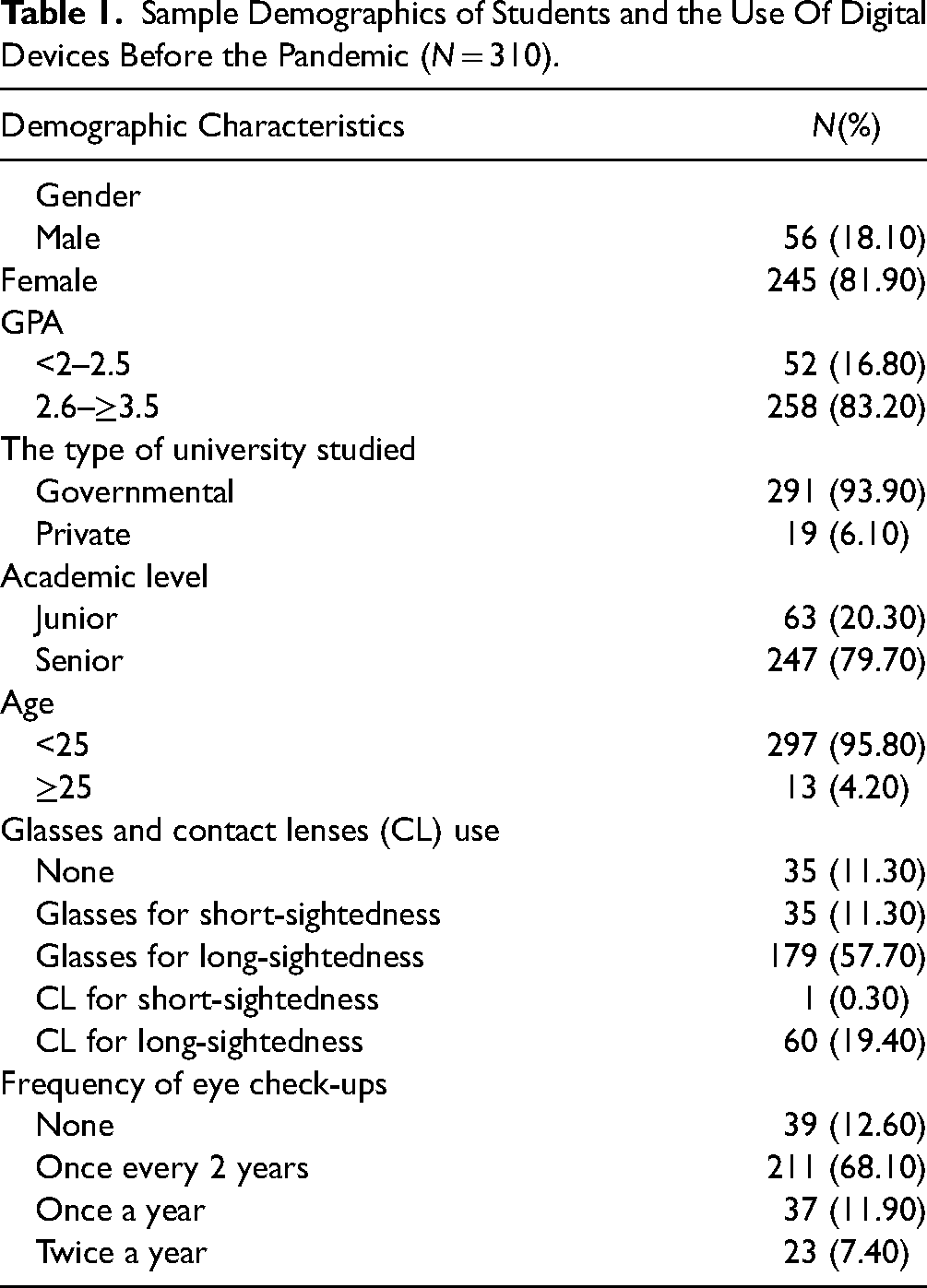
Most of the 310 nursing students were young, senior females with very good to superb GPAs who attended governmental universities. About 70% of students wore glasses for short- or long-sightedness, and 68.10% had eye exams every 2 years (Table 1).
Sample Demographics of Students and the Use Of Digital Devices Before the Pandemic (N = 310).
Social Media Profiles
Most nursing students use social media even when they do not have a social media account, but when they do make profiles, they utilize their true information. The students could reconcile their studies and social media, but they still considered that social media had a bad impact on their studies, so they discouraged their use. They frequently use Facebook and believe it has the greatest beneficial impact on individuals, whereas Instagram has the greatest negative impact. The students disagree that social media hurts relationships, which is understandable given their age (21–25 years) when they started their accounts (Table 2).
Social Media Profile of Nursing Students During COVID-19 Pandemic (N = 310).

Frequency, Intensity, and Prevalence of Social Media Searches and CVS
Regarding the incidence of CVS associated with social media searches among nursing students, the average median score was 1.80. The median prevalence score was 24.50 (range = 13–31), and 26.75% of participants reported having problematic (intense) social media searches. For a person to be diagnosed with CVS, they must receive a score of at least 5 in the current study, and the sample score was around 2, indicating they didn’t have a CVS.
The intensity in the current sample was classified as moderate (13–18; 6(1.90%)) and intense (above 19; 304(98.10%)), similar to Seresirikachorn et al. (2022). Regarding CVS prevalence, the average median score was 1.50 (occasionally occur); the median score was 61.50 (range = 1–85), and 77.75% of students reported having occasional CVS. About 21.30% of students reported an intense CVS, with an average median intensity score of 1.55 (intense) and a median of 27.50 (range = 18–36).
Back pain, neck discomfort, and headaches were the most frequent symptoms of CVS (Table 3). Double vision, worsening eyesight, and tears were the symptoms with the highest CVS intensity. Detailed means, standard deviations, and frequencies are listed in Table 3.
Frequency and Intensity of Symptoms of CVS Experienced by Nursing Students Searching Social Media (N = 310).

SD: Standard devaition.
Comparison of Daily Duration and the Usage of Digital Devices for Searching Social Media Before and During the COVID-19 Pandemic
Before and after the pandemic, the average daily hours spent on digital devices for searching social media were 3.50 (SD = 1.96) and 4.51 (SD = 1.71), respectively. Most students used those digital devices for 3–4 h daily. Current nursing students spent 1.85 (SD = 0.45) on activities other than utilizing digital devices to search social media (Table 4).
Comparison of the Duration of Digital Device Usage for Searching Social Media/Day Before and During the COVID-19 Pandemic (N = 310).
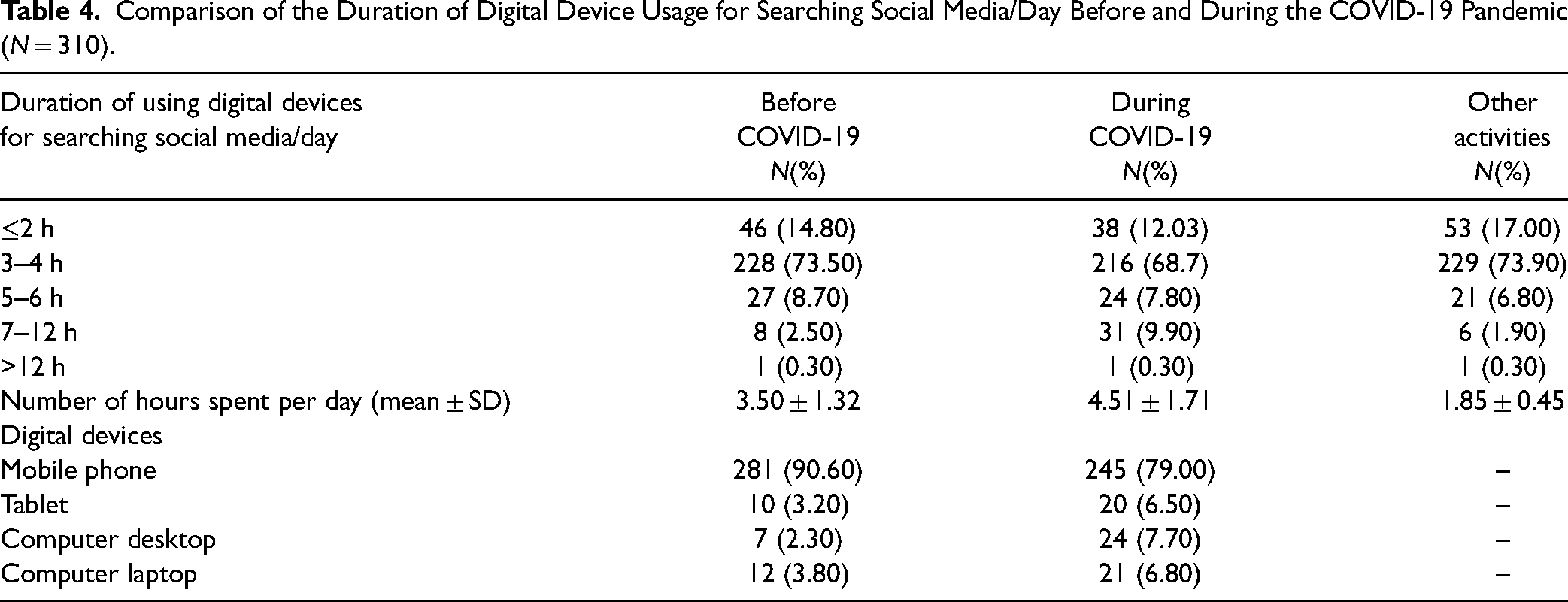
Before and during the pandemic, nursing students regularly utilized mobile phones; however, this decreased as they transitioned to computer desktops, laptops, and tablets, which are more convenient for surfing social media. Detailed means, standard deviations, and frequencies are listed in Table 4.
Predictors of Social Media Searches and CVS During the COVID-19 Pandemic
Multiple regression analysis found that the gender, GPA, type of university where they were enrolled, academic level, and age of nursing students did not predict their social media searches. The model was insignificant and explained only 0.90% of the variance of social media searches (F(df = 1,5) = 1.55, p = .172). For this reason, Spearman's correlation was run and indicated that the only correlate of social media searches was gender (r = −.136, Sig = .05 (2-tailed)); male nursing students tend to spend more time searching social media. The correlation between the total score of social media searches and CVS was significant and positive but weak (r = .118, Sig = .05 (2-tailed)).
The findings of the univariate GLM analysis showed that being a junior student with no social media account and unable to balance study and social media increased nursing students’ social media searches. Aged 21–25 years, having a Facebook account, and watching traditional social media, being on social media for 3–4 h in a fanned environment predicted CVS among nursing students. The model was significant (F(df = 1,26) = 3.67, p = .001) and explained 18.4.0% of the variance of CVS among nursing students related to searching social media (Table 5).
Significant Predictors of CVS Caused by Searching Social Media During the COVID-19 Pandemic (N = 310).

*B Unstandardized coefficients; **p < .001 (2-tailed).
***CVS, computer vision syndrome.
Interventions to Prevent or Accommodate CVS
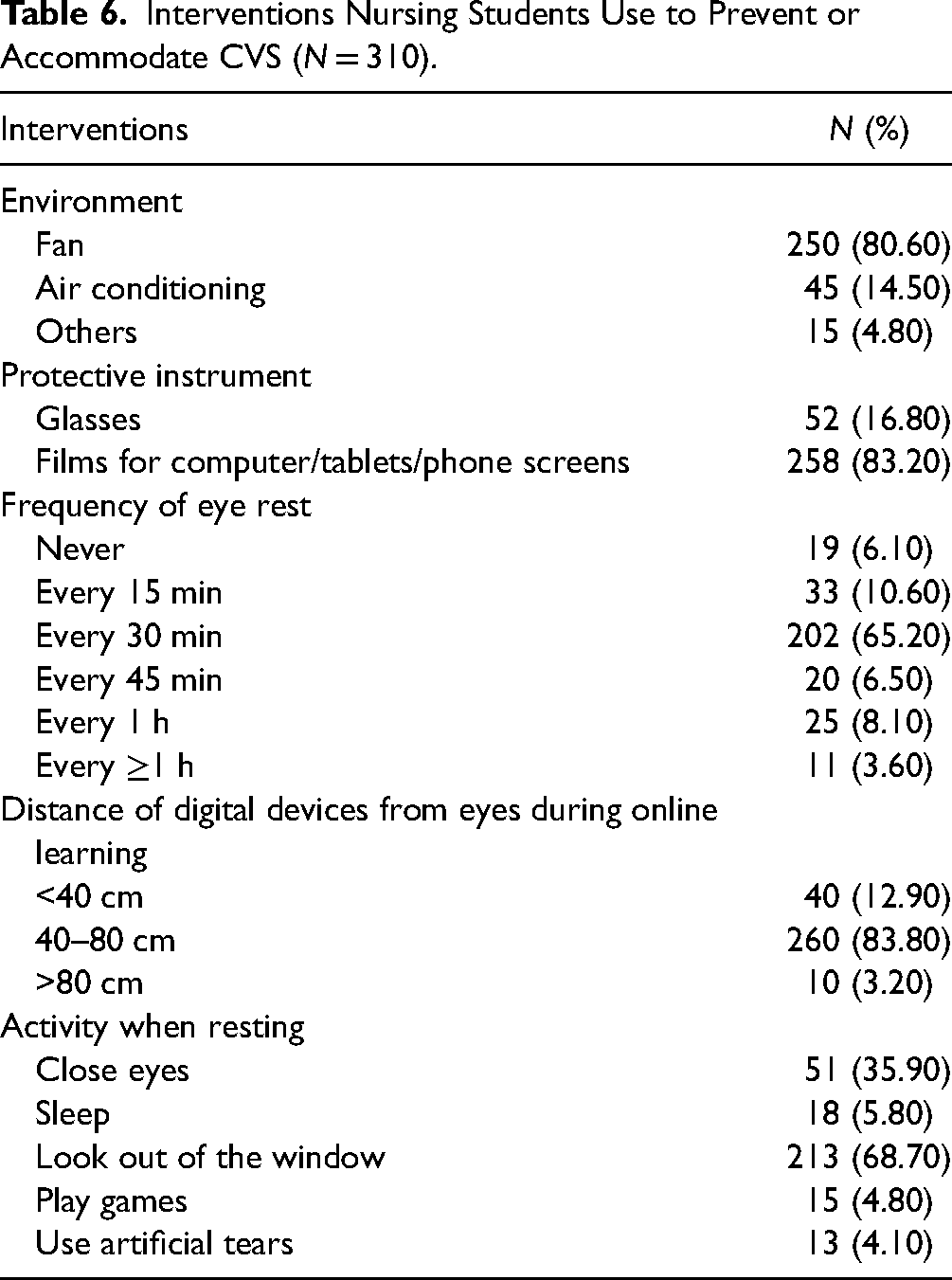
Most nursing students searched social media in fan-ventilated environments (n = 250, 80.60%). Around 83% of participants (n = 285) used protective tools on their digital devices, such as protective films and phone screens. Most students took breaks from their eyesight every 30 min (n = 202, 65.20%). When the students searched social media, the distance between their digital devices and their eyes was 40–80 cm (n = 260, 83.80%). The students either closed their eyes when sleeping (n = 51, 35.90%) or stared out of windows to prevent or accommodate CVS (n = 213, 68.70%) (Table 6).
Interventions Nursing Students Use to Prevent or Accommodate CVS (N = 310).
Discussion
This research studied the prevalence and consequences of using digital devices for searching social media on CVS among nursing students during the COVID-19 pandemic.
Concerning social media profiles, most nursing students surf social media while not having a social media account. People need the internet to surf the web more than social media accounts; googling things is a simple example. Current students use their real information when creating their social media accounts, which is a direct way to identify misinformation spreaders (Wu et al., 2019). People tend not to add or interact with fake accounts.
Nursing students can balance their studies and social media, similar to university students in Pakistan (Abbas et al., 2019). They did not, however, encourage the use of social media since they considered it to have a bad impact on their studies. Current students should be aware that taking balanced approaches to social media can help avoid negative consequences such as being behind in their studies (Abbas et al., 2019).
Current participants used Facebook and thought it had the most positive effects on people, consistent with Engeln et al. (2020) but contrary to Hamilton et al. (2020), who reported YouTube as the most widely used social media platform among students; it enabled them to post their movies and comments on others. On the other hand, current students thought that Instagram had the most negative effects on people, similar to Engeln et al. (2020), who reported that Instagram, compared to Facebook, wasn’t always associated with positive outcomes. In university women, using Instagram increases appearance comparisons and lower body satisfaction (Engeln et al., 2020).
The nursing students disagreed that social media harmed relationships, which is understandable given their age range (21–25 years). Again, a balanced strategy would address social media's negative impacts (Abbas et al., 2019).
CVS Statistics
The social media median score was 24.50, and 26.75% of nursing students only reported having problematic social media use. This finding contradicts the findings of Al-Furaih and Al-Awidi (2021), who found that students frequently utilize social media, resulting in disengagement from lectures. Nursing students, as students of health-related fields, use social media responsibly and professionally (Lahiry et al., 2019).
This sample score was 2, which indicates that CVS was not present (as opposed to scores of 8 in AlDarrab et al. (2021) and 11 in Seresirikachorn et al. (2022)). But when it occurs, CVS has moderate severity among nursing students, similar to Sah et al. (2020) in their study of Indian students; most CVS symptoms were mild (Sah et al., 2020). However, Tai students had severe CVS symptoms (Seresirikachorn et al., 2022).
The median of the mean score CVS revealed that it was prevalent by 77.75% (occurred occasionally), while the prevalence of (severe) intensity was 21.30%. Due to the COVID-19 pandemic, the current study's CVS prevalence related to social media searching is comparable to that of Gammoh (2021) and Seresirikachorn et al. (2022), who found that 70% of Tai students and 94.50% of Jordan students in private universities, respectively, have CVS. However, both studies’ data were collected during the peak of COVID-19.
Back pain, neck pain, and headache were the three most common symptoms of CVS in the current study, similar to Das et al. (2022) and Sah et al. (2020). However, some studies noted additional typical CVS symptoms such as tears, eye pain, and a burning feeling (Munsamy et al., 2022; Wangsan et al., 2022). Most CVS symptoms were extraocular, including musculoskeletal problems like shoulder and neck pain, which can be caused by awkward body posture when using digital devices (Yaacob et al., 2022).
In contrast to Gammoh (2021) in Jordan, the most severe symptoms in the current study were double vision, deteriorating eyesight, and tears. Wangsan et al. (2022) support these ocular symptoms, unlike AlDarrab et al. (2021), who noted extraocular symptoms as neck and shoulder pain. A combination of CVS extraocular and ocular symptoms, including headaches, blurry vision, eye pain, sensitivity to light, and neck, shoulder, and back pain, were reported by Sah et al. (2020) and Seresirikachorn et al. (2022). The current researchers found that near-focusing jobs without correct posture or breaks resulted in accommodative dysfunction, which causes double vision, deteriorating eyesight, and tearing. Ocular symptoms from CVS were present before COVID-19 (Patil et al., 2019), but they became more severe during the pandemic. They were linked to the increased usage of digital devices (Dourandeesh & Akbari, 2022). These symptoms should be treated immediately because they negatively affect students’ quality of life and sleep (Patil et al., 2019; Rachman & Oktovin, 2022).
Different demographic characteristics and climate variations between nations could account for the variations in CVS prevalence between studies. For example, a dry climate increases CVS symptoms (AlDarrab et al., 2021; Sah et al., 2020).
Comparisons Before and During the COVID-19
Before the pandemic, current students spent an average of 3.50 h daily using digital devices to search social media. Most of these students spent 4.51 h per day during the pandemic, fewer than Gammoh (2021) in private universities in Jordan and Seresirikachorn et al. (2022) in Thailand. The daily usage of digital devices during the pandemic climbed by more than 4 h, with a mean of 7 h per day spent on social media searching (Seresirikachorn et al., 2022). 13 h of screen time per day observed in another South African study conducted during the pandemic (Munsamy et al., 2022).
A favorable link appeared between screen time and CVS (Iqbal et al., 2021; Wangsan et al., 2022), which was unanticipated in this investigation. Wangsan et al.'s (2022) discovery that the risk of CVS increases by 12% for every additional hour may explain the lower prevalence of CVS among current nursing students. However, no link was found between screen usage and the prevalence of CVS (Munsamy et al., 2022; Sah et al., 2020).
The nursing students spent 1.85 h daily on other activities besides using digital devices for searching social media, which is supported by Rashid et al. (2021), who discovered that during the COVID-19 pandemic, students used their devices more frequently to watch movies and use social media than to learn. However, this trend is still acceptable among the current sample.
Current students used mobile phones often before the pandemic, but usage fell off during the pandemic. They found that searching social media worked better on computers, so they switched to using desktops, laptops, and tablets. In contrast to Iqbal et al. (2021) and Munsamy et al. (2022), the mobile phone was the most popular device for searching social media. Smart students reported having more CVS symptoms (supported by Iqbal et al., 2021; Munsamy et al., 2022). Additionally, those who used laptops and desktop computers had a lower risk of developing CVS, which could account for the variations in symptom frequencies (as reported in Iqbal et al., 2021; Munsamy et al., 2022). When using mobile phones, however, the symptoms varied depending on the device, with the students concentrating on the small screen, small font, decreased distance, and inappropriate screen brightness, and the ocular symptoms may be the most severe (like in Iqbal et al., 2021; Munsamy et al., 2022), which explains current findings of CVS's most severe symptoms of double vision, worsening eyesight, and tearing.
Due to the improved social media search capabilities of desktop, laptop, and tablet computers, nursing students have switched to using them. However, they reported back pain, neck pain, and headaches were their three most common CVS symptoms, highlighting the usage of improper body mechanics and other environmental headache triggers (supported by Munsamy et al., 2022).
Predictors of Searching Social Media and CVS
Nursing students’ gender, GPA, type of university where they were enrolled, academic level, and age didn’t predict the social media searches, inconsistent with Mrayyan et al. (2022), who reported that most of these demographics precited internet addiction among nursing students. Male nursing students in this study spend more time checking social media, which is similar to the findings of Andina-Diaz et al. (2023). Despite nursing being a female-dominated profession, men dominate its social media. The correlation between the total score of social media searches and CVS was significant and positive but weak. This result is similar to that reported by Akowuah et al. (2021), and Turkistani et al. (2021); the increase in social media use was associated with eye fatigue and eye strain.
Nursing students’ social media searches increased because they were juniors with no social media accounts and could not reconcile schoolwork and social media. According to the current study, junior students use social media platforms to help them adjust faster to their new academic life during COVID-19 (supported by Kazerooni et al., 2020). They frequently struggle to strike a balance at the start of their academic careers. For this reason, these students would surf social media regardless of whether they have social media accounts.
Young adults spend more time online searching social media (as in Gammoh, 2021); their search time may exceed social media search time by 3–4 h (like Alabdulkader, 2021) predicted CVS among current nursing students. Searching social media in fan-ventilated environments leads to corneal dryness compared to air-conditioning environments (Seresirikachorn et al., 2022). Those young adults commonly have a Facebook account (Engeln et al., 2020). Many people have become accustomed to watching traditional social media such as television, which predicts CVS, unlike Koss et al. (2021). The researchers reported that losing conventional social media contributed to CVS, and the current result could be explained by watching traditional social media online.
Preventing or Accommodating CVS
Like Seresirikachorn et al. (2022), most current students searched social media in fan-ventilated environments, which elevated the risk of developing CVS, leading to corneal dryness, compared to air-conditioning environments.
Current students employ protective instruments on their digital devices, such as protective films and phones, similar to Das et al.'s (2022) and Seresirikachorn et al.'s (2022) investigations on using protective equipment, such as blue-coated glass or protective film, on their digital devices. Unprotected screens, lowered brightness, glare, and low resolutions, on the other hand, increased CVS intensity (similar to Iqbal et al., 2021).
Current participants rested their eyes every 30 min and looked out the windows while resting to prevent or accommodate CVS, like Alatawi et al. (2022). The researchers reported that participants take regular eye breaks and often blink to relieve CVS.
The nursing students kept the distance of digital devices from their eyes while searching social media 40–80 cm. Das et al. (2022) reported that their participants kept their viewing distance at 50–62.5 cm and 40–70 cm, respectively. The decline in the prevalence of CVS among current students may be explained by a negative relationship between CVS and the user's distance from the screen reported by Iqbal et al. (2021). These results might reflect recent students’ knowledge of CVS prevention methods. Those nursing students closed their eyes or looked out the windows to prevent or accommodate CVS; however, resting eyes is not enough to reduce the symptoms of CVS. Those nursing students should use the rule of “20–20–20”: every 20 min, shift their eyes to look at objects at least 20 feet away for at least 20 s (Mohan et al., 2022).
Strengths, Limitations, and Future Research Directions
This is one of the few CVS studies completed during COVID-19. The current research findings would assist university administrators and nursing deans in reforming the nursing education system to prevent or manage CVS when it arises.
Since no prior data on CVS was brought on by searching social media, there isn’t anything to compare current results to before or during the COVID-19 pandemic. Thus, international trend CVS was used to decide on the prevalence of CVS among the current sample. The CVS could be related to other factors; the current researchers focused only on students’ using digital devices to surf social media; therefore, other CVS factors must be investigated.
The students in this study were recruited from governmental and private universities; therefore, their social media usage is not typical of other universities in Jordan or other nations.
Surveys should be used with other data collection techniques because self-reported surveys are inherently biased, which may increase as nursing students feel obligated to answer the survey for their professor. Thus, the students were assured that not participating in the study wouldn’t influence their grades. There is a need for objective measurement because subjective data determine the prevalence of social media searches and CVS. Future investigations on CVS might incorporate more scientific techniques, like the Schirmer or general ophthalmic test. Longitudinal research should be conducted on social media browsing habits using a larger, randomly selected sample of nursing students. The current GLM is one of the limitations in the current study; thus, it is better to use hierarchical regression or one-way random effects analysis of variance in future studies.
It is critical to do a CV study among students who are not nursing majors. The current study gathered information on gender, GPA, type of university attended, student level, and age. Other possible extraneous variables, such as income, should be added in future investigations. Blue-blocking filters, anti-glare screens, and anti-fatigue glasses may help to prevent or reduce CVS; however, further research is needed on these interventions.
Implications for Policy, Education, and Practice
The government, media organizations, and nursing schools can develop acceptable social media policies, and enacting and using the right policies would reduce the pedagogical uses of social media. In nursing schools, these policies would control the negative uses of social media by fostering student-faculty members’ communication and, in turn, enabling a better understanding by faculty members of students’ attitudes toward social media (Van Den Beemt et al., 2020).
Vision care specialists must understand recent CVS. All students and professionals exposed to excessive screen time, such as faculty members, must be made aware of the detrimental effects and the preventive measures that can be performed (Lemma et al., 2020).
Routine eye exams are urgently needed because roughly 70% of nursing students use glasses for short- or long-sightedness and have their eyes examined every 2 years. While emphasizing the importance of proper body mechanics to avoid back and neck pain and focusing on adjusting viewing distance based on the digital devices used, appropriate settings should be modified to accommodate correct social media searches.
The authors urge educational specialists to provide a training program to help students look for social media using appropriate digital devices. Current students, for example, must wear protective spectacles to prevent UV light. Their eyes must be allowed to rest and blink frequently, and the screen height must be lowered so that the viewing distance is 15–20 cm below their eye level. Students must spend more time outside, boost the lighting from 300 to 500 lumens, and use artificial eyedrops to moisten their eyes.
Conclusions
There was no prior data on CVS in Jordan, and based on international trends, the COVID-19 pandemic did not directly contribute to the prevalence of CVS.
This study provides detailed information on CVS connected to utilizing digital devices while surfing social media among Jordanian nursing students during the COVID-19 epidemic.
During the epidemic, searches on social media and at CVS increased. More research is needed to determine the appropriate length for a sufficient amount of eye rest, as well as more accurate social media searches and CVS prevalence measures.
Even when the outbreak is over, people will continue to search social media and CVS. As a result, revamping the educational system is required.
Supplemental Material
sj-docx-1-son-10.1177_23779608231191883 - Supplemental material for Investigating the Prevalence of Computer Vision Syndrome (CVS) Among Undergraduate Nursing Students: A Cross-Sectional Study
Supplemental material, sj-docx-1-son-10.1177_23779608231191883 for Investigating the Prevalence of Computer Vision Syndrome (CVS) Among Undergraduate Nursing Students: A Cross-Sectional Study by Majd T. Mrayyan, Abdel Rahman Hasan Alseid, Tasneem Sameer Ghoolah, Marwan H. Al-Shaikh Ali and Manar Mrayan in SAGE Open Nursing
Supplemental Material
sj-docx-2-son-10.1177_23779608231191883 - Supplemental material for Investigating the Prevalence of Computer Vision Syndrome (CVS) Among Undergraduate Nursing Students: A Cross-Sectional Study
Supplemental material, sj-docx-2-son-10.1177_23779608231191883 for Investigating the Prevalence of Computer Vision Syndrome (CVS) Among Undergraduate Nursing Students: A Cross-Sectional Study by Majd T. Mrayyan, Abdel Rahman Hasan Alseid, Tasneem Sameer Ghoolah, Marwan H. Al-Shaikh Ali and Manar Mrayan in SAGE Open Nursing
Footnotes
Acknowledgments
Great thanks are conveyed to students participating in the current study.
Authors’ Note
The authors listed meet the authorship criteria according to the latest guidelines of the International Committee of Medical Journal Editors, and the authors agree with the manuscript. The authors have approved the content before submission or resubmission.
Author Contributions
Study design: MTM. Data collection: MTM, AAHA, TSG. Data analysis: MTM. Study supervision: MTM. Manuscript writing: MTM, MHAA, MM. Critical revisions for important intellectual content: MTM, AAHA, TSG, MHAA, MM.
Data Availability Statement
The datasets generated during and/or analyzed during the current study are not publicly available due to institutional copyright issues but are available from the corresponding author upon reasonable request.
Declaration of Conflicting Interests
The author(s) declared no potential conflicts of interest with respect to the research, authorship, and/or publication of this article.
Ethical Approval/Participants’ Consent
The Institutional Review Board (IRB) of Hashemite University-Jordan approved the study; the reference number was 12/1/2022/2023 on Oct 31st, 2022. The participants provided their consent by answering and submitting the survey, and participating in the study was voluntary. The data was used for the research purpose only.
Funding
The author(s) received no financial support for the research, authorship, and/or publication of this article.

Supplemental Material
Supplemental material for this paper is available online.
References
Supplementary Material
Please find the following supplemental material available below.
For Open Access articles published under a Creative Commons License, all supplemental material carries the same license as the article it is associated with.
For non-Open Access articles published, all supplemental material carries a non-exclusive license, and permission requests for re-use of supplemental material or any part of supplemental material shall be sent directly to the copyright owner as specified in the copyright notice associated with the article.
