




Abstract
Introduction
Clinical placements are a mandatory component of nursing students’ education internationally. Despite clinical education being a key to nursing students’ achievement of nursing competencies, few studies have reviewed students’ narratives to describe their experiences of learning during clinical placement. Such studies may be important in offering a deeper insight into clinical learning experiences than quantitative surveys.
Methods
A
Results
Twenty-seven qualitative studies were included in the review. A thematic synthesis showed over 100 themes and subthemes across the studies. A cluster analysis revealed positive elements and others that were seen in the studies as a barrier (hindrance) to clinical learning. Positive elements included supportive instructors, close supervision, and belonging (in the team). Unsupportive instructors, a lack of supervision and not being included were seen as a hindrance. Three key overarching themes that could describe a successful placement were revealed as “Preparation,” “Welcomed and wanted” and “Supervision experiences”. A conceptual model of clinical placement elements conducive to nursing students’ learning was developed to enhance understanding of the complexities associated with supervision. The findings and model are presented and discussed.
Conclusion
The conceptual model presents positive elements that influence students’ clinical placement experiences of learning. This model may provide a framework to guide professional development programs and strategies to support students and supervisors alike, an important step forward in moving beyond the current clinical placement rhetoric.
Keywords
Introduction
Clinical placements are a universal experience for undergraduate nursing students and a mandatory component of nurse education across numerous jurisdictions (McKenna et al., 2019). Placements in clinical settings aim to prepare students for professional nursing through the transfer of classroom-based knowledge into practice and the facilitation of socialization into the nursing profession (Henderson, et al., 2012; Houghton, 2014). These clinical placements are integral in the development of fitness for practice and job readiness (Wells & McLoughlin, 2014). This, then, is dependent on the learner's engagement with and achievement of clinical course learning outcomes. A pivotal requirement is a discipline qualified educator, commonly termed a clinical supervisor, or preceptor (Flott & Linden, 2016). Despite much global variation in role titles, supervisors are responsible for facilitating the learner's development through relationship-based education and training in support of the learner's professional development (Pilling & Roth, 2014).
How students experience clinical supervision is a key influence on their professional development during clinical placements and has been the subject of investigation in order to determine success attributes (Gilbert & Brown, 2015; Levett-Jones et al., 2009). A study of novice Australian nursing students at the point of entry to their first placement reported they were nervous and worried, feeling underprepared for placement with a fear of making mistakes (Levett-Jones et al., 2015). Thus the way in which supervisors model support for students can be key to learning. Likewise, other studies have also found wide-ranging experiences of supervision during placement with suggestions that less positive experiences may form a barrier to students’ learning (Flott & Linden, 2016; Ford et al., 2016; Kaphagawani & Useh, 2013) and may lead to deliberations on whether or not to continue their studies (ten Hoeve et al., 2017).
However, clinical supervision is a concept that is not well defined in nursing. In the 1990's concepts of supervision focused on supervisory functions or the supervision process (Lyth, 2000). A conceptual model for nursing student supervision developed by Häggman-Laitila et al. (2007) incorporated four functions: “support of professional development,” “pedagogical competence,” “research and development activities,” and “collaborative working.” Flott and Linden (2016) identified four attributes of the nursing clinical learning environment from the literature: “physical space,” “psychosocial and interaction factors,” “organisational culture,” and “teaching and learning components.” Kaphagawani and Useh (2013) concluded from the nursing literature that effective supervision necessitated an environment that offers good interpersonal relationships and good communication.
Clinical supervision and its role in clinical placement have been an important field of research in undergraduate nursing studies over the last two decades, with many studies of nursing students’ ratings of the quality of placements (Courtney-Pratt et al., 2012; Ford et al., 2016; Grobecker, 2016; Gurková & Žiaková, 2018; Mueller et al., 2018; Warne et al., 2010). These studies utilize a range of validated quantitative measurement instruments to survey nursing student cohorts (Mansutti et al., 2017).
As far as we are aware there has been no recent descriptive review of this topic from the students’ narrative perspectives, to present an overview of quality attributes in relation to clinical placement experiences. In the current study, we take the opportunity to further the understanding of students’ placement experiences through a synthesis of the views of students, as seen through the lens of the qualitative researchers’ thematic findings. An important feature of this analysis is the inclusion of contemporary research conducted over the last decade, to the year 2020.
Methods
The study aimed to explore themes emerging from studies of nursing students’ narratives about the impact of clinical practice placement experiences on the development of their competence in nursing. The following research questions are addressed:
What are the key elements of clinical placement that assist students to learn? Are there elements of clinical placement that should be improved to assist students’ learning? What clinical settings do students regard as valuable for clinical learning?
Design
The review is based on a synthesis of thematic findings from qualitative studies. The key data sources are the concepts and meaning-making opinions that have emerged from researchers’ analysis of student narratives. Qualitative studies aim to provide an in-depth exploration of particular concepts and they offer valuable information that can contribute to an understanding of educational dilemmas and help to frame educational decisions (Bearman & Dawson, 2013). However, qualitative systematic reviews have also been criticized as being too subjective and open to bias because of the researchers’ interpretations (Barnett-Page & Thomas, 2009). A synthesis of thematic findings from a range of studies is beneficial because it will enable the overall mapping of patterns of students’ clinical placement experiences summarized from a much larger sample than would normally be engaged in an individual study (Thomas & Harden, 2008). This thematic synthesis also represents a stage of interpretation whereby the reviewers go “beyond” the primary studies to generate new interpretive constructs or explanations (Thomas & Harden, 2008). Data derived across multiple studies may add to a theoretical understanding of students’ experiences of clinical learning environments.
The thematic synthesis was guided by quality criteria described in the ENTREQ statement by Tong et al., (2012) for enhancing the transparency of reporting in studies that synthesize qualitative research. The statement comprises 21 items grouped into five domains: introduction, methods and methodology, literature search and selection, appraisal, and synthesis of findings. The overall findings will be reported as a concept model of what experience elements nursing students found helpful during their clinical placement. We will refer to educators who may fulfill various roles by the general term “supervisor.”
Search Strategy
Multiple searches of health care databases were conducted using keywords related to the inclusion criteria. An initial search of PubMed was conducted to determine the breadth of studies in the field. The inclusion criteria were:
Qualitative descriptive studies of undergraduate nursing students’ experience of clinical supervision in a patient care clinical learning environment. Studies that report thematic findings from nursing students’ accounts of their placement experience. For example, those that analyse descriptive data from the focus group, interviews, open text response to an evaluation survey, reflective journaling, diaries, and similar descriptive sources. Peer-reviewed publications in English over the decade 2010 to June 2020.
Studies excluded based on differing supervision contexts were international placements and those of culturally diverse students. Studies excluded because of the design were quantitative studies and reviews of literature. Quality exclusions included studies with a sample of <12 students (Fugard & Potts, 2015). The criterion for identifying sample size varies according to the depth of interrogation (Sim et al., 2018) however, several guides recommend that qualitative studies include a minimum sample of at least 12 to reach data saturation (Fugard & Potts, 2015; Vasileiou et al., 2018). We concluded that studies with a sample of at least 12 would meet the sampling criterion.
The databases PubMed, Ovid Medline, CinahlPlus, Scopus, and Google Scholar were searched. Searches were based on variants of an evidence-based PICOS search strategy of (Participants) students, nursing; (Intervention) clinical placement or clinical practicum; (Comparison) supervision; (Outcome) experience; (Study type) qualitative, or descriptive.
Search Outcomes and Article Selection
The structured searches yielded 1,323 articles in total. One structured search example given below is that of the CinahlPlus database, in a search of titles and abstracts that yielded 606 reports.
[TI nursing STUDENTS AND AB (clinical placement or practice placement or clinical experience) AND (experiences or perceptions or attitudes or views or feelings or qualitative or perspective) (with limiters—Published Date: 20100101-20200630 and Peer Reviewed)].
The identified article titles and abstracts were downloaded into a library database and duplicates were removed. The full texts for 85 articles with potential for inclusion were downloaded and the characteristics of each were charted across ten criteria: author/study, country of origin/placement setting, design/sample, methods/analysis, key findings, and outcomes. This screening resulted in an initial list of 45 eligible qualitative descriptive studies.
A single researcher conducted the searches and extracted and charted the article elements in the first instance. Two authors (R.C. and S.C.) then independently made an iterative assessment of study quality to determine an article's match with the inclusion/exclusion criteria, the availability of desired content information (in Table 1) and an adequate quality of reporting, to determine and agree on studies that were appropriate for inclusion (Kirkevold, 1997). This process resulted in the removal of a further 18 articles (see list in the Appendix). Eight studies did not describe principal themes from students’ learning experiences and 10 studies sampled <12 students. The two authors agreed on 27 articles to be included in the review.
Characteristics of Included Qualitative Descriptive Studies (n = 27 Studies).

CCLE = challenging clinical learning environment; CG = control group; CLE = clinical learning environment; ICU = intensive care unit; IG = intervention group; OR = operating room; RAC = residential aged care.
Data Synthesis
A thematic synthesis was conducted with the use of NVivo Software (QSR International Pty Ltd, 2020). Following a thematic analysis framework (Lucas et al., 2007) the first author extracted the nominal thematic codes from each study and recorded related quotations. The NVivo coding report was then used as the basis of a two-step cluster analysis (Tkaczynski, 2017). The cluster segments were tabulated based on two predetermined classifications, either “helpful” or “unhelpful” coded elements. In a second step, coded themes perceived as being associated were grouped in a table. Following this, the research questions were addressed descriptively and visually. The mapped themes were examined by two authors (C.R., R.C.) individually and collaboratively to respond to the research questions. This phase included identifying key overarching themes considered to facilitate learning during placement. In the final analytical stage, the findings were built into a concept model of elements conducive to students’ learning during placements.
Results/Findings
Twenty-seven studies met the inclusion criteria and were included in the review. Figure 1 illustrates the identification and selection process based on the algorithm Preferred Reporting Items for Systematic Reviews and Met-analyses (PRISMA) (Page, 2020).
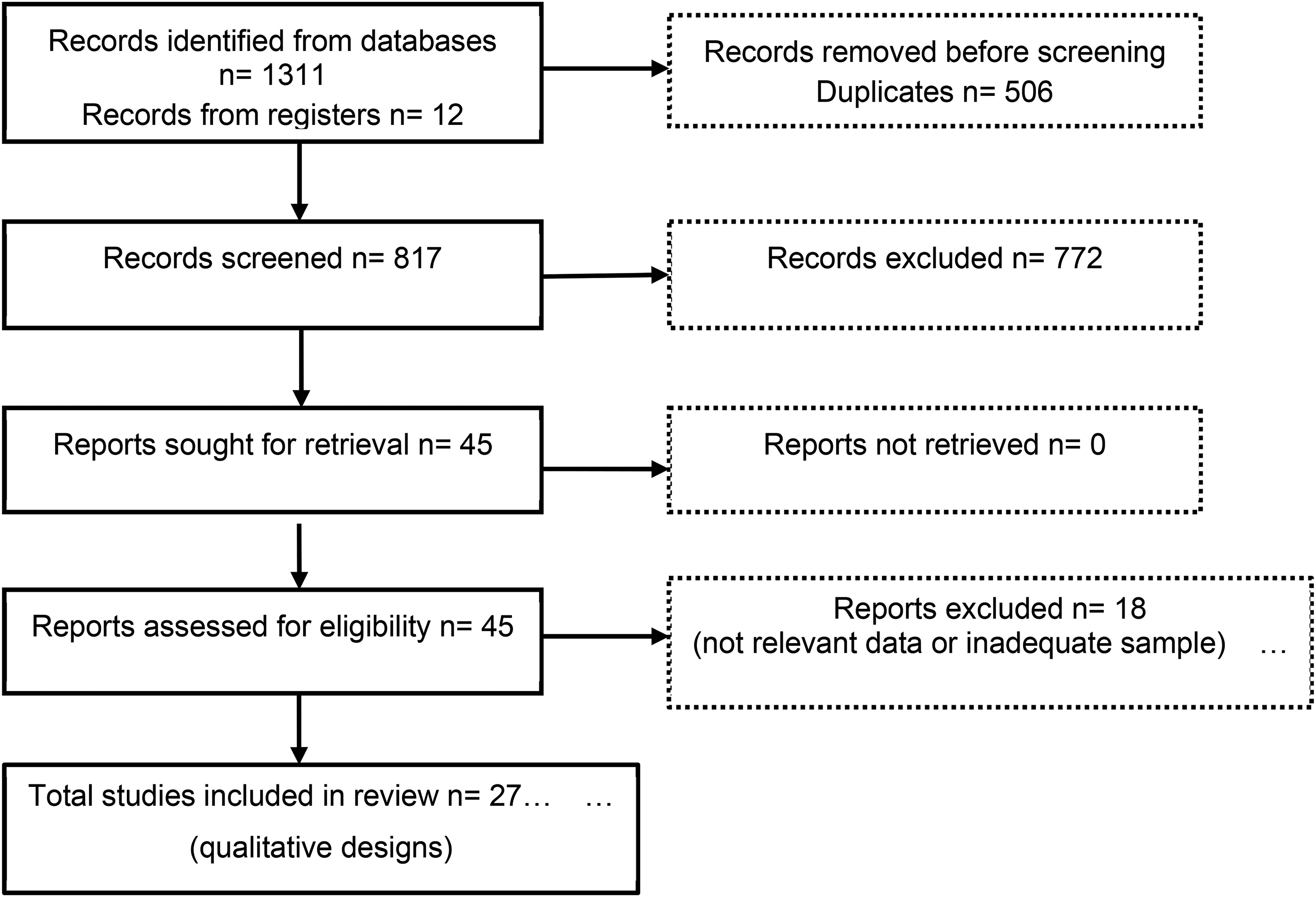
PRISMA 2020—flow chart of article selection.
The characteristics of included studies are presented in Table 1. The studies examined all levels of course seniority: novice students (year 1, n = 6 studies) (Alshahrani et al., 2018; Cooper et al., 2015; Jonsén et al., 2013; McCloughen et al., 2020; Moquin et al., 2018; Thomas et al., 2015); second-year (Arkan et al., 2018) and third- or fourth-year students (n = 7 studies) (Bawadi et al., 2019; Birks et al., 2017; Ching et al., 2020; Jarvelainen et al., 2018; Kern et al., 2014; Lopez et al., 2018; van Der Riet et al., 2018). Some examined dual and multiple year groups (Brynildsen et al., 2014; Courtney-Pratt et al., 2018; George et al., 2020; Walker et al., 2014), or the year was not specified (Hurley et al., 2020; Jack et al., 2018; Jamshidi et al., 2016; Lea et al., 2015; MacDonald et al., 2016; Miller-Rosser et al., 2019; O’Mara et al., 2014; van Giersbergen et al., 2016; Vatansever & Akansel, 2016).
Together, these studies incorporated the views of over 1,000 undergraduate nursing students, with the student sample averaging 38 and ranging from 12 to 260. Approximately 40% of the studies sampled small student cohorts of <20 and two studies sampled >100 students.
There was a good representation of global research. The countries of origin were Australia (n = 11 studies), Canada (n = 3), United Kingdom (n = 3), Turkey (n = 2) and one each from Finland, Italy, Iran, Hong Kong, Jordan, Norway, Singapore and the United States.
Almost all studies used samples of convenience. As seen in Table 1, study designs were exploratory and they commonly used focus groups or individual interviews for collecting data (18 studies), or else open questions embedded in a survey (n = 6), or students’ diaries or a mixed methods technique. The designs were generally centered on narrative at a single time-point; two studies conducted repeated interviews.
A total of more than 100 thematic codes or linked subdimensions were evident. Numerous themes described the ways that elements in the clinical placement environment assisted students to learn and improve their competence in nursing, for example, close supervision and supportive instructors. Half the studies presented at least one theme that formed a barrier to students’ learning. These clustered around students’ descriptions of a negative impact of elements within the placement environment: students not being welcome in the unit, a lack of supervision, unsupportive clinical instructors, or poor-quality nursing practice. Overall, the majority of codes related to both direct positive influences on students’ learning and to negative (unhelpful) experiences. The remainder related to students’ development of coping strategies to manage anxiety/stressful situations and emotional work to “fit in” with nursing culture. A descriptive summary of the thematic codes extracted from studies is presented in Table 2, using the original terminology. Next, we present a further description of these elements with some illustrative quotations.
Verbatim Descriptive Thematic Codes Extracted From the Studies Included.

Note. Coded themes are reported verbatim; other extracted key phrases are shown in italics.
Clinical Placement Elements Conducive to Learning
The majority of placements described were in hospital ward settings with students assigned to a ward nurse supervisor or individually supervised by several different nurses over different shifts. Consistent supervision by one or a few nurses was perceived as optimal as these staff would know the student's capabilities and scope of practice and allocate applicable nursing tasks. For example: students assign value to being welcomed into in the clinical setting, appreciate consistency in individual and team attitudes for support, and situate the complex [supervisory] relationship as central to their experience during their placement. (Cooper et al., 2015)
The supervisory relationship was key to students learning and this featured in 25% (28/113) of all themes, whether they be positive or negative elements. Birks et al. (2017) recorded this: the best placements as those that featured “learning opportunities,” i.e., situations that challenged students to make clinical decisions and acquire new skills. These learning opportunities materialised when three interrelated factors were in place: consistent expectations; clear understanding of the student scope of practice; and trust in student abilities.
The supervisory relationship was bounded by rich descriptions and multiple positive themes such as Nurses’ collaboration, Student expectations of supervising ward nurse, Supportive clinical instructors, Positive working relationship, Positioning for belongingness, Entering into belongingness, and We are there to learn—as students expected to integrate/meld their knowledge into real-life practice. Assessment and feedback for learning were assumed components in the cycle of supervision, though not especially featured in the coded themes that were reported.
Kern et al. (2014) described the importance of becoming competent to “belong” in the nurse team. The “Belongingness” theme was a privileged space where students were granted access to “rich learning” and socialization opportunities in partnership with unit-based nurses: … positioning for belongingness involved students’ demonstration of their preparedness for clinical practice. A decision to optimize their learning and professional growth within the clinical setting involved Persevering for belongingness. Students were cognizant that their performance was continually scrutinized by educators and unit-based nurses. Ultimately, entering into belongingness was predicated on unit-based nurses’ evaluation of a student's competence and connectedness to others. (Kern et al., 2014)
Entering Belongingness changed the student's status, now being “valued” and “accepted,” as a nursing colleague.
Overall, the reviewed studies provided an interpretation of novice to expert transitions featuring novice nursing students through to final-year students. Studies consistently reported themes around the anxieties of novice students’ first clinical placement (First-year nursing student anxiety, Stress at first placement, Coping with anxiety, Stressors of expectations), through to the impact of more structured learning experiences sought through Student expectations of supervising ward nurse, Form a relationship, Be trusted. Through Authentic experiences the training outcomes included Build confidence over time as part of the team, Finessing incivility\Being benevolent\Maintaining values explaining how students maintained the evidence-based practices already learned and were reluctant to cut corners. Ultimately, themes described Constructing nursing identity through achieving a greater understanding of the nursing culture, based on an overall vision of Positive role models (supervising nurses), Belonging, Peer support, Critical thinking abilities, and confidence.
Clinical Placement Elements That Hinder Learning
Coded themes that were said to form a barrier to students’ learning were prominent and were also identified in five of the group of 11 Australian studies. These themes clustered around students’ descriptions of a negative impact of some elements within the placement environment (see Table 2).
Preparation for a student's placement was necessary and should be managed by both the university and the health care organization. Birks et al. (2017) recorded a deficit in planning: Organisational issues raised by students included staff not anticipating students, students not being told where to go or who to work with, and an inappropriate mix of staff/supervisors. “I was allocated to a placement where they didn't always have students. So, I showed up, they didn't know I was coming …” and the two ladies said “oh I’m not having a student” and the other one said “well I’m not having a student [either].”
Relationships were a source of challenge and formed a Barrier to practice learning as staff Missed opportunities to allow students to practice a skill or to learn a new one. Students were not included in nursing work, forced to learn passively as an observer when a supervisor excluded them from work, fearful of students making mistakes. A lack of close supervision was a thread seen across themes, yet this was disappointing to students who were focused on “We’re there to learn” and hoped for feedback about their nursing skills.
In units with a low staffing ratio, there may be no supervisor for a student, particularly affecting a beginner student who would need direction (Arkan et al., 2018; McCloughen et al., 2020). There may be a lack of sequence practice to skill level with students expected to carry out nursing duties beyond their scope of practice (Arkan et al., 2018; Lopez et al., 2018), undermining their confidence. Without direct supervision, the staff and preceptors “may not know why the students are there, or what the students should do” (Jonsén et al., 2013). The “required hours and learning requirements” may be unmet without adequate supervision (Arkan et al., 2018).
Although the Challenges faced in clinical placements were multiple, themes were commonly focused on a Lack of support for students’ learning. O’Mara et al. (2014) acknowledged that clinical learning is always influenced by relationships in context: …relationships in the CLE are fundamental to clinical learning in both a positive and negative sense … our findings suggest that positive relationships also act as buffers to unsupportive practice cultures, and negative clinical unit cultures and relationships. As students identified challenging relationships, they tapped other resources as they rebuilt, redirected, retreated and/or reframed their learning.
Notwithstanding this, a negative culture could enhance students’ resilience as they Learn to reframe negative experiences into something meaningful that they could relate to their future practice. O’Mara et al. (2014) described one student's response to disappointment owing to negative experiences: It's a sense of accomplishment that I can do this. It doesn't matter what we’re going to face in our career, if I can get through this then I can [deal] with anything.
What Clinical Environments do Students Regard as Valuable for Learning?
Most studies examined clinical placement programs within generalist hospitals as of value for learning, however five specialty placement studies: Intensive care, operating theatres, residential aged care, nursing homes and primary care were identified (Miller-Rosser et al., 2019; Moquin et al., 2018; van Der Riet et al., 2018; van Giersbergen et al., 2016; Vatansever & Akansel, 2016). Each of these were seen as appropriate for nursing student placements. Specialty placements offered students broader insights into nursing practice, however, were often observational in nature. Students described Being an intensive care unit (ICU) nurse, Learning in ICU, and differences in patient communication in ICU owing to patients’ conscious states and commented the staff members were welcoming and supportive. Owing to the ward context, which can be stressful, ICU placements were said to be most suitable for senior students. In a primary care residential camp for children with renal disease, nursing students found a Journey of self-discovery which made them Think differently about nursing: i.e., caring for ambulant young people and understanding chronic health issues. In residential aged care, students described Needing to take initiative when working with Health Care Assistants and residents without registered nurse supervision. Although lack of supervision was reported in another included study, students also appreciated feeling welcomed through preplacement information and an introductory program at the facility on their first day. Students thought the peer-to-peer learning model where first- and third-year students worked together helped them to learn (Brynildsen et al., 2014).
Overall, themes from the reviewed studies aligned with the prospect of a novice-to-expert trajectory suggesting that students’ nursing competence can be enhanced via successive supervised practice placement experiences over the years of study. Lopez et al. (2018) who interviewed third-/fourth-year students at a university in Singapore reported this transition: The participants shared that they had started out with a beginner's mind and adapted to the ward culture over time as they progressed to their senior years in their academic career: “… I am quite comfortable and now quite familiar with the environment. So to me, I sort of know how the system works and how the hospital culture will generally be like, so it's easier for me to adapt to even if it causes me stress.” (Lopez et al., 2018)
Development of a Concept Model
In the final analytical stage, a concept model was developed collaboratively, with a consensus achieved among the authors. This model aimed to be a visual representation of constructive elements for students’ learning. Three overarching themes that emerged were “Preparation,” “Welcomed and wanted” and “Supervision experiences” (Figure 2).

Conceptual model.
The model aligns the three themes with strategies perceived to help students learn during placement. It was evident throughout the thematic synthesis that education providers, health care organizations, and students contribute to the success of clinical placement and need to be considered in light of the three main themes. Our concept is, therefore, that the key themes and their components represent impacts on students that operate in tandem, at the level of the main themes (horizontally) and at the level of the roles players play (vertically). The concept model signifies a pattern of nursing student experiences of learning that will likely be repeated in successive placements until competence is achieved.
Discussion
The current study presents an overview of themes from nursing students’ narrated experiences of learning during clinical placement. The analysis revealed many elements conducive to learning, as well as a plethora of elements that were regarded in the included studies as a hindrance. As the studies originated in 12 different countries, the findings were not restricted to any region or nursing program, allowing for a broad understanding of potential impacts on students.
The review confirmed that students assign value to be in an inclusive learning environment (Cooper et al., 2015), which supervisors are underprepared to manage and report students concerns (George et al., 2020; McCloughen et al., 2020) and extended the known issues to include that current organizational feedback mechanisms are not always helpful for students in reporting their experiences (Moquin et al., 2018). We also noted that education providers need to teach students coping strategies regarding the stressors encountered during clinical placement (Hurley et al., 2020; Jamshidi, et al., 2016). Although there may not be any perfected model for learning during placements the elements clearly represent a “learning cycle” described by Falender and Shafranske (2017): clinical supervision involves a cycle of observation, evaluation, feedback, supervisee self-assessment plus the acquisition of knowledge and skills by instruction, modelling, and mutual problem-solving. (pp. 88).
Effective clinical learning commences when students are adequately prepared for placement. Through “Preparation,” along with the experience of being “Welcomed and wanted” students can feel included and arrive ready to learn. This echoes other studies that highlighted the importance of preplacement student preparation (e.g., in nursing skills and communication techniques) (McLeod et al., 2021; O’Brien et al., 2019) along with effective communications between university, placement facilities, educators and students, to facilitate a positive placement experience for students (Garvey et al., 2021; O’Brien et al., 2019). From a placement organization perspective, elements such as orientation, appointing preceptors and structuring the placement were conducive to learning (Birks et al., 2017), whereas disinterested and unwelcoming staff were a hindrance (Cooper et al., 2015). From a university perspective, students and supervisors could be better informed about students’ schedules, skills, scope of practice, curriculum and learning objectives, and how these relate to each clinical placement. All this provides a richer understanding of the notion of welcoming and inclusivity that have previously been identified in quantitative studies (see Doyle et al., 2017; Ford et al., 2016; Lamont et al., 2013). Furthermore, students who were prepared for and accepted responsibility for striving to develop their nursing competence, who worked hard to fit in and persevered to “Belong” were rewarded with inclusivity and rich learning experiences with ward staff (Kern et al., 2014). One strategy not mentioned in the included studies that could enhance students’ sense of belonging is for supervisors to introduce them to organizational policies and procedures. Inclusivity assists students in developing a nursing identity; elements evident in both the “Welcomed and wanted” theme and “Supervision experiences” theme.
An emergent theme in our results highlights contemporary thinking in the literature around the need for education providers to prepare students for the challenges of clinical placement by introducing them to coping and anxiety-reducing strategies (Ching et al., 2020; Cornine, 2020). Time and support for students to practice and use the strategies in preparation for, and during clinical placement is also needed. For example, a university workshop was valued by students as preplacement preparation (Garvey et al., 2021).
An element that was not present in the reviewed literature and is worth further consideration is the role of the health care consumer and how they may impact students’ learning in clinical placement. As the active involvement of health care consumers in nursing education expands globally (Suikkala et al., 2018), the impact of this involvement on students learning during clinical placement warrants examination.
Second, as shown in Figure 2, elements of “Supervision experience” were the largest theme overall. The wider student narratives provided insights confirming nurses’ positive collaborations with peers, managers and students, preceptor support, ward staff inclusivity, quality and safe learning environments to encourage students to belong. The positive elements aligned with descriptions of best practice in student supervision in the nursing literature (Flott & Linden, 2016; Häggman-Laitila et al., 2007; Kaphagawani & Useh, 2013) and in a practical guide to professional experience placements (School of Nursing, 2020). As in our study, however, other studies report that similar negative student experiences of placement persist (Donough & van der Heever, 2018; Mahasneh et al., 2020; O’Brien et al., 2019). The diversity of our findings and those of others confirm a need for supervisor professional development to provide more skilled supervision. This issue is known as a long-standing barrier to quality clinical supervision in nursing, with Salminen et al. (2021) calling for international decisions around what industry-wide standards are required for supervisor competency. The need to identify supervisor standards with a view to preparing every registered nurse for supervising as a requirement of their role was a recommendation from a recent review of nursing education in Australia (Currie et al., 2019). Furthermore, a contemporary review of the international literature concluded that there are few meaningful and robustly evaluated examples of professional development programs made available to supervisors (Ryan & McAllister, 2020).
Our review reported here included 11 Australian studies, illustrating the depth of national interest in the provision of quality placement experiences for students. This is encouraging and supports recent funding decisions for Australian projects seeking to enhance clinical placement quality. One such project has produced a validated and reliable survey instrument, the Placement Evaluation Tool (Cooper et al., 2020) that organizations can utilize to seek student feedback on quality in placement experiences. NHS Education for Scotland (2020) has implemented a national quality management of clinical placement initiative to provide a consistent approach to clinical practice and to improve the quality of placement experiences. These national initiatives are encouraging, helping to ensure that we move beyond what is currently known about students’ learning in clinical placement and develop an evidence-based approach to enhance the positives and remove hindrances.
Several limitations of this review are recognized. The designs involving convenience samples and single group data lie at the lower end of the range of research evidence. Studies that have reported students’ recall of unhelpful experiences may lead to unintentional response bias, although the hindrances reported here are similarly echoed across the published literature. Although the transferability of findings should be treated with caution, the benefit of this review is that it will inform those who seek to improve the quality of nursing students’ clinical learning.
Implications for Practice
The conceptual model derived from a comprehensive exploration of qualitative data can add to understanding the complexities that impact students’ learning during clinical placement. The model provides a framework for professional development programs for supervisors and enhances our understanding of the support students may require around clinical placement.
Conclusions
Many elements conducive to clinical learning were identified in this review through an exploration of themes from nursing students’ narratives. Numerous themes described clinical placement elements that assisted students to improve their competence in nursing. Although this finding is encouraging, it is disappointing to report many elements that hindered students’ experiences, particularly given that many of these elements have been consistently described over the last few decades. Education providers, health care organizations, supervisors, ward managers, and staff cannot rest on their laurels, as all shoulder responsibility of optimising students’ learning during clinical placement. Moreover, preparing students to manage stress and anxiety associated with clinical placement is vital in achieving positive learning outcomes.
Students’ perceptions are one data collection point, however, our concept model produced here and substantiated by the supporting narrative offers education providers and health care organizations important information for use in the design and implementation of high-quality clinical placements. These results could be further strengthened if supervisor professional development is evaluated and reported, along with work undertaken to ascertain the training needs of the nursing staff who work with students in support of their clinical learning experiences.
Footnotes
Declaration of Conflicting Interests
The authors declared no potential conflicts of interest with respect to the research, authorship, and/or publication of this article.
Funding
The authors received no financial support for the research, authorship and/or publication of this article.
