




Abstract
The purpose of this study is to provide an overview of patients’ experiences using a precision medicine (PM) clinic that conducts pharmacogenomics-based (PGx) testing for adverse drug reactions. The study aimed to identify the features of the clinic valued most by patients and areas for improvement. A paper survey was used to collect data. Survey questions focused on patients’ perceptions of the PM testing and the overall clinic experience. Sixty-seven patients completed the survey. Quantitative data were analyzed using SPSS and frequencies were reported. Open-ended responses were coded and organized thematically. Patients reported that the clinic services increased confidence in their medication usage. Feeling respected by staff, receiving education, and quick appointments were highly valued by patients. Suggested areas for improvement included better communication from the clinic to patients, expansion of clinic services, and education for other healthcare providers. The findings demonstrate that patient experience goes beyond the clinical care provided. Current and potential future providers of PM should invest the time and energy to configure their care delivery system to enhance the patient experience.
Introduction
The field of precision medicine (PM) is a rapidly growing area of medicine. 1 The goal of PM is “to target the right treatments to the right patients at the right time.” 2 PM involves the analysis of patients’ genetic information through pharmacogenomic (PGx) based testing to guide medical decision-making (eg, tailoring drug selection and dosage). 3 Tailoring treatments to patients’ genetic information can result in more effective treatments and reduced side effects for patients. Research has demonstrated some effectiveness of PM-based medical treatments. For example, one study (N = 685) evaluated the effects of PGx-guided treatments on patients with depression and anxiety and found that depression patients receiving the PGx-guided therapy had significantly higher response rates to the medication than patients who did not undergo PGx testing. 4 Another study examined the efficacy of conducting pre-treatment PGx tests for patients undergoing chemotherapy. Findings demonstrated that patients who received the pre-emptive testing experienced fewer adverse side effects than patients who did not get the testing (28% vs 73%). 5 These studies highlight that using PM to customize treatments for patients can result in better patient care and treatment efficacy.
In addition to improving patient outcomes, the use of PM has the potential to result in system-level benefits such as cost savings through the reduction of adverse drug reactions and reduced hospital stays. 6 Deploying PM on a wide scale can have promising benefits for patients and healthcare organizations alike. A key component of effective implementation of a PM approach involves understanding the user experience of PM and patients’ perceptions of the service 7 in an effort to mindfully design and configure the operational system for value delivery. Current research on PM focuses on the clinical implementation of the program. 7 Limited research exists on the patient experience side of PM. This paper aims to address that gap.
Patient Experience
Patient experience refers to “the sum of all interactions, shaped by an organization's culture that influence patient perceptions across the continuum of care.” 8 The patient experience requires consideration since patients are the consumers of healthcare services and their cumulative experience will impact adoption and continuity of care. This experience (driven by perceptions) goes beyond the patient-healthcare provider interaction and includes interactions with a variety of staff, such as secretaries, nurses, etc., and the service delivery environment. Accordingly, the patient experience begins before a patient even sees a healthcare provider, or visits a clinic. The interactions that a patient has with staff working in a healthcare setting and the reactions those interactions elicit affect how a patient perceives the services and treatment they are receiving and their overall satisfaction with care.9,10 Patient experience involves more than providing a service to an individual and also is about managing the emotions a patient experiences while obtaining healthcare services and about optimizing a patient's overall wellbeing. 10 Therefore, healthcare professionals who want to provide good service to patients must think beyond the healthcare service being delivered and consider a patient's overall experience continuum, beginning with their first interaction (eg, making an appointment) with the service to the end of their treatment. This holistic approach to the patient care journey is important, because research demonstrates that good patient experience can result in improved patient outcomes, better adherence to medications, increased patient satisfaction, and improvements to the healthcare system.9,11 Thus, it is important to know what features of a healthcare service patients perceive most valuable in order to enhance the patient experience, improving satisfaction with care and creating individual and system-level benefits.
Studies have examined patients’ level of appreciation for PM services by examining their willingness to use and pay for PM services. Different payment schemes exist for PM services (eg, covered by insurance, co-pays) and willingness to pay can provide insight into the perceived value of a service. Patients can indicate their level of valuation for the service through their degree of willingness to face an out-of-pocket expense. One study 12 assessed cancer patients’ acceptance, understanding and willingness to pay for PGx testing. Almost all patients surveyed were willing to accept PGx testing that could improve prediction of a response to chemotherapy when the testing was free, and results were available in a day. The median patient perception for a reasonable price to pay for the test was $200 and willingness to pay for the testing was higher for patients who better understood the PGx testing and who had higher incomes. The median acceptable wait time for results was 14 to 16 days. 12 Another willingness to pay study 13 found that most respondents were willing to pay a maximum of $100 for a PGx test. These studies lend support to the notion that PM services are desired and valued by patients.
While the studies described above assessed acceptance of PGx through the valuation of price and speed of service by patients, they did not consider what features of the service were valued most by patients. The purpose of this paper is to provide an overview of patients’ experiences using a PM clinic with a focus on patients’ confidence in the treatment received at the clinic, the features of the clinic they valued most and whether they would recommend the clinic to others. This paper aims to highlight patients’ experiences using a PM service, what patients value about the service and provide recommendations on how service providers can enhance the patient experience within the area of PM.
Method
The Precision Medicine Clinic
The study focused on a PM clinic located in a tertiary care hospital in southwestern Ontario, Canada that conducts PGx-based testing for adverse drug reactions. The clinic was chosen as the sample for this study through convenience sampling as our established relationship with the clinic staff facilitated ease of access to the population of interest. Patients referred to the clinic undergo genetic testing for the likelihood of experiencing an adverse reaction to a specific drug their physician is prescribing. A blood sample is taken and analyzed and once complete, the clinic physician reviews and interprets the results and makes a recommendation to the referring physician (eg, start a lower dose, use a different drug). Thus, patients referred to the clinic receive tailored recommendations based on their genetic information, personalizing their treatment plan.
Survey Design and Development
We used a paper survey to collect data from patients. Paper surveys were used to collect data to comply with hospital privacy policy and protect patient anonymity. In addition, consultations with the clinic staff revealed that paper surveys would facilitate ease of use and reduce participant burden for an ill and older patient population compared to an online survey. The survey included four main sections: patient characteristics, patient feelings after learning their results, the overall clinic experience, and two open-ended questions aimed at capturing patient preferences. Survey questions were developed by consulting the literature on PM 14 and through discussions with the PM clinic team. Questions related to patient characteristics included age, gender, education, and current diagnosis. Participants were presented with four statements related to learning about their test results and asked to state whether they agreed or disagreed (eg, “After learning my test results, I felt more confident that the medications prescribed to me would help with my condition”). A five-point Likert scale was used to assess patients’ perceptions about their overall clinic visit. Participants were presented with seven statements about their clinic visit and asked to state whether they agreed or disagreed (eg, “I was treated with dignity and respect”). Additionally, participants were presented with two open-end questions where they were asked to identify two features of the clinic that they valued the most and two areas of improvement. Lastly, participants were asked whether they would recommend the PM clinic to family/friends. The study received institutional approval.
Recruitment
Staff at the clinic distributed 150 surveys to patients in three main diagnostic groups: cancer patients, gastrointestinal (GI) disease patients, and patients on anticoagulants. These groups were chosen because they represent most patients that undergo testing at the clinic. Following a convenience sampling approach, staff asked patients if they were interested in participating in the study during their clinic visit and patients who responded “yes” were given a package containing the survey and an envelope with return postage. Participants were instructed to complete the survey on their own and mail the completed survey back to the research team. Fifty surveys were distributed to each diagnostic group. The number of patients per diagnostic group was generated through discussions with clinic staff about their responsibilities during a clinic visit and how many surveys could be distributed without disrupting the flow of the clinic and increasing burden for staff.
Data Analysis
Data were analyzed using SPSS. Frequencies were calculated for each of the responses. If a participant did not answer a question, their response for that individual question was removed from the frequency reporting.
Responses to the open-ended questions ranged from a few words to three sentences. Given the limited amount of qualitative data, the second author descriptively coded the open-ended responses. A combination of in-vivo and descriptive codes were used. The codes were counted and grouped into categories. These categories represent the reported features of the clinic most valued by patients and recommended areas of improvement.
Results
Sample Description
Sixty-seven patients completed and returned the survey (response rate of 45%). Participants included 32 cancer patients, 25 anti-coagulation patients, six GI patients, and three patients with other diagnostic conditions (Table 1). Thirty-four women and 27 men completed the survey. Six participants did not report their gender. Over a third (37%) of participants were between the ages of 55 and 74 years old. In addition to reporting frequencies, we ran correlations between participant characteristics and each of the survey items. No significant correlations were found and thus, only the descriptive statistics are reported below.
Sample Description (N = 67).

Missing values: a = 2; b = 1; c = 3.
Confidence in Results Received at the Clinic
Participants reported increased confidence in their care and treatment after the PGx testing. Most participants strongly agreed or agreed that after learning their results, they felt more confident that they would experience fewer side effects of the medication, the medication would help their condition, and that they felt more educated about the decisions that were made about their treatment (Table 2).
Confidence in Testing Results (N = 67).

Overall Clinic Experience
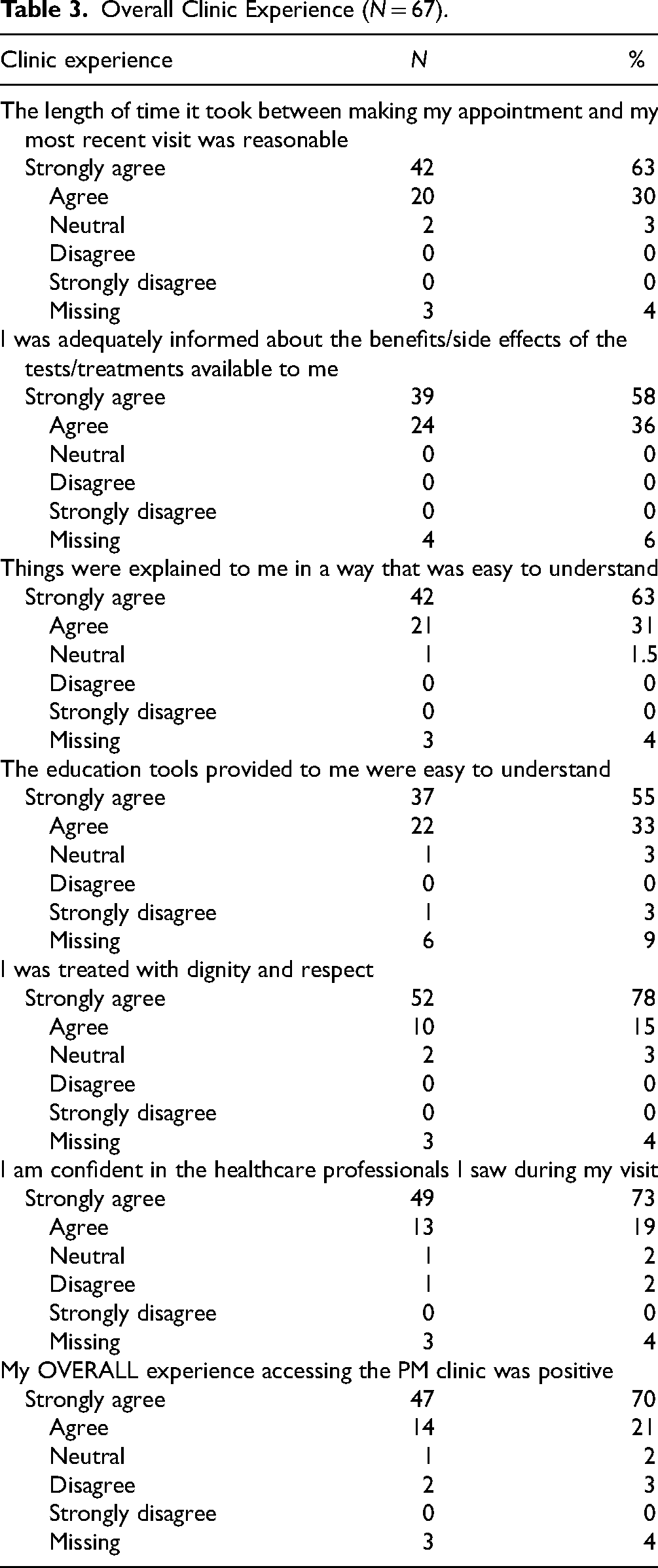
Most participants rated their overall clinic experience as positive. A positive clinic experience included reasonable wait times, clear and easy to understand education from staff, being treated with respect, and feeling confident in the healthcare professionals working at the clinic (Table 3).
Overall Clinic Experience (N = 67).
Recommending the Clinic
The majority of participants (88%) indicated that they would recommend the clinic to others.
Features of the PM Clinic Valued by Patients & Areas for Improvement
The survey contained two open-ended questions where participants were asked to state two features of the clinic they valued most and two areas of improvement (Table 4). Sixty-two patients completed the open-ended questions related to the most valued features of the clinic. Three main features were identified as important to patients. Firstly, participants stated that the staff played a key role in facilitating a positive clinic experience. Staff were reported to be kind, respectful, and professional. Another valued feature was the explanation of clinic services provided by staff. Participants stated that they found the explanation of the clinic services easy to understand and appreciated the detailed explanation of the results by the clinic physician. Lastly, little wait time and quick appointments in the clinic were identified as valuable.
Valued Clinic Features and Areas for Improvement.

Seventeen patients completed the open-ended questions on what could be improved by the clinic. Better communication from the clinic to patients was the most frequently reported area of improvement. This suggestion differed from the patient education received at the clinic. Suggestions for improvement related to clinic communication included providing information about what to bring to the appointment, informing patients which healthcare provider they would be seeing, and providing patients with a copy of their test results. Responses related to improving the PGx testing performed by the clinic highlighted a demand for expanding the services of the clinic. Responses included having multiple testing sites, testing for drug–drug interactions, and increased availability of testing. These responses imply high patient satisfaction with the clinic services and support the positive ratings of the overall clinic experience and high confidence in the testing results. Education for other healthcare providers was identified as another area for improvement. Participants expressed a need for better explanations from referring physicians about why they are sending patients to the PM clinic. These findings suggest that information about why patients are receiving specific healthcare services should be included as part of patient education. Lastly, one participant expressed a need for improved hospital parking. Interestingly, the patients who suggested areas of improvement for the PM clinic still rated their overall experience of the clinic as positive in all areas. This positive rating implies that services and the experience created by the staff for patients are satisfying patient needs, acting as potential positive influences on the patient experience.
Discussion
This paper presented the results of a survey focused on patients’ experiences using a PM clinic in Ontario, Canada. Most patients rated their clinic experience positively. Most participants agreed or strongly agreed that they felt confident that the medications prescribed to them would help with their condition and result in fewer side effects, after receiving their test results. This indicates that providing patients with access to PGx-based testing during treatment may result in patient peace of mind and instill greater confidence in their treatment plans. Previous studies report that patients would feel more confident taking medications prescribed by their healthcare provider if those prescriptions were informed by PGx testing 14 and that patients find knowing their test results to be useful and comforting. 15
Interactions with staff and the education provided by clinic were highly valued by patients. These findings highlight the importance of the Beryl Institute's 8 emphasis on patient experience as the sum of all interactions across the continuum of care. While participants appreciated the clinical testing provided by the clinic, greater value was placed on how patients were treated by staff and the education provided by them. These findings demonstrate that patient-staff interactions play a role in creating a good patient experience. A positive interaction with staff may signal to patients that they are cared for, helping to enhance their experience. Research reveals that patients feel empowered when staff treat them with respect and take the time to listen and learn about them. 16 In addition, patients expressed that the clinic and its testing were explained to them in a way that was easy to understand. Patient education about PGx is especially important as research demonstrates that patients’ understanding of PGx testing is low. 17 Informing patients clearly about clinic services and educating them on their results may be a to help patients understand their treatment plans and have better discussions with their healthcare providers. This can help patients make informed decisions about their care. 17
The areas of improvements suggested by participants related to improvements to clinic operations. Participants expressed a desire for better communication between the clinic and patients, particularly information related to being prepared for the appointment and the sharing of the test results with patients. These factors are important to address as they can negatively influence a patient's experience. A Swedish study found that receiving insufficient information from healthcare providers and staff was associated with patient dissatisfaction. 18 Healthcare service providers should ensure that patients receive adequate information about what they will need for their medical appointment and that patients are informed of their test results, in addition to informing the referring provider.
There are some limitations to consider when interpreting the study findings. Convenience sampling was used, and the sample size was small thus the results may not be generalizable to the larger patient population. The use of a paper survey may have limited the number of people who were willing to complete and return the survey. Not all patients identified areas of improvement and thus, insight into any aspects that influence a negative patient experience is limited. The survey was distributed prior to the COVID-19 pandemic. Conclusions cannot not be drawn on how the clinic and patients’ perceptions of the clinic services were affected by the pandemic. However, our study sheds light on PGx-based PM services within a Canadian context and provides insight into what patients in a publicly funded healthcare system may value when accessing clinical services.
Conclusion
The findings demonstrate that patient experience goes beyond the care patients receive. Other aspects of the patient journey impact the patient experience. In addition to increased confidence in medication usage, feeling respected by staff, and being educated by staff were highly valued aspects by patients and serve to enhance their experience of healthcare services. Current and potential future providers of PM should invest the time and energy to configure their care delivery system in an effort to enhance patient experience. Recommendations for PM clinic operations include timely access to test results, easy to understand education on PGx testing, information on how to prepare for a PGx testing appointment and taking a patient-centered approach to care. The investments will provide returns to providers as well as the patients they serve.
Footnotes
Declaration of Conflicting Interests
The authors declared no potential conflicts of interest with respect to the research, authorship, and/or publication of this article.
Funding
The authors disclosed receipt of the following financial support for the research, authorship, and/or publication of this article: This work was supported by the Canadian Institutes of Health Research Team Grant: Personalized Health (PHT-178435).
