



Abstract
Drug treatment and rehabilitation programs are one of the initiatives to alleviate the global epidemic of drug addiction. The efforts were undertaken by everyone, particularly the government. However, the rising number of drug relapses among patients or clients ponders the effectiveness of the drug treatment and rehabilitation programs implemented in the country. This paper aims to study the drug relapse prevention initiatives and the effectiveness of the center in dealing with drug addiction issues. A case study of 4 drug treatment and rehabilitation centers, namely Cure & Care 1Malaysia Clinics in Selangor, Malacca, Penang, and Kelantan, was selected. In-depth interviews were conducted with 37 participants—26 clients and 11 providers, and the data were analyzed using thematic analysis and NVivo version 12. The findings indicate that relapse prevention initiatives are a signal for the effectiveness of the center to reduce drug relapse cases. The implementation of drug treatment and rehabilitation programs was effective based on key aspects consisting of (1) knowledge and life skills learned; (2) staff reception; (3) individual changes; and (4) client acceptance. Therefore, by experiencing relapse prevention activities, it helps to improve the effectiveness of the implementation of drug treatment and rehabilitation programs.
Introduction
Drug-related issues have always been linked to their negative effects on people, animals, and nations since the early 1900s. Many nations—developed and developing—have been harmed by the drug1,2 including Malaysia, the United States, Singapore, Sweden, Hong Kong, Thailand, Indonesia, and Cambodia. Despite numerous attempts made by all nations to reduce and eliminate the issue of drug abuse, misuse, addiction, and dependency, these problems continue to exist. Drug-related issues and their impacts are growing and becoming more destructive to society, the nation, and the world.3,4
Malaysia and other Asian nations have used harsh and punitive drug policies in treatment, prevention, and enforcement. This is proven by the legislation developed such as the introduction of the Dangerous Drug Act (1952) and the Drug Dependent Treatment and Rehabilitation Act (1983). The execution of these acts was through a legal proceeding whereby a person who was arrested for drug-related crimes underwent a 2-year mandatory treatment program at a Narcotic Addiction Rehabilitation Center (PUSPEN) or 2 years of community supervision. Both PUSPEN and one-stop center had been compulsory (mandatory enrolment of individual) center to treat drug users. However, these methods were highly criticized for their high relapse rate (70%-90%), lack of medical treatment, and physical abuse from corporal punishment. 5 The Ministry of Health launched several harm reductions programs in 2006, including Methadone Maintenance Treatment Programs; and Needle and Syringe Exchange Programs, to stop HIV/AIDS in Malaysia.
In 2010, drug programs were transformed to improve its effectiveness. Cure & Care 1Malaysia (C&C1M) Clinic replaced selected PUSPEN as a treatment and rehabilitation center. The concept changed drug programs from punitive to health policy in order to combat drug issues. C&C1M Clinic's drug treatment and rehabilitation program is evidence-based and has a credible and effective approach. Nevertheless, 3 years following the implementation of such strategies, a worrying trend emerged: the number of documented relapse cases and new drug users increased from 20 887 to 26 668 (an increase in 5781 or 12% of the total number of cases) from the year of implementation 6 to 2015. The trend indicates that programs at C&C1M clinics need significant improvement, particularly in terms of effectiveness.
This paper argues that drug relapse is a critical aspect of drug treatment and rehabilitation effectiveness. Thus, drug treatment and rehabilitation programs are examined employing dyad perspectives—drug addicts and implementers (agency/ministry which conducted drug treatment and rehabilitation). Drug rehabilitation research rarely emphasizes “dyad or two-way perspectives.” Drug treatment centers, the National Anti-Drugs Agency (NADA) and the Ministry of Home Affairs (MOHA), integrate client feedback to ensure the effectiveness of the implementation of drug treatment and rehabilitation.
Overview of Drug Treatment and Rehabilitation Program
Drug abuse, dependency, and addictions have become rooted in the culture, social, and socioeconomic structure of every nation, and it is requiring a comprehensive response. 7 Society and the world employed many ways to solve the problem including enhancing drug treatment and rehabilitation. Drug treatment breaks a person's drug-dependent cycle. 8 Thus, drug treatment and rehabilitation programs have evolved throughout time and evidence-based rehabilitation is becoming the trend.7,9,10 However, there were also no specific drug rehabilitation and treatment programs to cater each type of drug abuse. 11 This complicates treating and rehabilitating clients from time to time as there is no one-size-fits-all approach.12,13 The initiative undertaken has led the Malaysian government to improve drug addiction treatment and rehabilitation to benefit individuals, society, and the nation.
Malaysia shifted from compulsory drug detention centers to voluntary centers; however, there are limited evaluations on the effectiveness of treatment, providers or centers, clients’ responses, and acceptance of the programs. Likewise, many studies have demonstrated that Opiate Substitution Treatment is a successful drug treatment program14,15. Similarly, religious, counseling, vocational, and drug addiction programs were also not assessed. 15 The authors stated that Malaysia has no evidence-based therapy for amphetamine-type drug addiction as one of the essential treatments for clients.16,17 Nevertheless, drug addicts in Malaysia are now treated using evidence-based methods namely detoxification; physical activities and discipline; psychological support recovery instead of punishment. Evidence-based is referring to clinical and administrative methods that consistently yield precise and intended effect. 18 It emphasizes on high-impact, targeted, and efficient programs that benefit all stakeholders. 19 Nonetheless, the implementation of evidence-based programs varied depending on the programs and providers, and the centers did not have standardized measures to evaluate program effectiveness.16,20 The authors also mentioned that providers always regarded their programs as effective. 20
Many evidence-based programs offer good practice (ie, opiate programs and drug court in western countries) yet, more studies should be undertaken to strengthen the evidence-based therapeutic community program or to solve the issues in drug addiction treatment. 21 Moreover, a thorough implementation and evaluation procedure is required. Therefore, this paper argued that drug treatment and rehabilitation programs should be improved by measuring the effectiveness of its implementation from time to time.
Methodology
This qualitative study used in-depth interviews to understand relapse cases and drug treatment and rehabilitation program effectiveness. A case study involving 4 C&C1M clinics from each peninsular Malaysian zone was undertaken. This study gave an in-depth understanding of the phenomenon based on the information gathered. C&C1M Clinic Sungai Besi, Selangor; Tampin, Malacca; Bukit Mertajam, Penang; and Kota Bharu, Kelantan, were selected in this study. These clinics are among the earlier C&C1M clinics that were involved in the pilot project as voluntary centers 22 in 2010 and represent every Peninsular Malaysian zone.
Participants involved in this study comprised C&C1M Clinic clients, C&C1M Clinic's staff, and key personnel from NADA and MOHA to provide input and represent their agencies. Table 1 shows participant criteria:
Criteria of Participants.

This study has involved 37 participants, consisting of 11 providers (C&C1M Clinic, NADA, and MOHA), and 26 participants (clients of C&C1M Clinic). The number of samples representing receivers and providers was appropriate and has reached saturation. 24 This study employed purposive and snowball sampling to approach the participants. For data collection, the C&C1M Clinic, NADA, and MOHA approved 6 months as the duration to complete all the data collection processes. For data analysis, the qualitative data were analyzed using theme analysis and triangulation. Qualitative studies use thematic analysis to determine data themes, 25 and NVivo version 12 was used to manage qualitative data in this study.
Findings and Discussion
This study has involved 4 case studies and the profile of receivers and providers were as follows:
Table 2 shows that 26 participants were the clients of the center, which was comprised of 25 males and 1 female participant. In terms of age, 21 of the participants were aged 19 to 39 years old, followed by 3 participants from the age of 40 years old and above, as well as only 2 participants at the age of 13 to 18 years old. As for marital status, 11 participants were married and 11 were single, followed by 4 participants who were divorced. All 26 participants in this study were Malay and for the purpose of the study, pseudonyms were assigned to each of the participants.
Profile of Receivers.
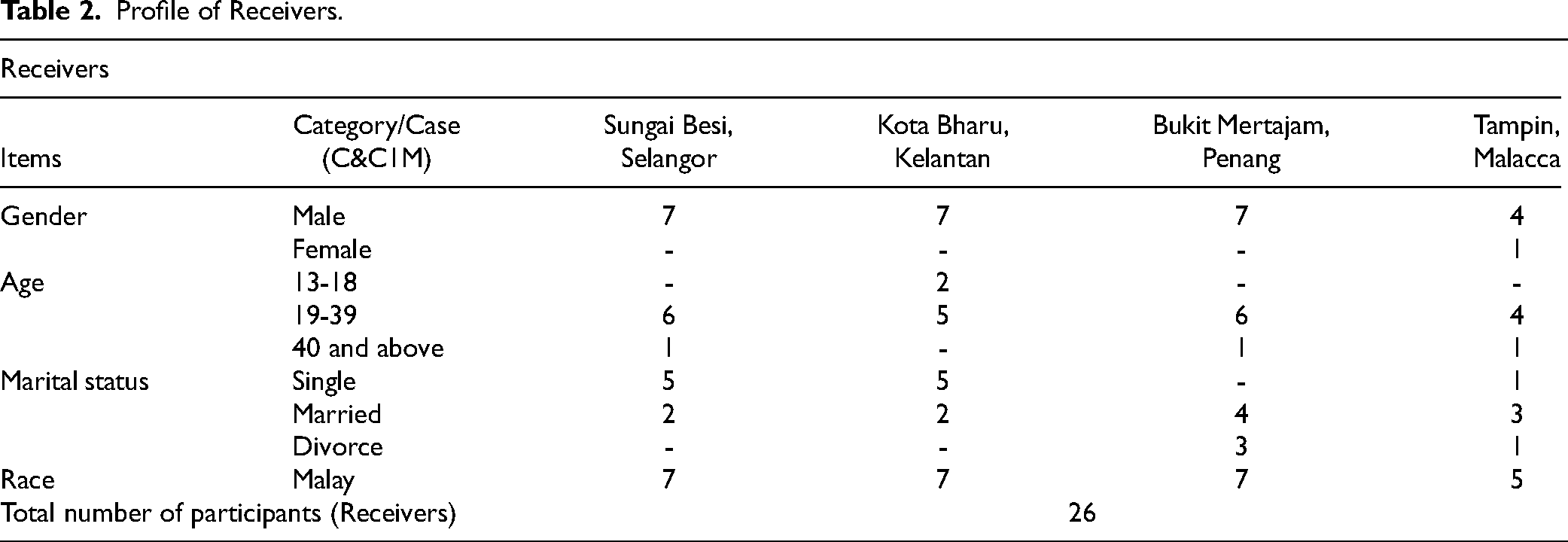
Table 3 also shows the key person from MOHA, NADA, and C&C1M Clinics. There were 7 male and 5 female key persons. The majority of key person have over 7 years of drug-related work experience; 6 have over 20 years, and only 2 have less than 5 years. For the purpose of the study, pseudo names were assigned to each of the participants.
Profile of Providers.

Abbreviations: MOHA, Ministry of Home Affairs; NADA, National Anti-Drugs Agency; C&C1M, Cure & Care 1Malaysia.
The findings revealed 4 key themes that determine the effectiveness of drug treatment and rehabilitation program implementation by triangulating the perspectives of the providers. The key themes that emerged were knowledge and life skills learned, staff reception, individual changes, and client acceptance.
Knowledge and Life Skill Learned
The participants (client) in each center were trained to acquire knowledge and life skills such as addiction knowledge and skills in terms of theory, technique, and tips, as well as leadership skills. The knowledge and life skills they learn are part of their social experience and help them learn about religion (Islam for Muslims, morale for others) and good practices (such as praying and inculcating Islamic values to prevent themselves from drug relapse). With the collaboration of industry, the government sector, and the vocational center in Malaysia, vocational skills with certificates were provided. The participants were also exposed to negative knowledge and skills, particularly from their peers or seniors who also went through the drug treatment and rehabilitation program at the center. The findings depict that the C&C1M clinic clients were taught theory, tactics, and relapse prevention strategies. Therefore, the participants understood why they were addicted, how to avoid relapse, and how to free themselves from drug addiction problems. Ten participants knew how to prevent drug recurrence by staying busy, controlling their emotions, and avoiding negative peer pressure. The participant learned to stop drug cravings by tying a rubber band on his thumb and pulling it when he developed a craving, as the small ache alerted him to a concern. The participants also learned leadership skills, for example, at the individual level, the participants managed their shortcomings, such as negative emotions and behaviors.
Staff Receptions
The staff reception demonstrated the effectiveness of the program. The staff's kindness, patience, friendliness, respect, and warmth inspire trust in participants throughout treatment. The staff understands the participants and often offers support, direction, and advice. The center staff loves them and helps them. The staff of the drug treatment and rehabilitation program must be creative, flexible, and aware of clients’ interests and passions. Ten of the 26 participants mentioned that the staff treated them like family and friends, scolding them with respect. The findings showed that staff reception influences drug treatment and rehabilitation program flexibility. Six out of 26 participants indicated there was flexibility in program schedule, rules and regulations, therapy, and rehabilitation. For instance, participants were treated based on their passion and interest, which motivated them. Ismail (22 years old), one of the participants in the Kota Bharu case, claimed that the center's flexibility allowed him to work while receiving treatment. Therefore, his work schedule benefited from this flexibility. Furthermore, Muhammad (29 years old), from the C&C1M clinic Tampin was also treated for his passion for music. To help him overcome drug addiction, the center allowed him to join a band. The staff's flexibility helped clients follow rules and regulations during drug treatment and rehabilitation.
Individual Changes
Twenty-six participants associated the program's effectiveness to preventing drug relapse. The results indicated changes in addictions, personality, appearances, religious responsibility, and Cure & Care culture. Eight participants changed their addictive behaviors by resisting peer pressure, working without drugs, having positive emotions, forgetting about drugs, and accepting a life without drugs. Due to staff guidance, each participant's personality improved in terms of communication skills, confidence, the ability to control emotions and face difficulties, pressure resistance, patience, and willingness to participate in treatment and rehabilitation programs in the centers.
Participants indicated the program was effective because of not only their physical changes but also their personality changes. As some of them have gained weight and felt healthier. Besides, the participants stated that religious activities such as praying and fasting are essential for Muslims. Islamic commitment made participants more disciplined, calmer, better time management, and willing to adhere to Muslim commitments. Thus, this prevented drug cravings and addiction. Cure & Care culture has also motivated them to change and forced them to continue the program and overcome their addictions. One participant described the clinics as being like his second home, and he treasured the center as a “house of love.” The participant felt safe and free to enjoy his usual life because the center trusted him.
Client Acceptance
This study revealed several acceptance phases. Firstly, the agreement phase determines whether the participants entered the treatment center by force (19 participants) or voluntarily (7 participants). This is due to family and partner interference, feeling fed up with oneself, being arrested by local authorities, and positive influence from others in a similar boat. Secondly, within the first 3 months, the denial phase began. Eight participants were unable to accept the treatment and rehabilitation program in this phase due to the environment, program, staff, and drug abuse. All participants experience the denial phase. The third phase is an adaptation to drug treatment and rehabilitation. Seven of the 26 participants embraced positive thinking to recover and prevent relapse. The fourth phase is strategy and planning for real life, founded upon center experiences. Participants claimed that rehabilitation helped them avoid drug relapse. The strategies they learn in the center are designed to help them recover and remain drug-free. Nine of the 26 participants agree that strong resistance and intents to refrain from drugs are necessary to ensure the efficiency of the drug treatment and rehabilitation program and prevent relapse.
Effectiveness of the Implementation of Drug Treatment and Rehabilitation Program Through Relapse Prevention
Family therapy, work projects, relapse prevention, Halaqah (religious) modules, and therapeutic community therapy are part of the center's drug treatment and rehabilitation program. Providers must ensure that clients can withstand and accept the treatment and rehabilitation program to prevent unintended incidences such as client escape. Participants learned how to lead themselves and facilitate recovery from the program. However, in the center, the providers mentioned that clients spend more time together and that various client backgrounds, including seniority, have had a negative impact, such as disciplinary issues.
The program developed leadership skills among most participants. As a result, they can at the very least be leaders to themselves. This is one of the emerging findings of this study. Treatment and rehabilitation staff such as nurses, staff, and peer-group societies must develop leadership skills among patients to help their recovery process.26,27 Thus, the program provided by C&C1M clinics is consistent with the standard practices of drug treatment, as the clients need leadership skills to rehabilitate and become independent. The staff has treated new and relapsed clients thoroughly. The providers also acknowledge that peer and social pressures often trigger relapses. As providers, they must be passionate and flexible when treating drug addicts at the center to gain the trust from the client. Although similar in module and setting, programs were implemented differently at each site. Good experiences in the drug treatment center helped recovery and avoided relapse.28–30 Additionally, the “Cure and Care” culture raises awareness and supports client behavior modifications to fight addiction.
Client acceptance is a continuous process. After receiving drug treatment and rehabilitation, the client adapts and promotes the recovery process. The providers also indicated that clients were educated on how to face the real world and prevent relapse. According to providers, clients at the center can avoid relapsing due to strong resistance, support, and application of program knowledge and skills. Relapse prevention and drug treatment and rehabilitation program effectiveness are interrelated and influence the recovery of drug addicts. Overall, recovery is the goal of clients, families, society, the public, C&C1M staff, NADA, MOHA, and the nation. There is no magic bullet for drug addiction recovery. Only the addict and the person helping them fight drug addiction understand the battle. Therefore, this study has illustrated how relapse prevention underpins the effectiveness of the program (Figure 1).

Illustration on relapse prevention underpin the effectiveness of the program based on the findings of this study.
This study found that knowledge, life skills, staff reception, individual changes, and client acceptance as shields prevented relapse. Meanwhile, the long-term effectiveness is still uncertain as participants need to prevent themselves from relapsing. The uncertainty on the period of relapse to occur is similar to the previous study,31–33 where the retake or usage of drugs is possible after receiving drug treatment and rehabilitation or a long-term period of abstinence. This is because the period after discharge from the drug treatment and rehabilitation program is known as adapting period. Participants need to adapt to the open environment that poses many challenges for them to maintain their recovery. 34
Therefore, the transition period from a closed setting environment in C&C1M clinic to an open environment plays a crucial moment, which influences long-term recovery of the participants. This will ensure the long-term effectiveness of the implementation of drug treatment and rehabilitation programs. However, this study argues that the short-term effectiveness of the program in C&C1M clinic can be prolonged or improved through the support from providers and clients’ resilience. Nevertheless, more preparation and countermeasures should be undertaken to maximize the capability and resilience of the client, particularly at the fragile period right after release from the treatment center. Therefore, drug relapse prevention will underpin the effectiveness of the implementation of drug treatment and rehabilitation program at C&C1M clinic.
Conclusion
Drug-related problems can be eradicated by taking proactive measures by individuals, families, societies, and governments. Since 1983, the government has implemented policies, laws, and regulations on drug enforcement, prevention, and treatment; C&C1M Clinic is one of many government programs that have been undertaken in dealing with drug addiction issues in Malaysia. Furthermore, drug relapse is not the main aspect that determines the effectiveness of a drug treatment program but relapse cases through prevention indeed underpin the implementation of drug treatment and rehabilitation program in C&C1M clinic through inner courage, external strength, and environment stability.
