




Abstract
Postsecondary students’ ability to learn is affected by their mental health and wellbeing. Research in the teaching and learning context, however, has predominantly focused on teaching practices that facilitate motivation, learning, and academic success while overlooking the importance of student mental health and wellbeing. The current study aimed to fill this gap by using qualitative interviews to explore student perspectives on current and possible future supports that can cultivate student mental health and wellbeing in the teaching and learning context. Through 14 one-on-one interviews with students, five major themes were developed: (1) prioritize mental health, (2) provide and guide to accessible supports, (3) increase mental health literacy, (4) foster connections and social support, and (5) strengthen best practices in teaching and learning. Students emphasized that the institution has a role to play in several of these areas and elaborated on what practices and policies were least and most supportive of student mental health and wellbeing in teaching and learning. This study has implications for higher education institutions, and how they promote mental health and wellbeing, disseminate information and resources, and how faculty and staff can support students through their policies (e.g., flexibility in deadlines), course materials (e.g., assessments), course delivery (e.g., equity, diversity, and inclusion [EDI] considerations), and interactions (e.g., normalizing mental health conversations).
Mental health (MH) and wellbeing can be defined as our capacities to feel, think, and act in ways that enhance our ability to enjoy life and deal with the challenges we face (Canadian Mental Health Association, 2021). Unfortunately, not all university students are experiencing positive MH and wellbeing. In fact, some researchers believe that postsecondary students are experiencing a mental health crisis (Swanbrow Becker, 2020). In the most recent National College Health Assessment (NCHA) for Canada, a nationally recognized survey to assess postsecondary students’ mental and physical health behaviors, habits, and perceptions, a high majority of students reported feeling exhausted (not by physical activity; 88%), overwhelmed (88%), very lonely (70%), very sad (76%), and/or overwhelmingly anxious (69%) at some point in the past year (American College Health Association [ACHA], 2019). About half reported feeling so depressed that it was difficult to function (52%), 16% had seriously considered suicide, and almost 3% reported suicide behaviors. Unsurprisingly, three of the top four factors indicated by students as affecting their academic performance were directly related to their MH, including stress (42%), anxiety (35%), and depression (24%), with the fourth (sleep difficulties; 29%) being a possible consequence of poor MH as well (ACHA, 2019).
Many institutions in higher education have taken steps to support their students’ MH and wellbeing, most notably, by implementing holistic systematic approaches to MH, such as adopting a MH framework or strategy at their institutions (Canadian Association of College & University Student Services and Canadian Mental Health Association, 2013; International Conference on Health Promoting Universities & Colleges, 2015; Linden et al., 2018). While these frameworks provide guidance for institutions in supporting student wellbeing, there has been limited research on the aspects of teaching and learning (T&L) that promote student MH and wellbeing in higher education; most research focuses on teaching practices that facilitate learning, motivation, and academic achievement (Crawford & Johns, 2018). Although academic outcomes are important, achievement in these areas does not equate to positive MH for students and it has been acknowledged that health and wellbeing is a distinct T&L issue (Crawford & Johns, 2018). The benefits of including students in decisions regarding student MH in higher education has been emphasized by researchers, acknowledging the importance of their unique perspectives in helping institutions understand the current reality of being a student (Busher, 2012; Cook-Sather & Luz, 2015; Healey et al., 2016).
A recent study at a Canadian university explored the role of teaching practices in student wellbeing using a mixed methods approach; practices that promoted student wellbeing were inclusive, fostered a sense of belonging, motivated learning, and recognized that students have lives outside of their academics (Lane et al., 2018). Both students and faculty were interviewed for the study; however, student data were collected via focus groups, which might have elicited different responses than one-on-one interviews, particularly around sensitive topics (Kaplowitz & Hoehn, 2001; Wutich et al., 2010).
Another recent study in Australia used an open-ended question to explore students’ opinions on actions to improve student wellbeing as part of a larger Student Wellbeing and Course Experience Survey (Baik et al., 2019). While students were not specifically prompted to consider T&L in the survey, the themes identified by the researchers did include teaching practices, course design, program administration, and assessment. Although open-ended responses in a survey are valuable, these students did not have the opportunity to expand on or clarify their answers; a more in-depth qualitative methodology would be useful to further probe these ideas.
Purpose of Study
In September 2019, the T&L Subcommittee of the Campus Mental Health Strategy 1 (CMHS) at the University of Calgary (Alberta, Canada) conducted a strengths and needs assessment of T&L practices that support or inhibit student MH and wellbeing at the institution. The first step was an online survey that was distributed to institution stakeholders (i.e., students, staff, faculty) via email and the university’s online learning platform. These results were then used to inform the development of semi-structured questions posed during one-on-one interviews with a subset of interested undergraduate students previously surveyed. The purpose of the interviews, and the focus of the current study, was to explore students’ perspectives regarding current and possible future efforts to support students’ MH and wellbeing within a T&L context. More specifically, we explored the following two research questions:
This research can be used to better understand student expectations from their universities regarding their MH and wellbeing, as well as to determine what is important for institutions and educators to do to support their students’ MH and wellbeing—and their academic success—in the T&L context. Additionally, this research contributes to the limited body of literature on the area of MH and wellbeing in the context of postsecondary T&L, emphasizing the richness of the student perspective in its qualitative design. Although the statistics on MH and academics make clear that postsecondary institutions can play a vital role in student MH, no research has investigated students’ beliefs regarding the role of their institution in their MH; therefore, our research has taken a broad approach to probing the student perspective.
Method
To explore the research questions of this qualitative study, we interviewed a convenience sample of undergraduate students at a postsecondary institution in Western Canada with over 25,000 undergraduate students. We used a thematic analysis (Braun & Clarke, 2006) to identify overarching themes in the data. The analysis was completed collaboratively by the research team to ensure quality and rigor in the results.
Research Team
The research team consists of female researchers at various stages in their academic careers (senior faculty members [MB, JB], doctoral student [BL], and research assistant with honors degree [EB]). The team has a shared interest and background in psychology and T&L research, particularly as it relates to student MH and wellbeing. The interviewer was a female research assistant with her doctorate in education. As a result of the background of the research team, and in line with the purpose of the study, this research, including the analysis, was approached through a mental wellbeing and higher education lens. Additionally, the analysis was explored through a critical realist theoretical paradigm, which acknowledges that reality exists but is inaccessible, and that individuals’ experiences are their version of reality, influenced by society and culture (Terry et al., 2017).
Data Collection
Data were collected with semi-structured interviews, guided by an interview schedule of questions regarding student MH and wellbeing in the context of the university and T&L. These questions were created by the research team to explore topics that arose from the responses to the initial quantitative survey conducted as part of the strengths and needs assessment. The questions included topics about the university’s role in supporting student MH and wellbeing, the relationship between T&L and MH and wellbeing, and a variety of topics regarding MH and wellbeing support (or lack thereof) from instructors, T&L practices, classroom environments, and university policies and processes. Interviews ranged from 30 to 90 minutes in length and were conducted virtually, either by phone or online platform (i.e., Microsoft Teams), due to the COVID-19 pandemic. The same interviewer conducted all interviews for consistency and completed each interview with brief demographic questions regarding students’ year of study and their gender. To maintain anonymity, no other demographic information was collected; however, students often spoke of their academic major. The study was approved by the institution’s Research Ethics Board, and the participants were remunerated with a gift card for their time. Participants provided either written or verbal consent to participate in the study after being informed about the purpose of the study and their rights as a participant (e.g., that they could withdraw at any time). Participants also consented to the recordings of the interviews, which were then transcribed verbatim by a third-party transcription service and were checked for accuracy and anonymized (e.g., pseudonyms) by a research assistant.
Participants
The convenience sample for this study (N = 15, a priori sample size) was selected from the undergraduate students who agreed to be contacted for a follow-up interview on their quantitative online survey (n = 313; 17.29% of the total sample). Since there was female overrepresentation in the selection pool, all interested males were contacted (n = 67), and five agreed to participate. Females were selected at random until we reached full sample size (n = 10). One interviewed participant (male) was excluded from the analysis as they did not consent to being recorded. The final sample (N = 14) was predominantly female (10 females, 4 males) and included students from a variety of disciplines (e.g., psychology, engineering) and year of their program. For the results, students will be referred to by a letter and their gender.
Data Analysis
To analyze the data, we applied an inductive (i.e., data-driven) approach to theme development and were guided by our research questions. We utilized Braun and Clarke’s (2006) flexible approach to thematic analysis, which includes six key steps. BL, EB, and JB listened to the interviews and/or read the transcripts to familiarize themselves with the data and took initial notes and met regularly to discuss the data (Step 1). Transcripts were then uploaded into NVivo 12 for systematic coding (Step 2), which involves the generation of initial codes, which are meaningful and concise labels for specific data pieces in the transcripts (e.g., understanding from instructor, flexibility in deadlines). Codes can be semantic (i.e., specifically said by participants) or latent (i.e., interpretation of participants’ statements). BL did the initial coding for all transcripts, which involved carefully reading each transcript, coding every relevant data piece, and then returning to the transcripts and codes for review. EB also read each transcript again and reviewed the codes to ensure accuracy. Once all transcripts were coded and a list of codes was created, BL, EB, and JB began organizing the codes into larger, more meaningful patterns, which involved searching, reviewing, defining, and naming the overarching themes in the data (Steps 3–5). In accordance with Braun and Clarke’s recommendations, each of these themes were supported by the data (e.g., codes under each theme were common), agreed upon by the research team as large enough, and related to the question of interest. Once themes were defined and finalized by all authors, participant quotes were identified and extracted for inclusion in the results, and the findings were written (Step 6).
To ensure the quality of the research, we consulted Braun and Clarke’s (2006, p. 96) 15-point checklist for a good thematic analysis, along with Yardley’s (2000) four broad principles to assess the quality of a qualitative study: sensitivity to context, commitment and rigor, transparency and coherence, and impact and importance. Each researcher’s subjectivity was minimized by having the analysis completed collaboratively, as well as recognizing our potential biases and how they might influence our decisions throughout. When differences in judgement occurred, we returned to the raw data to guide our final decisions, which were made by consensus. Ensuring that students’ opinions and experiences were respected and portrayed as accurately as possible was of utmost importance. This was achieved through the rigorous coding process detailed above and continuously returning to the raw data throughout the process.
Findings
Five themes were generated from the data. Each theme is framed positively, but we acknowledge that the concepts developed from participants sharing both positive and negative experiences regarding MH and wellbeing (see Table 1). Often, participants focused on the unsupportive or even detrimental aspects to their wellbeing; based on that, we inferred what would be supportive. Each theme focuses on the university’s role from the perspectives of the students (RQ1), and what can be done by instructors and the university to effectively support student MH and wellbeing (RQ2). For brevity, findings from participants are often summarized, with quotes included for illustration where relevant.
Least and Most Supportive Elements Discussed From Each of the Five Themes.
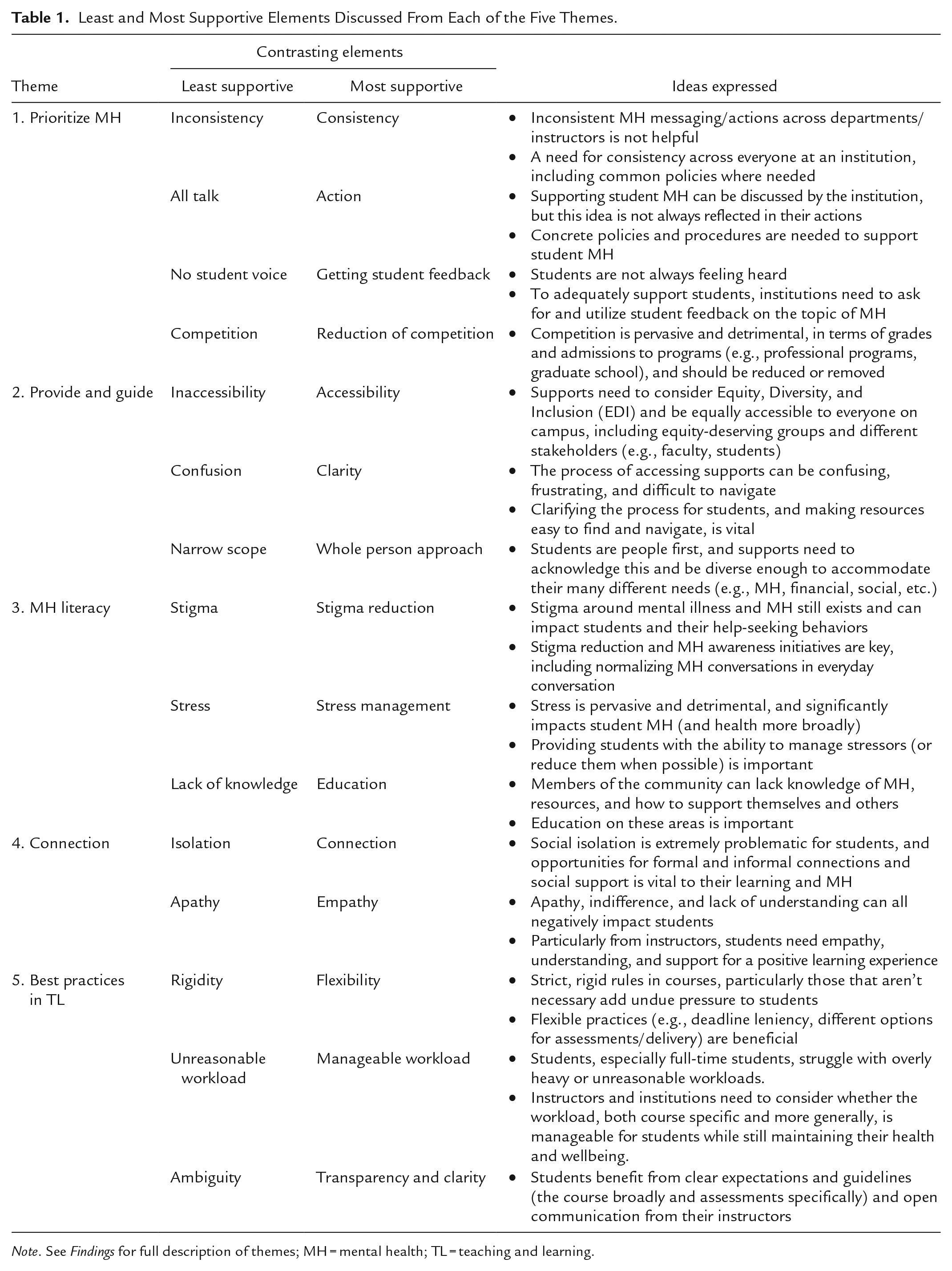
Note. See Findings for full description of themes; MH = mental health; TL = teaching and learning.
For RQ2 specifically, the data indicated that participants perceived the context of T&L broadly; although most participants included many course-specific aspects in their responses, they also referred to the university and the entire campus as well. This is an important finding that suggests RQ1 and RQ2 are intimately connected. Students understand T&L holistically, indicating that the entire university context is important to their learning experience.
Theme 1: Prioritize Mental Health
All participants indicated the importance of prioritizing MH on campus. Several participants endorsed students’ MH as a prerequisite for academic success. “So if you want good learners . . . people who are open and receptive to learning and ready to take on challenges, you got to start from a place of wellbeing usually in mental health” (B, male). Others emphasized that everyone’s MH on campus is important: I know that the instructors need support as well, because I’ve talked to instructors that are teaching these massive classes that they’re not used to. . .So they can’t support the students properly either. So, I think having mental health supports for everybody is important, not just the students. (N, female)
Almost every participant described inconsistencies in the MH messaging and actions (e.g., support, understanding) across departments, programs, and especially instructors, and how these differences can impact their learning: I’ve had some instructors who were very supportive. They made me want to come to class . . . And overall, I would say it’s because they were really just kind to students. They tried to make class enjoyable and they were understanding of students . . . And then at the same time I’ve had instructors who were. . . very strict, very by the book, which I understand because there’s many students and that’s how it is. But, I mean I just think that when it came to those courses, mental health was always bad for students. Everyone was always stressed. Everyone was worried and things were just overall really difficult. (G, female)
From these responses, it was clear that institutions need to prioritize MH consistently and collectively (i.e., everyone needs to get on board). Participants indicated that this prioritization could be demonstrated through institutional policies and procedures (e.g., ensuring instructors do not assign work during formal term breaks, flexibility for deferrals and late penalties), funding MH initiatives and resources (e.g., hiring more counselors or support staff), and collecting and considering student feedback to inform policies and procedures. Participants also suggested that institutions should strive to foster an environment that enables everyone to achieve life balance (e.g., limiting the competitive nature in academics, not overworking students or faculty). For example, many students acknowledged the detrimental effects of the competitive and all-consuming nature of academia: Just based on what I’ve heard, [other students’] coursework is pretty much consuming their life. Like, they will work 10-15 hour days just doing homework and I think doing that much work and working intensely is definitely going to take a toll on their mental health. (E, female)
Additionally, it is important for institutions that say they care about MH, to actually show it.
So, there’s a lot of talk. . . there’s a lot of press coverage saying, ‘[The institution] had a moment of silence for all the people with mental health issues who like passed away’ but they didn’t actually do something. Anyone can hold a moment of silence, that doesn’t mean anything unless you actually do something about it. (C, female)
Theme 2: Provide and Guide to Accessible Supports
Participants were very clear on the university’s role in providing supports, helping students to access supports, and “just advertising their student supports more” (V, female). They did not expect the university to have all supports for every situation, but they did expect the university supports that do exist be accessible, diverse, and effective in achieving their purposes. In other words, effective institutional supports are necessary, but not sufficient, to support student MH. For situations beyond the university’s scope, participants indicated that the university should still be knowledgeable and able to connect students to appropriate resources in the community. For example, for students needing intensive or long-term MH care or those transitioning to the workforce after graduation, it is very important to have referrals and connections to external supports and resources.
It was also clear that supports and resources should consider that students are whole people, acknowledging that students are more than just students and likely have struggles or concerns beyond academics. In alignment with a holistic approach to MH and wellbeing, participants recognized that resources need to be diverse in their scope and recommended topics such as physical health, financial skills, food insecurity, and employment alongside academics.
And I think financial and physical would go with psychological and emotional. So, it’s really hard to focus on dealing with. . .loss and the emotional and psychological side of things if you don’t have. . .financial, shelter, food, things met. So, maybe it would be helpful to provide extra resources around that. (L, female)
Another important aspect of this theme was the importance of effectively advertising resources and providing clarity on how to access and use supports. Students need to know where and how to reach out for help. For example, participants indicated that the university encourages students to seek help but must also explain how to access it. “They’re like ‘If you’re struggling be sure to reach out,’ I’m like, ‘To who?’ Tell people what to do afterward” (C, female). Several participants did share negative perceptions of campus MH resources, typically from hearsay around campus. An advertising suggestion was given regarding this: “So, maybe putting out more stories where campus mental health actually was helpful, and hearing what other people have to say within the student community about how they had good experiences with campus mental health resources” (L, female). Alongside advertising the available resources and how they can and have helped others, participants also expressed the need for easy and concrete steps on how to connect with these supports, without being confronted with additional barriers along the way.
So, campus support is so difficult to get. Usually you have to call someone or go to an office and then they redirect you to someone and then they say, ‘okay, you need to go through a waiting list. So, hang on’. (G, female)
Theme 3: Increase Mental Health Literacy (MHL)
A contemporary definition of MHL includes understanding how to achieve positive MH, understanding mental illnesses and treatments, decreasing stigma toward mental illnesses, and increasing help-seeking behaviors (Kutcher et al., 2016). Although the term MHL was not used specifically, its core components were all discussed by the participants. For example, some participants discussed having more education on MH topics, such as including MHL in course materials and training instructors to better support students and themselves. Topics included recognizing early signs and symptoms of mental illnesses, understanding what help-seeking might entail (e.g., breaking down a counseling session), knowing where to go for help (or where to refer others), and having empathy and understanding. Although participants discussed the importance of increased MHL for their instructors, they also acknowledged limits in instructor involvement in student MH. That is, participants clarified that instructors should not be filling counselor-like roles for their students: “Instructors aren’t necessarily supposed to be the main point of support for every single student. That in itself can also be really exhausting” (L, female). Several participants also expressed the need for universities to continuously work toward MHL in their population, as it was noted that resources or events around MHL are often only discussed at the beginning of the semester or very intermittently throughout the term (e.g., during exams). Participants requested that instructors bring up MH during class or share resources with students on a regular basis.
Another aspect of MHL is understanding the risk factors in students’ lives that can contribute negatively to their MH, such as family pressure, lack of social support, pre-existing mental illnesses, and most discussed by participants, stress. Students’ high levels of stress, which can stem from grades, finances, applying to competitive programs, and many other stressors, was a prevalent topic. While some participants wanted the university to mitigate these stressors (e.g., reduce tuition, avoid high stakes exams), others were more concerned about fostering stress management in students, acknowledging that stressors will always exist. “It’s creating an environment where students can feel that it’s okay to feel stress, it’s okay to feel pressure and support is available for you” (T, female).
Participants also acknowledged that stigma of MH, mental illnesses, and help-seeking behaviors still exists at the university, and they believed in the importance of stigma reduction initiatives, including the normalization of MH conversations.
The university has been doing stuff around mental health awareness, but it still has a stigma. So, it is to find a way to maybe bring it across to students to understand that there is nothing to be ashamed of. And it’s okay to seek support if you need it. (T, female)
Participants discussed how stigma can prevent someone from disclosing their MH concerns, asking for leniency from their instructors, and seeking professional help. “It’s a tough thing, because it is admitting weakness and always trying to put forward the best image of yourself in your university” (B, male). They also discussed how students’ identity (e.g., gender, ethnicity, family values) might affect their perception of MH, and in turn, their stigma toward it.
I think stigmatization is a really complex issue. . . .Especially maybe for men more so than women, that it’s weak to seek help or professional support. For others, it just could be the family values, like you don’t go do that. Maybe like, it’s just you figure it out yourself. That tough love kind of nonsense. (E, female)
Theme 4: Foster Connections and Social Support
The need for affiliation has been established as a basic human need (McClelland et al., 1976), so it was not surprising that all participants indicated the importance of connections and social support during their academic journeys. Participants did not focus on the macro-level community of a university; rather, it was clear that they perceived one-on-one connections as most vital to their wellbeing. For example, most participants indicated that peer-to-peer relationships, whether in the classroom or on campus, were critical. “One of my teachers. . .uses a forum and I think like 20% of the grade is just posting questions and responses on this forum, and I think that that’s very conducive to fostering that sort of. . .social belonging feeling” (M, male). Participants discussed how social isolation can make postsecondary education difficult, and that fostering relationships with like-minded individuals was important for their wellbeing and education.
. . .the most important things that people get out of university, at least for a lot of people I think, is all the connections you make with people, making new friends, you can be inspired by other students. When you see that they’re doing well, you can ask them, talk to them about the coursework, things like that. (B, male)
Participants also discussed the importance of formal roles for instrumental and emotional support from peers, such as student leaders, peer support workers, and mentors.
Participants emphasized that the instructor-student relationship is a critical factor for their academic success and mental wellbeing.
I think that. . .you end up with your little families and your instructors become part of your life . . . So, I think there’s a pretty big relationship from the classroom and mental health, because it’s where you’re gaining your knowledge. So as long as the instructors know about mental health and making sure everybody is feeling good, and knows how to get the support they need, I think that helps. (N, female)
Participants explained that instructors who were empathic, caring, understanding, compassionate, approachable, respected students’ time, and listened to their students fostered their positive mental wellbeing. Although instructors were emphasized in these discussions, some participants noted the importance of having positive relationships with teaching assistants and support staff as well. They also recommended that departments have specific contacts (e.g., those in leadership positions) for MH concerns who were understanding and available to provide current information about supports.
Theme 5: Strengthen Best Practices in Teaching and Learning
Most related to the traditional T&L context, participants highlighted the importance of instructors utilizing best practices and how this positively affects their mental wellbeing. “I think that teaching methods or methods of instruction or. . .course structure, . . .obviously would affect like students’ mental health directly, right?” (D, male). Participants discussed several aspects that supported student learning and wellbeing, which included flexibility, transparency, fairness, communication, collaboration, and a focus on applied learning (see Table 2).
Concepts From Theme 5: Best Practices in Teaching and Learning.
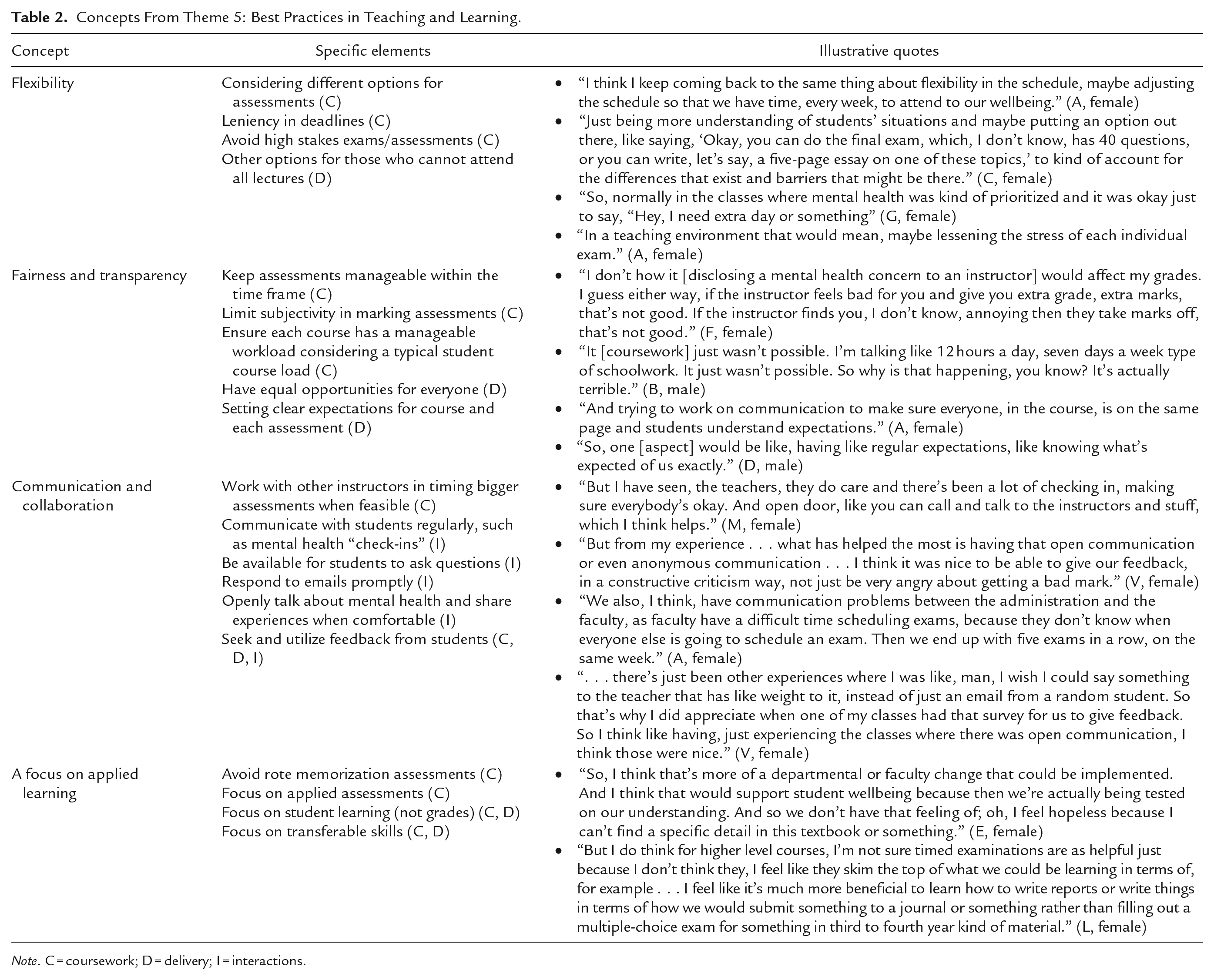
Note. C = coursework; D = delivery; I = interactions.
I think the positive aspect is that we do feel understood when instructors take the time to understand us and to listen to our concerns about a course or about our futures. . .It’s not a dynamic where it’s students versus instructors, it’s a dynamic where students and instructors can work together to create a better learning environment for everyone. (A, female).
Participants felt that instructors should not be unnecessarily rigid. “I’ve had instructors who were . . . very strict, very by the book. . .when it came to those courses, mental health was always bad for students. Everyone was always stressed” (G, female). To avoid these issues, participants discussed the importance of flexibility in courses; instructors should incorporate flexibility into both their course structure and assessments (e.g., leniency on deadlines, providing notes for missed classes).
Participants noted that students benefit from having clear expectations (i.e., transparency), along with reasonable assessments (e.g., opportunities for low-stakes assessments) and manageable workloads (i.e., fairness).
In a teaching environment that would mean, maybe lessening the stress of each individual exam. I guess, to spread out the grading for the exams and for assessments. So that one exam is not. . . weighted really high. And if you messed up that day, then you’ll fail the entire course . . . which then just makes it very stressful and people are sleep-deprived and unable to learn. (A, female)
Participants saw value in regular communication from their instructors, as well as instructors seeking and using student feedback throughout the semester (i.e., collaboration): “I had this. . .professor who nearly, like, every single class was like checking up on [their] students at the start and getting feedback on how everything was going. So, things like that can really go a long way” (J, male). Several participants discussed how courses should ensure that students learn material and skills that can enable them to be successful in the workforce, emphasizing the importance of applied assessments and preparing students for their futures.
Discussion
This study explored the student perspective on the role that their university plays in their MH and wellbeing and what can be done to effectively support students in the context of T&L. This research adds to the literature on MH and wellbeing of postsecondary students by focusing on the underexplored area of T&L practices. Five themes were developed, with the first theme (Prioritize MH) reflecting an overarching outlook that an institution can implement through actions and policies; if an institution prioritizes MH and wellbeing in their community, it is likely that the remaining four themes will follow as specific priorities as well.
The themes complemented other research in the area, particularly reiterating the importance of supportive teaching practices and course design, student services and supports, social supports, and taking a whole student approach (Baik et al., 2019; Lane et al., 2018). In particular, the results aligned well with guidelines associated with Universal Design for Learning (UDL), a design-based framework for supporting inclusive and accessible learning (CAST, 2018; La et al., 2018). UDL emphasizes flexibility and multiple means of representation of content, engagement in learning, and expression of learning (CAST, 2018). Many of the teaching and learning practices identified by students in the current research overlap with practices identified as inclusive design from a UDL lens. For example, providing opportunities for interaction with others, building in low stakes assessments, ongoing feedback, assessing applied learning, and creating opportunities for student choice such as for assignment due dates are all identified as ways to implement UDL principles (La et al., 2018). Relatedly, Dyjur et al. (2017) developed a MH and wellness framework for course design that incorporates similar considerations. They proposed that instructors consider design in five key domains in relation to MH and wellbeing: policies and values, academic expectations, learning environment and experience, assessment, and reflection and resilience. Such frameworks support the idea that MH and wellbeing is a lens that instructors can use to inform pedagogical choices around course design.
The key ideas identified in Theme 5 (Strengthen Best Practices in Teaching and Learning) also align well with core instructional practices that were emphasized during the shift to remote teaching and learning during the COVID-19 pandemic. For example, research demonstrates that students in an online instruction environment reported that they felt cared for through instructor strategies such as establishing an active presence in the course by way of regular communication and feedback (Robinson et al., 2020). Instructors in one sociology department also identified instructional practices that aligned with a care-informed pedagogy (Hess et al., 2022). These included building community, increasing flexibility, and using formative assessments, which are practices that should continue to inform course design beyond the pandemic. Indeed, the students in our research perceived similar instructional strategies relating to flexibility and an ethic of care, particularly as they relate to instructor communication and assessment, as important to supporting their MH and wellbeing in the learning environment. Also, as students in our research highlighted, flexibility and care can be demonstrated not only through course design but also through broader policies and institutional values and priorities.
Implications
These results have several implications for postsecondary institutions. First, consistent and continuous messaging and actions in regard to MH and wellbeing is vital; institutions need to ensure that any MHL initiatives, including advertising resources and stigma-reduction programs, are not restricted to the start of the term. Additionally, since stigma reduction in the postsecondary context is becoming discussed more commonly (see Szeto & Lindsay, 2021), ensuring that stigma reduction initiatives consider the diversity of the campus community, and how students’ identity (e.g., gender, culture) might affect their perceptions of MH, is also critical. Institutions and instructors need to ensure that they are providing concrete steps that students can take to seek help, whether this be for campus or external resources. Educators also need to remain up to date on current resources and processes to ensure that the information provided is accurate. Additionally, institutions need to consider continuous feedback loops, gathering and using student feedback throughout the term (Overall & Marsh, 1979).
The results of this study make clear that instructors are likely to have the largest impact of all university stakeholders on student MH and wellbeing. This, in addition to their high likelihood of being the first point of contact for students, makes it imperative that they are providing sufficient support and resources. That said, it is critical that instructors be supported in building MH and wellbeing into their courses. This is especially important for contract faculty, who may not have the same opportunities as full-time faculty members. Institutions can create (sub)committees or support positions whose work focuses on mental health in the context of teaching and learning, who can develop workshops, resources (e.g., pre-made materials to include in courses), recommendations on promoting student MH and wellbeing, and other supports for instructors (see https://www.ucalgary.ca/mentalhealth/education/educational-resources). In addition, Fovet (2020) has emphasized the importance of multidisciplinary collaboration (e.g., between instructors, instructional designers, and accessibility services) to maximize the potential of UDL design to support students with existing and emerging MH and wellbeing concerns.
Instructors can use the results of this study to reflect on their current T&L practices through a MH lens and evaluate how they might be supporting or hindering students. Our findings can reinforce practices that are already being used by instructors but can also help those who might not realize the impact that some of their more traditional practices (e.g., high stakes exams, rigid deadlines) have on students. The connection between MH and wellbeing and student learning is strong; to support students academically, instructors need to support students’ wellbeing as well. Using MH and wellness as a framework for teaching and learning can inform instructors’ pedagogy and course design. In addition, having broader institutional values and policies will not only help create a campus culture that values student MH and wellness but will also reinforce supportive and inclusive teaching practices at the level of the individual instructor.
Limitations
This study was conducted during the COVID-19 pandemic, and this context is important to acknowledge. Although this may have reduced the generalizability of the findings, it may have also made students more aware of factors important to their MH and wellbeing. For example, due to increased isolation students faced during the pandemic, they realized the importance of connection and social supports. On a more optimistic note, some supportive elements of T&L (e.g., flexibility) were also more prevalent during the pandemic, and students realized how beneficial these could be to their learning and wellbeing.
Another consequence of the pandemic was that the interviews were conducted virtually. While minimal, technical issues did occur, which could have disrupted the natural flow of interviews. The sample was recruited via self-selection through the original quantitative survey, so students who are more engaged in the topic of MH and wellbeing might have been more likely to participate. This could explain why females were overrepresented in the sample (71%), as previous research has shown MHL to be higher in females (Lee et al., 2020). Participants were from a variety of programs or academic disciplines, but it was unclear whether other demographics, such as age or ethnicity, were diverse as we did not collect this information to maintain confidentiality.
Future Directions
This research was conducted at the University of Calgary, a Canadian research university that has had a comprehensive, institution-wide campus MH strategy in place for over 5 years (CMHS; see Footnote 1); therefore, future research should consider more diverse student experiences from other institutions. This could include perspectives from other provinces/states or countries, from small colleges or institutes, and from institutions who have not yet, or are just beginning to adopt a comprehensive MH strategy. Since students in the current study have been attending an institution that has already formally committed to improving the wellbeing of their community and have made great efforts to do so in recent years, their experiences likely do not fully reflect the general student experience or needs regarding MH in the context of T&L. With research from various other institutions, the similarities and differences of the student MH experience can be better explored. Additionally, considering other perspectives, such as those of graduate students, instructors, and staff, is essential to understanding this research area more holistically, as different stakeholders may have differing views of this topic. As discussed in the introduction, the bigger research project encompassing this study is addressing some of these perspectives.
Conclusion
This study supports that traditional components of academic life (e.g., competition, rigidity, and pressure) are not conducive to student learning, MH, or wellbeing. Students have made the connection between positive MH and wellbeing and their learning abilities, understanding that their environment can play a huge role in their academic success or failure. Student expectations of institutions are not unrealistic, and they seem to understand what their institution can and cannot do for them. Every student has unique perspectives, needs, and wants during their academic journey, and there is no one approach that will fit all students; however, these results indicate that there are some common aspects that can be implemented by institutions to support their student body as a whole.
Footnotes
Acknowledgements
We would like to express our gratitude to the research team who were involved in the collection and organization of the data for this project, as well as Dr. Andrew Szeto for his support on the project.
Declaration of Conflicting Interests
The author(s) declared the following potential conflicts of interest with respect to the research, authorship, and/or publication of this article: Dr. Boman is the spouse of Dr. Szeto; Dr. Boman did not receive any financial remuneration for her involvement in the project.
Funding
The author(s) disclosed receipt of the following financial support for the research, authorship, and/or publication of this article: The Campus Mental Health Strategy (Director Dr. Andrew Szeto), University of Calgary, funded this project.
