




Abstract
Reflective writing may be undervalued as purely expressive rather than a critical or an academic tool in undergraduate public health biology courses. When grounded in course concepts and academic learning, a reflective essay can be a learning tool for students that helps them use discipline knowledge and apply it to real-world issues. Studies on teaching reflection have identified its value for training students in critical thinking and improving self-regulated learning. Considering Gibbs’ Reflective Cycle framework, in this article, we detail the design, implementation, and evaluation of a reflective writing assignment integrated into a lower-year undergraduate public health biology course. Through the design and implementation of the reflective writing assignment, four key lessons are drawn. First, reflective writing assignments facilitate learning and course enjoyment. Second, writing workshops improve the quality of reflective writing assignments. Third, a detailed grading rubric clarifies expectations for students and creates consistency in grading. Fourth, reflective writing assignments can help teachers effectively evaluate how students apply the knowledge gained from the course to promote personal and community health. By implementing the reflective assignment, we have created a narrative on how reflective writing could maximize learning in public health pedagogy and provided recommendations and lessons for course designers and instructors to consider in light of Gibbs’ Reflective Cycle framework.
Introduction
A reflection is a first-person narrative that explores personal experience or perspectives on events or issues, cases, or assigned readings. As a genre, it encourages the writer’s growth through metacognition, thinking about the thinking process, by reassessing prior assumptions with new learning, and exploration through the writing process. It promotes a learner’s personal learning process and improves the learner’s ability to synthesize and share one’s critical and affective responses (Andrusyszyn & Davie, 1997).
According to our observations, compared with their social science/humanities counterparts, science students are often unfamiliar with reflection writing. It also may be undervalued as purely expressive rather than a critical or an academic tool. Students respond more successfully to unfamiliar writing assignments when the academic contexts and learning goals are explicitly presented by instructors. When grounded in course concepts and academic learning, a reflective essay can be a learning tool that helps students use discipline knowledge and apply it to real-world issues, work experience, and discipline readings (Larsen et al., 2016; Metzger, 2015; Stanton et al., 2015). It can help learners organize their thinking, examine their preconceptions about issues, and formulate their subsequent positions.
Reflective writing is a metacognitive tool used to aid students in developing and expanding their thinking from initial ideas to positions. In academic contexts, such as undergraduate courses or professional school, a reflection or a personal narrative balances personal and professional analyses, whose subject matter consists of the writer’s self-reflection and observations. Reflection writing, whether in practice or cases, is now common in professional settings, including healthcare and health promotion activities such as promoting breastfeeding, handwashing, and other community engagement initiatives, including training professionals around these activities (Sandars, 2009).
Studies on teaching reflection have identified its value for training students in undergraduate disciplines, such as public health and health promotion, nursing, psychology, and social education programs, in critical thinking and improving self-regulated learning (see Fullana et al., 2016; McKay & Dunn, 2015; Sandars, 2009). In most writing assignments, concept learning is a crucial goal for instructors, and significant learning opportunities exist for students who are developing learners in health studies, health promotion, or medicine. The benefits for students include potential improvements in their applied critical thinking, metacognition, and self-awareness about their learning, as well as a new understanding of professional practices and future health careers (Fullana et al., 2016; Sandars, 2009). Researchers suggest that the metacognitive process in reflection, whether in writing or oral presentations, can develop the students’ foundation skills necessary for future learning. Undergraduate students interviewed by Fullana et al. (2016) perceived that reflective practice improved their self-awareness about their learning. McKay and Dunn (2015) point out that their analysis of public health and health promotion reflection journals indicates what they call low-level of reflection through writing, but they noted significant explorations of career and professional aspirations.
Students’ reflective writing in health programs, including medicine, is relatively new compared with other disciplines, such as education and nursing (McKay & Dunn, 2015). For this reason, researchers suggest that students will only succeed in reflective writing if it is guided by instructors and mentors (Sandars, 2009). Fullana et al. (2016) describe how various forms of support scaffold reflective writing tasks and encourage what they call a “framework of trust” in the classroom (p. 1020). Students engage more actively in reflection writing when assignments and rubrics offer explicit instruction, writing models are shared, support is offered through the process, and students have opportunities for feedback.
Gibbs’ Reflective Cycle is a notable framework used across various educational settings and has been shown as a valuable tool that fosters student reflection by motivating students to analyze their thoughts and feelings and consider actions in similar situations in the future (Sibson, 2008). Specifically, Gibbs’ Reflective Cycle encompasses six stages that include describing the experience, exploring feelings about the experience, evaluating what worked and what failed, analyzing the experience, arriving at a conclusion about what the student learned, and lastly, creating an action plan for how to deal with future situations (Gibbs, 1988). An example of a study that examined the impact of Gibbs’ Reflective Cycle on medical students was documented in Dhaliwal et al. (2018) where they piloted a reflective assignment in which medical students were introduced to Gibbs’ Reflective Cycle during a half-day workshop and subsequently submitted reflective narratives based on a doctor-to-patient interaction that they had previously experienced. A total of 26 students volunteered for the workshop, 15 submitted narratives, and 12 submitted feedback on their reflective narrative experience. Their feedback revealed that the reflection narrative enhanced their learning regarding ethics, communication, diversity, and empathy. The authors concluded that these reflective student narratives constituted a proactive and enjoyable teaching method (Dhaliwal et al., 2018).
Based on the potential impact of reflective writing on students’ learning experience, including improved metacognition, organized thinking, applications, and self-awareness about their learning, we have created a reflective journal writing exercise for students in an undergraduate public health biology course.
Course Development
A reflective writing assignment was added to a course taught during the fall semester of 2018 and 2019 at the University of Toronto Scarborough (UTSC), Department of Health and Society. The department offers programs that promote an understanding of health from an interdisciplinary perspective and prepares students with future career interests, including but not limited to public health, medicine, nutrition, nursing, and mental health. Females make up the majority of this department, and there is a diverse age range across all students. The majority of students in the Department of Health & Society come from Life Sciences and Social Sciences backgrounds. Biological Determinants of Health is a foundational course for students in the BSc Health Studies stream, and the student demographics align with those of the department as a whole. The course is intended to provide students with the basic biological foundation and principles of health and diseases, as well as how these concepts affect individual health and human populations. The course is designed so that students understand the biological principles underlying the origins and the development of diseases (communicable and non-communicable) in humans. Short presentations, case presentations, audiovisual materials, and group discussions following the Socratic style are integrated into lectures, and ample time is made available for questions and open discussions during lectures. Reading assignments are completed before classes to provide a background for each session.
The principal learning goals of the course are as follows: (1) to understand the biological basis of health and how the control of complex physiological systems enables health and well-being and (2) apply human biological determinants to improve personal and community health. One of the core learning outcomes of the course is that students have to demonstrate the ability to use the knowledge gained from the course to promote both personal and community health (see Appendix 1 for the course description and learning outcomes).
In total, 172 students were enrolled in Biological Determinants of Health in the fall semester of 2019. The course was taught by the first author, a professor at the UTSC, Department of Health and Society, whose areas of expertise are global health and human biology. In this course, the students were required to read chapters of the textbook, Biology of Humans: Concepts, Applications, and Issues (sixth edition), by Judith Goodenough and Betty A. McGuire, 2017. The course content was designed around four sections, one of which was related to the foundational concepts in public health biology. The other three were associated with the biological determinants of health: genes, external agency, and internal agency (Bortz, 2005). The course evaluation included the successful completion of five tutorial assignments at 3% each (15%), a midterm exam (33%), a final exam (36%), and two reflective assignments worth 8% each (16%).
Reflective Writing Assignment and Workshop
The first reflective assignment was piloted in 2018, and the instructor/professor reviewed student feedback and grades for the assignment and collected examples of student writing. The formal course evaluations for the pilot showed that students wanted more guidance on the reflective writing assignments. For instance, a student stated: “The instructions with reflections weren't clearly outlined and confused me and fellow peers on how to properly create reflection prompts” (Formal Course Evaluation, 2018). Before the second year, we reflected on the learning outcomes and revised our rubric. We reflected on how to develop more course support and used writing models. For example, the first author approached students for their permission to use their work in future courses, reviewed students’ feedback, consulted with teaching assistants, reviewed the formal course evaluations, engaged with Career Exploration and Education, shared and consulted with the second author from Academic Writing Support, who has expertise in academic writing.
Then, in the fall of 2019, we introduced the fully developed grading rubric, question sheet, and writing workshop. Students were assigned two reflective writing assignments, each worth 8%. Given that the course included one midterm exam during the semester and a final exam, care was taken when assigning reflection assignments close to these scheduled exams to allow students enough time to complete their reflections prior to preparing for their midterm and final exams. For example, the first reflection assignment was scheduled 11 days before the midterm exam, and the second reflection assignment was due 14 days before the final exam. Through the course assignment, students had a unique opportunity to reflect on and put into practice aspects of the biological determinants of health that they learned from lectures, tutorials, or readings. They were told to focus attention on how one or more concepts from this course (from course readings, lectures, tutorials, or assignments) changed or reinforced their understanding of the biological basis of health. Three questions were given to the students to guide their writing (Table 1). Importantly, these questions were designed by utilizing elements from Gibbs’ Reflective Cycle. Specifically, the first question was intended to capture the description of the course content in relation to life experience. The second question aimed to explore the feelings from analyzing their behaviors or specific health issues in their life experience. The last question set out to analyze, evaluate, and use lessons from this experience in a similar situation in the future.
Reflective Writing Assignment.
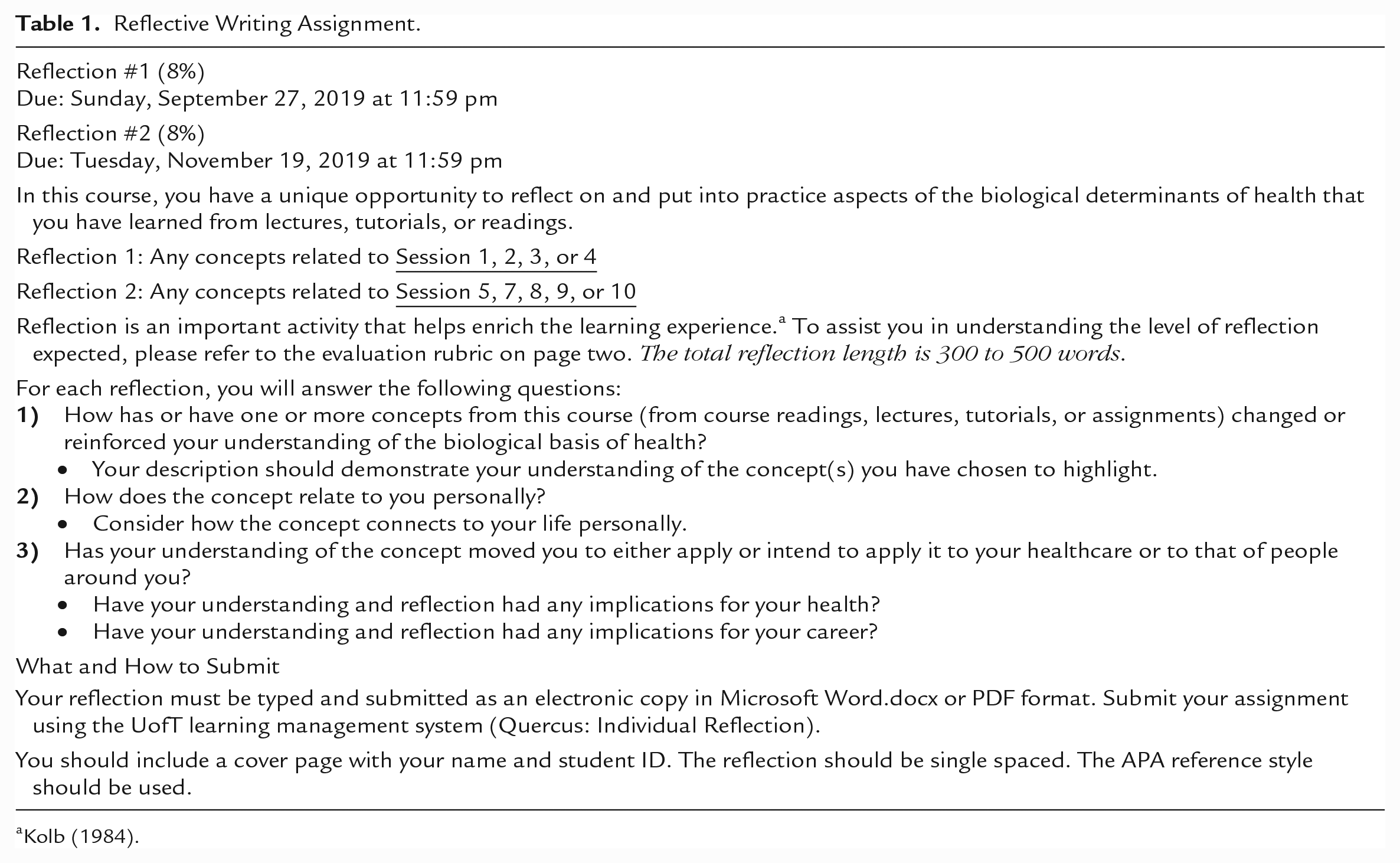
To ensure that students understood and recognized the benefits of this assignment, we provided a 30-minute writing workshop during the third lecture session. The workshop was delivered by the second author, a specialist at the UTSC, Writing Support Division, Centre for Teaching and Learning. The workshop covered the importance of reflections, drafting of effective reflections, the evaluation scheme, and samples of effective reflective writing assignments (see Appendix 2 for the workshop slides). It is important to note that many of the students were enrolled in the life sciences and thus might not fully understand the reflective writing assignment as a critical or an academic tool. Therefore, a teaching goal aimed to emphasize the educational value of reflection and encourage students to apply course concepts, critical thinking skills, and discipline knowledge to real-world issues. Advice for the reflections included balancing the summary and the analysis, noting the use of time and tenses, and using academic concepts. More importantly, the students responded well to using writing examples of work from previous students. Student writing samples from the previous course were discussed regarding how they advanced from observation to self-analysis, the use of concepts, and how they used formal language. These examples of student work were relevant and demonstrated how students balanced personal expression with a focus on health terms. During the workshop, the students were invited to consider what each writer was portraying and how each expressed one’s understanding.
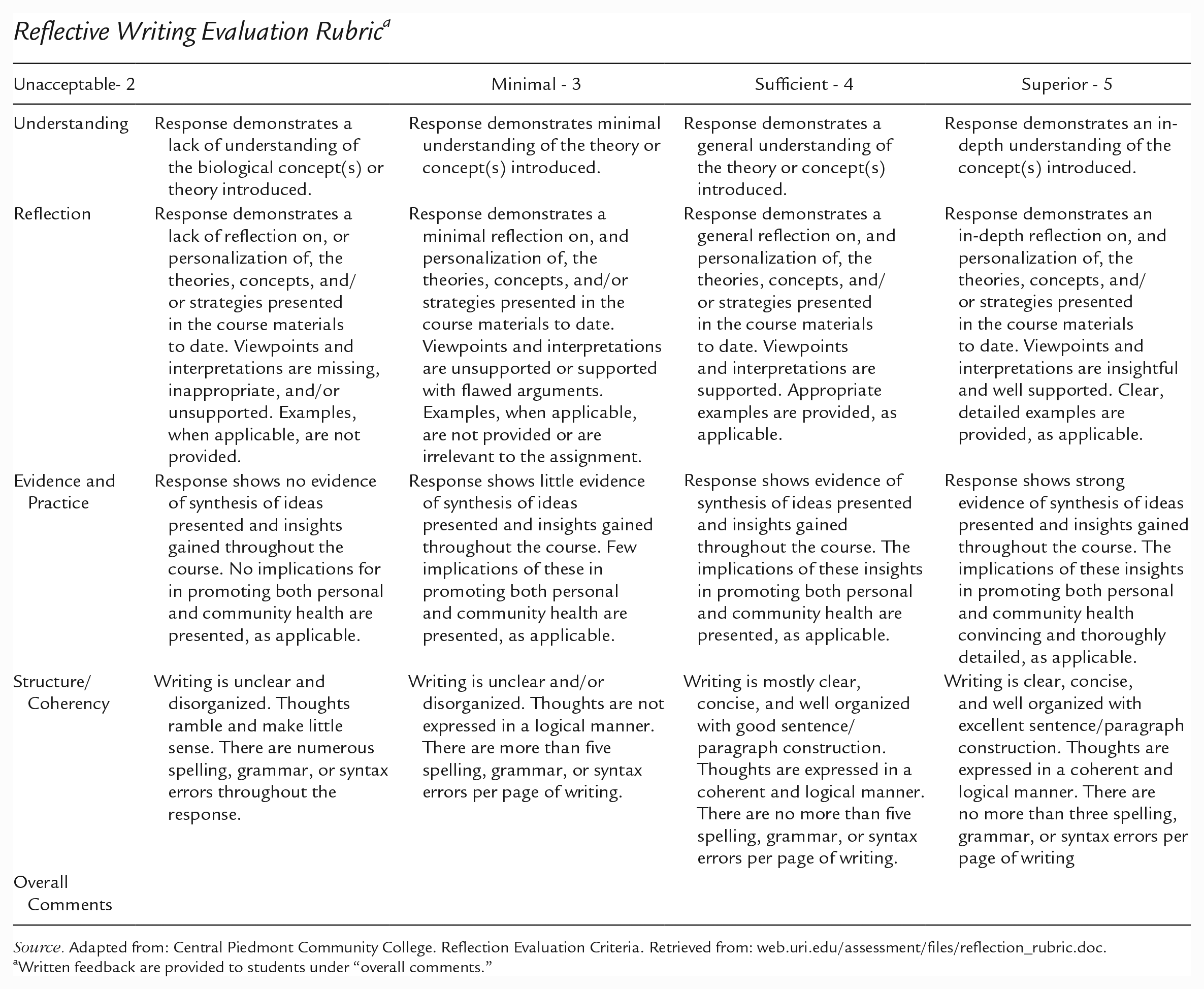
Research on student reflection emphasizes the need for guided support, whether by the instructor or a mentor (Gardner & Belland, 2012). A rubric helps support this process. The grading rubric for the reflective assignment was based on four criteria: understanding, reflection, evidence/practice, and structure/coherence. In any of these four criteria, students could earn a score of 2 points or less (unacceptable), 3 points (minimal), 4 points (sufficient), and 5 points (superior) (see Appendix 3). We also noticed that the question sheet, the writing workshop, and the detailed grading rubric worked together to enhance learning outcomes for students. For example, during the workshop, the students were more prepared to engage with the instructor if they had reviewed the writing assignment and the grading rubric, which was reflected in their level of engagement and the types of questions asked. Second, the writing assignment questions provided clear expectations, which were also reflected in the grading rubric. Finally, the grading rubric also provided an effective way to provide feedback to students.
Student Feedback and Evaluation
The students’ feedback on the course design and the assignment align with the research findings from Dang et al. (2018) that students value reflection when supported in their learning. Several students added written comments in the formal course evaluations about reflective writing. Notably, these students identified reflection writing as valuable to them or their peers. This confirms that a “framework of trust” and scaffolded learning constitute a necessary or an appreciated part of the learning process (Fullana et al., 2016, p. 1020). Students also commented on how reflective writing allowed them to enjoy learning and to retain concepts. By applying concepts to real-world concerns and their experiences, they were able to “conceptualize” and “relate” to the material. Interestingly, some students also used the plural pronoun “we” to underscore their belief that others shared this positive experience “to make the course material more relevant to our individual lives.” (Formal Course Evaluation, 2019 and Appendix 4).
Lessons Learned
The students enjoyed the reflective writing assignments and said that these facilitated their learning, as indicated in the online confidential course evaluation produced by the University of Toronto. The course evaluation was very positive, with students reporting that the reflections were conducive to their learning and helped them conceptualize the content in ways that they related to more personally. One of the reasons why they enjoyed the assignments was that these provided them with opportunities to explore their thoughts regarding an abstract concept and make connections to their lives. As stated by a student in the formal course evaluation, “I found reflections helpful to help conceptualize the content in ways that I can relate to more personally and found in a fun and creative way to demonstrate knowledge I learned in class like not other assignment I have done in University.” (University Formal Course Evaluation, 2019). We also noticed a marked difference in the students’ enjoyment and satisfaction about the reflections between when the reflections were offered in 2018 and 2019, as demonstrated by the lower number of regrade requests, fewer complaints, fewer inquiries about expectations, and more explicit comments about how the reflection assignment enhanced their learning.
One of the challenges with reflective writing in a first- or second-year undergraduate course is that most students have not been exposed to reflective writing, particularly those in the life sciences. Furthermore, students reported concerns about both writing in general and reflective writing. The writing workshop was valuable in helping clarify expectations. We provided adequate class time for a writing workshop, which was helpful to students, particularly those who had not been exposed to this kind of writing. Depending on their program, students taking a course such as this may need additional instruction on writing. Furthermore, the workshop touched on the six stages of Gibbs’ Reflective Cycle. It thus provided a framework for examining experiences and providing students with a structure and examples from these stages. In other words, the workshop was more valuable than simply providing a generic instruction on writing reflections. Short prompts and activities emphasized the process and the value of reflection for students pursuing health studies.
Grading reflections can sometimes be quite subjective; therefore, we had to introduce a clear grading rubric to improve the objectivity of the grading process. We found that such a grading rubric was also important in ensuring consistency among multiple graders and that students had a clear rationale for the grades they received. Furthermore, the grading rubric reinforced the workshop and provided students with a form of guidance on the critical elements in effectively completing their reflective writing assignments. Another model pertaining to the reflective learning process, based on the work of Scanlan and Chernomas (1997), is called the Three Stages of Reflection, which include awareness, critical analysis, and a new perspective. The first stage of awareness encourages the student to acknowledge one’s discomfort or lack of knowledge of one’s situation of a particular event. The second stage details the analysis of the situation/event and the application of the new information. The third stage leads to a new insight that the individual gains in understanding the concept from the situation/event. Utilizing the Three Stages of Reflection, Thorpe (2004) piloted a reflective learning journal for 52 nursing students to encourage them to reflect on past, current, and expected future experiences of similar actions. Thorpe (2004) notes the value to learners in clear guidelines and formative feedback. Written guidelines that provide tips for journal entries were given to students. The author’s qualitative analysis of the reflective learning journals indicated that students found this exercise useful in gaining a better understanding about their nursing role in a clinical setting (Thorpe, 2004). Educators have also suggested that opportunities for feedback within the course or “debriefing” can enhance the reflective learning cycle (Husebø et al., 2015). The fact that we have two reflective assignments allows potentially for students to learn and build on feedback from the first to the second reflection as students also received qualitative analysis of the reflective writing assignments, providing opportunities for feedback.
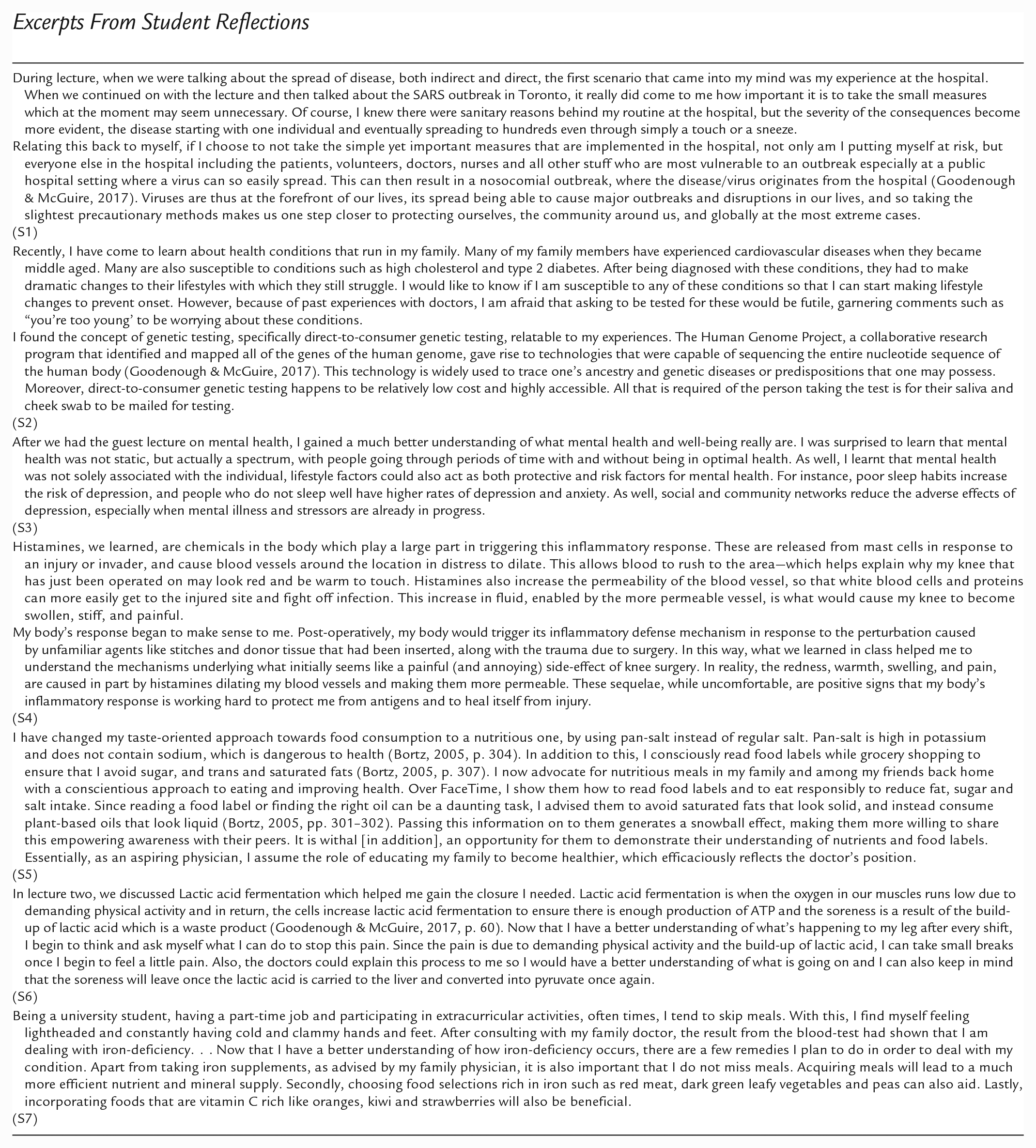
One of the core learning outcomes of the course was that students had to demonstrate their commitment to use their knowledge gained from the course to promote both personal and community health. Each reflective assignment explicitly asked students about their own application of course learning and was thus an excellent way to find out how students understood the concepts on a personal level and how they were applying these learned concepts in the course to improve their health and that of their communities. The answers to the latter two questions were also evident in the variety of personal examples that students provided in their writing assignments (Figure 1 and Appendix 5). For example, some students also changed their exercise regimes and came to terms with their preconceived notions on their body’s response, after understanding the impact of lactic acid fermentation and histamines in their body (S4 and S6 Appendix 5). Some students also made positive changes to their diet and promoted healthy dietary choices to family and friends after gaining knowledge on nutrition from the course (S5 and S7, Appendix 5). Overall, the examples included changes in personal health and exercise regimes, diet, response to the health of family members and personal health, changes in attitude in the context of health care settings. We noticed from the reflective assignments that students had an opportunity to relay their concrete experiences and demonstrated the application of their new ideas to active experimentation related to the “action plan” stage of Gibbs’ Reflective Cycle.
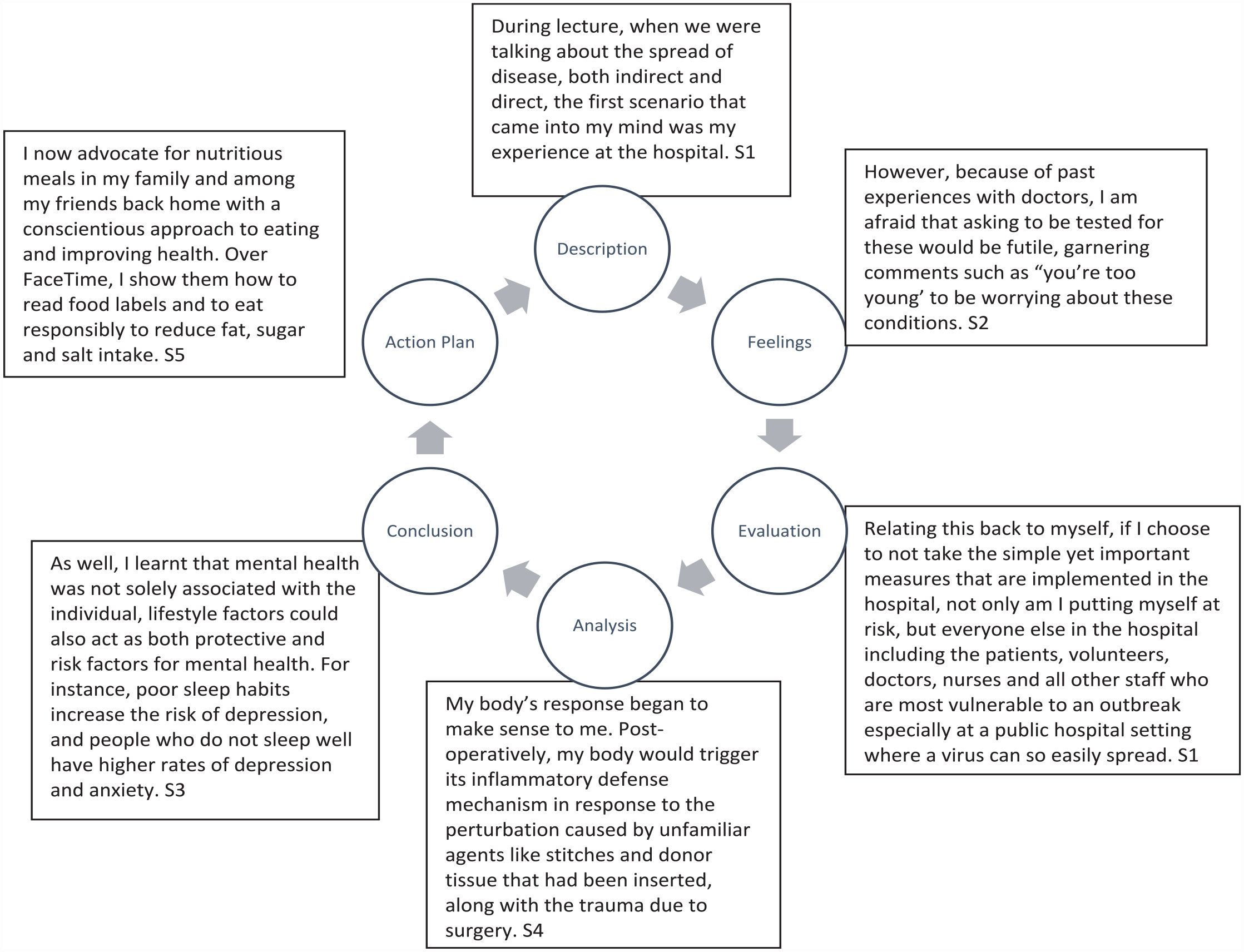
Gibbs’ Reflective Cycle, adapted with excerpts from student reflections.a
Recommendations
Based on our evaluation of the 2018 and 2019 courses, we developed seven recommendations for other instructors looking to implement reflective writing assignments
To make reflective practice more effective, scaffold or introduce the process with small activities or low-stake assignments before a written assignment. Students can build on their previous knowledge or challenge their assumptions through activities that include peer learning.
Collaborate with colleagues from support departments (such libraries, writing centers, and academic student centers), who can be supportive in reviewing assignment designs.
Create or provide academic guides for students and highlight the assignment’s learning goals.
Use a detailed grading rubric that clarifies expectations for students and guides instructors on how to grade assignments objectively based on the criteria.
Integrate writing workshops into a core course as they allow students to engage in the reflective learning process as writers, clarify expectations, and demonstrate the importance of the reflective assignment to mastering course content.
Ask students with excellent assignments for permission to use their written works as models to help their peers understand the appropriate writing style, course concepts, and academic expectations.
To enhance formative assessment, provide at least two reflective assignments where the due dates are spaced out by at least a few weeks. In this way, students can take the feedback from the first reflective assignment and have adequate time to think through and apply it to their subsequent reflective assignments.
Conclusion
Considering the theoretical framework, Gibbs’ Reflective Cycle, we designed and integrated a reflective assignment into a lower-year undergraduate public health biology course where students were asked to relate what they were learning to their personal lives and consider real-world applications. This was a critical learning activity that helped students engage in the course content. The question sheet, the writing workshop, and the detailed grading rubric worked together to enhance learning outcomes for students. In implementing this reflection assignment, four key lessons were drawn from the experience. First, writing reflection assignments facilitate learning and course enjoyment. Second, writing workshops improve the quality of reflective writing assignments. Third, a detailed grading rubric clarifies expectations for students and guides instructors on how to grade assignments objectively, based on the criteria. Fourth, a reflective writing assignment is an effective tool for evaluating how students apply their knowledge gained from the course to promoting health. Overall, the elements of the reflective writing assignment help students discover the relevance of the course content to their everyday lives. This is seen where reflective writing allowed students to think and demonstrate with specific examples of how the course content relates to their personal lives. For instance, some students showed positive changes to their personal health through diet and exercise, changes in attitudes toward sanitation and public health measures in their work environment, and advocacy to improve the health of family and friends. By implementing the reflective assignment, we have created a narrative about optimizing learning in public health pedagogy and offering recommendations for course designers and instructors.
Footnotes
Appendix 1
Appendix 2
Appendix 3
Reflective Writing Evaluation Rubric a
| Unacceptable- 2 | Minimal - 3 | Sufficient - 4 | Superior - 5 | |
|---|---|---|---|---|
| Understanding | Response demonstrates a lack of understanding of the biological concept(s) or theory introduced. | Response demonstrates minimal understanding of the theory or concept(s) introduced. | Response demonstrates a general understanding of the theory or concept(s) introduced. | Response demonstrates an in-depth understanding of the concept(s) introduced. |
| Reflection | Response demonstrates a lack of reflection on, or personalization of, the theories, concepts, and/or strategies presented in the course materials to date. Viewpoints and interpretations are missing, inappropriate, and/or unsupported. Examples, when applicable, are not provided. | Response demonstrates a minimal reflection on, and personalization of, the theories, concepts, and/or strategies presented in the course materials to date. Viewpoints and interpretations are unsupported or supported with flawed arguments. Examples, when applicable, are not provided or are irrelevant to the assignment. | Response demonstrates a general reflection on, and personalization of, the theories, concepts, and/or strategies presented in the course materials to date. Viewpoints and interpretations are supported. Appropriate examples are provided, as applicable. | Response demonstrates an in-depth reflection on, and personalization of, the theories, concepts, and/or strategies presented in the course materials to date. Viewpoints and interpretations are insightful and well supported. Clear, detailed examples are provided, as applicable. |
| Evidence and Practice | Response shows no evidence of synthesis of ideas presented and insights gained throughout the course. No implications for in promoting both personal and community health are presented, as applicable. | Response shows little evidence of synthesis of ideas presented and insights gained throughout the course. Few implications of these in promoting both personal and community health are presented, as applicable. | Response shows evidence of synthesis of ideas presented and insights gained throughout the course. The implications of these insights in promoting both personal and community health are presented, as applicable. | Response shows strong evidence of synthesis of ideas presented and insights gained throughout the course. The implications of these insights in promoting both personal and community health convincing and thoroughly detailed, as applicable. |
| Structure/Coherency | Writing is unclear and disorganized. Thoughts ramble and make little sense. There are numerous spelling, grammar, or syntax errors throughout the response. | Writing is unclear and/or disorganized. Thoughts are not expressed in a logical manner. There are more than five spelling, grammar, or syntax errors per page of writing. | Writing is mostly clear, concise, and well organized with good sentence/paragraph construction. Thoughts are expressed in a coherent and logical manner. There are no more than five spelling, grammar, or syntax errors per page of writing. | Writing is clear, concise, and well organized with excellent sentence/paragraph construction. Thoughts are expressed in a coherent and logical manner. There are no more than three spelling, grammar, or syntax errors per page of writing |
| Overall Comments |
Source. Adapted from: Central Piedmont Community College. Reflection Evaluation Criteria. Retrieved from: web.uri.edu/assessment/files/reflection_rubric.doc.
Written feedback are provided to students under “overall comments.”
Appendix 4
Appendix 5
Excerpts From Student Reflections
| During lecture, when we were talking about the spread of disease, both indirect and direct, the first scenario that came into my mind was my experience at the hospital. When we continued on with the lecture and then talked about the SARS outbreak in Toronto, it really did come to me how important it is to take the small measures which at the moment may seem unnecessary. Of course, I knew there were sanitary reasons behind my routine at the hospital, but the severity of the consequences become more evident, the disease starting with one individual and eventually spreading to hundreds even through simply a touch or a sneeze. Relating this back to myself, if I choose to not take the simple yet important measures that are implemented in the hospital, not only am I putting myself at risk, but everyone else in the hospital including the patients, volunteers, doctors, nurses and all other stuff who are most vulnerable to an outbreak especially at a public hospital setting where a virus can so easily spread. This can then result in a nosocomial outbreak, where the disease/virus originates from the hospital (Goodenough & McGuire, 2017). Viruses are thus at the forefront of our lives, its spread being able to cause major outbreaks and disruptions in our lives, and so taking the slightest precautionary methods makes us one step closer to protecting ourselves, the community around us, and globally at the most extreme cases. (S1) |
| Recently, I have come to learn about health conditions that run in my family. Many of my family members have experienced cardiovascular diseases when they became middle aged. Many are also susceptible to conditions such as high cholesterol and type 2 diabetes. After being diagnosed with these conditions, they had to make dramatic changes to their lifestyles with which they still struggle. I would like to know if I am susceptible to any of these conditions so that I can start making lifestyle changes to prevent onset. However, because of past experiences with doctors, I am afraid that asking to be tested for these would be futile, garnering comments such as “you’re too young’ to be worrying about these conditions. I found the concept of genetic testing, specifically direct-to-consumer genetic testing, relatable to my experiences. The Human Genome Project, a collaborative research program that identified and mapped all of the genes of the human genome, gave rise to technologies that were capable of sequencing the entire nucleotide sequence of the human body (Goodenough & McGuire, 2017). This technology is widely used to trace one’s ancestry and genetic diseases or predispositions that one may possess. Moreover, direct-to-consumer genetic testing happens to be relatively low cost and highly accessible. All that is required of the person taking the test is for their saliva and cheek swab to be mailed for testing. (S2) |
| After we had the guest lecture on mental health, I gained a much better understanding of what mental health and well-being really are. I was surprised to learn that mental health was not static, but actually a spectrum, with people going through periods of time with and without being in optimal health. As well, I learnt that mental health was not solely associated with the individual, lifestyle factors could also act as both protective and risk factors for mental health. For instance, poor sleep habits increase the risk of depression, and people who do not sleep well have higher rates of depression and anxiety. As well, social and community networks reduce the adverse effects of depression, especially when mental illness and stressors are already in progress. (S3) |
| Histamines, we learned, are chemicals in the body which play a large part in triggering this inflammatory response. These are released from mast cells in response to an injury or invader, and cause blood vessels around the location in distress to dilate. This allows blood to rush to the area—which helps explain why my knee that has just been operated on may look red and be warm to touch. Histamines also increase the permeability of the blood vessel, so that white blood cells and proteins can more easily get to the injured site and fight off infection. This increase in fluid, enabled by the more permeable vessel, is what would cause my knee to become swollen, stiff, and painful. My body’s response began to make sense to me. Post-operatively, my body would trigger its inflammatory defense mechanism in response to the perturbation caused by unfamiliar agents like stitches and donor tissue that had been inserted, along with the trauma due to surgery. In this way, what we learned in class helped me to understand the mechanisms underlying what initially seems like a painful (and annoying) side-effect of knee surgery. In reality, the redness, warmth, swelling, and pain, are caused in part by histamines dilating my blood vessels and making them more permeable. These sequelae, while uncomfortable, are positive signs that my body’s inflammatory response is working hard to protect me from antigens and to heal itself from injury. (S4) |
| I have changed my taste-oriented approach towards food consumption to a nutritious one, by using pan-salt instead of regular salt. Pan-salt is high in potassium and does not contain sodium, which is dangerous to health (Bortz, 2005, p. 304). In addition to this, I consciously read food labels while grocery shopping to ensure that I avoid sugar, and trans and saturated fats (Bortz, 2005, p. 307). I now advocate for nutritious meals in my family and among my friends back home with a conscientious approach to eating and improving health. Over FaceTime, I show them how to read food labels and to eat responsibly to reduce fat, sugar and salt intake. Since reading a food label or finding the right oil can be a daunting task, I advised them to avoid saturated fats that look solid, and instead consume plant-based oils that look liquid (Bortz, 2005, pp. 301–302). Passing this information on to them generates a snowball effect, making them more willing to share this empowering awareness with their peers. It is withal [in addition], an opportunity for them to demonstrate their understanding of nutrients and food labels. Essentially, as an aspiring physician, I assume the role of educating my family to become healthier, which efficaciously reflects the doctor’s position. (S5) |
| In lecture two, we discussed Lactic acid fermentation which helped me gain the closure I needed. Lactic acid fermentation is when the oxygen in our muscles runs low due to demanding physical activity and in return, the cells increase lactic acid fermentation to ensure there is enough production of ATP and the soreness is a result of the build-up of lactic acid which is a waste product (Goodenough & McGuire, 2017, p. 60). Now that I have a better understanding of what’s happening to my leg after every shift, I begin to think and ask myself what I can do to stop this pain. Since the pain is due to demanding physical activity and the build-up of lactic acid, I can take small breaks once I begin to feel a little pain. Also, the doctors could explain this process to me so I would have a better understanding of what is going on and I can also keep in mind that the soreness will leave once the lactic acid is carried to the liver and converted into pyruvate once again. (S6) |
| Being a university student, having a part-time job and participating in extracurricular activities, often times, I tend to skip meals. With this, I find myself feeling lightheaded and constantly having cold and clammy hands and feet. After consulting with my family doctor, the result from the blood-test had shown that I am dealing with iron-deficiency. . . Now that I have a better understanding of how iron-deficiency occurs, there are a few remedies I plan to do in order to deal with my condition. Apart from taking iron supplements, as advised by my family physician, it is also important that I do not miss meals. Acquiring meals will lead to a much more efficient nutrient and mineral supply. Secondly, choosing food selections rich in iron such as red meat, dark green leafy vegetables and peas can also aid. Lastly, incorporating foods that are vitamin C rich like oranges, kiwi and strawberries will also be beneficial. (S7) |
Acknowledgements
The authors are grateful to Mona Jarrah and Sarah King for comments on earlier drafts of the manuscript.
Authors’ Note
Nancy Johnston is now affiliated to York University, Toronto, ON, Canada.
Declaration of Conflicting Interests
The author(s) declared no potential conflicts of interest with respect to the research, authorship, and/or publication of this article.
Funding
The author(s) received no financial support for the research, authorship, and/or publication of this article.
