



Abstract
Aim
The objective of the present study was to explore the menstrual health experiences of adolescents residing in institutional care.
Method
An in-depth interview with 25 adolescents residing in institutional care was conducted from February to March 2022. The data collected through semi-structured interviews were transcribed and then translated for the report writing purpose.
Results
After inductive thematic analysis, four themes were identified, namely, menstrual experiences, access to menstrual products, social support and coping behaviours.
Conclusion
Based on the result findings, it can be concluded that it is high time for the policy makers, non-government organisations and government to join hands to address the needs of institutionalised adolescent menstruators. Only then, holistic women empowerment goal can be achieved.
Limitation
The present study was limited to qualitative analysis of 25 in-depth interviews from adolescents residing in one of the institutional cares of Gujarat state.
Recommendations
Future multicentric research studies could be conducted with large sample size by incorporating mixed method research design in order to gain deeper insights into the problem stated.
Implications
In the light of the experience of adolescent menstruators residing in institutional care, they can be educated about menstrual management. Counselling is necessary and the need of hour for adolescent menstruators to deal with how to handle emotions before and during menstrual phase.
Keywords
Introduction
According to the document issued by the International Conference on Population and Development held in Cairo in 1994, reproductive health has been defined as ‘physical and mental health as well as social well-being’ consisting in all aspects associated with reproductive system, process and performance.
The spectrum of symptoms associated with the menstrual distress is diverse and extensive, ranging from discomfort in the abdomen such as pain or cramping to an enlarged sensation accompanied by bloating. Menstrual distress can manifest physically as cramps, bloating and exhaustion (O’Brien, 2011), and emotionally as mood swings, anxiety and irritability (Borenstein et al., 2007) thereby leading to feeling of frustration, hopelessness and powerlessness (Wesselink et al., 2020). It was also observed that many females found menstrual distress interferes with their emotional and social well-being (Choudhary et al., 2019), thereby leading them to miss school. Adolescent girls might feel socially isolated or ashamed to talk about their menstrual difficulties with others. In addition, menstrual distress can negatively affect a woman’s self-esteem and confidence, which could lead to feelings of shame, embarrassment and a sense of isolation, thereby affecting their overall psychological well-being. Social stigma and lack of access to menstrual products or hygiene facilities can contribute to feelings of shame and embarrassment, which may exacerbate menstrual distress (Holst et al., 2022). Therefore, it could be seen that a combination of physiological and psychosocial factors contribute to menstrual distress among adolescent girls.
Menstruation continues to be shrouded in stigma and remains a neglected issue in many parts of the world, according to a growing body of research on menarche, menstruation, menstrual hygiene and menstrual health among adolescent girls in low and middle-income countries. More people are becoming aware that menstrual health is a public health concern that is directly related to a number of human rights and the achievement of the sustainable development goals (SDGs) (Sommer et al., 2015).
An institutional care is a residential place that caters to the care of orphans- offspring whose biological parents are dead or otherwise not capable or unenthusiastic to take care of them. Orphan girls are a vulnerable group in our society. According to the United Nations Children’s Fund and the World Health Organisation, there are at least 140 million children worldwide who lack or have lost one or both parents (orphans). Therefore, adolescent menstruators, specially those residing in institutional care, require effective methods and mentorship to manage their menstrual phase related distress. They require adequate therapy and a support structure that will help them in maintaining holistic menstrual health.
Rationale
Adolescent girls residing in institutional care are heavily underrepresented and understudied in research. In particular, we know very little about their menstrual phase experiences. The objective of this study is to explore their experiences and feelings about menstrual phases, giving insights into existing issues and ways to address them, to start a dialogue towards resolving their issues. With this background, study was carried out to evaluate the knowledge and practices regarding menstrual hygiene among adolescent menstruators residing in one of the institutional cares of Rajkot (Gujarat). Convenience and Purposive sampling method was adopted due to strict guidelines of COVID-19 existing during that period. Permission was granted from the Head of that institution, and it was assured that the identity of the participants will be kept confidential.
The present study is of significant importance, as the adolescents residing in institutional care are more prone to crises as a result of their loved ones’ lack of support, who face challenges of dependency on others, limited or no access to information about their own body, menstruation and menstrual hygiene. An improvement in their access to sanitary materials and hygienic sanitation facilities would help in the achievement of the SDGs (2030), such as good health and wellbeing (SDG-3); inclusive and equitable education (SDG- 4); gender equality and women’s empowerment (SDG-5) and clean water and sanitation (SDG- 6) (Ssewanyana & Bitanihirwe, 2017).
Through the use of semi-structured interview of 25 participants, the present study aims to provide a comprehensive analysis of the experiences, social support and coping strategies during menstrual phases. The results of this study could have important implications for individual and public health, as they may inform the development of interventions focused on improving coping strategies among individuals experiencing menstrual distress.
Research Gap
In recent years, research has widened to include other topics, such as the causes of menstrual stigma and the needs of particular groups of girls, like those with disabilities or long-term health difficulties (Wilson et al., 2018; Wilbur et al., 2019). Around the world, there is a dearth of menstrual health awareness, information and understanding among children, adolescents and adults. Even the knowledge they do possess frequently contains errors. This is thought to be a major contributing factor to many difficulties with menstruation health (Chandra-Mouli et al., 2017; Hennegan et al., 2019; Kaur et al., 2018). When menstruation is discussed, the information usually concentrates on the biology of menstruation and leaves out information about its relationship to sexual and reproductive health, as well as helpful tips for managing menstrual symptoms, including pain, and opportunities for care and support if necessary (MacRae et al., 2019; Sommer, 2010).
Although research has examined female’s thoughts towards menstruation, the role passive (EMOTION FOCUSED) and active (PROBLEM FOCUSED) coping strategies play in the management of distress during menstrual phase and getting-on with daily activities remains relatively unexplored. Most of the studies primarily focus on the negative impact of menstrual distress and do not fully consider potential protective factors or interventions that might mitigate these effects. Overall, this study aims to contribute to the existing literature by addressing these research gaps and limitations, providing insight into the menstrual experiences of adolescent menstruators residing in institutional care.
Research Questions
What are the menstrual experiences of adolescent menstruators residing in institutional care?
What are the dependency patterns of adolescent menstruators residing in institutional care during menstrual phases? More specifically, on whom do they rely on and what types of support do they prefer?
What sort of coping strategies are used by adolescent menstruators residing in institutional care?
Method
The objective of the present study was to explore the lived menstrual experiences of Adolescents in Institutional Care through conducting semi-structured interviews. The present exploratory qualitative study included in-depth interviews of 25 participants in the age range of 13–18 years through purposive and convenience sampling. The sample included females having regular menstrual cycle of 28–35 days, no history suggestive of PCOS, PCOD and hypothyroidism and willingness by the participants to consent. After data collection, data analysis was done by using Inductive Thematic analysis. Braun and Clarke (2006) devised a six-phase guide as a framework to be used for conducting qualitative analysis of data. The method is not tied to a particular theoretical perspective, making it flexible in nature, suitable for the diversity of the present study (Maguire & Delahunt, 2017). Themes or patterns within data can be in inductive ‘bottom up’ way (Gleeson et al., 1993). Thematic analysis is a process, preparing the data for analysing by transcribing, reducing the data into themes through a process of coding and representing the data. Thematic analysis is a method used for identifying, analysing and reporting patterns (themes) within the data. The exploratory inductive approach was utilised, which entails drawing conclusions and developing themes from data devoid of prior assumptions. The use of qualitative approaches brings researchers closer to the reality of the phenomenon they are studying since participants are more likely to be open and honest when responding to open-ended questions.
The total minutes of interview was 3,000 minutes. The total number of transcript pages were 250. The participants have been quoted where relevant to bring in their perspective in their own words. However, respecting their privacy, their identity is not revealed, and the 15 participants are coded as Participant-1, Participant-2, Participant-3, Participant-4, Participant-5, Participant-6, Participant-7, Participant-8, Participant-9, Participant-10, Participant-11, Participant-12, Participant-13, Participant-14, Participant-15, Participant-16, Participant-17, Participant-18, Participant-19, Participant-20, Participant-21, Participant-22, Participant-23, Participant-24 and Participant-25.
Data Collection
Interview Design: Semi-structured Interview
Opening Question – ‘Tell me about your menstrual experiences’. It was then followed up with open ended questions to encourage the participants to describe their menstrual experiences in their own terms.
Interview Process: Individual In-depth Interview
At the beginning of the interview:
Objective of the research study was explained.
Consent form was read and signed (Audio recording with consent was obtained).
All questions regarding the interview process were answered.
Interview Technique: Open-ended Questions
The pace of the conversation was customised in order to establish rapport. Participants were encouraged to take as much time they needed to articulate their thoughts, regain composure in case of an emotional reaction and to take breaks if needed. They were offered to contact the researcher for mental health resources in case they experience any emotional difficulties.
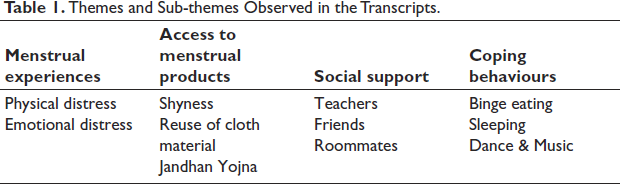
From the above table, following subthemes were derived:
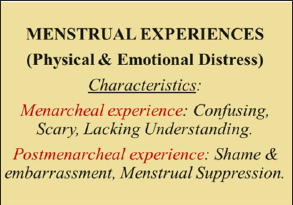
Menstrual experiences
Characteristics: Menarcheal and post Menarcheal experience
Physical distress
Emotional distress
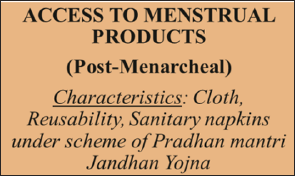
Access to menstrual products
Characteristics: Shyness, Reuse of cloth material, Jandhan Yojna
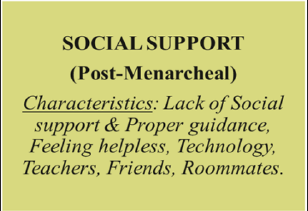
Social support
Characteristics: Lack of Social support, Technology, Teachers, Friends, Roommates
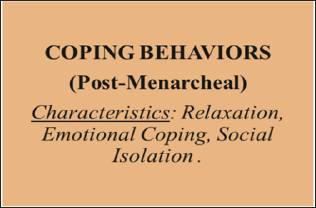
Coping behaviours
Characteristics: Binge eating, Sleeping, Music & Dance
Findings reveal that Institutionalised Adolescent menstruators do face issues of abdominal cramps, cravings, mood swings, etc., that help them in knowing that their periods are around the corner.
‘When I was going to the latrine to ease myself, I found blood and after … I came and told my roommate that something has bitten my buttocks.’…. ‘I was embarrassed, and I did not know what menstruation was when I started, so I was confused and did not know what it really meant. I felt embarrassed to tell other people, and to make myself comfortable I decided to keep it a secret.’… ‘I feared that what has happened to me?’… ‘I was clueless about what to do?’ Menarcheal experience
‘I was so scared actually I thought it was a disease that had attacked me. I thought I was going to lose my life at any moment because it was really scary to start bleeding from down there. I thought I was going to die’. ….
‘I was shocked because I didn’t know that I will get menstruation period in that year. I was not old enough.’ Menarcheal experience
‘I actually spent two weeks in menstruation periods where I was suffering from cramps and kept on overthinking. My friends told me that it was a problem, they have advised me to go to the nurse. I went and asked her…’
(P1, P3, P7, P11, P12, P14, P15, P16, P19, P20, P22, P24, P25). The findings are summarized in Table no. 1.b.
Themes and Sub-themes Observed in the Transcripts.
‘I am scared of leaking because I often use torn clothes.’ ‘On menstrual dates I reach a point when I cannot even lower my foot down … the legs shake… when I step down, I feel a lot of pain. This makes me miss school.’ ….’I keep on thinking that is that every girl suffer the same???’ …’I wish I was born as a BOY or without a uterus, I hate bleeding every month’
‘I have severe headaches and stomach ache during first day of menstruation….I don’t want to but then due to this I have to miss my school for at least 2 days every month’
‘I always take Medications to get relief from severe cramps….I am searching for ways where I could get Rid of it’… ‘I always use hot water bag to get rid of menstrual cramps’
(P2, P3, P7, P10, P12, P13, P15, P16, P19, P25)
‘Here, we are mostly provided with clothes which we wash and reuse every month’
‘Sometimes, we get 1 Rs. Sanitary Napkins provided by Jandhan-Pradhanmantri Yojna’
‘I get anxious one week prior of getting periods … again same cycle … again bleeding….again pain’….’I feel very shy of asking for menstrual products’
Findings reveal that Institutionalised Adolescent menstruators have to rely on people (Social support), to access and receive menstrual products.
‘I wish there
‘My teachers taught me that when you are going to experience it, you go to the toilet and find when all the urine is full of blood.’
‘My roommate told me about the menstruation thing….’
‘Whenever I used to cry during my menstruation, my friends used to console me….’
(P2, P3, P5, P10, P11, P12, P14, P15, P16, P17, P18, P20, P21, P22, P23) . The findings are summarized in Table no. 1.
Findings reveal that Institutionalised Adolescent menstruators did use coping mechanisms in order to deal with menstrual related distress.
‘I used to dance or do some work so that I can divert my mind from the pain.’….(
‘I try not to focus on negative aspects.’… ‘I cry a lot when my periods start’…(
‘I use dance and music therapy to cope up with menstrual distress…’… ‘I used to cope up by sleeping more than usual, does not like to go out for out and seclude myself from interpersonal interaction…’
‘I used to chit chat with my friends….’…’I used to watch TV in hall room’…’I used to listen to music’…’I used to watch You tube….’
(P3, P7, P11, P12, P14, P15, P16, P19, P20, P22) . The findings are summarized in Table no. 1.
Institutionalised Adolescent menstruators reported varied experiences regarding menstruation that included being unprepared for menarche, receiving low social support on how to handle menstruation and menstrual hygiene, limited exercise or physical activities, school absences, psychological distress and physical pain. Studies conducted around the world on topics like access to menstrual and feminine hygiene products have indicated that young girls who do not receive the period care they require suffer severe consequences, including missing school days and embarrassment from family and community members (Chandra-Mouli et al., 2017; Coast et al., 2019). Their absences from school and social activities can be caused by both period hygiene issues and menstrual health problems, which might make them avoid social engagement and rely on subpar self-medication (Armour et al., 2019). Social support, or lack thereof, strongly dictated menstrual experiences. According to earlier research, girls frequently do not learn about menstruation until after menarche, are unprepared to control menstrual bleeding, and are uninformed of when and where to get support (Hennegan et al., 2019; Mason et al., 2013). Similar findings were observed in a study which concluded that menstrual distress negatively affects the psychological well-being of females (Shalini et al., 2022). Many girls experience worry and anxiety when they reach menarche because they are ignorant and unprepared for menstruation (Chandra-Mouli et al., 2017; Hennegan et al., 2019). There is evidence that adolescents who lack prior understanding of menstruation and menstrual management may experience worry, astonishment and humiliation when their first period (menarche) starts because they are unable to comprehend what is happening to their bodies (Haque et al., 2014; Karkada et al., 2012; Morrison et al., 2018).
Teachers, caregivers and peer group were sources of information, resources, comfort or assistance to accomplish menstrual tasks. The social support during menstruation was her friends and roommates staying in the Institutional care. Some of the girls mentioned their teachers as a source of information and assistance. The knowledge received through these sources is frequently insufficient and out of date (Chandra-Mouli et al., 2017).
Menstruation was positioned as an uncomfortable topic, with little discussion taking place between peer members before the first experience. However, girls had mixed experiences during their first time. Girls reported various psychological effects related to menstruation, including shock, fear, shame and embarrassment. For many of them, it was an unexpected surprise or shock to experience it for the first time. Sancheti and Shinde (2020) conducted a cross-sectional study and found that menstruation affects the self-esteem of girls (Sancheti & Shinde, 2020). Moreover, symptoms of depression, stress, anxiety, behavioural changes and lower confidence were noticed during menstruation (Deci & Ryan, 2008). Lack of knowledge might result in unsanitary practises during menstruation as well as humiliation and solitude (Chandra-Mouli et al., 2017).
Girls reported experiencing pain that limited movements, activity or even school attendance. A few reported scarcities of pain relief options and not being aware of where to seek help. Some experienced abnormalities of menstruation that required medical attention, such as prolonged bleeding. Many of the participants shared that they were unaware of the presence of a health centre in the settlement. Others, who were aware, visited the health centre for other health problems but not to seek medical help for their menstrual problems. Moreover, they had mixed experiences about the availability of pain killers during menstruation. Girls also mention having trouble getting enough comfortable absorbents and locating private disposal options for spent menstrual products (Alam et al., 2017; Davis et al., 2018; Miiro et al., 2018; Sumpter & Torondel, 2013).
Qualitative data analysis revealed a variety of menstrual health challenges for Institutionalised Adolescent Menstruators, including limited access to information and social support, constricting expectations, the stigma associated with menstruation, challenges managing menstrual bleeding, such as difficulty accessing enough menstrual products and menstrual pain (Hennegan et al., 2019). These challenges have immediate and long-term consequences for girls residing in institutional care in relation to their confidence and self-efficacy, their ability to participate in day-to-day activities such as education, their health and wellbeing.
Conclusion
The study was conducted to assess the knowledge and practices of Institutionalised Adolescent menstruators by using semi-structured interview. The result findings add to the mounting evidence that adolescent girls receiving institutional care have significant difficulties during menstruation, which negatively affects their overall welfare. A thorough approach to menstrual health care must address the stigma and taboos currently attached to menstruation as well as provide age-appropriate education. A qualitative investigation looked into how girls experienced their periods, what difficulties they faced related to it and how it affected their daily life. Based on the results of the present study, it was concluded that the knowledge of menstruation and menstrual hygiene among Institutionalised Adolescent menstruators was inadequate. Thus, it is high time for the policymakers, non-government organisations and government to join hands to address the needs of Institutionalised Adolescent menstruators. Only then, holistic women empowerment goal can be achieved. To satisfy the comprehensive menstrual health requirements of Institutionalised Adolescent menstruators, substantial work needs to be done in terms of both action and research. The majority of menstrual health literacy elements should be addressed, and interventions should improve several aspects of menstrual health literacy simultaneously.
Recommendations
To ensure a healthy and enjoyable adolescence of institutionalised adolescent menstruators, it is crucial to provide them access to timely and evidence-based information and services. Furthermore, arrangements for enough health care providers and medical supplies, including psychological counselling, are essential.
Menstrual health information and education should be given to adolescents residing in institutional care on a timely, accurate and current basis, particularly through thorough sexuality education that is developmentally appropriate and culturally sensitive.
Policymakers must be made aware of and persuaded of the importance of creating regulations requiring the provision of thorough sexuality education as well as information and instruction on menstrual health to institutionalised adolescent menstruators. Such policies must be developed into adequately funded strategies or plans, which must then be carried out, monitored and evaluated while taking quality and equity concerns into account through a variety of channels, including those appropriate to the local context, such as schools, radio, television, print and social media.
Institutionalised adolescent menstruators should have access to the menstrual products and materials they need to effectively manage their periods in the context of a supportive environment, as well as the safe, private and affordable water, sanitation and disposal systems they need. This will dispel the myth that menstruation is unsanitary and messy. Institutionalised adolescent menstruators need empathy and understanding about menstruation, as well as recognition that they may need or want support.
Limitations
The study was limited to qualitative analysis and a small sample size of 25 in-depth interviews were included.
As these menstruators take time to open up, many difficulties they face might not be captured.
A mixed method study could be adopted to gain deeper insights into the problem statement.
Implications
By reflecting on the themes of this study, we can consider the extent to which new and existing programmes and services can
help institutionalised adolescent menstruators acquire desired knowledge and skills;
bolster institutionalised adolescent menstruators’ social support systems;
promote adaptive coping behaviours (Acceptance);
help in gaining understanding, making them aware, intensify learning by teaching them about Managing Menstruation, avoid absenting from school.
Footnotes
Declaration of Conflicting Interests
The authors declared no potential conflicts of interest with respect to the research, authorship and/or publication of this article.
Funding
The authors received no financial support for the research, authorship and/or publication of this article.
