



Abstract
The experiences from a case study are evaluated against the aspects such as emergency response to vulnerable populations and other sources from the literature to serve as guidelines for the management of an epidemic in a child and youth care centre (CYCC). To help understand the effects of the epidemic on the centre, this article describes experiences in terms of the meeting of needs. A discussion of the following are part of the article:
• A reflection will be provided on the observed stages the children and child and youth care workers (CYCWs) went through during 177 days of a national lockdown;
• Indications of caregiver burnout;
• Experiences around the meeting of children’s needs through the lens of child and youth care (CYC) theory; and
• Proposed areas needing attention in mitigating risks.
Some lessons learnt from the daily routine established to manage the lockdown regulations, sometimes experienced as nonsensical, are shared. From these reflections, questions for research are provided from a practice-based evidence approach, mainly aimed at determining the readiness of a CYCC to manage a state of disaster, while needing to focus on meeting children’s needs.
Keywords
Introduction
On 23 March 2020, President Cyril Ramaphosa declared a state of disaster with immediate travel bans. Schools and universities closed, and citizens were subjected to a curfew between 1700 and 0600 hours (UNICEF, 2020). Alcohol and cigarette sales were banned, with limitations placed on all social gatherings. After the initial 21-day lockdown was extended, a ‘level’ system was introduced, and on 1 May 2020, the country moved to Level 4, where some gatherings were allowed under strict conditions, but with a curfew of 2000 to 0500 hours. Further release of the restrictions on commercial activities and the ban on alcohol sales was implemented by 1 June 2020 under Level 3 (South African Government, 2020). However, because of the steep rise in infections and pressure on the overstretched hospital services to accommodate the rise in alcohol-related medical emergencies, the alcohol ban and a curfew from 2100 to 0400 hours were reinstated (Mahlati, 2020). While public transport was allowed, inter-provincial travel was only allowed for exceptional reasons. The state of disaster was extended until 15 August (Mahlati, 2020).
The authors share insights from the experience of a child and youth care (residential) centre (CYCC) during the national COVID-19 lockdown in South Africa. The value of this is intended as a contribution to practice-based evidence.
Faced with funding and policy pressures, there is widespread interest in identifying and adopting evidence-based practices. But even if a method is listed on some EBP [evidence-based practice] registry, this is no promise of success. The challenge is to deliver what works on the front lines of practice Evidence-Based Practices are based on efficacy research in carefully controlled studies. Practice-Based Evidence (PBE) requires evaluation of effectiveness in real-world situations. (Brendtro et al., 2014a, p. 11)
The CYCC in question accommodates 80 children who were placed in the CYCC by way of court orders. These children were victims of abuse, abandonment or neglect. They were all removed from parental care and, after finalisation of Children’s Court proceedings, committed to the CYCC. The ages of the children vary from 0 to 18 years old, and both genders are represented. Children live in houses based on gender and developmental stages. Each house has two dedicated teams of live-in child and youth care workers (CYCWs) who work 7-day shifts. The support staff, which includes kitchen staff, housekeepers and maintenance and ground staff, ensures smooth operations. Management oversight consists of general management, social work management and child and youth care (CYC) management.
Reflections of over 177 days of the continuing lockdown are shared from the experiences of the children and CYCWs of the CYCC. The reflections are based on observations made by the management of the centre and informed by relevant literature. No formal research study was undertaken, and the intention is therefore not to present generalisable findings but to provide insights into the experience of one CYCC.
Child and youth care workers are responsible for a plethora of duties including the formation of relationships with children and youth, providing instruction in daily living, offering individual and group counselling both in formal and informal settings, disciplining, teaching, providing transportation to and from appointments, contacting social workers as well as other services and agencies, working with parents and families, and striving to provide a stable and predictable living environment for a diverse group of children and youth… The essence of their unique role is their direct participation for extended periods of time in the ‘‘life-space’’ of the children and youth they care for on a daily basis. Child and youth care workers may provide their services within numerous work environments including group homes, correctional facilities, and temporary shelter care. (Krueger, 1991/2007 in Barford & Whelton, 2010, pp. 273–274)
While there are other members involved in the treatment team of the centre, this article only focuses on the role of CYCWs during the lockdown. Gharabaghi and Stuart (2013, p. 17) state that while working in the life space within residential care,
we must be mindful that our role as practitioners is an active one, though not a determining one. Practitioner and young person create a relational space within co-constructed boundaries. Ultimately, as the authors of their own stories, young people maintain agency in the plots, setting and development of characters within those stories, and our work, therefore, must be focused on finding presence within those stories rather than editing or re-writing them on behalf of young people.
Emergency Response of the Centre During the National Lockdown
Length of Lockdown Levels in South Africa.
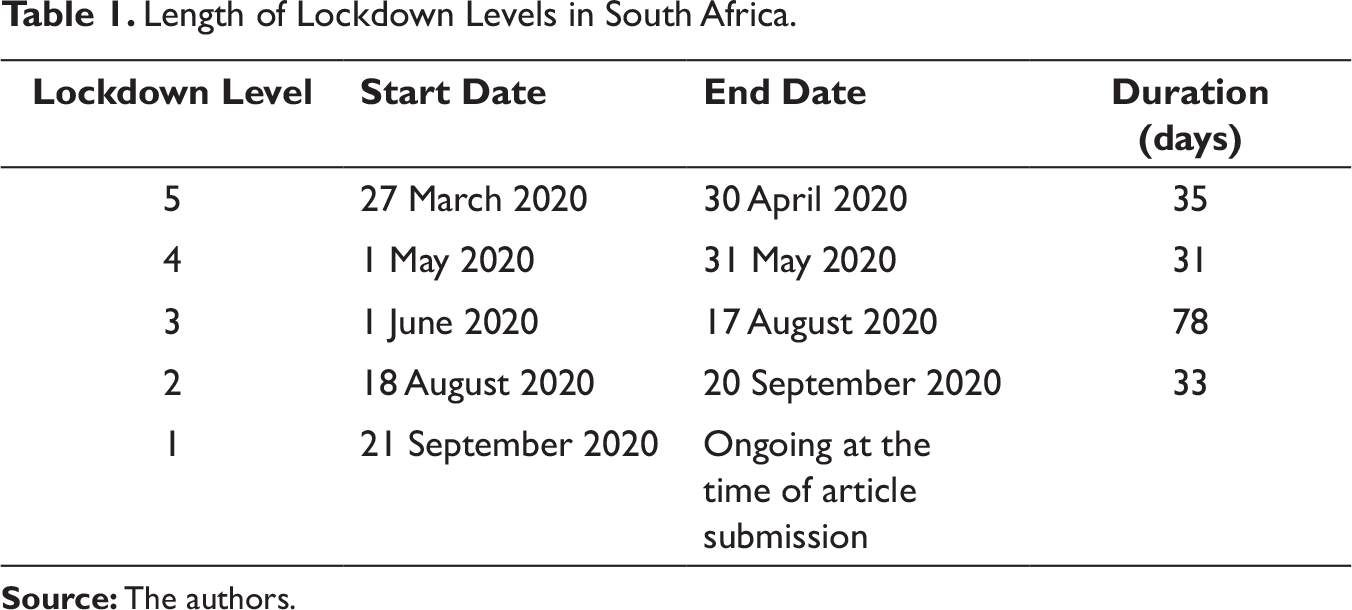
At the time of writing this article, the national lockdown continued on Level 1, with no indication of when it will cease.
Lavin et al. (2012) identify some aspects of particular importance for temporary shelters during a disaster. Issues that may have a substantial impact on vulnerable populations may include the following (Lavin et al., 2012, p. 129):
Accessible notification system and information; Evacuation, especially evacuation with caregivers and service animals; Accessible emergency transportation; Accessible shelters and temporary housing, including access to mobility devices while in a shelter or in transit (including service animals); Access to medications, refrigeration and back-up power supplies; and Access to mobility and assistive technology devices.
The implications of the lockdown for the CYCC included the following:
The movement of staff members working in various business units of the CYCC were curtailed. Some business units, those not involved in the delivery of direct childcare services, ceased operations completely. The CYCC only became fully operational again on 21 September 2020. The core team to keep the CYCC operational—on the basis that they were rendering essential services—was managed in terms of COVID-19 guidelines, which included daily screening for COVID-19 symptoms, isolation from external contaminants, avoidance of the use of public transportation (which was shut down for many weeks) and the use of personal protective equipment (PPE). No visitors were allowed onto the premises of the CYCC, including government officials, such as social workers and police officers, donors and the families of the children committed to the CYCC. Children were not allowed to leave the premises of the CYCC at all for the duration of the lockdown. Only when the country moved to Level 4 of the lockdown on 1 May 2020 were they allowed in public for purposes of exercise, but with severe restrictions on their movements (curfew). When schools gradually reopened on 1 June 2020, some children, as the reopening of schools was a phased process, were allowed outside the perimeter of the CYCC for purposes other than exercise.
During this time of isolation, the residents of the CYCC had contact with the outside world, depending on their ages, via social media, primarily. This included the use of Internet technology to access, for instance, karate classes and religious services. In cases where contact with biological family members was allowed, telephonic contact was established for children as young as 3 years old. Telephonic contact was however restricted to specific days and times. Additional initiatives to create a sense of normality included an amended daily routine, which started with an exercise routine, a late breakfast, compulsory educational activities during the morning until lunchtime, and formal educational activities in the afternoons which ended with the ‘reading aloud’ of stories to all children based on their developmental ages. This routine was maintained for the duration of Level 5 of the lockdown and 4—66 days in total. The use of technology—the Internet, big-screen televisions, laptops/media equipment—proved valuable during this time, especially when the CYCC could access online educational services.
Primary human contact/interaction for the duration of the lockdown (Levels 5–3) was between the CYCC staff and other residents. Only under Level 2 could other professional services be activated again. Only when the seasons changed from autumn to winter was the daily routine amended. Many schools that opened when the gradual reopening of schools commenced on 1 June 2020 closed again due to COVID-19 infections, resulting in a ‘stop-start’ of schooling. The CYCC, at some point, due to the irregular schooling and disruptions brought about by this, kept all school-going children home until a later date when most schools remained open due to an absence of COVID-19 infections. By Level 2 of the lockdown, most children returned to school, as all schools were now open after the absence of COVID-19 infections under the learner/educator population.
Experiences During Lockdown Stages
Several ‘stages’ or ‘mood/emotion’ phases evident in the behaviour of the children during the lockdown could be detected and typified.
Initially, nobody clearly understood what a lockdown inferred, nor did anyone know how long it would prevail. This can be described as a ‘celebratory’ stage, during which a jovial, holiday-type atmosphere was present. The children in the CYCC enjoyed the fact that schools were closed and that no formal schooling programme took place at the CYCC either. The CYCC usually dispenses educational assistance/enrichment programmes daily for all residents who attend school. Because of the uncertainty in terms of the exact implication of the lockdown, during which the CYCW team focused primarily on ‘feel-good’ interventions to counter any possible negative emotional responses, especially related to isolation from outside people, this stage carried on for approximately 30 days (or the entire Level 5 lockdown period). The disruption of contact with extended family and friends meant that CYCWs had to take great care explaining the lockdown measures. Most residents understood the reasons for the disruption in contact, as schools prepared them extensively with topical information related to COVID-19 and the spread of the virus (Children’s Society, 2020). A period of denial followed when the lockdown carried on post 30 days and the government illuminated the evolving nature of the lockdown. Only then did it become apparent that the lockdown would/could last for an irresolute period of time. This rather short stage was followed by a period where the children’s frustration and uncertainty boiled over in anger. This stage was characterised by acting-out behaviour by many children in various developmental stages. Insurrection towards the daily routine in its entirety or aspects thereof became commonplace. The CYCW response to this stage was largely informed by the children’s reactions during the ‘insurrection stage’. The daily routine was adjusted, and a more focused methodology towards education commenced, as it was by then clear that children would be extremely disadvantaged educationally by the lockdown. More focused educational programmes brought about a sense of normality. By day 60—Level 3—most children accepted that the lockdown and its impact on them would be indeterminate, and regardless of revised regulations that for instance allowed them some freedom/access to schooling, they oddly maintained an equilibrium of indifference. This may be typified as a depressive phase but without the negative symptoms thereof. Regardless of the gradual reopening of schools in Level 3, the repeated closure of schools, because of news of learners/educators being infected and the media reports highlighting the devastation of the pandemic, caused most of the children to fall into a state of fearfulness, especially to leave the premises of the CYCC. This ‘fearfulness’ lasted during most of Level 2. While some residents, especially Grade 7 and Grade 12 learners, commenced formal schooling, most residents remain ‘house-bound’ for up to another 60 days. At some point, the CYCC team deliberately kept residents out of school due to reports of infections of learners at schools. Worldwide, 188 countries have forced school closures, distressing more than 1.6 billion children and youth (UNICEF, 2020). Likely damages that may amass in learning and for the advancement of their human capital are tough to fathom. Although we introduced a ‘distance learning platform’, many of our residents were digitally excluded initially, especially children who attended early childhood development (ECD). Only late in Level 3 did the CYCC garner resources to fully digitalise the CYCC so that residents from ECD to secondary educational levels could optimise available resources. The fact that many children living in institutions have educational outfalls compounded the negative aspects of the prolonged disruption in education. New hope/expectations surfaced under Level 1 of the lockdown, when children were allowed to receive ‘social visits’ from their families again after a period of isolation that lasted for 177 days. Table 2 provides a summary of the observed emotional stages during the various lockdown levels.
Summary of Mood Response During the Various Lockdown Levels.
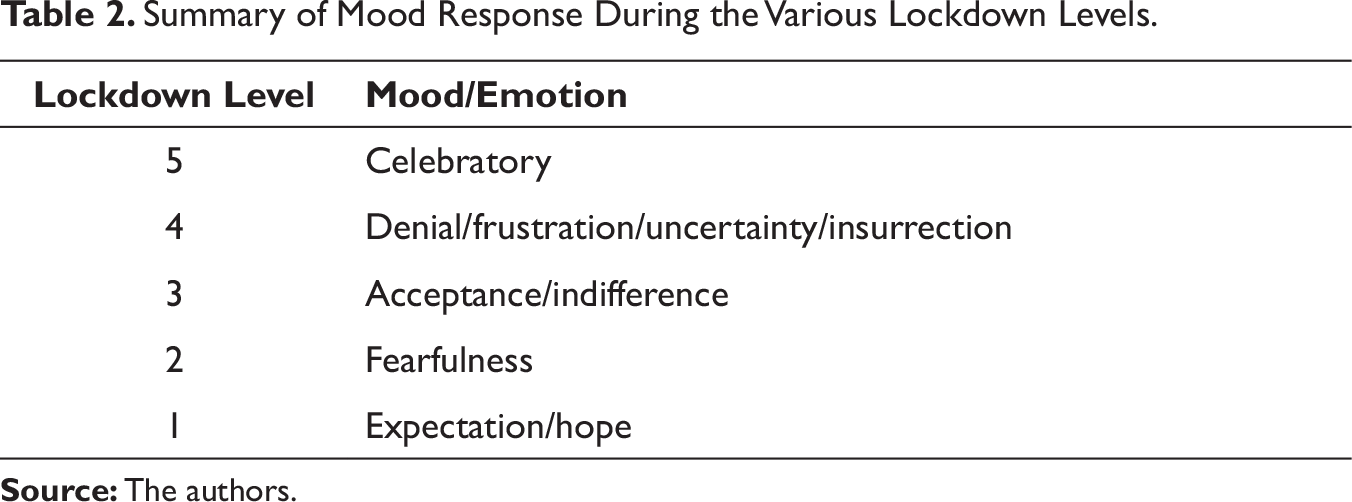
A survey from the Children’s Institute (Vorster & Magnes, 2020) affirms our experience that children verbalised themselves as ‘being sad or angry or needing to comfort themselves and self-soothe, mourned the loss of relationships, opportunities to learn, time and potential’. The expectancy of children that everything would shortly ‘go back to normal’ and the expressed deep-rooted qualms about what the future would hold correlated with the experience of the CYCC.
The often nonsensical lockdown regulations adversely affected the children. It is unclear at this stage whether the 177-day isolation period had long-term adverse effects on the residents of the CYCC. The next section speaks about the meeting of needs during this time, but there have been initial warnings of the lasting effect of the lockdown on the children:
they risk being among its biggest victims, as children’s lives are nonetheless being changed in profound ways. All children, of all ages, and in all countries, are being affected, in particular by the socio-economic impacts and, in some cases, by mitigation measures that may inadvertently do more harm than good [factors like reduced access to immunisation, for instance]. (UNICEF, 2020, n.p.)
A question that seems evident is whether the children in care may have had a buffer against some of the worrying effects raised. While the children are from poor or abusive families, they experienced more continuity and protection through the services delivered to them, mainly by CYCWs. At the time of writing this article, there has not been one case of a COVID infection among the children or staff. This reaffirms the critical service being delivered by CYC, a profession that is recognised in South Africa but not yet fully prioritised in terms of adequate funding.
The current prevailing ‘mood or emotion’ in the CYCC is very similar to the Level 5 ‘celebratory’ mood, as residents are all back at school, they have ‘new normal’ routines in respect of schooling and extramural activities, and their social lives are back on track. Children are very forgiving, and their resilience and understanding of the pandemic have been astounding. Not all children have contact with their families, especially in cases of severe abuse, but in general, the resumption of weekly or biweekly face-to-face visits from family has lifted the spirit of the CYCC residents. To accommodate all the families of all the children allowed to receive visitors, a time limit of 60 minutes per visit was imposed, which initially angered children and visitors alike, but the pressing COVID-19 precautionary guidelines, especially in relation to social distancing, which was taken into consideration with the resumption of contact visits, is clearly understood by the residents by now. It however remains odd to wear masks whilst socially interacting with family members, and then at a distance as well.
Government Regulations During Lockdown
The Department of Social Development, as the custodian of CYCCs, issued regulations pertaining to the COVID-19 pandemic at the onset of the declaration of the state of emergency. On 30 March 2020 (Government Gazette, No. 43182, 2020), a directive from Social Development Minister Lindiwe Zulu spelled out the procedures to be followed and protocols to be observed not only by the Department of Social Development but also by the non-profit, faith-based and community-based organisations involved in running facilities for the vulnerable, including CYCCs. It focused on measures aimed at enforcing social distancing— by, among other things, prohibiting visits and the release of facility residents. Other directives included a 7 April 2020 directive that prohibited the moving of children between ‘co-holders of parental responsibility’ during the lockdown period (Government Gazette, No. 43213, 2020). Parents were, for instance, only allowed to move their children between them, provided they could produce their custody court order/agreement or a certified copy. A myriad of subsequent directives or regulations—varying per lockdown level—followed, detailing the hows of navigating the COVID-19 pandemic. In a directive received on 9 May 2020, instructions were given in terms of the release of residents from the facilities such as CYCCs (Government Gazette, No. 43300, 2020). Regulations issued on 1 July 2020 focused heavily on the management of COVID-19 within the facilities such as CYCCs, from a health and safety perspective, and included comprehensive measures in re-screening, social distancing, the use of PPE and sanitisation. In August 2020, regulations pertaining to social security grants were issued (Government Gazette, No. 43588, 2020), and on 11 September 2020, directives (Government Gazette, No. 43710, 2020) regarding the rendering of early childhood education, very controversial in nature, were issued. The Minister of Social Development allowed government-funded ECDs to resume teaching, but private ECDs were prohibited from rendering any kind of service. This controversial directive negatively affected the residents of the CYCC who used private facilities; especially, the residents in the Grade R phase—the year before formal schooling commences—were adversely affected, as they lost almost half of the ‘preparation for schooling’ year.
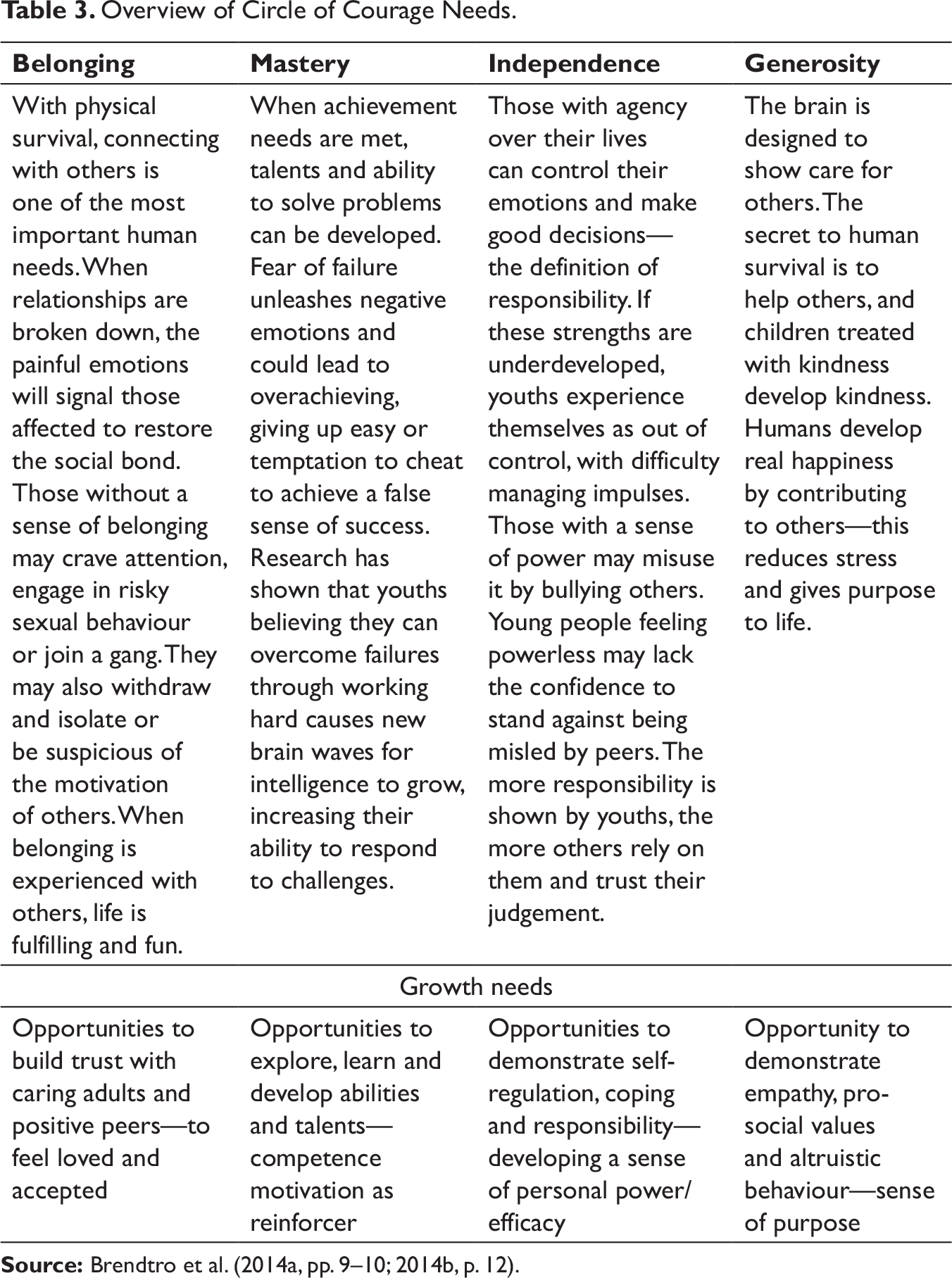
Overview of Circle of Courage Needs.
Needs of Children During the Lockdown
Considering that this study does not intend to provide an extensive and in-depth understanding of needs, a relevant theory had to be considered. The Circle of Courage provides an understanding of universal needs. This framework from the CYC theory is used as the context for the reflections on children’s needs. The universality of the four types of needs provides a broad enough context for considering what likely needs a young person in care may have during a national lockdown.
A Needs-Based Focus assumes that everything one does, is done for a purpose. That purpose is to meet personal or social needs, although one cannot assume that everyone is constantly aware of what need they are trying to meet. As CYC practitioners, the task is to help people identify their needs and to find more satisfying ways of meeting them. (Garfat et al., 2018)
Jackson (2014) highlights the paradigm shift that has been needed to socialise twenty-first-century students, away from coercive attempts to manage behaviour. He explains how the Circle of Courage provides a succinct approach to positive youth development, integrating Native American philosophies of childhood development and modern strength-based approaches to address the needs of children, through the creation of cultures of respect (Jackson, 2014). ‘The Circle of Courage growth needs are closely tied to resilience, values, and character strengths ... If these developmental needs are neglected, children exhibit a variety of social, emotional, and behavior problems that hinder the socialization process’ (Jackson, 2014, p. 17).
‘A wealth of evidence establishes Belonging, Mastery, Independence, and Generosity as foundations for positive life outcomes. Yet, belonging trumps them all… [Young people] lacking secure attachments do not achieve, develop autonomy, or demonstrate altruism toward others’ (Brendtro et al., 2014b, p. 12). Table 3 provides a summary of the four universal needs depicted by the Circle of Courage model and the growth needs of each.
The immediate responsive remedy towards the sudden, unexpected and unplanned ‘needs’ of the residents of the CYCC by the CYCWs demonstrated that the level of training of the CYCWs was of a professional standard. Within days of the declaration of the state of emergency, the CYCWs not only restructured their duty rosters, which, because of the initial uncertainty regarding the practical implications of the lockdown, included extended shifts, but they also conceptualised a new daily routine geared towards reaffirming that ‘everything will be okay’ (allaying uncertainty among the residents). The net result was that the first phase was less emotionally harmful for most residents. Residents with ‘strong’ family ties outside of the CYCC struggled most of all, because they were unsure about the safety of their loved ones, which the CYCC could do little to change. A strong religious focus, however, later changed the perspective completely, as residents started to ‘trust’ the process.
The practical approach adopted by the CYCWs—physical exercise, reading, structured playtime, time management, etc.—satisfied the needs of the residents for the most part. Obviously, with such a large and diverse group (80 children; mixed-gender; fluctuating ages and development stages), it was not possible to satisfy everybody to the same extent all the time, but most residents had most of their needs met at some time. The most difficult period was the Level 4 ‘frustration, uncertainty or insurrection’ period, as the CYCCs had to, on multiple occasions—sometimes on the same day even—adapt their programme approach at very short notice to counteract negative emotions (which often started with one disgruntled resident who negatively influenced more residents until it was very difficult to manage the group).
Responsiveness to Needs
Considering that all citizens are impacted by a global pandemic in one or the other way, being a caregiver of children has been highlighted as being even more taxing. ‘In order to meet the unprecedented and indeterminate demands of parenting during COVID-19, parents must actively plan new caregiving, work, and education routines, potentially compromising time to tend to their own emotional experience and self-care’ (Russell et al., 2020, n.p.). This article only reflects on the responsiveness of the CYCWs at the CYCC against one element, namely burnout.
The term ‘burnout’ first appeared in the literature in the early 1970s to describe feelings of emotional overload, mental exhaustion and a ‘jaded’ or cynical reaction to those needing help in the human service fields (Freudenberger, 1974 in Barford & Whelton, 2010, p. 272). A three-dimension model introduced by Christina Maslach (2001 in Barford & Whelton, 2010) depicts the following:
Emotional exhaustion—feelings of being emotionally and psychologically drained and overextended by one’s work; Depersonalisation—occurs when workers become cynical and detached from their work environment and those in need of their services; and A reduced sense of personal accomplishment in the work environment—a feeling of ineffectiveness, incompetence and lack of achievement.
The flexibility shown by the CYCWs in meeting the children’s needs again demonstrated their training and professionalism. One has to bear in mind that the CYCWs, while rendering ‘essential services’ at the CYCC, had their own families to worry about as well. Many of the CYCWs had to rely on family members to care for their own children while attending to the needs of the residents of the CYCC, which is not uncommon in the CYC sector. The CYCWs demonstrated resilience as they navigated the needs of the CYCC residents while carrying their familial burdens. Some of the residents were thriving during the lockdown because of the superfluous motivation of more care. Some defined enormous feelings of hurt, especially those who had family outside of the CYCC, as mentioned earlier. The deferring of re-integration and adoptions, because the Department of Social Development staff was not working during Level 5 and beyond, caused some children to be left in midpoint with regard to their case management. The CYCWs experienced first-hand the negative emotions evoked by the uncertainty. An innovative activity undertaken by the CYCWs during the insurrection phase was an art activity through which residents could express their emotions regarding COVID-19. The drawings depicted many of the emotions referred to earlier. The art pieces were auctioned online with the consent of the ‘artists’, and some children earned substantial amounts of money towards their ‘pocket money’ after they sold their art pieces.
From research, the following have been shown to potentially affect burnout (Barford & Whelton, 2010):
Organisational characteristics, with the following being most consistently linked to burnout:
Role conflict and role ambiguity; Work overload; The quality of interactions between both co-workers and supervisors; and Employee involvement. Individual characteristics, such as:
Demographic factors; those most predictive of burnout levels are the age and marital status of the employee —while younger employees experience higher levels of burnout, those who are married have lower scores on burnout measures; and Personality, with neuroticism and extraversion being linked to emotional exhaustion. Social support, including perceived support, from colleagues, supervisors, friends and family, which serves as an effective buffer between job-related stress and the harmful effects of burnout.
While the reflection on this one centre showed that there could have been some form of role conflict faced by those CYCWs with families, they seemed to have shown tremendous resilience and care. It can only be speculated what caused this—the sense of purpose they have regarding their job, sufficient training or organisational support—but regardless, it provides evidence of the value of CYCWs in caring for children through disaster management. Some implications would be worthwhile to study, such as the way in which their training prepares them for caring for children in various circumstances.
Creating a Sense of Safety
Salveron et al. (2015, p. 127) describe Signs of Safety as a practice framework designed for both statutory and non-statutory services by practitioners with families at risk.
Signs of Safety mapping or assessment involves analysis through clear and rigorous distinction of: past harm, future danger and complicating factors within the ‘what are we worried about’ column, existing strengths and safety within the ‘what’s working’ column and safety goals and next steps within the ‘what needs to happen’ column. (Salveron et al., 2015, p. 127)
While the intent of this article is not to provide an extensive explanation of this framework, some of its direction is being reflected on. When going through a national lockdown during a global pandemic, children in care present with their historical issues and strengths while being presented with new and unfamiliar challenges. While constant rethinking of ‘what’s next’ occurred, it is also relevant to note what the core drivers and barriers were within the systems responsible for safeguarding the children.
Lessons Learned and Conclusions
The importance of meeting needs was amplified during the lockdown, as seen from: how important the establishment and maintenance of a routine was, even with the need for changes; the importance of a sense of belonging, especially in the face of not seeing one’s family; how significant the unique care that is provided by CYCWs is; and how critical timeous financial support from the government is during times of crises.
Some areas identified as having potential risks during a national crisis, like the one experienced during the lockdown, are: consistency in practice and regulations between the private and the public sector; the flexibility of a centre in obtaining donations from various sources; the impact of caregiving on the potential burnout of professionals; and the impact a focus on the needs of children has on a successful outcome.
Footnotes
Declaration of Conflicting Interests
Funding
The authors received no financial support for the research, authorship, and/or publication of this article.