



Abstract
This article examines Japan’s evolution as a civilian power from 2012 to 2023, highlighting continuities and changes. In a nutshell, a civilian power prioritises cooperative international relations over unilateral action and military force. Using a qualitative content analysis of Japanese Ministry of Defence white papers, we base our analysis on three key categories to examine civilian power attributes: ‘Enforcement of morals’, ‘multilateralism’ and ‘will to promote and initiate’. Over 11 years, Japan has updated its Indo-Pacific partnerships, strengthened multilateral cooperation and pursued a proactive regional role. Contrary to views that Prime Minister Abe’s policies favour remilitarisation, we show continuity in Japan’s civilian power posture. While core values shifted from 2013 to 2020, the overall categories increased, particularly under Suga and Kishida. Our findings do not suggest a broad erosion of civilian power principles and show Japan’s gradual progression towards greater civilian power.
Introduction
Shortly after China’s President Xi Jinping’s visit to Moscow in March 2023, Japanese Prime Minister (PM) Kishida Fumio made a surprise visit to Kyiv to meet with Ukrainian PM Volodymyr Zelenskyy. While this move was mainly interpreted as the visible increased ideological rift between the two East Asian giants (Yeung, 2023), it also demonstrated Japan’s newfound confidence to assume a more active role in international politics. By aligning Japan more closely with partners in Europe and Southeast Asia, the Kishida administration has demonstrated its awareness of the changing geopolitical environment in recent years. The era of checkbook diplomacy and reactive foreign and security policy behaviour seems to be in the past. Despite Japan’s continuing constitutional constraints, the Japanese government under then PM Abe Shinzō had taken various steps under the banner of ‘Proactive Contribution to Peace’ to build a foundation for his successors to become more active contributors to international peace (Government of Japan, 2014).
However, with the implementation of a new security directive in 2012 and 2013 and reform plans for Article 9 of the Japanese constitution, the Abe administration faced major criticism. A proactive Japanese foreign and security policy was seen as remilitarisation efforts, motivated by Abe’s nationalist ideologies, as the proposed expansion of the self-defence forces (SDF) was interpreted as a shift from Japanese pacifism to a more pronounced military role. Although there has been no formal revision of the constitution since 1947, any changes to Article 9 have often been framed as either nationalistically driven by the ruling Liberal Democratic Party (LDP) and its hardliners and revisionists, who want Japan to become a military power, or as the result of a more natural evolution due to growing security threats in the Indo-Pacific (Hook & Son, 2013; Hughes, 2018; Oros, 2017; Yamamoto, 2017). Hence, any altering in Japan’s foreign and security policy is often scrutinised against this dichotomous lens of remilitarisation versus legitimate change of policy directives.
This article departs from the extant narrative and employs the role concept of a civilian power to examine the foreign and security landscape of Japan since the beginning of Abe’s second term as PM in 2012. In doing so, it provides new insights into security transformations, arguing that the Abe administration (2012–2020) had maintained and contributed to civilian rather than military power attributes. We underscore that the ‘Proactive Contribution to Peace’ strategy, often framed as Japan’s way to militarisation (Gustaffson et al., 2018; Hagström, 2015), had supported the pillars of civilian power.
Maull (1990) introduced the concept of civilian power, which describes an archetype of a state based on constructivist role theory. While the concept consists of a detailed framework, three aspects appear to be of special significance: First, a civilian power steadfastly sees military force as an instrument of last resort and rather enforces cooperation, integration and collective efforts with partners and institutions. Second, a civilian power is a state that is driven by a liberal canon of norms and values that it seeks to realise within the international relations, and third, a civilian power shapes and designs actively international relations without assuming leadership. While civilian powers are often characterised as pacifist, this is actually not the case; civilian power states are rather diplomatic driven and have a pragmatic stance on military force.
For our assessment of Japan, we use a set of three categories based on these characterisations, namely ‘enforcement of morals’, ‘multilateralism’ and the ‘will to promote and initiate’. We apply them to the Japanese Ministry of Defence (MOD) white papers to focus on security and military developments, as the civilian power concept is primarily concerned with security policy.
This article shows that allowing collective self-defence as a key aspect in Abe’s state-to-state dialogues was the main driver that transformed Japan towards becoming more of a civilian power state. This and other aspects have strengthened Japan’s ability to act quickly and assume a more proactive role. Kishida has been able to capitalise on this groundwork laid by his predecessor, Abe. As a result, Japan’s increased participation and coordination with multiple partners and institutions supported Kishida’s more resolute approach to imposing sanctions in response to Russia’s war in Ukraine. Tōkyō has also worked to strengthen its ties with South Korea amid their historical disputes, updated its National Security Strategy (NSS) and increased its defence spending. These factors have contributed greatly to Japan’s emergence as a civilian power.
This article is structured as follows: First, we review the current literature on Japan’s foreign and security identity and introduce in Sections ‘Literature Review’, ‘Theory’, ‘Civilian Power in Japan’ and ‘Research Design’ the theoretical model, operationalisation and methodology. In the following sections, ‘Methodology and Data’, ‘Assessing Japan’s Civilian Power Development Since 2012’ and Anti-Civilian-ness?’, we provide an overview of the Abe administration, present our findings and summarise the results in Section ‘Conclusion’.
Literature Review
When Abe assumed office in 2012, Japan’s foreign and security policy domain received increased scholarly attention. Due to his nationalist ideologies and connections to nationalist groups such as the Nippon Kaigi, any changes by the Abe administration to Japan’s security architecture were reviewed with scepticism. Under Abe, a National Security Council (NSC) was formed, the NSS was updated, and the SDF was allowed to participate in collective self-defence after a tumultuous debate in the Japanese diet. Further, the competences of the PM’s office (Kantei) were expanded and the ban on arms exports was lifted (Hughes, 2015; Yamamoto, 2017). In this context, it emerged as Japan departed from its century-old pacifist constitution, which was designed to prevent Japan from ever again becoming a military power (Gustaffson et al., 2018; Hagström, 2015; Kingston, 2019). Other scholars argue that it was rather a natural and necessary transformation amid rising tensions in the Indo-Pacific region, sparked by a rising China region (Envall, 2020; Hughes, 2015; Oros, 2017; Smith, 2019). Under the concept of ‘normalisation’, which was popularised by former LDP Secretary General Ōzawa Ichirō in the early 1990s (Ōzawa, 1994, p. 235), right-wing nationalists such as Abe legitimised the military built-up of Japan. As a result, debates about the ‘normality’ and ‘abnormality’ of the Japanese constitution and state policies had surged (Gustaffson, 2018; Hagström, 2015).
However, right-wing ideologies in combination with a shift in security politics are not exclusive to the Abe era but had been on the rise since PM Koizumi Jun’ichirō (2000–2005) took office (Boyd & Samuels, 2005). Koizumi enacted the ‘Anti-Terrorism Special Measures Law’ that enabled the SDF under strict limitations to support US President Bush’s anti-terror campaign following the events of 11 September 2001 (MOFA, 2001). This marked a significant change in Japan’s security behaviour, demonstrating a willingness to deploy the SDF and participate in international conflicts in support of allies (Boyd & Samuels, 2005).
At the same time, growing pressure and international demands—gaiatsu—especially from Washington had often been identified as the other main drivers of Abe’s security efforts (Dobson, 2017; Fukushima & Samuels, 2018; Heginbotham & Samuels, 2018; Maslow, 2015). In the face of North Korea’s missile programme and China’s growing assertiveness in the East and South China Seas, Abe’s ‘Proactive Contribution to Peace’ policy was perceived as an appropriate response to counter these new challenges (Koga, 2020; Oros, 2017; Smith, 2019; Yamamoto, 2017). Oros (2017, p. 127) goes as far as to conclude that ‘[…] any PM would have enacted similar policies […]’, adding that the Democracy Party of Japan (DPJ) (2009–2011) had already laid a ‘[…] fruitful basis for [Abe’s] security policy’ even without strong nationalist ties.
Although concerns about remilitarisation persisted, Abe’s security legacy showed its positive effects for Japan. Tōkyō’s support for UN peacekeeping operations (PKO) or involvement in humanitarian assistance and infrastructure building among Association of Southeast Asian Nations (ASEAN) countries has grown countries (Green, 2013; Hook & Son, 2013; Iwami, 2018). Iwami (2018, p. 13) concludes that the Abe administration’s ‘aggressive diplomacy’ must be understood as a new form of proactive assistance and engagement as a humanitarian power.
In the subsequent years, Japan built on these measures. Although former PM Suga Yoshihide (2020–2021) barely had time to influence foreign policy, the current Kishida administration has taken several steps in this proactive direction without any criticism of militarisation. His government has further expanded multilateral cooperation, worked towards improving relations with South Korea, and most notably doubled Japan’s defence spending (Johnson, 2023).
In short, while most of the extant literature agrees that Japan’s foreign and security policy has become more assertive, some interpreted this rather as taking a more rational approach of Tōkyō to meet the new challenges in the Indo-Pacific. In an attempt to move beyond these interpretations, this article employs the often-neglected civilian power model to show that the rearmament does not automatically serve the remilitarisation but rather supports Japan’s emergence as an active contributor to stability in the region.
Theory
The concept of civilian power derives from the constructivist role concepts and is an actor-centred approach to the qualitative analysis of security politics (Maull & Kirste, 1996, p. 283). It describes an archetype of a democratic state in the field of international relations (Frenkler et al., 1997; Maull & Kirste, 1996; Maull, 1990, 2019, 2005, 2002; Tewes, 2002). The primary goal of a civilian power is the civilisation of international relations. This is achieved by understanding that unilateral actions are ineffective, and the use of military force is not a suitable means for resolving international conflicts, as the growing interdependence of states requires the international community to work multilaterally (Maull, 1990; Tewes, 2002). As a result, international politics is managed through diplomatic approaches that target the establishment of the rule of law, liberalisation, market economy, collective efforts and building (supra-)national institutions (Frenkler et al., 1997; Maull, 2005; Tewes, 2002).
Maull’s concept of a civilian power derives from Duchêne (1972), who first introduced the idea of civilian power. Maull uses this concept for the analysis of foreign and security policies of Germany and Japan after World War II. He takes both countries as prime examples of civilian power states, as both countries had to prove their absolute renunciation of war—or any war potential for that matter—and their commitment to democratic values in order to be accepted back into the international community (Maull, 1990, p. 94).
In contrast to superpowers such as the United States or Russia, a civilian power prefers non-violent, risk-averse strategies and cooperative patterns, while military coercion is deemed as rather ‘uncivilised’ (Maull, 2005, p. 781). At the same time, this does not mean that civilian power states are pacifist, but they restrict military force rather than pursuing military enlargement. A civilian power may possess military capabilities, but these are utilised to ‘secure other means of international actions’ such as measures of cooperative forms of defence and security (Maull, 1990, p. 92).
Maull describes the civilian power role concept as ‘never again’ (in relation to Germany’s and Japan’s actions in the Second World War) and ‘politics before force’ (Maull, 2019). Moreover, civilian powers embody certain norms and values, such as freedom, democracy and market-oriented economies, which serve as central determinants of decision-making processes, institutional frameworks and structural configurations (Frenkler et al., 1997, p. 22).
A civilian power consists of six different characteristics: (a) Will to promote and initiate, (b) national goals, (c) international goals, (d) interdependent interests and universal values, (e) specific patterns of foreign policy action and (f) foreign policy instruments. These characteristics serve as the basis for our research design and are elaborated in the following section.
Will to promote and initiate: A civilian power is committed to promoting and initiating ideas, norms and values in international politics. These principles typically include, as mentioned above, democracy, human rights, the rule of law and the market economy. In this context, civilian power seeks to exercise leadership in the international arena to ensure their realisation. However, this leadership is exercised in a cooperative manner (Frenkler et al., 1997, p. 23).
National goals: A civilian power focuses on promoting security, prosperity, social equality and democracy within its own borders. This domestic focus is based on the belief that externally promoted values must be embedded in domestic policies (Frenkler et al., 1997; Maull & Kirste, 1996).
International goals: A civilian power focuses on actively initiating transformations in international and supranational institutions to bring them into line with democratic values and on the willingness to implement such convictions in international interactions for the civilisation of international politics. Supranational institutions are seen as a crucial international goal that helps to ensure the rule of law and institutionalisation, thus contributing to civilising processes (Maull & Kirste, 1996, p. 301).
Independent interests and universal values: A civilian power represents and acts according to a certain set of values and norms, including ideals of liberalisation, democracy and the rule of law.
Specific patterns of foreign policy action: A civilian power believes that unilateral action in foreign and security policy is automatically doomed to failure. Civilian power therefore exhibits specific patterns of action in international relations, such as risk-averse strategies (Frenkler et al., 1997; Maull & Kirste, 1996).
Foreign policy instruments: A civilian power’s primary foreign policy instruments include communication, meetings and policy mechanisms such as sanctions and conditionality. Military force may also be part of a collective effort but only as a last resort.
Although these points constitute the archetype of a civilian power, Frenkler et al. (1997) argue that the minimum requirement for a civilian power is:
A will to shape international relations, Acknowledges the importance of multilateral approaches over unilateral ones and Shows support for civilian power norms independent of their own national interests (Frenkler et al., 1997, p. 103)
Also, Maull (2019) refers to the key aspects as encompassing multilateral collaboration with other democracies and/or states, the willingness to prioritise overarching international frameworks over short-term self-interest and therefore shaping the international relations, and the rejection of unilateral actions and military force—as their key norms. Drawing from these observations, we can conclude for our analysis that the most critical components of a civilian power are an active state that seeks to shape and contribute to international politics, a state that is concerned with multilateral and collective approaches, and a state that is guided by liberal norms and values of a civilian power.
The concept of civilian power has become quite popular within the international relations due to its seemingly well-defined categories (Harnisch, 2002; Nakamura, 2016). And in fact, it provides an analytical framework for assessing and comparing a state’s foreign and security patterns. However, it is important to recognise that the concept lacks clear-cut definitions of what is required to fulfil the categories. Furthermore, it also does not provide a defined model of certain key aspects, such as democracy (Wolff, 2013, p. 479). It is not clear whether the concept of civilian power embodies a form of liberal democracy or whether the mere existence of participatory institutions, such as elections, is sufficient (Wolff, 2013, p. 479). Furthermore, although the primary objective of civilian power is to promote civilised international relations, the promotion of democracy can sometimes conflict with this goal. The forceful imposition of democracy can potentially undermine mutual confidence-building measures, which are the very ideals that a civilian power seeks to uphold (Wolff, 2013, p. 479). Harnisch concludes critically: ‘Consequently, civilian power is (at best) a call for foreign policy altruism, at worst, it is the legitimation for a self-righteous moral crusade against “uncivilised states”’ (2002, p. 5).
While we do acknowledge the limitations of the concept of a civilian power, we argue that it still remains a valuable tool for analysing a state’s foreign and security policy for several reasons.
First, the concept of the civilian power provides a structured framework for understanding and comparing foreign and security patterns. By delineating categories such as diplomacy, economic interdependence and non-military conflict resolution, the approach allows to systematically evaluate a state’s actions in the international arena. Second, despite the shortcomings in defining the categories completely, the concept still highlights the importance of key aspects that can guide and help the analysis.
Civilian Power in Japan
Looking at the post-World War II behaviour of Japan and Germany, Maull argues that the elimination of all vestiges of militarism and fascism from these two nations was crucial to their successful reintegration into the international community. In order to navigate the newly established postwar international order, both Japan and Germany had to change their foreign policy and security objectives completely and adapted a new national identity. Due to Japan’s pacifistic constitution and dependence on the US security umbrella, Frenkler et al. (1997, pp. 31–39) categorised the Japanese government as only a minimalist civilian power actor. Still, Japan and Germany resembled very closely the ideals of a civilian power (Maull, 2019). Since the mid-1980s, Japan gradually changed and demonstrated greater alignment with the principles of a civilian power by prioritising peaceful diplomatic efforts and developing partnerships with multiple countries and institutions to promote stability in the region. Japan’s active participation in UN-led PKOs in the late 1990s, its commitment to promoting sustainable institutions for conflict resolution, and humanitarian assistance have been instrumental in advancing as a civilian power (Frenkler et al., 1997, p. 42). However, Japan’s foreign and security policy remained somewhat without a clear trajectory. In particular, the rise of nationalism in the Asia–Pacific region in the early 2000s was seen as a hindrance (Maull, 2005). This changed with the start of the Abe administration. Nakamura (2016) argues that Japan–European Union relations showed a continuation of both actors as civilian powers. Maull (2019) even criticises this continuation in the face of the growing geopolitical challenges in the region.
In conclusion, since the end of World War II, Japan has continuously redefined its foreign policy and security objectives, adapted its national identity and aligned with the principles of peaceful diplomacy, multilateralism and proactive engagement in addressing regional and global challenges. This article builds upon these observations and examines the Abe administration and its successors, Suga and Kishida.
Research Design
As outlined in the previous section, Maull (2019) and Frenkler et al. (1997) stressed three key attributes of a civilian power, which are: (a) The promotion of norms and values of a civilian power independent of their own national interests, (b) the focus on multilateral and collective approaches and (c) the will to shape international politics. Accordingly, we propose the following categorisation: (a) ‘Enforcement of morals’ (with subcategories of ‘core values’ and ‘implementation’), (b) ‘multilateralism’ and (c) ‘will to promote and initiate’. The delineated categories should not be viewed as exclusive categories; instead, they should be perceived as clusters that encompass various contributing factors of a civilian power, however, with a focus on the respective category.
Category 1: ‘Enforcement of Morals’
Our first category, ‘enforcement of morals’, refers to the notion that civilian power-like states need to support the promotion of key norms and values independent from their own national interest. As noted above, a civilian power promotes and enforces certain norms and values, such as democracy, the rule of law, human rights and a market economy. Further, it also includes freedom, stability and the overall sustainability of these implemented principles. Based on these factors, we use ‘enforcement of morals’ to assess Tōkyō actions as a promoter and implementer of the norms and values of a civilian power. Hence, we assign references to this subcategory that represent the values of civilian power, such as democracy, freedom, rule of law, market economy and welfare as well as a strong preference for diplomacy over military instruments in conflict situations. This category is measured by two subcategories. The first subcategory focuses on the ‘core values’ of a civilian power as defined above. We examine the extent to which Japan uses these ‘core values’ in its white papers and/or legitimises policies and efforts in accordance with them.
After a first initial assessment of our categories, which we will specify in the next section, we attribute to this category the following themes: Peace, stability, prosperity, community, cooperation, non-military, sharing interests/values, dialogue, democracy, rule of law, human rights, economy and order.
The second subcategory, ‘implementation’, examines the effective application of these norms and values. We define ‘implementation’ as actions taken by a civilian power to intervene in countries or international issues to achieve stability and strengthen the sustainability of the ‘core values’. This can be demonstrated, for example, by training, humanitarian assistance, SDF in capacity building, education and disaster relief or (defence) cooperation that support the stability and establishment for key institutions for democratisation. This category involves the following themes: Capacity building, collective approaches, defence cooperation, negotiation, disaster relief and humanitarian assistance, maritime approaches and anti-piracy, non-proliferation and arms control, rule setting and training. While the other themes refer to concrete actions, collective approaches are a container category which includes other actions of collective cooperation. We interpret behaviour that shows a preference for military force or a disregard for certain norms and values as contradictory to the main category of ‘enforcement of morals’.
Category 2: ‘Multilateralism’
The second category, ‘multilateralism’, refers to Japan’s efforts to build and maintain partnerships, that is, its interdependence with other nations, particularly in the context of conflict resolution and institutionalisation through multilateral networks. This category assesses the importance placed on relationship building and the diversity of these relationships. It also examines the tools Japan uses to cooperate and interact with partner countries, both military and civilian. The category also considers official declarations, agreements, joint statements and formal and informal meetings such as summits and conferences. The analysis therefore pays particular attention to the relationship with the United States and the development of new collaborations, as well as Tōkyō efforts to be part of or contribute to supranational frameworks. Historically, Japan has been sceptical of the delegation of power to supranational institutions, so we pay particular attention to this area regarding the UN and North Atlantic Treaty Organisation (NATO) (Frenkler et al., 1997, p. 42). Other forms of cooperation among groups, such as the Quadrilateral Security Dialogue, the ‘Free and Open Indo-Pacific (FOIP)’-strategy and ASEAN, will not be considered individually but rather as part of this category. Within this category, independence or unilateral action is viewed as inconsistent with the pursuit of multilateralism.
Category 3: ‘Will to Promote and Initiate’
The third category, ‘will to promote and initiate’, evaluates Japan’s behaviour in the international community in terms of its willingness to actively shape and dictate the development of institutions and frameworks. This category focuses on the civilian power’s qualities as a pioneer among other nations and a promoter of collective efforts over unilateral means. In this regard, we examine whether Japan takes the initiative and contributes to intergovernmental communication as a driving force. Our analysis focuses on the creation of treaties and legal frameworks that institutionalise cooperation. Terms such as ‘role’ and ‘active’, and actions such as ‘creating’ or ‘setting rules’, are assigned with this category. We also analyse Japan’s behaviour in cooperating with other nations and consider what instruments are considered to establish sustainable aid. With this category, we use the following themes: Active, mediation, responsibility, networking, setting rules, contribute to stability, providing safety and sanctions. However, any evidence of a preference for ad hoc intervention without an international framework or repeated subordination within international cooperation would contradict the ‘will to promote and initiate’ category.
Methodology
The concept of a civilian power is designed for qualitative content analysis to capture the significant aspects of a state’s foreign and security policy and its characteristics, allowing for a thorough examination (Frenkler et al., 1997; Maull & Kirste, 1996). For this reason, we use Mayring’s qualitative content analysis method, which is widely used in the social sciences. This method focuses not only on the actual content of the material studied but also on understanding the subjective meaning conveyed by the text (Mayring & Fenzl, 2019; Mayring, 2014a, 2014b). While qualitative is often framed solely as an interpretive analysis of content, Mayring’s content analysis is characterised by a methodological approach that involves the application of a specific set of categories to the subject of interest to ensure reliability and validity (Mayring, 2014a, p. 373).
The goal of the analysis is to understand the way in which the material conveys information. Initially, the method focuses on creating categories for the analysis, which we did in the previous chapter (‘enforcement of morals’, ‘multilateralism’ and ‘will to promote and initiate’). The categories can be organised in a hierarchical structure or on the same level (Mayring & Fenzl, 2019). Our categories are not hierarchically ordered but treated on the same level, as they are equally important for a civilian power. The categories/codes are used as a guiding tool to examine the material itself (Mayring 2014a, 2014b). During the coding process, each code should consist of the minimum amount of text necessary to meet the criteria of the category or to justify an association with it. These codes can be words, phrases or specific contexts (Mayring & Fenzl, 2019, p. 636). This approach ensures that the assignment of references is based on robust and reliable codes, which minimises the possibility of pure interpretation. We use this method to create a reliable data set that best represents the concepts of civilian power.
This means for our analysis that we examined the material—the white papers—regarding the categories’ context and wording. We did not consider specific words alone; therefore, the mentioning of the word ‘democracy’ did not constitute an association with the category of ‘enforcement of morals’, for example, when democracy was used as a mere description for a countries political system. 1 Rather, we included only those references that mentioned the need to enforce democracy or used it as a marker for good cooperation with countries, or in other words, references that showed a direct relation to the context of norms and values of the three categories we employed. For that reason, we excluded purely explanatory sections and parts that repeated over the years.
We proceeded with our analysis in two steps: First, we followed Mayring’s (2014a, 2014b) and Mayring and Fenzl (2019) methodology and used a deductive approach to construct categories for our analysis based on the concept of civilian power. Second, after the selection of references based on the predefined categories, we conducted an initial assessment of these categories and scanned their contents for specific keywords. This process allowed us to identify prevalent themes in the selected references. In our figures, we show how the content of the categories was related to the specific content of the prevalent themes, both in terms of vocabulary and contextual usage in the white papers.
Data
This article uses the white papers of Japan’s MOD for the qualitative content analysis. White papers are a collection of documents that include reports, guidelines, beliefs, directives, goals and key policies. They provide information about the mandates assigned to the SDF, assessments of conflict scenarios and external threats. These publications serve as communicative artefacts from the Japanese government, encapsulating its self-conception and cognitive considerations regarding foreign and security policy.
We use whiter paper for two reasons. First, a civilian power is defined by the pattern of state behaviour. To identify patterns, time series data provided by the white papers of the MOD as they are published annually by the same institution makes them suitable for examining time trends and studying evolution over time. With the help of this time series data, we can more easily observe and reveal patterns of decline or increase of civilian power attributes.
Second, since the first analysis of the civilian power concept, white papers have been an important source for the assessment. Maull (1990), Maull and Kirste (1996), Frenkler et al. (1997) and Maull (2019) all use white papers to assess the attributes for civilian power, however, in combination with other government outputs. Still, white papers have remained a prominent part, as they have a special significance because they deal with the military and defence domain of a given state, which is what civilian power is most concerned with. While other government output such as the bluebooks of the Japanese Ministry of Foreign Affairs (MOFA) or reports of the Kantei also hold important information, our specific interest lies in the examination of developments in the security sector and the (re)militarisation of Japan.
For the qualitative content analysis, we used the English versions of the white papers. These versions can be understood as direct communication instruments for Japan’s image on the international stage while sharing goals and objectives with its partner states (Strothmann, 2012, p. 202).
Assessing Japan’s Civilian Power Development Since 2012
Since 2012, Japan departed in some ways from its post-war approach of reactive and reluctant policymaking (Envall, 2020; Nakamura, 2016; Oros, 2017). One of the most significant changes under the ‘Abe Doctrine’ was the establishment of new security institutions (NSC and the NSS), which fundamentally reshaped Japan’s outlook to security policymaking as well as its domestic architecture of the Japanese security apparatus (Hughes, 2015; Yamamoto, 2017). Guided by the ‘Proactive Contribution to Peace’ policy, the Japanese government started to pursue pre-emptive cooperation with the United States, made significant contributions to the development of ASEAN, and introduced the policy vision of the FOIP (Green, 2018; Satake, 2019). Due to the growing challenges from a more assertive North Korea, a rising China, and resurgent territorial disputes with Russia and South Korea, these changes seemed more than necessary for Japan’s security (Oros, 2017; Satake, 2019; Smith, 2019).
However, due to Abe’s actions in presenting himself as a proactive leader while claiming that Article 9 was a relic of the past (McCormack, 2014, p. 73), his pursuit of nationalist ideals drew widespread international criticism, but China and the two Koreas in particular perceived this new stance as a threat to regional stability. As a result, Abe’s tenure was scrutinised over the years, ranging from growing concerns about Japan’s remilitarisation (Gustaffson et al., 2018; Shibata, 2018) to observations of a more assertive Japanese security identity (Hughes, 2015; Ina, 2015; Iwami, 2018; McCormack, 2014). However, in terms of the civilian attributes of power during this period, they showed only a subtle shift in Japan’s foreign and security policy (Maull, 2019).
The new vision for the foreign and security of Japan focuses more strongly on promoting norms and values that reflect Japan as a peace-loving nation. According to the 2022 NSS, Japan sees democracy, human rights, the rule of law and market economy as the essential values they represent on the international stage. Kishida’s foreign diplomacy and international cooperation are now guided by these values. His government has expanded the steps taken by the Abe administration without being criticised for pushing Japan to become a military power. His proactiveness is often framed against the background of Japan assuming a new active role amid growing challenges and security concerns in the region.
In the following section, we present the results of our extensive qualitative content analysis of the white papers. In total, we identified 2,333 references that we assigned to the civilian power categories we employ, namely ‘enforcement of morals’, ‘multilateralism’ and ‘will to promote and initiate’, in Japan between 2012 and 2023.
Category 1: ‘Enforcement of Morals’
A civilian power promotes a particular set of values and norms that are realised in foreign and security policy prerogatives (Maull, 2005, p. 780). Within realism, these overall directives are referred to as ‘grand strategy’, while we describe them here as the specific role concept of a state. By actively practising these norms and values, civilian powers aim to influence other states to adopt and practice the same norms and values (Maull, 2005, p. 780). We analyse this grand strategy under our first main category, ‘enforcement of morals’, which consists of two subcategories. ‘Core values’ encompasses references that mirror the norms and values of a civilian power, such as democracy, freedom, the rule of law, market economy but also welfare and prosperity. The second subcategory ‘implementation’ focusses on the practical application of the core values and specific actions taken by the Japanese government. In terms of our methodological approach, we emphasise once again that in terms of the selection of the references, context and wording are prioritised over the mere mention of words. We consider both subcategories separately to assess the quantity of references to ‘core values’ and ‘implementation’.
Subcategory 1: ‘Core Values’ (Category 1: ‘Enforcement of Morals’)
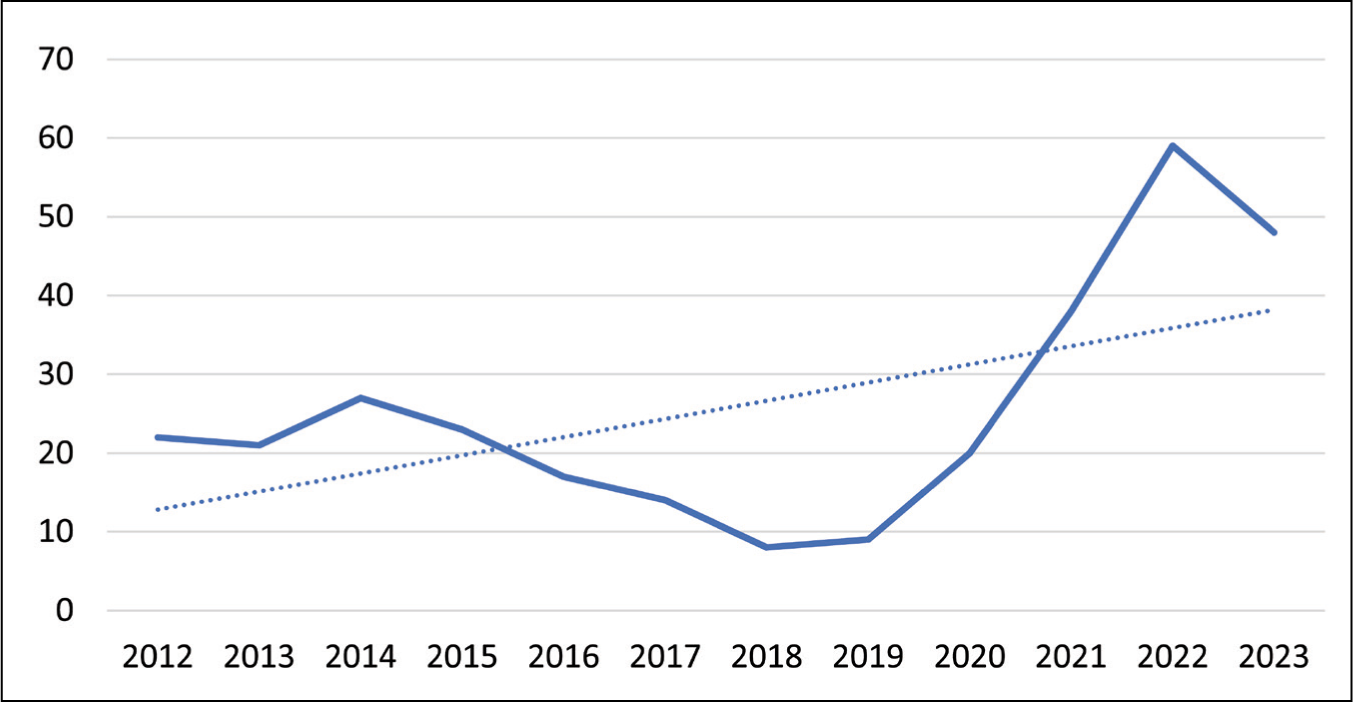
We have assigned a total of 306 references to this subcategory. The references of ‘core values’ over time are shown in Figure 1.
The subcategory ‘core values’ shows a significant decrease in the years of 2012–2019. Only with the start of the Suga administration early in 2020 do we see a considerable increase. With the start of 2014, a rapid increase of ‘core values’ occurs, which is in line with the introduction of the new NSS as Japan’s new foreign and security directive. However, the following years until 2019/2020 show a significant decline, indicating that the norms and values introduced in 2014 did not really resonate with the political outline in general and did not play a substantial role in further policy decisions. However, this changed dramatically with the start of the Suga administration and has continued under Kishida. In particular, growing international challenges, such as Russia’s war on Ukraine in early 2021, are likely to put pressure on the Japanese government to focus more on core values such as the promotion of democracy and the rule of law.
In Figure 2, we show the themes associated with this category.
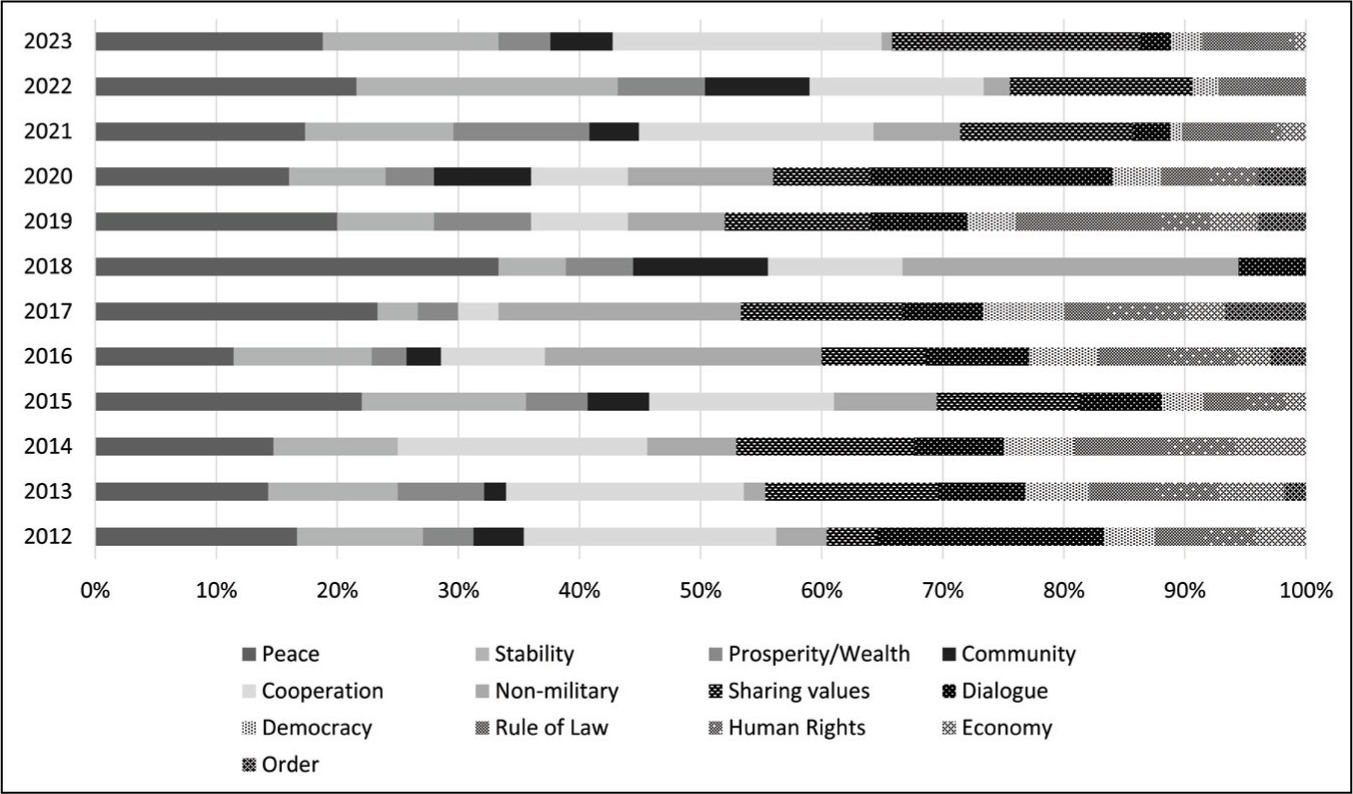
Among the 16 themes of this subcategory, ‘peace’ is the most frequently mentioned, with 134 references over the investigated period. As noted above, we did not include every sentence in which the word ‘peace’ appeared as we also checked for the context and phrasing. Therefore, we only included references that conveyed peace as a necessary and indispensable attribute of foreign relations. To give an example, sentences such as ‘(t)he Ministry of Defense and the SDF also play an important role in cooperation aimed at the peace and stability of the international community’ (MOD, 2012, p. 2) belong to the themes of ‘cooperation’, ‘peace’, ‘stability’ and ‘community’. Although ‘peace’ is explicitly mentioned here as a word, it gains its significance by being mentioned as part of a value-based goal for Japan’s foreign policy. We also find that the theme of ‘peace’ often correlates with ‘stability’, with both being the most important themes in 2014 and 2015.
Our data also show the theme of ‘cooperation’, which indicates the emphasis on cooperative measures and joint actions with other countries. It ranks second over the investigated period. In the section of the category 2 ‘multilateralism’, we examine ‘cooperation’ in more detail. While ‘multilateralism’ has increased significantly during the Abe administration, the number of ‘cooperation’ references has decreased. Although it can be argued that the theme of ‘dialogue’ is to some extent a component of ‘cooperation’, we take ‘dialogue’ as a separate theme to highlight the tool of communication as a pattern of interaction. This theme gains in importance over the years and is ranked second in 2020, while ‘peace’ remains first.
The non-military theme highlights the non-military conflict resolution strategies of a civilian power. Here, we use non-military to highlight efforts to create a clear separation from military idealisations. References in which Japan directly declares ‘[…] not to become a military power’ (MOD, 2016, p. 3) encompass this theme. In this context, we only tagged military references to the ‘non-military’ theme in order to separate this theme from ‘peace’, which can be seen as a juxtaposition. The references to ‘non-military’ are particularly pronounced in 2016 in relation to the introduction of FOIP. ‘Peace’, on the other hand, tends to receive less attention. This suggests that conflict resolution is understood more in terms of renouncing military means and emphasising a lack of interest in acquiring military power.
As Frenkler et al. (1997, p. 52) point out, civilian powers need to see their own interests reflected in those of their cooperation partners. Hence, Japan has placed great emphasis on the extent to which similar interests, norms and values are shared among partner countries (see, e.g., MOD, 2019, p. 133). These observations are subsumed under the theme of ‘shared values’. Most often, these values encompass democracy, the rule of law, human rights and market economy. References that emphasise the importance of ‘shared values’ in general are also tagged with this theme. However, as we first analysed the themes ‘democracy’, ‘rule of law’, ‘human rights’ and ‘market economy’ independent, and later counted them as one theme of ‘shared values’, we can see that the distribution of these themes seems to be stable over the years, even though the general mention of ‘core values’ is decreasing. Among those values, we see the increasing importance of the rule of law in relation to the FOIP, maritime affairs and the Open and Stable Seas initiative, which has gained prominence due to Chinese assertiveness in the East and South China Seas.
These growing challenges also lead to an increase in the theme of ‘stability’, especially in the years 2020–2023, where we see that references to this theme have become more prominent. As the Russian war in particular has also prompted China to act more aggressively, this has probably triggered the need to emphasise and provide even more stability.
Subcategory 2: ‘Implementation’ (Category 1: ‘Enforcement of Morals’)
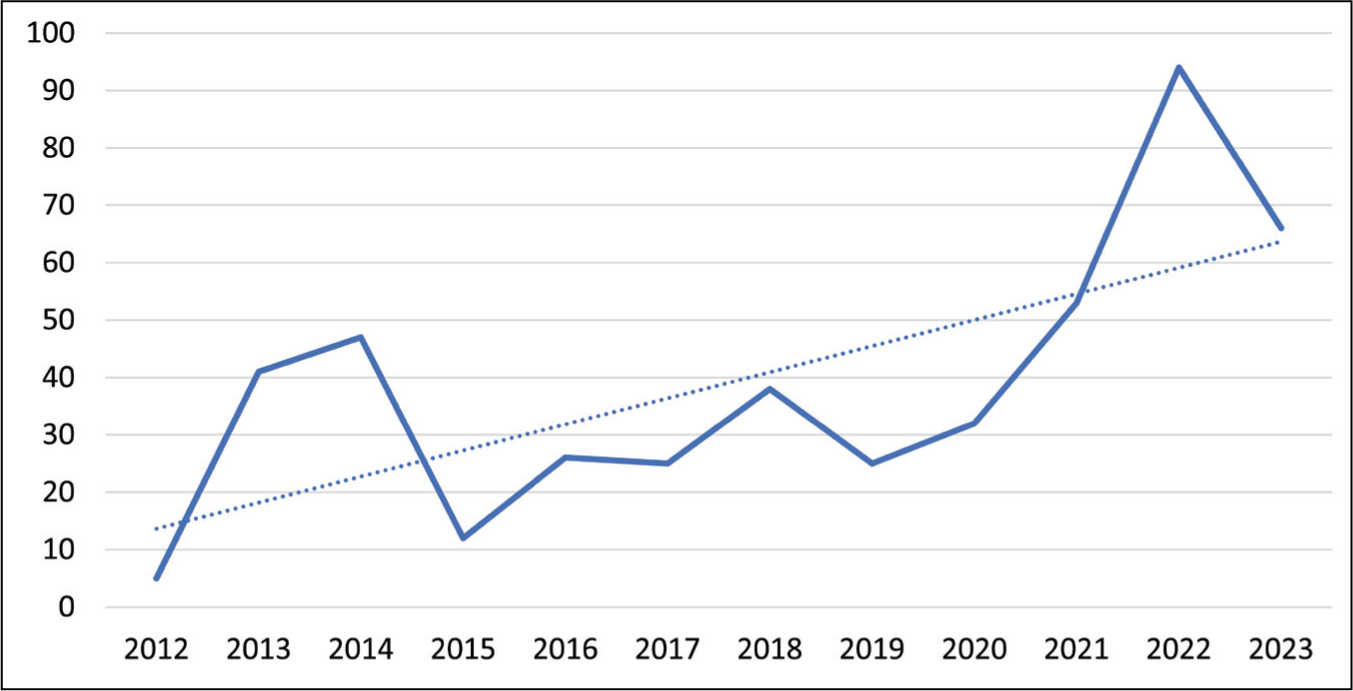
We have assigned 464 references to the subcategory ‘implementation’. The overall distribution of this subcategory is shown in Figure 3.
The data show that the number of references related to this subcategory was at its lowest in 2012, with only five references assigned to this category. This may indicate that the previous governments in Japan were not very focused on effectively implementing the core values of foreign policy. The start of the increase in ‘implementation’ efforts correlates strongly with the increase in ‘core values’, both of which started to increase in 2013 and 2014, probably through the newly established NSS (Hughes, 2015; MOFA, 2015; Yamamoto, 2017). After that, only 2015 and 2019–2020 show a sudden decline in this respect. As 2019/2020 could be related to the COVID-19 pandemic, the decline in 2015 could be linked to Abe’s troubled efforts to allow collective self-defence, which sparked various domestic debates, especially as 2015 also marked the 70th anniversary of the end of World War II (Groll, 2015; McCurry, 2015). However, as with ‘core values’, there has been a rapid increase since the new administrations came to power. In analysing this subcategory, we also observed several themes that make up the ‘implementation’ spectrum.
Starting with the theme with the highest number of references: ‘Collective approaches’ (see Figure 4). References to this theme dominated the years of 2012–2020. Especially 2013, 2014 and 2018 marked crucial years for Japan’s efforts to achieve a foreign and security policy that is based on the collective efforts. Collective approaches, as the cornerstone of security policy, imply adherence to the values and objectives of civilian power. The use of collective approaches in foreign and security policy is closely linked to the facilitation of political cooperation and economic exchange. These measures not only create a basis for international exchange but also help to institutionalise communication. Thus, based on these ‘collective efforts’, we see an increase in ‘defence cooperation’ from 2021 to 2023, supporting military exchanges and training aimed at ensuring stability in the region. Although military focus can sometimes be associated with anti-civilian power attitudes, engaging in defence cooperation to promote stability and prosperity for oneself and others does not fall into this category. Indeed, the use of defence capabilities to promote international cooperation is a characteristic of a civilian power (Maull, 1990, p. 92).
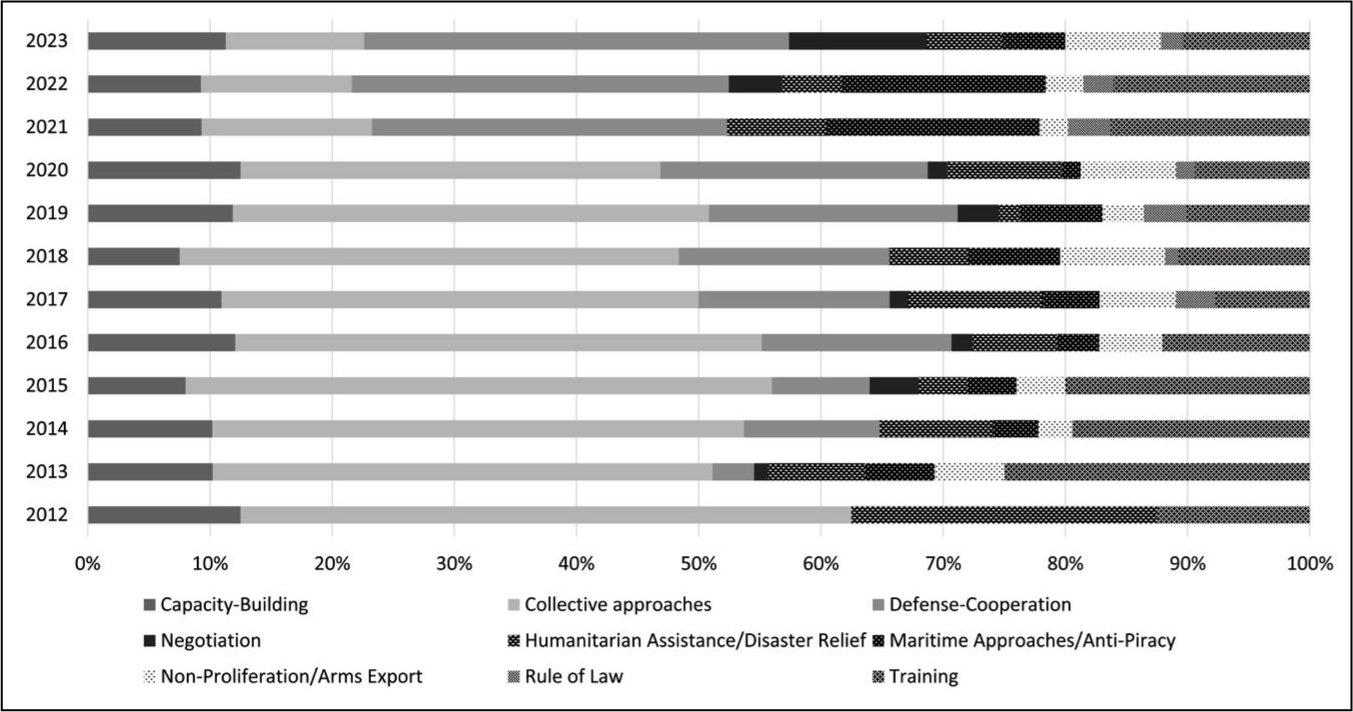
However, besides ‘collective approaches’ and ‘defence cooperation’, all other themes rank comparatively low. The reason for this lies probably to some extent in how we organised the themes themselves, as ‘collective approaches’ includes any reference that mentions cooperative or collective intentions. The other themes focus primarily on concrete actions and are proxies for beliefs and convictions implemented in foreign and security policy. PKOs are not listed as a single variable, but PKO activities such as ‘training’ and ‘humanitarian assistance and disaster relief (HA/DR)’ represent such concepts as individual themes. Training, in particular, has been an important instrument for building political and economic structures in states struggling with regime instability or threatened by other countries through the training of military and civilian personnel, particularly in the Southeast Asian region. These activities are primarily conducted under the auspices of the UN-PKO, but in 2015, Abe amended the PKO law to allow for operations independent of the UN using the SDF (MOFA, 2015). Through these operations, the Japanese government provides training, stability and a framework, and ‘[…] enables Japan’s active contribution to international peace efforts […]’ (MOFA, 2015, p. 176). Iwami (2018, p. 14) clearly emphasises the humanitarian component of Abe’s foreign policy, which focuses on ‘[…] implementing disarmament, demobilisation and reintegration […] one of the comprehensive peacebuilding activities […]’ that Japan has prioritised in recent years. However, as can be seen from the absolute values shown in Figure 5, training as a possible proxy for the ‘implementation’ subcategory dropped significantly in 2015 and remained relatively low in subsequent years.
Interpretation
These observations suggest that since 2013, Tōkyō has focused on establishing some norms and values, but we see a tough struggle to maintain them in the long run. The promotion of peace, an emphasis on cooperation, and shared values such as democracy, the rule of law and market economy have played an increasing role in Japan’s international actions. In terms of ‘implementation’, we show that there has been a significant increase in collective action, especially in ‘defence cooperation’. It is noteworthy that both subcategories indicate that the years 2013 and 2014, which coincide with the introduction of the new security guidelines, were particularly significant. The following years, however, clearly show that ‘enforcement of morals’ initially stagnated under Abe but rapidly increased under Suga and Kishida. These observations suggest that the Abe administration tended to overlook the importance of norms and values in foreign and security policy, even given the clear emphasis on such considerations in the ‘Proactive Contribution to Peace’ strategy. Under Kishida, however, the importance of norms and values has grown enormously. In 2023, the white papers also introduced the term ‘like-minded countries’ to refer to partner countries. While in 2019 and 2022, this term was used on average only 4 times, in 2023, we find 159 references to it. This underlines the new importance of like-minded norms in Japanese foreign policy.
Category 2: ‘Multilateralism’
The category ‘multilateralism’ examines the extent to which Japan places importance on building multilateral networks. According to Frenkler et al. (1997, p. 39), bilateral cooperation is only the first step and must eventually be replaced by multilateral networks. This preference for multilateral over bilateral cooperation is based on the core predisposition that, due to globalisation, collective efforts are the only solution to international conflicts.
With the introduction of the FOIP in 2016, the Japanese government placed more emphasis on forming closer cooperation and also contributing to maintaining the international order in the region due to China’s continued actions in the South and East China Seas and around the Senkaku Islands (Green, 2018; Koga, 2020; Satake, 2019). The goals of the FOIP include the establishment and promotion of a market economy, the rule of law and greater connectivity among Indo-Pacific nations (MOFA, 2021). The FOIP literally embodies the norms and values associated with a civilian power. However, our analysis of the multilateralism category does not focus directly on the FOIP but rather examines Japan’s cooperative efforts with other partners.
In addition, we also include references that show Japan’s willingness to transfer competencies to supranational institutions. Historically, Japanese governments have been reluctant to transfer powers and sovereign rights to supranational institutions or networks (Frenkler et al., 1997, p. 42). Nevertheless, Japan has been a member of the United Nations since 1956 and has actively contributed to UN efforts to promote peace, development and human rights (MOFA, 1996). Japan is also a partner in NATO and participates in its activities, primarily as an ally and supporter of the United States. Although these institutions are not supranational in the traditional sense, we include them because of their significant impact on international politics. On the other hand, we do not include ASEAN as an institutional apparatus because of its reluctance to intervene in the politics of individual states.
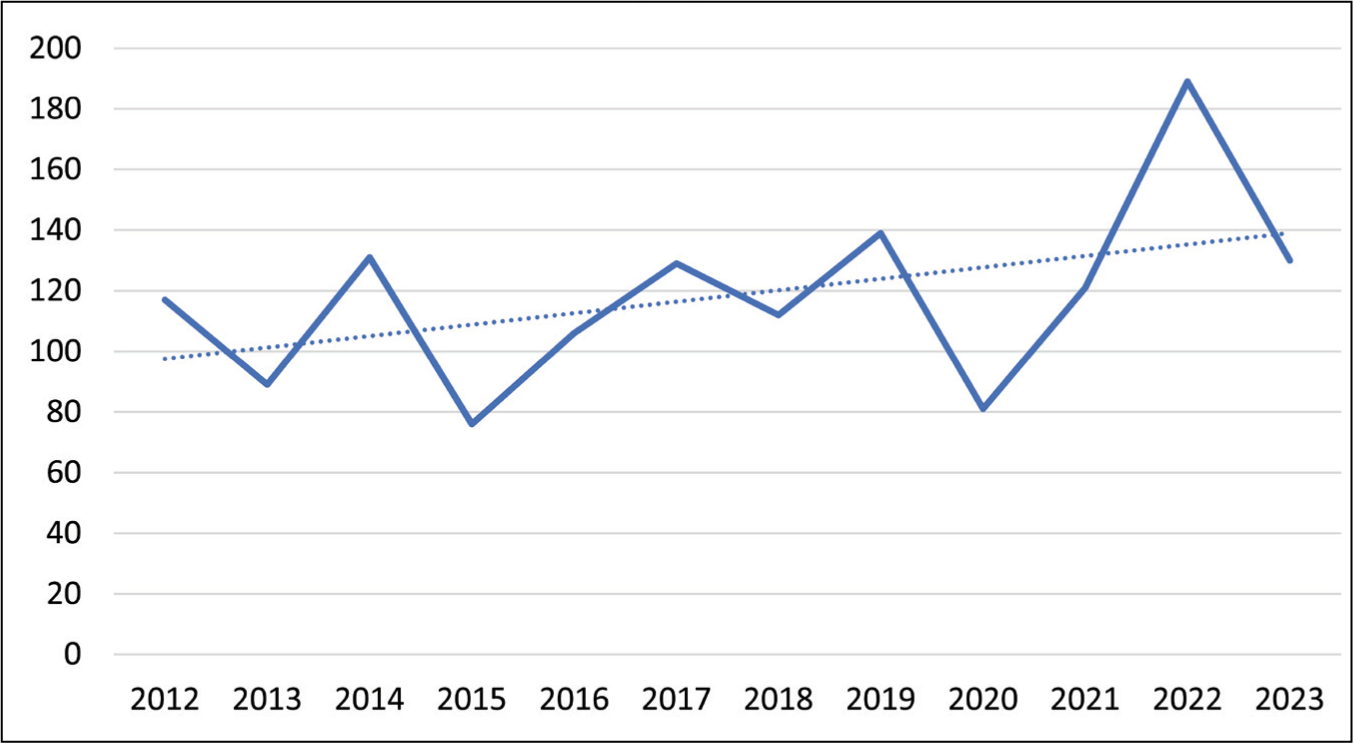
To measure ‘multilateralism’, we assigned references to this category that focus on declarations, joint statements and official agreements listed in the white papers. We also included joint exercises, state visits and meetings in this category. This ‘multilateralism’ category represented the largest code segment of all the main categories tested, with over 1,420 references identified. These references highlight Japan’s efforts to enhance Japan’s diplomatic and security cooperation through multilateral engagements.
Figure 5 shows the notable increase in ‘multilateralism’ references over time. The trend line generally increases moderately from 2012 to 2020, with the average level hovering between 150 and 200 references per year, despite occasional dips in Japan’s multilateral cooperation. In 2022, we see a significant peak in multilateral actions.
Only in 2015 and 2020 are there dips in the number of visits and meetings. As 2020 is likely related to the effects of the COVID-19 pandemic, which significantly reduced international exchanges, 2015 is most likely related to domestic struggles. As of 2015, Abe updated the national defence guidelines to allow for collective self-defence by the SDF. Japan has been criticised for this not only domestically but also by its regional neighbours.
References to this category begin to increase again in 2021, peaking in 2022. While this period is marked by increasing conflict, notably Russia’s war on Ukraine and discussion of China’s potential actions regarding Taiwan, the Japanese government has taken several steps, particularly among regional partners, to engage more closely in state-to-state meetings to exchange views on the issue (MOD, 2022, 2023a, 2023b). However, the white papers clearly identify China’s actions as the ‘[…] greatest strategic challenge […]’ (MOD, 2023a, 2023b, p. 221).
In Figure 6 we see the continued centrality of the United States–Japan-alliance, with more than 580 references. However, a shift in focus is evident in early 2020. The Abe administration was eager to engage in a wide range of security-related activities, including military and humanitarian operations within and outside the UN framework. Japan also organised annual joint bilateral and multilateral exercises to strengthen defence capabilities with key partners in the Indo-Pacific. Previous scholarship has established that the United States remains a focal point for Japan in many ways, including serving as a conduit for trilateral cooperation between Japan, South Korea and the United States and pushing for the institutionalisation of the Quadrilateral Security Dialogue (Quad) (Hughes, 2018; Koga, 2022; Maslow, 2015; Oros, 2017).
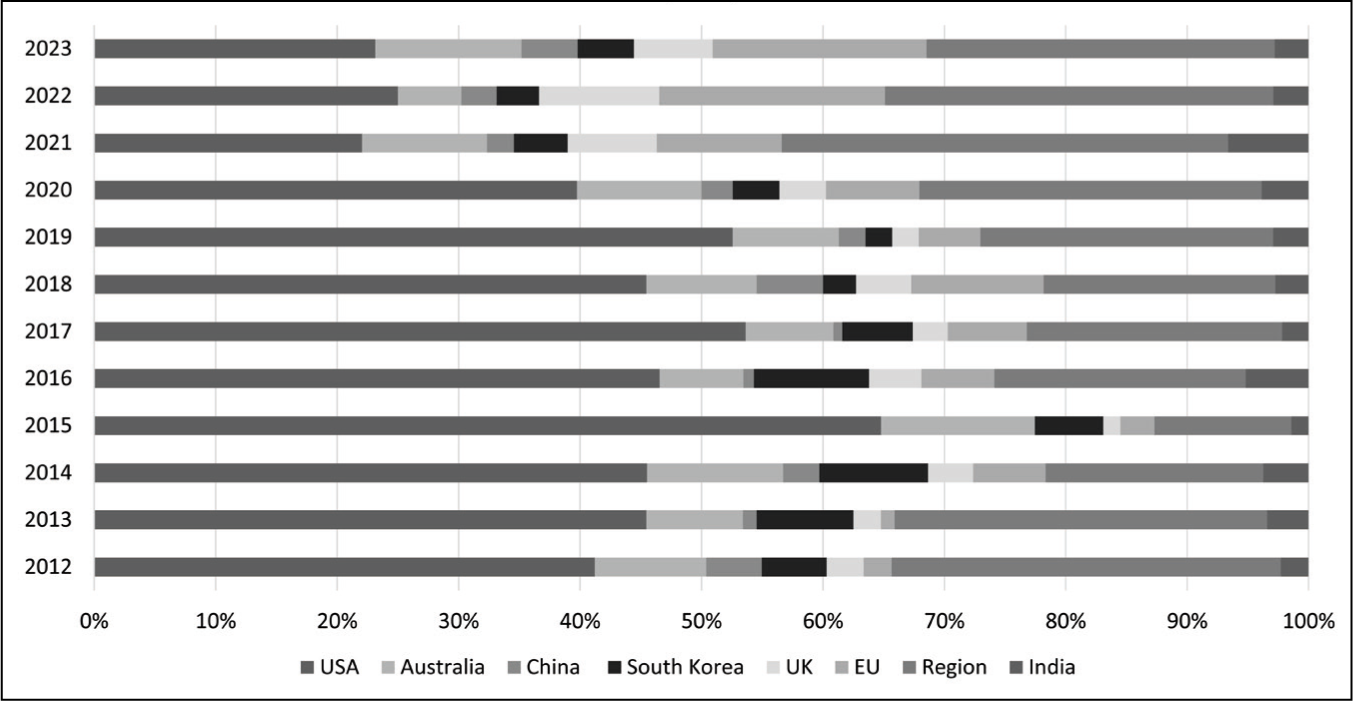
However, as Midford (2018) also notes, the indifference of US foreign policy is also taking its toll on Japanese confidence in this relationship. As the current political climate in the United States remains rather unpredictable, the relationship is still in a state of flux. As a result, we see regional cooperation gaining momentum, as well as closer cooperation with Europe. In contrast to other scholars who have argued for an intensification of Japan–United States cooperation (Smith, 2019; Yuzawa, 2017), our findings rather support the hypothesis that regional relations have come to the fore (Iwami, 2018; McCormack, 2014; Midford, 2018). Moreover, our data set shows that Thailand and the Philippines have also become more important for the Japanese government. The Quad, but also separately, India–Japan and Australia–Japan relations, have increased in their level of institutionalisation (Koga, 2022).
In 2023, the Quad issued a joint statement emphasising the importance of cooperation not only in terms of military security but also in humanitarian and political cooperation (The White House, 2023). Similarly, Japan has diversified and engaged more actively with individual European countries. The Abe administration and the EU paved the way for closer joint economic cooperation through the European Partnership Agreement (EPA), which accounts for about 40% of global trade. In addition, in 2021, the EU published its first-ever strategy for the Indo-Pacific region, which also underpins Japan–EU relations with regard to regional challenges (European Commission, 2021).
The strong interest in the creation of supranational institutions is another aspect of civilian power. Supranational institutions provide the necessary framework to enhance multifaceted cooperation and contribute to the institutionalisation of norms and values among different states (Maull & Kirste, 1996, p. 298). In our data set, we include cooperation with the UN and NATO to measure these ambitions of the Japanese government. Although, as noted at the beginning of this section, both institutions are only quasi-supranational, they have authority over the rules and regulations of the international community and contribute significantly to multilateral state cooperation and interaction. Japan has traditionally worked closely with the UN, which until 2015 was the only relevant framework allowing the SDF to operate overseas. As such, Japan has been an active supporter of UN-PKOs and has participated in various missions around the world, most notably in the South Sudan region and in Southeast Asia (MOFA, 2021). Nevertheless, while the Abe administration sought cooperation with the United Nations, the outbreak of civil war in South Sudan revealed the limits of Japan’s PKO participation and willingness, as Japan withdrew the SDF from the South Sudan mission (Suzuki, 2019).
As our data show, PKOs were conducted until 2016, after which the SDF’s involvement in UN affairs declined. As a result of Abe’s initiatives, the operational capabilities of the SDF were expanded, facilitating the deployment of PKO troops without recourse to the UN framework for the first time (Kantei, 2014). In conjunction with the authorisation of collective self-defence, the Abe government made the necessary adjustments to increase contributions to PKO missions, albeit outside the UN framework. While this departure from the UN framework may seem inconsistent with Japan’s identity as a civilian power that has traditionally placed a high value on supranational institutions, the enhancement of the SDF’s capabilities for international protection and cooperation underscores its commitment to this role. Consequently, while explicit references to the UN or NATO may have diminished, Japan’s demonstrated willingness to support such institutions remains, signalling a broader commitment to global stability and cooperation.
Interpretation
Our ‘multilateralism’ category shows new relationships and their diversification became increasingly important (except for 2020). Most of the relationships remain bilateral or have evolved into minilateral partnerships. This has led to a new focus on partnering, particularly with Europe, but also with Southeast Asian countries, for example, in terms of the FOIP vision and minilateral cooperation efforts such as with the Quad (Kersten, 2015; Koga, 2022; Maslow, 2015).
However, a greater divergence in the political styles of the PMs can be seen in Japan’s relations with South Korea. Cooperation between the two countries deteriorated during Abe’s tenure as he seemed less interested in finding a sustainable solution to rising tensions. Instead, he added fuel to the fire by reviving revisionist debates about war crimes. These debates have died down, and Kishida has shown a proactive approach to stabilising Japan–South Korea relations. Ahead of the G7 summit, he met with President Yoon Suk Yeol to discuss their cooperation in the face of North Korean missile tests and China’s assertiveness (Dolan & Yim, 2023).
Similarly, relations with China did not improve during Abe’s tenure, although the mutually beneficial relationship remained in place. China was perceived as a concern for international peace in the white papers (e.g., MOD, 2018, p. 28). This concern is still growing amid Xi’s Taiwan Strait policy and China’s military activities (e.g., MOD, 2023a, 2023b, p. 221). Nevertheless, under Abe, the Japanese government tried to resolve these issues through diplomatic means while emphasising the importance of using military capabilities in case of escalation (MOD, 2018, p. 47). This case also applies to Suga and Kishida. Both Suga and Kishida have held bilateral talks with Xi; in March 2023, a ‘hotline between Japanese and Chinese defence authorities’ was also launched to better coordinate military exchanges between the two countries (MOD, 2023a, 2023b).
Category 3: ‘Will to Promote and Initiate’
In this category, we consider Japan’s willingness to exercise leadership in its interactions with other countries. We assess this dimension of civilian power by highlighting the characteristics of taking responsibility, providing leadership and shaping institutions of international importance.
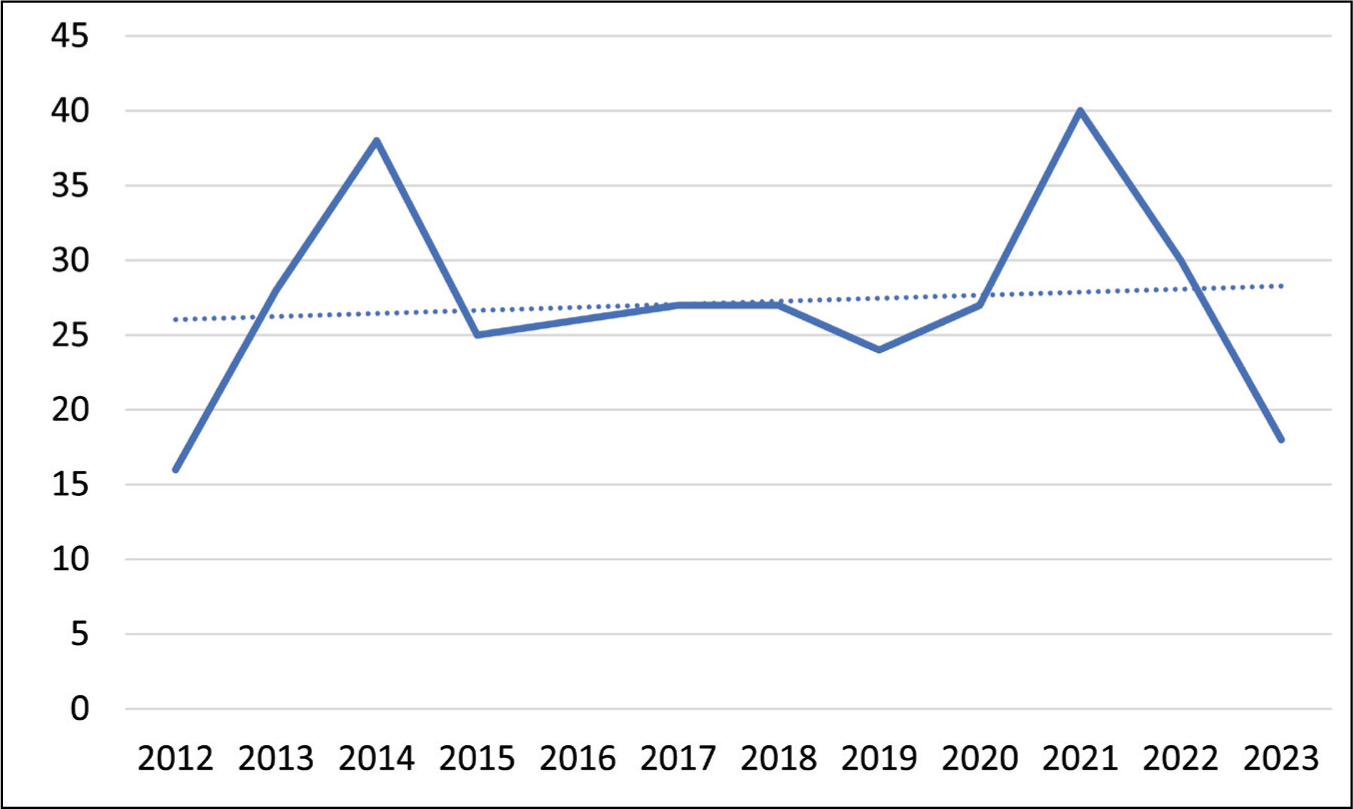
In total, we have assigned 390 references to this category, which is the third largest group within our sample. We observe that the temporal evolution of the category ‘will to promote and initiate’ shows a rapid increase in the years 2013 and 2014, followed by a successive decrease with a second peak in 2022 and then a repeated decline (see Figure 7). Through our analysis, we have identified eight recurring themes as contributing factors to this category, which we illustrate in Figure 8.
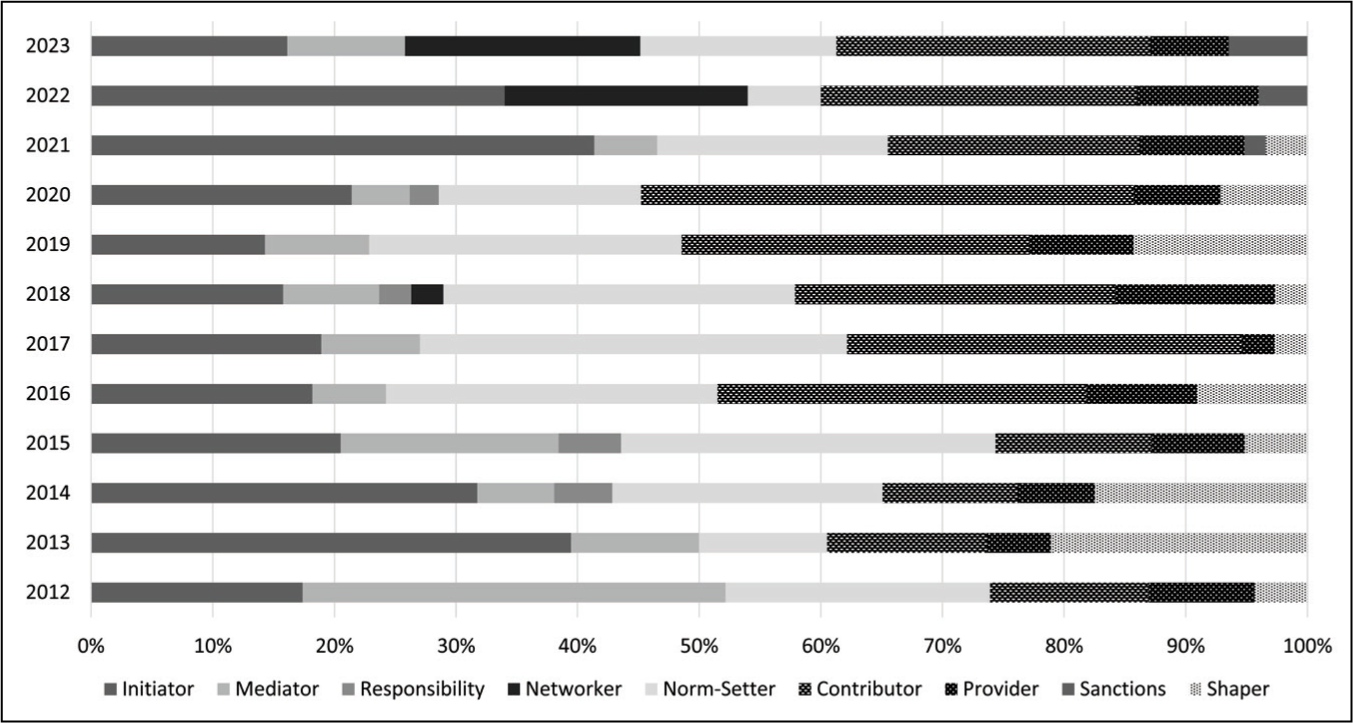
As shown in Figure 8, Japan’s leadership style is best characterised as ‘contributor’. The Abe administration has made significant progress in contributing to the security, peace, stability and sustainable development of partner countries, especially ASEAN countries, through economic and political means (such as providing medical care, educational personnel and military equipment). The ‘contributor’ theme has grown significantly since 2014. In addition, the ‘norm-setter’ theme, which emphasises efforts to establish institutionalised frameworks and promote the international rule of law, has become more prominent. In this regard, Japan shows moderate ambition to act as a central actor.
In regard to Japan’s efforts of ‘multilateralism’, we found that ‘networker’ played a crucial role. This was exemplified by taking the lead in regional engagements, such as the ASEAN Regional Forum and the East Asia Summit and pushing for more strategic partnership agreements (MOD, 2012, 2013, 2014, 2015, 2016, 2017, 2018, 2019, 2020). Perhaps even more prominently, the promotion of the FOIP and the Quad also demonstrates the importance of Japan’s ‘initiator’ role. This can also be seen in the Kishida administration’s introduction of sanctions against Russia over the war in Ukraine. Although these sanctions were not imposed on natural resources (oil and gas), it was a rather unusual action, as Japan’s sanctions regime has been rather passive in the past due to political concerns about backfire (Shagina, 2020). In addition, for the first time, Japan accepted more than 2,000 refugees from Ukraine, albeit as evacuees rather than refugees. In this context, Japan began to revise its refugee laws but not without the intention of increasing the number of refugees in Japan in general (Ninivaggi, 2023). So ‘responsibility’ seems less important.
Interpretation
In summary, our analysis of the ‘will to promote and initiate’ category shows that international leadership is central to Japan without any significant change. The eight themes we identified are stable over time. The government has taken steps to build networks and provide sustained support to its partners, and there has been a shift in focus to the rule of law in response to growing threats to the rules-based order in the Indo-Pacific region. During the Kishida administration, we see a clear increase in the ‘will to promote and initiate’ category but this is followed by a direct decline in this pillar. Similar to Abe, who wanted Japan to become a more active state, the Kishida administration also tried to push this through without any lasting results, at least in terms of the white papers.
Anti-civilian-ness?
As a control variable, we conducted a thorough search for references in the white papers that challenge the concept of a civilian power in terms of its beliefs, values, norms, behaviours and aspirations. Thus, we subsumed such notions of anti-civilian-ness within the category of ‘non-civilian’ references that show Japan’s reluctance to assume a leading role in global affairs or indicate a focus on unilateral actions or the use of military force not as part of defence cooperation.
We found 113 references that could be clearly linked to anti-civilian features. They mostly refer to points such as the remaining strong dependence on US security capabilities and diplomacy. For example, ‘[…] Japan has maintained its peace and security based on security arrangements with the world’s dominant military superpower, the United States […]’ (MOD, 2012, p. 2) representing the accepted dependence on continued United States support while at the same time approving US military deployment. The prioritisation of relations with the United States remains traditionally strong due to the reliance on the US security umbrella (Oros, 2017). In this respect, Japanese attitudes do not seem to be changing and probably should not as long as there is no adequate alternative. However, while Japan may be moving towards a more dominant role within the US security alliance, it remains rather co-dependent on its superpower ally, which remains a contradictory factor in becoming a fully-fledged civilian power (Frenkler et al., 1997; Maull, 1990). At the same time, the diversification of partnerships with partners around the globe, Japan seems aware that United States support is not as certain as it once was (Midford, 2018; Wilkins, 2018).
Another important aspect seems to be the use of military force and the civilian power’s aversion to it. As a rule, a civilian power puts politics before force and attaches great importance to disarmament and non-proliferation. Nevertheless, Japan has refrained from criticising the US military power and has rather acknowledged and emphasised its positive effects on deterrence measures to protect the Japanese archipelago (MOD, 2019, p. 312). In 2019, the National Defense Program Guidelines stressed Japan’s pursuit of developing a complex deterrence defence system in cooperation with the United States (MOD, 2019, p. 311). In addition, the Abe government worked to lift the ban on arms exports and sought to increase military spending. Kishida followed this up by actually increasing this spending and further relaxing arms transfers, even allowing the transfer of finished lethal weapons and the export of finished weapons (Tajima, 2023). In addition, the SDF today represents one of the most potent militaries in Asia and the world. Smith (2019) argues that Japan’s rearmament and focus on military means has increased against a backdrop of heightened security challenges, particularly from North Korea and China. However, the increased emphasis on deterrence, the active deployment of SDF personnel and other major changes such as the recognition of collective self-defence do not contradict the concept of civilian power per se. Particularly in the context of securing other means, such as continued diplomacy in the face of imminent threats, an increase in military capabilities may be necessary (Maull, 1990, p. 92).
Looking at the nationalist ideologies we mentioned under the Abe administration, there is evidence that nationalist sentiments are part of Japan’s foreign and security identity. In 2012, the white paper emphasises the importance of ‘[…] laying the necessary foundation for ensuring a stable quality of life for the people, strengthening nationalism and ensuring the security of the nation’ (MOD, 2012, p. 1). These sentiments have already been categorised as counterproductive to the development of civilian power attributes (Maull, 2005, p. 799). During the years of the Abe administration, such sentiments did not emerge and affect Japan’s overall role identification. We only find this passage in our sample that explicitly states the importance of nationalism; however, Japan repeatedly emphasises that the use of military force protects its ‘rich culture’ (e.g., MOD, 2018, p. 444), which represents the LDP’s, but more specifically Abe’s, long tradition of glorifying Japanese culture (Abe, 2006).
The final aspect we would like to highlight is the use of superiority and supremacy in the pursuit of security objectives. This is particularly true in the areas of maritime and airspace concerns. We have included these aspects in the anti-civilian nexus because the notion of superiority precludes the idea of cooperation. Although a relatively minor factor, we note that the Abe administration has made declarations of superiority in various areas. However, we do not see a remilitarisation of Japan’s foreign and security policy, as all our categories remain relatively stable during Abe’s tenure. Rather, the new additions to Japan’s foreign and security policy have served to maintain the characteristics of civilian power, which, however, accelerate in the following years from 2021 to 2023. This leads us to believe that Kishida capitalised on these developments, which helped him and his cabinet to promote and advance the civilian attributes of power.
Conclusion
This article comprehensively examines Japan’s trajectory as a civilian power from 2012 to 2023. In conclusion, we make two contributions: First, we show the increased commitment to civilian power attributes during the Abe administration, but more importantly during successive administrations. Second, we address debates about Abe’s impact on Japan’s potential remilitarisation by showing that he continued the path of a civilian power actor. In doing so, this article offers new insights into Japan’s foreign and security policy and supports future assessments of the new Japanese administrations.
As our results show, rather than militarising Japan, the Abe administration maintained Japan’s civilian power characteristics, while only ‘core values’ weakened to some extent in the years 2015–2019. The Abe administration’s efforts contributed only moderately to the civilian pillars of power; it was not until the next PMs that we find significant increases in two of our three categories, namely (a) ‘enforcement of morals’ and (b) ‘multilateralism’, and with the exception of (c) ‘will to promote and initiate’. Thus, in contrast to previous studies, this article shows that the Abe administration has helped to maintain civilian power attributes by diversifying and strengthening partnerships, particularly in the Indo-Pacific and Europe, promoting the FOIP policy guideline, and allowing for collective self-defence. This has been further expanded since Kishida took office in 2021. The former foreign minister also aims to develop partnerships and has a strong diplomatic focus. This has been particularly evident in the resumption of bilateral talks with both South Korea and China.
Therefore, the conclusion of Frenkler et al. (1997) and Maull (2019), who argue that Japan’s foreign and security policy self-image remains devoid of any concrete tendency to advance as a civilian power, has been challenged by the new administration. With rising tensions in East Asia, territorial disputes with China, Russia and South Korea, North Korea’s missile programme and increasing global instability now manifested in Russia’s war against Ukraine, the current Kishida administration presents itself as more active in addressing these issues.
Footnotes
Acknowledgements
The author would like to thank their supervisor Professor Harald Conrad for guiding them through the writing process of this article and his insightful comments and advice on earlier drafts. The associate editor and the anonymous reviewers also provided valuable comments that improved this article a lot.
Declaration of Conflicting Interests
The author declared no potential conflicts of interest with respect to the research, authorship and/or publication of this article.
Funding
The author received no financial support for the research, authorship and/or publication of this article.