




Abstract
Greenwashing can be perceived as dishonest behavior that can threaten trust in business deals due to the current trend of an intensive scrutiny of sustainability-related messages from organizations. Drawing on the literature concerning managerial trust, our study analyzes how perceived greenwashing negatively affects business-to-business relationships, focusing on two aspects: (1) whether managers’ perception of greenwashing is influenced by uncertainty in the business decision-making process and (2) whether individual manager characteristics play a significant role in modulating this influence. We used an experimental design involving 125 Spanish managers to confirm the importance of uncertain scenarios under the negative influence of greenwashing on business decision-making process. The findings also confirm that this negative influence is intensified by managers’ characteristics in terms of risk aversion and the importance they place on corporate reputation. The study makes several contributions to academia and practitioners by advancing the understanding of greenwashing in the context of business-to-business relationships.
Introduction
As recently shown by the Corporate Climate Responsibility Monitor (Day et al., 2023), greenwashing is a common business practice in the climate strategies of the 24 major companies worldwide. Greenwashing is understood as a symbolic strategy of corporate selective communication whereby companies disclose positive environmental efforts while hiding negative ones to create a misleadingly good impression of overall environmental performance (Lyon & Maxwell, 2011). Varied well-known corporate scandals in the last decade illustrate this behavior. For instance, in July 2021, Synthetics Anonymous’ report (Changing Markets Foundation, 2021) showed how nearly 60% environmental claims made by the 50 largest fashion brands, such as H&M, Hugo Boss, or Primark, were “unsubstantiated or misleading” to consumers and are clear illustrations of greenwashing.
The negative consequences of these practices have forced organizations and institutions to fight against them. The new European law proposal on green claims is an example of how institutions are fighting against greenwashing (European Commission, 2023). This normative forces organizations to opt for credible and trustworthy labels and claims. Furthermore, in the academic arena, scholars have argued that “greenwashing is more virulent than ever. A profusion of environmental, social, and governance and net zero commitments are becoming fraught with questionable and misleading claims” (Montgomery et al., 2023, p. 1) and more research is needed, as “this topic remains in its infancy” (Pizzetti et al., 2021, p. 21). Therefore, greenwashing is a topical issue, which is in the spotlight of practitioners, institutions, and academics.
Until now, scholars have mainly analyzed greenwashing’s negative effects in three different domains (Marquis et al., 2016). First, there is considerable evidence about the negative effects of greenwashing as a marketing strategy (in business-to-consumer context) on final consumers’ perceptions and faith (e.g., Guo et al., 2018; Jahdi & Acikdilli, 2009; Szabo & Webster, 2021; Wu et al., 2020). Second, scholars have also focused on the internal effects of corporate-level greenwashing (Bowen, 2014; Lyon & Montgomery, 2015), detecting some mechanisms that generate a loss of confidence among employees (Walker & Wan, 2012) and investors (Painter-Morland, 2006; Pizzetti et al., 2021; Yu et al., 2020). Third, with scarce evidence, adverse and external effects of corporate-level greenwashing on business-to-business (B2B) relationships, including those with suppliers, clients, strategic alliances, and partnerships, have been identified. Studies of this third category have shown that greenwashing could be rejected by B2B partners due to their lack of social desirability (Ferrón-Vílchez et al., 2021; Torelli et al., 2020), the reputation loss of greenwashers (Berrone et al., 2017; Boiral et al., 2017), and the infection risk to maintain relationships with greenwashers (Yang et al., 2020).
Even though these studies have advised companies against the use of greenwashing, it continues to be a common practice (Day et al., 2023). Indeed, a growing amount of controversies are surrounding greenwashing, such as corporate reputation problems as a consequence of collaborating with suspicious greenwashers (Yang et al., 2020), difficulties in detecting greenwashing (Gosselt et al., 2019) and, in general, the need of eliminating the mechanisms that deteriorate trust among different stakeholders (Painter-Morland, 2006; Pizzetti et al., 2021; Walker & Wan, 2012; Yu et al., 2020). These calls on the negative consequences of the greenwashing highlight that it is a phenomenon that requires further research, especially because greenwashing represents an undesirable outcome that has usual adoption.
The consequences of greenwashing is a topic that is already at an advanced level of study in the academic literature. However, despite much evidence about greenwashing’s adverse effects in prior literature, less is known about its origin, particularly concerning managers’ B2B decision-making (Ferrón-Vílchez et al., 2021; Torelli et al., 2020). Now it is essential to analyze in depth the reasons for the existence of this phenomenon on managerial decision-making. We consider that trust is one of the values that greenwashing and managerial decision-making have in common. Thus, our study’s novelty is that it attempts to answer the following research question: What factors influence managers’ lack of trust in a business partner performing greenwashing?
At this point, it is important to note that our study is focused on corporate-level greenwashing, as the analysis of consequences of greenwashing in B2B relationships could differ from those in B2C markets, attending to the main differences between decision-makers in both environments. For example, a consumer will stop buying a product if the manufacturing company is found to be lying about its environmental characteristics. At the same time, a manager might maintain a business relationship with a greenwasher partner for the sake of profit. Thus, the study’s main objective is to shed light on the mechanisms that could explain how perceived greenwashing affects managers’ decision-making related to starting or maintaining B2B relationships.
Drawing upon managerial trust literature, in particular on the approaches of the strategic cognition theory and the expectation confirmation theory, we delve into the knowledge of corporate greenwashing by studying some factors affecting managers’ perception of this phenomenon that influence the results of B2B relationships. Greenwashing is interrelated to trust, as trust is damaged when a deceptive behavior is uncovered (Chen et al., 2019; Chen & Chang, 2013). Thus, managerial trust could be especially affected by the disappointment generated by greenwashing.
In detail, we explore the effects of uncertainty and three individual factors related to managerial trust in B2B relations such as managers’ propensity to trust, risk aversion, and the importance of corporate reputation. We select these factors due to their special relation to managerial trust models, which explain the facilitators of risk-taking, confidence, and reliability in decision-making (Mayer et al., 1995). In particular, we analyze these effects using an experimental design involving 125 Spanish managers from medium and large companies.
We contribute new insights to the current debate on greenwashing in different ways. From a theoretical perspective, we explore the factors under greenwashing adverse effects in B2B situations, taking novelty advantage of the managerial trust theoretical approach. Thus, we extend the current knowledge on greenwashing down to the level of managers and their individual characteristics (Aguinis & Glavas, 2012). This contribution is particularly relevant for practitioners as it sheds light on the unexplored impact of greenwashing on intrinsic B2B traits based on trust and the underlying factors under these effects. Also, it urges policymakers about the need for effective regulatory measures in this regard.
From a methodological view, we develop an experimental design involving 125 Spanish managers, responding to the call for additional empirical evidence in corporate sustainability literature, using this technique, which is popular in many disciplines, but not frequently in management (Delmas & Aragon-Correa, 2016). Experiment with real managers’ responses is one of the most suitable methods to test managerial perceptions and decisions in the highly complex environment of greenwashing, which would guarantee the causality of the relationships studied (Ferrón-Vílchez et al., 2021; Pizzetti et al., 2021; Torelli et al., 2020). In addition, this approach enables us to focus on B2B relationships by analyzing managers’ perceptions who create, manage, and take back these relations based on their own behavior.
We have structured this work into five sections. First, we present a theoretical review on greenwashing under the managerial trust view. Second, we discuss how uncertainty, risk aversion, the propensity to trust, and the importance of reputation impact the manager’s willingness to deal with a greenwasher. Third, our empirical approach is presented. Fourth, results are explained and, finally, we present a discussion of our findings and their implications arguing prior research.
Theoretical background
In their theoretical review of the means, drivers, actors, and end of greenwashing, Lyon and Montgomery (2015, p. 226) concluded that “greenwashing is used to cover any communication that misleads people into adopting overly positive beliefs about an organization’s environmental performance, practices, or products.” When one subject intentionally misleads another, trust between them deteriorates or may even disappear. As our focus is to analyze how greenwashing influences managerial decision-making, we theoretically frame the concept of greenwashing as an act of (interpersonal) trust in business relationships.
Trust has been recurrently analyzed by studies on consumer behavior (Chen & Chang, 2013), organization theory (Mayer et al., 1995), and business relationships (Shah & Swaminathan, 2008; Terwiesch et al., 2005). Greenwashing activities trigger the individual mechanisms of confusion, skepticism, and perceived risk (Aji & Sutikno, 2015; Chen & Chang, 2013), concepts that are present in business and interpersonal relationships and that could betray trust (Chen & Chang, 2013; Chen et al., 2019).
The organizational trust model of Mayer et al. (1995) indicates not only the importance of the trustor characteristics (e.g., propensity to trust) but also the role of risk and context where the act of trust takes place. Other studies have shown that trust is an essential factor for corporate cooperation (Shah & Swaminathan, 2008; Terwiesch et al., 2005). For instance, Shah and Swaminathan (2008) hypothesized that trust is the most crucial factor influencing partner selection in strategic alliances. This mature thinking leads us to the analysis of greenwashing under the managerial trust perspective, considering trust and greenwashing at the individual level (Aguinis & Glavas, 2012), that is, through managerial perceptions.
In management literature, several theoretical frames are based on how managerial perceptions influence strategic choices (Narayanan et al., 2011). On the one hand, strategic cognition theory analyzes how decision-making is carried out in a management process. Cognitive structures are especially relevant during the decision-making process as they consider how managers filter information, analyze alternatives, and interpret strategic problems during the decision-making process (Bundy et al., 2013; Norheim-Hansen, 2015). Therefore, the information perceived in the decision-making process, as well as the trust existing between the parties involved, plays a very relevant role in this theoretical approach. It is because of the above arguments that strategic cognition theory is an appropriate framework with which to analyze greenwashing at the individual level, because greenwashing largely depends on the eyes of the beholder, that is, a firm cannot be a greenwasher if it is not considered or perceived as such by a third party (Seele & Gatti, 2017). For this reason, greenwashing depends mainly on how it is perceived, that is, on cognitive structures.
On the other hand, the expectation confirmation theory (Oliver, 1980) argues that if the outcomes of some experiences do not coincide with the initial expectations (e.g., because the performance was lower than expected), a degree of dissatisfaction emerges. Kim (2019) proved this theory on consumers’ response to greenwashing, which could be extrapolated to other stakeholders in a business relationship environment, such as commercial partners, suppliers, or even public institutions. Anticipating this situation to a B2B relationship, if a part turns out to be a greenwasher, there will be an increase in dissatisfaction because initial expectations are not confirmed increasing the likelihood that the relationship will break down.
We consider that these two theoretical perspectives are intimately related to managerial trust because the expectation of the results of a business relationship between a company and its stakeholder is determined by managerial perception of trust. Managers tend to assess and interpret the information available to them for decision-making, based on which they generate environmental expectations related to a business relationship (Siano et al., 2017), and these expectations tend to be affected by their level of trust in the third party. In the next section, we explain several factors that could significantly influence the level of trust in a B2B relationship, precisely the degree of certainty about the achievement of benefits, the propensity to trust, the risk aversion level, and the importance that managers place on reputation.
Hypotheses development
Greenwashing and uncertainty
Uncertainty in a business relationship is the lack of complete knowledge regarding the outcomes or results of a particular action or decision (Gigerenzer & Brighton, 2009; Sitkin & Pablo, 1992), such as economic gains, efficiency improvement, new product or service development, market expansion, resource sharing, and knowledge transfer. In this regard, business relationships are inherently uncertain, as they involve multiple external factors, such as market conditions, economic policies, and technological changes, among others, that can impact these relationship’s outcomes (Ganesan, 1994).
Research has shown that trust can facilitate risk-taking by reducing uncertainty and increasing confidence in the reliability and competence of others (Mayer et al., 1995; Mishra, 1996). Based on our theoretical concept of greenwashing as an act of (interpersonal) trust in business relationships, being in a scenario of uncertainty, with uncertain economic results, could affect the commercial relationship, trust in the common business, and perception of a manager toward his or her commercial partner in case the latter carries out greenwashing.
Sharma et al. (2007) showed that a firm’s environmental strategy could help decrease the effect of uncertainty in strategic decision-making, thereby increasing the use of implicit relationships between parties. In this regard, some scholars, such as Ferrón-Vílchez et al. (2021), have shown that managerial decision-making could be influenced by the disclosure of the environmental strategy of the other party in a business relationship, especially when greenwashing exists. When a manager perceives that one stakeholder is a greenwasher, it affects the decision on whether to establish (or not) business relationships with that stakeholder. In this way, if greenwashing is confirmed to exist, thereby violating the trust, the relationship can result in negative outcomes such as a decrease in the willingness to engage in future transactions (Moorman et al., 1993). In this sense, we argue that perceiving greenwashing has a negative impact on trust and willingness to engage in future transactions may be reduced. Thus, we hypothesize:
Hypothesis 1 (H1). Perceived greenwashing has a negative effect on a manager’s willingness to deal with a greenwasher.
As mentioned earlier, trust is a key factor in business relationships in scenarios of uncertainty, that is, in situations in which the economic results depend on variables out of control of the involved parties (Doney & Cannon, 1997). However, the role of trust will not be as relevant in business relationships with a scenario of certainty (Brammer et al., 2012), that is, in which the economic results are guaranteed.
Occasionally, there may be business relationships where the results of this collaboration may be guaranteed or highly predictable. This may be as a result of a previous collaborative relationship, such as a long history of reliable results, or due to contractual clauses or agreements, such as franchise agreements or long-term sales. If there are certainty results as the mentioned ones, the impact of the violation of trust may be less significant (Brammer et al., 2012). That is, in the so-called certain result scenarios, the impact of the breach of trust due to the perception of greenwashing will be less than in the scenarios with uncertain results. In this case, the parties may be more willing to continue the B2B relationship, even if they are not entirely sure about the other party’s honesty in environmental terms.
Scholars have shown evidence in this regard. For example, Liao et al. (2017) found that when a supplier engaged in opportunistic behavior, such as dishonesty, but still delivered high-quality products, the level of trust between the buyer and supplier was still positively related to the buyer’s satisfaction and willingness to continue the B2B relationship. Therefore, it can be argued that while trust is crucial in uncertain situations, it may not be as important when dealing with known results. Thus, we hypothesize:
Hypothesis 2 (H2). The manager’s willingness to deal with a greenwasher is less affected by perceived greenwashing in the scenario of certainty than in scenario of uncertainty.
Greenwashing and managerial trust
Mayer et al.’s (1995) trust model showed several factors that have a significant influence on the organizational trust relationship and that are connected to the notion of greenwashing, specifically the trustor’s propensity to trust and perceived risk in business contexts. We consider that, in addition to these two factors, a third factor is needed to complement the trust-based causes that affect, at the individual level, business relationships when one of the parties involved in the relationship engages in greenwashing activities. This factor is the importance a manager attributes to corporate reputation.
A firm’s reputation is critical in building trust with different stakeholders, and negative information about its reputation can significantly reduce stakeholders’ trust (Kim, 2019; Norheim-Hansen, 2015). As greenwashing can be seen as an attempt to mislead about a firm’s environmental practices (Seele & Gatti, 2017), it can potentially damage a firm’s reputation if uncovered/found/discovered. As these three factors are important, we provide below explanations for their influence on trust in B2B relationships individually.
Greenwashing and propensity to trust
Trust is not a one-sided characteristic: both parties in a business relationship must be willing to trust each other (Gulati, 1995). Thus, it is important to analyze the propensity to trust of individuals involved in a business relationship, that is, the extent to which an individual is more or less trusting. Rotter (1967, p. 651) defined interpersonal trust as “an expectancy held by an individual or a group that the word, promise, verbal or written statement of another individual or group can be relied upon.” Furthermore, Mayer and Davis (1999, p. 124) argued that “a trustor will be willing to be vulnerable to another party based both on the trustor’s propensity to trust other people in general, and on the trustor’s perception that the particular trustee is trustworthy.”
We extrapolated this rationale to the context of greenwashing, interpreting that the more susceptible the manager is to trust, the more the negative effects of greenwashing on the willingness to deal with a greenwasher. Decision-makers with a high propensity to trust could feel more cheated and damaged when they perceive the existence of greenwashing in their counterparts. In this sense, studies based on consumers’ trust on Internet service providers have shown that trust has significant impacts on decision-makers’ repurchase decision (e.g., Kim et al., 2009; Rahi et al., 2021; Videlaine & Scaringella, 2019). For instance, Rahi et al. (2021) found that, to retain customers, information technology-based service providers should consider that trust boosts user intention toward continued use of online banking services. These ideas in the e-commerce context could be easily transferred to environmental management issues as, in both cases, decision-makers (i.e., consumers or managers) have to trust voluntary tools (i.e., online apps or environmental initiatives) that produce intangible results (i.e., virtual services or environmental performance).
In addition, it is essential to consider that the degree of uncertainty in decision-making determines the degree of trust’s necessity (Zand, 1972). In situations of high uncertainty, individuals’ propensity to trust can affect the level of trust developed in a relationship and the subsequent outcomes (Doney & Cannon, 1997). However, when outcomes are certain/assured, the importance of trust may decrease and other factors such as social norms, legitimacy, or compliance with legal requirements may play a more significant role (Mayer et al., 1995). Thus, while trust is crucial in uncertain situations, it may not be as important when dealing with assured outcomes. Thus, we hypothesize:
Hypothesis 3 (H3). The negative effect of perceived greenwashing on a manager’s willingness to deal with a greenwasher is stronger in the presence of greater levels of propensity to trust and only in the uncertainty scenario.
Greenwashing and risk aversion
Risk aversion, defined as the opposite of the willingness to take risks (Cable & Judge, 1994; Judge et al., 1999), is associated with a decision-maker’s security (Judge et al., 1999), which can be substituted through trust relationships (Schoorman et al., 2007). Research has shown that individuals with high levels of risk aversion may be less willing to engage in risky business ventures. For instance, Fellner and Maciejovsky (2007) reported a negative relation between risk aversion and market activity—the higher the degree of risk aversion, the lower the market activity in terms of concluding trades. Sharma and Tarp (2018) demonstrated that risk aversion predicts lower revenue growth and positively correlates with firms adopting safety measures.
Risk aversion is also crucial in accepting or rejecting business collaborations (Azzone et al., 1997). For example, Stadtler and Lin (2017) argued that in uncertain scenarios firms managed by risk-averse individuals are less willing to start collaborating projects than firms managed by risk lovers. In the case of greenwashing, Ferrón-Vílchez et al. (2021) conclude that managers’ strategic response to greenwashers is to reject possible collaborations with them since the perceived risk of this type of partners is higher. In this sense, risk aversion is translated into a lower disposition to carry out commercial relations with these partners since the lack of trust is not buffering the effect of lower levels of security of these collaborations, given the uncertainty involved (Judge et al., 1999; Schoorman et al., 2007).
However, it is essential to remark that risk aversion is considered relevant in situations where outcomes are uncertain (Kogut & Kulatilaka, 1994). Individuals who are more risk averse tend to be more cautious in their business dealings and may require greater levels of reassurance before committing to a partnership (Makadok, 2001), which is not required if outcomes are certain. Overall, the degree of trust needed to balance out risk aversion effects may depend on the level of uncertainty, leading to a greater need for trust in situations with higher levels of uncertainty (Lewicki & Bunker, 1996). Therefore, in B2B relationships under certain scenarios, risk aversion may not be a key factor in decision-making, and in consequence, trust is not called to act. Thus,
Hypothesis 4 (H4). The negative effect of perceived greenwashing on a manager’s willingness to deal with a greenwasher is stronger in the presence of greater levels of risk aversion and only in the uncertainty scenario.
Greenwashing and reputation
Corporate reputation is defined as “a perceptual representation of a company’s past actions and future prospects that describe the firm’s appeal to all of its key constituents” (Fombrun, 1996, p. 165). Norheim-Hansen (2015, p. 814), who explored how environmental reputation could influence trust in forming strategic alliances, conceptualized environmental reputation as “the level of environmental credibility attributed to a firm by its stakeholders.” Kim (2019) found that, for consumers, more trust in a firm’s corporate social responsibility commitment leads to a more positive perceived reputation.
In exploring the importance of corporate reputation, Keh and Xie (2009) showed that, in the presence of mistakes or scandals, firms with positive corporate reputation suffer more than those with poor reputation owing to the effect from disconfirmation (i.e., expectations were higher than the actual results). Related to corporate scandals, greenwashing can be considered a reputation-damaging event, exposing companies to significant reputational risk (Coombs & Holladay, 2015; Gatzert, 2015; Siano et al., 2017). Thus, an individual who highly values corporate reputation will be less willing to establish business relationships with a greenwasher because, if the greenwasher is discovered (Seele & Gatti, 2017), the decision-maker might feel that his or her firm would, in one way or another, be tainted or implicated (Yang et al., 2020). Therefore, due to a greenwashing scandal, the corporate image of different business partners could be adversely affected, and this would negatively affect the corporate reputation. This situation is closely related to the contagion effect (Siano et al., 2017; Skarmeas & Leonidou, 2013). “The contagion effect of being linked to a greenwasher could be interpreted as a negative motivation by managers, because it could harm the related firm’s reputation” (Ferrón-Vílchez et al., 2021, p. 863).
It is worth mentioning that the importance of reputation is only relevant in uncertainty scenarios because the potential for negative outcomes exists (Rindova & Fombrun, 1999). In uncertain scenarios, a company’s good reputation serves as a signal of their trustworthiness and reliability, providing a level of assurance to managers in their decision-making process and reducing asymmetric information (Fombrun & Shanley, 1990). In situations with certainty, the importance of reputation may diminish, as predictable results eliminate the risks associated with the business relationship results. Thus, when uncertainty exists, managers who place a high value on reputation may decide not to engage with a greenwashing firm. Hence, we hypothesize:
Hypothesis 5 (H5). The negative effect of perceived greenwashing on the willingness to deal with a greenwasher is stronger in the presence of greater levels of importance of reputation and only in the uncertainty scenario.
Figure 1 summarizes our theoretical model presented in this section.
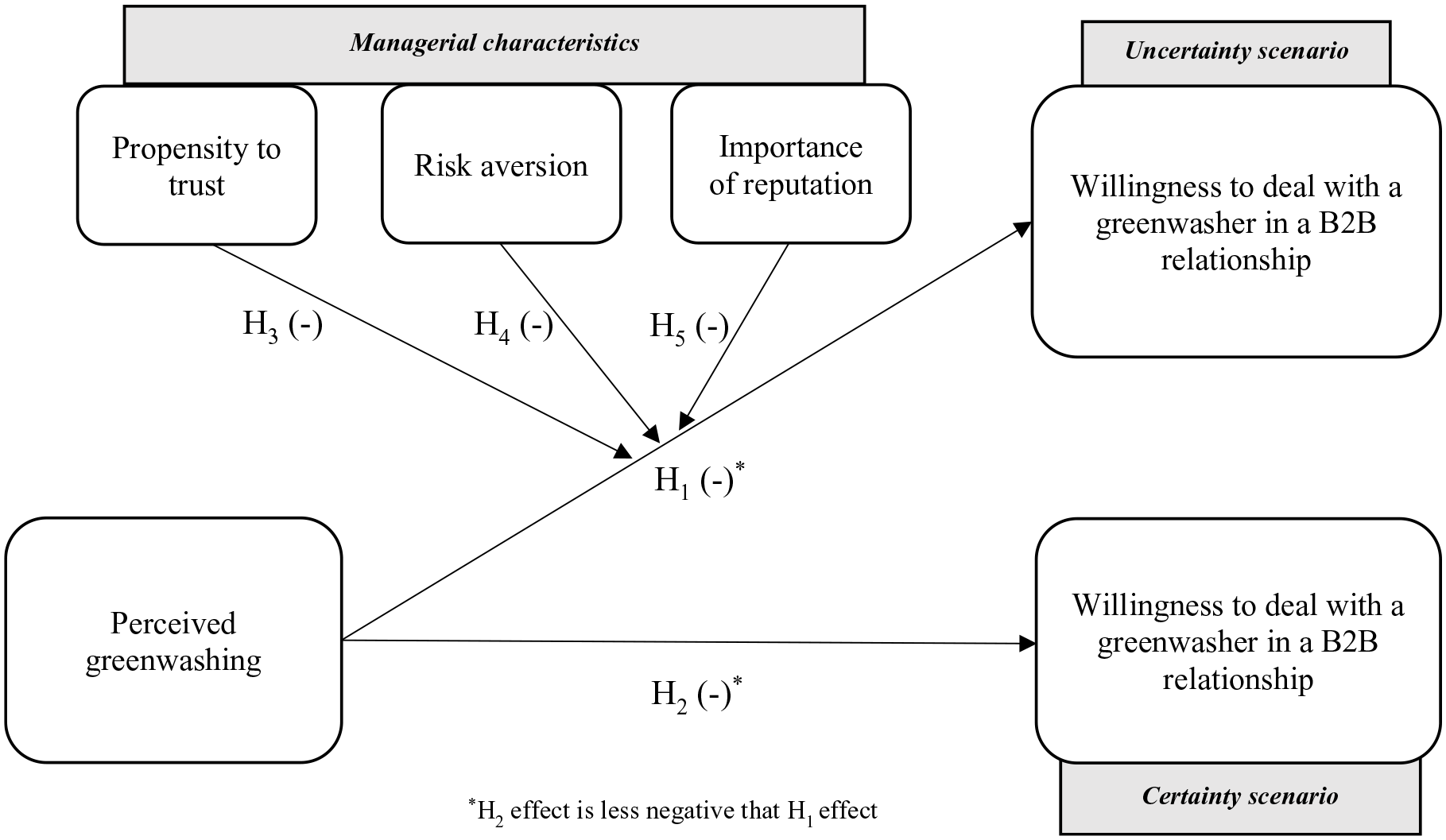
Theoretical model.
Methods
Experimental design and procedure
We designed a between-subjects field experiment with four experimental groups to test our hypotheses. Given our focus on managerial perceptions and behaviors, this methodology offers irrefutable benefits and positive implications for this analysis (Delmas & Aragon-Correa, 2016). We used QualtricsTM for experiment management and participants’ involvement. We informed the participants that we had research interest in their personal reactions when they are faced with certain information about a firm. They were also informed that they would be required to answer some questions. The experimental design involved completing four steps. First, we collected data through an initial questionnaire from participants on confounding variables and the information needed to measure their propensity to trust, risk aversion, and reputation attitudes as recommended by previous studies (e.g., Castañeda-García et al., 2020).
Second, we randomly assigned all participants to one of the four experimental groups, exposing them to different stimuli through a firm’s website and some related media information. Third, we asked the participants to respond to the questionnaire to confirm the stimuli reception with some manipulation checks. They were also asked about their perceptions and willingness to maintain business relationships with the firm presented in the treatment. Finally, they were requested to provide some sociodemographic information.
Participants and sample
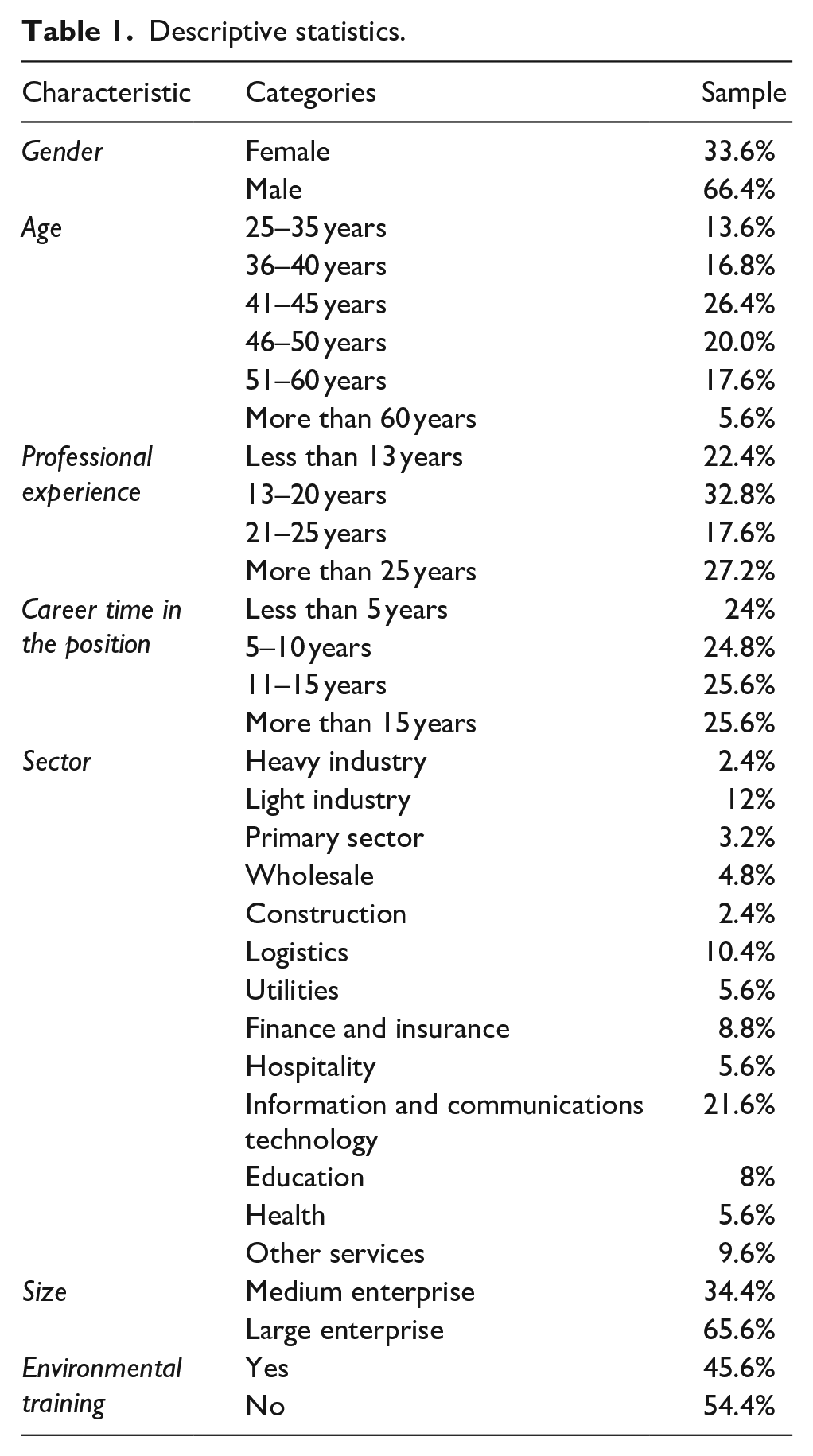
Our final sample included 125 managers from medium and large Spanish firms. Participants were recruited through a representative (on size and industries) panel of Spanish managers. Owing to the random participants’ assignment and the measures applied to guarantee the quality of the final answers, the number of cases in each treatment group ranged from 30 to 32. Table 1 shows the descriptive statistics of the participants and the companies they serve.
Descriptive statistics.
All participants were informed about the research aims of the experiment and the data protection and privacy policy. They provided their informed consent for their anonymous participation in the study and were fully debriefed at the end of the study. We also consulted the ethical committee and personal data protection office of the universities involved in the experiment design. The approving bodies confirmed that the design was in accordance with the privacy and ethical standards without any conflict of interest.
Measures
Stimulus development
Stimulus development is a crucial aspect of social experimentation, as it involves creating and refining stimuli used to elicit participants’ perceptions of the phenomenon collected by the main variable of interest, greenwashing 1 in this case. In view of the original differentiated characteristics of greenwashing presented by Delmas and Burbano (2011), we followed Ferrón-Vilchez et al. (2021) to construct our stimulus as a combination of environmental performance and environmental corporate communication manipulation.
This combination of positive versus poor environmental performance and environmental versus general communication resulted in four treatment groups (Figure 2): (1) Greenwashing (GW) involves poor performance and environmental communication; (2) Brownwashing (BW) requires positive performance and general communication; (3) Greenest (GR) requires positive performance and environmental communication; and (4) Passivist (PS) requires poor performance and general communication. Our main target group was GW, while BW, GR, and PS acted as control groups in our analysis of greenwashing managerial reactions to isolate other effects related to environmental performance or communication.
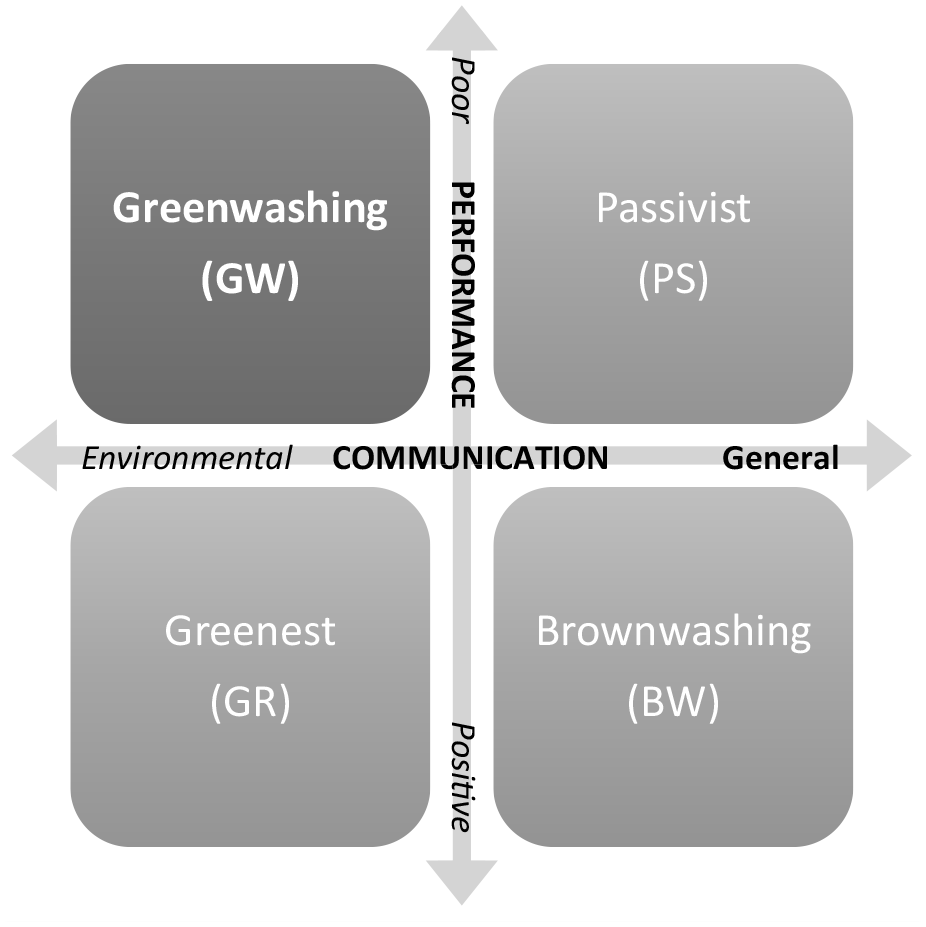
Groups of treatment description.
We operationalized this manipulation through a fictitious chemical Spanish firm, Nitrachemical, to elude any bias in terms of previous personal opinions and perceptions (de Vries et al., 2015; Nyilasy et al., 2014; Parguel et al., 2011). On corporate communication, following the recommendations of Parguel et al. (2011) on the use of a website interface in experimental designs, we created two versions of a Nitrachemical webpage to manipulate corporate communication. We created an environmental message using a typical interface for a corporate webpage in both versions but including a clear environmental message in the firm’s mission, vision, and values and using environmental-related images and design for the environmental version of the webpage.
On environmental performance, we relied on Nyilasy et al. (2014), who constructed positive and negative environmental performance events in terms of written cases. Then, similar to prior studies on experimental design (Nyilasy et al., 2014; Parguel et al., 2011), we created two fictitious media news about an environmental award to manipulate the positive/poor environmental performance: one of them narrating that Nitrachemical won an environmental award based on its positive environmental performance (Parguel et al., 2011) and the other narrating that it did not win the environmental award specifically due to its negative environmental performance. A copy of media news (including their translation) and Nitrandalsa webpage have been added to the Supplementary Material file to clarify how we presented the stimuli to the participants during the experiment.
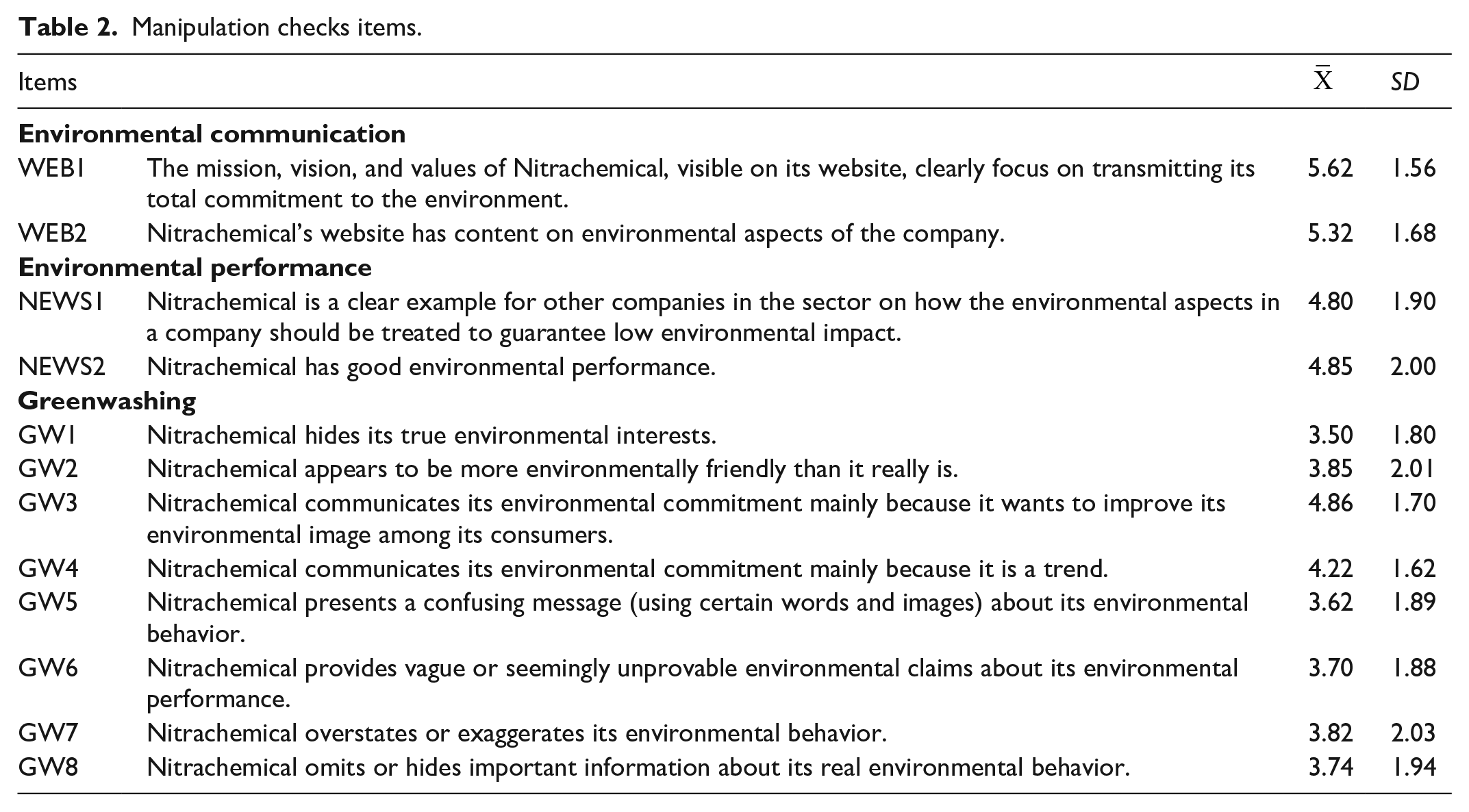
After the treatment phase, we included four items in the questionnaire confirming the planned stimulus reception in terms of both environmental performance and environmental communication as the first manipulation check. The questionnaire also included eight items adapted from Leonidou and Skarmeas (2017) for measuring perceived greenwashing as the second manipulation check, to guarantee the suitability of the experimental design. Table 2 shows the items included in the questionnaire for confirming the stimulus reception and measuring the perceived level of greenwashing. Items were scored using a 7-point Likert-type scale where 1 = totally disagree and 7 = totally agree with the sentence presented in the item.
Manipulation checks items.
Dependent variable
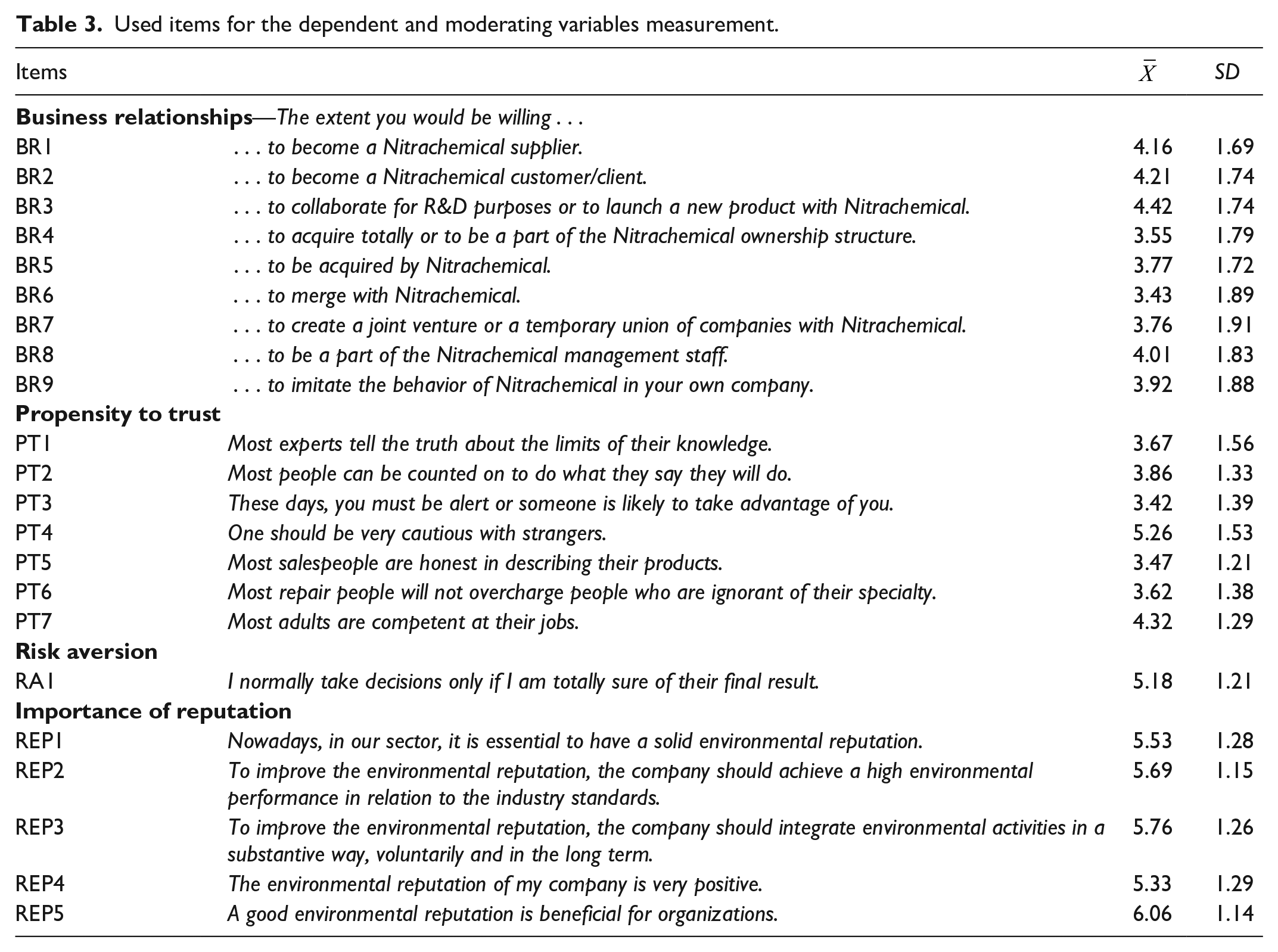
We measured the participants’ general willingness to maintain business relationships using a multiple-item scale including nine affirmations adapted from the literature (Chatterji et al., 2016; de la Torre-Ruiz et al., 2015; Ferrón- Vílchez et al., 2021). Table 3 lists the items used for measuring the willingness to accept different business decisions related to the fictitious firm. All cases used a 7-point Likert-type scale, from “1” implying “totally disagree” to “7” denoting “totally agree” with the sentence presented in the item. We asked the participants to offer two different answers for every item to capture the willingness to maintain business relationships under uncertain and certain results scenarios. Thus, respondents were aimed to value their willingness to accept these business decisions when economic results are both guaranteed and unsure.
Used items for the dependent and moderating variables measurement.
Moderation variables
To measure our different moderation variables, we used the instrument’s measurement of seven items originally proposed by Rotter (1967) and more recently adapted and updated by Mayer and Davis (1999) and David Schoorman et al. (2016) to measure the participants’ propensity to trust. In the case of the participants’ risk aversion, we included a single item following the adaptation of Casaló et al. (2015) from the original scale of Jaworski and Kohli (1993).
Finally, we measured the importance of reputation by using five items adapted from Norheim-Hansen (2015). In all cases, we used a 7-point Likert-type scale, as mentioned earlier. Table 3 offers detailed information on these items.
We also controlled for participants’ sociodemographic and professional conditions, such as age, sex, professional experience (number of years/months in total and in the current position), whether the participants had received environmental training, and some descriptive information from the firms they worked at. We also accounted for perceptions and opinions that could affect the responses, such as the participants’ green attitude level and their feelings about media information and the chemical sector.
Scale evaluation
We ran different tests to evaluate our scales and confirm the suitability of our measures to gather data on the theoretical constructs. In terms of reliability and internal consistency, Cronbach’s alpha indicators (greenwashing [0.94], business relationships [0.95], propensity to trust [0.75], importance of reputation [0.90]), composite reliability values (greenwashing [0.86], business relationships [0.90], propensity to trust [0.80], importance of reputation [0.83]), and high items correlations (greenwashing [>0.44], business relationships [>0.48], propensity to trust [>0.36], importance of reputation [>0.44]) confirmed the suitability of our measures (Bagozzi, 1994; Nunnally, 1978; Nurosis, 1993). High values in the mentioned item correlations, average variance extracted (greenwashing [0.70], business relationships [0.61], propensity to trust [0.46], importance of reputation [0.69]), and factor loadings in an exploratory factor analysis (EFA) (greenwashing [>0.71], business relationships [>0.67], propensity to trust [>0.71], importance of reputation [>0.70]) and confirmatory factor analysis (greenwashing [>0.69], business relationships [>0.74], propensity to trust [>0.63], importance of reputation [>0.64]) guaranteed convergence and discriminant validity (Churchill, 1979; Hair et al., 1998).
In view of the reliability and dimensionality confirmed by these results, we extracted one construct for every variable of interest as the average of the indicators (Anderson & Gerbing, 1988).
Due to the experimental nature of our methodology, we adhered to a detailed process before, during, and after the experiment execution (see Figure 3 for the detailed diagram) to guarantee the external and internal validity of our experiment and avoid any possible risks.
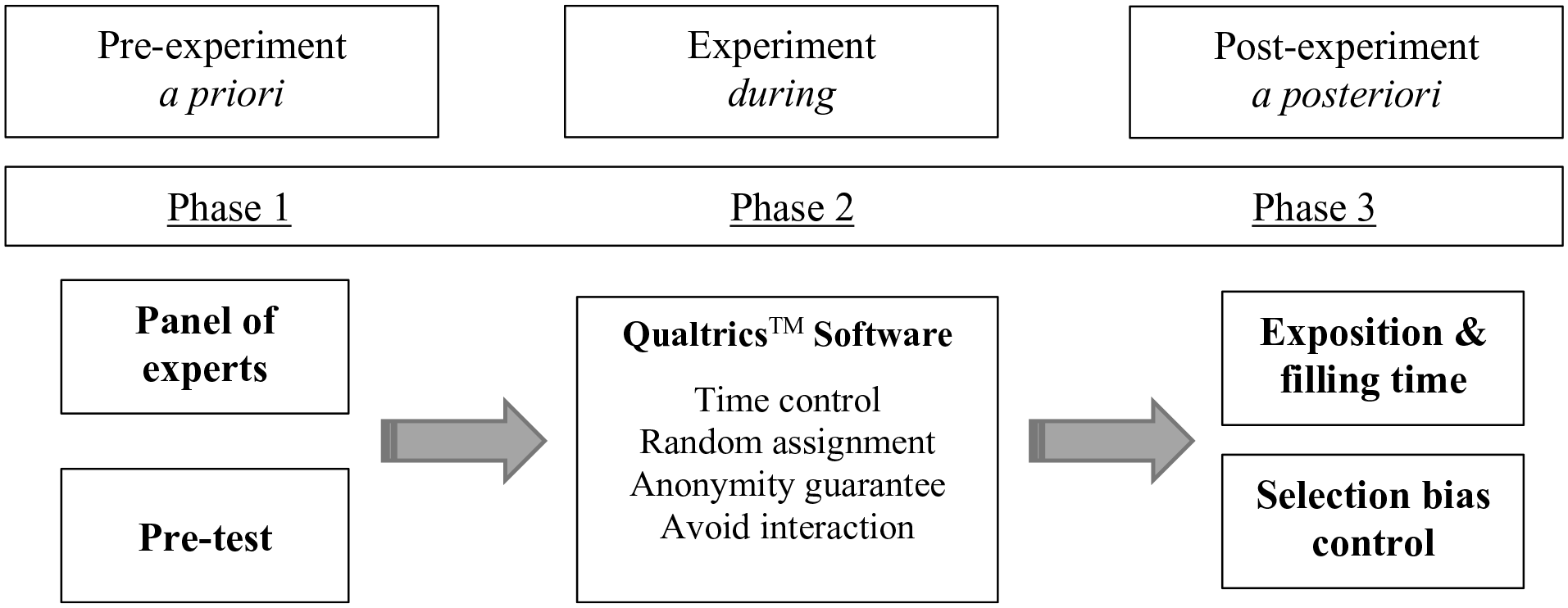
Data collection control process.
Phase 1: before the experiment
In the a priori control phase, we used two tools for complying with our experimental design objectives: (1) a panel of experts and (2) a pre-test. We organized 3 sessions with a panel of 11 academic experts in experimental design and corporate sustainability. Session 1 focused on the research objectives, hypotheses, and original experimental design explanation. After allowing for a lapse of time to analyze all the information, in Session 2, we organized a debate on the suitability of our experimental design to test our hypotheses, receiving useful feedback to improve our original design. In particular, the experts analyzed the expected participants, order, structure, and stimuli appropriateness.
In addition, they evaluated the questionnaire and our items of measurement, manipulation checks, sociodemographic control variables, and confounding checks in terms of their comprehensibility, suitability, and fit with our theoretical constructs and research objectives. During Session 3, the changes suggested and incorporated were presented and discussed to generate the final version of our experimental design and questionnaire.
After the expert panel sessions, we ran a pre-test in a sample of 107 business administration students in their final year of study (45% female, average age of 22.5 years). During this phase, we were able to test the experimental design and questionnaire with a similar sample as our target population. With the manipulation checks, we confirmed the good understanding and operationalization of our stimuli. We also evaluated the validity and consistency of our constructs of measurement. Thus, we minimized the misunderstanding of items and subsequent measurement error by eliminating poorly worded items, revising the phrasing to be maximally understood, and reducing the cognitive burden on the final participants (Boateng et al., 2018).
Phase 2: during the experiment
QualtricsTM was extremely useful for the control attendance, guaranteeing the lack of bias in this phase, especially those related to researcher–participant interaction, anonymous random assignment, and time control.
Phase 3: after the experiment
Once the experiment was finalized, we verified the quality of the data collected in a posteriori control phase using QualtricsTM. Thus, we also controlled the participants’ time of stimuli exposition and questionnaire completion. We established a quality control procedure to delete observations from participants who took very little time visualizing the stimuli (23 s for the webpage and 28 s for the news article) or answering the survey (347 s). We calculated the stimuli limit time taking into account an average reading speed of 400 words per minute (Graesser et al., 1980) for the 157 and 182 words included in the largest version of the webpage (environmental web) and the largest version of the news (award-winning article), respectively.
In the case of the questionnaire, we calculated the answering limit time as 50% of the average of 694 s corresponding to the pre-test times. In all, we withdrew 47 invalid observations, resulting in a final sample of 125 managers. We confirmed the appropriateness of the deletion using an additional robustness test through the perceived greenwashing manipulation check measures. Thus, the excluded participants perceived greenwashing in an unforeseen way based on an unexpected means of the average items in every experimental group (
Results
Even though all measures were incorporated to avoid any problem or bias regarding the experiment’s internal validity, we applied extra manipulation checks (available in the Supplementary Material file) to confirm our experimental stimuli’s suitability (Castañeda-García et al., 2020).
To test our hypotheses, we used analysis of variance (ANOVA), multivariate analysis of variance (MANOVA), and paired sample t-tests for statistically confirming the difference between means by experimental group required for Hypotheses 1 and 2. In testing Hypotheses 3, 4, and 5, we also ran different hierarchical multiple regressions drawing their pertinent moderation graphs (Aguinis, 1995; Frazier et al., 2004).
Figure 4 presents the treatment effects on business relationships, and Figure 5 shows the means of the experimental groups for the Business relationships variable under both the uncertain and certain economic results scenarios. As predicted, the GW group (environmental web + low environmental performance) had lower means in business relationships under both scenarios. A MANOVA with Business relationships as a dependent variable and the interaction between both treatment levels as a factor statistically confirmed these differences (Wilk’s lambda = 4.53, p < .01). The ANOVAs for individually testing these differences generated similar results in the uncertain (MeanGW = 2.79 vs MeanPS = 3.48 vs MeanBW = 4.28 vs MeanGR = 4.96; F = 8.98, p < .01) and certain economic results (MeanGW = 3.29 vs MeanPS = 3.70 vs MeanBW = 4.62 vs MeanGR = 5.46; F = 3.77, p < .05) scenarios. Based on these results, we obtained support for Hypothesis 1, which states that greenwashing negatively affects the willingness to maintain business relationships.
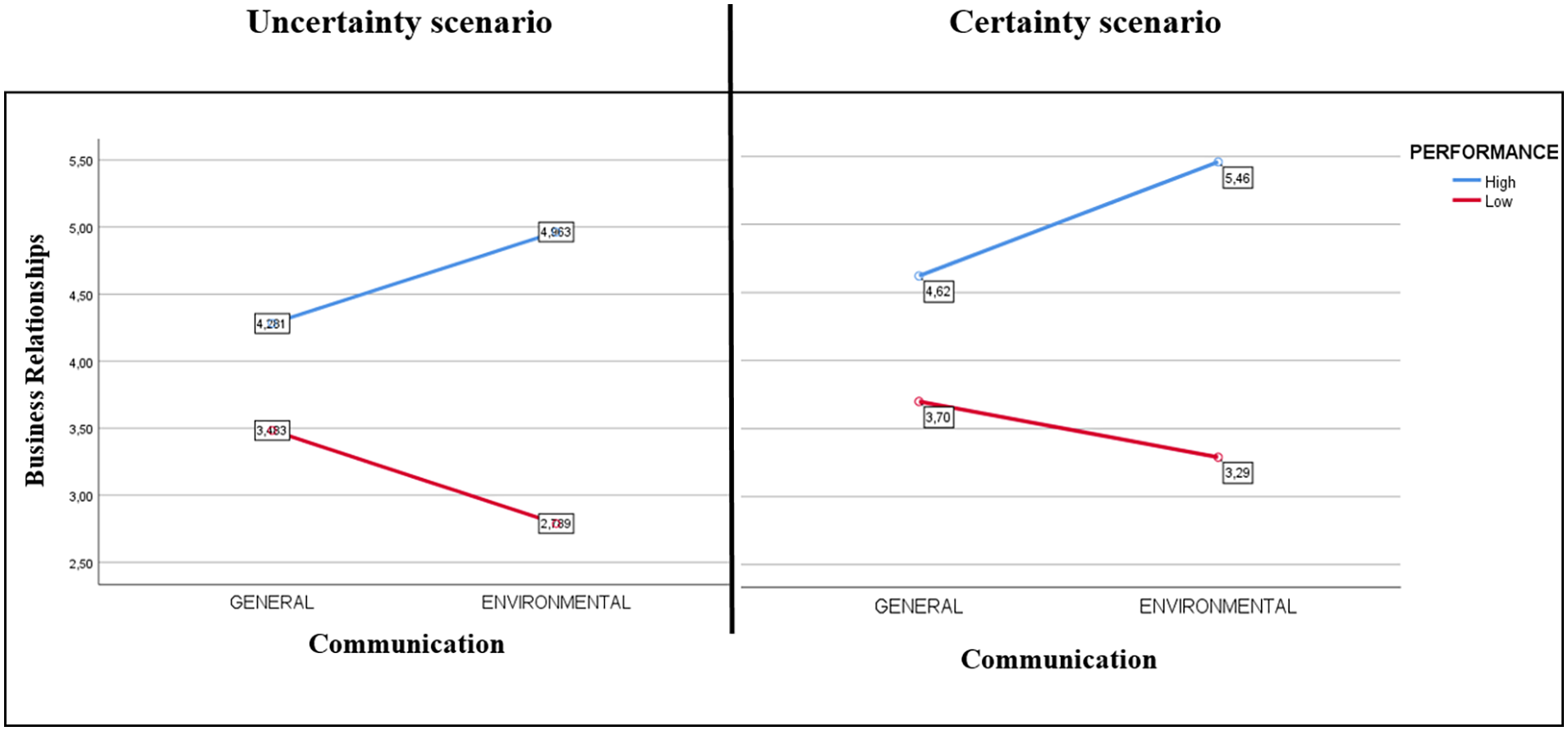
Treatment groups effect in BR under uncertain and certain economic results scenarios.
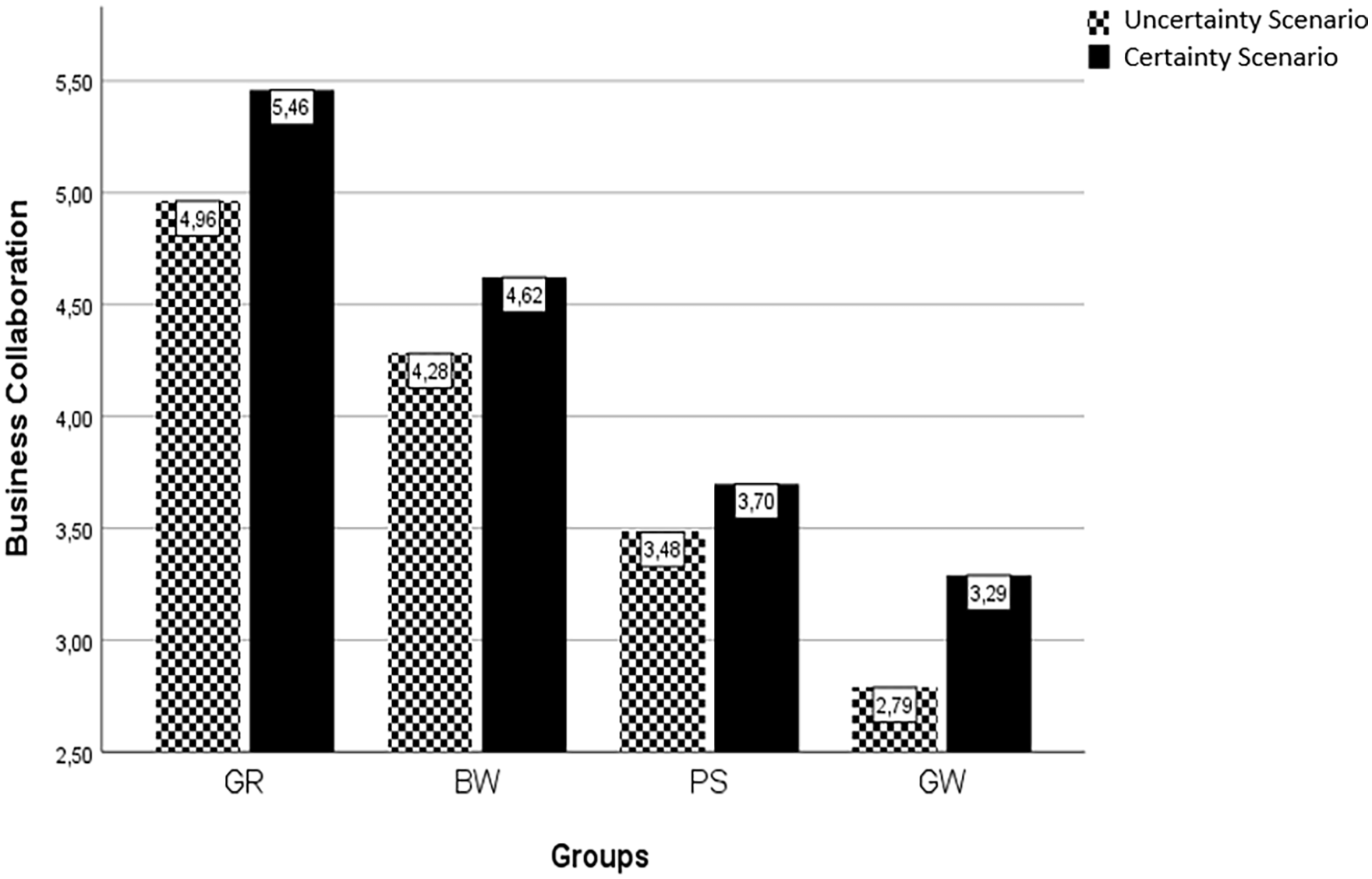
Treatment effect comparison between different scenarios.
Figure 5 presents the differences in terms of business relationships for all experimental groups and under both scenarios. We ran an additional paired t-test, t(30) = 2.31, p < .05, to statistically support Hypothesis 2. It was supported because the Greenwashing group’s mean was higher under the certain economic results scenario than under uncertainty scenario, and because the variation between scenarios was the highest for Greenwashing group (15.20%) compared to the rest of the groups (7.49%, on average).
The results of the hierarchical regression estimations presented in Table 4 show the moderation effects of propensity to trust, risk aversion, and importance of reputation in the confirmed negative effect between greenwashing and business relationships. The lack of statistical significance in the interaction coefficient (Greenwashing × propensity to trust) added in step 2 of Model 1 led us to reject Hypothesis 3, which states that higher levels of propensity to trust accentuate the negative relationship between greenwashing and the propensity to maintain a business relationship. Nevertheless, the negative and significant interaction coefficient (Greenwashing × risk aversion) in Model 3 (uncertain results scenario) (β = −0.94, B 95% confidence interval [CI] = [−1.18, −0.05]; p < .05) and the lack of statistical significance in the same interaction effect coefficient in Model 4 (certain economic results scenario) support Hypothesis 4, confirming that higher levels of risk aversion increased the negative effect of greenwashing on Business relationships only under the uncertain results scenario.
Hierarchical multiple regressions estimations.
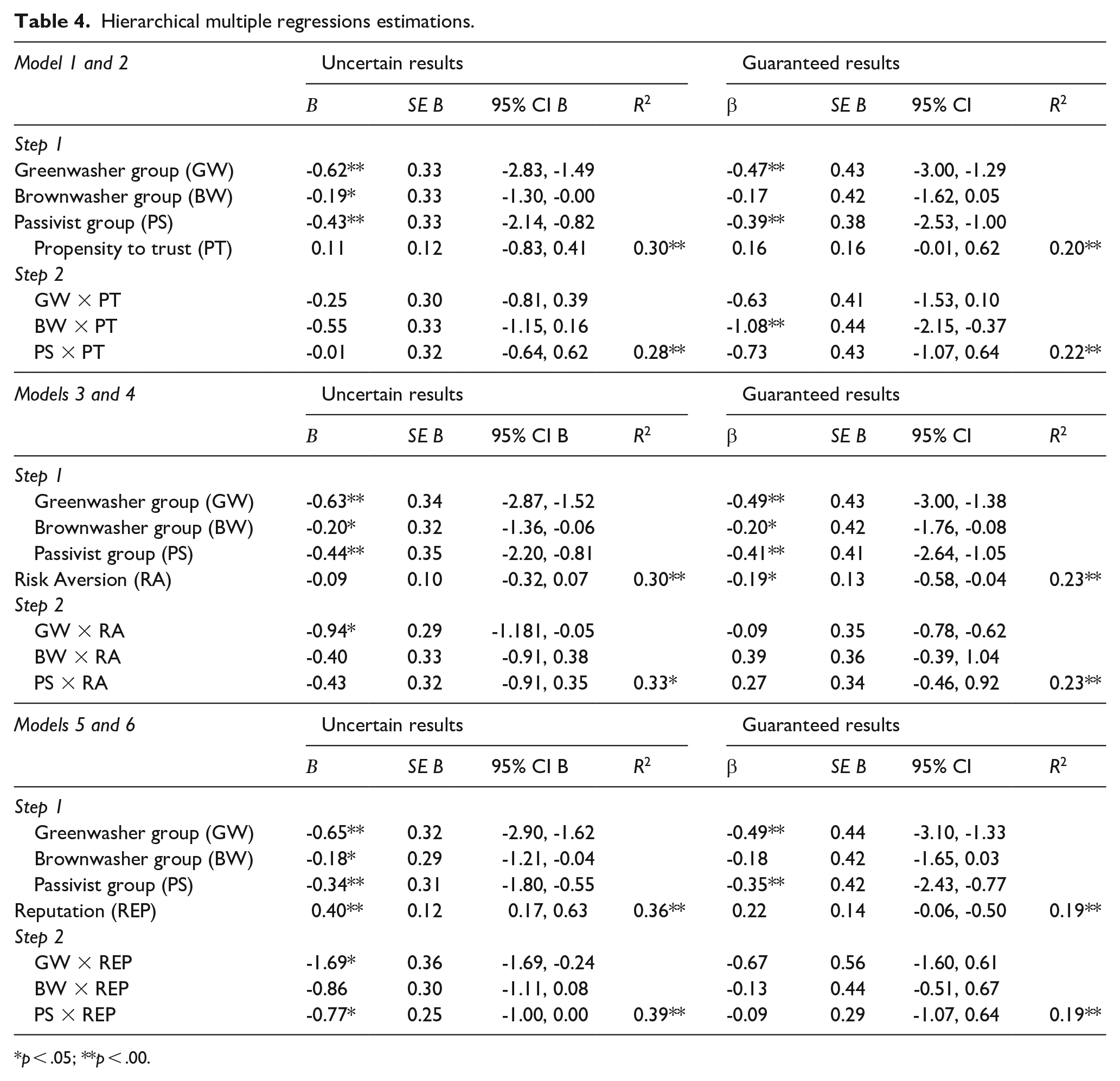
p < .05; **p < .00.
Finally, the statistically significant negative interaction coefficient (Greenwashing × importance of reputation) in Model 5 (uncertain results scenario) (β = −0.65, B 95% CI = [−2.90, −1.62]; p < .00) and the lack of statistical significance in the interaction term in Model 6 (certain economic results scenario) showed that the negative effect of greenwashing on business relationships was higher in the presence of greater levels of importance of reputation but only in the uncertain results scenario. Thus, Hypothesis 5 was supported, confirming that the negative effect of perceived greenwashing is stronger in the presence of greater levels of importance of reputation and only in the uncertainty scenario.
Figure 6 illustrates the direction of confirmed moderations in the uncertain results scenario. It plots the marginal effects of greenwashing (also brownwashing for a visual comparison) on business relationships in the presence of high (one standard deviation above the mean) and low (one standard deviation below the mean) levels of risk aversion and reputation importance, respectively. In both the plots, the negative conditional effects of greenwashing on business relationships increased as risk aversion and reputation importance increased for the participants.
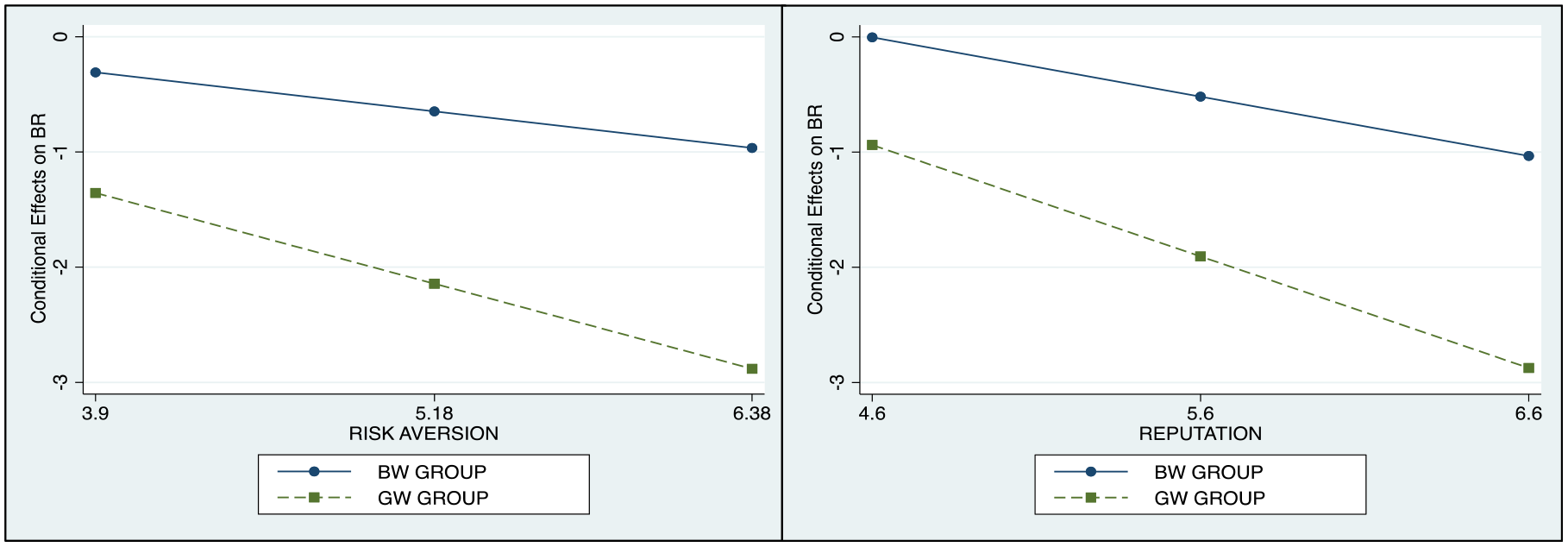
Moderation graphs for the risk aversion and importance of reputation effects of greenwashing on business relationships.
Discussion
Greenwashing affects managerial willingness to start or maintain business collaborations (Ferrón-Vílchez et al., 2021) because a manager may feel deceived by perceiving that the counterpart is disclosing positive environmental information while hiding negative information (Lyon & Maxwell, 2011). This study analyzes this relationship in-depth, considering the uncertainty in obtaining economic benefits as well as focusing on three factors, at the individual level, of the managers’ decision-making process: propensity to trust, risk aversion, and the importance of reputation. The results obtained and how they contribute to previous literature are presented below.
Concerning the perception of greenwashing in the business decision-making under (un)certainty scenarios (i.e., H1 and H2), we offer empirical evidence about the negative effect of perceived greenwashing on the willingness to start or maintain business relationships (Ferrón-Vílchez et al., 2021) and, going a step forward, we show how this effect could change in the presence of certain economic results. Our results confirmed that if greenwashing is perceived, then the willingness to start or maintain business collaborations is lower in situations of uncertainty, whereas the negative effects of perceived greenwashing are not so negative if economic results are guaranteed. These results confirmed the presence of cognitive bias in decision-making by managers who perceive greenwashing as a symbolic strategy of corporate selective communication (Barnes, 1984; Hodgkinson et al., 1999). Perceived greenwashing has negative effects under conditions of uncertainty, that is, with random or not guaranteed economic results. However, when the potential economic gains are assured, a decision-maker does not necessarily interpret greenwashing as overly harmful (Hodgkinson et al., 1999; Norheim-Hansen, 2015). Our results contribute to both strategic cognition perspective and expectation confirmation theory, as strategic decisions are modified depending on how managers interpret the uncertainty level of the decision-making context. Under certain economic results, greenwashing receives less managers’ attention or is interpreted as not-so-unwelcome compared with under uncertain economic results (Norheim-Hansen, 2015; Park et al., 2014). Thus, our findings contribute to the strategic cognition perspective literature by analyzing the link between a manager’s cognitive structure and strategic decision-making on environmental issues (Norheim-Hansen, 2015).
Related to effect of the propensity to trust (i.e., H3), although we expected that managers with a high propensity to trust would show a greater extent of the negative effect of greenwashing compared to managers without a high propensity to trust, we could not confirm it. The results obtained are not significant in either the situation with uncertainty or with certainty. This lack of significance related to the propensity to trust may be owing to the characteristics of the concept: the manager, who has a high propensity to trust and who may trust his or her business partner and neglect greenwashing allegations from a third party, is likely to maintain the relationship with such a business partner. Risk aversion and the importance given to corporate reputation are terms closely linked to the business world, whereas the characteristic of propensity to trust could be linked more to a manager’s personal relationships than with business ones.
Indeed, our results show that risk aversion and importance of corporate reputation are two manager characteristics that affect the willingness to maintain business relationships when greenwashing is perceived. Concerning the effect of risks aversion (i.e., H4), managers who are risk-averse are less willing to have business relationships with greenwashers than managers with less risk aversion. This could be explained by the fact that business relationships tend to be maintained under asymmetric information contexts. This result is in line with prior literature on risk aversion: when managers are risk-averse individuals and discrepancies between corporate communication and real performance are detected, relationships could be broken (Stadtler & Lin, 2017). As a consequence, the negative effect of perceived greenwashing on the willingness to maintain business collaborations increases (Ferrón-Vílchez et al., 2021).
Regarding the importance of corporate reputation (i.e., H5), our results demonstrate that this managerial characteristic negatively affects the willingness to maintain business collaborations when discrepancies between environmental performance and communication are detected. Our results expectedly show that when managerial importance for corporate reputation increases, the willingness to maintain business collaboration relationships decreases in situations of uncertainty. This could be explained by the “contagion effect” of a damning case of greenwashing with a collaborating company coming to light (Ferrón-Vílchez et al., 2021; Siano et al., 2017; Skarmeas & Leonidou, 2013). If managers place high importance on corporate reputation, they may think that a greenwashing scandal could negatively affect their own reputation (Yang et al., 2020). In such instances of uncertainty, the risk to be implicated in the same scandal and the negative consequences for corporate reputation may decrease the willingness to maintain business relationships with a greenwasher (Ferrón-Vílchez et al., 2021; Siano et al., 2017).
In sum, our results show that risk aversion and the importance of corporate reputation are individual managerial variables that help explain the environmental decision-making (Coff & Kryscynski, 2011; Felin et al., 2012). According to the strategic cognition perspective, these two individual variables form the cognitive bias that changes the decision problem by emphasizing the potential gains or losses from a collaboration with a greenwasher. Our results are similarly essential under the lens of expectations confirmation theory. When managers perceive greenwashing activities from a collaborating partner, unexpectedly, a degree of dissatisfaction emerges. This dissatisfaction may be higher when a manager has a higher level of risk aversion and considers corporate reputation important, leading to a lower probability for the business collaboration to start or continue.
Conclusion
In addition to the above contributions of our results to prior literature, this study offers several important implications from a theoretical perspective. On the one hand, it aimed to reveal, through experimental design, how greenwashing affects managerial decision-making in a universal way, without focusing on a specific group of stakeholders. Previous literature discussed how the existence of greenwashing affects the relationship of companies with a specific group of stakeholders. For example, in the context of greenwashing, some studies focused on a company’s relationship with its suppliers or other members of the value chain (e.g., Keh & Xie, 2009; Pizzetti et al., 2021), partners in a strategic alliance (e.g., Norheim-Hansen, 2015), non-governmental organizations (Berrone et al., 2017), or its consumers (e.g., Park et al., 2014; Wang et al., 2020) considering the relationship with each stakeholder group individually. Our correlation results among items measuring the willingness to maintain business relationships with different stakeholders were very high (M = 0.66). Thus, in the presence of greenwashing, managers tend toward monolithic behaviors in the decision-making process, as their responses and reactions depend more on their individual characteristics than on the stakeholders’ group (under the suspicion of greenwashing) they relate to. This is in line with Murillo-Luna et al. (2008) who found no differences in environmental interests across stakeholder groups and asserted that there was a single dimension of environmental demand.
On the other hand, our results confirm the role of managers’ individual attitudes related to trust in strategic decision-making, especially concerning environmental issues (Aguinis & Glavas, 2012). We analyzed how a manager’s individual characteristics that are intimately related to trust (i.e., propensity to trust, risk aversion, and importance of corporate reputation) affect the negative effect of perceived greenwashing. Our results elucidate strategic decision-making when greenwashing is perceived, extending current knowledge of its consequences on the analysis of managers’ individual characteristics. In this sense, our work is especially interesting, given the scarcity of studies focusing on the personal characteristics of managers when making decisions affecting the global nature of a company, especially in voluntary management practices (Aguinis & Glavas, 2012).
Furthermore, from a methodological perspective, this study offers two essential contributions. On the one hand, we offer a better understanding of the phenomenon of greenwashing, taking advantage of an experimental design in which the participants are actual managers with experience in evaluating and selecting business partners instead of being prospective managers, students, consumers, or the public. For instance, Ferrón-Vílchez et al. (2021) used a sample of 243 undergraduate students from business and management degrees; Park et al. (2014) used a sample of 145 business school students; and Pizzetti et al. (2021) involved public participants from an Amazon Mechanical Turk. Here, we used a sample of 125 managers to confirm that when perceived greenwashing exists, the willingness to collaborate with a greenwasher decreases.
On the other hand, we propose a three-step control process to ensure the quality and validity of the experiment: controlling the data collection of the experiment before, during, and after the experiment execution. This three-phase control method is based on the traditional perspective of type control concerning the time of occurrence: a priori or feedforward, concurrent, and feedback control (Flamholtz, 1996).
Implications for managers and regulators
The pressing social awareness of climate change and the need to be sustainable have led many companies to adopt symbolic environmental behaviors by simply disclosing environmental information without engaging in actual or meaningful activities. We analyze the consequences of carrying out such symbolic practices on business relationships with other companies; we specifically study the response of a company’s managers to such behavior in a (potential) partner. Our results provide theoretical and empirical contributions as well as implications for practitioners. We reaffirm that managers who observe a greenwashing behavior in their counterpart are less willing to deal with that greenwasher. This fact has repercussions for managers, as it allows them to observe the behavior of a potential partner when they perceive a symbolic environmental profile, and demonstrates the importance of their intrinsic characteristics in making corporate collaboration decisions.
The results obtained may also have repercussions on regulators responsible for developing normative bodies for avoiding this type of symbolic practices. In this sense, the European Commission is launching the “Green Claims” Directive (European Commission, 2023), which intends to oblige companies to use credible and trustworthy labels and claims. Our implications result also essential to advance in the study and proposal of ways, variables, and concrete measures or items that can detect greenwashers. Similarly, they also offer evidence of the negative consequences for companies that carry out such practices, which will be increasingly gaining importance in the future.
Limitations and future research
This study has some limitations. First, although we carried out an extensive experiment, the intention to maintain or initiate business relationships with a greenwasher does not imply an actual business risk. Thus, even if the situations of uncertainty and certainty are contemplated for managers participating in the experiment, the risk of carrying out business relationships has no real consequences for such managers and their company. Second, this work had a transversal nature; the analysis could be contrasted and complemented with a sample of managers using longitudinal analyses. Third, future studies can extend our implications by introducing variables related to perceived fairness or business ethics. It would be interesting to performance additional studies on the willingness to deal with a greenwasher in scenarios of certainty and uncertainty when the economic results vary for the company that performs the greenwashing. As in Bazerman and Moore’s (2012) ultimatum game, a manager’s decision to maintain business relationships with someone who is not behaving in a fair way—a greenwasher—may change when the greenwasher has guaranteed economic results.
Supplemental Material
sj-docx-1-brq-10.1177_23409444241250360 – Supplemental material for Would you date a liar? The impact of greenwashing on B2B relationships under the managerial trust view
Supplemental material, sj-docx-1-brq-10.1177_23409444241250360 for Would you date a liar? The impact of greenwashing on B2B relationships under the managerial trust view by Jesus Valero-Gil, Inés Suárez-Perales and Vera Ferrón-Vílchez in BRQ Business Research Quarterly
Footnotes
Acknowledgements
The authors thank Prof. Vicente Salas Fumás and Prof. Carlos Orus Sanclemente for providing help during the research.
Declaration of conflicting interests
The author(s) declared no potential conflicts of interest with respect to the research, authorship, and/or publication of this article.
Funding
The author(s) disclosed receipt of the following financial support for the research, authorship, and/or publication of this article: This work was partially supported by several research projects granted by the Spanish Ministry of Science and Innovation (project numbers ECO2017-88222-P and ECO2017–86305C4-3-R), the Government of Aragón (Group Reference CREVALOR: S42_17R), FEDER 2014–2020 “Construyendo Europa desde Aragón,” and FEDER 2014–2020 Andalucía (project number A-SEJ-192-UGR20).

Supplemental material
Supplemental material for this article is available online.
Notes
References
Supplementary Material
Please find the following supplemental material available below.
For Open Access articles published under a Creative Commons License, all supplemental material carries the same license as the article it is associated with.
For non-Open Access articles published, all supplemental material carries a non-exclusive license, and permission requests for re-use of supplemental material or any part of supplemental material shall be sent directly to the copyright owner as specified in the copyright notice associated with the article.
