




Abstract
Strategists intentionally use artifacts to promote their perception of a prudent strategic choice. Separating artifacts and strategists’ intentionality blurs our understanding of how strategy-making unfolds. Our study addresses the dynamics of strategists’ intentionality and their use of artifacts in strategy-making. The study provides empirical evidence that artifacts act as stand-ins for the strategists’ intentionality, used to guide or misused to curb the strategy-making. The implications of our study contribute to the understanding that (1) we can neither assume that the individuals’ intentionality is predictable nor that the involved strategists achieve a common understanding, (2) strategist–artifact relationships are pivotal to align or misalign different strategists’ interests, (3) the mediating role of artifacts is mutable entailing strategists materializing artifacts and adding text and symbols to intentionally manage the strategy-making, and (4) strategists deliberately use many artifacts to reach the intended strategy, not necessarily implementing the optimal strategy choice.
Introduction
How do strategists use artifacts to embody meaning and use or misuse artifacts to promote their own intentionality, and what are the consequences in terms of achieving a common understanding in strategy-making? These questions tap into the central aspects of strategy-making, especially the stream of research that bridges macro–micro factors and internal–external factors (Guerras-Martín et al., 2014) and appreciates the micro-foundation of practices and processes (Molina-Azorín, 2014). While the practice perspective focuses on strategists implementing strategy-making as part of their daily work including tools and methods used (Kohtamäki et al., 2022; Vaara & Whittington, 2012), the process perspective is primarily concerned with strategic decision-making and implementation processes, emphasizing the strategists, the issues, and the sequences of actions (Hutzschenreuter & Kleindienst, 2006). Our study combines the practice and process approaches, linking the materiality of artifacts in strategy-making (Dameron et al., 2015; Jarzabkowski & Kaplan, 2015; Knight et al., 2018; Vaara & Whittington, 2012) to strategists’ intentionality (Knight et al., 2018) and acknowledging strategy-making as inclusive and transparent processes (Hautz et al., 2017; Smith et al., 2018; Whittington et al., 2011).
Strategists use artifacts throughout the strategy process to achieve a common understanding (Kaplan, 2011; Nordqvist & Melin, 2008; Royer, 2020). Artifacts contain information and are instrumental in embodying meaning (Burgelman et al., 2018) and in conveying meaning among strategists (Vuorinen et al., 2018). Strategists use a diversity of artifacts (Jarzabkowski et al., 2013; Vuorinen et al., 2018) to communicate new strategies (Whittington et al., 2006) and to create strategy knowledge (Paroutis et al., 2015), and artifacts have different influencing roles to play throughout the strategy process (Werle & Seidl, 2015): planning documents become authoritative (Spee & Jarzabkowski, 2011) or artifacts have sufficient visual information to facilitate collaboration (Kaplan, 2011), implying that visual information materialized into artifacts is instrumental in achieving a common understanding (Knight et al., 2018).
Intentionality is embodied and conceptualized as a mental perception of a strategic choice (Nordqvist & Melin, 2008). A strategist’s intentionality is the desired outcome that they hope to achieve (Knight et al., 2018), that is, a strategist’s perception of a prudent choice (Nordqvist & Melin, 2008), though not necessarily a prudent strategic choice for what the company wants to achieve. Strategists can have different intentions when handling activities (Schatzki, 2012). Due to these different intentions, it is generally acknowledged that artifacts do not always facilitate a common understanding (Leonard-Barton & Sensiper, 1998 ), thus leading to both planned and unexpected outcomes when handling a strategy-making activity; the handling of a strategy-making activity is conceptualized as a sequence of actions (Van de Ven, 1992).
The prevalent research considers intentionality and artifacts as two distinct concepts. Accordingly, we do not know to what extent strategists use or misuse artifacts to enhance their viewpoints, or how strategists use artifacts to keep the strategy-making on a track aligned with their perception of a prudent choice, thereby avoid being questioned whether the strategy-making leads to the desired outcomes for the company. We assert that separating intentionality and the materiality of artifacts blurs the conceptualization of how strategists intentionally use (or misuse) artifacts to convey meaning and the extent to which the series of actions follow multiple tracks (Van de Ven, 1992). To examine how strategists use artifacts when conveying meaning and how the accumulated consequences of handling strategy-making activities can result in both planned and unexpected shifts in the strategic direction, our article draws on Van de Ven’s (1992) process theory dividing strategy-making into three different sequences of actions: (1) “divergent” strategy-making means the involved strategists’ understanding drifts apart; (2) “convergent” strategy-making occurs when strategists’ understanding draws closer together; and (3) “parallel” strategy-making unfolds when strategists’ understandings neither drift apart nor draw closer together. We follow Jarzabkowski and Kaplan’s (2015) advice to apply a laser-like focus to the rich interactions between strategists having different intentionalities and materiality of artifacts. In doing so, this article attempts to address the need for empirical research in the role of artifacts and intentionality (Vuorinen et al., 2018; Werle & Seidl, 2015) and thereby open the black box of the role of artifacts used by strategists to achieve their intentional outcome (Knight et al., 2018). Accordingly, the purpose of this research is to clarify the extent to which artifacts are used or misused as stand-ins for the strategists’ intentionality in strategy-making, leading to the research question: To what extent do strategist–artifact relationships lead to parallel, divergent, and convergent strategy-making?
This study demonstrates that strategy-making follows convergent, parallel, and divergent tracks in an unpredictable way. The research contributes in several ways to the existing research of strategy-making as inclusive and transparent processes. First, each of the involved strategists’ intentionalities and artifacts have pivotal roles in strategy-making. Even though strategists are involved in the same activity and with access to the same artifacts, this study shows that individual understanding is unpredictable, thus entailing convergent, parallel, and divergent tracks. As an example, one strategy group following a convergent track from the outset leads to unfilled strategic objectives, while another strategy group following multiple tracks leads to the fulfillment of strategic objectives. Second, various artifacts are simultaneously brought into play to guide and to curb the strategy-making activities. The artifacts are neither fixed nor solely embedded in the activities. Instead, an individual strategist or a group of strategists can draw up artifacts and add explicit information, such as comments, text, and symbols to intentionally curb the activities. Thus, artifacts are used as stand-ins for the individual strategist’s viewpoint(s), making most of these artifacts temporary—they are used to guide and misused to curb the handling of a strategy-making activity and are then discarded. Third, this article suggests academia to acknowledge that strategy-making develops alongside strategists’ acquisition of meaning in relation to both social and material matters. Fourth, practitioners should be aware of the facts that artifacts can be misused to favor one’s own viewpoint and that the achievement of a common understanding does not necessarily lead to desired outcomes.
This article is structured as follows. The next section explains our theoretical position before setting out the methodological issues. Strategy-making in the case company is then presented and analyzed, followed by a discussion and a conclusion.
Analytical inspiration—Strategist–artifact relationships
Dameron et al. (2015) suggest three approaches to understanding the nexuses between strategists and artifacts: weak, moderate, and strong views. The weak view brings artifacts to the fore, adopting a positivistic approach seeking cause-and-effect relationships. The strong view entangles the strategist and artifacts, thus rendering them inseparable. The moderate view considers the strategist and artifact as mutually dependent but distinct and separable entities. This empirical study subscribes to the moderate view as this is the prevalent approach in strategy-as-practice research (Werle & Seidl, 2015).
Strategy-making is considered as materially mediated sequences of actions in which strategists make use of a diversity of artifacts (Knight et al., 2018). These mediating artifacts contain explicit information, such as plans (Dameron et al., 2015), PowerPoint presentations (Kaplan, 2011), whiteboard presentations (Werle & Seidl, 2015), and more specific Lego brick concepts (Heracleous & Jacobs, 2008) or popular strategy tools (Vuorinen et al., 2018). We value Jarzabkowski and Kaplan’s (2015) account of the role of artifacts, such as Porter’s five forces, strengths, weaknesses, opportunities and threats (SWOT), and similar theoretical frameworks, along with Whittington’s (2015) notion of laptops, PowerPoint applications, flipcharts and whiteboards as artifacts for creating, presenting, or modifying strategies. These artifacts are man-made objects (Royer, 2020) and are not static (Werle & Seidl, 2015). On the contrary, strategists materialize explicit information into artifacts throughout the strategy process by adding texts and symbols and modifying the shape of artifacts. These types of artifacts are all used to empower and enable each strategist to act and convey meaning (Vuorinen et al., 2018). Accordingly, we define artifacts as material entities that have an influence on the strategists’ understanding of strategy-making. This definition implies that each strategist uses and makes artifacts to embody knowledge.
Knowledge is dynamic, contextual, and embodied. Without being contextual and embodied, it is merely information and therefore not knowledge (Nonaka et al., 2000). This embodiment and contextualization of knowledge echoes the pragmatic way of handling an activity (Dewey, 1938). Drawing on pragmatism, the handling of a strategy-making activity starts when each of the involved strategists attempts to grasp what is going on (see Goffman, 1974; Kaplan, 2008) by gradually transforming an indeterminate situation into a determinate situation. The handling of an activity develops gradually, taking the form of an ongoing bidirectional relationship that starts with an observation of other strategists’ actions and of artifacts, followed by an ideation that draws on embodied knowledge. Dewey (1938) regards the initiation of handling an activity as precognitive. Accordingly, if the strategist who handles the activity does not transcend this precognitive attitude of mind, it is not considered reflective, while if successfully transcending the precognitive attitude of mind, the handling of the activity will increasingly be guided by reflective thinking. Handling a strategy-making activity that is controlled successfully amounts to creating new knowledge for the strategist(s). Given that the strategist(s) and the artifacts evolve interdependently within a situated practice (Dewey, 1938), handling the activity also results in the materialization of existing or new artifact(s). However, as strategists might have different intentionalities, their actions can follow multiple tracks (Van de Ven, 1992).
Drawing on the work of Schatzki (2012) and Hernes and Schultz (2020), a strategist’s intentional outcome of an activity influences the way he or she handles the activity; that is, the sequence of actions. A strategist’s intentionality is, in effect, his or her mental perception of what constitutes a sound strategic choice (Nordqvist & Melin, 2008). As strategy-making involves multiple strategists (Vaara & Whittington, 2012), the strategists involved must take into account others’ intentions. In this regard, Blumer (1969) reminds us that a strategist’s actions (re)shape other strategists’ actions. It follows that one’s own actions and the actions of others influence the process of aligning intentions and thus the sequence of actions in strategy-making. Accordingly, to deal with others’ intentionalities, “one may abandon an intention, revise it, check or suspend it, intensify it, or replace it” (Blumer, 1969, p. 8). Being incapable of taking into account the actions of others can result in strategists’ thoughts and actions following multiple tracks, while strategists who change “the way the thought process occurs collectively” (Bohm, 1996, p. 9) can align their thoughts and actions to pursue convergent tracks.
Summing up, in our attempt to examine strategy-making empirically at the micro-level, we subscribe to pragmatism. Artifacts contain explicit information. Strategists have intentionality, and in conveying meaning, they use and perhaps misuse artifacts to achieve a common understanding.
Method
This study is based on a 3-year longitudinal case study in a Danish textile company. We employed ethnographic methods in our data collection (Agar, 1980; Atkinson & Hammersley, 1994; Van Maanen, 1988) and subscribed to Van de Ven’s (1992) third definition of process theory to understand the concrete sequences of actions (Emerson et al., 1995). Our focus on strategy-making in one company seems appropriate given that our research endeavors to provide a deep understanding of the development of strategy-making (Dougherty, 2002). Our approach to the analysis was an iterative back-and-forth approach between empirical data and theory. This abductive approach (Cornelissen et al., 2014; Klag & Langley, 2013) was useful as it paved the way for moving between the data and the conceptualization of intentionality–artifact relationships to explore how the multiple tracks (Van de Ven, 1992) in strategy-making develop. To enhance the credibility and reliability of our study, we had prolonged real-time engagement with the company (Geertz, 1973; Lincoln & Guba, 1985; Payne & Williams, 2005), used multiple sources of data, made thick descriptions (Geertz, 1973), and developed a detailed activity timeline (Langley, 1999). This forms the basis for analytical generalization (Payne & Williams, 2005).
Research setting
The case company started in 1991 and produces labels, hangtags, and packaging for the clothing industry. The company underwent significant development from 1999 to 2011 when it grew from 26 to 420 employees and went from being a local producer with customers in Denmark to being a global producer with customers all around the world (Table 1). The globalization started around the year 2000. At corporate level, the organization encompasses three business areas—trim, packaging, and promotion—organized in a product-orientated design with two managerial hierarchical levels. The top management team consists of five managers situated in Denmark. The middle management group consists of 25 middle managers.
The settings for the research.
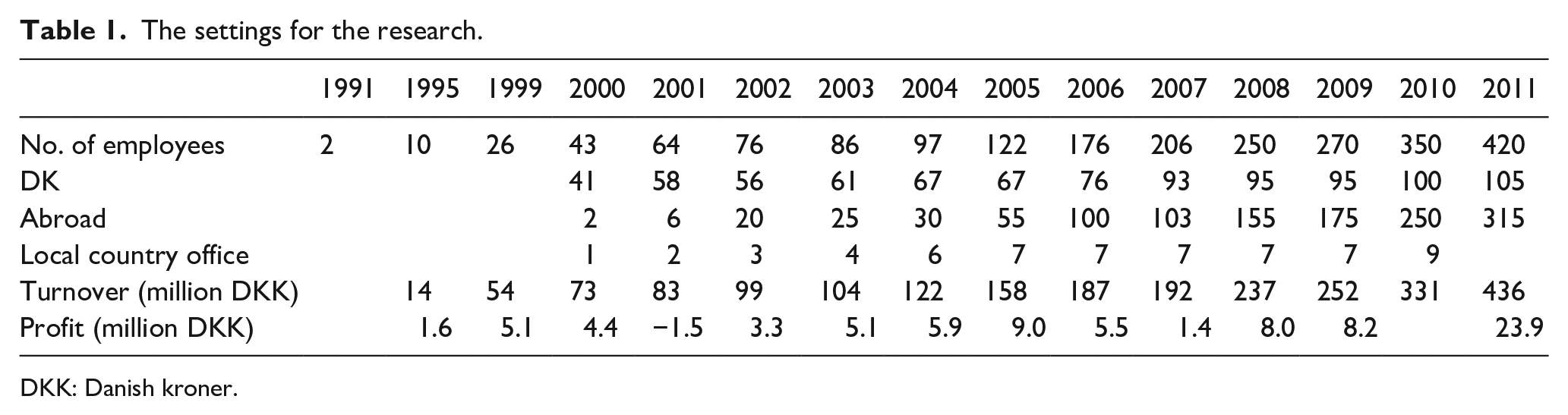
DKK: Danish kroner.
To clarify the strategic journey of the case company, we highlight periods instrumental to describing their development. The first period runs from the establishment of the company up to 2004. During this period, the company grew from a turnover of 14 million Danish kroner in 1995 to a turnover of 122 million Danish kroner and from 10 employees in 1995 to 97 employees in 2004, with 67 of the employees working at the headquarters in Denmark and 30 employed abroad in six different local offices. This first period can be characterized as “management by coincidence” (interview, COO), meaning that the focus was on taking advantage of every sales opportunity, that is, “how much more can we sell to customer XX.” Budgeting was the overall management tool. The second period commenced in 2004 with the appointment of a new external chief executive officer (CEO). Strategy-making can be characterized as strategic planning, deliberately planning the activities for the coming period—for instance, where are we going? where should the next local office be? This was a new way of working with strategy—from an emergent approach to a more deliberate approach to strategy work (Mintzberg & Waters, 1985).
In 2008, 1 year before prediction, the company fulfilled its strategy of being the biggest supplier in Scandinavia. Accordingly, a new strategy process was initiated by the top management team with the objective of changing the way the company was run, thereby transforming the company into the biggest European supplier of trim by 2014. The strategy process took the form of workshops, seminars, project groups, various types of meetings, and so on, and involved several strategists. This could be seen as three-phase process. In Phase 1, the management team prepared a rough corporate strategy. In Phase 2, the management team involved all employees in the Danish department in developing the strategy in an attempt to make it more concrete, whereby the corporate strategy was transformed into nine strategy themes. In Phase 3, nine strategy project groups were appointed to clarify the challenges and prepare action plans, and a multitude of different artifacts were used to materialize new artifacts. Figure 1 shows the activity timeline.
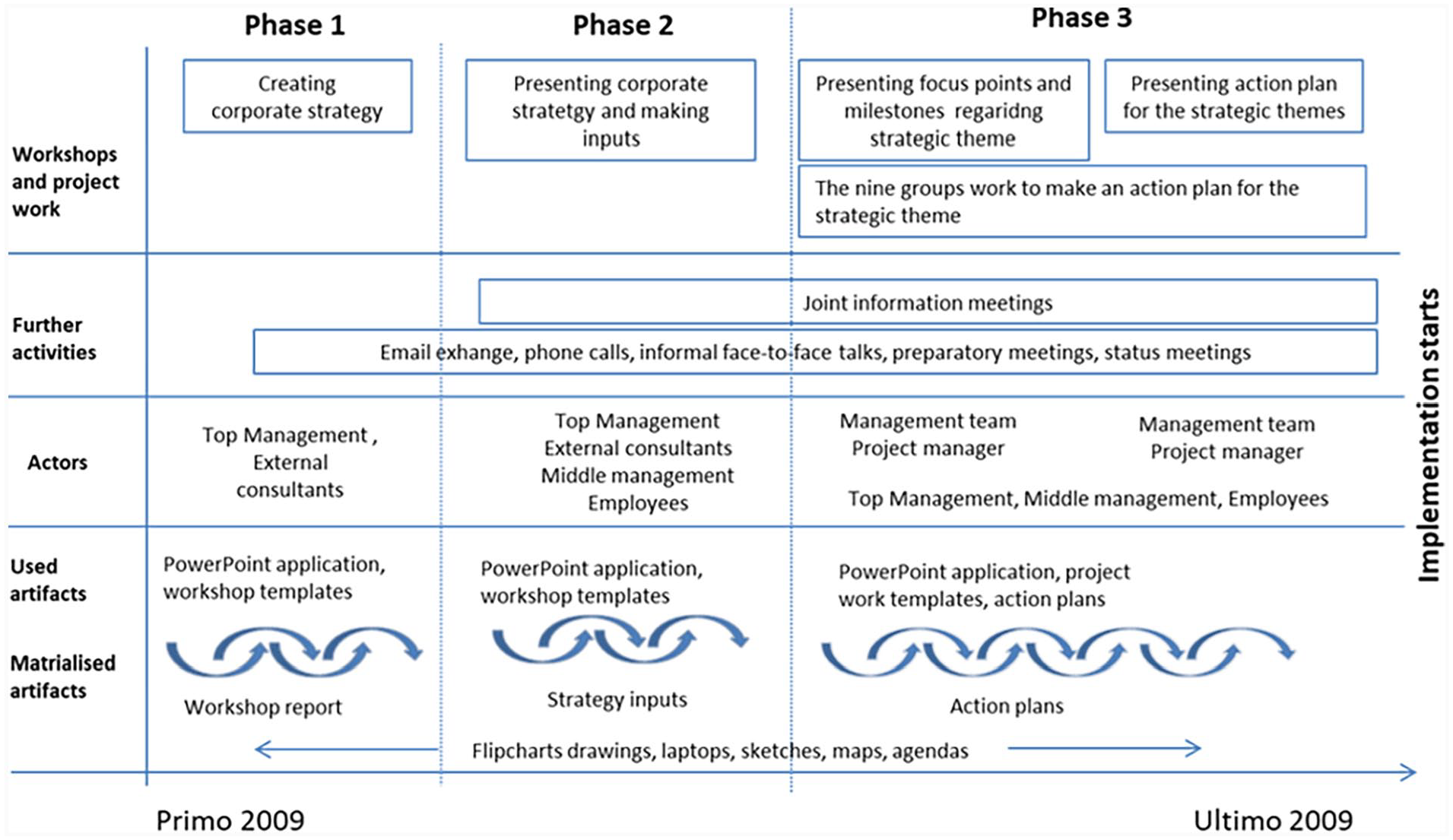
The strategy process.
Data collection
To ensure a detailed and rich understanding of strategy-making in the company, data were collected from several sources, such as archival documents, semi-structured/unstructured interviews, and ethnographic observations (Langley et al., 2013). To gain access to this rich set of process data (Langley, 1999), the first author performed an extensive ethnography during the 8-month strategy-development period and was granted access to joint information meetings, management meetings, project group meetings, and ad hoc meetings at all organizational levels, and was allowed to interview all employees in the organization. Access was granted due to the first author’s previous career as a manager and consultant, which also enabled them to quickly tune into the realities and everyday life of the case company (Patton, 2015). The first author spent full days each week observing various meetings, discussions, and interactions over the entire period of the strategy process. We often encountered the same information or document in multiple sources (meeting presentations, PowerPoints, and interviews).
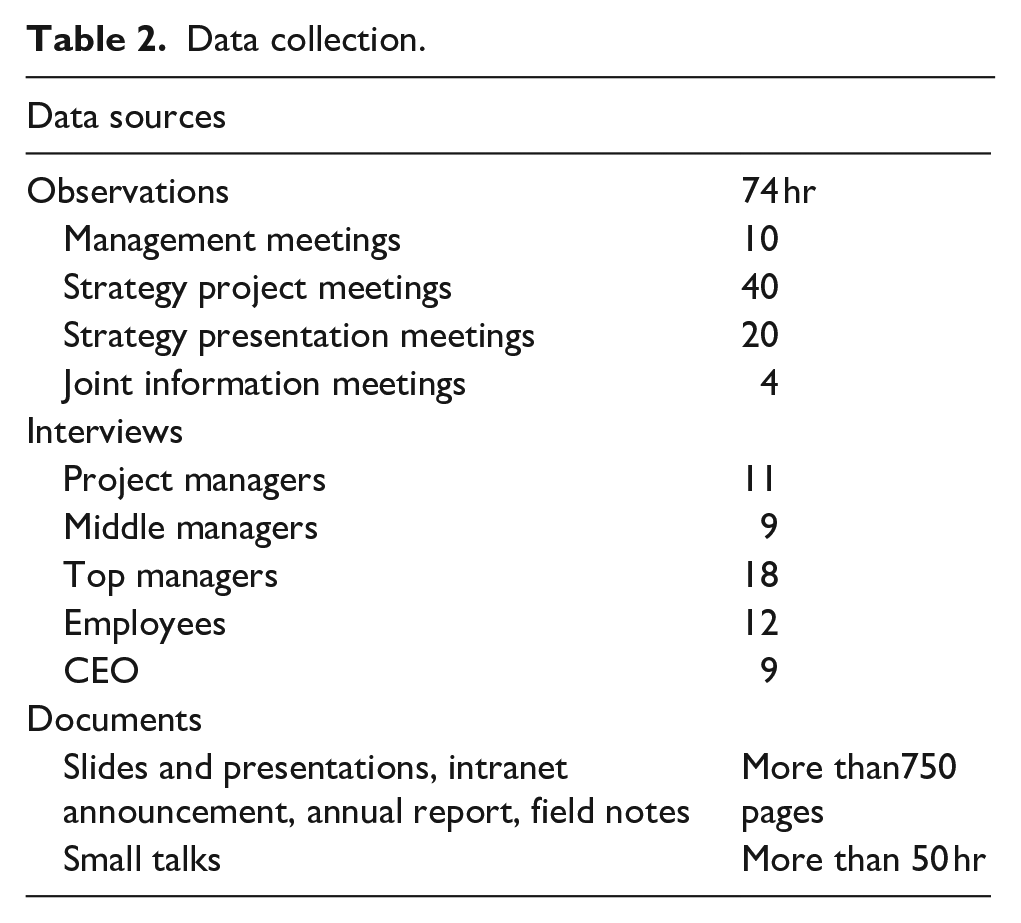
All interviews and observed meetings were recorded to ensure that the interviewer’s attention was focused on the subject and the dynamics of the interviews (Kvale & Brinkmann, 2009). Table 2 gives an overview of the data sources. These included 31 semi-structured and unstructured individual interviews, 4 semi-structured focus group interviews, 74 hr of observations of management meetings, strategy project meetings, strategy presentations meetings, and joint information meetings. The observations were taped, and field notes were written in a logbook and typed up within 24 hr (Miles & Huberman, 1994). Accordingly, the observer’s role was primarily that of participant-as-observer (Gold, 1958). Furthermore, we collected both retrospective and real-time materials (Bryman & Bell, 2007).
Data collection.
The “logbook” was a combination of field notes and field diaries (Bryman & Bell, 2007; Patton, 2015), through which we aimed to keep a record of strategy-making activities and all participants involved in accomplishing the activities, our reflections and observations, questions to be asked, and areas to follow-up on later. The logbook was central in the coding and analysis, which we started during the data collection.
Coding and analysis
In line with the study by Gioia et al. (2013), the thematic coding process was divided into three stages. The focal point for the coding process was strategists and artifacts when handling the strategy-making activities. The point of departure was the logbook and a thick description of the company (Geertz, 1973), and by applying an abductive logic (Dubois & Gadde, 2014), we gradually draw on both empirical and theoretical reasoning. In the first stage, we created a display for coding our data (Gioia et al., 2013) and drew up a timeline of key activities, strategists, and artifacts used (Langley, 1999). The activities in the strategy process were described and the descriptions were supported with complementary quotes based on a content and conversation analysis (Bryman & Bell, 2007).
In the second stage, we analyzed the sequence of actions for distinctive characteristics regarding the role and impact of each strategist’s application of artifacts to achieve the strategic objectives. In particular, we addressed how each strategist’s intentionality and artifacts empowered and enabled them to act and convey meaning. Using triangulation, we were able to identify distinctive characteristics of strategy-making in two of the nine strategy project groups in which the strategists’ strategy-making (sequences of actions) seemed to follow multiple tracks (Van de Ven, 1992). To select the two strategy groups, we used Stake’s (2000) variety criterion; in one of the groups, the strategists’ actions seemed to follow convergent tracks, yet the strategic objectives were not achieved. In the second group, the strategists’ actions seemed to follow divergent tracks, but ultimately the strategic objectives were achieved. As Stake (2000, p. 447) reminds us, “opportunity to learn is of primary importance,” meaning that we strove to achieve a solid understanding of the empirical phenomenon by making a cross-case analysis.
In the third stage, we focused only on the two selected strategy groups. The analysis concentrated a laser-like focus on the consequences of the relationship between intentionalities and artifacts, which evolved when a strategy group handled an activity; that is, whether or not the strategy-making followed parallel, divergent, or convergent tracks (Van de Ven, 1992). We selected important strategy-making; the selection criterion was the extraordinary nature of the nexus between intentionality and artifacts in handling the activity.
Strategy-making in the two strategy groups
We first present the employees in the two strategy groups. Then we present the joint start-up meetings for the two strategy groups, followed by a chronological description of strategy-making in each of the two groups. Finally, a timeline summarizes the work in the two strategy groups.
The two strategy groups
Each of the two strategy groups consisted of six members. The members of Strategy Group 1 included the chief financial officer (CFO) acted as project manager, appointed as CFO 1 year ago; Anne, accounts assistant with 8 years of experience; Johnny, group manager in operations with 4 years of experience; Lene, group manager for purchase and sales coordination with 4 years of experience; Per, employed in operations and with more than 10 years of experience; and Mariann, employed in sales and coordination with 6 years of experience.
The members of Strategy Group 2 were the project manager, who normally works in IT support and has more than 10 years of experience; the HR manager with more than 10 years of experience; Jette, who works with quality and textile testing with around 5 years of experience; Rasmus, employed in sales with less than a year of experience; Lenette from reception with more than 4 years of experience; Louise from procurement with more than 4 years of experience; and Claus, who works with design and has 6 years of experience.
Strategy-making in the two strategy groups
A start-up meeting marked the involvement of the two groups. At the outset, the CEO established guidelines for the sub-strategies. During the CEO’s PowerPoint presentation, the employees in both strategy groups were rather silent or no one had any questions; the presentation was a one-way transmission of information, albeit in a positive atmosphere. At the end of the presentation, the CEO asked: “Does this raise any questions so far?” but there were still no questions from the employees.
After this, the CEO initiated the round table discussion. He turned off the PowerPoint projector, placed a flipchart in front of the employees, and asked for input and comments on the strategy he had outlined. The resulting input is presented in Table 3 below.
Materialization of strategy themes in flipcharts.
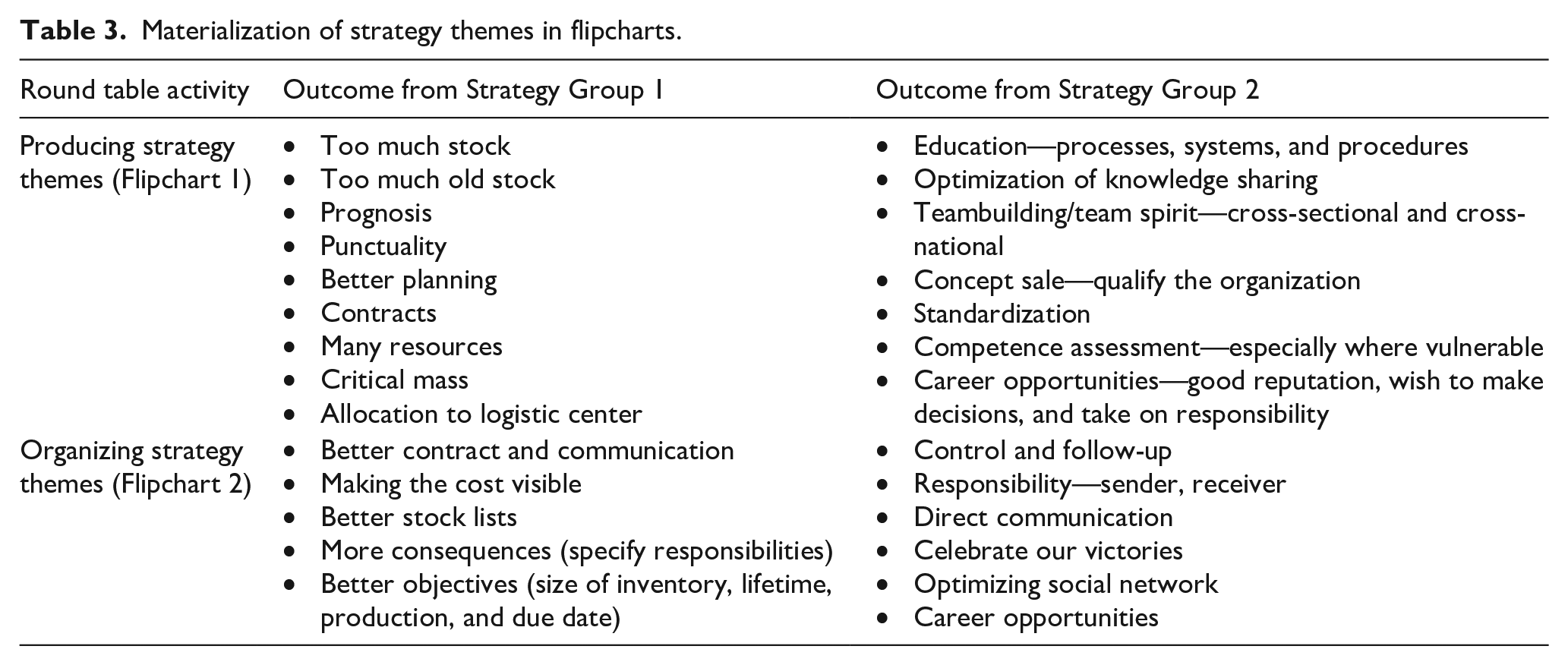
After writing the input on the flipchart, the CEO asked: “Can we gather these suggestions together to formulate some plans? What exactly has to be done?” and turned over a new sheet of paper on the flipchart to start organizing the generated themes. The last activity was the appointment of two project managers. The CEO asked three employees in Strategy Group 1. All three declined and so the CFO was appointed. The project manager for Strategy Group 2 was a volunteer and was appointed as she was the only candidate. Finally, the next meeting was scheduled.
In the following sections, the remaining strategy-making activities for each strategy group are described separately for clarity.
Strategy Group 1: Stock reduction
Strategy-making in progress 1
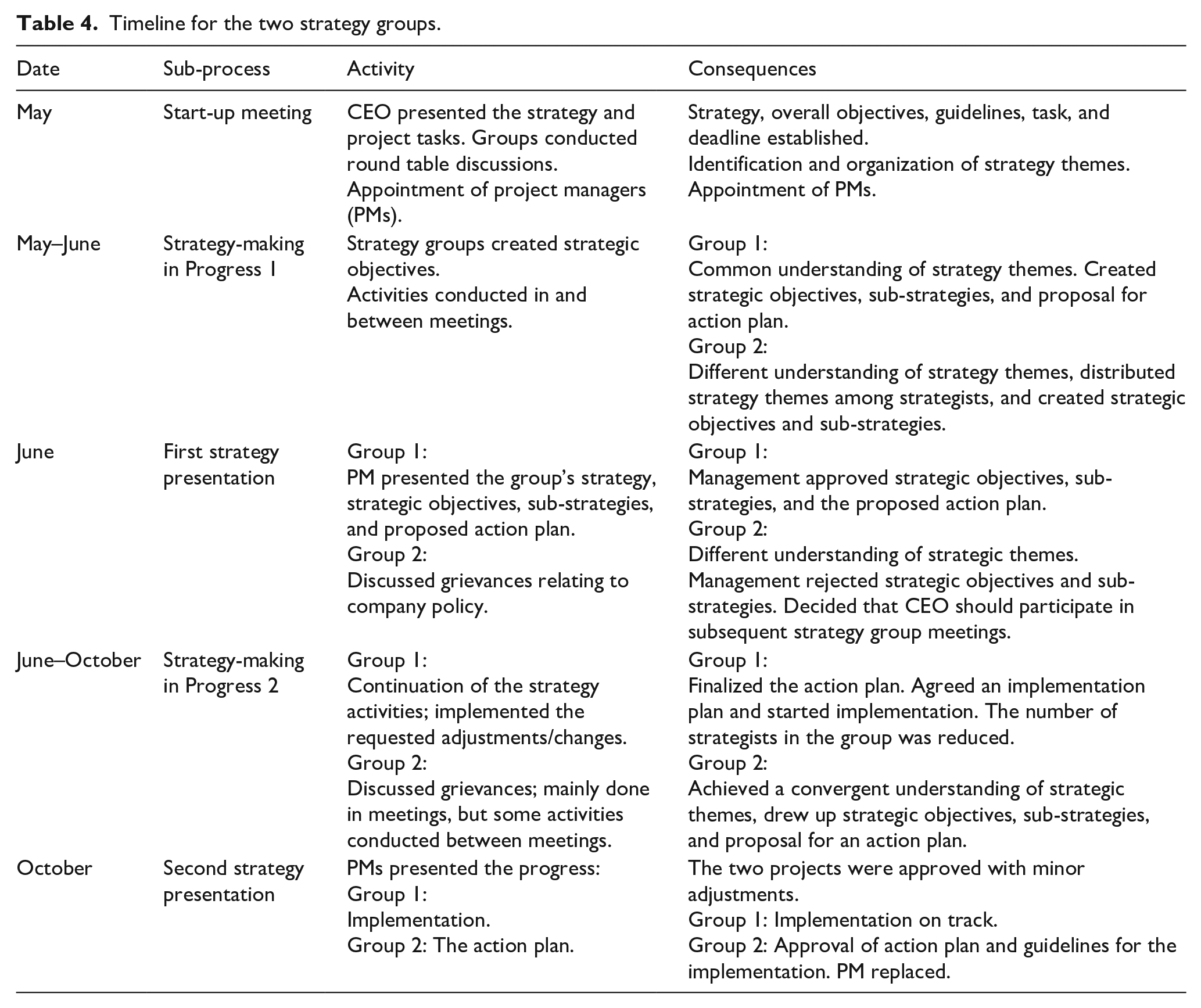
The project manager (CFO) distributed slides and minutes from the start-up meeting and commenced the meeting by saying: “Good morning. . . Can you remember what we talked about at the start-up meeting?” The group picked up the discussion and the employees gradually started to make comments on the strategy themes (see Table 4). The conversation ended with Anne saying: “It seems that we can take the themes from the list made at the start-up meeting.” The CFO agreed and, step-by-step, the group created the strategic objectives.
Timeline for the two strategy groups.
The group held a number of meetings that resulted in only minor modifications to the strategic objectives. The CFO prepared a presentation of the strategy and the group made some comments.
Strategy Presentation 1
The CFO presented the strategy using PowerPoint. The presentation did not prompt any questions from the management group, so the CFO continued to the strategic objectives by saying: “We have made a rough action plan for each objective.” The CEO responded: Thank you for the presentation. Of course, you have done more than you needed to . . . You have a green light to continue elaborating the action plan for implementation . . . We can have a talk next week if you need to . . . All in all, good work . . . Thank you.
The presentation lasted less than 10 min. The action plan was provisionally approved.
Strategy-making in Progress 2
At the following meeting, the project manager summarized the presentation and suggested that the group could begin finalizing the action plan. The CFO initiated a discussion, which was brought to a conclusion rapidly and without comments. It was also decided that some employees would withdraw from the strategy group.
Several meetings were held after this, during which proposals for implementing the strategy were gradually defined. None of these meetings gave rise to changes in the strategy. Implementation began before Strategy Presentation 2.
Strategy Presentation 2
The presentation consisted mainly of a summary of the progress of the action plan. Anne expressed some of the benefits of being highly involved in strategy-making: You are more adaptable to changes when the need for change comes from the whole organisation rather than from the top . . . It means there is a greater chance of success because we are involved and I am more committed . . . This kind of involvement has a positive impact on understanding; it creates a better understanding of what we have to do.
The group implemented a new stock model; however, the strategic objectives had still not been achieved and a new project was initiated.
Strategy Group 2: Employee satisfaction
Strategy-making in Progress 1
The first meeting was characterized by a lot of back-and-forth conversation about the strategy. In particular, the employees had difficulty understanding the strategy task. The project manager started the meeting by handing out minutes and slides and said: “I have handed out an agenda based on my understanding of the strategy task and my idea is that we can discuss the points one by one. What do you think?” However, before any of the participants could answer, she set out her perspective on the first item on the agenda. The HR manager attempted to intervene and some other participants also put forward suggestions, but no one else had the courage to question the project manager. The project manager favored her own position on the items on the agenda, and there was a rather tense, slightly irritable atmosphere. As a result, much of the time was spent discussing the participants’ individual viewpoints and proposals. Some of the discussions became rather narrow and detailed; one discussion led to a debate about hypocrisy in the company. The conversation came to a standstill and resulted in ongoing back-and-forth discussions.
The outcome of this first meeting was a document emphasizing the strategy themes. The document was distributed to the group members and they were asked to come well-prepared to the following meetings, in which the group gradually agreed on the strategic objectives.
The group discussed how management would respond to the objectives and whether the group could take the liberty of presenting the objectives. Finally, it was decided that the project manager should make the presentation, mainly due to the HR manager arguing that: “If these issues are so important, I think you should present them.”
Strategy Presentation 1
The project manager used PowerPoint to present some of the strategic themes and then moved on to the group’s criticisms of how management communicated about “difficult topics”; she pointed out that denying employees’ access to Facebook during working hours was not consistent with the stated principle of “freedom with responsibility.” Another topic was the lack of information given to the organization when an employee was “fired or stopped working” for the company and the way that this led to gossip. After giving these examples, the project manager said: I want to warn you before you see the next PowerPoint slide because you probably think that this [working environment] is okay—and to a certain extent it is okay. There are some restrictions on what you are allowed to do and not do . . . We think that there should be more freedom with responsibility . . . For instance, Oluf [the project manager’s manager] is the perfect example; I come and go as I please. Oluf never asks or restricts me . . . A second example is openness in the company; sometimes ambiguous information is given . . . This results in a lot of talk.
At this point the CEO interrupted her and asked: “What is this ambiguous information?” The project manager replied: “For instance, when Keld stopped working with us we were told that he left by mutual agreement, but we know that there is more to it than that and so people started speculating about what happened.” The CEO then asked: “What should we have said?,” to which the project manager responded: “The truth, that a project went wrong and that although he was given the opportunity to start in a new job position, he had lost the motivation and chose to stop.”
The founder of the company became irritated, responding rather aggressively: I don’t agree with you . . . This is not right . . . and maybe you should consider why we handled the situation with Keld the way we did, and you should understand that we do not have to involve you in everything or tell you everything.
The project manager started to respond: “I don’t disagree with you, but this is not good for motivation,” but the founder interrupted her in the same irritated and aggressive way, saying: “This is not right. You know that we had to do what we did.” At this point, the CEO intervened, trying to defuse the situation by asking the project manager calmly: “Have you discussed further what to do about it?” The project manager focused on the next PowerPoint slides and said: “Yes, we have talked about what to do,” yet she continued to give other examples of poor communication and lack of openness. The founder responded with irritation and did not accept any of the examples, resulting in a rather emotional discussion. After a while, the CEO called a halt to the meeting, emphasizing that the examples would be taken into consideration. Following this, the HR manager suggested that the CEO should attend the next group meeting. The strategic objectives were not accepted by the management.
Strategy-making in Progress 2
The CEO participated in the first meeting and, after a short presentation based on the PowerPoint slides, the issues were once again raised by the project manager, who started the discussion again. The whole group then looked to the CEO, who responded: I am listening and I understand you, but you have to see it from a management perspective. We offered him some opportunities, but he made a choice that we have to respect. So, we could not have done things differently. However, you make a good point and I will raise it with the management group so that in future we will be more careful and take such communication issues into consideration.
The CEO acknowledged the group for highlighting the issues. Following this, the atmosphere became more friendly and the remaining complaints were discussed in a more positive and constructive way. At the subsequent meetings, the group succeeded in drawing up strategic objectives for all themes, identifying necessary strategy activities and preparing an action plan. Furthermore, at the next joint information meeting involving the whole organization, the CEO used PowerPoint to present the communication and openness complaints, gave an explanation for the company’s conduct in each case and stated that management would be more aware of issues and change its practice in this regard.
Strategy Presentation 2
The project manager presented the strategic objectives in a new PowerPoint presentation and then drew up an action plan, which the management group approved. This resulted in an exchange of views on the implementation guidelines. The project manager was dismissed after this second strategy presentation on the grounds that there was too little work to do in her department. The HR manager took on the project manager role and implemented the strategy successfully.
Summary of the two strategy groups
The timeline for the strategy activities and the consequences is summarized in Table 4.
Analysis: Strategist–artifact relationships
With the aim of clarifying how artifacts are used as stand-ins for intentionality in strategy-making, we set out to explore empirically the extent to which strategist–artifact relationships cause parallel, divergent, and convergent strategy-making. Our analysis is organized chronologically. We first analyze the start-up meeting and then analyze the two strategy groups separately.
Start-up meeting
The analysis of the start-up meeting demonstrates that strategy-making does not occur without effort. The CEO followed the prepared agenda and used other artifacts (matrix, PowerPoint presentation, laptop, PowerPoint application, and flipchart) to enable him to deploy explicit information and materialize new/modified artifacts to ensure that the involved strategists’ strategy-making followed convergent tracks. Despite the use of a variety of malleable artifacts, the CEO was unable to start a debate about the strategy themes; from the management’s perspective, the strategists were rather silent and reluctant or unable to contribute to the strategy. It appears that management must expend a great deal of effort to ensure that strategists grasp the challenges in this context.
As the attempted dialogue did not facilitate a convergent track, the CEO took charge and wrote down the strategy themes on a flipchart, thus creating and explicating the big picture for the strategists. The meeting seemed to end with a common understanding of the challenges and the work ahead, but it is questionable whether each strategist understood the CEO’s view (intention) of the strategy themes to be followed, which he had materialized in the flipchart artifact.
The following analysis focuses on Strategy Group 1.
Strategy Group 1: Stock reduction
The analysis of strategy-making in Progress 1 indicates that the group continued the exchange of views that had begun in the start-up meeting. They drew information directly from the flipchart artifact created by the CEO to guide the strategy-making. However, despite the fact that the group had access to this artifact and also used PowerPoint, the strategists struggled to materialize explicit information into artifacts encapsulating the strategy objectives and sub-strategies. The strategists involved commented that their role would normally be to handle well-defined tasks and they therefore lack knowledge when it comes to reflecting on strategic objectives. Nevertheless, the group successfully materialized new artifacts related to the strategic objectives and a proposal for an action plan that would be applied in Strategy Presentation 1.
It can be argued that this strategy theme was tightly defined and hence it was easy to ensure that the strategy-making remained on track. Furthermore, since the project manager’s (CFO) day-to-day responsibilities included stock reduction in the company, he had relevant knowledge and a clear intention to reduce stock levels, and his perception of a suitable approach was aligned with the CEO’s intention. Nevertheless, the CFO was very mindful of the value in establishing a common understanding and hence a strong sense of ownership of the strategy among the strategists. As Lene explained, “There is a greater chance of success because we are involved, and it means I am more committed . . . This kind of involvement has a positive impact on understanding.” The feeling of ownership seems to have paved the way for aligning the strategists’ intentions, thus ensuring that the strategy-making followed an agreed path toward the strategy objectives, where the group achieved a common understanding of the strategic issue. However, the CFO acknowledged the difficulty faced in encouraging all strategists to participate verbally, meaning that the dialogue was mostly one-way communication. Hence, the analysis indicates that the CFO’s intention became the legitimized way of forming the strategy; no one challenged this perception of the strategic objectives being followed. Indeed, from the very beginning of strategy-making in Progress 1, the materialization of artifacts and the achievement of a common understanding in the group were strongly influenced by the CFO’s intentionality.
The issue is how best to establish an atmosphere in which strategists have the courage to speak freely, and the CFO appeared to be successful in doing this. The group dialogue created the impression of an alignment in understanding among all strategists and that they appreciated being actively involved. However, the group members’ actions did not really challenge the CFO’s intention and therefore the strategy-making followed parallel tracks. The outcomes of the strategy-making may therefore not fulfill the strategic objectives. In fact, a year after the new stock model was implemented, the results proved to be disappointing and the CEO realized that further action would need to be taken.
Strategy Group 2: Employee satisfaction
During strategy-making in Progress 1, the strategists struggled with the strategy-making and a lot of time was taken up discussing issues related to specific strategists’ intentions. As the strategy-making followed divergent tracks, much of the dialogue was rather emotional and detailed, bordering from time to time on open antagonism.
The project manager wanted things to be done in specific ways and wanted to set the agenda for the group. She actively materialized information into artifacts, a measure that was tailored to furthering her particular intention, and the strategists were not able to influence the materialization of artifacts. As a result, the strategy-making diverged, with the project manager’s misuse of artifacts taking one direction and the strategists involved taking other directions away from the strategic objectives established at the start-up meeting.
This divergence proved problematic during Strategy Presentation 2. Prior to the presentation, the project manager took the lead and materialized her own viewpoints into some of the artifacts to be used during the presentation. The “group” ended up presenting a proposal that diverged considerably from the strategic themes created at the start-up meeting. In addition, the project manager persisted in giving examples of grievances relating to company policy. It then became clear that the management’s viewpoints conflicted with those of the group and some discussion ensued. The dialogue did not result in a common understanding of the strategic challenges. Consequently, the dialogue was deliberately blocked by management and the HR manager suggested that the CEO should participate in subsequent group meetings.
The discussion of grievances continued at the first meeting in strategy-making in Progress 2. However, in contrast with the dialogical approach taken in Strategy Presentation 1, the CEO tackled the issues head-on. This meant that the group’s understanding was challenged by the CEO. He did not dismiss the grievances, but he did set out the rationale behind the managerial decisions that had provoked them. This frank dialogue helped to change the atmosphere in the group and the strategy-making was more constructive in subsequent meetings.
As illustrated above, the different intentions of the group and management had a negative influence on both the materialization of information into artifacts and the strategy-making until strategy-making in Progress 2. The person appointed project manager did not have any organizational responsibility for employee satisfaction issues, which might be one of the reasons why the strategy theme caused much of the conflict. In addition, the HR manager was one of the strategists actively involved in the dialogue at the point where the strategy-making was redirected away from the given strategy theme into a discussion of grievances. The HR manager still had her usual managerial responsibilities for HR issues since the group was formed, and the top management had instructed all involved managers to ensure the groups focused on achieving the “corporate strategy objectives.” This meant that the conflict between the intentionalities of the project manager and of the HR manager influenced strategy-making and the dialogue did not lead to an alignment of these two strategists’ intentions. Hence, it was a question of whether the managers were prepared for such a practice in which strategists were on their own in terms of materialization of information into artifacts and using this kind of explicit information to facilitate convergent strategy-making. The project manager was dismissed before the implementation phase, which suggests that challenging the management group had consequences.
Discussion and concluding remarks
By examining the strategy-making (sequences of actions) in the two groups, our study clarifies the extent to which artifacts are used or misused as stand-ins for intentionality.
The start-up meeting resulted in both strategy groups forming convergent tracks for each strategist’s strategy-making. All strategists in Group 1 remained on the convergent tracks created at the start-up meeting throughout the strategy-making so that the subsequent strategy-making followed parallel tracks, apparently toward the intended strategy. In fact, a year after the new stock model was implemented, the results proved to be disappointing and the CEO realized that further actions would need to be taken. In terms of Strategy Group 2, intense discussions at the outset of strategy-making in Progress 1 resulted in the divergence of the involved strategists’ strategy-making. This divergence persisted and thus influenced Strategy Presentation 1. As a consequence, the strategists’ strategy-making followed parallel tracks. The CEO temporarily intervened in the strategy-making, which paved the way for convergent tracks during strategy-making in Progress 2 and the second presentation of the strategy. The strategy was successfully implemented. Figure 2 summarizes the analyses.
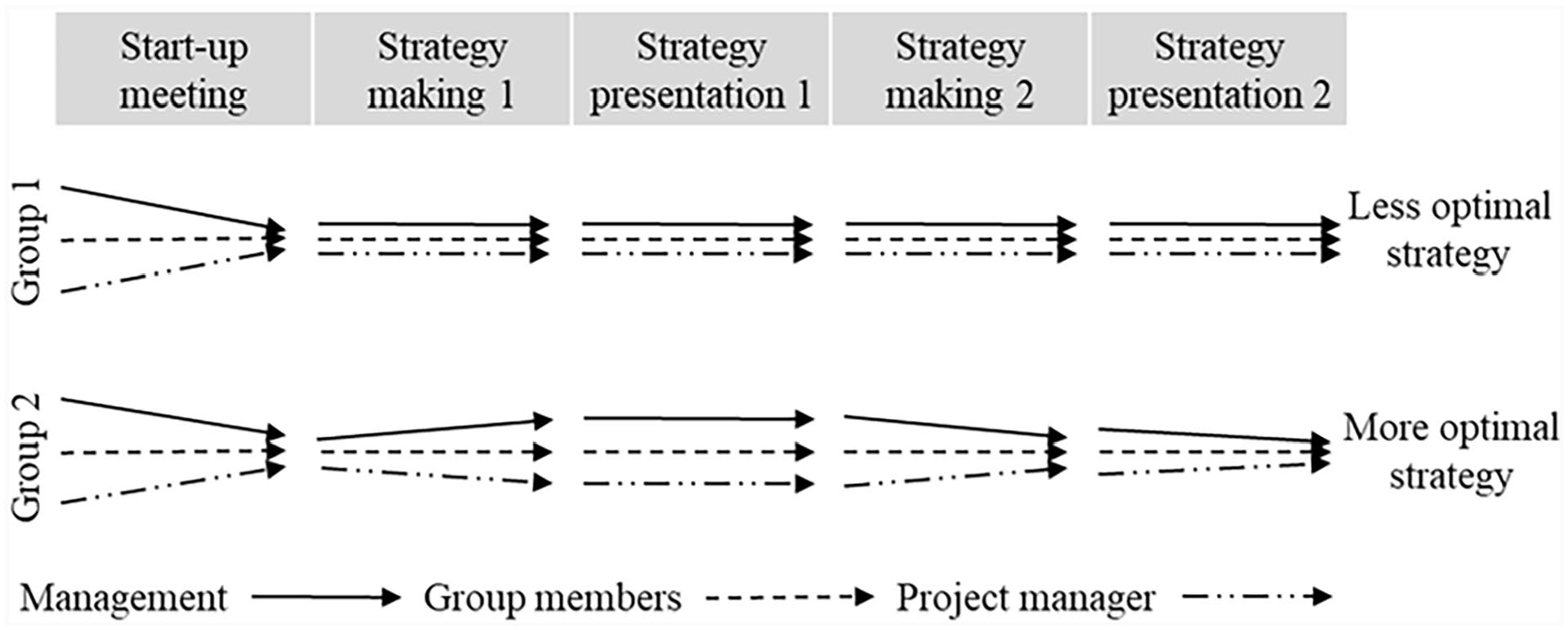
Strategy-making: convergent, parallel, and divergent tracks.
As illustrated in Figure 2, our findings demonstrate that strategy-making (sequences of actions) can follow more than one pathway over time and thus results in multiple tracks. The analysis of how each strategist intentionally materializes information into artifacts and uses this explicit information to guide or misuses it to curb strategy-making shows that the strategists in both groups struggled to align their common understandings. In general, the group members involved were accustomed to offering concrete solutions to a specific problem and were very action-oriented. For instance, in Strategy Group 1, the project manager’s knowledge was intentionally materialized in a flipchart artifact and later in action plans, which group members accepted as the legitimized way of forming the strategy. Throughout the strategy-making, no one challenged this intention and the strategy-making therefore did not disrupt the strategists’ habitual way of working. Ultimately, the strategy-making was not optimal. The group members remained in a precognitive phase, which might explain why they were quiet during this part of the strategy-making and did not contribute to the creation of a sustainable strategy. In Strategy Group 2, we witnessed some of the group members and later the CEO challenging the project manager, who had materialized information into artifacts intentionally in ways designed to further her own knowledge and viewpoints. Group members and the CEO drew on their knowledge to make new artifacts and paraphrased existing artifacts as instrumental in finding a common ground for their understanding. Hence, our findings support the view that each strategist’s actions are more than retrospective cognitive construction (Vaara & Whittington, 2012). The theoretical proposition from the above findings is that the accomplishment of a strategy-making activity demands reflections enabled by a variety of malleable artifacts, which are intentionally materialized. Strategy-making does not occur by itself: rather, strategists have to make an effort to convey meaning and gain a common understanding, which involves ongoing use of and intentional modification/creation of artifacts. This illustrates that past activities exert a cumulative influence on the activities that follow; the consequences of past activities are intentionally materialized through the creation or modification of artifacts. In the words of Elkjær (2004), “past activities form a life history” of different intentionalities, which influences the sequences of strategy-making activities.
This echoes the view that artifacts are embedded in practices (Knight et al., 2018) and the importance of being sensitive to different tensions and assumptions (Nordqvist & Melin, 2008), but our findings clearly show that both the mediating artifacts containing explicit information and the individual strategists’ intentionality have pivotal roles to play in forming a strategy. For instance, although strategists are involved in the same strategy-making and have access to the same artifacts, the findings show that we cannot assume that each individual gains sufficient understanding to convey meaning or to achieve a common understanding. In fact, each individuals’ accomplishment of a sequence of actions originates in the strategist–artifact relationships, which implies that both the materiality of the artifact and the strategist’s intentionality have influencing roles to play. Accordingly, we suggest the following theoretical proposition. To initiate reflective strategy-making, the strategist–artifact relationships should have sufficient capacity to transcend the precognitive phase as this will facilitate the handling of a sequence of actions gradually becoming reflective and resulting in a common understanding, thus resulting in successful strategy-making. If the strategist involved in the strategy-making does not move beyond a precognitive attitude of mind, the handling of a sequence of actions will not be reflective and will not result in a sustainable outcome of the strategy-making—a situation we observed in Strategy Group 1.
Prior research (e.g., Dameron et al., 2015) proves that strategy-making at both individual and group level is an unfolding and iterative process involving the use of artifacts. This study supports the findings of Werle and Seidl (2015) that the mediating role of artifacts is mutable; an artifact can be used as (1) a building block in a more elaborate figure; (2) a means of clarifying a particular point in a discussion; (3) a representation of a strategic issue for examination; and (4) a representation of a selective aspect of the strategic issue for examination. However, our findings broaden the above research in terms of illustrating how artifacts are intentionally prepared and misused to curb strategy-making at group level. Strategists intentionally make or paraphrase artifacts to enhance their viewpoints: our results offer an example of a project manager deliberately materializing artifacts to curb the handling of activities and thereby sabotage the strategy-making (see Hodgkinson & Wright, 2002), and an example of another project manager intentionally materializing artifacts to keep the strategy-making on convergent tracks. Adding to the study by Smith et al. (2018), our findings illustrate how strategists deliberately materialize private interests into artifacts, which had a positive influence on the individual’s participation at the outset but later resulted in a dismissal.
Our research shows that strategists use plans (Spee & Jarzabkowski, 2011), PowerPoint presentations (Kaplan, 2011; Knight et al., 2018), and whiteboard presentations (Werle & Seidl, 2015) and making use of a variety of malleable artifacts (Whittington, 2015) to convey meaning, yet we did not see any use of artifacts, such as SWOT and five forces (Jarzabkowski & Kaplan, 2015; Vuorinen et al., 2018). However, rather than using just one artifact, our findings reveal that various artifacts are simultaneously brought into play to guide and, in some situations, misused to curb strategy-making. For instance, strategists use various artifacts to organize project meetings, laptops to give PowerPoint presentations, and flipcharts to illustrate ideas and points of view. The handling of a strategy-making activity is thus facilitated by a combination of malleable artifacts. As Whittington (2015) points out, the intended use of artifacts (e.g., a laptop) is universal. Our findings are partially consistent with this point of view, but we also observed that the way a laptop is used to display artifacts is influenced by a strategist’s intentionality. Therefore, artifacts are intentionally applied to guide a strategist’s sequence of actions, which simultaneously (re)shapes other strategists’ sequence of actions.
Research has illustrated that PowerPoint presentations facilitate the voicing of divergent viewpoints (Knight et al., 2018) and are thus instrumental in handling complex strategy activities (Kaplan, 2011). This article subscribes to the view that PowerPoint presentations are useful for visualizing strategic issues and articulating divergence, but our findings indicate that PowerPoint presentations are only partially effective in aligning strategists’ understanding. Instead, to achieve a common understanding, strategists use flipcharts, whiteboards, or a piece of paper to explicate information and make handmade drawings, sketches, and templates filled with red and green markings to intentionally guide their discussion of strategic issues. This ongoing materialization of artifacts draws on each strategist’s intention, which indicates that artifacts act as stand-ins for each strategist’s intentionality.
Our study suggests that the materiality of artifacts is not fixed throughout the strategy-making nor in the strategic direction taken. Instead, a strategist or a group of strategists can materialize artifacts and add comments, text, and symbols to intentionally manage the strategy-making. Artifacts are stand-ins for strategists’ viewpoints about the strategic direction, which means that most of these artifacts are temporary; they are made and used to guide or misused to curb the strategy-making and are then discarded.
Studying strategy-making in two of the nine strategy groups constituted a “compact, manageable unit of research” (Payne & Williams, 2005, p. 309). To increase plausibility (Bryman & Bell, 2007), each author prepared a draft of the coding and analysis before jointly comparing our findings to the theories combining the practice and process perspective and then used that as a foundation for each of the three stages of the analysis. To enhance credibility, we used triangulation to crosscheck and underpin empirical material and sources (Pettigrew, 1990). To avoid influencing the research settings, clarifying questions were asked after observed meetings and we conducted field member validation by presenting empirical findings to all involved strategists and asking them to validate our material (Lincoln & Guba, 1985). However, the Generalizability of the findings is open to question. Our 3-year longitudinal engagement with one textile company was aimed toward providing insights to enable moderated Generalizability (Payne & Williams, 2005) across companies striving for a broader involvement of strategists in inclusive and transparent strategy-making. In particular, the selection of a subset of strategy-making activities from the overall strategy limited the Generalizability of the study, mainly due to (1) ongoing strategist–artifact relationships and dialogue among strategists not being described, despite contributing to our understanding and (2) the remaining seven cases in the ethnographic study not included in this article also encompassing interesting strategy-making.
Accordingly, future research could study the extent to which strategist–artifact relationships influence the outcome of strategy-making activities in other contexts, for instance, do the outcomes depend on whether the implemented changes are minor or a full turnaround, across industries, across countries, governance structures, or the involved strategists’ experience? By focusing on strategist–artifact relationships and combining the practice and process perspectives, we encourage future research to clarify whether it is possible to identify some specific activities or events where strategists deliberately “pick a track,” “unreflectively follow a track,” or “reflectively follow a track” to identify the extent to which this influences the quality of the strategic decision-making.
Our study contributes to the understanding of how individual strategists’ intentional outcome(s) influence strategy-making and in particular how the strategist–artifact relationship (Werle & Seidl, 2015) contributes to the alignment of different strategists’ interests (Dameron et al., 2015). This empirically driven research shows that the strategy pendulum does not arrive at a state of equilibrium between macro and micro factors nor between internal and external factors (Guerras-Martín et al., 2014). Rather, by appreciating both the practice perspective and the process perspective on strategy-making, we suggest that the strategy pendulum between strategists’ understanding (1) drifts apart, (2) draws closer together, and (3) neither drifts apart nor draws closer together. Strategy-making activities are thus humanized, with reflective strategists and their intentional use or misuse of artifacts to convey meaning influencing the common understanding. Furthermore, our study contributes with a relatively rare glimpse into the strategic formulation phase alongside the execution of a new strategy. This fulfills Spee and Jarzabkowski’s (2017) call for a study spanning the formulation and execution of a new strategy. Hopefully, the conceptualized analytical framework depicted in Figure 3 can inspire other studies of strategy-making at the micro-foundation level (Molina-Azorín, 2014). A theoretical proposition is that strategy-making is a sequence of actions that are facilitated by the relationship between each strategist’s intentionality and artifacts, illustrated by the large gray circle in Figure 3. The three micro-foundation-level tracks of sequences of actions depicted as small circles to the right illustrate strategy-making following parallel, divergent, and convergent tracks.
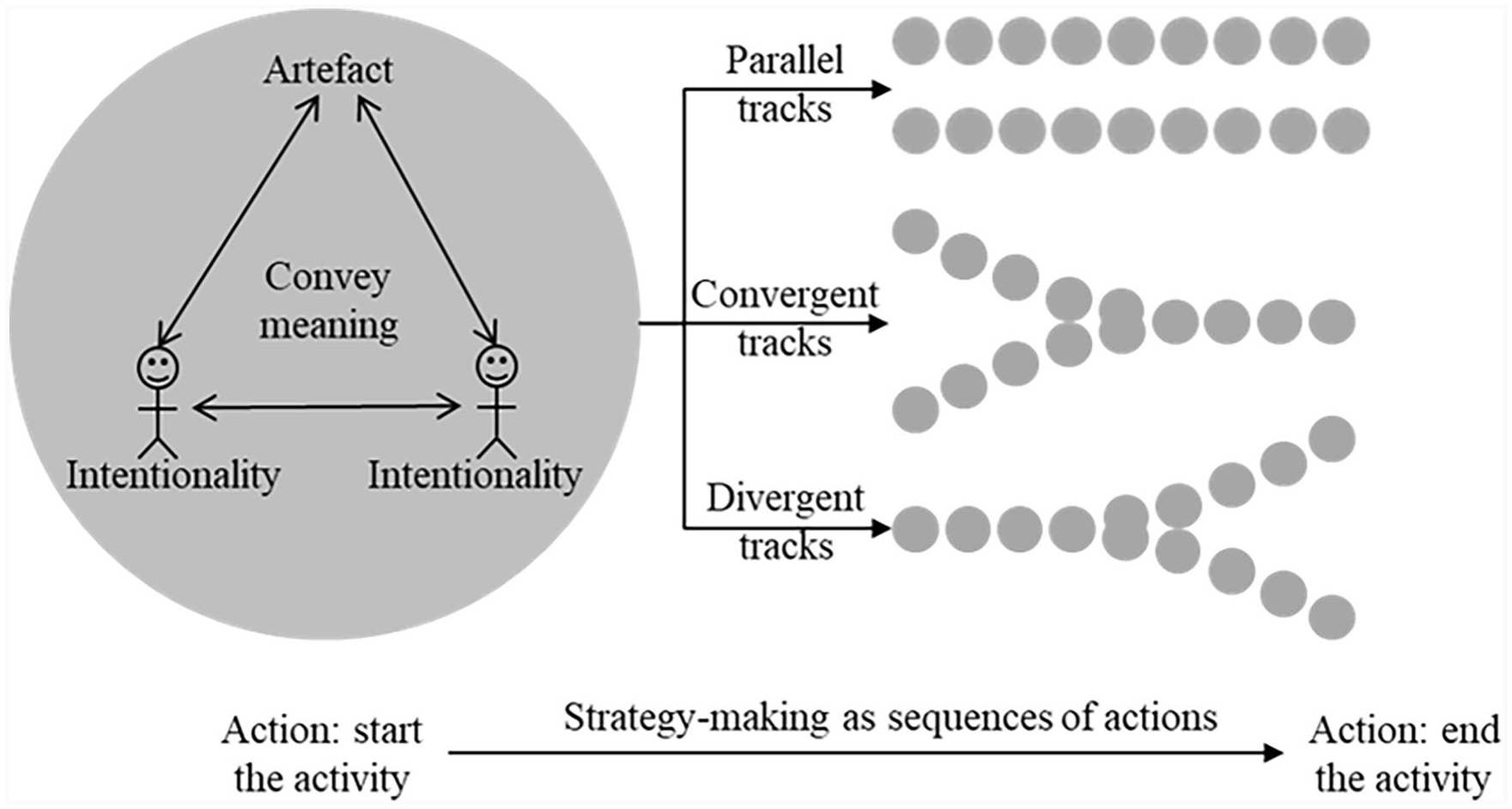
Three tracks of strategy-making.
Summing up, the theoretical propositions are as follows:
➢ Strategy-making is a sequence of actions facilitated by a combination of malleable artifacts;
➢ The majority of artifacts are temporary—they are used to guide or curb strategy-making and are then discarded;
➢ A strategist’s intentionality influences the use of artifact(s) and strategists often materialize artifacts as stand-ins for their intentionality;
➢ Even though strategists are involved in the same strategy-making and with access to the same artifacts, we cannot assume individual understanding or that the strategists achieve a common understanding;
➢ Convergent tracks from the outset of the strategy-making led to unfulfilled strategic objectives, while divergent tracks followed by convergent tracks led to the fulfillment of strategic objectives.
Theoretical implications demonstrate the complex and unpredictable interplay between strategists’ internationality and the use of artifacts. By focusing on strategist–artifact relationships and paying attention to the contributions of the individual strategists and the role of artifacts in conveying meaning and achieving a common understanding among involved strategists, our study opens up the black box of the nexus between strategists’ intentionality and artifacts as suggested in the study by Knight et al. (2018), thus providing support for the view that strategy-making is an ongoing sequence of actions in which the materialization of malleable, often temporary artifacts is pivotal. Furthermore, our study provides support for the view that strategy-making develops alongside strategists’ acquisition of meaning in relation to both social and material matters. The practical implications from the study advise practitioners to call attention to the facts that artifacts have a pivotal role when handling a strategy-making activity, in particular that strategists can misuse artifacts to favor his or her viewpoint and that the achievement of a common understanding does not necessarily lead to desired outcomes.
Footnotes
Declaration of conflicting interests
The author(s) declared no potential conflicts of interest with respect to the research, authorship, and/or publication of this article.
Funding
The author(s) received no financial support for the research, authorship, and/or publication of this article.